The Sowilo Rune: Meaning of the Sun, Victory and Life-Force Symbol in the Elder Futhark
The peoples of the Bronze Age rose and slept by the sun, rowed toward it across the sea and buried their chieftains under its sign. The Sowilo rune, the sixteenth sign of the Elder Futhark, means "sun" outright. It was drawn in the shape of a lightning bolt, and that jagged line holds the whole power of the daytime star: warmth, light, motion, the triumph of day over dark.
Here is the paradox worth starting with. The sign of the sun is not a round disc but a zigzag, close to a stroke of lightning. The old carvers saw in the star not rest but force in action: a ray breaking through cloud, light driving out winter, energy that never stands still. Sowilo speaks not of a gentle sunset but of the sun as the victory of life over numbness.
The rest follows in order: where the symbol came from, how it sounded and looked, what it meant to the Norse and the Anglo-Saxons, what a Sowilo pendant is made of, how to wear it, how the sun rune differs from other signs of strength, and why it alone in the row has no reversed meaning.
Why the Sun Meant Victory
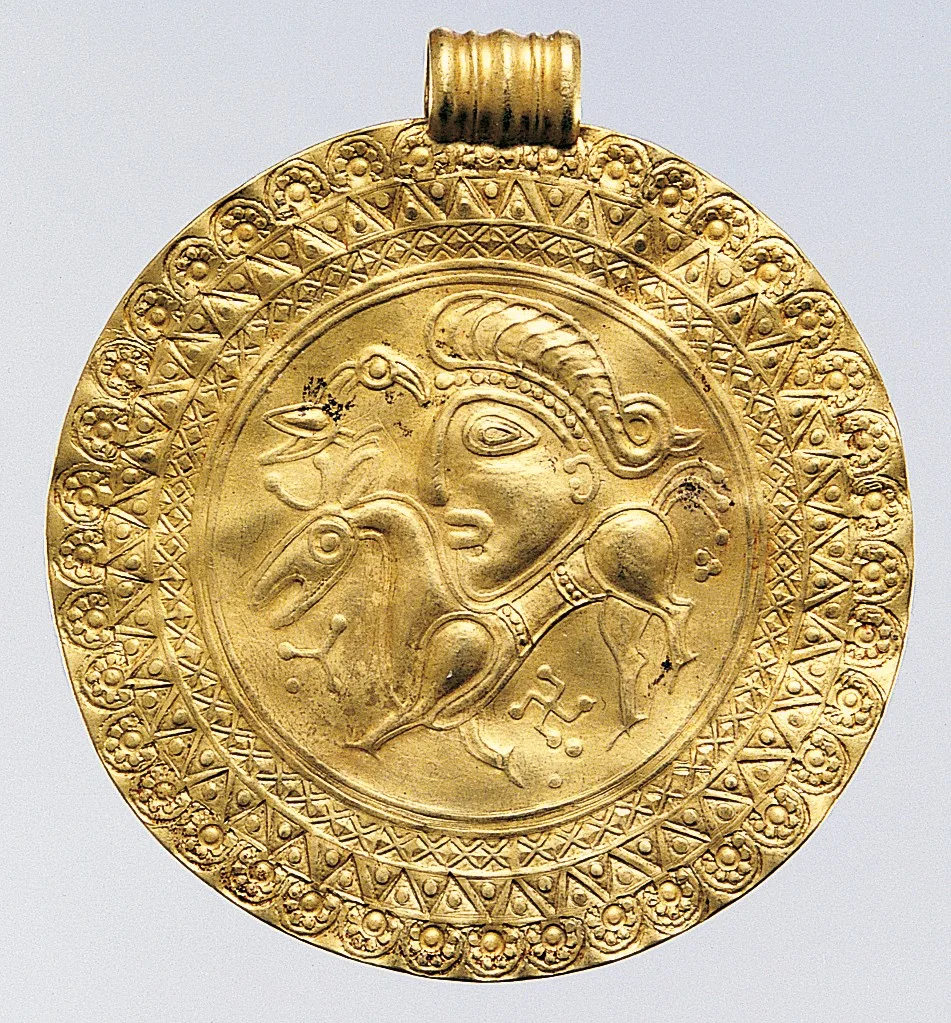
For a person of the Iron Age the sun was not an abstract star but a condition of survival. On it hung the harvest, the increase of the herds, the very warmth of the house. Winter in the north is long and dark, and the return of the sun in spring was lived through as a real victory, a deliverance. In that link, "light defeats gloom," the whole meaning of Sowilo is rooted.
The word "sowilo" goes back to Proto-Germanic sōwilō, meaning "sun." The same root gave Gothic sauil, Old English sigel, Norse sól and, in the end, our modern words: German Sonne, English sun, and by way of the Latin sol our word "solar." An ancient thought is baked into the language itself: the sun is the source, the beginning, the thing everything reaches toward.
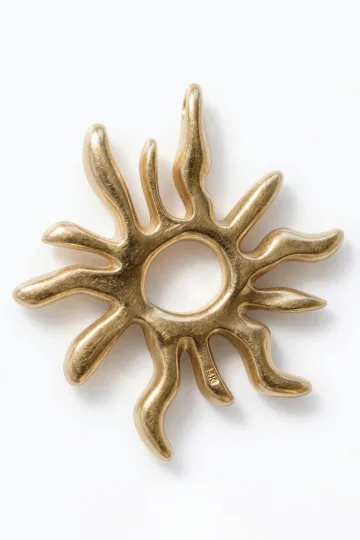
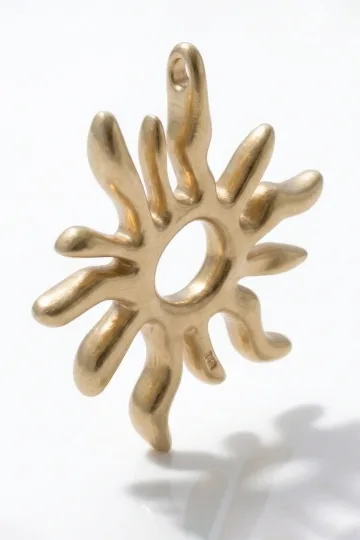
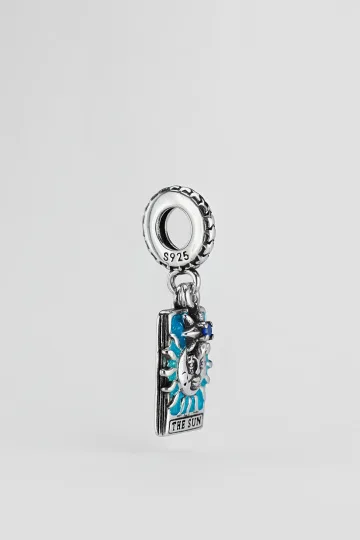
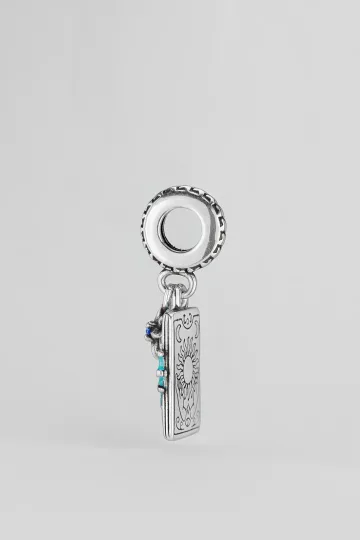
Wear the symbol, don't just read about it. These are in stock:



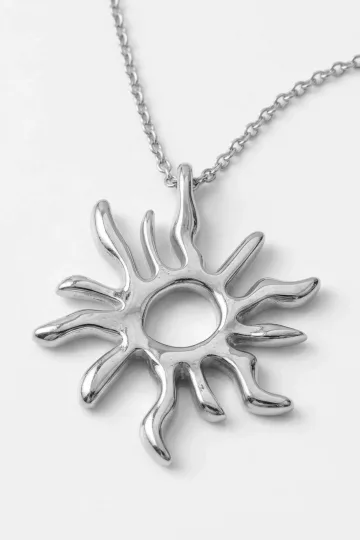
The Sowilo rune took this idea and turned it into a sign of motion. Not a circle, not a wheel, but a broken line of two or three strokes set at an angle, close to a zigzag of lightning or a ray bent in water. The form reads as energy at the moment of the throw, and it stands for the sound "s," opening a whole family of words about the sun, light and strength.
Understanding Sowilo means telling two layers apart. The first is practical: it was a letter for the sound "s," an ordinary unit of writing in the runic row. The second is symbolic: every rune carried a name and a meaning, and Sowilo owned the theme of the sun, success and vital energy. Both layers lived at once. A carver could cut Sowilo simply as an "s" in someone's name, and in the very next breath, inside a charm, as a sign of victory and luck in a venture.
What the Sowilo Rune Is
The Meaning of the Name and Its Sound
Sowilo is the sixteenth rune of the Elder Futhark, the oldest runic alphabet of the Germanic peoples. It carried the sound "s" and closed the second of three "aettir," the groups of eight runes into which the row was divided. Unlike many of its neighbours, whose names are disputed, the meaning of Sowilo is transparent and stirs no argument: it is the sun, and only the sun.
The rune's name sounded its own way across the branches of the Germanic world, yet the root is one everywhere. For the Goths scholars reconstruct sugil or sauil, for the Anglo-Saxons the sign was called sigel, and for the Norse the star and the rune of the same name in the Younger Futhark bore the name sól. Wherever you look, the sign stands for the daytime star, not for an abstract idea.
What the Symbol Looks Like
Sowilo's shape is unmistakable and sharp: a broken line of two strokes set at an angle to each other, so the sign recalls lightning, a Latin "S" drawn in straight lines, or a zigzag. In the classic version it is three short segments running top to bottom in a stepped break. There is also a sharper variant with two strokes, closer to the letter "Z."
One detail matters. Runes were carved, not written. Sowilo's broken form is not an artist's whim but a consequence of the material. Across wood and bone, along the grain, a straight diagonal is easy to cut, while a smooth curve is almost impossible, since it crumbles the fibre. So the sun in the runic row is shown not as a circle, the way other cultures drew it, but as an angular zigzag. The form is prompted by the tool and the wood, and there lies its honest ancient logic.
Its Place in the Elder Futhark
The Elder Futhark was used roughly from the 2nd to the 8th century across Germanic Europe, from Scandinavia to the steppes north of the Black Sea. Twenty-four signs split into three rows of eight, each row named after its own first rune. Sowilo stands sixteenth, closing the second aett, the "aett of Hagal," the row of runes of trial and the forces of nature: hail, need, ice, harvest.
Its place at the end of a harsh row gives Sowilo a special sense. After the runes of frost, hunger and ice, the row ends in the sun, the light that comes after trials. In the logic of the aett this is the passage out of winter into spring, a reward, the victory of warmth over cold. Sowilo here reads as a promise that the dark is not forever.
Sowilo, Sowulo, Sigel, Sol
The rune has several names, and they help us see how the sign travelled through time. Proto-Germanic sōwilō gave the reconstruction "Sowulo," often cited alongside "Sowilo." In the Gothic alphabet of Wulfila the letter took the name sugil. The Anglo-Saxons called the rune sigel and added kindred solar signs to their expanded row. The Norse of the Iron Age cut the Futhark down to sixteen runes, and the sun rune stayed in it under the name sól, merging with the name of the star itself and of the goddess of the sun.
Such a wealth of names for one sign is rare. It tells us the sun was too important a concept to forget or confuse. The shape of the row changed, the alphabet shortened, new writing arrived, yet the sun rune passed through all these turns, keeping both its sound and its sense.
Upload a photo of your pet, someone you love, or an object. We'll build a 3D model and hand-cast it in pewter.




History: From the Bronze Age to Today
The Bronze Age Solar Cult
Long before the first runic inscriptions, the sun already stood at the centre of Northern religion. The Scandinavian Bronze Age, roughly fifteen hundred years before our era, left thousands of rock carvings with solar circles, wheels and crosses. People cut discs with spokes into the stone, ships carrying the sun across the sky, horses and chariots drawing the star from dawn to dusk.
The most famous monument of this cult, a bronze cart with a gilded solar disc found in a Danish bog, shows how the Northerners pictured the sun's course: a horse draws a shining circle across the sky. The runes would appear a thousand years later, but the idea of the sun as a moving, living force, one you had to see off and welcome, was already alive in these images. Sowilo became the written heir of that ancient worship.
The Scandinavian Iron Age and the Viking Era
Runic writing flourished during the Iron Age and the Viking era, roughly from the 8th to the 11th century. Sowilo was cut into weapons, jewellery, amulets, wood and stone. By that time the Elder Futhark in the north had already given way to the shorter Younger Futhark of sixteen signs, and the sun rune survived there under the name sól, its shape a little changed but its sense intact.
In Viking society the sun was both a practical guide and a mythological image. Seafarers bound for Iceland, Greenland and the shores of America read the sky by the sun, finding the points of the compass without a compass, which they did not have. For a people whose life hung on long voyages, the sun as a sign of the true path and of luck was no abstract metaphor but a matter of coming home.
The Anglo-Saxon Rune Poem
The fullest medieval commentary on the sun rune survives in the Anglo-Saxon rune poem, written down in England probably in the 10th century. The stanza on the rune sigel speaks of the sun as the hope of seafarers: the star gladdens everyone who travels the "road of the fish," the sea, until the sea-horse, that is the ship, carries them to land.
The image is strikingly precise. The sun here is not an abstract blessing but the rescue of a particular person in a boat out on the water, a sign that land is near and the course is true. The Anglo-Saxon poet tied the sun rune to hope and homecoming, and this reading is closest of all to the practical role of the sun in the life of a seafaring people.
The Norwegian and Icelandic Rune Poems
The Scandinavian rune poems, the Norwegian and the Icelandic, also kept stanzas about the sun under the name sól. The Norwegian poem calls the sun "the light of the world" and sets beside it a pious line on the worship of the holy: earthly light recalls the light of heaven. A Christian copyist added the religious shade, but the image of the sun as a source of light stayed pre-Christian in essence.
The Icelandic poem is more poetic and more riddling. It calls the sun "the shield of the clouds," "the shining ray" and "the destroyer of ice." Each image opens a facet of the star: it hides behind cloud as behind a shield, it strikes with a ray, it melts the ice and kills the winter. "Destroyer of ice" is the most Northern definition of the sun one could invent: in a land of glaciers the sun was prized for its power to overcome the cold.
The Decline of Runic Writing
With the arrival of Christianity and the Latin alphabet, runes gradually left everyday use. In Scandinavia they held on longer, in places into the late Middle Ages, but as the main script they yielded to Latin letters. Sowilo, along with the whole Futhark, passed from a living alphabet into the realm of antiquity, of inscriptions on stones and of memory.
Even so, the runes never vanished completely. In rural Scandinavia runic calendars survived into the modern age, and on them the sun rune often marked the important days of the solar year. The sign of the star outlived the alphabet's neglect precisely because it was tied to the most reliable timekeeper a farmer knew: the course of the sun.
The Revival in the 20th Century
Fresh interest in the runes arrived with the 19th and 20th centuries and their fashion for Germanic antiquity, folklore and mysticism. Systems of runic divination appeared, books of interpretation, and jewellery in their wake. That is when Sowilo firmly took on the role of "the rune of victory, success and life-force" by which it is known today.
Here too lies a dark page it is only honest to name. In the early 20th century certain authors reworked the runes in the spirit of nationalist mysticism, and a stylised single sign, renamed the "victory rune," was appropriated by a political movement of grim repute. That late invention has nothing to do with the historical Sowilo, but a general sensitivity to context is fitting here, and there is a separate discussion of it below. The historical sun rune stays a neutral sign of the star, as it was for fifteen hundred years.
The Meaning of the Sowilo Rune: Sun, Victory, Life-Force
Sun and Light
The first and chief meaning of Sowilo is the sun itself as a source of light and warmth. Not an abstract idea but the concrete star on which life depends. In the Northern world, where half the year drags on in half-dark, the sun meant more than in warm lands, and the rune carries that gratitude for the light that returns after a long winter.
Light in Sowilo's sense is also clarity, the power to see and understand. The sun scatters the fog, lights the road, makes the world legible. So modern practice ties the rune not only to luck but to clearing up, to the moment when the tangled becomes plain and the right decision turns obvious.
Victory and Success
The second meaning of Sowilo is victory and success in one's affairs. The logic is simple: the sun defeats the dark, warmth defeats the cold, day follows night without fail. The rune carries that inevitability over to human affairs, becoming a sign of reaching a goal, overcoming obstacles, seeing a thing through to the end.
Unlike the runes tied to struggle and weapons, Sowilo speaks of a bright victory, one without blood. It is a triumph not over an enemy but over circumstance: over doubt, laziness, bad luck, winter in the wide sense of the word. So the sun rune is often chosen before an important exam, a defence, the start of a venture, when a sign of a confident outcome is wanted.
Life-Force and Health
The third layer of meaning ties Sowilo to vital energy, health and fullness of strength. The sun is what makes plants grow, warms the blood, wakes nature in spring. The rune draws in that vitality and in practice becomes a sign of vigour, recovery, a return to life after illness or decline.
Here Sowilo touches a very old feeling. The Northern peoples knew that in winter people dim and in spring revive along with the sun, and they tied light to the very power to live. The sun rune is worn as a wish for firm health and an inner fire that does not go out in the dark season.
Will and Purpose
The fourth meaning is the most personal. Sowilo is linked to will, purpose, a clear direction of one's forces. The sun moves across the sky without wavering, from dawn to dusk, always by one path, and that certainty of course became an image of the human will heading straight for its goal.
In the esoteric reading Sowilo is often called the rune of higher will, that inner strength which gathers a person into one and leads them through doubt. It is not crude stubbornness but a calm purpose, the light of one's own intent. To wear Sowilo is in part to keep a reminder close: go toward your own, without turning aside, the way the sun goes its way.
A Rune With No Reversed Meaning
Sowilo has a rare trait that sets it apart from most runes. In divinatory practice many signs change their sense when they fall reversed: upright the rune means one thing, upside down another. Sowilo has no such reversed meaning. In form it is symmetrical under rotation, and in sense it is held to be an unchangingly bright rune, one with no dark reverse side.
Practitioners call such signs "unreversible" and count Sowilo among them along with a few other runes. This gives the sun rune the reputation of an unambiguously good sign: whatever falls beside it, Sowilo itself is always about light, victory and strength. There is no point seeking a historical basis for this; the split into upright and reversed meanings is a development of modern practice. Yet as a system of images it is coherent: the sun has no underside.
Customer reviews
Zevira is a real jewellery shop. Genuine payments, deliveries and customer thank-yous.
🥰🥰🥰 gracias

Ok, ¡gracias! 🙂

What Sowilo Jewellery Is Made Of
The material of a runic pendant carries its own meaning and changes both the look and the character of the piece. For the sun rune the choice of metal is especially telling, since light has a colour of its own. Here are the main options and what is worth knowing about each.
Gold
The most obvious choice for the rune of the sun. Gold in colour and shine repeats sunlight itself, and in every ancient culture the metal was held to be "frozen sun," an earthly share of the heavenly fire. A gold Sowilo amplifies the theme of light and victory and reads as festive and solemn. Most often 14 or 18 karat is used; both hold the crisp carving of the zigzag and are unafraid of daily wear.
The gold version works well as a gift for a meaningful occasion: a victory, a graduation, an appointment, the start of a large undertaking. The warm sheen of the metal chimes with the very idea of the rune, so form and content line up more fully than for any other sign of the Futhark.
Silver
Silver was the Vikings' main measure of wealth and their most common precious metal. Hoards from the era are packed with silver coins and ingots. For Sowilo silver gives a different shade, lunar in colour but not in sense: the cold shine of the metal sharpens the graphic of the zigzag and makes the sign severe and clear.
A silver rune looks restrained and pairs well with a leather cord and the rough texture close to Scandinavian aesthetics. It is a universal everyday option, sturdy and undemanding in care. If you want a noble muteness instead of solar radiance, sterling silver 925 is a safe choice for the sun rune.
Bronze and Brass
Bronze gives a warm, slightly archaic tone close to ancient finds, and so it is loved for its "museum" look, especially fitting for a symbol of the Bronze Age. Brass is cheaper and brighter, nearer to gold in colour, and its golden tone lies well on the solar theme. Both alloys render the relief of the zigzag crisply, and over time they take on a patina that many find noble.
Copper alloys have one drawback: they can leave a dark or greenish mark on the skin. The cause is a reaction of copper with sweat and cosmetics, and it is not a defect. It is worth reading separately about why skin turns green from jewelry and how to avoid it.
Wood and Bone
The most authentic option from a craft point of view: wood and bone are exactly what runes were first carved into, and Sowilo's angular form arose precisely because of these materials. A wooden or bone sun rune, cut by hand, is closest to the historical spirit of the sign. Such pendants are light, warm to the touch, and each has its own unique grain pattern.
The price of authenticity is fragility and fussiness. Wood fears moisture, bone is sensitive to changes in conditions, and both materials call for careful handling. This kind of amulet is more often chosen as a ritual or collector's piece than for daily wear.
Stainless Steel
The pragmatic modern choice. Steel 316L does not darken, does not fear water or sweat, leaves no mark on the skin and holds the crisp carving of the zigzag for years. The symbolism here lives entirely in the form, not in the rarity of the material, and for the sharp, geometric Sowilo steel suits surprisingly well: the cold shine of the metal strengthens the graphic of the sign.
A steel Sowilo suits anyone who wears jewellery constantly and does not want to think about upkeep. It fits an everyday, sporty or streetwear look and easily survives what wood or bone would never forgive.





How to Wear the Sowilo Rune
At the Neck as a Pendant
The most common way to wear the rune is as a pendant at the neck, close to the body. Here both the chain length and the way the sign sits in the neckline matter. A short chain (40-45 cm) holds the rune high, near the collarbones, on show. A medium one (50-55 cm) brings it onto the chest, where the zigzag reads large. A long one (60-70 cm) tucks the amulet under clothing, closer to the heart.
By a view common in practice, a protective rune is worn so that the sign is oriented correctly toward its owner, so it "reads" for the wearer. With the symmetrical Sowilo this rule is softer than for other runes, since it has no reversed meaning, but the overall look of the pendant is still worth checking. A separate guide to choosing chain length can help you settle on the right one.
On a Ring and a Bracelet
Sowilo sits well in a ring and in a bracelet too. The sharp graphic of the zigzag looks modern on a flat signet ring or on the plate of a bracelet, spare and without extra decoration. A ring with a single rune has the advantage that the sign is always before your eyes, on the hand, and easily becomes a personal anchor, a reminder of the goal it was put on for.
A bracelet with the sun rune echoes the Scandinavian arm-rings, and the sharp rhythm of the zigzag gives the piece its character. The engraving is worth cutting deep enough that the break of the line reads and does not blur into a smudge.
Double Sowilo and Paired Signs
With two sun runes there is a delicate matter it is better to know in advance. A single historical Sowilo is a pure sign of the sun. But a stylised doubled sign was appropriated in the 20th century by a political movement of grim repute, and in that form two "lightning bolts" carry unambiguous and dark associations. Historical runelore has nothing to do with this, yet wearing a double stylised Sowilo is not advisable: it is read as anything but an ancient solar charm.
If you want a pairing, it is safer and more beautiful to combine Sowilo with another rune by meaning: with Fehu as a sign of plenty, with a rune of protection, or with a personal rune of a name. Such a combination unfolds the symbolism rather than dragging in someone else's heavy context.
What to Pair It With
Sowilo is spare and gets along with almost any style. The sharp zigzag looks good on a rough leather or rubber cord in the Scandinavian key, on a thin chain in a minimalist look, and paired with other Northern symbols. Fitting neighbors include the Algiz rune as a sign of protection, the Othala rune as a sign of roots, and pendants with Scandinavian symbolism from the pantheon of the Northern gods.
The one thing worth avoiding is clutter. A single rune on a clean cord reads more strongly than one hemmed in among five pendants. If you want layers, give Sowilo its own length of chain so the sharp sign does not get lost among the rest.

Turn on your camera, pick earrings, a pendant or a ring, and see the piece on yourself in real time.
Switch items in one tap.
Everything runs in your browser: no photo or video is ever uploaded.
Who Sowilo Suits and Who It Is Given To
Sowilo is not tied to gender, age or profession, but it has themes it is especially in tune with. It is the rune of victory, success and life-force, so it is most often chosen and given in connection with achievement, health and purpose.
People take it:
- For those heading toward a large goal. The symbol of the sun, which reaches its sunset without fail, fits the mindset of seeing a thing through to the end.
- As a gift for a victory or a graduation. A thesis defence, the end of studies, a promotion, a sporting success; the rune reads as congratulation and a wish of new triumphs.
- For those who need a charge of strength. After a hard stretch, an illness or a decline, the sun rune works as a sign of returning energy.
- For lovers of Northern culture and the runic tradition. Sowilo is one of the brightest and least ambiguous runes of the Futhark, a logical choice for anyone collecting the symbolism.
- For skeptics who care about meaning, not magic. The history of the sign is interesting in itself, and belief in a "solar power" stays a private matter.
As a gift Sowilo is convenient because its meaning reads at once and sounds well-wishing: light, victory, strength. It has no dark reverse side, and that makes it a safe choice for a present. A jewelry gift guide by occasion can help you pick the right version.
Leave your email, we'll send your discount code. No spam, unsubscribe anytime.
The code arrives by email, valid on your first order.
How to Choose Sowilo Jewellery
Form and Orientation
The first thing people look at is the accuracy of the sign. Sowilo should have three strokes running in a stepped break, or, in the sharp variant, two strokes at an angle giving a clean zigzag. The lines should be straight, without smooth curves, or the character of the runic carving is lost. The symmetry of the sign makes Sowilo forgiving of orientation, but the overall look of the pendant is still worth checking, so the zigzag reads rather than looks like a random stroke.
It is also worth making sure you are being offered exactly the single historical rune, not a stylised doubled sign with someone else's heavy context. A good workshop tells the ancient Sowilo apart from the later inventions clearly and does not confuse the two.
Craft Versus Stamping
Mass stamping gives an even but faceless sign, often with a blurred relief. Hand carving or quality casting hold crisp edges, and the sharp zigzag of the rune looks alive. For a symbol whose whole force is in the graphic of the break, crisp lines are not a quibble but the essence: a smudged Sowilo loses its lightning energy.
If you want a piece with character, look for versions with hand finishing, an honest metal texture and deep, confident carving. Such pendants are closer to the spirit of runic craft, where each sign was carved separately and with effort.
Size and Proportion
For an everyday pendant a size of 2-4 centimetres is comfortable. Under two the zigzag gets lost on the chest; over four it starts to look massive. The sharp graphic of Sowilo works well even at a medium size, because the break reads even when the sign is not large. For a masculine look and a broad neck people take it nearer the upper edge, for a slender build nearer the lower. A ring and a bracelet call for finer, neater engraving, or the sharp sign looks crude.
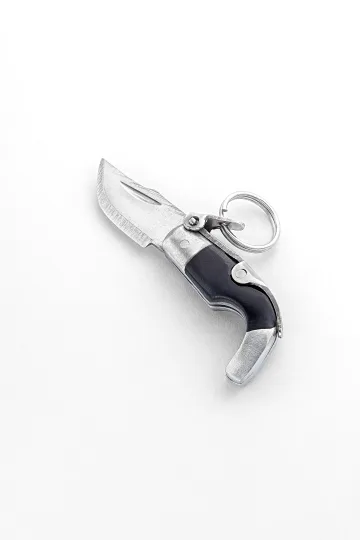
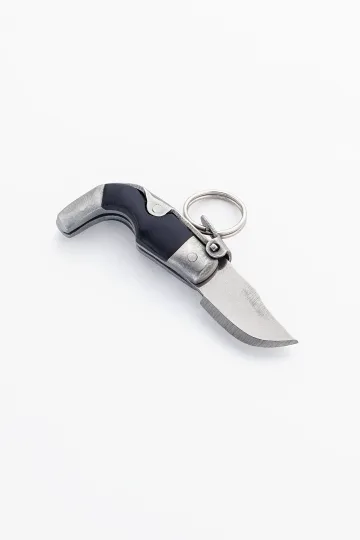
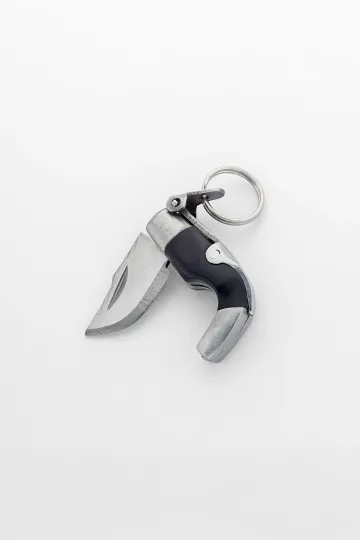
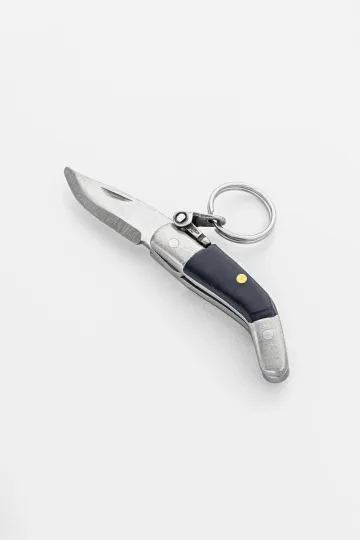
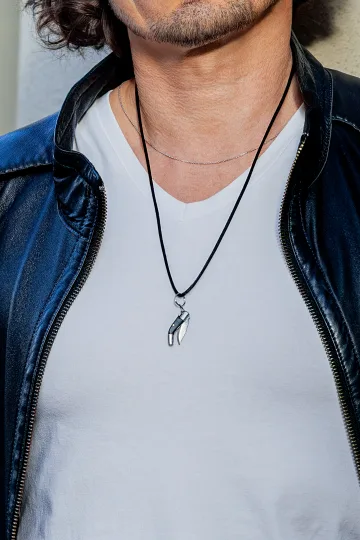
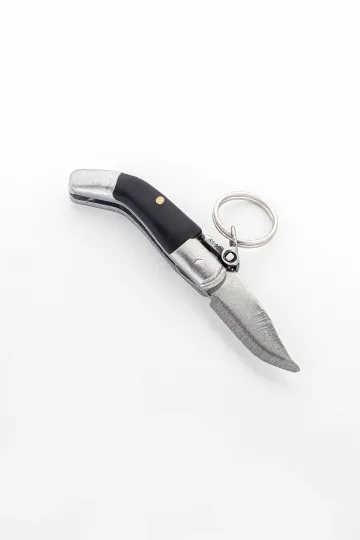
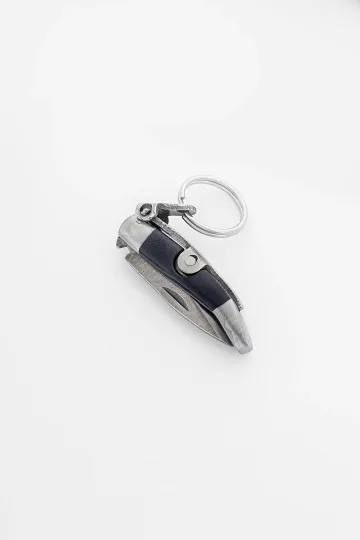
CAPAORA mini knife pendant
The 18th-century Spanish navaja in miniature: 40 mm of stainless steel, a real folding mechanism and a Palanquilla lock that clicks. An affordable gift to remember.
Authentic · Ships from Spain · 14-day returns
Sowilo and Other Runes of Strength: What Is the Difference
The theme of victory, light and energy in the Futhark is carried by more than one rune; several share it out among themselves. Understanding the differences helps you choose "your own."
Sowilo and Tiwaz (Tyr): Sun and Sword
The main pair on the theme of victory is Sowilo and Tiwaz. Both are about triumph, but of different kinds. Sowilo is a bright, solar victory, the triumph of life over winter and circumstance, without struggle or blood. Tiwaz, the rune of the god Tyr, is victory in a fair fight, justice proven in single combat, warrior valour and readiness for sacrifice. Tiwaz looks like an arrow or a spear pointing up, and all its energy is in the purposeful strike.
If Sowilo is about a confident course toward a goal, the way the sun crosses the sky, then Tiwaz is about the decisive clash you must stand through. They are often set side by side: the sun rune gives light and strength, the rune of Tyr gives courage and rightness. Together they describe victory as a blend of vital energy and firm will.
Sowilo and Dagaz: Light of the Sun and Light of Day
The rune Dagaz means "day" and stands at the very end of the Futhark. It is about dawn, breakthrough, the moment of passage from dark to light, about waking and transformation. Sowilo and Dagaz are close on the theme of light but look at it differently. Sowilo is the sun itself, the source, a constant force. Dagaz is the instant the day arrives, the turning point when everything changes at once.
The difference is like that between the sun and the dawn. Sowilo shines steadily and strongly all day; Dagaz catches the single moment when night becomes morning. Those who want a sign of stable energy and confident success are nearer to Sowilo. Those who await change, a breakthrough, a new beginning, are closer to Dagaz.
Sowilo and Kenaz: Sun and Torch
The rune Kenaz means "torch" or "hearth-fire" and answers for man-made, domestic fire, for knowledge, craft and the creative spark. Sowilo and Kenaz are both about light, but Sowilo is the heavenly light, vast and shared by all, while Kenaz is the handheld light, kindled by a person for a specific task. The sun shines on everyone for free; the torch burns where it is carried.
Out of this pair grows a fine thought: there is the light that is given to us, the sun, and the light we kindle ourselves, the torch of knowledge and craft. Sowilo is about the luck and life-force that come as a gift; Kenaz is about the skill won by labour. They are chosen for different intents: the sun rune for victory and energy, the torch rune for study, mastery and creation.
The Psychology of a Solar Amulet
You do not have to believe in the magic of runes for a Sowilo pendant to "work." The mechanisms that make such an amulet useful are quite earthly and well described.
An anchor of intent. When a person ties an object to a concrete goal, a glance at that object returns the mind to the goal. A rune of victory at the neck becomes a quiet daily reminder of what the work is for. It works as a visual bookmark for attention, without any mysticism.
The confidence effect. Sports and cognitive psychology describe the "lucky object" effect: a person confident that a talisman is with them acts calmer and more collected. Anxiety drops, focus rises. For many the sun rune does exactly this before an exam, a performance or an important conversation.
Light and mood. A separate, entirely physiological thread ties the sun to how we feel. People in the north know how the mood changes with the arrival of light in spring. A symbol of the sun on the body does not replace the sun itself, but it works as a reminder of it, a small personal sign of warmth in the dark season, and that supports the spirits.
Identity and values. To wear a rune of victory is to state quietly, first of all to yourself, your priorities: movement toward a goal, strength, endurance. Anchors of identity increase resilience to hardship, and in that sense an ancient sign works for a thoroughly modern person.
There is nothing supernatural in this. An amulet does not change reality; it changes the wearer's relationship to reality, and it does so in a measurable, useful way.
Sowilo in Culture and Heritage
Runes have long moved beyond archaeology and live in language, folklore and modern culture. Sowilo's trace is the widest of all, since the sun held the central place in the Northern picture of the world.
In mythology. For the Norse the sun is the goddess Sol, also called Sunna, who drives the chariot of the star and races across the sky, chased by the wolf Skoll. The myth says that on the day the world ends the wolf will at last catch her, but before that Sol will bear a daughter, as bright as herself, who will lead a new sun across the sky. The idea of a sun that overcomes even its own destruction chimes with the image of the rune as a sign of unkillable life-force.
In language. Norse sól, German Sonne, English sun and Latin sol reach through a shared Indo-European root toward the same concept that stands behind the rune. The words "solar" and the names of a day of the week in many languages keep the memory of the star as the center of the world. Every time someone calls Sunday the "day of the sun," as the Germanic languages do, they repeat the ancient logic of Sowilo. The same solar motif runs through other traditions too, right up to the Sun card in the Tarot, an image of clarity and joy.
The seafarers' sunstone. One of the most intriguing riddles of the Viking era is bound up with the sun. The sagas mention a "sunstone," sólarsteinn, with which seafarers found the sun through cloud and fog. Many researchers hold that this was a transparent crystal, something like Iceland spar, which passes light differently depending on the angle and helps locate the hidden sun. The sign of the sun and the skill of finding it in an overcast sky were, for a seafaring people, quite literally a matter of life.
The heavy context of the 20th century. This must be said plainly. In the early 20th century a Germanic rune was reworked in the spirit of nationalist mysticism, and a stylised single sun sign was given the new name "victory rune," while a doubled version of it became the emblem of a criminal movement of the mid-century. That late invention has nothing to do with the historical Sowilo, the sign of the sun from an ancient alphabet, and the single rune stays a neutral symbol of the star. But wearing exactly the doubled stylised variant is not advisable, and a general attentiveness to what you wear and what you wear it beside is especially fitting here.
Facts About the Sowilo Rune That Surprise You
The sign of the sun looks like lightning, not a circle. In most cultures the sun was drawn as a circle or a wheel. Runic Sowilo is angular and close to a zigzag, because it was carved into wood and bone, where a smooth curve is almost impossible to cut and a straight break is easy.
Sowilo has no reversed meaning. Most runes in divination change their sense when they fall upside down. Sowilo is symmetrical under rotation and is held to be an unchangingly bright rune with no dark reverse side. It is called "unreversible."
The rune's name hides in the word for Sunday. The Germanic languages call Sunday the "day of the sun": English Sunday, German Sonntag. The same solar root that stands behind the Sowilo rune lives on in the calendar to this day.
In the Northern myth the sun gives birth to its own replacement. By Scandinavian legend the goddess of the sun will be swallowed by a wolf at the end of time, but before her death she bears a daughter who leads a new sun across the sky. The star overcomes even its own death, and the idea chimes with the rune of life-force.
The Vikings sought the sun through cloud with a special stone. The sagas mention a "sunstone" by which seafarers found the position of the hidden sun in overcast weather. Many see in it a transparent, light-bending crystal, something like Iceland spar.
The solar cult is a thousand years older than the runes. Bronze Age rock carvings with solar circles, wheels and chariots appeared long before the first runic inscriptions. Sowilo became the written heir of the ancient worship of the star, not its beginning.
Sowilo closes the harsh row of runes of trial. The second aett of the Futhark gathered the runes of hail, need, ice and harvest, and the sun closes it. In the logic of the row this is the passage out of winter into light, the reward after the trials.
"Destroyer of ice" is the sun in Icelandic. The Icelandic rune poem calls the sun "the shield of the clouds," "the shining ray" and "the destroyer of ice." That last definition was coined by a people living among glaciers, for whom the sun's chief merit is that it overcomes the cold.
Silver, gold, runic and Scandinavian symbolism, protective charms, paired sets.
Send a friend a discount code, they save on their first order.
Frequently Asked Questions About the Sowilo Rune
What does the Sowilo rune mean? Sowilo is the sixteenth rune of the Elder Futhark, standing for the sound "s" and the concept of the sun. In a broad sense it symbolises light, victory, success, life-force and purpose. The name goes back to Proto-Germanic sōwilō, "sun," and is kin to Norse sól and English sun.
Is Sowilo the rune of victory? Yes, victory and success are among its chief meanings. The logic runs from the sun, which inevitably defeats the dark and the cold. Yet Sowilo's victory is a bright one, without struggle or blood, the triumph of life over circumstance rather than over an enemy. Warrior victory in battle in the Futhark is answered for by another rune, Tiwaz.
What does the Sowilo rune look like? A broken line of two or three short straight strokes set in a stepped break, close to a zigzag or a lightning bolt. There are no smooth curves in the sign: the sun in the runic row is angular, because runes were carved into wood and bone, where a straight diagonal is easier to cut than a curve.
Does Sowilo have a reversed meaning? No, and that is its distinctive trait. Sowilo is symmetrical under rotation, it has no separate reversed sense, and it is counted among the "unreversible" runes. In divination and as a charm it is held to be an unchangingly bright sign with no dark reverse side.
Is it true that Sowilo is linked to Nazi symbolism? The historical Sowilo, the sign of the sun from an ancient alphabet, is neutral and has nothing to do with that. The heavy context is bound up with a stylised doubled sign appropriated in the 20th century by a criminal movement. The single ancient rune can be worn, but exactly the doubled stylised variant is best avoided: it reads in a wholly different way.
Can you wear the Sowilo rune every day? Yes. For daily wear silver and stainless steel are convenient: they are sturdy, undemanding in care and do not darken. Gold suits the sun rune especially well in colour. Wood and bone are authentic but fragile and call for careful handling; they are more often chosen as a ritual or collector's version.
Who is the Sowilo rune a good gift for? Sowilo works as a gift for a victory, a graduation, a promotion, a sporting success, or as a wish of strength and health after a hard stretch. Its meaning reads at once and sounds well-wishing, and the absence of a dark reverse side makes it a safe choice as a present for almost anyone.
Do you have to believe in the magic of runes to wear Sowilo? No. Many wear the rune for its meaning and history rather than for a "solar power." The sign is interesting in itself: it is more than fifteen hundred years old and is bound to the language, mythology and ancient solar cult of Northern Europe. Belief stays a private matter.
Runes, Scandinavian charms and solar symbolism in silver, gold and steel.
Buying it as a gift? Each one arrives ready to give.
 A branded Zevira box and a little card come with every order.








Conclusion
Sowilo travelled from the solar wheels cut into the rocks of the Bronze Age to a sharp zigzag on a silver chain. Over thousands of years the religion, the alphabet and the way of picturing the star all changed, but the essence of the rune stayed the same: the sun is a force that defeats the dark, warms life and leads forward without wavering, the way the star crosses the sky from dawn to dusk.
The sun rune is honest in its plainness. It has no reversed meaning, no dark underside, no double bottom. It is about light, victory and life, and in that lies its rare directness for an ancient symbol. Whether you wear Sowilo for its meaning, for the sharp Northern form or for a quiet reminder of a goal, you carry with you one of the brightest signs in history: the sun, pressed into two straight lines.
Wear the symbol, don't just read about it. These are in stock:

About Zevira
Zevira makes jewellery in the artisan tradition of Albacete, Spain. Runic symbolism is one of the themes close to us: an ancient form, legible without words, equally at home on a rough leather cord and on a thin chain. We render Sowilo as a single historical sun rune, with crisp carving of the zigzag and measured proportions, in modern materials.
What you can find with us on the theme of Northern symbols:
- Runic pendants in silver, gold and steel
- Scandinavian charms: protective runes, solar signs, images of the gods
- Leather and rubber cords and chains of various lengths for a rune of any size
- Paired and set versions for those who collect the symbolism of the Futhark
- The option of personal engraving
Every piece can be personalised with engraving. Sterling silver 925 and 14-18K gold.