Freyja in Jewellery: the Norse Goddess of Love, the Brisingamen Necklace and a Chariot Drawn by Cats
The Goddess Who Paid for a Necklace With Four Nights
For a single piece of jewellery, Freyja struck a bargain that not everyone would call fair. Four dwarves forged the necklace Brisingamen, a golden marvel of impossible beauty, and they named their price not in gold but in four nights, one with each smith. The goddess of love agreed. That is how the most famous treasure of the North was born in Norse myth.
To the Norse, Freyja ruled over love and fertility, over war and death, over the witchcraft known as seidr. Her chariot was drawn by two cats, a falcon perched on her shoulder, and she claimed the warriors who fell in battle on equal footing with Odin. This was no gentle goddess with a rose in her hand but a complex, contradictory force, and her attributes still live on in pendants, rings and earrings.
What follows, in order: who Freyja was and where she came from, how she was worshipped in the Viking Age, what each of her symbols means from the necklace to the boar, how love in the North differed from love among the Greeks, what materials suit jewellery like this and how to wear it. And one thing to keep straight: Freyja is not the Norse Aphrodite but quite a different figure, even if the Greek parallel begs to be drawn. The Greek goddess gets her own discussion in a separate piece on Aphrodite and Venus.
Wear the symbol, don't just read about it. These are in stock:



Who Freyja Was
The Name and What It Means
Freyja (Old Norse Freyja) is the goddess of love, beauty, fertility, gold, war and witchcraft in Norse mythology. The name itself means roughly "lady" or "mistress," and that is no accident. From it descends the German word Frau, meaning "woman" or "lady." So the polite way of addressing a married woman in several languages traces back to the name of a northern goddess.
Of the Vanir
Freyja belongs not to the Aesir, the chief gods of Asgard such as Odin and Thor, but to the Vanir, the second race of gods. The Vanir governed fertility, harvest, wealth and the magic of the land. After the war between Aesir and Vanir, the two sides exchanged hostages to seal the peace, and Freyja, together with her father Njord and her brother Freyr, came to live among the Aesir. So a goddess of fertility found herself among gods of war, and her figure forever joined these two principles.
What She Ruled
Freyja governed the attraction between people, marriage, the birth of children and the fertility of the earth. Her power went further than that. She was the goddess of gold and jewels, the mistress of seidr witchcraft, and on top of that she claimed half of those who fell in battle. The Norse did not split love and death into clean opposites, and Freyja shows that unity better than any other god: the one who grants life and passion also receives the fallen.
Her Place Among the Gods
Freyja counted among the most honoured goddesses of the North, called upon in love, in childbirth and before battle alike. Her husband is the mysterious Od, who wanders forever, and Freyja searches the world for him, shedding tears of gold. Her brother is Freyr, god of harvest and peace; her father is Njord, god of sea and wind. To see how the whole northern pantheon fits together, who the Aesir and Vanir are and how they connect, it helps to start from the valknut, Odin's knot, one of the central signs of this mythology.
The Hall of Folkvangr
Freyja had a hall of her own called Folkvangr, which means "field of the people" or "field of the host." There she received half of those who fell in battle, while Odin led the other half to Valhalla. This is a rare detail: people usually assume that all the fallen are bound for Odin's hall, yet the myth states plainly that Freyja made the first choice. The goddess of love turns out to be the mistress of an afterworld field for heroes as well, and that upends the familiar picture of a "tender" patroness of feelings.
A torc demands a bare neck and a straight back. Tuck it under a shirt collar and you have wasted the smith's fire, frankly.
How to Wear Freyja Jewellery
I have spent years styling Norse pieces, and here is what actually holds a look together instead of tipping it into a re-enactment costume. Sorted by occasion.
How do I wear Freyja's amber every day? For an everyday look I recommend warm amber or bronze on a plain chain over linen, wool or cotton. A natural palette (beige, brown, cream, olive) lights up the honeyed stone best. I suggest silver for the cool tones of an outfit, graphite and navy. One expressive pendant beats a fistful of northern badges worn all at once.
Where does a torc belong? I choose a massive torc for an open neckline and smooth fabric: it was made as a mark of status and needs a clean space at the collarbones. Under a high neck or a collar I suggest dropping the torc for a slim pendant, or the metal fights the cloth. One accent at the throat, the rest stays quiet.
Gold or silver for my skin tone? For a warm undertone I recommend gold and red garnet, carrying on the theme of the goddess's golden tears. A cool undertone takes silver, rock crystal and moonstone, the whole lunar, witch-like side of Freyja. If you are unsure, hold both metals to your wrist in daylight: whichever makes the skin look fresher is yours.
How do I layer without a costume? Keep one lead piece, a torc or a large amber drop, and run the other chains thinner and without symbols. Space the lengths 5 to 7 cm apart so the pendants do not tangle. I add a cat or a falcon as a second quiet sign, but never a third or fourth: too many northern motifs read as re-enactment, not jewellery.
What do I wear for a celebration? For an evening out I choose gold or a large amber piece on bare skin at the collarbones, a shorter length of 40 to 45 cm so the stone catches the light. The grander the occasion, the more massive and golden the piece. Day to day it is the reverse: clean amber or a slim garnet ring, a quiet personal talisman that asks for no occasion.

Turn on your camera, pick earrings, a pendant or a ring, and see the piece on yourself in real time.
Switch items in one tap.
Everything runs in your browser: no photo or video is ever uploaded.
How the Image Took Shape
The Vanir and the Cult of Fertility
For thousands of years before the Viking Age, the North worshipped gods of fertility. The Vanir, to whom Freyja belongs, answered for harvest, livestock, wealth and the continuation of the family line. In an agrarian society where survival hung on a good year and healthy offspring, such deities stood at the very centre of belief. As a goddess of fertility, Freyja received prayers for a good harvest, safe births and a strong family, and this is the oldest layer of her cult, far older than the later tales of gold and witchcraft.
The War of Aesir and Vanir
Norse myth tells of a great war between two races of gods, the Aesir and the Vanir. By one account the cause was the sorceress Gullveig, tied to Freyja and to gold, whom the Aesir tried to burn three times, and three times she rose again. The war ended in peace and an exchange of hostages. So Freyja, Freyr and Njord moved to the Aesir in Asgard. This story explains why a goddess of fertility lives among gods of war and commands a witchcraft foreign to most of the Aesir.
Seidr and Northern Witchcraft
Freyja was held to be the mistress of seidr, a particular kind of Norse witchcraft bound up with foresight, swaying fate and bending the wills of others. By tradition it was Freyja who taught seidr to Odin himself. This is a telling detail: the highest god learned his magic from a goddess of the Vanir. Seidr was practised mostly by women seers, the volva, and the figure of Freyja as the first witch stands behind that whole tradition. Witchcraft binds the goddess of love to the dark, hidden side of the world, far from simple romance.
The Viking Age
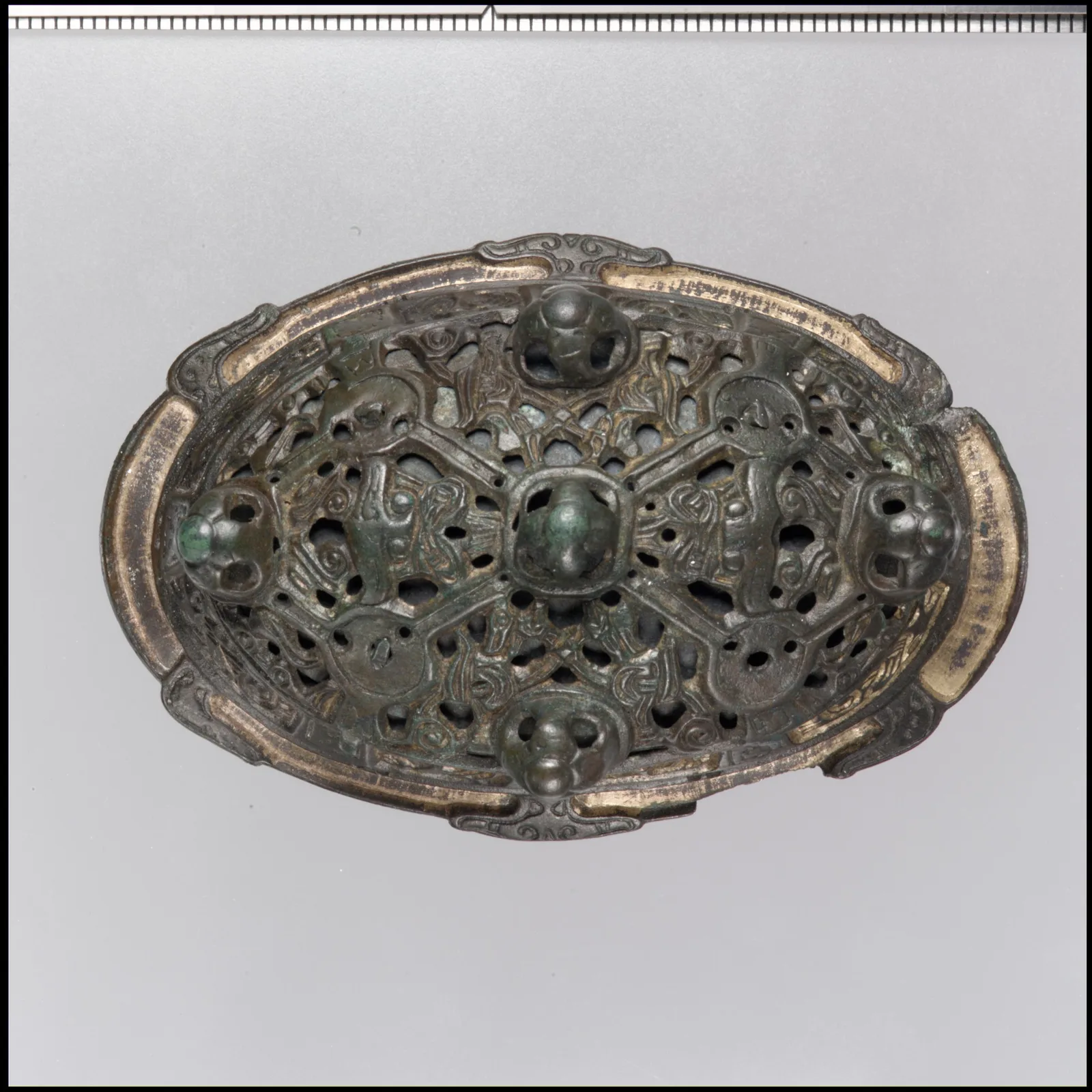
The worship of Freyja flourished in the Viking Age, roughly the 8th to 11th centuries. In those years her name rang out in skaldic poetry, in place names and in personal names. Archaeologists find a wealth of female figurine pendants and amulets linked to the fertility cult and to the goddess. Silver was the chief measure of wealth in the North during these centuries, while gold was rare and almost sacred, so it is fitting that the goddess of gold and jewels should be Freyja in particular. For more on the signs the Norse wore, there is a guide to Viking jewellery.
Traces of the Cult in Place Names
How widely Freyja was honoured shows in the map. All across Scandinavia lie place names that carry her name: fields, groves and hills once tied to the goddess. In Swedish and Norwegian lands you find names meaning "temple of Freyja" or "field of Freyja," and there are many of them. This is solid evidence of a living cult, for the name of a chance figure would never have settled in so many places. The goddess was a real part of the faith of northern farmers and warriors, not a literary ornament.
The Myths Written Down in Iceland
We know of Freyja chiefly from Icelandic texts of the 13th century, above all the Poetic and the Prose Edda. By then Scandinavia had already accepted Christianity, and the myths were set down by learned scribes, partly as a literary inheritance. So what reached us is not a living cult but its later retelling, at times contradictory. In one place Freyja is confused with Odin's wife Frigg, in another she is given various names. This bookish history explains why so much around the goddess stays unclear and why she is so easy to mistake for other figures.
A Revival of Interest in Modern Times
After centuries of neglect, the image of Freyja returned to art in the 19th century, on the wave of a romantic fascination with northern antiquity. Painters showed the goddess in her chariot with cats, sculptors carved her with the necklace at her throat, composers brought northern gods into opera. From this romantic revival grew the modern picture of Freyja as the beautiful warrior of the North. Many of today's pieces of jewellery draw on this vivid 19th-century image rather than on the spare lines of medieval texts.
Customer reviews
Zevira is a real jewellery shop. Genuine payments, deliveries and customer thank-yous.
🥰🥰🥰 gracias

Ok, ¡gracias! 🙂

The Symbols of Freyja
The Brisingamen Necklace
Brisingamen is the chief symbol of Freyja, a golden necklace or torc of impossible beauty. By the myth it was forged by four dwarf smiths, and Freyja wanted the piece so badly that she paid for it with four nights, one with each master. Ever since, Brisingamen has stood for beauty, desire and the power of gold, and at the same time it reminds us what price passion is ready to pay. The name means roughly "necklace of the Brisings," and people still argue who these Brisings were: a clan of dwarves, perhaps, or a reference to the fire and flame of forging. In jewellery the idea of Brisingamen lives on in massive torcs, gold collars and amulet pendants.
Cats and the Chariot
Freyja's chariot was drawn by two large cats. Different retellings call them great forest cats or lynxes, but tradition settled on cats. This makes Freyja almost the only goddess of antiquity whose mount was a cat rather than a horse, a lion or a bird. Cats tie the goddess to home, to independence and to a soft yet wilful strength. In jewellery a cat beside northern symbolism reads precisely as a sign of Freyja, not as a cute animal. Cats appear often in the mythology of many peoples, and their Egyptian image is quite different, treated in an article on the cat and the goddess Bastet.
The Falcon Cloak
Freyja owned a magic cloak of falcon feathers; whoever put it on could turn into a falcon and fly between the worlds. The goddess lent this plumage to other gods, to Loki for instance, when he needed to reach the land of giants in a hurry. The falcon cloak is a symbol of freedom, flight, passage between worlds and a tie to seidr witchcraft. In jewellery a feather or a falcon figure beside northern motifs points exactly to this power of the goddess to change shape and cross the borders of worlds.
The Boar Hildisvini
Freyja had a battle boar named Hildisvini, which means "battle swine." The goddess rode him into battle, as Freyr rode his own golden boar. By one tale Hildisvini was in truth her human lover, whom she turned into a boar and took along with her. To the Norse the boar was a sign of battle fury, fertility and protection, and the golden bristles of the mythic boars stood for sunbeams and harvest. This attribute underlines once more the warrior side of Freyja, for a goddess of love rides into battle on the back of a war beast.
Tears of Gold
When Freyja's husband Od went off on his long wanderings, the goddess wept for him, and her tears turned to gold, and falling into the sea they became amber. This image ties love, longing and precious metal into a single knot. The tears of gold explain why Freyja was called the goddess of gold: the very wealth of the North was imagined as the hardened grief of a loving woman. In jewellery amber pendants and drops of gold point straight to this myth. The stone itself gets a thorough guide to amber in jewellery.
The Torc as a Mark of Status
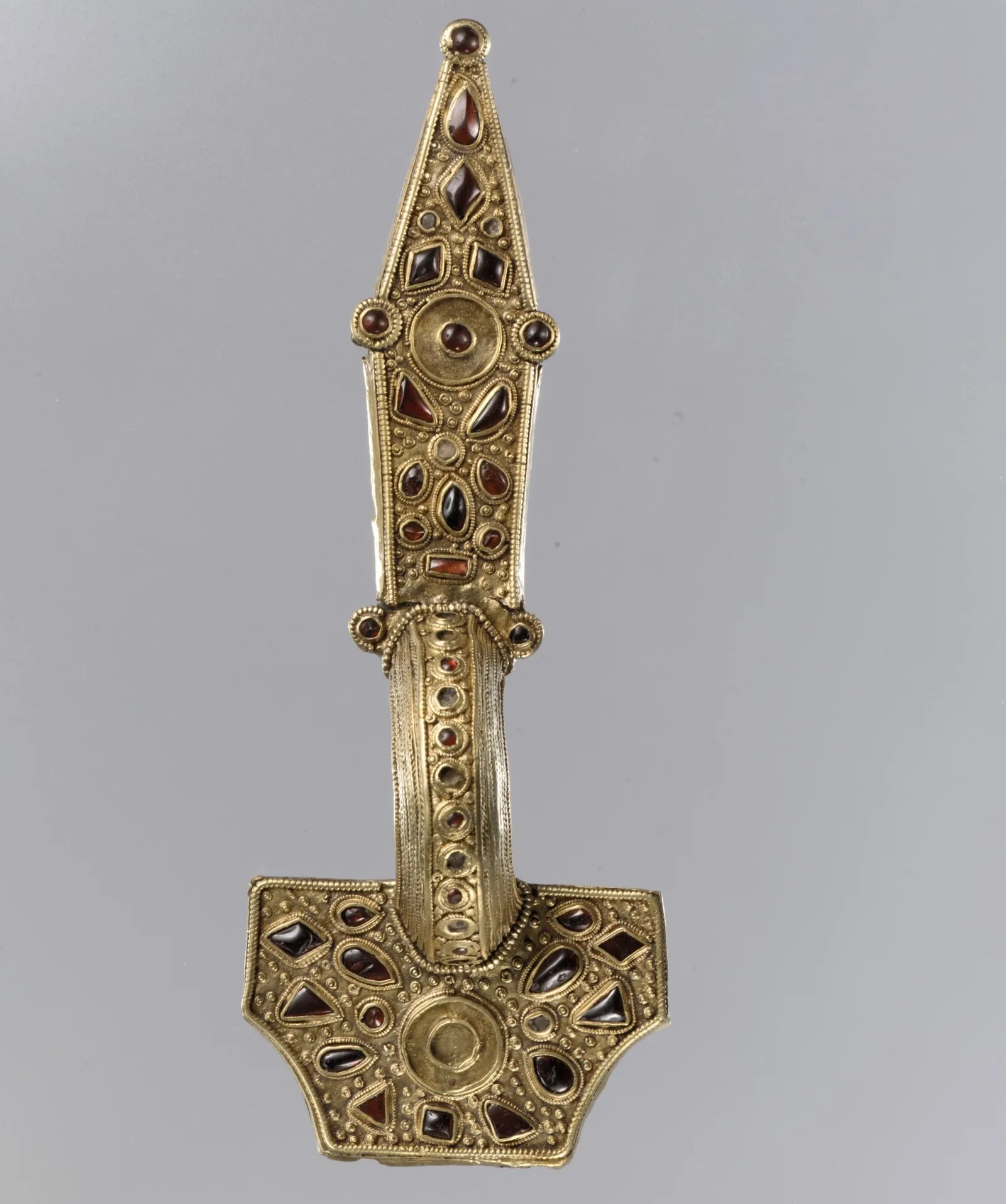
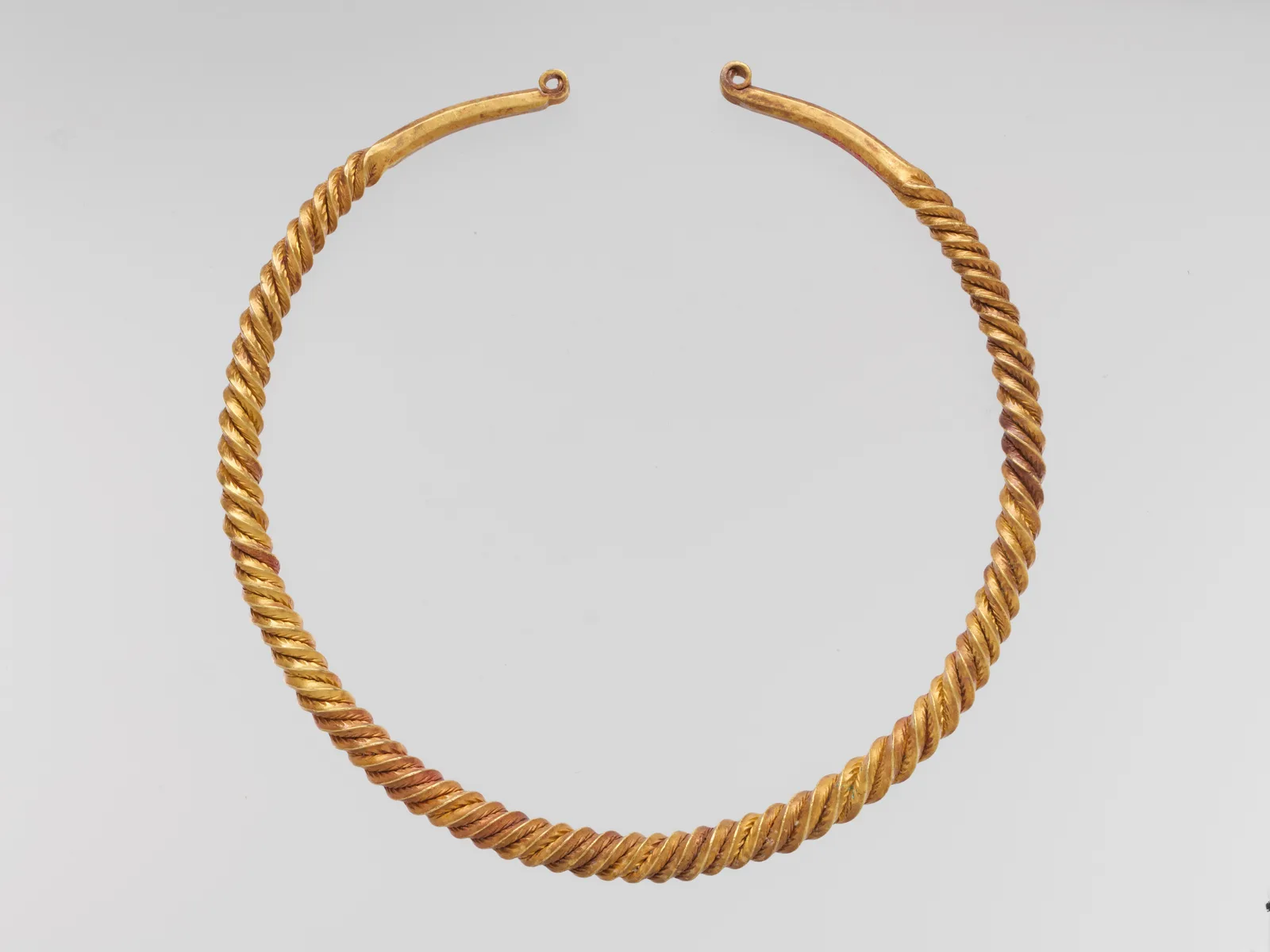
Freyja's necklace is no chance trinket but a torc, a neck ring that meant wealth and standing among the Norse. Massive gold and silver torcs were worn by chiefs and people of rank, given as rewards for loyalty, buried in hoards and offered in sacrifice. So Brisingamen in the myth is the highest mark of value, fit for a goddess, not a pretty bauble. When someone today chooses a torc in the spirit of Freyja, they choose this ancient meaning too: jewellery as a sign of significance, not only as adornment.
The Cat's Gaze and the Cat's Nature
Freyja's bond with cats runs deeper than a team for her chariot. A cat is independent, sensuous, wilful and yet tender, and the Norse carried these traits over to the goddess herself. A good housewife who treats cats well is said to please Freyja. In some local beliefs milk was left for cats near the home in the goddess's honour, asking for a good harvest. The cat's nature adds warmth and a sense of home to the image of Freyja, balancing her warrior and witch sides.
Upload a photo of your pet, someone you love, or an object. We'll build a 3D model and hand-cast it in pewter.




What Freyja Means in Jewellery
Love and Attraction
The most direct meaning. Freyja is the northern goddess of love, passion and the attraction between people. Jewellery with her symbolism is worn as a sign of love, a talisman of attraction and charm. Unlike a nameless little heart, the image of Freyja adds depth: behind it stands the myth of a goddess who knew for herself what desire is and what price it demands.
Beauty and Gold
Freyja is the mistress of jewels and gold, who paid for a necklace with her own self. Her symbol is an acknowledgement of the worth of beauty and adornment as such. To wear the sign of Freyja means to rank beauty high, without shame for loving lovely things. The golden tone of such pieces is no accident: it points straight to the wealth of the goddess and to her tears of gold.
Feminine Strength
The modern reading of Freyja is, above all, feminine strength and independence. The goddess chose her own lovers, ruled her own witchcraft, claimed her own fallen warriors and bowed to no male god. For many women Freyja has become a symbol of self-reliance and inner power rather than passive femininity. Her jewellery reads as a quiet statement of strength, not only of tenderness.
War and Death
With Freyja you cannot forget the warrior side. She claimed half of the fallen for her hall Folkvangr, rode into battle on a boar, commanded the magic of fate. So her symbolism carries the themes of courage, readiness to fight and respect for the fallen too. Jewellery with Freyja suits those who see in themselves both softness and resilience, and who honour the memory of those who are gone.
Magic and Intuition
As the mistress of seidr, Freyja is bound to witchcraft, foresight and intuition. Her symbol is worn as a sign of a pull towards hidden knowledge, towards working with fate, towards instinct and premonition. This is the side of the goddess that links her to the volva seers and to the dark, secret underside of the northern world. For those drawn to the esoteric North, the sign of Freyja marks an interest in magic and in feminine wisdom.
Fertility and Abundance
The oldest layer of meaning in Freyja is fertility, harvest, abundance and the continuation of the family line. From the Vanir she inherited power over the earth and its gifts. In jewellery this layer reads as a wish for wellbeing, plenty, a full and fertile life. The historical meaning of the goddess lies closer to the idea of abundance than to romantic love alone, and that is worth remembering when choosing her symbol as a charm. For the farmers of the North a good year meant survival, so the goddess of fertility stood at the very heart of their concerns, and her sign was not an ornament for beauty but a plea for life and plenty. This ancient meaning still makes the symbol of Freyja fitting as a wish of fullness and prosperity for someone close.





Freyja and Frigg: Don't Confuse Them
Two Goddesses Often Blurred Together
Freyja is constantly confused with Frigg, the wife of Odin and the chief goddess of the Aesir. The likeness is no accident: both names go back to a single root meaning "to love," and both goddesses are tied to love, marriage and women's matters. Some scholars even believe this was once a single goddess who split in two. But in the texts that reached us they are two distinct figures with distinct roles, and to blur them is a mistake.
How They Differ
Frigg is the goddess of marriage, motherhood and the hearth, the faithful wife of Odin, keeper of the family and a seer who knows fates but keeps silent about them. Freyja, meanwhile, is the goddess of passion, gold, war and witchcraft, free and independent, choosing her own lovers. Frigg is the image of the married matron; Freyja is the image of free, sensuous power. In jewellery the sign of Freyja speaks of passion and self-reliance, while the image of Frigg, which appears more rarely, speaks of family and faithfulness.
How to Choose Without a Mistake
If the theme of love as passion, gold, feminine strength and magic is close to you, your goddess is Freyja, and her attributes are the necklace, the cats, the falcon. If the theme of family, motherhood, home and faithfulness is closer, you are looking at Frigg with her distaff and the bunch of housekeeper's keys. Grasping this difference keeps a meaningful charm from turning into a random set of "northern" badges.
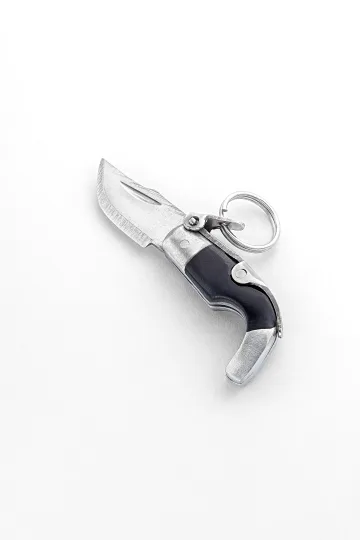
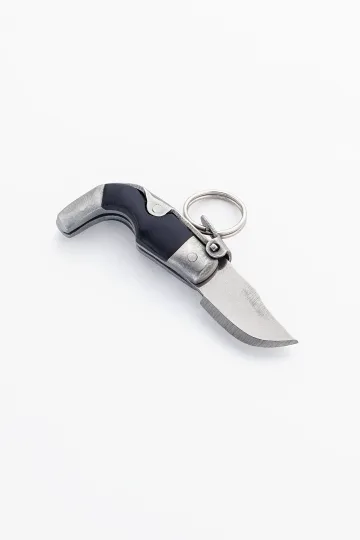
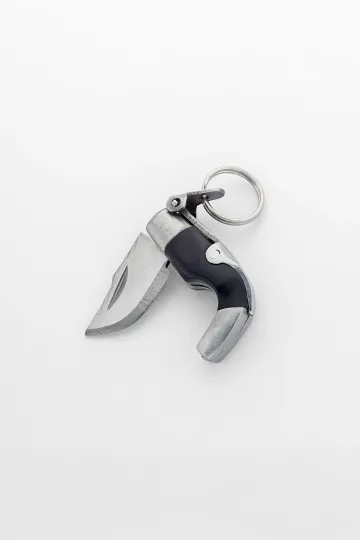
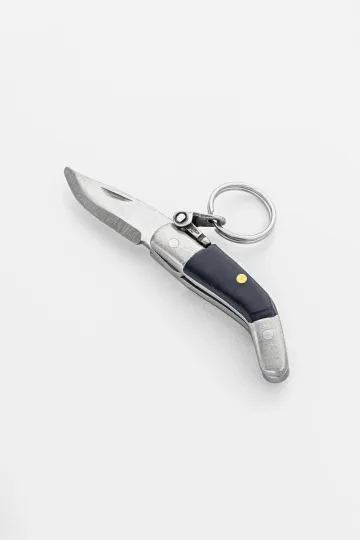
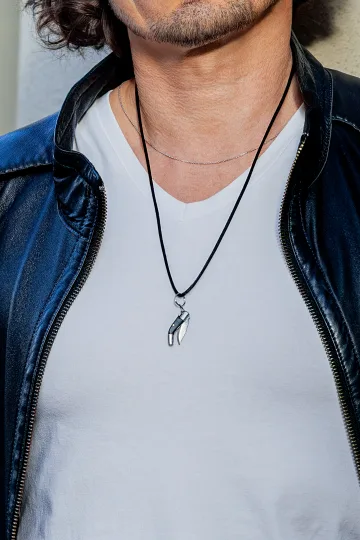
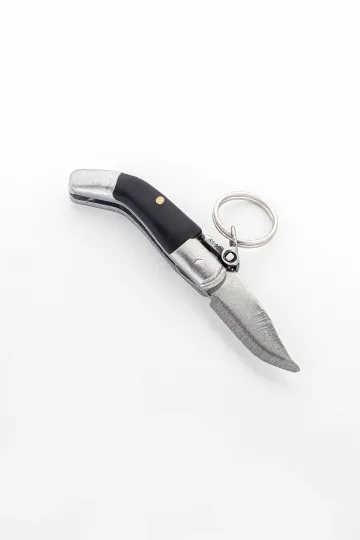
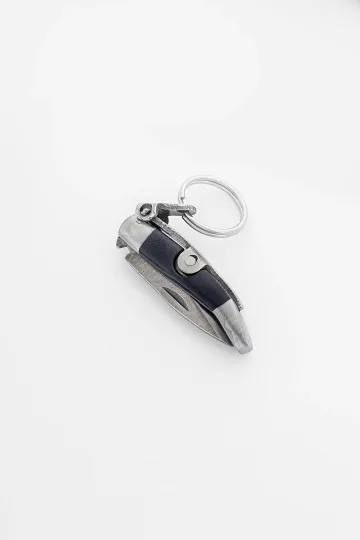
CAPAORA mini knife pendant
The 18th-century Spanish navaja in miniature: 40 mm of stainless steel, a real folding mechanism and a Palanquilla lock that clicks. An affordable gift to remember.
Authentic · Ships from Spain · 14-day returns
Materials for Freyja Jewellery
Amber as the Tears of Freyja
The most "Freyja" stone of all. By the myth the goddess's tears, falling into the sea, became amber, so the link is direct and ancient. Amber is the fossilised resin of ancient pines, warm, honeyed, golden, and the Norse prized it especially high, for the Baltic was the chief source of this stone in Europe. An amber pendant beside northern motifs is the most precise way to wear the symbolism of Freyja without a single word inscribed. For the varieties, choosing and care, there is a separate guide to amber.
Gold
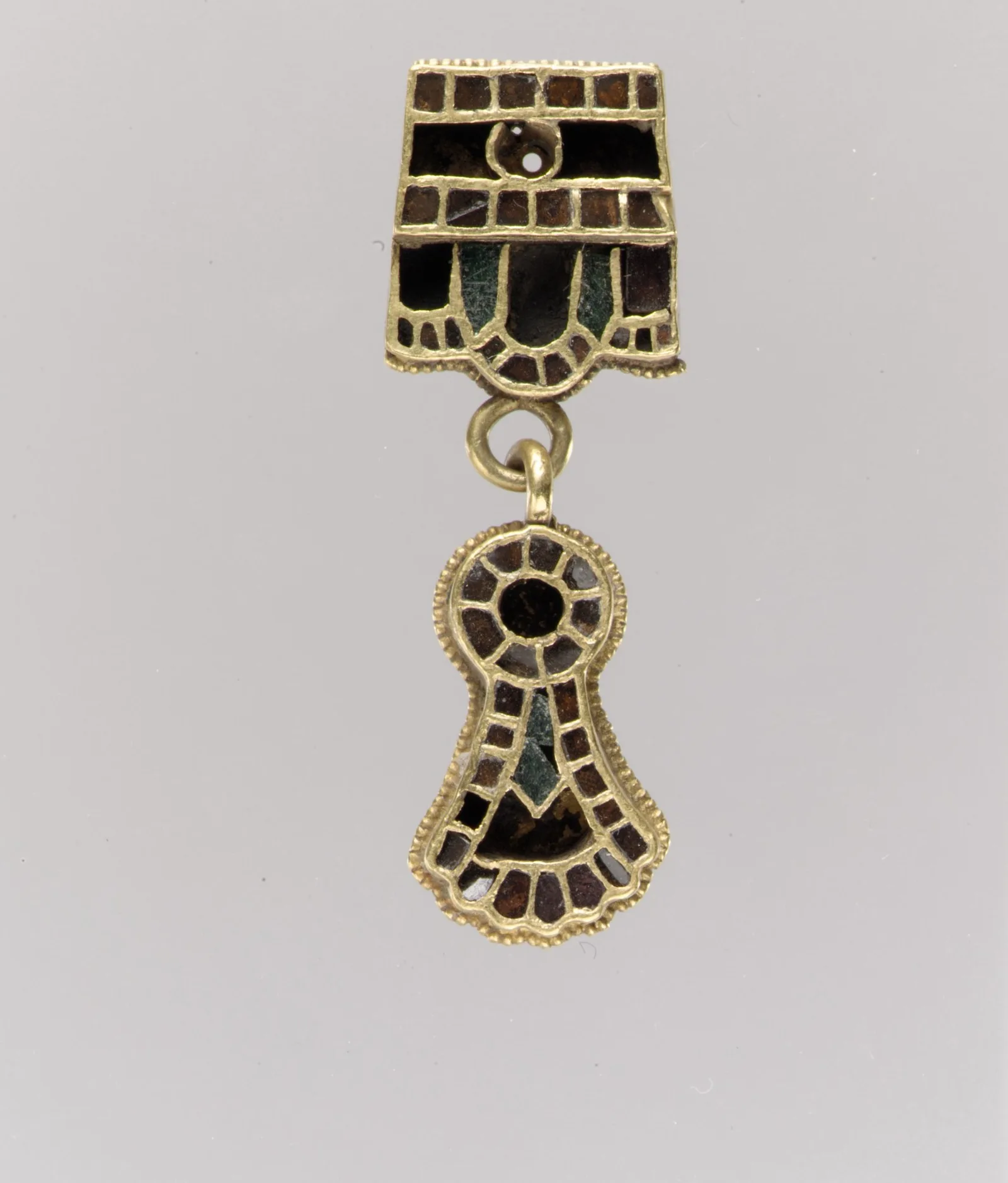
Freyja is a goddess of gold, and this metal carries her image most directly. The tears of gold, the golden necklace Brisingamen, the golden bristles of the mythic boars: all the wealth of the North in the myth ties back to the goddess. Yellow gold is warm and ceremonial; it underlines the idea of preciousness and passion. If you want to wear Freyja's symbolism for a serious occasion, gold is the logical choice. On the different shades of the metal there is a full guide to white, yellow and red gold.
Silver
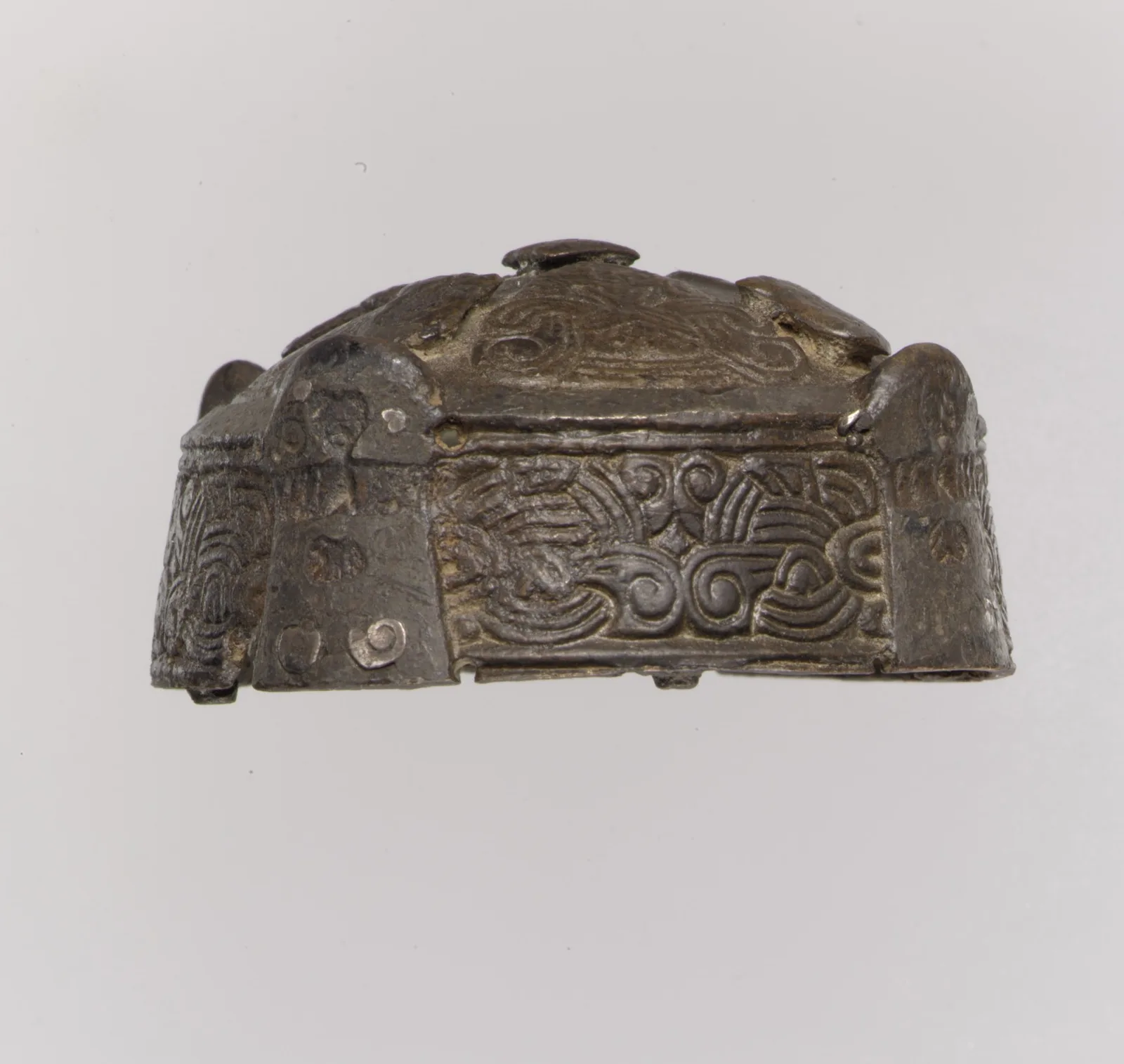
Silver was the chief metal of the Viking Age, the measure of wealth and the material of most surviving northern jewellery. It runs cooler than gold, quieter, closer to the moon and to everyday wear. For Freyja jewellery silver fits historically: it was silver the Norse used for torcs, brooches and pendants. If you want to wear the symbol every day, silver is more practical and truer to the spirit of the age. On how to tell the real thing, there is an article on silver 925, what it means.
Bronze and Brass
Not every Norseman could afford silver, and many amulets were cast in bronze. The warm golden sheen of bronze and brass echoes the gold of Freyja but costs far less, so such alloys are good for replicas of historical jewellery and for anyone who wants a "northern" look without a premium price. Bronze takes on a noble patina over time, which lends a piece the look of true antiquity, dug from the earth.
Garnet and Red Stones
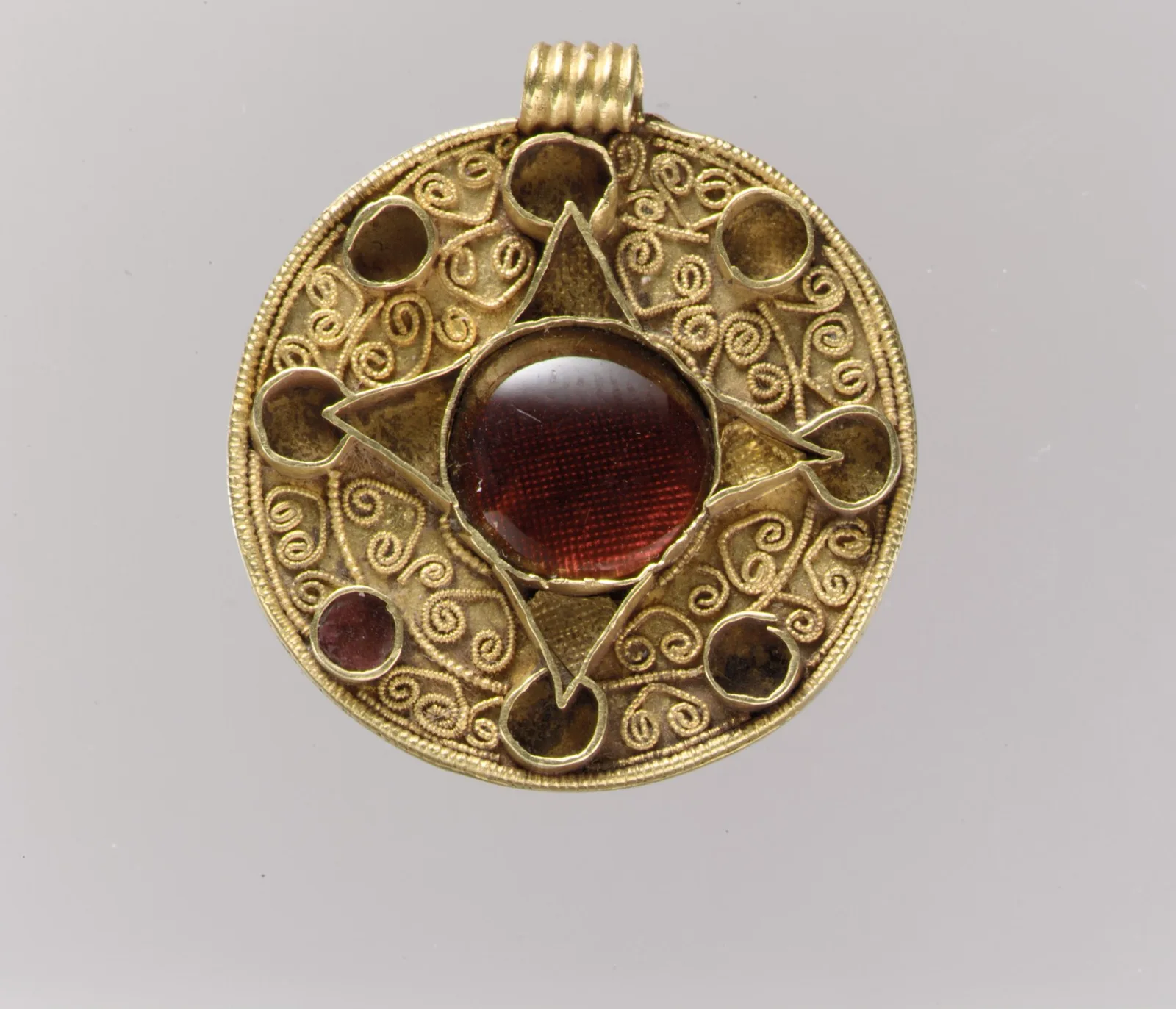
Northern craftsmen loved to set red garnets into gold and silver, and archaeologists find a great many such pieces from the Migration Period and the Viking Age. The deep red colour echoes the theme of passion and blood, the warrior side of Freyja. A garnet in a northern setting is a historically faithful and at the same time striking choice for jewellery with a goddess of love and war.
Rock Crystal and Moonstone
Clear rock crystal was set in silver by the Norse and worn as a charm, sometimes in the form of spherical pendants. The cold gleam of crystal and the shifting glow of moonstone convey well the magical, witch-like side of Freyja and her tie to seidr and foresight. These stones carry the image of the goddess away from warm gold towards a silvery, lunar, mysterious palette, which suits anyone who feels closer to the magic in Freyja than to the passion.
Who Freyja Jewellery Suits
Those Who Value Strength and Tenderness at Once
Freyja is a rare image in which softness and strength do not quarrel but complete each other. Her symbol sits well on a person who does not want to choose between tenderness and character, who is drawn to the idea that you can love and be strong at the same time. This is no contradiction but a fullness, and the northern goddess expresses it better than many other mythological figures.
Lovers of Scandinavian Culture
For anyone close to the world of sagas, runes and northern myths, the sign of Freyja speaks the native tongue. It marks a kindred spirit for admirers of the Icelandic Eddas, of Viking Age craft, of northern aesthetics as a whole. Historically faithful materials work well here: silver, bronze, amber, and the restrained forms of torcs and brooches that echo real finds.
As a Gift for a Woman With Character
Jewellery with Freyja is a fitting gift for a self-reliant woman who makes her own decisions and needs no one's protection. Unlike a gift with passively tender symbolism, the northern goddess credits the recipient with strength and will. Such a gesture reads as respect rather than only a compliment to her looks, and so it is valued above a routine little heart.
For a Birth and Important Passages
The oldest layer of Freyja is fertility, childbirth and the continuation of the family line, so her symbol is historically fitting as a gift for the birth of a child or for an important turning point in life. Amber, which the Norse gave to children as a charm, fits this role especially well: warm, light, tied to the tears and the care of the goddess.
Leave your email, we'll send your discount code. No spam, unsubscribe anytime.
The code arrives by email, valid on your first order.
The Psychology of Choosing the Northern Goddess
Why a Complex Image Draws Us In
Simple symbols of love read in an instant, but they are forgotten just as easily. Freyja draws people in by her very complexity: she does not fit into a single role, and a person who chooses her often feels many-sided too. Psychologically, such a choice is a way of declaring inner depth without words, through a piece that stays silent yet implies a great deal.
Strength Without Aggression
In the image of Freyja, strength does not mean hardness on display. She rules magic, gold and the fallen, yet remains the goddess of love and beauty. For many this is an appealing model: to be strong without losing femininity, to shape the world softly but surely. Jewellery with her symbolism works as a quiet reminder of that balance, especially on days when confidence runs short.
A Tie to Roots and History
Choosing the northern goddess is often a pull towards roots, towards an ancient culture, towards something older and more genuine than the fashion of the present day. To wear Freyja is to place yourself in a long line of people who, a thousand years ago, believed in this force. This tie across time gives a piece a weight that nameless decor lacks, and so such a choice feels meaningful rather than random.
Freyja in Art
Sculpture and Painting of the 19th Century
The image of Freyja as we picture her took shape mostly in the 19th century. Scandinavian and German painters of the romantic wave showed the goddess standing in a chariot drawn by two large cats, the necklace Brisingamen at her throat and often the falcon cloak about her. Sculptors carved her strong and beautiful, with the attributes of love and war at once. From these works the current likeness of the goddess passed into the popular mind, and with it the motifs for jewellery.
Freyja in Skaldic Poetry
In medieval Scandinavian poetry gold was often called "Freyja's tears" or "Freyja's weeping." This is a so-called kenning, a poetic circumlocution that uses a beautiful image in place of the plain word. The skalds, the court poets, could call gold "the goddess's tears," and their listeners knew at once what was meant. This poetic turn shows how firmly the goddess had grown together with gold and jewels in northern culture.
A Comparison With Aphrodite
Freyja is often called the "Norse Aphrodite," and there is a likeness: both are goddesses of love, beauty and attraction, both tied to gold and jewels. But these are different figures from different cultures. Aphrodite among the Greeks is above all beauty and passion, gentle and sensuous. Freyja among the Norse is far more complex: she is also a warrior who claims the fallen, and a witch who commands seidr. The Greek goddess is softer; the northern one is harder and more contradictory. If the Mediterranean image of love is closer to you, look at the discussion of Aphrodite and Venus, and Freyja is her northern, sterner relative in theme, but not her double.
Why the Image Does Not Age
Freyja holds her place in art and in jewellery because she joins several principles at once: love and war, gold and magic, tenderness and strength. The same image speaks of passion, of self-reliance and of a tie to secret knowledge. Each era took its own from her without cancelling what came before. So jewellery with the northern goddess is not bound to the fashion of a decade: it rests on meaning gathered over centuries, and from that it does not grow old.
Freyja Against Other Northern Images
Freyja and Frigg
This is covered in detail above, but in brief: Freyja is passion, gold, war and magic, the free goddess of the Vanir. Frigg is family, motherhood, faithfulness and home, the married goddess of the Aesir. Both images are about a woman, but one is about free sensuous power and the other about the keeper of the hearth. If you want a sign of love as passion and independence, you choose Freyja.
Freyja and the Valkyries
The Valkyries are warrior maidens who, by Odin's will, choose the fallen on the battlefield and carry them to Valhalla. Freyja stands above them: she herself claims half of the fallen for her hall Folkvangr, and in some texts the Valkyries are counted among her companions. A Valkyrie is a sign of warrior valour and of fate chosen in battle, while Freyja is broader, being love, war and magic all at once. The theme of choosing the fallen links the images, but the goddess spans far more than her winged maidens.
Freyja and Odin's Raven
The raven is the bird of Odin, his eyes and ears in the world, a sign of wisdom, memory and a tie to death. The falcon is the bird of Freyja, a sign of flight, freedom and passage between worlds. Both birds are northern and both are tied to other worlds, but the raven leans towards wisdom and fate, the falcon towards freedom and witchcraft. On Odin's bird there is a separate piece on the raven in jewellery.
Freyja and the Northern Runes
The runes are the ancient script and magical system of the North, each sign carrying its own meaning. As the mistress of seidr, Freyja is tied to the magic of fate, and the runes sit naturally beside her image in jewellery. But a rune is an abstract sign-letter, while Freyja is a concrete goddess with a story of her own. A good pair for a charm: the rune sets the meaning, the image of the goddess sets the character. On one such sign there is an article on the Odal rune.
Send a friend a discount code, they save on their first order.
Facts That Surprise
The name Freyja literally means "lady," and from it descends the German word Frau, meaning "woman" and "lady." The polite way of addressing a woman in several languages traces back to the northern goddess.
Friday in the Scandinavian and Germanic languages, English Friday and German Freitag for instance, is by one account named after Freyja or the kindred Frigg. The day of love and beauty in the week carries the name of a goddess.
Freyja claimed half of the fallen warriors for her hall Folkvangr, and she chose first, not Odin. The goddess of love turns out to be the senior partner in the division of heroes.
Freyja's chariot was drawn by two cats, which makes her almost the only goddess of antiquity with a feline team in place of horses or lions.
By the myth it was Freyja who taught the seidr witchcraft to Odin himself, the highest god. The magic was held by a goddess of the Vanir, not by the head of the Aesir.
Freyja's tears for her wandering husband turned to gold, and falling into the sea they became amber. That is why in skaldic poetry gold was called "Freyja's tears."
For the necklace Brisingamen the goddess paid with four nights with the dwarf smiths, one with each master. The price of beauty in this myth turns out to be very personal.
Freyja's battle boar Hildisvini was, by one tale, in truth her human lover, whom she turned into a beast so she could take him along.
Frequently Asked Questions
Who is Freyja in Norse mythology?
Freyja is the goddess of love, beauty, fertility, gold, war and witchcraft among the Norse. She is of the Vanir, the gods of fertility, and after the war between Aesir and Vanir she moved to the Aesir in Asgard. Freyja commanded the magic of seidr, rode in a chariot drawn by cats and claimed half of the fallen warriors for her hall Folkvangr.
What is the Brisingamen necklace?
Brisingamen is a golden necklace or torc, the chief symbol of Freyja. By the myth it was forged by four dwarf smiths, and Freyja paid for it with four nights, one with each master. The necklace became a sign of beauty, desire and the power of gold, and in jewellery its idea lives on in massive torcs and gold collars.
Is Freyja the Norse Aphrodite?
Not quite. Both goddesses answer for love and beauty and are tied to gold, but they are different figures from different cultures. Aphrodite among the Greeks is softer and more sensuous, while Freyja among the Norse is also a warrior who claims the fallen, and a witch. The Greek goddess is covered in a piece on Aphrodite and Venus; Freyja is her sterner northern relative in theme.
How does Freyja differ from Frigg?
Frigg is the wife of Odin, goddess of marriage, motherhood and the hearth. Freyja is the goddess of passion, gold, war and witchcraft, free and independent. Both names go back to a root meaning "to love," and the goddesses are often confused, but they are distinct figures: Frigg is about family and faithfulness, Freyja about passion and self-reliance.
Why is amber linked to Freyja?
By the myth Freyja's tears for her wandering husband fell into the sea and became amber. So amber counts as the goddess's stone, warm, golden, northern. An amber pendant beside northern motifs is the most direct way to wear the symbolism of Freyja. For more on the stone there is a guide to amber.
Can a man wear Freyja's symbolism?
Yes. Although Freyja is a goddess and her image is feminine, the theme of gold, war, the honour of the fallen and northern magic is not strictly bound to gender. A man suits the pared-back options: a silver torc, amber in a plain setting, a northern pattern without markedly feminine details. Many northern charms were historically worn by men too, covered in the guide to Viking jewellery.
Which metal suits the theme of Freyja best?
Gold is closest by the myth, since Freyja is a goddess of gold and of golden tears. But silver is truer to the spirit of the Viking Age, when it was the chief metal of the North. Bronze and brass give a warm golden look at an accessible price. The choice depends on what matters more to you: the myth of gold or the historical truth of the silver North.
What is Freyja a charm for?
Historically people turned to Freyja for love, safe births, fertility and plenty, and before battle for courage. Today her symbol is worn as a sign of love and attraction, of feminine strength and independence, and for those drawn to northern magic as a mark of interest in seidr and intuition. It is a layered charm, and each person takes from it the meaning that is closest.
Buying it as a gift? Each one arrives ready to give.
 A branded Zevira box and a little card come with every order.








Conclusion
Freyja is the most complex and powerful image of love the North has given. Behind the necklace Brisingamen stands the myth of the price of beauty, behind the golden tears the longing for a wandering husband, behind the cat chariot and the falcon cloak a wilful freedom, and behind the hall Folkvangr the memory of the fallen. This is a goddess who joined love and war, gold and magic, tenderness and strength in a single image. To wear her symbol means to choose meaning with a history over a nameless badge, to acknowledge the worth of beauty and to declare your own self-reliance. Amber or gold, torc or pendant, a gift or a purchase for yourself, the upshot is one: this is jewellery about love that is not afraid to be strong.
Jewellery in the Spirit of the Northern Goddess
Amber, golden torcs, Viking Age silver and natural stones. Choose your own piece with the character of Freyja, as a gift or for yourself.
Browse the catalogueWear the symbol, don't just read about it. These are in stock:
About Zevira
Zevira makes jewellery with meaning. We gather symbols that carry a history: charms, signs of love, mythological images. Every piece comes with a clear account of what it means and where it came from, so you wear something with character rather than impersonal metal and stone. Amber, silver, gilded settings, natural stones, all chosen so the jewellery lasts long and pleases you every day.