The Dagaz Rune: Meaning of the Symbol of Dawn, Breakthrough and Transformation in the Elder Futhark
There is a single moment when the night has ended but the day has not yet begun. The sky is grey, no stars, no sun, everything held on the threshold. The old Germanic peoples named this moment with the word dagaz, "day," and gave it a rune of its own. So the sign Dagaz was born: a symbol not of light and not of darkness, but of the passage between them.
That is where the rune's chief trait comes from. Dagaz stands almost at the very end of the Elder Futhark and speaks not of wealth, not of protection, not of strength, but of transformation. Of the point where one state gives way to another: darkness to light, stagnation to motion, despair to hope. It is the rune of the turning point, of awakening, of a new day that always arrives, however long the night may drag on.
The rest follows in order: where the symbol came from, why it has the shape of a butterfly built from two triangles, what "day" meant to Iron Age people, what a Dagaz pendant is made of, how to wear it, how the sign differs from other runes of change, and why the rune of dawn is so often given as a gift for a new beginning.
Why Dawn Matters More Than Noon
For someone who lives by the sun rather than the clock, dawn is far more than a time of day. It is a promise that life will carry on for one more turn. In a society without electricity, night was a time of danger: predators, cold, an unseen enemy, the fear of whatever hides in the dark. Every morning gave the world back to people, and that return was felt keenly, almost as a miracle.
Noon, when the sun stands at its height, brings nothing new. Dawn changes everything at once: the dark retreats, outlines emerge, you can work again, walk, live. It is exactly this moment of the turn, and not daylight itself, that became the heart of the Dagaz rune. The sign answers for the border, for the click with which one thing passes into another, for that short instant in which the shape of the day is decided.
Wear the symbol, don't just read about it. These are in stock:



For this reason Dagaz is rarely understood as a "sun rune." The sun has its own sign in the Futhark, Sowilo, kin in spirit to the runes of wealth and silver. Dagaz is about something else: about the passage itself, about the threshold, about the ability to break out of darkness toward light. That makes it a rune of breakthrough rather than of rest, and explains why it is so loved as a sign of beginning.
Understanding Dagaz means separating two layers, as with any rune. The first is practical: it was a letter for the sound "d," an ordinary unit of writing in the runic row. The second is symbolic: every rune carried a name and a meaning, and Dagaz owned the theme of day, light and transformation. Both layers lived at once. A carver could cut Dagaz simply as a "d" in someone's name and, in the very next breath inside a charm, as a sign of awakening and a lucky turn.
What the Dagaz Rune Is
The Meaning of the Name and Its Sound
Dagaz is one of the last runes of the Elder Futhark, the oldest runic alphabet of the Germanic peoples. It carried the sound "d" and closed the third, final of the three "aettir," the groups of eight runes into which the row was divided. The name of the rune goes back to Proto-Germanic dagaz, "day," and is kin to English day, German Tag, Gothic dags. Everywhere the root is the same, and everywhere it is about the light part of the day, about the day as a stretch of life from dawn to dusk.
What matters is that "day" here was understood not as an abstract unit of the calendar but as a living cycle. A day is born at dawn, comes of age at noon, grows old toward evening and dies in the twilight, only to be born again in the morning. This idea of the eternal return of light is sewn into the Dagaz rune: transformation, renewal, a circle that never stops.
What the Symbol Looks Like
Dagaz is recognizable at a glance: two triangles turned point to point, or, if you like, the silhouette of a butterfly with open wings. Another common comparison is an hourglass laid on its side, or an infinity sign with sharp corners. Two slanting lines cross between two vertical staves, forming a figure whose left and right halves mirror each other.
There is a lot of meaning in this form. Two triangles, dark and light, night and day, meet at a single point in the center. It is there, at the place of contact, that the transformation happens. The symmetry of the sign is no accident: Dagaz reads the same from the right, from the left, and from top to bottom, a point covered in more detail below. The form is closed on itself, stable and balanced, as befits a symbol of the equilibrium of opposites.
Its Place in the Elder Futhark
The Elder Futhark was used roughly from the 2nd to the 8th century across Germanic Europe, from Scandinavia to the Black Sea. Twenty-four signs split into three rows of eight, each row named after its own first rune. Dagaz stands at the very end of the row, in most arrangements next to last, right before Othala, the rune of heritage and ancestral land.
Its position at the end gives Dagaz special weight. If the first rune, Fehu, opens the alphabet with the theme of wealth and resource, then Dagaz near the finish leads toward the theme of completion and a new turn. The runic row seems to live out a whole life and, toward the close, arrives at the idea of a day that gives way to another day, of a renewal that does not end. Dagaz is the light at the end of the path, promising the next path.
Dagaz as the Threshold Between Night and Day
The key to the rune is the notion of the threshold. Dagaz lives neither in day nor in night, but at their seam, in those elusive minutes of dawn and dusk when the world changes its look. Among many peoples such threshold hours were held to be special, charged with power: a time when the borders between worlds are thinnest, when what is impossible by day or by night becomes possible.
The whole depth of the rune grows from this. Dagaz is not about light or about darkness taken apart, but about the ability to pass from one into the other. About that very leap when a long dark stretch suddenly turns bright, when a decision comes after a sleepless night, when an illness retreats by morning. The rune of day carries both a promise of change and a reminder that change always happens on the edge, at a point easy to miss.
History: From the Proto-Germans to Today
Proto-Germanic Roots
Long before the first runic inscriptions, the Germanic tribes already had the word dagaz and the concept of day behind it. The Indo-European root meaning "to burn, to glow, to shine" produced related words in many languages, and "day" in them is bound to the idea of light and warmth. When the Germanic peoples created or borrowed runic script in the first centuries of our era, they gave one of the signs the name of a concept that already existed: day, the light hours, the stretch of life between two nights.
The rune did not invent the link between day and light; it fixed it in letter form. And it chose for this the shape of a double triangle, where two beginnings meet in the middle, showing plainly that day is a meeting of dark and light, not one of the two.
The Scandinavian Iron Age and the Viking Era
Runic writing flourished during the Iron Age and the Viking era, roughly from the 8th to the 11th century. Runes were cut into weapons, jewelry, amulets, wood and stone. By that time the Elder Futhark in the north had already given way to the shorter Younger Futhark of sixteen signs, and no separate sign for the sound "d" remained in it: the Dagaz rune in its classic form belongs precisely to the older, twenty-four-sign row.
Even so, the idea of day, dawn and renewal stayed alive across the whole of Northern culture. Day was personified, myths were told of it, its arrival was met as a daily victory of light. The Dagaz rune in older inscriptions and its figurative sense reached us through archaeology, later manuscripts and the rune poems that carefully recorded the names and meanings of the signs.
The Anglo-Saxon Rune Poem
The fullest medieval commentary on the rune of day survives in the Anglo-Saxon rune poem, written down in England probably in the 10th century. The stanza on the rune dæg (day) runs roughly like this: day is the Lord's messenger, dear to people, the glorious light of the Ruler, a joy and a hope for rich and poor, useful to all.
The stanza is strikingly bright. Unlike the stanzas on wealth or hail, which warn of danger, here there is not a shadow of threat. Day is called a joy and a hope, and, what matters, a hope for everyone at once, for rich and poor in equal measure. The Christian scribe added the reference to the Lord, but the idea of day as a universal good is far older: light comes to all, it chooses no one and passes no one by.
Dagaz and the Veneration of Dawn Among the Germans
Dawn among the Northern peoples was not simply a time of day but an event with divine figures behind it. In Norse mythology day, Dagr, was a living being, son of the night Nott and of the bright Dellingr, who personified the daybreak. Dagr rode across the sky on a horse named Skinfaxi, "Shining Mane," and from that horse's mane light poured out over the earth.
Such mythology makes the Dagaz rune especially vivid. Day is not an abstraction but a rider who each morning leads light out into the sky, driving off the dark. The sign of day points back to this circle of images, where dawn defeats night again and again, where light is not a given but a daily effort, a victory to be won anew. To wear Dagaz is in part to keep with you the memory of that daily victory.
Where the Sign Is Found: Inscriptions, Bracteates, Stones
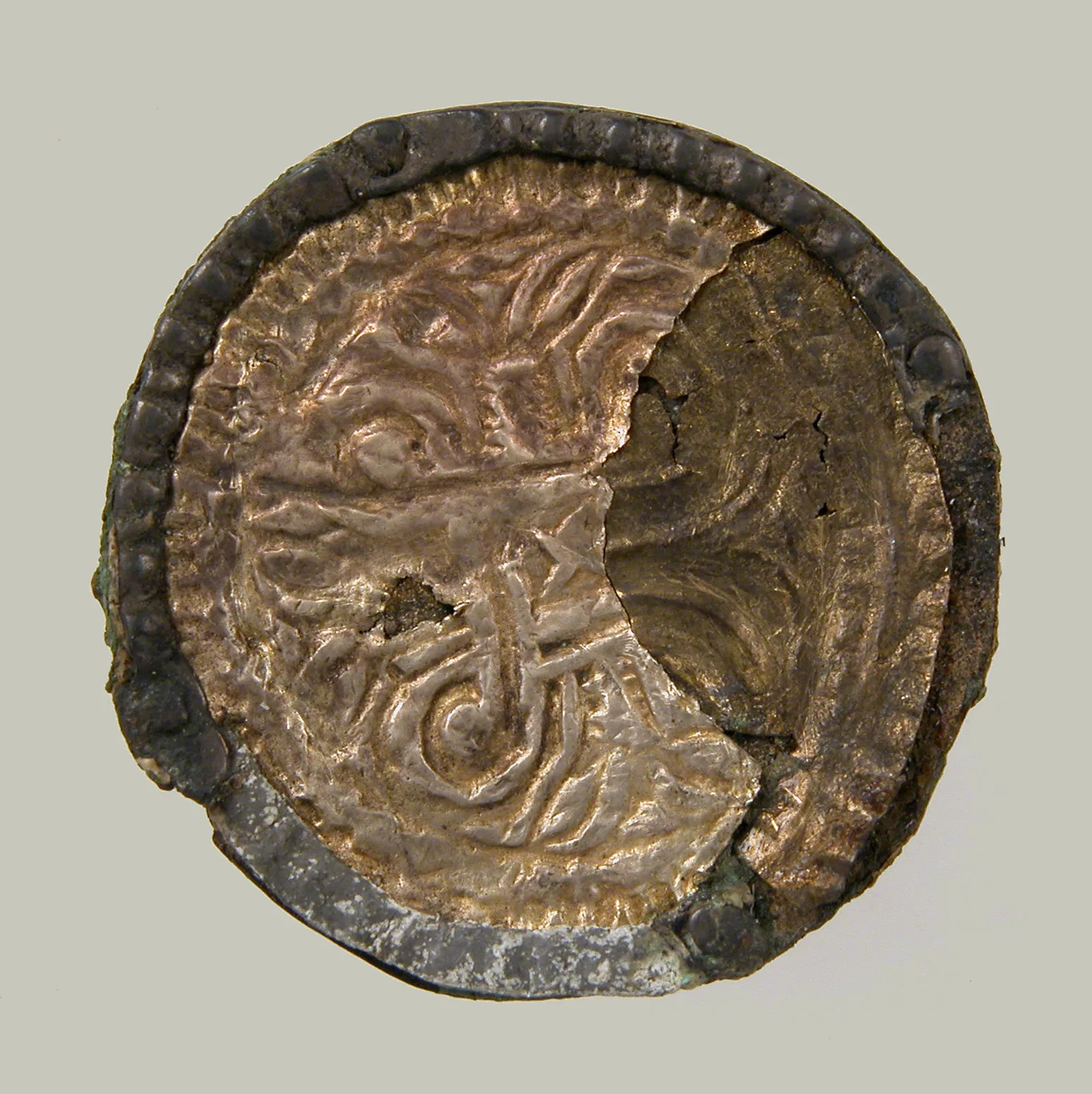
Dagaz appears across the Elder Futhark material in the way most of the alphabet does: in inscriptions that write the whole futhark out in order, on gold bracteates from the migration period, on weapons and personal objects, and on carved stones.
The alphabetical inscriptions matter more than they look. Writing out the complete futhark was itself understood as an act with force behind it, and Dagaz appears in them as the twenty-fourth and final sign, closing the sequence. A number of practitioners read significance into that placement, since an alphabet that ends on the rune of day ends on light rather than on darkness.
Later Scandinavian runic calendars, the carved wooden staves that tracked feasts and days into the modern period, kept the sign in circulation for centuries after runes stopped being used for writing sentences. It survived, in other words, precisely as a marker of days.
Three Poems and the Silence of Two
Three medieval rune poems survive, and only one of them describes this rune. The Anglo-Saxon poem gives day its bright stanza; the Norwegian and Icelandic poems say nothing, because the Younger Futhark used in Scandinavia had reduced the alphabet and this sign was among those it no longer carried.
The result is that almost everything a medieval source tells us about the meaning of Dagaz comes from England. That is worth knowing when you read confident modern claims about what Vikings thought the rune meant: the surviving commentary is English and Christian, written down several centuries after the sign was in general use.
The Decline of Runic Writing
With the arrival of Christianity and the Latin alphabet, runes gradually left everyday use. In Scandinavia they held on longer, in places into the late Middle Ages, but as the main script they yielded to Latin letters. Dagaz, along with the whole Elder Futhark, passed from a living alphabet into the realm of antiquity, of inscriptions on stones and scholarly memory.
Even so, the runes never vanished completely. In rural Scandinavia runic calendars, where Dagaz and its neighbors marked out days and feasts, survived into the modern age. The memory of the signs' meanings was preserved in folklore, in manuscripts with rune poems, and in the works of the first collectors of antiquities.
The Revival in the 20th Century
Fresh interest in the runes arrived with the 19th and 20th centuries and their fashion for Germanic antiquity, folklore and mysticism. Systems of runic divination appeared, books of interpretation, and jewelry in their wake. That is when Dagaz firmly took on the role of "the rune of breakthrough and a new beginning" by which it is known today: a sign of transformation, awakening, of light at the end of a dark stretch.
It is worth holding in mind that the modern divinatory reading is a reconstruction and a creative development, not a direct copy of what Iron Age people meant. Historical Dagaz was a letter and a concept of day. Today's Dagaz has also absorbed a layer of esotericism that grew over the last century and a half. Both layers are real; they simply belong to different eras.
Upload a photo of your pet, someone you love, or an object. We'll build a 3D model and hand-cast it in pewter.




The Meaning of the Dagaz Rune: Dawn, Breakthrough, Transformation
Dawn and the New Day
The first and chief meaning of Dagaz is dawn, the start of a new day and with it a new stage. The rune says that any night ends, that after the darkest stretch the morning comes. This makes it a sign of hope in the literal, not the saccharine sense: not empty optimism, but the calm certainty that the cycle will turn, because it always turns.
In this key Dagaz stands not for the fact of light but for its arrival. It is about the movement out of darkness toward clarity, about the moment when it becomes easier to breathe. That is why modern practice ties it to a fresh start, to the way out of a crisis, to the first day of a new job, a new chapter, a new life.
Breakthrough and the Turning Point
The second meaning of Dagaz is breakthrough. Dawn does not come on gradually and unnoticed but as a break: it was still dark, and now light has spilled over the edge of the horizon. The rune carries this idea of a sharp, qualitative change, when quantity at last passes into quality and everything shifts at once.
Dagaz is the rune of that very instant when long effort suddenly bears fruit, when a locked door opens, when a clear decision comes after agonizing uncertainty. It is chosen as a sign of an intended breakthrough: in work, in creative pursuit, in a personal struggle. Not as a promise that it will be easy, but as a reminder that the break is possible and that it always comes suddenly.
Awakening and Clarity
The third layer of meaning in Dagaz is awakening, in the literal and the figurative sense. Morning wakes the sleeper, and light drives off the phantoms of night. The rune is linked to clarity of mind, to insight, to the moment when you finally see a situation as it is. Darkness hides outlines, light brings them out, and Dagaz is about that passage from the vague to the distinct.
In the esoteric reading Dagaz is often called the rune of awareness, of inner light, of spiritual awakening. It speaks of a state in which a person steps out of dormancy, out of autopilot, out of habitual blindness, and begins to see. That is why a Dagaz pendant is chosen not only for outward change but for inner change too: as a sign of the resolve to wake up and look with sober eyes.
The Balance of Opposites
The form of two facing triangles makes Dagaz a rune of balance as well. Day is born from the meeting of dark and light, and neither wins over the other for good: after day comes night, after night day again. Dagaz holds both sides within it and reconciles them at the point of contact in the middle.
This gives the rune a mature, grown-up ring. It is not about light stamping out darkness once and for all, but about knowing how to pass through the change of states without getting stuck in any of them. Dagaz teaches the acceptance of life's cyclical nature: downturns and upturns, dark and bright stretches follow one another, and the wisdom lies in staying with the rhythm rather than fighting it.
Hope and Endurance
The fifth meaning grows out of all the previous ones: Dagaz is the rune of hope and endurance. It turns toward the one in a hard place, the one who is tired, the one in the dark. Its message is simple and firm: light will come, hold on until dawn. Not because someone promised it, but because that is how the world is made, where morning comes with the same certainty with which it departs.
That is exactly why Dagaz is often chosen as a sign of the way out of a hard period: after illness, loss, crisis, a long struggle. It does not deny the pain of the night, but it insists on the inevitability of morning. To wear Dagaz means to keep with you that stubborn promise of light, especially when it is hardest of all to believe in it.
Customer reviews
Zevira is a real jewellery shop. Genuine payments, deliveries and customer thank-yous.
🥰🥰🥰 gracias

Ok, ¡gracias! 🙂

Dagaz in Runic Divination
Most people meet Dagaz in a reading rather than on a stone, so it is worth setting out how modern practice handles the sign. Everything below belongs to the revival of the last century and a half rather than to the Iron Age, and it works as a system of images rather than as a claim about how the world operates.
Dagaz in a Spread
Dagaz is one of the runes that changes a reading wherever it lands, because its whole content is a turning point.
In a past position it marks the moment something shifted, usually a moment the person can name once they think about it. In a present position it is read as a change already under way but not yet visible, which is the most characteristic Dagaz reading of all: dawn happens before anyone notices the sky is lighter.
In a future position it is taken as a break in a difficult stretch. In an obstacle position, unusually for a rune of good news, it reads as impatience, as pushing for a change that has not finished arriving. In an advice position it says to wait for the turn rather than force it, or to recognise that the turn has already happened and act accordingly.
The rune has no reversed reading, which sets it apart from most of the Futhark. Its shape is symmetrical and cannot fall upside down, and practitioners generally take that as fitting: a dawn cannot be inverted into anything but another dawn.
Combinations with Other Runes
Dagaz and Sowilo doubles the light and is read as a breakthrough that is visible to everyone, success that does not need explaining.
Dagaz and Jera puts the sudden turn next to the slow cycle, and the usual reading is that a change has arrived at its proper time rather than by luck.
Dagaz and Berkana is growth beginning, and it is the pairing most often cut for a birth or the start of something that will need years.
Dagaz and Isa is the difficult one, ice against dawn, read as a thaw that has not started yet or a change being held back.
Dagaz and Nauthiz is read as a breakthrough that comes out of hardship rather than in spite of it, which is closer to how most people experience one.
Dagaz and Ehwaz places the turning point inside a partnership, a change that arrives through another person.
Bindrunes with Dagaz
Dagaz is one of the easier signs to bind, because the double triangle gives a strong closed outline that other staves can sit inside or across without losing legibility.
The common pairings follow the readings above. Dagaz with Sowilo for light and success. Dagaz with Berkana for beginnings. Dagaz with Algiz for a change that also needs protecting. Cut into metal, the bound figure holds up well at small sizes as long as the triangles keep their proportion.
Two practical points, the same as with any bindrune. Keep the count low, since three staves is already busy. And settle the meaning before the piece is made, because the owner will be asked about it more often than they expect.
A Caveat: What a Reading Does Not Promise
Runic divination does not predict events, and the honest practitioners say so first. What Dagaz offers in a reading is a question rather than an answer: what has actually changed here, and are you still behaving as though it has not?
That question does useful work whether or not anything supernatural is involved. Taken as a prompt the rune is valuable; taken as a forecast it is a way of handing your decisions to a piece of wood.





What Dagaz Jewelry Is Made Of
The material of a runic pendant carries its own meaning and changes both the look and the character of the piece. Here are the main options and what is worth knowing about each.
Gold
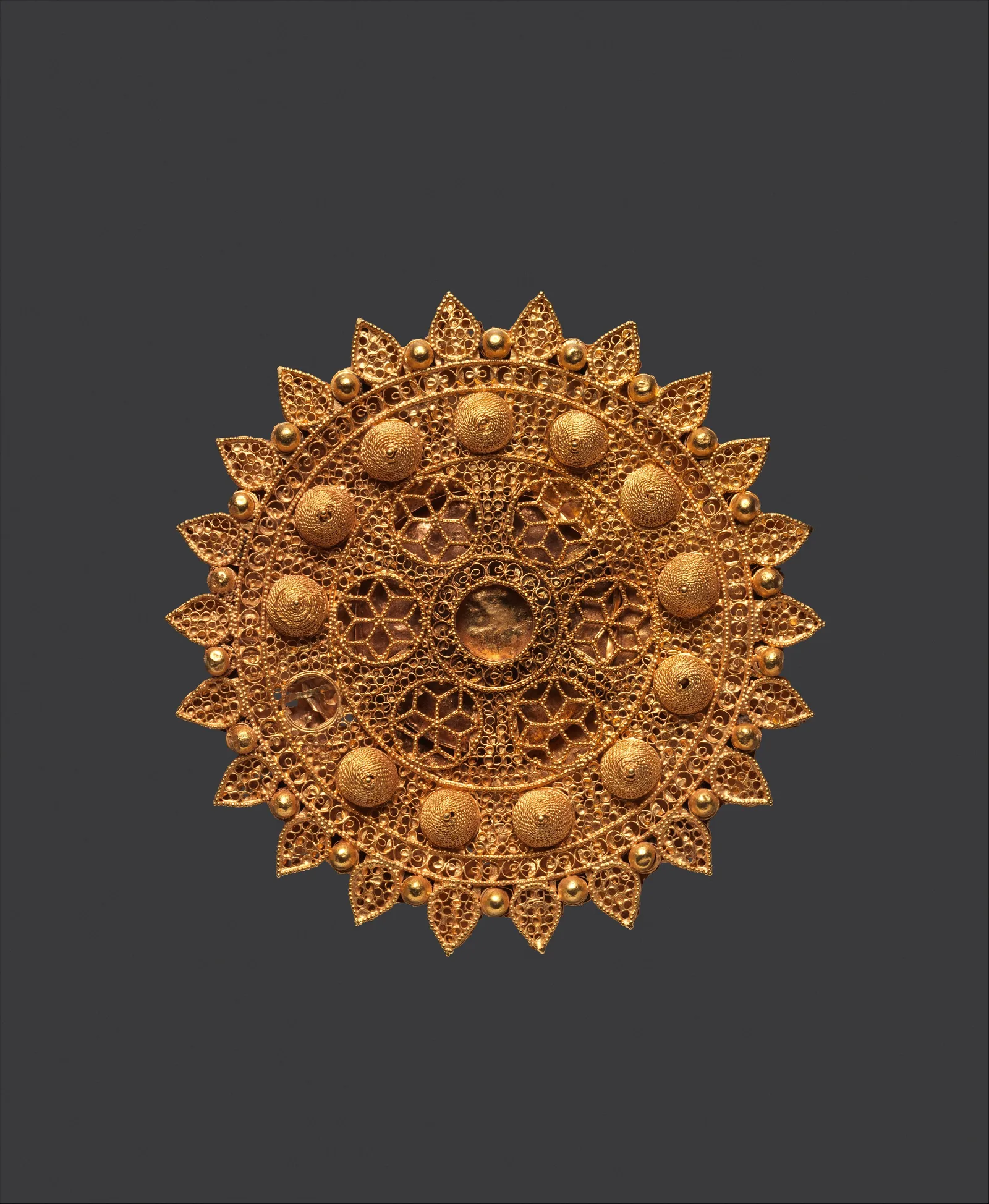
The warm sheen of gold sits perfectly on the theme of dawn and light. A gold Dagaz reads as a small sun on the chest, as a caught ray. The metal itself is bound to the sun and daylight in Northern poetry, so form and content line up here. Most often 14 or 18 karat is used; both hold the crisp carving of the double triangle and are unafraid of daily wear.
The gold version works well as a gift for a meaningful occasion of change: a graduation, a new start, a recovery, the opening of a new chapter. The festive character of the metal underlines the joyful essence of the rune of day.
Silver
Silver gives a different light, cold and clear, nearer to the light of early dawn than to the gold of noon. A silver Dagaz looks restrained and severe, pairs well with a leather cord and a rougher texture in the Scandinavian key. For the Vikings, silver was the main measure of value in general, so the material is historically fitting.
It is a universal everyday option, sturdy and undemanding in care. The crisp edges of the double triangle look especially graphic on silver, and a light patina in the grooves over time only underlines the relief of the sign.
Bronze and Brass
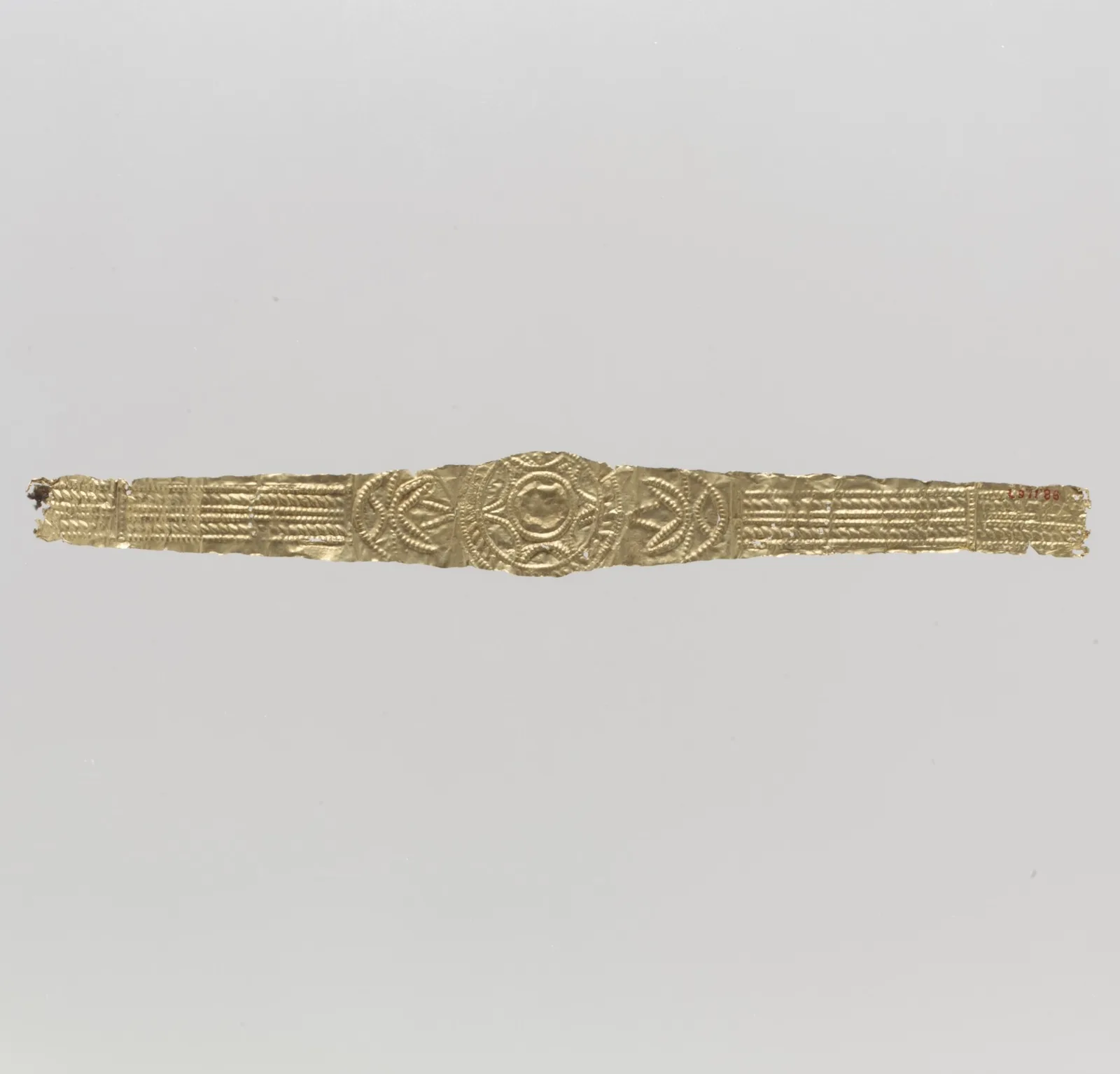
Bronze gives a warm, slightly archaic tone close to ancient finds, and so it is loved for its "museum" look, which echoes the gold bracteates of the Migration period. Brass is cheaper and brighter, nearer to gold in color. Both alloys render the relief of the carving well, and over time they take on a patina that many find noble and fitting for an ancient symbol.
Copper alloys have one drawback: they can leave a dark or greenish mark on the skin. The cause is a reaction of copper with sweat and cosmetics, and it is not a defect. Such a mark washes off easily and does no harm, but it is worth knowing about in advance, especially if you plan to wear the pendant close to the body.
Wood and Bone
The most authentic option from a craft point of view: wood and bone are exactly what runes were originally carved into. A wooden or bone Dagaz, cut by hand, is closest to the historical spirit of the sign. Such pendants are light, warm to the touch, and each has its own unique grain pattern, which makes the piece one of a kind.
The price of authenticity is fragility and fussiness. Wood fears moisture, bone is sensitive to changes in conditions, and both materials call for careful handling. This kind of amulet is more often chosen as a ritual or collector's piece than for daily wear.
Stainless Steel
The pragmatic modern choice. Steel 316L does not darken, does not fear water or sweat, leaves no mark on the skin and holds the crisp carving of the sign for years. Here the symbolism lives entirely in the form, not in the rarity of the material, which works excellently for the geometric Dagaz.
A steel Dagaz suits anyone who wears jewelry constantly and does not want to think about upkeep. It fits an everyday, sporty or streetwear look and easily survives what wood or bone would never forgive. The cold gleam of steel also chimes with the clarity of the dawn light.

Turn on your camera, pick earrings, a pendant or a ring, and see the piece on yourself in real time.
Switch items in one tap.
Everything runs in your browser: no photo or video is ever uploaded.
How to Wear the Dagaz Rune
At the Neck as a Pendant
The most common way to wear the rune is as a pendant at the neck, close to the body. Here both the chain length and the way the sign sits in the neckline matter. A short chain (40-45 cm) holds the rune high, near the collarbones, on show. A medium one (50-55 cm) brings it onto the chest, where the symmetrical sign reads large and graphic. A long one (60-70 cm) tucks the amulet under clothing, closer to the heart, for those who wear the symbol "for themselves."
Dagaz is convenient in that its symmetry frees you from the eternal runic question of correct orientation. The sign reads the same at any turn, so the pendant cannot "flip" and change its meaning, a point covered in more detail below.
On a Ring and a Bracelet
Dagaz sits well in a ring and in a bracelet too. The double triangle looks spare and graphic on a flat signet or on the plate of a bracelet, and its geometry reads clearly even at a small size. This is valued by those who wear the symbol quietly, without putting it on display.
A ring with a single rune has the advantage that the sign is always before your eyes, on the hand, and easily becomes a personal anchor, a reminder of the change or the goal it was put on for. A bracelet with Dagaz echoes the Scandinavian arm-rings and looks good paired with leather and rough texture.
The Symmetry of the Sign: The Rune Cannot Be Reversed
An important and pleasant trait of Dagaz: it is one of the few runic signs that cannot be reversed. Many runes in divination have an "upright" and a "reversed" meaning, and the reversed form reads as misfortune or loss, as with Fehu. Dagaz is symmetrical along every axis: however you turn it, it stays itself.
This makes Dagaz a rare rune with no dark flip side. In the tradition it is held to be a sign of guaranteed positive change, a bright rune with no catch. For jewelry this is a huge plus: there is no need to watch the "top" and "bottom," the pendant always faces the owner with the right meaning, however it falls.
What to Pair It With
Dagaz is spare and gets along with almost any style. It looks good on a rough leather or rubber cord in the Scandinavian key, on a thin chain in a minimalist look, and paired with other Northern symbols. Fitting neighbors include the Algiz rune as a sign of protection, the Fehu rune as a sign of prosperity, and pendants with the images of the Northern gods.
The one thing worth avoiding is clutter. A single rune on a clean cord reads more strongly than one hemmed in among five pendants. If you want layers, give Dagaz its own length of chain so its geometry does not get lost among other signs.
Who Dagaz Suits and Who It Is Given To
Dagaz is not tied to gender, age or profession, but it has themes it is especially in tune with. It is the rune of beginning, of the turning point and of renewal, so it is most often chosen and given in connection with change and the new stages of life.
People take it:
- For those starting a new chapter. A move, a new job, a new city, a divorce, a wedding, the birth of a child. Dagaz is the sign of a clean slate and a first day.
- As a gift for a graduation and the end of study. The symbol of dawn and the start of a path fits this occasion more precisely than most: one season has ended, another begins.
- For those coming out of a hard period. After illness, loss, crisis, Dagaz works as a quiet promise that the worst is behind and light lies ahead.
- For those who have set their sights on a breakthrough. In work, in creative pursuit, in a personal goal. The rune becomes a visual anchor of the intent to turn a situation around.
- For lovers of Northern culture and the runic tradition. Dagaz is one of the brightest and most positive runes of the Futhark, a logical choice for anyone collecting the symbolism.
As a gift Dagaz is convenient because its meaning reads at once and sounds well-wishing: a wish of a new day, a bright change, hope. It is one of the few runic symbols with no dark undertone at all, which makes it a safe and fitting present for almost any bright occasion.
Leave your email, we'll send your discount code. No spam, unsubscribe anytime.
The code arrives by email, valid on your first order.
How to Choose Dagaz Jewelry
The Crispness of the Double Triangle
The first thing people look at is the accuracy and crispness of the sign. The two triangles should be neat, symmetrical, with a clear point of meeting in the center. A blurred or crooked double triangle loses all the expressiveness of the form. For a symbol whose whole force lies in its geometry, crisp lines are not a quibble but the essence.
Checking is simple: a good Dagaz reads instantly and stays balanced from any angle. If the sign looks like a random figure of sticks rather than a recognizable butterfly of two triangles, the maker did not master the form.
Craft Versus Stamping
Mass stamping gives an even but faceless sign, often with a blurred relief. Hand carving or quality casting hold crisp edges, and the rune looks alive. For Dagaz with its strict geometry this is especially noticeable: any carelessness in the corners jumps out at once.
If you want a piece with character, look for versions with hand finishing, an honest metal texture, a neat working of the edges. Such pendants are closer to the spirit of runic craft, where each sign was carved separately and with care.
Size and Proportion
For an everyday pendant a size of 2-4 centimeters is comfortable. Under two the sign gets lost on the chest; over four it starts to look massive. A symmetrical Dagaz looks good both at a large, "printed" size, where the whole geometry shows, and at a small, neat one on a thin chain. A ring and a bracelet call for finer engraving, but the double triangle reads even in miniature, which is convenient.
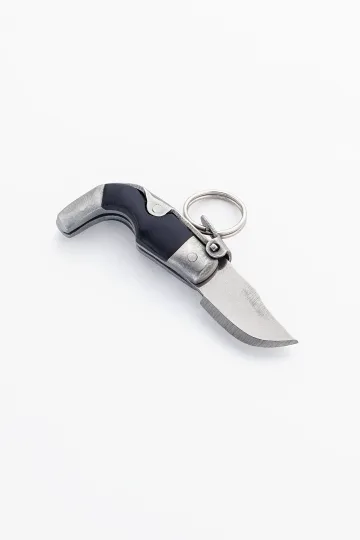
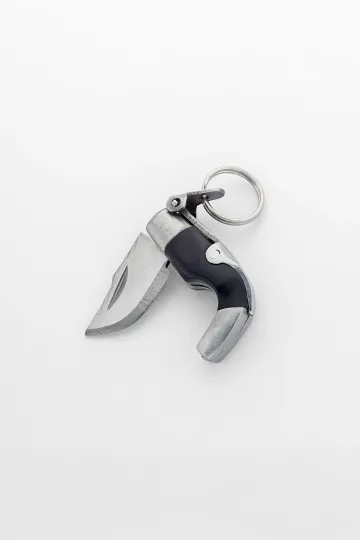
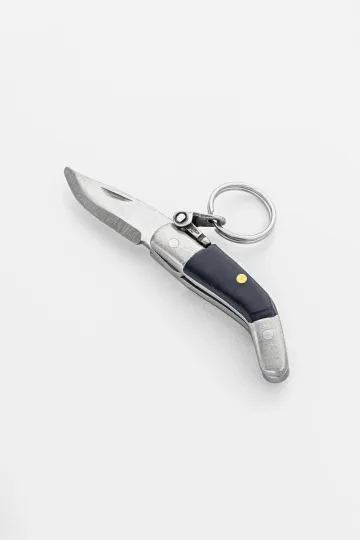
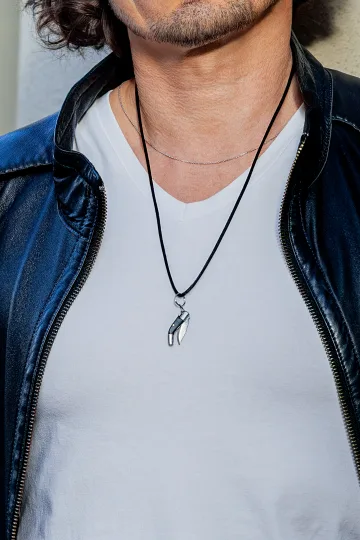
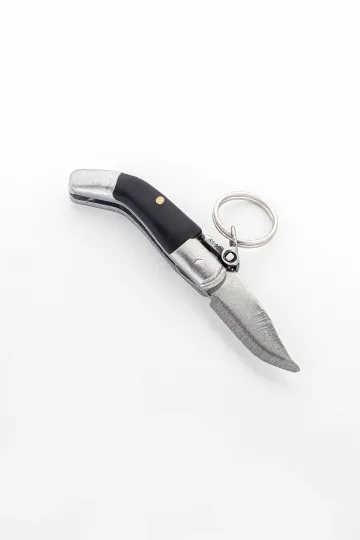
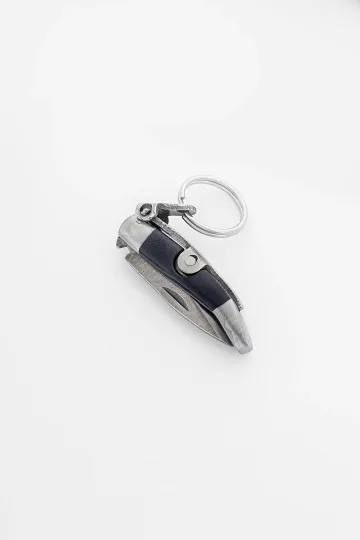
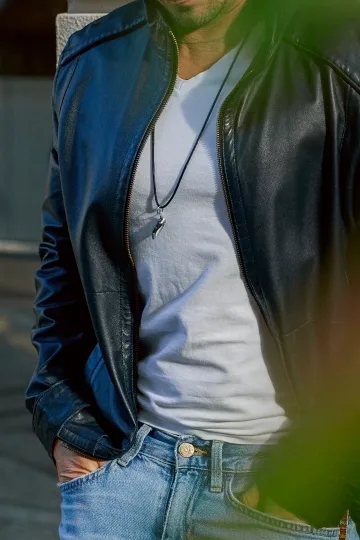
CAPAORA mini knife pendant
The 18th-century Spanish navaja in miniature: 40 mm of stainless steel, a real folding mechanism and a Palanquilla lock that clicks. An affordable gift to remember.
Authentic · Ships from Spain · 14-day returns
Dagaz and Other Runes of Change: What Is the Difference
More than one rune reflects the theme of renewal and change in the Futhark; several do, and they share the meanings out among themselves. Understanding the differences helps you choose "your own."
Dagaz and Jera: The Break Versus the Cycle
The main pair by the theme of time is Dagaz and Jera. Both are about the change of states, but in different ways. Jera answers for the yearly cycle, the harvest, the slow, smooth ripening in its own season: you sow, you wait, you gather. Dagaz is about the sharp break, about the instant passage of dark into light at dawn. Jera is patience and gradualness, Dagaz is suddenness and breakthrough.
Together they describe two speeds of change. Jera teaches you to wait until the fruit ripens on its own, Dagaz promises that at some moment everything will change at once. The one who needs endurance and faith in a long process is nearer to Jera. The one who waits for a breakthrough and wants to turn a situation around is nearer to Dagaz.
Dagaz and Sowilo: Dawn Versus the Sun
The rune Sowilo is the sun at its height, victory, life force, full daylight in all its might. Dagaz is dawn, the moment of the arrival of light, not its peak. Sowilo is about energy and triumph, Dagaz about the passage and the beginning. If Sowilo is the blazing noon sun, then Dagaz is the first ray on the horizon, promising that sun.
The difference is subtle but important. Sowilo is chosen for strength and confidence, for the sense of a victory already won. Dagaz is chosen for hope and the turn, for faith in a victory still to come. They complement each other beautifully: dawn and noon, promise and fulfillment.
Dagaz and Berkana: Breakthrough Versus Growth
The rune Berkana, the sign of the birch, answers for motherhood, gentle growth, care, a new beginning in the sense of birth and nurture. Dagaz is also about a new beginning, but of a different kind: not about the careful growth from a seed, but about the sharp break, about light bursting through the dark. Berkana nurses and raises, Dagaz wakes and switches.
Both runes are bright and bound to a beginning, so they are sometimes confused. The difference lies in the character of the beginning. Berkana is a beginning as gestation, quiet and gradual. Dagaz is a beginning as dawn, sudden and clear. The first is like spring, the second like morning.
The Psychology of an Amulet of Transformation
You do not have to believe in the magic of runes for a Dagaz pendant to "work." The mechanisms that make such an amulet useful are quite earthly and well described.
An anchor of change. When a person ties an object to a concrete intent to change, a glance at that object returns the mind to the goal. A rune of dawn at the neck becomes a quiet daily reminder: you wanted a turn, you are walking toward it. It works as a visual bookmark for attention, without any mysticism.
The effect of hope. Psychology describes well the role of hope as a resource: a person who believes the dark stretch will end bears hardship more easily and does not give up too soon. A symbol that embodies the idea "morning will come" supports that stance. For many, Dagaz does exactly this in hard periods.
A ritual of passage. To put on the sign of a new day at the threshold of change is a small ritual, and rituals mark the border between "before" and "after," making the passage tangible. Beginning a new chapter with a conscious gesture is easier than simply falling into it. The amulet becomes a marker on that border.
Identity and growth. To wear a rune of transformation is to state quietly (first of all to yourself) a readiness to change rather than to get stuck. Anchors of identity increase resilience and help you hold the chosen direction. In this sense the ancient sign of day works for a thoroughly modern person who wants to wake up and live with awareness.
There is nothing supernatural in this. An amulet does not change reality; it changes the wearer's relationship to reality, and it does so in a measurable, useful way.
Dagaz in Culture and Heritage
Runes have long moved beyond archaeology and live in language, folklore and modern culture. Dagaz's trace is at once the most everyday and the most invisible: it hides inside a word we say every day.
In language. English day, German Tag, Scandinavian dag, Gothic dags all reach through a shared root toward the same concept that stands behind the rune. Every time we call a day a day, we repeat, without knowing it, the ancient word to which the Germans gave a sign of its own. The names of the days of the week in many languages keep this link.
In mythology. The image of day as a rider on a shining horse, Dagr with Skinfaxi, survived the centuries and entered the records of Northern mythology. Dawn as the daily victory of light over dark is one of the oldest stories of humankind, and Dagaz gives it a lettered, sign form. The theme of the struggle of light and dark and of the promised morning runs through the folklore of many peoples.
In modern symbolism. The revived interest in Northern antiquity has made the Futhark a recognizable visual language. Runes decorate books, games, music covers and craft goods. Dagaz, as one of the brightest runes, a sign of a new day and of breakthrough, holds a firm place in this set, especially where a symbol of hope and change is needed.
One important caveat is worth keeping. In the 20th century some individual runic signs were used by political movements of grim repute, and a heavy context surrounds certain symbols. Dagaz does not belong to that circle and remains a neutral, bright sign of day, but a general awareness of what you wear and what you wear it beside is fitting here.
Send a friend a discount code, they save on their first order.
Facts About the Dagaz Rune That Surprise You
Dagaz and the word "day" are one word. The name of the rune dagaz is directly kin to English day, German Tag and Scandinavian dag. Saying the word for "day" in any Germanic language, you almost literally call the rune by its name.
Dagaz cannot be reversed. Unlike most runes, which have a "reversed," ill meaning, Dagaz is symmetrical along every axis. However you turn it, the meaning stays upright. In the tradition it is held to be a rune with no dark side, a sign of guaranteed bright change.
Day had its own rider. In Northern mythology day, Dagr, rode across the sky on the horse Skinfaxi, "Shining Mane," and from the horse's mane light poured over the earth. Dawn was understood not as a natural event but as the daily ride of a light-bearing rider.
The rune's form is the meeting of dark and light. The two triangles of Dagaz, turned point to point, read as night and day joined at the point of contact. The sign depicts neither light nor darkness but the very instant of their passage, dawn as a border.
The Anglo-Saxon poem called day a hope for all. The stanza on the rune dæg says that day is a joy and a hope for rich and poor in equal measure. Among the rune stanzas, which often warn of dangers, this is one of the brightest and most wholly kind.
Dagaz almost closes the Futhark. The rune of day stands at the end of the row, next to Othala. The alphabet, which began with wealth and resource, arrives toward the close at the idea of a new day and renewal, as if it lives out a whole life and meets the dawn again.
The "threshold" and the "twilight" are the rune's element. Dagaz is linked not with noon but with the threshold hours of dawn and dusk, which many peoples held to be special, charged with power. The rune of day lives precisely on the border between states, not in their middle.
The modern reading is younger than it seems. The divinatory system of Dagaz's meanings as "breakthrough" and "awakening" took shape mainly in the 19th and 20th centuries. The historical rune was the letter "d" and the concept of day, not a card from a divination set.
Silver, gold, runic and Scandinavian symbolism, protective charms, paired sets.
Frequently Asked Questions About the Dagaz Rune
What does the Dagaz rune mean? Dagaz is one of the last runes of the Elder Futhark, standing for the sound "d" and the concept of day. In a broad sense it symbolizes dawn, a new beginning, breakthrough, awakening and transformation. It is the rune of the passage from darkness to light, a sign of hope and bright change. The name goes back to Proto-Germanic dagaz, "day."
Is Dagaz a good rune? Yes, Dagaz is held to be one of the brightest and most positive runes of the Futhark. It has no "reversed," ill meaning, because the sign is symmetrical and reads the same at any turn. In the tradition it is understood as the rune of a guaranteed good change, with no dark flip side.
What does the Dagaz rune look like? It is two triangles turned point to point, like a butterfly with open wings or an hourglass laid on its side. Two slanting lines cross between two vertical staves. The sign is fully symmetrical along both the horizontal and the vertical.
Can the Dagaz rune be reversed? No, and that is its distinctive trait. Dagaz is symmetrical along every axis, so it has no separate "reversed" meaning, as many other runes do. On jewelry there is no need to watch the "top" and "bottom": the pendant always faces the owner with the right meaning.
Who is the Dagaz rune given to? It is given for a new beginning: a graduation, a new job, a move, a wedding, the birth of a child, a recovery, the way out of a hard period. Dagaz is the sign of a clean slate and a first day, so it is fitting for almost any bright occasion of change and sounds like a wish of a new dawn.
Can you wear the Dagaz rune every day? Yes. For daily wear silver and stainless steel are convenient: they are sturdy, undemanding in care and do not darken. Gold suits too and chimes beautifully with the theme of light. Wood and bone are authentic but fragile and call for careful handling; they are more often chosen as a ritual or collector's version.
How does Dagaz differ from the Sowilo rune? Sowilo is the sun at its height, the full force of light, victory and energy. Dagaz is dawn, the moment of the arrival of light, not its peak. Sowilo is about a triumph already won, Dagaz about hope and the turn, about the light that is just about to come. They complement each other well, like noon and morning.
Do you have to believe in the magic of runes to wear Dagaz? No. Many wear the rune for its meaning and history rather than for a "magic of change." The sign is interesting in itself: it is more than fifteen hundred years old and is bound to the language, mythology and the idea of day as the daily victory of light. Belief stays a private matter.
Runes, Scandinavian charms and symbolism in silver, gold and steel.
Buying it as a gift? Each one arrives ready to give.
 A branded Zevira box and a little card come with every order.








Conclusion
Dagaz traveled from a sign for an ordinary day to a symbol of breakthrough and a new beginning on a silver chain. Over fifteen hundred years the script, the faith and the way of life all changed, but the essence of the rune stayed the same: after any night comes morning, and a person can survive the dark if they remember the light.
One of the last runes of the ancient alphabet tells the simplest and most needed truth. Everything changes, dark stretches end, dawn arrives with the same certainty with which it departs. Whether you wear Dagaz for its meaning, for the clean geometry of the double triangle, or for a quiet reminder that the turn is near, you carry with you one of the most human symbols in history: the sign that morning always comes.
Wear the symbol, don't just read about it. These are in stock:
About Zevira
Zevira makes jewelry in the artisan tradition of Albacete, Spain. Runic symbolism is one of the themes close to us: an ancient form, legible without words, equally at home on a rough leather cord and on a thin chain. We render Dagaz with the crisp, symmetrical geometry of the double triangle, in modern materials and proportions.
What you can find with us on the theme of Northern symbols:
- Runic pendants in silver, gold and steel
- Scandinavian charms: runes of protection, signs of luck, images of the gods
- Leather and rubber cords and chains of various lengths for a rune of any size
- Paired and set versions for those who collect the symbolism of the Futhark
- The option of personal engraving
Every piece can be personalised with engraving. Sterling silver 925 and 14-18K gold.