Mood Ring: What Actually Changes Its Color and Why Skin Temperature Is the Real Answer
A mood ring does not read emotions. It reads skin temperature. A calm blue-green on a typical chart means just one thing: your fingers are warm, somewhere around thirty-two degrees Celsius. An anxious amber or a flat black means your hands are cold. There is nothing psychic inside. What sits under the dome is a liquid crystal that rearranges itself with heat and reflects light differently as it does.
And yet this little toy from the seventies still works. It works because there is a genuine grain of truth buried inside it: when a person is nervous, the body really does constrict the blood vessels at the extremities, blood drains away from the fingers, and the skin cools. The ring cannot see fear, but it can see a cooled hand, and a hand cools partly because of fear. The result is a crude, lopsided, but not entirely dishonest thermometer of stress. Let us take it apart and see exactly how it works, why it lies, when it lies, and why after a year it stops changing colour at all.
What Is Hidden Inside a Mood Ring
Thermochromic Liquid Crystals: The Real Secret
The name caught on around the world, yet there is no magic under the stone. In the classic version, a thin layer of thermochromic liquid crystal sits beneath a clear gem or a glass dome. Thermochromic simply means colour-changing with temperature. A liquid crystal is a peculiar state of matter: it flows like a liquid, but its molecules line up in ordered layers the way they do in a crystal.
Those layers are twisted into a helix. The distance between the turns of that helix decides which colour you see. When the substance warms, the helix tightens slightly, the pitch of each turn shortens, and the layer begins to reflect a shorter wavelength of light: the colour drifts toward blue. When it cools, the helix loosens, the pitch grows, and a longer wavelength comes back: the colour slides toward red, brown, and black. No pigment flows anywhere. The structure itself changes, and with it the light that bounces back to your eye.
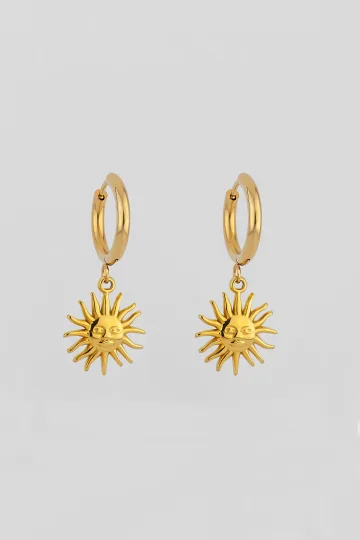
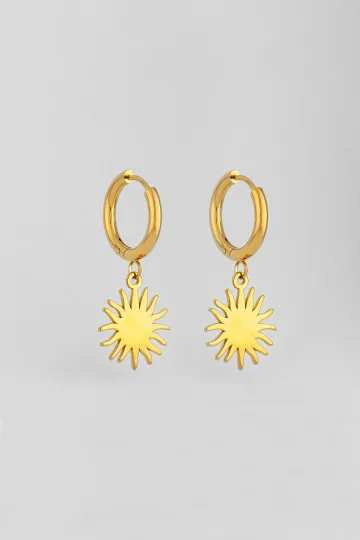
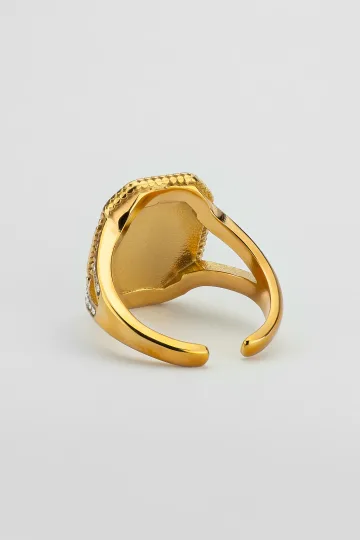
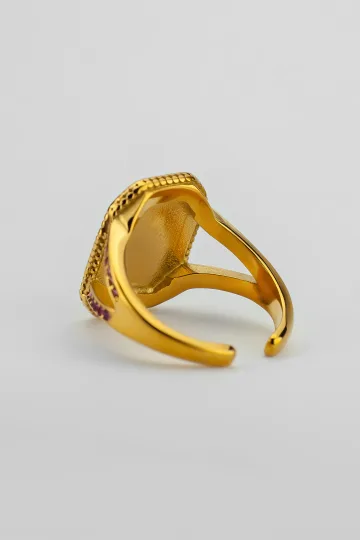
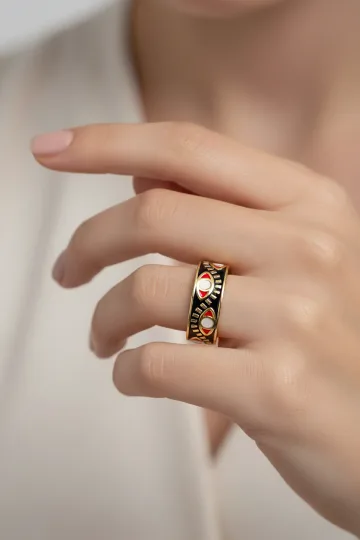
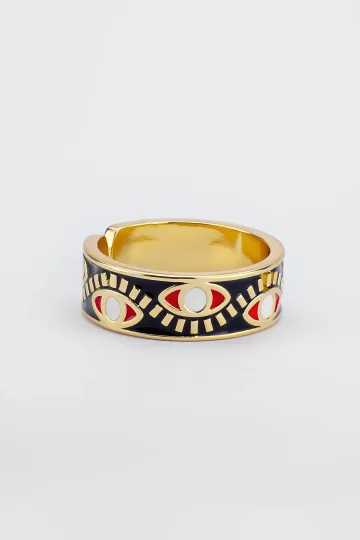
Wear the symbol, don't just read about it. These are in stock:



Cholesteric Crystals and Why They Throw a Rainbow
The specific type of liquid crystal used in these rings is called cholesteric, because the first such substances were isolated from derivatives of cholesterol. Their helical packing works like a natural diffraction grating: it splits white light and hands back only one narrow band of the spectrum. That is why the colour comes out clean and iridescent, closer to an oil film on a puddle or the inner surface of a seashell than to a dull painted dot.
One detail matters a great deal: each liquid crystal formula is tuned to a narrow band of temperatures, usually only a few degrees wide. Outside that window the substance is either fully black or fully colourless. So the ring's range is deliberately matched to human skin, roughly twenty-eight to thirty-four degrees Celsius. Dunk the ring in boiling water or in ice and it will simply turn black: you have stepped outside its working window.
Thermochromic Film and Microcapsules
Cheap modern rings often use a thermochromic film instead of pure liquid crystal. This is a polymer film with microscopic capsules printed into it. Inside those capsules sit either the same liquid crystals or a different mechanism: dyes that lose their colour when heated, because the temporary chemical bond between the dye and its developer breaks apart. These capsules are known as microencapsulated thermochrome, and the same material prints the vanishing labels on beer cans and the children's mugs whose picture appears when hot tea goes in.
The practical difference comes down to this. A pure liquid crystal layer gives a smooth rainbow with many transitional shades. A capsule dye more often flips between two or three colours and behaves more crudely. Better mood rings lean toward the first kind, penny souvenirs toward the second. Worth remembering when you pick one as a gift: a cheap eye will jump between a couple of colours rather than glide through them.
How the Stone Itself Is Built on the Outside
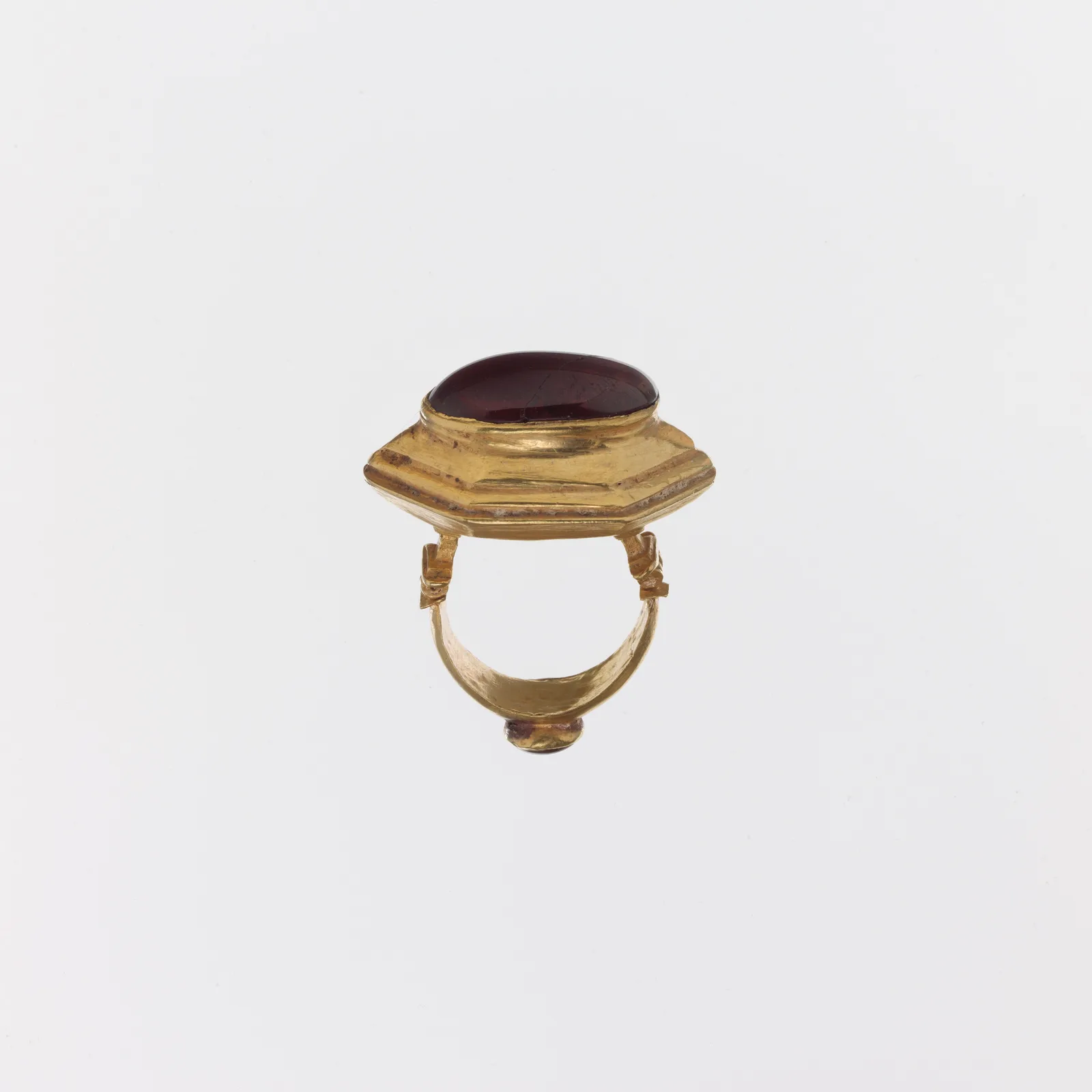
The active layer is fragile on its own and afraid of air, so it is always hidden away. Most often the liquid crystal film is sealed between two layers: a dark opaque backing underneath and a clear protective dome on top. The backing is made black on purpose: against a dark ground the reflected colour reads brighter and cleaner, like paint on a black canvas. On top sits a glass or acrylic cabochon dome, which doubles as a lens, slightly enlarging and deepening the colour. This sealed assembly decides whether the ring lives a month or a couple of years: the tighter the active layer is sealed in, the longer it resists moisture and air.
How a Mood Ring Changes Colour
This Is Physics, Not Psychology
Let us walk through the mechanism step by step, no mysticism. Your skin warms the stone of the ring. The heat reaches the liquid crystal layer and slightly resets the pitch of its helix. The helix reflects a particular wavelength of visible light. Your eye catches that wavelength and calls it a colour. That is the whole chain. Between your head and the ring there is no channel of communication except the temperature of your fingertip.
So it is more accurate to call a mood ring not an emotion indicator but a wrist thermometer of very coarse resolution. It shows the warmth of your hand and nothing more. If you have been holding a hot cup of tea, the ring turns blue even when your mind is uneasy. If you are calm but sitting in a cold room, the ring goes amber or black as if you were in a panic. The stone is never wrong, it honestly measures temperature. Only the caption under the colours is wrong.
Why Blue Means Warm and Black Means Cold
The logic of the colour scale runs backwards from ordinary intuition, and it trips up a lot of people. It feels as if blue should mean cold and red should mean warm, like a water tap. With liquid crystals it is the reverse. The warmer it gets, the tighter the helix coils and the shorter the reflected wavelength, and a short wavelength is the blue-violet end of the spectrum. The colder it gets, the longer the wavelength, all the way to red-brown, and below the working window the layer stops reflecting visible light altogether and looks black.
This is why on a mood ring a warm, relaxed finger gives blue-green tones, while a chilled one gives ambers, greys, and blacks. Makers also got lucky with cultural associations: we already read blue as the colour of calm and black as the colour of unease. Physics and psychology happened to agree here by accident, and the illusion of an emotion thermometer only grew more convincing.
Speed and Lag
The ring does not react instantly. The liquid crystal needs several seconds to warm or cool and rebuild its structure. So the colour lags a little behind the real temperature of your finger and smooths out short spikes. Step out abruptly into the cold and the ring will darken not at once but over half a minute. That lag, incidentally, adds to the illusion: the colour changes before your eyes, slow and gradual, as if the jewellery were thinking.
Why the Colour Is Uneven Across the Stone
Often you can see several colours at once on a single ring: a bright blue core in the centre and a dark rim around the edge. This is no defect but a vivid map of temperature. The centre of the stone presses harder against the warm skin of the finger and heats better, so it shows the upper, blue end of the scale. The edges of the dome lift away from the skin, catch the air, and stay cooler, so they pull toward the dark side. The ring is effectively painting a kind of heat map of your finger in real time, and it shows that even one finger does not have a single temperature. If you notice the edge is forever dark, the cause is not the ring but the simple fact that air is always cooler than skin.
Why the Same Ring Lies Differently on Different People
One and the same mood ring, worn by two people in the same room, will show different colours. One person has naturally warmer hands, another colder, a third moister or drier. Skin temperature depends on the thickness of the fingers, the speed of metabolism, blood pressure, age, and even whether it is the left hand or the right. So comparing two people's moods by the colour of their rings is pointless: you are comparing their physiology and habits, not their feelings. The ring is tuned to an average person, and there is no such thing as a living average person.
A mood ring under a tuxedo cuff? Over my dead body. It belongs on a denim hand, and that is final.
How and With What to Wear a Mood Ring
Over the years I have seen dozens of these little rings on the hands of models and clients. Here is what actually decides whether the stone will play with colour or go flat.
Which finger should it go on so the colour works? I recommend the index or middle finger of your dominant hand: circulation is busier there, the finger runs warmer, and the stone drifts into a lovely blue-green. The ring and little fingers are usually cooler, and there the colour pulls dark. The ring should sit snugly but never pinch, or the fingertip goes cold and the whole show fades.
What should I wear it with? I suggest a light, casual look in the spirit of the seventies: jeans, a chunky knit, a plain tee. The ring is loud enough on its own, so it wants a calm backdrop, not a fight with a busy print. I never put a thermochromic cabochon under a sharp suit or an evening dress, where a smooth classic ring belongs instead.
How do I pair it with other rings? I make it the single accent on the hand and keep its neighbours thin and quiet: smooth bands, narrow tracks, no iridescence of their own. Two colour-changing stones side by side just squabble for attention. If you stack on one finger, set the thermochromic one closest to the nail so the others do not block its warm contact with skin.
When should I take it off? Before water, always: showers, dishes, the pool, and the sea blacken the stone for good. In hard heat and direct sun I take it off too, since ultraviolet ages the film faster than anything. And remember that in the cold the ring shows the weather, not you, so arguing with it about your mood outdoors in winter is pointless.
Who is it really for? For anyone who loves a piece with character and does not expect an instrument from it. The young take to it as a bright toy and a talking point, while those who lived through the era read it as a warm hello from the seventies. As a low-stakes gift or a souvenir from a trip I recommend it freely: here it works at any age.

Turn on your camera, pick earrings, a pendant or a ring, and see the piece on yourself in real time.
Switch items in one tap.
Everything runs in your browser: no photo or video is ever uploaded.
Why Cold Hands Give an Anxious Colour
Stress Really Does Constrict Blood Vessels
Here is where that grain of truth hides, the one that makes a mood ring look as if it works at all. When a person is frightened, angry, or strongly agitated, the sympathetic nervous system switches on, the very fight-or-flight response. One of its effects is the narrowing of the small vessels at the body's periphery, the fingers first of all. Blood is redirected toward the large muscles and vital organs, the hands receive less warm blood, and they cool. Hence the phrase cold hands from fear, and it is physiologically exact.
So the chain runs like this: stress narrows the vessels, the fingers cool, a cooled finger heats the ring less well, and the liquid crystal drifts toward the dark end of the scale. The ring did not feel your fear directly. It felt the consequence of that fear, a drop in skin temperature. It is like judging a fire by the smell of smoke: the link is real, but indirect, and easy to be fooled by.
Why It Is Unreliable Anyway
The trouble is that a huge number of things change finger temperature while having nothing to do with mood. Cold weather, an air conditioner, wet hands, low blood pressure, poor circulation, smoking, coffee, hormones, age, even palms just rinsed in icy water. Any of these will shift the colour more than moderate excitement does. For a person with naturally cold hands the ring will almost always show anxiety, even when they are perfectly calm.
So you cannot treat the colour as a diagnosis. At best the ring catches the extremes: you have either warmed up and relaxed, or gone cold or badly rattled. It cannot tell apart the fine shades of feeling, because between mild sadness and mild joy a fingertip barely changes temperature. The honest verdict: this is a toy with a physical hint of truth, not an instrument.
Customer reviews
Zevira is a real jewellery shop. Genuine payments, deliveries and customer thank-yous.
🥰🥰🥰 gracias

Ok, ¡gracias! 🙂

Where Mood Rings Came From
The Idea and the Fad of the Seventies
Mood rings appeared in the mid-1970s in the United States. The idea is credited to a pair of inventors who married the already known technology of heat-sensitive liquid crystals to the form of a piece of jewellery. Liquid crystal heat indicators were by then already used in engineering and medicine, for example for non-contact temperature measurement. Someone thought to pour such a crystal under the stone of a ring and sell it not as a thermometer but as a mirror of the soul.
The thing took off instantly and became one of the great fashion crazes of the decade. Teenagers and adults alike wore it, newspapers wrote about it, people gave it as gifts and collected it. Cheap versions were snapped up as souvenirs, expensive ones were made in silver and even in gold with a real liquid crystal insert. As with any mass fashion, the peak was followed by a slump, but the mood ring never vanished entirely. It returns in waves, especially when nostalgia for the era rolls back around.
Why It Became a Phenomenon, Not an Ordinary Product
The secret of its success lay not in the technology but in the promise. The seventies were a time of fascination with self-discovery, esoterica, psychology, and Eastern practices. A piece of jewellery that supposedly showed your inner state struck the exact nerve of the era. It handed a person a small miracle on the finger and a subject for conversation: what are you right now, blue or black. It was, in effect, an early ancestor of the wearable gadgets that promise to tell you more about yourself than you know. Only instead of pulse sensors there was a scrap of liquid crystal inside, and instead of an app there was a legend about colours.
Where the Liquid Crystal Technology Came From in the First Place
Liquid crystals themselves were discovered back at the end of the nineteenth century: a botanist noticed that an extract from a plant substance melted strangely, passing through a cloudy intermediate phase. For a long time this was considered a laboratory curiosity with no use. Only in the twentieth century did it emerge that such substances are sensitive to temperature, to electric fields, and to composition, and that indicators and screens could be made from them. The mood ring was born on the crest of the same wave as the first liquid crystal displays in calculators and watches. So the wrist toy and the screen of your phone are distant relatives: both rely on the ordered molecules of a liquid crystal, simply controlled differently, by heat in one case and by current in the other.
Why the Fashion Returns in Waves
The mood ring never stays gone for long and regularly enjoys a fresh surge of popularity. The reason is nostalgia: each new generation rediscovers the retro objects of its parents, and the thermochromic little ring with its naive promise feels fresh every time. The low cost helps too: this is an impulse buy, a souvenir picked up without a second thought. And the ring is photogenic, its colour catches beautifully on camera, and it easily becomes the subject of short videos and posts. A half-century-old technology lives on precisely because it promises a touch of magic for pennies and looks good in frame.
Upload a photo of your pet, someone you love, or an object. We'll build a 3D model and hand-cast it in pewter.




What the Colours Mean on a Typical Scale
A Rough Table of Shades
There is no single standard for a mood ring. Each maker prints its own legend, and the scales diverge. But over half a century a more or less common set of meanings has settled in, the one you meet most often. Remember that this is a convention, not a law of nature: the same blue on another ring may be labelled differently. Below is the typical version, so you grasp the logic rather than memorise it.
Blue-violet tones are usually labelled happiness, passion, being in love, because this is the warmest, topmost end of the scale: the finger is hot, the person warmed up. Blue and blue-green are called calm and relaxed, the comfortable middle, a neutral warm hand temperature. Green often means a neutral, even state. Amber, yellow, and orange get labelled tension, nervousness, excitement, because the finger has cooled noticeably. Grey and black are anxiety, stress, fatigue, but really just the coldest end: hands chilled or vessels clamped down.
Why the Scale Misses More Often Than It Hits
The chief dishonesty of the scale is that it passes off temperature as feeling. Take a calm person and put them in a cool room: the ring will show them anxiety. Hand an agitated person a warm mug to hold: the ring will show them happiness. In winter outdoors nearly everyone's ring is black, and that is not mass depression among passersby but the freeze outside the window. So treat the legend as a game, not as a horoscope: coincidences will happen, but for the same reason that fortune cookies occasionally come true.
Truth and Myths About Mood Rings
Does It Really Show Your Mood
The short honest answer: directly no, indirectly sometimes. The ring measures the skin temperature of the finger. Finger temperature depends in part on the state of the nervous system, because strong emotions narrow or widen the vessels. So in extreme cases, intense stress against full relaxation, the colour may line up with the mood. But between those poles lies all of ordinary life, where weather and coffee affect hand temperature far more than the shade of your feelings. A mood ring is an honest thermometer and a dishonest psychologist.
Common Misconceptions
A great many myths have piled up around this object, and almost all of them credit the ring with abilities a scrap of liquid crystal cannot have. Let us take the most frequent ones apart separately, because the confusion here costs people money and disappointment.
How a Mood Ring Differs From Colour-Change Gemstones
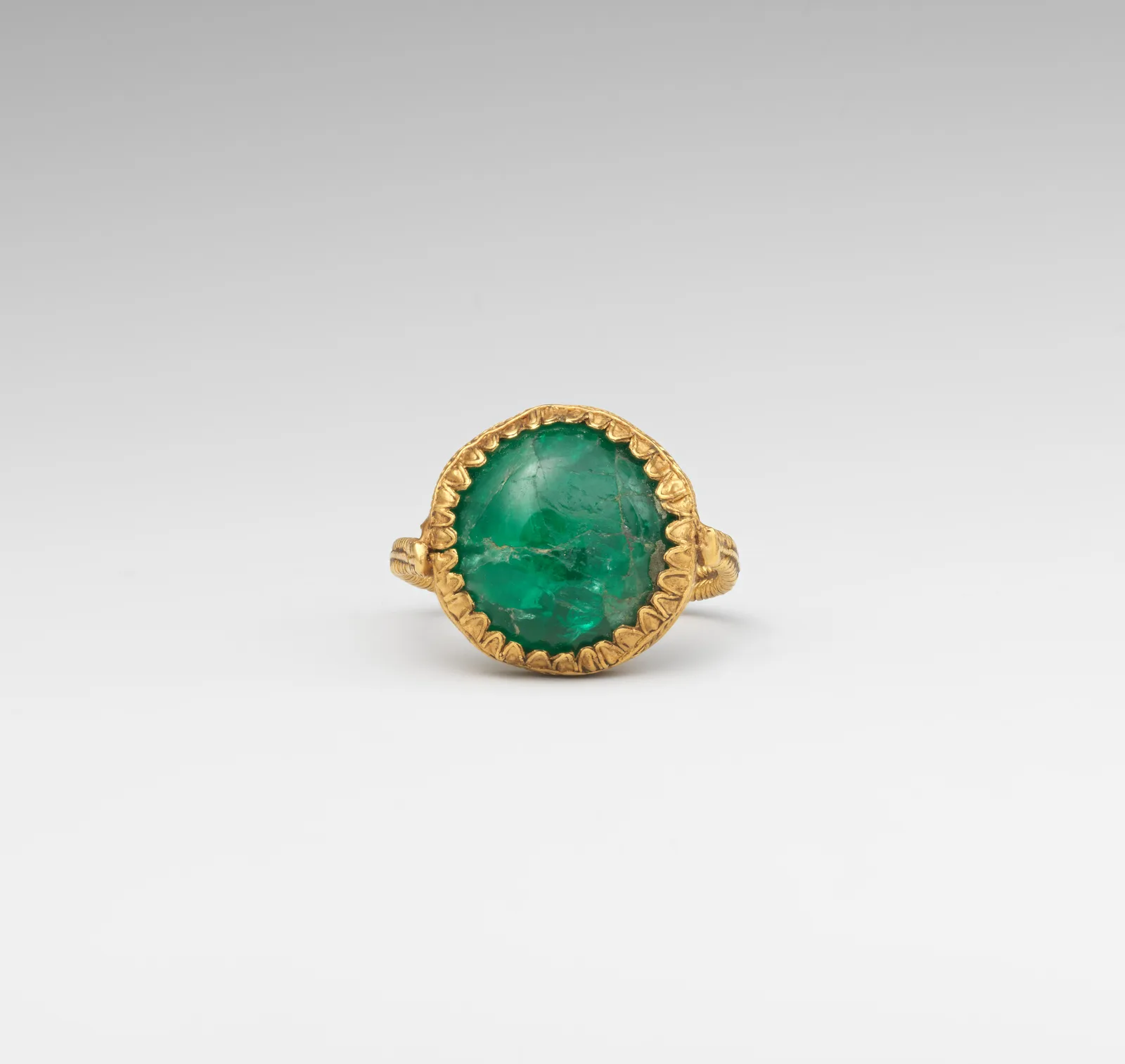
It is worth separating two completely different things that people often confuse. There are natural stones that genuinely shift hue under different lighting: in daylight they look greenish, for instance, and under an incandescent lamp they turn red. This is a property of the mineral itself, of its crystal lattice, and it is permanent, unbothered by water or time. A mood ring works otherwise: it contains no gemstone, the colour comes from an artificial liquid crystal layer reacting to heat rather than to the type of light. A natural stone changes colour with the lamp and lives for centuries. A thermochromic ring changes colour with the hand and ages in a couple of years. They should not be confused: these are different phenomena with different physics and different lifespans.
Pricier Is Not Always More Honest
You will find mood rings in silver and even in gold on the market, and it is tempting to assume that a costly setting means more accurate work. In reality the precious metal affects only the body and the durability of the setting, not the thermochrome itself: the active layer in every ring is of roughly the same nature and ages by the same laws. You are paying for the metal around the stone, not for a truer reading of emotions, which does not exist at all. So an expensive mood ring is a beautiful object with a good setting, but no more accurate an instrument than a penny souvenir. No hallmark on the metal adds magic.





Durability: Why the Ring Stops Changing Colour
The Film Fades and Ages
The liquid crystal and dye layer is organic matter, and organic matter ages. Over time the molecules of the thermochrome degrade: they break down under ultraviolet light, oxygen, and simply through countless cycles of heating and cooling. The ring begins to react sluggishly, the range of colours narrows, the shades dull. At some point the stone freezes on a single colour and stops responding to temperature at all. This is not a breakdown but an exhaustion of the resource, the way an old photograph fades in the sun.
It Blackens From Water and Time
The most common way a mood ring dies: it blackens for good. This happens when moisture seeps under the protective layer and destroys the thermochrome or oxidises the backing. Showers, washing dishes, the swimming pool, sweat, seawater, even long spells of high humidity gradually kill the substance. A darkened patch never brightens again, because a destroyed crystal does not recover. First a dark spot appears at the edge, then it spreads, and in the end the whole stone goes dead black forever.
How Long Such a Ring Lasts
The lifespan depends heavily on quality and handling. A cheap souvenir with a thin film may run out of breath in a few months, especially if worn without taking it off and allowed to get wet. A quality ring with a well-sealed liquid crystal insert, handled with care, will work for a year or two, sometimes longer. But eternal it will never be: the thermochrome is a consumable, and durability here is fundamentally different from that of ordinary metal. If you are used to silver darkening and being cleaned, the logic with a mood ring is different. There is a separate breakdown of why ordinary silver tarnishes and easily returns to a shine, and a mood ring is its complete opposite: its blackness is irreversible.
Leave your email, we'll send your discount code. No spam, unsubscribe anytime.
The code arrives by email, valid on your first order.
Can a Mood Ring Be Repaired
Usually No, and Here Is Why
Blackened or frozen on one colour? Sadly, in the overwhelming majority of cases this cannot be fixed. The active layer is sealed under the stone at the factory, and you cannot replace it at home or in an ordinary workshop: it takes that very microencapsulated liquid crystal material and equipment for an airtight seal. A jeweller can re-solder the setting or replace the stone whole, but that is a transplant rather than a repair, and for a penny souvenir it is pointless. It is easier to buy a new ring than to save a burned-out one.
What Sometimes Helps and What Definitely Does Not
If the ring has merely grown dirty on the outside and the colour looks cloudy because of it, a soft wipe with a dry cloth will bring back its look. But if the active layer itself has darkened, no folk methods work: not baking soda, not ammonia, not freezing, not heating. Worse, attempts to heat or soak a blackened ring finish off whatever thermochrome remains. So the one honest piece of advice is this: prevent the death through care, do not try to resurrect what has already died.
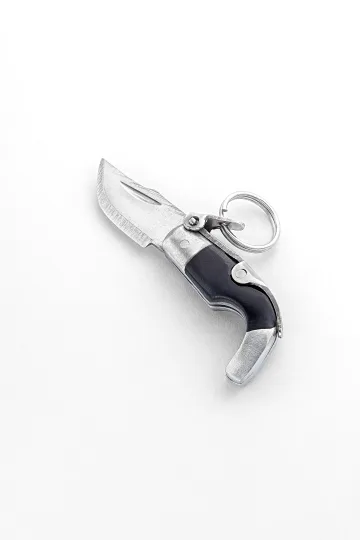
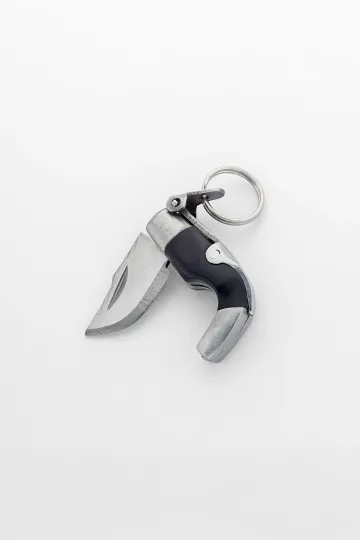
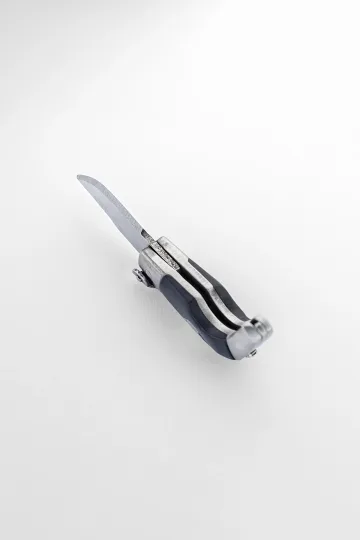
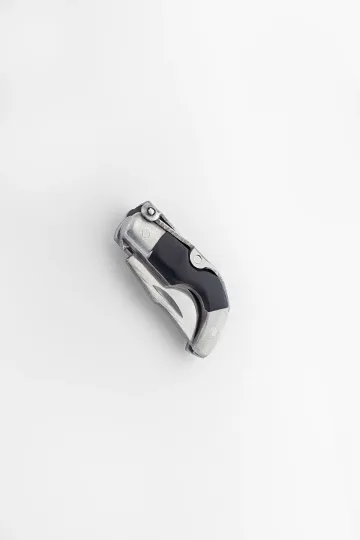
CAPAORA mini knife pendant
The 18th-century Spanish navaja in miniature: 40 mm of stainless steel, a real folding mechanism and a Palanquilla lock that clicks. An affordable gift to remember.
Authentic · Ships from Spain · 14-day returns
Thermochromic Jewellery Beyond Rings
Pendants and Lockets
The same principle transfers easily to any form. A thermochromic pendant or locket works just like a ring: a liquid crystal inside the stone reacting to heat. But there is a catch. A pendant hangs on the chest or dangles in the air on a chain, and its temperature is closer to that of the surroundings than to the body. So a pendant more often shows the weather in the room than the state of its owner, and as a mood indicator it is even shakier than a ring pressed snug against a warm finger.
Bracelets and Earrings
Thermochromic bracelets are popular precisely because they wrap the warm wrist tightly, where the vessels run, and they heat from the skin no worse than a ring. They give a beautiful, shimmering ribbon of colour along the whole arm and look striking in motion. Earrings with thermochrome are rarer: the earlobe is warm, but the colour on it is barely visible to the wearer, so the point of an indicator is lost. More often thermochrome in earrings is simply a decorative trick rather than a game of reading emotions.
Where Else Thermochrome Shows Up
Beyond jewellery, this same class of materials works in a huge number of household objects. Mugs that reveal a picture from a hot drink, thermometer stickers on a child's forehead, charge indicators on batteries, labels on packaging that show whether a product has thawed, heat-sensitive paints on children's toys and feeding spoons. The mood ring is merely the best known and most romantic member of a large family of thermochromic things. Understand the physics of the ring and you understand all the rest.
Thermochrome in Clothing and Accessories
The same principle left the world of mugs and jewellery long ago. There are fabrics and prints that change their pattern from body heat or the sun: T-shirts that reveal a design in the heat, phone cases, nail polish that reacts to water temperature. The logic is the same everywhere: microcapsules of thermochrome are printed into the material and flip colour when the surroundings cross a threshold. These things share the same weaknesses as the ring: they fade in the sun, dislike washing, and lose responsiveness over time. So if a thermochromic polish or print stops playing with colour, it is not a defect but the natural fatigue of the very same material that sits under the stone of a mood ring.
Who Finds Mood Rings Interesting
Children and as a Toy
A mood ring is an almost ideal children's toy. It is cheap, safe, vividly demonstrates physics, and mesmerizes with its color change. It is easy to explain to a child through it what temperature is and how the warmth of a hand turns into a rainbow. Many use such rings and bracelets as a gentle way to talk with a child about feelings: not as a detector, but as a reason to ask what color you are right now and why. If you are after an inexpensive and unusual surprise for a little one, a thermochromic ring often lands better than yet another figurine. Ideas for other unusual gifts for children and adults are gathered in our round-up of jewelry to give.
As a Gift and for Nostalgia
For adults a mood ring is above all a story and an emotion. For those who lived through the seventies or eighties it brings an instant pang of nostalgia. For younger people it is interesting as a retro artifact and a conversation piece. It makes a good lighthearted gift, an amusing souvenir from a trip, a sweet token of attention with no pretense to serious jewelry value. The main thing is to understand honestly that you are giving a toy with a story, not an instrument and not a treasure. And if you want to give yourself something lasting and meaningful, that is a different conversation and a different choice.
Who It Probably Will Not Suit
Do not expect a miracle from a mood ring if you have naturally cold hands or weak peripheral circulation: for you the stone will almost always be dark regardless of mood, and the game will soon grow dull. Nor will it suit anyone who does not take off jewelry in the shower and the pool: such a ring will blacken within weeks. And of course it is not for anyone who seriously expects psychological diagnosis from a piece of jewelry. For a lasting everyday ring it makes more sense to look at stable materials such as anodized titanium, where the color comes from the surface of the metal itself and does not fade from water.
Caring for a Mood Ring
It Fears Water, Heat, and Sun
Remember the three chief enemies of thermochrome: water, heat, and ultraviolet. The ring does not tolerate water at all: take it off before washing hands, showering, doing dishes, the pool, and the sea. High temperature beyond the working window, boiling water, a hot stove, a hair dryer, a sauna, blackens the stone not temporarily but speeds up the aging of the substance. Direct sun and tanning beds hit it with ultraviolet, which destroys the molecules of the thermochrome fastest of all. A mood ring is the most vulnerable piece in the jewellery box, and it should be treated as a delicate thing, not as steel.
Practical Storage Rules
Store the ring separately, in the dark, in a dry place, for example in a small box in a drawer rather than on an open windowsill. Take it off for the night, for a workout, for cooking, and for the beach. Wipe it only with a dry or slightly damp cloth, without harsh chemicals or abrasives. Do not try to force a colour change by dunking the ring in hot and cold water for effect: each such extreme cycle shortens its life. A cherished thermochromic ring delights with colour many times longer than one tossed into the common pile and worn in the shower.
How to Choose the Size So the Colour Works
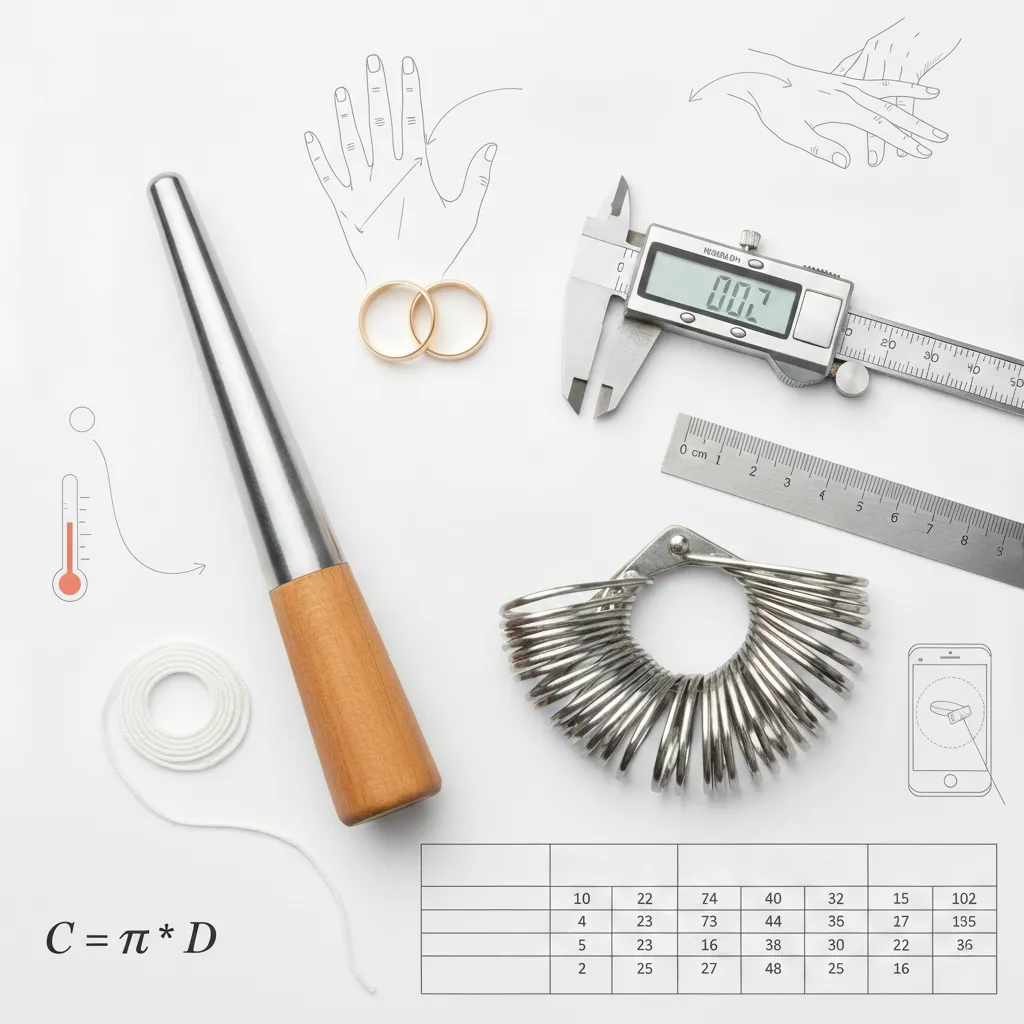
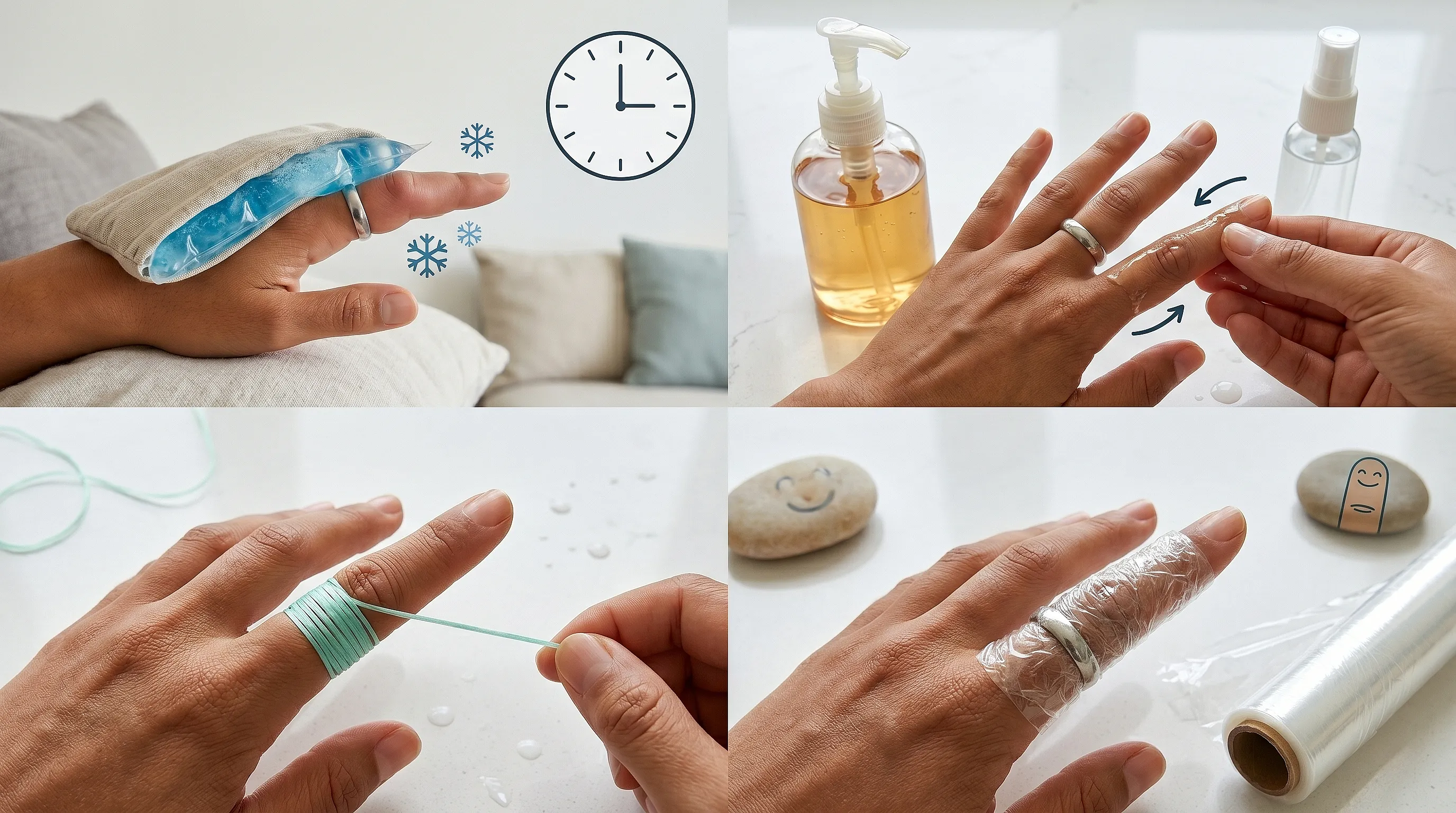
With a thermochromic ring the size matters more than it seems. Too loose a ring dangles, lifts off the skin, catches the air, and therefore almost always shows cold, dark tones: it simply never gets time to warm from the finger. Too tight a ring pinches the vessels, worsens circulation in the finger, and again the fingertip cools, shifting the color back to the dark side. What works best is a ring true to the hand, snug but without squeezing, so the stone touches warm skin all the time. If you are unsure of the size, it is easy to work out yourself with a simple guide to finding your ring size, and then the color will reflect the real temperature of the hand rather than the gap between ring and finger.
Send a friend a discount code, they save on their first order.
Modern Versions of Mood Rings
What Has Changed Since the Seventies
Today mood rings are made better than half a century ago. Modern sealing of the stone protects the thermochrome from moisture and air noticeably longer, so good new rings outlast the old ones. More ultraviolet-resistant formulas have appeared, along with wider, smoother colour scales. The design has changed too: besides the classic oval dome, thermochrome is built into rings of complex shape, into signet rings with a pattern, into models where the colour shimmers along the whole band rather than in a single stone.
Where the Technology Is Heading
Alongside jewellery, the serious side of thermochromic materials keeps developing. The same liquid crystals and microcapsule dyes are used today in medicine for non-contact thermography, in engineering for overheating indicators, in smart packaging that watches the cold chain of products. At the meeting point with electronics come wearable sensors that measure temperature and pulse for real, with digital sensors, and report honestly on the body's state. The mood ring remains their charming naive ancestor: it makes no claim to accuracy, but it was the first to offer the idea of a piece of jewellery that seems to feel you. And in that role of an honest, beautiful toy it lives on splendidly to this day.
Facts That Surprise
The colour scale is flipped relative to intuition: on a mood ring blue means warm and red-black means cold, because a warm crystal reflects the short blue wavelength and a cold one the long red wavelength.
The ring is a thermometer with a resolution of a few degrees. Its liquid crystal works only in a narrow window around skin temperature, and in boiling water or ice it simply blackens, stepping outside the working range.
The very material that colours the ring comes from derivatives of cholesterol, which is why the liquid crystals in it are called cholesteric, even though this has nothing to do with the level of cholesterol in your blood.
The grain of truth in the legend is real: under heavy stress the body narrows the vessels in the fingers, blood drains away, the hand cools, and the ring honestly shows the cooled skin. It catches not fear but its physical trace.
A mood pendant is nearly useless as an indicator: hanging in the air on a chain, it shows the temperature of the room rather than of the body, unlike a ring pressed to a warm finger.
From the same family of thermochromes come mugs that change their picture from hot tea and labels on packaging that reveal a thawed product. The mood ring is their most romantic relative.
A blackened mood ring cannot be revived: a liquid crystal destroyed by moisture or ultraviolet does not recover, and folk methods only finish off what remains of the substance.
Frequently Asked Questions
Does a mood ring really show my emotions?
Directly no. It shows the skin temperature of the finger. Temperature is affected in part by strong emotions, because stress narrows the vessels and cools the hands, so in extreme cases the colour can line up with the mood. But weather, coffee, and circulation affect hand temperature more than ordinary swings of feeling, so as an emotion detector the ring is unreliable.
Why is my ring always black or dark?
Most likely you have cool hands or you are in a cold space. Black and grey are the lowest, coldest end of the scale. For people with naturally cold fingers or weak peripheral circulation the ring often stays dark regardless of mood. Warm your hands and the colour will move toward green-blue.
Why does blue mean warm, when blue is a cold colour?
It is a feature of the physics of liquid crystals. The warmer the substance, the tighter its helical structure coils and the shorter the reflected wavelength of light, and a short wavelength is the blue end of the spectrum. The colder it is, the longer the wavelength, all the way to red and black. So the intuition about warm red and cold blue does not work here.
The ring blackened and no longer changes colour. What do I do?
Sadly, usually nothing. Permanent black means the active layer has been destroyed by moisture, ultraviolet, or time, and it cannot be restored. Folk methods and heating do not help and only finish off what remains. The active insert is sealed at the factory and is not changed in an ordinary workshop, so it is easier to buy a new ring.
Can I wash my hands and swim in a mood ring?
Better not. Water is the chief enemy of thermochrome: seeping under the protective layer, it destroys the liquid crystal and blackens the stone forever. Take the ring off before washing hands, showering, doing dishes, the pool, and the sea. Constant contact with water is exactly what most often kills such rings within weeks.
How long does a mood ring last?
It depends on quality and care. A cheap souvenir with a thin film may run out of breath in a few months, especially if it gets wet and is never taken off. A quality ring with a well-sealed liquid crystal insert, handled with care, serves a year or two, sometimes longer. Eternal it will not be: the thermochrome is a consumable.
How does a thermochromic bracelet differ from a ring?
The principle is the same: a liquid crystal inside reacting to heat. A bracelet wraps the warm wrist tightly and heats from the skin no worse than a ring, giving a beautiful shimmering ribbon of colour. A pendant, though, hangs in the air and shows the temperature of the room rather than the body, so as an indicator it is even shakier.
Is it a good gift?
As an amusing souvenir, a retro object, or a children's toy that explains physics, a mood ring is an excellent inexpensive gift with a story. The main thing is to understand honestly that it is a toy with a beautiful legend, not an instrument and not a treasure. If you need a lasting, meaningful gift, it is better to look at jewellery made from stable materials.
Jewellery that keeps its colour for the long haul
A mood ring is a sweet toy, but if you want colour that will not fade from water and time, the Zevira catalogue holds jewellery made from durable materials with character and a story. Choose something that will delight for years, not weeks.
Browse the catalogueBuying it as a gift? Each one arrives ready to give.
 A branded Zevira box and a little card come with every order.









About Zevira
Zevira is jewellery with meaning and an honest conversation about what you wear. We love a beautiful legend, but we always explain the physics behind it: why metal tarnishes, why a stone changes colour, why one piece lives for decades and another for weeks. The mood ring is, for us, a fine excuse to tell how ordinary physics turns into a small miracle on the finger, and to help you choose what suits you in particular. In the catalogue you will find jewellery made from silver, steel, and titanium that does not fade and is not afraid of water.