Rare metals in jewelry: niobium, tantalum, zirconium and other guests from the lab
A ring can glow blue, purple and green at once, without a single drop of paint. The colour comes from an oxide film a few thousandths of a millimetre thick, and voltage is the dial that controls it. This is niobium, and it is only one of six metals that jewellery counters usually keep quiet about.
Most people know gold, silver, platinum and steel. But alongside them sits a whole row of metals that arrived in jewellery from aviation, medicine and defence labs. They anodise into a rainbow, never trigger allergies, take a knock better than steel, and sometimes cost less than white gold at the same whiteness.
This roundup covers six of them. How niobium differs from tantalum, why cobalt-chrome ends up on wedding bands, why cupronickel belongs nowhere near sensitive skin, and how to pick an exotic metal so you are not let down later.
Niobium: a rainbow from voltage
Niobium was discovered in 1801, yet it only reached jewellery late in the 20th century, once people learned to control its anodising. Today it is a favourite of makers who craft bright earrings and body jewellery for people who cannot wear ordinary alloys.
Why niobium is hypoallergenic
Niobium is a bioinert metal. That means it barely reacts with body tissue or sweat. A stable oxide film forms on the surface instantly, sealing the metal and keeping ions out of the skin. It is metal ions entering the body that set off an allergic reaction, most often to nickel. With niobium, that release tends toward zero.
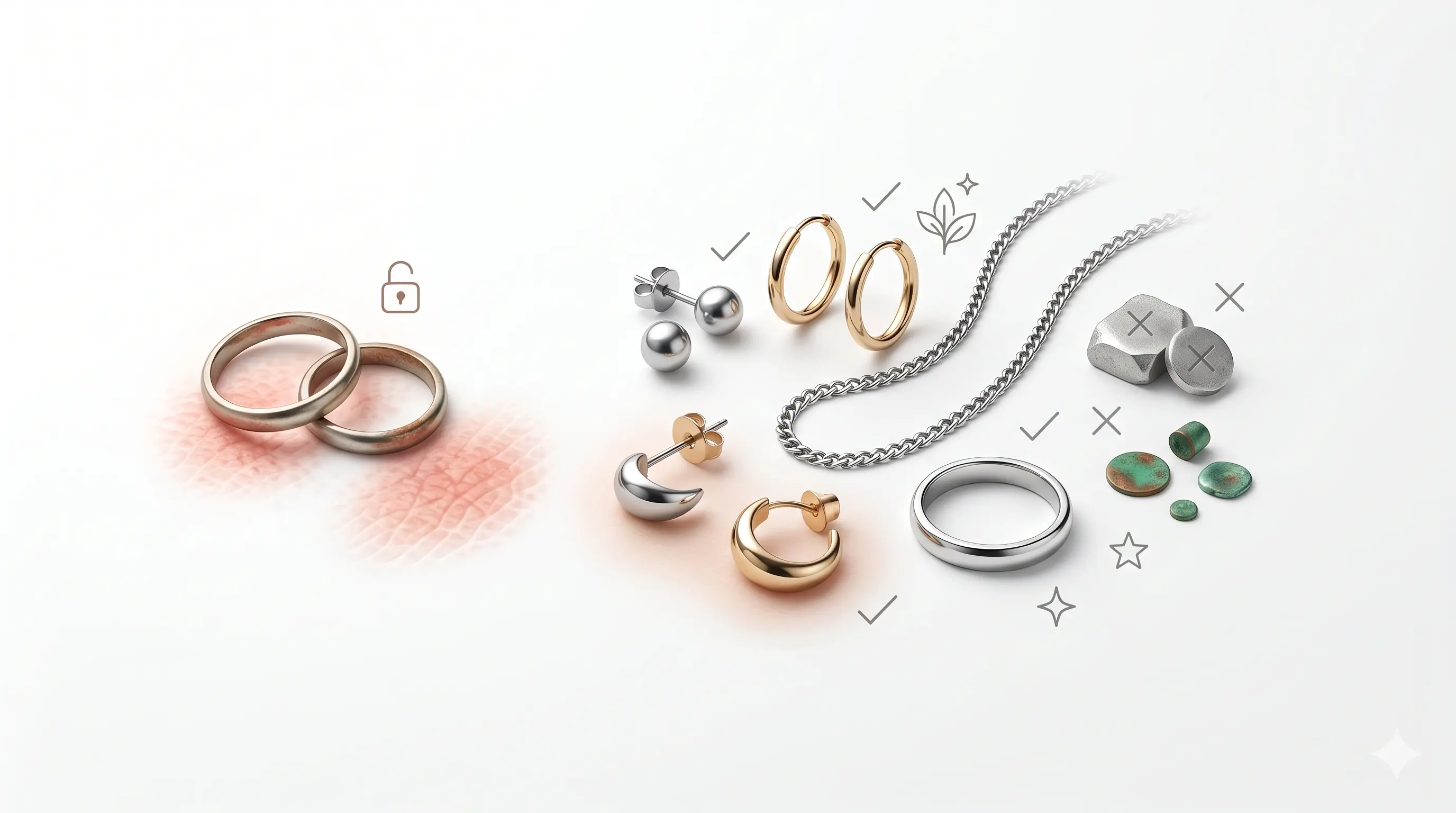
So niobium goes into fresh piercings first, and it is worn by anyone whom even surgical steel rubs and irritates. If you have already met a reaction to cheap costume jewelry, it is worth reading a separate breakdown of nickel allergy in jewelry, which lays out which metals provoke dermatitis and which are safe.
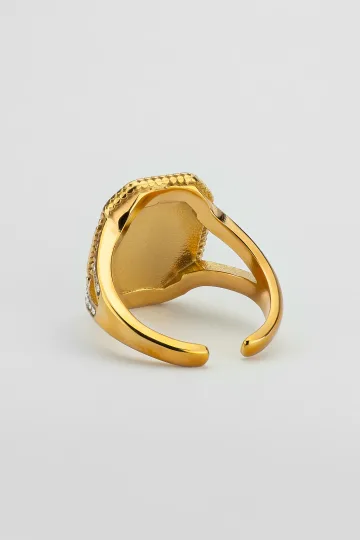
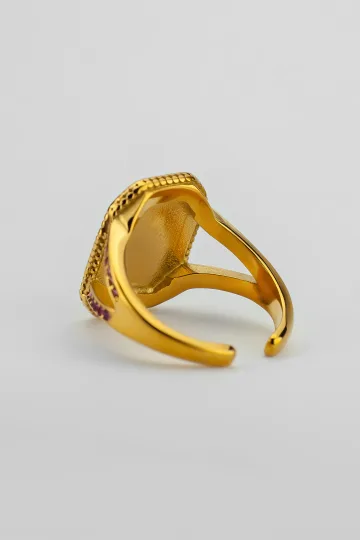
Wear the symbol, don't just read about it. These are in stock:




How niobium is coloured without paint
The most striking thing about niobium is colour. Yet there is no pigment in it. The metal goes into an electrolyte and current passes through. Under voltage a transparent oxide film grows on the surface, and the higher the voltage, the thicker the layer. That thickness sets the colour.
It is pure optics at work. Light reflects partly off the top edge of the film, partly off the metal beneath. The two reflected waves overlap, part of the spectrum cancels out and part is amplified, and the eye reads the result as colour. It is the same optics that paints a soap bubble and an oil slick on a puddle. By shifting the voltage, a maker walks the whole palette: straw, bronze, purple, blue, sky blue, green, yellow.
Which colours niobium gives
Low voltage gives warm tones, golden and bronze. Mid values land in the most popular zone: deep blue and lilac. High voltage pushes into green and silvery yellow. Because colour is set by film thickness, a single piece can carry a smooth transition, a rainbow gradient. Paint cannot do that: it sits as a layer and scratches over time, while the oxide film is the metal itself, or rather its surface.
The downsides of niobium
There is no perfect metal. Niobium is soft by jewellery standards, harder than gold but softer than steel and titanium. Sharp edges wear smooth over time, and the polish dulls with friction. The colour, while not paint, is vulnerable too: a deep scratch lifts the oxide film, and bare grey metal shows through at that spot. The only way to restore the colour is to anodise again. So niobium is great for earrings, pendants and piercings, but for an everyday ring you knock against desks and keyboards it is a poorer fit.
What niobium costs
Niobium is not a precious metal in itself, and the raw material is moderate in price, dearer than steel but many times cheaper than gold. In a finished piece, hand work lifts the cost: quality anodising takes equipment and experience, and an even gradient is a skill. The result puts niobium jewellery in the mid segment, above costume pieces and below gold.
Niobium in piercings
Niobium has a special reputation in the piercing world. A fresh piercing is an open wound, and the metal in it must shed nothing irritating. Niobium meets that condition: it is bioinert, releases no ions, sets off no inflammation. Add bright colour that antiseptic will not wash away. So in trusted studios niobium and titanium are the standard choice for initial placement, while cheap steel of dubious makeup stays the lot of random shops. The colour range gives an aesthetic edge too: a blue or purple bead in a fresh piercing looks far more interesting than grey.
How to care for coloured niobium
The colour of niobium lives in a thin film on the surface, and that film is exactly what you protect. No abrasive pastes or powders, they strip the oxide layer along with the colour. Cleaning stays gentle: warm water, a drop of soap, a lint-free cloth. Strong solvents and ultrasonic baths are questionable too, better skipped. Treated with care, the colour holds for years, because this is not a coating that wears off but the altered metal itself.
Tantalum: a heavy metal with a blue cast
If niobium is about lightness and colour, tantalum is its full opposite. Dark, dense, heavy. It goes into rugged men's rings, and in the hand such a ring feels noticeably weightier than steel.
How tantalum looks
The natural colour of tantalum is dark grey with a cool bluish cast. Not black and not steel, but something in between, closer to graphite. Polishing brings a muted shine, a matte finish brings a velvety surface. A tantalum ring neither shouts nor sparkles. It looks restrained and expensive, with no showy brightness. That is why it appeals to people who dislike a glossy metal on the hand.
Why tantalum is heavy
Tantalum is one of the densest metals used in jewellery. Its density is higher than steel and silver and close to gold. Hence the weight: a tantalum ring feels solid, its presence on the finger is hard to forget. For many men that is the main argument, the piece has to be felt. A thin light ring often reads as flimsy, and tantalum solves that with mass.
Tantalum and medicine
Tantalum is biocompatible. For decades it has gone into surgical implants, bone plates, mesh and clips. The body does not reject it, and tissue knits calmly around tantalum hardware. The same set of properties that suits it for implants makes it safe on skin: tantalum releases no ions, does not oxidise under normal conditions, and causes no irritation. An allergy to tantalum is practically unheard of.
Why tantalum is costly and rare
Tantalum is mined from ores, often together with niobium, and deposits are few. The metal itself is refractory and stubborn to work, it melts at a very high temperature, resists cutting and demands special tooling. Every tantalum ring costs a maker more than a steel or titanium one, and that shows in the price. Tantalum sits steadily above most non-precious metals and edges into the upper-mid segment.
Who tantalum suits
Tantalum is chosen by men who want an unusual wedding or everyday ring with character. Dark colour, serious weight, zero allergenicity and the reputation of a metal from the operating room all add up to the image of a dependable, almost engineered object. If you want to step away from familiar gold and silver, but without brightness or experiment, tantalum is one of the best options.
Tantalum and surface finish
Tantalum has the advantage of looking equally convincing in different textures. A mirror polish gives it a restrained dark sheen, almost gunmetal. A sandblasted matte turns the surface into velvety graphite that does not glare and hides fine scratches. A brushed texture with thin parallel strokes adds a noble roughness. Each option shifts the ring's character while keeping that recognisable blue-grey tone. This gives the maker room and the buyer a choice of mood, from strict to rugged.
Black zirconium says everything and explains nothing. Put yellow gold next to it and you have thrown the whole thing down the drain. Don't.
Who suits rare metals and how to wear them
Over years on shoots and with clients I have tried rare metals on all kinds of hands. A metal does not make a look on its own, the piece, the tone and the occasion decide it. Here is what actually works, sorted by case.
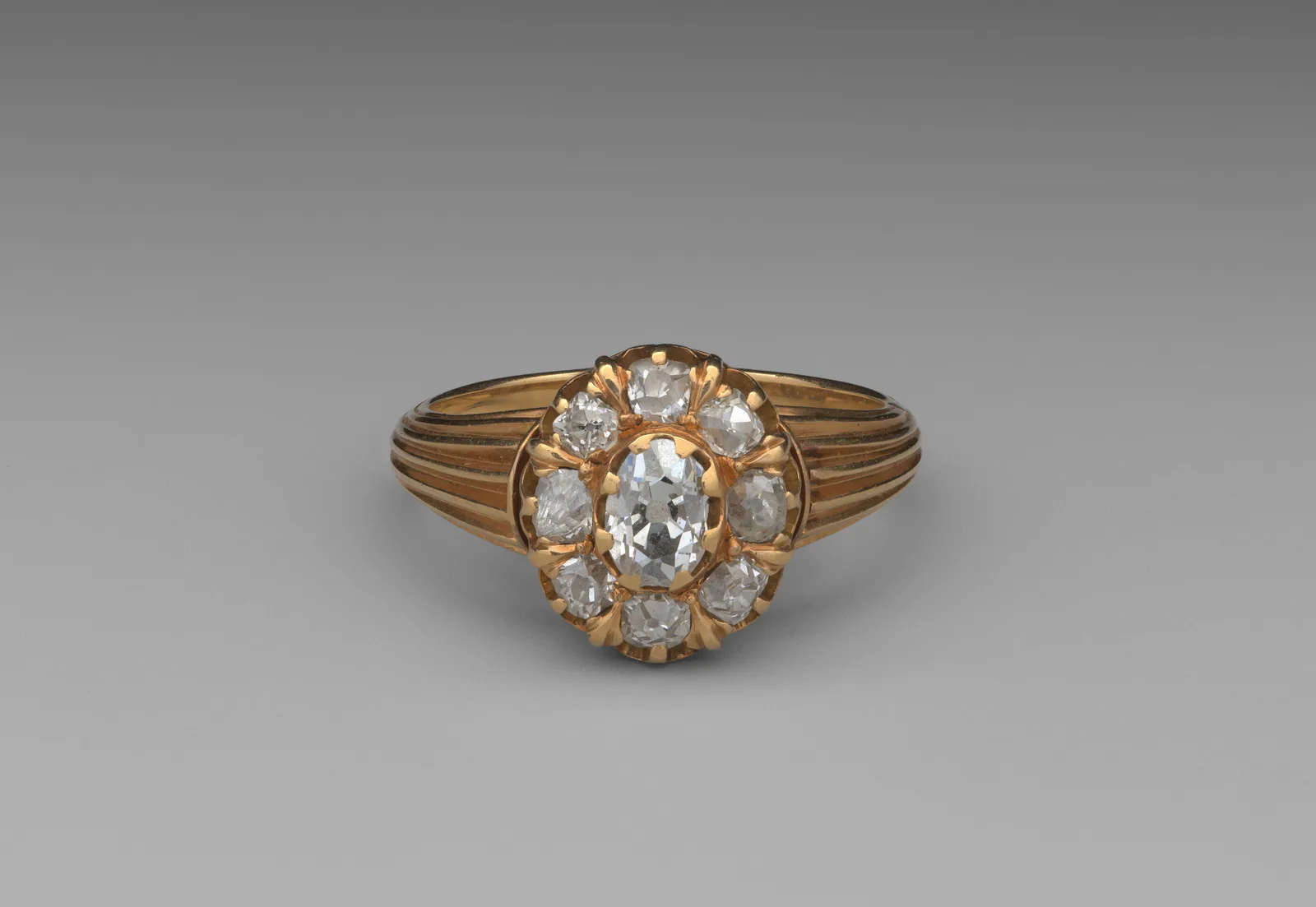
Which metal should I pick for an everyday ring? For daily wear and a wedding band I recommend the hard metals: tantalum, black zirconium, cobalt-chrome. They hold their shape, survive physical work and shrug off knocks. Heavy tantalum and coal zirconium read as a serious accessory, cobalt-chrome gives a platinum-like whiteness for a classic couple. One caveat: buy the size exactly to the finger, since such alloys barely resize.
What do I wear dark tantalum or black zirconium with? Dark metals I suggest keeping in their own palette. Blue-grey tantalum and coal zirconium sit naturally with an urban wardrobe, a tech aesthetic, monochrome in black, grey and graphite. Wear them solo or with silver, while next to yellow gold they give a sharp contrast. If you want to play that contrast, keep it deliberate: one dark ring and one gold detail, not everything jumbled together.
How do I wear coloured niobium without overdoing it? Rainbow niobium is an accent, not a background. I choose it as the single bright point in a calm outfit, solo or with neutral silver, so the saturated blue or purple does not argue with other shades. Do not hang it on top of other flashy pieces, the colour will carry itself. And guard it from deep chips: the tone comes back only through anodising again.
What should I choose for a white business look? For a strict business style I recommend palladium or cobalt-chrome. Both are white, like platinum, and pair freely with silver, white gold and white stones in one set. Under a jacket they read no worse than white gold. Palladium is also light, so I suggest it for large earrings: the metal does not drag on the lobe.
Who do rare metals actually suit? Three different people. Those bored by gold and silver who want a piece with a story of aviation and firing. Those with sensitive skin: bioinert niobium, tantalum, zirconium and palladium save the day where nickel irritates. And those who value the engineering honesty of the object, a metal from the operating room or a turbine. Recognise yourself in even one, a rare metal is yours.

Turn on your camera, pick earrings, a pendant or a ring, and see the piece on yourself in real time.
Switch items in one tap.
Everything runs in your browser: no photo or video is ever uploaded.
Cobalt-chrome: the whiteness of platinum and the hardness of armour
Cobalt-chrome is known as the stuff of dental crowns, joint replacements and turbine blades. It came into jewellery from the same place that prizes it for strength and inertness: medicine and aviation.
How cobalt-chrome looks
The main visual virtue of cobalt-chrome is its colour. It is whiter than steel, and in tone closer to platinum than to grey iron. A polished cobalt-chrome ring gives a bright mirror shine with no yellowness and no grey film. Many choose it as an affordable alternative to platinum and white gold: the visual difference is almost imperceptible, while the price is of another order.
Why cobalt-chrome is so hard
The cobalt-chrome alloy is markedly harder than steel. It resists scratches, does not bend under a stray knock, and holds its polish for years. For an everyday ring that is the decisive quality: it does not lose its look from contact with desks, keys and tools. Where gold would pick up a web of microscratches, cobalt-chrome stays smooth.
How hypoallergenic cobalt-chrome is
Medical cobalt-chrome alloys, the kind used for implants, are made biocompatible. Impurity content is controlled, and a good jewellery grade of such an alloy releases no irritating ions. That is why cobalt-chrome counts among hypoallergenic metals. There is a catch: it must be the medical grade, not a technical alloy high in nickel. With a trusted maker there is no problem, but with no-name costume jewellery the makeup is unpredictable.
Cobalt-chrome for wedding bands
The mix of white colour, strength and safety made cobalt-chrome a popular material for wedding bands, men's especially. The ring looks like platinum, survives physical work and does not chafe the finger. For a couple after a modern white metal without a platinum budget, it is a sensible choice. Its hardness has one downside: such a ring is hard to resize if needed, since a hard alloy resists adjustment.
Customer reviews
Zevira is a real jewellery shop. Genuine payments, deliveries and customer thank-yous.
🥰🥰🥰 gracias
Ok, ¡gracias! 🙂
Palladium: white gold without rhodium plating
Palladium is a platinum-group metal, a close sibling of platinum. In jewellery it plays a double role: as an additive that whitens white gold, and as a noble metal in its own right with its own hallmarks.
Why palladium is naturally white
The key thing about palladium is that it is white by nature. White gold is actually greyish or carries a faint warm undertone, so it is coated with a thin layer of rhodium to give that cool glow. The rhodium plating wears off in a year or two of wear, and the ring has to go back for re-plating. Palladium needs none of that. Its whiteness is the colour of the metal all the way through, not a coating. Scratch it, and under the scratch is the same white palladium, not yellowness.
Palladium is lighter than platinum
At nearly identical looks, palladium is noticeably lighter than platinum, its density is roughly half. For large pieces that is a plus: palladium earrings and a chunky ring do not drag, and they wear more comfortably than platinum. For anyone who loves a noble white metal but tires of platinum's weight, palladium is a find.
How hypoallergenic palladium is
Palladium counts among hypoallergenic noble metals. It contains no nickel and in most cases sits calmly on sensitive skin. Reactions to pure palladium are rare. That makes it a good choice for those whom nickel-bearing white gold leaves uncomfortable. If you are picking a metal with your skin in mind, this guide on which metal suits your skin will help.
Palladium is cheaper than platinum
Palladium is a precious metal, and you could not call it cheap, its price swings and at times catches up with platinum. But in a finished piece, palladium jewellery usually comes out more affordable than platinum: thanks to the lower weight, the same item needs less metal. You get a noble white platinum-group metal at a gentler price, with no cost of regular rhodium plating.
The downsides of palladium
Palladium is softer than platinum and, over long wear, builds its own patina, a matte noble aging of the surface. Some like it, some do not, and polishing brings the shine back. Palladium is also refractory and tricky to work, so not every workshop will take on its repair and soldering. Before buying, it is worth checking where you can service the piece later.
Palladium in white-gold alloys
Beyond its standalone role, palladium works as a whitener in white gold. Pure gold is yellow, and to get a white alloy you add bleaching metals. Nickel was often used for this in the past, cheap, but it is precisely nickel white gold that triggers allergy in sensitive people. Palladium white gold is free of that problem: it is whiter, safer, and needs less intensive rhodium plating. Such an alloy costs more than the nickel version, but the difference is justified for anyone whose skin reacts.
Upload a photo of your pet, someone you love, or an object. We'll build a 3D model and hand-cast it in pewter.



Cupronickel and nickel silver: silver without silver
Now an honest talk about metals that masquerade as silver but are not silver. Cupronickel and nickel silver are copper-based alloys, and you should approach them with eyes open.
What cupronickel is
Cupronickel is an alloy of copper and nickel, sometimes with small additions. The colour is silvery white, and the surface shines almost like silver. Cupronickel went and still goes into cutlery, coins, inexpensive tableware and jewellery. It is sturdy, does not rust, holds its shape. For budget silvery items, cupronickel is a working material that lasts a long time.
What nickel silver is
Nickel silver translates literally as new silver. It is an alloy of copper, nickel and zinc. The zinc makes it lighter and closer in tone to silver than cupronickel. The name speaks honestly to the substance: there is no whiff of silver here, it is an imitation by colour. Nickel silver is cheap, easy to work, and gets stamped into casings, fittings, costume-jewellery bases and inexpensive pieces.
How cupronickel and nickel silver differ from silver
The difference is fundamental. Sterling 925 silver is a precious metal with its own value and hallmark. Cupronickel and nickel silver are copper alloys priced many times lower, with no precious component. A fresh piece is hard to tell apart by eye, but over time the copper base announces itself: the alloy can darken, and it sometimes leaves a mark on skin. If you want to grasp the difference between silvery materials in practice, there is a breakdown of brass, steel and silver for jewelry, and the logic there is the same. And what exactly lies behind the 925 hallmark is covered in a piece on what silver 925 means.
A warning: nickel
The main risk with cupronickel and nickel silver is nickel. Both alloys carry it in noticeable amounts, and nickel is the most common allergen in jewellery. In sensitive people it brings redness, itching and dermatitis at the contact points. So earrings, rings and chains made from these alloys cannot be recommended to everyone. For a person with no allergy this is a normal budget metal. For an allergy sufferer it is a direct route to irritation. If your skin reacts to costume jewellery, cupronickel and nickel silver are not your choice, and here you should look toward niobium, tantalum or silver.
Where cupronickel and nickel silver fit
Despite the caveats, these alloys have a legitimate place. They are good for decorative things that do not sit against skin for long: keyrings, interior pieces, frames, inexpensive gift items. For anyone who wants a silvery look without the cost of silver and has no trouble with nickel, cupronickel and nickel silver are an honest budget solution, as long as you know what you are buying.
How to tell cupronickel from silver
There are a few everyday signs. Silver is softer and over time picks up a dark patina from hydrogen sulphide in the air, while cupronickel and nickel silver darken differently, with a greenish copper tint at worn spots. Silver carries a hallmark (925, 875 and the like), copper alloys never do, at most a marking such as a grade code. By weight, silver is noticeably heavier at equal volume. But the surest way is to buy from a seller who names the metal honestly rather than hiding the makeup behind a pretty phrase like new silver.
Zirconium: black out of fire
Closing the roundup is black zirconium, a metal that turns black not from a coating but from firing. People sometimes confuse it with cubic zirconia (a stone), but these are different things: here we mean the metal zirconium.
Why black zirconium is black
Zirconium starts out a silvery grey metal. It turns black after heat treatment: the piece is heated in a controlled atmosphere, and a layer of black zirconium oxide, essentially a ceramic, forms on the surface. This black layer is neither paint nor plating but the transformed surface of the metal itself, fused firmly with the base. It does not flake like the black coating on cheap rings, and it holds incomparably longer.
The hardness of black zirconium
The oxide layer on black zirconium is very hard, close in character to technical ceramic. That gives high scratch resistance: the black surface does not rub down to grey metal as easily as electroplating. For a black wedding band meant to keep its colour for years, that is an important edge. Most cheap black rings lose their colour at the edges within a couple of years, while black zirconium holds its tone.
How hypoallergenic zirconium is
Zirconium is biocompatible and used in medicine, zirconium dioxide goes into dental crowns and implant components. The metal itself and its oxide layer are inert, releasing no irritating ions and causing no allergy. Black zirconium sits calmly on people with sensitive skin, for whom ordinary coated black alloys are unsafe.
Who black zirconium suits
Black zirconium is chosen by those who want a graphite or coal-black piece for real and for the long run. It is a popular material for men's wedding bands in dark tones and for strict minimalist pieces. The colour is deep and noble, with none of the gloss of cheap plating. The downside is shared by all hard metals: such a ring is hard to resize, and a deep chip in the oxide layer is not simple to restore.


What all these metals have in common
Six different metals, yet their properties echo each other in many ways. Let us sort out what unites them and why those qualities matter in practice.
Hypoallergenicity as a shared trait
Almost all the heroes of this roundup (cupronickel and nickel silver aside) are united by bioinertness. Niobium, tantalum, cobalt-chrome, palladium and zirconium release no free ions into the skin, because they are covered by a stable oxide film or are chemically stable. Hence their reputation as safe for allergy sufferers. This is not marketing but a consequence of chemistry: no ion release, no reaction.
Anodising and colour without paint
Niobium, like titanium, can give colour through anodising, growing an oxide film with current. Zirconium gets its black by a similar route, only through firing rather than electrolysis. In both cases the colour is the altered surface of the metal, not a layer applied on top. That is why such colours outlast any paint or plating.
Weight as character
The weight of these metals varies, and that is part of the choice. Tantalum is heavy, almost like gold. Palladium is light, half the weight of platinum. Niobium is light. Cobalt-chrome is mid-range. Weight is no trifle: for some, a piece has to feel substantial, for others it should be unnoticeable. Knowing a metal's density, you can picture in advance how a piece will sit on the hand or in the ear.
Origins in engineering and medicine
All these metals came into jewellery from somewhere other than jewellery. Tantalum and zirconium come from surgery. Cobalt-chrome from dentistry and aviation. Niobium from superconductors and special alloys. Palladium from industrial catalysts. Engineers and doctors valued them first for strength and inertness, and only later did makers see jewellery in them. So each carries the reputation of a dependable material, tested not on a display counter but at work.
Six fast checks, no tools. Leave your email, we'll send the PDF and a discount code.
No spam, unsubscribe anytime.
How to choose an exotic metal without getting burned
An unusual metal is interesting but also risky: the less you know, the easier the mistake. A few markers so the choice does not disappoint.
For allergies
If your skin reacts to costume jewellery, stick to bioinert metals: niobium, tantalum, zirconium, quality palladium, medical cobalt-chrome. And steer clear of anything that might contain nickel, cupronickel and nickel silver first of all. With strong sensitivity, check the alloy makeup with the seller rather than trusting the word hypoallergenic on a price tag.
For your lifestyle
Think about how your hand lives. If you work with your hands and want an everyday ring, take something hard: cobalt-chrome, zirconium, tantalum. If you want a bright piece to wear with care, niobium with its colour. Earrings and pendants forgive a soft metal, rings do not. That is the main fork: hardness versus the beauty of colour.
For your budget
The price layout is simple. Niobium and cobalt-chrome sit in the mid segment, more affordable than gold. Tantalum and black zirconium are higher, near the upper mid because of the difficult processing. Palladium is precious, dearest of all, though gentler on the budget than platinum. Cupronickel and nickel silver are the very bottom on price, with their nickel caveat.
Vetting the seller
An exotic metal is a reason to ask questions. Ask for the exact alloy name, not the general family. Check how to service the piece: can it be resized, where can it be soldered, can the anodising be restored. An honest seller answers without hesitation. Vague wording is a reason to be wary, especially when it concerns hypoallergenicity.
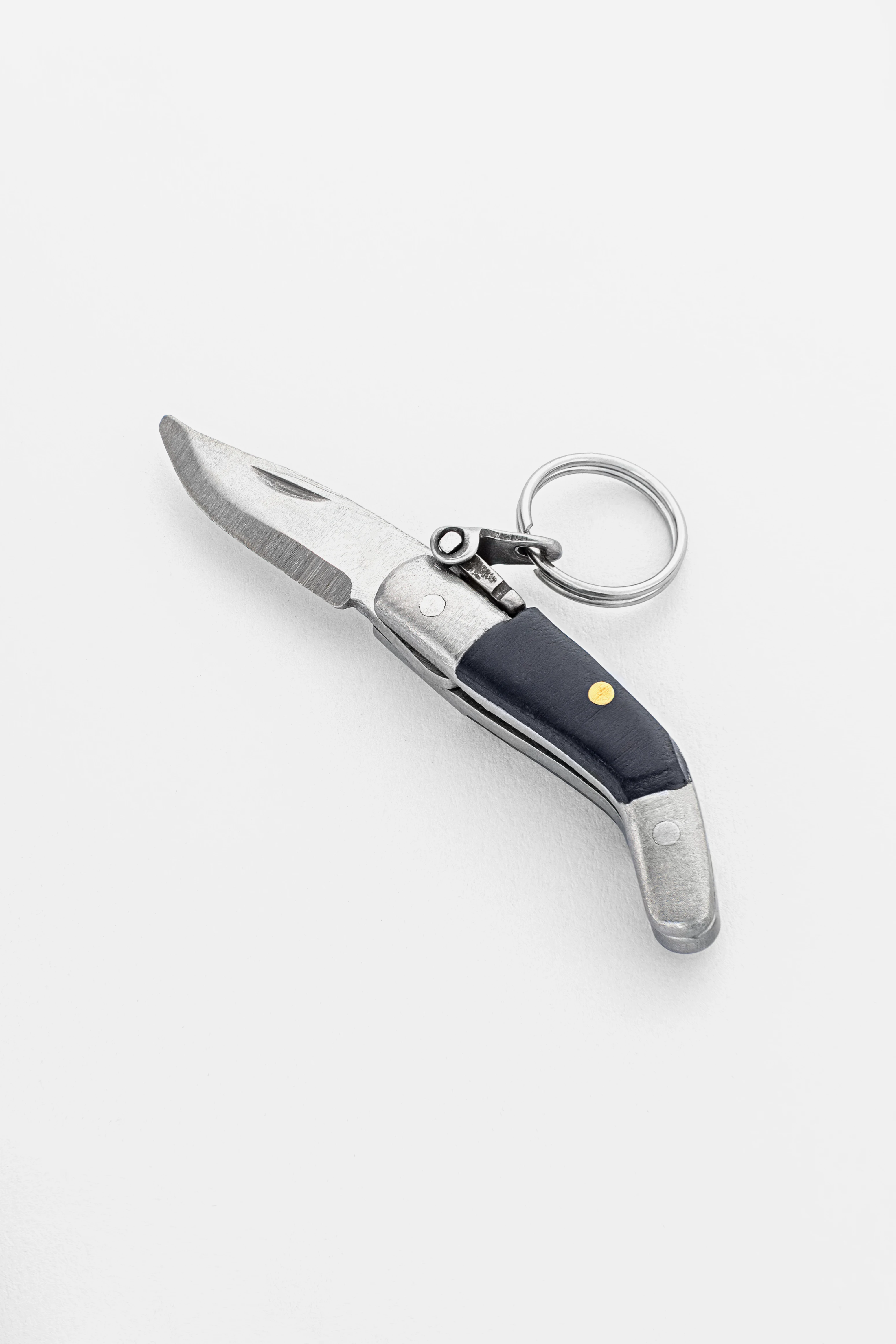
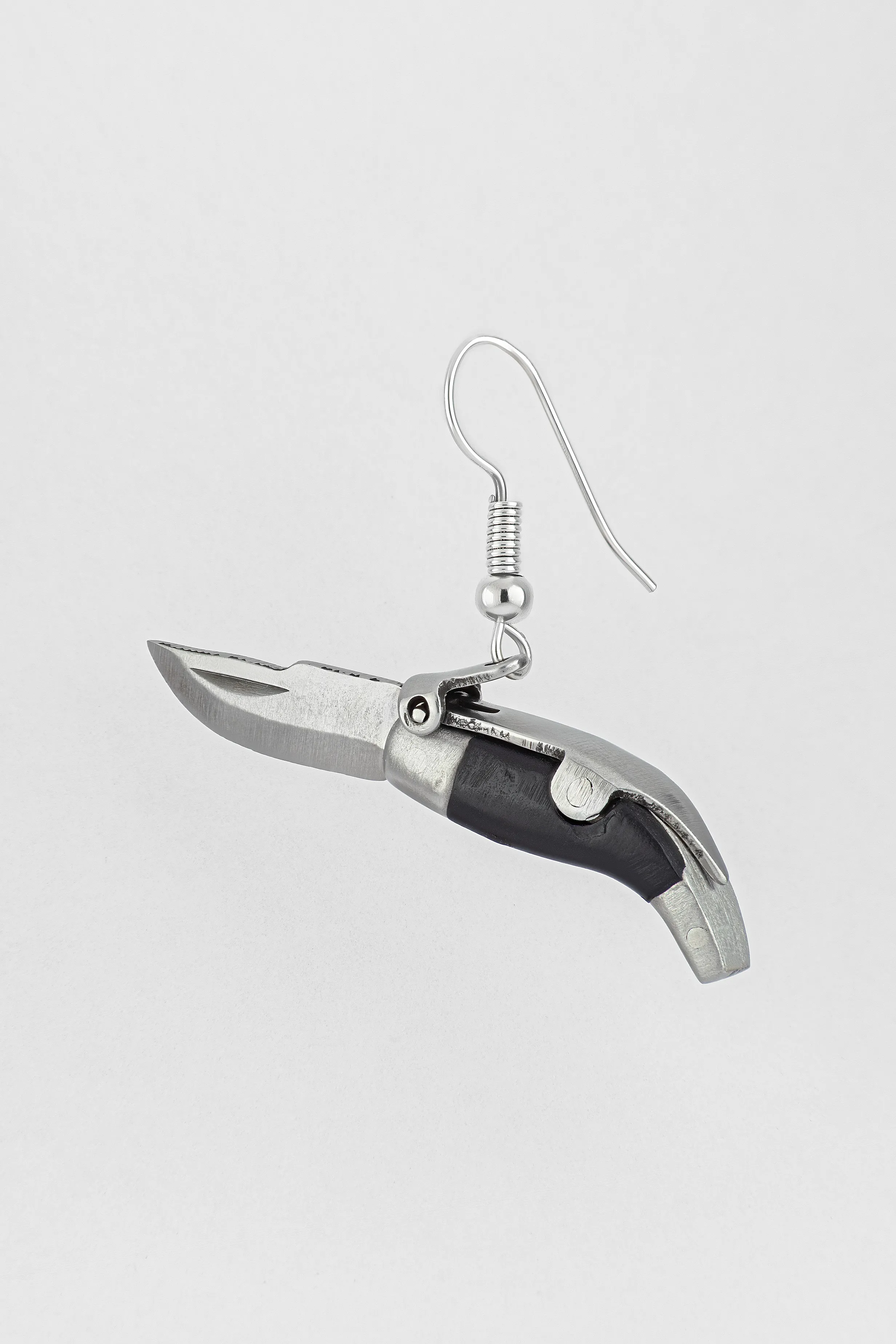
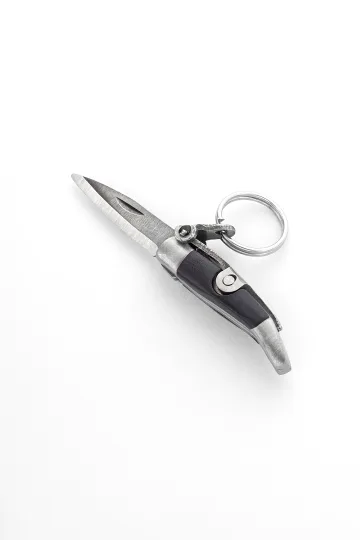
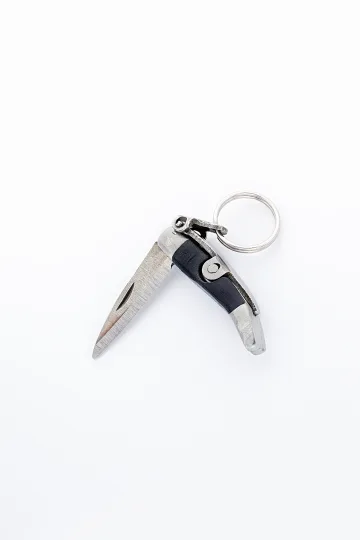
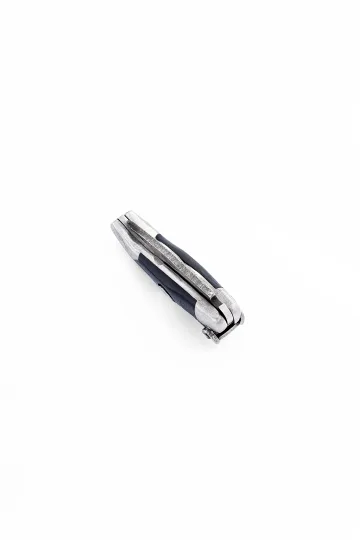
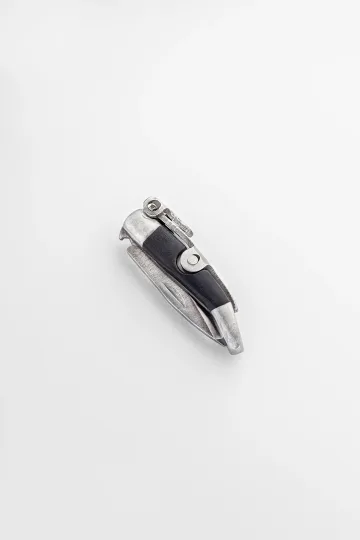
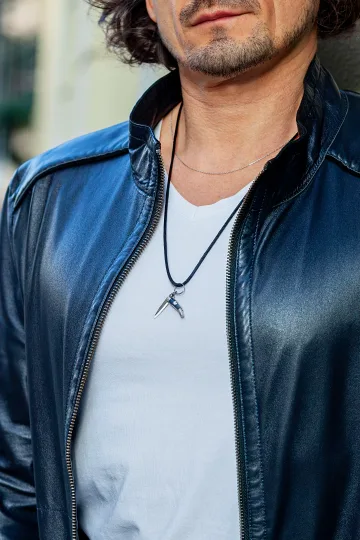
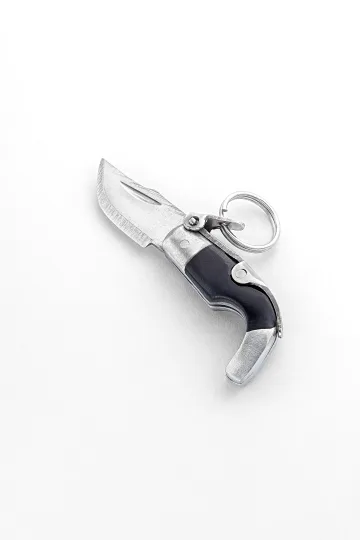
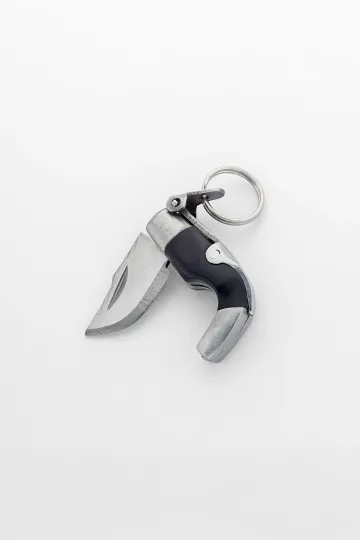
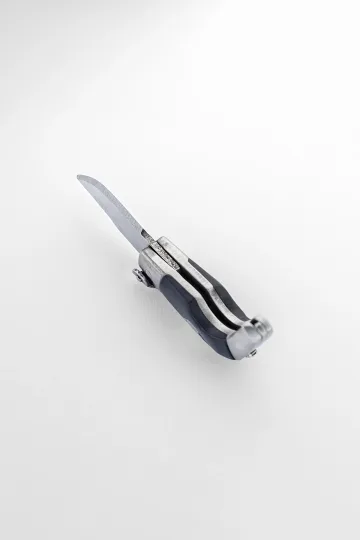
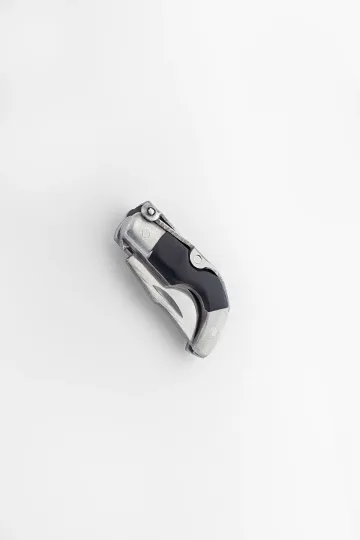
CAPAORA mini knife pendant
The 18th-century Spanish navaja in miniature: 40 mm of stainless steel, a real folding mechanism and a Palanquilla lock that clicks. An affordable gift to remember.
Authentic · Ships from Spain · 14-day returns
Comparing the metals against each other
So the six metals do not blur together in your head, let us line them up by key properties and lay out what each brings.
Colour
Palladium and cobalt-chrome are white, like platinum. Tantalum is dark grey with a blue cast. Black zirconium is coal black. Niobium is any colour of the rainbow, from gold to purple and green. If you need colour, that is niobium. If a noble white, palladium or cobalt-chrome. If a strict dark, tantalum or zirconium.
Hardness
For scratch resistance, cobalt-chrome and black zirconium lead, with tantalum behind them. Palladium and niobium are softer and pick up wear marks faster. For an everyday ring hardness decides, for earrings and pendants it barely matters.
Weight
The heaviest is tantalum. Mid-range is cobalt-chrome. Light are niobium and palladium. Weight is felt on the finger and in the ear, so it is worth weighing in advance, especially for large pieces.
Price
From affordable to dear: cupronickel and nickel silver, then niobium and cobalt-chrome, next tantalum and black zirconium, and at the top palladium as the only precious metal on the list.
Caring for rare-metal jewellery
The good news: most of these metals are low-maintenance. But each has its own quirks that will extend a piece's life.
Cleaning
Bioinert metals do not darken or oxidise in daily life, so care is simple: warm water, mild soap, a soft cloth. No aggressive products or abrasives, especially on anodised niobium and black zirconium, since rough cleaning lifts the coloured or black layer. Palladium is cleaned gently, like any precious metal, with a soft cloth and a special non-abrasive compound.
Storage
Store each piece separately so the hard metals do not scratch the soft ones. Cobalt-chrome and zirconium will easily leave a mark on niobium or palladium. A pouch or a separate compartment in a box solves the problem. Coloured niobium is best kept away from light and sharp swings, even though the anodic film is stable.
What not to do
Do not knock an anodised or black piece against hard surfaces, a chip in the coloured layer is hard or impossible to restore without re-anodising. Do not try to polish coloured niobium or black zirconium with paste: you will strip the colour. Polishing brings the shine back only to white and grey metals with no coloured layer, palladium, tantalum and cobalt-chrome in their natural state.
Myths about rare metals
A lot of confusion has piled up around these unusual metals. Let us sort out the main misconceptions.
Myth: niobium's colour is paint
No. The colour of niobium and titanium is the optical effect of an oxide film, not a pigment. Light interferes within the thin transparent layer, and the eye sees colour. There is no dye in the metal. So the colour does not fade or wash off, there is nothing to wash off, it is the metal itself.
Myth: black zirconium is painted black
Also no. The black comes from firing: a black zirconium oxide forms on the surface, a ceramic layer fused with the metal. This is not plating that flakes but an altered surface. That is exactly why it holds longer than cheap black coatings.
Myth: cupronickel and nickel silver are silver
No, there is no silver in them at all. These are copper alloys with nickel and zinc, silvery by colour only. The name new silver misleads on purpose, to sell for more. They have no precious value.
Myth: hypoallergenic means absolutely safe for everyone
Not quite. Hypoallergenic means a reaction is unlikely, not impossible. Bioinert metals are safe for the overwhelming majority, but rare individual reactions happen to anything. Plus a label on a price tag does not guarantee the purity of an alloy from a no-name seller.
Myth: the dearer the metal, the better for a ring
No. Palladium is the dearest on the list, yet softer than cobalt-chrome, which is cheaper and harder. For an everyday ring the hard and inexpensive cobalt-chrome is more practical than the noble but soft palladium. The best metal is the one that fits the task, not the most expensive one.
Myth: an exotic metal cannot be serviced
An exaggeration. Cleaning is trivial. The difficulties are resizing hard metals and soldering refractory ones. But a good workshop takes on everything, and niobium's anodising is restored by repeating the process. Just check the service options in advance.
Send a friend a discount code, they save on their first order.
Facts that surprise
The colour of niobium and titanium is physics, not chemistry
The colouring of anodised niobium has nothing to do with dyes. It is the interference of light in a transparent oxide film, the same effect that colours a soap bubble and an oil slick on water. By shifting the voltage by fractions of a volt, a maker moves the film thickness by nanometers and walks the whole rainbow.
Tantalum lies inside people all over the world
Tantalum is from the same family of metals as the materials of surgical implants. Bone plates, mesh and clips of tantalum have been implanted for decades. The ring on your finger is made of a metal the body trusts enough to carry inside itself.
Palladium is named after an asteroid
Palladium was discovered in 1803 and named after the asteroid Pallas, found shortly before. The asteroid in turn bears the name of Pallas Athena from Greek myth. So a noble white metal is tied to the goddess of wisdom through a cosmic boulder.
Cobalt took its name from a mountain spirit
The word cobalt comes from the German Kobold, an underground goblin, the household spirit of mines. Medieval miners blamed these spirits for ore with cobalt smelting badly and giving off poisonous fumes. The metal from cursed ore now shines on wedding bands with the whiteness of platinum.
Niobium and tantalum are an almost inseparable pair
These two metals are so chemically alike that for more than a century they could not be told apart and were thought to be one element. Even today they are mined together from a shared ore. Their names were chosen with meaning: Tantalus is a figure of Greek myth, and Niobe is his daughter. The names were picked precisely because of the metals' kinship.
Zirconium puts itself out with fire
In powder form zirconium is flammable and even used in pyrotechnics, but the solid metal resists corrosion thanks to an instant oxide film. Black zirconium in rings is a controlled burning of the surface: a measured firing turns the metal's vulnerability into its ornament.
Cupronickel sounds like the name of a wise man
The name cupronickel and its cousin terms came from chemistry, while the related nickel silver and the old French silvery alloys took names that echo other things entirely. Some of these silvery alloys without a single drop of precious metal carry names that smell of gold and frankincense, though there is neither in them.
Cobalt-chrome spins in jet engines
Before it reaches fingers, the cobalt and chromium alloy works in the harshest conditions of engineering, it goes into the turbine blades of jet engines. A metal that withstands a white-hot stream and furious revolutions merely refuses to scratch on keys when it is on your hand.
Frequently asked questions
Which of the rare metals is the most hypoallergenic? The bioinert metals are roughly equal in safety: niobium, tantalum, zirconium and quality palladium release almost no ions into the skin. For a fresh piercing, niobium or titanium is usually chosen. The main thing is to avoid cupronickel and nickel silver, which contain nickel.
How does niobium differ from titanium? Both anodise to colour and both are hypoallergenic. Titanium is lighter and harder, holds its shape better. Niobium is softer but gives a purer, more saturated palette when anodised. For piercings and bright jewellery, niobium is prized for the richness of its colour.
Can coloured niobium be scratched, and what then? Yes, a deep scratch lifts the oxide film, and bare grey metal shows through at that spot. The colour can be restored only by anodising again in a workshop. So coloured niobium is kept from knocks and not worn as a ring for heavy work.
Is tantalum heavier than gold? Almost on a par. The density of tantalum is close to gold and noticeably higher than steel and silver. A tantalum ring feels solid and weighty, and it is for that weight that it is loved by those who need to feel jewellery on the hand.
Is palladium better than white gold? For care, yes. Palladium is white by nature and needs no rhodium plating, whereas white gold has to be re-plated with rhodium from time to time. Palladium is hypoallergenic and lighter. But it is softer and dearer, so the choice depends on your priorities.
Are cupronickel and nickel silver safe for everyday wear? For a person with no allergy, quite so, the alloys are sturdy and do not rust. But they contain nickel, and for sensitive skin that is a risk of irritation. If your skin reacts to costume jewellery, these metals are best left alone.
Does the black wear off on black zirconium? No, not in the usual sense. The black layer is an oxide fused with the metal, not plating. It resists scratches and holds its colour for years. You can damage it only with a heavy chip, and restoring it is harder than re-polishing.
Which exotic metal should I pick for a wedding band? For an everyday wedding band, the usual picks are cobalt-chrome (white, hard), black zirconium (dark, durable) or tantalum (heavy, serious). Palladium is good for those who want a noble white precious metal without the weight of platinum.
The short version
Rare metals are jewellery grown out of engineering and medicine. Niobium paints itself a rainbow with current, tantalum wins with weight and a dark blue, cobalt-chrome gives the whiteness of platinum at the hardness of armour, palladium offers a noble white with no rhodium fuss, black zirconium turns black from fire, and cupronickel and nickel silver play at silver but demand caution because of the nickel.
The choice comes down to three questions: does your skin react, how does your hand live, what colour and weight do you want. For an allergy sufferer, bioinert metals and no nickel. For an active hand, hard alloys. For a lover of the bright, niobium. And the price honestly reflects rarity and the difficulty of processing, with no markup for a name.
Silver, steel, hypoallergenic metals, coloured stones, symbolism, matching sets.
Buying it as a gift? Each one arrives ready to give.
 A branded Zevira box and a little card come with every order.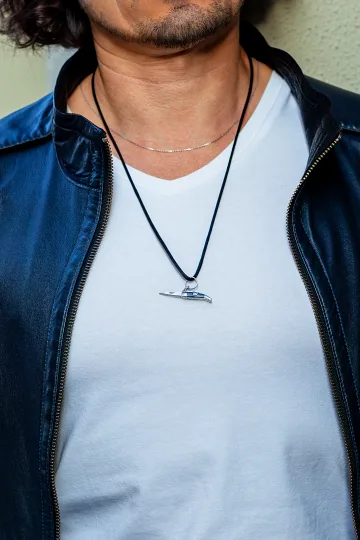





About Zevira
Zevira is a Spanish jewelry brand from Albacete, a city with centuries of metalworking tradition. We work with 925 silver, steel and hypoallergenic alloys, so a piece is safe for the skin and honest in its makeup. More on our materials in the guide to silver 925 and in the breakdown of the metal for your skin tone.