Red Pepper Good Luck Charm: The Meaning of the Neapolitan Peperoncino
A little red pepper on a chain is not a foodie joke or a trinket for chilli lovers. In Naples the curved red pod, in Italian peperoncino portafortuna, "the pepper that brings luck", is worn as a charm against the evil eye and for money, health and love. People credit it with the same power as the coral horn, the cornicello, yet the pepper is its own symbol with its own story.
The horn came to Italy from deep antiquity. The pepper arrived far later, on ships from the New World. Even so, in four centuries it grew into Neapolitan culture so tightly that today a red pepper hangs in a taxi next to a rosary, lies in handfuls on souvenir stalls, and dangles from necks alongside a golden horn.
What follows, in order: where the pepper charm came from, what it means, how it differs from the horn, what it is made of, who it is given to, and why Naples takes it seriously rather than as a knick-knack.
Why Neapolitans Wear the Pepper
The pepper did not become a charm by accident. The logic is the same one behind ancient protective amulets: sharp, burning and bright red things frighten off evil. A chilli pod carries all three at once. It is pointed at the tip, like a claw or a horn. It burns, so by folk logic it also scorches another person's envy. And it is red, the Mediterranean colour of blood, life and protection all at the same time.
To this a purely southern idea was added. In Naples the pepper is also food, passion, temperament. A fiery person there is said to be "like a peperoncino". So the charm gained a second layer: it wards off trouble and promises vitality, an appetite for life, romantic heat. The horn answers for strength and defence, the pepper for the fire inside. That is why locals often wear both at once and see no contradiction in it.
Let us take the symbol apart layer by layer: how a burning vegetable from the Americas became a talisman, what exactly it promises its owner, how it fundamentally differs from the horn, and how to pick a real pepper rather than a beach souvenir.
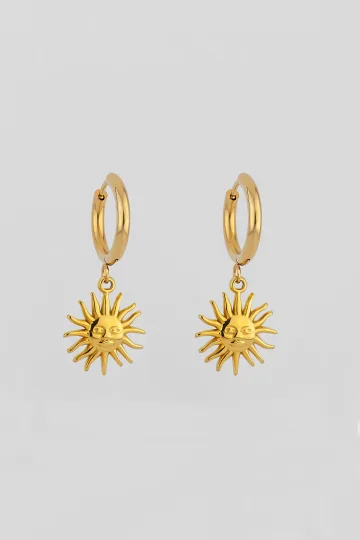
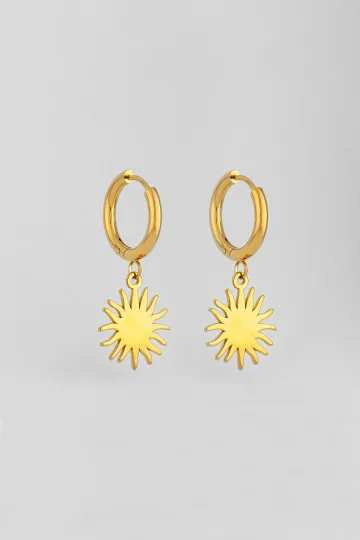
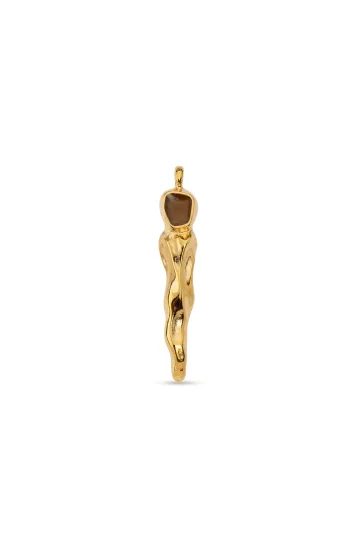
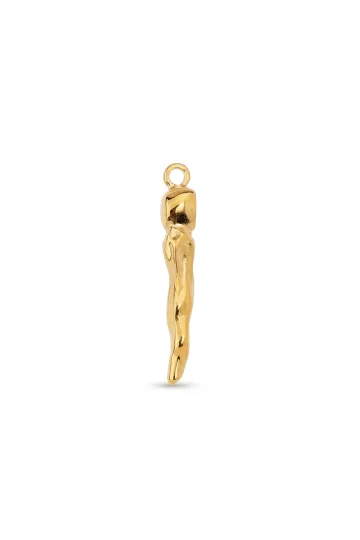
Wear the symbol, don't just read about it. These are in stock:



What the Pepper Charm Is
Meaning: vitality, abundance and protection
The red pepper charm works in three directions at once, and that is what sets it apart from single-purpose amulets. The first is protection from the evil eye, in Italian malocchio, "the bad eye". An envious glance is believed to harm luck, health and affairs, and the sharp red pepper intercepts that glance and disarms it. The second is abundance and money. A pepper plant yields dozens of pods from a single bush, so the pepper has long been tied to fertility and plenty, to a household where there is enough of everything. The third is vitality and passion. In folk thinking the burning taste equals inner fire, temperament, romantic heat and a plain thirst for life.
That is exactly why the pepper is given so widely. It fits as a wish for luck in business, as a health charm, and as a playful hint at passion. One small red pod covers several human wishes at once, and that is the secret of its popularity.
Names: peperoncino, corno rosso, cornetto
The charm has several names, and they sometimes get tangled:
- Peperoncino portafortuna literally "little pepper that brings luck". The most precise name for the pepper charm.
- Corno rosso "red horn". Both the pepper and the coral horn are called this, because their silhouettes look alike. Part of the confusion starts here.
- Cornetto "little horn". A general diminutive that Naples uses for any curved red amulet, whether horn or pepper.
- Italian lucky pepper the everyday name under which the charm is known outside Italy.
Worth remembering: the word corno (horn) on its own points to the cornicello horn, while peperoncino is always the pepper. When a Neapolitan wants to be exact, they say either corno or peperoncino, and the difference is obvious to them.
What a real pepper charm looks like
A proper pepper charm has recognisable marks that make it easy to tell apart from a horn and from a cheap knock-off:
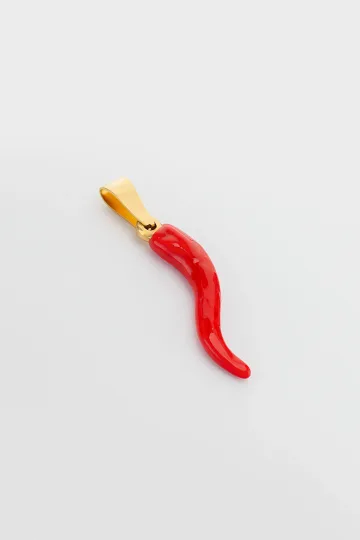
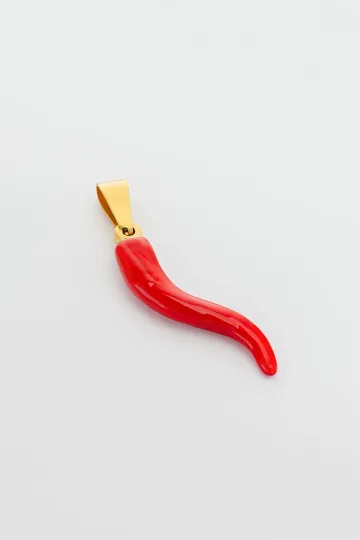
Shape a short pod, plump at the base, narrowing to a curved, pointed tip. Unlike the horn, the pepper has a fuller, rounder body up top, with the characteristic hooked curve at the end that a real chilli pod has.
The stem-cap almost always there is a small green or gold stem at the top, the point where the chain loop attaches. This is the main visual clue that separates pepper from horn: the horn tapers smoothly with no "cap", the pepper has a stalk.
Colour a deep red, often glossy, more rarely gold or coral. Red here is not a decorative whim but part of the amulet's power.
Size from tiny (about 1.5 to 2 cm, for a fine chain) to a larger keyring and a big wall pepper for the kitchen or hallway. For jewellery the most common size is 2 to 3 cm.
The material varies: from costly red coral and enamel over gold to inexpensive glass, plastic and painted wood. In folk tradition this does not affect the charm's power; colour and shape matter more, but more on that below.
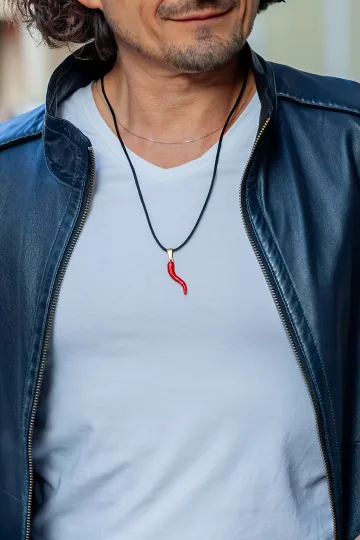
A little red pepper on a bare collarbone, an open neckline, a light tan. Do not hang anything else on that chain.
What to Wear the Red Pepper With
The red pepper is one of those pieces you can easily turn into an accent or, the other way, into a quiet personal detail. Over years of working with Mediterranean symbols I have gathered a few rules that never let me down.
What do I wear the pepper with every day? For an everyday look I recommend a small red pepper on a fine chain over a plain top. White, sand and grey light up the red best, so it reads as the single spot of colour and holds the whole look together. With denim and knitwear the pepper works as a living detail rather than a dressed-up piece. I suggest keeping the length shorter so the red sits in the open zone near the collarbones.
Is it right for the office? Yes, if you pick a restrained version. I recommend a gold or silver pepper with enamel, a length of 45 to 50 cm so it tucks under the top shirt button. Then the red reads only up close and does not argue with a business dress code. Matte metal is calmer than glossy; under a jacket it is a quiet touch rather than a loud accent.
How do I build an evening look? For the evening I suggest an open neckline and a smooth fabric in a deep colour: black, wine, emerald. Against that background the red pepper works flawlessly, especially coral or enamel on gold. On bare skin near the collarbones it catches the light and looks expensive. I recommend a shorter length, 40 to 45 cm.
Can I layer the pepper with other chains? You can, and the red pepper actually holds layers well. I advise making it the lowest, shortest element so the colour lands at the centre of the composition, with thin plain chains above it and no pendants. If a gold cornicello horn hangs alongside, that is the classic Neapolitan pairing, and the two symbols reinforce each other.
Who does the red pepper suit at all? Those who love pieces with character and are not afraid of colour. The pepper rarely looks neutral; it is always a little playful and warm, so it suits lively, bright people and anyone who wants to add one hot detail to a calm wardrobe. Two rules that never fail. First: the red should land in the open zone, so pick the length to match the neckline. Second: one bright pepper is always stronger than five competing pendants, so give it its own line.

Turn on your camera, pick earrings, a pendant or a ring, and see the piece on yourself in real time.
Switch items in one tap.
Everything runs in your browser: no photo or video is ever uploaded.
Pepper and Horn: One Charm or Two
Here lies the main confusion, the reason the pepper is often mistaken for "just a kind of cornicello". It is not. The horn and the pepper are two different talismans with different histories and different meanings, and Naples understands this perfectly well.
How the pepper differs from the cornicello
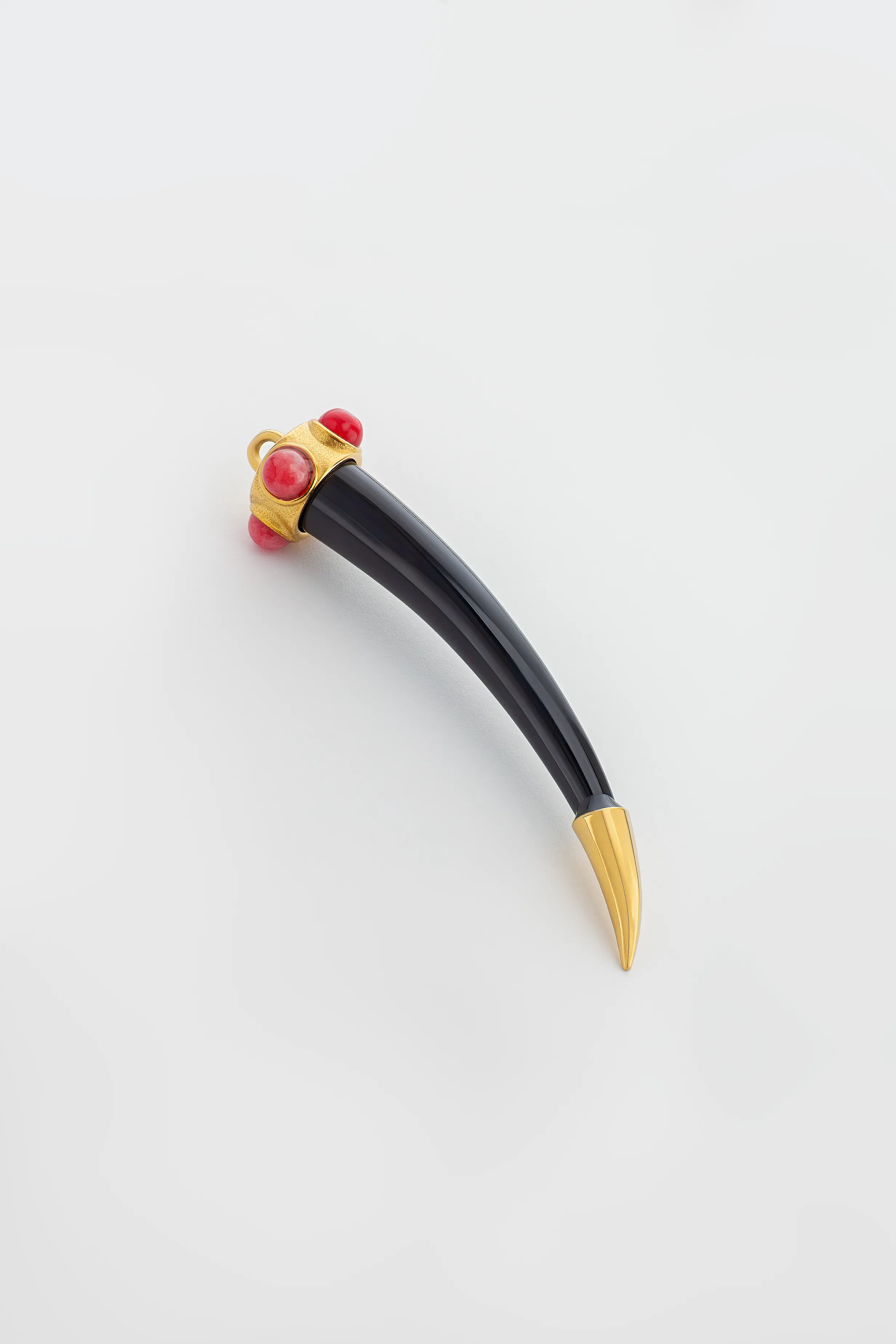
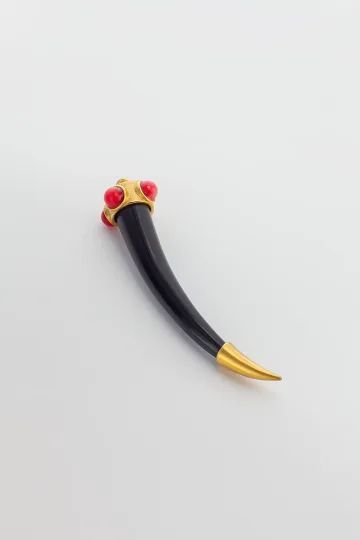
The cornicello is a horn. Its prototype is the bull's horn, a symbol of strength, fertility and male energy known in pre-Christian antiquity, thousands of years before the pepper reached Europe. It is long, smooth, gently curved, and tapers to a point with no stalk at all. Its classic material is red coral, and its main job is protection from the evil eye.
The pepper is a pepper. It entered the culture many times later, it has a rounded, plump body and a stalk-cap on top, and its meaning is broader: protection, abundance, an appetite for life and passion. In plain terms, the horn answers for "keep trouble away", the pepper for "give me plenty of everything".
They are easy to mix up because both are red, both are curved, and in the stalls they lie side by side. But once you know the stem-cap and the difference in silhouette (the long thin horn against the short plump pepper), telling them apart is simple. A detailed look at the horn, its history from the Neolithic to today and the rules for wearing it, is in the separate article on the cornicello.
Why they are often worn together
Neapolitans do not choose between horn and pepper; they calmly wear both, because the symbols complete each other. The horn covers protection: it "pierces" the bad glance and turns away envy. The pepper adds what the horn lacks: vitality, money, romantic heat, plenty in the home. Together they give a full set of wishes, so on a single chain or bunch of keyring charms you can see a red horn, a red pepper, and a little hunchback Scaramuccia for good measure.
History: How a Burning Pepper Became a Charm
The pepper sailed in from the New World
The story of the pepper charm begins not in antiquity but in the age of the great voyages. The chilli is native to Central and South America, where indigenous peoples grew and used it for thousands of years. It reached Europe only after the voyages of the late fifteenth century, along with other wonders from across the ocean: tomatoes, maize, cocoa.
The Spanish and Portuguese quickly spread the pepper through their territories and trade routes. By the middle of the sixteenth century the burning pod had reached southern Italy, where it found the perfect climate and the perfect cuisine. Naples and Calabria fell for the pepper at once: it was cheap, bright, hot and grew almost by itself. For a poor southern table this was a genuine rescue, which is why the Calabrian pepper is still called "the red gold of the poor".
The Calabrian "little devil"
Calabria, the region at the very toe of the Italian boot, has a story of its own. Here the pepper is not a seasoning but part of the region's character. The local hot variety is fondly called diavolicchio, "the little devil", and it goes into almost everything: from nduja sausage to sweets and even chocolate. Such total love for the pepper fixed both its culinary and its protective meaning. In Calabrian homes strings of red pods dry on balconies and by doorways, working at once as a winter store and as protection for the house. This everyday ubiquity made the move from food to charm feel natural: an object that already hangs by every door easily becomes a charm for the door.
From food to amulet
How did a hot seasoning turn into a charm? Here the old Mediterranean logic of protection did its work. Southern Italy lived for centuries inside a dense culture of superstition around the evil eye, where anything sharp, red and eye-catching worked against a bad glance. Red coral, iron, salt, sharp objects, horns, all of it already served as defence. The red pepper slotted into this row perfectly: it was red, sharp and, no small thing, always at hand in every kitchen.
At first a real dried pod was simply hung in the kitchen or by the door, to drive away trouble and dry for cooking at the same time. Then came durable copies in coral, metal and glass, which could be worn on the body all year round. So a household vegetable took on sacred meaning and stood beside the ancient horn, even though it arrived thousands of years later.
Naples as the capital of the pepper charm
It was Naples that made the pepper charm what it is today. A city with its cult of luck, lotteries, superstition and street trade turned the red pepper into a recognisable souvenir and a living charm at once. On Via San Gregorio Armeno, the famous street of craftsmen, peppers are sold in strings next to figures for the Christmas nativity and hunchback charms. For a tourist it is a postcard; for a local it is part of everyday protection, hung in the car, dropped into a bag and given as a housewarming gift.
Meaning and Symbolism of the Red Pepper
Protection from the evil eye (malocchio)
The pepper's main function is the same as that of most Mediterranean charms: protection from malocchio, the bad eye. Folk belief holds that envy is material: someone else's envious glance can spoil luck, health, relationships and affairs. The sharp red pepper works like a lightning rod. It is bright and noticeable, so it draws the eye to itself, and its sharpness and heat "burn" the negativity before it reaches the owner. In this the pepper is close to the horn, which is precisely why they are so often confused.
In Neapolitan tradition the evil eye even has its own "symptoms": a sudden headache, listlessness, a run of small failures. To check for malocchio, older women dripped oil into water and watched how the drops spread. In this system the charm serves as constant protection that keeps trouble at bay, rather than a cure for what has already happened. The red pepper is handy because it does this passively: it is enough to wear it or hang it where it can be seen, and it works on its own, with no daily rituals. This everyday simplicity is what made the pepper so widespread: it demands neither rites nor special handling, only red colour and a sharp shape.
Abundance, money and fertility
The second layer of meaning is absent from the horn, and this makes the pepper a talisman in its own right. A pepper bush is very fruitful: one small plant gives dozens, sometimes hundreds of pods in a season. Nature's generosity has long been linked with fertility, plenty, a full house and a good harvest. So the pepper is given for a housewarming, the opening of a business, a wedding, with the wish that there be enough of everything: money, children, food, joy.
Vitality, passion and temperament
The third layer is the most Neapolitan of all. In folk thinking the burning taste of the pepper equals inner fire. A passionate, lively, hot-headed person in southern Italy is said to be "like a peperoncino". From this the charm takes on the meaning of romantic heat, temperament, energy and a thirst for life. The red pepper is given to lovers as a playful hint, worn to lift the spirits, hung at home as a sign that life should be bright and hot. No other Mediterranean charm combines protection with such open vitality.
Customer reviews
Zevira is a real jewellery shop. Genuine payments, deliveries and customer thank-yous.
🥰🥰🥰 gracias
Ok, ¡gracias! 🙂
Why It Has to Be Red
For this charm the colour is no less important than the shape. In Mediterranean culture red carries a double charge. On one side it is the colour of blood and life, of vitality and passion, of everything living and hot. On the other it is an ancient protective colour: charms were painted red, a red thread was tied around infants, red coral was given to newborns against the evil eye back in antiquity.
The red pepper gathers both meanings in a single object. As a charm it is red because red frightens off evil and reflects the bad glance. As a symbol of life it is red because that is the colour of fire, blood and passion. A green or yellow pepper carries no such power in folk tradition: it is the ripe, red, "hot" pod that works. That is why even the cheapest souvenir peppers are always made bright red, intuitively keeping the amulet's core property.
Materials: What the Pepper Charm Is Made Of
Red coral
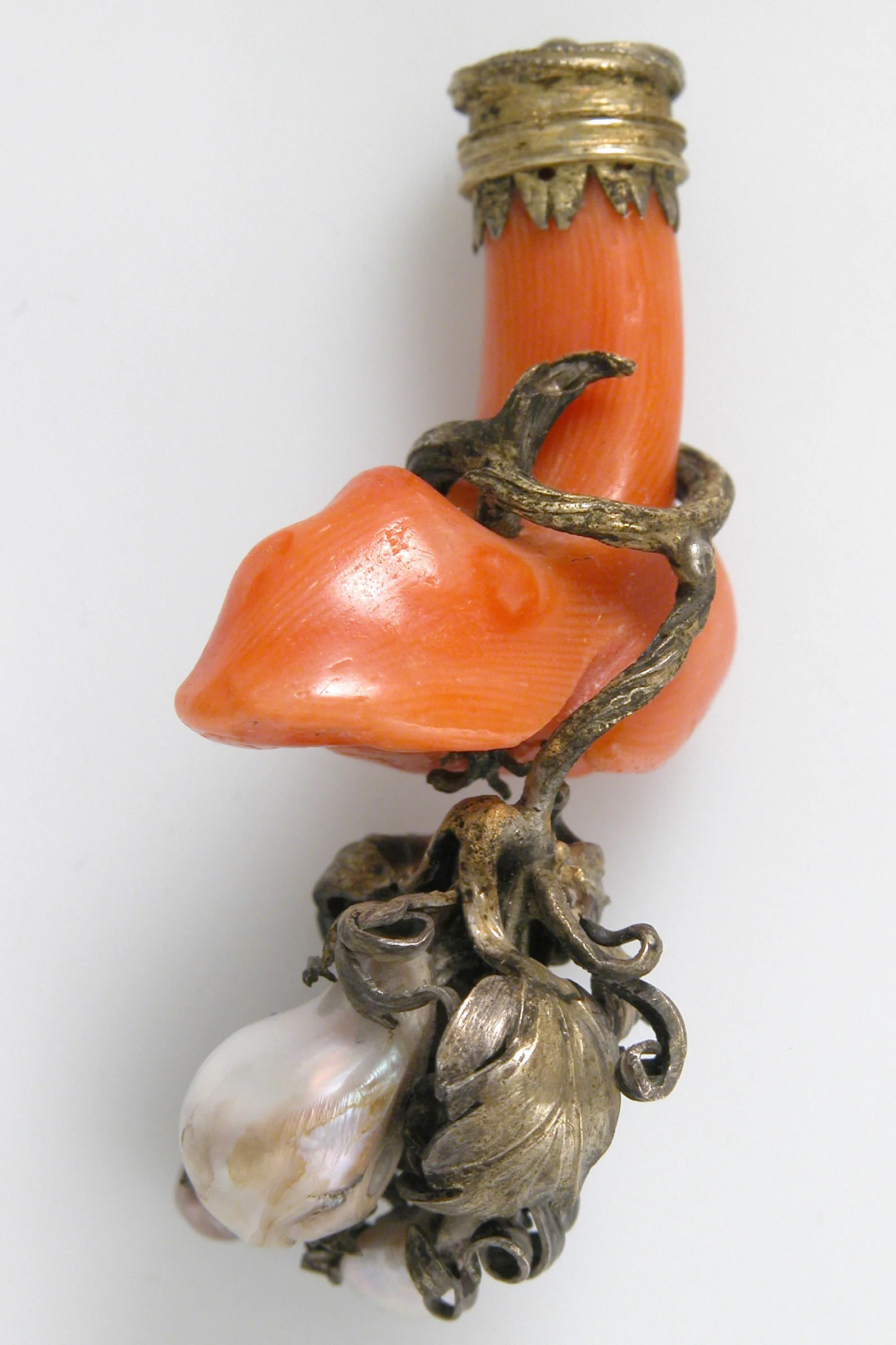
The noblest and most traditional material. In the Mediterranean red coral has been a charm since antiquity, a symbol of life force and protection from the evil eye all by itself, before any shape at all. A pepper carved from coral joins the power of the material to the power of the symbol. Such pieces are made in Torre del Greco near Naples, the historic centre of coral working. This is the premium version: a warm, deep red, a pleasant weight, the status of handwork.
Gold and enamel
The classic for jewellery. A gold pepper coated in red enamel joins the nobility of the metal to the necessary bright colour. Worn on a fine chain, this version reads as a full piece of jewellery that also works as a charm. The gold adds an idea of wealth, which sits well on the pepper's "money" meaning.
Silver
A more restrained and affordable option. A silver pepper, often with a red enamel inlay, looks calmer than gold and suits those who prefer a cool metal. Silver is durable, unfussy in wear, and well suited to an everyday charm.
Glass, enamel and Murano copies
A separate Neapolitan tradition is peppers of coloured glass and enamel, sometimes with a nod to Venetian and Murano glasswork. Bright glossy red glass conveys the needed colour perfectly and costs little, so these peppers most often hang as keyrings, on car mirrors and on key bunches.
Wood and inexpensive souvenirs
The most widespread level is painted wood, plastic and ceramic. Such peppers are sold in handfuls in the markets of Naples. In terms of tradition their power is not a bit weaker: what matters is the red colour and the shape, not the cost of the material. So a taxi driver with a wooden pepper on the mirror is protected just as well as a fashion lover with a coral pepper on a gold chain.
Upload a photo of your pet, someone you love, or an object. We'll build a 3D model and hand-cast it in pewter.



How to Choose a Pepper Charm
What to look at when buying
A good pepper charm is known by a few details. The first is the shape: a real pod is plump at the base and hooks toward a sharp tip, rather than stretching into a long straight needle (that is the horn, not the pepper). The second is the stalk-cap on top, the small "cap" the loop attaches to. The third is the colour: it should be a deep red, with no muddy or faded tone. For jewellery the neatness of the fitting matters too: the loop should sit firmly so the pepper does not spin or flip on the chain.
Coral, enamel or glass: which for which purpose
Choosing the material is choosing the role the charm will play. Red coral is for those to whom tradition, status and "the real thing" matter: it is the premium option, warm to the touch, with a craft history behind it. Gold with enamel suits a pepper meant as everyday jewellery you are not shy to wear with any look. Silver is chosen for restraint and price. Glass, wood and ceramic are taken for keyrings, the car, the home and "good luck" gifts, when what matters is not the cost but the gesture itself and the bright colour.
How to tell a charm from a beach souvenir
The line here is not in the material but in the making and the intent. A beach souvenir is usually crude: a lopsided shape, dull paint, a flimsy loop, all done in a hurry. A real charm, even a cheap one, is neat: an even curve, a clean red colour, a secure fitting. And the main difference is in attitude: what makes the pepper a charm is not the price tag but the fact that the owner wears it consciously, as a symbol, not as a knick-knack from the seaside. Bought in that spirit, even a plain wooden pepper works as a full talisman.
How to Wear the Pepper Charm



Who the Pepper Is Given To and How It Is Handled
The tradition of giving
As with the horn, the pepper has a folk rule: a charm received as a gift is stronger than one bought for yourself. The gift is thought to carry the giver's goodwill and luck, so the charm gets a double charge. That is why the red pepper is a classic gift for a housewarming, a wedding, the opening of a business, the birth of a child and simply "for luck". Buying a pepper for yourself is not forbidden, tradition allows it, but a gift is valued higher.
How the charm is "activated"
There is no strict ritual, but there are Neapolitan habits. The pepper, like the horn, is often "charged" with the corna gesture (a fist with the index finger and little finger out) or with a touch, when someone wants to ward off trouble. A new charm is traditionally held in the hands while you think of a good wish, then hung where it can be seen or worn close to the body. There is no magic by instruction here; personal attitude matters more: the charm works when the owner believes in it and treats it as "their own".
Neapolitans also have a half-joking "activation" rite when giving one. The person giving the pepper lightly pricks the open left palm of the receiver with the sharp tip and speaks a wish in the spirit of the famous line by the comedian Totò: "Whatever you wish me, I wish you double." The point of the rite is that luck cannot be bought or taken by force; it is passed along with a kind word. Tradition adds one more condition: a true charm should be made by a craftsman's hands, because along with the work the maker puts their own energy into the object. You need not believe in the literal power of the rite, but it turns an ordinary gift into a small ritual that is pleasant both to give and to receive.
What to do if the pepper breaks
The folk logic is the same as with the horn: if the charm cracks or breaks, it took the blow on itself and protected its owner. This is not a bad omen but a sign of a job done. A broken pepper is thanked and replaced with a new one, with no anxiety at all. Such an attitude removes needless fear and makes the charm a calm companion rather than a source of superstitious tension.
The Red Pepper in Neapolitan Culture
Charm, food and character in one word
In no other region does the pepper mean as much as in Naples and Calabria. Here it is at once the seasoning number one, a symbol of luck and a metaphor for temperament. The single word peperoncino describes the hot sauce on the table, the amulet on the neck and the hot-headed neighbour. This triple meaning made the pepper a truly popular symbol, understood without explanation: red, sharp, alive, one of our own.
The pepper and the Neapolitan cult of luck
The pepper's popularity is easier to grasp if you recall how Naples itself works. This is a city where luck is raised almost to a religion: a folk lottery, the reading of dreams, omens at every step. There is even a "book of luck", the smorfia, where every image from a dream matches a number for the lottery. A Neapolitan will not ignore a bright red pepper seen in a dream: by this system the dream is turned into a number and carried to the draw. In such a culture a charm is not a superstitious trifle but part of the everyday language spoken with fortune. The red pepper fits into this system naturally: it is cheap, bright, always at hand and promises protection, money and joy at once. A Neapolitan who hangs a pepper in the car or gives one as a housewarming present does the same thing as when they pick a lottery number: they carefully bargain with luck. That is why the pepper grew together with this city in particular, rather than dissolving into the general run of souvenirs.
The pepper among other charms
In the Neapolitan "collection of luck" the pepper stands alongside a whole set of talismans. Next to it hang the red cornicello horn, the hunchback Scaramuccia (a symbol you touch for luck), the horseshoe and the hand gesture. Together they form a single protective system where each has its own role. The wider tradition of household and worn talismans is covered in detail in the guide to protective amulets and talismans, and the universal Mediterranean charm against the evil eye is in the article on the nazar, the blue eye that works by a similar logic of reflecting the bad glance.
The pepper versus kitchen decor
It is worth telling the charm apart from plain culinary decoration. A string of real dried peppers in the kitchen is pretty, practical and partly a charm too. But a talisman in the narrow sense is a worn or hung red pepper of durable material to which protective and lucky power is consciously assigned. The difference is not in the object but in the attitude: a pepper as a spice is one thing, a pepper as an amulet is another.
Leave your email, we'll send your discount code. No spam, unsubscribe anytime.
The code arrives by email, valid on your first order.
The Red Pepper in Other Cultures
Latin America: the pepper's true homeland
Although the portafortuna charm took shape in Italy, the pepper itself was a gift to the world from pre-Columbian America. In Mexico, Peru and the countries of Central America the chilli was grown and honoured for thousands of years, and its role went far beyond the kitchen. Among the Aztecs and Maya the pepper was part of rituals, a medicine and even a measure of punishment. In Mexico strings of red peppers, ristras, are still hung by the entrance as a sign of hospitality and plenty, and the red of the pepper is woven into folk protective magic against the "bad eye", mal de ojo, exactly as in the Mediterranean. The Italian pepper charm turns out to be a meeting of an American plant and an old Mediterranean logic of protection.
The protective red across the world
The idea that red drives off evil and draws luck is found far beyond Italy. In China red is the chief colour of happiness, celebration and protection: red envelopes, ribbons and cords are given for luck and tied on children. In India and the Middle East a red thread is worn against the evil eye. In Slavic tradition a red thread and a red sash protected infants and mothers in childbirth. Against this shared background the Neapolitan red pepper looks not like an oddity but like a local version of an ancient and almost universal idea: the bright, red and noticeable thing takes the blow on itself.
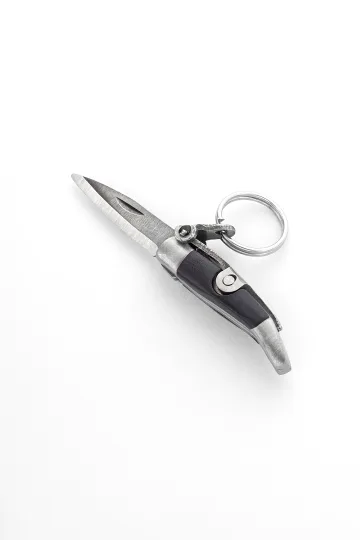
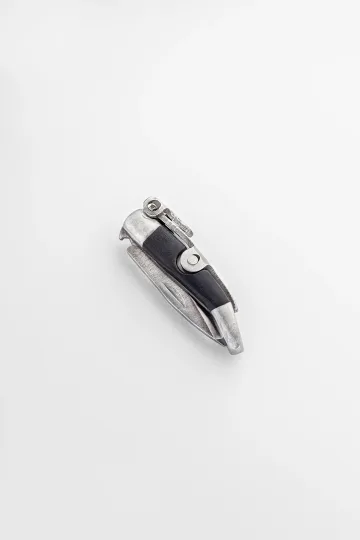
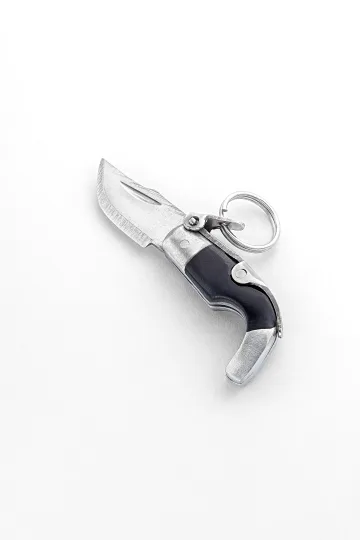
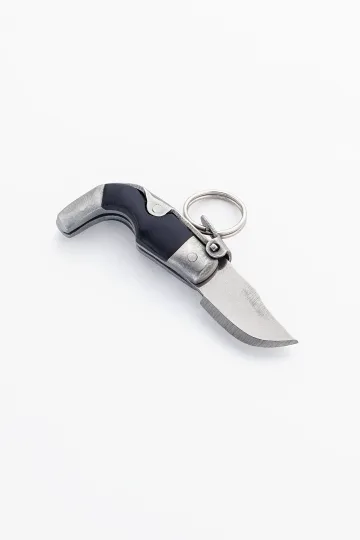
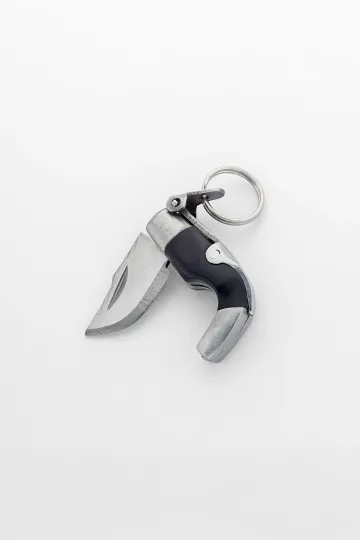
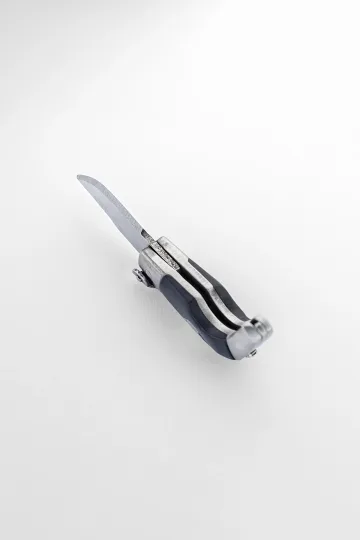
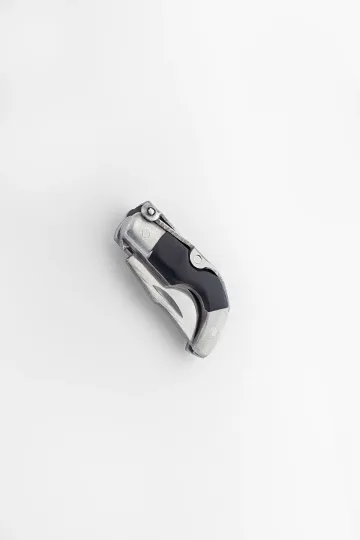
CAPAORA mini knife pendant
The 18th-century Spanish navaja in miniature: 40 mm of stainless steel, a real folding mechanism and a Palanquilla lock that clicks. An affordable gift to remember.
Authentic · Ships from Spain · 14-day returns
The Pepper in Art and Still Life
The pepper's trace is visible in painting too. As soon as the burning pod spread across Europe, it landed on the canvases of still life masters. In the Spanish bodegón, the humble kitchen still life of the seventeenth century, strings of red pepper, garlic and clay pots became a recognisable set, a hymn to simple but generous southern food. Painters loved the pepper for its pure, saturated colour: a single red spot brought a whole dark, restrained scene to life.
In Dutch and Flemish still life the pepper and the overseas spices read differently, as a sign of trade, rich ports and a link to distant lands across the ocean. Spices were costly, so a painted pepper hinted at wealth in the house. So painting fixed a double image for the red pod, one that lives on in the charm: on one side, simple folk life and the warmth of the kitchen; on the other, abundance and plenty. The same red accent that drew the eye in a painting works in the charm too: a noticeable red spot that catches attention and holds it.
Psychology: Why We Are Drawn to a Bright Charm
Even a person who does not believe in the evil eye is often drawn to such a charm, and there is a plain explanation for it. A charm works as an anchor for attention and a small ritual. When we hang a red pepper in the car or put it on before an important day, we perform a conscious act that tunes us: it gathers us, calms us, gives confidence. Psychologists call this the effect of an external support, when an object helps you manage your own state.
The red colour strengthens this effect. It is physiologically noticeable, invigorating, associated with energy and warmth, so a bright pepper literally lifts the tone and draws the eye. Add the history and the beautiful legend, and the object gains emotional weight: it is pleasant to wear, you want to talk about it, it ties the owner to a culture and a tradition. Believing in magic is not required for this: a symbol with a history and a character works as a source of small daily joy and composure.
The Pepper in the Home: Where to Hang It and Why
Besides being worn on the body, the pepper has long lived as a household charm, and it has its own geography within the home. The classic place is the entrance: a pepper or a string of red pods is hung by the door so protection meets you on the threshold and keeps a stranger's unkind glance out. The second familiar place is the kitchen, the heart of a southern home, where the pepper hangs both as a charm of plenty and as a store of seasoning. The third is the car: a red pepper on the mirror is one of the most common Italian car charms, a wish for a road without trouble.
Large ceramic and glass peppers are made specially for interiors, sometimes as big as a forearm. They are hung on a hallway wall or set in plain sight in the living room as accent and charm at once. The logic everywhere is the same: the talisman should be in view, at a passageway, a "border" point of the home, the place where, by folk belief, trouble lies in wait. Other household and worn charms, from the horseshoe to the hamsa hand, are covered in detail in the guide to protective amulets and talismans.
How to Make a Pepper Charm by Hand
A string of dried peppers for the home
The oldest kind of pepper charm is not a bought pendant but your own string of dried pods. It is made simply, and part of the meaning lies in that simplicity. Take an odd number of matching red peppers (an odd number is considered "living" and open in folk tradition). Lay the pods out in the sun so they soak up the sun's power and dry properly, then thread them on a strong cord, ideally woollen, red or green. While you thread them, it is customary to think of good things: of plenty, health, calm in the home. The finished string is hung where it can be seen.
Where to hang it and for how long
A household string has its own placement rules. The classic spots are above the front door, by the stove or over the dining table, that is, where the family spends the most time and where guests come. By belief the string is kept for about a year, then replaced with a fresh one: over that time the peppers are thought to absorb the accumulated negativity and to have served their turn. The old string is taken down without regret and burned or simply thrown out, with thanks, and a new one goes up in its place. There is no exact "shelf life" here; it is more a convenient yearly rhythm of renewal that also keeps the charm fresh and bright.
Which pepper is fit for a charm
For the string you take a ripe, fiery red pepper with smooth, flawless skin. An even, elongated shape resembling a point or a pike is prized: it is the sharp tip that "pierces" the bad glance. Limp, spotted or cracked pods are not fit for a charm, because a charm should look strong and healthy. Here again the colour matters more than the variety: heat on the plate plays no role, but a deep red is a must, since it is the red that carries protection and life force.
Send a friend a discount code, they save on their first order.
The Pepper for Money, Business and Love
The pepper for wealth and trade
The pepper has a firm reputation as a money charm, and this comes from its fruitfulness: one bush gives dozens of pods, and abundance in the garden is easily carried over by folk thinking into abundance in the purse. So a red pepper is traditionally given for the opening of a business and hung in shops, cafés and workshops. In Naples a pepper by the till or over the counter is a familiar sight: it is believed to guard takings from an envious glance and to draw luck in trade. For a business the pepper is handy because it needs no explaining: a bright, noticeable sign, clear without words, that says "may the business go well".
The pepper for love and passion
The pepper's second folk purpose is matters of the heart, and here the same logic of heat works. Since the pepper is hot and "fiery", it is credited with the power to kindle feelings. The single are given one as a wish to meet their other half, and couples as a symbol of passion that does not cool. Hence the charm's playful reputation: a small red pepper reads easily as a hint, so it is often given to lovers instead of a plain souvenir. Unlike strict charms, the pepper in matters of love is not shy about being a little cheeky, and that is exactly what makes it such a lively gift.
The Pepper Charm as a Tattoo
The red pepper long ago moved from the chain to the skin and became a popular subject for small tattoos. The reason is clear: the symbol already has a ready meaning, and there is no need to explain it. A pepper tattoo reads as a personal charm against envy and the evil eye, a sign of inner fire, passion and a lively character, and at the same time a nod to southern roots for those with Italians in the family or who simply love the Mediterranean.
The format of such a tattoo is almost always compact. The pepper sits perfectly in a mini tattoo of three or four centimetres: on the wrist, behind the ear, on the ankle, on the edge of the hand. It is small but expressive, so it needs no large canvas and does not clash with other marks. The pepper is often inked in a pair with the cornicello horn, a horseshoe or a number, building a personal set of charms on the skin. The colour is almost always red: as with the worn charm, it is the red that carries the main meaning, while a black outline is used only as a graphic variant.
Who Can Wear the Pepper: Faith, Children and Anyone
The pepper and Christian tradition
The question of whether such a charm clashes with faith comes up often, and history gives a calm answer. Mediterranean culture lived for centuries with two layers at once: the church and the folk. Red coral, from which little horns and peppers were made, sat calmly beside crosses, and in Renaissance paintings a sprig of coral is often seen on the neck of the infant Christ as a sign of protection and life force. Neapolitan jewellers today still sell gold charms next to images of saints and see no contradiction in it. So the pepper charm is part of everyday, not religious, culture, and anyone can wear it, regardless of faith or origin.
Coral and pepper for children
A separate and very old branch of the tradition is charms for infants. In the Mediterranean red coral was given to newborns from antiquity: coral sprigs and beads were hung on the cradle and around the child's neck as protection from the evil eye and a wish for health, and babies teethed on hard polished coral. The red pepper joined this same row of children's charms: small, bright, "for luck and health", it remains a fitting gift for a birth and a christening. The meaning is the same as for the adult amulet, only the wish is addressed to the most defenceless member of the family.
Facts That Surprise
- The pepper is thousands of years younger than the horn. The cornicello horn goes back to pre-Christian antiquity, while the pepper reached Europe only after the discovery of America in the late fifteenth century. Yet today they hang on the same chain as equals.
- The chilli is not "native" to Italy. All of Italy's love for the peperoncino, from sauces to charms, is younger than five centuries. Before the ships from the New World, southern Italy did not know the hot pepper at all.
- The Calabrian pepper is called "the red gold of the poor". Cheap, bright and nourishing, it rescued the poor southern table and became a symbol of plenty precisely because it was within everyone's reach.
- The amulet's power does not depend on price. By Neapolitan tradition a wooden pepper from the market protects no worse than a coral one on gold. It is the red colour and the shape that work, not the cost of the material.
- The pepper joins protection and passion. Most charms are single-purpose: this one against the evil eye, that one for money. The red pepper is the rare case where one symbol answers for protection, abundance and romantic heat all at once.
- The word peperoncino means three things in Naples. A seasoning, a charm and a hot-tempered person. Context decides which, and the locals never get confused.
- A wall pepper can be huge. Beyond jewellery, half-metre ceramic and glass peppers are made for the kitchen and hallway; they work as a household charm rather than a pendant.
Buying it as a gift? Each one arrives ready to give.
 A branded Zevira box and a little card come with every order.





Frequently Asked Questions
Are the red pepper and the cornicello the same thing?
No. The cornicello is a horn, an ancient symbol of strength and protection, while the peperoncino is a pepper that reached Europe only in the sixteenth century and answers more broadly: for protection, abundance and vitality. They look alike in shape and colour, often lie side by side and are even worn together, but they are two different charms with different histories. A detailed look at the horn is in the article on the cornicello.
What does the pepper charm protect against?
Above all against the evil eye, the malocchio, that is, the harm that folk tradition says an envious stranger's glance can do. Beyond that, the pepper is credited with drawing money, abundance and luck in affairs, as well as supporting vitality and romantic heat. It is a multi-purpose charm, not a single-purpose one.
Why does the pepper have to be red?
Because in Mediterranean culture red is at once the colour of protection (it drove off evil for centuries) and the colour of life, blood and passion. A ripe red pod carries both meanings, which is why even cheap souvenir peppers are always made bright red. A green or yellow pepper holds no such power in tradition.
Can I buy a pepper charm for myself, or does it have to be a gift?
You can buy one for yourself, tradition allows it. But by Neapolitan belief a charm received as a gift is stronger than one bought for yourself, because the giver's goodwill is passed along with it. That is why the red pepper is so often given for a housewarming, a wedding and the opening of a business.
How do I make a pepper charm by hand?
Take an odd number of ripe red peppers with smooth skin, dry them in the sun and thread them on a strong woollen cord while thinking of good things. Hang the finished string above the door, by the stove or over the table, where the family spends the most time. Keep it for about a year, then replace it with a fresh one. What matters is a deep red colour and an even, sharp shape, not how hot the variety is.
Does the pepper help with money and love?
By folk tradition yes, in both senses. Because the bush is so fruitful, the pepper is credited with drawing wealth, so it is given for the opening of a business and hung in shops. And because of its hot, "fiery" nature it is considered a charm of passion: for the single, a meeting with love; for couples, feelings that do not cool.
What does a red pepper tattoo mean?
The same meaning as the worn charm: protection from envy and the evil eye, inner fire, passion and a lively character, and often a nod to southern roots. The pepper looks good in a mini format of three or four centimetres and often sits beside a cornicello horn or a horseshoe on the skin. The colour is usually red, because it is the red that carries the main meaning.
Can a Christian wear the pepper, and can it be given to children?
Yes. The pepper charm is part of everyday, not religious, culture, so anyone can wear it, regardless of faith. Red coral, from which peppers and little horns are made, sat beside crosses for centuries, and it was given to infants from antiquity as protection and a wish for health. The red pepper remains a fitting gift for a birth and a christening.
Which material is best for a pepper charm?
It depends on the purpose. For everyday jewellery, gold and silver with red enamel are handy. The noblest and most traditional material is red coral from Torre del Greco. For a keyring or a car charm, inexpensive red glass or wood will do. The material does not affect the charm's power; colour and shape matter more.
What does it mean if the pepper breaks?
By folk logic it is a good omen, not a bad one: the charm took the blow on itself and protected its owner. A broken pepper is thanked and calmly replaced with a new one. Such an attitude removes needless anxiety around the talisman.
Is the pepper worn together with the horn?
Yes, and this is the classic Neapolitan pairing. The horn answers for protection and turning away envy, the pepper adds abundance, money and vitality. Together they give a full set of wishes, so they are often seen on the same chain or bunch of keyring charms.
Is the pepper charm only an Italian tradition?
The homeland of this particular charm is southern Italy, above all Naples and Calabria. But the red pepper as a symbol of luck and protection is found in other cultures too, wherever the sharp and the red are prized, and today the portafortuna pepper is worn around the world as a recognisable Mediterranean charm.
The red pepper and other Mediterranean charms
Coral, enamel and gold, the horn, the pepper and the protective hand. We have gathered charm jewellery worn both as a symbol and as a living detail of a look.
Open the catalogueAbout Zevira
Zevira is jewellery with a story and a meaning. We love symbols with centuries of tradition behind them: Mediterranean charms, signs of luck and protection, pieces that adorn and at the same time mean something to their owner. The red pepper is one of those symbols, lively, warm and southern in its generosity of wishes.
If this idea is close to you, look into our catalogue and the home page: there you will find charms and jewellery where form meets meaning.