Sphene (titanite): the stone of fire and rainbow, properties, history and jewellery
Take a faceted stone no bigger than a pea and tilt it under a lamp. A good sphene throws out flashes of red, orange, blue and green. Not reflections, not glare, but a pure spectrum split into colours inside the crystal itself. The effect is called dispersion, and in sphene it runs stronger than in diamond. Plenty of people holding a sphene for the first time refuse to believe that this fire comes not from a brilliant, but from a mineral they have never heard of.
Sphene stays a stone for the initiated. It rarely appears in high-street display cases, because it is fragile, awkward to cut, and almost never turns up in large sizes. Collectors and lapidaries love it, though, prizing clean play of light over a loud name.
This article is about what sphene is, where it came from, why it sparkles brighter than diamond and who it suits. No mysticism, no exaggeration. Chemistry, geology, history and practice.
What sphene is: chemistry, structure, optics
Sphene and titanite, one mineral, two names
Sphene and titanite are the same thing. The only difference lies in the naming tradition. Mineralogists prefer the strict term "titanite" because it reflects the chemical make-up: the formula contains titanium. Jewellers, cutters and collectors more often say "sphene", an older trade and historical name that feels more familiar on the gem market.
The chemical formula of sphene is CaTiSiO₅. It is a calcium titanium silicate. Titanium is precisely what gives the high refractive index and the strong dispersion that make the stone play with light so vividly.
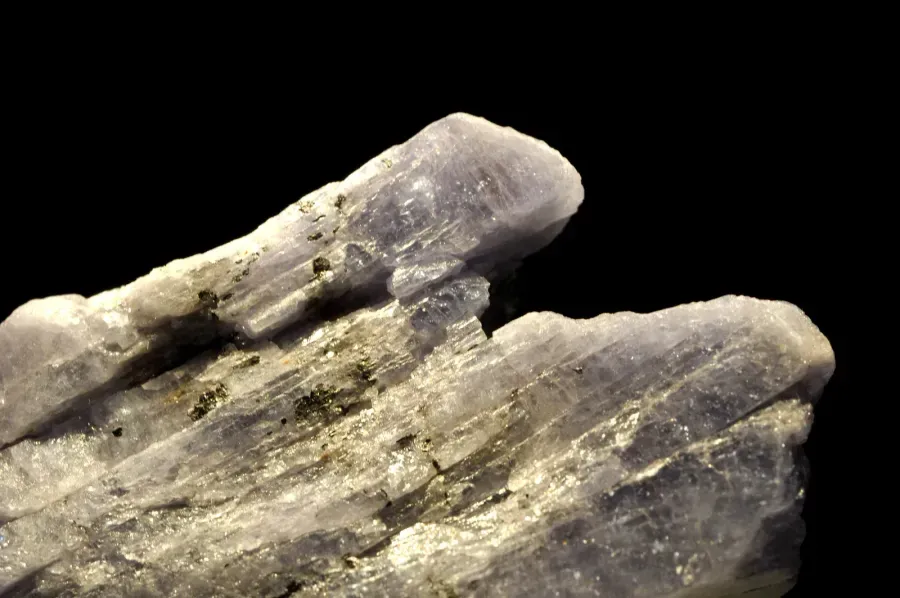
The word "sphene" comes from the Greek "sphenos", meaning "wedge". The crystals often take a characteristic wedge shape, flat and pointed like a blade. A geologist recognises sphene by this crystal shape in the rock before even reaching for a loupe.
Wear the symbol, don't just read about it. These are in stock:












Composition, density, crystal system
Sphene contains calcium (Ca), titanium (Ti), silicon (Si) and oxygen (O). Some of the titanium can be replaced by iron, aluminium, sometimes rare-earth elements and niobium, and those impurities affect the colour. The density of the stone sits around 3.5 g/cm³, noticeably higher than quartz: sphene feels heavy for its size.
Sphene crystallises in the monoclinic system. That gives the flat wedge-shaped, sometimes prismatic crystals with oblique angles by which the mineral is so easily identified in the rock.
Optics: refraction, dispersion, birefringence, pleochroism
The main value of sphene lies in its optics. The refractive index is high (roughly 1.84 to 2.03), hence the strong lustre, from adamantine to resinous. Dispersion (the splitting of white light into colours) is about 0.051, higher than diamond at 0.044. This is the famous "fire".
Birefringence in sphene is very strong: a ray of light inside the stone doubles, and if you look through a faceted stone at the edge of a back facet, it appears doubled. This is not a flaw but a reliable sign of sphene. Add to that a marked pleochroism, a shift of tint with the viewing angle: from yellow to green to brownish.
What sphene looks like
Most often sphene is green, yellow-green, honey-yellow or brownish-gold. Orange, reddish-brown and almost black crystals are rarer. The most prized stones for jewellers are bright grass-green and golden-green gems with high transparency.
Hardness and brittleness
On the Mohs scale sphene rates about 5 to 5.5. That is not much. For comparison, quartz scores 7, and ordinary window glass about 5.5. In other words, sphene can be scratched even by a grain of quartz caught under a cloth while polishing.
Beyond its softness, sphene has cleavage, the tendency to split along certain planes. Because of this the stone calls for care both in cutting and in wear. This is not a stone for a ring you wear to a building site. It is a stone for gentle handling. More on how to live with that in the sections on jewellery and care.
Sphene among other gems
Within the family of jewellery stones sphene holds a special place. For fire it rivals the most spectacular gems, including diamond and the green garnet demantoid. For the rarity of fine large specimens it outranks many famous species. And for name recognition it loses to almost all of them, and therein lies its charm. Sphene does not shout about itself, it opens up to whoever is ready to look closely. If you are drawn to a living inner light, take a look at fire opal, another stone whose whole value lies in the play of colour.
Fire and rainbow: why sphene sparkles brighter than diamond
What dispersion means in plain words
When white light passes through a transparent stone, it splits into the colours of the spectrum, as in a rainbow or a glass prism. The degree of that splitting is called dispersion. The higher the dispersion, the more the stone scatters multicoloured sparks. Cutters and stone lovers call this effect "fire".
In diamond, dispersion is about 0.044. That counts as a high value, and the fire is exactly what brilliants are loved for. In sphene the dispersion is around 0.051, that is higher. In practice this means a well-cut transparent sphene can throw even brighter coloured flashes than a diamond of the same size.
Why sphene is still not worn like a diamond
If the fire is stronger, why has sphene not displaced diamond? There are several honest reasons.
First, hardness. Diamond is the hardest mineral on Earth, almost impossible to scratch. Sphene is soft, and a sphene ring demands care.
Second, size. Large clean sphenes are extremely rare. Most cut stones come in under a carat. Diamonds, by contrast, are found in all manner of sizes.
Third, sphene has a strong body colour of its own. The fire of a diamond shows against a colourless background, so it stands out. In sphene the coloured flashes overlay the yellow-green body of the stone, and some of the fire seems to sink into its own colour. The paler and clearer the sphene, the more visible its dispersion.
Fourth, history and recognition. For centuries diamond built its reputation as the chief stone. Sphene never had such ambitions and stayed a stone for those in the know. That is not a fault of the stone but a feature of its path.
How a cutter brings out the fire of sphene
The fire of a stone does not appear on its own. It has to be coaxed out by the right cut. The master sets the facet angles so that light inside the stone refracts as dramatically as possible and exits as coloured sparks, rather than leaking out sideways.
Cutters call sphene one of the most temperamental of jewellery stones, and for several reasons at once. Its softness means the stone is easily over-polished and its facet shape ruined. Cleavage means a careless move splits the rough along a plane, and hours of work are lost. Strong birefringence has to be allowed for when orienting the stone, or the facets look blurred. Finally, the rich body colour calls for proportions thought through so the stone does not look too dark. Taken singly, each of these traits turns up in other gems, but in sphene they are gathered together. That is why only confident masters take on cutting sphene, and a good stone is valued separately from the rough.
Which cuts suit sphene
To wring out the most fire, sphene is usually given a brilliant or similar complex step-and-wedge cut with a large number of facets. The more facets correctly placed, the more actively the stone breaks light into coloured flashes. Oval, round, pear and cushion are frequent cuts for sphene. A smooth cabochon without facets is almost never used for transparent sphene, because it smothers the stone's chief virtue, its fire. A cabochon is fitting only for opaque or heavily included stones.
Sphene also loses a large share of rough to waste in cutting: the master works around cracks and cleavage zones, orients the stone for the best fire and tint, and what remains of the original crystal is often a small part. This is one reason good cut sphenes are so rare.
Customer reviews
Zevira is a real jewellery shop. Genuine payments, deliveries and customer thank-yous.
🥰🥰🥰 gracias

Ok, ¡gracias! 🙂

Sphene out-sparkles a diamond, and half a soul can name it. Wear it by candlelight and let them wonder what on earth is on your neck.
Sphene and style: how and with what to wear it
After years of working with stones I have learned where sphene shows best: where its fire is seen in movement, and the stone itself is guarded from knocks. I have gathered here what genuinely works, by occasion.
Where does sphene look most striking? I recommend starting with earrings: in the ears the stone swings with every turn of the head, and its fire plays almost without pause. Drop earrings suit sphene better than studs, because movement wakes the dispersion. A ring I suggest keeping for going out, while for an everyday accent I choose a pendant on the open part of the chest.
Which metal should you choose for sphene? The yellow-green fire works equally well in warm and cool metal. Warm gold I recommend when you want to underline the honey and golden tints. Silver 925 and white metal I suggest when the green and the contrast matter more. For a warm skin undertone I choose gold, for a cool one silver.
Which clothing reads best with sphene? I suggest warm tones: cream, terracotta, olive, chocolate. Against them the yellow-green stone opens softly and deeply. Cool blue or violet give a sharp contrast, and black and white I choose when I want the fire seen best of all. I avoid only clothing of the same muddy yellow-green shade: the stone gets lost on it.
How do you build an evening look with sphene? For the evening I recommend an open neckline and smooth fabric in a rich colour. The fire of sphene is especially striking in moving light, by candles or the lamps of a restaurant. Earrings come alive with every turn of the head, so those are what I suggest for the evening. By day I choose more restraint: a small pendant, neat earrings, a calm background.
Should sphene be worn alone or in a set? I keep sphene as the soloist. The stone is expressive on its own, and it wants calm neighbours: a fine chain without a stone, a smooth ring, small pearls. If you want more volume, I suggest a frame of small colourless stones around the sphene, rather than a second bright centre beside it. One sphene on a clean line always beats one squeezed between rivals.

Turn on your camera, pick earrings, a pendant or a ring, and see the piece on yourself in real time.
Switch items in one tap.
Everything runs in your browser: no photo or video is ever uploaded.
The history of sphene: from 1787 to our day
From first recognition to a scientific name
The mineral was first recognised as a new substance in 1787 by the Swiss naturalist Marc-Auguste Pictet, though he gave the stone no name at the time. The name "titanite", underlining the presence of titanium in its make-up, was given to the mineral in 1795 by the German chemist and mineralogist Martin Heinrich Klaproth, the very man who discovered uranium and played an important part in the study of titanium. That name is still used in strict mineralogy.
1801: the name "sphene"
In 1801 the French crystallographer René Just Haüy, one of the founders of scientific crystallography, proposed the name "sphene" for the same mineral, for the characteristic wedge shape of its crystals. So arose a double tradition: scientists write "titanite", stone lovers say "sphene". Both words are correct, and in this article they are used as synonyms.
The nineteenth century: a stone of cabinets and collections
Throughout the nineteenth century sphene remained above all a mineralogical rarity, a stone for scientific cabinets and the private collections of naturalists. The era was a time of great enthusiasm for natural science: minerals were gathered, described, traded. Transparent crystals from Alpine finds in Switzerland and Austria were prized by the collectors of the time for their clarity and lustre. It was then understood that sphene gives an exceptional play of light, but its softness kept it out of mass jewellery.
In the mountain districts of the Alps there lived, from old times, seekers of crystals, people who mined rock crystal and other minerals from cracks in the cliffs. It was they who found the finest transparent sphenes in veins of the Alpine type. Their finds reached collectors and museums, shaping the idea of this stone's beauty.
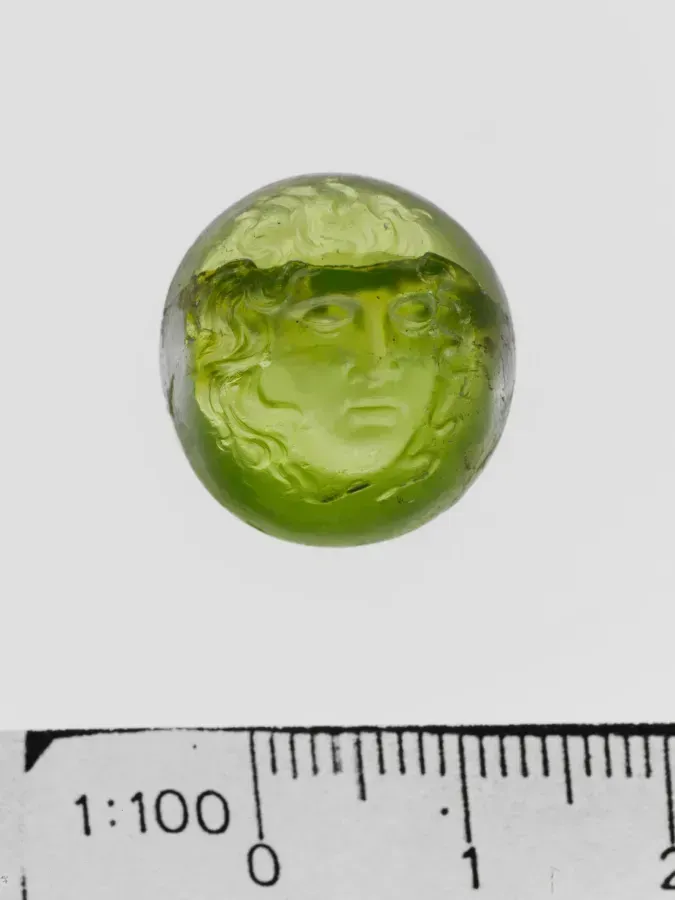
The classic European deposits of sphene lie in the Alps. Transparent crystals from Alpine-type veins in Switzerland, Austria and Italy became the benchmark for collectors of the nineteenth and early twentieth centuries. These stones are usually yellow-green, very clean, and it was by them that the idea of how a quality sphene should look took shape.
The twentieth century: demand from cutters
In the twentieth century, as cutting technique advanced, a layer of masters and amateurs emerged who deliberately hunted for rough to make collector cut stones. Sphene came into their sights precisely because of its dispersion. A cutter who mastered this difficult stone could show a fire that almost no affordable gem can give. So sphene settled into the niche of connoisseurs, and that reputation holds to this day.
The lineage of its names is curious too: two names given by two men who stood at the foundations of modern chemistry and crystallography. For a stone without ancient legends, that is a worthy history.
The twenty-first century: a stone for those who know
Today sphene is a stone of deliberate choice. People buy it not for a loud name or for fashion, but for real beauty and rarity. Modern sources such as Madagascar have made the stone a touch more available than a hundred years ago, but it remains niche and loved above all by connoisseurs and creative people.
Upload a photo of your pet, someone you love, or an object. We'll build a 3D model and hand-cast it in pewter.




Deposits and geology of sphene
How sphene forms in nature
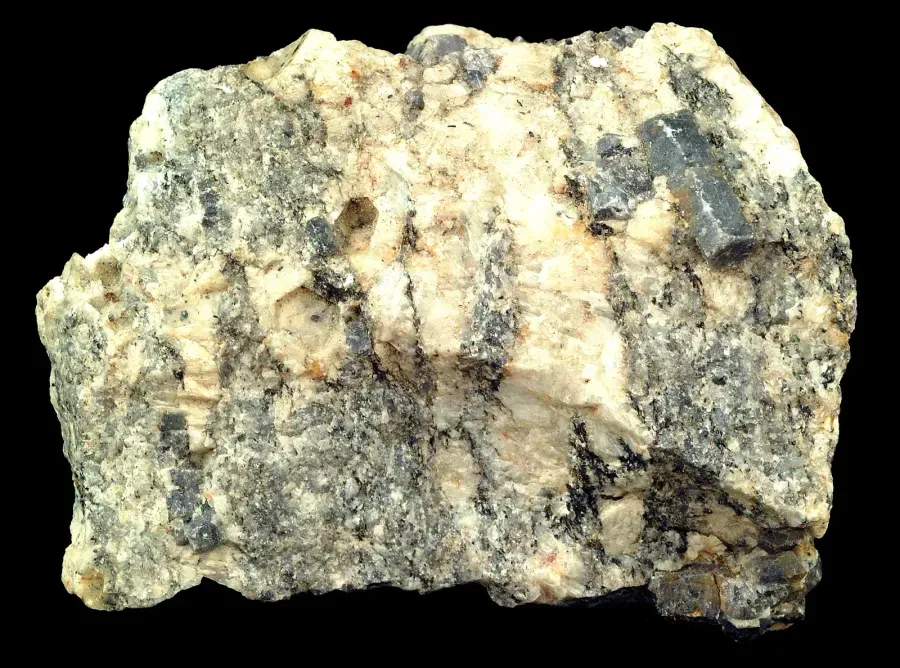
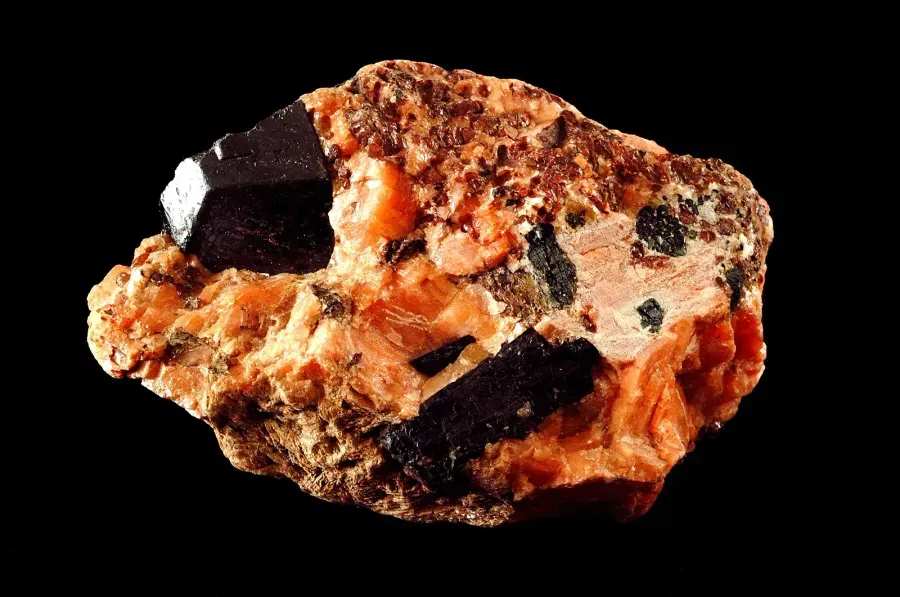
Sphene is an accessory mineral: geologists use this term for minerals that occur in rocks in small quantities, as an addition. In igneous rocks such as granites and syenites it crystallises when the melt cools and titanium, calcium and silicon combine in the right proportion. In metamorphic rocks, gneisses, schists, marbles, sphene arises during recrystallisation under pressure and temperature.
But the finest transparent crystals come from Alpine veins: cracks in the rock where hot solutions flow slowly through cavities and the crystal grows unhindered, taking on a correct shape and clarity. The calmer and longer that growth, the more transparent and larger the stone. Any pressure from neighbouring minerals, and the crystal comes out cloudy or small. That is why gem-quality sphene is so rare: it needs a rare convergence of calm conditions.
In Alpine veins sphene is accompanied by rock crystal, adularia, chlorite, sometimes apatite and epidote. In igneous rocks it sits beside feldspars and micas. An experienced mineral collector reads the rock by these companions.
The Alps: Switzerland, Austria, Italy
Alpine veins gave the most famous historical transparent sphenes. Thin flat crystals grew in cracks in the mountain rock during slow crystallisation from hot solutions. These stones are usually small but exceptionally clean. It was they that shaped the benchmark of jewellery sphene.
Madagascar
Madagascar today is one of the most important sources of jewellery sphene. Rich green and yellow-green stones of good size and clarity are found here. Many sphenes that reach collectors today come from precisely this island. Madagascar stones are prized for the brightness of their colour and good play.
Pakistan and Afghanistan
The mountain regions of Pakistan and Afghanistan yield beautiful transparent crystals of sphene, often in association with other Alpine minerals. These stones frequently have a clean yellow-green colour and good transparency suited to cutting.
Other sources: Brazil, Canada, the United States, Sri Lanka
Brazil gives stones in various shades, from yellow to greenish-brown, and among them worthy transparent crystals turn up. North America (the United States, Canada, Mexico) yields both mineralogical specimens and material for cutting. In Sri Lanka, the classic land of gems, yellow and honey stones occur. Various other localities round the world contribute brownish-yellow and greenish crystals, among them specimens of jewellery quality.
Colour and origin
The tint of sphene depends greatly on impurities and on the deposit. Iron gives greenish and brownish tones, rare-earth elements can add shades. That is why stones from different deposits are often recognisable: Alpine clean yellow-green, Madagascar rich green, Ceylon honey.
Why sphene is rare though the mineral is widespread
As a mineral, titanite is very widely spread: it is scattered in tiny grains through a multitude of rocks the world over. But transparent crystals of sufficient size, clarity and colour to be cut into a beautiful gem occur extremely rarely. That is exactly why sphene is at once an ordinary mineral for the geologist and a rarity for the jeweller.




Types and varieties of sphene
Sphene has few special trade varieties, unlike multicoloured minerals; it is divided above all by colour and origin. Green and yellow-green stones (often Madagascar and Alpine) are prized highest for the combination of colour and fire. Honey-yellow and golden stones (frequently from Sri Lanka) are warmer and usually more available. Orange and reddish-brown are rarer. Dark, almost black crystals more often stay mineralogical specimens.
Apart stand the opaque natural crystals in rock, gathered not for cutting but for the form and the geological story, especially when sphene has been preserved together with companions such as rock crystal.
How sphene differs from similar stones and imitations
Sphene has signature marks by which it is told apart from other green gems. The chief of them, very strong birefringence: looking through a faceted stone, the back facet edges appear doubled. Almost no similar stone doubles like that. Then come its exceptional dispersion (bright coloured fire), its characteristic adamantine-resinous lustre and a marked pleochroism.
Most often sphene is confused with peridot: both are warm yellow-green. But peridot has no such fire, and although it too has birefringence, in sphene it is stronger. From emerald sphene is distinguished by its fire and warmer tint, from chrysoberyl by its lower hardness and stronger play of light. Sometimes glass is passed off as sphene: glass does not double facet edges and shows bubbles inside. For a serious purchase of an expensive stone it makes sense to request a gemmologist's report, which will confirm the strong birefringence at once.
Sphene rarely undergoes the common enhancements, unlike many gems: its beauty is as a rule natural. There is no mass market of synthetic sphene either, since there is no commercial demand given the stone's niche standing. So the real risk in buying is not synthetics but substitution by another green stone or by glass.
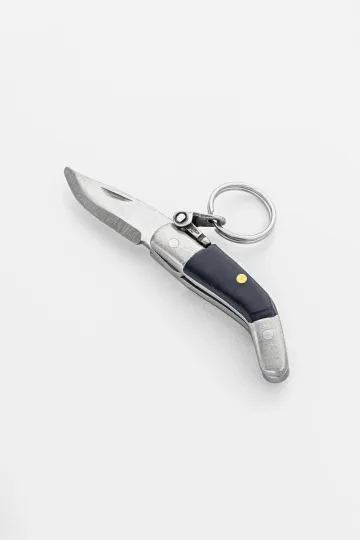
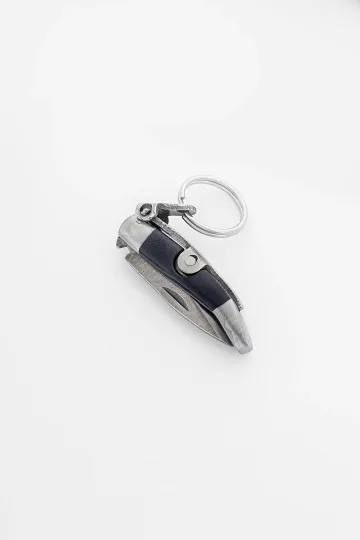
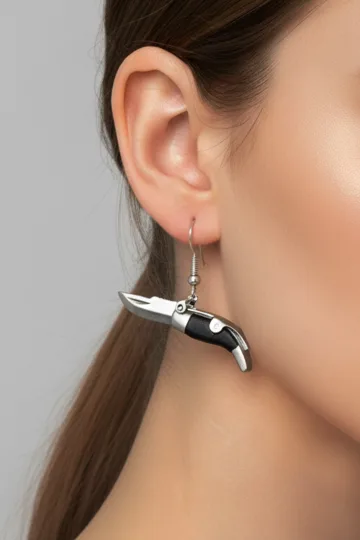
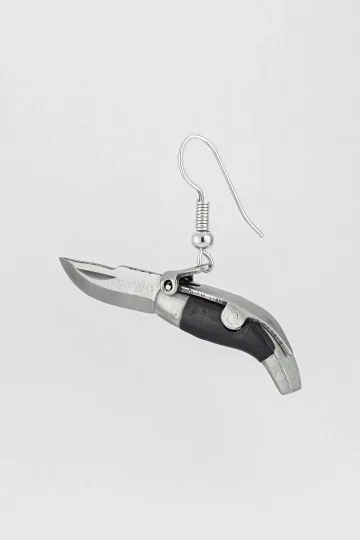
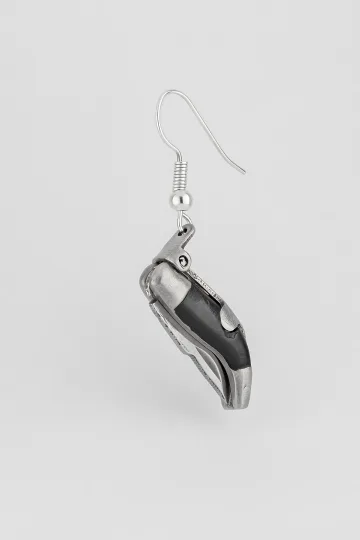
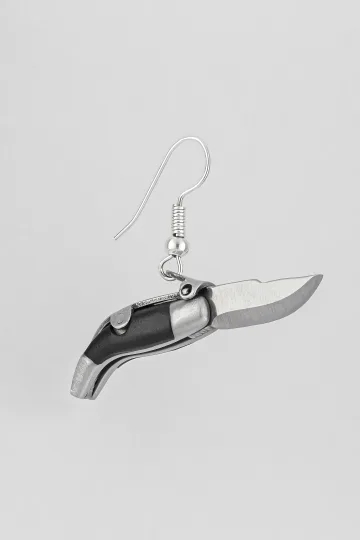
CAPAORA mini knife pendant
The 18th-century Spanish navaja in miniature: 40 mm of stainless steel, a real folding mechanism and a Palanquilla lock that clicks. An affordable gift to remember.
Authentic · Ships from Spain · 14-day returns
How to choose sphene: colour, clarity, cut
Colour
The most prized sphenes, bright grass-green and golden-green, with a marked play of fire. Honey-yellow and orange are beautiful too and usually more available. Brown and dark stones are valued lower, unless they are chosen specifically for a mineralogical collection.
Saturation matters. Too pale a stone looks watery, too dark a stone smothers its own fire, because light struggles to pass through dense colour. The ideal is medium saturation: the colour is already expressive, but the stone is still light enough for the dispersion to play to the full. Look at the stone under different light, daylight, lamp, sun: sphene changes greatly, and it matters that you like it in the very light in which you will wear it.
Clarity
In sphene small inclusions are allowable, because perfectly clean stones are rare. A light haze or fine specks inside are usually not critical, as long as the stone is transparent overall and plays well.
There is a nuance precisely because of the brittleness. For a durable stone a crack is first of all a cosmetic matter. For sphene a crack is also a risk: along it the stone may split on impact. So treat cracks, especially those reaching the surface, more strictly than specks and little clouds inside. Better to take a slightly less clean but whole stone without cracks than a crystal-clear one with a crack near a facet.
Cut
The cut for sphene is critical as for no other stone in this segment. Only competent facet angles bring out that very fire. A poorly cut sphene looks dull, a well-cut one shines with coloured flashes. So when choosing, the cut matters more than the size: a small but perfectly cut stone gives more joy than a large but cloudy one. Proportions matter too: too shallow a sphene lets light out sideways, too deep a one looks dark. A correctly built stone "burns" evenly across the table, with no dark voids in the centre.
Size
Large clean sphenes are a great rarity, and you pay separately for size. A stone of a couple of carats already counts as notable. Sphene is valuable not for mass but for play, so do not chase carats at the expense of quality.
Lustre, fire and pleochroism
Assess lustre and the activity of fire separately: this is what sphene is bought for in the first place. A good stone literally shoots coloured sparks at the slightest movement. When choosing, rock the stone gently before your eyes: a lively sparkling play is the sign of a fortunate specimen and a competent cut.
Do not be alarmed if, on turning, the tint changes, now yellow, now green, now brownish. This is pleochroism, a natural feature of sphene, not a flaw. Turn the stone in your hands and see whether you like its shades in all positions.
The main rule
If the choice of sphene comes down to one rule: take the stone that plays fire most brightly of all and is at the same time whole, without dangerous cracks. Size, exact origin and perfect clarity are secondary. Since large sphene rises in price disproportionately, the sensible path for most is a small or medium stone of impeccable quality. This is the case where less and better wins.
Leave your email, we'll send your discount code. No spam, unsubscribe anytime.
The code arrives by email, valid on your first order.
Jewellery with sphene: what suits a fragile stone
Because of its softness and brittleness, the approach to jewellery with sphene differs from the approach to hard stones. The rule is simple: the less the stone meets blows and friction, the longer it stays beautiful.
Earrings
Earrings are one of the best options for sphene. In the ears the stone is practically free of blows and friction, unlike a ring on the hand. Here you can allow yourself a large and striking stone, because the fire of sphene will be especially visible with the movement of the head. Drop earrings are particularly good: the stone swings with every movement, and its fire plays almost without pause. Earrings remain the safest format for a fragile stone, so it is with them that an acquaintance with sphene is worth beginning.
Pendants
A pendant is also an excellent choice. The stone hangs free, protected from constant contact, and catches the light well. The chain length matters: a stone hanging on the open part of the chest, catching light from the face of the person you speak to, plays brighter than one tucked under a collar. A sphene pendant is worth taking off before sleep and sport, to avoid chance knocks against hard surfaces.
Brooches, cufflinks, accessories
The brooch, an undeservedly forgotten format, suits sphene ideally: the stone is protected by its position on the clothing and hardly risks a knock. For a man's wardrobe sphene is interesting in cufflinks and clips, accessories that scarcely meet blows, while a small bright stone gives a noble accent.
Rings: with caution
A ring with sphene is possible, but it calls for two things: a protective setting and a careful way of life. A bezel setting, where the metal closes around the edge of the stone, guards the girdle from chips better than prongs. Even so, a sphene ring is not for rough daily wear: it comes off before cleaning, sport, any manual work. A good compromise is to wear a sphene ring as an "occasion" piece, to meetings and dinners, and to take it off at home. Another idea is to set the stone slightly recessed into the metal, so the blows fall on the setting and not on the stone itself.
Metal and setting
The yellow-green fire of sphene plays beautifully in both yellow and white metal. Warm gold underlines the honey and golden tints, while white metal and 925 silver place the accent on the green and the contrast.
The setting matters fundamentally for sphene. A bezel embracing the stone along its whole edge protects the vulnerable girdle and is considered the best choice. A prong setting opens the stone up more handsomely and lets more light through, but leaves the edges open to blows, so it suits earrings and pendants, where the risk of a knock is small. For a sphene ring a full or partial bezel is almost obligatory.
Since large sphene is rare, in jewellery it usually plays the role of an elegant accent rather than a bulky centrepiece. A small but brightly sparkling stone in a fine setting looks noble. If more volume is wanted, the design is built on combining sphene with a frame of small stones.
Care for sphene
Sphene calls for gentler care than most popular gems, because of its softness, cleavage and sensitivity. But all the care comes down to a few simple habits.
The order of putting on and basic rules
A simple rule looks after the stone: the jewellery goes on last and comes off first. First clothes, make-up, perfume, creams, and only then sphene. In the evening, the other way round. So the minimum of cosmetics reaches the stone, the kind that settles as a film and smothers the fire, and it rubs against clothing less often.
Take sphene off before physical work, cleaning, sport and sleep. Store it apart from hard stones to avoid scratches. At the beach and in the pool sphene is better off: sand scratches the soft stone, and chlorine and salt water do it no good.
How to clean it properly
Safe cleaning is simple. Pour warm water, add a drop of mild soap, gently wipe the stone with a soft lint-free cloth or a very soft brush without pressure. Rinse with clean water and dry with a soft cloth. No boiling water, no forceful rubbing, no abrasive powders. Regular gentle wiping removes the skin oils and dust that make sphene dull, and brings back the bright play.
What to avoid
Sphene must not be cleaned in ultrasonic and steam machines: vibration and sharp heating are dangerous for a fragile stone with cleavage. Avoid strong acids, household chemicals, bleach. Guard the stone from sharp temperature swings, do not carry it from the cold straight to a radiator. The sun itself does not harm sphene, unlike some stones, and it does not lose its colour over time: what is sometimes taken for "dulling" is microscratches and surface film, not fading.
Storage and checking the setting
Store sphene apart, in a soft cloth pouch or a separate compartment of a box, in a dry place. In a fragile stone the setting can loosen over time, and then the risk grows that the stone will fall out and split. Make a habit of periodically checking that the sphene does not wobble in its setting and the prongs have not bent. At any doubt take the piece to a master: tightening the setting is cheaper than losing a rare stone.
The symbolism of sphene: briefly and soberly
Honestly, up front: no stone cures illness, affects sleep, blood pressure or mood, or changes fate. Sphene is no exception: gems have no proven effect. But symbolism has its own logic, and a couple of words can be said about it without mysticism.
In tradition sphene is linked with creativity and clarity of mind. The logic is simple and elegant: the stone breaks white light into a multitude of colours, as the mind breaks a problem into a multitude of solutions. The green colour adds meanings of growth and renewal, hence the modern idea of sphene as a stone of a new beginning, invested when it is given at the start of a venture or a move.
But this is the language of symbols, not a property of the mineral. If a beautiful object helps someone tune in, the matter lies in the person and in the meaning they attach to the thing, not in the "energy of the stone". Curiously, sphene has no ancient mythology at all: it was described only at the close of the eighteenth century, when the age of old beliefs about stones had already ended. That gives freedom, though: the meanings of sphene have not grown over with superstition, and each is free to treat the stone simply as a beautiful rarity.
Send a friend a discount code, they save on their first order.
Sphene and other green stones: how it differs
There are many green gems, and a newcomer easily confuses them. Let us sort out how sphene differs in principle from its neighbours in colour.
Sphene and emerald
The main difference lies in the character of the green and in the fire. Emerald gives a deep, even, coolish green with no strong play. Sphene is a warm yellow-green with bright coloured fire. Emerald is harder (about 7.5 to 8 on Mohs) and tougher in wear, but almost always has inclusions and little cracks. Sphene is softer and more brittle, but sparkles brighter.
Sphene and peridot
Both are warm yellow-green, and they are the easiest to confuse. But peridot is more even in lustre and gives almost no coloured fire, whereas sphene has outstanding dispersion and stronger birefringence. Peridot is more available and comes larger. If a person wants the "fire" precisely, the choice is obvious in sphene's favour; if a calm large green stone is needed, peridot. Read more about its character in the piece on peridot and olivine.
Sphene and chrysoberyl
Chrysoberyl is significantly harder (8.5 on Mohs) and tougher: it is a stone for everyday wear without a second thought. But there is markedly less fire in it. In essence this is a choice between durability (chrysoberyl) and spectacle (sphene).
Sphene and green tourmaline
Green tourmaline gives an even, saturated colour, comes large and is tough enough for rings, but there is little fire in it. Sphene is smaller and more delicate, but plays brighter. Tourmaline, a workable beautiful stone for every day. Sphene, a festive rarity for careful wear.
Sphene and demantoid
An interesting pair, because demantoid (a green garnet) is also famed for dispersion higher than diamond's. Here sphene meets a worthy rival in fire. But demantoid is markedly harder and tougher than sphene, while being even rarer and dearer in good quality. You could say that sphene is a more affordable way to get fire of demantoid level, paying for it in brittleness.
If the very principle of the play of light is close to you, beside sphene in spirit stand spectrolite, the rainbow labradorite with its own shimmer, and the universal clear quartz as a calm background for bright stones, and the young niche tanzanite with a similar reputation as a stone for connoisseurs.
Buying it as a gift? Each one arrives ready to give.
 A branded Zevira box and a little card come with every order.





Frequent questions about sphene
Are sphene and titanite different stones?
No, they are one and the same mineral. "Titanite" is the strict mineralogical name, reflecting the presence of titanium in its make-up. "Sphene" is the historical and trade name, deriving from the Greek word for "wedge" because of the characteristic crystal shape. Mineralogists usually say "titanite", while jewellers and collectors say "sphene". Both words are correct and denote a calcium titanium silicate with the formula CaTiSiO₅.
Is it true that sphene sparkles brighter than diamond?
Yes, by one specific parameter. In sphene the dispersion, that is the ability to split light into the colours of the spectrum, is higher than in diamond: about 0.051 against roughly 0.044. So a well-cut sphene can throw brighter coloured flashes of fire. But diamond surpasses sphene in hardness and in the visibility of the fire against a colourless background. So sphene is brighter than diamond precisely in coloured play, but not in all properties at once.
Why is sphene so rare if titanite is widespread?
As a mineral, titanite really is spread the world over, but it occurs as small grains in rocks. And transparent crystals of sufficient size, clarity and fine colour, fit for cutting, turn up extremely rarely. So for a geologist sphene is ordinary, and for a jeweller a rarity, especially a large quality stone.
What colours does sphene come in?
Most often green, yellow-green, honey-yellow or brownish-gold. Orange, reddish-brown and almost black stones also occur. The most prized are bright grass-green and golden-green stones with high transparency and good play of fire. The colour changes greatly under different light.
How hard is sphene?
On the Mohs scale about 5 to 5.5. This is a soft stone by jewellery standards: for comparison, quartz has a hardness of 7, and sapphire 9 on the same scale. Sphene can be scratched even by grains of quartz dust. Beyond its softness it has cleavage, the tendency to split along planes. So sphene calls for gentle handling and protective settings.
Can a sphene ring be worn every day?
It can, but with caution and in a protective setting. Because of its softness and brittleness a sphene ring does not suit rough daily wear. It is worth taking off before cleaning, sport, manual work and sleep. Better to choose a bezel setting that closes the edge of the stone. If you want to wear the stone literally without taking it off, it is wiser to choose it in earrings or a pendant.
Which jewellery suits sphene best?
Earrings, pendants and brooches, where the stone hardly meets blows and friction. In earrings its fire plays especially beautifully with the movement of the head. A pendant catches the light and is protected by its position. A brooch is almost invulnerable. A ring is possible but calls for a protective setting and a careful way of life.
How to clean sphene at home?
Only gently: warm water, a soft lint-free cloth or a very soft brush, a drop of mild soap. No aggressive products, acids, bleach or household chemicals. Sphene must absolutely not be cleaned in ultrasonic and steam machines: vibration and sharp heating are dangerous for a fragile stone with cleavage.
How to tell sphene from similar stones?
Sphene has signature marks. Very strong birefringence: the back facet edges appear doubled. Exceptional dispersion, bright coloured fire. The characteristic adamantine-resinous lustre. Pleochroism, a change of tint on turning. The combination of these marks, especially birefringence and fire, reliably distinguishes sphene from emerald, peridot, chrysoberyl and glass.
Is sphene enhanced, faked or made synthetic?
Sphene usually does not undergo the common enhancements, its beauty being as a rule natural. There is no mass market of synthetic sphene either, because of the stone's niche standing. The real risk is substitution: other green stones or glass may be passed off as sphene. An experienced gemmologist tells sphene apart by its characteristic strong birefringence and lustre. For a serious purchase it makes sense to request a specialist's report.
Is sphene a precious or a semi-precious stone?
The division into "precious" and "semi-precious" is today considered outdated and arbitrary. Sphene is not among the classic four (diamond, ruby, sapphire, emerald), but it is a valuable collector's gem with unique optical properties. For the rarity of quality large stones it can surpass many traditionally "precious" species. It is more correct to call it a rare jewellery-and-collector stone.
Where does the best sphene come from?
The classic historical stones come from the Alpine veins of Switzerland, Austria and Italy, clean and benchmark. One of the most important modern sources of bright green stones is Madagascar. Beautiful transparent crystals come also from Pakistan and Afghanistan. Sphene occurs in Brazil, Canada, the United States, Mexico and Sri Lanka.
Can sphene be worn in water, in the shower and in the pool?
In ordinary water, briefly, nothing terrible will happen, but the habit is not the best. In the shower soap and cosmetics reach the stone, forming a film that smothers the fire. In the pool chlorine and knocks against the edge are dangerous, in the sea salt and sand are dangerous, the sand scratching the soft stone. It is wiser to take sphene off before water procedures.
Can sphene be scratched in ordinary wear?
Yes, this is its chief vulnerability. At a hardness of about 5 to 5.5, sphene is softer than many particles of ordinary household dust, which contains fine quartz. So even wiping with a dry dusty cloth leaves microscratches over time that smother the lustre. The protection is simple: careful wear, a protective setting, storage apart from hard stones, and cleaning only with a soft clean cloth or brush.
Does sphene suit an engagement ring?
Technically possible, but it is a non-standard and risky choice. An engagement ring is usually worn constantly, and sphene is soft and brittle, and constant wear will damage it. If you really want sphene, you need a protective setting and an understanding that the ring will have to be looked after. For many it is wiser to choose sphene in earrings as a symbolic gift, and to take a tougher stone for an everyday ring.
Does sphene suit men?
Of course. A stone has no gender, it all depends on the setting and the styling. Sphene in a strict pendant, in cufflinks or in a massive brooch looks excellent in a man's wardrobe. The honey and golden-green tints look noble and restrained.
How to store sphene properly?
Apart from other jewellery, especially from harder stones that will scratch it. A soft cloth pouch or a separate compartment of a box with a soft lining will do. Keep it in a dry place, avoid sharp temperature swings. For long storage wrap the stone in soft cloth and once every few months inspect the setting for loosened fastenings.
Does sphene fade or change colour over time?
No, the colour of sphene is stable, it does not fade in the light and does not lose colour with time. What is sometimes taken for "dulling" is microscratches and a film from cosmetics and skin oils on the surface of the soft stone. They smother the lustre, but the colour stays the same. Regular gentle cleaning brings the brightness back.
Can sphene be passed on as an heirloom?
Yes, especially if the stone is in a protected setting, earrings, a pendant or a brooch. Such pieces hardly wear and easily outlive generations. The main thing is to accompany the stone with its history and care rules, so the heir knows the stone is fragile and calls for careful wear.
How much does sphene cost and is it worth insuring?
Without exact figures: sphene is a niche, rare stone, and a quality cut specimen costs more than mass gems such as amethyst. The price depends on colour, clarity, quality of cut and especially size, large clean stones rising in price disproportionately. For an inexpensive stone insurance is usually not needed, while for a dear large specimen it makes sense, as for any valuable gem. Keep the purchase documents, the gemmologist's report and photographs of the stone.
How does sphene differ from peridot, since both are green?
They are easy to confuse, both warm yellow-green. But the reliable difference is the fire: in sphene the dispersion is outstanding, it gives bright coloured flashes, while peridot shines evenly and almost without coloured play. Birefringence too is stronger in sphene: the back facet edges double more distinctly. Peridot is more available and more often large. If before you is a green stone with bright multicoloured fire, it is most likely sphene.
Sphene changes colour when turned, is that normal?
Yes, this is pleochroism, and in sphene it is markedly expressed. The stone shifts from yellow to green to brownish depending on the viewing angle. This is not a flaw and not a sign of a fake, but a natural feature of the mineral. A skilled cutter uses it on purpose: orienting the stone so that the most beautiful tint prevails in the finished piece.
Is it worth showing a specialist an old piece with an unclear green stone?
Sometimes yes. Because of its rarity and low recognition, sphene is often taken for glass, peridot or another green stone and undervalued. A real sphene can lie for years in a box as simply "something green". An experienced gemmologist recognises it instantly by its very strong birefringence and characteristic coloured fire. So an old brooch or earrings with an unknown green stone deserve a specialist's eye.
Wear the symbol, don't just read about it. These are in stock:






About Zevira
Zevira makes jewellery in the artisan tradition of Albacete, Spain. We work with 925 silver and 14-18K gold and choose the setting to suit the character of the stone, especially for fragile and rare gems such as sphene, which need protection and a careful seat.
What you can find with us:
- Earrings and pendants for delicate stones that need protected wear
- Rings in bezel settings for stones that call for a guarding mount
- Jewellery with rare and collector gems
- Sets chosen by the colour and character of the stone
- The option of personal engraving
Each piece is chosen with attention to the properties of the particular stone.