Triple Moon: Meaning of the Symbol, the Triple Goddess, and the Phases of Maiden, Mother, and Crone
The Triple Moon is a symbol built from a waxing crescent, a full circle, and a waning crescent set side by side in a row. Behind the three phases hides the idea of a triple goddess: Maiden, Mother, and Crone. One sign holds a whole woman's life and a whole lunar month at once. That is where its power comes from, and why it is so popular in modern paganism.
People often confuse the sign with an ordinary crescent and with the astronomical diagram of lunar phases. The difference is real, and it matters. The crescent and star came out of a different culture and carry a completely different meaning. A phase diagram simply charts the satellite's movement across the sky. The Triple Moon speaks of the goddess and of a cycle of birth, ripeness, and fading that repeats without end.
Three Moons Set in a Row
You read the symbol from left to right, like a line of text. On the left a waxing crescent opens toward the left, in the centre a full disc, on the right a waning crescent opens toward the right. Three states of one luminary, caught in a single picture. That very simplicity is what made the sign recognisable: you can carve it on a pendant, ink it as a tattoo, embroider it on an altar cloth, and it stays itself.
The three parts here are not decoration, they are grammar. The waxing crescent speaks of a beginning, the full circle of fullness, the waning crescent of departure and rest. Read the sign as a whole and you get a small story about time. Time does not run in a straight line to a finish, it comes back around. After the waning comes growth again, after old age a new beginning. That logic is hard to put into words, yet a picture of three moons manages it.
Wear the symbol, don't just read about it. These are in stock:
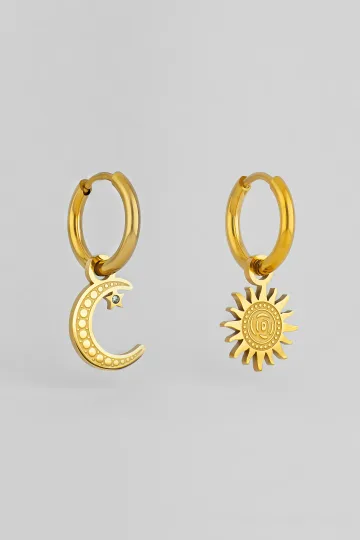
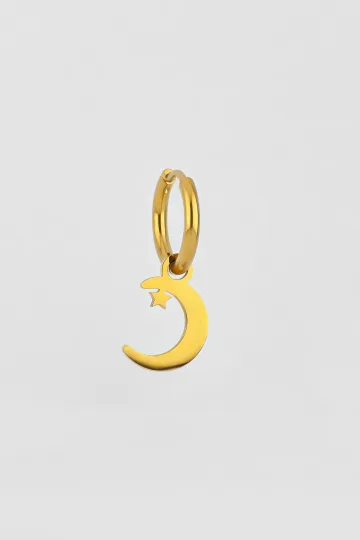
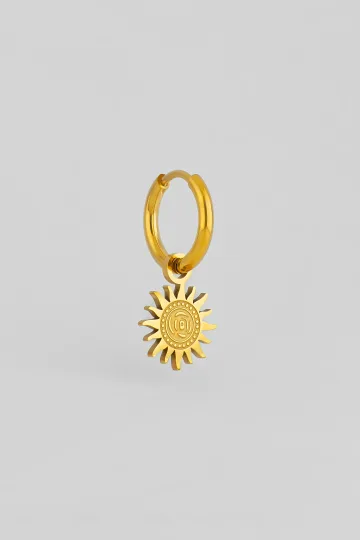
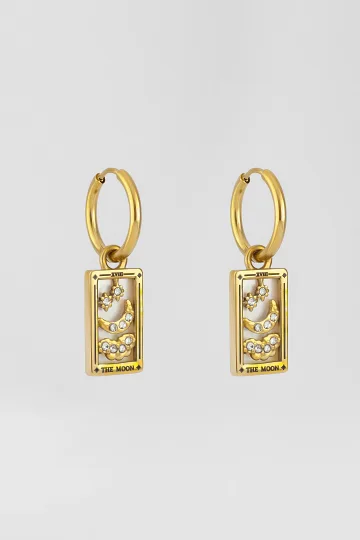


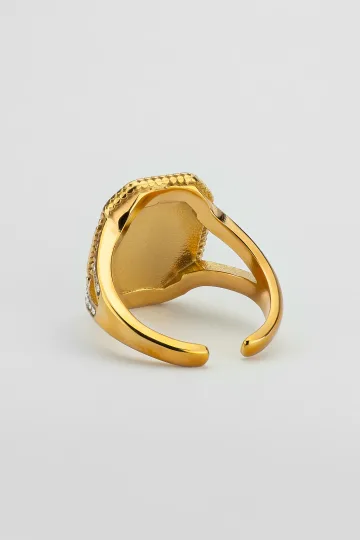
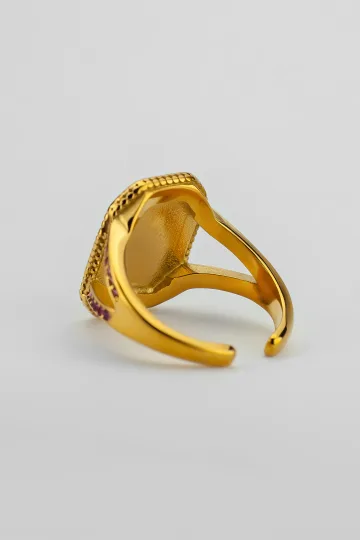
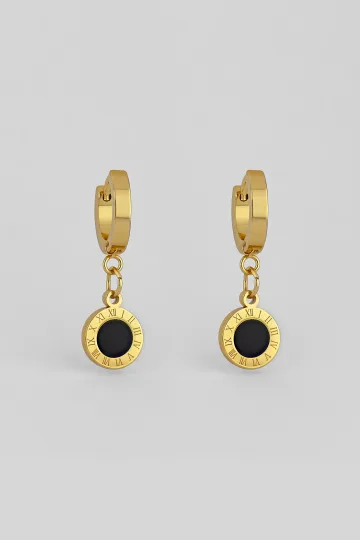

Ahead, in order, we will unpack what each phase means, where the triple goddess came from, how Hecate and Diana fit in, how the poet Robert Graves and Wicca's founder Gerald Gardner gathered scattered myths into a single image, which metals such jewellery is made from, and how the Triple Moon differs from its neighbouring symbols.
Before heading into history, it helps to take the sign apart piece by piece. It looks as though three moons are just three moons, yet each part has its own role, its own age, and its own mood. Understanding this inner logic changes how you feel about the piece. Wearing a Triple Moon while knowing that the waxing crescent answers for intentions and the waning one for letting go is not at all the same as wearing a pretty trinket of unknown meaning.
What the Triple Moon Is
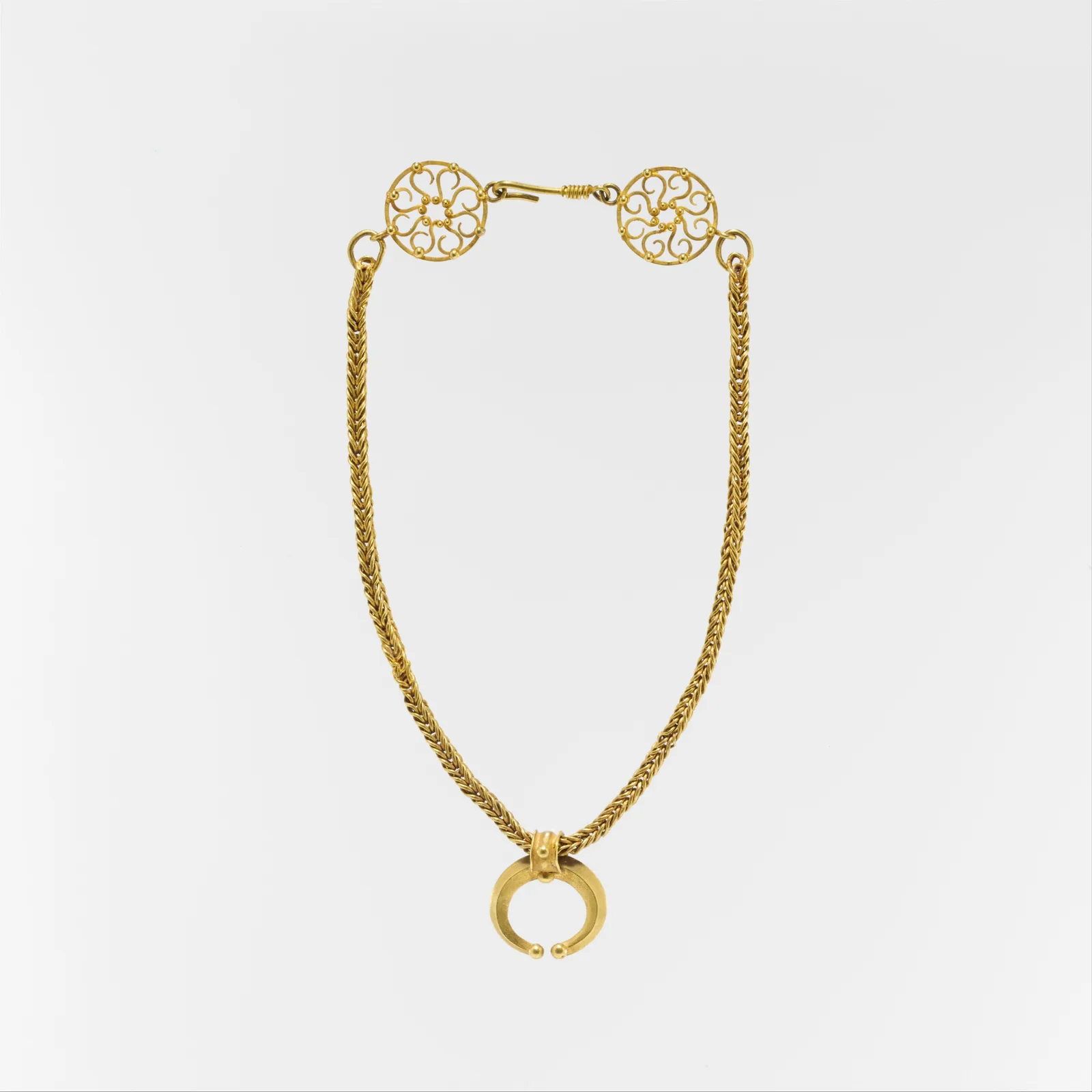
Waxing Moon: the Maiden
The left crescent is the waxing moon, and it belongs to the Maiden. This is youth, the beginning, a clean sheet. A time of ideas, of learning, of first steps, of falling in love, of finding yourself. In the natural calendar spring lands here: everything sprouts, swells, reaches upward. The Maiden is not naive, she is full of the energy of a start. Her element is possibility that has not yet been realised but is already straining to break out.
In jewellery the waxing crescent tends to appeal to those opening a new chapter. A move, a course of study, a project of one's own, the early weeks of pregnancy, coming out of a hard stretch. The waxing sign works as a reminder: now is the time to gather, not to draw conclusions.
Full Moon: the Mother
The central disc is the full moon and the Mother. Peak strength, maturity, fullness. Everything imagined in youth takes shape here. The Mother is not necessarily about children, though fertility falls within her circle. She is about the capacity to carry and finish any undertaking, about care, about command over one's own world, about abundance. Among the seasons she answers to summer, the most generous and warmest part of the year.
The full moon in the centre of the sign holds the whole composition together. Without it the two crescents would fall apart into separate months. The disc binds growth and decline into one whole and reminds us that every cycle has a peak, the very thing all the effort was for.
Waning Moon: the Crone
The right crescent is the waning moon and the Crone, a figure some prefer to name the Wise Woman. There is nothing to fear here. The Crone is experience, knowledge, the right to speak the truth, the skill of letting go. She governs endings, rest, memory, and passage. Among the seasons she takes autumn and winter, the time of harvest and of the earth resting under snow.
Western culture long feared the image of the old woman and forced it into the fairy-tale witch with a hooked nose. The Triple Moon gives the third phase back its dignity. The waning crescent is not about an end in the sense of a cut-off, but about a wise winding-down, after which a new beginning is certain to come. Many women choose this phase of the sign as they step into maturity, unwilling to keep pretending to be forever young.
How to Read the Whole Sign
Apart, the three moons are three moments; together they form the circle of life. The symbol is deliberately not drawn on a closed ring, yet a ring is exactly what it implies: after the Crone comes the Maiden again, after death a new birth. Hence the favourite pagan formula that the goddess does not die, she changes her face.
The charm of the sign is its honesty. It promises no eternal youth and does not pretend that old age is absent. It shows all three ages as equal in worth and equally needed. In that sense the Triple Moon sits closer to a calm view of life than the many symbols that sell only the bright side.
There is also a practical detail the sign gets argued over: which way the horns of the side crescents should point. The canonical version turns them outward, away from the centre. The waxing crescent opens to the left, the waning one to the right, the full disc between them. Read this way, the composition follows the moon's natural march across the sky over a month. Mirrored and vertical versions turn up too, especially in designer pieces, and there is no hard ban on them. Still, if you want the classic, look for crescents that open outward.
Which Way the Horns Point
The orientation of the crescents carries meaning. A waxing crescent open to the left leads the eye toward the centre, toward fullness: a movement from small to large. A waning one open to the right leads away from the disc, on toward rest. Makers who understand the symbol keep this logic. Mass production sometimes flips the crescents for the sake of a pretty line, and the sign loses part of its meaning, becoming mere ornament. When choosing a piece, this is the first thing worth checking.
The Triple Moon lives in cool metal. Silver or white gold, and the full disc calls for a moonstone. Warm gold argues with the moon itself, leave it to the sun.
How to Build a Look with a Triple Moon
We have unpacked the symbolism, now for the wearing. I have gathered here what really works when you take the Triple Moon off the altar and put it on a living person.
Which Triple Moon metal to choose for your skin tone? For a cool undertone (pinkish, porcelain) I recommend silver or white gold: the cold shine echoes the moonlight itself, and the sign glows on such skin. For a warm undertone (golden, peachy) I suggest silver with a light oxidation in the hollows, or a mix of metals where the disc is warm and the crescents cool. Pure warm gold quarrels with the moon, so if in doubt I choose silver: it suits the lunar theme and almost any skin.
Plain Triple Moon or one with moonstone? It depends on what is closer to you. For a quiet everyday look I choose plain silver with no inlays: the clean graphic of the three phases reads on its own and does not quarrel with clothes. For softness and mystery I recommend moonstone or mother-of-pearl in the full disc: the bluish glow repeats the lunar sheen and brings the centre of the sign to life. A stone makes the piece dressier but more finicky in care, keep that in mind.
A large pendant or a spare one? The sign is expressive in itself, it likes air around it. For everyday wear I advise a compact 2-3 cm drop at the collarbone: the Triple Moon reads as a detail, not a signboard. For character I choose a large form on a long chain, closer to the centre of the look, and then I mute the other jewellery. The rule is one: a large moon works when it takes the solo, not when it drowns among five other pendants.
What to pair a Triple Moon with, and how to build layers? When I put a look together for a client, I keep the Triple Moon on one theme and do not burden it with a clash of meanings. Good neighbours are the lunar family: a lone crescent, stars, a separate moonstone drop, they come from one world and do not fight for attention. If you want layers, give the sign its own chain length so it is not pinched between others. In layers I recommend keeping the metals to one cool tone: silver to silver, otherwise the lunar mood falls apart.
Whom the Triple Moon suits, and what to check before buying? The sign is not tied to age and suits anyone close to the idea of the cycle and all three phases. It sits especially handsomely on an open neckline, where the whole composition of three moons is visible. And check one thing before you buy: in the classic form the crescents open outward, the left to the left, the right to the right, and the disc between them. Crescents flipped or turned inward make the sign an ornament without meaning, and what we want is a legible Triple Moon.

Turn on your camera, pick earrings, a pendant or a ring, and see the piece on yourself in real time.
Switch items in one tap.
Everything runs in your browser: no photo or video is ever uploaded.
History of the Symbol: from Ancient Goddesses to Wicca
The Triple Moon's history runs on two tracks. On one side it has deep classical roots: triple goddesses existed thousands of years before the sign itself. On the other, the symbol of three moons we know, and the pairing of Maiden, Mother, and Crone, came together fairly recently, in the twentieth century. An honest account owns both sides and does not pass off a young idea as grey antiquity.
Triple Goddesses of Antiquity
The idea of a goddess with three faces is older than written history. The number three has always fascinated people: beginning, middle, end; sky, earth, underworld; past, present, future. Many ancient cultures shaped a female deity from that number, one with three guises or three aspects. Such figures show up among the Greeks, the Romans, the Celts, and the peoples of the north. Modern paganism gathered these scattered images under one roof, and the pedigree of the Triple Moon took shape.
Balance matters here. The ancients did not draw a sign of three moons and did not call their goddesses Maiden, Mother, and Crone in our sense. Yet an image of a threefold goddess tied to the moon and to fate did exist. Wicca did not conjure it out of nothing, it reworked old material.
Hecate: Goddess of Three Roads
Nowhere is the threefold nature clearer than in the Greek Hecate. Goddess of crossroads, night, magic, and the borders between worlds, she was shown with three bodies or three heads turned in three directions. Her small statues, the hekataia, stood where roads met and at the thresholds of houses as guardians. Hecate held torches and keys, she lit the way and unlocked the gates, including the gate to the realm of the dead.
For modern pagans Hecate is the ideal forerunner of the triple goddess. She is already threefold, already bound to the moon, night, and passage, already in charge of both birth and death. No wonder her image surfaces so often in talk of the Triple Moon. That said, the ancient Hecate is sterner and more dangerous than the cosy triad of Maiden, Mother, and Crone. She is a goddess of the boundary, and a boundary always unsettles a little.
Diana, Artemis, and Selene
The Roman Diana and her Greek prototype Artemis added the image of the lunar huntress to the store. Diana was called Trivia, goddess of three roads, and in that title you hear the same threefoldness as in Hecate. Artemis answered for youth, the hunt, wild beasts, and, importantly, childbirth: a young maiden who nonetheless watched over women giving birth. Apart from them stood Selene, the moon itself, driving her chariot across the sky.
Selene left a beautiful myth as well. Each night she came down to the sleeping shepherd Endymion, on whom the gods had bestowed eternal sleep and eternal youth. The story of the moon in love with a mortal gave the lunar goddess a note of tenderness and longing that stern Hecate never had. In images Selene was known by the crescent behind her shoulders or above her brow, and this detail, a lunar crescent on the goddess's head, later passed to other lunar figures, right down to the priestess's crown in modern Wicca.
Later antiquity liked to fuse these goddesses into one lunar face with three showings: Luna in the sky, Diana on the earth, Hecate below. The formula of three worlds underpinned many later readings and, once more, suggested the idea of a single goddess with three guises.
The Moirai and the Norns: Three Spinners of Fate
Three sisters who spin, measure, and cut the thread of life turn up among various peoples. Among the Greeks these are the Moirai: Clotho spins the thread, Lachesis measures its length, Atropos cuts it. Among the Romans the Parcae answer to them. Among the northern peoples three Norns, Urd, Verdandi, and Skuld, sit at the roots of the world tree and decide the fate of gods and of men. Past, present, and future given faces.
Modern paganism readily lays the Maiden, Mother, Crone formula over these trios: the young one spins, the ripe one measures, the elder one cuts. Ancient texts give no such direct equation, and it is only fair to say so. Yet the motif of three women holding time and fate in their hands worked toward the image of a triple goddess long before anyone drew a sign of three moons.
Robert Graves and "The White Goddess"
The turning point came in 1948, when the British poet Robert Graves published "The White Goddess". In it he laid out a poetic theory of a single goddess of antiquity with three faces: the young maiden, the ripe mother, and the old wise woman. Graves tied them to the phases of the moon, to the turning of the seasons, and to the very nature of poetry, which he saw as service to this goddess.
Scholars still argue with Graves. Historians and archaeologists point out that no coherent cult of a single triple goddess existed across ancient Europe, and that Graves largely constructed it by the force of poetic imagination. That is fair criticism. Yet the book's cultural influence is enormous. "The White Goddess" is precisely what gave the Maiden, Mother, Crone pairing the clear, memorable form the scattered classical myths never had. The poet did what the sum of the sources could not: he assembled the image.
Gerald Gardner and the Birth of Wicca
In the 1950s the Englishman Gerald Gardner presented Wicca, a modern pagan religion, to the world. After Britain repealed its old laws against witchcraft, he published books describing a cult with two chief deities: the Horned God and the Goddess. The Wiccan Goddess is threefold, with those very three faces bound to the moon. So Graves's poetic idea entered living religious practice.
Wicca spread quickly through the English-speaking world, and the sign of the Triple Moon travelled with it. By the end of the twentieth century the symbol had reached beyond narrow circles into wider culture: it is worn both by practising pagans and by anyone drawn to the idea of the female cycle, natural rhythms, and respect for all three ages. Feminist currents within paganism, above all the Dianic branch, made the triple goddess a banner of female power.
How the Sign Took Its Present Shape
The graphic symbol itself, waxing crescent, disc, and waning crescent, settled in the second half of the twentieth century alongside the flowering of Wicca and Neo-paganism. Its simplicity proved a windfall: three elements, no spare detail, legible at a glance. Unlike many old emblems, the Triple Moon needs no long explanation; naming the three phases is enough.
With the spread of print, badges, and inexpensive jewellery the sign scattered in an instant. Today it appears on pendants, rings, earrings, in tattoos, on the covers of books about witchcraft, and in the dressing of altars. The symbol's youth does not make it empty. On the contrary, in a couple of generations it has grown a living practice and personal stories, and that is exactly what a real tradition is born from.
Meaning: Maiden, Mother, Crone, and the Circle of Life
Three Ages as One Whole
The core meaning of the Triple Moon is that it refuses to split life into good youth and bad old age. All three phases are equal in worth. The Maiden owns energy and freedom, the Mother strength and generosity, the Crone wisdom and calm. Drop any one and the circle breaks. The sign teaches you to accept your present age rather than pine for the past or dread the future.
For many women this is the very reason to wear the symbol. It says aloud what culture usually keeps quiet: ageing is nothing to be ashamed of, maturity is strength and not loss. In a society obsessed with eternal youth, a calm acceptance of all three phases sounds almost like a challenge.
The Moon as a Feminine Rhythm
The goddess's bond with the moon is no accident. The lunar month sits close to the female bodily cycle, and the ancients noticed this. The moon waxes and wanes, a woman's body lives in its own rhythm, the earth passes through its seasons. Three different cycles, yet with one logic: gathering, peak, decline, rest, and gathering again. The Triple Moon folds them into a single sign.
Hence the soft, intuitive power of the symbol. It is not about conquest and a straight-line dash forward, but about the skill of sensing your own timing: when to gather, when to act at full strength, when to let go and rest. That inner tuning is often lost in a culture of endless acceleration.
A Circle, Not an Arrow
Western thinking is used to the arrow of time: out of the past into the future, toward a finish, toward an end. The Triple Moon offers a different picture: a circle. After the waning, growth always comes; after old age, a new beginning; after the dark of the new moon, light. This is not a denial of death but another view of it: the end of one turn is the start of the next.
Such a worldview consoles. It lifts the fear of endings, since none of them is final. Many come to the Triple Moon precisely in moments of change and loss, when it matters to remind yourself that after every decline a rise is sure to follow.
The Magic of Threefoldness
The number three works in human culture in a special way. It creates rhythm and completeness: one, two, three, done. Fairy tales are built on three trials, prayers on threefold repetition, toasts and oaths on three words. The Triple Moon draws on that same power of number. Three phases give a sense of fullness and order that a lone crescent or a single full disc lacks on its own.
That is why the sign settles so easily onto all sorts of meanings: body, mind, and spirit; creation, preservation, destruction; past, present, future. The threefold frame is broad enough for anyone to pour their own sense into it, and clear enough not to fall apart.
Customer reviews
Zevira is a real jewellery shop. Genuine payments, deliveries and customer thank-yous.
🥰🥰🥰 gracias

Ok, ¡gracias! 🙂

The Triple Goddess Across Traditions
The Celtic Trace
Celtic figures are often tied to the image of the triple goddess. The Irish Morrigan, goddess of war and fate, appears now as one figure, now as three sisters. The goddess Brigid later merged with a Christian saint and kept the traits of a patroness of fire, craft, and healing. Modern pagans see in these figures local faces of a single threefold goddess, though the ancient Celts were unlikely to have framed them so systematically.
A Cross-Cultural Parallel: the Slavic Lunnitsa
Closest to lunar symbolism in the Slavic world stands the lunnitsa, a woman's charm shaped like an inverted crescent. Sources record no direct cult of a triple goddess among the Slavs, yet they did have images of female deities tied to spinning, fate, and fertility. For an English-speaking reader the Triple Moon often lands through familiar touchpoints: a grandmother's charm passed down the family, the old idea of the spinning fates, the three ages of a woman under one roof.
The Slavic world has a fitting trio of fate-images of its own. The goddesses and spirits who set a newborn's lot went by different names among different Slavic peoples, but the motif is one: female figures bend over the cradle and decide what a person will get. This is one more variation on the theme of spinners measuring the thread of life, familiar from the Greek Moirai and the northern Norns. Modern pagans happily place the Slavic lot beside them and bring them all under the common formula of three ages, though there is no firm proof of a single triple goddess among the Slavs, and it is only honest to keep that in mind.
Modern Paganism and Feminism
In the twentieth century the triple goddess became a banner of female spirituality. The Dianic branch of Wicca made the goddess the centre of practice and turned to the image of Maiden, Mother, and Crone as a reflection of women themselves, of their bodies and their path. For many it is a way to give religion back a female face it had been missing. A Triple Moon at the throat, in this light, reads as a quiet statement about the worth of female experience across all its ages.
Upload a photo of your pet, someone you love, or an object. We'll build a 3D model and hand-cast it in pewter.




The Triple Moon in Neo-pagan Practice
Esbats: Full-Moon Rites
In Wicca the lunar gatherings are called esbats, and they most often fall on the full moon. The eight festivals of the Wheel of the Year are tied to the sun and the turn of the seasons, while the esbat answers for the moon and for the goddess. At the full moon, when the luminary is in the Mother phase, the circle gathers to work with intentions, to give thanks, and to ask. The Triple Moon on the altar on such nights serves as the chief sign of the goddess being addressed.
The lunar rhythm sets the pagan's schedule. The waxing moon suits plans and growth, the full moon strength and the finishing of something important, the waning moon cleansing and shedding the surplus, the new moon rest and a fresh start. The Triple Moon gathers this schedule into one sign: a glance at the pendant recalls which phase the moon is in and what it advises. Hence the habit among practitioners of checking plans against the sign, not only against the calendar.
Drawing Down the Moon
One of Wicca's best-known rites is called drawing down the moon. The priestess calls the goddess to enter her for the length of the ritual, so as to speak and act in her voice. The rite is held at the full moon, and the Triple Moon often crowns the priestess's guise here: it is worn on the brow as a diadem, crescents pointing up. This is a direct nod to ancient images of lunar goddesses with a crescent on the head, from Selene to Diana.
A sceptic will see in drawing down the moon a psychological practice: a person enters a special state, takes on a role, gains footing and confidence. A believer will see the presence of the goddess. The sign works under both readings, because it is about the tuning of attention, not about conjuring tricks. That is exactly why the Triple Moon is worn calmly both by deeply religious pagans and by people who value only the idea of the cycle.
The Three Colours of the Goddess
Three colours are often fixed to the three phases: white for the Maiden, red for the Mother, black for the Crone. White is purity and the beginning, red is blood, life, and fertility, black is calm, mystery, and wisdom. Candles, ribbons, and altar cloths in these colours turn up alongside the Triple Moon. In jewellery the same trio is sometimes carried by stones: white moonstone, red garnet or carnelian, black onyx.
The colour trio helps you remember the meaning of the phases without words. It also explains why the Triple Moon is sometimes made not in plain silver but with coloured inlays: the maker builds into the sign both the form and a colour key to the three ages. For those close to this symbolism, wearing all three colours at once, gathered in a single pendant, is a pleasure.
Materials: Silver, the Metal of the Moon
Silver
The classic material of the Triple Moon is silver. The bond is ancient and firm: since antiquity silver has been counted the metal of the moon for its cold shine and lunar glow, while gold went to the sun. Lunar goddesses, night rites, and the feminine almost always ran in a pair with silver. The Triple Moon inherited this logic, and most pieces with the sign are made from 925 sterling silver.
Silver suits the lunar theme visually too. The cool, faintly flowing shine of the metal echoes the very light of the moon, soft and reflected. A dark patina, which over time settles into the hollows of the relief, adds depth to the sign and brings out the shape of the three moons.
Moonstone
The logical companion to silver in such pieces is moonstone. Its bluish glow, called adularescence, seems to repeat the moonlight sliding across a surface. The stone is traditionally linked to intuition, cycles, and the feminine, which sits exactly on the meaning of the Triple Moon. Often the full disc at the centre of the sign is made from moonstone, while the crescents are left in silver.
Pearl, Labradorite, and Mother-of-Pearl
Besides moonstone, pearl, mother-of-pearl, and labradorite all look good in a Triple Moon. A pearl is born in a shell underwater, and water too obeys the moon through the tides, so the bond turns out doubled. Mother-of-pearl gives the same soft iridescence. Labradorite, with its blue and green flashes, lends the sign a nocturnal, almost northern cast. What unites all these stones is a play of light, muted and shifting, like the moon itself.
Gold and Other Metals
Gold appears in the Triple Moon more rarely, because it quarrels with the lunar symbolism: it is the metal of the sun. Yet there is no ban, and a yellow Triple Moon looks warm and festive. Sometimes makers combine metals: silver crescents and a golden disc, a hint of the meeting of moon and sun. Such pairings stray from strict tradition, but they let the sign be worn by those whom silver does not suit by skin tone.
Choosing a material is also choosing the character of the future piece. Plain silver with no inlays reads as graphic and fits any look. Silver with moonstone sounds softer and more mystical. Gold makes the sign festive. Before buying, it is worth trying the symbol against your usual style in your mind: the Triple Moon is expressive enough to become the meaningful centre of a piece, and spare enough not to quarrel with the rest.





How to Wear the Triple Moon
A Pendant on a Chain
The most common and most convenient format is a pendant. The sign reads well on the chest, near the heart, and works both as a quiet charm and as a conversation hook. A small pendant, 2-3 cm, suits both day and evening. A larger, bolder version turns into the centre of the look, and then the other jewellery is best kept muted.
Chain length changes the reading. Short, at the collarbone, brings the sign to a visible place. Long, lower down, hides it closer to the body and makes it more personal. For many wearers the second option is the more precious: the Triple Moon becomes not a shop window but a private reminder you feel rather than show.
Layers and Combinations
The Triple Moon gets on with the lunar theme in general. It is gathered together with a lone crescent, with stars, with a moonstone on a separate pendant. Several chains of different lengths with lunar drops make a calm night-time set. The main thing is not to overload: if the Triple Moon is large, let its neighbours be modest.
The sign is also combined with symbols from other traditions, but with a sense of measure. It sits well beside charms and natural motifs and less well beside large religious symbolism of another faith, next to which a clash of meanings arises. The simplest course is to hold to one theme: moon, night, the feminine, the cycle.
Rings, Earrings, and More
Besides pendants, the Triple Moon is made into rings and earrings. A ring with the sign is worn as a personal talisman, often on the middle or index finger. Drop earrings with three moons move handsomely as the head turns and set off the line of the neck. The sign also turns up on bracelets and on chokers. The three-part form is flexible enough to fit almost any type of jewellery.
Leave your email, we'll send your discount code. No spam, unsubscribe anytime.
The code arrives by email, valid on your first order.
Whom the Symbol Suits
The Triple Moon suits those drawn to the idea of natural cycles and respect for every age of life. These are women marking a passage into a new phase: youth, motherhood, maturity. These are practising pagans and everyone with an interest in mythology, astrology, and the lunar calendar. These are people who hold dear the thought that life runs in a circle rather than in a straight line to a finish.
The sign is not closed and requires no initiation. Anyone close to its meaning may wear it, whatever their faith or gender. Men choose the Triple Moon less often, but the image of the goddess and the lunar cycle does not forbid it to them: an interest in mythology and in the sign's fine geometry is reason enough. The Triple Moon also makes a good gift for a woman at an important threshold: finishing a course of study, the birth of a child, a milestone birthday, a divorce as the start of a new chapter. Into such a gift is sewn a wish to meet a new age with dignity.
How to Choose a Triple Moon
What to Look at First
Start by checking the geometry itself. The three parts should be balanced: the crescents roughly equal to each other, the disc in the centre neither lost nor overpowering. In the classic form the waxing and waning crescents open outward. The line should be clean, with no rough joints. A good sign reads instantly; a poor one turns into a vague pattern where you cannot tell moon from mere curl.
Material to Match the Purpose
Next, decide what matters more to you. If you want a plain everyday charm, take silver with no inlays: it is undemanding and goes with everything. If you want mystery and softness, look for silver with moonstone or mother-of-pearl. If the piece is meant to be dressy, consider gold or a mix of metals. A stone at the centre makes the sign look richer and more finicky in care, and that is worth bearing in mind.
Size and Fit
Choose the size to suit the purpose. A small pendant is a quiet personal talisman, a large one is the meaningful centre of a look. Try the sign in your mind against the neckline of your usual clothes: a round neckline asks for a compact drop, a deep one will carry a large piece. For earrings weight matters: heavy drops tire the earlobe by evening. For a ring, check the height of the relief; too raised a sign catches on clothes and wears down faster.
Signs of Honest Work
A well-made piece has an even surface, a tidy reverse, a firm join of the bail to the pendant, and a hallmark on the silver. Patina in the hollows is normal and even a plus, it brings out the relief. Bubbles, overflows, and crooked crescents, on the other hand, speak of careless casting. If a stone is set, it should sit tight, with no glue smears along the edge of the bezel.
CAPAORA mini knife pendant
The 18th-century Spanish navaja in miniature: 40 mm of stainless steel, a real folding mechanism and a Palanquilla lock that clicks. An affordable gift to remember.
Authentic · Ships from Spain · 14-day returns
The Triple Moon and Its Close Relatives
The sign is often confused with neighbouring lunar and occult emblems. Let us sort out the differences, so you do not buy one thing instead of another and know exactly what you are wearing.
The Crescent and Star
A lone crescent and star looks similar, but it comes from a wholly different culture and carries a different meaning. This is an ancient Near Eastern and later Islamic sign that became a symbol of faith and of statehood for a number of countries. It has nothing in common with the triple goddess and the lunar phases of paganism. The main difference is simple: the crescent and star has one crescent with a star inside or beside it, while the Triple Moon has three lunar shapes and no star.
The Pentagram
The pentagram, a five-pointed star, is also a frequent guest in pagan jewellery and often shares an altar with the Triple Moon. But these are different signs with different jobs. The pentagram answers for the five elements and for protection, the Triple Moon for the goddess and the cycle. They are sometimes joined into one composite symbol, with the star set inside a lunar frame, yet on their own they should not be confused: one has five rays, the other three moons.
Lunar Phases
A diagram of lunar phases shows all eight states of the satellite from new moon to full and back, and is in essence an astronomical illustration. The Triple Moon takes only three key phases from this row and fills them with the myth of the goddess. Put simply, a full phase diagram is about the sky and science, the Triple Moon about symbol and meaning. Outwardly the crescent and disc unite them; in spirit they are different.
The Mesopotamian Crescent and Inanna
Further still from the Triple Moon stands the Mesopotamian lunar sign. In ancient Mesopotamia the moon was ruled by the god Sin, also called Nanna, and his symbol was a single crescent, horns up, like a bowl or a boat in the sky. The moon there was a masculine power, in charge of the calendar, the herds, and prophecy by the phases. The moon god's daughter was held to be Inanna, later Ishtar, goddess of love and war, but her own sign was the eight-pointed star of the planet Venus, not the moon.
The confusion arises from the crescent: both Sin and the Triple Moon have a lunar shape. But the Mesopotamian crescent is the sign of a male deity and of celestial order, not of a triad of female ages. All they share is the heavenly body itself. It is a good example of how similar lunar signs in different cultures speak of entirely different things, and of why you cannot read every crescent as a triple goddess.
The Lunnitsa and the Lone Crescent
The Slavic lunnitsa and the plain crescent carry lunar and feminine symbolism, but without threefoldness. The lunnitsa is a charm of fertility and a woman's lot, the lone crescent is more often simply about night, romance, and moonlight. If what matters to you is precisely the idea of the three ages and the cycle, neither of these signs conveys it; you need the full triple form.
Before closing the comparison, it is worth clearing up a few stubborn misconceptions around the Triple Moon. They are repeated online so often that they seem true, though the sources say otherwise.
The Triple Moon in Modern Culture
A Sign of Witch Aesthetics
Over recent decades interest in the witch theme has grown from a narrow subculture into a wide aesthetic. The moon, herbs, candles, cards, and old grimoires have become a visual language recognised far beyond paganism. The Triple Moon ended up at the heart of that language: it is simple, handsome, and instantly reads as a sign of something lunar and feminine. It is placed on the covers of books about magic, on posters, on the fronts of shops selling incense and cards.
What matters is that the sign has not been hollowed out. Even torn from its religious context and turned into a fashionable motif, it drags the meaning of the three ages along behind it. Someone who buys a pendant for its looks sooner or later learns about the Maiden, Mother, and Crone, and the sign starts to work deeper than intended at purchase. Few symbols withstand such a double life, staying both an ornament and a message.
From Altar to Everyday Jewellery
The Triple Moon's road from a priestess's altar to an ordinary neck took only a couple of generations. At first only the initiated wore the sign, then it was taken up by those close to the idea of natural cycles, and after that it stepped into everyday fashion as an expressive lunar motif. Today the Triple Moon is worn equally on ritual dress and with jeans, and nowhere does it look out of place.
Such flexibility rests on the sign's honesty. It promises no magic and demands no belief, so it provokes no rejection from a sceptic. It speaks of time, age, and cycle, and these themes are close to any person regardless of religion. In that sense the Triple Moon is one of the most democratic pieces of meaningful jewellery: the entry point is low, and the depth, if you want it, is bottomless.
The Triple Moon in Articles and Tattoos
The sign has a life of its own in tattooing. Artists love the Triple Moon for its clean line and for how easily it fits a composition: mountains, forest, waves, and plants look good beneath it, and a smaller symbol tucks neatly into the disc. It is inked more often by women, marking a threshold or the memory of a loved one, and the three phases are read as three generations of a family: grandmother, mother, daughter. So a motif ancient in spirit takes on a very personal, family reading.
The Psychology of the Symbol: Why People Choose It
Behind the choice of a Triple Moon there almost always stands not mysticism but psychology. The symbol gives a language for a conversation with yourself about time and age. Putting the sign on, a person seems to agree: yes, I am in such a phase now, and that is fine. Psychologists know that bodily reminders and rituals help you live through transitions. A ring for a new chapter, a pendant in memory of a threshold, work in exactly this way.
This is especially clear in women stepping into maturity. Culture presses the image of eternal youth, and any sign of ageing reads as a defeat. The Triple Moon flips the setting: the third phase here is not about decline but about wisdom and strength. To wear the waning crescent as a sign of dignity is a quiet but firm gesture of self-respect. In that sense the piece works as a small support, helping a person not to fear her own age.
There is a broader motive too. The world has sped up, and people lack a sense of cycle, of rhythm, of the right to a pause. The Triple Moon reminds us that after a decline comes a rise, that rest is part of the work rather than its denial. For many this is reason enough to keep the sign near, without believing in any goddesses at all.
Send a friend a discount code, they save on their first order.
Facts That Surprise
The sign is younger than it looks. The familiar symbol of three moons and the Maiden, Mother, Crone pairing came together in the twentieth century, not in deep antiquity. The idea has classical roots, but the sign itself is a child of modern paganism.
Blame a poet, not a priest. The triad was given its form by the poet Robert Graves's book "The White Goddess" of 1948, not by some ancient temple. Historians argue with Graves, but the image took hold in exactly his edition.
Hecate watched three roads literally. Her statues stood at crossroads, and the goddess's three bodies faced three ways at once, to guard every direction. Hence her role as guardian of boundaries and passages.
Silver was fixed to the moon back in antiquity. The division of metals into lunar silver and solar gold is older than many religions. That is why the Triple Moon is almost always made of silver, and gold versions count as a liberty.
Crone is a compliment, not an insult. In the symbolism of the Triple Moon the third phase carries wisdom and strength, not infirmity. Many women choose precisely the waning crescent, stepping into maturity by conscious choice.
Moon and water in one harness. Pearl is taken for the sign for a reason: it is born in water, and the tides are ruled by the moon. The result is a doubled lunar bond in a single stone.
The Norns are older in the northern spirit than the Greek Moirai. The three sisters of fate among the northern peoples, Urd, Verdandi, and Skuld, answer for past, present, and future and sit at the roots of the world tree. Moderns readily lay the triad of ages over them.
The symbol became a feminist banner. In the twentieth century the triple goddess was taken up by feminist currents in paganism, and the Triple Moon turned into a sign of the worth of female experience across all ages.
Frequently Asked Questions
What does the Triple Moon symbol mean? The Triple Moon stands for the triple goddess in her three faces: Maiden, Mother, and Crone, tied to the waxing, full, and waning moon. It is a symbol of the female cycle, of all three ages of life, and of the idea that time runs in a circle: after the waning comes growth again. The sign is popular in Wicca and modern paganism, but people also wear it simply as a beautiful lunar symbol with deep meaning.
How does the Triple Moon differ from an ordinary crescent? A crescent has one lunar shape, the Triple Moon has three: crescent, disc, and crescent in a row. A lone crescent and star also came out of Near Eastern and Islamic tradition and carries a wholly different meaning, closer to faith and statehood. The Triple Moon is a pagan sign of the goddess and the cycle. They are easy to mix up, but their meanings differ.
Who are the Maiden, Mother, and Crone? These are the three faces of the triple goddess. The Maiden answers for youth, beginnings, and energy, matched by the waxing moon and spring. The Mother stands for maturity, strength, and fertility, her phase the full moon and summer. The Crone, or Wise Woman, stands for experience, endings, and calm, taking the waning moon, autumn, and winter. Together they make the full circle of life.
Is the Triple Moon an ancient symbol? The idea of a threefold goddess is ancient, but the sign of three moons itself is young. Triple goddesses like Hecate and Diana existed in antiquity, yet the familiar symbol and the Maiden, Mother, Crone pairing were shaped in the twentieth century by the poet Robert Graves and Wicca's founder Gerald Gardner. The honest answer: old roots, new form.
Which metal is best for a Triple Moon? The classic is silver: since antiquity it has been counted the metal of the moon. Silver suits the lunar theme both in meaning and in its cold shine. It is often paired with moonstone, pearl, or mother-of-pearl, which give a lunar glow. Gold appears more rarely, because it is the metal of the sun, but there is no ban, and a gold Triple Moon looks festive.
Can I wear a Triple Moon if I am not a pagan? Yes. The symbol is open and requires no initiation or belief. It is worn by everyone drawn to the idea of natural cycles, female strength, and respect for all ages. Many choose the sign simply for its beauty and depth of meaning, with no mysticism at all. Belief is optional; the meaning works without it.
Which way should the horns of the side crescents point? In the classic version the crescents open outward, away from the centre: the left one to the left, the right one to the right, the full disc between them. Read this way, the sign repeats the moon's natural march over a month. Mirrored and vertical versions exist, and there is no hard ban, but if you want the canon, choose crescents that open outward.
Does a Triple Moon make a good gift? It is excellent, especially for a woman at an important threshold: finishing a course of study, motherhood, a milestone birthday, the start of a new chapter of life. Sewn into the sign is a wish to meet your age with dignity and to remember that after every decline comes a rise. It is a gift with meaning, where the piece carries the wish.
Are the Triple Moon and the pentagram the same thing? No. The pentagram is a five-pointed star, a sign of the five elements and of protection. The Triple Moon is three lunar shapes, a sign of the goddess and the cycle. They are sometimes joined into one composite symbol, but in essence they are different emblems with different jobs.
Can I give a Triple Moon to a man? Yes, though men choose it less often. The image of the goddess and the three female ages is aimed first at women, but the lunar cycle, the night symbolism, and the sign's clean geometry have no gender. For a man the Triple Moon suits as a mark of interest in mythology and the lunar calendar, or simply as an expressive lunar charm. In plain silver with no inlays it looks restrained and fitting.
What does a Triple Moon tattoo mean? In a tattoo the sign carries the same meaning as in jewellery: three ages, the female cycle, the idea that life runs in a circle. It is often inked at a turning point of fate, in memory of a threshold, or as a sign of accepting one's age. Sometimes a moonstone is set into the disc by colour, or the sign is completed with stars, plants, or names. The meaning stays the same: growth, fullness, wise waning, and new growth.
Do I need to charge or cleanse jewellery with a Triple Moon? There is no obligatory procedure; it is a matter of taste and belief. Many owners simply wear the sign and perform no rites at all. Those close to lunar practice like to place the piece under the light of a full moon: a lovely ritual that tunes you to the meaning of the symbol, even if you view it with no mysticism. For care, silver prefers a soft cloth and dry storage to any esoterics.
Silver, lunar symbolism, protective charms, rings, and pendants with the stones of the moon.
Conclusion
The Triple Moon has travelled from scattered classical goddesses to a clear sign of three lunar shapes. Behind the simple picture stands a large thought: life runs in a circle, it has three ages equal in worth, and not one of them is worse than the others. The waxing crescent promises a beginning, the full disc gives fullness, the waning crescent brings wisdom and calm, after which growth comes again.
Whether you believe in the triple goddess or simply value fine geometry and an honest view of time, the Triple Moon stays one of the deepest lunar symbols in jewellery. It does not sell eternal youth and does not frighten with old age. It shows the whole arc of life at once and invites you to accept it without fear.
Other lunar and protective signs the Triple Moon gets on with are gathered in the guide to protective charms, amulets, and talismans.
Buying it as a gift? Each one arrives ready to give.
 A branded Zevira box and a little card come with every order.














About Zevira
Zevira makes jewellery in the artisan tradition of Albacete, Spain. The Triple Moon is one of those symbols we love: clean geometry, clear without words, and a large meaning behind three simple shapes. We keep the classic composition of waxing crescent, full disc, and waning crescent, crescents opening outward, and we work in silver, the metal of the moon.
Here is what you can find with us on the lunar and protective theme:
- Triple Moon pendants in silver, plain and with a moonstone at the centre
- Lone crescents and stars for layered lunar sets
- Jewellery with moonstone, pearl, and mother-of-pearl, the stones of lunar glow
- Protective charms and symbolic pendants from various traditions of defence
- Rings and earrings with lunar motifs
- Chains of different lengths for a pendant of any size
Every piece can be personalised with engraving, with the option of personal engraving. Sterling silver 925 and 14-18K gold.