Tungsten in jewelry: the hardest metal on your finger and the catch nobody mentions
A tungsten ring scratches hardened steel and keeps its shine for years. But drop it on a tile floor and it can split in two, like a teacup. Hardness and toughness are two different things, and half the myths and half the disappointments are born from that confusion.
Tungsten carbide came to jewellery from the world of drill bits and armour-piercing cores. The metal used to bore through granite turned out to be ideal for a man's wedding ring: it is almost impossible to scratch, it holds a mirror polish with no upkeep, and it weighs just enough to feel expensive. That is why people love it.
There are details that change everything. The size of such a ring cannot be altered. The binder metal inside the alloy decides whether the ring is hypoallergenic or causes irritation. And in an emergency, tungsten is removed not with a saw but with special pliers, and that, oddly enough, is a safety bonus. Let us lay it all out: what tungsten is, where its strength lies, where its weak spot hides, and who it actually suits.
What tungsten is and why jewellery uses carbide specifically
Tungsten and tungsten carbide are not the same thing
Pure tungsten is a silvery grey, high-melting metal, hard but fairly brittle and tough to work. You almost never find it in pure form in jewellery. What sells under the name "tungsten ring" is actually made of tungsten carbide, a compound of tungsten and carbon sintered with a binder metal. The carbide is what gives that record hardness and mirror shine.
When the rest of this article says "tungsten ring," it means tungsten carbide. This is the established trade name, and there is no confusion in it as long as you understand that an alloy sits inside, not a single chemical element.
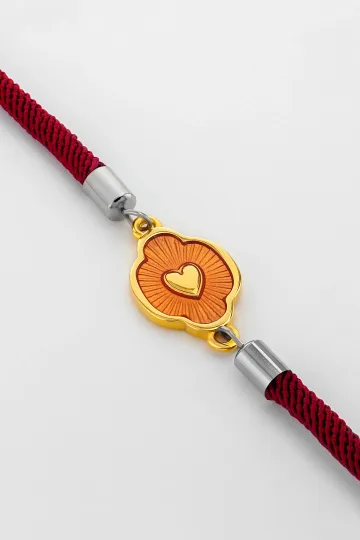
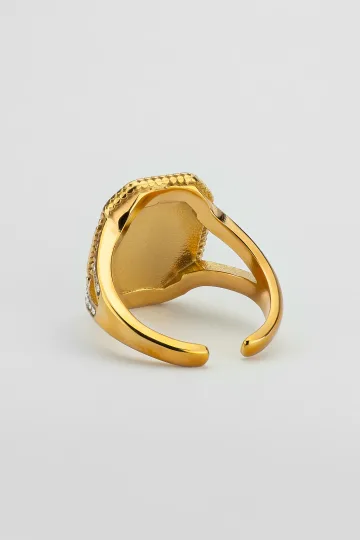
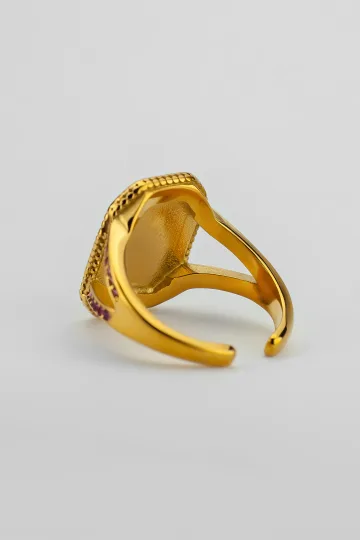
Wear the symbol, don't just read about it. These are in stock:



How a tungsten ring is made
The process is closer to producing ceramics or carbide tooling than to classic jewellery work. Tungsten carbide powder is mixed with a binder metal, pressed under enormous pressure into the shape of the future ring, and sintered in a furnace at around fifteen hundred degrees. The result is a solid blank, then ground and polished with diamond tooling, since nothing else really works on tungsten.
Because of this, a tungsten ring is not cast or forged like a gold one. It is essentially "baked" from powder. That is the source of both its main properties and its main limits: the shape and size are set once, forever.
What a binder metal is and why it matters more than it seems
Tungsten carbide powder needs something to "glue" it during sintering. That job falls to the binder, most often nickel or cobalt. The binder makes up a small share, but it is what shapes how the ring behaves on skin and how it ages.
Quality alloys use a nickel binder (and to be precise, nickel in that sintered form is chemically bound and barely escapes). Cheap rings often run on a cobalt binder, and cobalt can oxidise over time, leave dull spots, and trigger skin reactions. The price tag rarely says so, but the gap between "hypoallergenic" and "a green stripe on your finger within a month" hides right here.
Record hardness: how tungsten beats every other metal
How hard tungsten really is
On the Mohs scale, tungsten carbide rates around 8.5 to 9. For comparison: hardened steel sits near 6 to 6.5, titanium around 6, gold and silver are downright soft, near 2.5 to 3. Above tungsten on that scale stand, essentially, only the corundums (sapphire, ruby) at nine and diamond at ten.
In practice this means a tungsten ring scratches glass and steel, not the other way around. Keys in your pocket, coins, door handles, work tools, everything that turns a gold or silver ring into a web of micro-scratches within a couple of years leaves no mark on tungsten.
Why tungsten holds a mirror polish for years
The shine of a jewellery metal lasts exactly until its first serious scratch. Soft gold goes hazy within months of daily wear, and you send it out for re-polishing now and then. Tungsten works differently: the surface is so hard that everyday contact simply does not touch it.
So a polished tungsten ring looks new after a year and after five. This is one of its main advantages for anyone who wears jewellery every day and would rather not think about it. The mirror edge stays a mirror with no intervention at all.
What "scratches glass" means in real life
It sounds dramatic, but it is not an invitation to run your ring across windows. The point is the reverse: everyday surfaces are softer than your ring, which means there is almost nothing in ordinary life that can damage it. To leave a scratch on tungsten you need something harder, a corundum-grit sandpaper, diamond tooling, an abrasive-loaded synthetic stone.
In daily life such contacts are almost nonexistent. Hence the reputation of an "indestructible" metal, which, as we will see, is only half true.
A grey mirror with real heft, and your handshake suddenly means business. Just don't drop it on the tiles; nobody claps for a shattered ring.
How to wear tungsten
Over years on set I have run tungsten through dozens of men's looks, from sharp suiting to rough leather. Here is what actually works, sorted by occasion.
How do I wear tungsten every day? For daily wear I recommend a natural grey band, matte or polished, in a medium to wide profile. Graphite grey gets along with a cool palette: denim, grey knitwear, blue and steel tones. Warm yellow gold beside it reads as a clash, so either keep the outfit cool or take a two-tone band with a gold stripe to reconcile the metals.
And for the office, under a suit? Here I suggest a polished grey or two-tone band. The mirror edge echoes cufflinks, a belt buckle and a watch dial, and the whole look reads as pulled together. Add tungsten cufflinks or a tie clip in the same tone and the detail sings without a single extra glint.
How do I build a rugged look? For a rough look I choose a black tungsten ring or a grey matte band with leather, heavy knitwear, sturdy boots and a watch on a metal bracelet. Black tungsten holds its character and does not argue with the texture of leather, while the weight lends the hand some grounding.
Should the pendant and small pieces be tungsten too? Wear a tag pendant on a sturdy chain as a masculine accent, but only one: heavy tungsten does not like the company of five pendants. Take cufflinks and a tie clip to match the ring, grey to grey, black to black. That way the set looks considered rather than thrown together.
What about several rings on one hand? You can, but with care. Hard bands rub against each other and scratch softer neighbours, so next to tungsten put either a second tungsten or steel, and move soft gold and silver to the other hand. And remember: tungsten is heavy, two wide bands on one finger grow tiresome fast, one wide band always beats two.

Turn on your camera, pick earrings, a pendant or a ring, and see the piece on yourself in real time.
Switch items in one tap.
Everything runs in your browser: no photo or video is ever uploaded.
The big catch: hard does not mean unbreakable
Why tungsten can shatter even though nothing scratches it
Here is the detail that changes how you see the metal. Hardness and toughness are different properties. Hardness tells you how difficult it is to scratch a surface. Toughness tells you how well a material absorbs a blow without breaking. Tungsten carbide is incredibly hard yet brittle, like tempered glass or ceramic.
A gold ring will bend from a hard knock but stay whole. A tungsten ring does not bend at all; instead, under a strong enough point impact, it can crack or shatter. A fall onto tile, porcelain stoneware, or concrete at an unlucky angle, and a ring that looks solid breaks into pieces. Not because it is defective, but because that is the nature of the material.
Is this a defect or a normal property of the material
A cracked tungsten ring is neither a flaw nor grounds for a warranty replacement (although many makers do offer a lifetime warranty against exactly this, knowing the metal's nature). Brittleness is built into carbide physically. The same principle applies to ceramic knives: they cut beautifully and hold an edge, but a fall to the floor and the blade is in shards.
Understanding this logic removes the disappointment. You are not buying an "eternal" ring; you are buying a ring that is almost impossible to scratch but does not like strong point impacts. That is a fair trade if you know it in advance.
How to reduce the risk of cracking
You cannot fully insure against it, but you can lower the odds. Take the ring off before serious physical work with a risk of striking something hard: assembly, repairs, weight training. Do not drop it on a stone floor; it sounds obvious, but everyday falls are what crack tungsten most often.
And choose a trusted maker with a warranty against cracking: such brands value their reputation and pick an alloy with the right balance of hardness and toughness. Very cheap rings of unknown origin crack more often.
Solid weight: why tungsten feels expensive
Where tungsten gets its density
Tungsten is one of the densest metals on the planet, with a density close to gold and nearly double that of titanium and steel. Carbide is slightly lighter than pure tungsten, but still noticeably heavier than the usual jewellery alloys. A tungsten ring weighs distinctly more than a steel or titanium one of the same size.
This density follows directly from the atomic makeup of tungsten, one of the heaviest elements we meet in daily life. The metal is literally packed with mass in a small volume.
Why a heavy ring reads as premium
In the psychology of how we perceive objects, weight has long been tied to value. A heavy item subconsciously reads as well made, dependable, expensive. A light ring is easy to forget on your finger; a heavy one keeps reminding you of itself with a pleasant heft.
Tungsten plays on this without fail. Many people, slipping on such a ring for the first time, note exactly that sense of solidity, not showy but calm and grounded. For a wedding ring worn for decades, that is a weighty argument in the literal sense.
Who might find the weight a problem
There is a flip side. If someone is used to light jewellery or has slim fingers, a massive tungsten ring can feel unfamiliarly heavy at first. People adapt within a couple of days, but anyone with very sensitive joints, or anyone who simply dislikes feeling jewellery at all, should try the weight on beforehand.
Slim tungsten models weigh less than wide ones, so you can dial in the balance between solidity and comfort through the band width.
Customer reviews
Zevira is a real jewellery shop. Genuine payments, deliveries and customer thank-yous.
🥰🥰🥰 gracias
Ok, ¡gracias! 🙂
Tungsten: the number one choice for men's wedding rings
Why men choose tungsten specifically
Put together everything listed so far: a metal that does not scratch in daily wear, holds its shine with no care, weighs solidly, and sits in the affordable and mid range. For a man who works with his hands, leads an active life, or simply does not want to babysit jewellery, that is almost the perfect wedding-ring formula.
Gold is soft and quickly picks up scratches, platinum is costly, steel and titanium are good but lack the same sense of weight and mirror edge. Tungsten answers the request of "put it on and forget it, and it always looks new." That is why, in the men's wedding-ring category, it stays firmly among the leaders.
Which tungsten styles men favour
The classic is a matte or polished grey band, medium to wide, plain, without stones. Black coated tungsten rings are popular, as are two-tone models with a gold or rose stripe, beveled versions, and ones with a wood-grain or carbon-fibre inlay down the centre.
For anyone who wants minimalism and durability at once, tungsten is nearly the only option in the affordable range: the design stays clean and strict while the metal survives any everyday test.
Does tungsten suit women's and matching rings
It does, and it is often chosen as a pair: a massive ring for him, a slimmer one in the same metal or in silver for her. Women's tungsten models are made daintier, sometimes with a rose-gold coating or a row of stones. The main limit is the same as for men's: the size cannot be changed, so the measurement must be precise.
If you want a traditional precious metal, you can look toward sterling silver 925 for the woman's half of the pair, leaving tungsten to the man. The pairing of a tough modern metal and classic silver looks whole.
Upload a photo of your pet, someone you love, or an object. We'll build a 3D model and hand-cast it in pewter.



The size cannot be changed: the main practical limit
Why a tungsten ring cannot be stretched or shrunk
A jeweller can easily size a gold or silver ring up or down: the metal is malleable, so it gets cut, a link added or removed, soldered, fitted. Tungsten does not allow that. Carbide does not stretch, forge, or solder; it is sintered into one solid piece once and for all. Changing the size is physically impossible.
This follows straight from the technology. What makes tungsten hard and stable strips it of malleability. The ring either fits or it does not.
How to choose the right size in advance
Since resizing is off the table, the measurement has to be exact. Measure your finger at the end of the day, when it is a touch larger, at a comfortable temperature (fingers are thinner in the cold). Bear in mind that a wide band sits tighter than a narrow one of the same size, so for a wide ring people sometimes go half a size up.
If your finger noticeably changes in volume (swelling, season, weight), account for that. A good practice is to try on a ring of the right width before buying rather than going by the size number alone.
What to do if the size does not fit after all
There is nothing to adjust, so there is one solution: exchange for another size. Serious sellers understand this and offer an exchange or size matching. That is why, when ordering tungsten, the option to return or swap the ring if it does not fit is especially important. This is not a whim but the only way to fix a sizing mistake.
How to remove a tungsten ring in an emergency
The ring is cracked off, not sawn off
In medicine there is the notion of "ring syndrome": a finger swells (injury, allergy, pregnancy) and the jewellery has to come off at once, or it will choke the blood flow. In that situation, doctors saw a gold or steel ring off with a special cutter, a slow and unpleasant procedure, especially once the finger is already swollen.
With tungsten it is different and faster. The brittleness counted as a downside turns into an upside here. The ring is gripped with special tungsten-tipped pliers, squeezed around the circumference, and it cracks into pieces in seconds. The finger is free almost instantly.
Why brittleness becomes a safety advantage here
A paradox: the very property that makes tungsten crack in a fall saves you in a medical emergency. There is no need to saw through a hard metal next to a swollen finger; squeezing the pliers is enough. Many ambulance crews and emergency rooms know this trick and remove tungsten faster than gold.
So the fear of "what if it gets stuck and won't come off" is groundless with tungsten. Removing it in an emergency is easier than a traditional precious metal, not harder.
Can tungsten be removed at home
If the finger is not swollen and the ring simply sits tight, the usual methods work: soap, cold water, a thread wound along the knuckle. There is no need to crack the ring at home for no reason. But in a real emergency, do not heroically endure it; at an urgent-care clinic or emergency room they will take it off in a minute, and there is nothing to worry about.
Why doctors are relaxed about tungsten
Among medical staff a scare story long circulated that a tungsten ring is impossible to remove after a hand injury. In reality it is exactly the opposite: special ring-cutting pliers handle tungsten faster than a cutter handles gold. The jaws press the band at two points and the brittle carbide snaps. So modern emergency rooms treat tungsten calmly: the procedure is well practised, takes seconds, and needs no fuss with a hot saw blade beside an injured finger.



Binder and allergy: hypoallergenic tungsten versus the cheap kind
When tungsten is hypoallergenic
Tungsten carbide on a quality nickel binder counts as one of the most inert materials for skin: the binder is chemically locked into the sintered structure and barely touches the body in free form. Such rings are worn easily by people sensitive to traditional alloys. Tungsten carbide itself is bio-inert.
If you have already had a reaction to costume jewelry, it is worth digging into the topic separately: nickel allergy in jewelry is covered in detail, and it helps you understand exactly what your skin reacts to.
Why cheap tungsten sometimes causes a reaction
The problem is not the carbide but the binder. Very cheap rings are often made with a cobalt binder in a larger share than they should. Cobalt oxidises over time, can leach out on contact with sweat and skin oils, and provoke irritation, itching, dark marks on the skin. Such a ring looks no different from a quality one; the difference hides in the composition.
So with sensitive skin, choose tungsten from a seller who states the binder type or plainly declares it hypoallergenic. Saving on the alloy here comes back as a reaction.
How to choose a metal for your skin
A reaction to metal depends on the alloy, on individual sensitivity, and even on skin tone and its chemistry. If you are unsure which material suits you, there is a separate breakdown: what metal suits your skin. For most people quality tungsten is safe, but if you are prone to allergies it is better to play it safe and check the composition.
Tungsten colours: from natural grey to black and two-tone
Natural grey tungsten
The base colour of tungsten carbide is a cool grey with a steely, slightly dark cast, noticeably darker and "more serious" than polished steel or white gold. Polished, it gives a deep mirror; matte, a refined graphite surface. This is the most honest and durable option: the colour of the metal itself, not a coating, so it cannot wear off.
Natural grey is loved for its restraint and for needing no care at all. The graphite shade looks good both on its own and paired with gold accents.
Black tungsten
Black is given to tungsten by a coating (often based on carbon compounds or other hard layers). It looks striking and rugged, popular with men. The catch: however durable, the coating is thinner than the metal itself and can in theory wear at the ribs and bevels over years of heavy wear.
So black tungsten is worth buying from a maker with a durable coating and a warranty. On a wide flat band the coating lasts better than on sharp edges.
Two-tone with gold and rose gold
Two-tone models combine grey tungsten with a gold or rose stripe, inlay, or inner band. This is a compromise between a modern tough metal and the warmth of precious gold. It looks rich, especially in matching sets where the shades echo each other.
Rose gold on grey tungsten is one of the most popular options for anyone who wants to move away from pure austerity while keeping a tough foundation.
Leave your email, we'll send your discount code. No spam, unsubscribe anytime.
The code arrives by email, valid on your first order.
History and name: from "wolf's froth" to drill bits
Why tungsten was called "wolf's froth"
The word "wolfram" translates from German roughly as "wolf's froth" (Wolf Rahm). Medieval Saxon miners noticed that a certain mineral in tin ore "devoured" the tin during smelting, getting in the way of pure metal, as a wolf devours its prey. Hence the unkind "wolf" reputation, long before tungsten was valued.
The chemical symbol of the element, the letter W, also comes from the word Wolfram. And in a number of languages the second name caught on, tungsten, which means "heavy stone" in Swedish, and that describes the metal's density precisely.
The incandescent lamp filament
Tungsten owes its main household fame to the light bulb. Tungsten has the highest melting point of any metal, around 3,422 degrees. That is exactly why it was used for the filament: a thin tungsten coil glows white-hot and shines without melting, where any other metal would have vaporized long ago.
For over a century the tungsten filament lit homes around the world. That same heat-resistance record makes the metal indispensable wherever resistance to high heat is needed.
Armour-piercing cores and drill bits
Thanks to its hardness, tungsten carbide became the basis of heavy tooling and weapon cores. It reinforces drill bits that bore through granite and concrete, machine cutting inserts, the tips of miners' drills. Tungsten carbide is used for the cores of armour-piercing shells, where extreme hardness and density are required.
When such a metal reached jewellery, its reputation was already set: what drills stone and pierces armour is now worn on a finger. That "industrial pedigree" is part of the appeal of a tungsten ring.
How tungsten came to jewellery
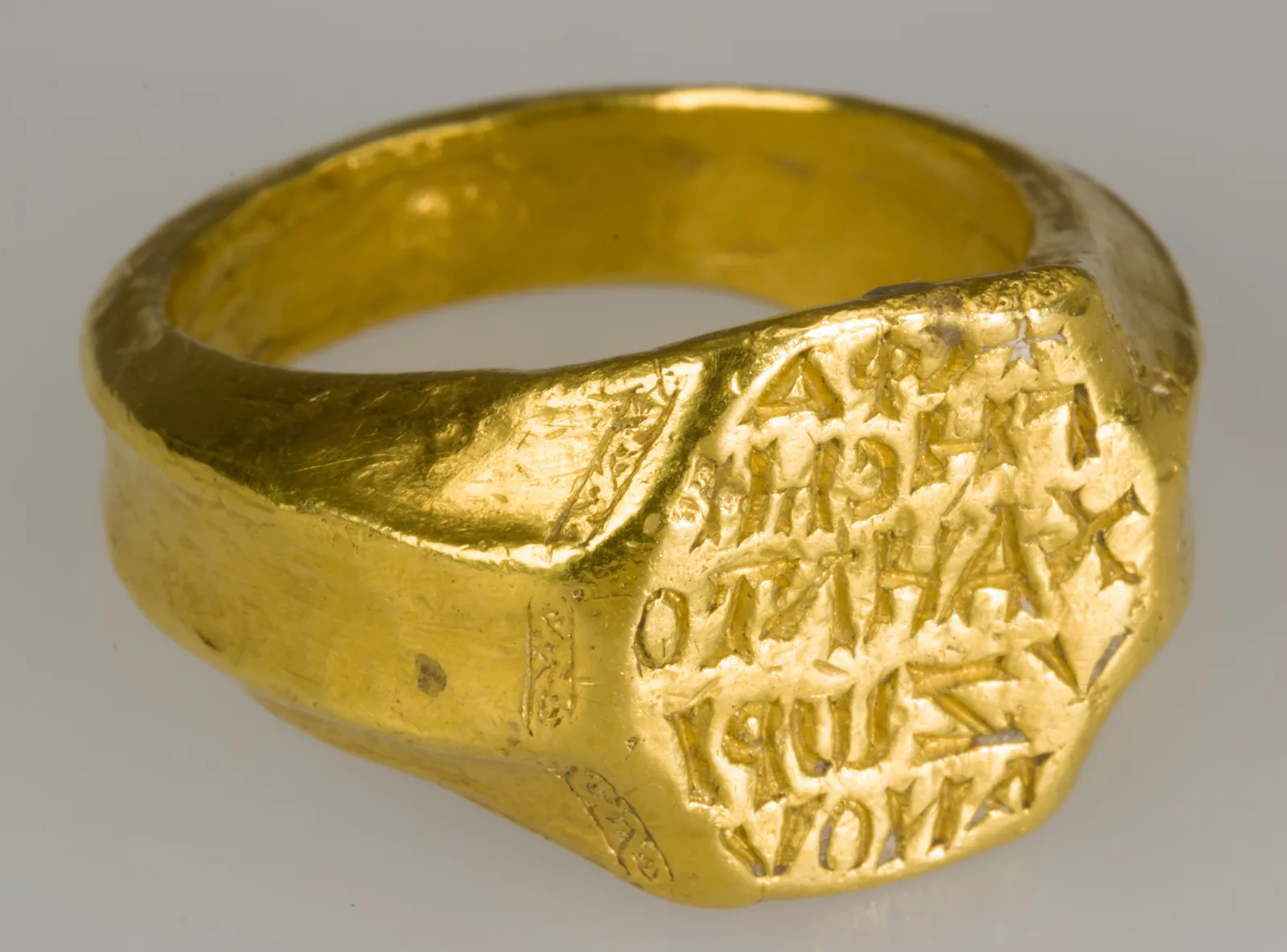
Tungsten carbide came to jewellery relatively recently, at the turn of the twentieth and twenty-first centuries, when the sintering technology for hard alloys was adapted to rings. Makers saw demand for a tough, care-free alternative to gold, especially among men, and tungsten slotted perfectly into that niche. In a couple of decades it travelled from a tooling material to a mass jewellery category.
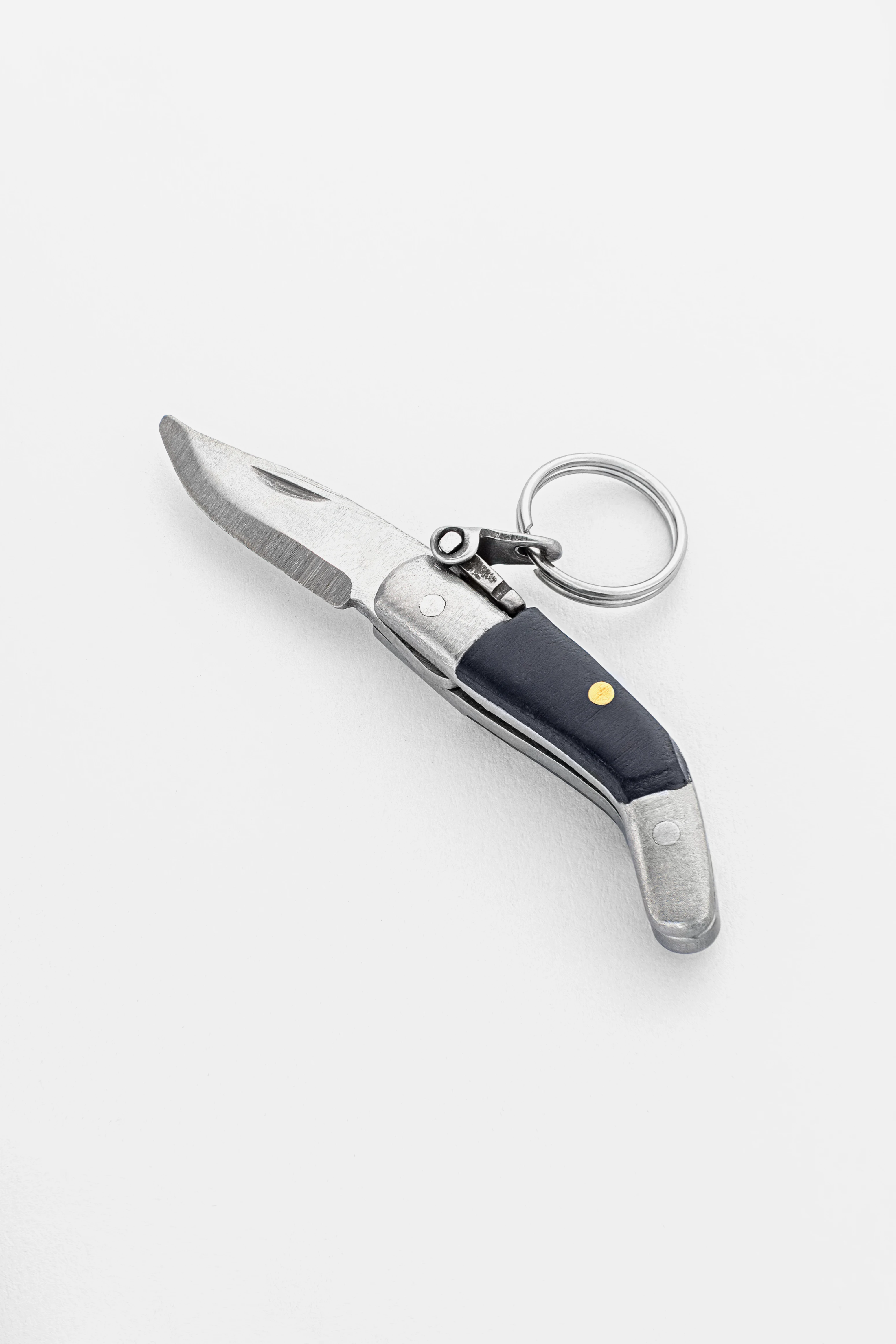
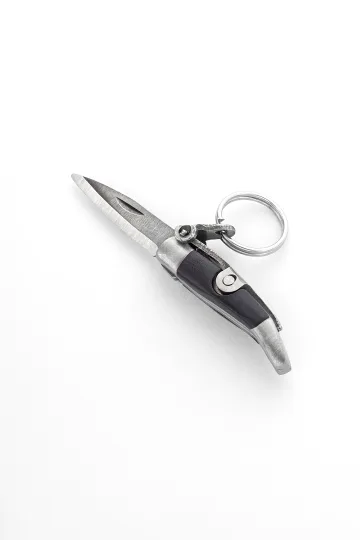
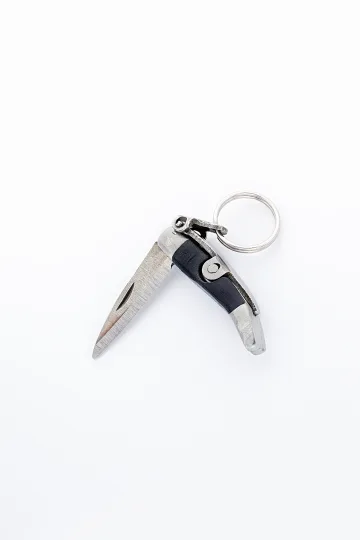
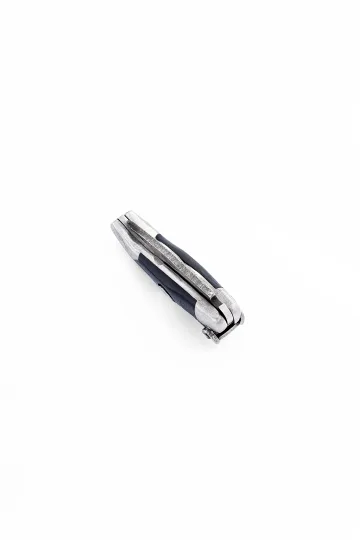
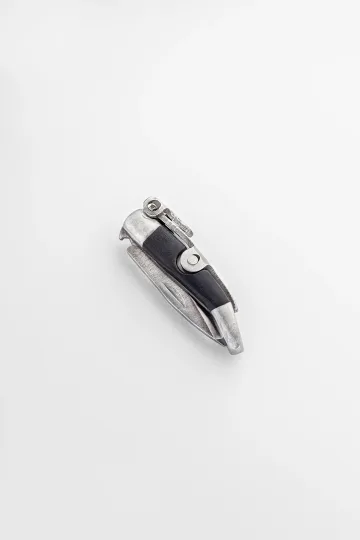
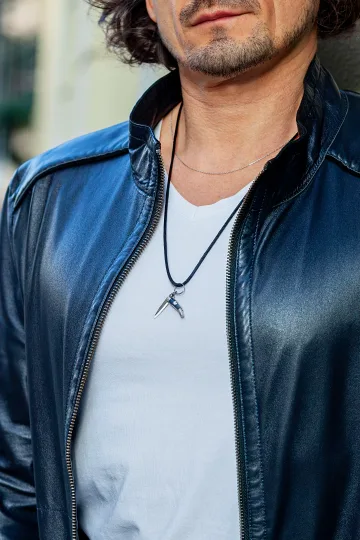
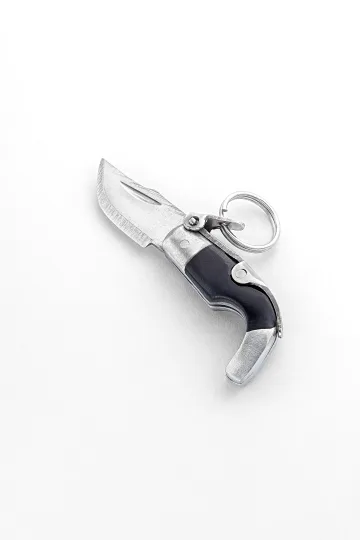
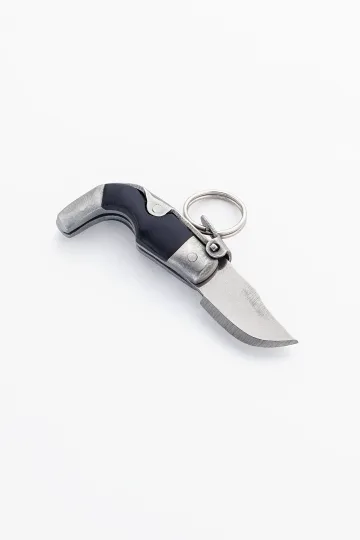
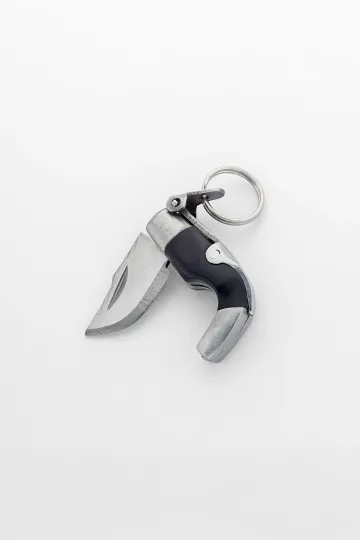
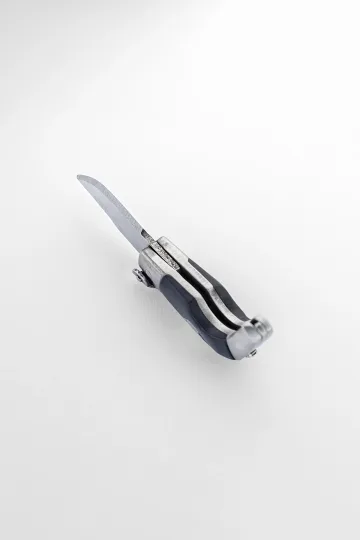
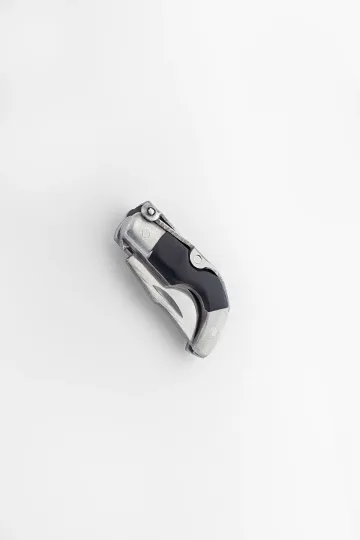
CAPAORA mini knife pendant
The 18th-century Spanish navaja in miniature: 40 mm of stainless steel, a real folding mechanism and a Palanquilla lock that clicks. An affordable gift to remember.
Authentic · Ships from Spain · 14-day returns
Tungsten jewellery: by type
Tungsten ring
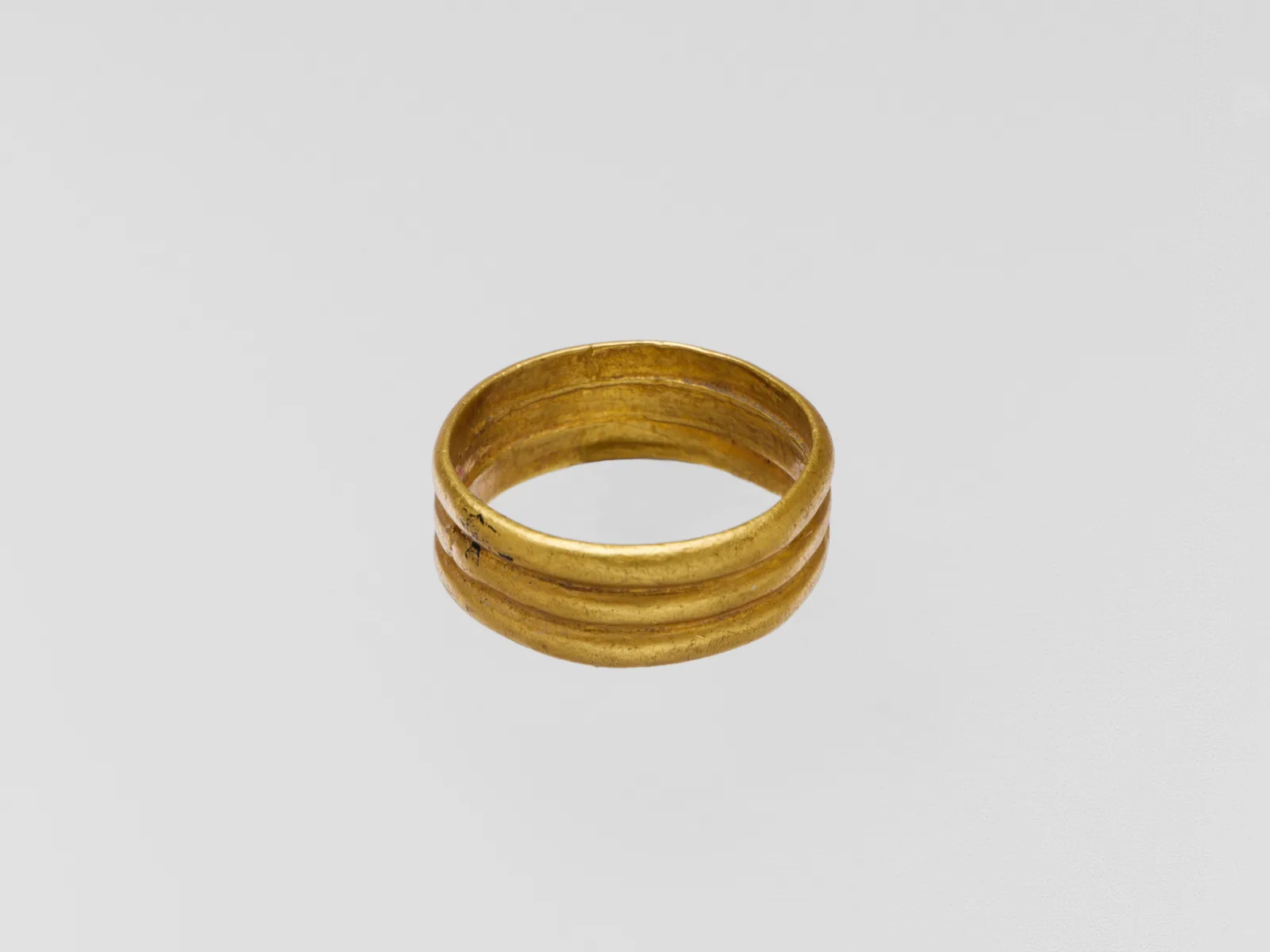
The ring is almost the only mass use for this metal, and not by chance. Add together the hardness that keeps out scratches, the mirror shine with no care, and the solid weight, and you get an ideal men's wedding ring in the affordable range. People wear it for years and it looks like it came straight off the display. Two things to keep in mind. First: the size cannot be changed, because carbide is sintered into one solid piece and does not stretch, so the measurement must be precise and the seller must offer an exchange. Second: in an emergency the ring is not sawn but cracked with special pliers in seconds, and the brittleness that breaks the metal in a fall turns into a plus for a swollen finger. The forms vary: a matte or polished grey band, a black coating, two-tone with a gold stripe, a bevel, a wood or carbon-fibre inlay. Stones are usually absent, since the metal is expressive enough on its own.
Tungsten bracelet
A tungsten bracelet shows up less often than a ring, and the reason is the same density that makes a ring pleasantly weighty. On the wrist that mass is felt more strongly: a tungsten bracelet of massive links is noticeably heavier than a steel one of the same size. For some that is a downside, for others it is exactly what is wanted: the piece is felt on the arm, does not dangle, reads as solid and dependable. Such bracelets are usually built from separate tungsten carbide links, sometimes combined with steel or ceramic inserts, because you cannot make a single flexible chain from a brittle solid piece. The same properties as the ring: the links do not scratch in daily life, hold a mirror or matte edge for years, do not darken from sweat and water. And the same caution: a strong point impact of a hard link against stone can in theory crack it, so the bracelet too is best kept from falls onto concrete.
Tungsten earrings
Tungsten earrings are a rarity, and the culprit is again that high density. A full massive earring of tungsten carbide would tug the lobe down noticeably, so large models in this metal are almost never made. What actually works is small studs and compact posts, where the volume of metal is slight, so the weight is bearable. Such an earring gets all of tungsten's pluses: it does not scratch, holds its shine, does not react to sweat. But even a small stud lets the lobe feel that the metal is heavy, so for people with stretched or sensitive lobes tungsten in the ears can be uncomfortable. Another detail is the clasp and post: they are usually made not from the carbide itself but from steel or another malleable metal, because brittle tungsten is poorly suited to thin bendable parts. So tungsten earrings exist, but they are a niche story, not the metal's element.
Tungsten pendant
A pendant is one of the few uses, besides a ring, where the weight of tungsten works for the image rather than against it. A hefty pendant on a chain feels grounded, masculine, and that is its character. Scratches barely threaten a pendant: it rubs against a clasp, a shirt, slips under a seat belt, but the hardness of carbide keeps the surface smooth where a silver plate would long since have scuffed. The formats are simple and graphic: a tag plate, a geometric shape, sometimes a combination with engraving across the surface. The brittleness is still worth keeping in mind, a strong knock of a flat pendant against stone can crack it, like a ring, but hanging on a chain it takes far fewer such hits than on a finger. The chain under a heavy tungsten pendant should be sturdy, so the weight distributes correctly and the link does not wear through. The result is a calm, weighty accessory, indestructible in daily life, with a clearly masculine leaning.
Cufflinks and men's accessories in tungsten
Here is a use where tungsten shines nearly better than in a ring. Cufflinks, tie clips, pins, and similar men's small pieces live a rough life: tossed into a pocket, a bag, a shared box where they rub against each other and against keys. Soft metals in such conditions quickly pick up a web of scratches and go dull. Tungsten comes out of it without a mark: the hardness keeps the mirror edge, the shine does not fade, and the weight adds a sense of an expensive thing. Brittleness barely interferes here, a cufflink is rarely dropped point-first onto concrete, and inside a cuff nothing threatens it at all. So cufflinks and tie clips in tungsten carbide are a rare case where all the metal's strengths work and its single weakness almost never shows. For anyone who values a neat shine without wear, this is nearly the most successful format for tungsten after the wedding ring.
Tungsten versus titanium, steel, and ceramic
Tungsten or titanium
Titanium is lighter, tougher on impact (it does not crack), and also causes no allergy, but it is softer than tungsten and scratches more visibly, and above all it does not give the same weight and mirror shine. Tungsten is harder, heavier, holds a polish, but is brittle to impact. Roughly: titanium is about lightness and being unbreakable, tungsten is about weight, shine, and scratch resistance.
Anyone who works around impacts and fears cracking is closer to titanium. Anyone who wants a solid mirror ring without scratches and is ready to protect it from falls is closer to tungsten.
Tungsten or stainless steel
Steel is cheaper, tougher on impact, and easy to work, but softer, scratches within a year of daily wear, and weighs less. Tungsten costs more than steel but beats it on hardness, shine, and sense of weight. If you need the most affordable option, steel wins; if durability of looks and a premium feel matter, tungsten wins.
There is a separate breakdown of everyday metals' properties: brass, steel, and silver compared helps you understand exactly how steel differs from precious alloys.
Tungsten or ceramic
Ceramic rings are also very hard, light, and hypoallergenic, but even more brittle than tungsten, and usually less dense to the touch. Tungsten is heavier and reads as more solid; ceramic is lighter and often brighter in colour (white, coloured). On scratch resistance they are close; on impact resistance both are vulnerable.
Choosing between them is choosing between weight and lightness at similar hardness. Fans of tangible mass lean toward tungsten.
Tungsten versus gold and platinum
The main difference from precious metals: gold and platinum are soft, malleable, costly, and pick up scratches over time, but they can be resized, repolished, and melted down. Tungsten is hard, affordable, scratch-resistant, but does not change size and cracks from impact. These are two different approaches: eternal, reworkable classics versus a modern, wear-resistant alternative.
What to choose on a limited budget
In the affordable range, tungsten is nearly the only option for combining durability and a solid look: it looks pricier than its cost thanks to its mirror shine and density. Steel is cheaper but softer and lighter. Titanium at the same price gives lightness and impact resistance but loses on shine and weight. If you want maximum premium feel for sensible money and have no constant impact loads on your hands, tungsten takes this range confidently. But if the priority is impact resistance, it makes more sense to pay up for titanium or take simpler steel.
Who tungsten suits and who it does not
Who a tungsten ring suits perfectly
Those who work with their hands and do not want to protect jewellery from scratches. Those who love tangible weight and a mirror shine with no care. Men choosing a strict wedding ring in the affordable or mid range. People with sensitive skin, provided the binder is a quality nickel one. Couples for whom durability of looks over decades matters.
If your scenario is "put it on and forget it, and it always looks new," tungsten is nearly the only option in its price category.
Who should choose a different metal
Those who often change finger size or are unsure of it: tungsten cannot be fitted. Those who work amid constant strong knocks to the hands and fear cracking: titanium or steel is more reliable here. Fans of light jewellery, for whom massive weight is a burden. Those who want a precious metal specifically, with the option to rework and melt it down in the future.
These are not flaws of tungsten but simply different priorities. The metal does its job honestly, but it is not universal.
Tungsten as a gift
A tungsten ring is a good gift for a man: it looks expensive, needs no care, and survives an active lifestyle. The only difficulty is the size, which cannot be fitted. So when choosing it as a gift, either learn the exact size in advance or buy from a seller who offers an exchange. The mirror shine and solid weight make such a ring a pleasant surprise.
Is tungsten right for daily wear and working with your hands
This is perhaps its signature role. An electrician, a mechanic, a builder, a musician, a cook, everyone whose hands are constantly in contact with tools and surfaces will appreciate a ring that does not pick up scratches by the end of the first year. Tungsten does not react to sweat, household chemicals, or water, does not darken, and does not need to be taken off for a shift. The only rule for those who work with their hands: take it off before impact work where there is a risk of dropping the ring or pinching it between hard surfaces. Otherwise it is the most wear-resistant everyday metal at an affordable price.
Send a friend a discount code, they save on their first order.
Caring for tungsten: almost nothing needed
How to clean a tungsten ring
Care comes down to a minimum. Warm water, a drop of mild soap, a soft cloth, that is enough to bring back the mirror shine. Tungsten needs no special pastes, re-polishing, or upkeep the way silver or gold does: the surface does not scratch in daily life and does not go dull.
For black and two-tone models, avoid harsh abrasives and aggressive chemicals so as not to touch the coating. Natural grey tungsten fears almost nothing except strong impacts.
What tungsten is and is not afraid of
Not afraid of: water, soap, sweat, household chemicals in reasonable doses, scratches from keys and coins, loss of shine over time. Afraid of: strong point impacts against stone and concrete (risk of cracking) and, on coated models, wear of the coating on the edges over years.
The care logic is simple: do not drop it on something hard and do not scratch the coating with abrasive. Otherwise tungsten is one of the most low-maintenance metals you can wear daily.
Do you need to take tungsten off in daily life
In everyday life the ring can stay on: a shower, washing dishes, cooking do it no harm. Take it off before serious physical work with a risk of striking something hard, and before weight training. This is not about fragility in daily life but about the metal's single weak spot, a strong point impact.
How to store a tungsten ring when not wearing it
Since tungsten is harder than almost everything around it, it can scratch neighbouring jewellery in the same box: soft gold, silver, pearls. So it is better stored separately, in a soft pouch or a separate slot, not piled into a common heap. Everyday company does tungsten no harm, but its softer neighbours take the hit. This is a small but frequent cause of scratches on other jewellery, one rarely flagged at purchase.
Facts that surprise
Tungsten is "wolf's froth"
The name came from medieval miners who cursed the mineral for "devouring" tin during smelting, like a wolf its prey. The unkind "wolf" fame stuck in the name of a metal now calmly worn on the ring finger.
Tungsten has the highest melting point of any metal
Around 3,422 degrees, a record among all metals. No other metal would survive such heat without melting. That is exactly why tungsten was used for the incandescent lamp filament, which glows white-hot and does not melt.
The ring is removed by cracking, not sawing
In a medical emergency a tungsten ring is not sawn like a gold one but cracked with special pliers in seconds. The brittleness that breaks the metal in a fall becomes a rescue for a swollen finger.
Tungsten scratches steel and glass
In hardness, tungsten carbide is second only to the corundums and diamond. A tungsten ring leaves a scratch on hardened steel and glass while staying smooth itself. Everyday objects simply have nothing to scratch it with.
The same material drills granite and pierces armour
Tungsten carbide reinforces drill bits for stone and forms the cores of armour-piercing shells. A metal of industrial might migrated into jewellery with almost no change in composition.
Tungsten is nearly as dense as gold
In density, tungsten is close to gold and twice as heavy as steel and titanium. Hence that solid weight which makes a ring "expensive to the touch," even though its price sits in the affordable range.
The letter W in the periodic table comes from Wolfram
The chemical symbol of tungsten, W, comes straight from the German Wolfram, while the international name of the element in a number of languages is tungsten, "heavy stone" in Swedish. One metal, two completely different names.
It is one of the youngest jewellery metals
Tungsten carbide appeared in jewellery only at the turn of the twentieth and twenty-first centuries. By the measure of gold and silver, which are thousands of years old, a tungsten ring is almost a novelty that went mass-market within a couple of decades.
Frequently asked questions
Can a tungsten ring shatter, and is that normal? Yes, it is a property of the material, not a defect. Tungsten carbide is very hard but brittle, so a strong point impact against stone or concrete can crack it like ceramic. Many makers offer a warranty for exactly this case. To lower the risk, do not drop the ring on a hard floor and take it off before impact work.
Does tungsten scratch? In everyday life, practically not. In hardness it is second only to the corundums and diamond, so keys, coins, tools, and other everyday objects leave no marks. Only something harder than it, a diamond or corundum abrasive, can scratch tungsten.
Can a tungsten ring be resized? No. Tungsten carbide is sintered into one solid piece and does not stretch, forge, or solder, so fitting the size is impossible. The only way out is an exchange for another size. That is why the measurement before purchase must be exact and the seller must offer an exchange.
Does tungsten cause allergies? Quality tungsten on a nickel binder counts as hypoallergenic: the carbide itself is bio-inert. Problems come from cheap rings with a cobalt binder, since cobalt can oxidise and irritate the skin. With sensitive skin, choose tungsten from a seller who states the composition or hypoallergenic status.
How do you remove a tungsten ring if the finger is swollen? At an urgent-care clinic or emergency room it is cracked with special pliers in seconds, faster and safer than sawing a gold one off. At home, with an ordinary tight fit, soap, cold water, and thread help. In a real emergency do not endure it; see medical staff and it comes off instantly.
Why is a tungsten ring so heavy? Tungsten is one of the densest metals, close to gold in density and twice as heavy as steel and titanium. Hence the solid weight, which many take as a sign of quality and a premium feel. Slim models weigh less than wide ones.
Tungsten or titanium, which is better for a wedding ring? It depends on priorities. Tungsten is harder, heavier, and holds a mirror shine, but is brittle to impact. Titanium is lighter, does not crack, and is also hypoallergenic, but softer and scratches more visibly. For a solid look without scratches, tungsten; for lightness and impact resistance, titanium.
Does tungsten need special care? Almost none. Warm water, a drop of soap, and a soft cloth bring back the shine. Re-polishing and special products are not needed: the surface does not scratch and does not go dull. For black and two-tone models, avoid abrasives so as not to touch the coating.
Buying it as a gift? Each one arrives ready to give.
 A branded Zevira box and a little card come with every order.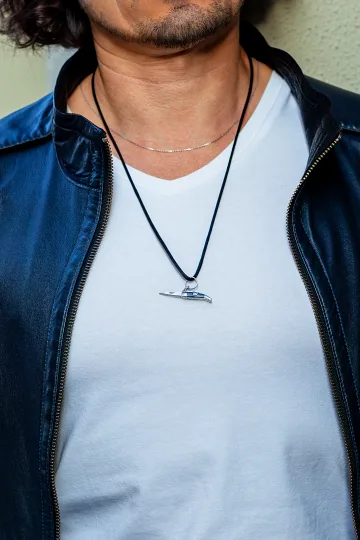




The short version
Tungsten, or more precisely tungsten carbide, is the hardest metal in mass jewellery: it scratches steel and glass, holds a mirror shine for years with no care, and weighs almost like gold, so it feels expensive. That is why it is chosen as number one for men's wedding rings in the affordable and mid range.
There is one catch, but an important one: hard does not mean unbreakable. From a strong impact against stone, tungsten can shatter like ceramic. Its size cannot be changed, so the measurement must be precise. On the other hand, in an emergency such a ring is removed not with a saw but with pliers in seconds, and quality tungsten on a nickel binder is hypoallergenic. Understanding these three details, brittleness to impact, fixed size, and the importance of the binder, you get a ring that looks new for decades.
Silver, steel, tough metals, coloured stones, symbolism, matching sets.
About Zevira
Zevira is a Spanish jewelry brand from Albacete, a city with a centuries-old tradition of metalwork. We make jewelry from tough and noble materials, from sterling silver 925 to modern wear-resistant alloys, and we match the metal to your skin tone, so the piece serves you long and pleases you every day.