Unalome: the meaning of the Buddhist symbol of the path and the swirl above the Buddha's head
Introduction: the swirl that passed through chaos
This slender swirl with a dot on top is inked today as a fashionable tattoo and sold as a sign of zen calm. In Theravada Buddhism it means almost the opposite: not serenity but a thorny road through chaos, mistakes, and wandering toward awakening. The spiral is not smooth water, it is a storm you have already come through.
The unalome is one of those symbols where the beautiful minimalist line and its real meaning have drifted very far apart. In a tattoo studio window or a jewellery edit it looks like a light, almost calligraphic stroke, and people gladly take it for the aesthetic alone. Yet in the symbol's homeland, in the Theravada tradition of Buddhism, that stroke holds a whole map of a human life: the loops of delusion, the moment of straightening, and the dot of release. A single line contains the road from being born into the cycle of suffering to the way out of it.
Wear the symbol, don't just read about it. These are in stock:





This guide unpacks the unalome honestly and with respect for the tradition it grew from. We will look at what the figure is made of and what each part means, where the symbol came from and how it ties to the Thai sacred tattoos called sak yant, how the masculine and feminine versions differ, and how all of it works in a piece of jewellery. Where the talk turns to spiritual meanings, we will call them spiritual meanings, not pass them off as verifiable fact. But the history of the symbol, its form, and its place among other Buddhist signs deserve a careful telling.
Let us settle the spelling first. "Unalome," in Thai อุนาโลม, is one and the same word, which entered Thai culture through the language of Buddhist texts. Differences in transcription do not change the essence. From here on we will hold to the form "unalome" as the most familiar.
What a unalome is: spiral, line and dot
The looping spiral: wandering and mistakes
The lower part of the unalome is a tight spiral of several coils wound one into another. It reads as the beginning of the path, its most tangled stretch. Each loop is a circle a person walks: habits, mistakes, repeating lessons they cannot yet step out of. In Buddhist language this points to samsara, the cycle of births and suffering, where the mind returns again and again to the same place without finding a way out. The coils are deliberately uneven and cramped: they convey the feeling of chaos, of thrashing, of searching by touch. Here the symbol promises no ease; it honestly shows that the road begins in confusion.
The straight line: maturity on the path
Out of the spiral grows a straight line, and this is the second key element of the figure. The shift from coils to a straight stroke is the moment the path straightens: a person stops walking in circles, the patterns of repetition untangle, and movement becomes conscious. The straight line is maturity, clarity, accumulated experience that finally settles into a direction. The higher the line rises, the further a person has moved from the initial tangle. An important detail: the straight line does not cancel the spiral or erase it. The loops stay below as a memory of what was walked, and the straightening grows directly out of them. The symbol says that clarity is born not around chaos but through it.
The dot and the crown: moksha and nirvana
The unalome is topped by a dot, and sometimes a small halo or a few short strokes at the tip of the straight line. This is the highest goal of the path: release, which the Indian tradition calls moksha and the Buddhist one nirvana, the extinguishing of thirst and the exit from the cycle. The dot sets the logical final anchor of the whole figure: the spiral is wandering, the line is movement, the dot is arrival. In some renderings a light crown or half-circle is added above the dot, strengthening the motif of radiance and completeness. It is worth keeping a calm frame here: nirvana is a spiritual concept of the tradition, not a measurable state, and the symbol conveys the idea of release rather than guaranteeing it to its owner.
How to read the symbol as a whole
Assembled together, the figure reads like a short biography of any person. At the bottom, the tight coils where we begin, fumbling and making mistakes. Then the line that gradually straightens as maturity arrives. At the top, the dot toward which everything is directed. The beauty of the unalome is that this whole story fits into one continuous stroke: the hand leads the line from chaos to calm without lifting the pen. That is exactly why the symbol is so loved in minimalist graphics and in jewellery: it looks simple, yet holds a whole road inside. And it is more correct to read it from the bottom up, from spiral to dot, the way you read a path, not from the top down.
Before going further, it helps to pin down the main thing that sets the unalome apart from many other signs. It does not describe a state, it describes movement. A cross, a star, or a circle usually fix something steady: faith, protection, wholeness. The unalome shows a transition, a road from one point to another, and that is exactly why it feels so natural to wear on a body that also changes and grows. Another feature separates it from the usual amulets: the unalome is not closed, it has a beginning and an end, and so a clear direction. A sign with direction is felt differently from a symmetrical emblem: it seems to nudge the eye forward and upward, echoing the very idea of movement. Next we will look at where this symbol came from and why Thai Buddhist culture in particular made it recognisable worldwide.
Keep the unalome thin and high, near the collarbones. A large pendant kills the fragility of the spiral.
How to wear a unalome: what to pair it with, metal and chain length
The unalome holds on a single fine line, so I build the look around restraint rather than shine. I have gathered here what I most often advise clients.
What should I wear with a unalome every day? For an everyday look I recommend a slender unalome pendant at the collarbone on a short or medium chain. The line reads best against plain fabric, so I choose a smooth backdrop: white, grey, sand, navy. A busy print argues with the stroke and swallows it, while against a clean backdrop the fine spiral is visible whole at a glance.
Which metal should I choose for the look? I advise matching the metal to the temperature of the clothing. Cool silver I recommend with grey, graphite, blue, and black; warm gold or plating with sand, cream, chocolate, wine. For a more graphic presentation I choose oxidised silver: on it the fine line reads almost like an ink stroke. One metal throughout the look keeps the picture composed.
How do I choose the chain length? I match the length to the neckline. For an open collar I advise a short chain of around forty-five centimetres, so the figure lands in the collarbone zone where the thin line reads best. Under a closed top I recommend dropping the pendant to fifty or fifty-five centimetres. For a layered look of several fine chains I take the unalome as one of the upper, shortest tiers, so it does not get lost among the other pendants.
Should I wear the unalome solo or paired with a lotus? Here I choose by the job. As a personal sign of the path I recommend wearing the unalome solo, a fine line right at the skin, sometimes hidden under a shirt. For a composed look I put together a pair with a lotus: the flower at the base of the line reads as growth from muddy water toward the light. I keep the pair delicate, both figures fine, with no large pendants alongside, or the fragility of the stroke is lost.
What suits the office, and what suits going out? For weekdays and a restrained setting I choose a very thin pendant or an engraving on a ring, where the unalome reads as a clean graphic motif rather than an esoteric statement. For the evening I recommend the same minimalism, but on an open neckline and plain dark fabric, where a light line works as contrast. The unalome is not about bulk, so even for going out I keep it thin, adding expressiveness through the backdrop rather than the size.

Turn on your camera, pick earrings, a pendant or a ring, and see the piece on yourself in real time.
Switch items in one tap.
Everything runs in your browser: no photo or video is ever uploaded.
History: Theravada, Thailand and sak yant
The symbol's home: Theravada and Thailand
The unalome is rooted in the Theravada tradition of Buddhism, the "teaching of the elders," the earliest surviving school of Buddhism. It is widespread in Thailand, Cambodia, Laos, Myanmar, and Sri Lanka, and it was on this ground that the symbol took the form familiar to us. The word behind it comes from the language of Buddhist texts and is linked to the image of a hair or a lock, which we will come to below. In Thai culture the unalome long ago moved beyond the monasteries and became part of the visual language: it is set on amulets, carved on objects, woven into temple ornament. For a Thai person it is not exotica but a sign known from childhood, pointing to the road of spiritual growth and to the image of the Buddha. The Western fashion for the unalome as an elegant tattoo is a later, outward reading that stripped the symbol of most of its meaning.
Sak yant and the ajarn monks
A separate and important branch of the unalome's life is sak yant, the Thai sacred tattoos. "Sak" means "to tap, to prick," and "yant" is a geometric protective pattern, going back to the Sanskrit "yantra." Such tattoos are traditionally applied not in studios but by Buddhist monks and initiated masters, called ajarn, with a long metal needle, accompanied by prayers and instruction. The unalome holds a special place in this system: it often crowns a larger pattern, set above it as a finishing spiritual accent that directs the meaning of the whole composition upward, toward awakening. Here the symbol lives not as ornament but as part of a ritual and a vow: a person receiving sak yant takes on certain rules of conduct. That is why the unalome from this tradition is treated with respect, understanding that behind a beautiful line stands a whole discipline.
Ushnisha: the pattern above the Buddha's head
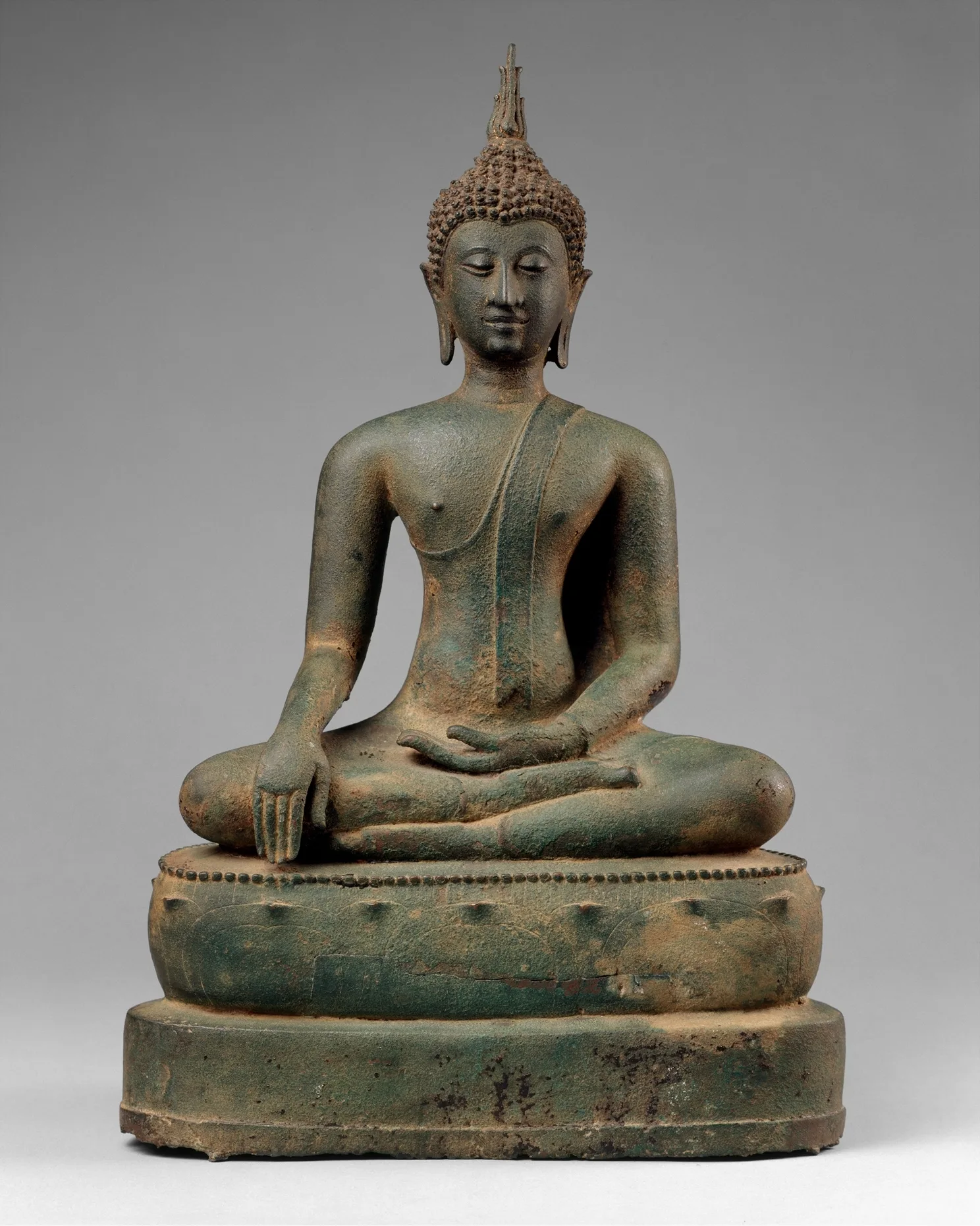
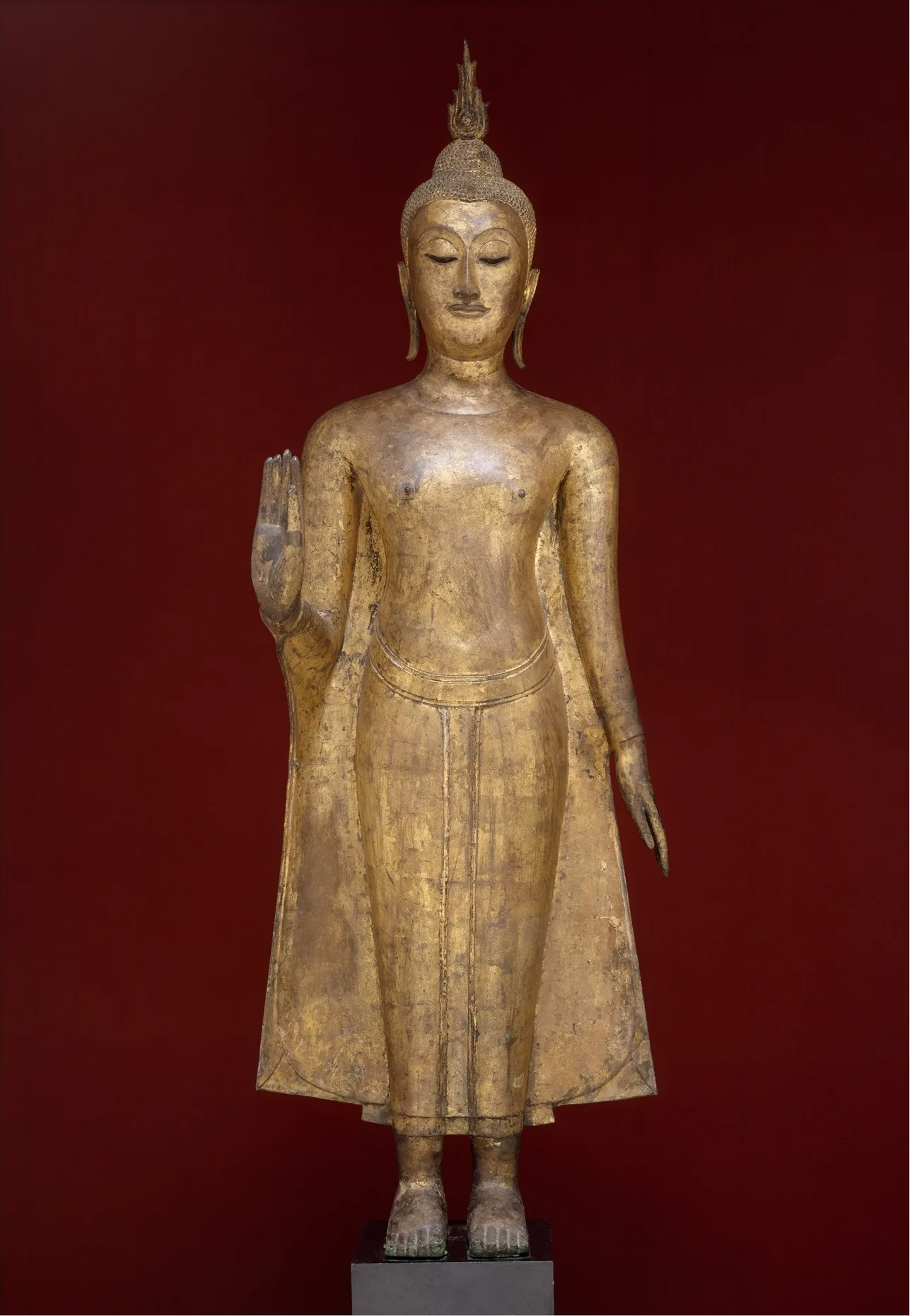
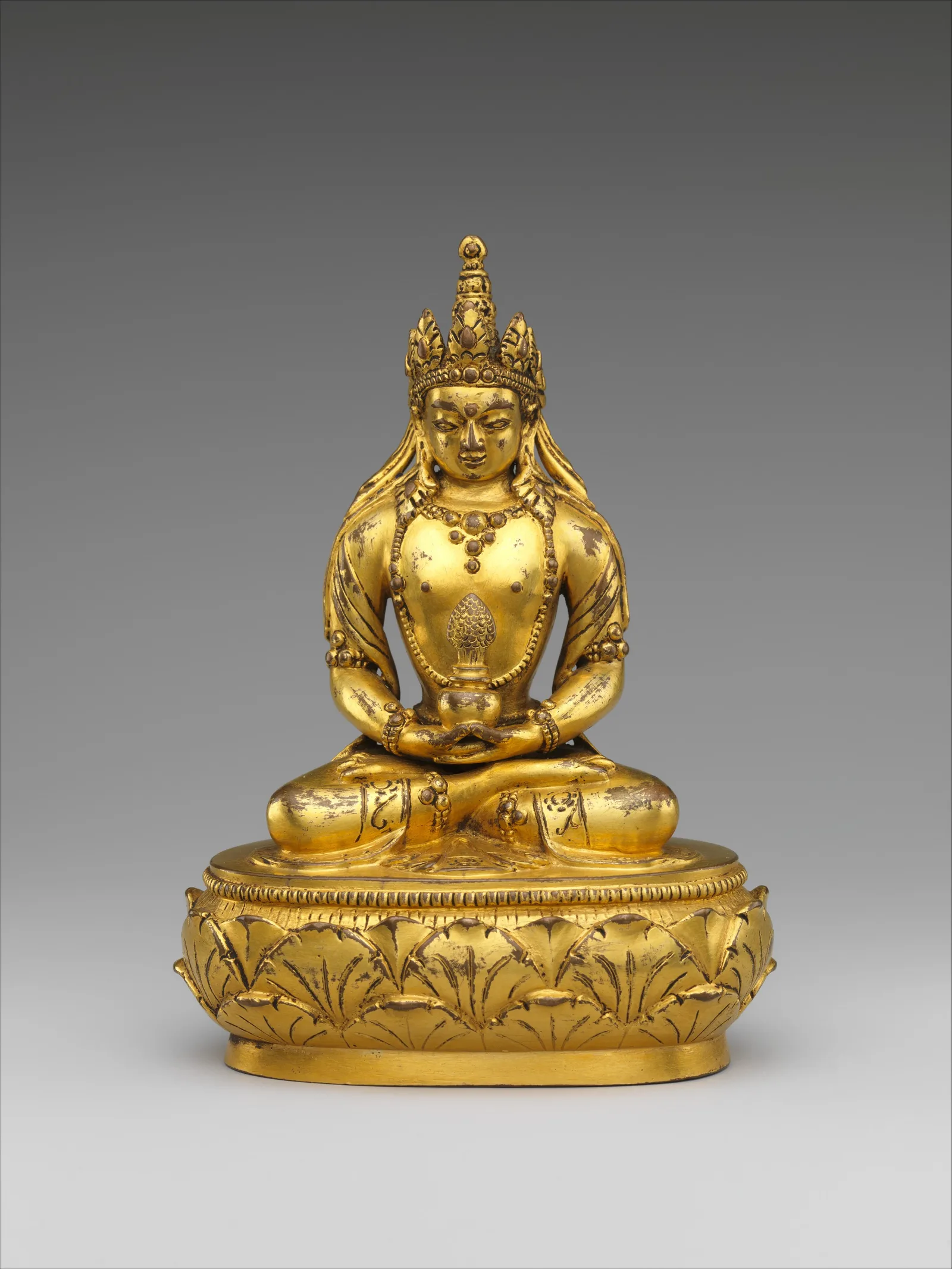
Another root of the symbol reaches back to the iconography of the Buddha himself. In classical images the crown of the Buddha's head is topped by the ushnisha, a bump or rise on the skull held to be a sign of highest wisdom and awakening. The unalome is often read as a pattern tied precisely to this zone, to a swirl of hair or a stream rising above the head of the enlightened one. From this comes the steady understanding of the symbol as "a path to the summit of consciousness": the spiral below, the ascent of the line, and the dot on top literally repeat the vertical from base to crown. This link gives the unalome particular weight. It is not an abstract figure invented for beauty but a sign grown into the image of the teacher, whose road to awakening it schematically reproduces.
These three roots, the Theravada ground, the practice of sak yant, and the iconography of the Buddha, explain why the unalome is taken so seriously where it comes from. It gathers into one line the folk culture of amulets, the monastic ritual, and the high teaching of awakening. Each root adds its own shade to the symbol: from the amulet comes accessibility and the everyday, from sak yant the strictness of the vow and the bond with a teacher, from the image of the Buddha the high goal of the whole path. Together they make the unalome dense in meaning, though outwardly it stays a light line. When the symbol is carried onto a pendant or onto skin far from this context, it of course lives its own life and can mean something personal to the owner. But knowing the original depth is useful: it gives the wearer an honest footing rather than an empty picture, and helps not to reduce an ancient sign to a simple stroke from a feed of edits. Such knowledge also changes how you feel about the piece: a line with an understood history behind it is worn with more confidence and lasts longer than a randomly chosen trend.
A note on dating and on the variety of traditions is worth adding. You cannot name the exact date when the unalome took its present form: it grew gradually out of written culture and iconography rather than appearing in a single day. Different schools and regions draw it a little differently, changing the number of coils, the turn of the spiral, the shape of the crown. There is no single canon binding on everyone. So any description of the "correct" unalome is better taken as one version rather than a law. Below we unpack the most common readings, remembering that a living tradition is always richer than any diagram.
Customer reviews
Zevira is a real jewellery shop. Genuine payments, deliveries and customer thank-yous.
🥰🥰🥰 gracias
Ok, ¡gracias! 🙂
The symbolism
A path through suffering
The chief meaning of the unalome is a path that goes through suffering rather than around it. The symbol promises no easy life and does not depict ready-made harmony. It shows movement from a tangled beginning to clarity, and the spiral below is there precisely to remind us: without wandering there is no maturity. In the Buddhist frame, suffering, dukkha, is the starting point of the whole teaching, the first of the four noble truths, and the unalome honestly sets it at the base of the figure. To wear this sign is to accept that hardship is part of the road, not a fault in it. Such a reading differs sharply from the common "zen symbol": the unalome is closer to the idea of tempering than to the idea of calm.
Every loop is a lesson
Inside the spiral hides a subtler meaning: each of its coils can be read as a separate lesson or trial. We do not cross the path in a single leap, we wind through circles, and on each one we take in something before moving higher. In this reading the loops are not a hindrance but a way of learning: what looks like walking in circles is in fact gathering experience. When there are enough coils, the spiral exhausts itself and passes into the straight line. That is why the unalome is sometimes worn as a sign of accepting one's own history with all its repetitions and mistakes. It says that past thrashing was not in vain, it led a person to their present clarity, and without it the straight line would have had nowhere to grow from.
Why the unalome is not about luck
Here a plain caveat is needed, because a lot of oversimplification surrounds the symbol. The unalome is not a lucky charm and not a sign that draws money or love. Such promises are attached to it already in the commercial wrapping, cut loose from tradition. In its original sense the unalome is about inner work: about the path, maturity, and release, not about outer goods that come to the owner on their own. This is more honest and, if you think about it, more valuable. The symbol does not promise that life will get simpler, it supports the resolve to go through the hard part. That is why the unalome is more fittingly given not with the words "for luck" but as a sign of the path and of endurance. Such a wish sits deeper and truer on the meaning of the figure than the label of a luck amulet.
The different layers of meaning do not argue with one another, they stack. On the surface the unalome is an elegant line pleasant to wear. A little deeper it is a map of personal growth: chaos, straightening, goal. Deeper still it is the Buddhist road from samsara to nirvana, written into a single stroke. The owner is free to stop at any layer: for some the aesthetic is enough, for some the metaphor of growing up matters, and some hold the whole spiritual vertical in mind. The symbol holds up under any of these readings and does not demand that you pick one. It is exactly this layering that makes it convenient for jewellery: the same line at the collarbone can mean beauty, endurance, or faith, depending on who wears it.
Upload a photo of your pet, someone you love, or an object. We'll build a 3D model and hand-cast it in pewter.


Spiral direction: masculine and feminine
The mother's unalome and the father's unalome
In some traditions the direction the spiral coils in is tied to a masculine and a feminine principle. A unalome whose coils turn one way is called masculine, "the father's"; the other way, "the mother's," feminine. Behind this stands the idea that a man's path and a woman's path to the same summit run through different channels, mirroring each other. Some wear paired unalomes with exactly this meaning: two mirror-image swirls as a symbol of family, of the bond between parents or a couple. It is worth remembering that there is no rigid common canon here, and in different schools the sides may be read the other way round. So paired symbolism is better set consciously and spoken out, rather than trusting that the meaning "reads itself."
Up, left, right
Besides the masculine and feminine, the direction of the unalome is also described through the orientation of the whole figure: where the spiral faces and where the line rises. The classic version pulls the line strictly upward, toward the crown, repeating the vertical of ascent. There are also sideways renderings, where the swirl turns left or right, which shifts the accent of the drawing and its seat on the body or on a piece of jewellery. For a tattoo this matters compositionally: the master aligns the direction of the unalome with the curve of the arm, collarbone, or spine, so the line follows the natural flow of the body. In jewellery the direction is set by the pendant itself, and here the choice is more often aesthetic: how the figure looks on a chain and which way it leads the eye.
Different traditions, different rules
It is important to hold an honest frame: there is no single obligatory system of "this side is masculine, this side is feminine" for the whole Buddhist world. Different countries, schools, and sak yant masters keep their own versions, and what is read in one place as the father's unalome will be read otherwise in another. So the pretty tables of "direction and its meaning" are better treated as one interpretation rather than a law of nature. If direction carries meaning for you, it makes more sense to lean on a specific tradition or on the words of the master you take the symbol from, rather than on a generalised picture from the internet. And if direction is purely decorative for you, there is no mistake in a free choice: a living tradition has always allowed for variants.



How it is worn and paired
The pendant
The most common format of the unalome in jewellery is a slender pendant, where the figure is rendered by the bend of a metal wire or a cut-out in a flat plate. The line of the symbol is graphic in itself, so it is rarely overloaded: most often it is a clean stroke with no framing, readable at a glance. Such a pendant is worn on a short or medium chain, so the figure lands in the collarbone zone where it can be seen whole. The unalome looks good small: it needs no large size, its strength is in the line, not the bulk. The pendant is chosen both as a personal sign of the path, hidden under clothing, and as an open accent on plain fabric, where the thin line reads especially clearly.
Engraving and the ring
The second format is engraving: the unalome is set on the flat face of a pendant, on the inner or outer side of a ring, on a bracelet plate. An engraved line is thinner and more delicate than a raised one, fitting where the symbol should be personal rather than noticeable. A ring with a unalome on the inner side turns the sign into a secret message meant only for the wearer: smooth metal outside, the path hidden within, right at the skin. This trick is loved by those for whom what matters is not display but a private reminder. On the outer side of a ring or on a signet the unalome reads as a restrained graphic motif that does not catch the eye or look like an esoteric statement.
With the lotus and the crescent
The unalome rarely tires of company and gladly enters compositions with kindred Buddhist motifs. Most often it is paired with the lotus: the flower is set at the base or the top of the line, and together they read as growth from muddy water toward the light, since the lotus in jewellery is itself a sign of purity risen from the silt. Another frequent companion is the crescent, which in sak yant is added above the unalome as a sign of radiance and protection. You also meet it combined with dotted ornament and with Sanskrit syllables. In jewellery such pairs work gently: the lotus and the unalome together give a finished story of the road upward without overloading the composition with extra detail.
Minimalism and the fine line
Aesthetically the unalome belongs to the world of minimalism, and this is its strong side. One continuous line, a little air around it, no extra decor: the symbol gains from restraint and loses from clutter. That is why the best unalome pendants are thin, almost weightless, in clean metal with a precise line free of thickening. Such a sign slips easily into layered looks of several chains, sits beside other fine pendants, and does not quarrel with them. It suits a strict everyday style and a soft feminine presentation alike, because it is neutral in form on its own. Minimalism here is not a fashion but the natural language of the symbol: the path is drawn with a single line, and jewellery most honestly repeats exactly that cleanness.
It is worth speaking separately about the unalome as an alternative to a tattoo, since that is what the symbol is most often associated with. A tattoo is a final decision: the line stays with a person forever, and in the sak yant tradition it is also tied to a vow. Jewellery is softer and reversible: a pendant can be taken off, changed, passed on, or given away, and the meaning stays the same. Many wear both, echoing the tattoo motif in a pendant, while some live for a long time with the pendant first and only later decide on an indelible line. If the symbol matters but the final step feels daunting, jewellery lets you live with the unalome without an irreversible choice and tune its fit to yourself.
Materials
Silver
Most often the unalome is made in 925 silver, and for a fine line this is a good choice. Silver holds an elegant bend well, reflects light cleanly, and underlines the graphic quality of the symbol without extra weight. The cool shine of the metal sits naturally on the minimalist form: the line stays a line rather than turning into a bulky object. Silver darkens over time, especially in damp conditions, and a light tarnish on a polished pendant comes off with a special cloth. For those who like a more graphic look, oxidised silver with darkened recesses suits well: on it the fine line of the unalome reads even sharper, almost like an ink stroke on light skin.
Gold
Gold of fourteen to eighteen carats is the durable, warm version of the symbol for those who want to wear it constantly and not think about care. The warm tone of the metal softens the strict geometry of the line and sits well on skin with a warm undertone. A gold unalome barely tarnishes, takes contact with water and skin calmly, and so is convenient as an everyday personal sign. An in-between option is gold-plated silver: it gives a warm gold tone at a more reasonable cost, but the plating wears off the raised parts of the line over time, and with daily wear that is worth bearing in mind. For a fine symbol gold is especially flattering: even a small elegant line in warm metal looks rich and complete.
Steel and the fine line
For more affordable and sturdier pieces the unalome is made in jewellery steel. Steel holds a fine line without deforming, does not tarnish, and easily takes active daily wear, which is why it is chosen by those who value practicality. To the touch a steel unalome is cooler and stricter than a silver one, closer to a graphic, almost technical presentation. The general principle for any material is the same here: the cleaner and more precise the line, the better the symbol works. The unalome does not forgive rough or uneven wire, because all its expressiveness rests on the smoothness of the stroke. So when choosing, it is worth looking first at the quality of the line itself, and only then at the metal it is cast or bent from.
Leave your email, we'll send your discount code. No spam, unsubscribe anytime.
The code arrives by email, valid on your first order.
Who it suits and how it is gifted
Who the symbol is close to
The unalome suits those who value things with meaning and an inner story, not a single beautiful form. It is close to people who have come through a hard period and emerged from it stronger: the spiral below and the straightening above fit such a story more precisely than any words. It is chosen by those who practise meditation or take an interest in Buddhist culture, for whom the path to clarity is not an abstraction but familiar work. The symbol also suits lovers of minimalist graphics, for whom the cleanness of the line matters in itself. Finally, the unalome is close to those who prefer signs of movement and growth to static symbols of protection: it says not "I am guarded" but "I am on my way," and that tone suits a person in a phase of change.
The unalome as a gift
As a gift the unalome is fitting where you want to wish a person not empty happiness but endurance on their road. It sits well on turning points: finishing studies, starting something new, coming out of a hard stretch, an important personal milestone. It is better given with an honest word about the meaning: not "for luck" but as a sign of the path, of maturity, of moving forward through the hard part. A warm card is easy to fill with substance here, since behind the figure stands a whole story of the spiral, the straightening, and the summit. For a paired gift people take two mirror-image unalomes as a sign of the bond between two people moving to a shared goal through different channels. A safe format is a fine pendant in silver or gold: it is neutral in style and suits almost any recipient.
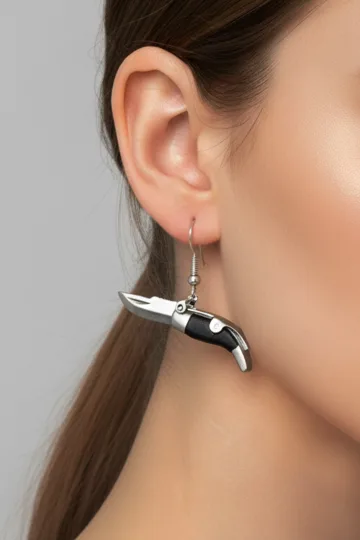
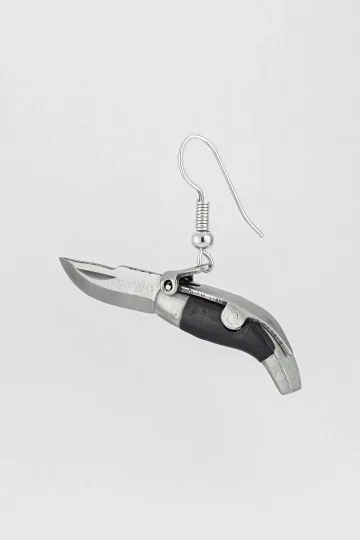
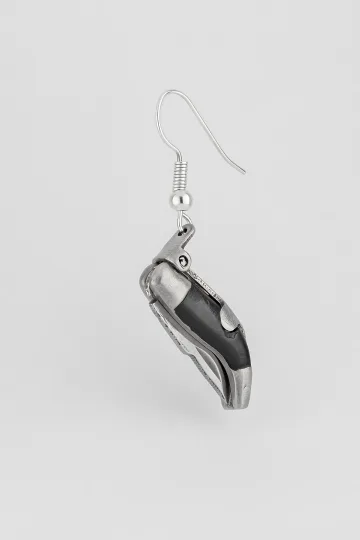
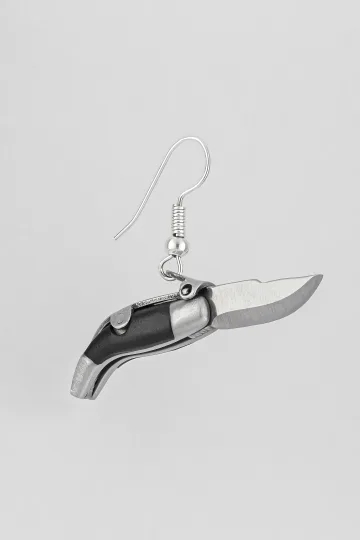
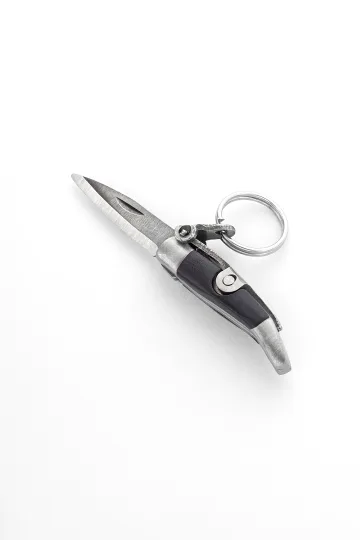
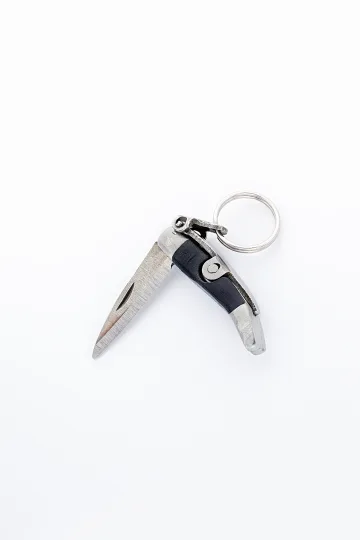
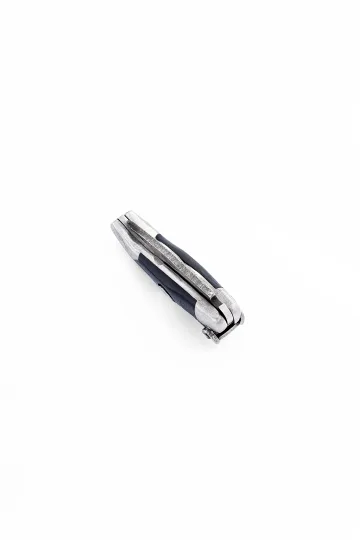
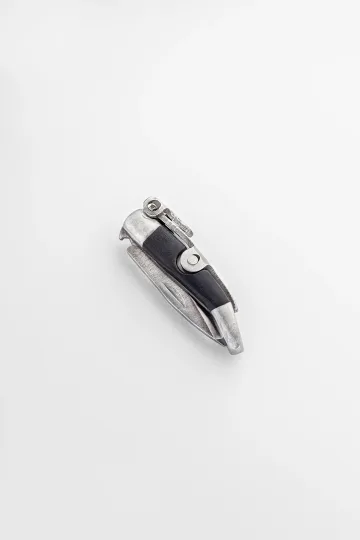
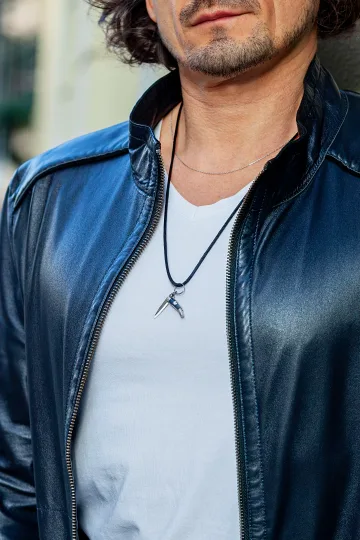
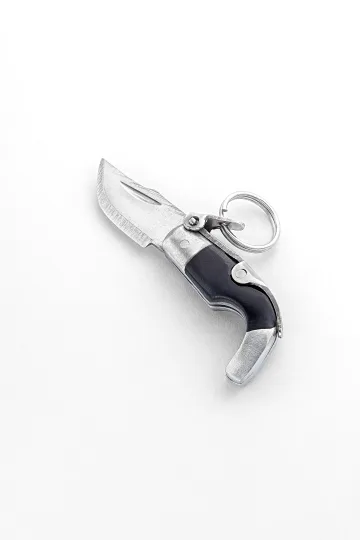
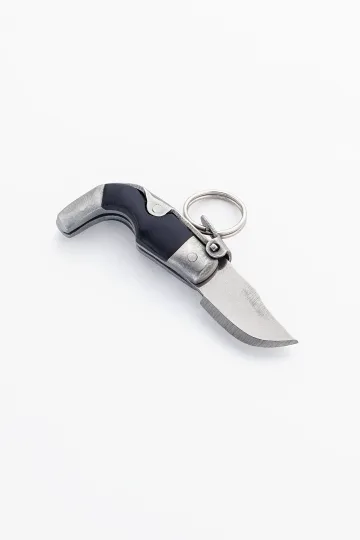
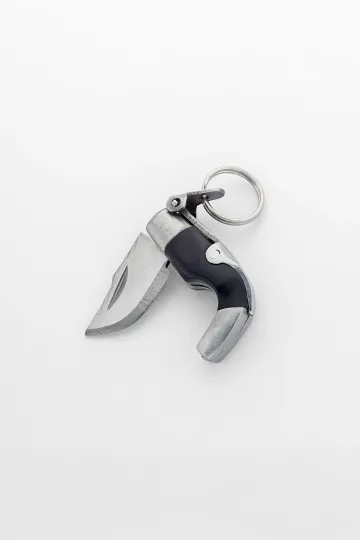
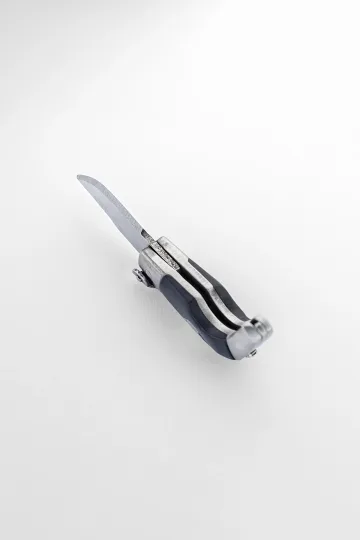
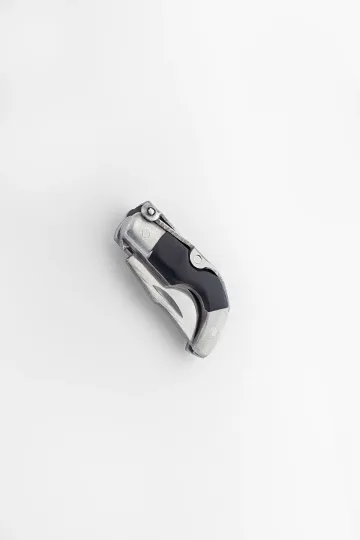
CAPAORA mini knife pendant
The 18th-century Spanish navaja in miniature: 40 mm of stainless steel, a real folding mechanism and a Palanquilla lock that clicks. An affordable gift to remember.
Authentic · Ships from Spain · 14-day returns
Unalome and neighbouring symbols
The unalome and the lotus
The lotus is the nearest companion of the unalome, and telling their meanings apart is useful. The lotus is a symbol of purity and spiritual unfolding: the flower grows from muddy water unstained and opens toward the light, which makes it a sign of transformation. The unalome describes not the unfolding but the route: the path from chaos to release, drawn with a single line. They complement each other, and they are often depicted together: the lotus as the state of purity, the unalome as the road to it. In jewellery this pair works especially smoothly, giving a finished story of ascent. But apart, each sign is self-sufficient, and they should not be confused: one is about flowering, the other about the road.
The unalome and om
The om symbol in jewellery stands beside the unalome in the shared Indian-Buddhist field, but speaks of something else. Om is a sacred sound, the root syllable with which creation and many mantras begin, a sign of the vibration and fullness of being. The unalome is a visual scheme of a single person's path to awakening. Om is turned toward the whole, toward the sounding of the world; the unalome toward the personal road. Both are fitting in Buddhist and Buddhist-adjacent symbolism, and both favour a minimalist presentation, but they should not be blended in meaning: the sound of the first cause and the map of personal ascent are different registers of one spiritual language.
The unalome and the tree of life
The tree of life and the unalome are kin in their vertical of growth, but they are built differently. The tree of life is a branching image of the link between worlds: roots in the earth, crown in the sky, trunk between them, and the whole figure about the interconnection of all living things. The unalome is poorer in detail and stricter in idea: it is a single line leading from spiral to dot, without branching, a clean road upward. The tree speaks of fullness and rootedness, the unalome of movement and goal. For those choosing between them, it helps to understand which is closer: the image of a sprawling connection of everything to everything, or the image of a focused personal path to the summit. Both are good, but their tone is different.
What sets the unalome apart
If the differences reduce to one thing, the unalome stands out in that it depicts a process, not a state. Most neighbouring symbols fix something steady: the purity of the lotus, the fullness of om, the interconnection of the tree of life. The unalome shows a transition, a road from a point of chaos to a point of release, and so it is dynamic by its very nature. Hence its particular charm for a person in motion, in change, in growth. Below we have gathered the unalome and its neighbours into one table, so the difference between form, tradition, and meaning is visible at a glance, and it is easier to choose the sign that sits most precisely on your story.
The table shows the main thing: symbols kindred in spirit diverge in their accents. Some speak of purity, others of the sounding of the world, others of interconnection, and only the unalome is wholly devoted to the road. This makes it neither better nor worse than its neighbours, but it sets it its own place in the general row of Buddhist and Buddhist-adjacent symbolism. If the idea of a path through the hard toward the clear is close to you, the unalome is your sign. If other facets of spiritual experience are closer, the same row holds a more precise figure. Choosing a symbol is, in essence, choosing the story you want to carry with you every day.
Truth and myths
Around the unalome, as around any symbol that has entered wide fashion, a good deal of confident claims have built up. Some of them mix different traditions, some pass a commercial label off as an ancient meaning, some simply confuse the unalome with similar signs. Let us go through the most common calmly, separating what tradition confirms from what was invented later. Below we have gathered these claims into a separate breakdown, where each carries an honest verdict and a short explanation.
The general conclusion from these breakdowns is simple: the unalome is deeper and stricter than its fashionable image. It promises no luck and does not reduce to zen calm, it speaks of a road that passes through chaos. Understanding this difference does not spoil the symbol but returns its weight. To wear the unalome knowing its real meaning is more honest and more interesting than taking a beautiful line at random. And this same knowledge guards against awkwardness: a person who understands that behind the swirl stands a Buddhist tradition and the practice of sak yant wears it with respect, not as a random trend from a feed.
Send a friend a discount code, they save on their first order.
Facts that surprise
The unalome is one of those figures where a lot of the unexpected hides behind a simple line. Here are a few facts that change how you see the symbol.
First. The unalome is read from the bottom up, not from the top down. The beginning of the path is the tight spiral below, not the dot on top, as one might think. The dot is the finale, the summit, not the starting position. Many wear the symbol without knowing they have turned its meaning upside down.
Second. The spiral of the unalome depicts not calm but chaos. The common notion of a "zen swirl" is directly opposite to the tradition: the coils below are the thrashing, the mistakes, and the cycle of suffering, not meditative smoothness. The symbol honestly begins with a storm.
Third. In the sak yant tradition the unalome is applied not by tattoo artists but by Buddhist monks and initiated ajarn, with a long metal needle and under prayers. Such a tattoo is tied to a vow: taking it on, a person takes on certain rules of conduct.
Fourth. The unalome is linked to the ushnisha, the bump on the Buddha's crown, a sign of highest wisdom. In this reading the figure literally repeats the vertical from base to the crown of the enlightened one's head, rather than serving as mere ornament.
Fifth. There is no single "correct" unalome. The number of coils, the turn of the spiral, and the shape of the crown change from school to school and from master to master. What one tradition holds as canon another draws differently, and that is normal.
Sixth. The unalome is not a lucky charm. The promises to draw money or love were attached to it already in the commercial wrapping. In its original sense it is about inner work and the path, not about outer goods that come to the owner on their own.
Seventh. In some traditions the direction of the spiral divides the unalome into masculine and feminine, "the father's" and "the mother's." But there is no rule common to the whole Buddhist world here, and different schools read the sides differently, so paired symbolism is better set consciously.
FAQ
What does the unalome symbol mean in simple terms?
The unalome is a Buddhist scheme of the life path, drawn with a single line. The spiral below is wandering, mistakes, and the cycle of suffering; the straight line is straightening and maturity; the dot on top is release, nirvana. The symbol is read from the bottom up, from chaos to goal. In essence it is a map of the road from a tangled beginning to clarity and awakening.
Is the unalome a lucky charm?
No. The promises to draw money, love, or luck were attached to the unalome already in a commercial presentation, cut loose from tradition. In its original Buddhist sense it is about inner work: about the path through the hard, maturity, and release, not about outer goods. So it is more honest to give and wear it as a sign of endurance and of moving forward, rather than as a luck amulet.
Which tradition does the unalome come from?
The unalome is rooted in the Theravada tradition of Buddhism and is especially widespread in Thailand, Cambodia, and Laos. A separate important branch of its life is the Thai sacred tattoos sak yant, applied by monks and initiated ajarn masters. Another root of the symbol comes from the iconography of the Buddha, from the ushnisha, the bump on his crown, a sign of highest wisdom.
Which way do you read the unalome?
From the bottom up. At the bottom is the tight spiral, the beginning of the path and its most tangled stretch. Out of it grows the straight line of maturity, and the figure is crowned by the dot of release. Many mistakenly read the symbol from the top down and turn its meaning inside out. The correct direction repeats the very idea of ascent from chaos to the summit.
How do the masculine and feminine unalome differ?
In some traditions the direction the spiral coils in is tied to a masculine, "the father's," and a feminine, "the mother's," principle, imagining that a man's and a woman's path to the same summit runs through mirror-image channels. But there is no single rule for the whole Buddhist world here, and different schools read the sides differently. So paired symbolism is more sensibly set consciously and spoken out.
Can a non-Buddhist wear a unalome?
Yes, the symbol is worn by people of the most varied views, including those close to its aesthetic or to the metaphor of personal growth. It is worth only remembering that behind the unalome stands a living Buddhist tradition and the practice of sak yant, and treating the sign with respect. Understanding the real meaning makes wearing it more honest than a beautiful line taken at random.
Which symbols does the unalome pair with?
Most often the unalome is paired with the lotus: the flower of purity at the base or top of the line completes the story of ascent from the murk to the light. In sak yant a crescent is often set above the unalome as a sign of radiance. It also sits beside Sanskrit syllables and dotted ornament. In jewellery the lotus-and-unalome pair is especially organic, giving a finished composition about the road upward.
Which unalome pendant should I choose?
The symbol gains from minimalism, so the best option is a fine pendant with a clean, precise line free of thickening. 925 silver is universal and holds an elegant bend well; gold of fourteen to eighteen carats is more durable and warmer; steel is more practical for active wear. A small size is fitting: the strength of the unalome is in the line, not the bulk. The main thing when choosing is the quality of the stroke itself.
Conclusion
The unalome is a rare symbol whose simple form and serious meaning hold on a single line. From the bottom up it leads from the tight spiral of wandering, through the straightening of maturity, to the dot of release, folding a whole human road into one continuous stroke. Behind this line stands a living tradition: Theravada Buddhism, the Thai sacred tattoos sak yant with their monks and vows, the iconography of the Buddha with the bump of wisdom on the crown. All this gives the unalome a weight that is easy to lose by taking the symbol for its fashionable aesthetic alone.
In jewellery the unalome works on all these levels at once. For some it is an elegant minimalist line, pleasant in itself. For others a metaphor of personal growth through the hard toward the clear. For others still a Buddhist map of the path from samsara to nirvana. None of these readings is obligatory, and none cancels the rest, and the most honest way is to wear the symbol knowing its real depth.
The bottom line is simple. Where the unalome is sold as a luck amulet or a sign of serene zen, it is worth keeping a calm distance: the tradition speaks of something else. And where it works as a sign of the road, of endurance, of moving forward through chaos, it honestly does its job. Whatever you pour into this line from spiral to dot is what it will tell about you.
Silver, gold, Buddhist and Eastern symbolism, fine pendants and paired sets.
Buying it as a gift? Each one arrives ready to give.
 A branded Zevira box and a little card come with every order.




About Zevira
Zevira works in Albacete, Spain, a town with a long craft tradition in metalwork. The unalome is part of our collection of Buddhist and Eastern symbolism, where it sits alongside the lotus, the om symbol, and the image of the Buddha in jewellery, in which form and meaning hold together. For those assembling a considered set, the breakdown of the chakras and their stones also comes in handy.
What you can find with us bearing the unalome:
- Fine unalome pendants in 925 silver with a clean line
- Gold and gold-plated versions with a warm tone
- Oxidised silver for a graphic, almost ink-like presentation
- Rings with an engraved unalome, including on the inner side
- Paired mirror-image unalomes for a gift for two
- Compositions of the unalome with the lotus and Eastern symbolism
Personal engraving is available. We work in 925 silver and gold of fourteen to eighteen carats.