Buddha in Jewelry: the Meaning of the Symbol, Poses and Gestures, and How to Wear It with Respect
The plump laughing "Buddha" from souvenir shops, the one with the round belly and a sack slung over the shoulder, is not the Buddha at all. He is a Chinese monk named Budai, a deity of abundance, and the mix-up between him and the real Buddha has spread so widely around the world that countless people wear one figure around their neck for years while thinking of the other. The actual Buddha was a lean ascetic, not a cheerful fellow with a paunch.
This article is about who the man called the Buddha really was, what his poses and finger gestures mean, why the head of the Buddha became a motif of its own in jewellery, and how to wear such a piece without bruising the feelings of those for whom this is a living faith. No lecturing and no mysticism: history, culture, and honest practice.
Who the Buddha Was and What Enlightenment Means
Siddhartha Gautama: the prince who left the palace
Buddha is neither a name nor a god. It is a title that means "the awakened one" or "the enlightened one." It belonged to a man named Siddhartha Gautama, born roughly in the sixth or fifth century BCE in what is now the borderland of India and Nepal. By tradition he was a prince of the Shakya clan, raised in luxury, married, with a son, and until the age of twenty-nine he saw almost nothing of life's harder side.
The turning point came when Siddhartha rode beyond the palace walls and saw the four sights: an old man, a sick man, a corpse, and a wandering ascetic. He understood that wealth does not spare anyone from suffering, age, or death, and that same night he left his family and palace to search for an answer. This episode, the "great departure," lies at the foundation of the entire Buddhist tradition.
Wear the symbol, don't just read about it. These are in stock:

What happened under the bodhi tree
For six years Siddhartha wandered, exhausting himself with hunger and extreme asceticism, but he found no relief. So he chose the "middle way" between luxury and self-torment, sat down beneath a fig tree near a place called Bodh Gaya, and vowed not to rise until he understood the nature of suffering. By tradition, after a night of meditation he reached enlightenment and became the Buddha. That tree has been called the bodhi tree ever since, and its heart-shaped leaf became a symbol in its own right, one that also appears often in jewellery.
A direct descendant of that very tree, by tradition, still grows in Sri Lanka: a cutting of the sacred fig was carried there back in the third century BCE, and it is called one of the oldest human-planted trees on Earth. This unbroken thread, running from the night of enlightenment to the present day, explains why people wear the bodhi leaf as a very personal, quiet sign: it ties the wearer to a specific place and a specific moment rather than to an abstract idea.
What enlightenment means in plain words
Enlightenment in Buddhism is not magic or superpowers. It is a state in which a person sees things as they truly are and stops clinging to the desires that breed suffering. At the core of the teaching lie the four noble truths (suffering exists, it has a cause, it can be ended, and there is a path to that end) and the eightfold path of right living, speech, action, and concentration. When someone wears an image of the Buddha, what they usually carry is a reminder of exactly this: of a calm mind, and of the idea that peace is sought within rather than without.
Why the Buddha is not a god
This is a common misunderstanding: the Buddha is often taken for a deity to be prayed to for help. In fact the Buddhist tradition speaks of him as a man who, by his own effort, found a way out of the cycle of suffering and showed the road to others. He is not prayed to in the sense of being asked for favours; before his image people reflect and concentrate. So a piece of jewellery with the Buddha is closer in spirit not to an icon but to a reminder: not "protect me" but "remember that peace is possible." This subtle difference explains why the image is so easily embraced by people outside the religion.
Sangha, dharma, and the three jewels
Buddhists speak of the "three jewels" on which a practitioner leans: the Buddha (the teacher and example), the dharma (the teaching itself, the path), and the sangha (the community of those who walk that path). Many of the accompanying symbols in jewellery, from the wheel of dharma to mala beads, point back to these three supports. Understanding this makes it easier to choose an image to suit yourself: some feel closer to the figure of the teacher, others to a sign of the path itself.
The Buddha and Budai: Why the Fat "Buddha" Is Not the Buddha
Who Budai is, also known as Hotei
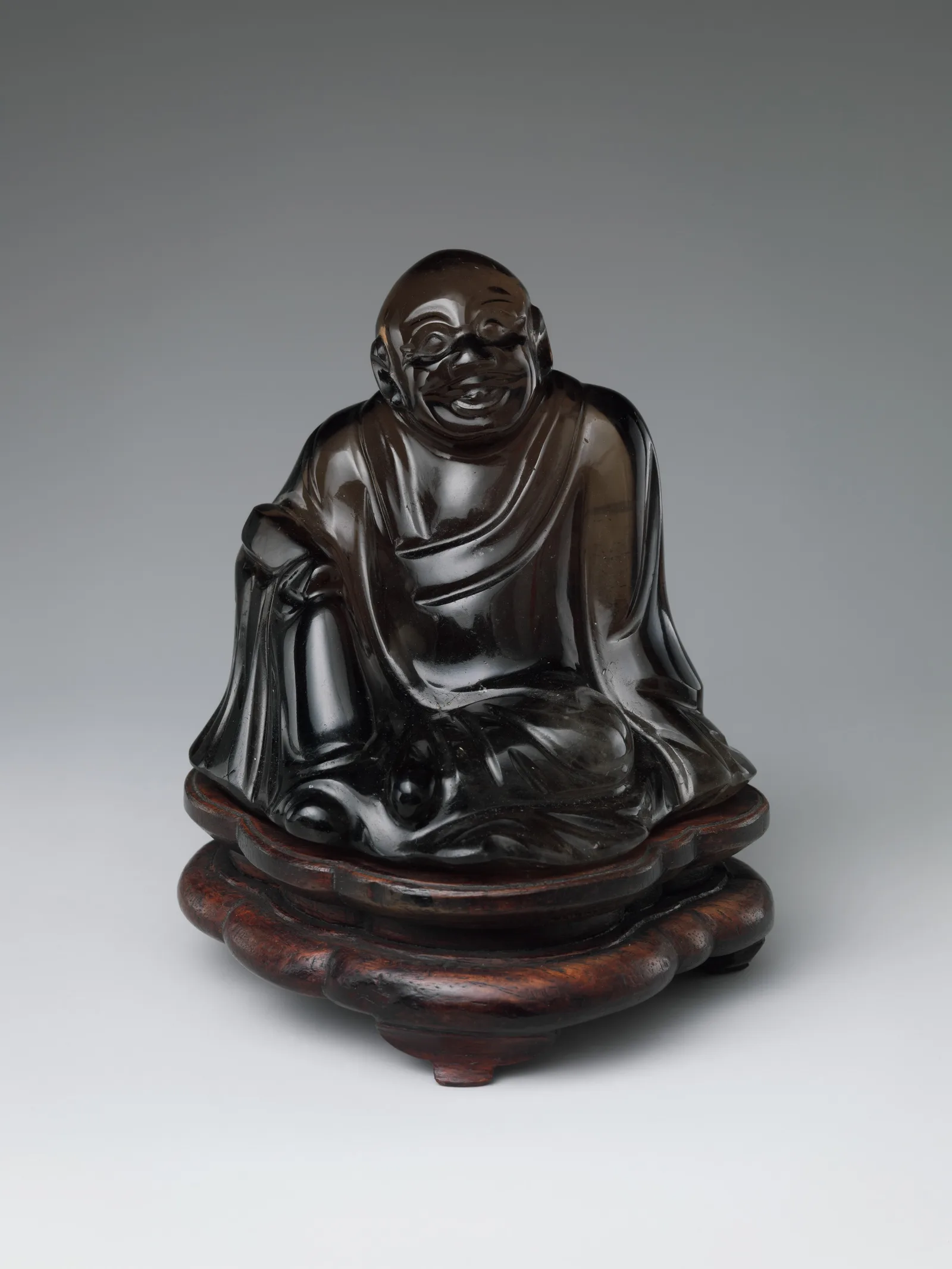
That round-faced, smiling character with the enormous belly, the one placed at restaurant entrances and tucked into wallets for luck, is Budai. In China he is called Budai, in Japan Hotei, and he is one of the seven gods of fortune. By legend he was a wandering Buddhist monk of the tenth century, kind, fat, and forever laughing, who carried a cloth sack of gifts for children. After his death he came to be revered as an embodiment of contentment, generosity, and abundance.
How the image of Budai differs from the image of the Buddha
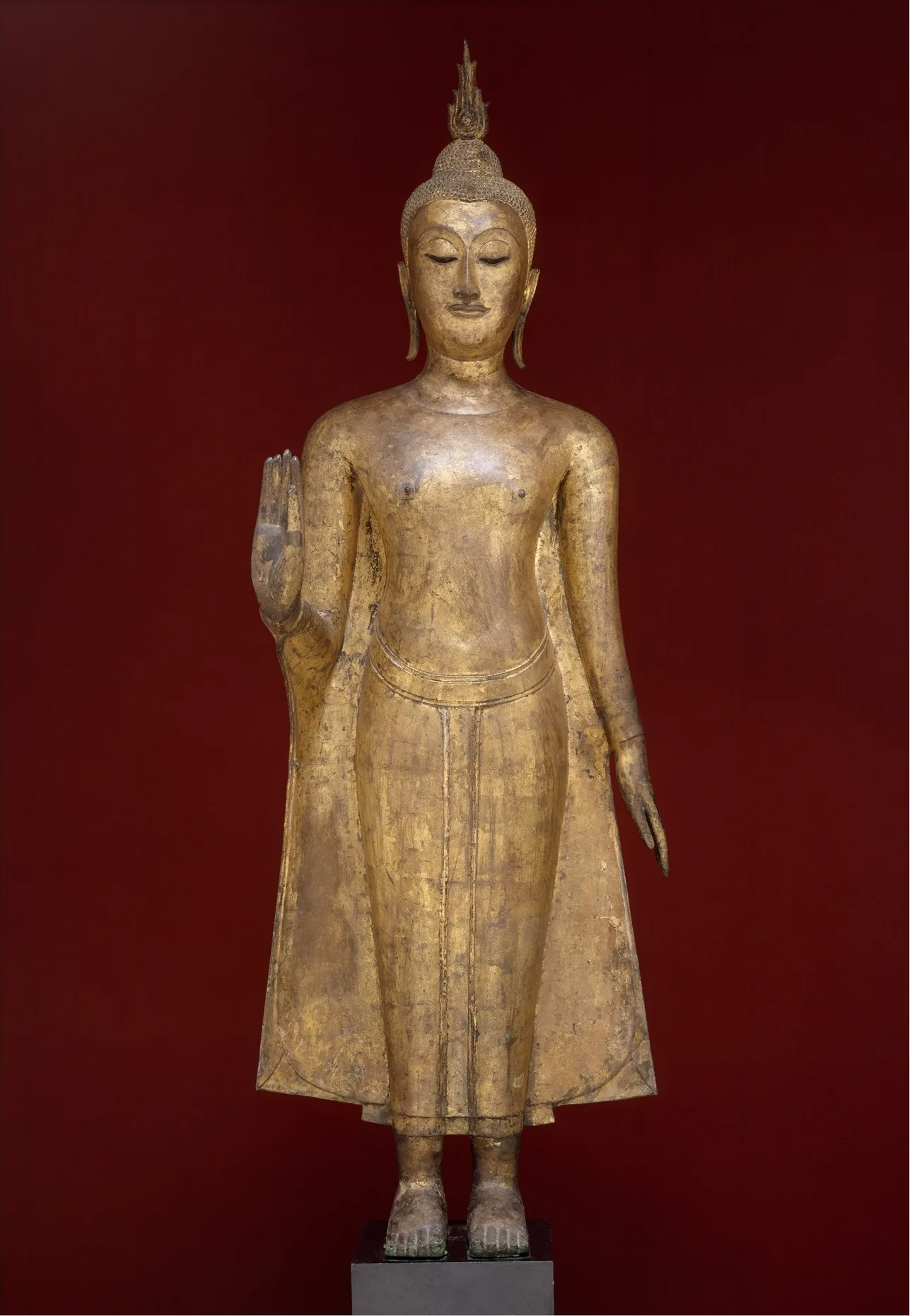
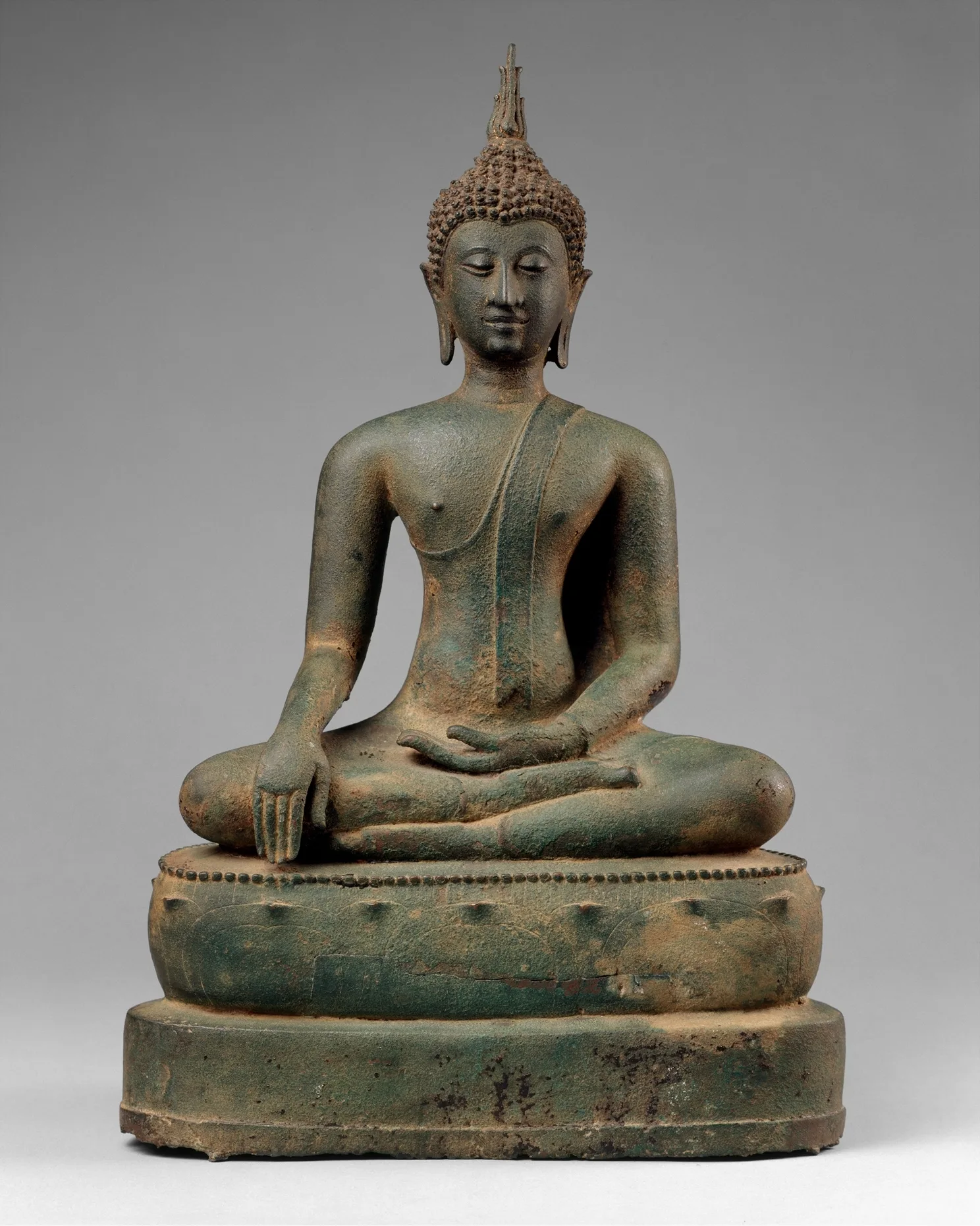
Telling them apart is easier than it seems. The Buddha (Siddhartha) is shown slender and calm, with half-closed eyes, in a meditation pose or with a particular hand gesture, often with a bump on the crown of the head (the ushnisha) and elongated earlobes. Budai, by contrast, is fat, laughing, with a bare belly, sometimes with a sack or prayer beads, seated or standing in a loose, joyful pose. The Buddha is about inner stillness; Budai is about earthly well-being and laughter.
Where the confusion came from
When Buddhist motifs flooded the Western souvenir market, the difference was smoothed over for the sake of simplicity. The "Laughing Buddha" sold as a luck charm, and within a couple of generations the pot-bellied Budai became, in the popular mind, "the Buddha himself." There is nothing offensive about a Budai figure; he is a respected character of folk religion. But calling him the Buddha and assigning him the biography of Siddhartha is simply wrong. If what appeals to you is the idea of abundance and ease, look for Budai and call things by their proper names.
Why people rub Budai's belly for luck
A whole little ritual surrounds the Budai figure: people rub his round belly while making a wish for money or luck. The belief says the belly is a vessel of contentment and good energy, and a touch "shares" some of it with the person. On Budai pendants and key fobs the belly is often polished to a shine by exactly this kind of touching. This is everyday folk magic, far removed from the strict teaching of the Buddha, and it is best treated as a warm tradition rather than as part of Buddhist philosophy.
Other figures mistaken for the Buddha
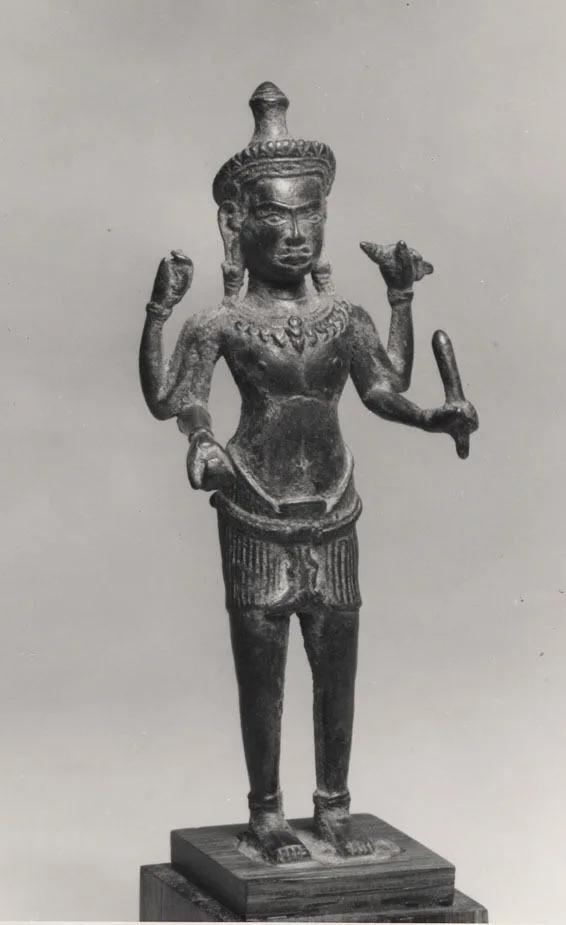
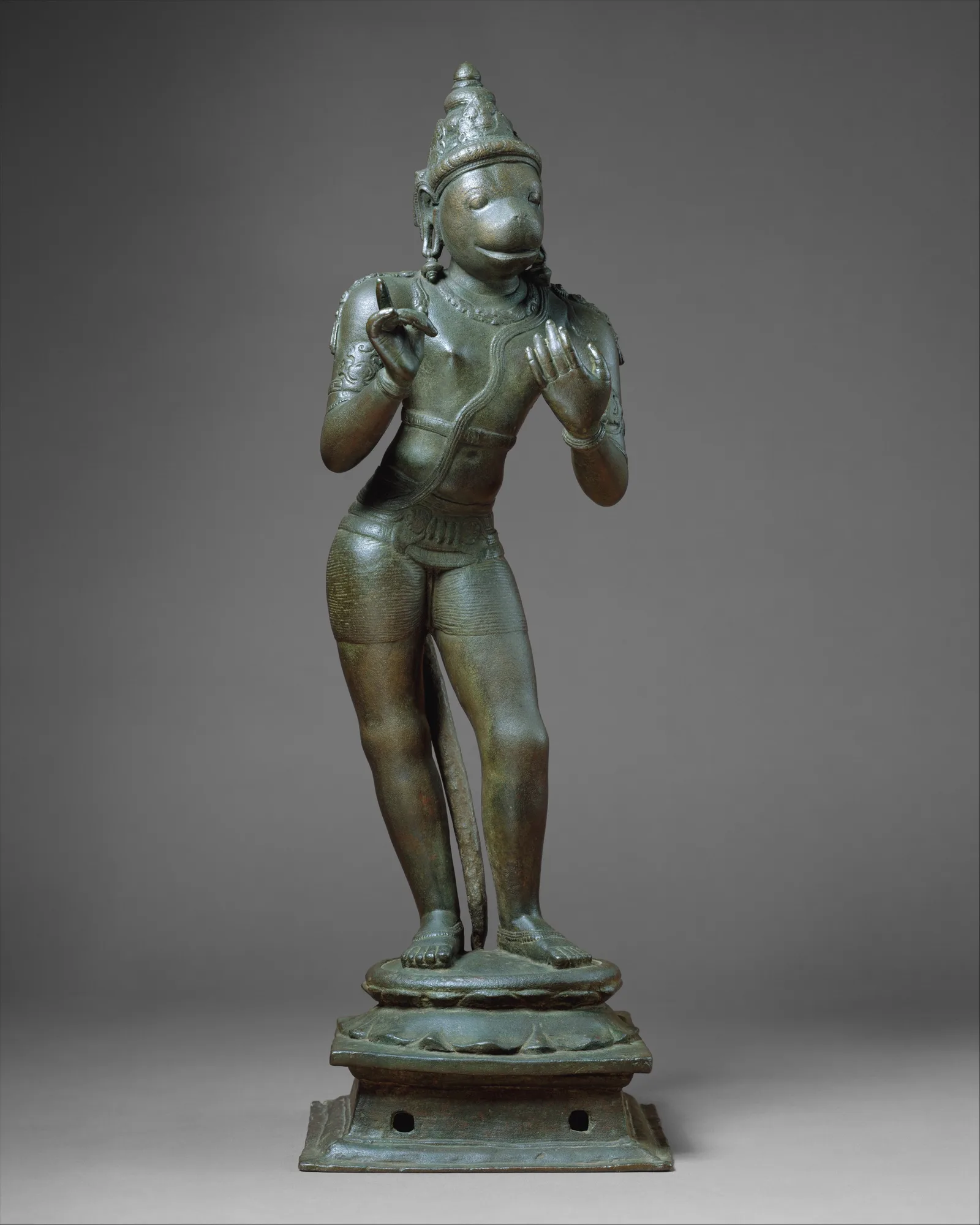
Budai is not the only one wrongly called the Buddha. In the West the bodhisattva of compassion is often taken for the Buddha: in China this is Guanyin, in Japan Kannon, a graceful figure who grants mercy. This is not Buddha-Siddhartha but a separate revered image of the Mahayana tradition. In the same way, the many-armed Tibetan deities and fierce protectors (dharmapalas) have no direct connection to the figure of the historical Buddha. When a seller calls any Eastern figure a "Buddha," it is worth asking exactly who is in front of you.
The Buddha rides at the heart, never at the belt buckle. Keep him high, and don't argue.
How to Wear the Image of the Buddha
Over years on shoots the Buddha pendant has passed through dozens of looks with me, and this motif has its own rules. I keep them simple and share what actually works.
What do I wear the Buddha with every day? For daily wear I recommend a silver or wooden Buddha on a thin cord or chain over a plain tee, a linen shirt or a calm-toned knit. I keep the pendant high, at the heart, rather than on a long chain down to the waist: it looks composed and stays respectful to the image itself. A light top lifts the silver, a dark one turns the figure into the accent.
Silver or gold? I look at your skin undertone. For cool skin I suggest blackened silver: it holds the fine detail of the face and robes and reads sharp and modern. For warm skin I choose gold, which echoes the gilded temple statues and adds weight. If you lean toward simplicity, I go for wood or dark stone, where the zen minimalism wins.
Which neckline? Under a high or closed neckline I recommend a shorter pendant so the Buddha rests at the collarbone. Under an open V I suggest a larger figure that holds the centre and does not get lost. I choose earrings or a single bead when I want a quiet detail rather than an accent right on the chest.
How do I build a going-out look? For a special occasion I choose a gold Buddha on smooth fabric in a deep tone: wine, graphite, dark green. One pendant on a clean chain always beats one squeezed between five. If you want layers, give the Buddha its own length and add a neutral thin chain beside it, with no second large symbol.
Who does the Buddha actually suit? Anyone who likes a piece with meaning and calm rather than a shiny pile. The advice is the same for everyone: keep the image high and clean, wear it mindfully and without mockery, and the pendant reads as a quiet anchor, not stray decor. Belief is not required here; the attitude is what matters.
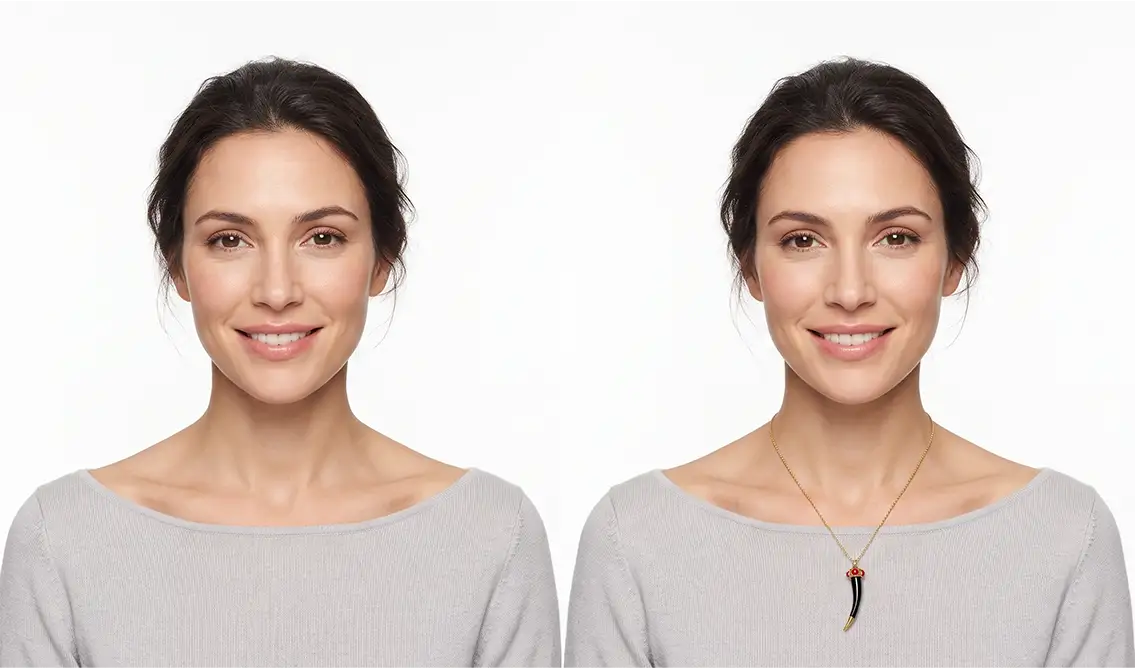
Turn on your camera, pick earrings, a pendant or a ring, and see the piece on yourself in real time.
Switch items in one tap.
Everything runs in your browser: no photo or video is ever uploaded.
Customer reviews
Zevira is a real jewellery shop. Genuine payments, deliveries and customer thank-yous.
🥰🥰🥰 gracias
Ok, ¡gracias! 🙂
Poses and Gestures: How to Read the Image of the Buddha
Every canonical depiction of the Buddha is an encoded message, not a random figurine. The pose of the body (asana) and the position of the hands (mudra) tell you which moment or which quality is before you. In a jewellery image it is most often the gesture that reads, and it is worth understanding before you buy rather than after. The mudras are a whole language: Buddhist art counts dozens of them, and every finger, every tilt of the palm carries meaning. Five or six of them have taken hold in jewellery, and it helps to be able to tell them apart.
Dhyana mudra: the gesture of meditation
Both hands rest on the knees, one on top of the other with palms turned up, the thumbs lightly touching to form an oval. This is the gesture of deep concentration and inner peace, the very one in which the Buddha sat under the bodhi tree. In jewellery it is the most common and the most "peaceful" image, chosen for the idea of a quiet mind and composure.
Bhumisparsha mudra: touching the earth
The right hand hangs over the knee, fingers reaching toward the ground, while the left rests palm up. This is "calling the earth to witness": by legend, in the moment before enlightenment the Buddha was tempted by the demon Mara, and the Buddha touched the earth, calling on it to confirm his right to awaken. The gesture stands for steadfastness and victory over doubt. A strong choice for anyone drawn to the idea of resilience.
Abhaya mudra: the gesture of fearlessness
The right hand is raised, palm open outward, like a sign for "stop" or "do not be afraid." This is a gesture of protection, calm, and the absence of fear, a sign that there is nothing to dread. It appears less often in jewellery, but its meaning is very warm: people wear it as a small reminder not to panic.
Varada mudra: the gesture of giving
The open palm faces down and outward, fingers pointing low. This is a gesture of generosity, compassion, and the granting of wishes. It is often paired with the abhaya mudra across both hands at once: one hand gives, the other reassures.
Dharmachakra mudra: turning the wheel of the teaching
Both hands are held at the chest, the thumbs and index fingers forming rings, as though turning an invisible wheel. This gesture refers to the Buddha's first sermon, when he "set the wheel of dharma in motion," that is, began to teach. An image for those drawn to the idea of knowledge and the passing on of wisdom.
Body poses: seated, standing, reclining
The seated Buddha (in the lotus pose) is concentration and teaching. The standing Buddha is usually linked with movement, blessing, and care for the world. The reclining Buddha, propped on the right arm, depicts the parinirvana, the passing from life and final liberation; this is the most solemn and the rarest image in jewellery, and it deserves to be treated with particular care.
The Buddha by day of the week
Thailand has a lovely tradition: each day of the week has its own pose of the Buddha, and a person chooses an image by the day of their birth. Those born on Monday are matched with a standing Buddha with raised palms (pacifying); Tuesday, a reclining Buddha; Wednesday, a Buddha with an alms bowl; Thursday, the meditating Buddha; Friday, a Buddha in contemplation with arms crossed over the chest; Saturday, a Buddha sheltered by the naga serpent; Sunday, a Buddha with hands folded before him. If this idea appeals to you, you can choose a pendant for your own day of birth and give the piece a personal meaning.
Eyes, smile, and proportions
Beyond the hands and the pose, the face of the canonical Buddha can also be read. Half-closed, lowered eyelids mean a gaze turned inward, toward the self, rather than out at the world. The barely perceptible smile, the so-called "archaic smile" of ancient sculpture, conveys serenity without emotion. The brow with a dot between the eyebrows (the urna) stands for the third eye of spiritual sight. Craftspeople try to preserve these details even in a tiny pendant, because without them the image loses its recognisable calm.
Upload a photo of your pet, someone you love, or an object. We'll build a 3D model and hand-cast it in pewter.


The Head of the Buddha as a Motif in Its Own Right
Why so often just the head
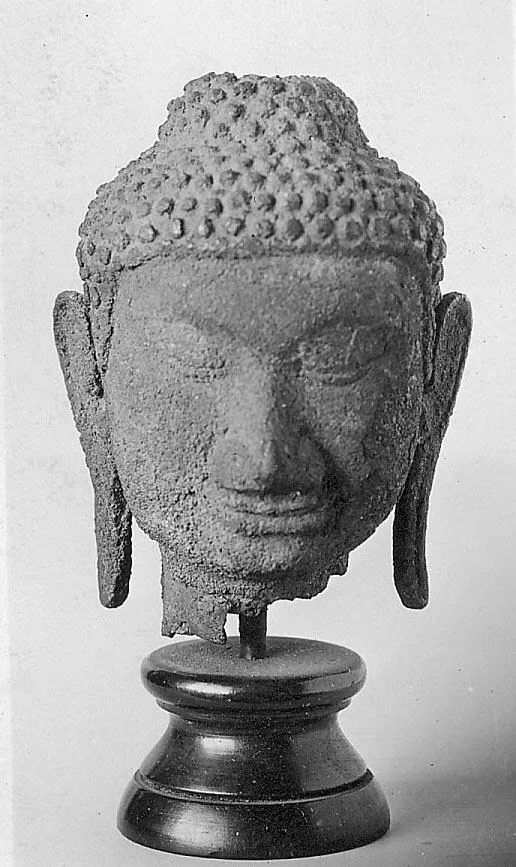
The head of the Buddha, without a body, has long lived a life of its own in design: pendants, beads, earrings, rings. The reason is both practical and aesthetic: a face with half-closed eyes and a faint smile is a complete image of peace that reads well even in miniature. Elongated earlobes, the bulge of the ushnisha at the crown, spiral curls of hair, all of it is recognisable and beautiful rendered in metal.
What is worth knowing about the origin of this motif
It is worth saying honestly: for some Buddhists, a separate head of the Buddha is a contentious image. In the historic temples of Southeast Asia, ruined statues were often stripped of their heads during wars and looting, and today a head of the Buddha apart from a body is, for many, associated with that loss. This is not a ban and not a reason to refuse a beautiful piece, but it is useful to know so that you wear the image consciously rather than as mere "fashionable decor."
A calm face as a universal sign
With all those caveats, it is precisely the face of the Buddha that has become, in design, a symbol of inner balance that any culture understands without words. The half-closed eyes mean a gaze turned in on the self, while the faint smile means a serenity that outer storms cannot disturb. Many people choose such a pendant specifically as a personal anchor of calm rather than as a religious object.



Schools and Images: Theravada, Mahayana, Zen
Theravada: closer to the source
Theravada, "the teaching of the elders," is widespread in Sri Lanka, Thailand, Myanmar, Laos, and Cambodia. It is the most conservative branch, focused on the figure of the historical Buddha and on the personal path to liberation through monastic discipline and meditation. The images here are restrained and classical: a slender Buddha in a simple monastic robe, without excess ornament. The Thai gilded statues with a pointed flame at the crown (a symbol of spiritual fire) grew out of exactly this tradition, and many recognisable "temple" pendants repeat the Thai canon.
Mahayana: many buddhas and bodhisattvas
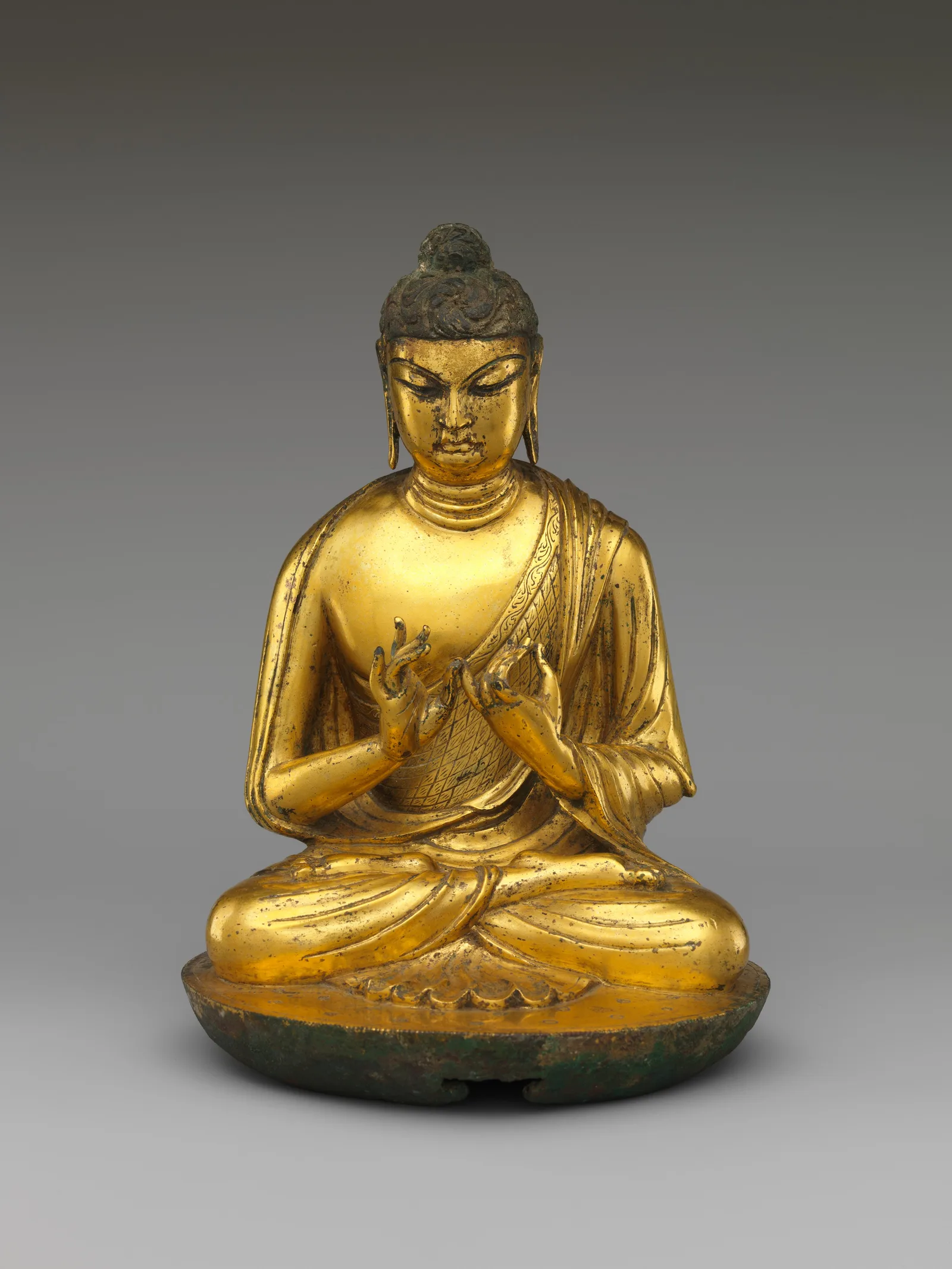
Mahayana, "the great vehicle," prevails in China, Japan, Korea, and Vietnam. Here the Buddha is not alone: images appear of many buddhas and bodhisattvas, beings who have set aside their own liberation in order to help others. From this comes a rich variety of figures, including compassionate images that, in the West, are sometimes also mistaken for the Buddha.
Zen: emptiness and simplicity
Zen (Chan in Chinese) is a branch of Mahayana that grew in China and flowered in Japan, with an emphasis on direct meditation and experience of the here and now, without extra words or rites. The Zen aesthetic is minimalism, a clean line, empty space. In jewelry, Zen influence shows in spare, almost geometric images of the Buddha and in a love of simple materials such as wood and dark stone. If you feel closer to the idea of balance as such, rather than to a particular figure, take a look at our breakdown of the yin and yang symbol, kindred to the Zen view of the world.
Tibetan Buddhism: colour and symbolism
In the Tibetan tradition (Vajrayana) the imagery is the richest of all: mandalas, mantras, many-armed deities, color, and metal. From this come the accompanying motifs that reach jewelry, the mantra "om mani padme hum," the eight auspicious symbols, mala beads. If this aesthetic appeals to you, look into our piece on the Om symbol, which often keeps company with the image of the Buddha.
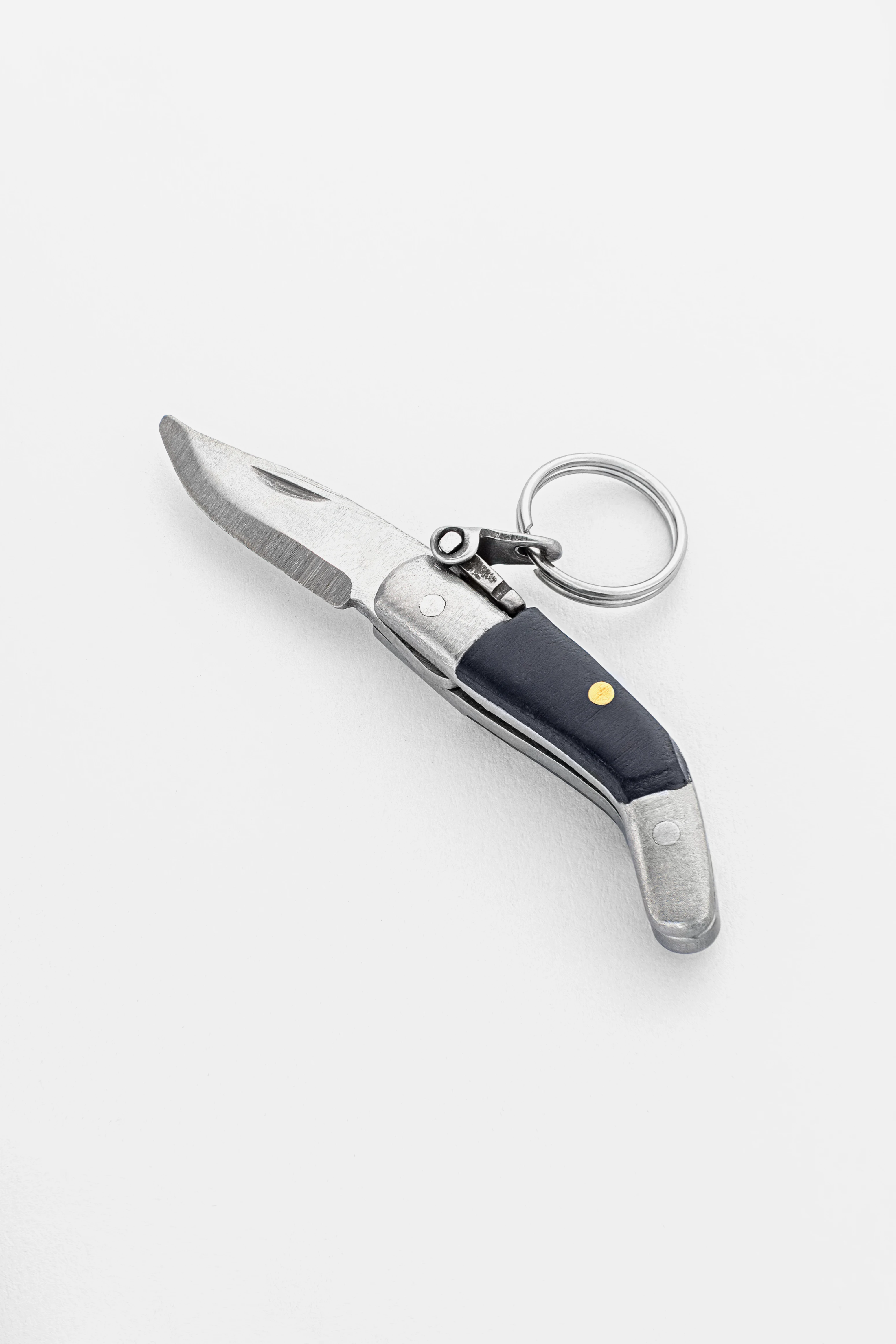
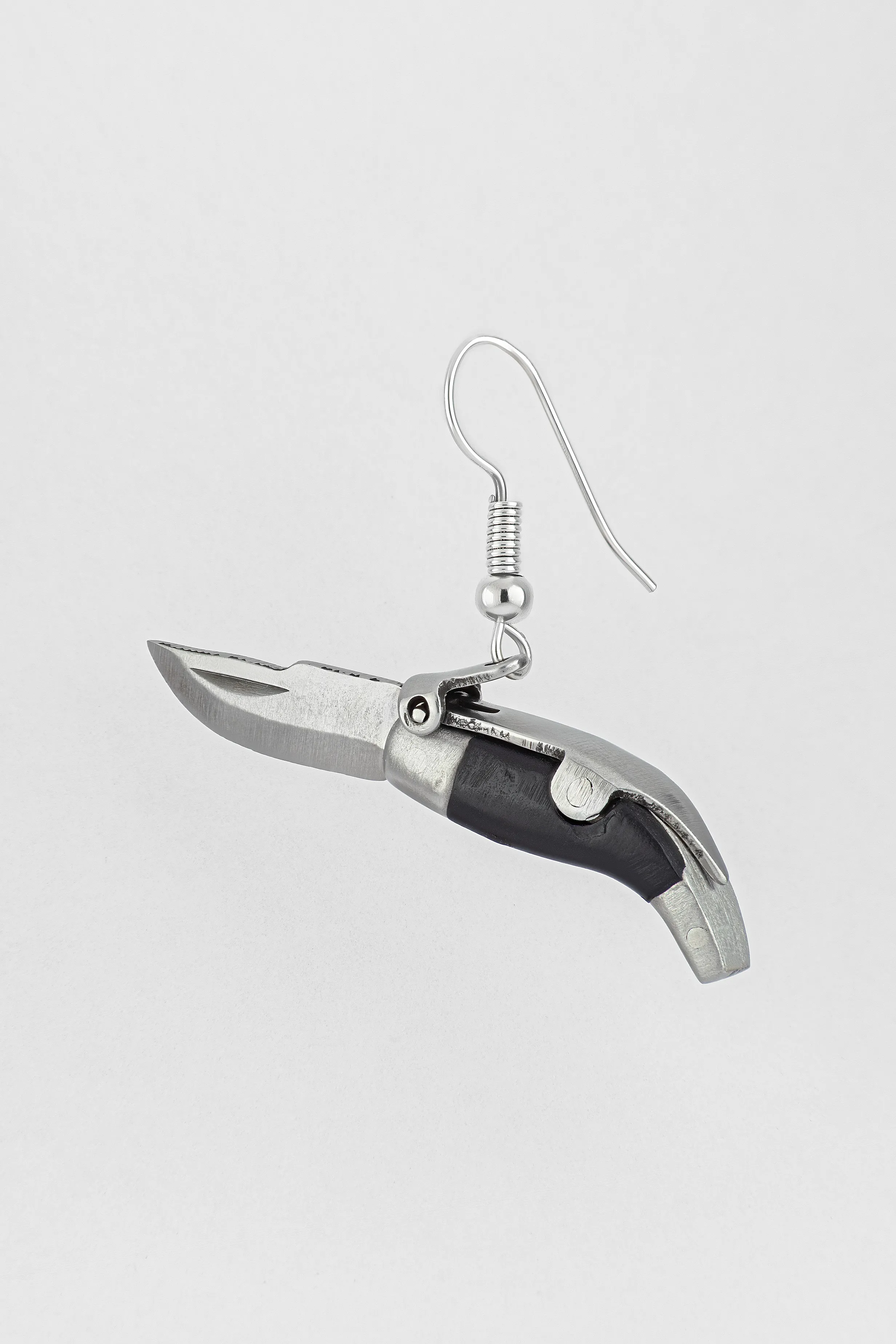
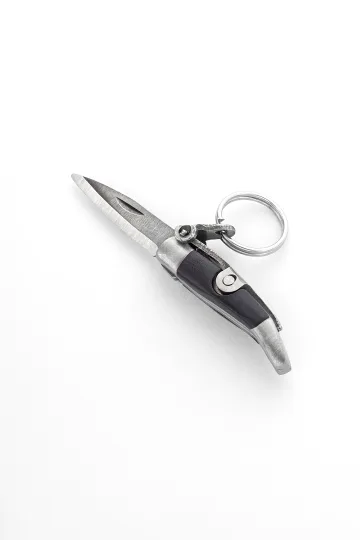
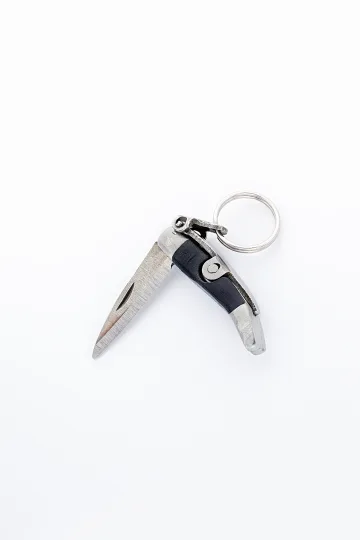
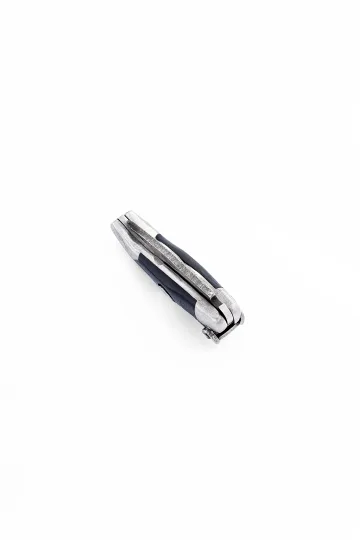
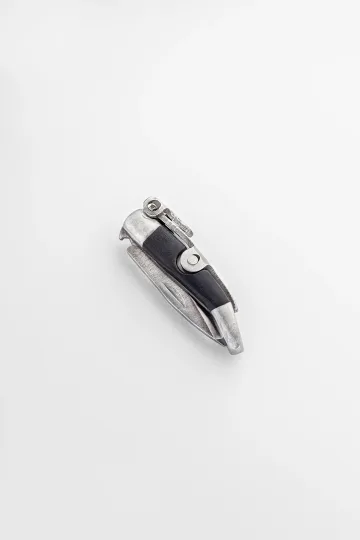
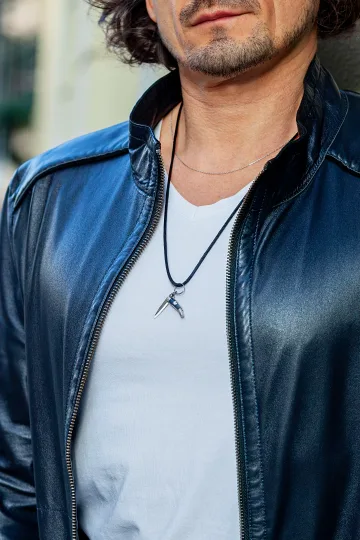
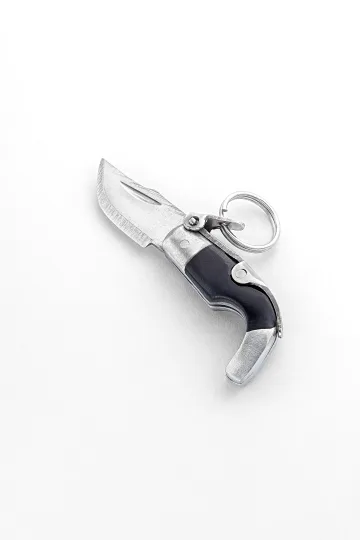
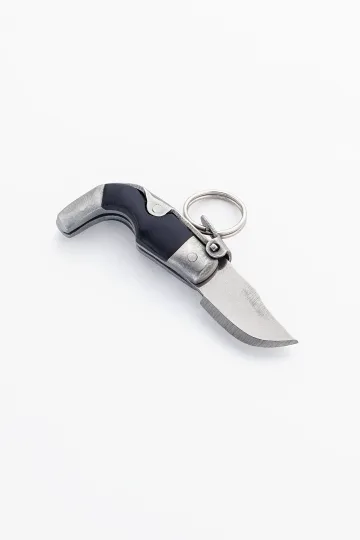
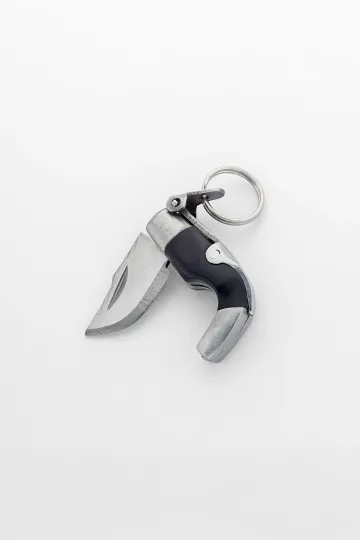
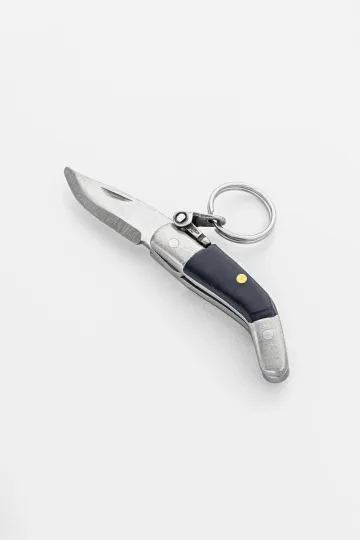
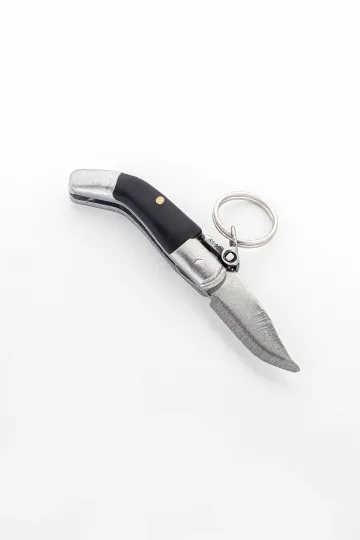
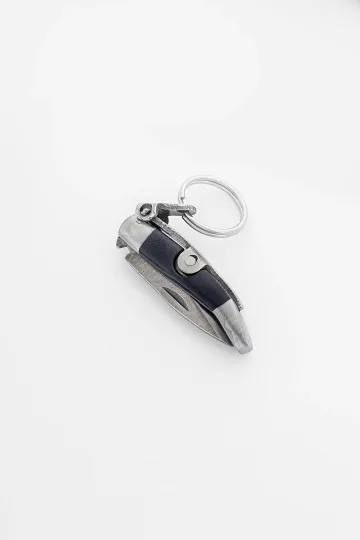
CAPAORA mini knife pendant
The 18th-century Spanish navaja in miniature: 40 mm of stainless steel, a real folding mechanism and a Palanquilla lock that clicks. An affordable gift to remember.
Authentic · Ships from Spain · 14-day returns
Materials: What Jewellery with the Buddha Is Made Of
Sterling silver 925
Silver is the most common choice for an image of the Buddha: it is cool, noble, and holds the fine detail of the face and the folds of the robe well. Oxidation in the recesses brings out the features and lends the figure depth and a "temple" patina. Silver is neutral in character and suits men and women alike. You can read more about hallmarks and care in our guide to sterling silver 925.
Gold
Gold adds warmth and solemnity to the image, echoing the gilded statues of the temples of Thailand and Myanmar. Yellow gold gives the most "canonical," sunlit look; white gold reads stricter and more contemporary. A gold Buddha is a choice for those who care about both the idea and the heft of the piece as something of value.
Wood
Wooden beads and carved Buddha pendants are the most "Zen" and warmest option. Sandalwood, rosewood, and ebony are prized for their texture, lightness, and connection to nature. Wood warms pleasantly against the body and pairs well with mala beads. There is one drawback: it fears water and calls for careful handling.
Bone and its ethical imitations
Historically figures were carved from bone and horn, but today real ivory is under a strict ban and must not be bought in any form. Modern makers use ethical imitations: bone china, pressed resin with a mineral filler, bakelite-like materials. They give that same warm milky tone without harm to animals. Always check the origin of the material with the seller.
Nephrite
Nephrite is a stone bound inseparably to the Buddhist East: in China it was valued above gold and held to be the stone of virtue and immortality. A green nephrite Buddha is a classic amulet that, by belief, is worn for life and never removed, in the conviction that it takes the blows of fate upon itself. There is a separate piece on the properties and types of the stone, our guide to nephrite.
Onyx and dark stones
Black onyx, obsidian, and dark agate give a strict, graphic image of the Buddha, especially paired with silver. Dark stone reads as a symbol of grounding and protection, chosen by those drawn to a restrained, almost masculine aesthetic. The matte surface of the stone sets off the calm of the face well.
Bronze and brass: temple shine
The warm golden gleam of bronze and brass comes closest to the look of temple statues, which were cast from these alloys for centuries. A bronze Buddha looks weighty and "real," but keep in mind that brass darkens over time and may leave a greenish mark on the skin. This is not a defect but a natural reaction of the metal, easily removed with cleaning. For anyone who loves a living patina and the touch of age, bronze is ideal.
Combining materials
The most expressive pieces often join materials: a silver face of the Buddha on a strand of wooden mala beads, a nephrite figure in a silver setting, a gold image on a cord of natural leather. The contrast of warm and cool, hard and soft, adds depth to a piece. The main rule of taste here is not to overload: the image of the Buddha is self-sufficient and works best in a calm, understated frame.
Symbols That Travel Alongside the Buddha
The lotus: purity out of the mud
The lotus grows from the mud yet opens flawlessly pure above the water, and so in Buddhism it is the foremost symbol of enlightenment: the mind can rise above suffering as the flower rises above the marsh. The Buddha is often shown seated on a lotus throne, and the flower itself appears in jewelry on its own too. If this image speaks to you, there is a detailed breakdown of the lotus symbol.
The tree and the bodhi leaf
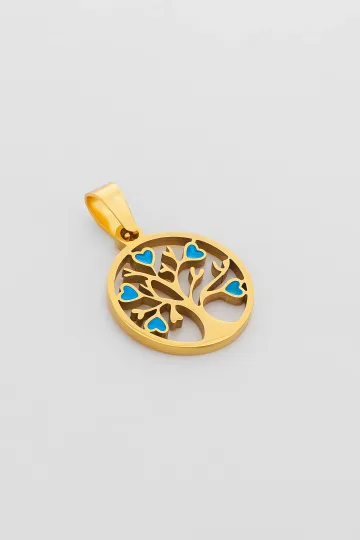
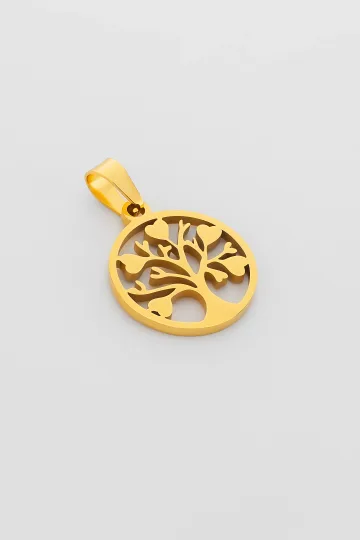
The heart-shaped fig leaf, beneath which the Buddha reached awakening, became a sign of enlightenment in its own right. A delicate openwork bodhi-leaf pendant is a subtle alternative to a Buddha figure for anyone who wants a nod to the teaching without a direct depiction of the sacred.
The dharmachakra: the wheel of the teaching
The eight-spoked wheel, the dharmachakra, stands for the eightfold path and for the teaching of the Buddha itself, set in motion. It is one of the oldest Buddhist signs, spare and strong, and it looks good in metal as a pendant or charm.
The mala: beads of awareness
A Buddhist mala is a strand of 108 beads, used to count mantras and breaths. Today a mala is worn as a bracelet, as a long necklace, and as an aid to meditation. It is the most practical "Buddhist" piece of jewellery: it works, not only adorns. The wearer counts through the beads one at a time, turning a steady rhythm into a habit of attention.
The Buddha among other amulets
The image of the Buddha often sits beside the protective symbolism of various cultures, from the eye to the hand of Fatima. If the theme of protective signs in general and the logic of a "wearable amulet" interest you, take a look at our large guide to amulets and talismans.
Leave your email, we'll send your discount code. No spam, unsubscribe anytime.
The code arrives by email, valid on your first order.
Who a Buddha Piece Suits
Those who seek calm
The main audience for an image of the Buddha is people to whom the idea of inner stillness matters: those who practice meditation, yoga, or mindfulness, or who simply want to carry a reminder not to fuss. The half-closed eyes and the smile of the figure work as a small visual anchor amid the rush of the city. Such a piece is often chosen in a time of change, when everything outside is churning and inside there is a longing for something to lean on.
For men and women
The image of the Buddha is neutral in character and suits men and women equally; only the presentation changes. A version for women is more often delicate: a small pendant on a fine chain, nephrite or silver with light oxidation, a mala bracelet of small beads. A version for men is usually larger and stricter: a massive pendant of dark stone or bronze on a leather cord, prayer beads of wood with large grains. The symbol itself does not divide people by gender, but the form of the piece lets you fit it to any style.
As a gift
A pendant or bracelet with the Buddha is a tactful gift for someone at a crossroads: after stress, a move, or burnout, at the start of a new stage. It matters to know the tastes and views of the person you are giving it to: for a practising Buddhist this will be a deep gesture, for a secular person a beautiful reminder of peace. Pressing the symbolism on someone indifferent to it is not a good idea.
Budai as an amulet of abundance
If a person feels closer to the idea of luck, plenty, and ease than to asceticism, it is more honest to give a figure of Budai (the laughing monk) rather than the Buddha, and to name it as such. In folk tradition Budai is kept at home and worn as a small amulet of well-being, his belly rubbed "for luck." It is a warm, in the strict sense non-religious symbol of joy.
Feng shui and a place in the home
In feng shui practice a figure of Budai (again, not Buddha-Siddhartha) is placed in the wealth zone or facing the entrance, so that he "greets" the incoming energy, and always above floor level, on a shelf or table rather than on the ground. This is the same logic of height and reverence as with jewellery: the image is kept raised and in a clean, bright spot.
Different Budais for different wishes
In folk tradition Budai has "specialties" by what he holds in his hands. A Budai with a gold ingot or coins is about money and wealth. With prayer beads, about wisdom and calm. With a fan, about clearing away cares and troubles. With a bottle gourd, about health and long life. With a sack and a staff, about protection on the road. When you choose a figure or a pendant, pay attention to the attribute in the hands: it hints at which kind of well-being the image is tuned to.
Caring for a Buddha Piece
Silver and gold
A silver Buddha is cleaned with a soft metal cloth, while the oxidised recesses that create the "temple" look are best not rubbed hard, so as not to wear away the patina. Gold needs only wiping with a soft cloth and occasional washing in warm water with a drop of mild soap. Take the piece off before a shower, a pool, or sport: chlorine and salt water speed up the tarnishing of silver, while sweat and cosmetics settle into the fine features of the face. If the silver has dulled badly all the same, it is safer to give the piece to a jeweller for cleaning than to scrub the figure with harsh products and wear down the relief along with it.
Wood and bone
Protect a wooden or "bone" Buddha from water and direct sun: wood cracks from damp and fades in the sun. Wipe it with a dry soft cloth, and now and then you can lightly oil the wood with a drop of mineral oil so it does not dry out. Do not leave such pieces in the bathroom.
Nephrite and stones
Nephrite and onyx are washed in cool water and wiped dry, avoiding household chemicals and ultrasonic baths. The stone likes contact with skin: it is said that with constant wear nephrite only deepens in colour. Take stone pendants off before heavy physical work so as not to chip them.
Storage by the rule of height
The same logic of reverence works in the jewellery box too: a Buddha piece is kept apart from footwear and anything tied to the feet, in a clean upper compartment. This is both about respect and about preservation: a soft pouch will protect the figure from scratches.
Facts That Surprise
Here is the least obvious part, the kind that shifts how you see a familiar image.
The Buddha never allowed himself to be depicted. For the first five centuries of Buddhism there were no statues of the Buddha at all: he was marked by symbols, an empty throne, a footprint, a wheel, or the bodhi tree. Human figures appeared only around the turn of the era.
The curls on the Buddha's head are snails. By legend, when the Buddha meditated under the blazing sun, snails crept up and covered his head to shield it from the heat, and stayed. That is why the canonical curls of hair are coiled exactly like shells rather than ordinary ringlets, and in fine statues they are carved one by one.
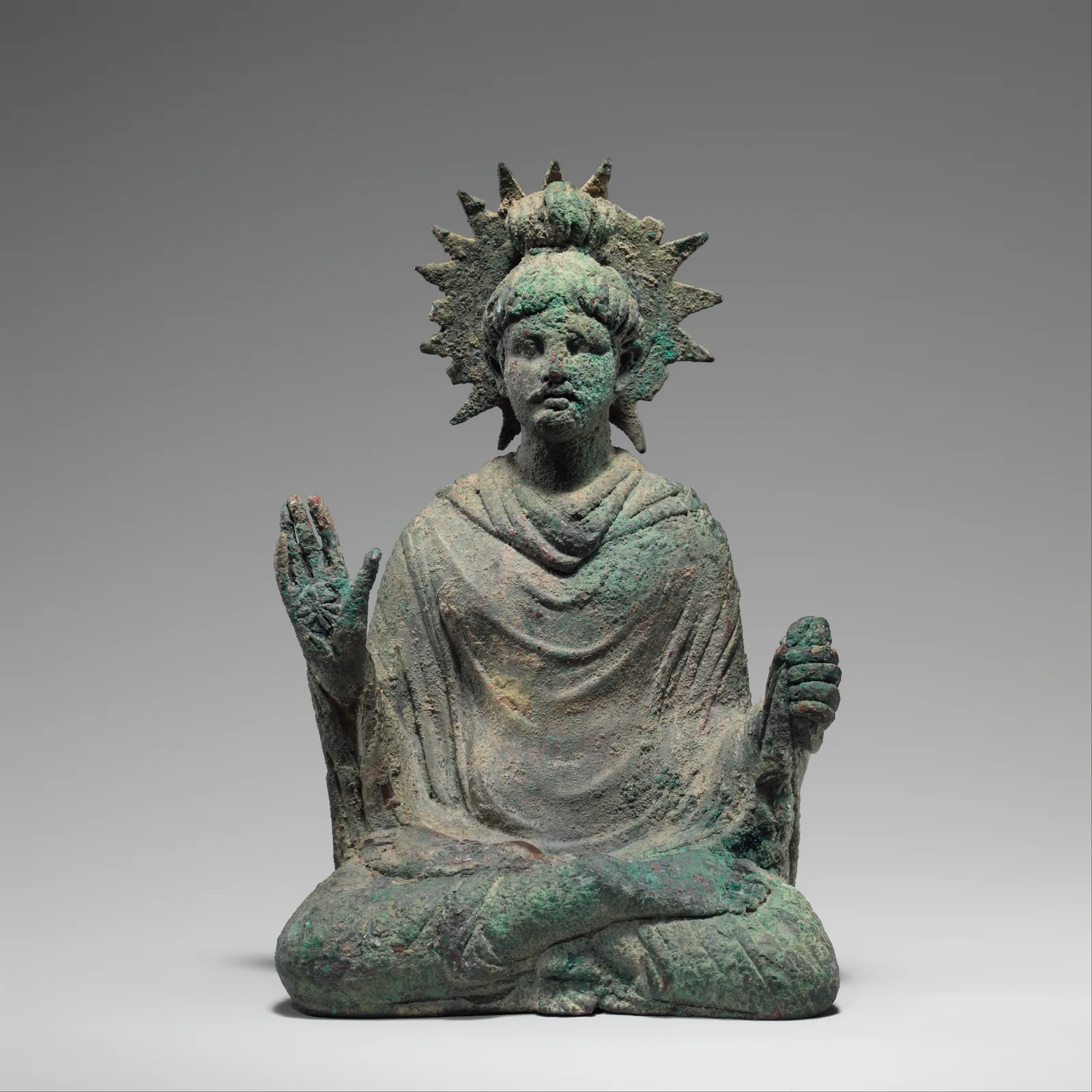
Greco-Buddhist art gave the Buddha a "European" face. The earliest human images of the Buddha appeared in Gandhara, at the meeting of Indian and Hellenistic cultures after the campaigns of Alexander the Great. That is why the oldest figures have facial features and folds of robe recalling the ancient statues of Apollo.
The bulge at the crown is not a hair bun. This bump, the ushnisha, signifies the expanded consciousness and higher knowledge of the enlightened one, and not a hairstyle, as people sometimes think.
The long earlobes are a memory of luxury. They were stretched by the heavy gold earrings that prince Siddhartha wore in the palace. The elongated lobes on a figure are a reminder: he willingly gave up his wealth.
The largest statue in the world was, for a long time, Buddhist. Giant Buddhas were carved into cliffs from Afghanistan to China, and reclining figures stretch for tens of metres. The scale underscored not the greatness of the man but the greatness of the teaching.
Budai (the laughing "Buddha") is, in China, sometimes considered the future Buddha. He is identified with Maitreya, the buddha of an age to come, who will arrive when the teaching of the present Buddha has been forgotten. So the cheerful fat man has a serious side as well.
"Om mani padme hum" is not translated literally. This best-known Buddhist mantra is usually rendered as "oh, the jewel in the lotus flower," but its meaning lies more in compassion and awakening than in the literal words.
Send a friend a discount code, they save on their first order.
Frequently Asked Questions
Can I wear a Buddha if I am not a Buddhist?
Yes. Buddhism does not require conversion and does not close its symbolism off from outsiders. A person of any views may wear the image of the Buddha as a reminder of calm and kindness. The one thing that matters: wear it consciously and without mockery, understanding that for someone it is a sacred presence.
Is the fat laughing Buddha the same Buddha?
No. That is Budai (in Japan, Hotei), a Chinese monk and deity of abundance, one of the seven gods of fortune. The historical Buddha, Siddhartha Gautama, is shown slender and calm. These are two different characters whom popular culture has fused into one image.
Where should a Buddha pendant be worn?
On the neck, so that the image sits at the heart or above. By Buddhist culture the head and sacred objects are kept high, while things tied to the feet and footwear are considered low. So a pendant or earrings are fitting, while a Buddha on footwear or a belt many would find disrespectful.
Is it true that the head of the Buddha must not be worn on its own?
There is no outright ban, but for some of the faithful a separate head of the Buddha is associated with statues stripped of their heads in war. This is not a reason to give up a beautiful piece, but it is a reason to wear it consciously and respectfully rather than as random decor.
Which gesture of the Buddha should I choose?
It depends on what speaks to you. The dhyana mudra (hands on the knees, an oval of the thumbs) is peace and meditation. The bhumisparsha (a hand to the earth) is steadfastness and resolve. The abhaya (a raised palm) is fearlessness and protection. All of them are peaceful, so choose by meaning rather than by look alone.
Which material is best?
Silver for fine detail and a neutral character, gold for warmth and heft, wood for a warm Zen aesthetic, nephrite as a classic Eastern amulet, onyx for a strict graphic image. The main thing: avoid real ivory, which is banned, and take ethical imitations instead.
Can a Buddha piece be given as a gift?
It can, if you know the person's tastes. For a practitioner it is a deep gesture; for a secular person, a beautiful reminder of peace. It is best not to give the symbolism to someone indifferent to it or inclined to treat it with irony. If a person feels closer to the idea of luck and abundance, it is more honest to give a Budai figure and to name it as such.
Buying it as a gift? Each one arrives ready to give.
 A branded Zevira box and a little card come with every order.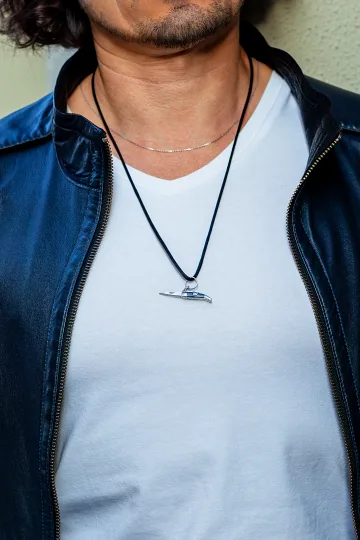




A Quiet Anchor amid the Noise
The image of the Buddha is not about a fashion for things "Eastern" and not about magic. It is about a very simple and very human idea: peace is sought within, not without. The slender figure with half-closed eyes reminds us of this without words, and once you know the difference between the Buddha and Budai, between the gesture of meditation and the gesture of fearlessness, you wear not a chance souvenir but a conscious sign. Respect for another's sacred thing takes nothing from your style; on the contrary, it makes the jewellery deeper.
Silver, gold, symbols of calm and protection, images of the East and amulets for every day.
Wear the symbol, don't just read about it. These are in stock:
About Zevira
Zevira is jewellery with history and meaning: sterling silver 925, gold, symbols of different cultures and amulets worn not for fashion but as a quiet reminder of what matters. We make pieces in which form and meaning coincide, and we tell you honestly what stands behind every symbol.