Vermeil: gold over silver, not a marketing dusting of plating
In real vermeil the gold layer is at least 2.5 microns thick. Cheap plating can be as thin as 0.1 micron. That is a twenty-five-fold difference, and it decides whether you wear a piece for five years or rub it down to the base in a couple of months. On the display case both look equally golden. A year later the gap is obvious to the naked eye.
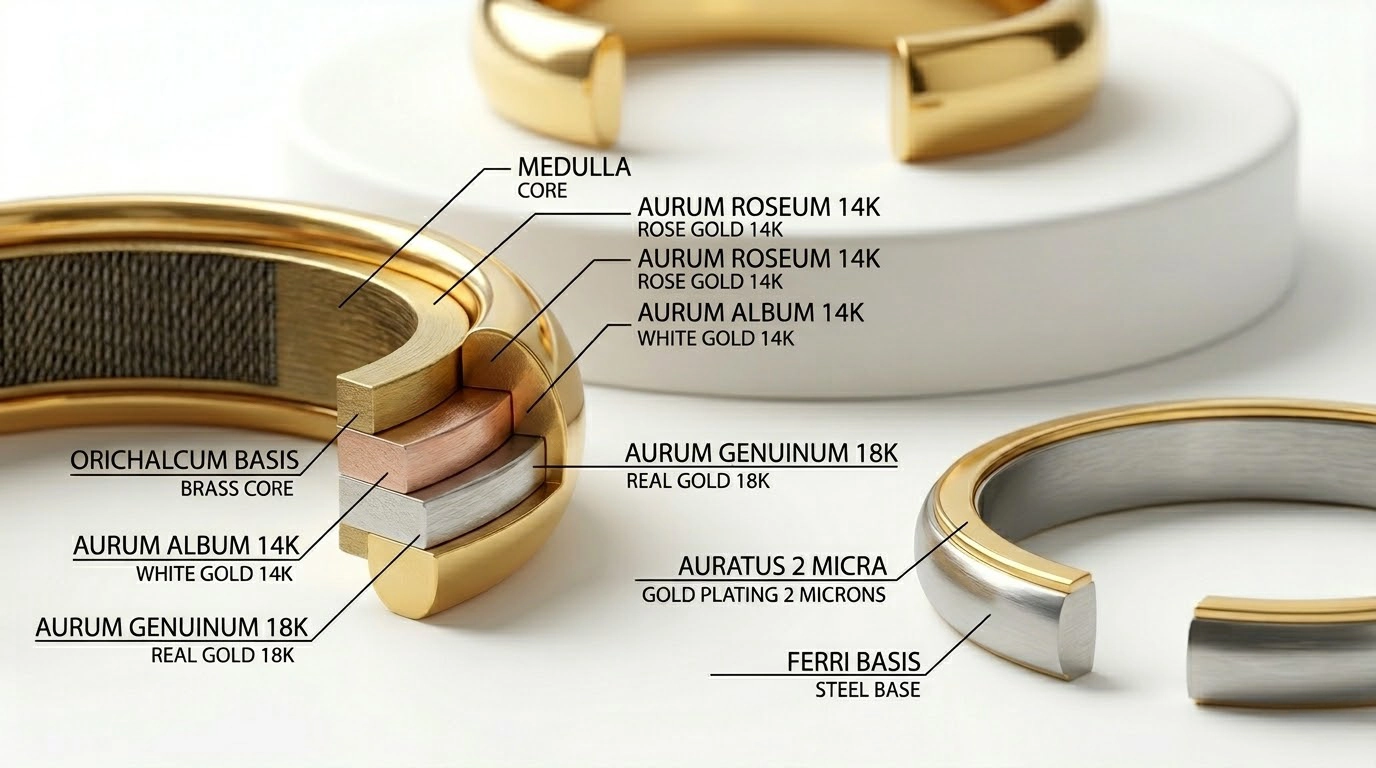
Vermeil (pronounced "ver-MAY") is gold plating applied over sterling silver, the 925 grade. Not over brass, not over steel, not over some nameless alloy, but over an actual precious metal. On top sits a layer of genuine gold of a defined thickness and purity. Underneath is silver, which carries value in its own right. The result is a piece that looks like gold, costs like silver, and stays honest all the way through.
The word sounds rare and fussy, but it describes something simple. Below we will sort out how vermeil differs from ordinary plating, from gold-filled, and from solid gold, how long it lasts, how to care for it, why people call it honest gold, and how to tell real vermeil from a fake right there in the shop.
What vermeil is: gold over sterling silver 925
A definition with no fog
Vermeil is sterling silver 925 covered with a layer of gold by electroplating. The key word here is not "gold" but "silver." The base is precious, not cheap. Most people hear "plated" and picture a hollow brass shell wearing a thin golden film. Vermeil is built the other way around: under the gold sits full sterling silver, the same metal used for standalone jewellery and silverware.
That gives you double value. On the outside, the golden colour and shine you actually want. On the inside, a metal with its own worth and reputation. Even when the gold wears away over time, what shows through is not a bare alloy of murky origin but silver you can keep wearing or have re-gilded.
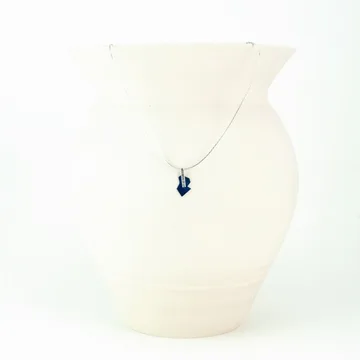
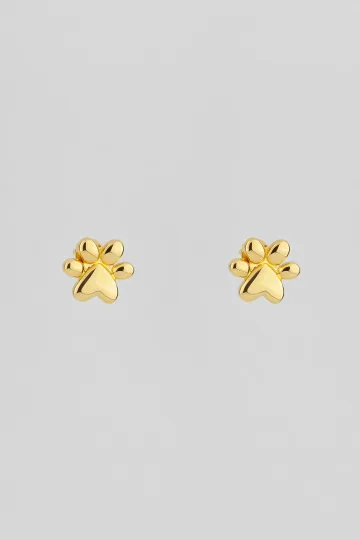
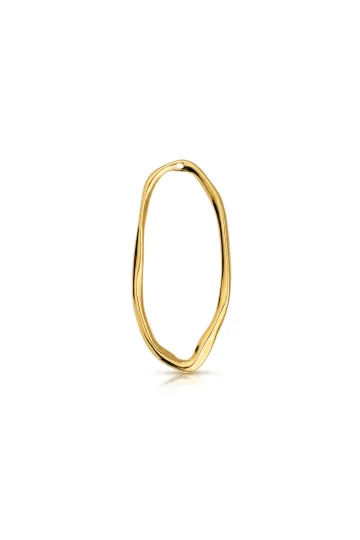
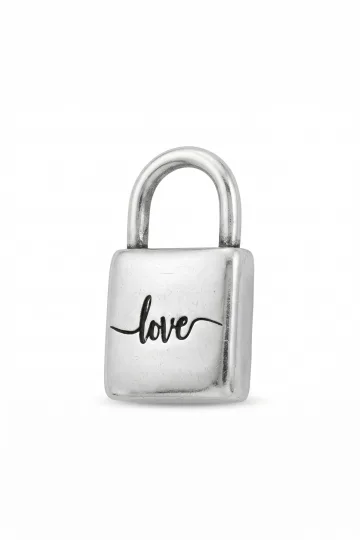
Wear the symbol, don't just read about it. These are in stock:

Why the base decides everything
A piece's durability and safety come from both the gold layer and what sits beneath it. Brass oxidises, darkens, leaves green marks on skin, and carries traces that many people are allergic to. When thin plating on brass wears off, that troublesome alloy is exposed, and the piece turns ugly to look at and unpleasant to touch almost overnight.
Sterling silver 925 behaves nothing like that. It is hypoallergenic for the overwhelming majority of people, releases no aggressive compounds, and is easy to bring back to life when it dulls. So vermeil is not "slightly better plating" but a different product altogether: a piece with a precious base temporarily dressed in gold.
Sterling silver 925 as the foundation
The number 925 means the alloy is 92.5 percent pure silver and 7.5 percent other metals, usually copper, which adds strength. Pure silver is too soft for daily wear, so the 925 standard became the worldwide compromise between nobility and durability. For a closer look at the alloy itself, it is worth reading the breakdown of what the 925 silver hallmark means.
This alloy is exactly what serves as the foundation for vermeil. The gold sits on silver, not on steel or brass, and that is fixed in the standards: by definition, real vermeil cannot have a base metal underneath. If the base is not silver, it is no longer vermeil but ordinary plating, however prettily the price tag dresses it up.
The thickness standard: 2.5 microns and at least 10-karat gold
Where these numbers come from
For a piece to be called vermeil legally, it has to meet specific requirements rather than simply being "gold-plated silver." The American standard, which has become the de facto reference for the whole trade, lays out three conditions. A base of silver no lower than 925. Gold of at least 10 karats. A gold layer at least 2.5 microns thick.
All three have to be met at once. Silver without the right thickness of gold is just gold-plated silver, not vermeil. Thick gold on brass is thick plating, but again not vermeil. Only the combination of a precious base, sufficient purity, and sufficient thickness earns the word.
Why 2.5 microns matters
A micron is a thousandth of a millimetre, a size the eye cannot make out. Yet the thickness of the gold layer is precisely what decides how long a piece lives. The thin decorative plating on budget pieces runs 0.1 to 0.5 micron. It wears off in weeks of active wear. Vermeil's standard 2.5 microns is five to twenty times thicker and holds up for years.
Picture the gold layer as paint on a wall. One thin stroke shows through and flakes at the first touch. Several dense coats last for decades. Plating works the same way: thickness is a reserve of strength you cannot see but feel in how long the piece serves. Premium pieces are sometimes made thicker still, 3 to 5 microns, and then they last even longer.
Gold purity of 10 karats and up
The second condition is about the purity of the gold itself. Karat measures how much gold is in the coating: 10 karats is about 41.7 percent gold, 14 karats about 58.5 percent, 18 karats 75 percent. The higher the karat, the richer and warmer the golden colour and the more the coating resists dulling.
The minimum bar for vermeil is 10 karats, but quality makers more often use 14 or 18. This shapes the tone: low karat gives a paler, sometimes greenish gold, while high karat gives a deeper, more refined hue. So two pieces with the same layer thickness can look different if the gold purity differs.
What happens when the standard is ignored
The market is full of pieces sold as "gold silver" or "gold-plated silver" with no mention of thickness. Technically that can be honest: the silver really is gilded. But if the layer is 0.3 micron, wearing such a piece every day means seeing silver come through within a season. That is not vermeil, and its lifespan is an entirely different story.
So the smart question to a seller is not "is this plating or gold" but "what is the coating thickness and the gold purity." Real vermeil always has an answer to both. A piece with no answer is most likely ordinary decorative plating on silver, or even on an alloy.
Vermeil belongs on bare skin under warm light, never in the chlorine. Going for a swim? Take it off, hero.
What to wear vermeil with, and how
Over years on set I have styled vermeil on bare skin for the evening and under a wool sweater on a Tuesday. Here is what actually works and helps the gold last.
What do I pair vermeil with every day? For daily wear I recommend earrings or a thin vermeil chain over a plain tee, a linen shirt, or knitwear. The warm golden tone lifts a light top and turns into an accent on a dark one. Put the piece on last, after cream and perfume, and the gold stays even far longer.
Can I mix vermeil with silver? Freely. Under the gold of vermeil sits sterling silver 925, so the metal gets along with both gold and silver without clashing. I suggest gathering a couple of thin pieces together: a gold chain and a silver locket side by side read as a choice, not an accident.
Which vermeil pieces keep their look longest? I choose earrings and pendants: they barely rub against anything and stay looking expensive for years. Rings and bracelets take all the contact of your hands, so I advise keeping them in rotation rather than wearing one every single day. The gold layer then wears down more slowly.
Does vermeil suit a cool skin undertone? It does, and that is its strength. Warm gold on cooler skin gives a soft contrast instead of fighting it. If you are unsure which shade of gold and which metal are yours at all, the comparison of white gold versus platinum, which costs more and how they differ is worth a read.
How do I build an evening look? For evening I choose an open neckline and smooth fabric in a rich colour: wine, emerald, black. Warm vermeil catches restaurant light and reads best on bare skin at the collarbone. One expressive piece always beats a fistful of pendants here.

Turn on your camera, pick earrings, a pendant or a ring, and see the piece on yourself in real time.
Switch items in one tap.
Everything runs in your browser: no photo or video is ever uploaded.
Vermeil versus plating, gold-filled, and solid gold
Ordinary plating: the base decides
The main difference between vermeil and ordinary plating is not in the gold but in the base. Ordinary plating, the kind found in mass-market costume jewellery, is applied to brass, copper, or steel. The gold layer is often thin, 0.1 to 1 micron, and governed by no standard at all. When it wears off, base metal comes to the surface, frequently with green discolouration and allergens.
Vermeil lays comparable or thicker gold onto sterling silver 925. Even after wear, a precious metal remains beneath. This is the difference between "a cheap thing pretending to be gold" and "a silver piece temporarily dressed in gold." The price reflects it: vermeil costs more than costume jewellery but a fraction of solid gold.
Gold-filled: a mechanical sandwich
Gold-filled is a separate technology. Here the gold layer is not deposited chemically but bonded to the base mechanically under pressure and heat. By standard, such a piece must contain at least 5 percent gold by total weight, and the layer comes out noticeably thicker than any electroplating, sometimes hundreds of times thicker than thin plating.
Because of that, gold-filled lasts a very long time, often decades, and barely wears in everyday use. But its base is usually brass, not silver. So you get an interesting trade-off: gold-filled beats vermeil on the thickness and lifespan of the gold, but loses on the nobility of the base. Vermeil wins on the base, gold-filled on the coating's longevity.
Solid gold: the benchmark and its price
Solid gold is a piece made of gold alloy all the way through, with no base. 14 or 18 karats across the full thickness. It does not wear in the usual sense, because there is nothing to wear away: colour and metal are the same on the surface and inside. It is the benchmark of durability and value, the kind passed down through generations.
The price is what you pay for that. Solid gold sits in the premium segment and costs several times, sometimes an order of magnitude, more than vermeil for a piece that looks similar. Vermeil exists precisely for those who want the golden look and a precious base but are not ready to pay for monolithic gold. If you want a deeper look at the economics of gold versus coatings, there is a breakdown of gold-plated versus solid gold, an honest comparison.
Where PVD fits in
PVD coating sometimes gets lumped in with the rest. It is another "golden look" technology, but built on an entirely different principle: metal atoms are deposited in a vacuum and embed into the surface rather than lying on top as a film. PVD is harder and does not peel, but it usually coats steel or titanium, not silver. The difference is covered in detail in the article on PVD coating and how it differs from plating.
It is easy to keep straight. Vermeil is gold on silver, electroplated, with a thickness and purity standard. Plating is gold on a cheap base with no standard. Gold-filled is thick rolled gold on brass. Solid gold is gold all the way through. PVD is a vacuum coating, usually on steel. They all give a golden colour, but they are five different things.
Customer reviews
Zevira is a real jewellery shop. Genuine payments, deliveries and customer thank-yous.
🥰🥰🥰 gracias
Ok, ¡gracias! 🙂
Why vermeil is honest, affordable gold
Honesty built into the construction
Vermeil appeals to people who dislike pretence in their jewellery. There is no deception at its core: the golden colour is real, the silver base is real, and nothing base metal is hidden inside. You pay for two precious metals, not for brass under golden paint. When the coating dulls over time, no unpleasant surprise is waiting underneath.
That is a rare combination. Costume jewellery looks expensive but is hollow inside. Solid gold is honest but dear. Vermeil sits in the middle and stays honest: a precious material, a golden look, a sensible price. For many people that is exactly the compromise they were looking for without knowing it had a name.
Accessible without losing face
For most people, solid gold is a special-occasion purchase. Vermeil lets you carry a golden look every day: earrings, a chain, a ring that look expensive but do not demand a premium budget. And you are not wearing costume jewellery, so you can honestly say you have gold-plated silver, not "gold-tone metal."
Affordability here is not about being cheap but about being sensible. Vermeil sits in the mid-range: more than costume jewellery, but several times less than solid gold in the same design. That makes gold jewellery part of an everyday wardrobe rather than a rare investment.
Wardrobe flexibility
Because vermeil does not break the bank, you can own it in several versions for different looks and not fret over every piece. Solid gold is usually bought one item at a time and guarded. Vermeil lets you build a set, switch pieces with your mood and your outfit, and refresh the collection without feeling you spent a fortune.
And at arm's length, vermeil and solid gold are nearly impossible to tell apart. The same warm shine, the same colour, the same depth, especially with 14 to 18 karat gold. The difference is in the base and the price, not in the impression it makes.
Upload a photo of your pet, someone you love, or an object. We'll build a 3D model and hand-cast it in pewter.



How long vermeil lasts and when it wears
The real lifespan of the coating
With gentle wear, quality vermeil with a layer of 2.5 microns or more serves several years with no visible wear. Earrings, which do not rub against surfaces, can look new for five or ten years. Rings wear fastest, because hands are always at work and the metal rubs against everything in reach.
No one can give an exact figure, because it all depends on how you wear it. One person goes three years in a vermeil ring with no marks, another wears it down in a year of hands-on work. The general rule: the less friction and contact with harsh conditions, the longer the gold layer lives.
Where it wears first
Gold does not leave evenly, but from the points of greatest friction. On rings, that is the inner side and the raised edges. On bracelets, the clasp and the links that rub against each other. On chains, the spots where they bend and meet the skin of the neck. On earrings, almost nowhere, which is why they last longest.
Understanding this geography helps you wear vermeil wisely. If you know a ring will wear along its edge, you can rotate it with others and keep it off during dirty work, stretching its lifespan several times over. Wear is not a defect but the natural behaviour of a thin gold layer.
How to know it is time to refresh
The first sign is a barely visible shift in tone: the gold turns a touch cooler, paler, with a greyish cast at the friction points. Then the silver itself shows through, a whiter, more matte patch against the golden ground. This is no cause for panic: under the gold is not brass but a precious metal, so wearing it on does no harm, the look simply changes.
When the silver shows clearly and spoils the look, the piece can be sent for re-gilding. It is a routine service, not a death sentence. The very option of refreshing is one of vermeil's main advantages over costume jewellery: re-plating cheap gold over brass rarely makes sense, but re-gilding vermeil's silver base does.
Re-gilding: how it works
Re-gilding is done in a jeweller's workshop. The piece is cleaned, the silver is polished if needed, and a fresh layer of gold is applied by electroplating, the same technology used at the factory. In effect the piece gets a new life and looks just-bought again.
The service costs little relative to the price of a new piece, and it can be repeated many times as long as the silver base survives. So vermeil is not a disposable thing but a piece with maintenance: the gold is renewed, the silver remains. In that logic of longevity it is closer to solid gold than to costume jewellery.



Caring for vermeil: what the gold layer fears
Water, sweat, and chlorine
The main enemy of thin gold is constant contact with moisture, especially the aggressive kind. Chlorinated pool water, sea salt, and a hot soapy shower all speed up wear of the coating. Sweat during hard exertion works against the gold too: the salts and acids of skin slowly eat into the layer. The rule is simple, take vermeil off before the shower, the pool, the sea, and the gym.
That does not mean a drop of water will ruin a piece. An accidental splash is fine. The danger is in the routine: a daily shower in a ring, workouts in a chain, swimming in earrings. It is the repeated exposure, not the one-off, that wears the gold away early.
Cosmetics, perfume, and creams
Perfumes, lotions, creams, and deodorants contain alcohol, acids, and abrasive particles that dull and abrade the gold layer. The care logic: put jewellery on last, after the perfume and makeup, and take it off first. That way it has the least contact with chemistry.
Chains and earrings take the worst of it, lying right on the skin in the zones where perfume goes, the neck, behind the ears, the wrists. The habit of perfuming before you put on jewellery extends the coating's life noticeably, with no effort or cost.
Storing it dry
Vermeil's silver base, like any silver, tarnishes from moisture and hydrogen sulphide in the air. Jewellery should be stored dry, separately, in a soft cloth pouch or a box with compartments so pieces do not scratch each other. It helps to keep a sachet of silica gel nearby to absorb moisture.
Do not keep vermeil in the bathroom, which is permanently damp, or in a common heap where metal rubs against metal. A separate dry slot for each piece is half the battle in care. The other half is careful wear.
How to clean it without harm
Vermeil should be cleaned gently. A dry or slightly damp microfibre cloth removes skin marks and brings the shine back. No abrasive pastes, no tooth powder, no stiff brushes, and certainly no treated silver-polishing cloths: those are made for solid silver and will literally grind the thin gold off along with the grime.
If a piece gets badly soiled, wipe it with a soft cloth lightly dampened in warm water and dry it at once. Aggressive chemical cleaning is the domain of uncoated silver. For vermeil, gentle care is not a whim but a condition of the gold layer's survival.
Six fast checks, no tools. Leave your email, we'll send the PDF and a discount code.
No spam, unsubscribe anytime.
Hypoallergenic by design: why the silver base matters for skin
Where jewellery allergies come from
Most reactions to costume jewellery are caused not by gold or silver but by nickel in cheap alloys. Nickel is one of the most common contact allergens: redness, itching, sometimes weeping patches where the metal touches. Brass and steel bases often contain nickel, and when thin plating wears off them, the skin meets the allergen directly.
So the question of whether a piece is hypoallergenic is first of all a question of the base, not the coating. You can lay perfect gold over a problem alloy, but the moment it wears off, the reactions begin. Safety is decided by what ends up against the skin once the coating thins.
Why vermeil suits sensitive skin
Vermeil has a base of sterling silver 925, which is neutral for the overwhelming majority of people. Even when the gold partly wears away, the skin meets silver, not a nickel alloy. That makes vermeil a sensible choice for those who react to costume jewellery but are not ready to buy only solid gold.
No material gives a full guarantee: rare individuals are sensitive even to the copper in 925 silver, and in theory to silver itself. But statistically vermeil is tolerated incomparably better than gold-plated brass. If your skin reacted to costume jewellery but not to silver, vermeil will almost certainly suit you.
Sterling silver 925 versus alloys on the skin
Compare the bases directly and the difference is plain. Sterling silver 925, a precious metal with a predictable composition and a minimum of allergens. Brass and base alloys, a lottery: the composition drifts, nickel turns up often, a reaction is possible. A breakdown of different metals for skin is in the article on brass, steel, and silver compared for jewelry.
The takeaway for anyone with temperamental skin is simple. Look not at the colour or the word "plated" but at the base. Silver under the gold means safety. An unknown alloy under the gold means risk.
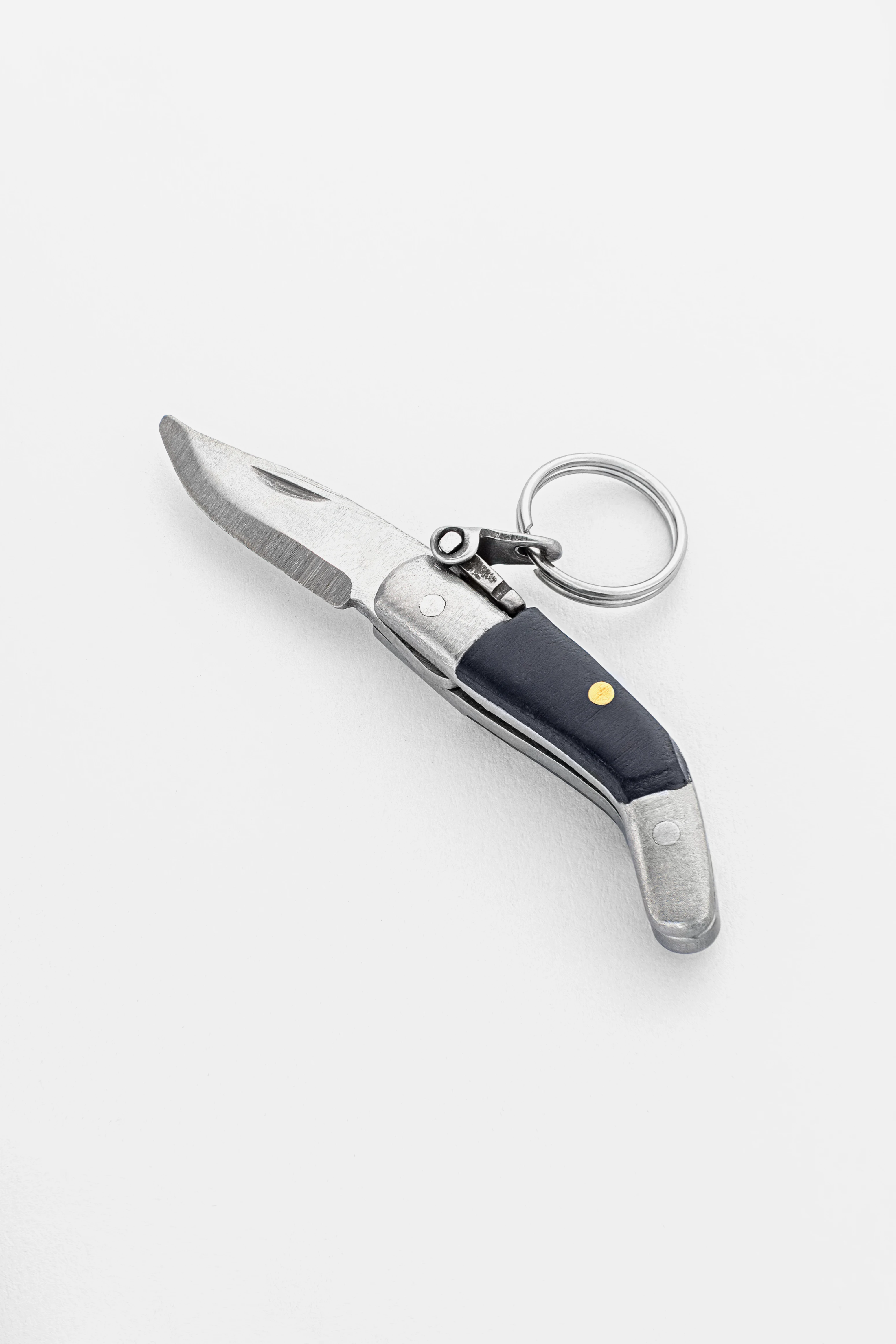
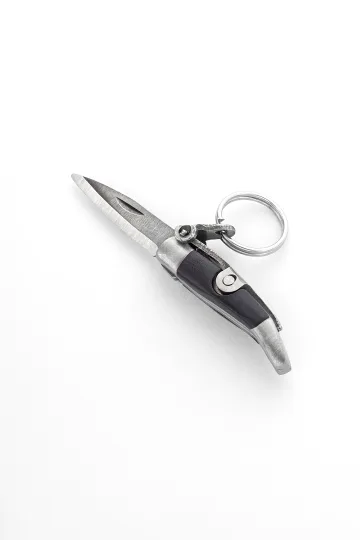
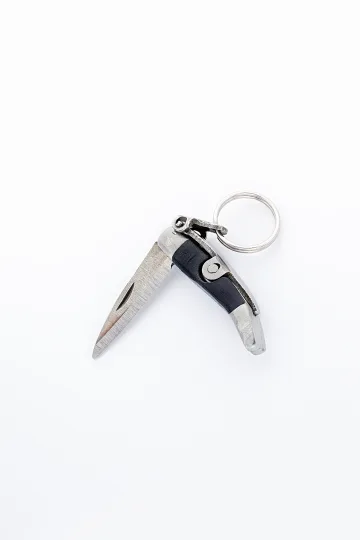
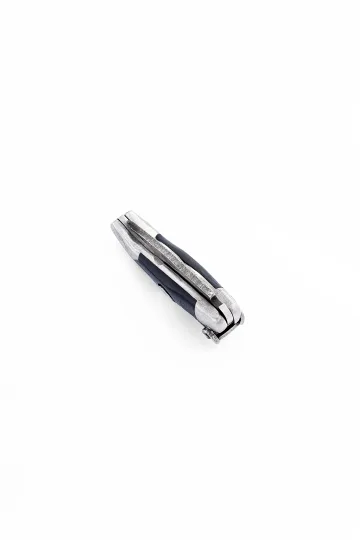
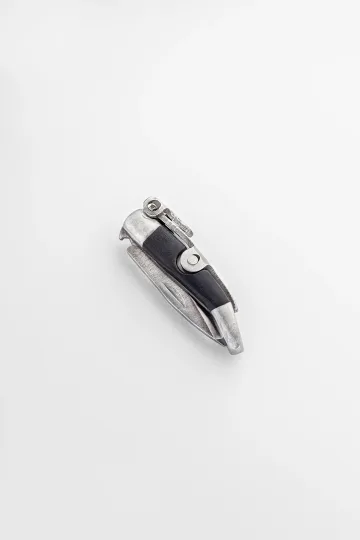
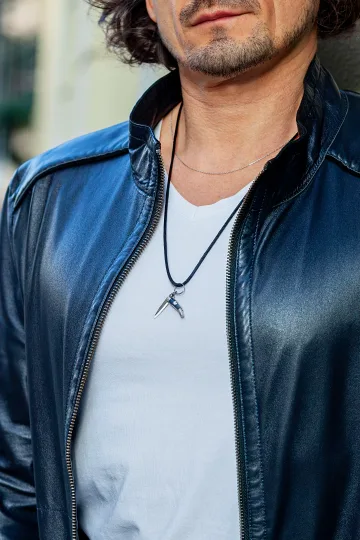
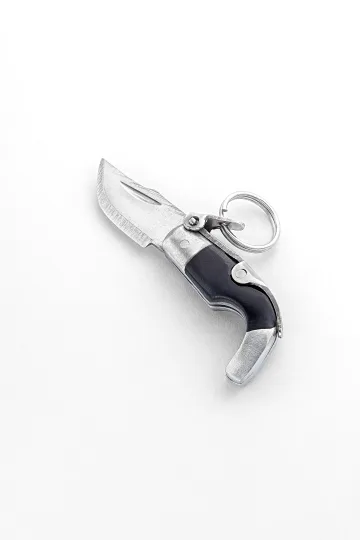
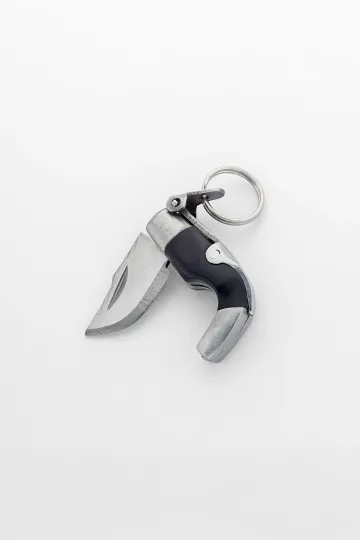
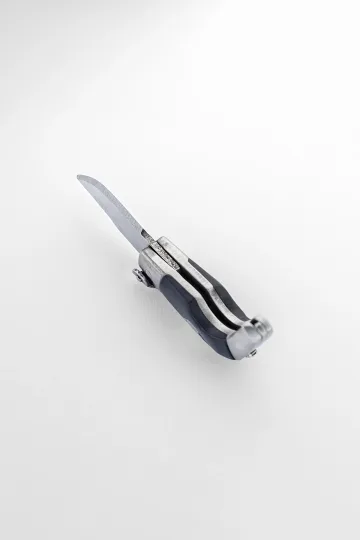
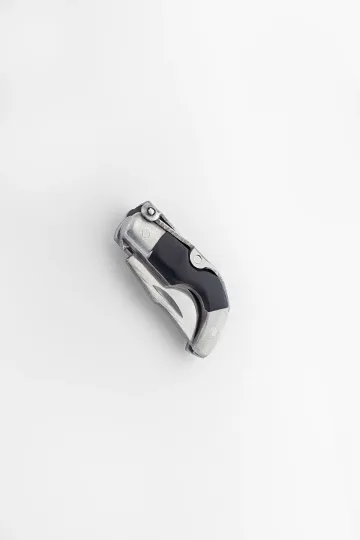
CAPAORA mini knife pendant
The 18th-century Spanish navaja in miniature: 40 mm of stainless steel, a real folding mechanism and a Palanquilla lock that clicks. An affordable gift to remember.
Authentic · Ships from Spain · 14-day returns
The history of vermeil: from the French court to electroplating
Where the word vermeil comes from
The word vermeil comes from French, where it means "bright red, scarlet, golden-ruddy." The warm reddish glint of good gilding on silver reminded the French of that colour, and the name stuck to gilded silver in particular. In France vermeil was long prized for church vessels, ceremonial tableware, and jewellery: it gave a golden shine without a golden price, even for the aristocracy.
So the term is an old craftsman's word with centuries of history, not modern marketing. When a brand today writes "vermeil," it points back to this tradition of noble gilded silver rather than inventing a pretty label.
Gilding with mercury amalgam
The old method of gilding was called fire-gilding, or amalgam gilding. Gold was dissolved in mercury to make a paste-like amalgam, which was spread on the silver, and then the piece was heated. The mercury evaporated and the gold bonded permanently to the surface, giving a thick, durable, beautiful layer. The quality of such gilding was outstanding, and many antique objects have kept it to this day.
The method carried a monstrous price, paid by the craftsmen. Mercury vapour is extremely toxic: gilders suffered poisoning, neurological disorders, and early death in great numbers. The trade was considered one of the most dangerous in the craft world, and the telltale signs of mercury poisoning were familiar to everyone who worked with amalgam.
Why amalgam gilding was banned
As science worked out the toxicity of mercury, fire-gilding began to be restricted and outlawed. By the nineteenth century, with a safe alternative at hand, the amalgam method faded into the past, and later it was effectively banned because of the deadly danger to workers and the pollution it caused. Today true mercury gilding is the exotic preserve of restoration, not production.
This history explains why an antique gilded object can stand in a class of its own: behind it stands the labour and health of specific people. Modern vermeil is made in an entirely different way, safe for both the maker and the buyer.
Modern electroplating
Mercury gave way to electroplating, electrochemical deposition. A silver piece is lowered into a solution of gold ions and a current is passed through it: the gold settles on the surface in an even layer, its thickness controlled by time and current. No toxic fumes, precise control of thickness, a repeatable result.
It was electroplating that made standards like "2.5 microns and at least 10 karats" possible: the process is measurable and controllable. Modern vermeil is a direct heir of courtly gilded silver, but made with a safe technology and a guaranteed layer thickness. An old word, new and clean physics.
What vermeil meant to the aristocracy
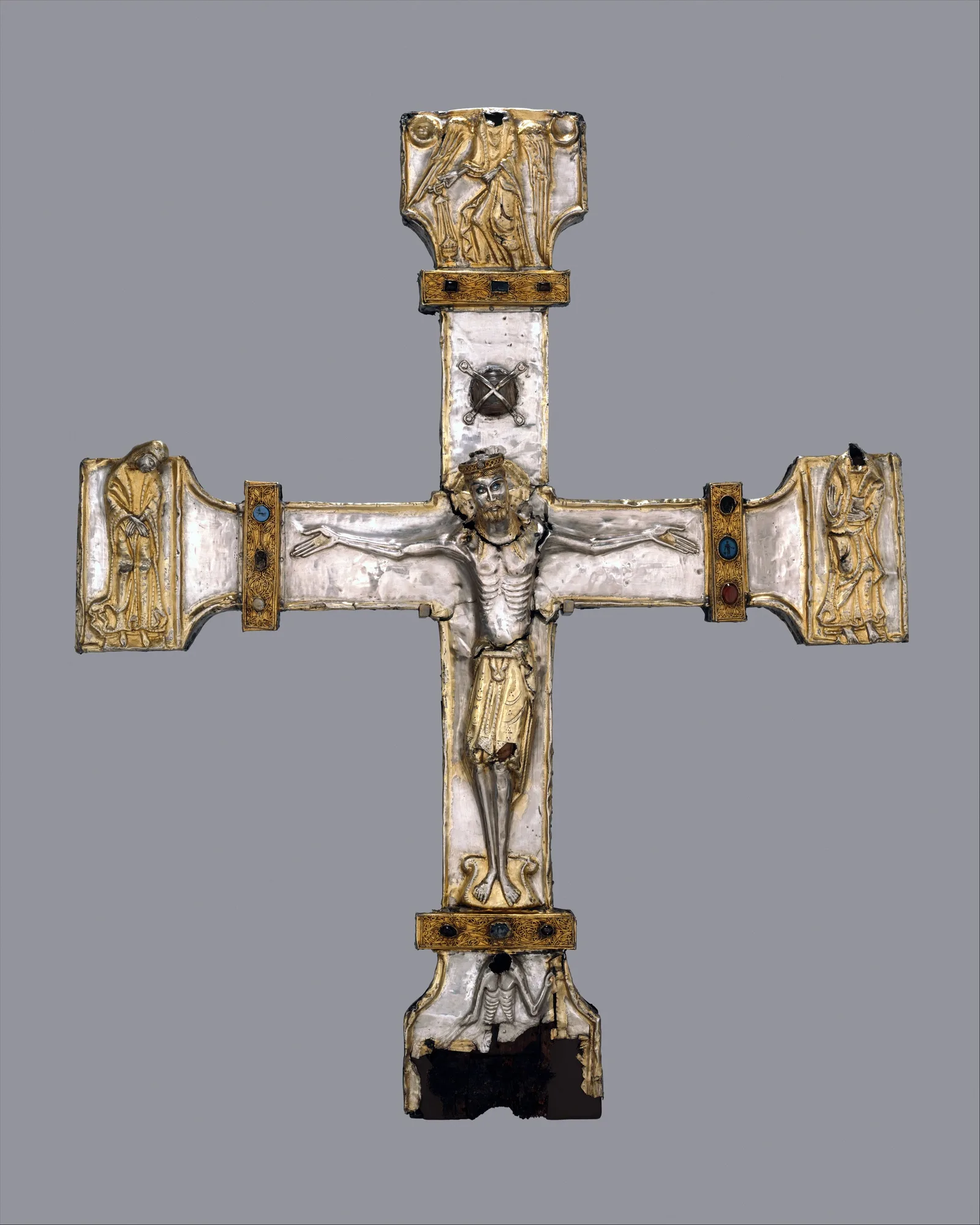
In an age when solid gold was available only to the very richest, gilded silver solved the same problem it does today: it gave a golden shine without a golden price. Ceremonial dinner services, book covers, chalices, orders, and jewellery made of vermeil let courts and churches look lavish while spending silver and a thin layer of gold instead of monolithic precious metal. Many famous historical table services and regalia are in fact vermeil, not solid gold.
The logic has not changed over the centuries. Vermeil was always a smart compromise for those who value the look and nobility of a material but count their money. What is available to an ordinary buyer today was once a solution for royal houses, and its essence has stayed the same.
How to tell real vermeil from ordinary plating
The 925 hallmark under the gold
The first and foremost sign is the purity of the base. Real vermeil carries a 925 hallmark, sometimes alongside a vermeil mark or the gold karat. It confirms that under the gold is silver, not an alloy. Look for the hallmark on the clasp, the inner side of a ring, the earring post, or the tag. No 925 hallmark, no guarantee that the base is precious.
The presence of a golden colour alone says nothing: anything can be gilded. But a 925 hallmark under the gold layer is a legally meaningful mark, one that a serious maker stamps and stands behind. It is the first thing to check.
Weight in the hand
Silver is noticeably heavier than brass and steel at the same volume. Real vermeil sits in the hand with a solid, pleasant density, while gold-plated costume jewellery often feels suspiciously light, hollow. Weight is not a precise instrument, but it is a good first test: if a ring or bracelet feels like a toy, the base is unlikely to be silver.
Of course there are thin, light pieces in silver too, but paired with the other signs, weight helps. Hold a known silver item alongside and compare the feel, the difference is often noticeable at once.
Price as an indicator
Vermeil cannot cost the same as costume jewellery. A silver base plus gold of at least 10 karats and at least 2.5 microns thick are mid-range materials. If a piece is sold at the price of cheap plating, you are almost certainly not looking at vermeil but at a gold-plated alloy, whatever it is called.
Price is not a reason to overpay but a signal. Suspiciously cheap for "gold-plated silver" means the saving was most likely made on the base or the thickness of the gold. Honest vermeil honestly costs more than costume jewellery and clearly less than solid gold.
Behaviour over time and the metal that shows through
If a piece has already been worn, look at what shows through at the wear points. With vermeil, white, slightly matte silver comes out from under the gold. With gold-plated brass, a yellowish or reddish alloy, often with green discolouration and darkening. The colour of the metal showing through is an honest witness to what lies under the coating.
This sign works on used pieces and in doubtful cases. You cannot test a new piece this way, but if you are eyeing a second-hand piece or assessing your own, the geography and colour of the wear will tell the truth faster than any seller.
Facts that surprise
The word "vermeil" once meant a colour, not a material. In French vermeil is a bright red, scarlet shade. Gilded silver got its name from the warm ruddy glint of the gold, not from the metal itself.
Fire-gilding killed its craftsmen. In the amalgam method, gold was applied together with mercury, which was then boiled off. Mercury vapour poisoned gilders for years, and the trade was one of the deadliest in the craft.
The gold layer is tens of times thinner than a human hair. The standard 2.5 microns is two and a half thousandths of a millimetre. A hair is about 70 microns thick, so it is roughly thirty times thicker than the gold coating.
Vermeil can be "resurrected" endlessly. As long as the silver base survives, the gold can be reapplied as many times as you like. In essence it is a piece with maintenance, not a disposable thing.
Karat changes both durability and colour. Gold at 10 karats looks paler and cooler, at 18 karats richer and warmer. Two pieces of vermeil with the same layer thickness can differ noticeably in tone.
Vermeil earrings outlive rings many times over. Earrings barely rub against anything, so the gold on them holds for years, while rings give out first because of the constant contact of hands with everything around.
Gold-filled is welded, not deposited. Unlike vermeil, where the gold is deposited chemically, in gold-filled it is rolled on under pressure and heat, so the layer comes out hundreds of times thicker than ordinary plating.
Under vermeil's gold there is always a precious metal. Wear it as long as you like, and what shows through is sterling silver 925, not brass. That is exactly what sets vermeil apart from any costume jewellery, however alike they look on the display case.
Send a friend a discount code, they save on their first order.
Frequently asked questions
How does vermeil differ from ordinary plating? By the base. Vermeil is gold over sterling silver 925, with a standard for thickness (at least 2.5 microns) and gold purity (at least 10 karats). Ordinary plating is gold over brass, steel, or copper, usually in a thinner layer and with no standards. When the coating wears off, vermeil reveals silver, plating reveals a base alloy.
Is vermeil real gold? The gold layer is real, gold of at least 10 karats. But the piece is not gold all the way through: under the gold is silver. That is why vermeil is honestly called gold-plated silver, not gold. Still, under the coating is a precious metal, not an imitation.
How long does vermeil last? With gentle wear, quality vermeil serves several years with no visible wear, and earrings longer still. The lifespan depends heavily on friction: rings wear fastest, earrings slowest. When the gold thins, the piece can be re-gilded and worn on.
Can vermeil get wet? An accidental splash is fine, but you should not wet it routinely. The shower, the pool, the sea, and sweat during sport all speed up wear of the gold layer, chlorine and salt especially. Take the piece off before bathing and workouts.
Does vermeil cause allergies? Less often than costume jewellery. The sterling silver 925 base is neutral for most people, and even after wear the skin meets silver, not a nickel alloy. No material gives a full guarantee, but vermeil is usually tolerated well.
Can worn-off vermeil be restored? Yes. The piece is sent to a jeweller's workshop for re-gilding: the silver is cleaned and a new layer of gold is applied with the same electroplating technology. The procedure can be repeated many times as long as the silver base survives. This is one of vermeil's main advantages over gold-plated brass.
How do I tell vermeil from plating in a shop? Check three things. The 925 hallmark on the piece (silver under the gold). Weight, silver is noticeably heavier than brass. Price, vermeil cannot cost as little as cheap costume jewellery. If the piece has been worn, vermeil shows white silver at the wear points, not a yellowish or greening alloy.
Is vermeil more or less expensive than solid gold? Noticeably less. Solid gold is metal all the way through and a premium segment. Vermeil is silver with a gold coating, the mid-range: more than costume jewellery, but several times more affordable than solid gold in the same design. And at a distance the two are hard to tell apart.
The short version
Vermeil is gold over sterling silver 925, not over a cheap alloy. To be called vermeil, a piece must have a silver base, gold of at least 10 karats, and a layer at least 2.5 microns thick. All three conditions together, or it is ordinary plating. It is the precious base that makes vermeil honest: even when the gold wears away, what remains beneath is a precious metal, not brass with allergens.
It occupies a sensible middle: a golden look and a silver base at a mid-range price, several times cheaper than solid gold. It serves for years with gentle wear, and when the gold thins it is re-gilded, and the piece is as good as new. Keep it from water, sweat, perfume, and friction, store it dry, clean it gently. The 925 hallmark, weight, and an honest price help you tell it from a fake. For anyone who wants gold without a premium budget and without deception, vermeil is the best way into gold jewellery.
Sterling silver 925 jewellery with a warm gold coating and without it, choose what fits your style and budget best.
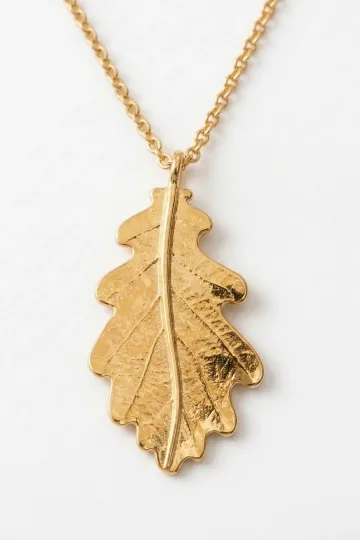
View Mini Roble Earrings →
Buying it as a gift? Each one arrives ready to give.
 A branded Zevira box and a little card come with every order.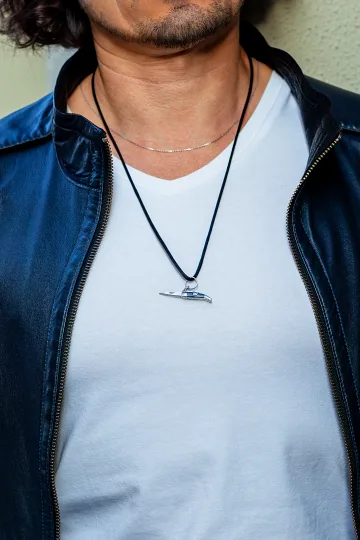





About Zevira
Zevira is a Spanish jewelry brand from Albacete, a city with a centuries-old tradition of metalwork. We make jewelry in sterling silver 925 and speak plainly about materials, coatings, and care, so your choice is an informed one. Take a look at the breakdown of what the 925 silver hallmark means, or compare gold plating and solid gold without the spin.