Gold-Filled Jewelry: Why It Lasts for Decades While Plating Peels in a Year
The layer of gold on a gold-filled piece is fifty, sometimes a hundred times thicker than the gold on ordinary plating. That is why one piece gets worn every day for years, through hand-washing, sweat, and swimming, while the other dulls and flakes by the end of its first season. The price gap is small. The lifespan gap is enormous.
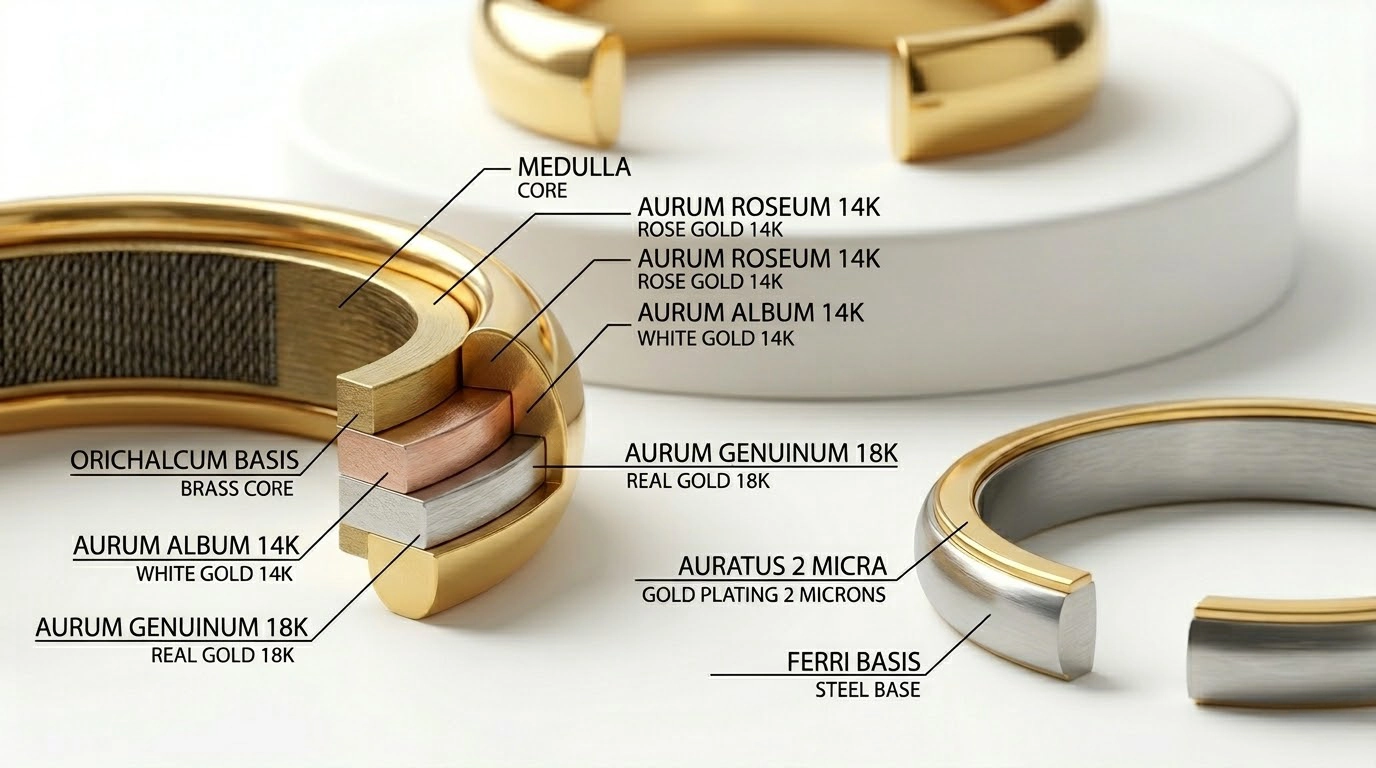
Gold-filled, also called rolled-gold or bonded gold, sits behind an honest old technology. A thick sheet of real gold is mechanically bonded to a brass core under heat and pressure. Nothing is sprayed on as a wafer-thin film, the way plating works. Instead two metals are fused into one multilayer sheet that then goes into production. By weight the gold in such a piece is no less than one twentieth of the whole, and that figure is fixed by law.
Let us look at this honestly: what gold-filled actually is, how it differs from plating, vermeil, and solid gold, why wire-wrap makers love it, whether you can get it wet, whether it turns skin green, and how to tell genuine gold-filled from the fakes on a market where the term gets stamped on almost anything.
What Gold-Filled Is and What It Is Made Of
A thick layer of gold fused to a core under pressure
Gold-filled is not a coating in the usual sense. Take a brass rod or sheet, lay a sheet of real gold of the right karat on top of it, sometimes a second sheet as well, and roll that stack through mills under high pressure and heat. The gold does not sit on top as a separate film. It bonds with the core at the metal level, forming a strong join across the whole surface. The result is a single multilayer material with real gold on the outside and brass within.
From that finished sheet or rod a maker builds the jewellery: bending wire, stamping, soldering, cutting. The gold layer stays on the surface and does not go anywhere, because it was never applied as a thin film. It was rolled into the core as a full layer of metal. That is exactly why the English term gold-filled captures the idea better than many alternatives: the gold here is structural, a full part of the build rather than decoration.
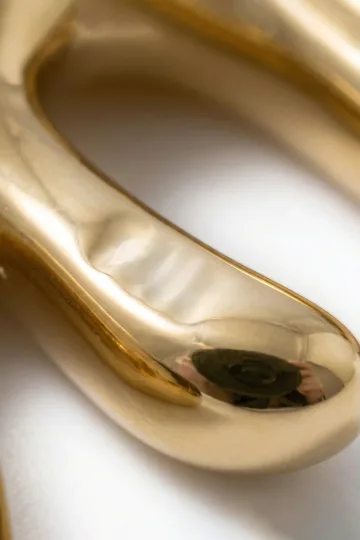
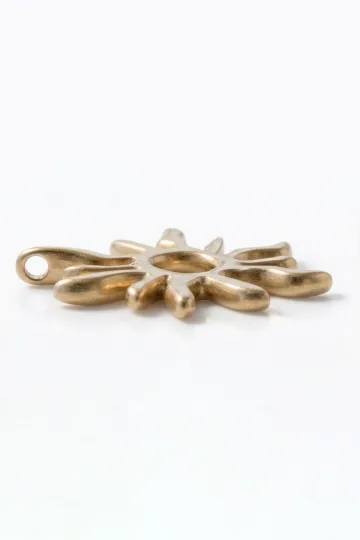
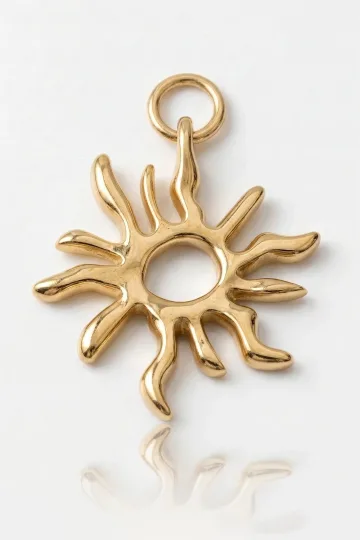
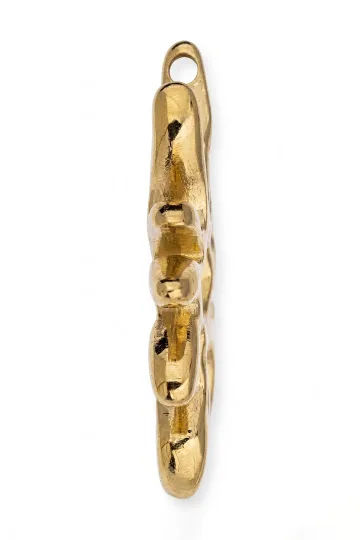
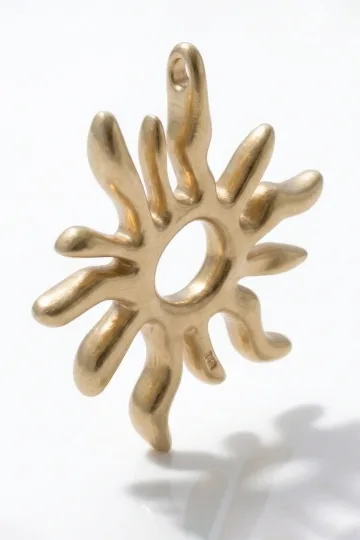
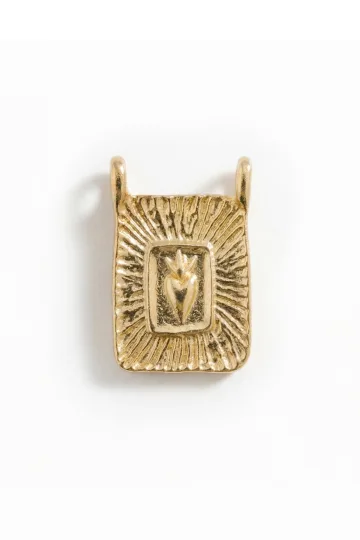
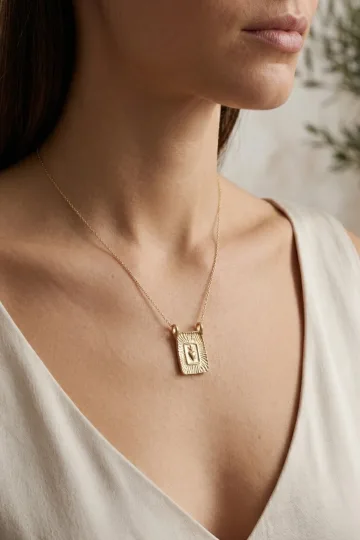
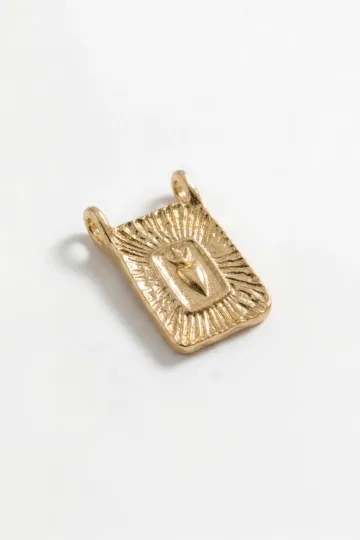
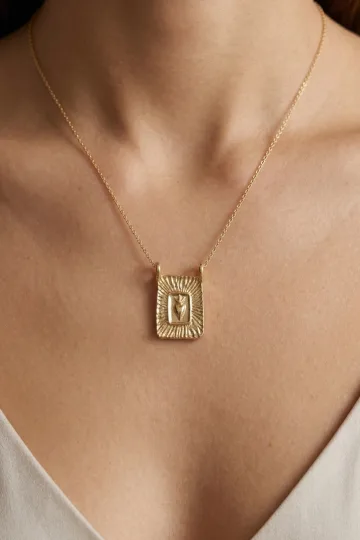
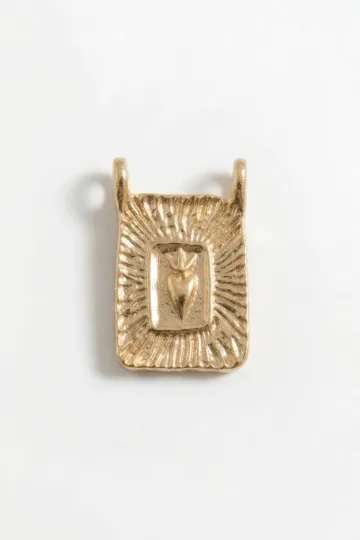
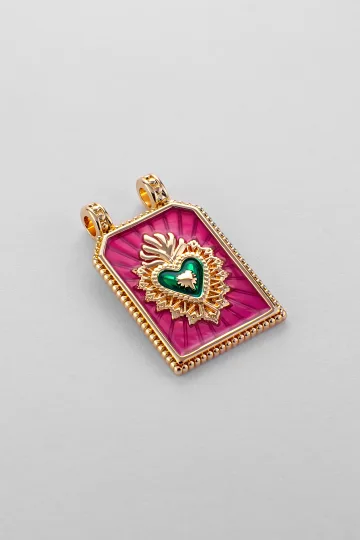
Wear the symbol, don't just read about it. These are in stock:



The brass core inside
Under the gold layer of a gold-filled piece you most often find brass, an alloy of copper and zinc. Copper or another base shows up sometimes, but the classic core is brass. It is cheap, strong, draws well, and holds its shape, which makes it ideal for wirework and stamped pieces. The key point is that this brass is fully sealed by gold on every side, and on a sound piece you can only reach the core at a cut edge or on a heavily worn ridge.
The brass under the gold is an important detail for understanding the whole subject. It shapes the weight of the piece, its behaviour on sensitive skin, and the fact that gold-filled, for all its durability, still does not equal solid gold. A non-precious metal sits inside, and every honest seller says so plainly.
Why it is neither a spray nor a paint
Ordinary plating is applied by electroplating: the piece is dipped into a solution, current is passed through it, and a wafer-thin layer of gold settles on the surface, measured in fractions of a micron. It behaves like a very thin film that holds up only until friction, sweat, or cosmetics wear it away. Gold-filled is built on a fundamentally different principle. There is no electroplating here and no thin deposited film. There is a mechanical bonding of a thick gold sheet to the core under a press.
The difference is roughly like wallpaper glued to a wall versus a layer of wood pressed onto plywood in a joinery shop. The wallpaper peels, the laminated veneer keeps serving. So it is fair to call gold-filled not a coating but a layered material. And it is also why every lifespan comparison with plating ends in a rout in favour of gold-filled.
The American Standard: One Twentieth and the Stamp
No less than five percent gold by weight
In the United States, the home of the modern term gold-filled, a strict rule applies. To earn the right to be called gold-filled, the mass of the gold layer must be no less than one twentieth of the total weight of the piece. One twentieth is five percent. That sounds modest, yet in the world of coatings it is a colossal figure: ordinary plating carries dozens of times less gold, counted in fractions of a percent and in microns of thickness.
Five percent gold by weight means a genuinely substantial layer. It is enough for a piece to live for years under daily wear without reaching the brass core. This legally fixed threshold is what separates true gold-filled from anything that simply shines yellow. If the threshold is not met, the piece has no right to the gold-filled mark.
How to read a 14k 1/20 GF stamp
Honest gold-filled carries a clear stamp, and it is worth learning to read. A mark like 14k 1/20 GF breaks down this way. 14k is the karat of the gold in the layer itself, fourteen karat, which is 585 gold. The fraction 1/20 is that same share of gold by total weight, one twentieth. The letters GF stand for gold-filled.
You will see variants: 12k 1/20 GF, where the layer is twelve-karat gold, or the mark written through a slash as 1/20 14k GF, with the same meaning. Sometimes the words ROLLED GOLD or the abbreviation RGP are added, more on that below. The thing to remember is the trio: the fraction is the share of gold by weight, the number with a k is the karat of the gold itself, and GF tells you that this is gold-filled rather than plating.
How gold-filled differs from gold-plated in the marking
On plated pieces you will never see a stamp with the one-twentieth fraction, because the gold there is orders of magnitude less. Plating carries other marks: GP for gold-plated, GEP for gold electroplated, or nothing at all. Sometimes a micron thickness is given, and for quality plating that is two or three microns, for cheap plating less than one.
A simple rule for the market. See the fraction 1/20 and the letters GF, you are looking at gold-filled, and it lasts. See GP, GEP, or just the words gold-plated, you are looking at plating, good for a season or two. See the word vermeil, that is gold-plated silver, a separate story. And if a piece carries no clear mark at all yet the seller calls it gold, it is time to be wary.
Cheap plating flakes by New Year and takes your dignity with it. Gold-filled is for people who refuse to buy the same chain twice.
How to wear gold-filled
Over years on shoots hundreds of golden chains and bracelets have passed through my hands, and gold-filled is the one I recommend most: the colour of real metal, none of the fuss. Here is what actually works, sorted by occasion.
What do I wear gold-filled with day to day? For an everyday look I recommend a thin gold-filled chain over a white tee, a linen shirt, or knitwear in a calm tone. The warm yellow lifts beige, olive, and sand up top, and on charcoal or navy it reads as a tidy accent. I suggest keeping one piece out in the open, at the throat or on the wrist, where it shows and where the thick layer lasts longest.
Does it work at the office? It does. For a work look I choose a restrained yellow or rosy tone and one or two pieces without shine: a chain that sits under the top shirt button and a slim ring. Gold-filled reads as a quiet, expensive detail rather than a loud accent, and it lives happily under a blazer. A strict dress code is no obstacle.
How do I build an evening look? For evening I suggest an open neckline and a dense fabric in a rich colour: wine, emerald, black. Warm yellow gold-filled catches soft light and reads best on bare skin near the collarbones. Here you can go larger or gather a stack of bracelets on one wrist; the evening forgives it.
Yellow or rose, which suits me? Go by your skin undertone. Warm yellow I recommend for olive and tanned skin with a golden cast; it lifts the glow. A rosy tone is softer and suits fair skin with a cool undertone. Quick check: look at the veins on your wrist; a greenish cast wants yellow, a bluish one wants rose.
How do I mix it with silver and real gold? Mixing metals stopped being a mistake long ago. Yellow gold-filled I like next to solid gold of a close karat; the eye does not catch the difference. With silver I go for a deliberate two-tone contrast: a golden chain and a silvery ring on one hand. One rule: keep a single warm row, or play warm against cool on purpose, and the look reads as intended.

Turn on your camera, pick earrings, a pendant or a ring, and see the piece on yourself in real time.
Switch items in one tap.
Everything runs in your browser: no photo or video is ever uploaded.
How Gold-Filled Differs from Plating, Vermeil, and Solid Gold
Plating: the same idea, a layer dozens of times thinner
Both gold-filled and plating show real gold on the outside, and that is the source of the eternal confusion. The difference is not in the metal but in its amount and the way it is applied. Plating is a wafer-thin electroplated film of gold over a core, a fraction of a micron or a few microns at best. Gold-filled is a thick bonded layer, dozens and often a hundred times more massive.
From this comes the whole difference in real life. Plating wears off on edges, on the inner side of rings, at the points of friction against skin and clothing, and the core shows through. Gold-filled holds such a reserve of thickness that ordinary wear does not reach the core for years. If you want to dig deeper into the logic of coatings and where the line runs between real and merely visible gold, there is a detailed breakdown: plating versus solid gold, an honest comparison.
Vermeil: the same approach, but a silver base
Vermeil, that is gold-plated silver, is plating applied not to brass or copper but to sterling silver. By the rules the thickness of the gold layer on vermeil is also regulated, and it is noticeably greater than on cheap plating over a base metal. The main difference between vermeil and gold-filled is not the gold on top but what lies under it.
Vermeil has precious silver under the gold, gold-filled has a base brass. That affects price, behavior on skin, and what remains if the gold ever does wear through: on vermeil noble silver appears, on gold-filled brass. In exchange, the gold layer on gold-filled is usually thicker and tougher by the way it is applied. If the subject of a silver base interests you in its own right, here is a breakdown: what 925 silver means.
Solid gold: gold all the way through and a very different price
Solid gold is metal of one karat throughout, with no core at all. A ring of 585 gold is 585 gold on the outside, on the inside, and at any cut. Confusing it with gold-filled is essentially impossible: different categories entirely. Solid gold is a precious item with the price to match, gold-filled is a smart compromise that delivers the look and durability of gold at the price of a piece with a base-metal core.
The gap in cost here is not a matter of multiples but of tens and hundreds of times, because with solid gold you pay for the entire weight of the metal, and with gold-filled only for the thin, if honest, layer. That is why gold-filled became so popular: it closes the huge gap between cheap, flaking plating and unreachable solid gold, holding a comfortable middle ground.
PVD coating: another neighbour on the shelf
Beside gold-filled and plating, the market also holds PVD coating, applied by vapor deposition in a vacuum. It too comes in a golden color, but by nature it is not a layer of gold. It is a thin, very hard ceramic or metallic coating, often over steel. PVD is prized for scratch resistance, gold-filled for the thickness of its real gold layer and a warm natural color. They are different solutions for different jobs, and there is a separate piece on the deposition process: what PVD coating is and how it differs from plating.
Customer reviews
Zevira is a real jewellery shop. Genuine payments, deliveries and customer thank-yous.
🥰🥰🥰 gracias
Ok, ¡gracias! 🙂
Why Gold-Filled Is So Durable
A reserve of layer that lasts for years
The main secret behind the durability of gold-filled is thickness. When the gold layer is dozens of times thicker than on plating, a piece gains a huge reserve against wear. Friction against skin, contact with clothing, the daily putting on and taking off all touch the surface over time, but they physically cannot eat through a thick bonded layer in a season. That takes years and decades.
Owners of quality gold-filled pieces say they wear the same chains and earrings for ten to fifteen years with no visible loss of gold. This is not marketing but a direct result of arithmetic: the layer is thick, the wear is slow. Where plating gives up after a season or two, gold-filled is only beginning its long service.
It does not wear off on edges and corners like plating
The weak spot of any coating is edges, corners, raised parts, and the inner side of rings, where friction is greatest. Plating wears through there first, and a telltale bald patch appears with the core showing. On gold-filled, thanks to the thickness of the layer, these zones hold many times longer. The edge of a bracelet, the loop of a clasp, the post of an earring stay gold for a long time.
That is exactly why gold-filled is so readily used for pieces that move and rub a lot: bracelets, chains, clasps, hoop earrings. On solid gold such joints serve forever too, but they cost a lot, while gold-filled gives similar resilience for far less money. Cheap plating in these places gives up almost at once.
You can get it wet, sweat in it, and wear it every day
One of the most common questions about any gilded piece: can you get it wet and wear it constantly. For cheap plating the answer is usually cautious, since water, sweat, and cosmetics speed up wear. For gold-filled the attitude is calmer. The thick gold layer resists moisture, takes hand-washing, showers, and swimming in ordinary water in stride, and handles sweat without trouble.
This does not mean gold-filled is indestructible. Sea salt, pool chlorine, harsh household chemicals, perfume, and acidic products are still best kept away from any piece. But in everyday use gold-filled behaves like jewellery you can put on and forget, rather than a fussy thing for one night out. There lies its huge practical advantage.
What does wear it down in the end
Honesty about the limits. Gold-filled is not eternal. Very long and intense wear, constant friction at a single point, rough polishing with abrasives, and aggressive chemicals can thin the layer over time, especially on the most vulnerable edges. After many years the core may show through on a beloved piece. But the timescale is years and decades of honest service, not a season as with plating. For the vast majority of owners gold-filled will outlast the trend for any particular style.
Upload a photo of your pet, someone you love, or an object. We'll build a 3D model and hand-cast it in pewter.



Hypoallergenic Qualities: Gold Outside, Brass Within
Why the gold layer protects the skin
From the point of view of skin contact, gold-filled has a serious advantage. On the outside the piece is real gold, and gold is chemically inert and on its own almost never triggers an allergy. While the thick gold layer is intact and fully seals the core, the skin touches gold, and the base brass within stays isolated. For many people with sensitive skin this works noticeably better than thin plating, which wears through fast and opens up the core.
This isolation is the key advantage of gold-filled in the matter of allergies. The thick layer is both attractive and durable, and it holds the boundary between skin and base metal for longer. The longer the gold layer stays intact, the longer there is no contact with a potential allergen.
Where the risk hides: brass and nickel
Calling gold-filled fully hypoallergenic would still be wrong, and it is fairer to say so plainly. Brass sits under the gold, brass is copper with zinc, and some alloys can carry traces of nickel. Nickel is a frequent culprit in contact allergy. While the gold layer is intact you cannot reach it, but if over time or on a heavily worn edge the layer rubs through, sensitive skin may react to the core itself.
So people with a confirmed nickel allergy should be more careful: gold-filled is safer than plating, but it does not equal medically neutral materials such as titanium or surgical steel with guaranteed low nickel. If the subject of allergies is a sharp one for you, look into it separately: nickel allergy in jewelry.
Who it suits and who is better off with another metal
For most people with ordinary skin gold-filled is comfortable and causes no trouble. For those whose skin acts up on cheap costume jewellery, gold-filled often sits well precisely because of the thick insulating layer. But with a severe nickel allergy it is wiser not to risk it and to look toward high-karat solid gold, titanium, or specially hypoallergenic steel. Gold-filled is a good compromise, but not a medical solution.



History: From Victorian Rolled Gold to Today
Gold-filled in the nineteenth century
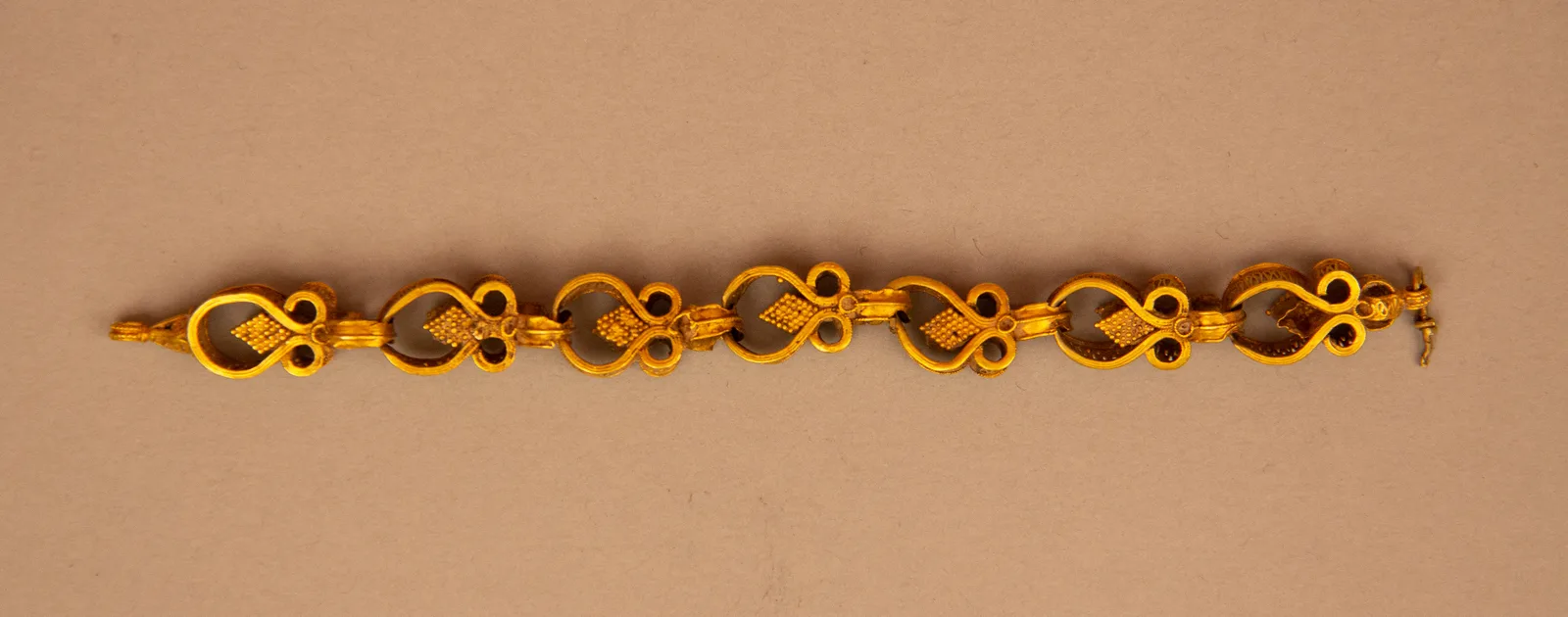
The idea of covering a cheap metal with real gold is older than electroplating. As early as the start of the nineteenth century, makers mastered a way to mechanically bond a thin sheet of gold to a core and roll them together. The technique was called rolled gold, and it became the direct ancestor of modern gold-filled. Before industrial electroplating was invented, this was the main way to give inexpensive pieces the look and resilience of gold.
The approach itself grew out of thrift and common sense. Gold is dear, the demand for beautiful gold pieces is great, and setting up production where gold goes only into a thin outer layer meant making the golden look available to a far wider circle of people. So a whole industry of jewellery arose, pieces that looked golden, served for a long time, and cost several times less than solid gold.
The Victorian era and the rise of rolled gold
Gold-filled truly flourished in the Victorian era. A growing middle class wanted to wear gold but could not afford the solid metal, and rolled gold answered that demand perfectly. It was used for pocket-watch chains, brooches, lockets, bracelets, hairpins, all the things that adorned respectable nineteenth-century society. These pieces were worn for decades, handed down through families, and many have survived to our day in antique shops, still gleaming gold.
Victorian rolled gold built the reputation of gold-filled as an honest and durable material. It was not a trick passing itself off as gold but a recognised category with its own standards and stamps. The buyer knew what they were getting: the look and wear resistance of gold at a sensible price, with no claim to be precious all the way through.
Why the technique came out of thrift
At the root of the whole history of gold-filled lies a simple economic logic. People need gold above all on the surface, where it is seen and where it touches the skin. Inside a piece the expensive metal is largely useless to the look. So you can leave gold only on the outside, in a thick honest layer, and put a cheap, strong core within. The result is a piece indistinguishable by sight from solid gold, several times cheaper and durable on top of that.
This very idea made gold-filled a mass product in the nineteenth and twentieth centuries and keeps it afloat today. Electroplating later offered an even cheaper but far less resilient option. Gold-filled stayed the golden middle in the literal sense: enough real gold to last a long time, and not so much that the price flies off into the sky.
Marks of the past: RGP, ROLLED GOLD, gold-filled
On both old and modern pieces you will meet different stamps from this family. ROLLED GOLD and RGP, rolled gold plate, usually mean rolled gold whose layer may be thinner than the strict gold-filled standard requires. The term gold-filled with the one-twentieth fraction settled in as the mark for pieces that pass the tough threshold on gold content. In essence it is the evolution of one and the same idea: a thick bonded layer of gold on a strong core, distinct from thin electroplated plating.
Caring for Gold-Filled
Minimal care and wiping down
The good news about caring for gold-filled: there is almost none. The thick gold layer needs neither special baths nor frequent polishing. It is enough to wipe the piece now and then with a soft cloth, ideally a gold-care wipe or simply a clean lint-free rag, to take off skin oils and bring back the shine. That keeps a piece looking fresh for years.
If a piece has gathered dust or dulled from cosmetics, you can gently rinse it in warm water with a drop of mild soap, wipe it softly, and dry it thoroughly. No harshness is needed here. Unlike silver, which blackens and needs regular cleaning, gold-filled behaves calmly in everyday life and barely acts up.
What to avoid so you do not damage the layer
For all its resilience, gold-filled has its enemies, and they are worth knowing. Abrasive pastes, stiff toothbrushes, scouring powders, and metal sponges wear the gold layer down mechanically, and overusing them is out. Aggressive chemicals, pool chlorine, sea salt, and products with acids and ammonia are no friends to gold-filled either. Perfume and creams are best applied before you put the piece on, not onto it.
A simple rule: the piece goes on last, after makeup and perfume, and comes off first, before the shower, cleaning, sport, and sleep. Follow this and you will not even kill thin plating, and a thick gold-filled layer treated this way serves especially long. Store gold-filled apart from hard jewellery so they do not scratch the surface.
Storage and everyday wear
Store gold-filled like any good piece: in a dry place, ideally in a pouch or a separate compartment of a box, so pieces do not rub against each other. Moisture on its own is no threat to the gold layer, but if there are exposed brass elements inside or the piece is scratched down to the core, damp can speed the darkening of the base. Otherwise gold-filled is precisely the category you can wear daily and not think about, which is its main charm.
Leave your email, we'll send your discount code. No spam, unsubscribe anytime.
The code arrives by email, valid on your first order.
How to Tell Gold-Filled from Plating and Fakes
Look at the marking
The first and most reliable sign is the stamp. Genuine gold-filled carries a mark with a fraction and the letters GF: 14k 1/20 GF, 12k 1/20 GF, and the like. If you see this fraction and GF, you are looking at gold-filled with a regulated share of gold. If it says GP, GEP, gold-plated, or simply nothing, that is plating. The words gold-filled in honest trade are always backed by a clear marking, not by the seller's promises alone.
Weight and feel in the hand
Gold-filled with a brass core feels noticeably heavier than hollow costume jewellery or thin plating on a light alloy. Brass is dense, and a quality gold-filled piece sits solidly in the hand, with no sense of cheap tin. This is not a precise test, since weight depends on shape and size, but among similar-looking pieces the heavier, denser one is more often gold-filled, and the suspiciously light and tinny one a cheap fake.
Price as an indicator
Price honestly hints at the category. Gold-filled costs more than cheap plating, because it carries dozens of times more real gold, but several times less than solid gold, because the gold is only in the layer. If a shiny yellow piece costs about as much as a couple of cups of coffee, that is almost certainly thin plating or imitation, not gold-filled. If it costs about as much as a nice restaurant dinner, but not a month's pay, that already looks like honest gold-filled. And the price of solid gold goes off into another segment entirely. Suspiciously cheap for a golden look almost always means a thin coating.
Gold-filled does not turn skin green
A good practical sign. Cheap plating and exposed brass over time leave a greenish or dark trace on the skin, because the copper in the base reacts with sweat. On quality gold-filled the skin touches the thick gold layer, not the core, so while the layer is intact there are no green marks. If a yellow piece turns a finger or neck green within a week, it is clearly not gold-filled with an honest layer but a thin coating or exposed base alloy. A comparison of how base metals behave on the skin is broken down in detail here: brass, steel, or silver for jewelry.
What to watch out for on the market
The main trap is loose use of the word gold. On marketplaces yellow costume jewellery is often called gold, golden, or gold-tone, without making clear that it is thin plating or even gold-coloured paint. Sometimes gold-filled is written where in reality it is ordinary plating. There is one defence: ask about the marking, the share of gold, the karat of the layer. An honest seller of gold-filled will name both the karat and the one-twentieth fraction, and will not pass it off as solid gold. Evasive answers are a reason not to buy.
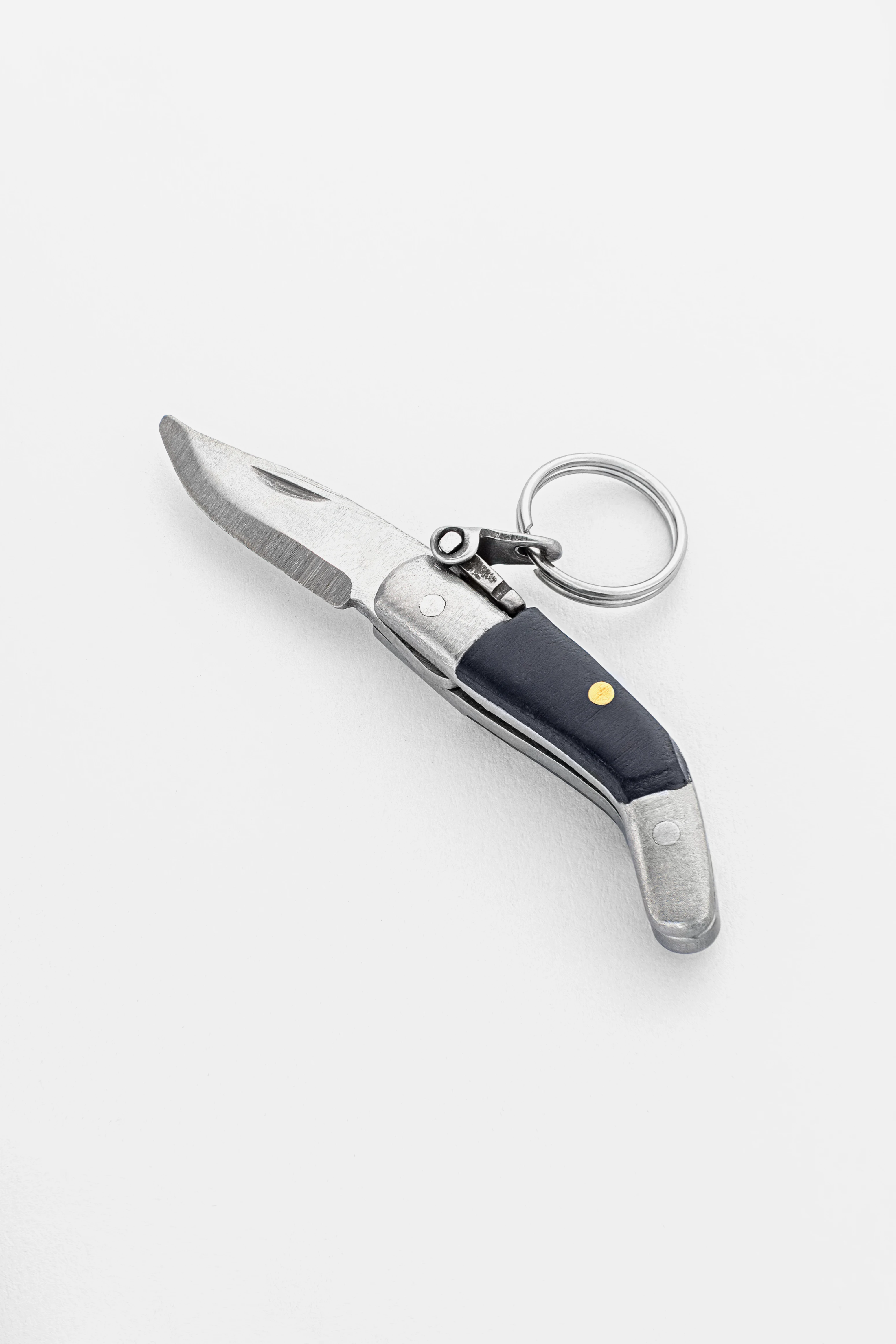
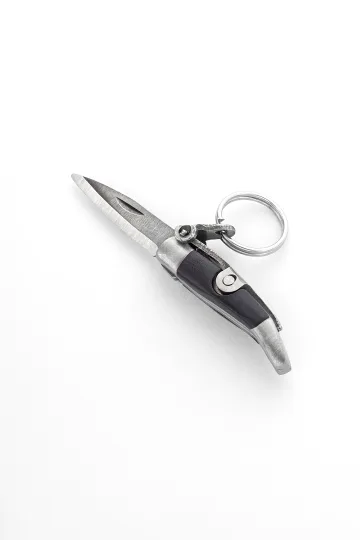
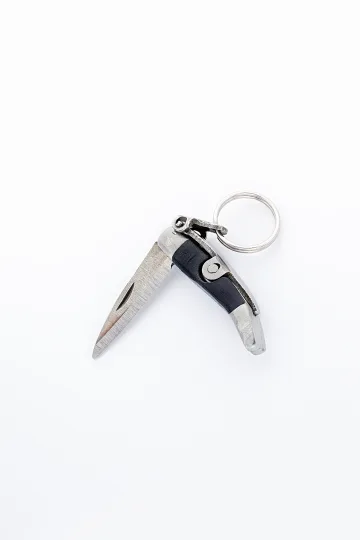
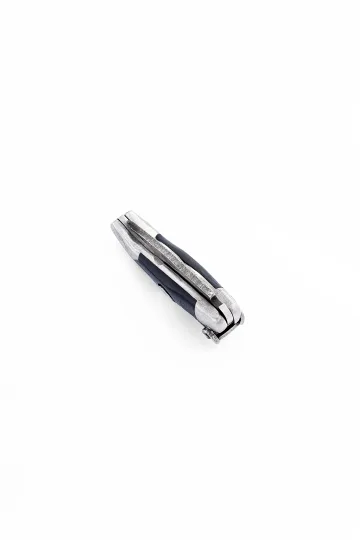
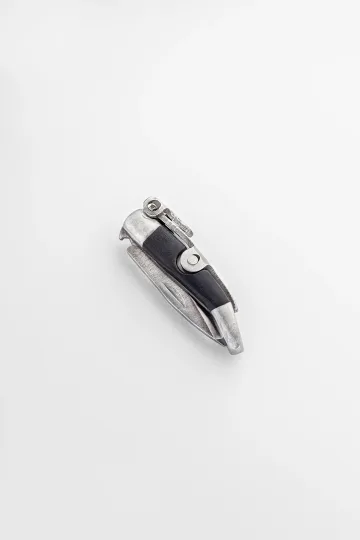
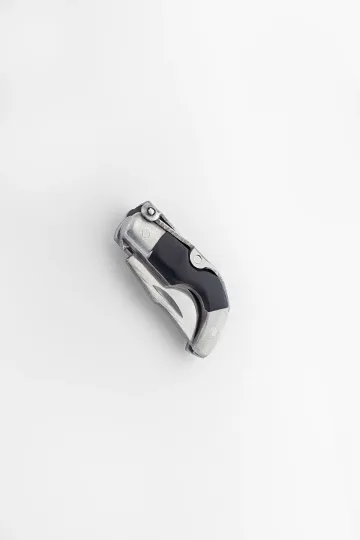
CAPAORA mini knife pendant
The 18th-century Spanish navaja in miniature: 40 mm of stainless steel, a real folding mechanism and a Palanquilla lock that clicks. An affordable gift to remember.
Authentic · Ships from Spain · 14-day returns
Why Wire-Wrap Makers Love Gold-Filled
Wire that bends and holds its shape
In handwork with wire, in the wire-wrap technique, gold-filled has become almost a standard, and there are solid reasons for it. Gold-filled wire behaves just as needed: it is soft enough to bend, twist, and form loops and curls by hand with simple tools, and at the same time springy enough to hold the set shape. The brass core gives the right mechanics, and the gold layer gives true colour and resistance to darkening.
For a maker this is an ideal material. Silver dulls in work and needs cleaning, solid gold is too dear to practice on and to make in volume, and cheap plating on ready blanks flakes at the bends. Gold-filled removes all these problems at once: the colour of gold, a sensible price, resilience at bends and twists, where any thin coating would have cracked long ago.
The colour of gold without the price of gold
A finished piece of gold-filled wire looks gold, because on the outside it is gold. The buyer sees a warm natural colour, the maker does not go broke on material, and the piece serves for years without darkening or flaking. This combination made gold-filled the favourite of independent jewellers and handmade-jewellery artists around the world. Rings, pendants, earrings, and stone wraps in gold-filled wire long ago became a category in their own right, beloved by the public.
The durability of handwork
A handmade piece is built to last, bought as an artist's work, and the material must measure up. Gold-filled answers that demand: it does not let you down after a season, the way a plated blank does, but lives with the owner for years. For a maker it is also a matter of reputation: gold-filled pieces do not come back with complaints about flaked metal. That is why many artists work on principle only with gold-filled and silver, leaving cheap plating to the mass market.
Who Gold-Filled Suits
Those who want the look of gold every day
Gold-filled is made for everyday wear. If you need a chain you can put on in the morning and not take off for weeks, earrings for every day, a bracelet that will survive work, sport, and the shower, gold-filled is one of the most sensible choices. It gives a true golden look without the fear that the piece will flake by the end of the season, and without the price of solid gold. It is a workhorse in the colour of gold.
Those whose plating flakes
If you are one of those for whom plating does not serve, dulling, wearing through on edges, leaving traces, gold-filled is your upgrade. The same golden look, but a reserve of layer dozens of times greater. Many come to gold-filled precisely after a disappointment with cheap plating: once they compare the lifespan, they do not go back to a thin coating.
Those with sensitive skin
For people whose skin acts up on cheap costume jewellery, gold-filled often suits better thanks to the thick insulating layer of real gold. It is not a cure-all for a severe nickel allergy, where other metals are needed, but for moderate sensitivity gold-filled often becomes a comfortable solution, especially compared with thin plating that quickly opens up the core.
Those who value an honest compromise
Gold-filled is for those who understand what they are buying and value a sensible choice. It is not an imitation passing itself off as a precious thing, and not a cheap trick. It is an honest category with its own standard, its own history, and a clear logic: gold where it is needed, a strong core where it is not seen. For the rational buyer who wants the look and resilience of gold without overpaying for precious weight inside, this comes close to ideal.
Send a friend a discount code, they save on their first order.
Facts That Surprise
The gold layer on gold-filled can be a hundred times thicker than on plating. Where cheap electroplating gives fractions of a micron, gold-filled gives a full bonded layer. From this comes the difference in lifespan: a season against decades.
The technique is older than electroplating. Gold-filled in the form of rolled gold was mastered as early as the start of the nineteenth century, long before industrial electroplated gilding. First came rolling gold onto a core mechanically, and only later the deposition by current.
A whole industry grew out of thrift. The idea is simple to the point of genius: gold is needed only on the outside, so a cheap core can go within. That made the golden look available to the middle class, and from it a huge market of Victorian jewellery was born.
Gold-filled can get wet. Unlike fussy plating, the thick gold layer calmly takes hand-washing, showers, and swimming in ordinary water. It is jewellery you can put on and forget, rather than something to shield from every drop.
The law fixes the threshold at one twentieth. To be called gold-filled, a piece must contain no less than five percent gold by weight. This is not a marketing word but a legally protected standard with a concrete figure.
Victorian rolled-gold chains survive to our day. In antique shops you can still find rolled-gold chains and lockets from the century before last, still gleaming gold. The best proof of the material's durability, tested by time.
Gold-filled is more honestly called a layered material than a coating. The gold here is not applied as a film but rolled into the core as a full layer of metal. That is why it does not flake: there is nothing to flake, the layer is fused to the core.
Handmade makers often refuse cheap plating on principle. Many independent jewellers work only with gold-filled and silver, because their pieces do not come back with complaints about flaked metal. For an artist's reputation it is a matter of principle.
Frequently Asked Questions
Is gold-filled real gold? Yes and no. On the outside it is real gold of the right karat, in a thick bonded layer, no less than one twentieth by weight. Inside is a base core, usually brass. So the gold is real and there is plenty of it by the standards of coatings, but the piece is not gold all the way through the way solid gold is.
How does gold-filled differ from plating? By the thickness of the gold layer and the way it is applied. Plating is a wafer-thin electroplated film a fraction of a micron thick, gold-filled is a thick layer mechanically bonded to the core under pressure, dozens of times more massive. That is why plating flakes in a season while gold-filled serves for years.
Can you get gold-filled wet? Yes, in everyday use you can. The thick gold layer resists water and calmly takes hand-washing, showers, and swimming in ordinary water. Worth avoiding are sea salt, pool chlorine, aggressive chemicals, and perfume, as with any piece, but there is no need to fear a few drops of water.
Does gold-filled turn skin green? While the gold layer is intact, no. The skin touches real gold, not the brass core, so no green marks are left. A green trace is a sign of thin plating or exposed brass, not of honest gold-filled with a thick layer.
Is gold-filled hypoallergenic? More yes than no, but not absolutely. On the outside is inert gold that isolates the skin from the core, and for most people that is comfortable. But under the gold is brass, which may contain nickel, so with a severe nickel allergy it is better to choose solid gold, titanium, or special hypoallergenic steel.
How long does gold-filled last? With sensible care, years and decades. The thick layer gives a large reserve against wear, so reaching the brass core under ordinary wear takes a very long time. The lifespan depends on the intensity of wear and the care, but compared with plating it is a different order of durability.
How do I tell gold-filled from ordinary plating when buying? By the marking above all. The one-twentieth fraction and the letters GF, for example 14k 1/20 GF, mean gold-filled. The marks GP, GEP, gold-plated, or the absence of any stamp mean plating. Weight, price, and behaviour on skin also help: gold-filled is heavier, more expensive than cheap plating, and does not turn skin green.
Is gold-filled more expensive than plating? Yes, noticeably more than cheap plating, because it carries dozens of times more real gold and a more involved technology. At the same time it is several times cheaper than solid gold, because the gold goes only into the layer rather than the whole volume. By price it is a comfortable middle segment between flaking plating and precious solid gold.
The Short Version
Gold-filled, also called rolled-gold or bonded gold, is an honest old technology: a thick layer of real gold mechanically bonded to a brass core under heat and pressure, not sprayed on as a thin film the way plating is. The American standard fixes the threshold at one twentieth, no less than five percent gold by weight, and confirms it with a clear stamp like 14k 1/20 GF. The thickness of the layer, dozens of times greater than on plating, is exactly what makes gold-filled so durable: you can get it wet, wear it every day, sweat in it, and it serves for years without flaking.
From plating gold-filled differs by the thickness of the layer, from vermeil by the core, since vermeil has silver under the gold while here it is brass, from solid gold by the fact that the gold is only on the outside. The real gold outside isolates the skin and rarely triggers a reaction, but because of the brass within the material cannot be called fully hypoallergenic. The roots of the technique run deep: Victorian rolled gold of the nineteenth century, born of plain thrift, gave the look and resilience of gold to those for whom solid gold was out of reach. Care is minimal, wipe with a soft cloth and keep away from aggressive chemicals. Wire-wrap makers love gold-filled for the colour of gold without the price of gold and for the way it does not let them down at the bends. For an everyday golden look, for those whose plating flakes, and for moderately sensitive skin, it is one of the most sensible choices on the market.
Warm and cool metals, golden and silvery finishes, coloured stones, symbolism, matching sets.
Buying it as a gift? Each one arrives ready to give.
 A branded Zevira box and a little card come with every order.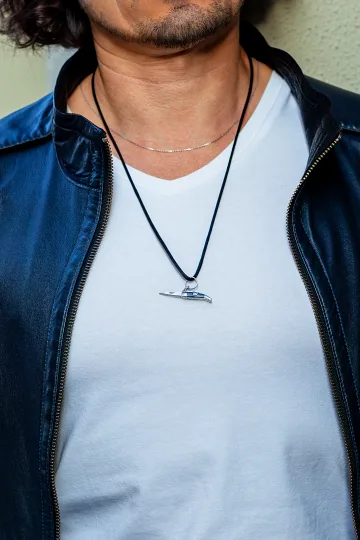









About Zevira
Zevira is a Spanish jewelry brand from Albacete, a city with centuries-old traditions of metalwork. We make jewelry with character and a clear, honest logic of materials: real silver, warm and cool metals, golden finishes, colored stones, and the symbolism of many cultures. If you are choosing between kinds of gold and coatings, look into our breakdowns on plating versus solid gold and 925 silver.