Rhodium Plating: What It Is, Why It Matters, and How to Renew It
The mirror-bright shine of white gold is not the gold itself. Underneath hides a fraction-of-a-micron layer of rhodium, a metal that costs more per gram than gold. Drag a needle along the edge of a ring and a warm yellow tint of the alloy surfaces from beneath the cold silvery gleam. Most people wear rhodium on a finger for years without ever guessing that their white gold has an invisible coat that will one day wear away.
Rhodium plating is not a trick and not a fake. It is an industry standard, and one so old and ordinary that almost all the white gold in display cases leaves the factory already plated. Without it the metal would look different: not blinding white but greyish, slightly yellow, closer to steel. Rhodium gives that platinum whiteness, shields silver from blackening, separates skin from the alloy, and adds hardness to the surface. And it also wears off over time, because the layer is hundreds of times thinner than a human hair.
This article is about the metal itself and the process itself: what this platinum-group metal is, how electroplating works, what gets rhodium and why, how long the coating lasts, how to tell when it has worn off, whether you can renew it at home or only at a workshop, and how rhodium-plated silver differs from argentium, ordinary silver, and platinum.
What Rhodium Is and What Rhodium Plating Is
Rhodium: a metal from the platinum group
Rhodium is a chemical element, a silvery-white metal from the platinum group. That group also includes platinum, palladium, iridium, osmium, and ruthenium. All of them are rare, high-melting, and resistant to corrosion, but rhodium stands out even among them. It does not darken in air, does not react with most acids, holds a mirror shine for decades, and reflects light better than almost any other metal. That is why it is never made into ingots or whole rings but into the thinnest protective and decorative coatings.
In nature rhodium is extremely scattered. It is not mined from its own dedicated pit: it comes as a by-product of refining platinum and nickel ores, mainly in South Africa. A tonne of source rock yields fractions of a gram of rhodium, so it sits steadily among the most expensive metals on the planet, dearer than gold per gram, and in certain years dearer by several times over.
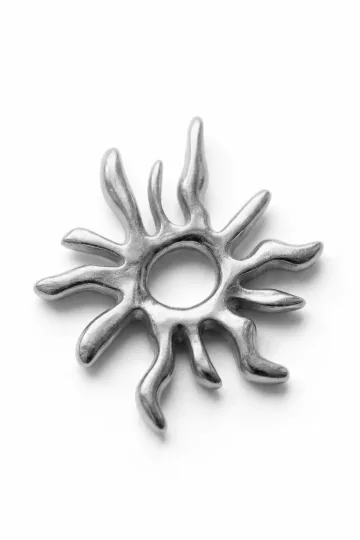
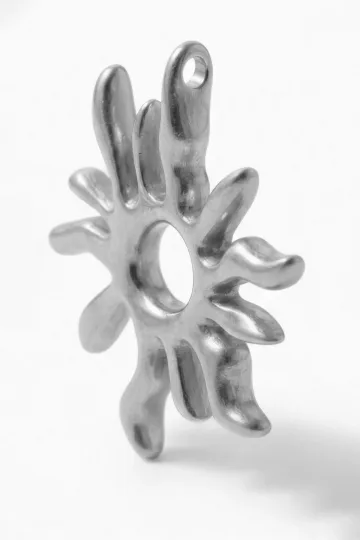
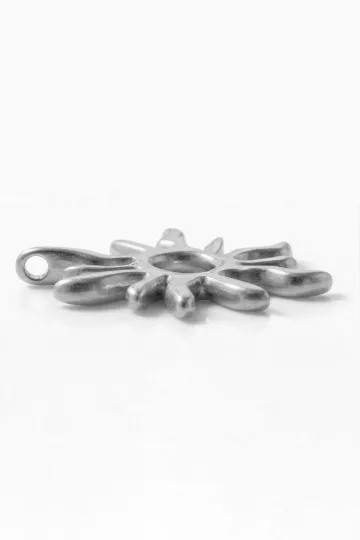
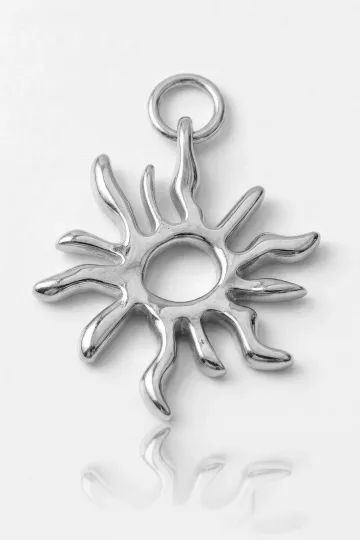
Wear the symbol, don't just read about it. These are in stock:





Rhodium plating: electroplating in plain words
Rhodium plating is the deposition of a thin layer of rhodium onto the surface of another metal by electroplating, that is, with the help of an electric current. It sounds complicated, but the principle is schoolbook stuff. The piece is lowered into a bath holding a solution of a rhodium salt, and a direct current is passed through the solution. The piece is connected to the negative terminal, and rhodium ions from the solution settle onto it in an even layer, atom by atom. The longer the process runs and the stronger the current, the thicker the coating grows.
A long preparation comes before the bath itself, and that is what decides whether the coating lasts a year or wears off in a month. The piece is polished thoroughly, because rhodium copies the relief of the surface and does not hide scratches, it underlines them. Then the metal is degreased, etched, and sometimes given a thin underlayer of nickel or palladium for better adhesion. Only after that comes the rhodium itself. A single speck of dust, finger grease, or poor polishing produces a defect: matte patches, peeling, uneven colour.
How thick the rhodium layer is
The thickness of the coating is measured in microns, thousandths of a millimetre. For jewellery it is tiny. Decorative rhodium plating, which is responsible only for shine, usually sits between a tenth and a half of a micron. That is hundreds of times thinner than a human hair. A protective coating built to take wear is made thicker, up to a micron and beyond, but even that stays a practically invisible film.
The main property of rhodium plating grows out of this arithmetic: it is not forever. The layer is so thin that it cannot be made wear-proof for good. Any friction slowly takes it off. This is not a defect of one particular ring but the physics of thin coatings, and it is worth understanding before you buy, not after the first yellowed edge.
Why Jewellery Is Plated With Rhodium
Whiteness: that platinum gleam
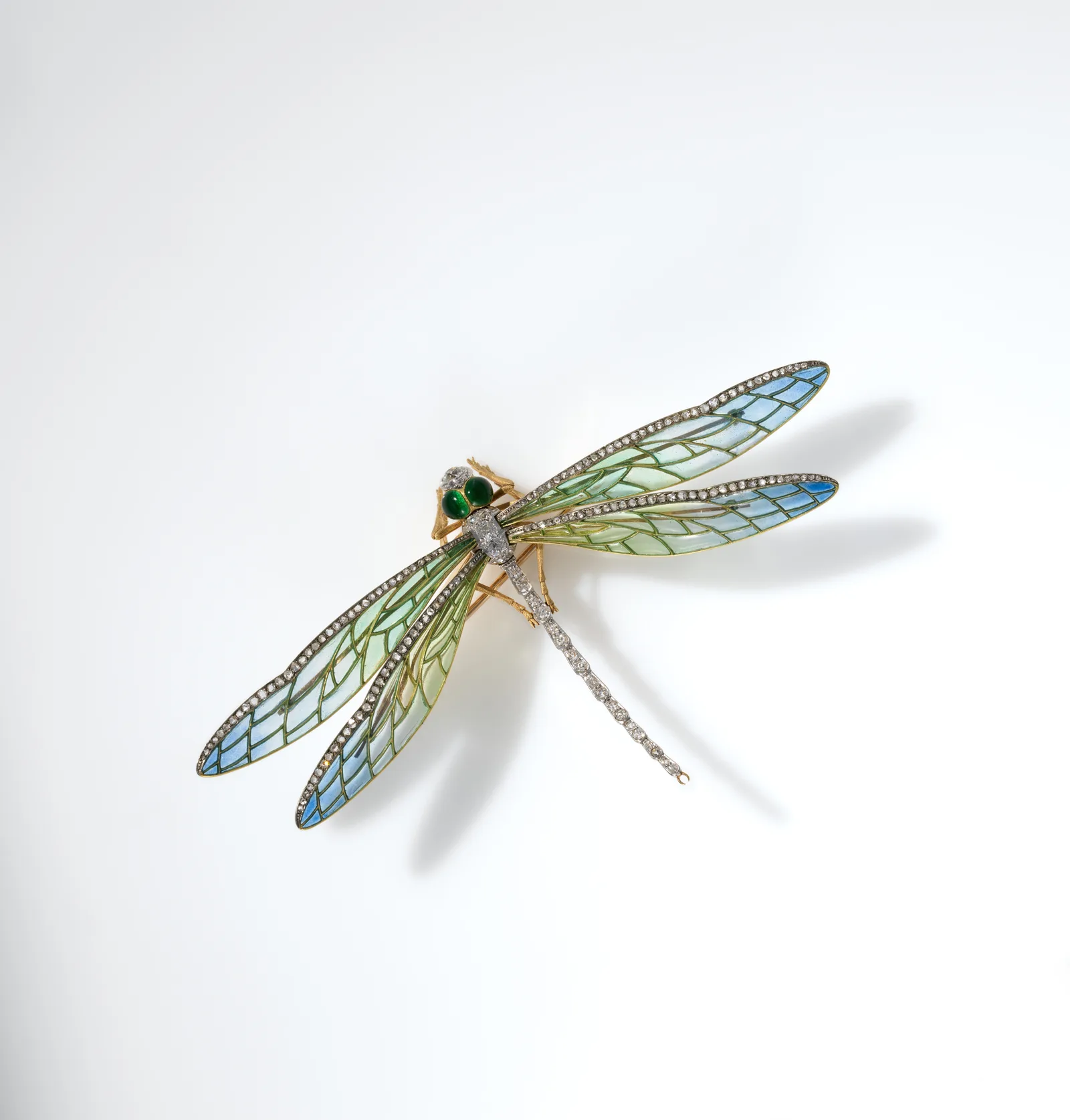
The main reason for rhodium plating is colour. White gold without a coating is not white. Gold is naturally yellow, and to take the yellow out, bleaching alloy metals are added: palladium, nickel, silver. They lighten the alloy, but not all the way. Pure white gold without rhodium looks greyish, slightly warm, with a faint yellow or steely undertone. To some people that is dignified, but the market spent decades training the eye toward a blinding platinum whiteness, and rhodium is what delivers it.
Rhodium is bright white and mirror-like. A thin layer turns a greyish alloy into a piece the colour of platinum. That is why almost all white gold on sale is rhodium-plated from the factory, and the buyer sees not the true colour of the metal but the colour of the coating. The same goes for many silver pieces: rhodium makes silver colder, brighter, and dressier.
Protecting silver from tarnish
Silver tarnishes. That is its nature: there are always traces of sulfur compounds in the air, silver reacts with them and takes on a dark film of silver sulfide. Chains, rings, and family spoons all darken this way. There is a separate piece on the mechanism and the cleaning, why jewelry tarnishes and how to fix it.
Rhodium does not react with sulphur. A layer of rhodium on silver works like a shield: it closes the silver off from air and sweat, and tarnish either vanishes entirely or slows down sharply. Rhodium-plated silver stays white and bright longer and needs less cleaning. As long as the coating is intact, the piece looks new. When it starts to wear, the silver underneath opens up to the air again, and the old familiar blackness returns in the worn spots.
Protecting skin from the alloy and allergy
Nickel is often added to white gold as a bleaching and hardening metal. Nickel is the most common contact allergen: in some people the skin under a piece reddens, itches, sometimes weeps. This is not rare, and there is a separate article devoted to nickel allergy in jewelry.
A layer of rhodium physically separates skin from the alloy. While the coating is intact, the nickel in the alloy does not touch the skin, and the reaction never starts. For an allergic person that is a real benefit, but with a caveat: the protection works only while the rhodium is in place. Once the layer wears through on the inner side of the ring, where friction against the finger is strongest, the skin meets the nickel again. So people with a clear allergy are safer choosing nickel-free alloys or hypoallergenic metals than relying on a coating as a permanent barrier.
Hardness and surface durability
Rhodium is harder than gold and silver. A thin layer makes the surface of a piece more resistant to small scratches: while the coating is intact, it takes on the everyday wear, and the soft metal underneath stays smooth. The effect is modest, since the layer is thin, but it is there. It is especially noticeable on silver, which is soft in itself and easily rubs into a web of micro-scratches.
The flip side hides here too. Hard rhodium does not grind down evenly over time, it chips and rubs off on the most loaded spots: on edges, on the inner side of the ring, on clasps. There the coating goes first, and that is where the base colour shows through earliest.
A yellow edge on white gold is a scuffed shoe with a good suit. Get it re-plated, no arguments.
How to Wear Rhodium-Plated Jewellery
Rhodium has passed through hundreds of white looks on my shoots, and I know exactly what keeps the shine and what quietly kills it. Sorted by the case.
Can I wear rhodium-plated silver every day? Earrings and pendants I say wear freely: they barely rub, and the platinum whiteness holds on them for years. A ring is trickier, since the inner arc and the edges rub against the finger and against everything the hand touches, so a ring in daily wear I suggest you protect and budget for re-plating once a year or so. If a set has both, spend your care on the ring; the earrings will keep their shine on their own.
Does the white shine suit my skin tone? Rhodium gives a cold platinum whiteness that flatters almost everyone, though it plays differently. On cool, pinkish skin I recommend the white metal as a natural match, clean and clear. On warm, golden skin I choose the same cold shine for contrast, and it freshens the face. It is hard to miss here, which is why I often suggest rhodium-plated pieces as a base for any wardrobe.
Where does black rhodium belong? The graphite-black shine I keep for character, not for whiteness. I recommend it for strict, graphic, androgynous looks and for men's jewellery, and as a sharp dark accent in a minimal outfit. On earrings and pendants I say go for black rhodium freely, since it sets off light stones by contrast. On rings I wear it more carefully: the dark layer shows wear more plainly than white, and light metal surfaces straight from beneath it.
Can I mix rhodium with yellow gold? You can and you should; a mix of cold and warm metal looks right now. Rhodium-plated white sits easily next to yellow and rose gold. The one thing I advise: if you wear several rings on one hand, separate them with a finger or a knuckle, so metal does not rub metal and strip the coating along the edges.
How do I keep the shine and when do I renew it? The rule that never fails: I put jewellery on last, after cream, perfume, and makeup, and take it off first, before the shower, the cleaning, and the pool. Twisting a ring on the finger and removing nail polish with your jewellery on both kill the shine unseen. Time to re-plate when yellowing has crept along the edges, blackness has surfaced on silver, or the shine has gone dull and greyish.

Turn on your camera, pick earrings, a pendant or a ring, and see the piece on yourself in real time.
Switch items in one tap.
Everything runs in your browser: no photo or video is ever uploaded.
What Gets Rhodium Plating
White gold
White gold is the main customer of rhodium plating. Almost every piece made from it is plated at the factory to take out the yellowish undertone of the alloy and get a clean platinum color. The buyer often has no idea that the shine of a ring is not the color of gold but the color of the coating. When the rhodium wears off, the true shade of white gold shows through, slightly warm and greyish, and many take this for a defect, though it is the norm. For the full picture of how white gold differs from yellow and red and why it behaves the way it does, there is a complete breakdown: white, yellow, and red gold.
Yellow and rose gold are usually not rhodium-plated: their colour is part of the intent. But sometimes the reverse is done, a layer of rhodium is laid over yellow gold to turn it white for a while, or the two are combined, leaving part yellow and plating part with rhodium for a two-tone effect.
Silver
Silver is rhodium-plated for two things at once: for bright, cold whiteness and for protection against tarnish. Rhodium-plated silver looks dressier than plain silver, stays white longer, and needs cleaning less often. Many delicate silver chains, earrings, and rings on sale are in fact rhodium-plated, though the tag does not always say so. If you want to understand what the hallmark even means and how silver under a coating is built, look into the guide silver 925: what it means.
The downside of rhodium-plated silver is the same as that of white gold. When the coating wears, the silver opens up to the air again and starts to darken in the worn spots. The result is a patchy picture: where the rhodium is intact, the whiteness shines; where it has worn off, the darkened base shows through. The cure is re-plating, covered below.
Costume jewellery and base-metal cores
Rhodium is laid over non-precious cores too: brass, cupronickel, silver-plated costume jewellery. Here the coating has a double job. First, to give cheap metal an expensive platinum look. Second, to cover a base that would otherwise darken fast, leave green marks on the skin, or trigger a nickel reaction. Well-plated costume jewellery can look almost like silver or white gold and hold up for a fair while.
But it is precisely on costume jewellery that the coating is most vulnerable. The layer is made thin to save money, the base under it is polished worse, the adhesion underlayer is skimped on. So rhodium on cheap costume jewellery wears off fastest, sometimes within a few weeks of active wear, and yellow brass or darkened metal surfaces straight away. Re-plating such pieces is usually not worth it: it is simpler to replace them.
Customer reviews
Zevira is a real jewellery shop. Genuine payments, deliveries and customer thank-yous.
🥰🥰🥰 gracias

Ok, ¡gracias! 🙂

Black and Coloured Rhodium Plating
Black rhodium: dark decor
Rhodium is not only white. There is black rhodium plating, where special components are added to the solution and the coating lays down a deep graphite-black colour with a mirror shine. This is no longer about whiteness but about a decorative effect. Black rhodium is used to darken a setting, to set off diamonds by contrast, to give a piece a strict, graphic, almost metallically grim look. Against a dark ground, light stones and engraving read more sharply.
Black rhodium is thinner and more temperamental than white. It is striking, but it wears off just like any thin coating, and it shows wear more plainly: light metal surfaces from beneath the black layer, and the contrast catches the eye more than with white rhodium plating. That is why black rhodium plating is loved on earrings and pendants, which rub less, and done less often on rings, which wear fastest of all.
Coloured and ruthenium decor
Beyond black, jewellers play with other dark and coloured coatings from the platinum group. The close cousin of rhodium in effect is ruthenium, which gives dark grey, anthracite, smoky tones. It is often named in the same breath as black rhodium, though the metal is different. Such coatings are used for designer collections, men's jewellery, pieces in a strict dark palette.
The logic behind all decorative coatings is one. It is a way to recolor the surface of a metal with a thin film, without changing the alloy itself. The plus is a rich palette and a striking look. The minus is the same eternal one: the decorative layer is thin, it wears off, and the colour will need refreshing from time to time, just like ordinary white rhodium plating.
How Long the Coating Lasts and What Wears It Off
What the service life depends on
There is no universal figure, and any honest answer is a range. Rhodium on earrings or a pendant, which barely rub, can hold for years and outlive the owner. The same rhodium on a ring worn every day, used to grab at everything, sometimes dulls within a few months. The spread is enormous, and it depends on three things: the thickness of the coating, the type of piece, and the owner's way of life.
Thicker layer, longer life. Less friction on the piece, longer life. More careful owner, longer life. A ring on the working hand of someone who writes a lot, types, washes dishes, works with their hands, wears the coating out many times faster than earrings on someone who puts them on for special occasions.
The main enemies of rhodium: friction and sweat
The main enemy of the coating is mechanical friction. It is friction, not chemistry, that takes the rhodium off. Contact with a keyboard, a steering wheel, a bag, other rings, the constant taking off and putting on, the habit of twisting a ring on the finger, all of this slowly grinds the film down. So the first to wear are the edges, the lower arc of a ring, and any protruding parts.
The second enemy is sweat and skin oil. Sweat is salty and slightly acidic, of differing aggressiveness from person to person. In some the skin is almost neutral and the coating holds long. In others the sweat is more acidic, and the rhodium dulls faster, especially in summer and with active wear. This is individual: the very same ring will live differently on two people.
Chemistry: acetone, chlorine, cosmetics, household cleaners
Rhodium is resistant to acids, but the coating is thin and a soft base lies under it, so aggressive chemistry still does harm. Chlorinated pool water, sea salt, cleaning products with active agents, alcohol-based hand sanitizers, all of this speeds up wear and clouding. Acetone and nail-polish remover are especially treacherous: they do not so much dissolve the rhodium as dry out and eat away at everything around it, and the habit of removing polish while wearing rings gradually kills their shine.
Cosmetics, creams, perfume, hairspray settle on the surface as a thin film, make the shine cloudy, and clog the relief. By themselves they do not dissolve rhodium, but paired with friction and sweat they hasten its fatigue. A simple rule that extends the coating's life: jewellery goes on last, after cream, perfume, and makeup, and comes off first, before cleaning, the shower, and sport.
Upload a photo of your pet, someone you love, or an object. We'll build a 3D model and hand-cast it in pewter.




How to Tell When the Rhodium Has Worn Off
Yellowing along the edges and on the band of a ring
The clearest sign on white gold is yellowing. The coating goes first on the most rubbed spots: on the edges of a ring, on the lower arc, on protruding facets. There a warm yellowish base colour starts to surface from beneath the cold silvery-white. The ring turns two-tone: still white on top, already yellowing at the edges. This does not mean the gold is fake or has gone bad. It means the rhodium has worn off in those places and the true face of white gold has appeared.
On silver the picture is different. There, instead of yellowing, darkening shows in the worn spots: the silver meets the air again and blackens exactly where the rhodium has gone. The piece becomes mottled, light on the protected areas and dark on the rubbed ones.
Dullness, greyness, and patches
Wear does not always look like clear yellowing. Often it shows earlier, as a general loss of shine. A piece that was mirror-bright turns matte, greyish, as if fogged. The light comes off it more softly, without the former sharpness. This is the first stage: the layer is still there but has thinned and clouded. Dull zones appear on the most rubbed spots, then they spread, then the base colour shows through them.
If you catch the moment at the dullness stage, sometimes a good professional polish and clean is enough to bring back the shine without full re-plating. If the base colour has already surfaced, only fresh rhodium plating will help.
A simple hold-to-the-light test
You can check wear yourself. Take the piece into bright light and slowly turn it, examining the edges, the inner side of a ring, the protruding facets. Where the rhodium is intact, the colour is even, cold, mirror-like. Where it has gone, white gold shows a warm yellow and silver shows darkness or greyness. Compare the inner side of a ring, which rubs against the finger, with the top, which is shielded by a stone or relief, and the difference in colour will show how much coating has already gone.






Whether the Coating Can Be Renewed and How
Re-plating at a workshop: what it is and how it goes
The good news: rhodium can be renewed. This service is called re-plating or repeat rhodium plating, and it is available at almost any workshop that works with electroplating. The piece is brought in, the jeweller assesses its condition, and runs the whole cycle again. The old worn coating and dirt are taken off, the piece is polished thoroughly, degreased, and etched. Then it is lowered into the electroplating bath with a rhodium solution, current is passed, and a fresh mirror layer settles onto the clean polished surface. After rinsing and drying the piece comes out like new.
The process is quick: the bath itself takes minutes, most of the time goes into preparation and polishing. Re-plating is often done within a day, or even within a couple of hours. The service costs as little as a small household expense, especially compared with the price of the piece itself, and it is usually timed to coincide with a routine cleaning of the jewellery.
How often it needs repeating
The frequency depends on the same things as the service life: the type of piece and the way of life. A ring worn daily on the working hand is renewed by many about once a year or once every year and a half. Earrings, pendants, and pieces for going out live far longer between re-platings, sometimes for years. There is no universal schedule: you go by the look of the piece, not the calendar. Yellowing has appeared along the edges or a general dullness has set in, time to take it for re-plating.
An important detail about polishing. Every re-plating begins with polishing, and polishing takes off a tiny layer of the metal itself. On white gold this is unnoticeable for decades, but on pieces with thin elements, fine engraving, or hallmarks, too-frequent polishing gradually smooths the relief away. So there is no point re-plating without need: it is wiser to wait for real wear than to chase a perfect shine every couple of months.
Why it cannot be done at home
The temptation to find a home rhodium-plating kit is there, but the idea is almost always a bad one. Electroplating calls for a solution of a rhodium salt, which is itself costly and unsafe, and a current source with precise control, proper surface preparation, degreasing, sometimes an underlayer. Without professional polishing the rhodium lays onto scratches and dirt and underlines them. Without control of the current and timing the layer comes out uneven, cloudy, with patches and streaks.
Add to this the toxicity of the reagents and the fumes during the work, and it becomes clear why re-plating is done at a workshop with extraction and equipment. At home you can genuinely clean and buff a piece to a shine, extend the life of the existing coating, but you cannot lay on fresh rhodium. That is a job for a professional.
Care So the Coating Lasts Longer
What to avoid in daily life
Extending the life of rhodium is simpler than it seems, and almost all the care comes down to taking the piece off before contact with anything aggressive. Take off rings and bracelets before cleaning, washing dishes, working with your hands. Do not swim in them in a pool or in the sea: chlorine and salt speed up wear. Do not remove nail polish or work with solvents while wearing jewellery, acetone is especially harmful. Avoid alcohol antiseptics and aggressive household chemicals on the skin under a ring.
A word on perfume and cosmetics. Perfume, creams, and sprays settle on the surface and cloud the shine. So jewellery goes on last, when the cream has soaked in, the perfume has dried, and the makeup is done, and comes off first, before the shower and sport. This one habit saves more than one re-plating.
Gentle cleaning at home
Cleaning a rhodium-plated piece needs care. No abrasives, no tooth powder, no baking soda, no stiff brushes, and certainly no ultrasonic cleaning without knowing what you are doing: they scratch the thin layer and take it off faster than the dirt. A soft microfiber cloth is enough to wipe the piece after wear and remove sweat and skin oil.
For a deeper clean, warm water with a drop of mild soap and a soft cloth or a cotton bud for the relief will do. Then rinse with clean water and wipe dry with a soft cloth, leaving no streaks. No acid, no silver-cleaning pastes: the products that strip blackness off ordinary silver are too aggressive for a rhodium-plated surface. The general principles of gentle cleaning at home are in a separate breakdown, how to clean jewelry at home, but for rhodium the main rule is one: gently and without abrasive.
Proper storage
Storage extends the coating's life too. Keep pieces separately, in soft pouches or the compartments of a box, so they do not rub against each other. Metal on metal in a common heap means scratches and scuffs, especially with a delicate coating. A dry place without swings in humidity helps too: for silver under rhodium it is extra protection against tarnish along the edges, where the layer is thinner.
The logic is simple: less friction and less contact with anything aggressive, the longer the rhodium lives. Careful storage and the habit of taking jewellery off in good time push re-plating back by months, sometimes by years.
Leave your email, we'll send your discount code. No spam, unsubscribe anytime.
The code arrives by email, valid on your first order.
Rhodium Plating, Argentium, Ordinary Silver, and Platinum
Rhodium-plated silver versus ordinary silver
Ordinary 925 silver tarnishes, and that is its nature. Rhodium-plated silver is the same silver, but in a protective coat: while the layer is intact, it is brighter, whiter, and barely tarnishes. The difference is in the care: ordinary silver is cleaned of blackness, rhodium-plated stays white on its own for a long time. But rhodium has a shelf life. When the coating goes, rhodium-plated silver starts to darken in the worn spots and needs re-plating, whereas ordinary silver can be cleaned for a lifetime with the usual products. It comes down to a choice between care-free convenience until the first wear and an endless but regular cleaning.
Rhodium plating versus argentium
Argentium is a special silver alloy in which germanium is added in place of part of the copper. Germanium creates an invisible protective film on the surface, and argentium barely tarnishes on its own, without any coating at all. There is a separate breakdown of this alloy, argentium: the silver that doesn't tarnish.
The difference is fundamental. In rhodium-plated silver the whiteness and durability come from an outer layer that wears off and needs renewing. In argentium the durability is built into the metal itself and works all the way through: wear the surface off and the same durable alloy lies beneath. Argentium needs no re-plating, but it does not give the blinding platinum shine that rhodium gives. Roughly put, rhodium is brightness and protection on the outside for a time, argentium is moderate durability from within for good.
Rhodium plating versus platinum
Platinum is often confused with rhodium by sight: both are coldly white and mirror-like. But they are different things. Platinum is a precious metal from which a piece is made whole, through its full thickness. Its white colour is not a coating but the metal's own colour, and it never wears off. A platinum ring does not yellow or grey over time: it only takes on a soft matte patina from micro-scratches, which can be polished back to a shine if you wish.
Rhodium is just the thinnest layer of that same platinum family over another metal. By color, fresh rhodium plating and platinum are almost indistinguishable, but platinum keeps its whiteness forever while rhodium wears off. So platinum is dearer and needs no re-plating, while white gold with rhodium is cheaper but asks for periodic renewal. If you are choosing between white gold and platinum by exactly this logic, a separate comparison helps, platinum or white gold.
CAPAORA mini knife pendant
The 18th-century Spanish navaja in miniature: 40 mm of stainless steel, a real folding mechanism and a Palanquilla lock that clicks. An affordable gift to remember.
Authentic · Ships from Spain · 14-day returns
Downsides of Rhodium Plating: What to Know Honestly
The coating wears off and is not forever
The main and unfixable downside of rhodium plating is its temporariness. Any thin coating wears, and rhodium is no exception. However much a seller promises, a layer of a fraction of a micron physically cannot hold forever under daily friction. When buying a rhodium-plated piece, especially a ring of daily wear, it is wise to plan for re-plating as a routine procedure from the start, roughly once a year or every year and a half for active wear. This is not a breakage and not a deception, but part of the life of such a piece, like washing a car or changing the strings on a guitar.
You cannot renew it at home, you need a professional
The second downside follows from the first: you cannot renew the coating yourself. You can clean, protect, and buff the existing rhodium at home, but laying on a fresh layer will only work at a workshop with electroplating. For some that is a trifle, for others an inconvenience: you have to find a professional, take the piece in, wait, pay. Those who do not want to depend on workshops are closer to metals that need no coating: platinum, argentium, steel, or ordinary silver with the usual home cleaning.
The hidden base colour and a false impression
The third subtle downside is psychological. Rhodium hides the true colour of the metal, and the buyer sees not gold but a coating. When the layer goes and the warm yellow of white gold or the darkness of silver surfaces, a person often gets frightened, decides the piece has gone bad or turned out to be fake. In fact everything is fine, the base has simply opened up. But the effect is unpleasant, and an honest seller warns of it in advance, so the yellow edge a year on does not come as a shock.
Rhodium and Allergy: a Rare Case
A true allergy to rhodium itself is extremely rare. This platinum-group metal is chemically inert, gives up almost no ions to the skin, and that is exactly why rhodium plating is used more as protection for allergic people than as a source of a reaction. A layer of rhodium separates the skin from the nickel in the white gold alloy and usually helps those who react to cheap alloys.
There are two caveats. First, the protection works while the coating is intact: once the rhodium wears off on the inner side of a ring, the skin meets the nickel beneath again, and the reaction is blamed on the rhodium, though the alloy is at fault. Second, a thin nickel underlayer is sometimes laid beneath the rhodium for adhesion, and in rare cases, through wear or pores, contact with that underlayer is possible too. So people with a strong nickel allergy are safer taking pieces with a hypoallergenic underlayer or none at all from the start, rather than counting on a coating as a permanent barrier. Rhodium itself as an allergen is a rarity that most people never have to think about.
How Rhodium Plating Affects the Price of a Piece
Rhodium plating adds a little to the cost of a piece, and in the price of the finished item that addition usually gets lost. The metal itself is dear per gram, but the layer is so thin that mere milligrams of rhodium go onto a single ring. The main cost of the service is not the metal but the labour: polishing, preparation, the electroplating work. So factory rhodium plating barely shows on the price tag, and later re-platings cost as little as a small household expense.
What matters more is to count the cost of ownership, not just of the purchase. Rhodium-plated white gold asks for re-plating now and then, and over years of wear these small sums add up. Platinum is dearer at the entry, but needs no colour renewal. Argentium and ordinary silver are cheaper and also do without a coating, though silver needs cleaning. Looking at a ten-year horizon, cheap-at-the-start white gold with rhodium and dear platinum may come closer together than the display-case price tag suggests. This is no reason to give up white gold, but a reason to buy with open eyes and to budget the care in advance.
Send a friend a discount code, they save on their first order.
Facts That Surprise
Rhodium is dearer than gold, and sometimes by several times. It sits steadily among the most expensive metals on the planet. In certain years the market price of rhodium per ounce shot up many times above gold, setting records among all the precious metals. And it is this record-holder that coats your everyday white gold in the thinnest of films.
Most of the world's rhodium goes not into jewellery but into exhaust pipes. The main consumer of rhodium is automotive catalytic converters. In a catalytic converter rhodium helps neutralise exhaust gases, turning harmful nitrogen oxides into harmless nitrogen. The jewellery share of world demand for rhodium is small next to the car industry.
Rhodium is not mined as a metal in its own right. It has no pits of its own. It is extracted as a by-product of refining platinum and nickel ores, mainly in the south of Africa. A tonne of rock yields fractions of a gram, and it is exactly this scatter that keeps the price so high.
Rhodium barely darkens and does not corrode. It is one of the most oxidation-resistant metals at ordinary temperature. A mirror rhodium layer can stay bright for decades if it is not rubbed off mechanically. Rhodium is worn off by friction, not by the chemistry of the air.
Rhodium gilds awards and ceremonial pieces. Because of its blinding whiteness and resistance to tarnish, rhodium is used to coat especially valuable objects, ceremonial silver, and parts of awards, so they keep their shine for decades and do not darken in display cases.
The rhodium layer is thinner than you can imagine. A decorative coating sits at a fraction of a micron, hundreds of times thinner than a human hair. You wear one of the world's dearest metals on a finger, and there is less of it by weight than ink in a single dot of a ballpoint pen.
Frequently Asked Questions
What is rhodium plating in plain words? It is the deposition of the thinnest layer of rhodium, a white metal from the platinum group, onto the surface of another metal with the help of an electric current. The layer gives a mirror platinum whiteness, protects silver from tarnish and skin from the alloy. The thickness is tiny, a fraction of a micron, so the coating wears off over time and needs renewing.
Why does white gold yellow over time? Because you see not the colour of the gold but the colour of the rhodium over it. White gold is naturally slightly warm and greyish, and the blinding whiteness comes from the coating. When the rhodium wears off on the edges and the inner side of a ring, the true shade of the alloy surfaces. This is not a defect and not a fake, but normal wear of the coating, cured by re-plating.
Can a piece be rhodium-plated at home? No. Electroplating calls for a solution of a rhodium salt, a precise current source, professional polishing and degreasing, and the reagents are toxic. At home you can genuinely clean and buff a piece, extend the life of the existing layer, but laying on fresh rhodium is only possible at a workshop with equipment.
How long does a rhodium coating last? It varies. On earrings and pendants, which barely rub, for years. On a ring of daily wear, sometimes a few months. The term depends on the thickness of the layer, the type of piece, and the way of life: friction, sweat, chemistry, and frequency of wear all wear the coating out. A ring of active wear is re-plated by many about once a year or every year and a half.
How is rhodium-plated silver better than ordinary silver? It is brighter, whiter, and barely tarnishes while the coating is intact, so it needs less cleaning. The downside is that when the rhodium goes, the silver darkens again in the worn spots and re-plating is needed. Ordinary silver tarnishes right away, but it can be cleaned at home for as many years as you like without a trip to a professional.
Does rhodium cause allergy? Rhodium itself as an allergen is a great rarity: the metal is inert and gives up almost no ions to the skin, so on the contrary it is used to shield allergic people from the nickel in the alloy. A reaction usually comes not from rhodium but from the nickel in the alloy under the coating, which opens up to the skin when the layer wears off. People with a strong nickel allergy are safer taking nickel-free pieces.
How does rhodium differ from platinum? Platinum is the metal from which a piece is made whole, through its full thickness, and its white colour never wears off. Rhodium is just the thinnest layer over another metal, almost the colour of platinum, but it wears off and needs renewing. So platinum is dearer and asks for no colour care, while white gold with rhodium is cheaper but needs re-plating.
Does re-plating damage the piece? Laying on the new rhodium itself does not, it brings the shine back like new. But every re-plating begins with polishing, and polishing takes off a micro-layer of metal. Over decades, too-frequent polishing can smooth away fine engraving and hallmarks. So pieces are re-plated by real need, when yellowing or dullness has appeared, not in pursuit of an ideal every couple of months.
The Short of It
Rhodium is a silvery-white metal from the platinum group, dearer than gold per gram, and it is laid on as the thinnest of films by electroplating. This film is responsible for the mirror platinum whiteness of white gold and silver, shields silver from tarnish, separates the skin from the nickel in the alloy, and adds hardness. The price for all this is one: the coating is thin and not forever. It wears off on the edges and inside a ring from friction, sweat, and chemistry, surfaces as yellow on gold and darkness on silver, and can be renewed only at a workshop by re-plating, roughly once a year or every year and a half for active wear. Rhodium itself barely causes allergy and on the contrary protects against it. If you want whiteness without caring for a coating, the choice is platinum or argentium, while rhodium-plated gold and silver give brightness and protection in exchange for periodic renewal. Knowing this before you buy is more honest than being surprised by a yellow edge a year on.
Silver 925, rhodium-plated pieces, white metals, coloured stones, symbolism, matching sets.
Buying it as a gift? Each one arrives ready to give.
 A branded Zevira box and a little card come with every order.













About Zevira
Zevira is a Spanish brand from Albacete, a city of metalworkers. We love pieces with character and an honest conversation about metals: the whiteness of white gold is the work of rhodium, and it is better to know that in advance. If you are getting to grips with white metals, start with the guide silver 925: what it means, and for the alloy that does not tarnish without any coating at all, see the breakdown of argentium.