Argentium: the silver that barely tarnishes
Ordinary silver blackens because the air always carries traces of sulphur, and the copper inside the alloy bonds with it eagerly. Argentium stays bright for one reason: part of that copper was swapped for germanium, and germanium, the moment it meets air, draws a film over the surface so thin it is invisible, sealing the metal from within. One added element, and the alloy stops surrendering to sulphur.
It sounds like a marketing fairy tale, yet it is chemistry you can test on a kitchen shelf. Leave your great-grandmother's silver spoon next to an argentium ring in the same drawer for a couple of weeks: the spoon will drift toward a yellow haze while the argentium stays white. This alloy was not invented by perfumers or ad agencies but by a metallurgist at a British university who grew tired of polishing blackened pieces and decided to work out what exactly was corroding in silver. What follows covers what argentium is, how it differs from the familiar 925 mark, its finenesses, its strengths, its weaknesses, its history, and how to recognise it.
What argentium is
Argentium is sterling silver with germanium
Argentium is a kind of sterling silver in which part of the copper has been replaced by germanium. Ordinary sterling silver is 92.5 percent pure silver and 7.5 percent other metals, almost always copper. Pure silver is too soft for rings and clasps, so copper is added for hardness. The trouble is that copper is precisely what ruins the shine: it bonds readily with sulphur and oxygen and drags the whole piece into darkness with it. Argentium keeps the same amount of silver or even more, but in place of some copper it sets germanium. Silver remains silver, while the character of the alloy changes.
Why germanium belongs in silver at all
Germanium is a metalloid, a cousin of silicon, greyish white and harmless in small amounts. In the alloy it plays the part of a watchman. When the surface of argentium meets air, germanium instantly forms the thinnest layer of its own oxide, clear and dense. That layer works like an invisible glaze: it stops sulphur and oxygen from reaching the silver and copper beneath. Put plainly, the metal builds its own armour, and that is the whole idea of the alloy.
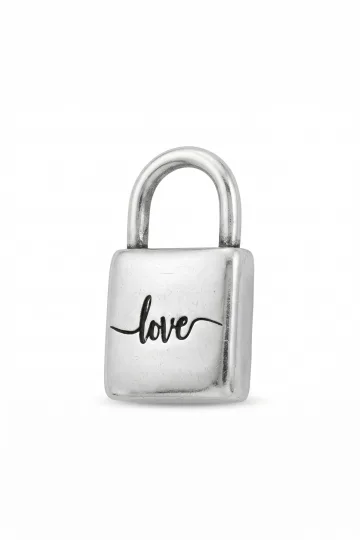
Wear the symbol, don't just read about it. These are in stock:




How this differs from plating or coating
Do not confuse argentium with plated pieces. Rhodium-plated silver or silver-plated brass are protected by a thin layer of another metal on the outside, and that layer wears away over time at the edges and the points of friction. Argentium is protected not by a coating but by its own composition: germanium runs through the whole mass of the metal rather than sitting on top. Scratch argentium and what lies under the scratch is still argentium, not a cheap base. Its resistance to tarnish is built in, not pasted on.
How a piece of jewellery is made from argentium
Working with argentium begins the same way as with ordinary silver: the alloy is melted, cast into a blank or rolled into sheet and wire. From there the differences begin. Germanium makes the metal behave differently under heat, so the maker controls temperature more precisely than with sterling. The finished piece goes through hardening: it is held at a set heat and then kept in the kiln at a low temperature, and only after this does argentium gain its signature firmness. Skip that step and you get a soft piece that bends easily. So good argentium is always a matter of two things at once: the right composition and the right heat treatment.
How much silver you actually get
It helps a buyer to understand the arithmetic. In an ordinary 925 ring, every hundred grams holds 92.5 grams of pure silver. In argentium of 935 fineness that is already 93.5 grams, and in 960 fineness a full 96 grams per the same hundred. The difference of a few percent sounds modest, but for it you get more precious metal, resistance to tarnish, and a cleaner colour all at once. In essence this is silver of a higher grade, it simply reaches the counter less often under the familiar word sterling.
Why ordinary silver tarnishes and argentium does not
The culprit is not silver but copper and sulphur
Many people think the silver itself blackens. In truth pure silver dulls slowly, while the speed of tarnishing is set by the copper in the alloy and the hydrogen sulphide in the air. Hydrogen sulphide comes off rubber, wool, onions, eggs, exhaust, household gas, and human sweat. Copper and silver react with this sulphur and form a dark sulphide on the surface. The more exposed copper there is, the faster and yellower the shine departs. That is why cheap silver with a large share of copper darkens before your eyes, while high-fineness silver holds out longer.
How germanium stops the tarnish
Germanium intercepts the reaction at the very start. Its oxide film settles on the surface before sulphur can get there and closes off access. The sulphur has nothing to react with: the copper is hidden under the germanium barrier, and germanium itself barely interacts with hydrogen sulphide. The result is that the alloy does not heroically resist tarnish, it simply starves it of fuel. No reaction means no blackening.
The self-healing layer is not a sales pitch
The most curious property is that the protective film restores itself. If you scratch argentium or polish away the top layer, the bared germanium oxidises again in the air within a short time and seals the metal once more. This ability is called the self-healing of the oxide layer, and it is real, not invented by sellers. That is exactly why an argentium piece scratched in wear does not, over time, darken along the scratch the way ordinary silver would.
What speeds up the tarnish of any silver
To appreciate argentium properly it helps to know what attacks silver in general. The culprit is almost always hydrogen sulphide and sulphur-bearing compounds. They are given off by boiled eggs, onions, mustard, rubber bands and eraser, woollen fabrics, latex gloves, household gas, city smog, and sweat. Humidity only speeds the reaction. So silver left in the bathroom or stored beside rubber bands blackens faster than silver kept in a dry box. Argentium goes through the same trials, but the germanium barrier denies sulphur its foothold, and the result is fundamentally different.
Does argentium ever tarnish at all
The honest answer is yes, under extreme conditions. Put argentium straight into a concentrated sulphur environment or expose it to very aggressive chemistry and the film will not save it. In ordinary life it never comes to that, but promising eternal shine would be a lie. It is fairer to say this: under everyday wear and normal storage argentium stays white many times longer than sterling, and for the vast majority of owners that means practically no tarnish at all.
Silver gone grey by lunch says lazy, not thrifty. Argentium keeps its cool white, and I will not hear otherwise.
How to wear argentium
Years of working with metals taught me that silver blackens sooner or later and drags a look down with it. Argentium takes that worry away, so I style it differently from ordinary silver. Here is what actually holds up on shoots and fittings.
Who do I recommend argentium to first? I suggest it to anyone whose silver forever tarnishes, whose skin is fussy, or who simply cannot be bothered with polishing. If you wear jewellery without taking it off - in the shower, asleep, at training - argentium forgives that. And I recommend it to those who love a cool, almost platinum white but will not overpay for platinum.
What clothes does argentium look best with? I match its cool white with a cool palette: blue, grey, black, emerald. It belongs in clean, minimal looks where the metal should read as costly and calm, without extra shine. With beige and ochre I suggest a restrained contrast. The colour stays even, so the piece never breaks the look as a yellowed patch.
Can I mix argentium with other metals? Mix it freely: the clean tone sits easily beside white gold, platinum, and steel. With yellow and rose gold I choose the classic warm-and-cool pairing. Mind the hardness - soft silver next to hard steel wears at the friction points, so I build a stack of mixed-metal rings with care.
Is argentium worth giving as a gift? It is a smart move for a present. The platinum cast looks dearer than the price, the metal does not tarnish and will not disappoint in a month, and it triggers no allergy. I recommend a smooth ring or earrings when you want to give real silver, but better than the ordinary kind, without gambling on the recipient's skin.
How do I wear argentium every day? Wear the ring, the earrings, and the chain without taking them off - that is the whole point of the alloy. Smooth surfaces and seamless links hold their whiteness longest, so for a daily set I choose simple shapes with no fuss. One clean accent in cool metal always beats a pile of dulled chains.

Turn on your camera, pick earrings, a pendant or a ring, and see the piece on yourself in real time.
Switch items in one tap.
Everything runs in your browser: no photo or video is ever uploaded.
Argentium finenesses: 935 and 960
935 is the base argentium
Argentium has two main finenesses, and both sit above the familiar 925. The base is 935: 93.5 percent silver, the rest germanium and a little copper. Note that there is already more silver here than in ordinary sterling, which means higher purity and a higher material cost. The 935 fineness goes into most cast and forged pieces where strength and good tarnish resistance are needed together.
960 is the premium option
The second fineness, 960, holds 96 percent silver. This is almost pure silver with a touch of germanium, whiter and nobler in look but softer. The 960 fineness is prized for the lightest, coolest white colour and for the smallest amount of stray impurities. It is chosen where the beauty of the surface matters more than resistance to knocks, for instance smooth wide surfaces, earrings, slim pendants.
Why the finenesses run higher than ordinary 925
The logic is simple: germanium takes the place of copper, and the silver is not reduced but often increased. So argentium by definition contains no less silver than sterling, and usually more. The high fineness here is not a marketing trick but a consequence of the recipe itself. For the buyer it means there is literally more precious metal in the piece at the same weight.
Customer reviews
Zevira is a real jewellery shop. Genuine payments, deliveries and customer thank-yous.
🥰🥰🥰 gracias

Ok, ¡gracias! 🙂

Argentium versus ordinary 925 sterling silver
Composition: where germanium sits, where only copper
This is the central fork, the reason the whole article exists. Ordinary 925 silver is silver plus copper and almost nothing else. If you are curious about what that figure actually hides, there is a detailed breakdown of the 925 mark. Argentium is silver plus germanium and only a little copper. At first glance the difference is one element, but it is precisely that which decides whether a piece blackens in the box or stays white for months.
Colour: argentium is whiter and cooler
Ordinary sterling has a faintly warm, slightly yellowish or greyish cast because of the copper. Argentium is noticeably whiter and cooler, closer to platinum or to a freshly rhodium-plated surface. Many people holding both metals side by side for the first time are surprised at how much cleaner argentium looks without any coating. This cool white is one of the reasons it is chosen for bright, minimal pieces.
Hardness: harder after hardening, softer when annealed
Hardness comes with an interesting twist. In the freshly annealed, soft state argentium is a little softer than ordinary sterling, which surprises an inexperienced maker. But argentium responds to heat hardening: after heating and holding it becomes noticeably harder than ordinary 925 silver. That is, a finished, properly hardened argentium piece holds its shape better and bends less, although it asks for a different approach in the workshop.
Tarnish resistance: a difference of several times
Here argentium wins outright. Ordinary 925 silver tarnishes from airborne sulphur within weeks, especially if it sits unused. Argentium under the same conditions keeps its whiteness many times longer. It is not forever bright, no silver is utterly tarnish-proof, but the gap between it and sterling is enormous and visible to the naked eye. If your main pain with silver is the endless polishing, argentium solves it almost entirely. For more on tarnish itself and how to fight it there is a separate guide on why jewellery darkens and how to bring back the shine.
Price: argentium costs more
Peace of mind has its price. Argentium costs more than ordinary sterling for several reasons at once: it holds more silver, germanium is not cheap in itself, and working with it demands skill and hardening equipment from the maker. The price gap is usually not dramatic, within the affordable silver segment, but it is there. In essence you pay extra to clean less often and admire the whiteness longer.
Upload a photo of your pet, someone you love, or an object. We'll build a 3D model and hand-cast it in pewter.




The history of argentium
Who invented it and when
Argentium was born in Britain in the early nineteen-nineties. It was developed by the British research metallurgist Peter Johns within the walls of Middlesex University. The aim was strictly practical: to create a silver alloy that does not tarnish and that is easier for a jeweller to work. This is not the trademark of a fashion house or an advertising stunt but the result of laboratory work on alloy composition, so calling it both a technology and a material is entirely sound.
How germanium got into the recipe
Johns went through additives capable of protecting silver from tarnish and settled on germanium. The idea was to find an element that forms a protective film of its own while not spoiling the colour and ductility of the silver. Germanium fitted perfectly: it gave a clear oxide, did not yellow the metal, and in small doses did no harm. After a series of trials and refinements the recipe came together into what is known today as argentium.
Why the alloy did not appear earlier
It may seem strange that people have worked silver for thousands of years yet an alloy that does not tarnish was devised only in the nineties. The reason is that germanium as a pure element was isolated only at the end of the nineteenth century, and its availability and the understanding of its properties came much later. Ancient masters simply did not have the right ingredient in hand. Argentium became possible only once metallurgy had reached the point of managing such delicate additions.
How argentium reached the shelves
The road from the laboratory to the buyer's hand took years. First studio jewellers took an interest: they were won over by the chance to fuse silver without solder and obtain clean seams. Gradually the alloy began to be produced as sheet, wire, and casting grain available to workshops. In parallel, a trademark stamp was attached to the name so that buyers could tell genuine argentium from ordinary silver. Today it is used around the world, though in the mass segment it still trails familiar sterling in reach.
Why the name simply means silver
The word argentium comes from the Latin argentum, that is silver, and the same root gives the chemical symbol for silver, Ag. So the name of the alloy literally calls it what it is: silver. This is a generic, descriptive name for a technology and a material, not the signboard of a fashion house. So saying and writing argentium is entirely fitting, just as we say sterling or bronze.
Hypoallergenic: why argentium is kind to skin
There is no nickel in argentium
The chief allergen in cheap costume jewellery and in part of the silver alloys is nickel. It is the most common cause of itching, redness, and eczema on lobes and fingers. There is no nickel in argentium: its composition is silver, germanium, and a little copper. So for people who react to nickel argentium usually suits far better than many bright alloys. If you are not sure what exactly causes your irritation, a separate breakdown of nickel allergy in jewellery will help.
Copper in small amounts rarely troubles
The small share of copper in argentium can in theory bother very sensitive skin, but a true copper allergy is extremely rare. Far more often the green or dark mark left by ordinary silver is mistaken for an allergy, though it is merely oxidation. Argentium has almost no oxidation and no nickel, so its chance of a reaction is among the lowest of all silver alloys.
Who this matters to most
For those who wear jewellery without taking it off and those with delicate skin, the hypoallergenic nature of argentium is especially valuable. A stud in a fresh piercing, a ring kept on for years, a chain under clothing in the heat, all of these are situations where a skin reaction is especially likely. Argentium lowers the risk because its composition holds no known aggressive allergens.
How a green mark differs from a real allergy
It is important to tell two different things apart. A green or dark mark on the skin from ordinary silver is copper oxidation, a chemical film that washes off with soap and water and is harmless in itself. A real allergy looks different: the skin reddens, itches, sometimes inflames and flakes, and the cause is almost always nickel. Since there is no nickel in argentium, and almost nothing there to oxidise, both troubles barely touch it. That is the practical sense of the word hypoallergenic as applied to this alloy.





The pros and cons of argentium
The main advantages
Argentium has plenty of strengths. It barely tarnishes thanks to the germanium film. It is whiter and cooler than ordinary silver without any rhodium plating. After hardening it is harder than standard sterling, which means a piece holds its shape better. It contains no nickel, so it is kind to skin. And there is one more merit, important to makers: it can be fused without solder.
Fusing without solder as an advantage
Among jewellers argentium is prized for an unusual ability: its edges can be joined by direct melting, with no separate solder. This is called seamless fusion, and it gives clean, invisible joints where ordinary silver would keep a trace of soldering. For rings, chains, and smooth pieces this means neatness and a strength of seam hard to reach with classic soldering. To the buyer it shows as a perfectly even surface with no dark lines at the joint.
The honest drawbacks
There are no perfect metals, and argentium has its weaknesses. It costs more than ordinary silver. In the soft annealed state it is more pliable, and with clumsy handling a piece is easier to deform before hardening. It is found in shops less often than familiar sterling, and not every maker works with it. And it asks for a different approach in soldering and heating, because germanium behaves differently from pure copper. For the buyer the main drawback is one: price and a narrower choice of pieces.
Is the surcharge worth it in practice
It is easier to reckon the gain through the habit of cleaning. If your ordinary silver lives in a box and comes out a couple of times a year, it is easy to polish before going out and there is little point paying extra for argentium. But if a piece is worn every day and constantly blackens, you spend time on cleaning, and abrasive polishing slowly eats away the surface and the fine detail. Here argentium pays for itself in convenience: less cleaning, less wear from polishing, a longer life for relief and engraving. For an everyday piece the surcharge is more often justified, for a dress and occasional one rather not.
Is argentium suited to engraving and fine work
Yes, and better than many alloys. The clean white ground sets off engraving to advantage, and the absence of tarnish means the thin lines of an inscription will not clog with black film as they do on sterling. Engraved rings, lockets, and name pendants in argentium read as clearly years on as they did on the day of purchase. The one caveat is again about softness: fine work is done on hardened metal or hardened afterwards so the detail holds.
Six fast checks, no tools. Leave your email, we'll send the PDF and a discount code.
No spam, unsubscribe anytime.
Argentium, rhodium-plated silver, and ordinary silver
How rhodium plating differs in essence
Rhodium plating is a coating of silver with a thin layer of rhodium, a metal of the platinum group. A freshly rhodium-plated piece is blindingly white and does not tarnish while the coating is intact. The problem is that the rhodium layer is very thin and wears away over time at the edges of a ring, on the clasp, at points of friction, after which the bared silver begins to darken as usual. Rhodium plating has to be renewed periodically at a jeweller.
Why argentium is more stable than a coating
Argentium is protected not on the outside but from within. Its resistance is spread through the whole mass of the metal, so there is nothing for it to wear off. Scratched argentium stays argentium, and its film restores itself. Rhodium, as it wears, bares defenceless silver. In durability the built-in protection beats the coating, though in initial dazzling whiteness fresh rhodium may be a touch brighter. By the same token, rhodium is what makes white gold white, and there too the coating eventually needs renewing.
When to choose which
If you want the whitest shine at any cost and are ready to renew the coating, rhodium-plated silver suits. If resistance without upkeep and the metal's natural white colour matter, your choice is argentium. Ordinary unplated 925 silver is cheaper than both but needs regular cleaning. Roughly put: sterling is the cheapest, fresh rhodium the whitest, argentium the most carefree.
Argentium versus white gold and platinum
Sometimes argentium is compared not with silver but with white noble metals. Platinum is the dearest and heaviest of them, naturally white and untarnishing, but it costs many times more than any silver. White gold is made by alloying yellow gold with white metals and usually coating it with rhodium, and it too needs the coating renewed over time. Against this backdrop argentium occupies a curious niche: it gives a cool platinum cast and tarnish resistance at the price of silver. It is no replacement for platinum in status and strength, but for an everyday white piece without extra outlay it is often the wiser choice.
Argentium versus steel and other alloys
Stainless steel is cheaper and stronger than any silver and likewise does not tarnish, but it is a base metal with a cool, faintly bluish tone and a quite different weight and ring. Bright copper-nickel alloys such as nickel silver imitate silver but contain nickel and are not precious. Argentium stands apart: it remains genuine high-fineness silver, nickel-free, with a resistance approaching that of steel, yet with the warmth and nobility of a precious metal. The choice between them is a choice between price and the standing of the material.
CAPAORA mini knife pendant
The 18th-century Spanish navaja in miniature: 40 mm of stainless steel, a real folding mechanism and a Palanquilla lock that clicks. An affordable gift to remember.
Authentic · Ships from Spain · 14-day returns
What pieces argentium is good for
Everyday rings
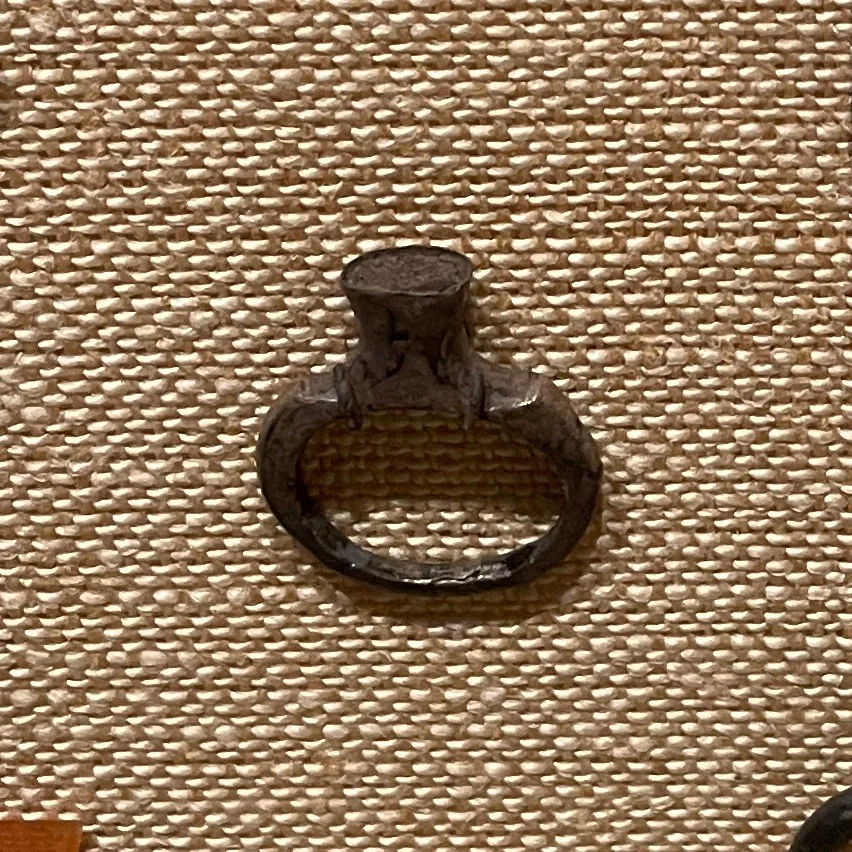
A ring is the most worked-upon piece: it rubs against everything, meets soap, creams, sweat. Ordinary silver on a ring tarnishes first. Argentium is almost ideal here: it holds its whiteness, and after hardening it resists deformation better. For an everyday ring you do not want to take off and polish constantly, this is a sensible choice.
Earrings and pieces against the skin
Earrings, especially in fresh piercings, touch the most sensitive skin. The absence of nickel makes argentium comfortable for ears. And tarnish resistance means the clasp and the post will not blacken where they are hard to clean. Smooth earrings of 960 fineness show the cleanest white colour.
Chains and smooth surfaces
On chains tarnish catches the eye especially: links rub, clog, blacken in the hollows. Argentium keeps a chain bright much longer. And seamless fusion makes it possible to form links with no visible trace of soldering, so the chain looks whole and neat. Wide smooth bracelets and pendants also gain: on a large even surface any tarnish is most noticeable, and here the resistance of argentium works to its full strength.
What suits it less
Where maximum strength is needed and holding a knock matters more than beauty, silver as such yields to steel or high-fineness gold, and argentium is no exception. For rough men's signet rings under hard wear or for pieces with thin fragile elements in the soft state, argentium asks for care and obligatory hardening. This is no ban but a reason to trust the work to a maker who knows how to handle it.
How to care for argentium
You still need to wash it
Tarnish resistance does not cancel hygiene. Sweat, creams, soap, and dust settle on any metal and make it dull, even if it does not blacken chemically. So argentium is worth washing now and then in warm water with a mild soap and wiping dry. The difference from ordinary silver is that you will not have to fight a black film, plain cleanliness is enough.
You hardly ever need to clean it specially
The chief joy of an argentium owner is that aggressive cleaning of blackness is almost never needed. No regular baths with soda and foil, no chemical dips. If the surface has dulled from dirt anyway, a soft silver cloth is enough. The less often you rub metal with abrasives, the longer its surface lives, and argentium is precisely what lets you rub it minimally.
How to store it
Storing argentium is easier than sterling, but the basic rules are the same: apart from other pieces so as not to scratch, in a dry place, ideally in a pouch or a box with a soft lining. The nearness of rubber, wool, and household chemistry is undesirable for any silver, and though argentium is more resistant, there is no reason to give it an extra cause to dull. In essence the care comes down to cleanliness and tidy storage, without cleaning rituals.
How to recognise argentium and what marks it carries
The trademark stamp in the shape of a flying creature
Argentium has its own identifying sign: beside the fineness a stamp is often placed in the form of a winged creature, alluding to the idea of lightness and purity. This is the trademark stamp of the alloy, and meeting it together with the number 935 or 960 you can be sure that before you is argentium and not ordinary sterling. Not every piece carries it, but where it is, it is a reliable clue.
The fineness figures 935 and 960
The chief technical sign is the fineness. Ordinary silver is marked with the number 925, argentium with 935 or 960. If a piece bears 935 or 960, that in itself speaks of a high share of silver and, as a rule, of the germanium recipe. The fineness is usually placed on the inner side of a ring, on the clasp of a chain, or on the post of an earring.
Indirect signs by eye
Without a mark it is harder to tell, but there are hints. Argentium is noticeably whiter and cooler than ordinary silver, it has no warm coppery cast. A piece that has lain long without cleaning and stayed white also hints at argentium: ordinary sterling would have yellowed in the same time. Only a jeweller or an analyser can determine the composition for certain, but colour and resistance give a first impression.
Send a friend a discount code, they save on their first order.
Facts that surprise
Germanium was named after Germany. The element was discovered by the German chemist Clemens Winkler in 1886 and given a name in honour of his country, so the silver that does not tarnish hides the name of a whole state.
An alloy only about thirty years old. People have worked silver for thousands of years, yet argentium appeared only in the nineteen-nineties, because before that makers simply did not have germanium in the right form.
The protection of argentium is clear and invisible. The germanium film that guards the metal is so thin that the eye cannot make it out, and the surface looks simply like clean silver.
Scratched argentium heals itself. Bare the fresh metal and germanium oxidises again within a short time, restoring the protection along the scratch.
Argentium can be welded without a drop of solder. Its edges join by direct melting, giving a seam with no dark line of soldering, a rarity for silver.
There is more silver in argentium than in ordinary sterling. The 935 and 960 finenesses run above the familiar 925, because germanium displaces copper, not silver.
Germanium is a cousin of silicon. The very metalloid on which all electronics rest does a quite different job in jewellery: it guards the shine.
The colour of argentium is closer to platinum. With no coating at all it gives off the same cool white people pay dearly for in platinum pieces.
The very word argentium means silver. It comes from the Latin argentum, from which the chemical symbol for silver, Ag, also arose.
Germanium was predicted before it was found. Mendeleev foretold the existence of this element and its properties some fifteen years before it was actually discovered, and guessed almost everything.
Argentium is harder than sterling, but only after the kiln. Before hardening it is softer than ordinary silver, and this duality throws makers used to sterling.
Frequent questions
Is argentium real silver? Yes, it is full-fledged sterling silver, only part of the copper in it is replaced by germanium. There is even more silver in argentium than in ordinary sterling: 935 and 960 finenesses against 925. It is not an imitation and not a coating but a precious metal of high fineness.
Does argentium not tarnish at all? There is no utterly tarnish-proof silver, but argentium tarnishes many times more slowly than the ordinary kind. The germanium film slows the reaction with sulphur, so under normal wear and storage the whiteness holds for months where sterling would have yellowed in weeks.
How is argentium better than ordinary 925 silver? In three things at once: it barely tarnishes, it is whiter and cooler in colour, and after hardening it is harder. Plus it has no nickel. You pay for this with a higher price and a narrower choice of pieces.
Is argentium hypoallergenic? It has no nickel, the chief culprit of jewellery allergy, so it suits most sensitive skin better than many bright alloys. A true allergy to silver or to the small share of copper is extremely rare.
How does argentium differ from rhodium-plated silver? Rhodium is a thin coating on the outside, it wears off and needs renewing. Argentium is protected by its own composition through the whole mass of the metal, there is nothing to wear off, and the film restores itself. Fresh rhodium may be a touch brighter, but argentium is more stable without upkeep.
Do you need to care for argentium at all? Cleaning blackness is almost never needed, but washing is worth it. Sweat and creams dull any metal, so rinse the piece now and then in warm water with a mild soap and wipe dry. Aggressive cleaning with soda and foil it does not need.
How do you recognise argentium in a shop? By the 935 or 960 fineness and by the trademark stamp in the shape of a winged creature beside the number. By eye it is whiter and cooler than ordinary silver. A jeweller will settle the exact composition if in doubt.
Argentium costs more than ordinary silver, is the surcharge worth it? If you are tired of constantly cleaning blackened silver and want a white colour without rhodium plating, the surcharge is justified. If budget is the priority and tarnish does not bother you, ordinary sterling is cheaper and always easy to polish.
In short
Argentium is sterling silver in which part of the copper has been replaced by germanium, and that single swap changes everything. Germanium itself creates a clear film that keeps sulphur from the metal, so the alloy barely tarnishes, and the scratched protection restores itself. Its finenesses run above the ordinary 925, the colour is whiter and cooler, after hardening it is harder, it has no nickel, and makers prize it for fusing without solder. The drawbacks are honest: it costs more, is found less often, and in the soft state asks for skilled hands. For rings, earrings, and chains worn every day and not meant to be cleaned constantly, this is one of the most sensible kinds of silver.
Silver, steel, coloured stones, symbolism, matching sets.
Buying it as a gift? Each one arrives ready to give.
 A branded Zevira box and a little card come with every order.













About Zevira
Zevira is a Spanish brand from Albacete, a city of metal masters. We love silver that lives long and stays white: high fineness, clean colour, neat seams. If you want to understand silver more deeply, begin with the guide to the 925 mark, and if you have had a reaction to jewellery, a breakdown of nickel allergy will help.