Crystal and rhinestones in jewellery: why glass sparkles, and what lead has to do with it
The fire in lead crystal is not magic and not a gemstone, it is lead. The lead oxide inside the glass slows light down and amplifies the play across the facets, a play that plain glass simply does not have. A rhinestone sparkles for one more reason too: there is a tiny mirror underneath it. A wafer-thin foil under the cut glass catches the light and throws it back toward your eye. No mysticism, pure optics.
Crystal and rhinestones have long lived their own life in jewellery, separate from precious stones. They do not seriously pretend to be diamonds, and they are not ashamed of being glass. For more than two centuries, Bohemian craftsmen have cut this glass so well that in the evening, by candlelight and lamplight, telling the sparkle of paste from the sparkle of a diamond becomes almost impossible. That was the whole point.
Let us sort it out honestly: what crystal glass actually is and how it differs from ordinary glass, why people keep confusing it with rock crystal (which is a stone), how rhinestones are built, how to tell them from diamonds and cubic zirconia, how to care for all of this, and why crystal sometimes turns cloudy after the dishwasher.
What crystal is: glass with a heavy metal added
Crystal is a special glass, not a separate material
Crystal is a type of glass. Ordinary glass is melted from sand (silica), soda and lime. To turn it into crystal, you add a heavy metal oxide to the mix, classically lead oxide. Lead makes the glass denser, heavier and far better at bending light. The glass stops being merely transparent and starts to play: rainbow sparks flash across the facets, sparks that bottle glass or window glass never show.
An important detail: chemically, crystal is not a crystal. The name is misleading. There is no ordered crystal lattice inside it, the way there is in a real mineral. It is an amorphous substance, a frozen liquid, like any glass. The word "crystal" stuck to it for its beauty and brilliance, by resemblance to rock crystal, not because of its structure.
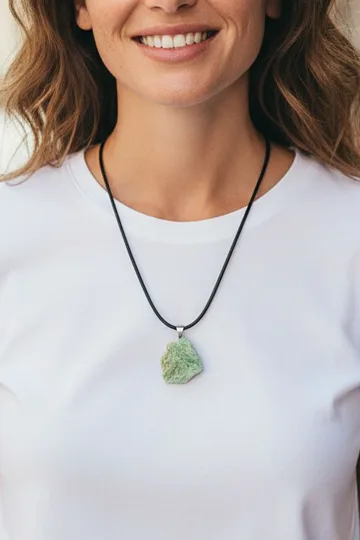
Wear the symbol, don't just read about it. These are in stock:





How much lead makes glass into crystal
The boundary is not arbitrary. Historically, glass was called lead crystal if it held a noticeably large amount of lead oxide. In the European tradition, full lead crystal meant glass with a lead oxide content of 24 percent and above. With less lead, from roughly 10 to 24 percent, you get plain "crystal" or "lead glass" of a lower grade. Glass with very little lead, or none, made instead with other metal additives, did not formally count as crystal under the old rules, even though it could sparkle almost as well.
The more lead, the higher the density, the heavier the piece, the brighter the refraction, and the softer the glass itself (easier to cut and facet). That is exactly why expensive crystal chandeliers and stemware are so heavy and dazzle so brightly in the light.
Barium and other lead-free crystal
Lead is convenient, but toxic, and the industry is slowly moving away from it. Modern lead-free crystal is made by replacing lead oxide with oxides of other heavy elements: barium, zinc, potassium, sometimes titanium. Barium crystal gives high density and good brilliance without lead, which is why it is popular wherever safety matters: tableware, items for children, affordable costume jewellery.
In brilliance, good lead-free crystal is barely behind the leaded kind, especially in jewellery where the facets are small. The difference shows up more in heavy table glass and in the highest grades of optics. For earrings or a necklace, barium glass works beautifully.
Cut glass, crystal and lead crystal: a difference in words
In catalogues the same item may be labelled in several ways, and that is confusing. "Cut glass" describes the finishing: glass that has been given facets. "Crystal" in costume jewellery is a marketing name for bright faceted glass, usually leaded or barium, and it has nothing to do with real mineral crystals. "Lead crystal" is the same thing with the heavy metal named outright. All these terms in jewellery describe essentially one thing: transparent glass of raised density, faceted for brilliance. You only have a stone where the description clearly says a mineral.
How crystal differs from ordinary glass
Refraction of light: where the play of facets comes from
The main difference cannot be felt by touch, but the eye sees it. A heavy metal raises the glass's refractive index, that is, the force with which the glass bends and slows the light passing through. Ordinary glass has an index of about 1.5; good lead crystal is noticeably higher. The harder the glass "brakes" the light, the brighter it plays across the facets and the more clearly it splits into coloured sparks.
That is why crystal cut with many small planes flares up in sun and lamplight, while ordinary glass of the same size looks dull and flat. It is not about the purity of the material, it is about the optics.
Weight and density: crystal is noticeably heavier
Lead and barium are heavy, and glass containing them becomes denser. A crystal bead is distinctly weightier than a glass bead of the same size. This weight often gives the material away by feel: hold a crystal pendant and a plain glass one of similar size, and you sense the difference at once. Crystal has a pleasant, "substantial" heft that the mind quietly reads as quality.
Ring: why crystal sings
Tap your nail against a crystal glass and it answers with a long, clear ring that lasts a second or more. Ordinary glass clinks short and dull. The reason is the uniformity and density of the material: dense, stress-free glass holds its vibration for a long time. This "singing" ring was for centuries a household test for crystal. You cannot use it on jewellery (a bead is too small), but for tableware it is still an honest check.
Transparency and clarity
Quality crystal is usually cleaner and more transparent than mass-market glass, without the greenish or greyish tint that iron impurities give cheap sand. Good crystal glass is melted from choice raw material, so it comes out colourless and shines harder. But this is not an absolute rule: there is very clean ordinary glass, and there is tinted crystal. In the end optics and weight decide, not transparency alone.
Rhinestones are for candlelight, never the office strip-light. In daylight the sparkle shows its price tag, and don't argue.
How to wear crystal and rhinestones
Over years on set I have tested sparkle under every kind of light, from studio lamps to candles. Here is what actually holds a look together instead of throwing sparks at random.
Where do I wear rhinestones so they never look cheap? I recommend saving the big sparkle for the evening: a candlelit dinner, a party, a shoot, the theatre. Rhinestones are built to catch warm, pointed light, and that is where they truly play. A large sparkling necklace under an office strip-light is not something I suggest; that light gives it away at once.
Is crystal even right for daytime? Yes, if you go smaller. For every day I choose fine crystal beads or a modest stud with a single stone. That kind of sparkle reads as a tidy detail rather than a string of fairy lights, and it lives happily with jeans and a white shirt.
How do I avoid overdoing the shine? I suggest one bright point per look. A sparkling rhinestone necklace asks for calm earrings, and the other way round. Crystal gets on well with smooth metal that has no stones of its own and does not compete for attention. Two sparkling accents side by side simply cancel each other out.
Are coloured rhinestones a way to bring in colour? That is exactly how I use them. Blue instead of sapphire, red instead of ruby, green to echo the eyes or the dress. I recommend matching the shade to the outfit or the eyes, so the coloured stone reads as a deliberate accent rather than a stray detail.
What should I choose for an evening dress under lamplight? With a rich fabric (wine, emerald, black) I choose clear crystal or an Aurora Borealis rainbow coating. Off the facets, in the light, it gives the most play, which is what these stones were cut for over centuries. Against bare skin at the collarbone the sparkle reads best.

Turn on your camera, pick earrings, a pendant or a ring, and see the piece on yourself in real time.
Switch items in one tap.
Everything runs in your browser: no photo or video is ever uploaded.
Crystal glass versus rock crystal (quartz): do not confuse them
This is the most common confusion in the topic, and it deserves a separate look, because we are talking about two completely different things that go by almost the same name.
Crystal glass is man-made glass
The crystal this article is about is glass. It is melted in a furnace from sand with lead or barium added, then cast, blown or pressed and cut. It is a material made by people, amorphous, with no crystal lattice. Its price is the price of glass, and it repeats perfectly: you can make a million identical sparkling beads.
Rock crystal is the mineral quartz
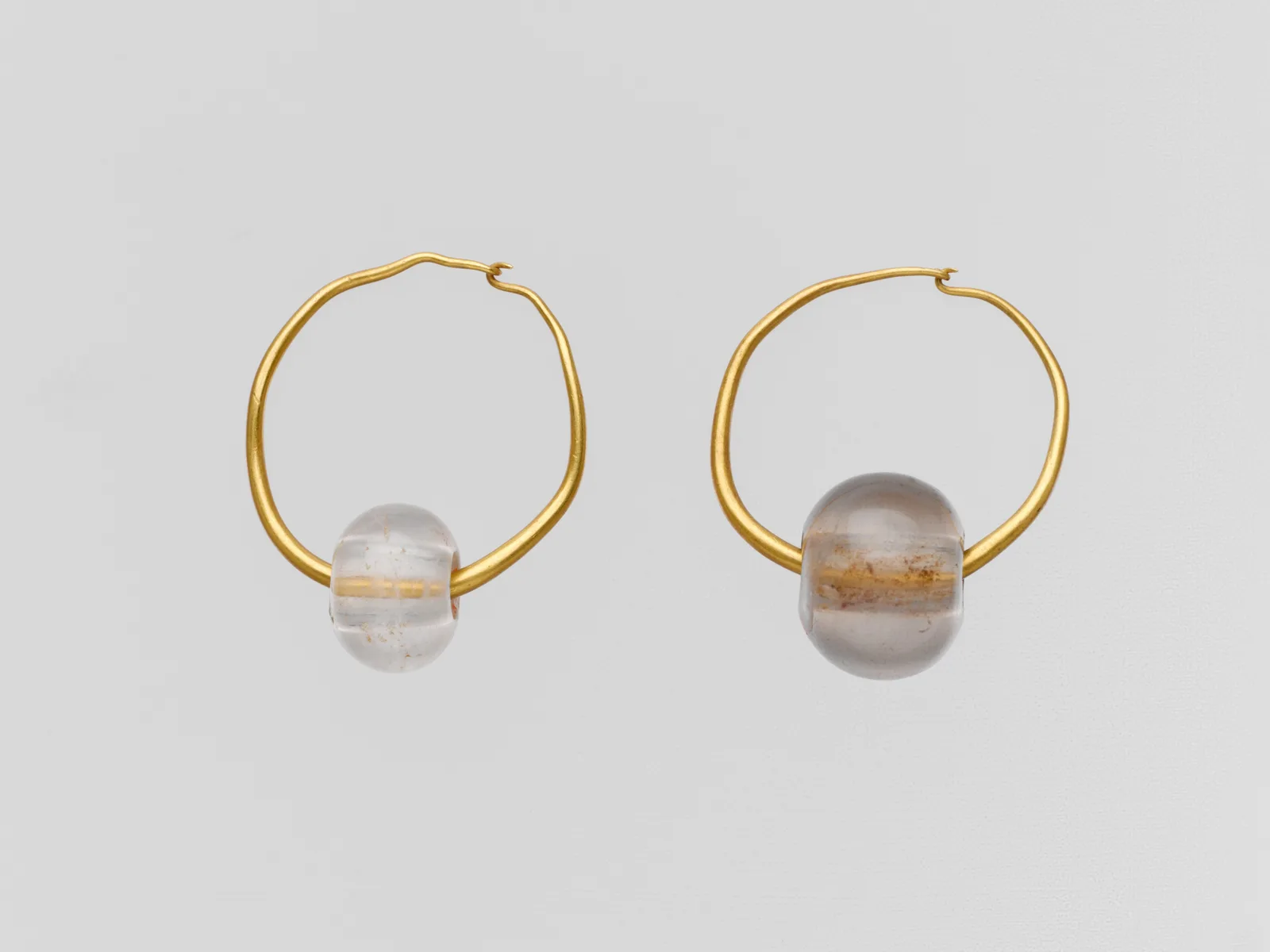
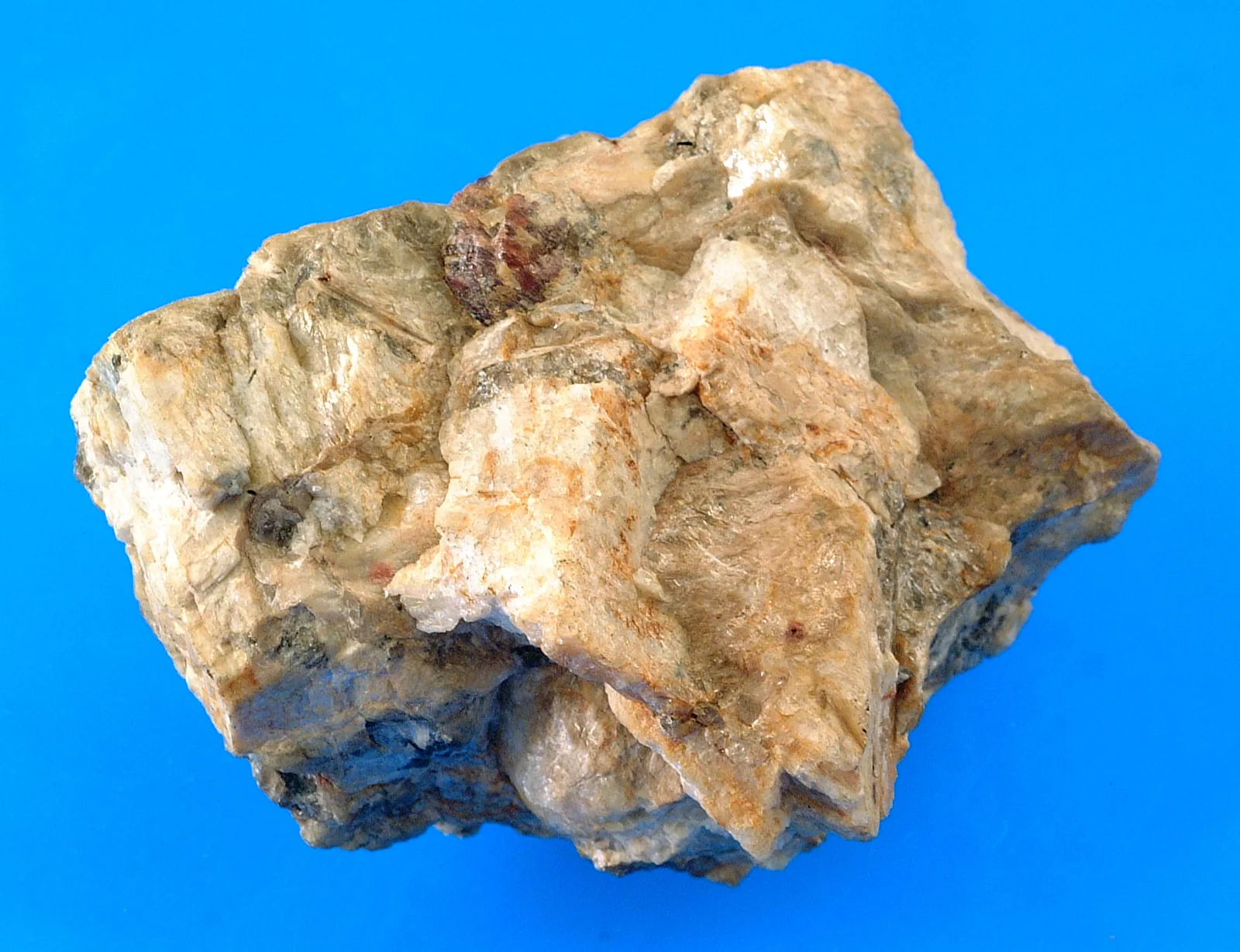
Rock crystal is a natural stone, the transparent variety of quartz (silica in crystalline form). It grows in the earth over millions of years, with a genuine ordered crystal lattice, six-sided prisms, natural inclusions. It is not glass. It has its own hardness, its own structure, its own energy in esoteric lore. Smoky quartz, amethyst and citrine are all its coloured relatives in the quartz family.
How to tell stone from glass
A few practical signs. Natural rock crystal is usually colder to the touch and stays cool longer, because it conducts heat away better; glass warms up faster in the hand. A stone often shows natural inclusions, hairline "veil" fractures, sometimes tiny bubbles of natural form; in cast glass the bubbles are round and placed at random, and the facets may be slightly melted-over. Quartz is harder than glass, glass will not scratch it, while it can leave a scratch on glass. And the key point by meaning: crystal glass is made by faceting, for the sake of brilliance, while rock crystal is a stone in its own right, valued for being natural. If a jewellery description says "crystal" with no qualifier, it almost always means glass; a stone is usually named separately: "natural rock crystal".
What rhinestones are: cut glass pretending to be a diamond
A rhinestone is an imitation stone, not a grade of glass
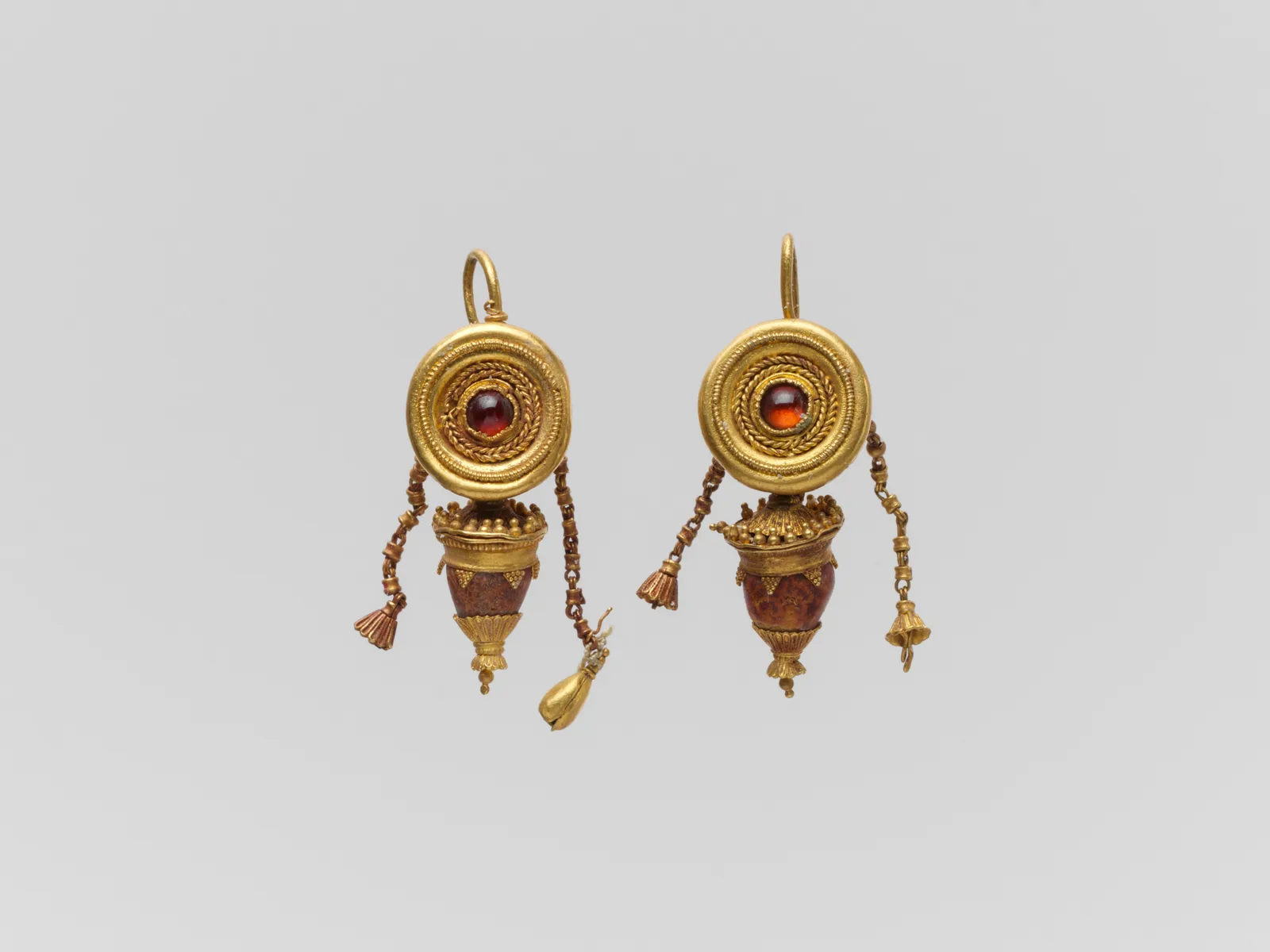
A rhinestone is a small imitation stone, most often made of cut glass (that same crystal), built to sparkle like a precious gem. The English name comes from quartz pebbles once found along the Rhine, while the related term "paste" recalls the eighteenth-century jewellers who perfected a bright leaded glass to fake diamonds. Either way, a rhinestone is any sparkling glass or crystal stone for jewellery and trim.
A rhinestone is almost always cut with many flat facets, like a real diamond. The cut is not for the beauty of the shape but for the optics: each facet reflects and refracts light, and the more facets there are and the more precisely they are set, the brighter the stone plays.
Foil backing: a mirror under the stone
The main secret of a classic rhinestone's brilliance hides underneath. The back of the stone is covered with a wafer-thin mirror layer, foil or a metal coating. This backing works like a mirror: light that entered the stone from above and reached the bottom is thrown back toward the eye instead of passing straight through. So a foil-backed rhinestone glows from within more brightly than a plain glass bead with no backing.
This trick has a downside. The foil fears water and moisture: if water gets under the backing, the little mirror clouds over, darkens in patches and the stone dims forever. That is exactly why foil-backed rhinestones must not be soaked or washed carelessly. More on this in the care section.
How a rhinestone differs from a bead and a cabochon
A bead is glass with a hole, usually smooth or with large facets, meant for stringing. A cabochon is a stone or glass without facets, with a smooth domed top and a flat bottom, set in a mount or glued on. A rhinestone is specifically a faceted little stone with sharp facets and often a backing, built for brilliance. The same crystal can become a bead, a cabochon or a rhinestone; the difference is in the shape and finishing, not in the material.
Customer reviews
Zevira is a real jewellery shop. Genuine payments, deliveries and customer thank-yous.
🥰🥰🥰 gracias
Ok, ¡gracias! 🙂
History: how Czech glass became the capital of sparkle
Bohemia: glass born of forests and quartz
The historical region of Bohemia (today's Czech Republic) became the glass capital of Europe for good reason. Everything needed came together here: clean quartz sand, vast forests for fuel and potash from wood ash. As early as the seventeenth century, Bohemian craftsmen learned to melt a hard, light potash glass that could be cut and faceted like stone. This "Bohemian glass" became famous for engraving and carving into a thick transparent body and rivalled the thin Venetian glass, which was not suited to deep cutting.
The rise of paste in the eighteenth century
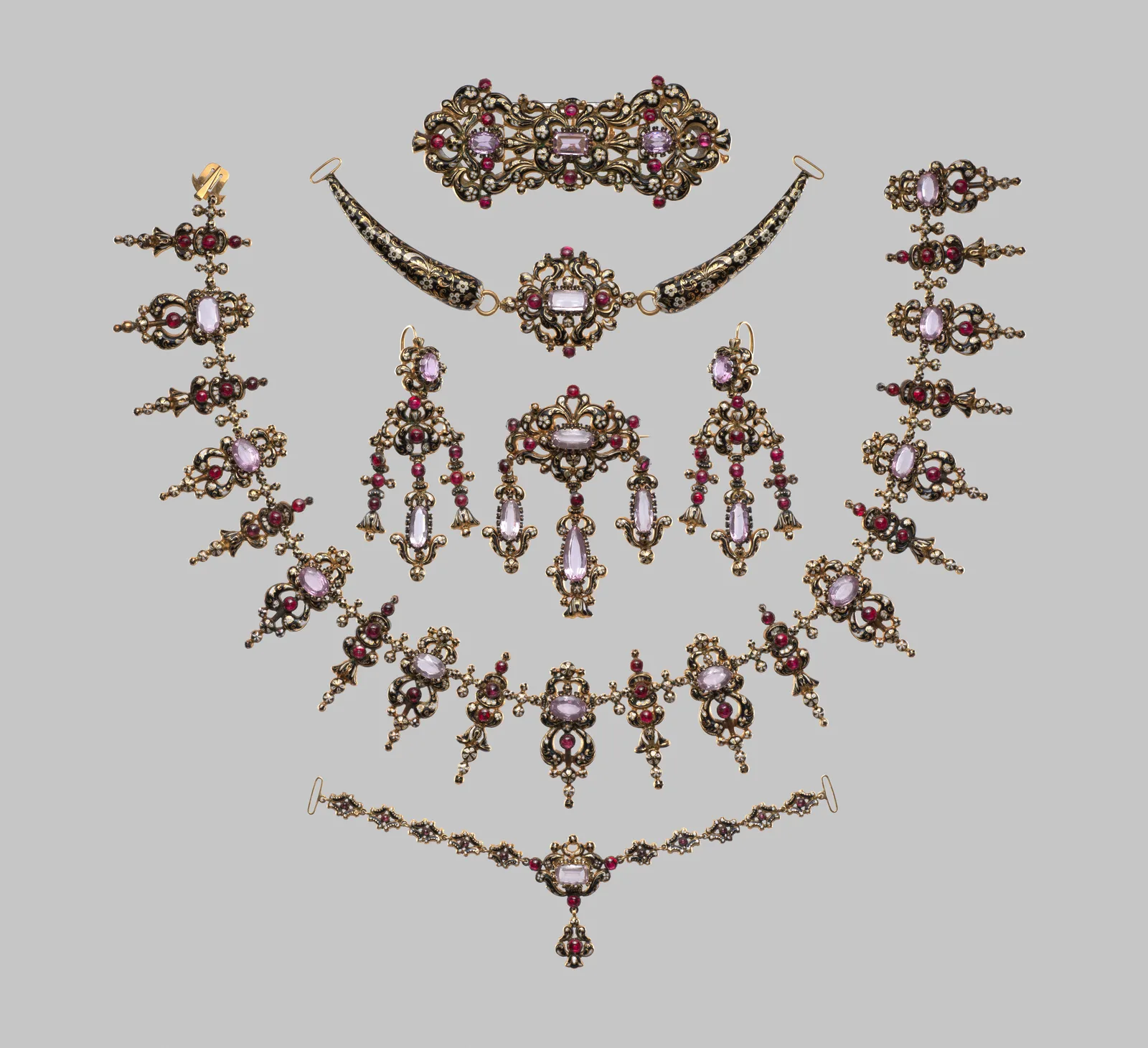
The eighteenth century gave Europe a craze for diamonds, and there were never enough to go round. Demand bred a solution: learn to make glass imitations that, by candlelight, you could not tell from the real stones. Craftsmen improved the recipe for leaded glass, packed in more brilliance, and worked out how to facet it and slip foil behind it. So paste was born as a phenomenon, a socially democratic jewel that sparkled almost like a diamond yet cost incomparably less. At a ball, by candlelight, paste was indistinguishable from a true gem, and that made it wildly popular.
Gablonz (Jablonec) as the capital of paste
In the nineteenth and twentieth centuries the centre of paste and glass costume jewellery production became the town of Gablonz an der Neisse, in Czech Jablonec nad Nisou, in northern Bohemia. A whole industry grew up here: thousands of craftsmen and workshops melting glass, cutting stones, making beads, buttons, brooches and findings. The name "Gablonz glass" became a byword for quality glass imitation. Jablonec supplied rhinestones and glass stones to the whole world: they travelled to every continent, dresses were embroidered with them, hats were trimmed with them, and inexpensive yet radiant jewellery was made for millions of people.
A tradition of cutting and the flowering of costume jewellery
The strength of the Czech school was the cut. Machine and hand cutting of glass stones were brought to perfection here: precise angles, clean facets, repeatable quality. In the twentieth century this coincided with the flowering of costume jewellery as a genre in its own right, jewellery that makes no claim to be precious but boldly plays with colour and sparkle. Rhinestones stopped being only a cheap diamond fake and became a fully expressive material: colourful, vivid, available to everyone. That tradition is alive today, and good Czech glass is still prized for the clarity and precision of its facets.
Upload a photo of your pet, someone you love, or an object. We'll build a 3D model and hand-cast it in pewter.



Leaded versus lead-free crystal: safety and ecology
Why the move away from lead
Lead gave crystal its magic, but it is a heavy, toxic metal. The danger is not in wearing a crystal brooch (lead from glass barely passes through the skin) but in long contact with food and drink. Lead can slowly migrate from crystal tableware into acidic drinks left standing in it for a long time. So for tableware, leaded crystal is being abandoned, and in production there is care for the health of workers who breathe dust while grinding.
Modern lead-free crystal
Today most new crystal is lead-free. Lead is replaced by barium, zinc, titanium, potassium oxide. Such glass is safer at home and in production, and it shines almost the same. For jewellery this is especially handy: lead-free crystal gives wonderful brilliance, sits calmly against the skin and raises no safety questions. If ecology matters to you, look for the label "lead-free" or "barium crystal".
Is crystal dangerous in jewellery
For jewellery the worry is almost groundless. Earrings, a pendant or a brooch do not touch food and do not lie wet against the skin for long. Lead from dense glass is not released in dangerous amounts in normal wear. The main risks of crystal in jewellery are practical, not toxic: it scratches, it is heavy and it fears knocks. If you feel calmer with lead-free glass, choose it, since modern costume jewellery offers plenty of it.
How rhinestones are made and why they shine
The cut: the mathematics of light
A rhinestone's brilliance begins with geometry. A glass blank is faceted into many flat planes at precise angles. The upper part (the crown) with a table on top gathers and refracts light, the lower part (the pavilion) tapers to a cone and works as a system of internal mirrors. If the angles are set correctly, light that entered from above is reflected many times inside the stone and comes back out upward, toward the eye, splitting into rainbow sparks on the way. The more precise the cut, the more "alive" the rhinestone plays.
The mirror backing: a brilliance booster
Where the geometry of the cut alone is not enough (with flat stones, say, or shallow rhinestones), the foil backing comes to the rescue. The mirror layer underneath stops the light escaping straight through and drives it back. It is the backing that makes a flat rhinestone, sewn into fabric or glued into a mount, so bright despite its modest shape. Without the little mirror the same stone would look like a dull bit of glass.
Coatings and sputtered films
Over the foil, or instead of it, rhinestones are given wafer-thin metallic and oxide coatings. These produce the coloured and rainbow effects discussed separately below. Technically this is nano-coating in a vacuum: a thin film is deposited on the glass surface, and it plays with colour through light interference, like a soap bubble or a film of petrol on water.



How rhinestones differ from diamonds and cubic zirconia
Hardness: the main difference
A diamond is the hardest natural material; almost nothing scratches it. Cubic zirconia (CZ) is also fairly hard and scratch-resistant. A rhinestone is glass, and glass is soft: it scratches easily, the facets wear smooth over time and lose their crispness, the sparkle dims. This is the first and most reliable difference. A glass rhinestone lives brightly but not for long, in terms of sparkle; a diamond and CZ hold their fire for years.
Heat conductivity and "breath"
A diamond conducts heat superbly, so in a dedicated tester it behaves differently from imitations and quickly carries away the warmth of a finger. Glass and CZ conduct heat worse. The household version of the test: breathe on the stone. Glass and many imitations fog up and stay fogged for a couple of seconds, a diamond clears almost at once, because it whisks the heat away. The test is crude, but it tells you something.
Play and brilliance to the eye
A diamond gives a characteristic mix of white brilliance and calm coloured flashes. CZ often plays even brighter and more "rainbow" than a diamond, sometimes excessively. A rhinestone sparkles vividly but more "glassily", on the surface, without the depth that a diamond's high refractive index gives. On a table in bright light the difference is visible to a trained eye; from a distance and by candlelight all three shine alike, which is what kept paste successful for centuries.
How to tell a rhinestone from a diamond at home
A few simple signs. Weight: a diamond is light for its size compared with many imitations, while CZ is heavier. Facets: a real stone has sharp, even edges, while a glass rhinestone often has slightly melted, less crisp edges, and bubbles may show inside. Wear: an old rhinestone shows scratches and worn facets under a loupe, a diamond does not. And plain common sense: if a "diamond" is large, bright and costs about the same as a meal out, it is a rhinestone or CZ, and there is nothing wrong with that if you know what you are buying. Diamond imitations are covered in detail in the guide to moissanite and lab-grown stones.
The newspaper test and the loupe test
Two home tests that often work. Place a transparent, unset stone table-down on printed text. Through a correctly cut diamond the letters are almost unreadable, the light scatters; through glass and many imitations the text is often legible or the lines can be made out. The second test is under a loupe: look for internal bubbles and melted facets, a sure sign of cast glass. A natural stone may have inclusions, but not round air bubbles. Both tests work better on large unset stones and worse on small ones in a setting, but together with weight and sound they give a fairly clear picture.
Leave your email, we'll send your discount code. No spam, unsubscribe anytime.
The code arrives by email, valid on your first order.
Coloured rhinestones and optical effects
Clear and coloured rhinestones
Rhinestones come colourless (to mimic diamonds) and coloured. Colour comes from metal additives put straight into the glass: cobalt gives blue, copper and chromium green, gold and selenium red and pink, manganese violet. A coloured rhinestone imitates not a diamond but a sapphire, ruby, emerald, amethyst. Because the colour is in the glass itself, it does not fade or rub off, unlike surface coatings.
Aurora Borealis (AB): the rainbow coating
The most famous effect is the "Aurora Borealis" coating, written as AB in catalogues. It is a wafer-thin metallic film that gives an iridescent rainbow sheen, like the northern lights, hence the name. The same rhinestone with an AB coating plays now pink, now blue, now greenish as it turns. The coating is usually applied to half or part of the stone, so it sparkles in many colours. AB rhinestones are loved in embroidery, on dresses and in dressy costume jewellery for that lively shimmer.
Chameleon and other complex effects
Beyond AB there are rarer coatings: "chameleon" (it shifts its main tone with the lighting, from daylight to warm lamplight), metallised and "oily" sheens, matte satin finishes. They all rely on thin films on the glass surface. They share one drawback: a surface coating is more delicate than the glass itself, easier to rub off with friction, harsh chemistry and abrasives. So rhinestones with a striking coating need especially gentle care.
The opal effect and frosted glass
A separate family of effects imitates not brilliance but a soft milky glow. "Opal" or "alabaster" glass is made semi-transparent, with a light haze inside, so it glows gently like a moonstone or an opal. Frosted (satin) glass, by contrast, mutes the sharp sparkle and gives a calm, silky tone. These effects are valued by those for whom a sharp diamond glitter feels too loud: a milky rhinestone looks costlier and quieter, closer in character to a real semi-precious stone.
Care: why crystal turns cloudy and how to keep it
The main enemy of crystal is the dishwasher and household chemistry
Crystal and rhinestones turn cloudy not from age but from wrong washing. Hot water, harsh detergents and the dishwasher above all slowly eat at the surface of the glass, leaving a matte film that can no longer be rubbed off. For foil-backed rhinestones it is worse still: water seeps under the mirror backing and the stone darkens in patches forever. So crystal jewellery and rhinestones are never washed in the dishwasher, boiled or soaked.
Perfume, hairspray and cream
Cosmetics are enemy number two. Perfume, hairspray, creams and oils settle on the facets as a film, clog the relief of the cut, and the brilliance dies. AB-type coatings can dull from alcohol-based perfume. The golden rule: jewellery goes on last, after makeup, hair and fragrance, and comes off first. That keeps the facets clean and the coating intact.
How to clean crystal and rhinestones properly
Gently and dry. Wipe the stones with a soft, dry or barely damp microfibre cloth. If you need to go deeper, use a just-damp cloth with a drop of mild soap, work carefully over the facets with a cotton bud and dry at once. No soaking, especially for glued and foil-backed rhinestones: water under the mount dissolves the glue and ruins the backing. A soft, dry clean after every wear keeps the sparkle longest. General principles of home jewellery cleaning are gathered in the guide to cleaning gold and silver at home.
They fear knocks and scratches
Glass is brittle and soft. A crystal pendant chips if it strikes tile or the sink, and a rhinestone's facets wear down from rubbing against a bag, keys and other jewellery. Store crystal and rhinestones separately, in a soft pouch or a compartment, not tipped into one heap with metal and stones. Take jewellery off before sport, cleaning and sleep. Careful storage extends the life of the sparkle more than any cleaning.
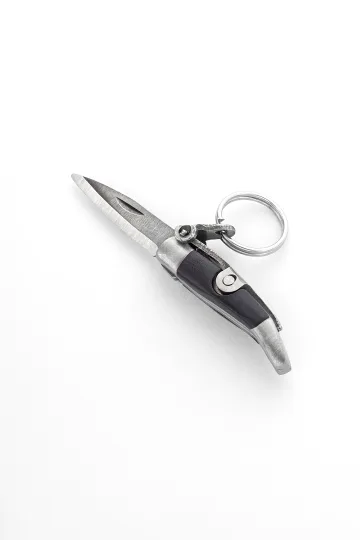
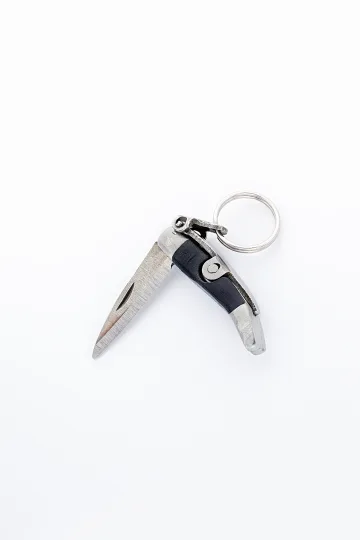
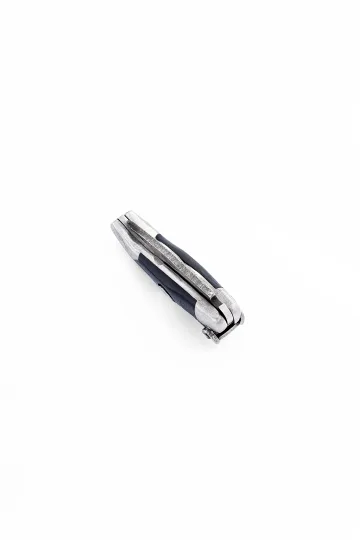
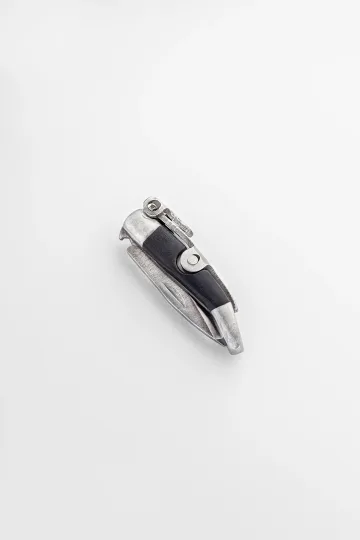
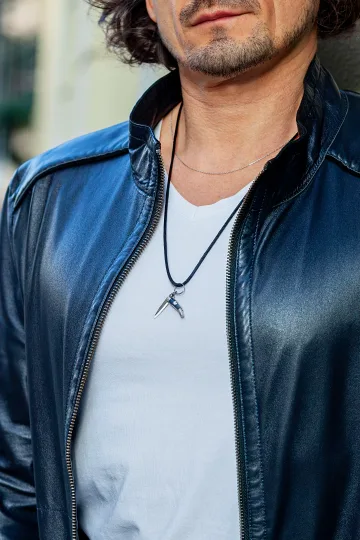
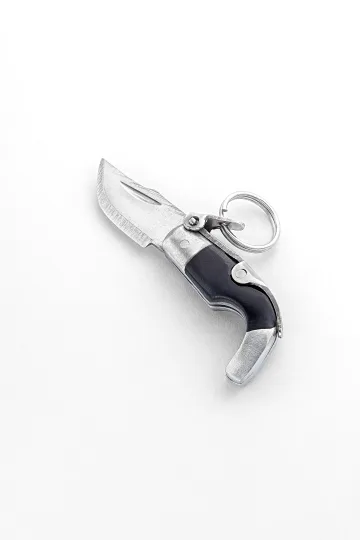
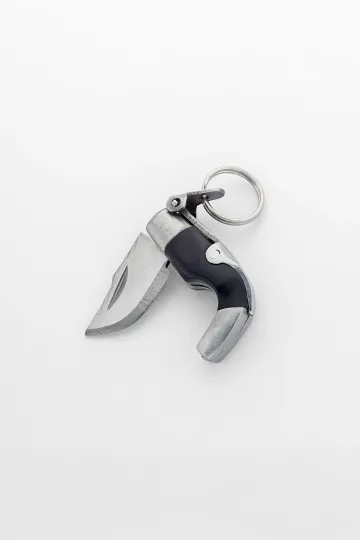
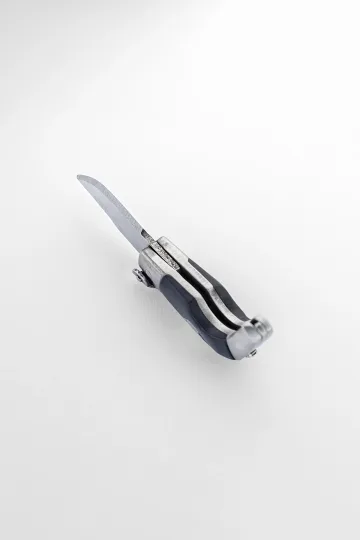
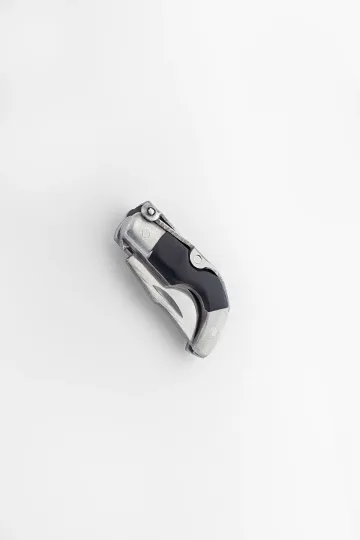
CAPAORA mini knife pendant
The 18th-century Spanish navaja in miniature: 40 mm of stainless steel, a real folding mechanism and a Palanquilla lock that clicks. An affordable gift to remember.
Authentic · Ships from Spain · 14-day returns
How to tell crystal and rhinestone from ordinary plastic
Weight and temperature
The fastest test by feel. Glass (crystal) is heavy and cool, it warms slowly in the hand and pleasantly chills. Plastic is light and turns warm at once, "nothing" to the touch. Hold the stone in your palm for a few seconds: if it stays cool and weighty, it is glass; if it heats instantly and is almost weightless, it is plastic (acrylic, resin).
Facets, sound and scratches
A glass rhinestone has sharp, crisp facets and hard edges. Cast plastic often has rounded, soft facets with "smeared" corners and sometimes a visible seam from the mould. Tap the stone against your teeth or with a nail: glass answers with a hard, clear sound, plastic with a dull one. Glass does not scratch under a nail and has no smell; plastic is softer and can give off a chemical smell when warmed. Together these signs almost always give the right answer.
Formats: where crystal and rhinestones live
Necklaces, earrings and brooches
Crystal and rhinestones shine in dressy jewellery. Necklaces and earrings of faceted crystal stones give evening sparkle without the price of fine gems. Rhinestone brooches are a classic of their own: sparkling stars, flowers, bouquet brooches assembled entirely from small faceted stones on metal. This is the case where brightness and sparkle matter more than the "realness" of the stone.
Glass beads and crystal strands
Faceted crystal beads (bicones, rondelles, faceted rounds) are the workhorse of costume jewellery. From them people build bracelets, strands, earrings. Each bead is cut to catch the light, so a strand of crystal beads glitters with every movement. The artistic cousin of this glass, coloured Murano, is worth a look in the feature on Venetian glass; it is a different genre of glass, not an imitation of stones but a beauty of colour in its own right.
Sew-on and glue-on rhinestones
A whole separate world is rhinestones for trim. Sew-on rhinestones have holes or a mount with holes, and are stitched onto fabric, dresses, bags, shoes. Glue-on rhinestones (including hotfix ones) are set with glue or pressed on with an iron through a layer of heat glue on the back. Chaton rhinestones sit in metal claw mounts, from which rhinestone chains and large elements are assembled. This decoration turns an ordinary thing into a dressy one and is widely used in clothing, accessories and handmade work.
Drawbacks worth knowing honestly
It scratches and dulls
Glass is soft. A rhinestone's facets wear smooth over time, microscratches appear, and the sparkle for which the whole thing was made gradually fades. This is not a defect but the nature of the material. Careful wear and storage slow the process but do not cancel it. Crystal is a jewel that shines brightly but needs care and does not last forever.
The weight of large pieces
Crystal is dense and heavy. A massive necklace or large earrings of crystal stones can pull noticeably. For long wear choose lighter pieces or ones with small stones, especially with earrings: heavy stones drag on the earlobe.
The backing fears water
Foil-backed and glued rhinestones are vulnerable to moisture. Water under the mirror backing means dark patches and a loss of brilliance with no way to repair it. So such jewellery must not be washed by immersion, soaked or worn in water. This drawback is fully cured by care, but it cannot be forgotten.
Send a friend a discount code, they save on their first order.
Facts that surprise
Crystal sings, and you can tune it
That same clear ring of a crystal glass was turned into a musical instrument. The glass harmonica, invented in the eighteenth century, and sets of "singing glasses" play melodies because dense glass resonates long and cleanly. By changing the amount of water in a glass or the size of the bowl, musicians tune the pitch. The result is an eerie, tender sound for which serious music was written. The root of this singing is the same as the root of the sparkle: uniform, dense lead glass.
Lead in glass was known in antiquity
The idea of adding a heavy metal to glass for brilliance is not new. Lead glass was melted in antiquity, in Mesopotamia and later in the Roman world, for beads, inlays and imitation gems. Ancient craftsmen understood by eye that lead made glass brighter and easier to work, long before chemistry explained why. Modern crystal is simply a very old idea brought to perfection.
Czech cutting made sparkle democratic
Before the Czech masters, the sparkle of a cut stone was a privilege of the rich: only a few could cut, and only precious stones at that. The machine cutting of glass, refined in Bohemia and Jablonec, made a sparkling faceted "stone" cheap and available to everyone for the first time in history. A dress embroidered with thousands of glittering rhinestones stopped being only for royalty. In essence, Czech glass democratised sparkle, and that is its true role in the history of jewellery.
Frequently asked questions
Are crystal and rock crystal the same thing?
No. Crystal (in jewellery) is glass with lead or barium added, a man-made material. Rock crystal is a natural mineral, the transparent variety of quartz, a real stone with a crystal lattice. The names are alike through historical confusion, but they are different things: glass and stone.
Are rhinestones always fake diamonds?
Originally a rhinestone was created as a diamond imitation, and clear rhinestones really do "stand in for diamonds". But today rhinestones are a material in their own right: coloured rhinestones imitate sapphires and rubies, or imitate nothing at all and simply give bright colour and sparkle. This is honest glass jewellery, not deception.
Why have my rhinestones gone dull and cloudy?
Most often from water, the dishwasher, perfume or cream. Moisture ruins the foil backing, chemistry and hot water eat at the glass surface, cosmetics clog the facets. Crystal clouded by washing cannot be restored, so it all comes down to prevention: dry cleaning, no soaking, jewellery on last.
Can I get rhinestone jewellery wet?
Better not, especially if the rhinestones are glued or foil-backed. Brief contact with water during careful washing will survive on most solid glass beads, but immersion, soaking and bathing in rhinestone jewellery lead to cloudiness and dark patches under the backing. Take such pieces off before the shower, the pool and the sea.
How do I tell a crystal rhinestone from a plastic one?
By weight and temperature: glass is heavy and cool, plastic is light and warms fast. By facets: glass has sharp, hard edges, plastic has rounded ones with a seam from the mould. By sound: glass rings hard, plastic answers dully. Together these signs rarely go wrong.
Is lead crystal dangerous if worn against the skin?
In jewellery, practically not. Lead from dense glass does not pass through the skin in meaningful amounts in normal wear. The danger of lead crystal is tied to tableware and long contact with food, not to earrings or a brooch. If you want full certainty, choose lead-free barium crystal, of which there is plenty today.
Are rhinestones more or less expensive than cubic zirconia?
Usually rhinestones are cheaper than CZ, because they are simply cut glass, while CZ is harder, more scratch-resistant and holds its sparkle longer. A rhinestone is brighter "here and now" and more affordable, CZ is more durable. The choice depends on the task: for a dressy look for a season, rhinestones are excellent, for an everyday piece that should not dull, CZ is better.
Can I give crystal jewellery instead of precious jewellery?
Of course, as long as you value it for its sparkle and beauty rather than passing it off as diamonds. Crystal and rhinestones have for centuries been jewellery in their own right, with their own aesthetic, colour and play of light. They are under no obligation to pretend to be stones. Many people love them precisely for the boldness of colour and the affordability that precious stones lack.
Conclusion
Crystal and rhinestones are an honest game with light. Behind their sparkle there is neither magic nor a precious mineral, only physics: a heavy metal in glass, a precise cut and a little mirror under the stone. From this simple idea Czech craftsmen built a whole culture that has given people radiance without the price of diamonds for more than two centuries. Knowing how it works and how to care for it, you get exactly what you came for: evening sparkle, colour and character that do not ruin you and do not pretend to be what they are not.
Zevira collections include pieces where glass and crystals work the play of light honestly and beautifully. Choose what shines for your mood and your occasion.
Browse jewelleryBuying it as a gift? Each one arrives ready to give.
 A branded Zevira box and a little card come with every order.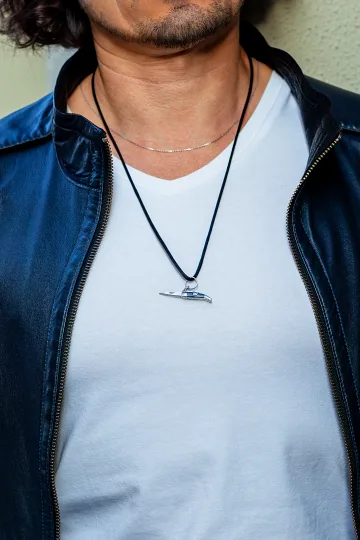





About Zevira
Zevira makes jewellery that does not pretend to be what it is not. We tell you honestly what each piece is made of: where there is a precious stone, where a crystal, where cut glass, and exactly what you are paying for. We prefer sparkle that you understand to sparkle that misleads. If you want to go deeper into materials, see our guides to enamel and its care and to other topics in the articles section.