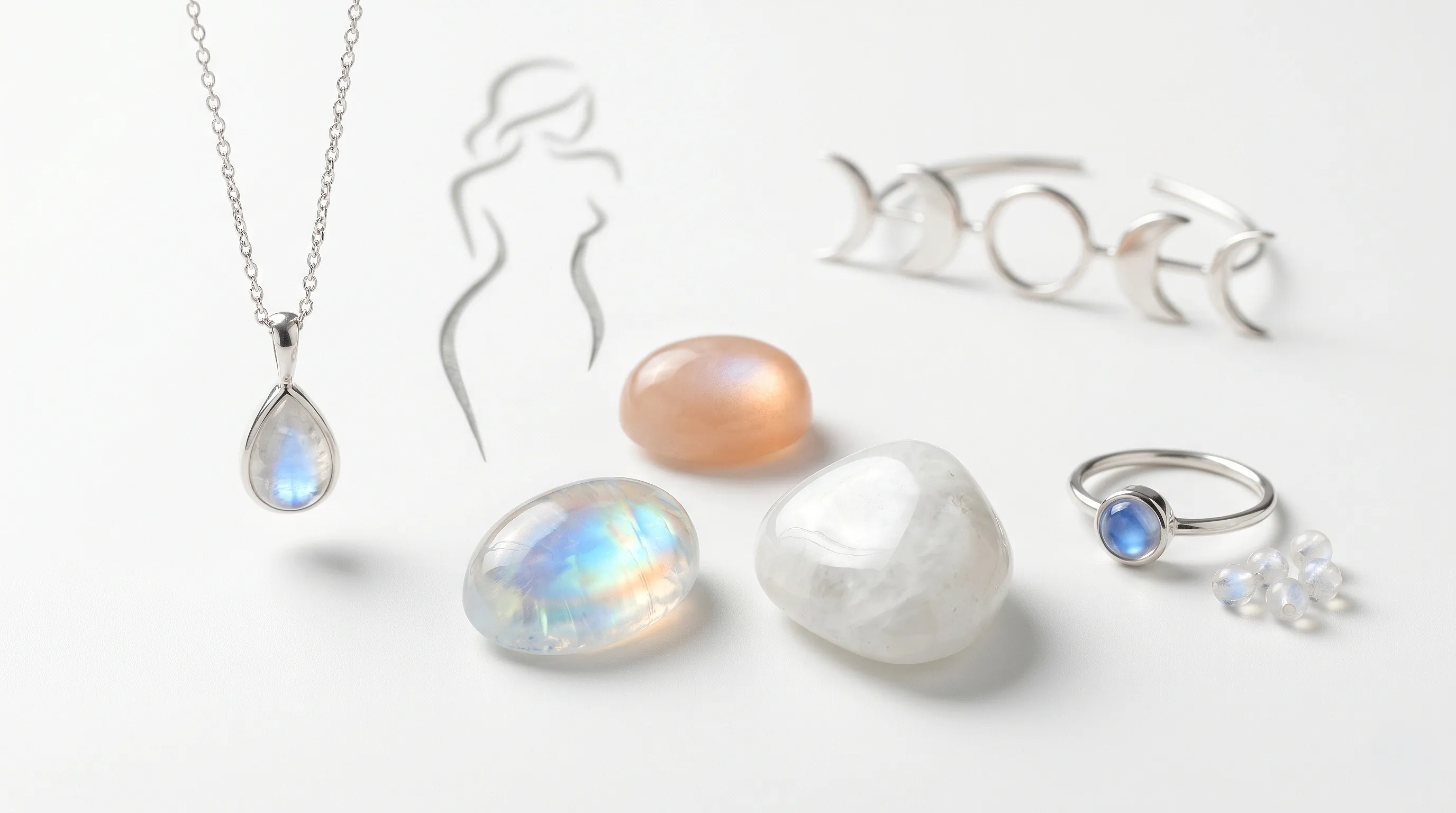
Optical effects in gemstones: asterism, cat's eye, iridescence and other plays of light
The star on a sapphire and the cat's eye on a cabochon are not the work of an engraver, and they are not magic. They are light that trips over millions of microscopic needles inside the stone and bounces off in one direction. The needles are thinner than a human hair, invisible to the eye, yet they are what make a living line glide across the surface when you turn the ring toward a window.
Almost every beautiful trick a gemstone performs runs on a single principle: light inside the mineral meets an obstacle. Sometimes those obstacles are needles, sometimes layers of differing density, sometimes cracks as thin as a wavelength. A stone does not glow on its own. It catches the light that falls on it and returns it differently from ordinary glass. That is how you get a star, a running band, a blue glow rising from the depths, a rainbow sheen, or sparks as if someone scattered glitter inside.
This article is about the phenomena themselves, not about specific stones. Here we work out why a sapphire draws a star, why a moonstone glows blue from within, why labradorite flashes peacock colours, and how a fake differs from an honest effect. Where a particular mineral comes up, you will find a link to its own deep dive, so nothing gets retold.
Where the trick inside a stone actually comes from
A stone does not glow, it steers light
Any optical effect in a mineral is the story of what happened to a ray of light while it wandered inside the crystal. Clear glass lets light through with almost no adventures, which is why it looks dead. A gemstone with an effect is built in a more complicated way: inside it there are structures that scatter, reflect, or split light into a spectrum. The eye reads the result as a glow, a star, or a shimmer, although physically it is simply light that went somewhere it would not have gone inside a uniform body.
It helps to separate colour from effect. The colour of a stone is which part of the spectrum it absorbs: a ruby swallows green and blue, so it looks red. The optical effect is a separate layer on top of colour: it is how light reflects off internal structures. Two stones identical in colour can be one with the effect and one without, and it all comes down to internal architecture rather than the chemistry of the colour.
Wear the symbol, don't just read about it. These are in stock:



Four mechanisms that explain almost everything
Behind the dazzling variety of plays of light stand only a handful of physical causes. The first is reflection from inclusions: the finest needles or platelets of a foreign mineral grow inside the stone, and light bounces off them in a band. That is how the star and the cat's eye are born. The second is scattering on tiny particles or layers: light gets broken up, and a bluish glow comes out, as in moonstone. The third is interference, the overlapping of light waves in thin layers or films: the waves alternately reinforce and cancel one another, and a rainbow appears, like the one on a soap bubble. The fourth is diffraction, where light passes through a regular grid of tiny spheres and splits into a spectrum, as in precious opal.
Once you remember these four words, you can explain any play of light. From here we simply work out which mechanism stands behind which effect, and where to meet it.
Why the size of the obstacle inside the stone matters
The real secret to all these effects is scale. Visible light is a wave roughly 400 to 700 nanometers long, which is less than a thousandth of a millimetre. For light to play with colour on something, the obstacle inside the stone has to be comparable in size to that wavelength. If the needles or layers are larger, light simply reflects as a white beam, like off a mirror, and gives a star or a band without colour. If the structures fall exactly into the wavelength range, interference and diffraction begin, and colour appears, as in opal and labradorite. That is why some stones play only with light (the star, the cat's eye) and others with a rainbow: everything depends on how fine a structure nature managed to grow.
Why the names of the effects sound so strange
Optical phenomena in gemology carry historical names, often taken from the stone on which they were first described. Adularescence is named after adularia, an old name for the moonstone from the Swiss Alps. Labradorescence comes from labradorite, found on the Labrador peninsula. Aventurescence comes from aventurine, and that stone, by legend, got its name from the Italian "per avventura", by chance, because the sparkling glass was invented by mistake. The words are long and unfamiliar, but a specific stone and specific physics stand behind each one. I will explain each term the first time it appears, so there is no need to reach for a dictionary.
Asterism: how a stone draws a star
What asterism is and where the six rays come from
Asterism is a star of converging rays that lights up on the surface of a cabochon when a point source of light falls on it. Most often the star has six rays, less often four or twelve. The mechanism is direct: as corundum (the mineral of both sapphire and ruby) grows, the finest needles of rutile, a titanium oxide, form inside it. They line up strictly along the directions of the crystal lattice, which in corundum is hexagonal. Light reflects off each bundle of needles in a narrow band perpendicular to their direction. Three families of needles, turned 120 degrees from one another, give three bands, and three bands cross into a six-rayed star.
If there are only two families of needles, the star will have four rays. And twelve rays appear when two needle systems coexist inside the stone at once, for example rutile and hematite in certain rare star sapphires. The geometry of the star is a direct fingerprint of how the needles are arranged inside.
Star sapphire and star ruby
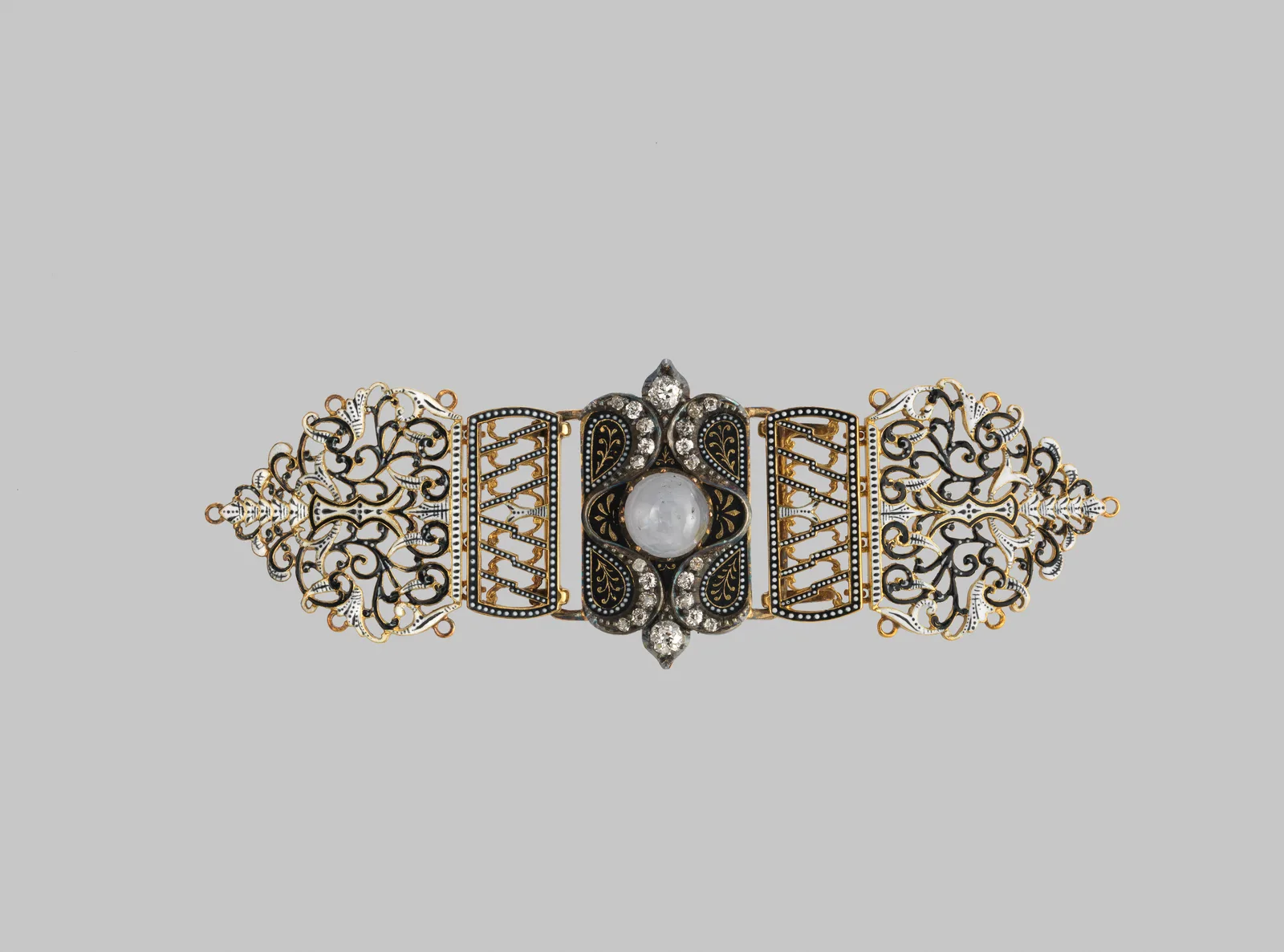
The most famous carriers of asterism are the star sapphire and the star ruby. Both are corundum, differing only in the trace element that gives them colour: iron and titanium for blue sapphire, chromium for red ruby. Their star is one and the same by nature, six-rayed, from rutile needles. A good star stone is cut with a high dome so the star gathers cleanly at the top and its centre sits squarely in the middle. The denser and finer the mesh of needles, the sharper the rays and the more silky the stone itself looks.
Asterism is found beyond corundum. Some garnets can draw a star (rare star almandines with a four- or six-rayed star), as can rose quartz, diopside, and spinel. The mechanism is the same everywhere: ordered needles or channels inside the stone.
Why the star flows across the dome
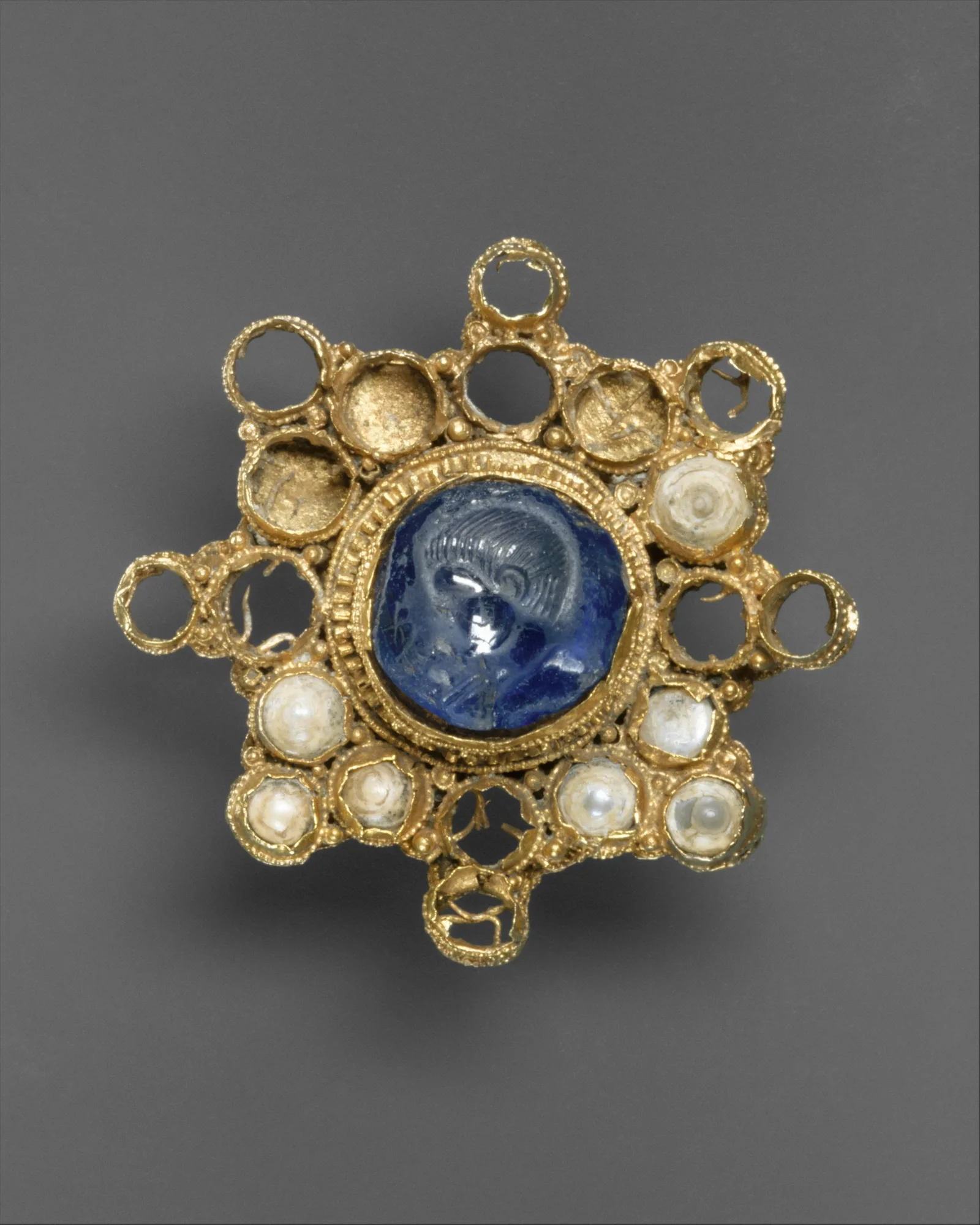
The star is not painted on the stone, it lives on it. When you move the light source or turn the cabochon, the centre of the star slides along after it, always staying under the point the light falls from. That is the sure sign of genuine asterism: the rays react to movement instead of standing still. So star stones look their best under a single directed lamp or in sunlight, not in the diffuse light of a cloudy day, which smears the star into a foggy patch.
An opal belongs on bare skin, never over a busy print. The stone is the show; your blouse is the seat filler.
How to wear stones with an optical effect
Over years on shoots I have watched a stone with living light either carry the whole look or vanish for nothing. Here is what actually works, case by case, when the light moves inside the stone.
How do I wear a star sapphire or a cat's eye every day? These stones are hard and durable, so I happily recommend them for a ring and a pendant you keep on daily. One condition: the star and the band need directional light. Choose a spot where a lamp or the sun falls on your hand or chest, and the effect wakes up. Under the flat, diffuse light of an overcast day the stone goes dull, so for an office under ceiling panels I suggest a brighter stone with a higher dome.
Where do the temperamental moonstone and labradorite belong? These feldspars are softer and tend to split along their layers, so I do not put them in an everyday ring. I suggest earrings, a pendant, or a brooch, where the risk of a knock is lower. The cool blue glow of moonstone and the peacock flashes of labradorite read strongest against silver and dark clothing: on graphite, navy, and black the light from within shows best.
Which neckline and metal suit an opal? Opal is soft and dislikes knocks, so I choose it for a pendant or earrings rather than a ring on your working hand. I recommend warm gold for an opal with red and orange flashes, silver for a blue-green one. For an open neckline go a size up: play of colour reads from a distance and wants to be seen. One more thing: an opal looks better on bare skin near the collarbones than over a busy fabric that argues with its flashes.
Do these stones look better by day or by night? It depends, and that is worth weighing before you buy. I suggest a star sapphire and a cat's eye for daytime and bright light: the star and the band only gather under a direct beam. Moonstone and labradorite, by contrast, open up in the evening, under a warm lamp, when you tilt the stone and catch the angle. An opal works either way, but its flashes are sharper under directional light, so for a shoot or a big night out I choose it.
How do I avoid overdoing a look with a shifting stone? One rule: a living stone is the soloist. If you are wearing a star, a cat's eye, or an opal, keep the rest quiet: smooth metal, calm colour, few other stones. Two shifting stones in one look argue and cancel each other out. And do not load such a stone over patterned fabric; it needs a plain background so the light inside stays visible.

Turn on your camera, pick earrings, a pendant or a ring, and see the piece on yourself in real time.
Switch items in one tap.
Everything runs in your browser: no photo or video is ever uploaded.
Chatoyancy: the cat's eye effect
What chatoyancy is and what the cat has to do with it
Chatoyancy (from the French "oeil de chat", cat's eye) is a narrow bright band of light that runs across a cabochon and resembles the slit pupil of a cat in the dark. The physics are the same as asterism, only simpler: inside the stone the needles or fibres lie parallel in one direction rather than in three. Light reflects off them in a single band perpendicular to the fibres. One family of needles gives one band, which is why you get one line instead of a star.
The benchmark for the effect is the chrysoberyl cat's eye, called cymophane. Its band is so sharp and bright that the stone seems alive: as you rock it, the line opens and closes like a pupil. When people simply say "cat's eye" without naming the species, they mean chrysoberyl by default. A detailed look at this stone lives in a separate article on chrysoberyl and the cat's eye.
The milk and honey effect
The finest chrysoberyl cat's eyes have a signature trick gemologists call "milk and honey". If you shine a single lamp on the stone from the side, one half of the cabochon, on one side of the band, turns honey-gold, while the other half goes milky white. Turn the stone and the sides swap places. This happens because of the way light passes through the dense mesh of fibres at different angles. The effect is nearly impossible to fake in glass, which is exactly why it doubles as an authenticity check.
Who else can do the cat's eye
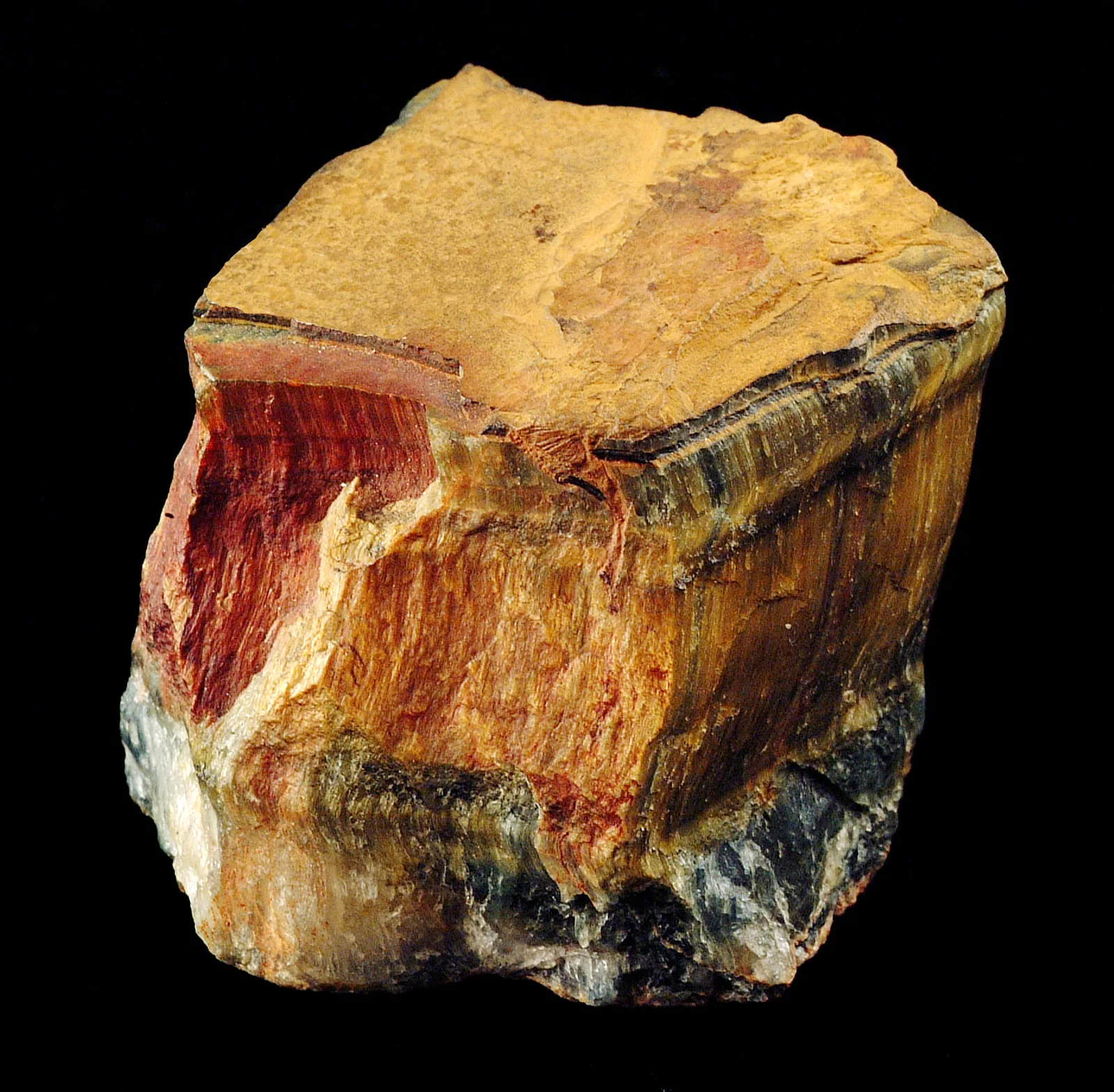
Many stones can draw a band of light, and they are usually named accordingly: quartz cat's eye, tourmaline cat's eye, apatite, scapolite. The best-known relative is tiger's eye and hawk's eye, whose fibrous structure gives not a narrow band but broad silky waves across the whole surface. When a stone is simply a "cat's eye" with no qualifier, gemological rules make it chrysoberyl; in every other case the species is named: "quartz cat's eye" and so on. This is not pedantry but a way to keep a cheap stone from passing as an expensive one.
How the cabochon is cut to make the band appear
Neither the star nor the cat's eye will show up on a faceted stone. The effect lives only on a smooth convex dome, the cabochon. And it has to be cut with care: the cutter orients the base of the cabochon strictly perpendicular to the direction of the fibres or needles. If the base sits at an angle, the band either blurs or drifts off to the side and stops running straight. So the cutter first finds the direction of the "silk" inside the stone and then shapes the dome to it. The height of the dome matters too: a cabochon that is too flat gives a broad blurred band, one that is too high pulls it into a sharp but dull line. A good cat's eye is a compromise found by the cutter's hands.
Customer reviews
Zevira is a real jewellery shop. Genuine payments, deliveries and customer thank-yous.
🥰🥰🥰 gracias
Ok, ¡gracias! 🙂
Adularescence: the blue glow of moonstone
What adularescence is
Adularescence is a soft bluish or whitish glow that seems to float inside the stone and shift when you tilt it. Its classic carrier is moonstone, a feldspar with a special structure. Inside it the finest platelets of two feldspar varieties, orthoclase and albite, alternate, each with slightly different density. Light landing on these layers scatters off them, and the short blue wavelengths scatter more strongly than the long ones. So what comes out is a bluish glow, like the sky, which is blue for the very same reason of scattering.
The glow does not lie on the surface; it seems to rise from the depths and float along with the movement of the stone. This is how adularescence differs from ordinary shine: shine reflects off the surface and stays put, while the moon glow lives inside.
Why the glow is sometimes blue, sometimes white
The color of the glow depends on how thin the internal layers are in a given stone. If the platelets are very thin and regular, mostly blue scatters, and the stone gives a pure blue glow, the most prized of all. If the layers are thicker and less even, a broader part of the spectrum scatters, and the glow turns white or silvery. So some moonstones have a cool blue sheen and others a milky white, like a moon path on water. A full breakdown of the varieties is in the article on moonstone.
Why you have to catch the glow at an angle
Adularescence is fussy about the viewing angle, and that throws people off when buying. The glow surfaces not from any position but at a certain tilt to the light, because the internal layers reflect light in one strictly fixed direction. Look at a moonstone head on, under direct light, and it can seem almost transparent and plain. Tilt it and catch the angle, and a blue haze rises from the depths. So such stones are cut with a low dome and the layers are oriented parallel to the flat base of the cabochon, so the glow surfaces on an ordinary look from above instead of hiding off to the side. When buying, always rock the stone in your hand: if the glow shows only in one narrow position, you will rarely see it once the stone is set.
Upload a photo of your pet, someone you love, or an object. We'll build a 3D model and hand-cast it in pewter.

Labradorescence: the peacock flashes of labradorite
What labradorescence is and how it differs from the moon glow
Labradorescence is the flashing of saturated colour (blue, green, gold, more rarely violet and orange) that lights up on a dark stone at a certain angle and goes out as you turn it. It is named after labradorite, another feldspar. At first glance it looks like the moon glow, but the mechanism is different and the effect is brighter. Where moonstone softly scatters light and gives a bluish haze, labradorite gives pure spectral colours, because interference works inside it.
Interference is the overlapping of light waves. Inside labradorite there are the finest alternating layers (a so-called exsolution structure), and their thickness is comparable to the wavelength of visible light. Light reflected from the top and bottom boundary of a layer adds up: for one wavelength the waves reinforce each other, for another they cancel out. Which color is reinforced depends on the thickness of the layers and the viewing angle. So as you turn the stone, a color flashes and gives way to another. Details and varieties are in the piece on labradorite.
Spectrolite: the labradorite that can do everything
Spectrolite is an especially vivid variety of labradorite from Finland, whose plays of color span almost the entire spectrum, including the rare red and orange. A Finnish geologist gave it its name during the Second World War, when the deposit was found while fortifications were being built. Ordinary labradorite more often has a blue and green sheen, while spectrolite plays all the colors at once, and against the dark, nearly black background of the stone this looks especially dramatic. A separate look is in the article on spectrolite.
Iridescence: a rainbow in cracks and layers
What iridescence is
Iridescence is a rainbow sheen that appears not from the colour of the stone itself but from thin films, cracks, or layers inside it or on its surface. The word comes from Iris, the Greek goddess of the rainbow. The mechanism is interference again: light reflects off both sides of a thin film, and the waves add into rainbow bands, exactly like an oil film on a puddle or a soap bubble. The thickness of the film sets the colour: the thinner it is, the closer the rainbow runs to the blue end of the spectrum.
You can meet iridescence in a wide range of stones. There is "rainbow quartz" with a rainbow inside along thin cracks, there is a "rainbow obsidian" film from microinclusions, and there is a rainbow sheen on split layers of mica. Sometimes iridescence is created artificially by spraying the finest metallic film onto a stone or glass, and that sheen is easy to spot by its too even, unnatural rainbow.
Fire agate and the rainbow in chalcedony
Fire agate deserves its own word, a variety of chalcedony with a true internal rainbow. Inside it the finest layers of iron oxides (goethite or limonite) grow, and light reflecting off these layers plays in fiery red, orange, and green flashes, as if embers were smouldering inside the stone. This is interference on thin layers too, but in a dense opaque stone, which makes the effect feel deep and "burning" rather than superficial. Fire agate is cut to expose the layers at the right angle, and a good cutter literally carves the fire out of the depths of the stone.




Opalescence and play of colour: how an opal works
How play of colour differs from opalescence
Even enthusiasts often mix this up. An opal has two different effects, and they are named differently. Play of colour is the bright flashing of pure spectral patches (green, blue, red, orange) that run across the stone as you turn it. Opalescence is the soft milky-bluish glow of opal, like a haze, with no distinct colour patches. Play of colour belongs to precious opal, opalescence to common, "potch" opal. It is the play of colour that makes a stone valuable.
How an opal makes a rainbow
The play of colour in opal is the most elegant optical trick in the world of stones, and it works on diffraction. Inside, an opal is made of the tiniest spheres of silica (silicon dioxide), all the same size, stacked in a regular grid like oranges in a crate. When the size of the spheres and the spacing between them are comparable to the wavelength of visible light, the grid acts as a diffraction grating: it splits white light into a spectrum and reflects different colours in different directions. Which colour you see depends on the size of the spheres and the viewing angle. Small spheres give blue and green, large ones unlock the rare red and orange, which is why red opal is the most valuable: it needs the largest, most even spheres.
If the spheres are of different sizes and stacked chaotically, no diffraction happens, and the stone simply opalesces in a milky haze with no color flashes. The whole value of precious opal rests on how evenly nature stacked those microscopic spheres. More on the varieties and how to choose is in the article on opal.
The pattern of play of colour: pinfire, harlequin, and flash
Play of colour has a palette, a pattern, and the pattern strongly affects value. The most common is "pinfire", where the colour patches are tiny and dense, like the heads of pins. Rarer is "flash", where a broad wave of one colour sweeps across the stone as you turn it. The rarest and most expensive pattern is "harlequin": large even diamond-shaped patches of different colours laid out like a patchwork quilt. The harlequin pattern is so rare that a good stone with it is considered the peak of a collection. Gemologists describe an opal by both colour and pattern, because two stones with the same hues but different patterns are worth different amounts.
Leave your email, we'll send your discount code. No spam, unsubscribe anytime.
The code arrives by email, valid on your first order.
Aventurescence: sparks inside a stone
What aventurescence is
Aventurescence is the effect of many tiny bright sparks or flecks that flash inside a stone, as if metallic dust had been scattered there. It is named after aventurine. The mechanism is the most intuitive of all: inside a transparent or translucent base sit thousands of the tiniest flat flakes of a foreign mineral, and each flake reflects light like a tiny mirror. As you turn the stone, the flakes flash in turn, giving a sparkling shimmer.
In green aventurine the sparks come from flakes of fuchsite (a chromium mica), which are greenish. In brown and golden aventurine the included hematite or goethite sparkles. A look at the stone is in the article on aventurine.
Sunstone: aventurescence in feldspar
Sunstone is a feldspar with aventurescence: inside it sit the finest platelets of copper or hematite, which give a warm golden-orange or reddish metallic glint. In sunlight such a stone literally catches fire with coppery sparks, which is how it got its name. This is the same mechanism as aventurine, only in a different mineral and with a copper-red rather than green sheen. Curiously, sunstone and moonstone are close kin in mineralogy, both feldspars, but their effects differ: one sparkles on reflecting flakes, the other glows with scattered blue.
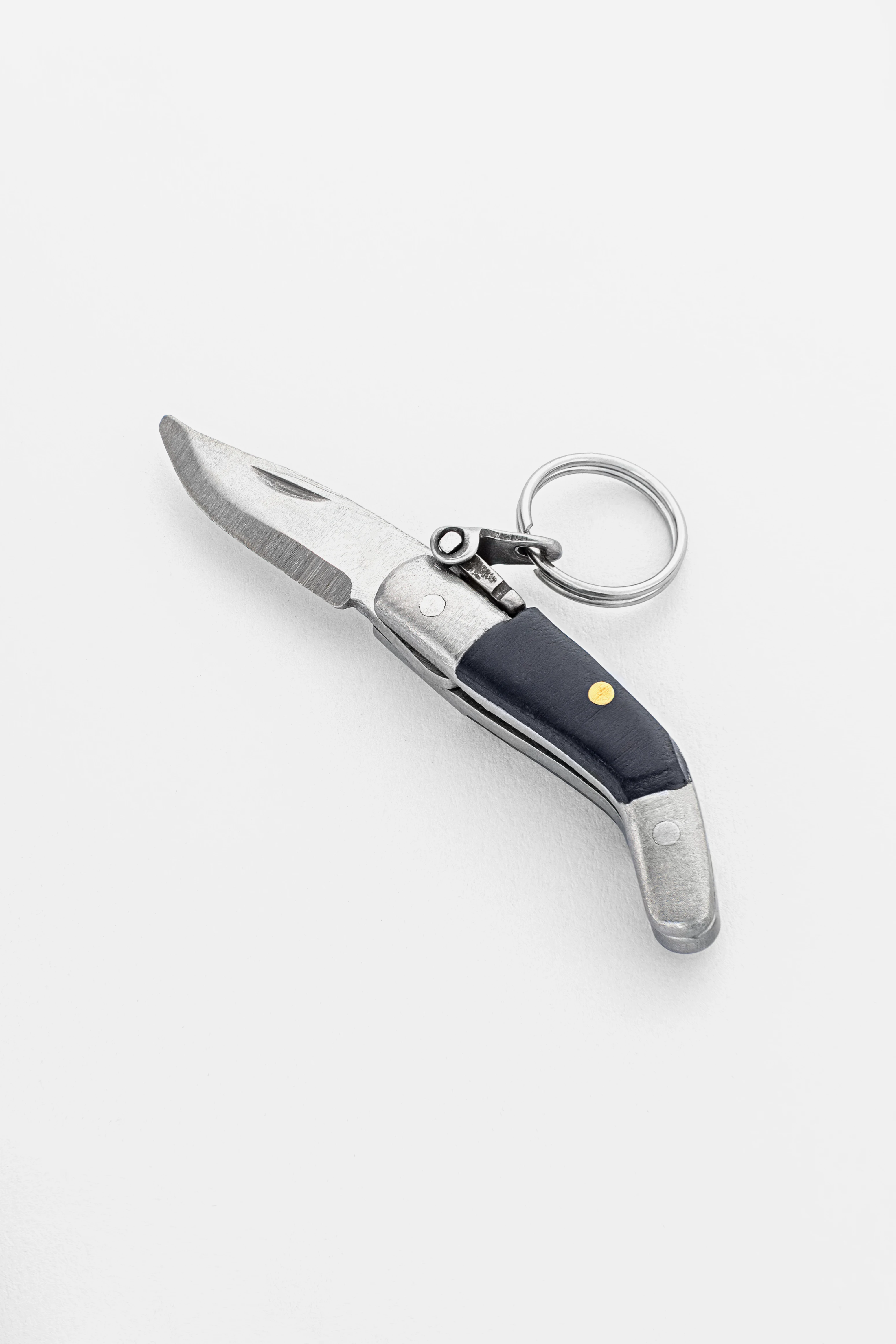
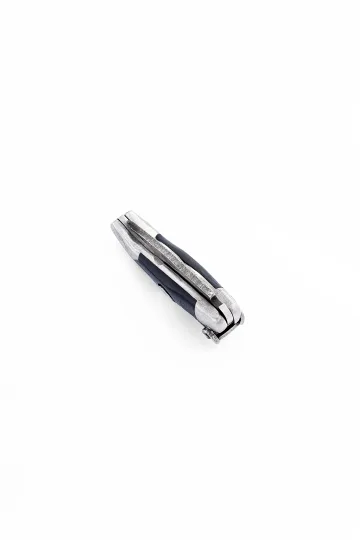
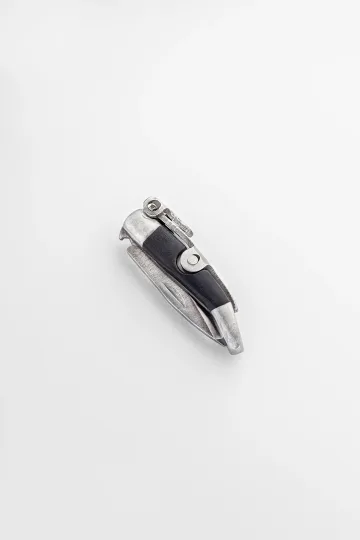
CAPAORA mini knife pendant
The 18th-century Spanish navaja in miniature: 40 mm of stainless steel, a real folding mechanism and a Palanquilla lock that clicks. An affordable gift to remember.
Authentic · Ships from Spain · 14-day returns
Nacre, schiller, and the alexandrite effect
The iridescence of nacre and pearls
Nacre (the inner layer of a shell) and pearls shimmer with soft rainbow glints, and this is interference again, only in a natural multilayered material. Nacre is built from thousands of the finest platelets of aragonite (calcium carbonate), interleaved with the protein conchiolin. Each platelet is thinner than a wavelength of light, and reflections from many layers overlap, giving the gentle shimmer gemologists call orient or lustre. The thinner and more even the layers, the deeper and more alive the light of the pearl. This same layered principle explains why a cheap glass imitation of a pearl looks dead: it has no internal layers, only a sprayed-on shine.
Schiller: a catch-all word for layered sheens
Schiller (from the German for "to play with colour") is a general term for the metallic or rainbow sheen that internal layers or inclusions give a stone. People call the sheen of moonstone schiller, the plays of labradorite schiller, and the glint of certain feldspar varieties and enstatite schiller. It is more of an umbrella word than a separate effect: if a sheen comes from a layered internal structure and does not fit a precise name, it is called schiller. Worth knowing, so you are not confused when a seller says "lovely schiller" and means ordinary labradorescence.
The alexandrite effect: a change of colour, not a play of light
The alexandrite effect stands apart: it is not a play of light or a glow, but a full change of the stone's color when the lighting changes. Alexandrite is green in daylight and red-crimson under the warm light of a lamp. The cause is not reflection off structures but chemistry: the chromium in its makeup lets both the green and the red part of the spectrum through, and which one wins is decided by the spectrum of the incoming light. Daylight is rich in blue, and green wins; lamplight is rich in red, and the stone turns red. This is separate physics, not an optical effect in the narrow sense, but it is often mentioned alongside them. More on it in the article on alexandrite.
Why an effect needs a cabochon, not a faceted cut
Faceting steals the effect
Most plays of light live only on a cabochon, a smooth convex stone with no facets. Here is why. A faceted cut is built so that light inside the stone bounces off the facets and comes out in sparkling flashes, playing with the brilliance and spectrum of the stone itself. This is ideal for transparent diamonds and sapphires, where the "fire" of the facets is prized. But a star, a cat's eye, a moon glow, or labradorescence all require light to meet the internal structure and reflect off it in an even broad beam. Facets break that beam into splinters and kill the whole band or star.
The dome gathers light into a line
The smooth dome of a cabochon works like a lens. It gathers reflections from many parallel needles into one bright band (the cat's eye) or from three families of needles into a star (asterism). The curved surface is needed so that band stays narrow and crisp instead of smeared. So star sapphires, moonstones, cat's eyes, labradorites, and opals are almost always cut as cabochons. The exception is iridescence in transparent quartz cracks, which is sometimes left under a faceted cut, but that is a special case. The general rule is simple: if the beauty of a stone lies in an effect rather than in transparency, it needs a dome. More on choosing a shape is in the article on diamond cut shapes.
How not to mistake a natural effect for glass and fakes
The signs of an honest effect
The main rule: a real optical effect is alive, it reacts to movement. The star slides after the light source, the cat's eye band opens and closes, the moon glow floats up from the depths, labradorescence flashes and fades at an angle. A fake, especially cheap glass with a sprayed coating, usually gives a static, too-even sheen that does not move naturally. On glass "star" stones the star is often painted or etched on the back, it stands still, and the rays are unnaturally straight and identical.
Glass, doublets, and plastic
The most common fakes are glass, doublets (where a thin slice of a real stone is glued onto a glass or agate base), and dyed plastic. A glass cat's eye is made from special fiber-optic glass; its band is too sharp, too straight, and equally bright from every side, with no milk-and-honey effect. Opal doublets and triplets give themselves away at the edge: looked at from the side, you can see the glue line and the too-thin slice of real opal on a dark backing. Aventurine glass (goldstone) gives itself away with too-even, too-large flecks arranged suspiciously regularly; in natural aventurine the sparks are different sizes and chaotic. A general look at fakes is in the article on how not to buy a fake.
Simple checks at home
Turn the stone under a directed lamp: a real effect will shift, a painted one will stay put. Look at the stone from the side and against the light: a doublet will show a glue line and a flat boundary between layers. Judge the "character" of the sparks or the band: nature makes them uneven and alive, a machine makes them even and dead. And remember temperature: glass warms up faster in the hand than a stone, which stays cool longer. None of these checks replaces a laboratory, but together they weed out crude fakes.
Send a friend a discount code, they save on their first order.
Caring for stones with an optical effect
Why these stones are fussier than ordinary ones
Many carriers of effects are soft or layered minerals, and they ask for careful handling. Moonstone and labradorite (feldspars) have a hardness of about 6 on the Mohs scale and good cleavage, meaning they tend to split along layers under a blow. Opal is both soft (about 5.5 to 6.5) and holds water, so it fears drying out and sharp temperature swings, which can craze it with a web of cracks. Pearl and nacre are organic outright: acid dissolves them, cosmetics ruin them, and even household dust scratches them. Star sapphires and the chrysoberyl cat's eye, by contrast, are very hard and durable, yet even they are harmed by hard blows to the dome of the cabochon.
What to clean them with and how to store them
The safe universal method is a soft cloth and slightly warm water with a drop of neutral soap, with no stiff-bristled brushes. Ultrasonic and steam cleaning must not be used on opal, pearl, moonstone, or labradorite: vibration and heat open up cracks and split the stone along its layers. Opal benefits from humidity; it should not be kept in a dry safe with silica gel for months. A pearl goes on last, after perfume and hairspray, and comes off first, and is stored separately in a soft pouch so harder stones do not scratch its surface. Cabochons with a cat's eye and a star are best not carried loose in one box: the dome is easy to scuff. The general rules are in the piece on how to clean gold and silver at home.
Facts that surprise
A star can sleep in the rain
A star sapphire under the diffuse light of a cloudy day almost loses its star: the rays smear into a foggy patch. But step into the sun or light a single directed lamp, and the star gathers itself again and comes alive. Old jewellers deliberately showed such stones to buyers in bright direct light rather than in shade, otherwise the goods looked dull.
The most valuable opal colour costs the most for a reason
In opal the most prized colour is red, because for it nature has to stack the largest and most even spheres of silica. Most opals are blue and green, because small spheres grow more often. A red play of colour on a black opal is a rare combination, which is exactly why such a stone is valued above the rest.
The cat's eye was once an engagement stone
In the late nineteenth century Britain saw a short but vivid craze for the chrysoberyl cat's eye as a stone for engagement rings. Demand for cymophane spiked so hard that prices for good stones jumped sharply. The fashion passed, but the cat's eye kept its reputation as an unusual stone with character.
Aventurine got its name from a glassmakers' mistake
By a widespread account, the sparkling glass called aventurine was invented by Venetian masters by accident, when copper shavings fell into the melt. The glass came out full of sparks, and they named it "a ventura", to luck. Later a similar natural stone with sparks was named after that glass, not the other way around. So the mineral got its name from a man-made mistake.
Nacre is stronger than it has any right to be
Nacre is 95 percent brittle chalk (calcium carbonate), yet thanks to its layered brick-like structure it is thousands of times tougher against fracture than chalk itself. Engineers study the architecture of nacre to make tough ceramics and armour: nature assembled an impact-resistant composite from a brittle material long before people did.
Frequently asked questions
What is the difference between asterism and the cat's eye?
These are related effects with one mechanism, the reflection of light off internal needles. The difference is in how the needles are arranged. If three families of needles sit inside at 120 degrees to one another, their reflections combine into a star (asterism). If the needles lie parallel in one direction, you get a single band of light (the cat's eye, chatoyancy). Roughly speaking, the cat's eye is one ray of a star.
Why is an optical effect visible only on a cabochon?
Because the plays of light are born from light reflecting off the internal structure, and they need a smooth convex surface to gather that reflection into a crisp band or star. The facets of a cut break light into sparks and destroy the whole effect. Faceting is good for transparent stones, where the brilliance of the facets is prized rather than the internal structure.
Are moonstone and labradorite the same thing?
Both are feldspars and both glow, but their effects differ. Moonstone gives a soft bluish glow from the depths (adularescence, the scattering of light). Labradorite gives bright flashes of pure colour at an angle (labradorescence, interference in layers). The moon glow is gentle and smoky, the labradorite one is bright and spectral.
Can a star or a cat's eye be faked?
Yes, usually from special glass. But the behaviour of the effect gives the fake away. On a real stone the star slides after the light, and the cat's eye band opens and closes as you turn it. On glass the effect is more often static, too even and identical from every side, with no living reaction to movement and no milk-and-honey effect on the cat's eye.
Is it true that opal fears water and dryness?
Natural opal holds water in its structure, so it is sensitive to sharp swings in humidity and temperature: drying out can leave it cracked (this is called crazing). At the same time, wetting an opal with water is not the danger; the danger is sharp swings and long storage in a dry place with a desiccant. Doublets and triplets are risky in another way: water can get under the glue and cloud the stone.
Are iridescence and play of colour the same thing?
No, although both give rainbow colours. Iridescence is a rainbow from thin films and cracks inside a stone (interference). Play of colour in opal is spectral flashing from diffraction on a regular grid of silica spheres. Play of colour gives pure bright patches of colour, while iridescence more often gives a rainbow sheen or oily swirls.
Which stone with an effect is the toughest for daily wear?
The most durable are the star sapphire and the chrysoberyl cat's eye: hardness 9 and 8.5 on the Mohs scale, beyond the reach of scratches. They suit everyday rings. Moonstone, labradorite, opal, and pearl are far softer and more delicate, and are best protected in earrings, pendants, and brooches, where there is less risk of a blow and of abrasion.
Why does one stone shimmer while its neighbour, the same colour, does not?
The colour of a stone and the optical effect are two independent things. Colour is set by the chemistry of trace elements, while the effect is set by the internal structure: whether the stone has ordered needles, layers, or a grid of spheres. Two stones of the same colour and composition can differ in that one developed the needed structure as it grew while the other did not. So shimmering stones are always selected one by one; the effect is a rarity, not a rule. For the same reason shimmering stones almost never come in identical pairs: even from one vein the cabochons come out with a different strength of star, a different brightness of band, and a different set of colours. That is what makes each such stone in a piece of jewellery one of a kind.
Stones that play with light
A moon glow, the running band of a cat's eye, the peacock flashes of labradorite: the Zevira catalogue brings together jewellery with living stones whose light moves inside. Each stone is chosen for the strength of its effect, not for colour alone.
See jewellery with stonesBuying it as a gift? Each one arrives ready to give.
 A branded Zevira box and a little card come with every order.











About Zevira
Zevira is jewellery in which the stone is the main character, not a faceless filler. We pick stones with an optical effect one by one: we check how the star behaves under directed light, how sharp the band of a cat's eye is, whether labradorite plays the full spectrum. Sterling 925 silver, an honest cabochon cut that brings the effect out, and a description with no embellishment. If a stone glows, it glows for real.