The Ehwaz Rune: Meaning of the Symbol of Partnership, Trust and the Union of Two in the Elder Futhark
The old Germanic peoples read fate in horses, not in stars. In a sacred grove they kept a white stallion that no work was ever allowed to touch, and from its neighing and its step they read the will of the gods. The rune Ehwaz, the nineteenth sign of the Elder Futhark, means simply "horse." Behind that word stands not the animal on its own but the bond between horse and rider: a trust you cannot buy and cannot command.
That is where the heart of it begins. Ehwaz is not about strength alone and not about speed alone, but about what is born only in a pair. The horse carries the human, the human guides the horse, and the pair works only when each one trusts the other. The horse rune became a sign of partnership, loyalty and moving forward shoulder to shoulder.
The rest follows in order: where the symbol came from, how it sounded and looked, why the Germanic peoples held horses sacred, what Ehwaz meant to the Norse and the Anglo-Saxons, what a runic pendant is made of, how a pair wears it, and how the horse rune differs from the other signs of union.
Why the Horse Became a Sign of Trust
The word "ehwaz" goes back to Proto-Germanic ehwaz, "horse." The same Indo-European root gave Latin equus, Old English eoh and Gothic aihws. For the old peoples a horse was not a luxury but a condition of life: it plowed, it hauled, it went into battle and it decided the outcome. A rider without a horse lost half of himself; a horse without a rider stayed wild. Their strength was shared.
From that shared strength the symbolism of the rune grew. Ehwaz speaks not of one holding power over the other but of agreement between two. The rider does not drag the horse by force; he negotiates through the rein, the weight of the body, the voice. A good pair of human and horse reads each other without words. The ancients saw this every day and turned the observation into a sign: trust, coordination, movement in one direction.
Wear the symbol, don't just read about it. These are in stock:



The form of the rune locks this idea in place. Two vertical staves joined at the top by slanted branches stand like two legs side by side, or like two horses head to head. The sign is symmetrical; there is no master and no servant in it. From its very shape Ehwaz is about equality, about the pair where two hold one thing between them.
Understanding Ehwaz means separating two layers. The first is practical: it was a letter for the sound "e," an ordinary unit of runic writing. The second is symbolic: every rune carried a name and a meaning, and Ehwaz owned the theme of the horse, of union and of faithful movement. Both layers lived at once. A carver could cut Ehwaz simply as an "e" in someone's name and, in the very next breath inside a charm, as a sign of a good road and a reliable companion.
What the Ehwaz Rune Is
The Meaning of the Name and Its Sound
Ehwaz is the nineteenth rune of the Elder Futhark, the oldest runic alphabet of the Germanic peoples. It carried the sound "e" and stood in the third aett, the last group of eight runes. Its name sounded a little different across the Germanic world: the Norse form is reconstructed as ehwaz, and to the Anglo-Saxons the sign was called eh, with the same meaning, "horse." Everywhere the root is one and the same, and everywhere it points to the mount that people tamed and made a companion.
Sometimes the rune is written as Eihwaz or Eh, but it is the same horse sign. It should not be confused with Eihwaz-yew, the rune shaped like a yew tree; that is a different symbol. Our sign reads without ambiguity: horse, cart, rider, a road traveled by two.
What the Symbol Looks Like
Ehwaz has a stable, paired shape: two vertical staves joined at the top by two slanted strokes that meet in the middle. The form resembles the Latin letter "M," or two piers of a bridge converging above. Some see it as two horses standing head to head, others as the silhouette of a horse with its neck raised.
One detail matters. Runes were carved, not written. The straight lines and diagonals are not ornament but a demand of the material. Across wood and bone, along the grain, a horizontal cut is almost impossible to make; it disappears. So the whole Futhark is built from verticals and slanting lines, and Ehwaz is a model example: two staves and two diagonals, nothing to spare.
Its Place in the Elder Futhark
The Elder Futhark was used roughly from the 2nd to the 8th century across Germanic Europe, from Scandinavia to the Black Sea. Twenty-four signs split into three rows of eight, and each row was named after its own first rune. Ehwaz stands in the third aett, next to Mannaz, the sign of the human being. That neighborhood is no accident: horse and human walk side by side in the runic row, just as they walked side by side in life.
Its place among the "human" runes gives Ehwaz a particular sense. If Fehu at the head of the row is about property, and Tiwaz about law and victory, then Ehwaz nearer the end speaks of the bonds between living beings, of the union on which the household, the war and the road all depend.
The Horse as a Measure of Union
Among the Germanic peoples and the Norse a horse was at once a measure of status and of trust. To give a horse meant to seal an alliance; to accept one meant to take on an obligation. A war band was put in the saddle, a chieftain gave horses to loyal men, and this exchange bound tighter than any contract on parchment. A horse walked under one particular person and obeyed him, and so it was a living token of personal loyalty.
The full depth of the rune grows from this. Ehwaz is not about the animal as property; movable wealth belongs to the Fehu rune. Ehwaz is about relationship: about what forms between two who travel one road and hold one pace. The rune carries both a promise of a reliable companion and a reminder that trust must be earned and guarded.
History: From Sacred Horses to Our Own Day
Proto-Germanic Roots
Long before the first runic inscriptions, the Germanic tribes already had the word ehwaz and the reverence for the horse behind it. The Indo-European root ekwo produced kindred words in Sanskrit (ashva, horse), Latin (equus) and Greek (hippos). The horse was prized so highly that in many cultures it was offered to the gods and buried alongside its owner, so that he would not be left on foot in the next world.
When the Germanic peoples created or borrowed runic script in the first centuries of our era, they gave one of the signs the name of the horse. The rune did not invent the link between horse and union; it fixed in letter form what the people already knew: without a faithful horse a person is helpless, and with one he is twice as strong.
Tacitus and Divination by Sacred Horses
The most famous testimony to the horse cult among the Germanic peoples was left by the Roman historian Tacitus in his treatise Germania, around the turn of the 1st and 2nd century. He writes that the Germanic peoples kept white horses in sacred groves and used them for no earthly labor. Harnessed to a sacred chariot, they were led out by a priest and a chieftain, who then watched their neighing and snorting. The horse was held to be a messenger of the gods, and its behavior was read as prophecy.
Tacitus adds a detail astonishing for a Roman: the Germanic peoples believed the priests were only servants of the gods, while the horses were privy to their will. This turns the usual hierarchy on its head. It is not the human who interprets the animal's signs; the animal stands closer to the gods than the human does. This treatment of the horse as an equal rather than a tool lies behind all the symbolism of the Ehwaz rune.
Horses of the Norse Gods
In Norse mythology the horse holds an honored place. Odin had the eight-legged Sleipnir, swiftest of horses, able to gallop across the sky and to descend into the world of the dead. The chariot of the sun was drawn by the horses Arvak and Alsvid, and beneath their harness were tucked bellows of cold air, so that the heat of the sun would not scorch the animals. Freyr, the god of fertility, had horses dedicated to him, and sacred herds were kept in his temples.
It is hard to speak of the gods of Asgard without their horses: the horses carry the gods between worlds, pull the sun and the moon, and serve as a bridge between the living and the dead. Ehwaz inherits this bond. For the Norse a horse was no mere means of transport but a being that joined what was divided: sky and earth, life and death, gods and people. The horse rune keeps this role of go-between and connector.
The Anglo-Saxon Rune Poem
The fullest medieval commentary on the horse rune survives in the Anglo-Saxon rune poem, written down in England probably in the 10th century. The stanza on the rune eh runs roughly like this: the horse is a joy to the nobles, the pride of warriors, a delight to the wealthy who trade words about it on horseback, and it is always a comfort to the restless.
The stanza is strikingly precise in feeling. It is about the joy of owning a good horse, about the talk of riders, but the last line gives away the main thing: the horse is a comfort to the restless, a companion on the road, the one with whom you are never alone. Here Ehwaz reveals itself not as a sign of strength but as a sign of fellowship, of a reliable presence at your side.
Twins, Riders and the Idea of the Pair
Tacitus mentions among one of the Germanic tribes a cult of the divine twins the Alcis, whom he compares to the Greek Dioscuri, the horse-riding brothers Castor and Pollux. Twins mounted on horses are an ancient Indo-European image of the pair, and Ehwaz with its symmetrical doubled shape fits this tradition perfectly.
In Anglo-Saxon legend the founders of kingdoms are named as the brothers Hengist and Horsa, whose names mean "stallion" and "horse." Whether they were real people or figures out of myth is still argued, but the tale itself sealed the link between the horse, brotherhood and the founding of a new line. A pair of horses, a pair of brothers, a pair of riders: everywhere behind Ehwaz stands the idea of two who are stronger together than apart.
Three Poems and One Stanza About the Horse
Three medieval rune poems survive, Anglo-Saxon, Norwegian and Icelandic, and they are the closest thing to a native commentary on the meaning of the signs. Ehwaz is the rune where they diverge most sharply.
The Anglo-Saxon poem gives the horse a full and warm stanza, praising it as the pride of noblemen, a comfort to the restless, and a subject of talk among the wealthy. The Norwegian and Icelandic poems say nothing at all, because by the time they were written the Younger Futhark had dropped the sign entirely and there was no rune left to describe.
That silence is informative rather than a gap. It tells us the horse rune belonged to the older and larger alphabet, and that English tradition preserved a memory of it that Scandinavian tradition had already let go.
Inscriptions, Bracteates and Horse Harness
The archaeological trail for Ehwaz is thinner than for the common runes, which is expected for a sign whose sound is rare in the surviving material. It appears in Elder Futhark inscriptions where the whole alphabet is written out in order, which was itself a protective act, and on a handful of gold bracteates, the thin stamped pendants worn across northern Europe in the migration period.
More telling is where horses and runes turn up together. Harness fittings, bridle mounts and horse gear from Scandinavian graves carry runic marks, and horses were buried alongside their owners often enough that the practice is standard in the archaeological record. The animal was not equipment to be listed in an inventory. It went into the grave, which says most of what needs saying about the relationship the rune records.
The Revival in the 20th Century
Fresh interest in the runes arrived with the 19th and 20th centuries and their fashion for Germanic antiquity, folklore and mysticism. Systems of runic divination appeared, books of interpretation, and jewelry in their wake. That is when Ehwaz firmly took on the role of the rune of partnership, trust and good change by which it is known today.
It is worth holding in mind that the modern divinatory reading is a reconstruction and a creative development, not a direct copy of what Iron Age people meant. Historical Ehwaz was a letter and a concept of the horse. Today's Ehwaz has also absorbed a layer of relationship psychology that grew over the last century and a half. Both layers are real; they simply belong to different eras.
Upload a photo of your pet, someone you love, or an object. We'll build a 3D model and hand-cast it in pewter.
The Meaning of the Ehwaz Rune: Partnership, Trust, Movement
The Partnership of Human and Horse
The first and chief meaning of Ehwaz is partnership, the union of two toward a common goal. The image of horse and rider sets the tone: two different beings, each with its own will and its own strength, yet together they do what neither could do alone. The rune is about cooperation, where each contributes what is theirs and neither one is lost.
In this key Ehwaz stands not for submission and not for merging but for coordination. The rider leads, the horse carries, and leadership here is fluid: at a gallop the horse decides, at a fork the human does. That is why modern practice ties the rune to business partnership, to firm friendship and to a marriage where two hold one course while each stays their own self.
Trust and Loyalty
The second layer of the rune's meaning is trust. Under saddle a horse entrusts its speed and balance to the human every second, and the human entrusts his back and his life on rough ground to the horse. Such trust does not arrive all at once; it builds through habit, care and predictability. Ehwaz is about a bond tested by time, not about a flash of sympathy.
Loyalty here runs both ways. The ancients prized a horse that walked under one owner for years and knew him among hundreds, and they prized just as much a rider who would not abandon his horse in trouble. To wear Ehwaz is to keep near you a sign of this two-way loyalty: I will not let you down, and you can lean on me.
The Union of Two and Marriage
Out of the theme of trust grows the wedding and paired reading of the rune. Ehwaz is one of the few runes tied directly to marriage and to the bond of love. A pair traveling one road at one pace is the very image of a family in the best sense: not one pulling but two carrying. That is why a pendant with Ehwaz is often chosen as a paired charm, one sign for each.
The meaning here runs deeper than "we are together." A good team requires that the two feel each other and adjust without breaking themselves. Ehwaz reminds us that a union is not the dissolving of one into the other but the coordinated movement of two self-standing beings. This is exactly why the horse rune suits lovers, business partners and close friends alike.
Moving Forward Together
A horse is above all movement. Ehwaz carries the idea of the road, of change, of the passage from one point to another. In divination the rune is often read as a sign of a good relocation, a journey, a change of setting or a new stage. But this movement is no lone flight; it is a path that two, or a team, travel together.
Hence the reading for work and for life: Ehwaz is about progress that goes evenly and surely, because a coordinated pair carries it. Not a lurch, not a solo race, but a steady stride where partners cover each other. The horse rune promises not an instant result but a reliable road toward it.
Reversed Ehwaz
Divinatory practice also weighs the reversed position of the rune, when the sign falls upside down. Reversed Ehwaz is read as discord in the pair, loss of trust, a stall in the relationship, a forced halt or movement in the wrong direction. It is the flip side of the same theme: if upright Ehwaz is about a coordinated stride by two, the reversed rune is about the loss of that rhythm, when the two pull in different directions.
There is no point looking for a historical basis here; the split into upright and reversed meanings is a product of modern practice. Yet as a system of images it is coherent: any team can fall out of step, any pair risks losing the beat, and the rune honestly keeps both sides of a union in view.
Customer reviews
Zevira is a real jewellery shop. Genuine payments, deliveries and customer thank-yous.
🥰🥰🥰 gracias
Ok, ¡gracias! 🙂
Ehwaz in Divination: Positions, Combinations, Bindrunes
Most people meeting Ehwaz today meet it in a reading rather than in an inscription, so it is worth setting out how the modern practice handles it. Everything in this section belongs to the twentieth-century revival rather than to the Iron Age, and it is offered as a system of images rather than as a claim about the world.
Ehwaz in the Positions of a Spread
In a three-rune spread of past, present and future, Ehwaz behaves differently in each seat. In the past it usually points to a partnership that shaped what came next, a marriage, a working alliance, a friendship that carried the person through a difficult stretch. In the present it reads as a live connection with something being carried jointly. In the future it is generally taken as movement that arrives through someone else rather than alone.
In an obstacle position the rune is less comfortable. Ehwaz there tends to be read as dependence, as a situation where progress has been handed over to another person and stalls whenever they stall. In an advice position it reverses again and becomes an instruction to stop working alone: ask, delegate, ride with someone.
The horse image is the useful check on all of this. A horse and rider only move well when both agree on the direction, and every position of Ehwaz turns on whether that agreement is present.
Combinations with Other Runes
Ehwaz and Gebo is the classic pairing of a union sealed by an exchange, read as a formal commitment rather than a loose arrangement.
Ehwaz and Raidho doubles the movement. Raidho is the journey itself, Ehwaz the means of travelling it, and together they are usually read as a change of place undertaken with someone.
Ehwaz and Mannaz narrows to the human element, the pair inside the wider community, and is often read as a partnership that needs to be recognised by others to work properly.
Ehwaz and Berkana is read as a partnership that produces something: a household, a family, a project with a life of its own.
Ehwaz and Isa is the awkward one. Ice against motion gives a partnership that has frozen in place, still intact but going nowhere.
Ehwaz and Hagalaz is disruption arriving from outside, an alliance tested by something neither party caused.
Bindrunes with Ehwaz
A bindrune joins two or more signs on a shared stave so that the whole reads as a single charm. Ehwaz is well suited to this because its shape is symmetrical and open, and other staves attach to it cleanly.
The most common pairing is Ehwaz with Gebo, cut for a marriage or a partnership, where the gift and the union sit in one figure. Ehwaz with Raidho appears on travel amulets. Ehwaz with Wunjo is used for a partnership meant to be happy rather than merely functional.
Two practical points. Keep the number of staves low, since three signs is already crowded and four usually becomes unreadable. And decide the meaning before it is cut, because a bindrune is a permanent object and its owner will be explaining it for years.
What a Reading Does Not Promise
Runic divination does not forecast events, and no serious modern practitioner claims otherwise. What a spread offers is a set of images to think with, and the value of Ehwaz in a reading is that it asks a specific and answerable question: who are you actually travelling with, and are the two of you moving at the same pace?
That question is worth asking whether or not anything mystical is happening. Treat the rune as a prompt rather than as a verdict and the practice stays honest.



What Ehwaz Jewelry Is Made Of
The material of a runic pendant carries its own meaning and changes both the look and the character of the piece. Here are the main options and what is worth knowing about each.
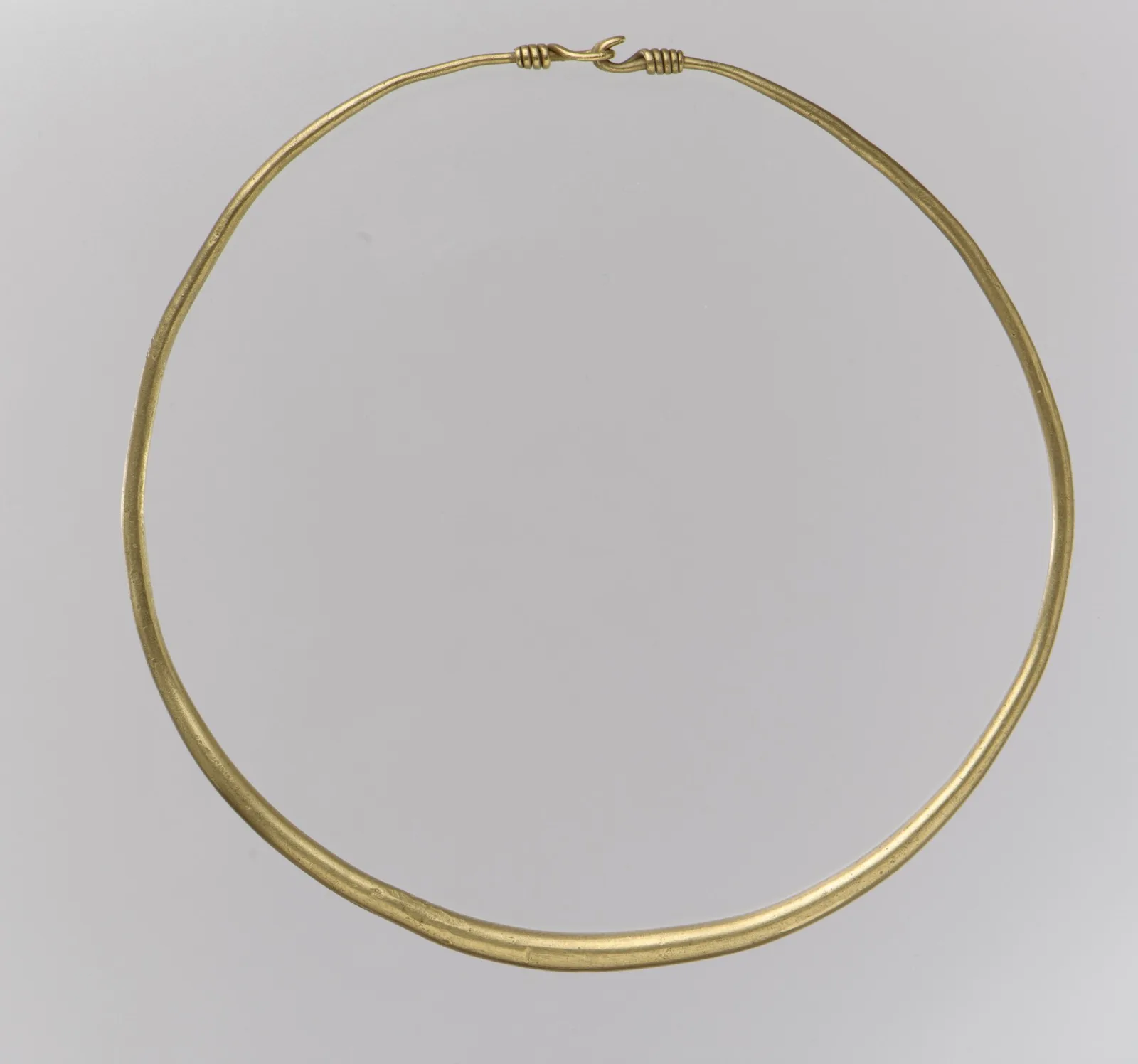
Gold
Gold sounds festive and suits a paired piece for a meaningful occasion well: an engagement, a wedding, an anniversary. The warm sheen of the metal makes the sign of union dressy and gift-worthy. Most often 14 or 18 karat is used; both hold the crisp carving of the doubled stave and are unafraid of daily wear.
A gold Ehwaz works best precisely as a paired set, when two identical signs go to two owners. The same metal and the same cut underline the equality of the pair, the very thing the rune speaks of.
Silver
Silver was the Vikings' main measure of wealth and their most common metal for jewelry. Hoards from the era are packed with silver coins, ingots and broken pieces. So sterling silver 925 is historically almost the most fitting material for a runic sign.
A silver Ehwaz looks restrained and severe, and pairs well with a leather cord and a rough texture in the Scandinavian key. It is a universal everyday option, sturdy and undemanding in care, equally at home on a man's neck and a woman's.
Bronze and Brass
Bronze gives a warm, slightly archaic tone close to ancient finds, and so it is loved for its museum look. Brass is brighter and nearer to gold in color. Both alloys render the relief of the carving well, and over time they take on a patina that many find noble and fitting for an ancient symbol.
Copper alloys have one drawback: they can leave a dark or greenish mark on the skin. The cause is a reaction of copper with sweat and cosmetics, and it is not a defect. It is worth reading separately about why skin turns green from jewelry and how to avoid it.
Wood and Bone
The most authentic option from a craft point of view: wood and bone are exactly what runes were originally carved into. A wooden or bone Ehwaz, cut by hand, is closest to the historical spirit of the sign. Such pendants are light, warm to the touch, and each has its own unique grain pattern.
The price of authenticity is fragility. Wood fears moisture, bone is sensitive to changes in conditions, and both materials call for careful handling. This kind of amulet is more often chosen as a ritual or collector's piece than for daily wear.
Stainless Steel
The pragmatic modern choice. Steel 316L does not darken, does not fear water or sweat, leaves no mark on the skin and holds the crisp carving of the sign for years. Here the symbolism lives entirely in the form, not in the rarity of the material.
A steel Ehwaz suits anyone who wears jewelry constantly and does not want to think about upkeep. For a paired charm this is doubly convenient: two signs will survive the road, sport and rain equally well, which chimes with the rune's own idea of a reliable companion.
Turn on your camera, pick earrings, a pendant or a ring, and see the piece on yourself in real time.
Switch items in one tap.
Everything runs in your browser: no photo or video is ever uploaded.
How to Wear the Ehwaz Rune
At the Neck as a Pendant
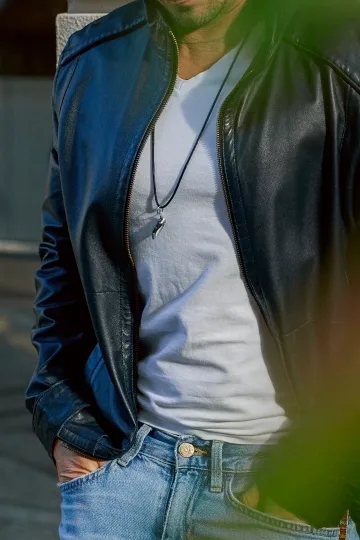
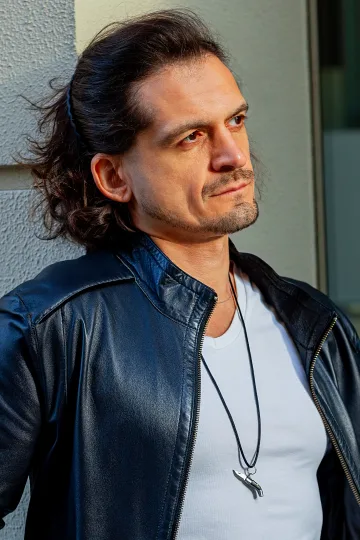
The most common way to wear the rune is as a pendant at the neck, close to the body. Here both the chain length and the way the sign sits in the neckline matter. A short chain (40-45 cm) holds the rune high, near the collarbones. A medium one (50-55 cm) brings it onto the chest, where the symbol reads large. A long one (60-70 cm) tucks the amulet under clothing, closer to the heart.
By a view common in practice, a protective rune is worn so that the sign is oriented correctly toward its owner, so it reads for the wearer. There is no strict historical rule here, but many value the sense that the symbol is turned toward them. A separate guide to choosing chain length can help you settle on the right one.
Paired Pendants
Ehwaz is a rare rune that by its very sense asks to be worn as a pair. Two identical signs on two necks read as a clear mark of union: we are a pair, we go together. This is the version chosen by lovers, spouses, close friends and sometimes business partners at the start of a shared venture.
The pairing can be underlined in different ways: identical pendants in one metal, mirrored versions, different materials to suit each character. The symmetry of the sign itself helps: Ehwaz has no victorious top and no subordinate bottom, both staves are equal, and that is exactly the thought a pair wants to carry.
On a Ring and a Bracelet
Ehwaz sits well in a ring and in a bracelet too. Engraving the rune on a flat signet ring or on the plate of a bracelet looks spare and does not catch the eye, which appeals to those who wear the symbol for themselves. Paired rings with the horse rune are a quiet alternative to the usual wedding bands, with a meaning of their own about equal movement by two.
A ring with a single rune has the advantage that the sign is always before your eyes, on the hand, and easily becomes a personal anchor, a reminder of the person or the union it was put on for.
What to Pair It With
Ehwaz is spare and gets along with almost any style. It looks good on a rough leather cord in the Scandinavian key, on a thin chain in a minimalist look, and paired with other Northern signs. Fitting neighbors include the Gebo rune as a sign of the gift and of union, the Fehu rune as a sign of plenty, and a pendant with the image of a horse or a rider.
The one thing worth avoiding is clutter. A single sign on a clean cord reads more strongly than one hemmed in among five pendants. If you want layers, give Ehwaz its own length of chain so the rune does not get lost.
Who Ehwaz Suits and Who It Is Given To
Ehwaz is not tied to gender, age or profession, but it has themes it is especially in tune with. It is the rune of union, trust and movement by two, so it is most often chosen and given where a pair, a team or a road is involved.
People take it:
- For couples and spouses. The sign of an equal union and a shared road maps onto a relationship more precisely than most. A paired set of two identical runes is a quiet promise to keep one pace.
- For close friends and sworn brothers. Ehwaz is about loyalty and a reliable shoulder, not only about romance. It suits a friendship tested by time.
- For business partners at the start of a shared venture. The rune of coordinated movement toward a goal, where two cover each other, sounds like a wish for a firm alliance.
- For riders and everyone who loves horses. For a horseman Ehwaz is literally the sign of his craft and his bond with the animal, not an abstract symbol.
- For those starting a new stage. A move, a journey, a large change: the horse rune works as a wish for a good road.
As a gift Ehwaz is convenient because its meaning reads at once and sounds warm: union, loyalty, a good path. A jewelry gift guide by occasion can help you pick the right version.
Leave your email, we'll send your discount code. No spam, unsubscribe anytime.
The code arrives by email, valid on your first order.
How to Choose Ehwaz Jewelry
Correct Form and Orientation
The first thing people look at is the accuracy of the sign. Two staves are vertical, two slanted strokes meet at the top in the middle, the symmetry is kept. A pendant should have a clear top so the rune does not end up reversed while worn. For the rune of union an upright form matters, because a reversed one in the tradition reads as discord.
Checking is simple: lift the pendant by its loop in its natural position and make sure the slanted branches point up and converge. If a workshop made the sign legible and symmetrical, that is a good mark of attention to meaning, not only to form.
Craft Versus Stamping
Mass stamping gives an even but faceless sign, often with a blurred relief. Hand carving or quality casting hold crisp edges, and the rune looks alive. For a symbol whose whole force is in its form, crisp lines are not a quibble but the essence.
If you want a piece with character, look for versions with hand finishing, a light asymmetry to the carving, an honest metal texture. Such pendants are closer to the spirit of runic craft, where each sign was carved separately.
Size and Paired Sets
For an everyday pendant a size of 2-4 centimeters is comfortable. Under two the sign gets lost on the chest; over four it starts to look massive. For a paired set it is worth taking both signs in one size and metal, to underline the equality of the pair. A ring and a bracelet call for finer, neater engraving, or the rune looks crude.
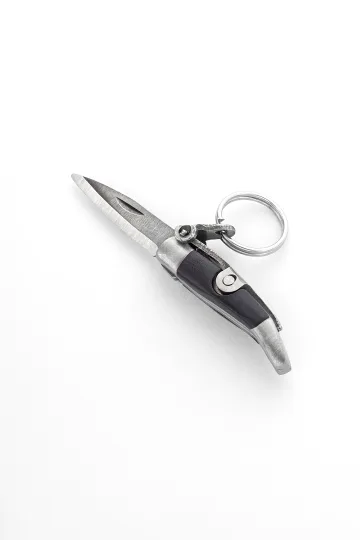
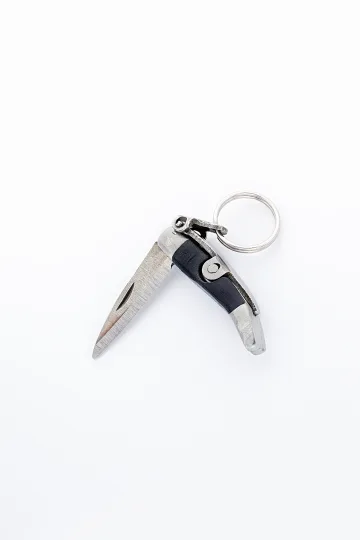
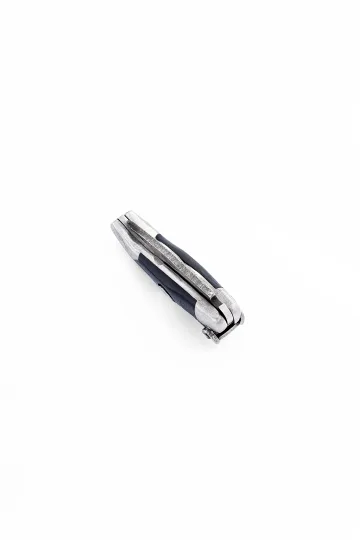
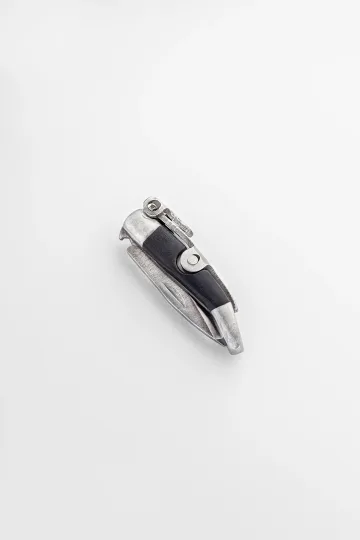
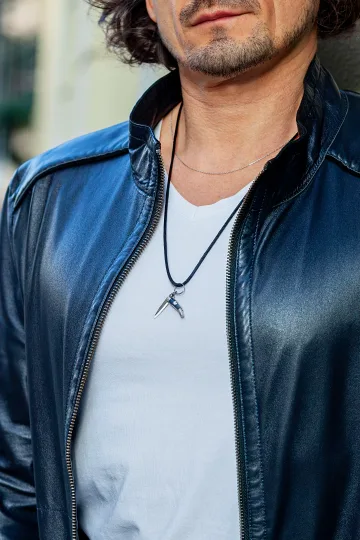
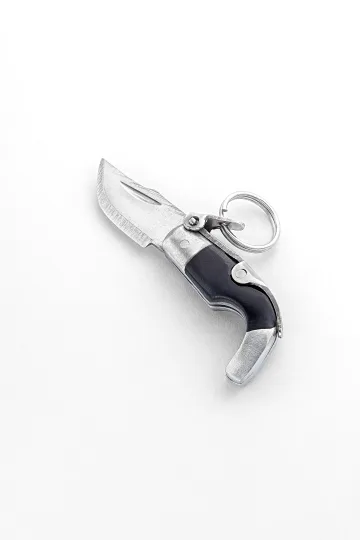
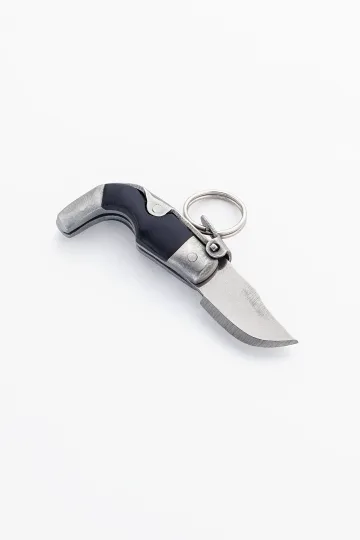
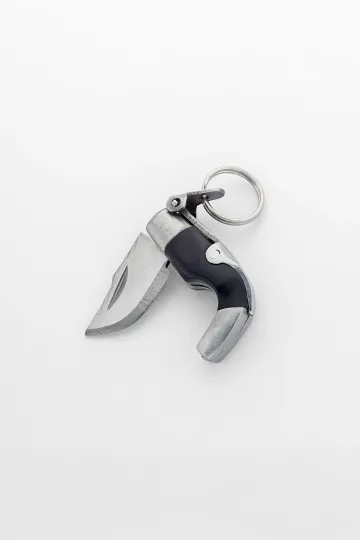
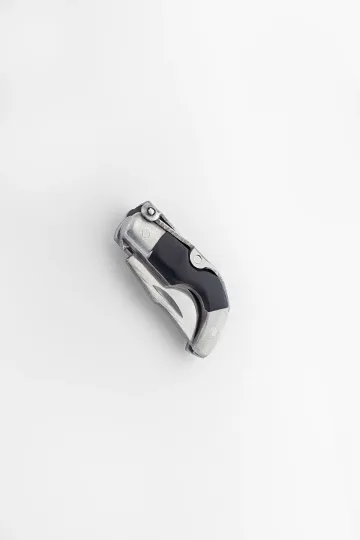
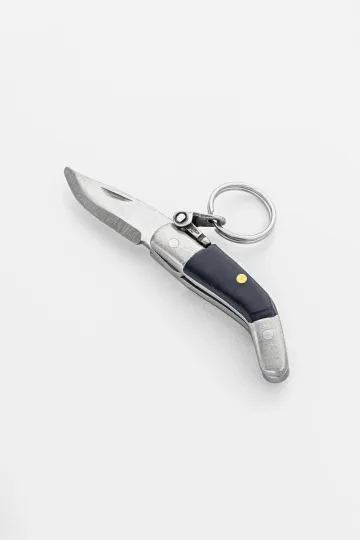
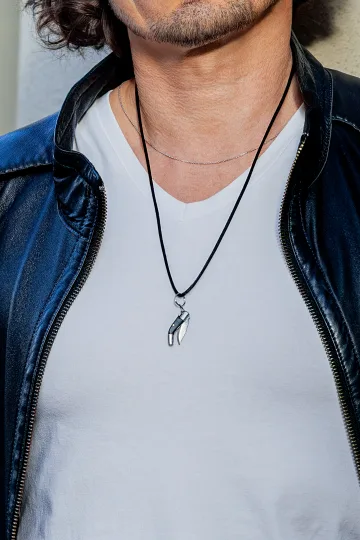
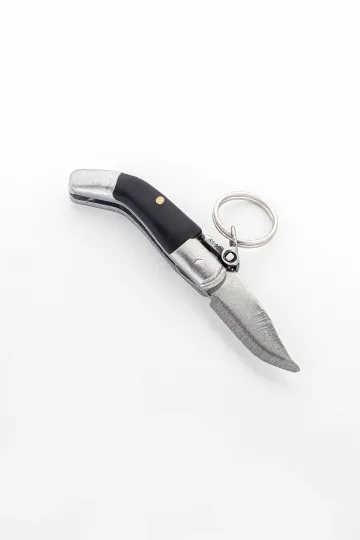
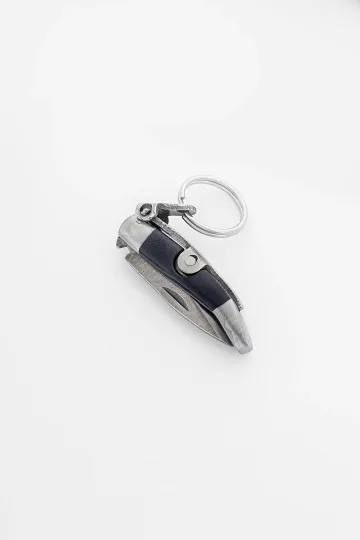
CAPAORA mini knife pendant
The 18th-century Spanish navaja in miniature: 40 mm of stainless steel, a real folding mechanism and a Palanquilla lock that clicks. An affordable gift to remember.
Authentic · Ships from Spain · 14-day returns
Ehwaz and Other Runes of Union: What Is the Difference
The theme of bond and union in the Futhark is reflected not by one rune but by several, and they share the meanings out among themselves. Understanding the differences helps you choose your own.
Ehwaz and Gebo: Partnership Versus the Gift
The main pair is Ehwaz and Gebo. Both are about union, but from different sides. Gebo, shaped like a slanting cross, is the gift, the exchange, the balance between the one who gives and the one who receives. It is about the act of bonding itself: the present, the pact, the union sealed by exchange. Ehwaz is about what happens next: about shared movement, lasting partnership, trust that grows on the road.
Put simply, Gebo is the moment when two reach out their hands. Ehwaz is the years they then walk one path. Gebo binds, Ehwaz leads. That is why the two are sometimes taken together for a wedding: one rune for the vow, the other for the way.
Ehwaz and Mannaz: The Pair Versus Humankind
The rune Mannaz means "human" and stands in the row next to Ehwaz. Mannaz is about the person, self-awareness, a human's place among people, about the human race as a whole. Ehwaz is about the bond of two specific beings. If Mannaz looks at the person as part of a large community, Ehwaz narrows the focus to the pair, to the union face to face.
Together they describe the full picture of social life: Mannaz gives the human and their selfhood, Ehwaz adds the bond without which a person is alone. It is no accident that these runes are neighbors: the horse and the rider, the human and their companion, walk side by side in the alphabet.
Ehwaz and Othala: Movement Versus Roots
The rune Othala (Odal) means inherited holding: ancestral land, the house, the roots that keep you in place. Ehwaz, by contrast, is about movement, the road, change. Othala says stay and take root; Ehwaz calls you to go and to change. These are two honest sides of life: to hold to your own nest and to be able to set off on a journey.
Once you have sorted through these differences, it is easier not to confuse the runes of union and to choose a sign for a specific intent rather than by the broad theme of the bond.
The Psychology of a Paired Amulet
You do not have to believe in the magic of runes for a pendant with Ehwaz to work. The mechanisms that make such an amulet useful are quite earthly and well described.
A shared symbol as a bond. When two people wear one and the same sign, the object becomes a quiet reminder of their union. Psychologists have long described the power of shared rituals and symbols: they strengthen the sense of "we," ease the feeling of loneliness, and give a pair a language without words. A paired Ehwaz works exactly like this.
An anchor of loyalty. A glance at the rune returns the mind to the person it was put on for. It works as a visual bookmark for attention: amid the bustle the sign recalls the one who waits and the one you can lean on. No mysticism, just the ordinary psychology of attention.
A ritual of togetherness. Putting on a paired sign before an important stage, a road or the start of a shared venture is a small ritual, and rituals restore a sense of support where much is unpredictable. A pair with a shared gesture passes more easily through the hard stretches.
The identity of a union. To wear the horse rune is to state your values quietly: loyalty, partnership, movement by two. Anchors of identity increase resilience to hardship, and in that sense an ancient sign works for a thoroughly modern relationship.
There is nothing supernatural in this. An amulet does not change reality; it changes the wearers' relationship to reality, and it does so in a measurable, useful way.
Ehwaz in Culture and Heritage
Runes have long moved beyond archaeology and live in language, folklore and modern culture. The trace of the horse is the most visible of all: the horse passed through the myths, coats of arms and legends of almost every people in Europe.
In language. English equine (horse-related), Latin equus, Old English eoh all reach toward the same root as the rune's name. The horse also left its mark in names: the Germanic Eberhard, Norse names built on the horse root, the very legend of Hengist and Horsa. Language keeps the memory of how highly the animal was prized.
In arms and banners. The white horse became the symbol of whole lands: it appears on the arms of Lower Saxony and Westphalia and on ancient standards. The image runs straight from the Germanic reverence for the horse as a messenger of the gods that Tacitus wrote about. The Ehwaz rune is that same image in letter form.
In rites and finds. Archaeologists find horse burials across Germanic and Norse Europe: a horse was buried with its owner, in full harness, so that he would not be left on foot beyond the grave. Richly decorated bits, cheekpieces and browbands speak of how deeply the bond of human and animal was valued, even in death.
One important caveat is worth keeping. In the 20th century some individual runic signs were used by political movements of grim repute, and a heavy context surrounds certain symbols. Ehwaz does not belong to that circle and remains a neutral sign of union and the horse, but a general awareness of what you wear and what you wear it beside is fitting here.
Send a friend a discount code, they save on their first order.
Facts About the Ehwaz Rune That Surprise You
The Germanic peoples read fate in horses, not in birds. Tacitus writes that sacred white horses were kept in groves and the will of the gods was read from their neighing. The Germanic peoples held that horses were privy to the gods' designs even more deeply than the priests were.
The rune's name is kin to the word for "horse" in half the languages of Europe. Proto-Germanic ehwaz, Latin equus, Sanskrit ashva, Greek hippos and Old English eoh all reach back to a single Indo-European root. Reverence for the horse has been stitched into the languages for thousands of years.
Hengist and Horsa, the legendary founders, bore horse names. The names of the brothers whom legend calls the founders of the Anglo-Saxon kingdoms mean "stallion" and "horse." The horse stood at the very start of the ancestral tales.
Horses were buried with their owners. Across Germanic and Norse Europe archaeologists find horse burials in full harness. It was believed that beyond the grave a person should not be left on foot, and that a faithful horse would go there with him.
Odin had an eight-legged horse. Sleipnir, the mount of the chief god, had eight legs and could carry his rider across the sky and into the world of the dead. For the Norse a horse was a bridge between worlds, not merely transport.
Ehwaz is one of the few runes tied directly to marriage. Among the twenty-four signs of the Futhark the horse rune is linked to the bond of love and to matrimony more often than most, because the image of a coordinated pair reads in it without strain.
In the Younger Futhark the horse rune vanished. When the row in the north was cut from twenty-four signs to sixteen, Ehwaz dropped out. That is why there is no stanza on it in the Norse rune poems, and the fullest verse about the horse survives in the Anglo-Saxon tradition alone.
The symmetry of the sign is no accident. Two equal staves with no master and no servant are a visual argument for the equality of a pair. The form of Ehwaz argues against the idea that in a union someone must always lead and someone must follow.
Silver, gold, runic and Scandinavian symbolism, protective charms, paired sets.
Frequently Asked Questions About the Ehwaz Rune
What does the Ehwaz rune mean? Ehwaz is the nineteenth rune of the Elder Futhark, standing for the sound "e" and the concept of the horse. In a broad sense it symbolizes partnership, trust, loyalty, the union of two and coordinated movement forward. The image of horse and rider sets the main meaning: two different beings who are strong only together.
Is Ehwaz a rune of love or of friendship? Both. The horse rune is tied to any equal union: marriage, friendship, business partnership, sworn brotherhood. The key here is not romance but the coordination and trust of two who travel one road. So Ehwaz suits a couple, friends and partners in a venture alike.
What does the Ehwaz rune look like? Two vertical staves joined at the top by two slanted strokes that meet in the middle. The form recalls the letter "M" or two piers of a bridge. The sign is symmetrical; it has no victorious top and no subordinate bottom, and that is part of its meaning about the equality of the pair.
What does reversed Ehwaz mean? In the divinatory tradition the reversed position is read as discord in the pair, loss of trust, a stall in the relationship or movement in the wrong direction. It is the flip side of the rune: upright is about a coordinated stride by two, reversed about the loss of that rhythm. The split into upright and reversed meanings appeared in modern practice.
Can Ehwaz be given as a pair? Yes, and it is the most natural format for it. Two identical signs on two owners read as a clear symbol of union. A paired Ehwaz is chosen by lovers, spouses, close friends and business partners. The symmetry of the sign underlines the equality of the pair.
Can you wear the Ehwaz rune every day? Yes. For daily wear silver and stainless steel are convenient: they are sturdy, undemanding in care and do not darken. Gold suits too and looks good in a paired set. Wood and bone are authentic but fragile and call for careful handling; they are more often chosen as a ritual version.
How should the rune be positioned on a pendant? The slanted branches should point up and converge, both staves vertical. A pendant needs a clear top so the sign does not end up reversed while worn. For the rune of union an upright form matters, because a reversed one in the tradition reads as discord.
Do you have to believe in the magic of runes to wear Ehwaz? No. Many wear the rune for its meaning and history rather than for magic. The sign is interesting in itself: it is more than fifteen hundred years old and is bound to the language, the horse cult and the mythology of Northern Europe. Belief stays a private matter, and the meaning of partnership and loyalty is clear without it.
Runes, Scandinavian charms and paired sets in silver, gold and steel.
Buying it as a gift? Each one arrives ready to give.
 A branded Zevira box and a little card come with every order.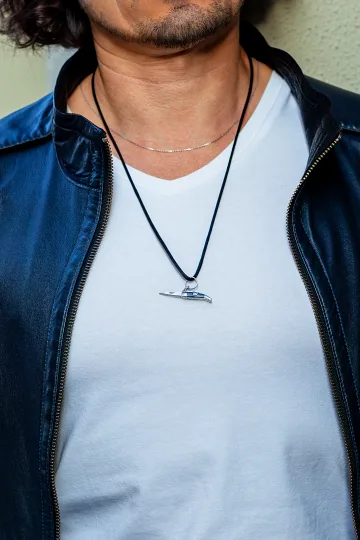




Conclusion
Ehwaz traveled from a sign for the horse in a sacred grove to a symbol of union on a paired chain. Over fifteen hundred years both the role of the horse in life and the way we travel have changed, but the essence of the rune stayed the same: strength is born in a pair, and trust builds on the road. Horse and rider work only when each one trusts the other, and the rune says this as clearly as it said it to the Germanic peoples two thousand years ago.
The horse rune is honest about the main thing. A union is not the dissolving of one into the other and not the power of one over the other, but the coordinated movement of two self-standing beings who chose to go together. Whether you wear Ehwaz for its meaning, for the beauty of the Northern form or as a paired sign with someone close, you carry with you one of the warmest symbols in history: the sign that by two the road is longer and surer than alone.
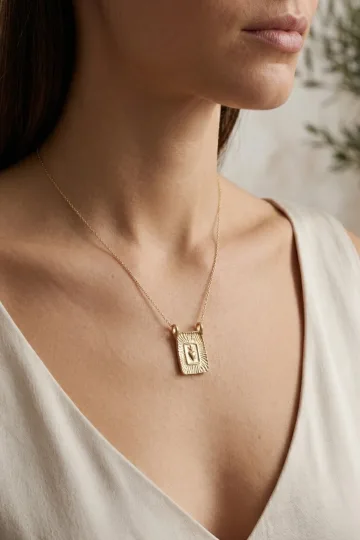
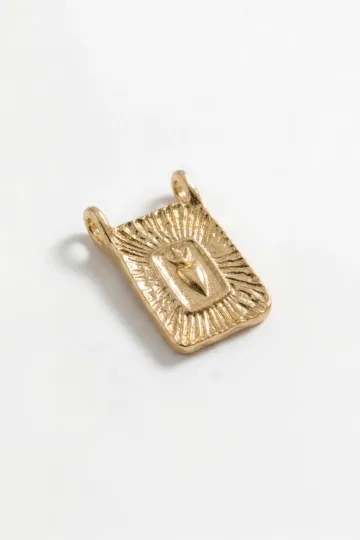
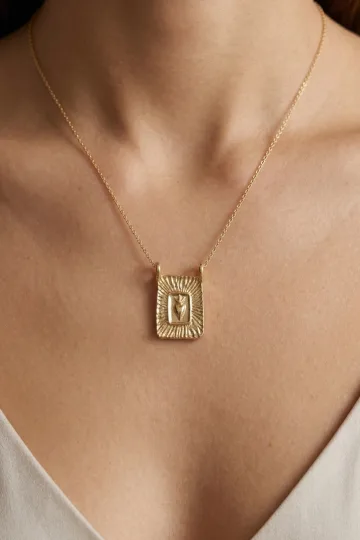
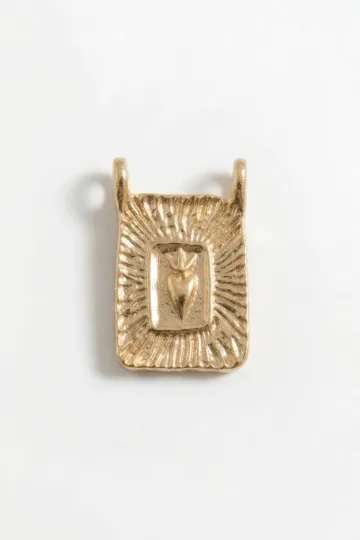
Wear the symbol, don't just read about it. These are in stock:
About Zevira
Zevira makes jewelry in the artisan tradition of Albacete, Spain. Runic symbolism is one of the themes close to us: an ancient form, legible without words, equally at home on a rough leather cord and on a thin chain. We render Ehwaz with a checked symmetry of the sign and crisp carving, in modern materials and proportions, and we love it best of all in paired sets.
What you can find with us on the theme of Northern symbols:
- Runic pendants in silver, gold and steel
- Paired sets with the Ehwaz rune for those who wear the sign of union together
- Scandinavian charms: protective runes, signs of union, images of the gods
- Leather and rubber cords and chains of various lengths for a rune of any size
- The option of personal engraving
Every piece can be personalised with engraving. Sterling silver 925 and 14-18K gold.