Japanese Talismans in Jewelry: Omamori, Daruma, Maneki-Neko
In Japan, luck is rarely asked for in the abstract. It gets split into concrete jobs: pass an exam, drive home without a crash, deliver a healthy baby, keep a small shop afloat. Each job has its own object. Omamori are tucked close to the body, a daruma gets one eye painted in under a promise, the cat by the till waves a paw at visitors. These images crossed into jewellery long ago.
Japanese Culture of Talismans
To understand why Japanese charms look and work the way they do, it helps to glance at the two belief systems that have lived side by side in Japan for centuries and barely argue with each other.
Shinto and Buddhism: Two Systems, One Shelf
Shinto is the native Japanese faith. At its heart are the kami, the spirits and forces that dwell in mountains, rivers, trees, stones, even in old objects. The kami are neither wicked nor kind. People simply make terms with them: respect them, thank them, ask for help. Shinto shrines (jinja) are the places where a person draws a little closer to the kami.
Buddhism reached Japan from China and Korea around the sixth century and brought its own ideas: the path to enlightenment, karma, meditation, the figure of the Buddha and the teachers. Buddhist temples (tera) stand all over the country, right next to Shinto shrines.
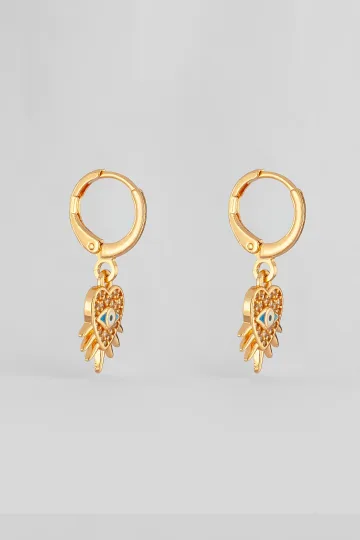
Wear the symbol, don't just read about it. These are in stock:


A Japanese person rarely picks one or the other. A wedding is often held by Shinto rite, a funeral by Buddhist custom, and the New Year is greeted with a visit to both. On the household shelf, an amulet from a Buddhist temple sits comfortably beside a charm from a kami shrine. This gentle overlap explains why Japanese talismans ask no strict single doctrine of the person wearing them. They are about action and intention rather than dogma.
Luck as Engi: A Favorable Connection
Japanese has the word engi. It gets translated loosely as luck or good omen, but it really means a favourable connection between events. Good engi is when circumstances fall in your favour: the right person turns up at the right time, a door opens at the right moment. A talisman promises no miracle. It tunes the engi, so to speak, raising the odds that the connections fall happily into place.
From this comes a key trait of Japanese charms. They are almost always tied to a specific task. Not luck in general, but luck for childbirth, safety on the road, success in entrance exams. The West is used to a universal talisman for every occasion. Japan thinks in pinpoints, and that precision carried into jewellery: a pouch pendant for health, a daruma charm for one big goal, a cat for prosperity.
Why They Are Worth Wearing
A Japanese talisman in jewellery is a small capsule of intention. The pendant here is not decoration for show: you carry a wish you have put into words. Psychologically it works like any meaningful charm: the object reminds you of the goal, calms you, holds your focus. Japanese symbols also have a rare quality, they are friendly. The cat waves a paw, the doll smiles, the pouch rests cozily near the collarbone. Unlike the stern protective eyes and fangs of other traditions, Japanese luck tends to arrive with a warm tone.
Omamori: The Temple Pouch Amulet
Omamori is probably the most recognisable Japanese charm. A little brocade pouch, usually the size of a matchbox, drawn tight with a cord. The word comes from the verb mamoru, to protect or to guard. Omamori are bought (or, by Japanese etiquette, received) at Shinto shrines and Buddhist temples. People carry them in a bag, a wallet, on a phone, pinned to a schoolchild's backpack, or hung in the car.
What Is Inside an Omamori
The heart of an omamori is not the pouch itself but what sits inside. A strip of paper or a thin wooden tablet goes in, carrying a prayer, the name of a deity or the temple, sometimes a special word of wish. This inner object is consecrated at the temple, and it is what carries the blessing. The pouch is only a shell, beautiful and durable, so the sacred thing can be carried every day without coming to harm.
The colours and patterns of the brocade are not random. They often tie to a particular temple, a season, or a type of request. That is why omamori collections from different places look so different: in one spot a severe dark fabric threaded with gold, in another bright spring flowers.
Why an Omamori Must Not Be Opened
The main rule of the omamori is this: you do not open the pouch. By belief, if you untie the cord and peek inside, the blessing leaks out and the charm loses its power. This is not about secrecy or curiosity. It is about trust. You receive a sealed promise of protection and keep it closed, like an unopened letter that works precisely because you believe in it.
For jewellery this idea turns into a lovely principle. A pendant shaped like a pouch echoes the silhouette of an omamori, but it never needs to be opened. The meaning lives in the form itself, in the small closed knot at the body. Many people who bring home a real omamori from a trip eventually order a metal version of it, so they can wear it all the time without fearing the fabric will wear thin.
Shelf Life: One Year
A temple omamori has an expiry, which surprises anyone used to eternal amulets. By tradition it is renewed once a year, usually at New Year. The old omamori is not thrown in the trash. It is returned to the temple, where the gathered charms are respectfully burned at a special ceremony. The logic is gentle: over a year the charm has soaked up the owner's misfortune and fatigue, it has done its service, and it is thanked as it is released through fire.
With jewellery it is different, and it matters not to confuse the two. A pouch pendant is a keepsake, not a consecrated temple object. There is no need to burn it after a year. It stays with you as a reminder of intention, like any piece of jewellery with meaning. If you want a renewal ritual, you can once a year quietly reset your wish while holding the pendant in your palm.
Types of Omamori by Request
The most practical thing about omamori is that they are specialised. A large temple may carry dozens of kinds for different life situations. Here are the most common.
For health (kenko). A request for a strong body, recovery, protection from illness. This omamori is often given to elderly parents or to someone recovering after surgery.
For study and exams (gakugyo). One of the best sellers. Japanese schoolchildren and students buy them by the handful before entrance exams and pin them to pencil cases and bags. A wish for a clear mind and luck on the test.
For love and marriage (enmusubi). Enmusubi literally means the tying of a connection. This is a charm for meeting your person, for strong relationships, for a happy union. Popular with the young and with couples.
For road safety (kotsu anzen). Hung in the car, given to drivers and to those who travel a lot. A request for a road without accidents.
For easy childbirth and a healthy baby (anzan). Given to expectant mothers. One of the most emotional kinds, often kept as a memento even after the birth.
For business success and money (shobai hanjo). Taken up by shop owners, entrepreneurs, freelancers. A wish for a thriving business.
This system of requests maps beautifully onto jewellery. A pouch pendant can be given meaningfully for a task: to a student for exams, to a mother to be, to someone behind the wheel. The result is a gift with an addressed wish rather than a nameless pretty thing.
How Omamori Came to Be
The roots of the omamori reach into both Japanese faiths at once. In Shinto there had long been ofuda, consecrated tablets and strips bearing the name of a kami, placed in the home altar or fixed by the entrance. Buddhism had its own protective amulets with sutras and the names of buddhas. The omamori, as a portable pocket version of such a sacred thing, took shape in the Edo period, when mass pilgrimage to temples became part of an ordinary townsperson's life. A person walked hundreds of kilometres to a famous shrine and wanted to carry a fragment of its blessing home. A small fabric pouch with consecrated paper inside solved the problem perfectly: compact, durable, personal. The format has barely changed since, only the brocade patterns shifted and versions for modern life appeared.
Omamori and a Personal Bond with Place
An important and often overlooked detail: an omamori is almost always tied to a specific temple. It is not a faceless luck amulet but a charm from such and such a shrine, consecrated to such and such a kami. Japanese people collect omamori like a map of their pilgrimages and important moments: this one brought back from a trip to the sea, this one bought before a son's exam, this one given by a grandmother. The pouch becomes a diary of good intentions. When that idea is carried into jewellery, the pouch pendant inherits the same notion: an object holding the memory of a place and a wish, even if the metal version has no consecrated paper inside.
A lucky cat wants an open collar and matte silver. Pile on the gold and you get a cash register, not a charm.
How to Wear a Japanese Talisman
Over years on set I have styled these Japanese symbols into dozens of looks. Here is what actually works, occasion by occasion.
How do I wear a pouch pendant every day? I recommend matte silver on a medium length chain, so the little pouch rests at the collarbones or slips under a shirt collar. It is the quiet, personal option: the talisman is with you but never on display. Under a turtleneck or a plain top it reads as a modest, meaningful detail rather than a loud statement.
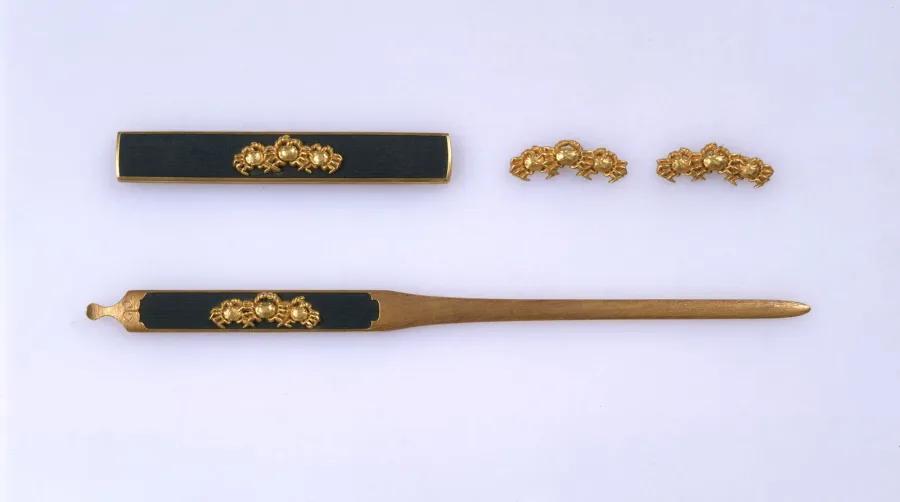
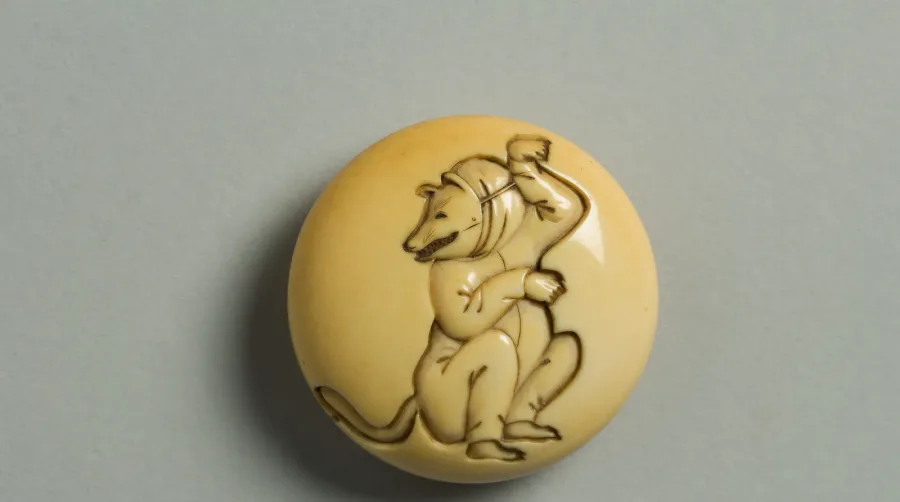
Daruma or the cat, which one for a bold look? For a confident outing I choose a three dimensional figure on a leather cord, in the netsuke spirit: a red enamel daruma or a golden cat. On plain clothing with an open collar that talisman carries the whole look as a standalone accent, and it needs no second piece beside it.
Can I wear several Japanese symbols at once? You can, but I suggest gathering them into one line on a bracelet rather than hanging a cluster at the neck. Daruma speaks of persistence, the cat of prosperity, the crane of long life: two or three charms in a row read as a story, while a dense bunch of pendants only argues with itself.
Which metal and colour suit my skin and my goal? For a warm undertone and the money symbols I recommend gold: a golden cat or daruma echo their own meaning. For a cool undertone and a calmer aesthetic I suggest silver or natural stone for the magatama and the crane. I pick the enamel colour by intent, the way one picks a type of omamori: red for health, gold for business.
Which of these makes the right gift? The Japanese tradition is all about addressed wishes. I give a pouch pendant by the task: to a student before exams, to a mother to be, to someone who drives a lot. I suggest a daruma for anyone chasing a big goal, and I give a lucky cat for a housewarming or a new venture.

Turn on your camera, pick earrings, a pendant or a ring, and see the piece on yourself in real time.
Switch items in one tap.
Everything runs in your browser: no photo or video is ever uploaded.
Daruma: The Roly-Poly Doll of Purpose
Daruma is a round red doll with no arms or legs, a serious bearded face, and empty white circles where the eyes should be. Inside it the centre of gravity is shifted, so, like a roly-poly toy, it always rights itself no matter how you push it. This mechanism is the whole meaning of the talisman.
Who Daruma Is
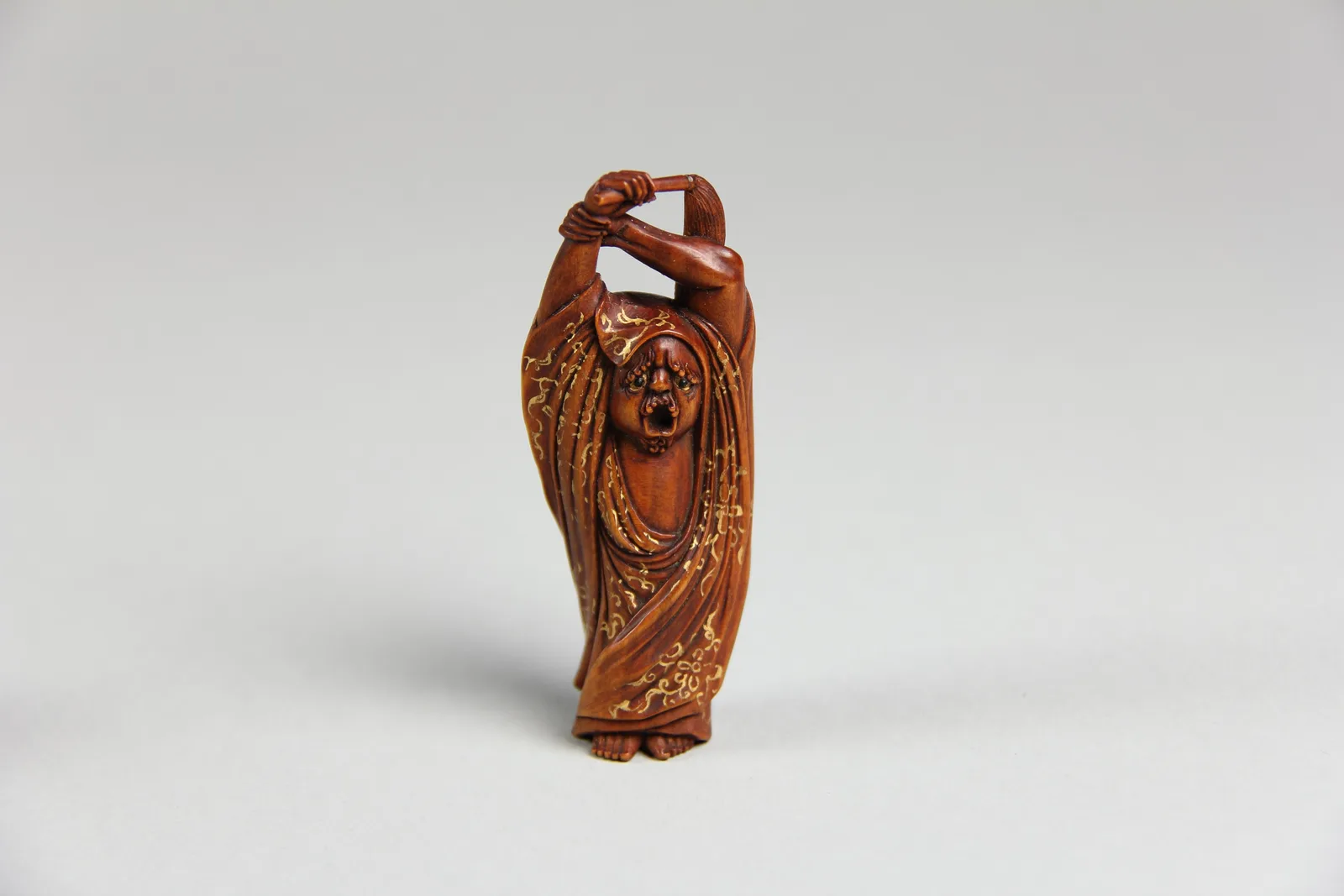
The name daruma is the Japanese pronunciation of Bodhidharma, the Indian monk who, by tradition, brought Zen Buddhism to China around the fifth or sixth century. The legend says he meditated facing a wall for nine years straight, and from utter stillness his arms and legs withered away. Hence the limbless form of the doll. Another part of the legend explains the stern lidless face: supposedly Bodhidharma once fell asleep during meditation and, furious with himself, cut off his own eyelids so he would never close his eyes again.
From these stories came the motto that follows the daruma everywhere: nanakorobi yaoki, meaning fall seven times, rise eight. The doll that always stands back up is about persistence, about returning after failure, about the truth that what matters is not being faultless but being able to get up.
One Eye When You Wish, the Second When It Comes True
The daruma's main ritual is famous. When you set yourself an important goal, you paint one of the doll's eyes black, usually the left one (the right from the viewer's side). After that the one eyed daruma stands in a visible spot: on a shelf, on the desk, by the door. Each day the unpainted eye looks at you and silently reminds you: the job is not done, keep going.
When the goal is reached, you solemnly paint in the second eye. The doll gains its sight, the promise is kept. So the daruma becomes a very human instrument: not a passive luck amulet but a contract with yourself that has a beginning and an end.
In jewellery this story is told in different ways. A daruma charm or pendant is worn as a symbol of persistence and a current goal. Some choose the one eyed version on purpose, as a sign of I am in progress, and paint in the second eye in their mind on the day the wish comes true. Red enamel and the round form make such a talisman a bright accent that also carries a very personal story.
Colours and Kinds of Daruma
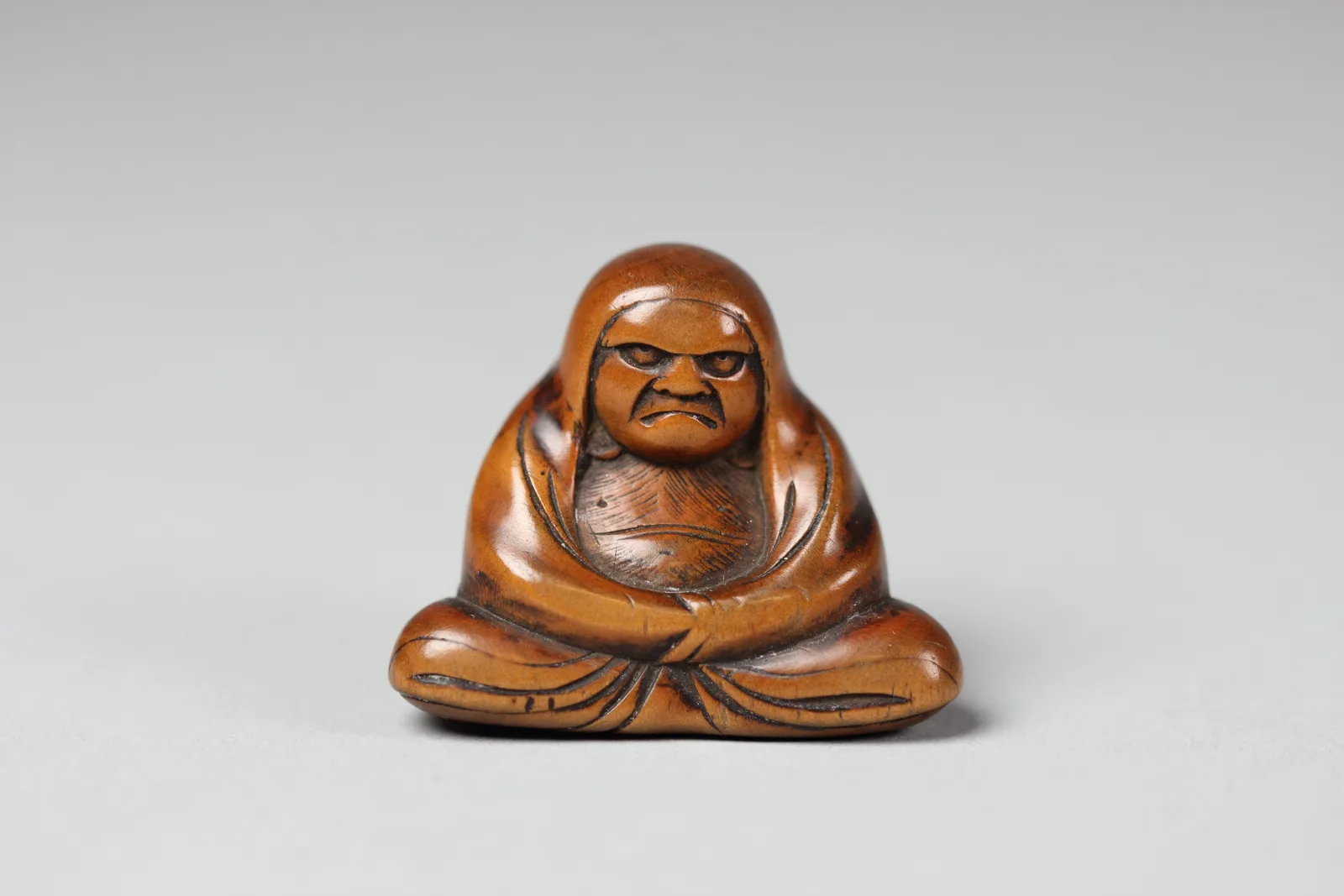
The classic daruma is red, which ties to an old belief that the colour red drives off sickness and trouble. But today dolls are made in different colours for different wishes: gold for money and success in business, white for harmony and balance, yellow for safety and protection, purple for health and long life, pink for love. In jewellery this palette is handy: you can pick the enamel colour to match your own task, the way you pick a type of omamori.
The Daruma's Face and Its Hidden Meaning
If you look closely at the daruma's face, good wishes are encoded in it. The eyebrows are traditionally drawn in the shape of a crane, and the outline of the moustache and cheeks hints at a turtle. Both the crane and the turtle are symbols of long life in Japan: the crane lives a thousand years, the turtle ten thousand. So the very face of the doll hides a wish for a long life, layered over the core idea of persistence. This depth makes the daruma a favourite object for calligraphers and painters: a goal character or the name of the person it is meant for is often written on the doll's rounded body.
Daruma as a New Year Ritual
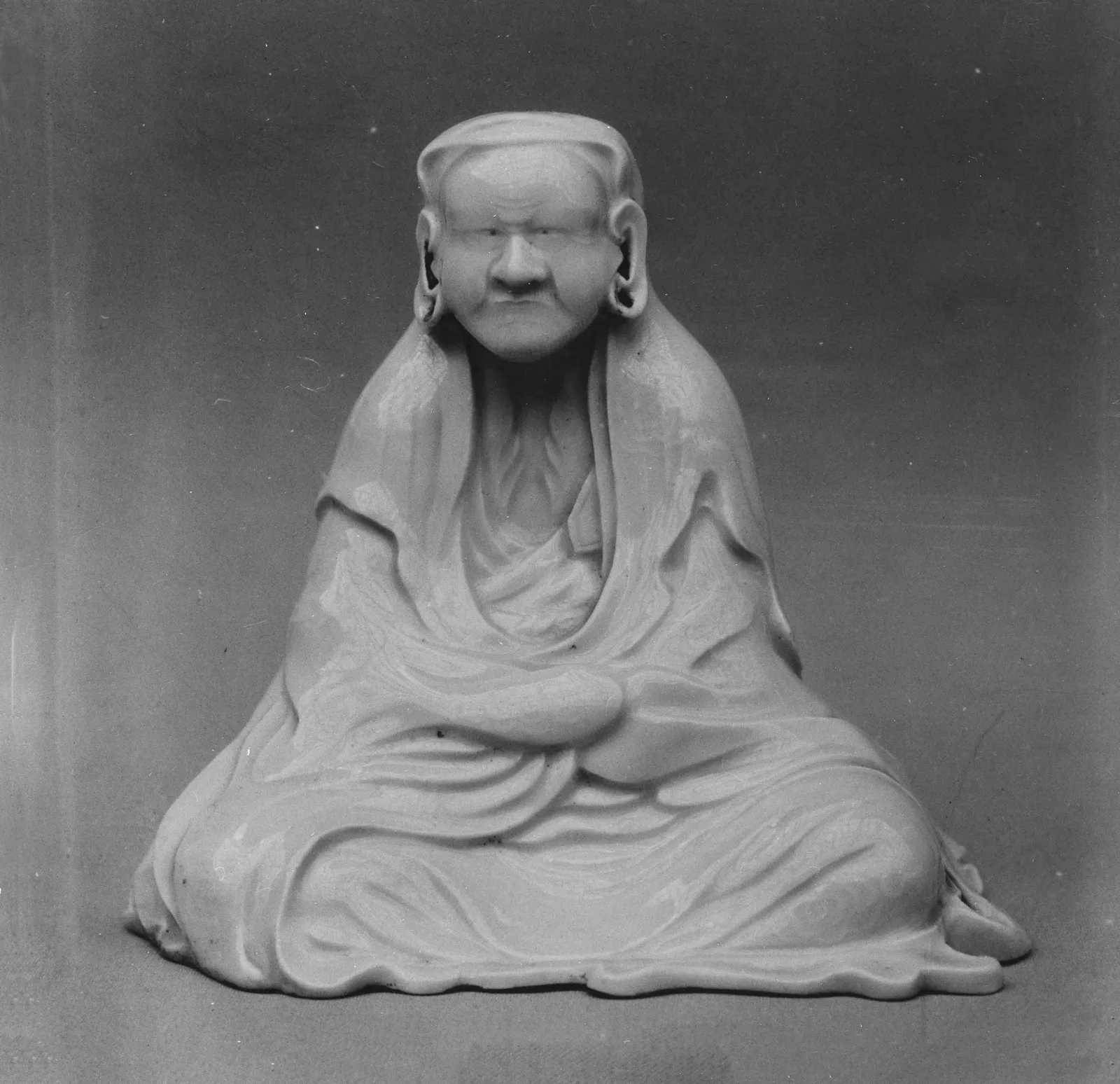
In Japan the daruma is bought especially often at New Year, and that turns working with the doll into a yearly cycle. The first eye is drawn while wishing the main goal of the year: passing an exam, a wedding, opening a business, a loved one's recovery. The doll stands in view all year as a promise to yourself. The following winter, at the daruma fair, the old doll is thanked and burned, and a new one takes its place for the goals of the new year, whether last year's dream came true or not. This cyclical rhythm is close to the familiar from the new year I will start a fresh life, only it is backed by a tangible object that watches you all year with one eye.
Customer reviews
Zevira is a real jewellery shop. Genuine payments, deliveries and customer thank-yous.
🥰🥰🥰 gracias

Ok, ¡gracias! 🙂

Maneki-Neko: The Lucky Cat
Maneki-neko is that very cat with a raised paw you have seen in restaurant windows, by shop tills, on the shelves of Asian stores around the world. Maneki means beckoning or inviting, neko means cat. Literally the beckoning cat. The cat is not waving goodbye, as it sometimes seems to a European, but the opposite, calling you over: in the Japanese gesture for come here the palm faces down and rocks toward the self, which from the side looks like an inviting flick of the paw.
Where the Cat Came From
The maneki-neko was not born in antiquity but fairly recently, in the Edo period (roughly the seventeenth to nineteenth centuries) in Tokyo, then called Edo. There are several legends about its origin, and the Japanese like to tell them all at once. By the best known one, the poor temple of Gotokuji survived only thanks to the abbot's cat. One day the cat raised its paw, beckoning a noble lord who was passing by. The lord turned toward the temple, and at that moment lightning struck the tree under which he had just been standing. The rescued nobleman became the temple's patron, the temple grew rich, and the cat entered history as a symbol of luck. Gotokuji is still full of figures of white cats with a raised paw today.
Left Paw or Right Paw
The maneki-neko raises one paw, and which one it is is not random. In the most common reading, the raised right paw beckons money, wealth, and luck, while the left beckons people, guests, customers. So in shops you often see two cats at once, or one with both paws raised, to cover both prosperity and a flow of visitors. The higher the paw is raised, the belief goes, the farther off the cat reaches for luck.
This detail makes a cat talisman in jewellery expressive. Choosing a charm or pendant, you can keep in mind what you want to draw in, people and warm ties or money and business, and pick the matching gesture.
Colours of the Maneki-Neko
The cat's colour carries meaning too, and that comes in handy when choosing a piece of jewellery.
Tricolor (white with ginger and black patches). The classic and the luckiest version. Based on the Japanese bobtail of a rare coat that was itself thought to bring happiness.
White. Purity, positivity, general wellbeing.
Gold. Money and prosperity, the favourite of entrepreneurs.
Black. Protection from evil and illness, warding off trouble.
Red. Health, a guard against sickness, especially for children.
Pink. Love and relationships.
The cat often has attributes too: a red collar with a bell (a nod to how wealthy Edo period families dressed their beloved cats) and a gold koban coin in its paws, an old large coin that signals wealth.
Why a Cat in Particular
The choice of a cat for the role of luck's caller is no accident. In the port and trading city of Edo, cats were a living defence of stores of rice, silk, and paper against mice, which made them direct keepers of a shopkeeper's prosperity. A cat at the door literally guarded the goods, so the image of a cat that calls in profit settled onto a ready everyday logic. Theatre and Edo period woodblock prints added another layer: cats often turned up in popular scenes, were a fashionable motif, and the figure of a cat easily became a recognisable talisman. So a practical mousetrap turned into a symbol of prosperity.
The Cat Beyond Japan
The maneki-neko is a rare case where a Japanese talisman conquered the whole planet. Today the cat with the raised paw sits in restaurants, shops, and offices far beyond Japan, and the owners often have no idea the gesture has a money side and a people side. Electric versions appeared, with a paw that rocks tirelessly on a solar cell or a battery, keeping the call of luck going around the clock. In jewellery the cat reads easily too, without long explanations, which makes it a handy, friendly symbol: it asks no religious context of the wearer, a warm idea of luck is enough.
Upload a photo of your pet, someone you love, or an object. We'll build a 3D model and hand-cast it in pewter.




Other Japanese Symbols of Luck
The Japanese trove of talismans is not exhausted by its three main heroes. Several images appear in jewellery just as often and deserve a word of their own.
The Crane: A Thousand Years of Life
The crane (tsuru) in Japan is a symbol of long life, faithfulness, and happiness. By belief, the crane lives a thousand years. From this comes the famous origami tradition: a thousand folded paper cranes (senbazuru) on a string are held to grant a wish or to wish someone recovery. Cranes are given at weddings as a sign of a strong union, since these birds mate for life. In jewellery the elegant silhouette of the crane reads as a wish for health and long happy years.
The Koi Carp: Swimming Against the Current
The koi carp is a fish that, by legend, swam up a river against the current and, having overcome the Dragon Gate waterfall, turned into a dragon. So the koi is a symbol of persistence, willpower, and reaching a goal through struggle. It is very close in spirit to the daruma: both are about not giving up. The koi is especially loved by men, for whom a fish swimming against the current reads as a sign of character. The theme of the dragon the koi turns into is explored in depth in a separate piece on the dragon in jewelry.
Sensu: The Folding Fan
Sensu, the Japanese folding fan, is a symbol of luck and prosperity for good reason. As it opens, it widens from the narrow handle to the broad edge, and that shape reads as a life spreading out toward the better, as growing wellbeing. Fans are given for happy events and important beginnings. In jewellery the fan motif appears in pendants and earrings, easy to recognise by its graceful open silhouette.
Omikuji: Paper Fortune
Omikuji are the paper fortunes drawn at temples. You shake a box, draw a number, and receive a strip with a prediction ranging from great luck to great misfortune. A good fortune is taken home, a bad one is tied to a special rack or a tree branch on the temple grounds, leaving the misfortune there. There is no omikuji jewellery as such, but the very idea of a drawn luck echoes the omamori and the broader Japanese attitude to fate as something that can be gently nudged.
Magatama: The Ancient Bead
The magatama stands apart, a curved comma shaped bead, one of the oldest Japanese symbols. It is worth a closer look, because it is jewellery in its purest form.





Magatama as Ancient Jewellery
The magatama is a bead of a distinctive shape: a rounded thickened head and a tapering curved tail, together resembling a comma, an embryo, or a claw. It was made of stone, jade, agate, rock crystal, amber, glass, and worn on a cord as a pendant or strung into necklaces. It is one of the earliest types of Japanese jewellery, known since the Neolithic Jomon culture and flourishing in the Yayoi and Kofun periods, that is, thousands of years before the omamori and the maneki-neko appeared.
The origin of the shape is debated. Some see in it the fang of a beast (early magatama were made among other things from animal teeth, and a hunting trophy fang had long been thought a charm). Others read an embryo or a soul in the curve, others still link the shape to the moon. There is no exact answer, and part of the charm lies in that puzzle.
The colour of the stone in a magatama mattered too. Green jade was especially prized, which Japan linked with life force and sacred purity. Archaeologists find green magatama in rich Kofun period burials beside mirrors and weapons, which confirms their status role. The curved bead was an ornament, a rank marker, and a charm all at once, three functions in one small object. It is curious that similar comma shaped pendants appear on the mainland too, in Korea, which speaks of an ancient cultural exchange in the region.
The magatama was not merely an ornament. It was a status and sacred object, a sign of power and spiritual force. The magatama is among the Three Sacred Treasures of Japan, the imperial regalia: a mirror, a sword, and a jewel pendant magatama. The bead was linked with the kami, with protection, and with life energy. In modern jewelry the magatama is valued both for the antiquity of the symbol and for the pure beauty of the form: the curved drop sits equally well in stone, silver, and gold. Anyone drawn to the theme of curved protective beads in the wider sense will find the guide to protective charms, amulets, and talismans of different cultures of interest.
Leave your email, we'll send your discount code. No spam, unsubscribe anytime.
The code arrives by email, valid on your first order.
Materials
A Japanese talisman in jewellery lives in different materials, and each one sets its own character. The choice of material is about budget and about how loudly or quietly you want to wear the symbol.
Silver
Sterling silver 925 is the workhorse for everyday talismans. It is sturdy enough for constant wear, causes no allergy in most people, and holds fine detail well: the folds of an omamori pouch, the features of a daruma's face, a cat's whiskers. Silver gives a restrained, slightly cool tone. It is the ideal choice for those who want to wear meaning quietly, without turning it into a bright accent. A pouch pendant or a magatama in silver looks noble and simple.
Gold
Gold adds warmth and a sense of occasion. For Japanese symbols this fits especially well where the matter is prosperity: a gold maneki-neko or a gold daruma chimes directly with its money meaning. A slim gold crane or fan reads as an elegant wish for long life and wellbeing. Gold is durable, does not tarnish, and holds its value, so a gold talisman is often chosen as a gift to grow into, for the years ahead.
Enamel and Lacquer
Color in Japanese talismans carries meaning, so enamel here is not embellishment but a way to say the main thing. Red enamel for the daruma, tricolor painting for the cat, the colored brocade of the pouch. Hot enamel over metal gives a rich, lasting color and a pleasing depth. A topic of its own is the Japanese lacquer urushi, traditionally used to coat wooden darumas and cat figures: a deep, almost living shine. In jewelry lacquer appears less often than enamel, but it is valued for its genuinely Japanese character. More on colored metal coatings can be read in the piece on enamel jewelry.
Stone and Agate
For the magatama and protective beads, natural stone is the most historically faithful material. Jade, agate, rock crystal, onyx, tiger's eye. Warm honey agate suits the lucky cat and fans well, cool jade and crystal go with the magatama and the crane. Stone gives weight, natural texture, and a feeling of antiquity, which fits symbols with a long history especially well.
CAPAORA mini knife pendant
The 18th-century Spanish navaja in miniature: 40 mm of stainless steel, a real folding mechanism and a Palanquilla lock that clicks. An affordable gift to remember.
Authentic · Ships from Spain · 14-day returns
Respect for the Tradition
Here it matters to speak honestly, because the subject is culturally delicate. There is a difference between a real temple omamori and a piece of jewellery with a Japanese motif, and understanding that difference is itself respect for the tradition.
A real omamori is a consecrated object from a specific temple. It is bound to a particular deity or place, received by ritual, kept closed, renewed once a year, and respectfully returned to the temple. It is part of a living religious practice, not a souvenir.
A piece of jewellery shaped like a pouch, a daruma, or a cat is something else. It is a respectful nod to the image, a wearable symbol, a keepsake with meaning. It does not claim to be a temple relic and asks no temple treatment: there is no need to burn it after a year, it was not consecrated to a particular kami. When you wear a daruma pendant as a reminder of your goal, you carry on the spirit of the tradition (persistence, intention, the good connection of engi) without taking its sacred part for yourself.
The Japanese on the whole feel warmly about foreigners' interest in their symbols. The maneki-neko and the daruma became pop culture ambassadors of Japan long ago, and temples themselves gladly sell them to tourists. The line is drawn not in whether these images can be worn (they can), but in how they are spoken of and handled. Respectfully means: not passing off a decorative pendant as a consecrated relic, not parodying religious gestures, knowing at least the basic meaning of the symbol you wear. Then a Japanese talisman around your neck is a dialogue between cultures, not their cheapening.
Japanese Talismans in Art and Culture
These images left the temples and shops long ago and live in art, cinema, and everyday aesthetics, which makes them clear even to those who have never been to Japan.
In Prints and Painting
Cats, cranes, fans, and curved beads are recurring motifs of Japanese art. The ukiyo-e printmakers of the Edo period gladly drew cats in human scenes, and this love of the feline image prepared the ground for the maneki-neko. The crane and the pine became a classic pair of long life wishes on scrolls, screens, and kimono. The sensu fan was both an everyday object and a canvas: poems and landscapes were written on it. This rich visual tradition explains why Japanese symbols look so good in jewellery, they have centuries of honed graphic art behind them.
In Cinema and Pop Culture
Japanese animation and film carried these images across the world. The lucky cat, the daruma, and temple charm pouches are easy to spot in anime as everyday details that instantly tell the viewer this is Japan. The daruma became visual shorthand for the idea of a goal and persistence, the cat for the luck and coziness of a small shop. For many people outside Japan, acquaintance with these talismans began on the screen rather than at a temple, and there is nothing wrong with that: cultural symbols always travel through stories.
The Psychology of a Meaningful Talisman
It is worth saying separately why such objects work even for a skeptic. Psychologists describe an effect where a meaningful anchor object lowers anxiety and raises the sense of control. A one eyed daruma on the desk is a visual reminder of a goal that holds focus no worse than a task list. A pouch pendant at the body soothes by touch, pleasant to reach for in a tense moment. The lucky cat sets a kindly mood. Nothing mystical is required here: the object changes not reality but the wearer's relation to it, and that is measurably useful.
Facts That Surprise
Japanese talismans are full of details that are nice to know and nice to share.
The daruma has its own festival. In the city of Takasaki, a daruma fair is held every January, drawing hundreds of thousands of people. They bring old dolls with both eyes painted in to thank and burn them, and buy new ones for the goals of the year ahead.
Japanese politicians paint a daruma's eye on camera. Painting in the second eye of a daruma has become an almost obligatory election ritual. A candidate draws the first eye at the start of the campaign, and in case of victory paints in the second under the camera flashes. The losers, naturally, leave the daruma one eyed.
The maneki-neko has its own temple, full of cats. That same Gotokuji in Tokyo, linked with the legend of the cat's origin, is literally packed with thousands of white figures raising a paw, brought by grateful visitors. The sight is both endearing and slightly surreal.
The cat waves the wrong way for a European. Because of the difference in gestures, many in the West read the raised paw as bye-bye. So in export versions the cat's palm is sometimes turned outward, so it waves in the manner familiar to a Western buyer.
The magatama is older than most of the world's amulets in jewellery. Comma shaped beads were made in Japan thousands of years ago, in the Neolithic. That makes the magatama one of the oldest continuously existing jewellery symbols in the world.
A thousand cranes is real labour. Folding a senbazuru, a thousand paper cranes, takes a person many hours and often weeks. They are given to the seriously ill as a wish for recovery, and behind that gesture stands the tangible time of another's care.
Omamori have versions for gadgets. Modern temples release omamori against device breakage and for luck in study in the form of phone stickers and keychains, acknowledging that the sacred thing is now carried next to a smartphone.
Send a friend a discount code, they save on their first order.
Frequently Asked Questions
Can I wear a Japanese talisman if I do not follow Shinto or Buddhism?
Yes. A piece of jewellery with a Japanese motif is a respectful nod to the symbol, not a religious vow. The lucky cat, the daruma, and the image of the omamori pouch became cross cultural symbols of luck and persistence long ago. The only thing that matters is not passing off a decorative pendant as a consecrated temple relic and knowing the basic meaning of what you wear.
How does omamori jewellery differ from a real temple omamori?
A real omamori is consecrated at a specific temple, kept closed, renewed once a year, and returned to the temple to be burned. A pouch pendant is a keepsake with meaning: it was not consecrated to a particular deity, it does not need to be burned, and it stays with you like any meaningful piece of jewellery.
Which paw of the maneki-neko should I choose?
It depends on what you want to draw in. In the most common reading, the raised right paw beckons money and luck, the left beckons people, guests, good ties. If you want both, take a cat with both paws or two cats.
What does a daruma with one painted eye mean?
It is a sign of a goal in progress. One eye is painted in when you set yourself an important task, and the second is added when it comes true. A one eyed daruma silently reminds you the job is not finished and nudges you not to give up.
Which colour of daruma or cat should I choose?
By meaning. Red is health and protection, gold money and business, white purity and balance, pink love, black protection from trouble. In jewellery the colour is set by enamel, so the talisman can be matched to your personal task, the way a type of omamori is chosen.
What is the best material to order a Japanese talisman in?
For everyday wear and fine detail, sterling silver 925 works well. Gold suits money symbols and gifts for the years ahead. Enamel and lacquer are needed where color matters (daruma, cat). For the magatama and beads, natural stone is historically faithful: jade, agate, crystal.
Does a Japanese talisman make a good gift?
Very much so. The Japanese tradition is precisely about addressed wishes. A pouch pendant is given for a task: to a student for exams, to a mother to be, to someone behind the wheel. A daruma is given to someone heading for a big goal. A lucky cat for a housewarming, a business opening, or simply as a warm sign of luck.
Can several Japanese symbols be worn together?
Yes. They do not clash in meaning, they rather complement each other: the daruma about persistence, the cat about prosperity, the crane about long life. The main thing is not to overload the look. One expressive talisman or a tidy line of two or three charms looks better than a dense cluster of pendants.
Conclusion
Japanese luck is concrete and friendly. It does not hang as an abstract cloud over the head but divides into clear jobs and arrives with a warm tone: the pouch quietly protects, the doll reminds of a goal and rewards persistence, the cat waves a paw and calls in prosperity. Behind each image stands a living tradition where Shinto and Buddhism have coexisted for centuries without quarrel, and luck is thought of as a favourable connection of events that can be gently nudged. In jewellery these symbols stay themselves: small capsules of intention that are pleasant to wear and that give you something to tell.
Silver, gold, symbolism from different cultures, talismans, and matching sets.
Buying it as a gift? Each one arrives ready to give.
 A branded Zevira box and a little card come with every order.














About Zevira
Zevira is jewellery with meaning: silver, gold, symbols from different cultures and traditions. We love things with a story behind them, and Japanese talismans are right at home here. If you are looking for a charm pendant, a piece with character, or a gift with an addressed wish, start with the catalogue.