Fox Jewelry Meaning: Cunning, the Kitsune, and the Nine Tails
Introduction: the beast you can't trust and can't do without
In Japan the fox-kitsune is at once the messenger of Inari, the rice goddess, and a shapeshifter who turns into a beautiful woman to drive a man out of his mind. Her power is counted in tails: a young one-tailed fox is almost harmless, while a nine-tailed fox lives a thousand years, sees the future, and hears everything spoken on earth.
No other animal in jewellery holds so many contradictions at once. The wolf stands for loyalty, the owl for wisdom, the eagle for height. The fox stands for a mind that doesn't ask permission. She is helper and trickster. Guardian of the harvest and thief of hens. A holy thing in the temple and a spirit of the night woods. When someone chooses a fox for the neck or the finger, they aren't choosing "good" or "bad." They are choosing cleverness as a value in its own right.
This article is about where the fox gathered so much meaning, why East Asia worships and fears her in the same breath, what the number of tails means, and how this russet silhouette became one of the most popular feminine motifs of recent years. Along the way we'll look at which stones and enamels carry the fiery coat, who the fox suits, and how to care for a piece like this.
Wear the symbol, don't just read about it. These are in stock:
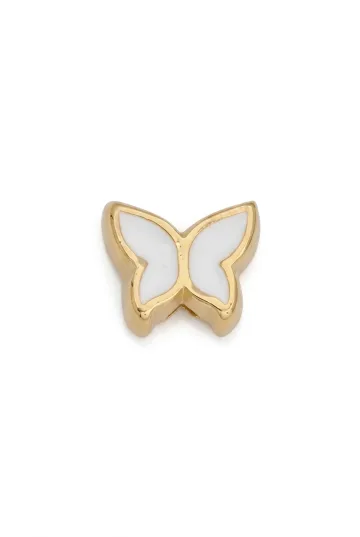
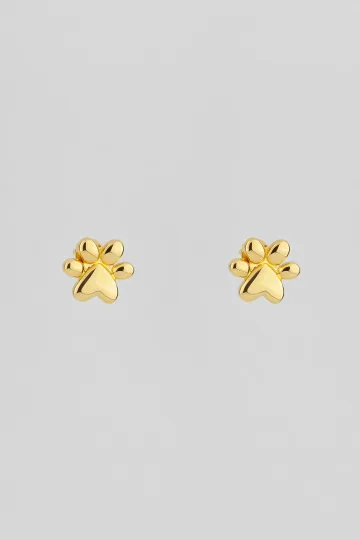

The fox as a symbol of intelligence, cunning, adaptability and independence
Before we head into mythology, it helps to understand why the fox in particular gathered the reputation of "the clever beast." This isn't a random fancy. It's a conclusion that dozens of cultures reached independently, watching the same behaviour.
Why the fox became the symbol of cunning
The fox is small. She is weaker than the wolf, slower than the hare over a short dash, and can't climb like a marten. She survives not by force but by calculation. The fox remembers where people leave food, walks around traps, plays dead beside her prey, and steals from under the nose of bigger predators. People watched this for centuries and reached the same verdict every time: the fox wins with her head, not her muscle. That is the root of the very word "cunning," which in many languages is tied directly to the fox, and of the English habit of calling a clever person "sly as a fox."
Cunning or intelligence: an important difference
In everyday speech "cunning" carries a faint reproach, as if the person were cheating. In fox symbolism, though, cunning sits closer to wit and resourcefulness. The fox isn't evil. She simply refuses to play by rules that don't serve her. When someone takes the fox as a personal sign, this is usually what they mean: the knack of finding an unconventional way out, of going around a wall instead of beating their head against it. A flexible mind in place of brute strength. To outfox someone is no insult in this world; it's a quiet compliment.
Adaptability: the beast that survived everywhere
The red fox is the most widespread wild predator on the planet. She lives in tundra and desert, in mountains and in the centre of large cities. The urban fox roots through bins, crosses at the crossing alongside people, and raises cubs under a veranda. This is the second layer of the symbol: adaptability. The fox doesn't break under circumstances, she adjusts to them and stays herself. For someone who has changed countries, professions, or started life over, this is a very precise image. The fox doesn't beg the world to bend to her; she quietly finds a way to live with any world. Her strength differs from the lion's and the eagle's in exactly that: not to conquer space but to fit into it and take her share.
The fox's independence and solitude
Unlike the wolf, the fox doesn't live in a pack. She hunts alone, keeps her own territory, and raises her young by herself. This makes her a symbol of a different kind of self-sufficiency than the wolf. The lone wolf pines for the pack. The fox is alone by nature and perfectly content. For anyone who values personal space and doesn't need constant company, the fox is more honest than any other animal.
A russet fox belongs at the collarbone, on bare skin. Under a turtleneck the beast suffocates. Don't you dare hide her.
How and what to wear the fox with
Over years on shoots the fox has passed through dozens of my looks, from a russet pendant under a jumper to a graphic nine-tailed piece for the evening. Here is what actually works, occasion by occasion.
How do I wear the fox every day? For an everyday look I recommend a single small fox in silver or gold on a fine chain, sitting just below the collarbones so the silhouette shows. I suggest warm, earthy tones of clothing: russet, mustard, brown, green. Against that the beast reads as if she stepped straight out of her forest. One pendant on a clean chain always beats a fox crammed between five others.
Which coat should I choose for my colouring? The russet, fiery fox with carnelian or amber I recommend for warm undertones, for people who suit gold. For cool undertones I suggest the silver-black cross fox in oxidised silver, or the white arctic fox in a pale metal with moonstone. Metal decides half the impression, so I match it to the skin rather than by guess.
Is the fox right for the office? Quite, if you keep it restrained. I recommend a small stylised fox in silver or matte gold, chain 45-50 cm, so the pendant slips under the top button. Under a blazer the fox reads as a quiet detail with character, not a loud accent. Save the enamel russet one for the weekend.
How do I build an evening look with the fox? For the evening I choose a larger graphic fox, or the open fan of a nine-tailed fox's tails. I suggest an open neckline and smooth fabric in a rich colour: wine, emerald, black. The white and nine-tailed fox ask for a pale metal and moonstone here, while the russet takes warm gold and catches the evening light. I recommend a shorter length, 40-45 cm, so the beast settles at the collarbone.
Pendant, ring or earrings, where do I start? I suggest starting with a pendant, the most wearable piece and flattering on everyone. A ring with a fox hugging the finger with her tail is good for a playful, visible gesture. For earrings I choose compact, stylised shapes, sometimes asymmetric: one fox larger, the other smaller. I do not advise mixing all of it at once; the fox likes to be the single accent while the rest stays quieter.

Turn on your camera, pick earrings, a pendant or a ring, and see the piece on yourself in real time.
Switch items in one tap.
Everything runs in your browser: no photo or video is ever uploaded.
The Japanese kitsune: Inari's messenger and a shapeshifter at once
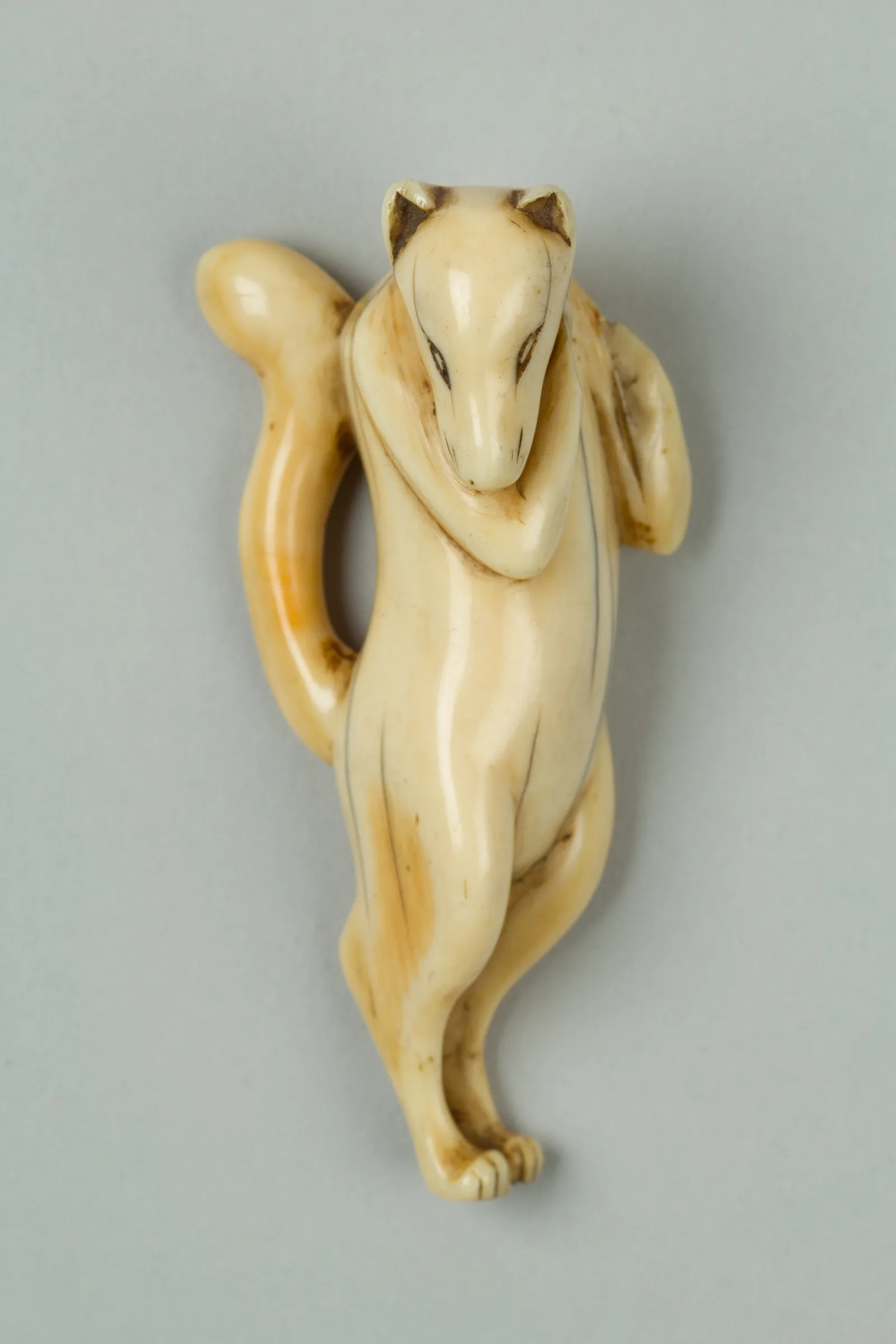
If there is a country where the fox means the most, it is Japan. Kitsune isn't only the word for "fox." It is a whole layer of belief in which a single beast holds the place of both a saint and a demon.
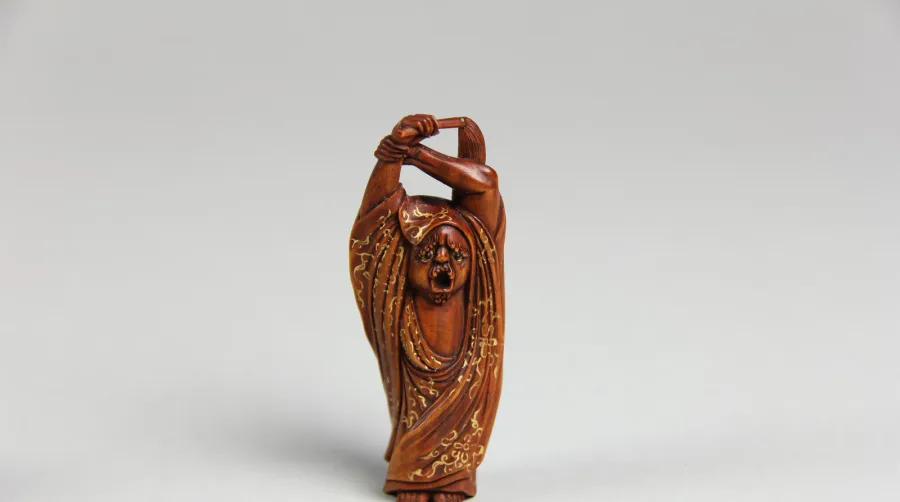
The fox runs straight through Japanese art. Miniature netsuke, the carved toggles that counterbalanced a sash purse, often showed a curled fox: people carried her in the palm, and she was at once ornament, amulet and a sign of the bond with Inari. Ukiyo-e prints drew fox weddings and fox-shapeshifters in human form with a treacherous shadow. This long artistic tradition explains why the fox outline reads so easily even in a spare modern pendant: the eye recognises it instantly.
Inari and the white foxes at the temple gate
Inari is the deity of rice, fertility, trade and prosperity, one of the most revered in Japan. Foxes, kitsune, are considered Inari's messengers. At Inari shrines (the most famous is Fushimi Inari in Kyoto, with its thousands of red torii gates) stand paired stone fox guardians. They often hold a granary key or a sacred jewel in their teeth, the jewel that contains their power. These foxes are white, pure, benevolent. They bring the harvest, protect trade, and answer the prayers of farmers. For the Japanese cultivator the fox at the temple is not an evil spirit but a protector.
The kitsune shapeshifter: the beauty who clouds the mind
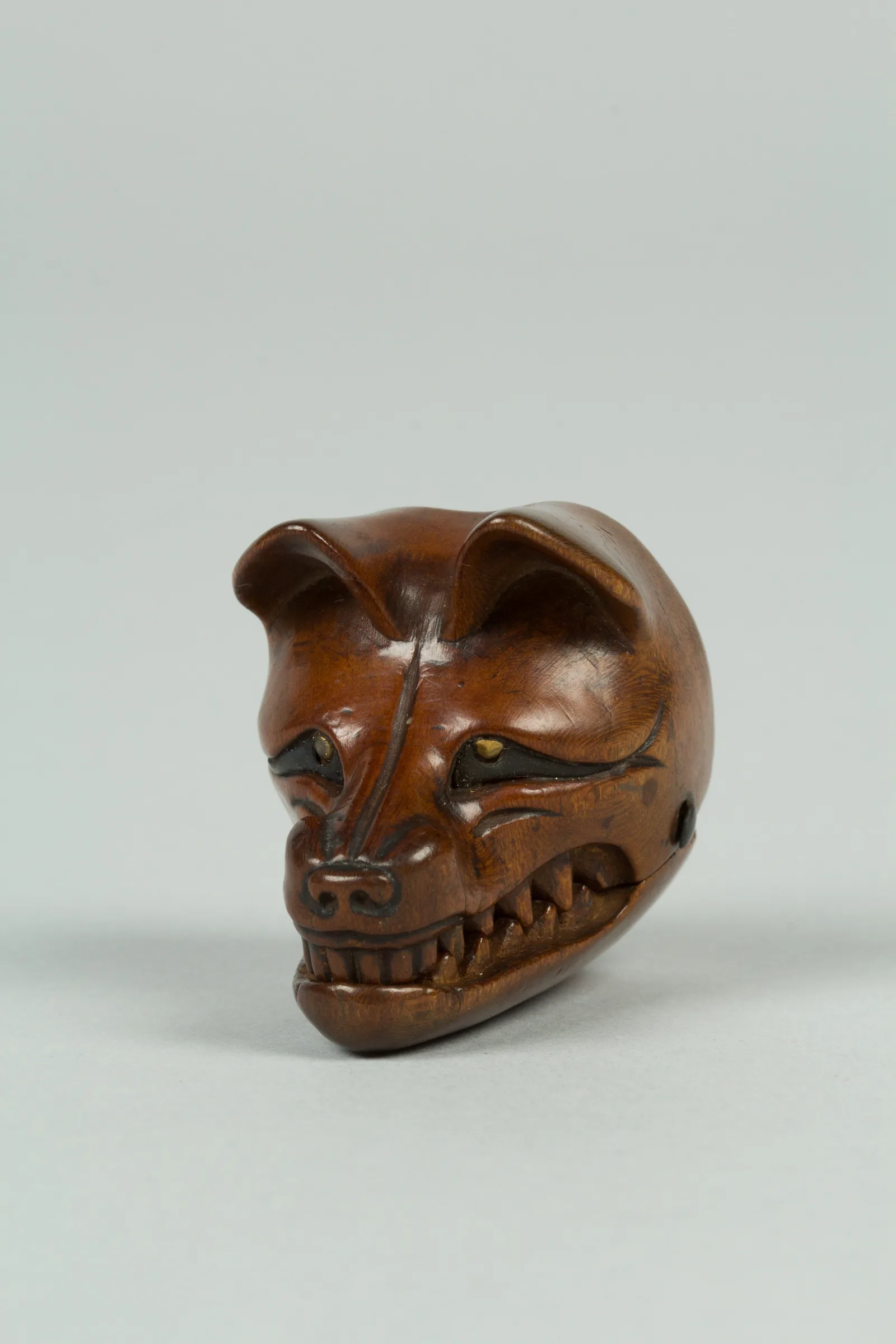
The same kitsune in another role is the deceiver. By legend, once she has lived long enough, the fox learns to turn into a human, most often into a beautiful woman. She enters a house, becomes a wife, bears children, and for years the man has no idea who is beside him. She may be given away by a shadow with a tail, a reflection in water, or a flinch at the sight of a dog. Stories of fox-wives are among the most tender and saddest in Japanese folklore: when the deception comes to light, the kitsune leaves, but her love was often real. That is what makes the Japanese fox so full-bodied. She isn't a villain for the sake of villainy. She is a creature between worlds, too cramped among people.
Zenko and yako: the good and the wild foxes
Japanese tradition split kitsune outright into two kinds. Zenko are the "good foxes," the white and golden servants of Inari, protectors who are worshipped. Yako are the "field foxes," wild, wilful, capable of mischief and harm. The distinction matters for the symbol: the fox isn't "both good and bad" at once on the author's whim, but at least two different beings in one skin. When people choose the fox of the Inari shrine, they mean zenko, the bright side. When they tell a scary tale about a shapeshifter in the forest, they mean yako.
Kuda-gitsune and fox possession
There was a darker edge to the belief too. In some regions of Japan people believed in kitsunetsuki, fox possession: the spirit of a fox was thought to enter a person, more often a woman, and speak through her mouth. Whole families earned a reputation as "fox families" and were shunned. Today this is part of the history of superstition, but it shows how seriously fox power was taken. The fox was no cute little animal but an entity to be reckoned with.
The number of tails and the nine-tailed fox
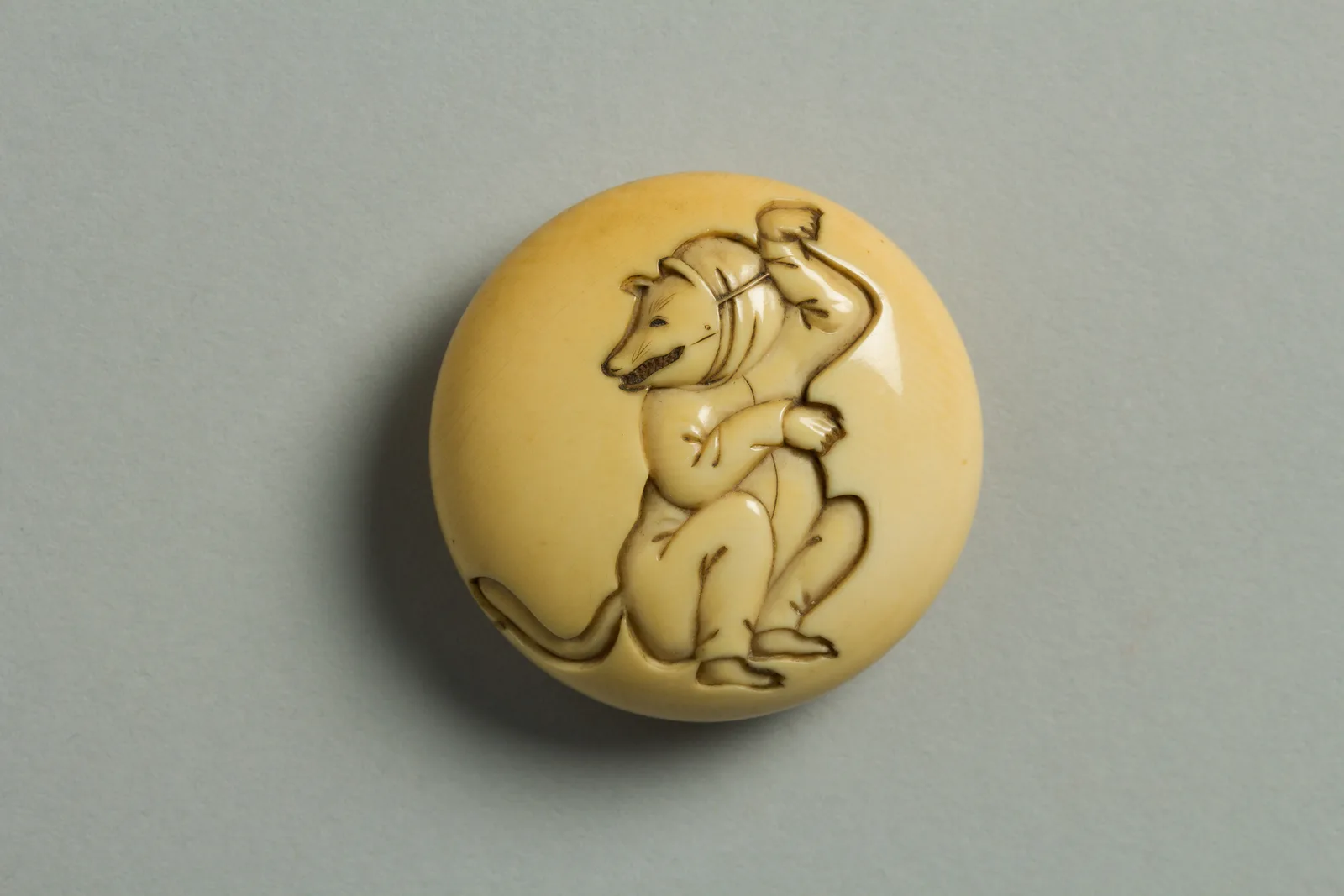
The most recognisable trait of the mythic fox is her tails. Among the Japanese and their regional neighbours alike, the number of tails is a direct scale of power and age.
One tail: the young fox
An ordinary fox and a young kitsune have one tail. Her power is small, magic is almost absent, and she can't yet shapeshift properly. This is the fox at the start of the road, closer to beast than to spirit.
How the fox gains tails with age
By legend, every hundred years (in some versions every thousand) a fox who has stored up wisdom and power grows a new tail. The more tails, the more ancient and mighty the being. The tails are visible age and rank. You can tell at a glance who you're dealing with: a foolish young fox, or a thousand-year-old spirit who sees straight through you.
The nine-tailed fox: the peak of power
Nine tails is the ceiling. The kyubi-no-kitsune, the nine-tailed fox, has lived a thousand years, gained a golden or white coat and almost divine power. She sees and hears everything happening in the world, reads the future, and takes any form. The nine-tailed fox can be both a great protector and a catastrophe: in legend such foxes toppled emperors and ruined kingdoms. In jewellery the nine-tailed fox is the most striking motif of all, the fan of tails opening behind the beast like a crown.
Customer reviews
Zevira is a real jewellery shop. Genuine payments, deliveries and customer thank-yous.
🥰🥰🥰 gracias

Ok, ¡gracias! 🙂

The Chinese huli jing: the seductress fox
It was from China, in fact, that the image of the many-tailed fox reached Japan. The huli jing, the "fox spirit," is an even more slippery creature in Chinese tradition.
The fox spirit in Chinese folklore
The huli jing is a fox who gained magical power through a long life and spiritual practice. Like the kitsune, she can turn into a human and often chooses the form of a dazzling beauty. The classic plot: the fox comes to a scholar or an official, becomes his beloved, and from there everything depends on her intentions. Sometimes she destroys the man, draining his vital force. Sometimes, on the contrary, she helps him build a career and stays a faithful companion. The famous collection "Strange Tales from a Chinese Studio" is full of such stories, and the foxes in it come out livelier than many of the people.
The nine-tailed huli jing
The nine-tailed fox exists in China too, and in the oldest texts she was a good omen: her appearance promised peace and prosperity. Over time the image darkened, and in later legends the nine-tailed fox is more often a fatal seductress who ruined more than one ruler. This doubleness, blessing and curse in one beast, ran through the whole of East Asian culture.
Upload a photo of your pet, someone you love, or an object. We'll build a 3D model and hand-cast it in pewter.




The Korean kumiho: the tragic nine-tailed fox
In Korea the same nine-tailed fox is called kumiho, and her image is noticeably grimmer than the Japanese or Chinese versions.
How the kumiho differs from the kitsune
The kumiho is almost always a woman and almost always dangerous. By a widespread version of the belief, she dreams of becoming a true human and to do so must either live a set span without killing people, or eat a human liver or heart. This gives the kumiho her tragedy: she longs for love and a human life, yet her very nature pushes her toward destroying those she loves. Unlike the Japanese kitsune, who can be openly kind, the kumiho is more often a doomed figure, stuck between beast and human.
The kumiho in modern Korean culture
The kumiho hasn't gone anywhere. Korean series and films keep returning to the image, reworking it now as a love story, now as a drama about accepting yourself. For a young viewer the kumiho is no longer a bogey but a symbol of a being who fights its own nature and wants to be understood. This shift from fear to sympathy explains nicely why the fox in jewellery today reads warmly rather than ominously.
The European folklore of cunning: Reynard the Fox
In Europe the fox went a very different way from Asia. No divinity, no tails. But a bottomless well of humour and satire instead.
In the medieval European tradition the fox is almost always a rogue and a swindler who runs rings around bigger and stupider beasts. He was drawn in a monk's habit before a flock of trusting hens, in the judge's chair, at the pulpit, and every viewer got the joke: the fox plays honest right up to the moment he grabs the prey. This image of the talking, mocking fox lived for centuries and reached our cartoons almost unchanged.
Who Reynard the Fox is
Reynard the Fox (or Renart, depending on the country) is the hero of a vast cycle of medieval beast fables born in France and Germany and scattered across all of Europe. Reynard is a cunning, brazen, charming swindler who tricks the wolf Isengrim, the bear, the lion-king and the rest of the beasts time after time. He steals, lies, and talks his way out of a death sentence with nothing but his tongue, and the reader roots for him, because everyone around is a fool or a hypocrite, while the fox is at least clever and honest in his dishonesty.
The fox as satire on power
Beneath the animal masks the European fox mocked real society: greedy lords, a corrupt court, a hypocritical clergy. The fox was the voice of the small but clever person against stupid power. This line survives to our day: the fox in Western culture is still shorthand for a sharp operator who wins by wits rather than rank. From a "crazy like a fox" cunning in politics to the plain phrase "sly as a fox," it all comes from here.
Aesop and the grapes that were sour
Earlier still than Reynard came Aesop's fox. The best-known fable is the fox and the grapes: the fox jumps for the cluster, can't reach it, and walks off saying the grapes were sour anyway. That gave English the phrase "sour grapes," for a person who belittles what they couldn't get. Aesop's fox set the European tone: the fox is clever, but her cleverness often turns into self-justification. A fine, human trait.





The fox in Slavic folktales: the sly little fox
In Russian and, more broadly, Slavic folklore the fox is one of the central characters, and her role is unmistakable. For an English reader she is the same trickster as Reynard, only dressed in the snow and pinewood of a different countryside.
The trickster fox of Slavic tales
The little fox of the folktales is flattering, sweet-tongued and very clever. She tricks the wolf into fishing with his tail through a hole in the ice until the tail freezes fast. She drives the hare out of his bast cabin. She plays dead so she'll be picked up onto a cart of fish, then tosses the fish off and slips away herself. The Slavic fox is nearly always out for herself, honey-mouthed and quick-minded. She is rarely openly evil, but she can't be trusted.
The fox and the runaway bun: wit beats naivety
The most textbook encounter in these tales is the fox and a runaway bun, a round loaf come to life. The bun has escaped the old man, the old woman, the hare, the wolf and the bear, outwitting them all with a little song. Only the fox outwits him in return: she praises his voice, asks him to sit closer, onto her nose, and eats him. The moral is plain: against brute force the bun held out, against flattery and wit he did not. That is a very precise read of the fox symbol: the one to fear most isn't the strongest but the cleverest.
The doubleness of the Slavic fox
For all her trickery, the fox in the Slavic tradition draws sympathy rather than disgust. People admire her for resourcefulness. To call someone "sly as a fox" sounds almost like a compliment to their mind. This warm shade matters: the Slavic fox is no demon but a clever neighbour in the forest, one you can actually learn from.
The fox among the Indigenous peoples of America
In the traditions of the Indigenous peoples of North America the fox is also a notable figure, though her role is her own.
The fox as trickster and teacher
Among many peoples the fox is a trickster, a sly one who breaks the order yet teaches something through it. Sometimes the fox helps people, bringing fire or knowledge. Sometimes she plays jokes on the stronger ones. As in other cultures, she is prized for quick thinking rather than strength. The image of the fox as a guide, one who leads through a hard place not head-on but around it, echoes other nature symbols in jewelry that have kept their meaning across the centuries.
The fox and spiritual guidance
In a number of traditions the fox is seen as a helper who teaches camouflage, watchfulness and the art of going unnoticed when needed. This is practical wisdom: don't charge straight in, read the room, act quietly. For a modern person such a fox is a symbol of emotional intelligence, of the ability to sense a situation and the people in it.
Leave your email, we'll send your discount code. No spam, unsubscribe anytime.
The code arrives by email, valid on your first order.
Fiery, silver and cross fox: the fox and colour
A separate and very practical theme for jewellery is the fox's coat. Foxes come in different colours, and each one carries its own character, which a design can play up.
The red, fiery fox
The classic, the one most people love the fox for. Red fur, a white chest, black "socks" on the paws and a black tail tip. In jewellery this colouring is carried by warm stones and orange enamel. The red fox is fire, energy, visibility. The most cheerful and warm version of the symbol, and one that suits almost everyone.
The silver and cross fox
The cross fox is a colour variation of the same red fox, with dark, almost black fur crossed by a silvery "frost." For centuries this fur was prized above any other. In jewellery the silver fox is carried by oxidised silver, black enamel with a silver dusting, and dark stones. This is the noble, restrained option for anyone who finds red too bright.
The Arctic fox and polar whiteness
The Arctic fox is a separate species, a northern fox that turns pure white in winter. The white fox echoes the white kitsune of Inari and the golden-white coat of the nine-tailed one. In jewellery she is carried by white gold, silver, mother-of-pearl, white enamel and moonstone. This is the most "magical," cold and mysterious image of the fox.
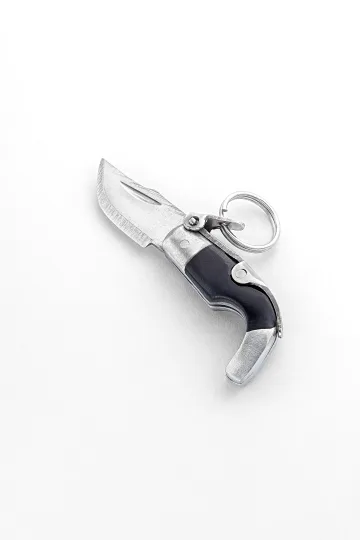
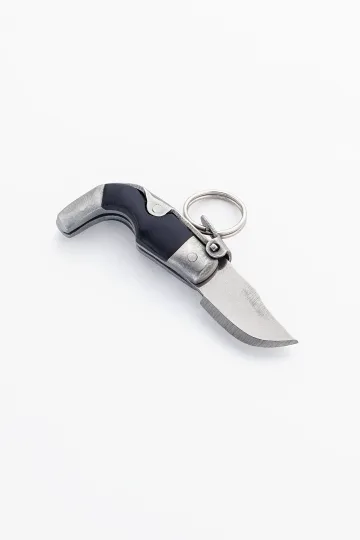
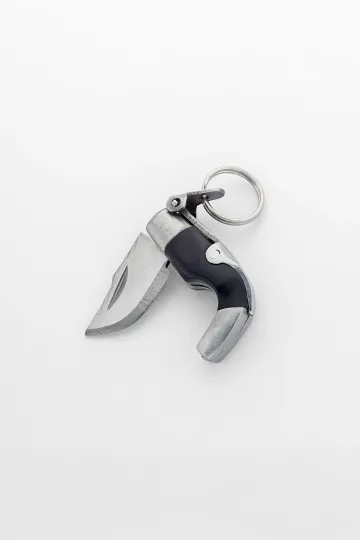
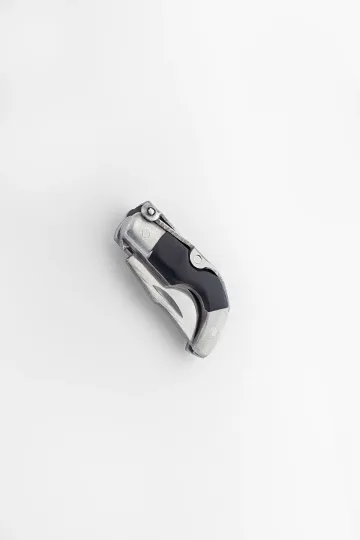
CAPAORA mini knife pendant
The 18th-century Spanish navaja in miniature: 40 mm of stainless steel, a real folding mechanism and a Palanquilla lock that clicks. An affordable gift to remember.
Authentic · Ships from Spain · 14-day returns
Stones and enamel for the russet coat
Since the fox is so tied to colour, the choice of material decides half the impression. The fiery coat calls for a warm palette, and there are a few reliable answers here.
Carnelian for a warm glow
Carnelian is an almost perfect stone for the fox. Its warm reddish-orange tone matches the fox's fur exactly, and its soft, opaque glow recalls fur in the sun. Carnelian is also, historically, a stone of energy, courage and movement, which sits well on the fox theme. In a fox piece carnelian is usually set as the body of the beast or as an accent cabochon.
Garnet and amber: depth and warmth
Garnet gives a deeper, wine-red shade, suited to the cross fox or to a dramatic evening look. And amber is the most "foxlike" stone by character: warm, honeyed, alive, as if sunlight had set inside it. Amber works for both the red and the golden nine-tailed fox. All three stones share a warm range that makes the fox glow rather than fall flat.
Orange enamel and how it's made
The most direct way to carry the fiery coat is enamel. Hot enamel is a glass powder fused onto metal at high heat, giving a durable, saturated colour. Orange, red, white and black enamel together produce the exact fox colouring: russet flank, white chest, black paws. The enamel fox is the brightest and most festive. There is one drawback: enamel asks for care in wear, more on which below.
The fox in women's jewellery and why she became popular
It's worth saying plainly: over recent years the fox has become one of the most sought-after feminine motifs, and there are clear reasons for it.
The fox as a modern feminine image
The fox joins what once seemed incompatible: intelligence and charm, independence and warmth, a light boldness and softness. This is the image of a woman who takes her own with wit and charm rather than with pressure. After long years of "strong and serious" symbols, the fox turned out to be a livelier, more human alternative. She is neither a stern predator nor a naive little animal, but someone in between, with character.
Pop culture and the cute beast
A wave of affection for foxes in modern culture played its part too: cute fox cubs from cartoons and illustrations, charming rogues from films, the fashion for a "woodland" aesthetic with foxes, deer and mushrooms. The fox became at once a deep mythological symbol and simply a very endearing beast that's a pleasure to wear. These two layers, the ancient and the cute, give the fox such a wide reach: from a teenager to a connoisseur of Japanese mythology.
The fox as a gift with a subtext
The fox is often given with the message "you're clever and a little crafty, and I like that." It's a compliment to resourcefulness, not a picture of a pretty animal. The fox works well as a gift for a friend, a teenage daughter, a woman who values her independence. Unlike blunt symbols of love, the fox speaks of the recipient's character more than the giver's feelings.
The fox in feng shui and as an amulet
The fox has an applied, amulet layer too, especially in the Eastern tradition.
The Inari fox as a talisman of plenty
Since the kitsune is a messenger of the deity of rice, trade and prosperity, the fox in the Eastern tradition is held to be a talisman of luck in business and of financial well-being. A figurine or a piece of jewelry with a fox is kept as a sign of prosperity, lucky trade, profit. Here the fox echoes other symbols of luck, such as the elephant, though she works more subtly: not through might but through dexterity and a lucky turn of events.
The fox as protection and perception
As an amulet the fox is often read as a guard against deceit: whoever wears the fox can't be fooled, because they see through other people's tricks themselves. It's a charm for perception, for the ability to spot lies and manipulation. If the wider theme of protective jewelry interests you, there's a separate guide to amulets, talismans and protective pieces and to protection rings.
The fox for feminine allure
The Eastern tradition also has a line of the fox as a talisman of feminine charm and allure, a direct inheritance from the seductress fox. It's worth catching the shade here: this isn't about manipulation but about confidence in one's own appeal, about a feminine strength that comes from within. The modern reading is gentler than the ancient one, but the root is the same.
Send a friend a discount code, they save on their first order.
Caring for a fox piece
The fox is often made with enamel and warm stones, which means her care has its own nuances.
Caring for an enamel fox
Enamel is glass, and it fears knocks and sharp swings of temperature: a hard blow can chip it, boiling water can crack it. Take an enamel fox off before sport, cleaning, the shower and sleep. Clean it with a soft, dry or slightly damp cloth, with no abrasives, acids or ultrasonic baths. Handled with care, enamel holds its colour for decades, which is why old enamel pieces reach us still bright.
Caring for stones and metal
Carnelian, garnet and amber aren't the hardest of stones, especially amber, which is soft and fears scratches, alcohol and perfume. They too are better kept from knocks and chemicals; put perfume on before you put the jewellery on, and store pieces apart so the stones don't rub each other. A silver fox, if it tarnishes, is freshened with a special silver cloth; an oxidised fox shouldn't be rubbed hard, so as not to take off the dark layer that creates the cross-fox effect.
Facts about the fox that surprise
To finish, a few things that make the fox even more interesting as a symbol.
The fox hunts by compass
The red fox can dive into snow after a mouse by orienting on the Earth's magnetic field. Scientists noticed that foxes miss more often when they pounce in any direction but north-east. So the fox is literally using a built-in compass to judge a blind leap through the snow. A beast that homes in on a magnetic field fits the role of a symbol of precise calculation rather well.
The fox was domesticated in a few generations
In a Siberian experiment led by the geneticist Dmitri Belyaev, cross foxes were selected solely for friendliness toward humans. Within a few generations the foxes turned tame, began to wag their tails and bark, and developed floppy ears and patches in their coats. The experiment showed how quickly a wild beast can become almost a dog if you select for character. The fox proved far more pliable than anyone had thought.
Foxes "speak" in dozens of sounds
Foxes make an astonishing number of sounds, from yapping and howling to an eerie cry that resembles a human scream. That very night-time "woman's scream" in the woods often turns out to be a fox in mating season. A rich vocal repertoire adds to the fox's reputation as a creature both expressive and crafty.
The nine-tailed fox had a "star ball"
In Japanese and Chinese legend the kitsune's power is often held in a small ball, the hoshi-no-tama, the "star ball," which the fox carries in her mouth or hides away. If a person takes possession of this ball, the fox is forced to serve them just to get it back. This motif explains why in so many pictures and statues the fox holds a round jewel in her mouth, a frequent and lovely element in fox jewellery.
The fox's wedding under a sunshower
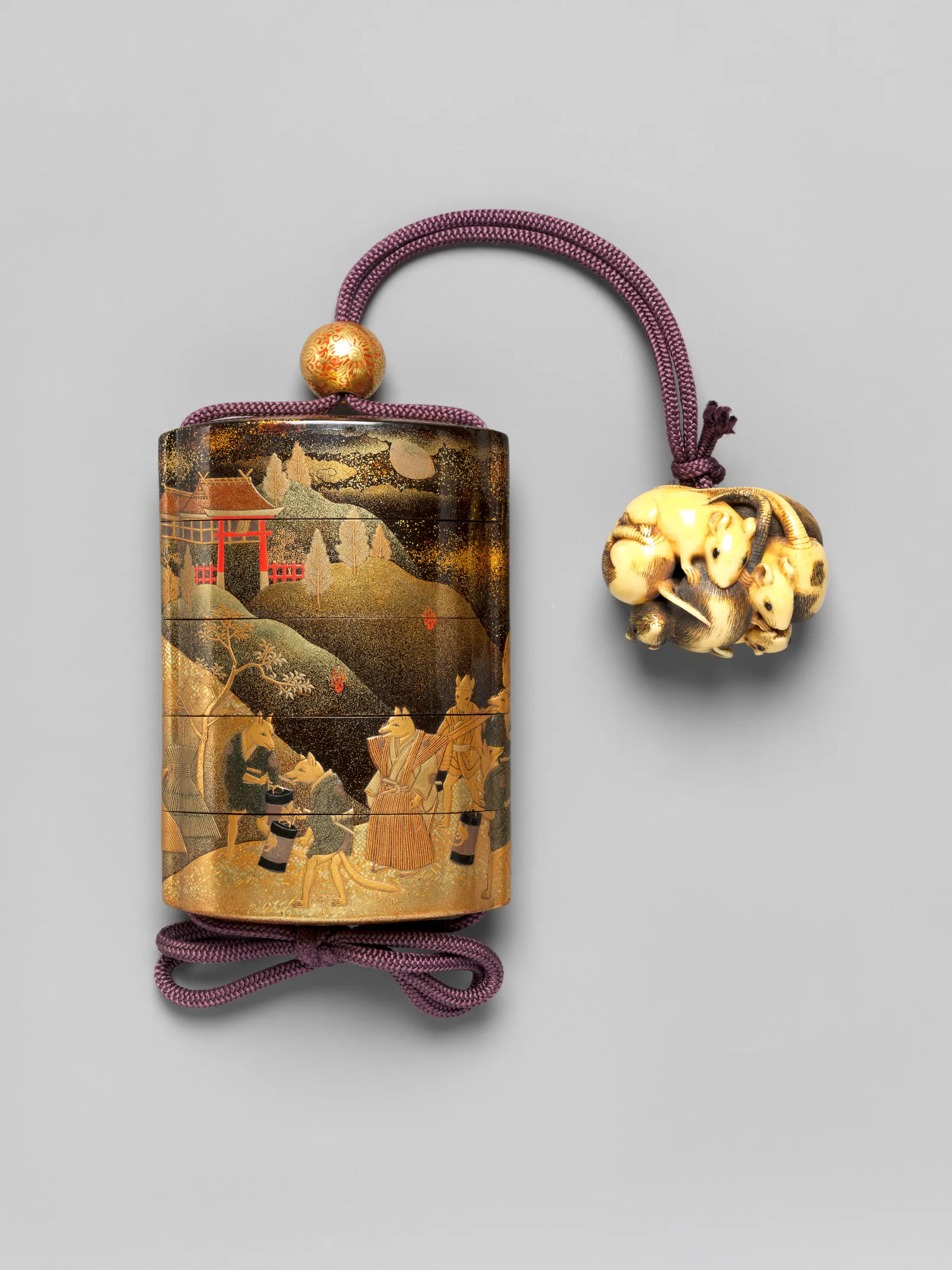
In Japan and beyond there's a poetic saying: when rain falls in bright sun, people say it's a "fox's wedding." By legend the kitsune hold their wedding processions in exactly that strange, in-between weather, when you can't tell whether it's day or dusk, waking life or a spell. The image caught on so well that it reached cinema and painting. For the symbol it's one more touch: the fox is a creature of the threshold, found where boundaries blur, where sun and rain fall at once. A fox piece sits well on people who feel cramped by the strict frames of "either-or."
The fennec: a fox with giant ears
The smallest fox in the world, the fennec, lives in the Sahara and wears ears longer than its own muzzle. The huge ears help it shed heat and hear prey beneath the sand. This touching desert cub is a favourite motif in its own right, a symbol of keen hearing and the knack of catching what others miss. Unlike the red fox with her trickster reputation, the fennec reads as pure tenderness, which is why it's often chosen as a gift for children and for anyone who wants a fox without the shade of cunning: just big ears, big eyes and charm.
Frequently asked questions
What does a fox pendant mean?
A fox pendant usually symbolises intelligence, cunning in the sense of resourcefulness, independence and adaptability. In the Eastern tradition a layer of luck, plenty and feminine charm is added through the image of the kitsune and Inari. The exact meaning depends on the execution: a sweet red fox reads warmly, a nine-tailed fox points to mythology and power, a white fox to magic and mystery.
What does a fox with nine tails mean?
Nine tails is the highest rung of power for the mythic fox in Japan, China and Korea. Such a fox has lived a thousand years, gained vast magical might, the power to see the future and to take any form. The nine-tailed fox can be both a great protector and a fatal seductress. In jewellery it is the most striking motif, with the open fan of tails.
Is the fox a good or a bad symbol?
Both at once, and that's the heart of her. The fox is helper and deceiver, the holy thing of Inari and a shapeshifter, the trickster of folktales and a clever protector. The fox isn't about morality but about a mind that won't play by anyone else's rules. Most people wear the fox in a positive key: as a sign of quick thinking, charm and independence.
Who is fox jewellery right for?
For those who value wit, humour and personal freedom and dislike pomp. The fox is good for creative people, for those who get their way gently and cleverly, for lovers of Eastern culture, for a person who has changed their life and started over. There's no limit by age or style; the execution decides everything.
Which stones suit the fox?
Warm stones that echo the fiery coat: carnelian with its reddish-orange glow, honeyed amber, wine-red garnet. For a white or nine-tailed fox, moonstone, mother-of-pearl and white metals will do. For the cross-fox colouring, oxidised silver and dark stones. The main thing is to keep the warm, or conversely the cold, range whole.
Does the fox bring luck in feng shui?
In the Eastern tradition, yes. Since the kitsune is a messenger of Inari, the deity of rice, trade and plenty, the fox is held to be a talisman of luck in business, of profit and prosperity. The fox is also worn as a charm for perception that guards against another's deceit, and as a sign of feminine charm and self-confidence.
How does the fox differ from the wolf in symbolism?
The wolf is about strength, the pack and conscious loyalty. The fox is about wit, solitude by nature and adaptability. The wolf gets its way by force, the fox by calculation and charm. The wolf pines without the pack, the fox is self-sufficient alone. If you'd like to compare, there's a separate article on the wolf in jewelry. The choice between them is the choice between strength and cunning.
Can you give fox jewellery as a gift?
Yes, and it's a gift with a pleasant subtext: "you're clever and a little crafty." The fox suits a friend, a teenage daughter, a woman who values independence, a lover of Japanese culture well. It's a compliment to the recipient's resourcefulness and character rather than a decorative little animal.
Buying it as a gift? Each one arrives ready to give.
 A branded Zevira box and a little card come with every order.









Conclusion
The fox is a rare symbol that doesn't try to seem better than she is. She both helps and deceives, both guards the harvest and steals the hens, sits as a white sentinel at the Inari shrine and leads travellers astray in the night woods. The Japanese made her the messenger of a goddess and a shapeshifter at once. The Chinese and Koreans added drama and tails. Europe turned her into a mocking rogue. The Slavs into a sweet-tongued gossip. Everyone saw the same thing in the fox: a mind that takes its own without force.
When someone chooses a fox for the neck or the finger, they are choosing exactly that quality. Not power, not scale, not brute might. But quick thinking, flexibility and the quiet confidence of a beast who survived everywhere and stayed herself. That is the fox.
Pendants, rings and earrings with the fox and nature symbolism in silver and gold, with warm stones and enamel.
About Zevira
Zevira makes jewellery in the artisan tradition of Albacete, Spain. The fox, for us, is the case where a symbol means exactly what the owner puts into it: we don't impose a reading, we make the image recognisable and wearable every day.
What you can find with us on the fox and nature theme:
- Pendants with the fox, from a sweet red silhouette to the nine-tailed kitsune
- Rings and earrings with a fox motif, playful and graphic
- Warm stones for the fiery coat: carnelian, amber, garnet
- Orange and multicoloured enamel for the exact fox colouring
- The white and silver fox in light metals and mother-of-pearl
- Nature and woodland symbolism for a whole look
Each piece is made by a master by hand, with the option of personal engraving. 925 silver and 14-18K gold.