Jewellery Gift for an Architect or Designer: Complete Guide
Three stories, one question
The standard gift for an architect is a book about architecture. They already have two hundred on the shelf. A pendant with the coordinates of their first finished building, or a Mobius strip rendered as a thin band, they have none. Jewellery for an architect is a structural extension of how they see space. A person who has spent three years drawing the fall of light inside a room physically cannot wear a loud, shapeless mass.
James spent three weeks deciding what to give his partner for the opening of her first completed building. A residential block in Bristol, four storeys, seven years from the studio bench to keys in the lock. She is an architect. Flowers felt too accidental. A dinner is over too quickly. He wanted something that would stay with her, something she would wear and remember: this day, the first walls, the first residents, the first project.
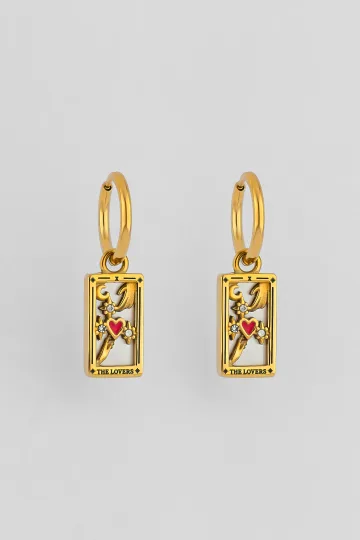
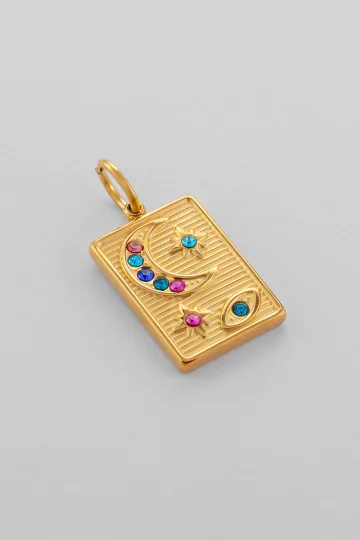
Wear the symbol, don't just read about it. These are in stock:






Sarah was choosing a gift for a friend on the tenth anniversary of his practice. He opened his studio at thirty, survived three downturns, lost two partners, found his own clients. Ten years of practice is an anniversary. It is survival and a victory at once. What do you give a person who has turned ideas about space into a profession for a whole decade?
Maya, an interior designer, wanted a gift for herself after finishing her first large commercial project: an office for a construction firm, eight hundred square metres, half a year of work. She did not expect anyone else to mark it. But she wanted it marked. Something small, for herself, that she would wear to the final presentation and keep wearing afterwards as a reminder: I did this.
Behind all three stories sits a single question. What piece of jewellery says that a person makes space for a living? That for them a profession is both work and philosophy? That form, proportion and material genuinely matter?
This guide is for anyone choosing a gift for an architect, interior designer, graphic designer or any professional whose work is rooted in visual thinking and the shaping of an environment. It is also for people working in these fields who want to mark a milestone of their own.
Who are designers and architects: from the drawing board to the pixel
The word "designer" covers very different professions, and the choice of gift depends on which one you mean. Each has its own aesthetic and its own system of values.
Architects
An architect designs buildings and spaces. This means years of education, professional examinations and registration, and work with structural and engineering systems. Bodies such as RIBA in the United Kingdom, the AIA in the United States and equivalent national institutes set the standards of practice.
An architect has a particular relationship with scale. They think at the level of a door handle and at the level of how a building meets the city block, at the same time. This double focus shapes a special kind of attention to objects. An architect notices the quality of a metal, a proportion, the way a piece relates to everything else around it.
Landscape architects
A landscape architect works with open spaces: parks, gardens, urban squares, waterfronts. It is a profession at the meeting point of ecology, design and urban planning. In their aesthetic, landscape architects often sit closer to natural forms, to the organic, to the rhythms of growth and the turning of seasons. Jewellery with natural motifs, including the bee as a symbol of ecosystem and the geometry of the hive, lands with them on several levels at once.
Interior designers
An interior designer creates an environment within existing walls: choosing materials, light, furniture and the proportions of rooms. The profession demands an understanding of how a person experiences space physically, through touch and rhythm. Interior designers often carry a wider aesthetic palette than architects: they may work in the classical register, in Scandinavian minimalism and in eclecticism alike.
Graphic designers
A graphic designer works with the plane, with typography, colour and visual communication. The profession lives at the meeting point of art and commerce. A good graphic designer reads every object as a system of signs: for them a piece of jewellery is also a visual statement. Geometric jewellery with clean forms and a minimum of decoration often finds a strong echo in this professional circle.
UX and UI designers
A designer of user interfaces works with digital products: apps, websites, systems. It is one of the few creative professions where the object of the work is entirely immaterial. This is exactly why physical jewellery with a clear form and a good finish often becomes especially valued: it embodies the quality a UX designer chases in digital space.
Industrial designers
An industrial designer makes objects: furniture, appliances, transport, tools. It is a profession working at the meeting point of function and form. Industrial designers are the closest of all to the philosophy of Dieter Rams and the principles of good design: for them, form following function is not a metaphor but a working method.
One precise line at the collarbone, nothing more. An architect draped in trinkets is a failed elevation, and you know it.
What to wear with jewellery for an architect or designer
I choose a piece for someone who shapes space by the same rules they build with: form, proportion, not one detail too many. Here are the five questions I get asked most.
What do you give a minimalist architect? I recommend the barest form: a thin band ring, a linear pendant, a single stud point. Silver with clean edges holds the geometry best. One precise piece beats any set here.
And if it marks a specific milestone? I suggest engraving: the coordinates of the first completed building, the date a studio opened, a practice's initials. These are data, not sentiment, and the recipient reads them at once. A thin plate or a ring inscribed on the inside works most quietly.
What do you wear to an opening or a presentation? For a public day I choose one visible accent: a ring engraved with coordinates, or the pendant of that exact project on a short chain. I put the rest away. In photographs that detail still reads years later.
Which metal do you suggest for a work look? For a graphic, industrial wardrobe I recommend cool silver or oxidised metal with a dark patina. For warm, earthy tones, beige and terracotta, I choose yellow gold. Mixing two metals in one piece is fine when the contrast is deliberate, like steel and copper in a project.
And for an interior or landscape designer? For them I suggest a motif with character but no noise: a moon, a star, a bee, an infinity sign, a matte finish. These people work with light and living form, and a warm motif suits them better than strict geometry. I choose the chain length to suit the neckline, never the other way round.

Turn on your camera, pick earrings, a pendant or a ring, and see the piece on yourself in real time.
Switch items in one tap.
Everything runs in your browser: no photo or video is ever uploaded.
The psychology of the creative profession: why the gift has to be different
Mihaly Csikszentmihalyi, the Hungarian psychologist, described the state of flow as the condition in which a person is fully absorbed in an activity: the task matches the skill, time disappears, action requires no effort. Architects and designers know this state well. The best projects are born from it.
But flow has a reverse side. When a project is finished and handed over, the creative person often feels something close to emptiness: the energy that went into making has nowhere left to go. It is precisely at that moment that an object fixing the achievement becomes genuinely necessary. Not as a trophy, but as an anchor.
Donald Schon, the American theorist of education, introduced the idea of the reflective practitioner: a professional who applies knowledge but constantly rethinks their practice in the process of working. Architects and designers are exactly such practitioners. They work through iteration, through trial and error, through dialogue with material and space.
A gift for a reflective practitioner should be the same. Not decorative but meaningful. Not random but precise. Jewellery that refers to the values of the profession works better than the most expensive piece without meaning.
Good design principles as the basis for choosing
In 1978 Dieter Rams, chief designer at Braun, set out ten principles of good design. These principles became an ethical code for the profession and continue to shape how designers think about objects.
Good jewellery answers the same criteria. It is useful, in the sense that it carries meaning and serves an emotional function. It is long-lasting: silver and gold do not go out of date. It is honest: the form does not hide the material or pretend to be something else. It is innovative to the degree that a new use of classical forms counts as innovation. It is minimal: Rams said "Weniger, aber besser" (less, but better), and minimalist jewellery enacts that thought quite literally.
For a designer or architect, jewellery that meets these principles is a gift offered in their professional language. It says: I understand how you think about objects.
Milestones that deserve a gift
A creative career is built from specific moments. Each of them deserves its own gift with its own meaning.
Finishing architecture school
The most obvious milestone is the degree. Architectural education is one of the longest and most demanding among the professions: five to seven years of load, drawings at three in the morning, design reviews assessed both as engineering solutions and as artistic statements. A graduate of an architecture school has been through something genuinely hard.
Jewellery for finishing architectural education works differently from a graduation gift to an ordinary student: it marks not so much the end of study as the start of practice. It is an intermediate point, not a finale. So pieces with the symbolism of continuation and movement work well: infinity, a ring with no beginning and no end, celestial objects as navigational markers.
More on the symbolism of a graduation gift: Jewellery for graduation: a gift guide.
Earning professional registration
In most countries an architect must earn a licence after several years of practice and a set of examinations: RIBA accreditation in the United Kingdom, registration through NCARB and the AIA in the United States, and the equivalent elsewhere. This moment marks the passage from graduate to fully fledged practitioner. It often happens five to eight years after the degree. It is a serious milestone, and one that is rarely celebrated as it deserves.
Jewellery engraved with the year of registration, or with the symbol of a completed cycle, belongs here.
The first realised project
The first building or interior that stopped being a project on a screen and became a real physical space is a moment of particular weight for any architect or designer. Coordinate jewellery works well here: a precise pinning to a point on the earth that the person created.
Opening a studio or practice
Opening your own studio is a risk and a decision. Many architects work for years as employees and never take the step. Opening a practice is a career move and an assertion of one's own professional voice. Jewellery with an infinity symbol or the studio's initials marks that assertion.
An anniversary in the profession
Ten years of practice, twenty, thirty. This is not about age, it is about professional tenure. A person who has worked in architecture or design for a decade has seen several market cycles, several shifts in taste and current, and has built up their own method. Jewellery with the symbolism of continuity suits such moments.
A teaching appointment
When a practitioner becomes a studio critic or a professor at an architecture school, that is recognition of a different kind: not from the market, but from the professional community. It is a role in which a person passes knowledge to the next generation, becoming part of the long line of transmission they came from themselves. Jewellery with a symbol of wisdom and continuity is especially fitting here.
Engraving: meaning fixed in metal
Engraving turns a piece of jewellery into a personal document. For an architect and a designer there are several especially precise ideas.
Coordinates of the first building
The GPS coordinates of a place the person created: latitude and longitude. This is information at the limit of precision and the limit of the personal. At the same time it is a direct embodiment of the profession: an architect deals precisely in coordinates, precisely in pinning to a site. The engraving might read "51.4545 N, 2.5879 W" or, in a more compact form, "51.4545, 2.5879". More on engraving options: Engraving on jewellery: what to engrave.
The studio partner's initials
If architects work together, a paired piece with a partner's initials is a sign of a professional union. Architectural practices often carry the names of both founders precisely because architecture is a collective practice, and a good studio rests on trust between people.
A motto or a quotation
"Less is more" (Ludwig Mies van der Rohe, one of the founders of the international style, German architect, 1886-1969). Three words that became a professional principle for generations of designers. On the reverse of a pendant or inside a ring it works as a quiet manifesto.
The date of an opening or a founding
A simple date in the form "12.04.2024" on the back of a medallion or inside a ring fixes a moment that would otherwise dissolve into time.
Customer reviews
Zevira is a real jewellery shop. Genuine payments, deliveries and customer thank-yous.
🥰🥰🥰 gracias
Ok, ¡gracias! 🙂
Jewellery for an architect and designer: what works and why
Choosing jewellery for a person in a creative profession requires an understanding of their aesthetic. That does not mean you have to guess the exact taste. It means understanding the principles that guide the person.
Minimalism as philosophy
Architects and designers with a minimalist aesthetic often experience jewellery as an extension of their professional language. Minimalist jewellery is not "plain" or "modest". It is jewellery where form is calibrated to the limit, nothing is superfluous, and every line is deliberate.
For an architect, a minimalist piece is legible at the professional level: it is the same reduction to essentials they perform in a project. A thin band ring without decoration, a flat geometric pendant, a bar earring: each of these could be an architectural drawing.
Geometric forms: the language of the profession
Triangle, square and circle are the three basic forms every designer works with. In jewellery they carry an extra layer of meaning.
The triangle is a symbol of balance, strength and orientation: a structure stands on the triangle. In architecture the triangle is the truss, the rafter, the structural principle.
The square is a symbol of order and rational space. An architectural plan is often organised around a rectangular grid. A square form in jewellery refers to that rational systematics.
The circle is a symbol of continuity, perfection and completion. In architecture it is the dome, the arch, the rose window. A ring as jewellery is the circle in its pure form.
The pentagram, the five-pointed star with its true proportions, has always embodied mathematical harmony. The Pythagoreans treated it as a symbol of hidden proportion. On its centuries of symbolism: Pentagram in jewellery: the meaning of the symbol.
Linear pendants
A thin linear pendant, a straight line or a horizontal bar on a chain, says that the wearer values precision and clarity. It is jewellery that does not shout about itself but is noticed by those who look closely. That is precisely the audience designers work among.
The band ring
A thin smooth ring without stones or decoration is minimalism at the limit. It is worn alone or stacked with other rings. For an architect it works as an assertion: form without ornament is already beautiful. That assertion is exactly what separates good architectural design from bad.
Bar earrings and geometric earrings
A bar earring, a long thin needle with no drop, is jewellery defined by the clean geometry of a line. Small geometric earrings in the shape of a triangle, square or thin ring work on the same principle. Hoop earrings, as the form of a closed geometry, are covered in the guide: Hoop earrings: a guide to choosing and styling.
The infinity symbol: a continuous line
Infinity, the lemniscate, is a line with no beginning and no end. For an architect it can be read as the continuous process of design, as the line running past the horizon of the project, as the link between a building's past and future. For a designer it is the continuous dialogue between form and space. Full guide: Infinity symbol in jewellery: what it means.
Coordinate jewellery: a point on the map
Jewellery bearing the coordinates of a specific place has become a settled direction in the craft. For an architect it is an especially precise gift: the coordinates of the first realised building, the coordinates of the city where the studio opened, the coordinates of a place tied to a significant project. It is a form of personal cartography written into metal.
Celestial jewellery: markers of space
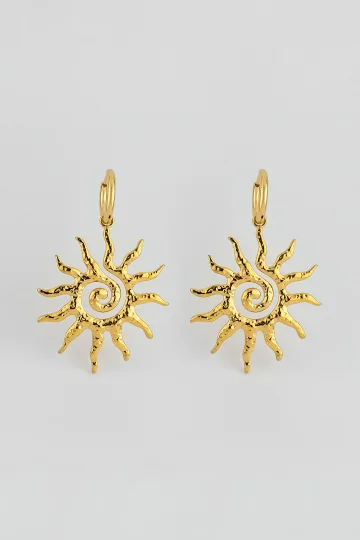
The star as an instrument of navigation, the moon as a marker of time, the sun as an organising principle of space: celestial objects have always been tied to architecture. Many architectural masterpieces are oriented by the sun or designed around the movement of light. More on the symbolism: Celestial jewellery: what the sun, moon and stars mean.
The bee: the geometry of nature
The honeycomb is an ideal natural structure: hexagonal cells use space with maximum efficiency, distribute load and minimise material. That is the same problem an architect solves. The bee as a symbol of work, of the collective and of precise structure sits well on the professional language of designers. The full story of the symbol: Bee in jewellery: the meaning of the symbol.
The golden ratio and hidden proportion
The golden ratio (around 1:1.618) appears in architecture from the Parthenon to contemporary buildings. The Fibonacci spiral, which follows from the same proportion, recurs in shells, plants and architectural forms. A piece of jewellery with this spiral, or with the proportions of the golden section, is one in which an architect recognises a familiar mathematical principle at a glance.
Materials for the jewellery of an architect and designer
The choice of material is a practical question. For a professional who makes decisions about materials in their projects every day, the material of a piece of jewellery carries its own meaning.
Sterling silver
Silver is a material with industrial honesty. It does not pretend to be gold, it does not hide its nature. That honesty makes it a good choice for people who value an object speaking plainly about itself. Silver holds a geometric form well, conveying edges and proportions cleanly. For a minimalist piece it is often the preferred metal.
Oxidised silver with a dark patina gives extra visual weight: it is jewellery that looks older than its age and carries an echo of a craft tradition. For an architect working with historic buildings or with an industrial aesthetic, this kind of silver lands in the right register.
14K gold
Gold is a material of status and longevity. It does not tarnish or oxidise. In the context of a professional gift, yellow gold speaks of seriousness of intent: this is an object chosen with meaning. Gold works well on the career milestones that call for some weight.
Gold in a thin execution, a slim plate, a narrow band, a small pendant, is not about luxury but about precision. Such a piece says: I chose this object as carefully as you choose the materials for your projects.
A combination of metals
Architecture often works with the contrast of materials: concrete and timber, steel and glass, copper and stone. A piece with two metals, silver with gilding, or white and yellow gold, reproduces that logic of contrast in miniature. It says that the object was made with the same attention to pairing as a good project.
Surface and texture
For an interior designer who thinks about the tactile quality of materials every day, matte against polished is a conscious choice. Matte gold reads as technical and contemporary. Polished silver as classical and precise. A textured surface, a fine knurling or vertical lines, adds a sense of the handmade.
A good jeweller thinks about texture the way a designer thinks about the material of a wall. A piece with deliberate texture is a sign that someone with professional attention to detail worked on it.
How to choose jewellery for a specific specialism
Architects and designers within each profession are very different. Here are a few practical bearings by specialism.
For the minimalist architect
A person who builds in the spirit of Mies van der Rohe or Scandinavian architecture probably wears very little jewellery. If they wear anything, it is one thing, chosen precisely. For them: a thin band ring in gold, a small geometric silver pendant, a stud point. No stones, no patterns. Form and metal, nothing more.
For the architect working with historic buildings
This is a person who spends days in archives, on the sites of historic restorations, in dialogue with old materials. For them, jewellery with historical weight: oxidised silver with a patina, a form referring to classical geometry, a piece with engraving as an archival record.
For the interior designer in the Scandinavian style
Scandinavian minimalism in interior design means white walls, natural wood, clean lines. Jewellery for such a person: a thin gold chain with a small pendant of correct geometry, bar earrings or small geometric studs. A pale metal without dark patina.
For the interior designer in the eclectic style
A designer who works with textures, ornament and the mixing of cultures and eras can wear more expressive jewellery: celestial pieces with symbolism, jewellery with natural motifs. More is permissible here than in a minimalist context.
For the UX designer
A person working at a technology company or on a digital product leans towards jewellery that is precise and technical: smooth geometric forms, metal without imitation, an exact finish. A stud point, a thin ring, a linear pendant. The material should speak of quality the way good code speaks of professionalism.
For the industrial designer
An industrial designer thinks about objects through function: how it works, what it is made of. For such a person, jewellery with an obvious structural logic, visible proportions and an honest material. A good minimalist pendant or ring that looks like an industrial object in miniature.
Upload a photo of your pet, someone you love, or an object. We'll build a 3D model and hand-cast it in pewter.



Everyday jewellery and pieces for special occasions
Architects and designers wear jewellery differently depending on context.
Jewellery for daily work in the studio
In the working studio of an architectural practice or a design office, jewellery reads as part of the professional image. Here it works: one small ring or two, small stud points or geometric studs, a thin chain with a small pendant. Nothing that gets in the way of drawing, working at a screen or handling a model.
These are everyday pieces, worn for a long time and quickly absorbed as part of oneself. Such pieces most often become the favourites: not because they are the brightest, but because they are everywhere with you.
Jewellery for presentations and openings
A project presentation, the opening of a finished building, a defence before a panel: these are public professional moments. Here jewellery speaks about how a person presents as a professional. A little more than the daily mode: a ring with engraving, earrings with a small geometric element, a chain with a pendant carrying the coordinates of that very building.
A piece worn at the opening of a first building is a detail that photographers and the people close to you will notice. Years later the person will look at the photographs from the opening and see themselves: a professional in their first building.
Jewellery for architectural events
Architecture biennales, professional conferences, exhibitions, industry awards: these are settings where professionals notice jewellery. Here, pieces with architectural symbolism or with a precise minimalist form work well. This is an environment in which a subtle reference is perceived and read.
Architectural heritage as a source of inspiration
Some historic architects created forms so recognisable that they became part of the visual language of the profession.
Antoni Gaudi (1852-1926) made architecture that literally looks like jewellery: undulating lines, mosaic surfaces, forms drawn from nature. His buildings in Barcelona (the Sagrada Familia, Park Guell, Casa Batllo) became places of pilgrimage for architects from all over the world. Jewellery with organic, biomorphic forms is sometimes called "in the spirit of Gaudi" precisely because his work set an entire language of form.
Ludwig Mies van der Rohe (1886-1969) embodied the opposite aesthetic: clean lines, glass and steel, absolute minimalism. "Less is more" is his formulation. Jewellery in the spirit of Mies is a thin straight line, a smooth surface, nothing extra.
Le Corbusier (1887-1965) developed the Modulor: a system of proportions based on the dimensions of the human body and the golden section. Le Corbusier's architecture is mathematics made visible. Jewellery with true geometric proportions is, in that sense, close to his thinking.
Zaha Hadid (1950-2016) brought a deconstructivist language of form to architecture: sharp angles, dynamic curves, buildings that seem to be in flight. Her work in Vienna, Leipzig, Baku and London changed the idea of what a building could look like. Jewellery with an angular, dynamic form or with asymmetry evokes this aesthetic.
Renzo Piano (born 1937) works with light metal structures, glass and visible structure. His buildings show how they are made: the engineering is not hidden but displayed as beauty. For an architect who shares this philosophy of honest structure, jewellery in which the structure is visible, where the metal is honest with itself, is a direct continuation of professional values.
Tadao Ando (born 1941) works with raw concrete as his main material. His buildings embody power through simplicity: large volumes, a minimum of detail, maximum quiet. Grey, matte, heavy, and yet the space works. For an architect close to this aesthetic, matte metal and monochrome in jewellery speak the same language.
Architectural heritage is a set of names to cite. It is a dictionary of forms and principles living in the head of everyone who has had an architectural education. When a gift of jewellery speaks the language of that dictionary, of forms, proportions and principles, it is received as an act of understanding.



Designer vs architect: the difference in approach to a gift
Architects and designers are alike in many ways, but there are differences in professional culture that affect the choice of gift.
An architect works with physical space and carries legal responsibility for buildings. This gives the profession a certain formality and seriousness. Architects often prefer gifts that speak of professional recognition: a piece with the coordinates of a building, with the date of registration, with a quotation from a theorist of architecture. At the same time an architect, unlike many other professionals, takes easily to a gift with intellectual content: they are used to objects carrying ideas.
An interior designer works inside an existing space and has more contact with the client at the level of daily life and personal taste. They think about how things feel in everyday use, and how they look on a plan. So jewellery with tactile quality, an interesting surface, a good material often catches an interior designer more strongly. For them the object is first an experience of touch, and only then a visual image.
A graphic designer thinks in signs and systems: logos, typefaces, colour codes. Jewellery for them works as a visual message. Simple, clean, with recognisable geometry: triangle, circle, line. Nothing extra. A graphic designer notices the difference between a piece with a concept and a piece without one faster than anyone else. It is their professional skill.
A UX designer creates an experience, not an object. So a gift that carries an experience or a story, jewellery with engraving, jewellery marking a specific moment, works better for them than a beautiful object without meaning. A UX designer thinks about the user and what their experience of the product will be. Applied to jewellery this means: a piece that does something to a person every time they look at it is better than a piece that simply is.
An industrial designer judges objects through function and structure. They ask: why is this made exactly this way? What would happen if the form were different? A piece that has an answer to that question, where the form is justified, the material is right and the joins are exact, is a far more interesting object for them than a beautiful thing without logic.
This difference matters, because a gift of jewellery for a professional is a beautiful object that has to pass a professional filter. The best gift is the one that passes that filter and comes out the other side as something worth attention.
What it means to own a piece of jewellery as a creative person
For most people a piece of jewellery is part of the outward image. For an architect or designer it can be more: an object the person chose or received with intent, that carries a specific story, that says something exact.
In the psychology of objects there is the concept of the extended self: the theory that we partly build our identity through the things that belong to us. Jewellery works especially strongly in this system, because it is worn on the body. It is literally closer to a person than any other object.
For an architect or designer, a piece that carries professional meaning becomes part of professional identity. It speaks about what the person does, and about what they value. A piece with the coordinates of a first building says: I made this place. A piece with the infinity symbol says: I am in this profession for the long run, this is my path. A piece with a geometric form says: I treat form as a value.
This is the function of jewellery that goes beyond the decorative. Jewellery as personal history, as anchor, as a professional statement about oneself. That is the function to keep in mind when choosing a gift for a person with professional visual thinking.
A jewellery collection as a professional autobiography
Over the years every professional accumulates several significant pieces, each carrying its own story. A graduation ring from architecture school. A pendant with the coordinates of a first building. A bracelet with the date the studio opened. Earrings bought after a first major award or a first international publication.
This collection is a professional autobiography in metal. It is not hung on a wall or shown to everyone. But the wearer knows what each piece means, and sometimes tells those stories: to a partner, to a student, to someone who asked.
A gift of jewellery with a specific meaning adds a page to that autobiography. It is not a trifle: it is a contribution to the story of a person's professional life.
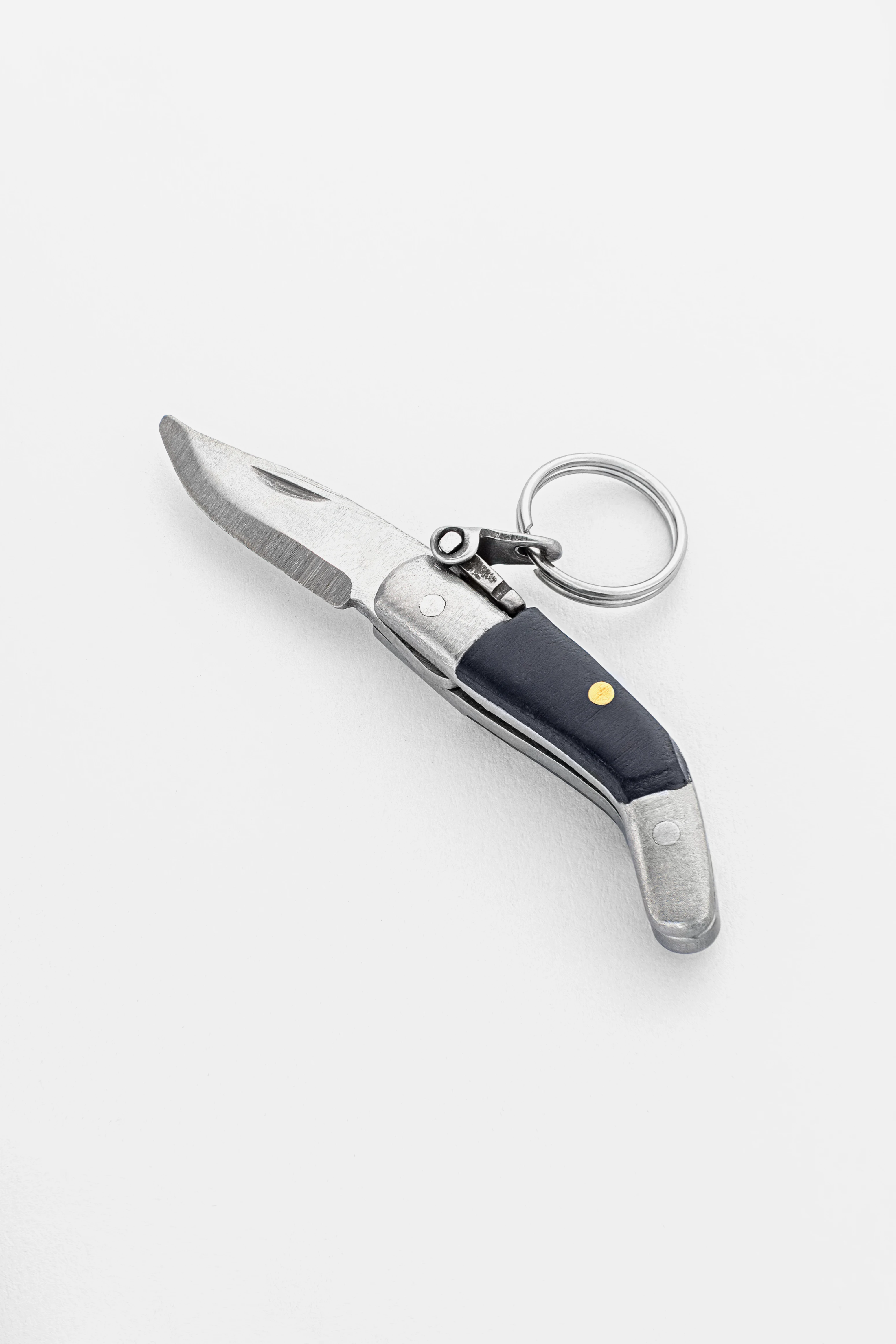
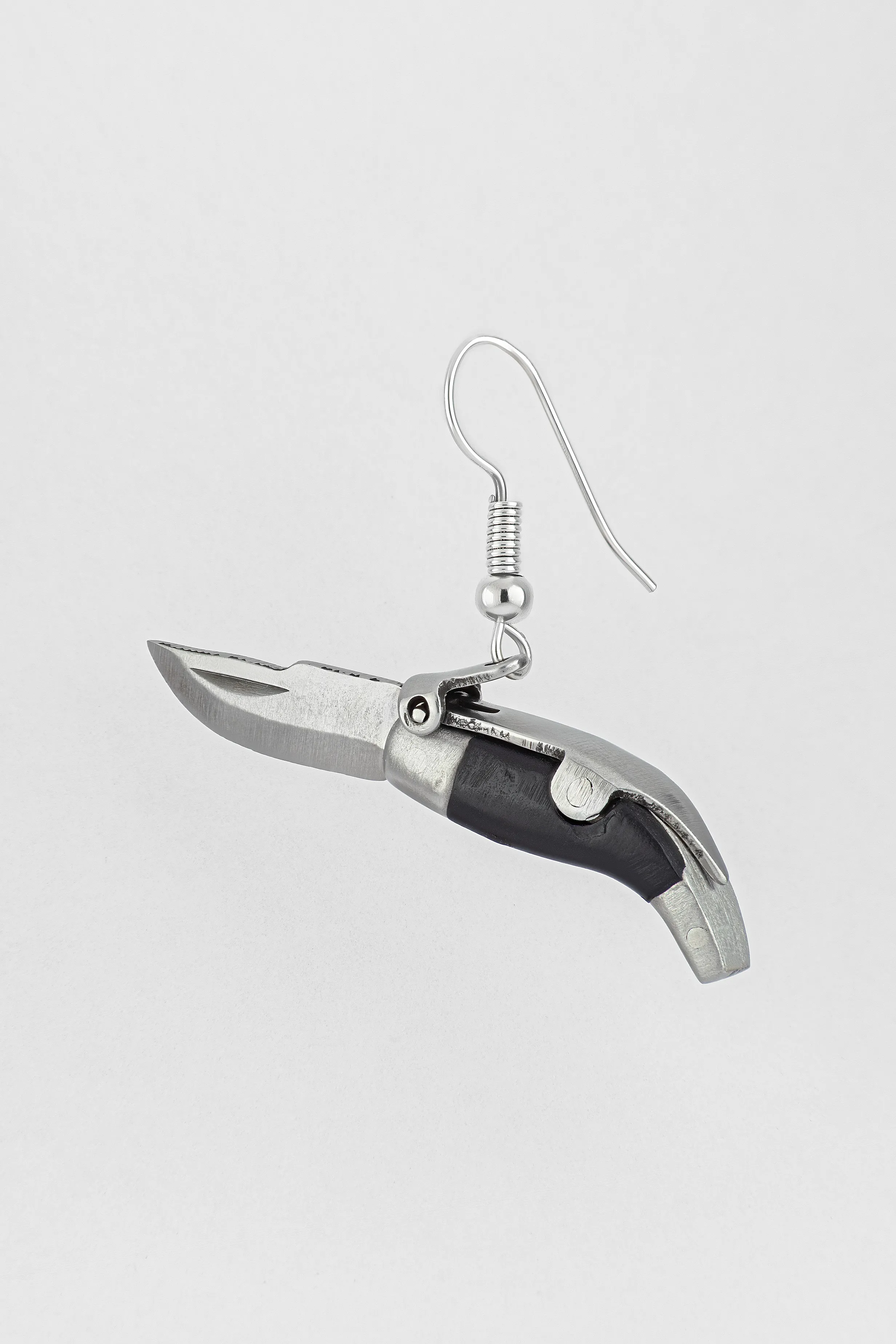
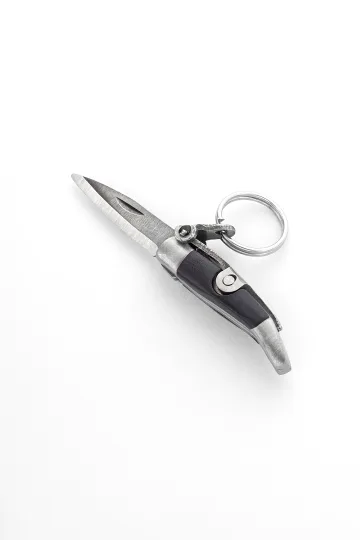
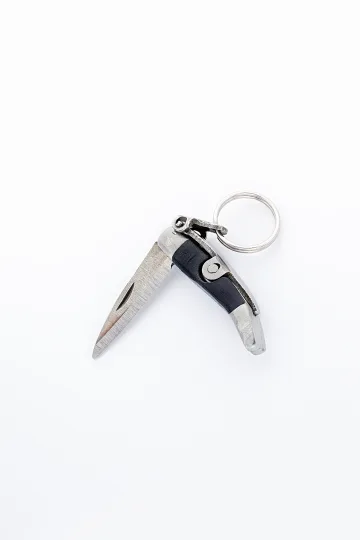
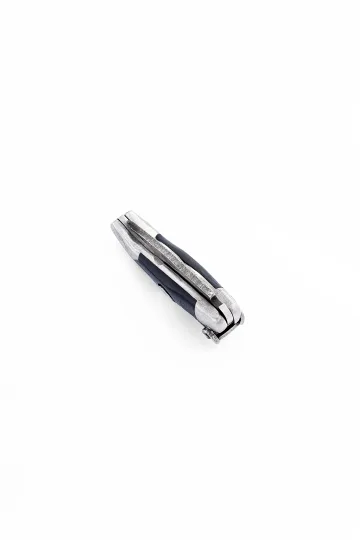
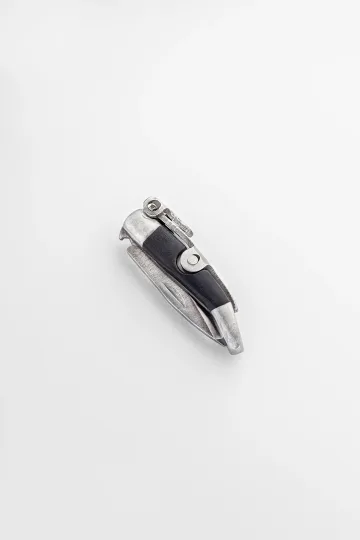
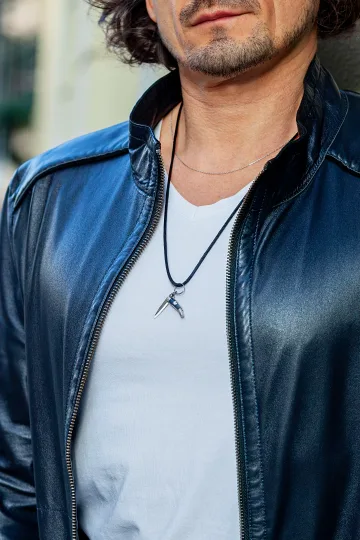
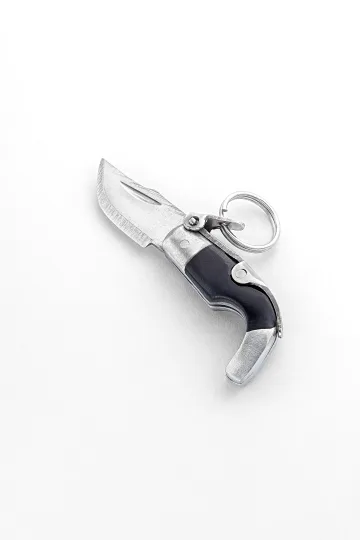
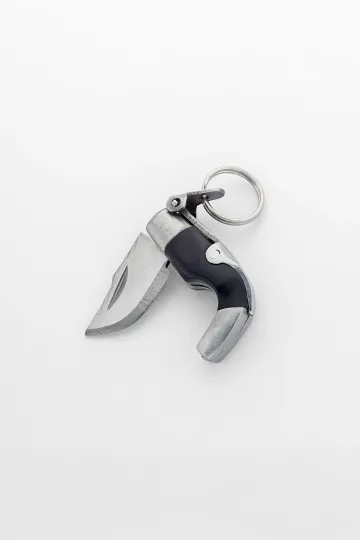
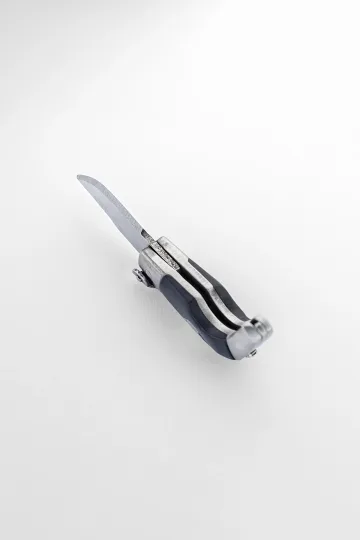
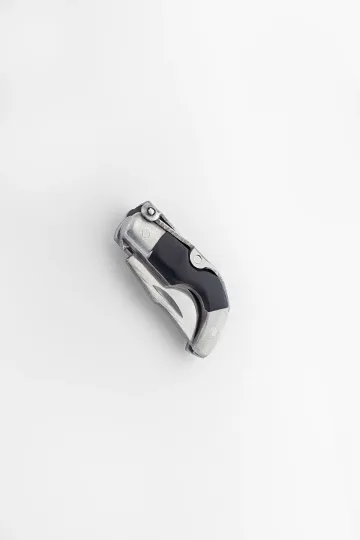
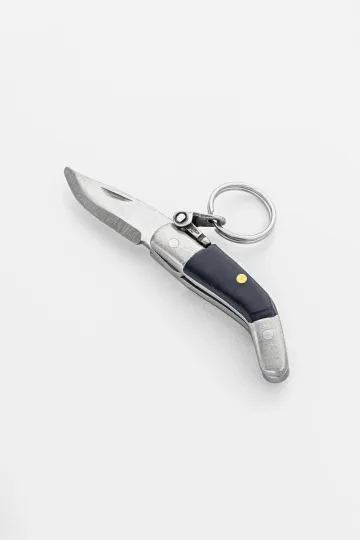
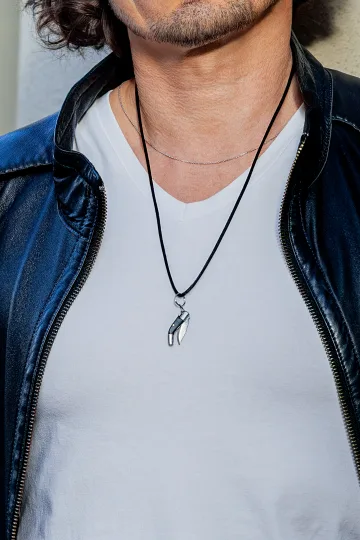
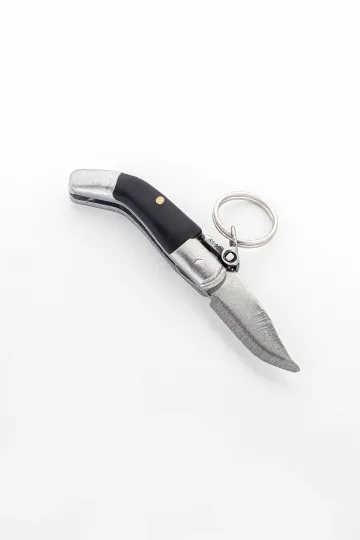
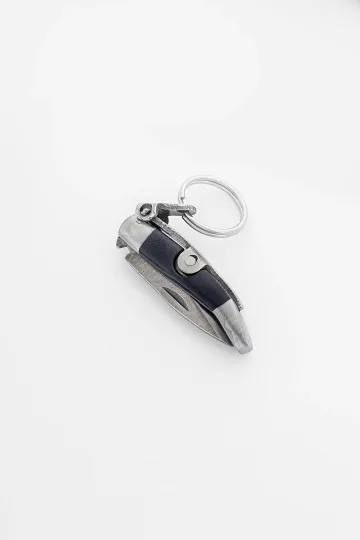
CAPAORA mini knife pendant
The 18th-century Spanish navaja in miniature: 40 mm of stainless steel, a real folding mechanism and a Palanquilla lock that clicks. An affordable gift to remember.
Authentic · Ships from Spain · 14-day returns
A gift for a studio partner or a mentor
A separate situation: a gift from one architect to another, from colleague to colleague, from a practice partner, from a student to a mentor.
In this case, jewellery with a shared reference works. If partners founded a studio together, a piece with the date of founding or with both sets of initials speaks of a joint undertaking. If a student is giving to a mentor, the symbolism of the transmission of knowledge (infinity as the continuous line from teacher to student) is appropriate.
A piece of excellent quality without specific symbolism also works well, when the giver clearly has professional instinct: a designer immediately sees that the gift was chosen by someone who thinks about form and material. That in itself is a form of professional respect.
Jewellery and the career path: what to wear at each stage
The professional biography of an architect or designer is not a straight line but a series of transitions, each requiring its own reflection. Jewellery can accompany these transitions, becoming a physical marker of each one.
The architecture student: the first years
A student of an architecture school does not yet have their own projects, but already has their own values. The first term after enrolling, when the degree is far off and years of work lie ahead, is a good moment for a piece with the symbolism of the path. A small pendant with a geometric form or an infinity symbol speaks about the choice of profession, not about its results.
Jewellery for an architecture student is a gift of intent: you have chosen a path that demands patience and precision. Wear something that reminds you of that.
The early-career professional: first years in a practice
The first years working as an employee in an architectural practice are a period of learning through doing. The young architect watches ideas become drawings, and drawings become buildings. They see the compromises between intention and realisation.
A gift in this period: something that speaks of precision and attention to detail. A piece with a fine finish, well executed, that is itself an example of quality. It is a gift that says: in this profession, what matters is what no one notices from the outside, but which is visible to those who know.
The mature practitioner: ten years and more
An architect with a decade of practice has already formed their method. They have their own voice, recognisable solutions, regular clients. This is a person who already owns jewellery accumulated over a lifetime. A new piece for such a person should be either an exact hit on their aesthetic or carry a specific personal meaning: the coordinates of a significant building, the date of a professional milestone.
The teacher and mentor
An architect who has started to teach moves from practice to the transmission of knowledge. It is a role that requires the ability to see the profession from a different vantage point: not as the executor, but as the teacher. Jewellery for that transition should speak of continuity: knowledge passed from practitioner to student, from student to the next generation.
How architects and designers buy jewellery for themselves
Studies of the jewellery market show that a significant share of pieces in the "meaningful" category are bought by people for themselves. For architects and designers this is especially true: these are professionals used to making precise choices about objects.
A gift to oneself after finishing a large project is an act of professional recognition. The market, the clients and the colleagues do not always mark what cost dearly in effort. A person who worked for half a year on a project, put themselves into it, handed it over and got the result, has the right to mark it themselves. Jewellery as a personal gift to oneself is not selfishness but a tool for preserving professional memory.
Maya from our introduction, the interior designer who wanted to give herself something after her first large project, was making exactly that decision. She did not wait for outside recognition. She knew she had done something significant, and she wanted that moment to leave a physical trace. It is a mature and precise way of handling professional achievements.
Leave your email, we'll send your discount code. No spam, unsubscribe anytime.
The code arrives by email, valid on your first order.
Paired and shared jewellery for studio partners
Architectural practices often carry the names of several partners. A professional union of two architects or designers requires a particular level of trust: they make decisions on which years of joint work depend.
A paired piece, bought or given to mark the opening of a shared studio or a significant joint project, says that the partnership matters. It need not be identical objects. It can be two pieces in the same metal or with the same motif, but different in form, because each partner has their own voice in the common effort.
The engraving on such pieces often carries the date the studio was founded or its initials. These are objects that fix the start of something the founders hoped would last a long time.
Jewellery as professional identity
In the architectural and design world, appearance is read professionally. It is not something people say aloud, but everyone understands it: what an architect wears, and how they look at public events, speaks about their aesthetic positions.
Jewellery in this context is a quiet professional statement. An architect who wears a thin band ring and geometric earrings speaks about minimalism without words, through their look. A designer who wears a piece with an infinity symbol or with the coordinates of their project speaks about what matters to them in the profession.
This very function of jewellery as a professional signal is what makes a gift of jewellery especially precise for people in creative professions. They do not need jewellery merely in order to look a certain way. They look for jewellery that says something exact and true.
Practical advice on buying
What to ask before choosing
Before choosing a piece of jewellery as a gift for an architect or designer, it is worth answering a few questions.
What is the person's overall aesthetic? Strict minimalism or a freer eclecticism? If you are not sure, watch how the person dresses, what objects they keep at home or in the office. That gives clues.
Is there a specific milestone to mark? If so, jewellery tied to that milestone (a date, coordinates, an engraving) is always more precise than a piece that is "simply beautiful".
Does the person wear jewellery at all? If so, what do they usually wear? Rings, earrings, pendants? That is a guide for the form.
Which metal do they prefer? Silver or gold? If you do not know, silver is more universal.
Where to look
Look for jewellery from makers who themselves think about form and material. A piece with a professional design approach, where the intention is visible and the form is not accidental, is recognised by those who work with form themselves. For an architect and designer the difference between a piece that has a concept and one that does not is obvious.
Engraving: when to do it and when not to
Engraving strengthens meaning, but only if the content is precise. There is nothing worse than a banal engraving on a good piece. "Always in my heart" or "with love" will turn a precise object into kitsch.
A good engraving for an architect: the coordinates of a specific place, the date of a specific moment, the initials of a specific name or title. These are data, not sentiments. A designer will read the data and understand.
Jewellery as a philosophical statement
An architect is, in essence, a philosopher of space. They think about how a person perceives an environment, how light changes volume, how material sets a mood. Jewellery for such a person is also a philosophical statement, only in miniature: it speaks of values, of taste, of what the wearer considers beautiful and important.
Jewellery that answers at that level will be worn and noticed. Jewellery chosen only on the principle of "beautiful and expensive" will quickly end up in a drawer. For a creative person, any object is a manifesto, however quiet. Choose jewellery that has something to say.
Site safety: what to remove
An architect and designer are found in the studio, on the building site, and there the requirements for jewellery are different.
On a construction site, rings, bracelets and drop earrings come off. A ring can catch in machinery or while handling reinforcing bar. A long earring will snag on a hard hat or workwear. A bracelet gets in the way of working in gloves. This is not about jewellery, it is about the safety practice that a professional architect knows and follows.
Off-site and at presentations there are no restrictions. Studs, a thin chain, a band ring: all of these are worn in the office, the meeting room and at a building opening. An architectural audience notices jewellery and reads it: a well-chosen piece speaks of professional taste without words.
The symbolism of the profession in jewellery: deeper
Each of the symbols listed carries several layers of meaning. For an architect and designer, who think about symbolic languages and how form creates meaning, those layers matter.
The triangle: structure and balance
The triangle is the most stable geometric form. Three points, three sides, none of them superfluous. In structural engineering the triangle is the basis of the truss: it distributes load without deformation. In architecture, triangular structures appear everywhere, from Gothic spires to contemporary space frames.
A pendant or earring in the shape of a triangle is read by an architect on two levels: as a geometrically precise form and as a symbol of structural logic. It is not an abstraction but a concrete engineering principle translated into jewellery.
The circle: completion and cycle
The circle in architecture is the rose window of a Gothic cathedral, the dome of the Pantheon, the rotunda, the arch. It is a form without beginning or end, a form of completion. In jewellery the circle is embodied in the ring, the hoop earring, the round medallion.
Hoop earrings, as the form of a closed geometry, are both minimalism and a symbol of continuity at once. On hoop earrings and how to choose them: Hoop earrings: a guide to choosing and styling. For an architect who thinks about closed volumes and the completion of a form, a ring as jewellery is a literal embodiment of professional thinking.
The line: movement and minimum
A straight line is the basis of any architectural drawing. The line defines the wall, the corner, the outline of a building. Jewellery in the form of a line, a straight bar earring, a thin horizontal pendant, a linear bracelet, reduces form to the absolute: only what is necessary.
"Architecture is morality," Le Corbusier is said to have remarked. If that is true, then the line is a statement about honesty: nothing superfluous, only what works. That is exactly why linear jewellery finds such an echo with people whose profession is built on the principle that form follows function.
The golden ratio: the mathematics of beauty
The ratio 1:1.618 is called golden because it appears in nature, in art and in architecture with a regularity hard to explain by chance. Leaves grow along a stem in a Fibonacci spiral. The shell of the nautilus unfolds in the same proportion. The facade of the Parthenon, on some readings, contains these proportions.
For an architect and designer the golden ratio is not mysticism but a concrete tool of proportioning that they apply or reject consciously. A piece of jewellery with this spiral, or with the proportions of the golden section, is one whose conversation is held in the language of the profession.
What not to give an architect or designer
Knowing what works, it is worth marking what usually does not.
Literal professional symbols
A piece in the shape of a drafting machine, a pencil, an architectural instrument or the logo of the building trade is a souvenir, not jewellery. A professional who thinks about form professionally sees the difference between a precise statement and a banal illustration. Giving an architect a pendant shaped like a little house is roughly like giving a programmer a coffee mug that reads "I code".
Jewellery without regard for aesthetic
A bright, large, ornamental piece given to a person with a minimalist aesthetic speaks not of attention but of its absence. For a designer it matters that the gift was chosen with understanding. That does not mean you have to guess the exact taste. It means you have to understand the principles.
Jewellery with complicated care
A designer or architect works with their hands: they handle models, draw, work at a computer. A piece that has to be removed at every opportunity, or that needs special care, soon stops being worn. The pieces that work for this audience are simple to care for: silver and gold, no stones on glue, no fragile enamel in places of constant contact.
A "safe" piece with no meaning
Giving something neutral and standard, so as not to get it wrong, is a strategy that does not work for people with professional taste. Such a person will feel that the choice was made without intent. It is better to spend the time choosing precisely within their aesthetic than to choose safely.
Send a friend a discount code, they save on their first order.
A few concrete gift scenarios
The situations readers most often arrive at this topic with.
A partner gives an architect wife a gift for the opening of her first building. A piece with the coordinates of that building, engraved on the reverse. Silver or gold, depending on her usual preference. A small pendant or a thin ring that she will wear on that very day. It is a gift that becomes a point of reference.
Colleagues give an architect a gift for the tenth anniversary of the practice. A joint gift from the team: a more significant piece with the date the studio was founded or with the initials of its name. The engraving on the reverse carries a date everyone remembers. It is a piece with a shared story.
An interior designer gives herself a gift for a first large commercial project. A thin gold or silver ring she will wear to the final presentation. Without engraving, or with the date the project was finished inside. It is a personal ritual of recognition: I did this, and it has a physical trace.
An architecture student gives a gift to a tutor after the degree defence. A small pendant with an infinity symbol or a celestial motif. It is a symbol of the transmission of knowledge: thank you for being part of my path. A tutor who receives such a gift from a student sees understanding in it, not a routine gesture.
Parents give a son or daughter a gift on finishing architecture school. Jewellery that marks not the end of study but the start of practice. A symbol of the path rather than of completion: infinity, a ring with no beginning and no end, a celestial object as a marker. More: Jewellery for graduation: a gift guide.
Care for jewellery: practice for an active professional
An architect and designer work actively: they draw, handle materials, travel to sites, work at a computer for hours. Jewellery has to withstand that rhythm.
Sterling silver darkens slightly over time in contact with air and skin. It is a natural process that many find creates a sense of the worn-in and the personal. If the dark patina is unwanted, it is enough to wipe the piece gently with a clean cloth once every few months. It takes a minute. Ultrasonic cleaners suit pieces without stones and without a deliberate patina. Important: if the silver has a deliberate oxidised patina (a dark finish in the recesses), polishing cloths and aggressive cleaners will remove it. Such silver should be protected from extra handling.
14K gold does not darken and needs no special care. Once every few months you can wipe it with a soft cloth to remove the film of oils and bring back the shine. A soft toothbrush with soapy water, thoroughly rinsed off, deals with dirt in the fine details of geometric pieces.
Engraved jewellery keeps better if you remove it before sleep and store it apart from other pieces: the metal is soft and scratches. The engraving itself does not wear away for years in normal use, but the sharp edges of neighbouring pieces can leave surface scratches on the field beside it.
Thin pieces, a band ring or a thin chain, can be worn constantly. They are strong enough for office work and ordinary activity. It makes sense to remove them before heavy physical work, chemical cleaning, the gym and, of course, before going onto a construction site.
Pendants and drop earrings come off at night: while you sleep they can pull or snag. Studs and rings many people wear without removing, which is fine with good care of the metal. Perfume, lotion and sunscreen in direct contact speed up the darkening of silver: apply them before the jewellery, not after.
Buying it as a gift? Each one arrives ready to give.
 A branded Zevira box and a little card come with every order.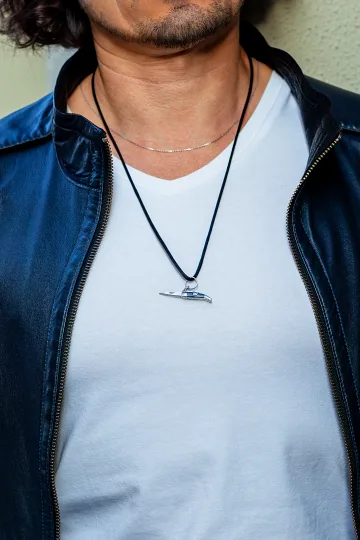





Give the jewellery or ask directly: the dilemma of choice
Sometimes a person wonders: perhaps it is better to ask directly what is wanted? Or would that destroy the meaning of the gift?
For the pragmatic professional that an architect or designer often is, a direct conversation about taste sometimes works better than guessing. You can say: I want to give you a piece of jewellery for this occasion, tell me what you are wearing now and what would interest you. Most people take this well.
But there are also cases where guessing is part of the gift itself. If the gift is tied to a specific milestone and has to carry a precise meaning that only the two of you understand, then the surprise matters more than convenience. The coordinates of a building the person handed over yesterday, in a piece you ordered in advance, is an act of attention that cannot be reproduced by shopping "together".
Where the line runs between jewellery and a souvenir
This is the question to ask yourself before buying: am I buying jewellery or a souvenir?
Jewellery is an object worn as part of oneself. It works with the body, it enters into dialogue with clothing and with other pieces. Good jewellery is worn for years and sometimes decades. It is chosen by aesthetic, by quality, by meaning.
A souvenir is an object of reminder. It is kept, but not worn. A souvenir does not require precision of choice: it is needed as a token of attention, not as a constant companion.
For an architect or designer who has professional taste, it is better to give jewellery that will be worn than a souvenir that will sit on a shelf. That requires a more precise choice, but the result is incomparably more valuable.
Two signs of jewellery that will be worn: it fits the person's usual aesthetic, and it carries a specific meaning tied to a specific moment or value. One without the other works less well. Both together make the object irreplaceable.
Jewellery as an investment in a professional biography
Good jewellery with a specific meaning is not a consumable. It is kept for decades. Silver and gold are not destroyed by time. The meaning invested in the object at the moment of giving or buying does not vanish: it lives in the wearer's memory and sometimes passes to the next generation.
An architect who has worked for thirty years looks at a piece with the coordinates of a first building differently from thirty years before: from there they see the whole length of the path. A pendant with the date a studio opened becomes, fifteen years on, part of the company's history. A ring given at graduation becomes, twenty years later, a link between who a person was at the start and who they became.
This is not the romanticisation of objects. It is the functional side of jewellery with specific meaning: it accumulates significance over time rather than losing it. A nameless beautiful object, twenty years on, is just a beautiful object. An object with a story, twenty years on, is more than it was at the start.
This is exactly why jewellery with a precise meaning for an architect or designer, with coordinates, with a date, with the symbol of an important moment, is a sensible and far-sighted investment. Not in metal, but in memory.
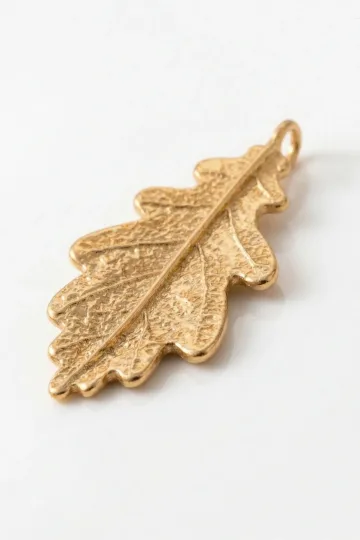
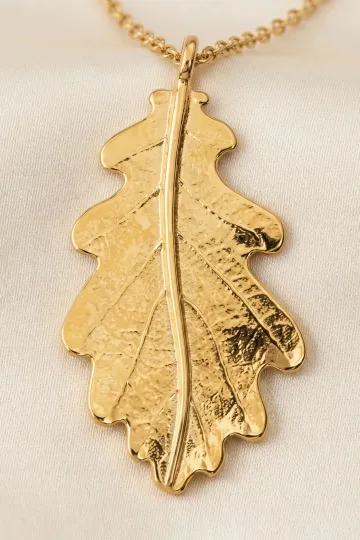
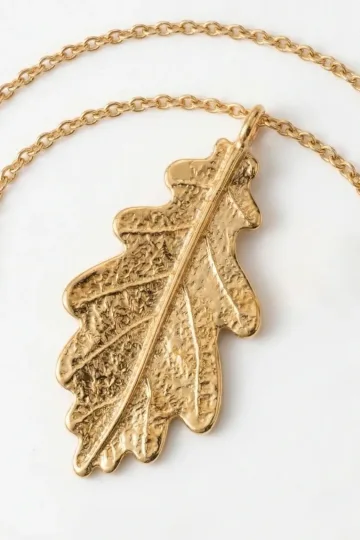
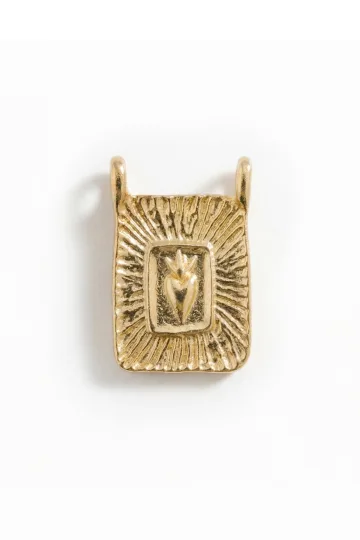
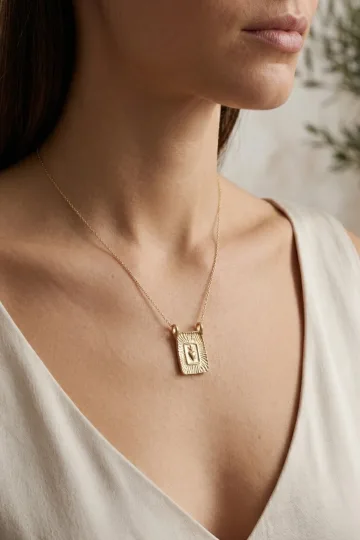
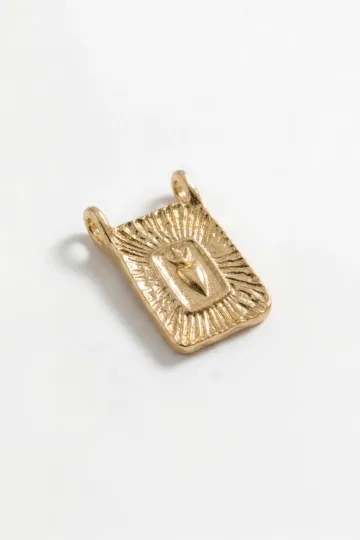
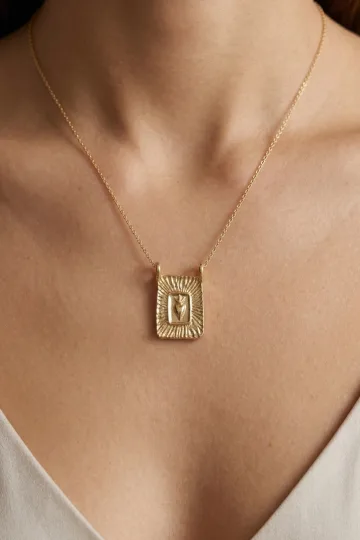
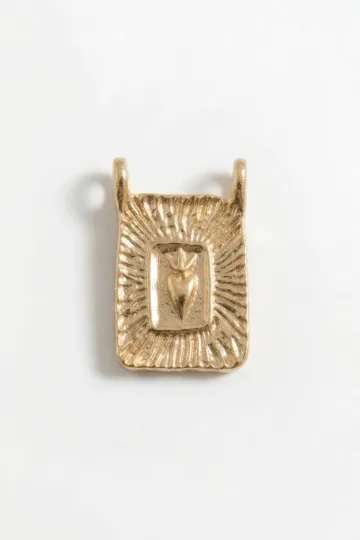
Wear the symbol, don't just read about it. These are in stock:

FAQ
What do you give an architect for the opening of a first building?
A gift for the first realised project should be personal and specific. The best options: a piece with the coordinates of that building, a piece with the date of the opening (engraved on the reverse), a silver pendant with a symbol of space or a point on the map. It is a gift that stays with the person as a physical point of reference on the professional path.
Is it worth giving jewellery to a male architect?
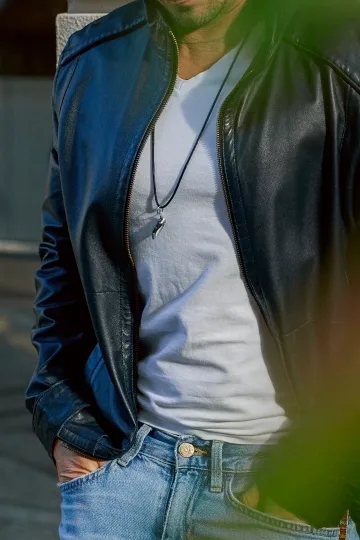
Yes. Male architects, especially in a professional environment, take jewellery as an expression of taste and identity. A thin chain with a geometric pendant, a bracelet with engraving, a band ring all work well. It matters that the piece is restrained and precise in form: men in this profession rarely wear the decorative, but take well to the minimalist.
Do you need to know the person's exact taste?
Not necessarily. Choosing within a minimalist and geometric aesthetic gives a high chance of hitting the mark: this aesthetic is shared by the majority of professionals in architecture and design. Sterling silver, clean forms, geometry without the superfluous, is a universal language for this audience.
What should you give a landscape architect?
A landscape architect works with natural forms, with the rhythms of growth, with space under the open sky. For them, jewellery with natural motifs works well: the bee as a symbol of the ecosystem and the ideal structure of the hive, celestial pieces with moon and stars as markers, organic forms. At the same time landscape architecture is a precise discipline with cartography and coordinates: a piece with the coordinates of a favourite place in nature or a significant park also makes sense.
What should you give an interior designer?
An interior designer is especially sensitive to materials and tactile quality. Jewellery with an interesting surface works well: matte metal, a combination of textures. Celestial pieces (moon, star, sun) are often close to people who work with light and space. A piece with an infinity symbol suits the completion of a large project.
What should you give a graphic designer?
Clean geometry: circle, triangle, square in metal. Nothing extra. A graphic designer works with a system of signs and reads jewellery as a visual message at once. Simple, precise and well executed works better than the decorative.
Is it worth giving jewellery with professional symbols (a pencil, an architectural drawing)?
Usually not. Literal symbolism (a pencil, a drafting machine, a drawing) is often read as a souvenir rather than jewellery. For people who think about form and aesthetic professionally, pieces that reflect their values are more meaningful than ones that describe their tools.
Which metal is preferable?
Sterling silver is the universal choice: restrained, precise, it shows the geometry of a form well. Yellow gold works for occasions of professional recognition (opening a studio, an anniversary). Both are appropriate. Oxidised silver with a dark patina suits those who lean towards an industrial aesthetic.
Is the packaging important?
For a gift in a professional context, the packaging matters. It says the gift was thought about. A minimalist box, kraft paper or a plain linen pouch is better than loud, bright packaging: a designer will notice the mismatch with the aesthetic.
Can you give jewellery to yourself?
Yes, you can and you should. A gift to yourself after finishing a large project or reaching a professional milestone is an act of recognition for your own work. Such pieces often become the most significant in a collection: behind each one stands a specific story.
What if the person already has a lot of jewellery?
A piece engraved with a specific date or coordinates does not compete with the other jewellery in a collection: it carries a unique meaning. Such a gift adds to the collection not just one more piece, but a specific personal moment.
Does a gift of jewellery suit a male designer in a corporate context?
In the architectural and design world, jewellery for men is the norm, not the exception. In European practice, bracelets, rings and pendants in a minimalist execution have long been part of the male professional image. A thin band ring, a silver bracelet with engraving, a geometric pendant on a short chain are all taken well in a creative professional environment.
Is there any point in giving jewellery for the completion of a large project, if the person never spoke of it?
There is, and even more so. People rarely say aloud that they want recognition for their work. A gift that says I know you did something big works precisely because it is not expected. It is a sign of attention the person did not ask for, but does notice. A piece with the coordinates of a finished building or with the date it was handed over works best for such a case.
Conclusion: when an object speaks about values
Choosing jewellery for an architect or designer is a conversation in the same language. It is not about guessing taste and not about spending a particular amount. It is about whether you understand how this person looks at objects.
The architect notices proportion. The interior designer notices material. The graphic designer reads form as a sign. For each of them a piece of jewellery is a statement: about values, about precision, about what the wearer considers enough without the superfluous.
James found his wife a silver pendant with the coordinates of her building. Just numbers, nothing extra. She understood at once. Sarah bought her friend a bracelet engraved with the year his studio was founded. Maya bought herself a thin band ring after the project presentation and put it on that same day.
All three gifts hit the mark, not because they were expensive. Because they were precise.
Minimalist geometry, silver and gold, personalised engraving.
About Zevira
Zevira makes jewellery in the artisan tradition of Albacete, Spain. For architects and designers our catalogue offers several directions.
Minimalist jewellery: thin rings, linear pendants, geometric earrings in sterling silver and 14K gold. The foundation for an architectural aesthetic.
Infinity symbol: a continuous line with no beginning and no end, well suited to a gift marking a transition between career stages or a studio opening.
Celestial jewellery: moon, star, sun, markers of space and time, precise and universal.
Bee: a symbol of structure, the geometry of nature and collective work, a direct hit on the professional theme.
We accept engraving on most pieces: coordinates, a date, initials, a motto.