Jewelry for Women 50+: Style and Selection Guide
Introduction: the first piece you buy for yourself
There is a moment many women describe in almost the same words after fifty. You are standing in front of a display, looking at a ring or a pair of earrings, and you think: I will take it. Not as a gift for a daughter, not for a husband's anniversary, not to please a mother. Just for yourself. Because you want it. Because you like it.
The moment is small, but something inside it changes. For decades a woman bought jewellery for other people. She chose what someone else would like, what suited another person's taste, what fitted an occasion that belonged to somebody else. Then, at some point, the priority shifts. There is time now. There is a clear sense of her own taste. There is the readiness to spend on herself without explanations and without guilt.
This guide is not about looking younger. It is not about hiding the changes the years bring, not about being modest for your age, not about limits of any kind. It is about choosing jewellery that works for one particular woman: her face, her style, her life. It is about the freedom to choose what you like.
There are no rules with bans here. There are observations about what works and why. The difference matters: you can use the observations as guides, and you can ignore them when your own experience says otherwise. A piece you feel good in works by definition.
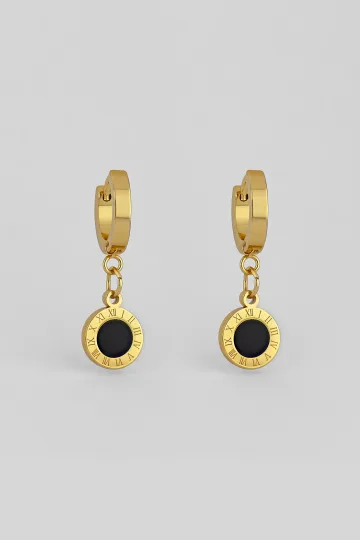
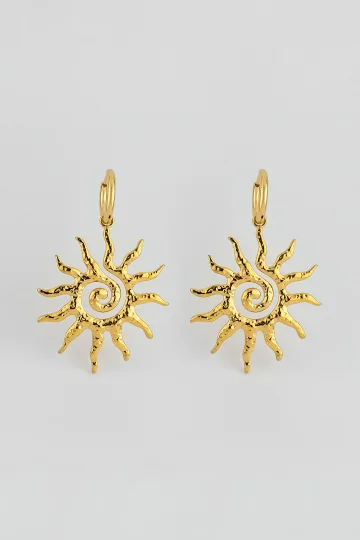
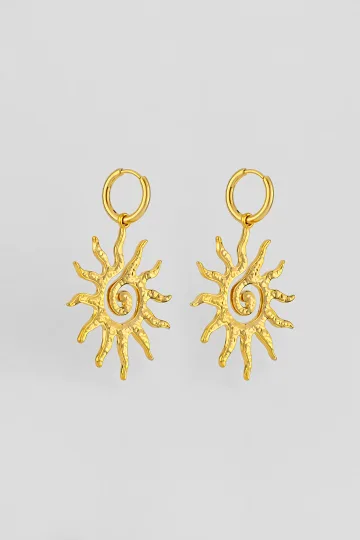
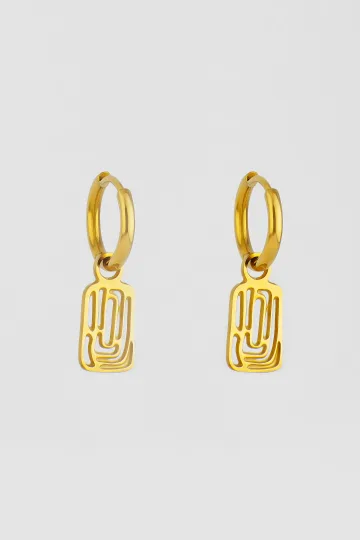
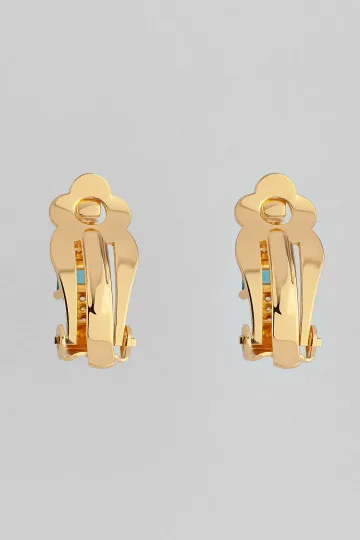
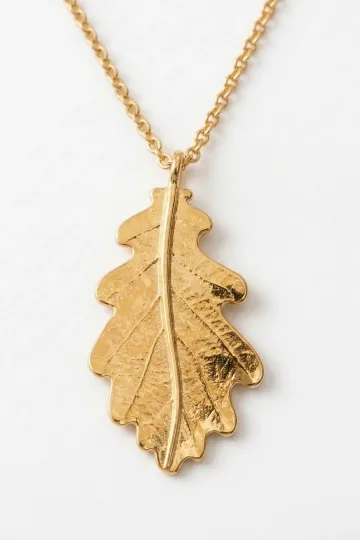
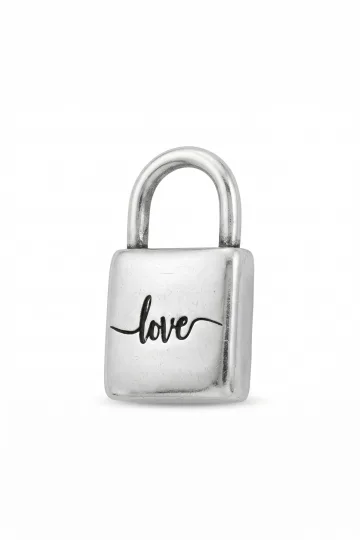
Wear the symbol, don't just read about it. These are in stock:




Why "jewellery for your age" is an outdated idea
The conversation about jewellery after fifty traditionally began with restrictions. What you "shouldn't" do anymore, what is "not for your age," what is "better worn modestly." This logic fails for one reason: style is not written on a birth certificate.
The restrictions existed in a specific social context. In societies where a woman's standing depended directly on her family status, on a husband, on children, a woman past a certain age moved into a different category. Bright jewellery was treated as a privilege of the young, because the young were "on the market." That was never about aesthetics. It was about social status.
That context has changed. A woman after fifty today is often at the peak of her professional and financial independence. She has taste built over decades, a clear sense of what suits her, and the right to choose what she wants.
Jewellery suits you or it doesn't, not by the number on a passport. It suits you or not depending on the proportions of your face, the colour of your skin, the tone of the metal, the way a piece sits on a particular body. All of that is solved by selection, not by age rules.
The only thing that genuinely changes over the years is the woman herself. Her appearance changes, her preferences change, the precision of her sense of what "works" changes. That is not a restriction. It is a refinement. And refinement only sharpens the choice.
A big pearl on a bare neck, a cocktail ring on a hand with a past. Leave the timid little studs to those afraid of their own years.
What to wear it with after 50
After years of styling mature clients I keep the same short answers ready, sorted by occasion. Here are the questions I hear most at a fitting.
What works for everyday wear? For everyday I recommend one anchor piece and no more: a princess-length chain at the collarbone plus studs with a pearl or a good stone. Keep one metal across the whole look. A light top lifts gold, a dark one makes silver the accent. This is the precision that reads as taste rather than effort.
And what about the office? For a work setting I suggest restraint with presence: studs or small hoops, one ring with a clear stone, one chain under a closed collar. A brooch on the lapel adds character without extra shine. I put warm metal on a beige and brown palette, cool metal on grey and blue.
How do you build an evening look? In the evening I let a piece speak at full voice. I choose expressive drop earrings with the hair up and the neckline open, and I give the leading role to a cocktail ring. Under a V-neck dress I recommend a matinee necklace with a pendant: the vertical slims and leads the eye down. One rule: one loud accent, the rest quiet.
And for a special occasion? For a child's wedding, a milestone or a golden wedding I choose on purpose: a pearl necklace, earrings with a coloured stone matched to the skin tone, an inherited piece worn apart from its set. For the occasion, not whatever came to hand.
How do you wear a lot without overdoing it? If you want layers, I keep everything in one metal palette and vary the chain lengths, so the stack reads as a plan. And on mature skin I choose a readable line over the finest strands that vanish. The volume can stay light in weight, especially in the earrings.
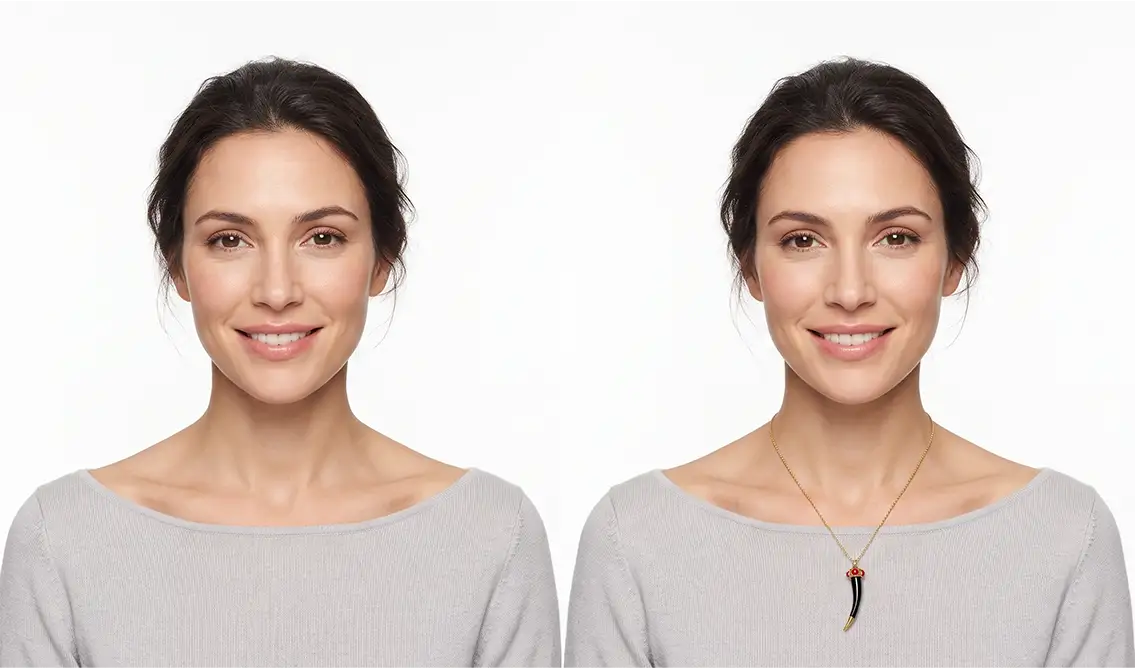
Turn on your camera, pick earrings, a pendant or a ring, and see the piece on yourself in real time.
Switch items in one tap.
Everything runs in your browser: no photo or video is ever uploaded.
What changes in a woman over 50: preferences and appearance
To choose jewellery precisely, it helps to understand what actually changes. Not as a list of problems to hide. As raw data for a deliberate choice.
Skin
After fifty the skin becomes thinner, loses some of its subcutaneous fat, the tone can grow less even, and it gains a certain translucency. This affects how jewellery interacts with the skin. Cold silver against pale skin can create a sharp contrast where you don't want one. Yellow gold against warm skin behaves differently than it did at thirty. Not worse. Just differently, and that difference is worth taking into account.
The neck
The skin on the neck is thinner and more textured. Long chains that fall to the chest pull attention away from the neck. Chokers pressed tight to the throat can shorten it visually. Mid lengths around the collarbone work for most neck types.
Earlobes
With age the cartilage loses elasticity and the lobe stretches a little. That makes heavy earrings uncomfortable. Not forbidden, simply uncomfortable. Light earrings in a larger size give the same visual effect with no load on the lobe.
Hands
After fifty the veins on the hands show more, the joints may be a touch larger, the fingers take on character and expression. A substantial ring with a bold stone works far better here than a thin band of metal. An accent rather than an attempt to hide something.
Posture and wardrobe
Many women after fifty move toward better, more considered clothing. Less synthetic fabric, more natural cloth, more structure. Within that system jewellery stops being an add-on and becomes an equal part of the look.
Preferences
More often the choice is what you like rather than what happens to be in fashion. Less chasing the trend of the season. More often one good piece instead of several cheap ones that will be thrown out within a year.
Confidence
This changes too. After fifty a woman is, as a rule, more sure of what suits her and less inclined to follow other people's rules. That is a strong position from which to choose jewellery.
Metal colour and mature skin
The colour of the metal is worth settling first. This is not about fashion trends. It is about how the metal interacts with the undertone of your skin. The question is covered in more depth in the guide to metal and skin tone; here is the practical minimum.
There are three base undertones: warm, cool, neutral.
Warm undertone
The veins on the wrist look greenish, the skin tans evenly to a golden or olive shade. Yellow gold, rose gold and yellow bronze work best. Among stones, amber, citrine, warm-toned corundum, carnelian, tiger's eye, green tourmaline and ruby all sit well. Yellow gold on warm mature skin adds a glow that, in itself, makes the skin look more alive.
Cool undertone
The veins look bluish or violet, the skin burns to pink in the sun without a golden tan, or it is very fair, or very dark with a blue-violet base. White gold, silver and platinum work best. Among stones, aquamarine, sapphire, amethyst, moonstone, blue topaz and pearl all sit well.
Neutral undertone
The veins are hard to read as clearly green or clearly blue, the tan comes moderately, the skin is neither obviously warm nor obviously cool. Both metal ranges work. There is more freedom here, and you can mix.
After fifty the skin of many women becomes less saturated in colour. That makes the choice of metal more important still: the right tone literally adds light and life to the skin, while the wrong tone creates tiredness or pallor where there is none. For a warm undertone, 18-carat yellow gold becomes especially valuable with age, adding a warmth that grows more interesting rather than less. For a cool undertone, white gold or platinum create a contrast with the skin that reads fresh and clean.
Jewellery size in proportion to face and neck
One persistent myth: past a certain age you should choose small jewellery. Not so. Miniature pieces can simply get lost against mature features that have gained definition and expression over the years. A tiny stud on a large face does not read at all. It is as if it isn't there.
The rule works differently: a piece should be in proportion to your features and your frame.
On a woman with large features and broad shoulders, large earrings look natural. Medium to large sizes. On a woman with fine features and a small face, large earrings can pull all the attention, and medium sizes work better there.
The key question is not "big or small," but "is it in proportion to me."
One more observation: jewellery with real volume works better than jewellery trying to be invisible. Rings with a good stone, earrings with elements of different lengths, a necklace with a central accent, a bracelet with character. All of it works. After fifty a piece works when it speaks rather than whispers.
That does not mean "loud" in the sense of shouting. It means "present" in the look. The piece adds something real to the look instead of hanging there unnoticed.
Chain lengths for a mature neck
The length of a chain directly affects where the eye falls and how the neck and décolletage read. Length is probably one of the most practical tools for shaping a look.
Choker (30 to 36 cm)
Sits snug at the base of the neck. On a mature neck with thin skin it looks good with an open neckline. With a high collar it shortens the neck visually. Choose a choker when you want the accent right on the neck and the neckline is open enough.
Princess (43 to 48 cm)
Falls level with the collarbone. A universal length that works with most necklines. It lengthens the neck, does not hide under clothing, and creates a neat, clear accent. On a mature neck this is probably the best choice for an everyday piece.
Matinee (50 to 60 cm)
A little below the collarbone. It leads the eye downward and creates a vertical line that slims. Ideal with a V-neck or an open shirt collar. An excellent length for a necklace with a pendant.
Opera (70 to 80 cm)
To the middle of the chest and below. It creates a strong vertical. It works with dresses cut low. For tall women it is a fine option. On shorter women it can shorten the figure, so it is worth trying on.
Rope (over 90 cm)
Worn in several loops or as a very long strand. The freest style. A matinee strand of pearls wrapped twice gives a completely different look from the same strand worn in a single line.
One important point: on a mature neck, jewellery with a clear, readable chain works better than very thin strands that vanish against the skin. The density and visibility of the line matter as much as its length.
Customer reviews
Zevira is a real jewellery shop. Genuine payments, deliveries and customer thank-yous.
🥰🥰🥰 gracias
Ok, ¡gracias! 🙂
Earrings: shapes, lengths, weight
Earrings are the main accent in the area around the face. The choice of earrings after fifty shapes a look more than any other piece.
On weight
The main practical rule: the lobe loses elasticity over the years, and heavy earrings stretch it. That does not mean "only tiny studs." It means: for the same visual effect, choose the lighter version. Earrings in light metals, with hollow elements, with a lightened construction. Volume and weight are different things; you can make a large, voluminous earring from a light metal.
Studs
A single element, a pearl, a stone, a small disc, works in any context. It does not pull the lobe, does not get in the way, and creates a precise point of focus. This is not a dull choice. A large pearl stud on a mature woman looks confident and expressive.
Hoops
Of medium diameter (2 to 4 cm) they lengthen the neck and soften the features. On a mature face they work very well, especially in yellow gold. Very small hoops get lost. Very large ones overload.
Drops and earrings with a moving element
These create visual length. They are good with simple outfits. When choosing, pay attention to the weight of the drop.
On length
Earrings that reach the lobe or just below suit most people. Very long earrings down to the shoulder are a clear stylistic decision. They work if you are ready for that accent.
On face shape
A rectangular or square face is softened by earrings with rounded elements. A round face is lengthened by drops and earrings with vertical elements. An oval face works with any shape. Not strict rules, but useful guides.
On stones in earrings
Earrings with pearl, with a substantial stone, or with a small cluster work better than earrings with fine crystal dust in a poor setting. One good accent element is more convincing than many tiny ones.
Rings on the hand after 50
The hand after fifty is one of the most expressive zones of the body. It carries a history: the ring worn for a lifetime, the mark of a wedding band, skin with character and texture. Jewellery on such a hand should be deliberate rather than accidental.
A substantial ring with a stone
This works far better than a thin band. The stone creates an accent, draws the eye and adds expression to the hand. It does not have to be a massive cocktail ring. A clear central element is enough.
A stack of thin rings
Three or four thin rings together create an interesting ensemble. But they should be gathered deliberately, not at random. A chaos of different rings in different metals and styles looks less interesting than a considered combination.
A plain band without a stone
On a mature hand this can get lost. If you want a band, choose a wider one, with texture or engraving, with an interesting profile.
The cocktail ring
This is a large, expressive ring for special occasions. After fifty it is an apt and beautiful choice. There is no age limit on a cocktail ring. It works wherever there is room for an expressive gesture.
On joints
If the joints have grown larger, the ring should come off easily. That is a practical point. Rings with a spring mechanism or open rings are simpler to handle.
Antique and vintage
Rings with history, with patina, with character are an ideal choice. They carry a meaning that youthful minimalism does not offer. On a mature hand an antique ring looks natural precisely because both of them have a story.
Rings on both hands
Wearing rings on both hands after fifty is perfectly normal. The only thing that matters is that both hands look like a single, coherent picture rather than a chaotic accumulation.
Engraving on a ring
A line inside: a wedding band with a date, a ring with a name, a phrase that means something. This makes the piece personal in the literal sense. No one but you knows what it says.
Upload a photo of your pet, someone you love, or an object. We'll build a 3D model and hand-cast it in pewter.



Bracelets: wrist and proportion
A bracelet on the hand after fifty works when it is in proportion to the wrist and does not compete with the other pieces.
A wide bracelet
One good, forged piece, with history or with an interesting surface. It reads more convincingly than a stack of thin, mismatched bracelets. It creates structure.
Several thin bracelets
These work if they are chosen in a single metal palette. Chaotic mixing of metals and styles looks incoherent. But three thin yellow-gold bracelets of different widths together look precise and interesting.
The bangle
A classic. Expressive, in metal or set with stones. On a wrist with thin skin it looks structural and convincing.
A chain bracelet
Thin or medium. Universal. It works well with a watch and does not compete with it.
What to remove
Cheap plastic bracelets that pile up like souvenirs. They lower the sense of a coherent look. Even one good metal bracelet is better than five random ones from different sources.
Stones that especially suit mature skin
Not all stones work the same way with skin. Some read especially well on mature skin.
Pearl
The soft glow of a pearl interacts with skin in a different way than the cold flash of a faceted stone. A pearl does not fight the skin; it reflects it. That is why pearls traditionally suit mature women: they create a sense of soft inner light rather than sharp contrast. This is optics, not a stereotype.
Opal
The inner play of colour in an opal creates a warm, moving glow. A fine white opal with flashes of colour works on any skin tone.
Ruby
A saturated red creates a strong warm accent. On warm and neutral skin it looks rich. A deep-red ruby in yellow gold on warm skin after fifty looks very good.
Emerald
A deep green works with both warm and cool skin. Historically the emerald was treated as the stone of established, confident women, and not without reason: its saturation calls for a presence to match.
Aquamarine
Transparent, bluish, with an inner coolness. On a cool undertone it reads refreshing and elegant. In white gold or platinum it creates a very clean look.
Amethyst
Violet and lilac shades work with cool and neutral undertones. Softer than ruby, finer than sapphire.
Garnet
A deep dark red. Not aggressive like ruby, but with the same warm saturation. It works well with an autumn and winter wardrobe.
Moonstone
Translucent, with a bluish shimmer. It creates a sense of both tenderness and mystery. Good in white gold or silver.
On diamonds
Diamonds work, but the question is the setting and the size. One good diamond in a clean setting is better than a scatter of fine chips in cheap metal. After fifty: less, but better.
Pearl: the classic and a new reading
Pearl deserves a separate conversation, because its relationship with the over-fifty generation is special. Pearl was almost obligatory for women of a certain age through the twentieth century. Then it was declared outdated. Then it returned to youth fashion through a gender-neutral aesthetic. For mature women, in fact, it never went away.
Pearl is in a renaissance now. But not the pearl strung tight on a single strand in an even row, worn only with a business suit. The modern reading is more varied.
A strand of baroque pearl
Irregular shapes, different sizes, organic silhouettes. This is not a sign of poor quality, it is a choice. Baroque pearl looks more alive, fresher, less formal.
Pearl combined with metal
Pearl set into a gold piece. Earrings where a pearl sits next to a chain or a ring of metal. This combination works in both classic and modern style.
Pearl of different sizes
A necklace where the pearls grow from the ends toward the centre. Or sizes mixed on purpose to create a rhythm.
One pearl as an accent
A large pearl stud. Pearl as the centre stone of a ring. A pearl pendant on a spare chain. Simple, and at the same time very precise.
For detail on the types of pearl, how to tell good quality, and which sizes and kinds exist, see the complete guide to pearls.
You do not have to wear pearl because it is "expected" or because "the young are wearing it." Wear it if you like it. If you don't like it, don't wear it. That is enough reason for any decision. There is one rule: your taste matters more than anyone else's idea of what suits you.



Vintage and inherited jewellery: how to wear it today
After fifty many women have, or already have had, a box of inherited pieces. A mother's, a grandmother's, an aunt's jewellery. Or their own, bought in another era. And often they don't know what to do with it: wearing it feels risky (what if it looks dated), not wearing it feels a waste.
There are principles that help you wear such pieces today rather than keep them "for later."
A single piece, not a set
Jewellery of past decades was worn in matched sets: serious parures of necklace, earrings, bracelet and brooch. Worn whole today, such a set reads like a stage costume. But to take one piece out of that set and wear it on its own, in a modern context, is a completely different story. A single brooch from the sixties on a coat works. The whole set together looks like a period reconstruction.
Resetting
The stone from a grandmother's ring, in a new setting, becomes an entirely different piece. This keeps the history and gives new life at once. For detail on inherited jewelry and what to do with it, see what to do with grandma's jewellery box.
Patina as a virtue
Jewellery with history carries the trace of time. That is not a flaw. It is character. A platinum ring with wear, a gold bracelet with scratches, tell you the piece has lived with a person.
Contrast with the modern
An old piece with modern clothing creates an interesting tension. An Art Deco brooch with a linen dress. An antique ring with a minimalist shirt. This is not a contradiction. It is style.
Emotional value
A piece tied to a person who is gone, or to an important moment in life, carries a different quality. A new purchase cannot replace it. It is a category of its own.
Personal style: a capsule instead of bought-together sets
One of the most noticeable changes in jewellery after fifty: women move away from "sets." The matched parure, bought in one go, where everything goes with everything and nothing in particular. The logic of "convenience" without individuality.
In its place a personal capsule is built. A few pieces, each of which means something or simply pleases. They can come from different eras, different metals, different styles. But together they create a look that is recognisably yours.
How it works in practice.
One anchor piece
The piece you wear almost always. A ring, a chain, a pair of earrings. It becomes your signature, the thing everyone who knows you sees. It is worth choosing with particular care.
A few situational pieces
For important meetings, for celebrations, for travel. They should not be "best" in the sense of things that stay in a box and come out once a year. Just more pronounced than the everyday.
A piece with history
One or two. Something tied to something important in your life. This is an anchor in the personal sense, as opposed to a purely stylistic choice.
Room for something new
A good capsule is not frozen. Now and then a new piece appears that lands exactly where you need it. There should be room for it, both physically and in your relationship with the collection.
Leave your email, we'll send your discount code. No spam, unsubscribe anytime.
The code arrives by email, valid on your first order.
Minimalism and pronounced style: both work
Both approaches work after fifty. It is a question of character, not age.
Minimalism
One good gold chain, one ring, one pair of earrings. Maximum clarity of look. It works if you have a clear, confident way of dressing. The aesthetic of minimalism in jewelry is covered in more depth in the guide to quiet luxury.
Pronounced style
A bright necklace with stones, a cocktail ring, earrings with character. Jewellery as the main element of a look. It works if you are ready for it, if you like being noticed, if the piece carries a meaning that matters to you.
The mistake is to choose a style on the principle of "safer" or "modest is somehow more correct." Choose what you feel good and comfortable in. That is the only criterion that matters.
There is also a third path between minimalism and the expressive: the path of precision. Not much, but exact. One piece that is just what is needed on this day with this outfit. Not too much, not too little. Exactly right.
What to set aside with age, and why
There are things that objectively stop working past a certain point. Not because they are "not for your age," but because they stop working on the appearance.
Very thin, almost invisible pieces
On mature skin they get lost. They don't read. You put them on, and the effect is nil. If you love a delicate style, scale up a little: not toward the shouting, but toward the readable.
Massive plastic jewellery
This was current as a protest against expense and as an expression of a youthful aesthetic. The quality of the material reads. Plastic next to mature skin is not the best combination.
Jewellery of cheap alloys that tarnish and oxidise
Past a certain point it makes sense to move to pieces that don't need replacing every month. One good piece is better than five cheap ones.
"Ensemble" sets
Necklace, earrings, bracelet, ring of one design, bought together. This format is visually dated. Better to break it up and wear one element at a time in different combinations.
Very heavy earrings
They stretch the lobe. If you want voluminous earrings, look for light constructions with the same visual effect.
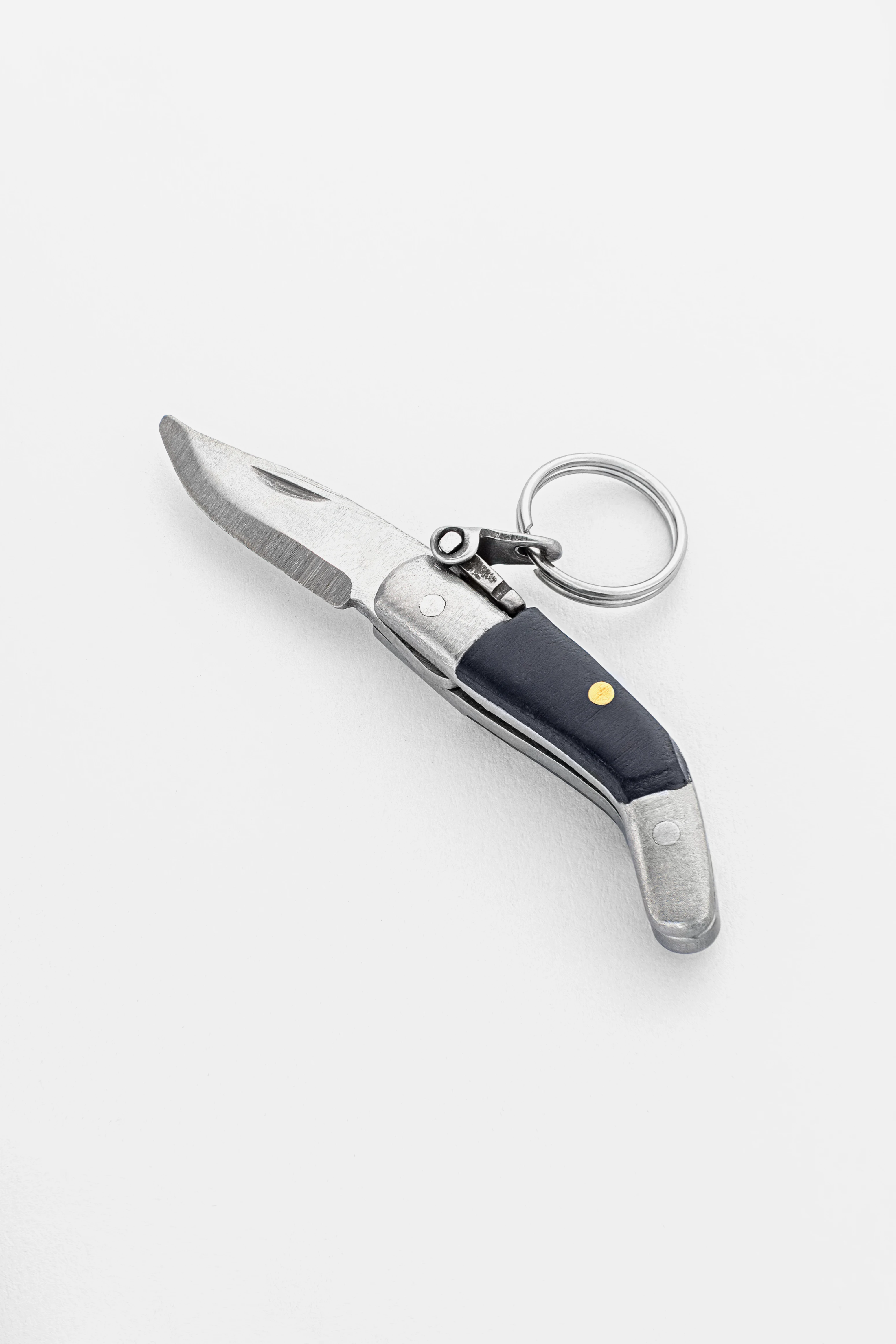
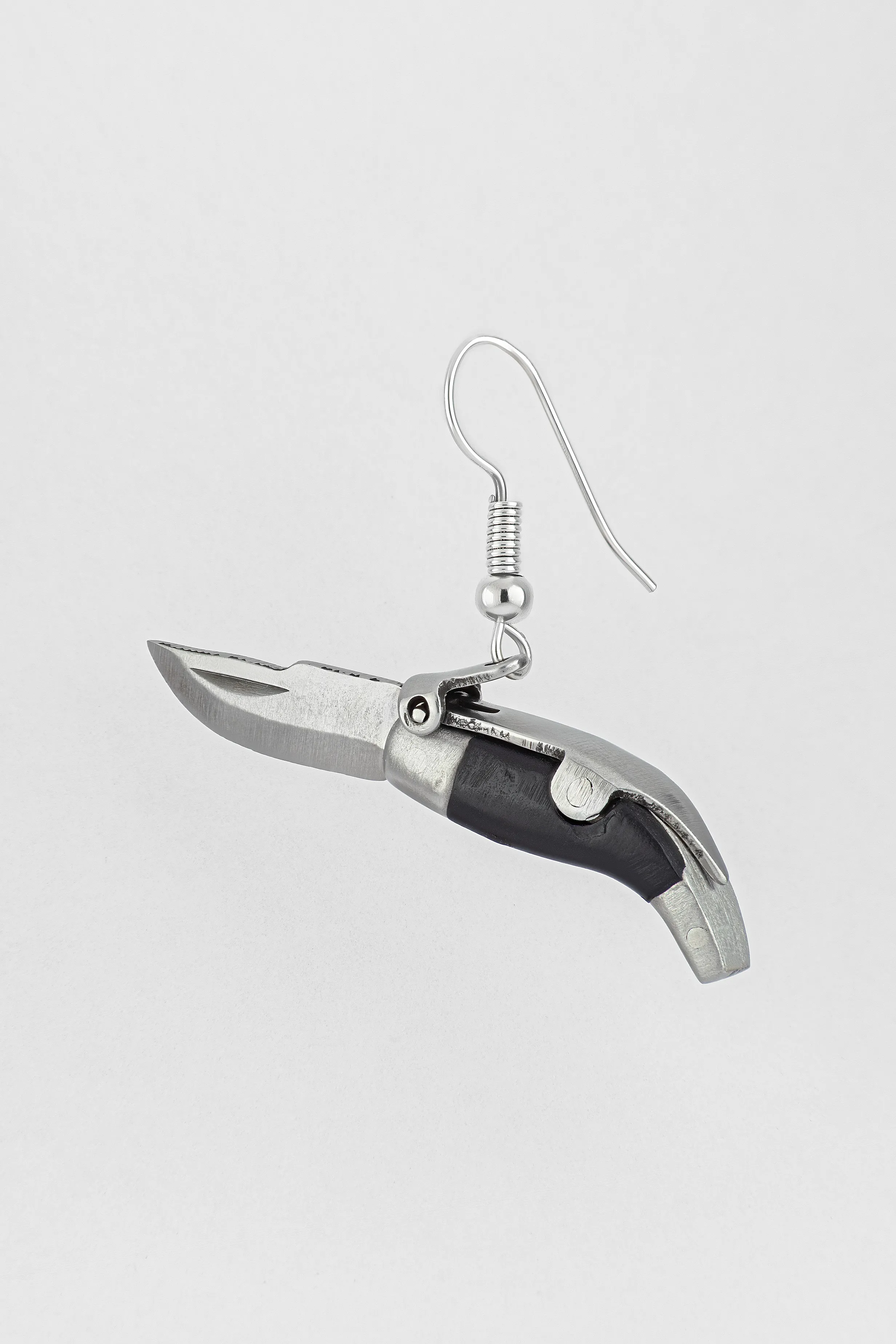
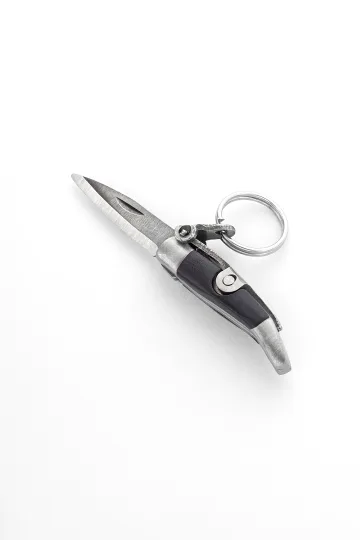
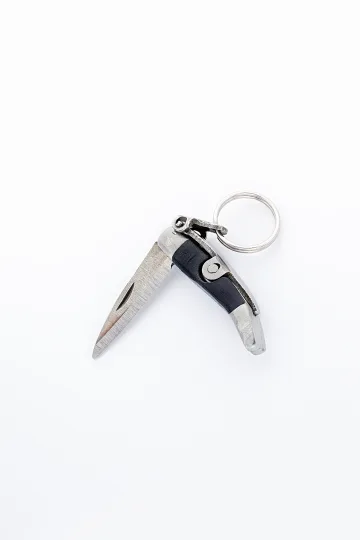
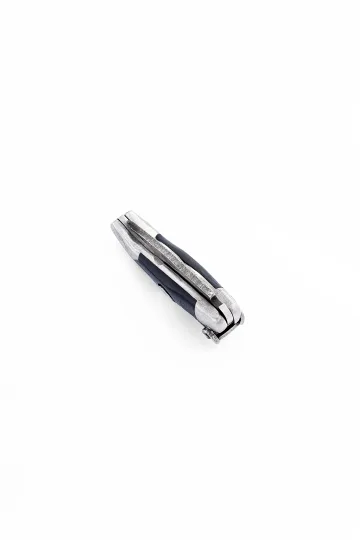
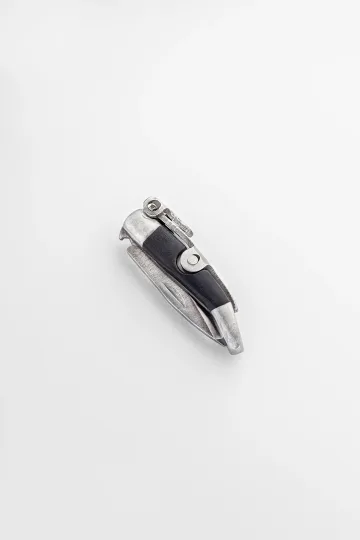
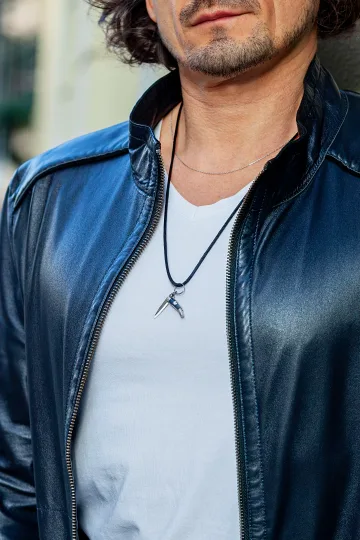
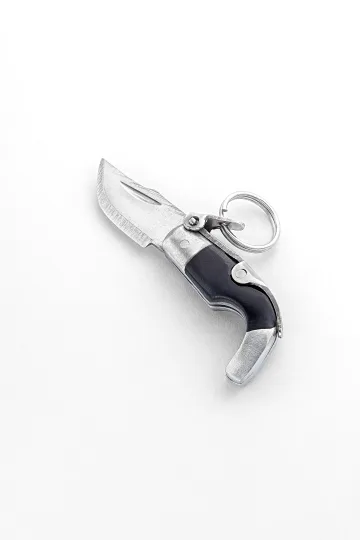
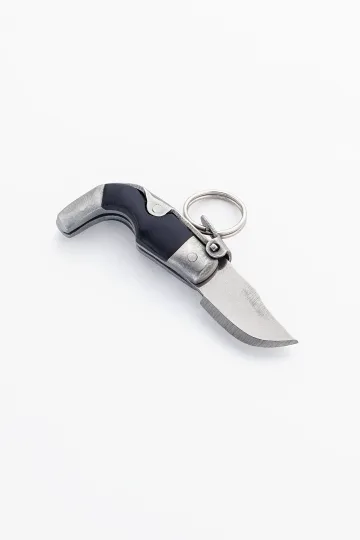
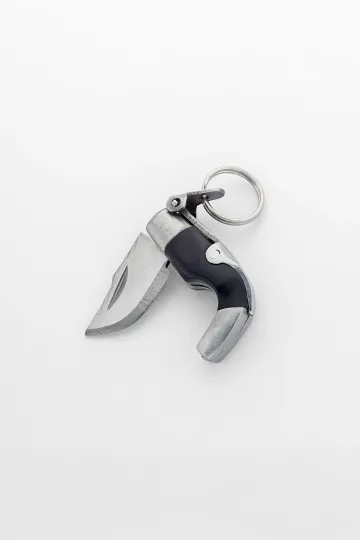
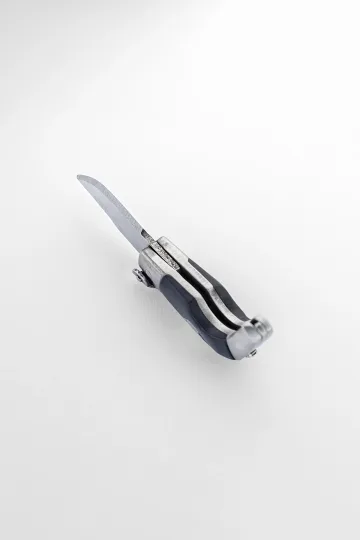
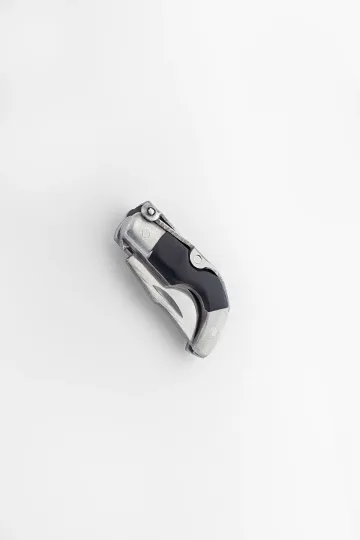
CAPAORA mini knife pendant
The 18th-century Spanish navaja in miniature: 40 mm of stainless steel, a real folding mechanism and a Palanquilla lock that clicks. An affordable gift to remember.
Authentic · Ships from Spain · 14-day returns
Caring for jewellery
A piece sets off the skin rather than masking it. That is an important distinction. Well-kept jewellery on the skin looks completely different from jewellery stored in a heap and worn once a year.
Gold
Wash in warm water with a little neutral soap and a soft brush. Wipe with a soft cloth. Store in a separate pouch or box, not together with other metals.
Silver
It oxidises in air. A special silver cloth or paste quickly brings back the shine. Store in a closed box, wrapped. Wear it often: worn regularly, silver oxidises more slowly.
Pearl
It cannot tolerate ultrasound or aggressive products. Wipe it with a damp cloth after each wearing, take it off last and put it on first among all the pieces. Store separately, not in plastic.
Jewellery with stones
Have a jeweller check the settings once a year, especially if you wear it constantly. Losing a stone from a loosened setting is a real shame and is solved by prevention.
Caring for jewellery takes little time but noticeably affects how it looks and how long it lasts. A piece that is cared for stays beautiful for decades. A piece kept in a heap loses its look and its value.
A gift for a mature woman: what works and what doesn't
If you are choosing jewellery as a gift for a woman after fifty, the logic is a little different from the one for the young.
What works
A piece in a precious metal with one good stone, or with no stone but with character. Pearl. Something with history or meaning. A piece you chose by watching her style, rather than picked at random because it looked pretty in a display.
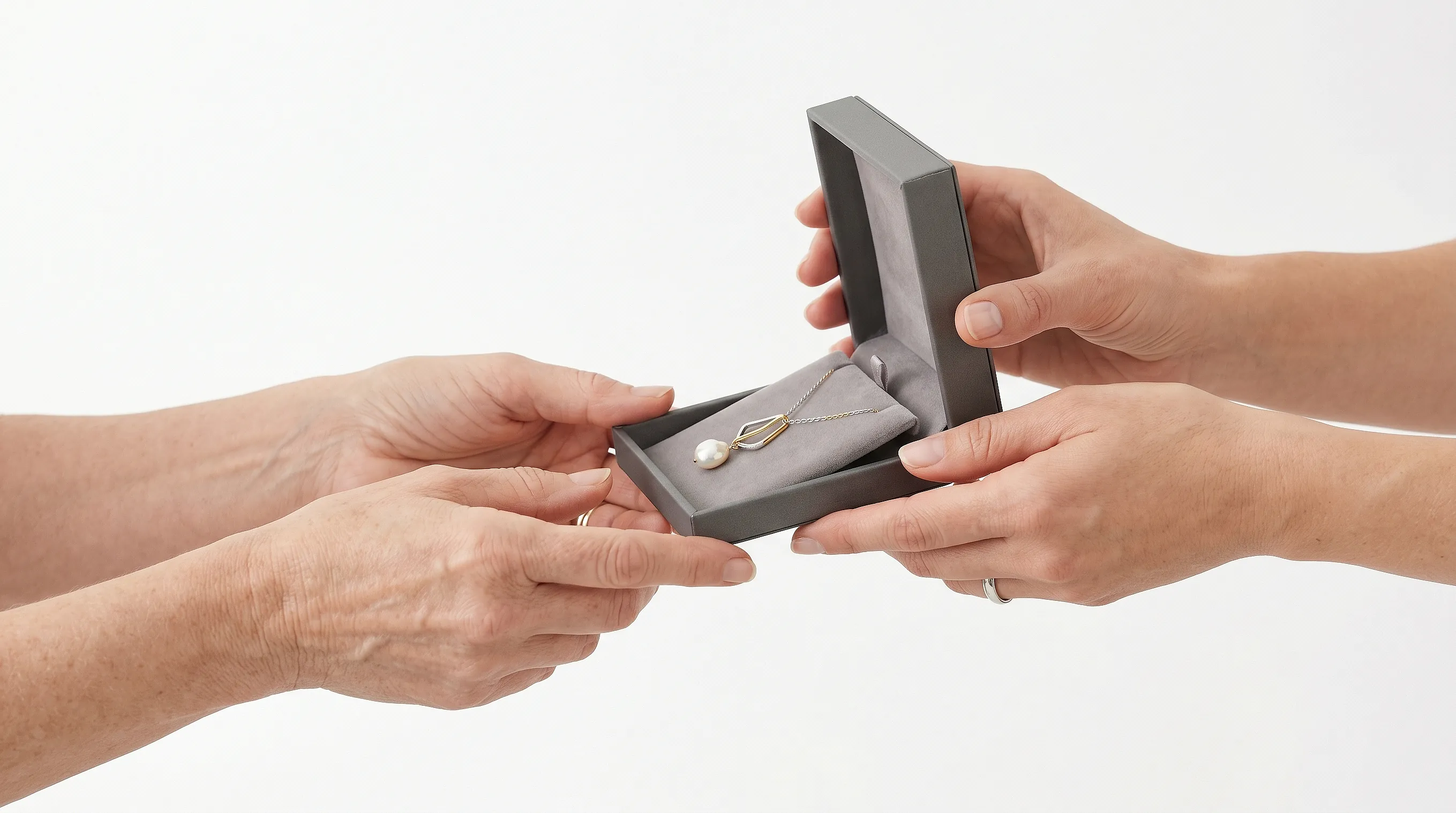
Engraving changes everything. A personal date, initials, a short word. It moves a piece from the category of "object" to the category of "message."
The quality of the material. After fifty a piece in real metal with a good stone is valued more highly than pretty costume jewellery.
What doesn't work
A fashionable piece from a trend collection, chosen without any sense of her taste. A piece that hints at "youthfulness" if she is not reaching for it. Very cheap things in short-lived materials. A set where "it all goes together."
For detail on choosing jewelry for a mother, see the guide to a gift for mum. For an anniversary gift, see the guide to anniversaries.
Milestones after 50: jewellery as a marker
After fifty life keeps filling with meaningful moments. And jewellery is able to fix them, to give them material form.
A fiftieth birthday
A landmark birthday is an occasion for a piece that differs from the everyday. Not necessarily expensive, but deliberately chosen for this moment. If you are choosing the piece not for yourself but as a gift for a particular occasion, it helps to work out what is given for which occasion: the logic of a milestone birthday, an anniversary and a personal celebration differs noticeably.
A step up at work
A promotion, your own project, a new role. A piece you put on when you walk into an important meeting from a position of strength.
A golden wedding
Gold, literally. Reimagined wedding rings, a necklace that wasn't there fifty years ago. For detail on gifts for wedding milestones, see the guide to wedding anniversaries.
The arrival of grandchildren
Many women at this point want a piece with a symbol, a birthstone, an engraved name. This is a tradition with deep roots, and it works precisely because it is personal.
A move, a new start
A piece as a sign of breaking with the past and opening to what comes next. As physical evidence that life is renewing itself.
Recovery
After a hard period a piece often becomes a symbol of returning to yourself. To who you were, or to who you are becoming.
Retirement
For many women retirement is not an end but the start of time for themselves. A piece at this moment can mark exactly that: at last there is time to live as you wish.
A gift to yourself
The best gift after fifty is the one you choose yourself. Because you already know exactly what suits you, what you like, and what you will wear. There is no need to wait for someone to guess.
Buying a piece for yourself at an important moment is not "spending money." It is fixing the moment. Giving yourself material evidence that something worth remembering has happened.
For detail on the practice of the self-gift, see the guide to jewelry as a gift to yourself.
Jewellery and the wardrobe at 50: what goes with what
A piece does not live on its own but within a look. After fifty the clothing is usually better, more considered, with fewer random pieces. Jewellery in such a wardrobe works differently than in a chaotic, youthful one.
Linen and cotton
Natural textures take organic jewellery well: baroque pearl, rough-cut stones, antique brooches. Metal jewellery on linen creates an interesting contrast.
Silk and satin
Smooth, shiny fabrics work with jewellery more sparingly. Here one expressive piece works better than several. A pearl necklace on silk is a classic with good reason.
Knitwear
On fine knit, jewellery looks good. A bulky jumper swallows thin chains but takes voluminous necklaces, large earrings and bracelets.
Jacket and blazer
A formal context. Here studs, one chain, one ring work. A brooch on the lapel of a blazer is coming back.
A dress with a neckline
An open neck and chest call for jewellery. The length of the chain is matched to the depth of the neckline. A V-neck takes a piece of the same V-shape or a long necklace.
Formal meetings
Less clatter of metal, fewer moving parts, less bright shine. Quality materials, restrained shapes.
An evening out
Here you can allow more. Large earrings, an expressive necklace, a cocktail ring. All of it is apt in the evening.
Everyday life
One favourite piece, put on every day and taken off only at night. It becomes part of you, like a watch.
Send a friend a discount code, they save on their first order.
Brooches: an undeservedly forgotten tool
The brooch lived through a period when it was thought outdated, and it came back. And it came back not as nostalgia but as a real tool of style.
The brooch is the one piece you control completely yourself: where it appears, at what angle, in what size. That makes the brooch a very flexible element.
A brooch on a coat
The classic placement. A large brooch on the lapel or on the shoulder of a coat. It works with any coat: tweed, cashmere, knit.
A brooch on a scarf
A scarf fixed by a brooch that decorates at the same time. Practical and beautiful.
A brooch on a bag
Unexpected, but it works. One expressive brooch on the handle or flap of a bag.
A brooch instead of a button
On a cardigan, in place of the top button.
A brooch on a blazer lapel
The traditional placement, which has returned to formal fashion.
After fifty the brooch works especially well, because it needs no piercing and carries character. An antique brooch from a grandmother's box, worn alone without the rest of the set, becomes individual.
Jewellery and special occasions after 50
Life after fifty is full of special occasions. The weddings of children, milestone birthdays, work events, the theatre, business negotiations, family gatherings at holidays.
A daughter's or son's wedding
This is a special case where jewelry matters. You are at the centre of attention as a mother, and it is apt to choose a piece that is meaningful and beautiful. A good pearl necklace, earrings with stones, perhaps an inherited piece. Not too much, but enough for the moment. At such a wedding the mother is often given a piece too: what to choose is covered in the guide to jewelry as a gift for mum.
A close one's milestone
Festive but not formal. There is more freedom here. You can wear a cocktail ring, earrings with character.
A business meeting
Jewellery is present but does not dominate. Quality over quantity.
Theatre and cultural events
One of the best occasions to wear an expressive piece. The theatre takes bright earrings, a beautiful necklace, a good ring.
Holiday and travel
On a trip, less jewellery is more practical. A few small but meaningful pieces. Valuable pieces are better left at home.
An everyday outing
One or two pieces you love. Enough.
The psychology of jewellery after 50
Jewellery was never only about appearance. It has a psychological dimension that becomes more visible after fifty.
Jewellery as identity
The ring you wear every day becomes part of how you are seen and how you see yourself. It is a small but real contribution to the sense of self. People who have known you a long time recognise you, in part, by that ring or those earrings.
Jewellery as memory
A piece tied to an important moment or person works as an anchor. Putting it on, you return to that moment. This is not sentimentality. It is a way of wearing your history on your skin rather than keeping it in a box on a shelf.
Jewellery as choice
After fifty many women, for the first time, choose a piece entirely for themselves: not for approval, not to meet expectations, not for someone else. Simply because they like it. This is a small but real form of freedom.
Jewellery as ritual
Putting on a favourite piece before an important day is a ritual. It sets a mood, creates a sense of readiness. Many women describe it just so: I put on my ring and felt ready for the conversation, the meeting, the day.
Jewellery as an investment in yourself
After many years when the spending went on children, on family, on everyone around, buying a piece for yourself is a signal: I matter too. This is not selfishness. It is a balance many women find precisely after fifty.
Jewellery as a signal
A person who wears a good piece radiates a certain attitude toward herself. Not wealth. Exactly that: respect for her own taste and her own time.
FAQ
Can a woman after fifty wear bright jewellery?
She can. Age does not limit the colour or the size of a piece. The limit can be context (a work meeting, mourning) or proportion (a piece that doesn't match the scale of the face or the look). But not age.
Which earrings suit stretched lobes?
Studs with a flat back and light earrings with a small drop. Avoid large, heavy drops. Earrings in light metals or with hollow elements give volume without weight.
Is it worth investing in good jewellery after fifty?
If you can, yes. One piece in real metal with a good stone will last for decades and need no replacing. That is better than many cheap things that oxidise and break within a year.
How do you wear an inherited piece so it doesn't look dated?
Take only one piece from the set and leave the rest off. Pair it with modern clothing. If needed, reset the stone in a new setting or ask a jeweller to restyle the piece.
Does pearl really suit mature women, or is that a stereotype?
Pearl suits mature skin for an objective reason: its soft glow does not create a sharp contrast with the skin but interacts with it. That is not a stereotype, it is optics. But pearl works in a modern reading: baroque, asymmetric, combined with metal.
Can you mix gold and silver?
You can mix metals at any age if it is done on purpose. A random mix looks incoherent. But a deliberate combination (a silver ring with gold earrings, say) works, especially with a neutral undertone.
Which pieces are always apt after fifty?
Small or medium studs with pearl or a good stone. A chain of yellow or white gold of medium length at the collarbone. One ring with a clear stone. These three cover most contexts, from work meetings to celebrations.
How do you tell when jewellery is "too much" for a look?
If the first thing you see in the mirror is the jewellery rather than you, it is too much. A piece should be part of the look, not replace it. Take one thing off and look again.
Facts that surprise
- The word for the choker, the shortest classic length, comes from a time when a ribbon or band at the throat was a sign of refinement rather than rebellion; the same length now reads as either depending on what it is made of.
- The opera-length strand of pearls owes its name to the opera house: it was long enough to be seen from the upper tiers, where a short necklace would simply vanish.
- Baroque pearls, prized today for their irregular shapes, were once the cheaper option; round, even pearls commanded the higher price, and the taste has quietly reversed.
- Queen Elizabeth I set a fashion for pearls so strong that portraits of her are often counted partly by the strands she wears; the look outlived her by centuries.
- The cocktail ring earned its name in the era when a large, bold ring was lifted into view as a glass was raised, turning a gesture into a small piece of theatre.
- Art Deco brooches, designed in the twenties and thirties to clip onto a hat or a lapel, were often built so a large piece could split into two smaller clips, an early answer to the wish for one piece that did several jobs.
- A pearl is the only gem produced by a living creature, which is why it asks for gentler care than a mineral stone and reacts to perfume and acid where a sapphire would not.
- Emerald has been linked with established, confident women since antiquity; the deep green was so valued that the finest stones were set alone, with nothing to compete.
Buying it as a gift? Each one arrives ready to give.
 A branded Zevira box and a little card come with every order.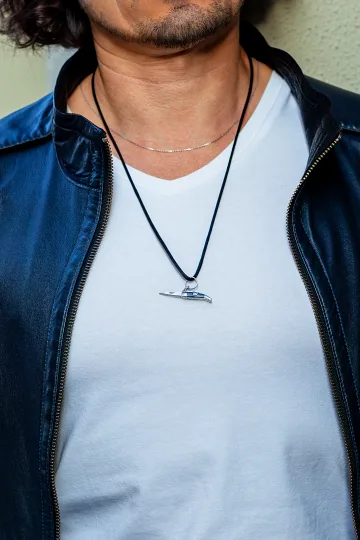




Conclusion: to keep living vividly
Jewellery after fifty is a choice. Deliberate, confident, made at last entirely for yourself.
A mature woman has something the young do not: a precise understanding of her own taste. Decades of experiment, of mistakes, of good and bad purchases have built a sense of what works for her in particular. That is valuable, rare, and deserving of respect, first of all from the woman herself.
Jewellery should suit the person. It should work for her appearance, her character, her way of life. Not to show compliance with some rules, but to add to the look what it lacks, or to strengthen what is already there.
After fifty life goes on. It does not become quieter, more modest, less worthy of beautiful things. Rather the opposite: there is room to choose more precisely and to wear what you genuinely like.
That is the freedom of choice these years were leading toward. It never went away with age.
Choose jewellery you really like. Wear it when you want. Buy yourself what you have long wanted, without waiting for a special occasion or someone else's permission. Fifty years of life lived is reason enough for anything. And for the most beautiful ring you have had your eye on.
Earrings, rings, chains and pendants that speak on mature skin: one good stone, a clean setting, a readable line.
About Zevira
Zevira makes jewellery in the artisan tradition of Albacete, Spain. We make pieces you choose for yourself and wear for years: with one expressive accent instead of a scatter of small things, in a metal and a stone that suit your own skin tone.
What you can find with us for mature style:
- Studs and light earrings with volume but no load on the lobe
- Princess and matinee chains made for a mature neck and décolletage
- Rings with a clear central stone instead of a band that disappears
- Pearl jewellery in a modern reading: baroque, paired with metal
- Pieces with coloured stones for warm and cool skin tones
- Resetting of an inherited stone into a new setting on request
Every piece can be personalised with engraving, with personal engraving available. Sterling silver 925 and 14-18K gold.