Leather in Jewelry: Cord, Braiding, Care
A leather cord turns a plain silver pendant into something masculine and sporty in five seconds flat. But leather is the part of a piece that wears out first: the metal will outlive you, while a neglected strap stiffens, snaps, and stains your wrist after a single hot summer. How you treat the cord decides whether the piece lasts a year or a decade.
Leather behaves nothing like metal or stone. It is alive, porous, breathing, soaking up water and sweat, stretching and darkening with wear. That is both its charm and its weak point. The charm: a leather bracelet settles to fit your wrist over the years and earns a noble patina that no factory can fake. The weakness: that same porosity leaves it vulnerable to water, salt, and friction. This article covers how leather works in jewellery, how to tell the real thing from an imitation, what braids exist, and how to care for a cord so it never crumbles to dust.
Leather as a Material in Jewellery
Leather entered jewellery from two directions at once: from the craft of saddlers and harness makers who spent centuries braiding reins and tack, and from folk traditions where a leather strap was the cheapest possible base for an amulet. Today leather shows up in jewellery in four roles, and each one has its own rules of wear.
Leather Cord for a Pendant
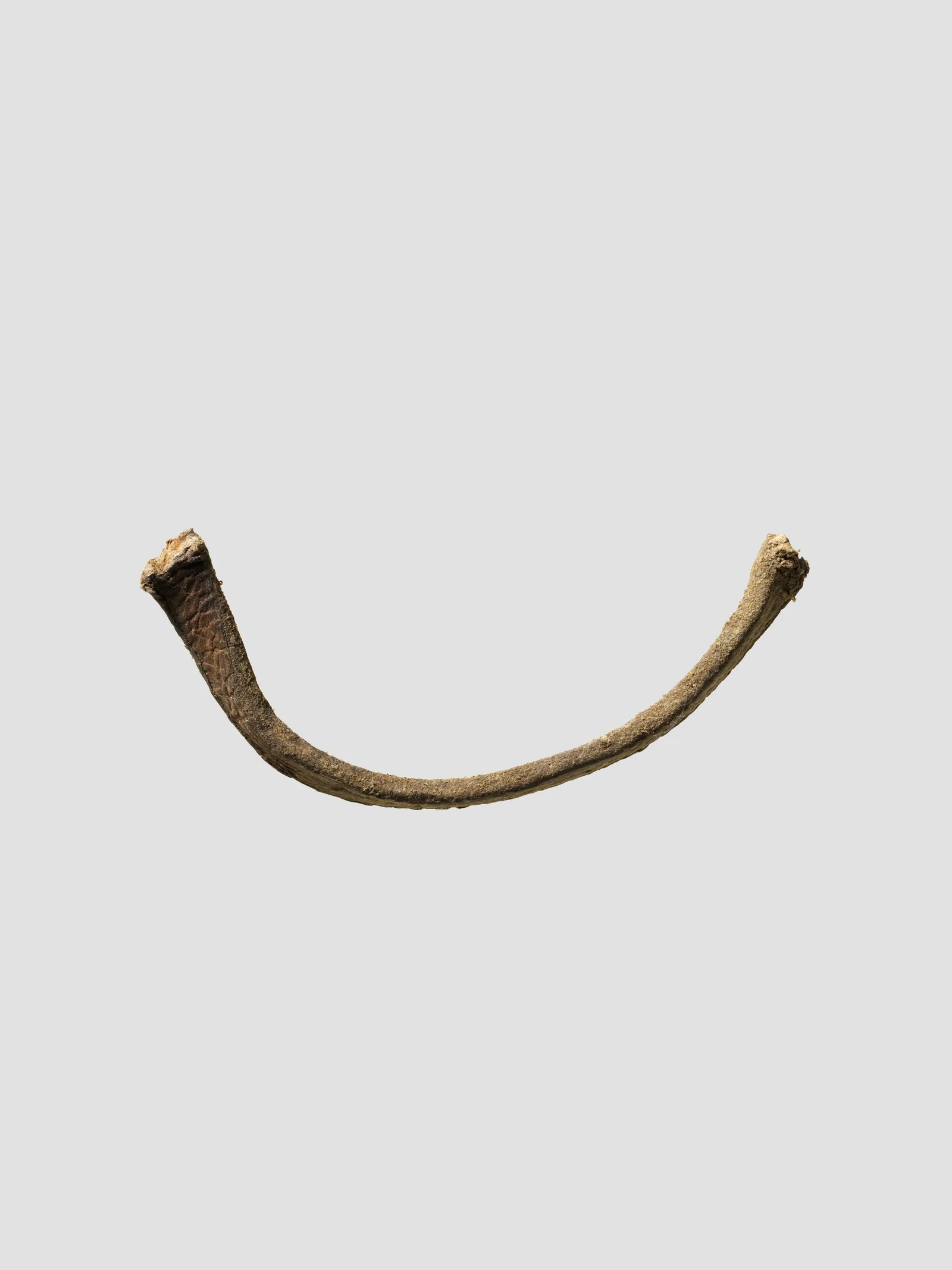
The cord is the most common use of leather. A round or flat strap from one to three millimetres across replaces a metal chain and carries a pendant, a coin, a fang, a ring, or a silver charm. A thin cord looks delicate and suits a small symbol; a thick one holds a large pendant and reads as a man's accessory. The cord's great advantage is that it is soft and does not chill the neck the way metal does. Its main risk is that a narrow strip of leather frays at the point where a heavy pendant hangs, and that is where it snaps first.
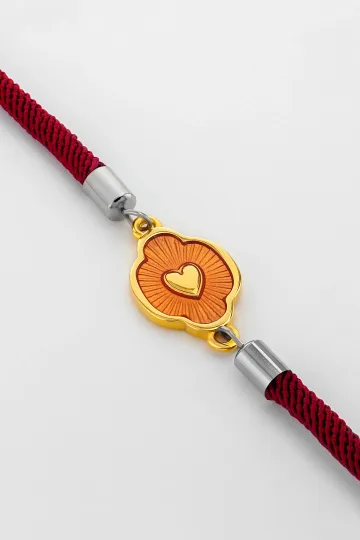
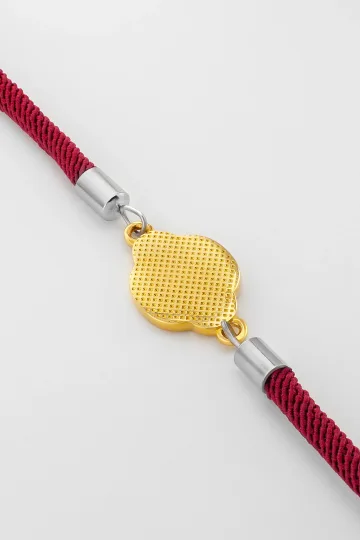
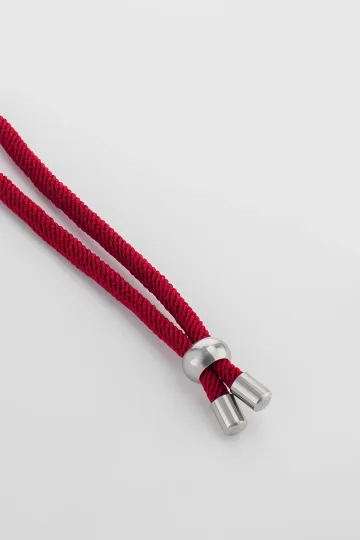
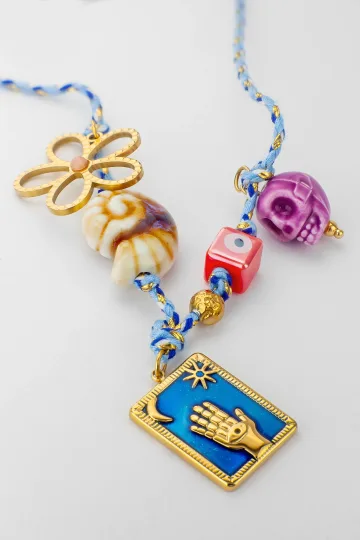
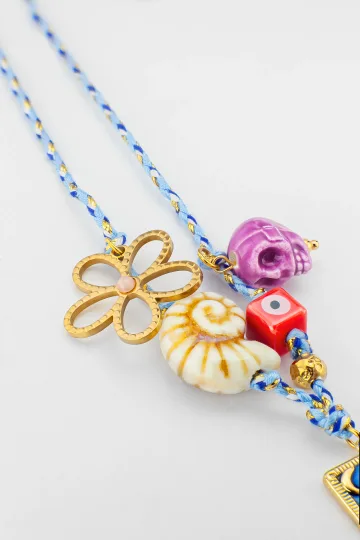
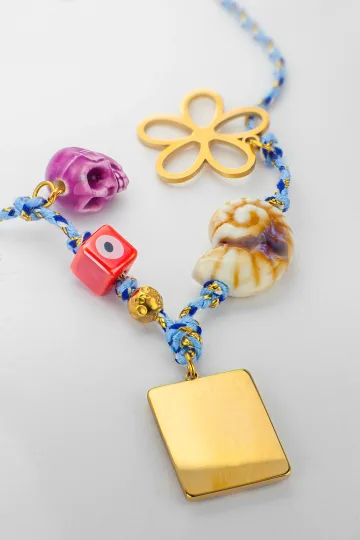
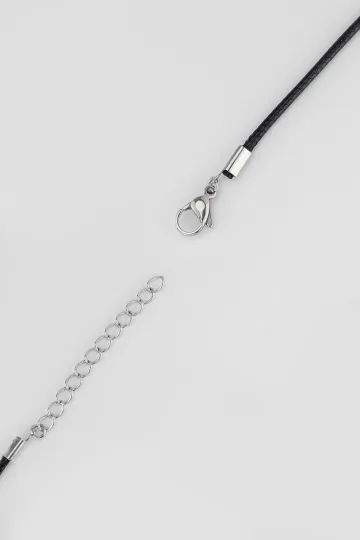
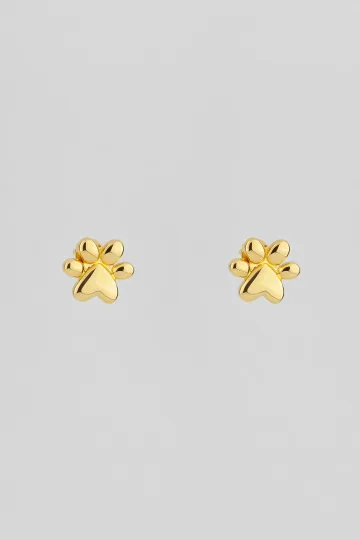
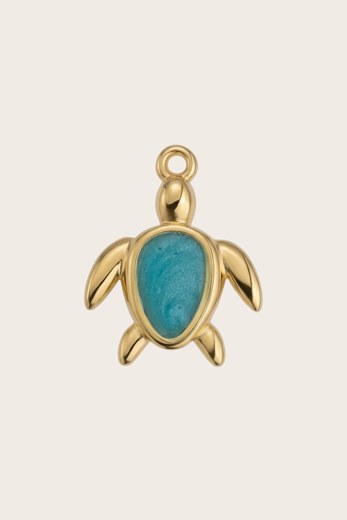
Wear the symbol, don't just read about it. These are in stock:


Leather Strap and Cuff Bracelet
A wide flat strap is the base of a bracelet. It can be smooth and minimal with a single rivet, or elaborately stitched with embossing, perforation, and metal inserts. Widths run from five millimetres to two or three centimetres. A wide strap sits on the wrist like a cuff and looks good on a large man's hand. Narrow ones get stacked several at a time. The strap wears out along the bend of the wrist, where the leather constantly flexes back and forth.
Braided Leather Bracelet
When several thin strips of leather are woven into a plait or a complex pattern, you get a braided bracelet. Braiding adds volume, texture, and strength: the load spreads across several strands, so if one frays the piece does not fall apart at once. Braided bracelets are a world of their own with their own schools, from a simple three-strand plait to a multi-row Celtic knot. There is a big section on weave types further down.
Leather as a Base for Pendants and Wrapping
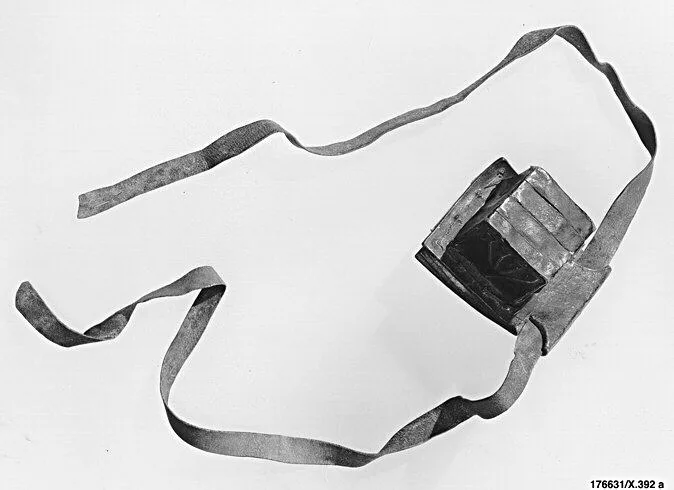
Sometimes leather does not carry the jewellery; it becomes the jewellery. A cabochon stone gets wrapped in leather for a wild folk setting with no metal at all. Flat medallion pendants are cut from leather and decorated with burned-in patterns. A thin leather thread wraps the handle, the choker base, or the frame of a large collar. In these cases leather carries the entire aesthetic, and the quality of the tannery shows instantly: cheap leather with uneven thickness and a loose cut edge gives itself away in this role at a glance.
Leather Earrings and Statement Pieces
Less often, but it happens, leather serves as the material for an earring: a light leather drop does not pull at the lobe the way metal does, and it holds a complex openwork shape cut by laser. In folk and festival looks, leather is fashioned into whole chest pieces, woven neck collars, and long tassels. Lightness is leather's main trump card in large forms: a piece the size of a palm weighs almost nothing, while the same volume in metal would be impossible to wear.
Types of Leather in Jewellery
The word "leather" hides a dozen different materials with different tanning, strength, and behaviour. The type decides how a bracelet looks, how long it lasts, and whether it fears water more than usual.
Natural Smooth Leather
The classic: an even, glossy surface with a natural grain of pores. Most often this is calf, cow, or goat leather, chrome- or vegetable-tanned. Smooth leather is strong, holds its shape, and ages beautifully, taking on a soft sheen from wear. Vegetable tanning (often called veg-tan) gives a dense, pale leather that darkens in sunlight and from the hands, gathering a deep honey tone. Chrome tanning is softer and water-resistant from the start, but it barely develops a patina.
Suede
Suede is leather worked on the flesh side, which makes it velvety and matte. A suede cord is soft, warm to the touch, and looks cozy and bohemian. The price for that velvet is that the napped surface greedily soaks up water, dust, and grease, quickly gets grimy at the folds, and barely responds to cleaning. Suede in jewellery is a material for dry, careful wear, not for an everyday bracelet under a shirt cuff.
Nubuck
Nubuck looks like suede but is made differently: the grain side, not the flesh side, is sanded down to a short, dense nap. Nubuck is stronger than suede, and its velvet is finer and more refined. It fears water almost as much: a single drop leaves a dark mark that is hard to remove afterward. In jewellery nubuck turns up rarely, mostly in designer straps.
Braided Leather
Braided does not name a separate kind of tanning, but leather already cut into strips and woven into a cord or band. It is usually braided from smooth leather. A braided round cord is even, full-bodied, and strong; it barely twists and holds a clasp well. It is the workhorse of leather bracelets and cords meant for a large pendant.
Waxed Leather and Waxed Cord
Waxed leather is impregnated with wax, which darkens it, stiffens it slightly, and makes it noticeably more water-resistant. A drop rolls off rather than soaking in. A waxed cord holds a knot, does not fray at the cut end, and survives rain more calmly than ordinary leather. Two terms need separating here. Waxed natural leather is still leather, just protected by wax. But a waxed cord on sale is often not leather at all, but cotton or polyester soaked in wax to mimic it. This is a popular vegan alternative, and there is a separate note on it below.
Faux Leather and Imitations
Under the names eco-leather, faux leather, and pleather hides a polymer (most often polyurethane) embossed to mimic natural grain and applied to a fabric backing. The pluses are obvious: cheaper, even in colour, no ethical questions, unbothered by brief contact with water. The minuses surface over time: the polyurethane coating cracks at the folds, peels off in flakes, and ages badly, unlike natural leather, which ages with grace. Good faux leather can look convincing for a year or two, but the longevity of real tannery is beyond it.
A leather cuff belongs on a bare wrist, not under a blazer sleeve. Save the thick braid for the festival, not the boardroom.
How to Wear Leather Jewellery
Over years on set I have run leather through dozens of looks, from a rugged cord on a bare wrist to a thin line tucked under a shirt. Here is what actually works, sorted by occasion and by texture.
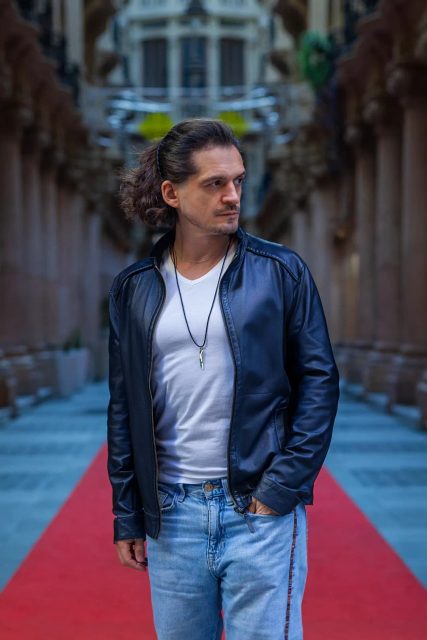
What do I pair a leather bracelet with every day? For an everyday look I recommend a braided or smooth bracelet of medium thickness over jeans, a T-shirt and rugged boots. Here leather reads as part of street style rather than a precious object, and it never argues with a casual wardrobe. A light top lifts warm honey leather, a dark one turns a black bracelet into a graphic accent.
Does leather belong in the office? It does, as long as you keep it restrained. I suggest a thin smooth cord or a narrow bracelet that slips under a shirt cuff and stays almost invisible as you move. Skip the chunky braid and the beads: under a strict dress code leather works as a quiet detail, not a loud accent.
How do I build an evening or holiday look? For a relaxed evening or a resort look I choose leather in its own element: a wrap with beads, macramé, a stack of bracelets with stones. The boho look is built on layers, so I string leather bracelets together with textile threads and wooden beads. The more natural and rough the texture, the better.
How many leather bracelets should I wear at once? It depends on the goal. One bracelet or cord as an accent is always stronger in a clean look. For folk and boho the opposite holds: I suggest a stack of three or four, thin leather, textile and beaded pieces mixed together. One rule stays: either a single clean line or an honest stack, never two bracelets where the second looks forgotten.
How do I match leather to metal and to the colour of my clothes? A simple harmony works here. Light and honey leather I pair with warm metals: brass, bronze, yellow gold. Black and dark brown I choose with the cool shine of silver and steel, so the contrast reads sharp and graphic. When in doubt, black leather with silver is a safe pair for almost anything.
Turn on your camera, pick earrings, a pendant or a ring, and see the piece on yourself in real time.
Switch items in one tap.
Everything runs in your browser: no photo or video is ever uploaded.
How to Tell Natural Leather from Fake
This is the question people ask most, and the fear is misplaced: natural leather gives itself away through several signs at once that no imitation reproduces in full. It is better to judge by the combination than by a single point.
The Cut and the Edge
The most honest test. Natural leather has a loose, fibrous cut, like dense felt, with no clear boundary between layers. Faux leather shows a layered sandwich at the cut: a polymer film on top, a fabric or foam backing beneath, with a sharp line between them. If the edge of a piece is neatly painted and sealed so the cut is invisible, be wary: real leather is often left with an honest open edge.
The Smell
Natural leather smells of leather: a warm, faintly sweet animal scent of tanned hide. An imitation smells of either nothing, or chemicals and plastic, sometimes a deliberately added "leather" fragrance that betrays itself by its sharpness. The smell almost never lies.
Pores and Grain
On natural leather the pore pattern is uneven, never-repeating, alive: pores of different sizes scattered at random. On faux leather the texture is stamped, so the pore pattern repeats at even intervals. Find two patches of texture: if they match like carbon copies, it is an imitation.
Warmth and the Hand's Reaction
Natural leather feels warm to the touch and quickly takes on body temperature, softly adapting to the hand. A polymer feels cool at first and slightly tacky, staying uniformly smooth. Bend natural leather and the fold shows a mass of tiny wrinkles while the surface lightens a little; faux leather bends in one even crease and often whitens along the line where the coating cracks.
The Water Drop (a Cautious Test)
On a hidden spot, a drop of water on natural vegetable-tanned leather slowly darkens and soaks in, leaving a mark that later dries out. On faux leather and on waxed leather the drop beads up. The test is destructive for untreated leather, so do it only on the back or skip it entirely if you fear ruining the piece.
Customer reviews
Zevira is a real jewellery shop. Genuine payments, deliveries and customer thank-yous.
🥰🥰🥰 gracias
Ok, ¡gracias! 🙂
Weaves and Types of Leather Bracelets
The weave is both the strength and the whole character of a bracelet. The pattern decides how the piece sits, how it stretches, and how masculine or folk it looks.
Three-Strand Plait
The basic weave: three leather strips braided the same way you braid hair. The plait is flat, neat, stretches a little, and lies well on the wrist. It is the most common and most easygoing weave, the base of most simple leather bracelets and cords.
Macramé and Knot Weaving
Macramé is a technique of weaving with knots and no backing, borrowed from textiles. Square knots are tied with leather or waxed cords to make a dense, textured bracelet that takes beads and stones easily. Macramé holds its shape, adjusts in length by tightening, and looks handmade and folk. It is the favourite technique of festival and boho bracelets.
Wrap Around the Wrist
A wrap bracelet is a long cord wound several times around the wrist and fastened. The cord is often strung with beads, crystals, and small plates. A wrap visually breaks the wrist into several turns and replaces a whole stack of bracelets with a single piece. It sits snug, looks bohemian, and adjusts by the number of turns.
Bracelet with a Magnetic Clasp
A braided or smooth leather bracelet with a magnetic clasp that snaps shut on its own. It suits anyone who fastens a bracelet one-handed and is popular in men's models. The magnetic clasp has a catch: a cheap weak magnet pops open at a sharp movement, while a strong magnet holds better but adds weight. Choose the clasp by grip strength, not by looks.
Bracelet with Beads and Inserts
A leather base gets combined with beads of wood, stone, lava, metal, or bone to make a bracelet that is textured and meaningful. Lava beads are porous, and people drop essential oil on them as on a diffuser. Stone beads add colour and symbolism. Here leather carries the load and beads carry the character. The more heavy beads there are, the more the leather base stretches and sags over time.
Multi-Row and Celtic Patterns
Complex weaves of four, six, or eight strips give a full-bodied round or square cord with a regular pattern. Celtic weaving, the "king's chain" worked in leather, and flat multi-row bands are the work of a master. Such bracelets are strong thanks to the tight weave and pricey thanks to the handwork.
Upload a photo of your pet, someone you love, or an object. We'll build a 3D model and hand-cast it in pewter.
Leather Paired with Metal, Stone, and Silver
On its own leather looks folk and rough. Paired with a refined material it opens up: the contrast of warm matte leather and cold glossy metal is one of the most rewarding combinations in jewellery.
Leather and Silver
The classic of men's and unisex jewelry. A silver pendant on a leather cord reads richer than the same pendant on a silver chain: leather adds character and strips away excess formality. Silver end caps, spacer beads, and clasps on a leather bracelet tie the piece into a single whole. If you want to understand exactly what silver you are dealing with, look into the breakdown of silver 925: the hallmark matters, because an end cap of cheap alloy will tarnish and stain the leather at the point of contact.
Leather and Steel, Brass, Copper
With stainless steel, leather gives a strict, almost technical look: steel does not tarnish, keeps its shine, and does not react with sweat. Brass and copper give a warm golden contrast, but they darken over time and can leave a mark where they touch the leather and the wrist. How different metals behave in a bracelet is easy to check in the comparison of brass, steel, and silver: on a leather base, the difference in how the hardware lasts shows especially clearly.
Leather and Stone
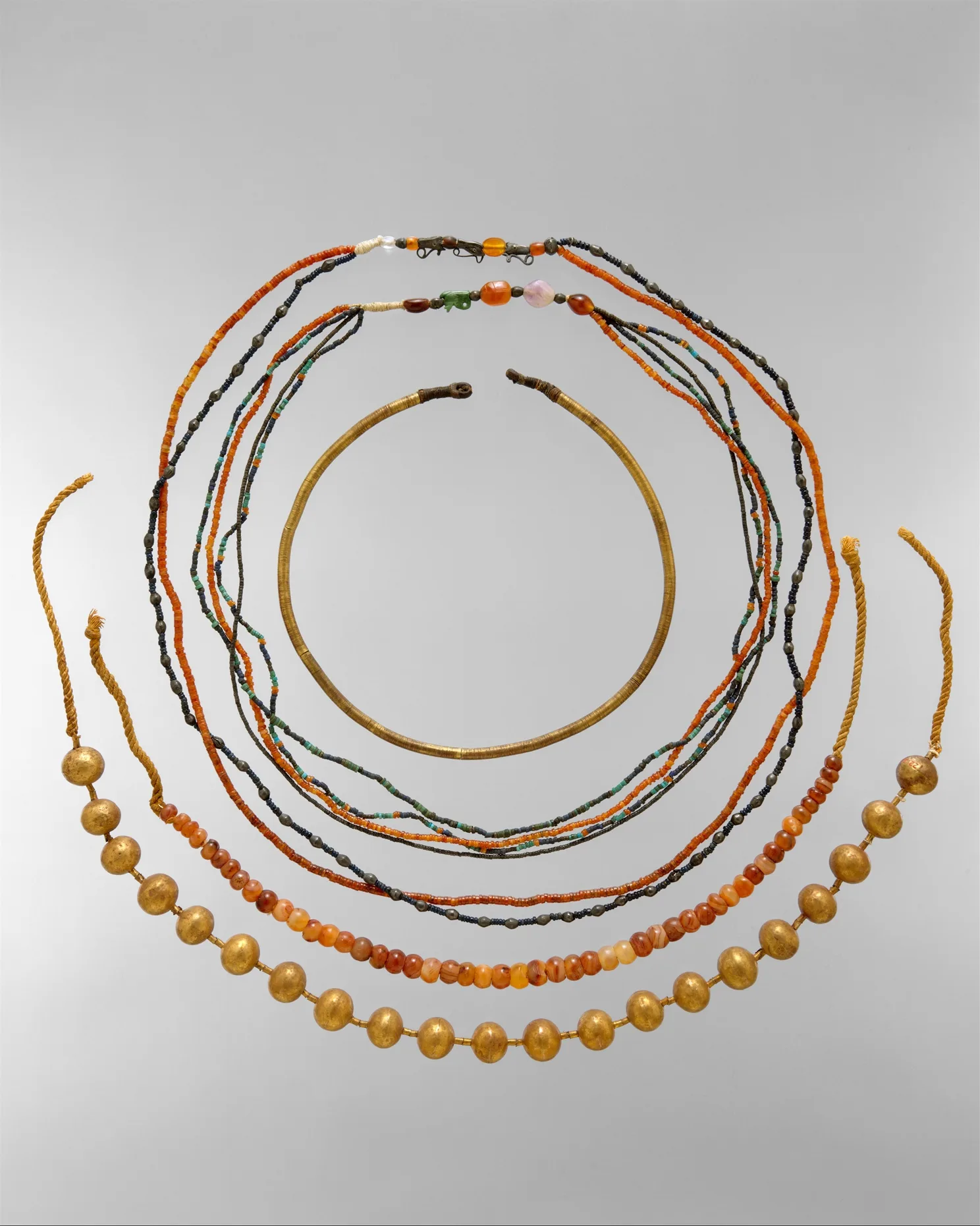
Stone on leather is almost always either a bead strung on a cord or a cabochon in a leather wrap. Here leather acts as a soft setting that does not scratch the stone and dampens its shine, making the look natural. Turquoise, lava, agate, tiger's eye, and onyx are leather's classic companions: earthy, opaque stones that echo its texture.
Leather and Gold
Gold on leather is rarer and looks the most expensive of all: warm metal and warm leather create a soft monochrome with no harsh contrast. A thin gold element on a leather cord is restrained luxury. There is one drawback: gold-plated hardware on a leather bracelet wears off along the bend of the wrist faster than on a chain, because the leather constantly rubs against the clasp.
How to Match Metal to Leather Colour
There is a simple rule of colour harmony. Pale natural and honey leather befriends warm metals: brass, bronze, yellow gold, and aged silver. Black and dark brown leather looks best with a cold shine: polished silver, steel, and white gold. The contrast of dark leather and bright metal reads as strict and graphic, while warm leather with warm metal gives a soft, natural look. When in doubt, black leather with silver is a foolproof pair that suits almost everyone and almost everything.
Leather's Main Weakness: Water and Sweat
If you remember one thing from this article, let it be this rule: leather fears moisture. Water and sweat are the first reason a leather bracelet dies before its time, and almost all of its care comes down to protecting it from them.
Why Water Tears Leather
Natural leather is porous and soaks up water like a sponge. Once wet, the fibres swell, and as they dry they tighten and stiffen. A few "soak and dry" cycles make leather hard, brittle, and prone to cracking at the folds. On a thin cord or braid, where the load falls on a narrow strip, swollen and over-dried leather snaps at the most strained spot. Hot water and soap speed up the damage by washing out the tannins and fats that hold the leather together.
Why Sweat Is Worse than Rain
Sweat is a salty, acidic fluid, and it is more dangerous to leather than plain water. The salt crystallises in the pores and works from within like sandpaper, while the acid breaks down the tanning. A leather bracelet on a sweaty wrist in summer or at a workout ages in weeks rather than years: it stiffens, darkens in uneven blotches, and starts to smell. Suede and nubuck suffer worst of all, soaking up sweat through the whole nap. Rain at least is clean, while sweat also carries skin oil and flakes of skin on which odour breeds.
Why Leather Stains the Wrist
Cheap or poorly fixed dye on leather bleeds and transfers to the wrist as a dark mark under the action of sweat and moisture. Brightly coloured and cheap dyed cords are the worst offenders. Quality leather with fixed dye stains rarely, but a new dark bracelet is worth testing in the first hot week: if it leaves a mark on your skin, do not wear it in the heat or at sport.
Why Leather Stretches and Sags
Moisture and constant load stretch the leather, and it does not return to its original length. A bracelet that has settled to your hand grows looser over time, and a cord under a heavy pendant lengthens. This is a natural process, but moisture greatly speeds it up. Wet leather under load stretches many times faster than dry.



Caring for Leather Jewellery
Caring for leather is not hard; it is just different habits than with metal. Metal you can scrub and wash, leather you cannot. In return leather is grateful for gentleness and repays it with a long life.
Keep It Dry
The main rule. Take off a leather bracelet and cord before a shower, washing hands in hot water, the pool, the sea, a sauna, and sport. If the leather does get wet, do not force-dry it: blot it with a soft cloth and let it dry on its own at room temperature. The question of water and jewelry is broader than leather alone, and there is a general breakdown in the article on whether you can wear jewelry in the shower, pool, and sea: for leather the answer is firmly no.
Dry Away from Heat
If leather gets wet, the worst thing you can do is put it on a radiator, under a hairdryer, or in the sun. Fast drying by heat tightens the fibres unevenly, and the leather warps, stiffens, and cracks. Proper drying is slow, in the shade, at room temperature, away from any heat source. A wet leather bracelet needs hours, not minutes.
Leather Conditioner
Every few months it helps to feed the leather. A dedicated leather conditioner or a drop of a neutral oil-based product, applied in a thin layer with a soft cloth, returns suppleness to the fibres, protects against drying out, and slightly repels water. Do not pour on too much: leather takes exactly as much as it needs, and the excess collects dust. Do not put conditioner on suede or nubuck; they have their own protector sprays and rubber brushes.
Cleaning
Smooth leather is cleaned with a slightly damp (not wet) cloth, wiping along the grain, with no soap or solvents. Grimy spots can be gone over with a cloth barely moistened with a mild dedicated leather cleaner. Suede and nubuck are cleaned only dry: with a special brush or a suede eraser, lifting the nap. No alcohol, acetone, or aggressive household chemicals: they kill both the leather and the dye.
Storage
Store leather jewellery separately from metal and in a dry, ventilated place, not in an airtight bag where leather suffocates and grows mould. Do not coil a cord tightly into a knot for long: leather remembers shape and creases. It is best to hang a bracelet or lay it out flat. Protect it from direct sun: light burns out the colour.
Leave your email, we'll send your discount code. No spam, unsubscribe anytime.
The code arrives by email, valid on your first order.
Clasps and Hardware on Leather
A leather bracelet lives exactly as long as its weakest link, and the weakest link is usually the point where it attaches to the hardware. A good clasp and quality end caps extend a piece's life more than any conditioner.
End Caps and Crimps
The end of a leather cord is clamped into a metal end cap: a tube or a toothed "crocodile" crimp. This is the most loaded spot. A weak crimp lets the cord slip out, while sharp teeth cut through the leather under a jerk. A quality end cap holds firmly without cutting, and sometimes the cord end is also glued in. If the cord starts creeping out of the end cap, it is better to recrimp or replace it before it snaps.
Lobster Clasps and Toggles
A lobster clasp is the classic fastening, reliable and familiar. A toggle (a T-shaped bar that slips into a ring) is handsome and convenient, but on a heavy bracelet it can pop out. For leather it matters that the clasp metal matches the rest of the hardware: different alloys next to leather and sweat tarnish at different rates.
Magnetic Clasps
Convenient for one hand, popular in men's models. Their weakness is strength: a cheap magnet pops open at a sharp movement and the bracelet is lost. When choosing a magnetic clasp, test the grip with your hands, not your eyes.
Adjustable Knots
In folk and macramé bracelets there is often no clasp at all: the length is adjusted with a sliding knot made of the same cord. This is the most durable solution, because it has no metal to tarnish and no hard point where the leather frays against a clasp. There is one drawback: a sliding knot wears in over time and holds less firmly.
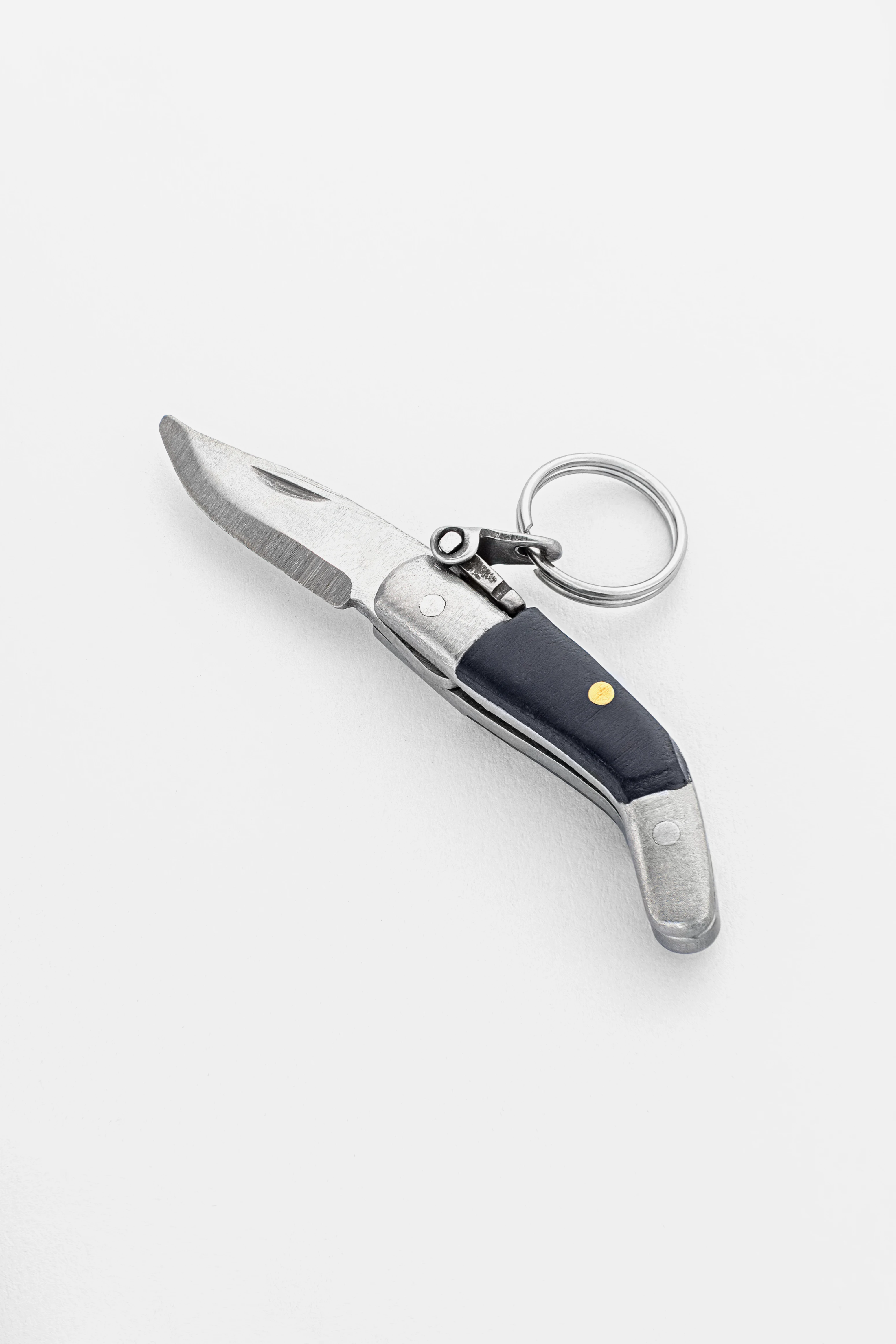
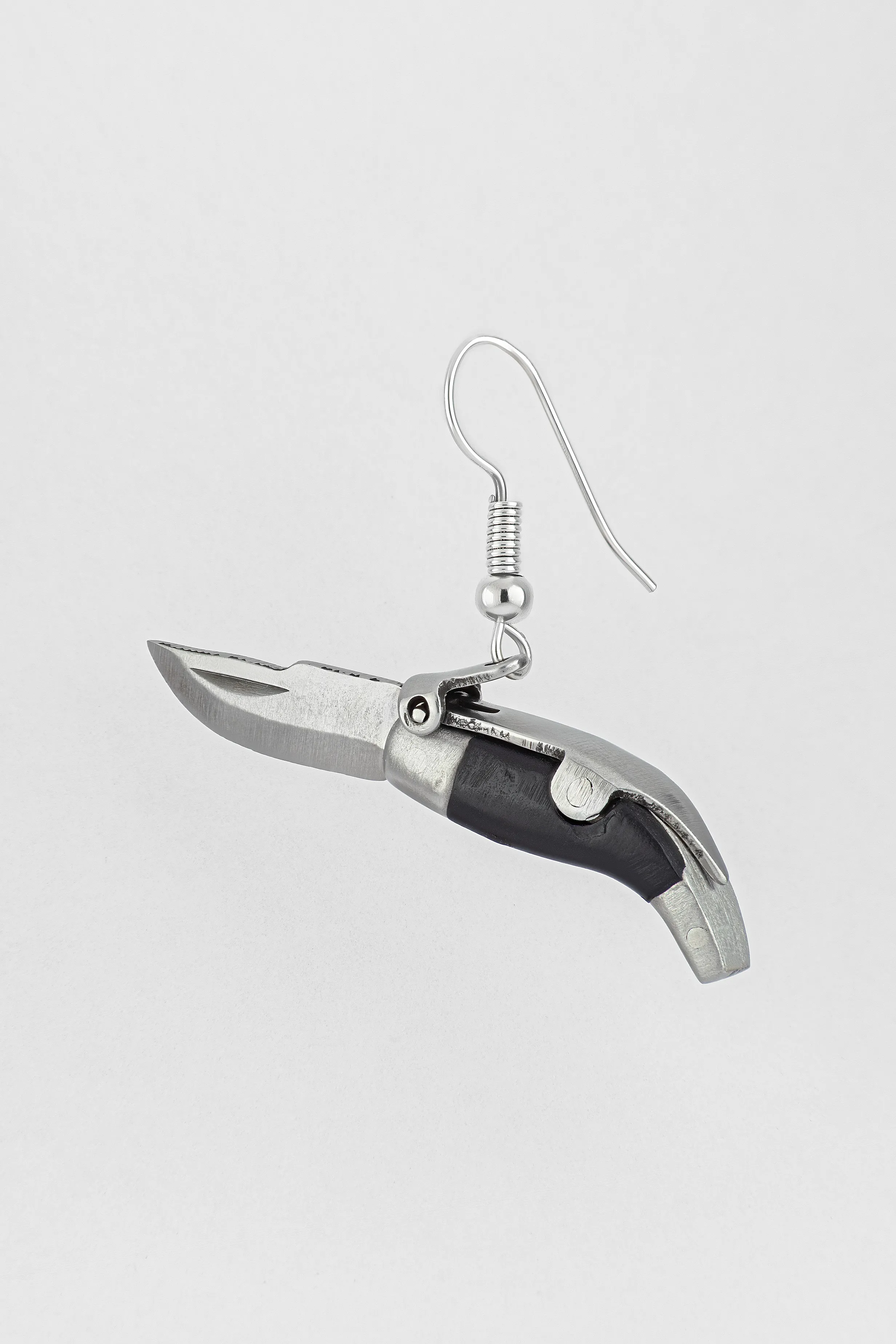
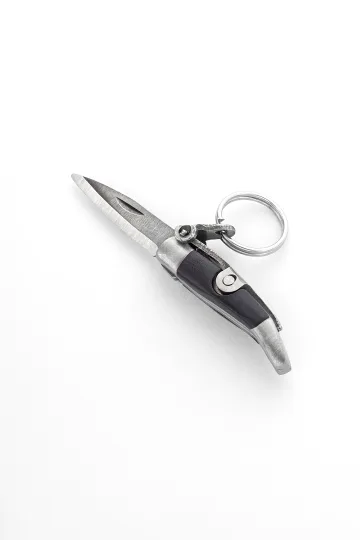
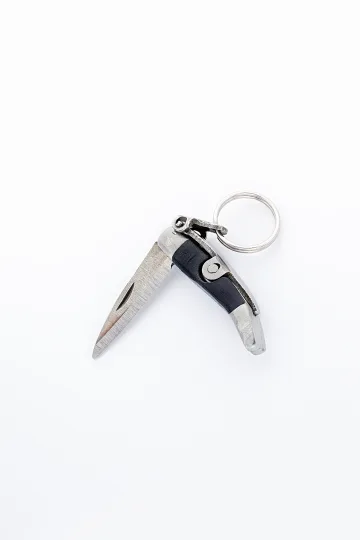
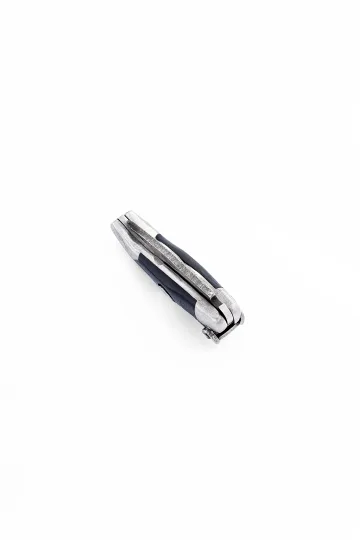
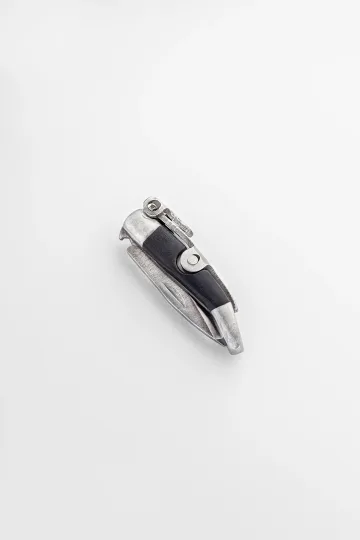
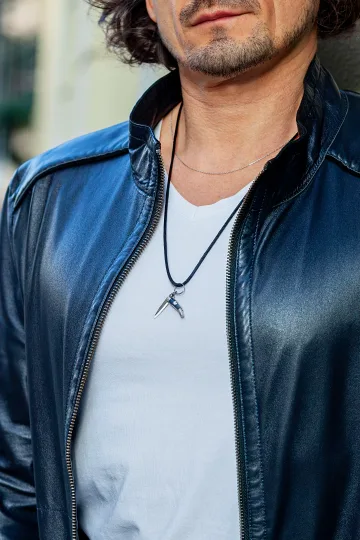
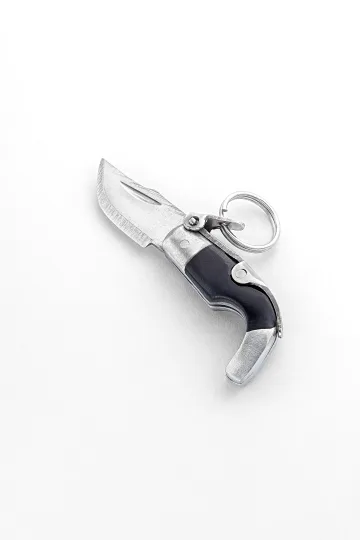
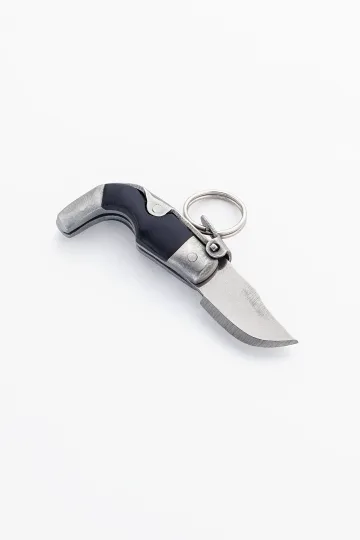
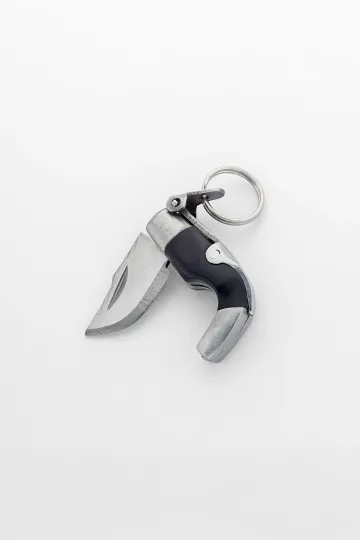
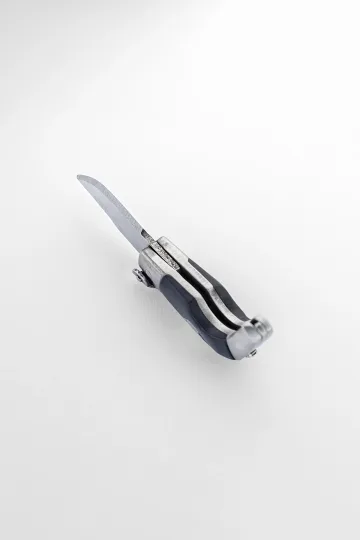
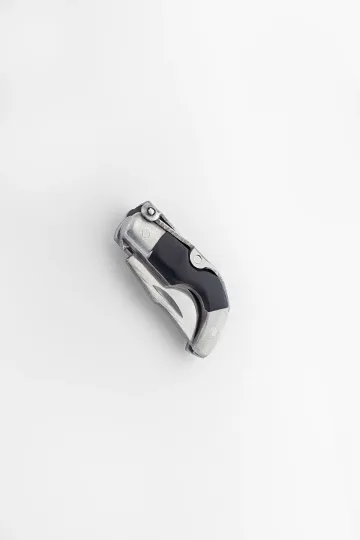
CAPAORA mini knife pendant
The 18th-century Spanish navaja in miniature: 40 mm of stainless steel, a real folding mechanism and a Palanquilla lock that clicks. An affordable gift to remember.
Authentic · Ships from Spain · 14-day returns
Can You Wear Leather in the Shower, Sea, and Pool
The short answer: no. Leather is a material for which water is the main enemy, and any contact with water shortens its life. Let us break down why, case by case.
The Shower
Hot water, soap, and shampoo are the worst combination for leather. Hot water swells the fibres, while soap and surfactants wash out the fats and tanning agents. After a few trips to the shower a leather bracelet stiffens and darkens. Always take it off before showering.
The Sea
Seawater is the shower multiplied by salt. Salt crystallises in the pores of the leather and destroys it from within, the metal hardware corrodes, and the dye bleeds. A leather bracelet often cannot be saved after a swim in the sea. As for salt and jewellery in general, it is worth remembering that it is aggressive both to leather and to most materials.
The Pool
Chlorinated water adds chemistry to the water, which bleaches leather and breaks down the tanning even faster than salt does. The pool is absolutely out of the question for leather. If you are planning to be in water, take the leather off in advance and put it somewhere dry.
Dyeing and Fading of Leather
Leather colour is a living quantity: it changes with wear, light, and contact with skin. Understanding this saves you from panic when a favourite bracelet suddenly turns a different shade.
Why Leather Fades
Ultraviolet light breaks down dye molecules, and leather, especially brightly coloured leather, fades in the sun. Pale vegetable-tanned leather, by contrast, darkens from sun and hands, gathering a honey patina: this is not damage but a noble aging that people value. A bright blue or red bracelet faded in blotches, on the other hand, looks worn out. Dark and natural tones age more beautifully than bright ones.
Why Leather Bleeds
Cheap or poorly fixed dye washes out with sweat and water, transferring to the wrist and clothing. Quality leather is dyed with fixing and rarely bleeds. Test a new bright bracelet: wipe it with a damp white tissue, and if the tissue picks up colour, wear that bracelet carefully and not in the heat.
Can Leather Be Re-Dyed
Smooth leather can be refreshed with a dedicated leather dye and a colour-restoring cream, but it is delicate work: the dye must be specifically for leather, applied thinly and fixed. Suede and nubuck are harder to re-dye; they have their own restorative sprays. Re-dyeing makes sense for an expensive bracelet, while a cheap one is easier to replace.
Vegan and Ethical Alternatives to Leather
Not everyone wants to wear leather: some for ethical reasons, some because the material is finicky. The good news is that there are plenty of substitutes that look and work similarly, and sometimes last longer.
Waxed Cotton and Polyester Cord
The main alternative. A waxed cord of cotton or polyester is almost indistinguishable from thin leather by sight, and it fears water less: the wax repels moisture. The same bracelets are braided from it, the same macramé is tied, and it is worn under a pendant. It is cheaper, more even in colour, and carries no ethical questions. There is one drawback: it never develops the noble leather patina, and stays just as it was.
Textile, Paracord, Nylon
Braided textile bracelets, paracord (a strong nylon cord), and cotton threads are the sporty and youthful alternatives. They are bright, strong, unbothered by water and sweat, and easy to wash. By character it is a different material: not warm noble leather but a functional sports accessory.
Rubber and Silicone
For those who need full waterproofing, there are rubber and silicone. These materials fear neither sea nor shower nor sweat nor chlorine, and people wear them without taking them off. By aesthetics they are the furthest from leather (a techno-sporty look rather than a folk one), but by practicality they are unbeatable. There is a detailed breakdown in the article on rubber and silicone in jewelry: if leather seems too finicky, this is the first candidate to replace it.
Mushroom and Plant "Leather"
Materials made from mushroom mycelium, cactus, pineapple fibre, and apple pulp have appeared on the market, imitating leather without animal raw material. In jewellery they are still rare and pricey, but as an ethical alternative with a similar texture they are developing fast. Their behaviour is their own, and for care you should follow the maker's instructions.
Send a friend a discount code, they save on their first order.
How to Extend the Life of a Leather Cord
Let us gather it all into a short set of habits that stretches the service life of leather many times over.
Take It Off at Night and Before Water
The main and simplest thing. Leather on a bracelet you have taken off rests, airs out, and does not stretch under your body weight in your sleep. Before a shower, the sea, the pool, a sauna, and sport, taking it off is a must. Half of all breaks happen because of water.
Rotate Your Bracelets
Leather likes to dry out between wears. If you wear the same bracelet every day without a break, it builds up sweat and never recovers. Two or three bracelets in rotation last noticeably longer than one worn-out piece.
Feed the Leather and Mind the Knots
Every few months a thin layer of conditioner returns suppleness to the leather. Watch the most loaded spot: the point where the pendant hangs and the place it attaches to the end cap. The moment cracks or wear show up there, re-tie or replace the cord before it snaps. A pendant can be moved to a new cord in a minute, but a pendant lost in a crowd is rarely found.
Store It Right
Do not coil it tightly, do not keep it in an airtight bag, do not leave it in the sun or next to a radiator. Laid out flat, in the shade, in a dry ventilated place: in those conditions leather lasts for years and ages beautifully.
Facts That Surprise
Leather in jewellery seems simple, but it trails an unexpected history and a couple of counterintuitive properties.
The earliest leather ornaments are older than metal ones. Long before humans learned to smelt copper, they were already cutting straps from hides and stringing shells, fangs, and bones onto them. A leather cord with a drilled shell is one of the oldest known types of ornament of any kind.
Natural vegetable-tanned leather reacts to the sun like tanning human skin: pale veg-tan darkens in the light, gathering an even honey tan. Collectors deliberately "walk" new leather goods in the sun to get a deep tone.
The smell of new leather, the one people love it for, is largely the smell of tanning agents and processing rather than the hide itself. Part of the "leather aroma" in cheap pieces is added artificially with fragrance, and it is exactly by a too-strong, chemical smell that an imitation is sometimes spotted.
Leather can "remember" shape. A strap bent and left long in one position creases and holds the bend. Saddlers use this on purpose, shaping leather while it is damp, but in a bracelet a tight knot left for months turns into an ugly crease.
The weakest spot of a leather bracelet is almost never the middle but the point where it attaches to metal. Leather itself is quite strong against tearing, but the sharp edge of an end cap or the tooth of a crimp works like a knife at every jerk, and the break happens right there.
Frequently Asked Questions
Can I wear a leather bracelet without ever taking it off?
Better not. Leather fears water and sweat, and round-the-clock wear means showers, washing hands, sleep, and sport, all the things that destroy it. If you want an accessory you never take off, choose rubber or silicone. Leather is grateful for breaks and drying.
My leather bracelet got wet, what do I do?
Do not dry it with heat. Blot it with a soft cloth, straighten it out, and let it dry on its own at room temperature, away from the radiator, hairdryer, and sun. Once it is dry, apply a thin layer of leather conditioner to restore suppleness. Leather will survive it once, but you cannot make getting wet a habit.
Why did my leather cord snap, even though I took care of it?
Most often the break happens not in the leather itself but at the point where it attaches to the end cap, or where a heavy pendant hangs. The sharp edge of the metal cuts the cord under jerks, and a heavy pendant wears through the narrow spot. It is not always a question of care, sometimes it is a question of hardware and load.
Leather stains my wrist, is that normal?
For cheap, brightly coloured leather it is common: poorly fixed dye bleeds with sweat. Quality leather rarely stains. Test a new bracelet with a damp white tissue, and if it picks up colour, wear it carefully, not in the heat and not at sport. Over time the bleeding usually lessens.
What should I clean a leather bracelet with?
Smooth leather is wiped with a slightly damp cloth and no soap; for heavy soiling use a dedicated leather cleaner. Suede and nubuck are cleaned only dry, with a brush or a suede eraser. No alcohol, acetone, or aggressive household chemicals: they kill both the leather and the dye.
Is faux leather more durable than natural?
No. Faux leather looks even and costs less, but the polyurethane coating cracks at the folds over time and peels off in flakes. Natural leather lasts longer and ages with grace, gathering a patina. The imitation's advantage is in price, water resistance, and the absence of ethical questions, not in durability.
Which cord should I choose instead of leather if water matters?
If you need full waterproofing, go with rubber or silicone: shower, sea, and sweat hold no fear for them. If you want a leather-like look without the fuss, a waxed cord of cotton or polyester will do. Textile and paracord are the option for a sporty look.
Does a leather bracelet stretch over time?
Yes, leather stretches from wear and moisture and does not fully return to its original length. First the bracelet settles to your hand, then it gradually grows looser. Moisture speeds up the stretching many times over, so dry, careful wear keeps the fit longer.
Silver on Leather, or a Chain
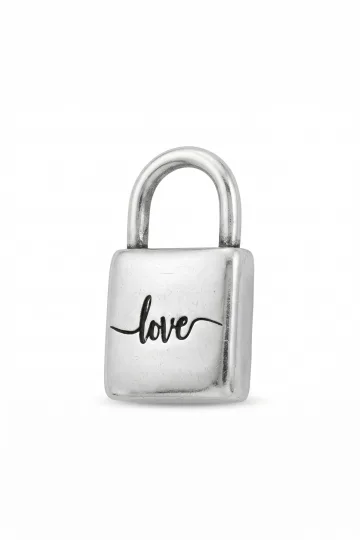
A leather cord makes a piece warm and full of character, but much depends on what hangs from it and what metal the hardware is. The Zevira catalogue has silver pendants and symbols that look equally good on a chain and on a leather cord. Pick your symbol and choose the base to suit your look.
Buying it as a gift? Each one arrives ready to give.
 A branded Zevira box and a little card come with every order.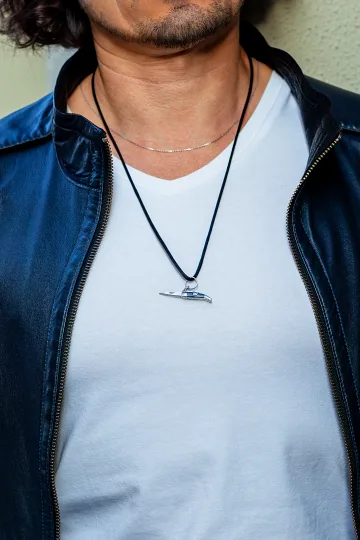




About Zevira
Zevira is jewellery you wear every day, not the kind you hide in a box for holidays. We bet on silver 925, clean symbols, and pieces that last a long time with sensible care. A leather cord, a chain, or rubber is a question of the look, while the meaning is always in what you wear. If you are unsure what suits you, start with a symbol that speaks to you, and we will match the setting and the base to it.