Red String Bracelet: Meaning of the Evil Eye Protection Amulet
A red string on the left wrist is an amulet against the evil eye, recognised by dozens of peoples across the world. A thin woollen thread, seven knots, the left hand: three conditions that Kabbalists, Slavic folk healers and Indian temple priests all repeat, as if by silent agreement. Behind a plain little knot stands a tradition thousands of years long.
The red string is worn everywhere, and almost nowhere is it treated as jewellery in the ordinary sense. It is a working amulet with its own set of rules: where to get it, which hand to wear it on, how many knots to tie, who should tie them, and what to do when the thread finally breaks. To understand those rules is to understand why millions of people bind a scrap of red wool around the wrist.
What the red string is
The red string is a protective amulet in the form of a red thread, most often woollen, tied around the wrist. Its purpose is the same in every tradition where it appears: to shield a person from an envious, ill-wishing gaze, from misfortune, from the harm that another eye is believed to carry.
For all its outward simplicity, the red string holds far more meaning than an ordinary bit of cord on the arm. In every culture where it took root it acquired its own rite of tying, its own explanation and its own web of beliefs. A Kabbalist will tell you about the thread once wound around the tomb of the matriarch Rachel. A keeper of Slavic folklore will remember the nauz, the knotted charm once used to heal and to guard. An Indian devotee will show you the kalava, the sacred thread a priest ties during a rite. Different roots, and yet the object on the wrist turns out to be strikingly alike: red, knotted, alive.
Wear the symbol, don't just read about it. These are in stock:
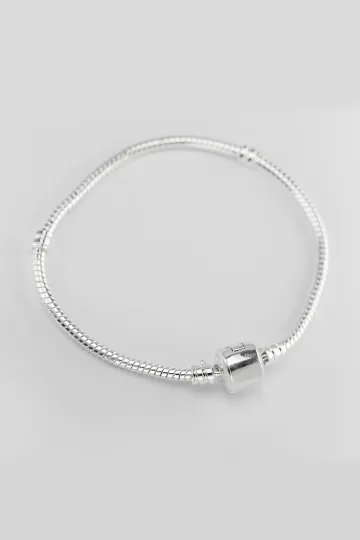
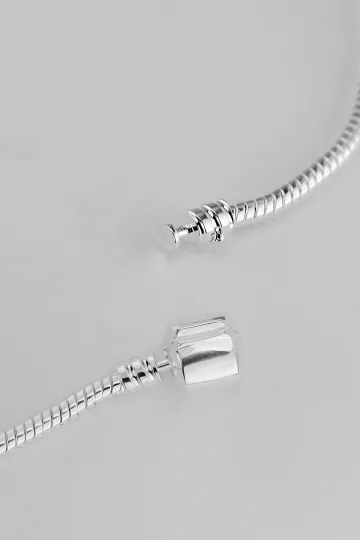
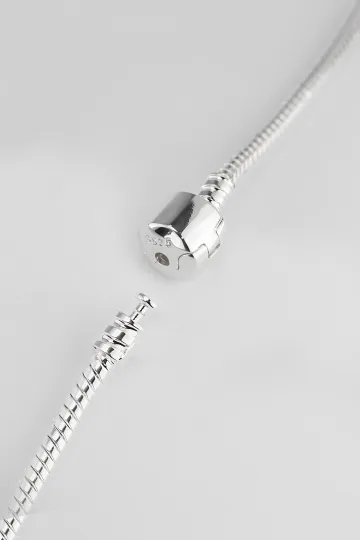
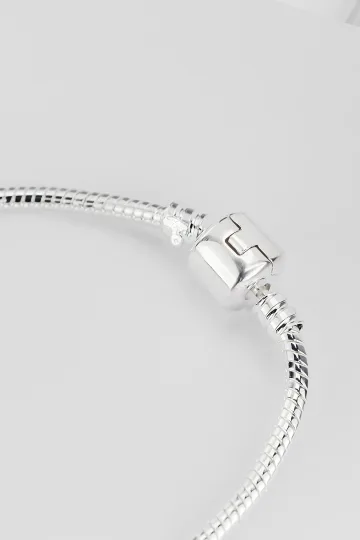


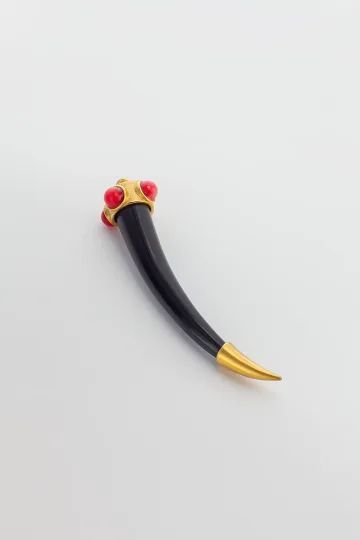


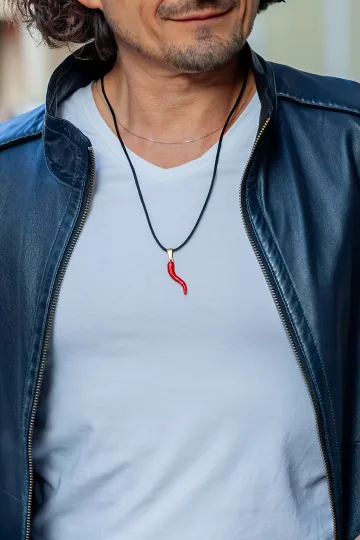
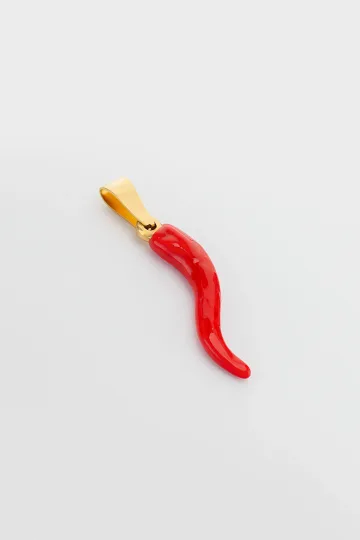
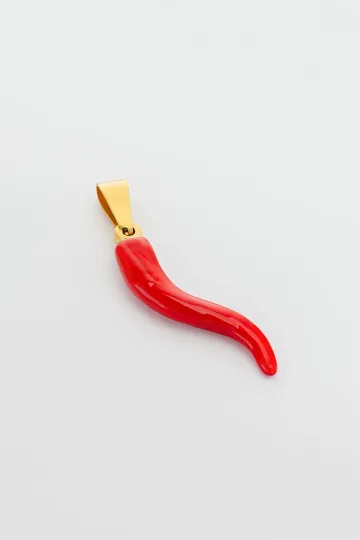
It helps to separate the amulet from the fashion piece straight away. The red string as a charm is not a pretty braided bracelet with a clasp that you slip on and off. A true amulet is tied fast, often by someone else's hands and with a definite intention, and it is worn until it wears out on its own. The difference is roughly that between a ring you buy for yourself and a wedding band: the shape is similar, but the meaning and the rules are another matter entirely.
What a real red string looks like
The classic protective thread looks deliberately modest. It is a thin woollen thread of a deep red, wound once or a few times around the wrist and fixed with knots. By tradition there is no need for clasps, pendants or shine: the plainer the thread, the closer it stays to its original, ritual form. The red chosen is deep and blood-like rather than orange or crimson, because it is precisely that shade that folk belief ties to blood and to life.
The length is judged so that the thread lies freely on the wrist, neither biting into the skin nor hanging loose. The ends are usually trimmed short after the knots so they don't get in the way. On the Kabbalistic thread and the Indian kalava the ends are sometimes left a little longer, and that too is part of the rite. In modern versions a small bead, an eye pendant or a tiny hamsa is added, and the amulet turns from a purely ritual object into a wearable piece without losing its meaning.
Why the colour red
Red was chosen neither by chance nor for beauty. It is the colour of blood, and blood, for the ancient mind, was life itself, its visible sign. Everything bound up with blood was held to be strong: strong for life, strong for protection. The red string carries that vital force within it and sets it as a barrier between a person and harm.
Red has a second role too, a decoy's role. A bright, insistent colour draws the eye. In the logic of protection from the evil eye that matters: an envious glance snags first on the small red mark on the arm, not on the person, their luck or their child. The thread takes the strike of the gaze onto itself, the way a lightning rod takes the strike of a bolt. That is why the red string is not hidden deep under a sleeve: it should stay at least partly in view to work as bait for the ill-wishing eye.
Red string, nauz, kalava: the same thing?
People often ask whether these are one and the same, different names for one amulet or different objects. The answer sits somewhere in between. The idea of binding a red thread to the body against misfortune came to different peoples independently, and yet turned out remarkably alike. The Slavic nauz is a knot charm in which the power lies precisely in the knot and in the spoken word tied into it. The Indian kalava, or mauli, is a sacred cotton thread bound on by a priest. The Kabbalistic thread is a woollen strand that has passed its rite at the tomb of Rachel.
The form of all these amulets is close; the roots are separate. This is not one tradition scattered across the world, but several independent ones that arrived at the same solution. That coincidence is telling in itself: a red colour and a knot at the wrist proved such a clear language of protection that people everywhere, from the Near East to a farming village to a temple courtyard, hit upon it on their own.
What follows, in order: where the red string came from in each tradition, what it means, which hand it is worn on, how to tie it correctly and how many knots, what it is made of, and what to do if it breaks.
History: from Rachel's Tomb to today
The red string has no single homeland and no single birthday. It is an amulet that arose in far corners of the world and lived its own life in each culture. To trace its history is to walk through several traditions at once, each of which added its own layer of meaning to the little red thread.
Kabbalah and Rachel's Tomb in Israel
The version best known today came from Kabbalah, the mystical current within Judaism. In this tradition the thread is linked to the matriarch Rachel, wife of the biblical Jacob, honoured in Jewish faith as a protectress who watches over her children, over the whole people. Her tomb near Bethlehem was a place of pilgrimage for centuries.
The rite consisted of winding a long red woollen thread around Rachel's tomb, then cutting it into short lengths for the wrist. The thread was believed to absorb the strength of that holy place and the matriarch's intercession. Such a length was tied to the left arm in seven knots, with a prayer and a plea for protection. It is this Kabbalistic version (Rachel's tomb, the left wrist, the seven knots) that has become the most recognisable in the world over recent decades, and it largely set the common image of the red string.
The Slavic tradition: nauz knots and knotted protection
Among the Slavic peoples there was a separate, independent line. Here the charm was the nauz, a knot tied with an incantation. Village healers and wise women tied knots into threads and cords, weaving spoken charms into them, and such a knotted amulet was worn against illness, against harm, against the evil eye. A red woollen thread on the wrist or ankle was one of the plainest and most common of these guards.
Red was a colour of life and protection for the Slavs as well. Protective patterns were embroidered in red along the hem of a shirt, at the collar and on the cuffs, the places where, by belief, harm could creep toward the body. The red string on the wrist continued the same logic: it sealed a border, closed the circle of the arm, set a barrier against misfortune. The nauz with its knot and incantation is, at heart, the same principle as the seven knots of the Kabbalistic thread, only grown on its own soil.
India: kalava, mauli and the tying rite
In India the sacred thread is called kalava, mauli or raksha, which means protection. A priest binds it on during a religious rite, more often on the right wrist for men and unmarried women and on the left for married women. The thread is made of cotton, frequently red or red-and-yellow, and is tied while sacred words are recited.
In Indian tradition the kalava means more than protection from the evil eye: it is also a sign that a person has passed a rite and stands under a blessing. It is bound on in the temple, at festivals, at weddings, at the start of important undertakings. It is worn until it wears through on its own, and once removed it is not thrown in the rubbish but released into a river or buried in the earth, because a sacred object cannot be discarded like waste. The Indian red thread is one of the oldest living traditions of its kind.
The Buddhist and Tibetan cord
Buddhism, and the Tibetan tradition in particular, has its own custom of tying protective cords. A lama blesses them, reciting mantras over the thread, and such a cord carries the strength of that blessing and a good wish. The colour varies, with red among the most common, and the cord is often bound around the neck or wrist as a sign of the bond with a teacher and a community.
The meaning of the Tibetan cord is gentler than that of a pure evil-eye charm. It protects, but it also recalls vows taken, good intentions, the tie to a mentor. A cord that breaks or slips off is no misfortune in this tradition: it has served its turn, carried obstacles away with it, and a new one is bound on in its place. That calm attitude toward wear brings the Buddhist cord close to every other version of the red string.
The Chinese "red thread of fate"
China holds the image of the red thread of fate. By an old belief, an invisible red thread ties together people destined to meet, most often future spouses. The thread may tangle and stretch taut, but it does not break, and sooner or later it brings the people it binds to one another. From this grew the custom of wearing a red thread or red cord as a token of fate, love and connection.
The Chinese line stands a little apart from protection against the evil eye: here the red thread is above all about bond and destiny, not a guard against harm. Yet red works here too as a sign of life, warmth and good fortune. In Chinese wedding symbolism red is the leading colour altogether, the colour of happiness and marriage, so the red thread slipped easily into that picture as a fine token of a fated connection.
Red thread on a bare wrist, nothing beside it. Among ten bracelets it is a rubber band for banknotes.
How to wear the red string
The red string comes across my worktable more often than any other amulet. The question is almost always the same: wear it on its own or in a stack of bracelets. I've gathered here what has proven itself on real looks.
How do I wear a red string every day? For an everyday look I recommend a single thin thread on a bare wrist, with no neighbours. That way the red reads as a clear accent and the protective meaning is visible at once. A light sleeve, white, beige, sand, lifts the thread; a dark one turns it into a pinpoint mark. If the wrist needs to stay bare under a shirt, I suggest moving the thread higher, toward the forearm.
Which metal does the red string get along with? Red is neutral toward the tone of the metal, so I choose it by the look. With silver or steel the thread reads more austere and everyday; with gold, warmer and dressier. One rule that never fails: keep a single tone of metal across the whole arm. Silver and gold mixed together next to red make a jumble, and the look falls apart.
How do I combine the thread with a nazar eye or a hamsa? When I build an everyday amulet, I most often thread a small nazar eye or a hamsa straight onto the string. The blue eye reflects an ill-wishing gaze, the red thread intercepts it with colour, and together they give double protection with no extra clutter. I recommend settling on one symbol: a thread with a single clear sign is stronger than one hung with a dozen trinkets.
And can it be built into a stack of bracelets? It can, and it comes out well, provided the thread stays the main spot of colour. I advise a calm backdrop: neutral metal, black leather, a beige cord. Then the red rings out clearly and does not argue with the rest. I recommend keeping the thin bracelets in the stack restrained in colour, so the thread is not lost among them.
What kills a look with a red string? Overload. Five bright things side by side, and the thread turns into one of many, losing both its look and its meaning. The second thing I avoid is mixed metal tones and loud colours pressed up against the red. I choose a restrained setting: one clear thread on a calm arm works more truly than any motley set.

Turn on your camera, pick earrings, a pendant or a ring, and see the piece on yourself in real time.
Switch items in one tap.
Everything runs in your browser: no photo or video is ever uploaded.
The meaning of the red string
The meaning of the red string rests on several supports, and different traditions arrange them differently. Most often, though, it comes down to three things: protection, the vital force of the colour red, and the thread as a bond and a promise.
Protection from the evil eye
The chief work of the red string is to turn aside the evil eye. In the folk picture of the world an envious or ill-wishing gaze can bring real harm: illness, failure, discord in the family, blight on a child. Most dangerous of all, by belief, is the admiring glance of a stranger, because admiration mixes easily with envy, even unconscious envy. The red string stands in the path of such a gaze.
It works as decoy and barrier at once. A bright red spot on the wrist catches the eye first, intercepts the glance and does not let it reach the person. In this sense the thread is like other evil-eye amulets, only it has no face, no form, no picture, just the pure idea of a protective colour and a circle closed by a knot around the arm. Simplicity here is not weakness but strength: the thread needs no explanation and suits anyone, from an older child to an elder.
Red as the colour of blood, life and strength
The second layer of meaning lies in the colour itself. Red is blood, and blood is life. Ancient people saw that with the loss of blood life left too, and so they granted red a special power. The red string carries that charge of vital force and sets it between its wearer and harm. It seems to say to misfortune: here is life, here is warmth, you have no way in.
This is bound up with the fact that the red string is often given for health and for luck, not only as a guard against the evil eye. A new mother, a newborn, a sick person, someone in a hard stretch of life, the red string comes to them as a wish for strength and life. Red rings out affirmatively here, as a sign of vitality, not defensively. That is why the thread suits equally as a shield against another's harm and as a warm blessing to one's own.
The thread as a bond and a promise
The third layer is the most human. A thread is a bond. A tied knot joins, binds, holds together. When someone close ties on the red string, an invisible thread of care stretches between them and the wearer. The Chinese thread of fate carried this image to its limit, making the red thread a token of a foreordained meeting and of love.
From the same idea grows the belief that a thread given or tied by another's hands is stronger than one tied for oneself. The reason lies both in the mystique and in plain psychology: an object with someone's care behind it holds more firmly. A knot tied with a kind word carries that word along with it. On this reading the red string is less a shield than a promise: you were thought of, you were covered, you are not alone.
The red string for luck and money
Not everywhere is the red string tied against the evil eye alone. In many folk customs it is worn for luck, for gain, for a good turn in one's affairs. The logic lies in the giving right hand and in red itself, long tied to plenty, warmth and vital force. A red string for luck is bound on before an important undertaking, a new job, a journey or a deal, with a clear wish for success set into the knot. There is no mystical mechanism behind this, but there is a plain frame of mind: a person who marks the start of a venture with a small rite goes toward the goal more collected and more sure. In that sense the string for money works as a quiet reminder of the task set, not as a guarantee of profit.
The red string for health
The red string is often given not as a guard against another's harm but as a wish for strength and health. A new mother, someone recovering, a person in a hard stretch, the thread comes to them as a warm blessing: hold on, you are not alone. Red rings out affirmatively here, as a sign of life and warmth, not as defence. In folk medicine a red woollen thread was tied on a sore spot, on the wrist or ankle, in the belief that the warmth of the wool and the strength of the colour would help the body cope. This is worth treating soberly: the thread itself does not heal and is no substitute for treatment. But a loved one's care and one's own resolve to recover can genuinely support a person through a difficult time.
Customer reviews
Zevira is a real jewellery shop. Genuine payments, deliveries and customer thank-yous.
🥰🥰🥰 gracias
Ok, ¡gracias! 🙂
Which hand to wear the red string on
The question of the hand is almost the most common one, and there is no single answer, because traditions diverge. In the most widespread, Kabbalistic version, though, the answer is clear: the left.
The left wrist: the hand that receives
In the Kabbalistic tradition the red string is worn strictly on the left wrist. The logic runs like this: the left side of a person is held to be receiving, and through it the outer world enters the body, including ill-wishing energy and the evil eye. The right side gives, acts, creates; the left receives. Since harm comes from without and enters through the left, receiving hand, the barrier should be set there. The red string on the left wrist closes those gates.
That is why, in today's most recognisable version, the red string is seen on the left arm. If a person wears the thread as protection from the evil eye in the Kabbalistic key, the left wrist is their default choice. Here the thread works like a lock on the very door through which another's harm tries to slip into a life.
The right hand: when and why
But the matter does not end with the left hand. In Indian tradition the kalava is bound on the right wrist precisely for men and unmarried women, and on the left for married women. In some Slavic and folk customs the red string is worn on the right hand as well, tied less to protection from the evil eye than to luck, money and a good path in one's affairs. The right, giving hand, on this logic, draws in and holds good fortune.
So the hand depends on why a person ties the thread and in which tradition. Against the evil eye, by Kabbalah, it is the left. By the Indian rite, for a man, it is the right. For luck in one's affairs, in many folk versions, it is the right too. There is no strict law common to all, only different customs, each with its own inner logic.
Different traditions: why there's no single rule
The confusion over the hand troubles many, but it is easily explained. The red string arose in several cultures independently, and each tied it to its own picture of the world. Where the body is divided into a receiving left and a giving right, the thread against harm goes to the left. Where the right hand is the hand of purity, action and rite, the sacred thread is tied to the right. There is no single rule because there is no single source.
The practical conclusion is a mild one: choose the hand by the tradition closest and clearest to you. If you lean on the Kabbalistic version with Rachel's tomb and the seven knots, wear it on the left. If it is closer for you to the Indian or folk custom for luck, the right is fitting too. The amulet will not stop working because you chose the "wrong" side: the intention with which you tied it matters more.
The red string on the leg and ankle
The wrist is not the only place for the red string. In the Slavic and Indian traditions it was often tied to the ankle, especially for children and infants. The reason is simple: on a small child a thread on the leg gets in the way less and is harder to pull off and put in the mouth. Today it is better not to do this with babies: paediatricians warn that a thread on a little leg can cut into the skin and a torn-off piece ends up in the mouth. A baby does not wear the thread; the parents keep it, and the child starts wearing one once they are older. The meaning is the same as on the arm, to close the protective circle around the body and bar misfortune's road. Sometimes adults wear a thread on the leg too, if the wrist is taken up with other bracelets or the amulet should stay hidden under clothes. The rules are the same: a thin woollen thread, knots, the good intention of whoever ties it. Which leg usually plays no special part; what matters is the fact of the amulet being tied at all.
How to tie the red string
The tying itself is the heart of the rite. Three things matter here: how many knots to tie, who ties them, and with what words. Let us take them in order, and answer along the way a common question, whether you may tie the thread on yourself.
In most traditions the thread is tied with knots, not wound on any old way, and it is done with meaning. The knot has always been a strong sign in folk magic: it closes, binds, holds. To tie the thread is to close the protective circle around the arm and fix within it the intention of whoever ties it. That is why the rite of binding is rarely silent and hurried.
How many knots to tie: why seven
The most common number of knots on the red string is seven. Seven counts in a great many cultures as a special, complete, lucky number: seven days of the week, seven heavens, seven as a mark of wholeness. In the Kabbalistic tradition seven knots on the red string seal the protection and give it fullness. Each knot is usually accompanied by a word of prayer or an intention, so the tying is not mechanical but thoughtful.
Seven is the most widespread but not the only option. In some places fewer knots are tied; in others the thread is simply wound once or twice with a single firm knot, and the word and intention are held to matter more than the count. The point of the knot is to close the circle and hold the wish, not the arithmetic. If you hold to the Kabbalistic version, seven knots are the natural choice. If the folk or Indian line is closer to you, the number may be different.
Who should tie the red string
Tradition is almost unanimous: it is better for the thread to be tied not by the wearer but by another person, and not just anyone, but someone close who wishes them well. In the Kabbalistic version it should be someone who loves you and wants to protect you: a parent, a spouse, a close friend. In the Indian rite a priest ties the thread; in the Buddhist, a lama. The common principle is one: the thread draws its strength from the one who ties it and from the intention set into the knots.
Behind this stands both a lovely idea and a plain psychology. When a loving person ties the amulet, they set their wish into the knots, and the wearer carries on the arm no longer a thread but someone's care. Such an amulet holds more firmly precisely because another person stands behind it. That is why the red string is so often given and tied for one another within a family, between those close, between people in love.
Prayer, words and intention
It is not enough to tie the knots; the word and the intention must be set into them. In the Kabbalistic tradition a special prayer for protection is recited while tying, often tied to intercession and mercy. In the Indian rite the priest speaks sacred mantras. Among the Slavs the nauz was tied with an incantation, with charm-words against misfortune and illness. The essence is everywhere the same: the knot fixes both the thread itself and the wish spoken or held in mind.
If you belong to none of these religious traditions, sincere intention matters most of all. You can tie the thread with a plain, clear thought of protection, of health, of a good path for the one it is meant for. A thread tied mechanically with no feeling is, in essence, just a cord. A thread tied with attention and a kind word works as an anchor for that intention, and there is nothing mystical in this, only honest psychology.
Can you tie the string on yourself
There is no strict ban on tying the thread on yourself, but tradition holds such a thread to be weaker. The reason is that the chief strength of the red string lies in the bond and in another's good intention, and by tying it yourself you lose that bond. What you get is protection with no one standing behind it. Many therefore ask someone close to tie the thread even when they bought it themselves.
That said, life is life, and sometimes there is simply no one nearby to tie the thread for you. In that case there is nothing wrong with tying it yourself. Tie the thread with a clear intention, say a wish for protection to yourself, treat it not as an empty formality. Such a thread will be weaker than one given by another, yet it will still become a reminder and a support for you. And at the first chance you can ask someone close to retie it.
The "Ben Porat" prayer while tying
In the Kabbalistic tradition the tying of the red string is accompanied by special words. The best known is a prayer named after its first words, "Ben Porat Yosef", a line from the biblical book of Genesis about Joseph. By belief, the descendants of Joseph are beyond the reach of the evil eye, so these words are recited as protection against it while tying each of the seven knots. The exact formula is spoken in Hebrew, and its sense comes down to a plea for protection and for the envious gaze to have no power over the person. If you do not belong to this tradition, there is no need to hold to the precise words: a sincere wish for protection set into each knot matters more. A thread tied mechanically with no intention remains just a thread.
How to make a red string yourself
Assembling a red string yourself is not hard, and it calls for no secret knowledge. Take a thin woollen thread of a deep red, measure out a length with a margin for the knots, hold it to the wrist so the thread lies freely, and tie it. By the Kabbalistic version seven knots are made, with a kind word or wish set into each. Trim the ends short after the last knot so they don't get in the way. It is better if someone close does the tying rather than the wearer, since the thread's strength lies largely in another's care. No consecration is needed for a homemade thread: its work rests on the natural material, the red colour and the intention of whoever ties it. When it wears out, the thread is simply replaced with a new one in the same manner.
Upload a photo of your pet, someone you love, or an object. We'll build a 3D model and hand-cast it in pewter.



Material: wool or cotton
What the red string should be made of is argued over almost as often as the question of the hand. Traditions diverge again, but each material has its own logic.
Why tradition usually chooses wool
The Kabbalistic red string is wool, specifically. The choice is explained in different ways. Wool is a natural material of animal origin, warm and living, unlike a plant or an artificial fibre. It is credited with a tie to warmth and vital force, which chimes with the meaning of the colour red. There is a practical consideration too: a woollen thread is soft, does not cut the skin, lies pleasantly on the wrist and is durable enough to be worn for weeks.
Wool is also convenient in that over time it naturally frays and breaks. In the tradition of the red string that is no flaw but part of the design: the amulet should serve its turn and depart, not hang forever. A thin woollen thread passes that road gently and gradually, and its wear reads as a sign that the protection did its work. That is why the classic form of the amulet is a modest woollen thread rather than a durable cord meant to last forever.
Cotton, silk and synthetic
The Indian kalava is traditionally cotton, and that is in no way worse than wool, simply a different tradition with its own material. Cotton is lighter, thinner, holds red dye well and suits a hot climate. A silk thread turns up in dressier, gift versions: it is smoother, nobler to look at, but also costlier. Tradition is cool toward synthetic thread, because an artificial fibre falls out of the logic of a natural, living material, though it wears the longest of all.
The practical conclusion is simple. If you hold to the Kabbalistic line, take wool. If the Indian custom is closer, cotton is fitting. For a handsome gift, silk will do. You can wear synthetic if durability matters to you more than purity of tradition, but most who know the subject still advise a natural fibre. The material also affects how soon the thread wears out, and so how often you will have to renew it.
Bead, charm and engraving
The modern red string increasingly ceases to be purely ritual and becomes an ornament. A small bead, a silver or gold charm, a tiny evil-eye bead, a hamsa or a nazar pendant is added to it. Such a thread works on two levels at once: it carries the traditional meaning of the red amulet and serves as a neat everyday bracelet.
A bead with an engraving is especially interesting. On a small metal bead you can cut an initial, a date, a short word, the name of someone close. The red string then turns into a personal amulet with an address, one that unites ancient protection with your own story. Such a bracelet, with a red string and an engraved bead, works well both as a gift with intention and as a discreet yet meaning-laden accessory. The main thing is not to overload the thread: one bead or one small symbol reads more truly than a cluster of pendants.
Red string with gold or silver
The modern red string is increasingly paired with a precious metal. A gold or silver bead, a tiny charm, a clasp or a fine inset is threaded onto it, and a modest ritual amulet turns into a neat everyday ornament. Gold adds warmth and dressiness to the thread, silver reads more austere and everyday, and red is neutral toward both, so it goes with any metal. The meaning of the thread is not lost: the red fibre still carries the protective idea, while the metal detail makes the piece more durable and more handsome. Such a thread is easy to give, especially if a name, a date or an initial is engraved on the bead. One metal detail on a fine thread reads more truly than several at once.
How to choose a genuine red string
A genuine protective thread is marked not by price but by simplicity and material. Look for a thin thread of natural wool in a deep, blood-red colour, without needless shine and without a firm, non-removable clasp: the classic amulet is tied fast, not snapped shut. A synthetic cord with a carabiner is already an ornament in the spirit of the thing, not a ritual thread, though no one forbids wearing it. If the Kabbalistic line matters to you, pay attention to the wool and to whether the thread can be tied in seven knots. For the Indian custom, cotton is fitting. Separately consecrated threads are sold by some religious communities, but for most a natural thread and a good intention at the tying are enough. Check the composition, not the seller's loud promises.




What to do if the string breaks or is lost
Sooner or later a woollen thread frays and breaks, and this frightens many. In fact, in most traditions the breaking of the thread is held to be a good sign rather than a bad one.
It broke: good sign or bad
The common belief is a comforting one: a red string that broke took the strike upon itself and turned misfortune aside. It did its work, burned out like a fuse that saved the device. That is why almost nowhere is a broken thread read as a calamity. On the contrary, it is a sign that the amulet worked, that harm aimed at the person went into the thread and tore it apart instead of hurting the wearer.
There is nothing to fear here. If the thread breaks, it is thanked and replaced with a new one, not mourned. In this the red string is like many amulets credited with the power to wear out while turning aside harm: a cracked stone, a darkened charm, a snapped cord. The logic is everywhere the same: the amulet is spent in protecting, and it is calmly renewed. A break is not the end of protection but a reason to tie the thread anew.
How to replace it and what to do with the old one
Replacing the thread is simple: tie on a new one by the same rite as the first, ideally by the hands of someone close and with the same good intention. What to do with the old thread differs across traditions, but the common rule is to treat it with respect, not throw it in the bin like waste. An amulet that protected you deserves a fitting parting.
In the Indian tradition a sacred thread that has served its turn is released into water, into a river, or buried in the earth. In other customs it is simply burned with a silent word of thanks. The common sense of it is to see the thread off with awareness, marking that it has served its turn. Behind this stands the plain psychology of a small ritual: a conscious replacement of the amulet helps draw a line and begin wearing a new one with a light heart.
How long to wear it and when to take it off
By tradition the red string is worn without taking it off, until it wears out and breaks on its own. It is not removed for the night, not set aside for a while, not tucked into a box. The point of the amulet is constancy: it works around the clock, which is why it is tied fast, without a clasp. A woollen thread usually lives on the arm from a few weeks to a few months, then frays, and is changed.
Tradition does not advise taking the thread off before its time, but there is no tragedy in it either. If the thread gets in the way, chafes or has become unusable, it can be removed and replaced. The one thing to avoid is treating the amulet carelessly: tearing it off and throwing it away without a thought. A respectful attitude toward the thread is half its strength, for the amulet works largely through the attention and intention of the one who wears it.
Red string as jewellery: a clasp, a bead or a bracelet
A plain thread is honest but short-lived: wool frizzes, the knot slips, and within a month the amulet looks like a frayed bit of cord. If the red string is not a one-off ritual for you but a piece for every day, it is worth assembling as jewellery. The meaning stays the same, while the look and the lifespan change completely.
The red string with a clasp
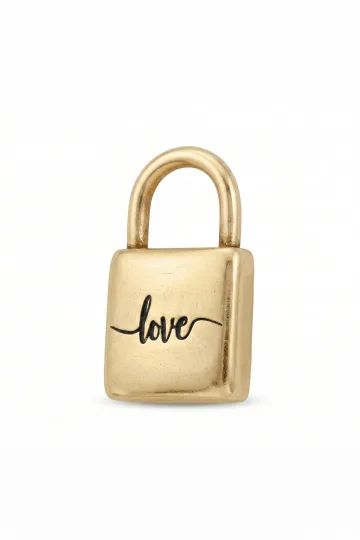
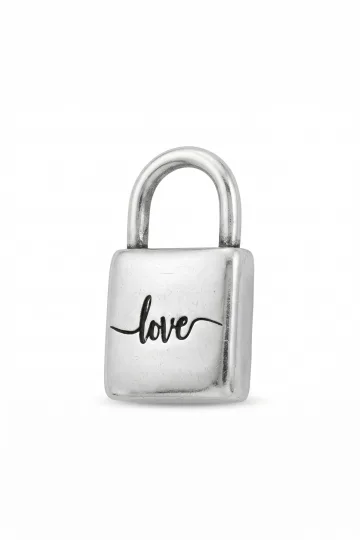
The simplest upgrade is to replace the fixed knot with a neat clasp. A red cord with a silver or gold clasp goes on and off in a single motion, does not stretch and keeps its length. The format suits those who don't want to cut the thread every time it needs to come off. In this spirit we make the silver love-lock pendant and the gold one: a small lock works both as a clasp and as a sign of an amulet locked shut.
The red string with a protective bead
The second move is to add a single protective symbol to the thread. A silver hamsa bead sits straight on the red cord and turns a plain thread into a meaningful bracelet: the colour intercepts the ill-wishing gaze, the open palm sets a barrier against it. One bead, not a cluster: a thread with a single clear sign is always stronger than one hung with a dozen trinkets.
A ready-made amulet bracelet
If fiddling with knots holds no appeal, it is easier to take a finished bracelet on a cord. The Mysterious Incantation bracelet and other models on a braided cord from the amulet collection hold the same idea of protection on the wrist, but look like a finished piece of jewellery rather than a temporary thread. Such a bracelet lives quietly under a shirt at the office, and you won't mind giving it as a gift.
Leave your email, we'll send your discount code. No spam, unsubscribe anytime.
The code arrives by email, valid on your first order.
Who the red string suits
The short answer: almost everyone. The red string has no restrictions of age, sex or religion, and in that lies its great merit.
Children and infants are given the red string almost more than anyone. A child, in folk thinking, is the most vulnerable to the evil eye, for strangers admire them, and admiration mixes with envy. A thin red thread on a child's wrist or ankle is an ancient and clear protection. But with babies it is better not to do this today: children have got tangled in threads and cords and swallowed small parts, so paediatricians advise against putting anything on an infant's neck, wrist or ankle. The parents keep the baby's thread and tie it on once the child is older.
For adults the red string suits by character and by occasion. Some wear it as an amulet through a hard stretch, some as a sign of the bond with the loved one who tied it on, some simply as a handsome and meaningful accent on the arm. The red string sits equally well on a man's and a woman's arm and needs no explanation: a modest red thread looks neither ostentatious nor pushy. As a gift with a good intention it is especially fine, because it carries the warmth of the one who tied it. Protective gifts are covered in more detail in separate guides to symbolism.
The red string for a man
The red string sits equally well on a man's arm, and there is no contradiction in it. In the Indian tradition the sacred kalava is in fact tied on men more often than on women, usually on the right wrist. Against the evil eye, by the Kabbalistic version, a man wears the thread just as a woman does, on the left arm and in seven knots. A modest thin thread looks neither ostentatious nor feminine, so men wear it easily, often alongside a leather cord or an austere bracelet. Some tie the thread on as an amulet through a hard stretch, some as a sign of the bond with a loved one who tied it. A man's red string needs no explanation and does not argue with a business or an everyday look.
The red string for a woman
A woman's red string is the most familiar image of this amulet. It is worn both as protection from the evil eye and as a sign of the bond with someone close, and as a neat accent on the arm. In the Indian tradition married women have the sacred thread tied on the left wrist and unmarried women on the right, so the thread reads a woman's family status. Against the evil eye, by the Kabbalistic version, a woman wears the thread on the left arm. A thin red thread combines easily with other bracelets, with metal and with stones, so it is easy to fit into any look. A woman is often given the red string for health, for luck or simply as a warm sign of care, and in that lies one of its most human roles.
The red string for a child against the evil eye
Children are given the red string almost more than anyone. In folk thinking a child is the most vulnerable to the evil eye: strangers admire them, and admiration mixes easily with envy, however unconscious. A thin red thread on a child's wrist or ankle is an ancient and clear protection against such a gaze. But here is what matters today. Babies and small children have got tangled in cords and threads, a thread has cut into a little arm or leg, and torn-off beads have ended up in mouths and airways. That is why the American Academy of Pediatrics and the FDA warn against jewellery, cords and beads on infants. So a baby does not get the thread on the wrist or the ankle, it is not pinned to clothes and it does not go in the cot or the pram. Mum or dad keeps it, in a jewellery box or a wallet, or it hangs high up in the room where the child cannot reach it. The child starts wearing a red string once they are older; ask your paediatrician when. Then, by tradition, a loving adult should tie it on, setting into the knots a plain wish for health and calm.
The red string during pregnancy
An expectant mother is given and tied the red string especially often. Pregnancy, in the folk picture of the world, is held to be a vulnerable time, when a woman is wished to guard herself against another's ill-wishing gaze, and a thin red thread on the wrist becomes a warm sign of that care. There are no special rules here: the thread is tied just as for anyone, on the left arm against the evil eye, with a kind word and intention. More than the mystique, calm matters here: if the amulet helps the expectant mother worry less and feel the support of those close to her, it is already doing useful work. The red string has no medical value and is no substitute for care of one's health, but as a sign of attention and a small ritual of calm it is entirely fitting.
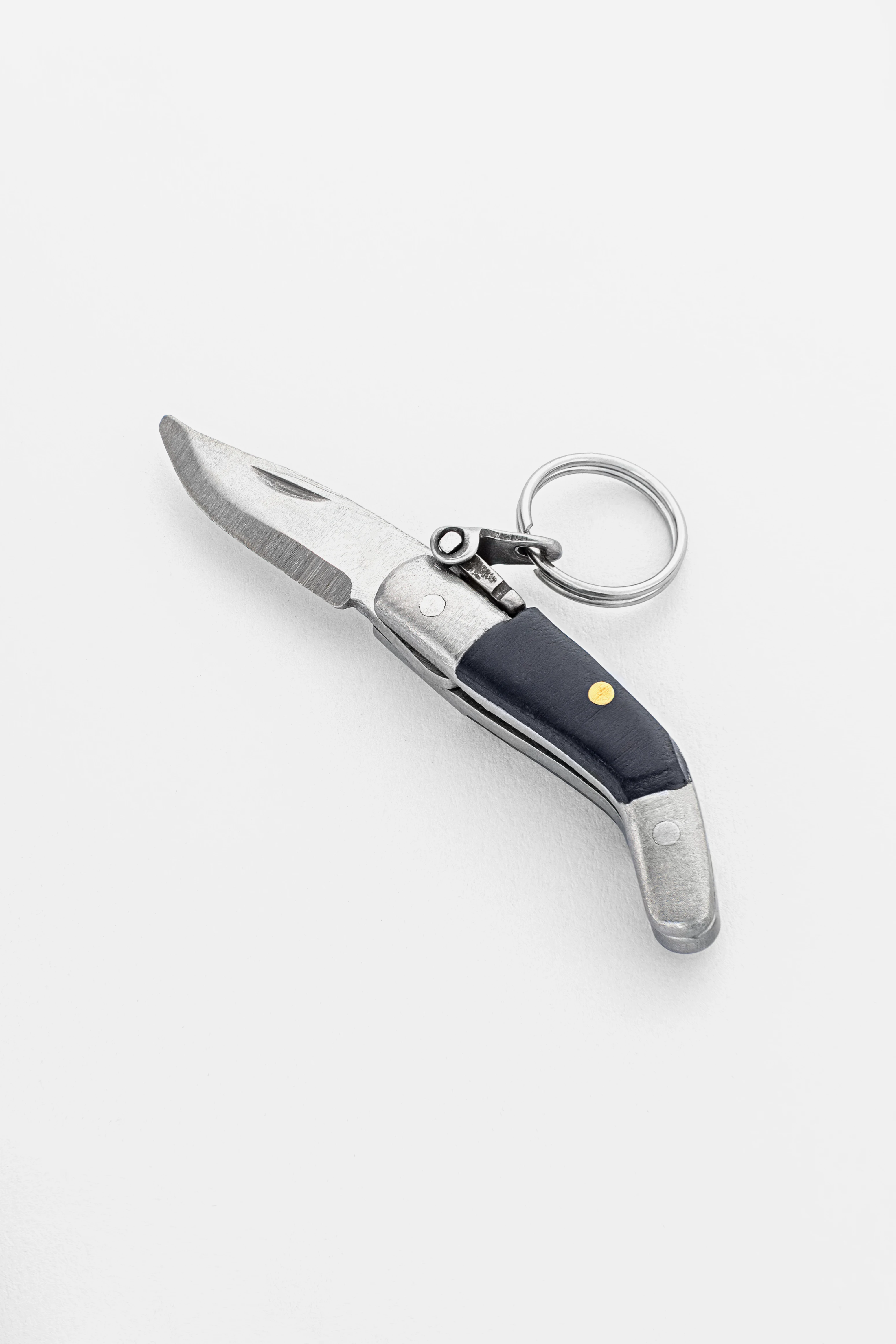
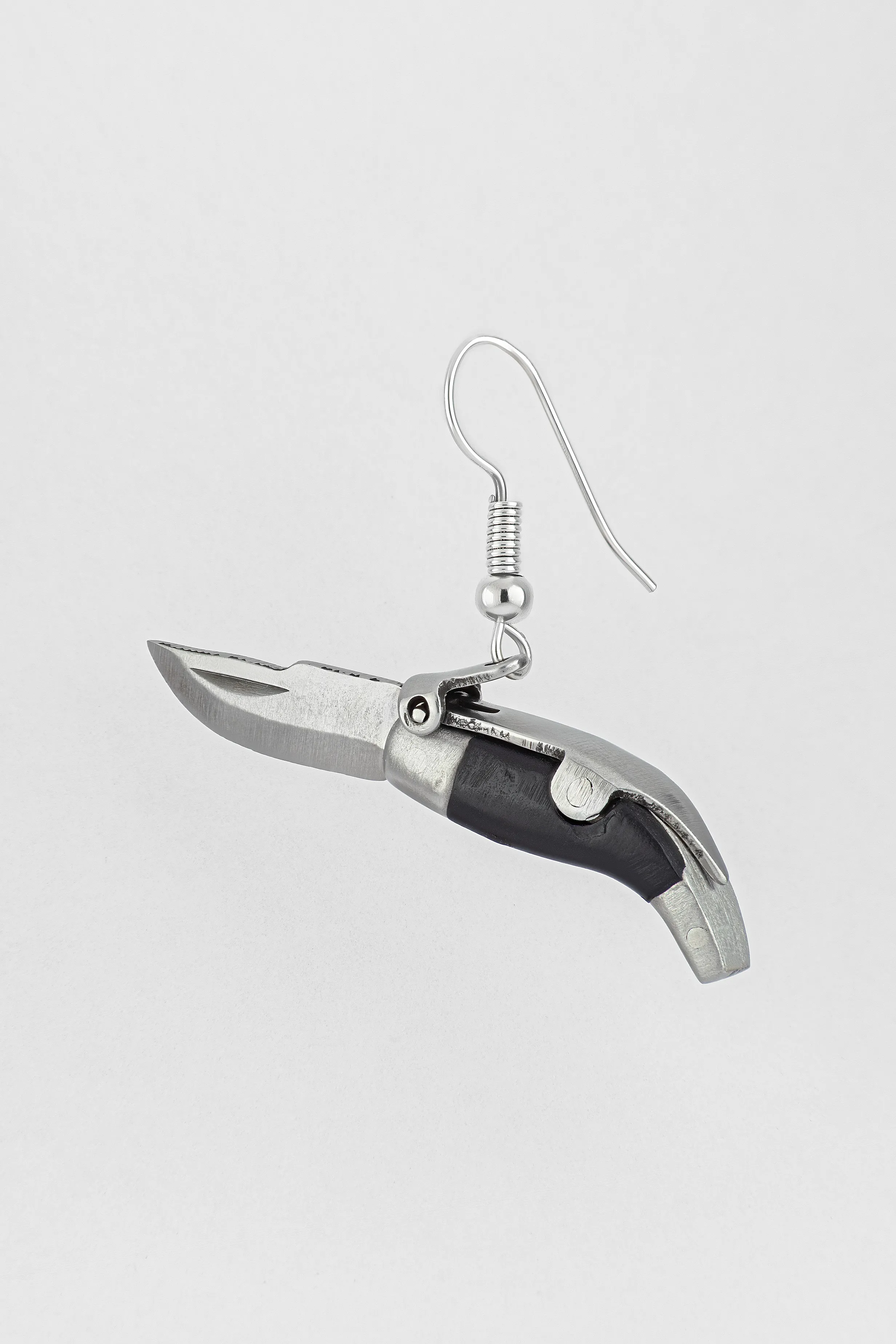
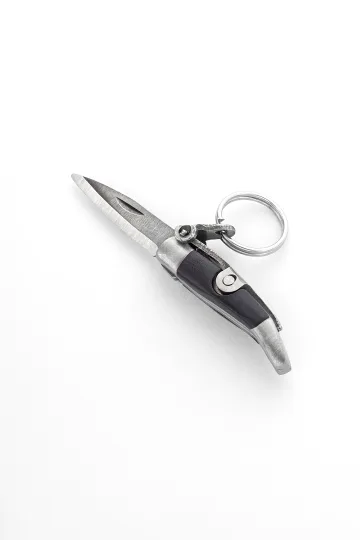
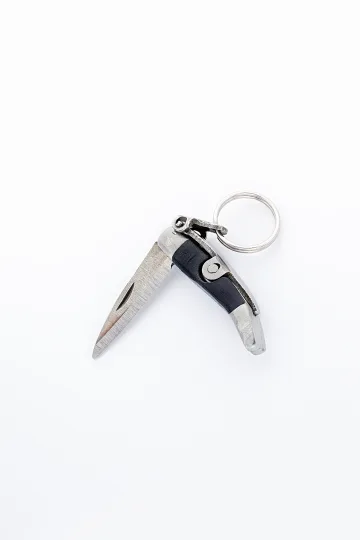
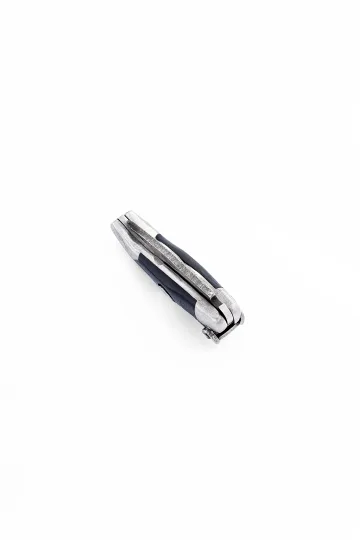
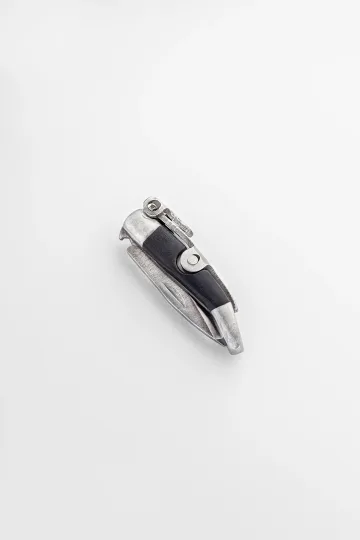
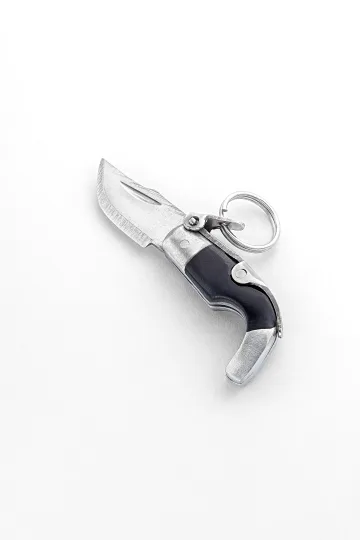
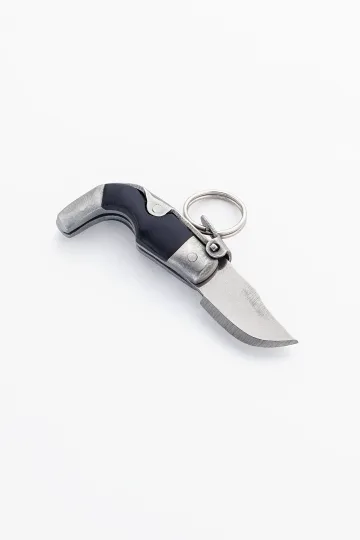
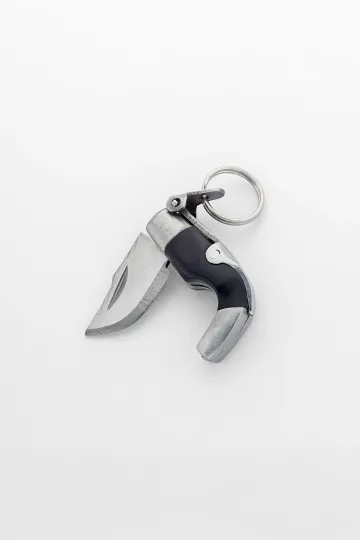
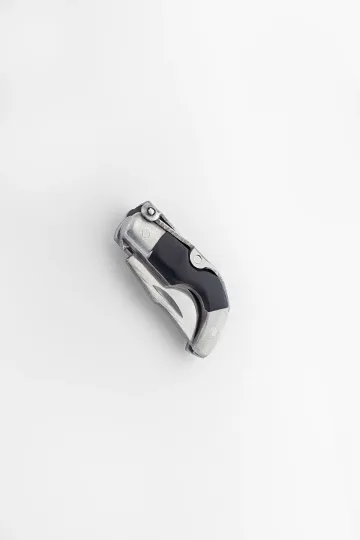
CAPAORA mini knife pendant
The 18th-century Spanish navaja in miniature: 40 mm of stainless steel, a real folding mechanism and a Palanquilla lock that clicks. An affordable gift to remember.
Authentic · Ships from Spain · 14-day returns
The psychology of the red string: why the amulet "works"
You do not have to believe literally in the red string's protection for it to do you good. Modern psychology explains the power of protective amulets in quite earthly terms, and the red string is a good example.
The first thing is a drop in anxiety. A person who feels "covered" turns over fewer possible misfortunes in their head. Knowing the amulet is in place frees the mind from background worry. The odds of misfortune do not change, but the tension falls, and a calm person acts more collectedly and errs less often. So the amulet, changing nothing in reality, still changes for the better the state of the one who wears it.
The second is memory and bond. When someone close ties on the red string, it becomes a physical anchor of that relationship. A glance at the wrist instantly raises a chain of warm thoughts about the one who tied it, and this works as a quiet regulator of mood. In this sense the red string is like any object with a history: a wedding ring, a gifted locket, a father's old watch. Meaning is given to it not by fibre and colour but by the people and words tied to it.
The third is ritual and intention. The very rite of tying, with its knots, words and attention, helps a person gather themselves, put a wish into words, mark an important moment. Psychologists have long noticed that small rituals reduce anxiety and give a sense of control. The red string with its seven knots and its prayer is exactly such a ritual. There is nothing mystical in it: the amulet does not change the world, it changes the wearer's relation to the world, and it does so in a measurable and useful way.
Red string, hamsa, nazar and other amulets: the difference
The red string is often placed in one row with other guards against the evil eye, and rightly so: their aim is shared. But they work differently, and it is worth not confusing them.
The red string protects with colour and knot. It has no face, no picture, no eye: only red fibre and a circle closed by knots around the wrist. It intercepts the gaze with brightness and sets a barrier with the vital force of red. The hamsa is an open palm, often with an eye at its centre, that pushes evil away like a wall, with a gesture of "stop". The nazar is a blue glass eye that works like a mirror: it catches a hostile gaze and reflects it back to its source.
There are other neighbours in this circle too. The Italian cornicello horn pierces ill-wishing energy with its point. The Mediterranean fig-hand mocks evil with a bold gesture. The sharp red pepper charm of southern Italy works much like the horn, scaring off misfortune with its form and its red colour. Among them the red string is the plainest and most universal: it has no cultural face, it is clear to everyone and sits on any arm.
Can these amulets be worn together? Quite. Many gather several guards from different traditions on one arm or one thread. No belief forbids this: each amulet works in its own way, and they do not conflict. The red string in such company often serves as the base onto which an eye, a palm or a bead is threaded, joining several guards in one simple bracelet.
Superstitions and myths about the red string
Around the red string, as around any ancient amulet, a great many beliefs have grown up. Some hold a grain of sense; others are pure hearsay.
It is held that a thread tied by a loving person is stronger than one bought and tied for oneself. Behind this stands the plain psychology of bond and care. It is also said that a broken thread is a good sign: it turned misfortune aside and simply needs replacing. Another common belief has it that the thread must be tied in exactly seven knots and necessarily on the left arm, or it "won't work". In fact that is only one, Kabbalistic version, while in the Indian or folk tradition both the hand and the number of knots may be different.
There are plain misconceptions too. People often think the red string must be wool or it is useless. But the Indian kalava of cotton is no less traditional. Some fear the thread may not be worn unless one belongs to Kabbalah or Hinduism. That is not so: the red string is not a closed symbol; it is worn all over the world in the most varied cultures. People are also frightened by a broken thread as a bad omen, though tradition reads the break in exactly the opposite way, as a sign of protection that worked.
A separate belief ties the red string to a vow or a wish made. In some customs, while tying the thread, a person silently makes a pledge or a wish, and wears it until the thing is done or the thread wears out on its own. Behind this lovely custom stands the same psychology of intention: a wish spoken and tied to an object is remembered better and nudges one toward action. The thread here works as a quiet reminder of what a person promised themselves.
The red string and the cross: can you wear them together
One of the most common questions among the religious runs thus: is it a sin to wear the red string together with a cross. From the standpoint of folk practice there is no ban; the cross and the thread sit quietly side by side, and many wear them together. Another matter is the attitude of the church, which is worth separating from superstition. The cross is a sign of faith, while the red string came from Kabbalah and folk custom, and mixing the one with the other as equal amulets is unwise. For whom faith matters, the cross is usually chosen as the chief thing, and the red string is left at the level of tradition or ornament, without crediting it with miraculous power. For whom the thread is simply a sign of bond or an accent on the arm, it is worn with no inner contradiction.
The red string and the church
The attitude of the church toward the red string is reserved. Officially the church does not approve of amulets and charms, seeing superstition in them, and it counts the red string among folk beliefs rather than faith. This does not mean anyone will condemn a person wearing the thread: more often it is treated indulgently, as a harmless habit or an ornament. The difference lies in what a person credits with power. If they expect protection from a thread rather than from faith, that is already superstition. If, though, the red string is for them simply a sign of the bond with someone close, a neat accent or a nod to tradition, there is no serious conflict here. Each decides for themselves, but honestly separating faith from folk custom is worth doing in any case.
How to tell if someone has the evil eye
Since the red string is tied against the evil eye, people often ask how one is to know the evil eye is there at all. Folk beliefs name as its signs a sudden causeless tiredness, a foul mood, a run of small failures, a headache after meeting an ill-wishing person. There are home ways of checking too, like watching a drop of wax or an egg spread in water. This is worth treating soberly. All the signs listed are ordinary states, which almost always have a plain explanation: tiredness, stress, lack of sleep, illness. The red string in this picture works not as a diagnosis and not as a cure, but as a way to reduce anxiety. If well-being has genuinely worsened, it is wiser to see a doctor than to look for the cause in another's gaze.
Signs and beliefs about the red string
Around the red string circle no few omens beyond the chief beliefs about the hand and the knots. It is said the thread may not be lent or handed to another: the amulet is held to be personal and must be tied anew for each person. There is an omen that a thread tied with a wish is removed only when the wish comes true or when the thread wears out on its own. It is also held that one must not cut the thread with scissors in an ill temper or in irritation, so as not to cut short its work before its time. All these omens rest not on mystique but on the plain psychology of attention: a person who treats the thread carefully and mindfully is themselves more collected. There is no need to believe in them literally, but there is no harm in a respectful attitude toward the amulet either.
Send a friend a discount code, they save on their first order.
Facts that surprise
Even the red string, familiar to so many, holds the unexpected.
The red string was invented independently in several cultures. Kabbalah, the Slavic nauzy, the Indian kalava and the Tibetan cord arose separately, yet arrived at an almost identical amulet. A red colour and a knot at the wrist proved such a clear language of protection that people everywhere hit upon it.
The classic thread was wound around the tomb of the matriarch Rachel. By the Kabbalistic rite a long red woollen thread was wound around the tomb near Bethlehem, then cut into short lengths for the wrist, so that each would carry a particle of the holy place.
A broken thread is held to be a good sign, not a misfortune. By belief, a thread that broke took the strike upon itself and turned evil aside, working like a fuse. It is thanked and replaced with a new one, not mourned.
In China the red thread is a symbol of fate, not an amulet. By an old belief an invisible red thread ties together people destined to meet, most often future spouses, and this thread may tangle but does not break.
The Indian sacred thread may not be thrown in the rubbish. A kalava that has served its turn is released into a river or buried in the earth, because by tradition a sacred object cannot be discarded like ordinary waste.
The hand for the thread depends on tradition, not on a single law. By Kabbalah the thread against the evil eye is worn on the left, while by the Indian rite it is tied on men's right. There is no single rule because there is no single source.
Tradition advises tying the thread with another's hands. It is held that the amulet draws strength from the one who ties it and from the intention set into it, so a thread tied on oneself is counted weaker.
Red was chosen as the colour of blood and life. Ancient people saw in blood life itself and granted red a special power. The red string carries that charge of vital force and sets it as a barrier between its wearer and harm.
Frequently asked questions
What does a red string on the wrist mean? A red string on the wrist is an amulet against the evil eye. It is worn as protection from an envious, ill-wishing gaze, from harm and misfortune. Different traditions add their own meanings: the vital force of the colour red, the bond with the close person who tied it, a vow or a wish made. The common sense is everywhere the same: the red string shields a person from another's harm.
Which hand do you wear the red string on? It depends on tradition. By the best-known, Kabbalistic version the red string against the evil eye is worn on the left wrist, because the left side is held to be receiving, and through it outer harm enters the body. In the Indian rite men and unmarried women have the thread tied on the right hand, married women on the left. For luck in one's affairs many folk customs wear the thread on the right too. There is no single law; choose by the tradition closest to you.
How many knots should be tied on the red string? Most often seven. Seven counts in many cultures as a complete, lucky number, and seven knots on the red string seal the protection and give it wholeness. Each knot is usually accompanied by a word of prayer or an intention. Seven is the most common but not the only option: in some places fewer knots are tied, and in others the thread is wound once or twice with a firm knot, holding the word and intention to matter more than the count.
What does it mean if the red string breaks? By most beliefs a broken thread is a good sign. It is held that the thread took the strike upon itself and turned misfortune aside, working like a fuse. There is no need to be frightened: a broken thread is thanked and replaced with a new one, not read as a calamity. The old thread is respectfully seen off in different traditions, released into water, buried or burned, rather than thrown in the rubbish.
Can you tie the red string on yourself? You can, but tradition holds such a thread to be weaker. The chief strength of the red string lies in the bond and in another's good intention, so it is better for a loving close person to tie it. If no one is near, tie the thread on yourself with a clear intention and a kind word, and at the first chance ask someone close to retie it.
What should the red string be made of, wool or cotton? It depends on tradition. The Kabbalistic thread is wool, a natural, warm material that over time frays and breaks gently. The Indian kalava is traditionally cotton. Silk turns up in dressy, gift versions. Tradition is cool toward synthetic, because an artificial fibre falls out of the logic of a living material, though it wears longer. For an amulet it is better to take a natural thread.
Can I wear a red string if I don't believe in omens? Of course. The red string is worn both as an amulet and as a sign of the bond with someone close, and simply as a meaningful accent on the arm. Even without belief in mystique it works through plain psychology: it reduces anxiety, recalls the one who tied it, helps you gather yourself through a small ritual. Nothing mystical is required for this.
Can you wear the red string together with other amulets? Yes. The red string sits beautifully alongside a nazar, a hamsa, an evil-eye bead, a cross. Different amulets work in their own ways and do not get in each other's way. Often a small eye or palm is threaded onto the red string itself, joining several guards in one bracelet. The main thing is not to overload the look: a thread with a single clear symbol is stronger than one hung with a dozen trinkets.
Conclusion
The red string travelled the road from a ritual woollen thread wound around the tomb of the matriarch Rachel to a plain, clear amulet known to dozens of peoples. Kabbalah, the Slavic nauzy, the Indian kalava, the Tibetan cord and the Chinese thread of fate came to it by their own roads, but met on one thing: a red colour and a knot at the wrist proved a language of protection, life and bond clear to all.
Whether you believe literally in protection from the evil eye or value the red string as a sign of the bond with someone close and as a small ritual of calm, it remains one of the most human of amulets. It has no strict form, no cultural barriers, no age: a thin red thread suits equally a child's wrist, a loved one's arm and your own. It is enough to tie it with a good intention, and it will begin its quiet work.
The red string calls for neither belief in miracles nor belonging to any one tradition. It asks only for the attention and the kind word of whoever ties it. In this lies its strength and its simplicity: in thousands of years people have not devised a clearer sign of care and protection than a red thread tied by a loving hand to the wrist. If the subject of amulets is close to you, look at the kindred symbols of protection and choose your own.
Red-string bracelets, evil-eye amulets, the nazar eye, the hamsa and the cornicello in silver, gold and on cords.
Buying it as a gift? Each one arrives ready to give.
 A branded Zevira box and a little card come with every order.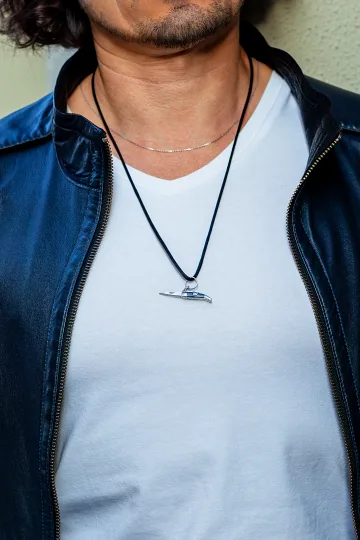






About Zevira
Zevira makes jewellery in the craft traditions of Albacete, Spain. The red string is one of the amulets close to us: an ancient symbol of protection, clear without words, equally fitting on a child's bracelet and on an adult arm. We assemble red-string bracelets paired with small amulets, an evil-eye bead, a hamsa, a silver or gold bead that can be finished with a personal engraving.
What you'll find with us on the subject of amulets:
- Red-string bracelets, with a bead and with an eye pendant
- Evil-eye amulets from various traditions: nazars, hamsas, cornicelli
- Symbolism and protective pendants on chains and cords
- Beads and charms for engraving a name, a date or an initial
- Leather and rubber cords for an everyday look
Personal engraving is available. Sterling silver 925 and 14-18K gold.