The Figa (Higa): Meaning of the Fist Amulet Against the Evil Eye
The higa (also called figa, mano fico) is an amulet shaped like a closed fist with the thumb pushed between the index and middle fingers. It is the same gesture some cultures use as a rude dismissal and others pin to a baby's blanket for protection. Across the Mediterranean and Latin America, this small fist has been trusted for three thousand years to turn away the evil eye.
In parts of southern Italy the same gesture is a crude insult, flashed at someone you want gone. In Galicia a grandmother clips an identical black fist, carved from jet, to her grandson's pram to ward off a bad glance. One gesture, two opposite meanings, and both are really about the same thing: get away, there is no room for you here.
What the Higa Is
The higa is an amulet that replicates one very specific hand gesture. The fist is closed, four fingers pressed down, and the thumb is squeezed between the index and middle fingers so its tip peeks out. In Spanish and Portuguese it is called higa or figa, in Italian mano fico ("fig hand"), in Latin manus fica. A closely related gesture survives in Slavic folk culture, where it goes by the names kukish, shish or dulya.
It helps to separate two things right away. There is the gesture, made with a living hand at a moment of danger. And there is the object, a fist cast in metal or carved from stone and worn on a chain at all times. Both go by the same name. The difference is like the one between knocking on wood and carrying a wooden bead in your pocket: the first is an action, the second is an amulet.
Wear the symbol, don't just read about it. These are in stock:


What a Genuine Higa Looks Like
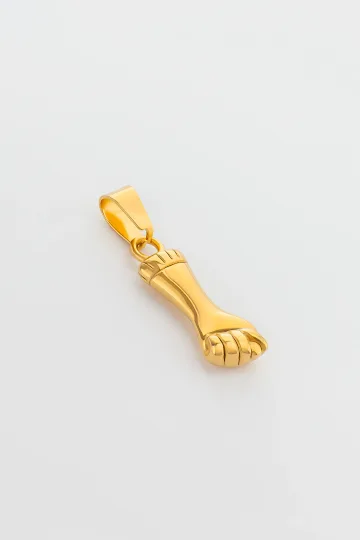
The classic fist amulet is recognised by a few features. The fist is compact, slightly elongated, with a clearly readable thumb showing through the gap between the other two fingers. The wrist is often finished with a cuff, rim or ring that holds a loop for the cord. Pieces meant for wear tend to run small, from about one and a half to four centimetres, so the fist sits comfortably at the throat or on a bracelet.
Craftsmanship shows in how the fingers are worked. Cheap stamping produces a shapeless lump where the thumb is barely legible. A good higa reads instantly: you can see the knuckles, the thumbnail, and the tension of a clenched palm. This legibility of the gesture is exactly what makes the amulet function as an amulet.
Why This Particular Gesture
The fig gesture is not a random arrangement of fingers. In the ancient reading, the thumb pushed out between the fingers depicted the union of male and female, the act that begins life. The old belief held that the evil eye feeds on envy and barren spite, and that an image of fertility and continuation strikes it at its weakest point. Evil meets a picture of life and retreats.
That gives the object its double nature. The higa is at once coarse and protective, cheeky and kind. It scares off evil not through severity but through mockery. Where the nazar silently reflects a gaze and the hamsa raises an open palm like a wall, the higa shows evil that very fist, as if to say: there, take that.
Higa, Figa, Mano Fico: Same Gesture, Many Names
Higa, figa, mano fico, manus fica: these are the names the same gesture picks up as it crosses borders. In Spain and Portugal it is higa or figa, in Italy mano fico, in Latin manus fica. In the Slavic world an equivalent gesture is known as kukish, shish or dulya, and it was made rather than worn: hidden in a pocket or behind the back when a person crossed paths with someone suspicious, walked past a place with a bad reputation, or feared a stranger's admiring glance might curse a child.
The protective instinct behind the gesture, in other words, was never confined to the Mediterranean. It simply took different forms in different places: in the Slavic world it stayed an action, in southern Europe it hardened into an object worn on the body. When a Spanish mother pins an azabache higa to a newborn's blanket, she is doing, in essence, the same thing an Eastern European grandmother did when she secretly made the kukish sign over a cradle. One old reflex, expressed two different ways: show trouble the fist and refuse it entry.
From here, in order: where the gesture came from, how it turned into an amulet, what it means, what it is carved from, who receives it as a gift, and how it differs from the hamsa, the cornicello, the nazar and azabache.
History: From Ancient Rome to Brazil
The higa is one of those objects whose lineage runs unbroken from antiquity to today's display case. Materials and countries changed, but the gesture and its meaning held for millennia.
Ancient Rome: Mano Fico and the Fascinum
In Rome the evil eye was called fascinatio, being "bewitched" by a hostile gaze. Against it, Romans kept a whole arsenal of apotropaic, meaning evil averting, objects. The best known was the fascinum, a winged phallic amulet hung around children's necks and suspended from the chariots of triumphant generals. Alongside it stood two protective gestures: mano cornuta, the "horned hand," and mano fico, the "fig hand."
Roman logic here was direct and bodily. The evil eye was thought barren and envious, and so it feared anything tied to birth and flesh. The fig, with its image of coupling, struck exactly there. Romans did not only make the gesture with their hands, they cast it in bronze and carved it from bone and coral, turning it into pendants and rings. A small mano fico on a cord around a child's neck guarded the age believed most vulnerable to the evil eye.
The Fig at a Roman Wedding and a Triumph
Romans brought out the apotropaic image at precisely the moments in life when too many eyes were on one person. A wedding, where the bride stood at the centre of everyone's attention, and a triumph, where a whole city turned out to watch a victorious general ride through, were both understood as occasions when envy was more or less guaranteed. So a fascinum was hung beneath the triumphal chariot, and protective signs were kept near the couple.
There is a detail of the triumph that makes the logic unmistakable. A slave rode in the chariot behind the general, holding the wreath above his head and, according to the sources, repeating a reminder that he was mortal. The Romans were not squeamish about admitting that public glory was dangerous to the person receiving it, and they built countermeasures into the ceremony itself.
The logic is consistent throughout: the brighter the good fortune and the more people looking at it, the more thoroughly it needs covering. The child's fig grew out of exactly the same thought, except that an infant was the most defenceless of everyone on whom an admiring, and therefore hazardous, gaze could fall.
Etruscans, the Mediterranean, and Coral
Before Rome, related beliefs lived among the Etruscans and all along the Mediterranean coast. Red coral was a material apart here. Pulled from the sea, it was linked to blood, life and the goddess of love, and was believed to repel evil on its own. A coral figa combined two safeguards in one: the protective shape of the gesture and the protective material of the sea. Such coral fists for children outlasted Rome and the Middle Ages, and they still turn up in southern Italy today, next to the cornicello.
The Middle Ages: An Amulet Under Suspicion
Christian Europe took a divided view of the fig. On one side, both the gesture and the amulet had a distinctly pagan and bodily flavour, and the church looked at them sideways. Medieval preachers listed charms of this kind among the superstitions the faithful ought to abandon, and a good deal of ink was spent on it.
On the other side, belief in the evil eye had gone nowhere, and jet amulets were being carved at the very heart of a great pilgrimage, beside the tomb of an apostle, which gave them a thoroughly respectable appearance. A pilgrim who had walked several hundred miles to buy a jet charm at the shrine was not going to be talked out of it easily.
The fig therefore came through the Middle Ages in people's hands rather than in treatises. It went on being carved, given to children and turned over in pockets, without waiting for theological permission. Folk protection proved more durable than learned prohibition, which is exactly why the tradition reaches us with almost no break in it.
Iberia and Azabache: A Higa for Children
The true home of the higa as a folk amulet was the Iberian Peninsula. In Spain and Portugal, the fig fist was carved for centuries from azabache, Spanish jet. The center of the craft was Santiago de Compostela. Local azabachero masters carved pilgrim shells and figures of the apostle James from jet, and, of course, tiny higas for children.
Spanish tradition tied the higa to infants firmly. A newborn was thought defenseless against mal de ojo, the evil eye, especially once admired by strangers. So an azabache higa was pinned to the swaddling cloth, hung on a small bracelet, or strung on a chain right after birth. The black of the jet reinforced the protection: the dark stone was thought to "absorb" the hostile gaze, while the fig shape drove it off. In many Spanish and Latin American families to this day, giving a newborn a black higa is as natural as gifting a silver spoon is elsewhere.
Galicia and the Azabachero Guild
The heart of the jet trade was Galicia, and specifically Santiago de Compostela, the end point of the pilgrim road. The azabachero carvers had a guild of their own with strict rules covering where the raw material could be sourced, how it was to be worked and what a maker was permitted to put his mark on. Jet came into Compostela from the Asturian coast, where the sea washed it out of the cliffs, and it was cut on site into pilgrim scallop shells, figures of the apostle, rosaries and charms.
The higa was a staple line. Local families bought them for their children and pilgrims bought them for the journey home, which is how a small Galician fist of black stone travelled across Catholic Europe in the luggage of people walking back from a shrine. The guild records are a useful reminder that this was a regulated trade with quality standards rather than a folk sideline, and the best surviving pieces are extremely fine work.
Jet and Christening: A Gift at the Start of Life
In the Iberian tradition the higa grew tightly into the rite of baptism. A child was protected from its first days, but the christening itself, when the infant was first brought out in public and shown to relatives and neighbours, was considered the moment of heightened risk. Godparents often gave their godchild an azabache higa along with the baptismal cross, and the two charms hung peacefully side by side: the Christian sign and the old folk fist. The church looked the other way. Jet was cut by the same workshops that supplied pilgrims with devotional objects, so the black fist read as an ordinary part of Iberian life rather than as paganism.
The higa was frequently assembled into a complete infant's charm. A black fist, red coral, a tiny bell and sometimes a silver mount came together on a single pin or small bracelet. The bell drove off spirits with its sound, the coral supplied vital force, the jet absorbed the hostile gaze and the fig mocked it. The result was a small arsenal in which every element covered its own line of defence, and surviving examples in museum collections show just how carefully these were put together.
Brazil: Figa as a Symbol of Luck
The figa reached Brazil through Portuguese settlers, and there its fortunes rose highest of all. Portuguese figa merged with African traditions brought by enslaved people and with local culture. Figa de Guine, "fig from Guinea," emerged, carved from dark wood and credited with particular strength. Woven into Brazilian syncretism, the fist entered the everyday practice of Umbanda and Candomble and became one of the country's leading folk talismans.
The emphasis shifted along the way. Where in Spain the higa is chiefly a child's protection, in Brazil the figa is also a general symbol of luck and a cheeky "nothing can touch me." It is given for good fortune, displayed as a large wooden figure on a shelf, worn on a bracelet. Oversized decorative wooden figas have become almost a signature object of the Brazilian home.
The Fig in Popular Faith
In Brazilian popular Catholicism and in the Afro-Brazilian religions the figa settled in without ever having to argue with the cross. It was worn beside images of saints, stood on a shelf near a household altar, and given for luck in business and in love. Particular strength was credited to the figa de Guine, cut from dense dark timber, a line of the tradition carried over from Africa.
Over time the fist detached itself from any single religion and became a sign of luck shared by Brazilians generally, legible to a devout believer and equally to somebody who simply likes a bold talisman. That is worth saying plainly, because it is easy to write about these traditions as though they were museum material. They are living practice, held by millions of people, and the respectful way to treat the object is to take that seriously rather than to treat it as folklore.
Diaspora and Today
From Spain, Portugal and Italy, the higa travelled the world with emigrants. In Latin America it appears from Mexico to Argentina under the names higa and figa. In the United States it is worn by descendants of Italian and Iberian families. Social media did the rest: renewed interest in protective symbols has brought the fist back into view even for people without a drop of Mediterranean heritage. Today the higa can be bought in jet, silver or gold, and both of its faces, the amulet and the cheeky gesture, are alive at once.
The Meaning of the Higa: Protection Against the Evil Eye
The higa's meaning rests on three pillars: protection, fertility and cheek. All three grow from one root, the image of life that the gesture shows to death and envy.
Protection Against the Evil Eye (Mal de Ojo)
The higa's main job is to turn away the evil eye. In the Mediterranean and Latin American worldview, an envious or unkind gaze can bring real trouble: a child's illness, bad luck, discord. The higa stands in the path of that gaze. It does not reflect it, the way a mirrored nazar does, nor does it raise a palm like a wall, the way a hamsa does. It distracts and mocks: it shows evil an image of life and continuation, against which barren spite is powerless.
This is clearest with children. A baby is admired, praised by strangers, and folk belief holds that exactly this admiration is the most dangerous thing, because envy so easily slips in alongside it. A black jet higa on the swaddling cloth takes that risk onto itself. The gaze lands on the fist, not on the child.
Envy as the Root of the Trouble
In the Mediterranean picture of the world the evil eye is not an abstract curse. It is the underside of a very ordinary feeling, which is envy. The danger is not a villain pronouncing a malediction. It is an ordinary person who looks a little too long at somebody else's healthy child, good harvest or happy marriage and feels a pang, without wishing any harm at all. That is why praise and admiration are treated as the risky moments: a sting of envy hides very comfortably behind a compliment.
This explains a habit that surprises visitors to Spain, Portugal, Italy and Greece, which is the custom of adding a small blessing after praising a baby, or touching the child while saying it. The praise has to be neutralised as it is given. The higa answers the same problem in its own way. It does not argue and it does not defend. It disarms with a coarse joke, holding up a crude, bodily image against which a lofty resentment of somebody else's happiness looks ridiculous and loses its grip.
A Symbol of Fertility and Life
The second layer of meaning is fertility. Since antiquity the fig gesture has been read as an image of conception, the union of two principles. So the higa was given not only to children but to newlyweds and to those hoping for a child. A coral or gold figa in this reading is a wish for a full household, healthy children and a family line carried forward. Here the higa echoes the cornicello and other Mediterranean charms, where the horn and the colour red also point back to vital force.
The Cheek of the Gesture: An Amulet That Taunts
The third layer is the most human one. The fig is cheek. To flash it is to refuse, to laugh, to show you are not afraid. The amulet inherited that tone. The higa protects not through severity but through mockery of evil. That is its character: not an icon, not a prayer, but a good-humored challenge to trouble. For many people this cheeky note is exactly what makes the figa likeable. To wear a higa is to keep a small fist on you that keeps telling trouble where to go.
Two Faces: Amulet and Insult
The cheek has a flip side. The same gesture is, in many cultures, a coarse dismissal. In parts of the Mediterranean a live fig shown at a person is a sexual insult. Slavic folk culture has a close equivalent, the kukish, used the same way, as a blunt refusal. Dante, in the Divine Comedy, gives us the thief Vanni Fucci, who flashes two figs at God himself, the height of blasphemous defiance. The subtlety is that as an amulet, the fig is aimed not at a person but at invisible evil. A fist worn at the throat is not rude to passersby. It is rude to the evil eye.
Customer reviews
Zevira is a real jewellery shop. Genuine payments, deliveries and customer thank-yous.
🥰🥰🥰 gracias
Ok, ¡gracias! 🙂
The Higa as Gesture and as Amulet
It is worth separating the two faces of the fig again, since they often get confused. The gesture is an action taken in the moment. It is made quickly, often with the hand hidden, when danger is sensed, bad news arrives, or someone with a "heavy" gaze crosses your path. The gesture costs nothing and is always at hand, but it is one-off: you make it, then lower your hand.
The amulet is that same gesture frozen in material and working around the clock. A cast or carved higa hangs at the neck, on a bracelet, on a pram, and "shows the fig" to evil all day, without any effort from the wearer. That makes the amulet better suited to long, continuous protection, while the gesture suits a sharp moment. In everyday Mediterranean practice the two combine easily: people wear the fist on a chain and still flick the gesture in a pocket when something feels off.
There is a third, in-between form. Large decorative figas in wood or stone are set up in the home, on a shelf or by the entrance. This is no longer jewellery or a passing gesture but a household guardian, watching over a space. In Brazil these oversized wooden figas are especially loved.
Materials: Jet, Coral, Silver
The material of a higa matters almost as much as its shape. Each one carries its own meaning and its own tradition.
Jet (Azabache): The Black Stone for Children
The classic material of the Spanish higa is azabache, black jet. Jet is fossilized wood, warm to the touch, light, with a deep black color and a soft sheen. It was carved by the azabacheros of Santiago de Compostela, and most children's higas were made from it. Black was considered especially potent against the evil eye: it does not reflect or repel so much as "draw in" a hostile gaze, while the fig shape drives it away. Jet remains the most traditional and recognizable version of the amulet.
Red Coral: Life and the Sea
The second historic material is coral, most often red Mediterranean coral. Pulled from the sea, it is linked to blood, life and love, and credited with its own protective power. A coral figa combines two charms in one: the shape of the gesture and the guardian material. Such fists for children were especially loved in southern Italy, where coral and the cornicello have always gone hand in hand. Genuine red coral is rare and costly today, its harvest restricted, so much of what is on the market is imitation, dyed bone or pressed fragments.
Silver and Gold
A metal higa is more practical and durable than stone. Sterling silver 925 gives a restrained, everyday version: sturdy, hypoallergenic, easy to pair with any chain. A gold figa is a festive, more formal choice, often given as a gift. Metal holds the detail of the fingers well, so the gesture reads especially clearly on a silver or gold higa. Metal versions are the most common today, precisely because they can be worn without worry every day.
Wood and Bone: The Brazilian Line
In Brazil the figa is traditionally carved from dark wood, and figa de Guine, cut from African timber, is credited with particular strength. A wooden figa is warmer and softer than a metal one, pleasant to hold. Wood is used both for tiny pendants and for the large decorative figas kept in the home. The historic line also includes bone and horn: before cheap metal was available, fists were often carved from whatever dense material was at hand.
What the Colour Means
The materials of the higa carry a colour logic of their own, and it is consistent enough across the tradition to be worth using when you choose. Black jet absorbs and extinguishes the hostile gaze. It is the colour of quiet, absorbing protection, which is why it goes to the most vulnerable, meaning babies. Red coral does the opposite and shouts about life and blood. It is an active, warm force, closer to fertility and gladness than to defence.
Silver is cool and clear, and it is chosen for a clean everyday look that suits anything. Gold sounds celebratory and is the natural choice for a gift marking an occasion. Dark wood sits between the two, warm to hold and unmistakably Brazilian in feeling. When people pick a material they are usually picking this tone of voice: to muffle misfortune, or to underline life.
Modern Materials
Today the higa is also cast in stainless steel, plated brass, resin and enamel. A steel fig does not tarnish, does not fear water, and leaves no green marks on skin. Resin and enamel produce bright colored versions, popular in Latin America. The meaning still lives in the shape rather than the price of the material: a cheap steel figa carries the same symbolism as an antique jet one.
Upload a photo of your pet, someone you love, or an object. We'll build a 3D model and hand-cast it in pewter.



How to Wear the Higa
The higa is one of the most easygoing pieces of jewellery there is. Its compact shape fits almost any style, and its history gives it weight.
At the Neck as a Pendant
The most common way to wear the fig is on a chain or cord, close to the throat. The same rule applies here as with the cornicello: a small fist on a thin chain reads as a neat accent rather than a bulky pendant. A jet or silver higa suits everyday wear, gold or coral suits more important occasions. Chain length is chosen to match the neckline, so the fist sits in the open area rather than hiding under a collar.
On a Bracelet and a Pram
A small higa is often attached to a bracelet as a charm or hung from a baby's pram or crib. This is the most traditional "children's" format: the fig should stay with the child, not just somewhere in the house. For an infant, a secure fastening is chosen, without sharp edges or small parts that could be swallowed. Jet is preferred here both by tradition and because it is warm and light.
In the Home and the Car
A large figa is placed in the home as a guardian of the space: on a shelf, by the entrance, in a workshop or shop where a seller worries about envious customers. Brazilian wooden figas are made precisely for this. A small one can be hung in the car alongside other charms. The logic is simple: wherever the fist is, its protection goes too.
Which Way the Thumb Points
The living gesture has a direction. Mediterranean habit is to make the fig low, pointed downwards towards the ground, so that the harm is sent away from the body rather than held at chest height. Some traditions add that it should be made discreetly, close to the hip, which suits a sign whose whole purpose is to work without starting an argument.
With an amulet the question is much simpler. A cast fist on a chain swings freely and turns as it pleases, so there is no correct orientation to hunt for and no rule anybody keeps. The one thing worth watching is legibility. If the fingers press into the collarbone and the fig cannot be made out, half the point is gone, because the force of this charm lives entirely in being recognised. A fist that reads as an anonymous lump of metal is not doing the job.
What It Pairs With
The figa is friendly with its neighbors. It is worn together with the nazar and the hamsa, building a layered set drawn from several protective traditions. It sits comfortably with a cross, with the cornicello, with medallions of saints. There is no rule against mixing charms: different amulets work in their own way and do not interfere with one another. The one thing worth avoiding is clutter. A single clear fig on a clean chain is stronger than a fist squeezed among a dozen other pendants.



Who the Higa Suits: Children, Infants and Adults
The short answer: almost everyone, though historically the higa is first and foremost a children's amulet.
Infants and Children
This is its main role. In Spanish, Portuguese, Italian and Latin American tradition, a black jet higa is one of the first things given to a newborn. It guards the child through the age considered most vulnerable to the evil eye, and stays with them while they are small. Such a gift makes sense even outside a Mediterranean family, since the symbolism of protecting an infant is universal. For a baby, a secure fastening matters most, so pieces designed specifically for children are the right choice.
Newlyweds and Future Parents
Because of its tie to fertility, the figa is given to a young couple and to those expecting or hoping for a child. Here it is a wish for a full household and a family line carried forward. A coral or gold higa suits this occasion better than a strict black one, its warm colour closer to the theme of life and joy.
Adults Who Like a Cheeky Symbol
For an adult, the figa suits a certain temperament. It is an amulet with humour, a note of defiance, without religious solemnity. It is chosen by people drawn to the idea of showing trouble the fist rather than treating protection too solemnly. No Mediterranean or Latin American tradition considers it improper for an outsider to wear a figa. If anything, knowing the amulet's history tends to earn a warm reaction.
As a Gift
Like the cornicello, the higa is one of those amulets that makes an especially good gift. Given with good intent, the fist carries the giver's warmth along with its protective power. More on gifts in the jewelry gift guide by occasion.
For a New Home and for the Road
A large wooden figa is a traditional housewarming present, standing as a guardian of the space itself rather than of a person. A small one goes into a car or a travel bag, into the places where somebody feels exposed and out of their own territory. In shops and workshops a big fig is put somewhere visible specifically to turn a customer's envious glance away from another person's prosperity, which is a very practical piece of reasoning about how envy actually operates in a small business.
The logic is identical in every case. The fig is placed wherever other people's eyes are the thing being worried about, whether that is a cradle, a shop window or a steering wheel. It is a portable answer to being looked at, and that is why it travels so well between cultures that otherwise have very little in common.
The Psychology of the Higa: Why an Amulet "Works"
You do not need to believe literally in the higa's protection to benefit from it. Modern psychology explains the power of protective amulets in fairly down to earth terms.
The first is reduced anxiety. A person who feels "something is covered" spends less time running through possible disasters in their head. Knowing the amulet is in place frees the mind from background worry, much the way a backup of your files eases the fear of losing them. The odds of trouble do not change, but the tension does.
The second is memory and connection. When a grandmother gives a higa to a grandchild, the fist becomes a physical anchor for that relationship. A glance at the amulet instantly pulls up a chain of warm memories, and that acts as a quiet mood regulator. The figa's cheeky character adds a lightness here: it is hard to feel gloomy looking at a fist that keeps showing the world its cheek.
The third is touch. A small jet or silver figa is pleasant to hold in the palm, to trace a finger over the raised thumb. An anxious hand gets something to do and settles down. The Mediterranean habit of turning the fig in a pocket at bad news is not pure superstition but a form of self-regulation centuries old. Nothing mystical about it: the amulet does not change reality, it changes the wearer's relationship to it, in a measurable and useful way.

Turn on your camera, pick earrings, a pendant or a ring, and see the piece on yourself in real time.
Switch items in one tap.
Everything runs in your browser: no photo or video is ever uploaded.
The Higa in Art and Culture
The figa has left its mark on both high culture and folk culture. Once you know where to look, the fist turns up everywhere.
In Literature: Dante and the Figs of Vanni Fucci
The most famous appearance of the gesture in world literature comes in the twenty fifth canto of Dante's Inferno. The thief Vanni Fucci, punished among the thieves, raises both hands and flashes figs at God himself. To a medieval reader this was the height of insolence and blasphemy. Dante uses the gesture as an instant character sketch: with one motion of the hands he paints a man who has reached the limit of defiance. This scene fixed the fig in Italy's cultural memory as a sign of defiance against higher powers.
In Folk Culture and Language
The gesture has worked its way into language itself. Italian far la fica and Spanish dar la higa are set phrases built on the same old movement, and Slavic languages preserve a close equivalent in expressions built around the kukish, used both as a blunt refusal and, in older folk practice, as a ward against evil spirits, made secretly in a pocket, or flashed at the back of an unwelcome guest as they left. What stayed a rough gesture in the Slavic world hardened into jewellery as well, further south in Europe.
In the Brazilian Home
In Brazil the figa moved beyond the amulet to become a piece of home decor. Large wooden figas are set on shelves and dressers, given as housewarming gifts, kept in shops. The fist has become an almost instantly recognisable marker of Brazilian daily life, weaving together Portuguese heritage, African roots and a local sense of luck. Here the figa completed its journey from a children's charm to a broad symbol of "good fortune to me, and trouble can take a hike."
What Archaeologists Find
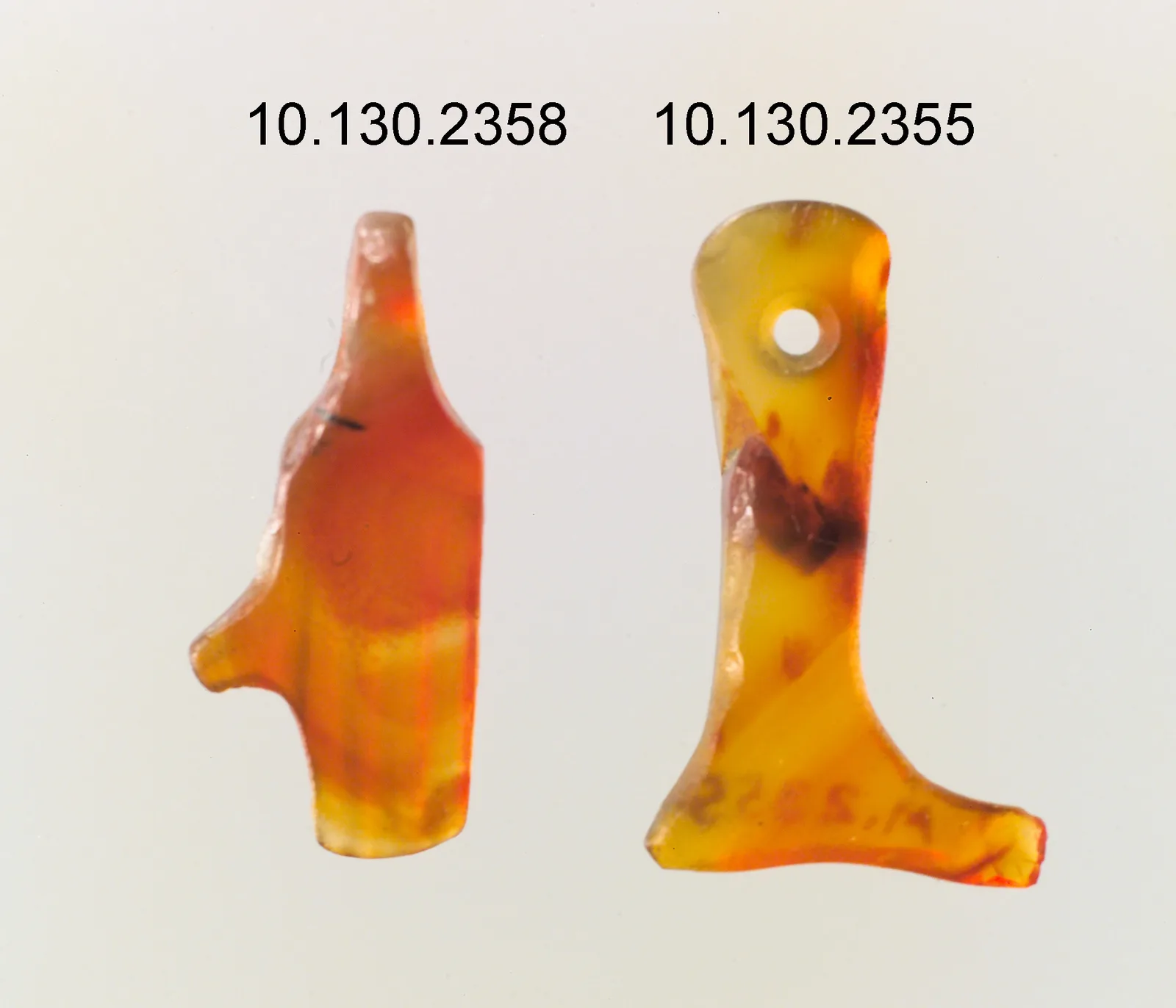
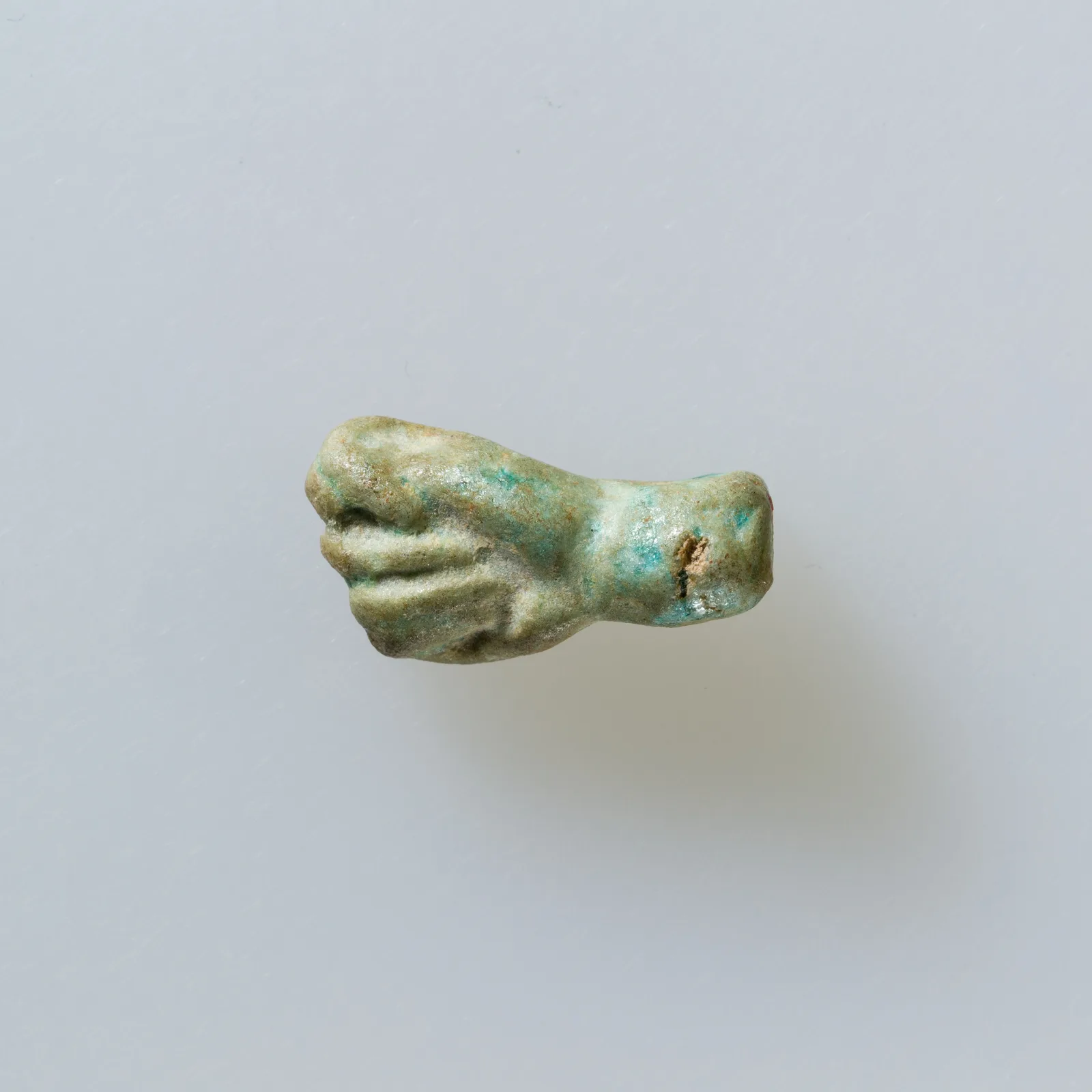
Museum stores know this amulet very well. Roman fists in bronze, bone and coral turn up right across the former Mediterranean world, from Italy to North Africa, and they reached Britain too. Examples have been recovered from Roman sites in this country, which is a useful thing to know: the gesture was in circulation on this island in the second and third centuries, carried here by soldiers and traders from the south.
Many of the surviving pieces are tiny, with a small loop for a cord, and were clearly intended for a child. In open access museum catalogues they are labelled with admirable dryness, along the lines of "amulet in the form of a fist with the thumb between the fingers", and behind that formulation stands a gesture two thousand years old. What these finds establish, better than any written source, is that the fig is neither a modern invention nor a souvenir. It was worn by the same people who built the aqueducts and wrote in Latin, and it has been in continuous use ever since.
Leave your email, we'll send your discount code. No spam, unsubscribe anytime.
The code arrives by email, valid on your first order.
Regional Traditions
The higa belongs to several cultures at once, and its meaning shifts in each. Understanding the nuances helps in choosing "your" figa.
Spain and Portugal
The Iberian Peninsula is the heart of the tradition. Here the higa is above all a children's amulet in black jet, closely tied to the azabacheros of Santiago de Compostela and the pilgrimage route. A black fig on a newborn's blanket remains a natural part of daily life to this day. In Portugal figa carries the same core meaning, with a slightly stronger accent on luck.
Italy
In Italy mano fico sits alongside the cornicello and mano cornuta in the shared Mediterranean set of charms against malocchio. A coral figa for children is especially loved in the south. Italian tradition also kept the live gesture, made with the hand at a moment of threat, pointed downward, toward the ground.
Brazil and Latin America
In Brazil figa bloomed brightest of all as a symbol of luck and defiance, entered folk religion, and became a piece of home decor. Across Latin America, from Mexico to Argentina, higa and figa live on as protection against mal de ojo, often in bright colour, enamel or wood, frequently sitting alongside local amulets with no particular concern for the "purity" of tradition.
The Slavic World
A related and instructive branch lives in Slavic folk culture. Among Slavic peoples the fig gesture, the kukish, stayed mainly an action rather than an object. But it carried a protective role of its own: made to ward off evil spirits and the evil eye, often turned secretly in a pocket. It is a reminder that the same old reflex, showing trouble the fist, took root across a much wider stretch of Europe than the Mediterranean alone. It simply crystallised into jewellery in some places and stayed a gesture in others.
How to Choose a Higa
If you are buying a figa for the first time, for yourself or as a gift, here is what to look at.
Which Material to Choose
For a children's amulet and the most traditional look, choose jet (azabache): it is the classic both in meaning and appearance. For everyday adult wear, silver or steel is more practical: sturdy, unafraid of water, low maintenance. For a gift to newlyweds or on a happy occasion, gold or coral suits the warm symbolism of life better. For the home, a large wooden figa works well.
What Size
For an everyday pendant, two to four centimetres works best. Smaller than two risks getting lost against the chest; larger than four starts to look heavy. For an infant, choose a small figa with a secure, closed fastening. For a household charm, any size works, up to a large tabletop figure.
How to Spot Good Craftsmanship
Look at the gesture. On a quality higa the clenched fingers, the protruding tip of the thumb, and the overall tightness of the fist all read clearly. Cheap stamping produces a shapeless lump. With jet, check for warmth and lightness: real azabache is warm to the touch and light, and it builds static when rubbed. Be wary of "coral" priced suspiciously low: genuine red coral is rare and costly.
Where to Buy
Iberian and Latin American craftspeople are the source for traditional jet and bone. Jewelers carry the classic silver and gold versions. Contemporary brands offer easy everyday versions in steel and silver. For a Brazilian style home figa, look for wood carvers. A separate guide on choosing chain length is useful for sizing a chain to a pendant.
Silver, gold, evil eye charms, symbolism, paired sets.
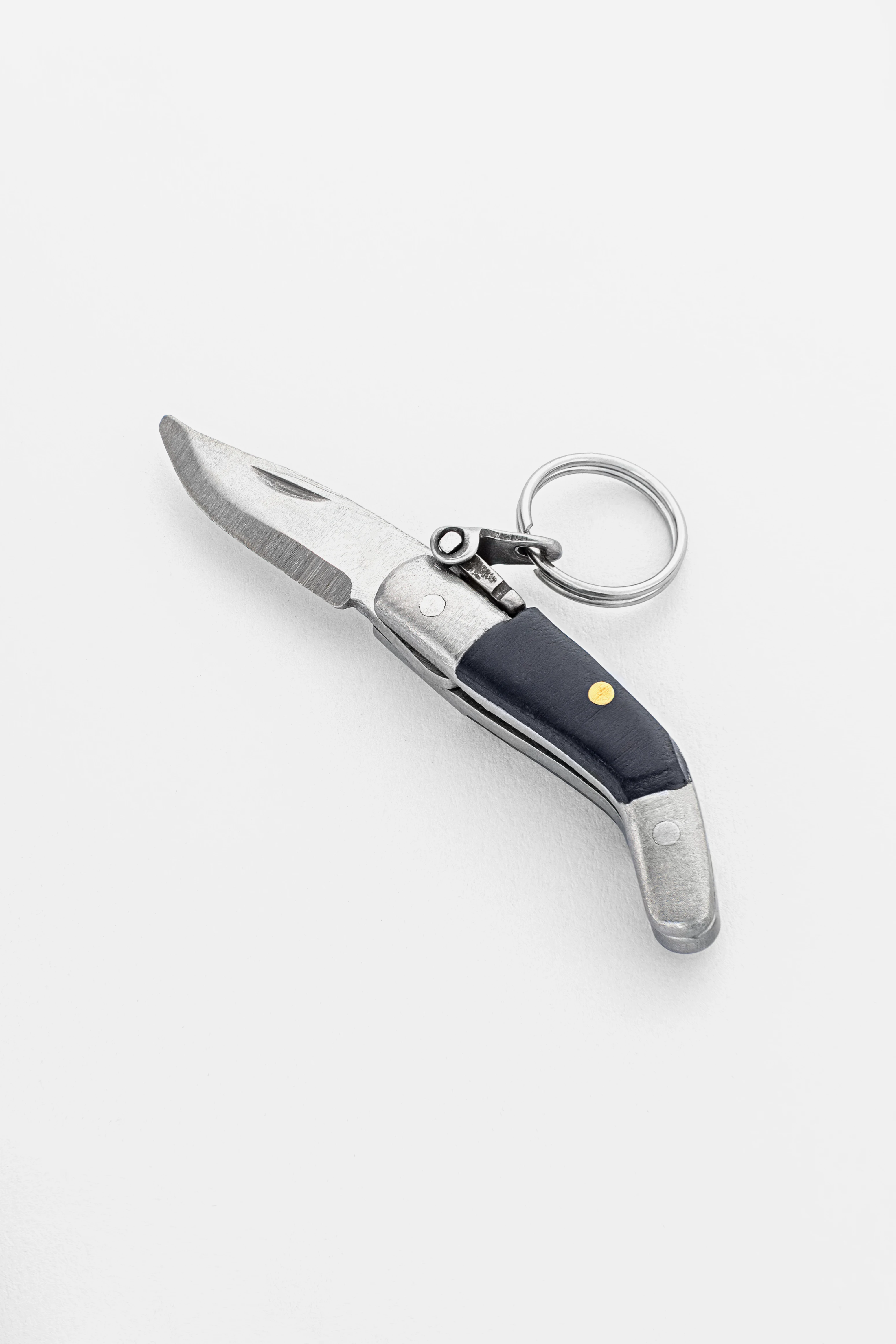
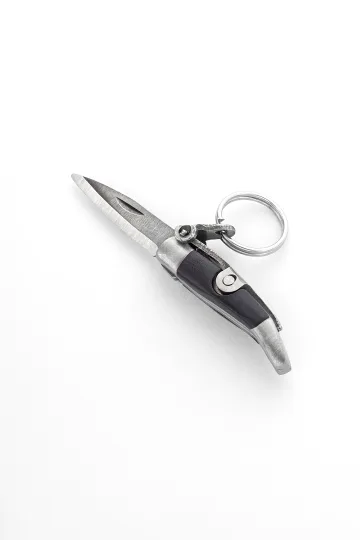
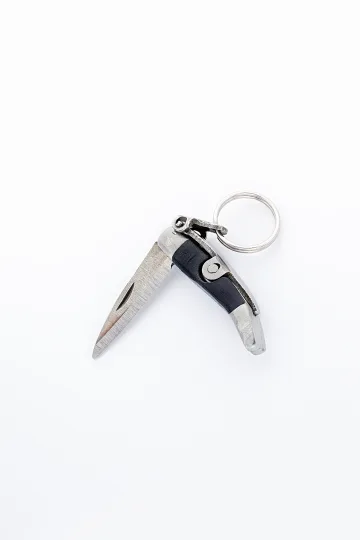
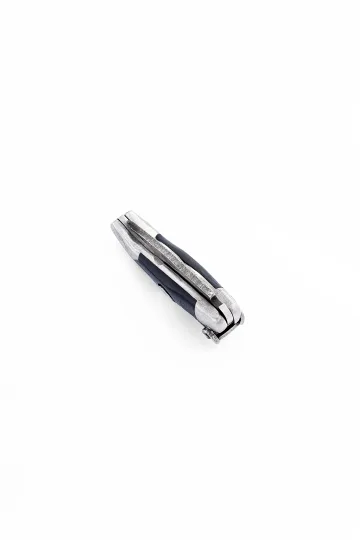
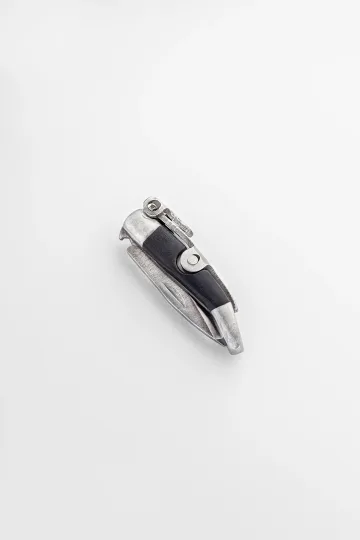
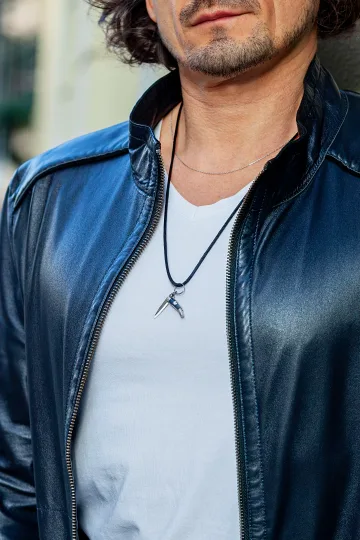
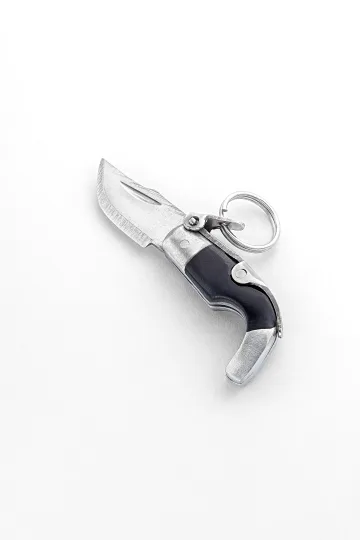
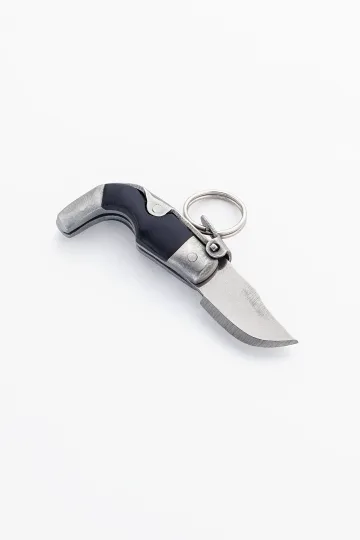
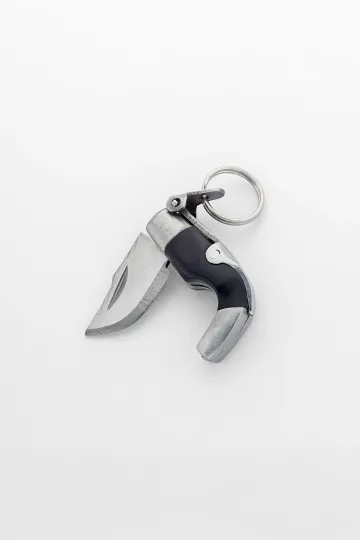
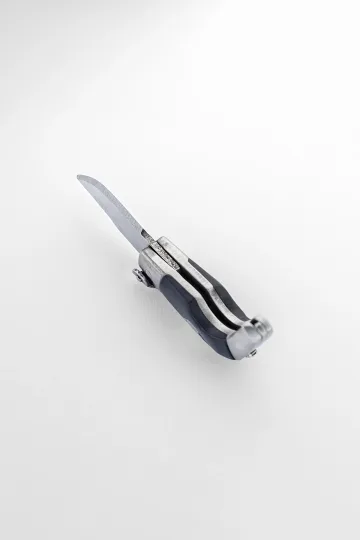
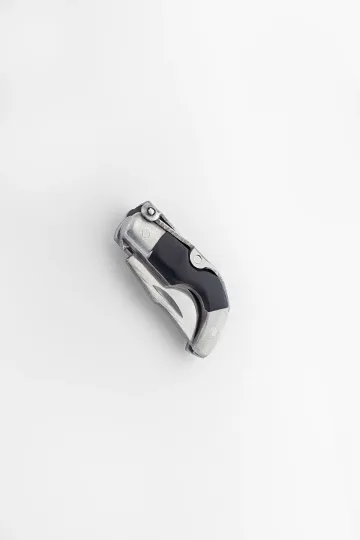
CAPAORA mini knife pendant
The 18th-century Spanish navaja in miniature: 40 mm of stainless steel, a real folding mechanism and a Palanquilla lock that clicks. An affordable gift to remember.
Authentic · Ships from Spain · 14-day returns
Higa, Hamsa, Cornicello, Nazar and Azabache: What Is the Difference
All of these charms protect against the evil eye, but they should not be confused with one another. The difference lies in shape, in strategy, and in what you are actually looking at: a gesture, a hand, a horn, an eye, or a material.
Higa Versus Hamsa: Two Different Hands
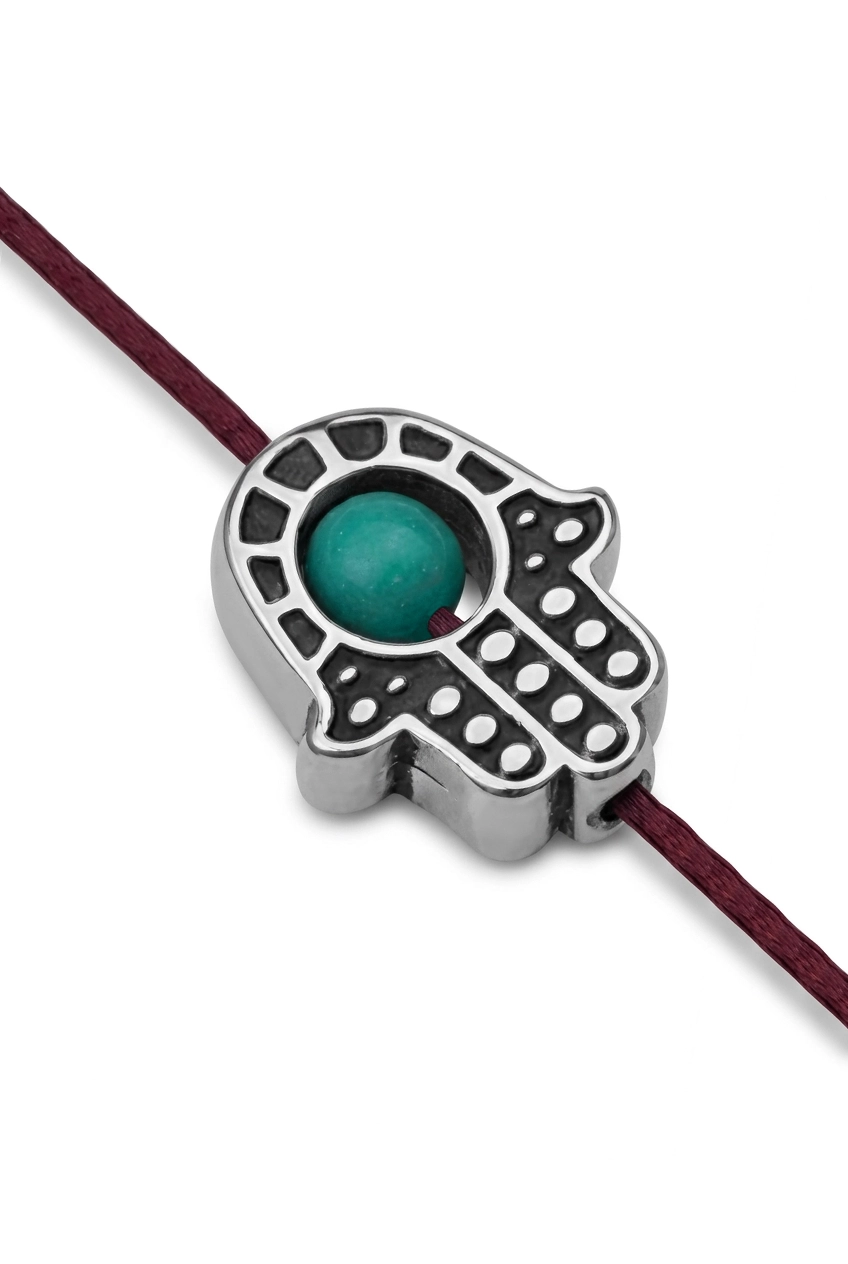
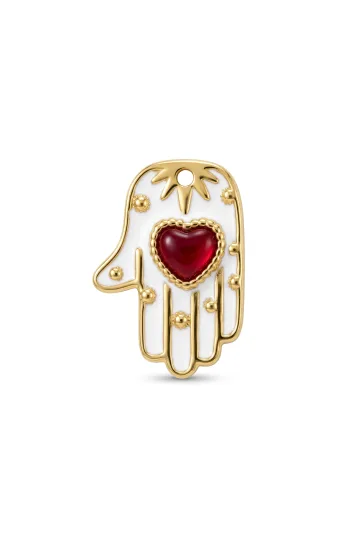
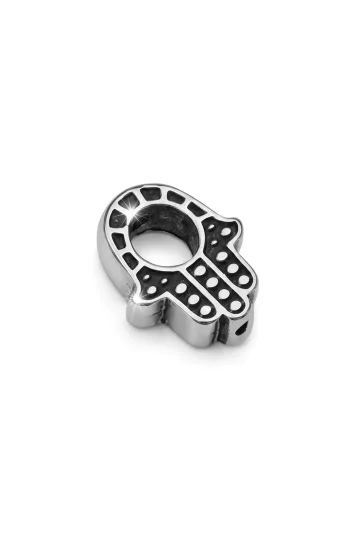
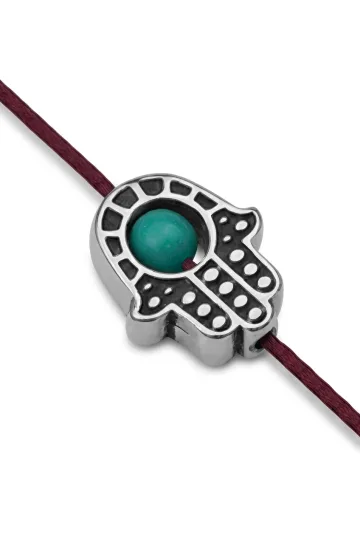
Both the higa and the hamsa are a hand, and this is where confusion is most common. But they are opposite hands. The hamsa is an open palm with five spread fingers, often with an eye at the center, a symbol of the Middle East and North Africa. It pushes evil away with an open palm, a wall, a "stop." The higa is a closed fist with a thumb between the fingers, Mediterranean and Latin American, and it does not stop evil so much as mock it with an image of life. Open palm and closed fist, two different hands with different gestures and different lineages.
Higa Versus Cornicello: Fist and Horn
The cornicello is the Italian horn, curved and pointed, that "pierces" bad energy with its tip. The higa is a fist with a fig gesture that distracts and taunts evil. Both are Mediterranean, both work against the evil eye, and in Italy they are worn together without a second thought. But the imagery differs: the horn pierces, the fig shows evil the fist.
Higa Versus Nazar: Fist and Eye
The nazar is the blue eye from Turkey and Greece, working like a mirror: it catches a hostile gaze and reflects it back to its source. The higa neither reflects nor stares back, it meets evil with a cheeky gesture instead. A glass eye and a stone fist, reflection versus mockery.
Higa Versus Azabache: Gesture and Material
This is the most common confusion. Azabache is not a shape but a material, black jet, out of which charms are made. The higa is a shape, a specific fist gesture. An azabache higa is a fig carved from jet, their most classic pairing. But azabache also appears as other figures, and the higa is made from other materials. Material and gesture are different axes that simply meet most often in the Spanish children's charm.
Can you wear them together? Absolutely. Many people combine several charms from different traditions on one chain or bracelet. No belief forbids it: each works in its own way, and they do not conflict. If protective amulets interest you, see the general guide to protection amulets and talismans.
Superstitions and Myths Around the Higa
Around the figa, as around any ancient charm, a good number of beliefs have grown up. Some hold a grain of truth, others are simply folklore.
It is said that a gifted higa protects more strongly than one bought for yourself, since the giver's intent reinforces the protection. As with the cornicello, understandable psychology of gift giving sits behind this. It is also said the fig works best worn discreetly, hidden under clothing, because the protective gesture works best in secret, tucked away, much as the kukish was once made quietly in a pocket. Black jet is credited with a capacity to "tire": a dulled or cracked figa is said to be thanked and replaced, on the belief it has taken a blow meant for its wearer.
There are misconceptions too. Many assume a figa has to be black jet or it "does not work." That is not so: coral, silver, gold and wooden higas are just as traditional. People also confuse it with an insult, worrying that wearing a figa is improper. But as an amulet it is aimed at invisible evil, not at people, and there is nothing coarse about wearing one.
A separate belief concerns direction. A live fig gesture, made with the hand, is traditionally pointed downward, toward the ground, like the horned hand: this is thought to send evil away from the body. The rule barely applies to the amulet itself, the fist works in any position, but the habit of pointing "down" persists among those who make the gesture with their hands.
Facts That Surprise
The Slavic kukish and the Spanish higa are the same gesture. What survives in the Slavic world as a blunt refusal became, on the Iberian Peninsula, a children's charm carved from black stone. Both trace back to the same ancient root.
Dante sent a man to hell for flashing two figs at God. The scene with Vanni Fucci in the twenty fifth canto of the Inferno fixed the gesture in world literature as the ultimate act of defiance.
The gesture's ancient meaning is tied to the origin of life. A thumb pushed out between the fingers depicted the union of two principles, and it was precisely this image of fertility that was believed fatal to the barren spite of the evil eye.
The fig does double duty: charm and insult. The same fist protects a baby on its blanket and insults a person if flashed in their face. What decides it is the target: evil, or another human being.
Brazilian figas grow to the size of a statue. From a child's amulet, the fig there turned into a large wooden object of home decor and a symbol of luck for an entire household.
The same craftsmen who carved pilgrim shells carved the jet higa. The azabacheros of Santiago de Compostela made both sacred objects for pilgrims and protective fists from the very same black jet.
The protective figa is often worn hidden. Unlike the nazar, which is meant to be seen, the higa is frequently tucked under clothing, following the logic of a secret gesture kept "in the pocket."
Send a friend a discount code, they save on their first order.
Frequently Asked Questions
What is a higa (figa)? The higa is an amulet shaped like a closed fist with the thumb pushed between the index and middle fingers. It is the same gesture known elsewhere as a rude dismissal. In Spanish it is higa, in Portuguese and in Brazil figa, in Italian mano fico. It is worn as protection against the evil eye, especially for children, and as a symbol of fertility and cheeky luck. The tradition runs from ancient Rome to today.
How is the higa different from the hamsa? They are two different hands. The hamsa is an open palm with five fingers, often with an eye, from the Middle East, and it pushes evil away like a wall. The higa is a closed fist with a fig gesture, Mediterranean and Latin American, and it mocks evil with an image of life. Open palm against closed fist.
Are the higa and azabache the same thing? No. Azabache is a material, black jet. The higa is a shape, the fist gesture. An azabache higa is a fig carved from jet, the most classic version. But the higa also comes in silver, gold, coral and wood, and azabache takes other shapes too.
Why is the higa given to infants? By Mediterranean and Latin American belief, a newborn is especially vulnerable to the evil eye, since strangers admire the child and envy easily slips in alongside that admiration. A black jet higa on the swaddling cloth or a small bracelet turns the hostile gaze away from the child. For an infant, a secure fastening without small parts matters most.
Isn't it rude to wear a figa? No. As an amulet the fig is aimed at invisible evil, not at people. A fist worn at the neck protects against the evil eye, it does not insult passersby. The gesture only becomes rude if flashed with a live hand at someone's face.
What is the higa made of? Traditionally black jet (azabache) and red coral. Today more often silver, gold and steel, and in Brazil dark wood. Jet is the most traditional "children's" material, metal the most practical for daily wear.
Can you wear a higa if you have no Mediterranean background? Of course. The figa is not a closed cultural symbol, it is worn worldwide. For many people it is also a strangely familiar gesture: a related sign, the kukish, served the same protective purpose in Slavic folk culture.
Can you wear a higa together with other charms? Yes. The figa sits comfortably alongside the nazar, the hamsa, the cornicello, a cross. Different charms work in their own way and do not interfere with each other. The main thing is not to overload the look: one clear figa is stronger than a fist squeezed among a dozen pendants.
Fitting the Higa into an Outfit
The history and the materials are settled, so here is the practical part: what actually works once the fist comes out of the display case and goes onto a real person.
Which material suits you. The default is black jet in a silver mount. Azabache was carved for children and against the evil eye for centuries, and a black fist on silver still looks more convincing than any dressier version. For a warm skin tone, the golden and peachy range, coral or gold plays to the theme of life and gladness. For a cool tone, the pinkish and porcelain range, silver or that same jet reads cleanly and does not fight the skin.
Small or large. The fist is a graphic shape and it likes air around it. For a quiet everyday look, a small fig of two to three centimetres on a fine chain lets the gesture read as a considered detail rather than a signboard. For more presence, a larger form on a leather or rubber cord sits closer to the Mediterranean texture the object came from. The rule is straightforward: a noticeable higa works when it is alone, not when it is wedged between five other pendants.
Layering. Keep the fig as the main accent and do not give it competitors. The good neighbours are charms from the same world, the nazar, the hamsa, the cornicello, a cross, all of which come from a shared set of ideas and do not scrap for attention. If you want layers, give the higa its own chain length so the fist is not pinched between other signs. Hold the metals in one tone across the layers, silver with silver, warm with warm, or the whole thing falls apart visually.
Occasion. A black jet or silver higa lives in everyday, quiet, street-level dressing and asks for almost no maintenance. A gold or coral fig belongs to a happy occasion and to gift-giving: newlyweds, expectant parents, a birth. The warm colours sit closer to the theme of life, and the black stays with quiet daily protection.
A note for British wearers. The gesture behind this amulet is not read the same way everywhere, and it is worth knowing before you wear it abroad rather than after. Across most of the Mediterranean and Latin America the fist is a protective charm and nothing else, and nobody blinks at it. In Turkey, Indonesia, parts of the Balkans and a few other places the same gesture made with a live hand is a serious insult, roughly on a level with the two-fingered salute here. Nobody is going to take offence at a cast pendant, which is plainly a piece of jewellery, but making the gesture with your hand in the wrong country is a genuine mistake. In Britain itself the sign carries no meaning at all for most people, which means a higa here reads simply as an unusual and rather characterful fist, and you will spend a fair amount of time explaining it.
Who it suits. The higa is not tied to gender or age, and the form is clean and legible without explanation. Historically it is first and foremost a child's charm, so for an infant choose a secure fitting with no sharp edges or small detachable parts. For an adult it goes by temperament: this is a charm with cheek, for people who like the idea of showing trouble a rude sign. Check one thing before buying. The thumb has to be clearly visible between the index and middle fingers, because the entire force of the higa is in a recognisable gesture, and a great many mass-produced versions get it mushy.
Conclusion
The higa has travelled from a gesture a Roman used to ward the evil eye off a child, to a black jet fist on a baby's pram, to a large wooden figa on a Brazilian shelf. Materials and countries changed, but the meaning held: show trouble an image of life, and mock it with cheek.
Whether you believe in protection from the evil eye or simply value a symbol with three thousand years of history and character, the higa remains one of the most human amulets there is: not solemn, not severe, but one that keeps telling trouble exactly where to go.
Higas and other evil eye charms: figs, nazars, hamsas, cornicellos in silver, gold and steel.
Buying it as a gift? Each one arrives ready to give.
 A branded Zevira box and a little card come with every order.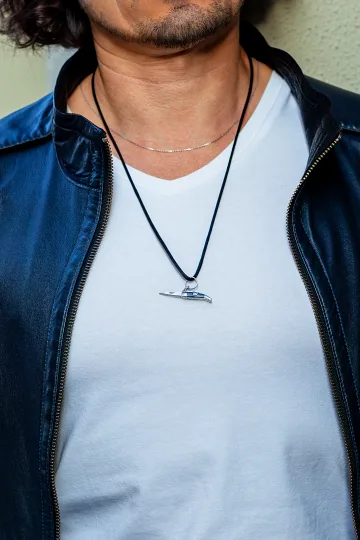




About Zevira
Zevira makes jewellery in the artisan tradition of Albacete, Spain. The higa is one of the symbols close to us: an ancient Iberian shape, legible without words, equally at home on a child's bracelet and an adult's chain. We reproduce the recognisable fist gesture with crisp detail in the fingers, in modern materials and proportions.
What you can find with us on the theme of protective charms:
- Higa fists in silver and in a black jet-look finish
- Evil eye charms from different traditions: nazars, hamsas, cornicellos
- Symbolism and protective pendants from the Mediterranean world
- Chains of various lengths and weaves for a pendant of any size
- Leather and rubber cords for everyday wear
Every piece can be personalised with engraving, with the option of personal engraving. Sterling silver 925 and 14-18K gold.