The Star of David in jewelry: what Magen David means and how to wear it with respect
The six-pointed star is older than its main meaning
The six-pointed star decorated mosaics, seals and ornaments among peoples who had never heard of King David or Jerusalem. Hindus drew it, Muslim artisans drew it, European Christians and alchemists drew it. By historical standards it became a Jewish symbol fairly recently, only a few centuries ago, and its road from a chance geometric pattern to the sign of an entire people turned out longer and more dramatic than today's pendant on a chain suggests.
This article looks at how two overlapping triangles travelled from ornament to the emblem on a national flag, why one symbol stands for both the joy of a holiday and the darkest page of the twentieth century, how it differs from the pentagram and how to wear it so that it reads as respect rather than a fashionable trinket.
Wear the symbol, don't just read about it. These are in stock:



What Magen David is and why it has so many names
The hexagram as a geometric figure
At the heart of the symbol lies the hexagram, a six-pointed star made of two equilateral triangles laid over each other with their points facing opposite ways. One triangle looks up, the other down, and where they cross in the centre they form a regular hexagon, with six identical rays around the edge. This is pure geometry, easy to draw with a compass, which is exactly why the figure appeared independently across very different cultures long before it carried any religious meaning. Sooner or later any ornamental artist arrived at this drawing while dividing a circle into six parts.
Magen David: a shield, not a star
In Hebrew the symbol is called Magen David, which literally means "shield of David," not "star." The word "star" caught on later, in European languages. One legend says the warriors of King David carried shields bearing this six-pointed figure; another says the form was inscribed on the legendary king's own shield. Historians treat these tales with caution: there is no direct archaeological proof that David used the hexagram specifically. The name stuck firmly all the same, and today "Magen David" and "Star of David" mean one and the same thing.
What the symbol is called in different languages
Across Western languages the figure became a "star": English says Star of David, German Davidstern, Spanish Estrella de David, French Étoile de David. In Hebrew it remains Magen David, and Yiddish sounds close to that. It is striking that in almost every secular language the symbol turned into a "star," while in Hebrew itself it stayed a "shield." That difference in names shows neatly how one sign was seen from inside the tradition and from outside it.
How the hexagram differs in meaning from two triangles
Geometry carries no meaning on its own; culture supplies it. In a Kabbalistic reading the two triangles are seen as the meeting of opposites: the upper one points toward the heavens, the lower toward the earth, and their union stands for the bond between spirit and matter, between a person and the Creator. The six rays are sometimes tied to the six directions of space plus the centre, or the six days of creation plus the Sabbath. These readings appeared late and were not the original reason for choosing the figure, yet they are what turned cold geometry into a warm, lived-in symbol.
What the twelve points and sides stand for
Look closely at the star and you find six outer rays, twelve sides along the outline and twelve points where the lines meet. That number is often linked to the twelve tribes of Israel, descended from the sons of Jacob. This reading arose late and was not the reason the figure was chosen, but it sits beautifully on the symbol and comes up often in explanations, especially when the star is given as a sign of belonging to a large family and a shared lineage.
Why symmetry makes the symbol strong
Magen David is perfectly symmetrical: you can turn it to any of six positions, mirror it any way you like, and it stays itself. The symbol has no top or bottom in the usual sense, no right or wrong side. That resistance to being flipped sets the star apart from many other signs that are easy to wear upside down or spoil by mirroring. A star pendant always reads correctly however it falls on the chain, and that is one reason the symbol is so easy to wear every day.
A star lives at the collarbones on bare skin, never over a turtleneck. One on the chain, not a bunch of trinkets.
How to wear the Star of David
Over years of styling I have built looks around this symbol dozens of times. Here is what actually works, occasion by occasion, without the extra theory.
What do I wear the star with day to day? For everyday I recommend a medium silver star on a thin chain over a plain tee, a shirt or a light knit. A pale top lifts the metal, a dark one turns the star into a clean accent. Under a shirt collar I suggest a chain of 45 to 50 cm, so the star sits at the second button rather than hiding under the fabric.
Is it right for the office or a strict dress code? Keep it restrained. I choose a smooth star with no stones, silver or yellow gold, on a shorter length so the symbol slips under the top button. Under a jacket the star reads as a quiet detail, not a loud statement. Save the openwork and sparkle for the evening.
How do I build an evening or celebration look? For a special occasion I suggest an open neckline and smooth fabric in a rich colour: burgundy, emerald, deep blue. A gold star belongs here, ideally a larger one, since it catches warm light and reads across a room. On bare skin at the collarbones the symbol works best of all.
Can I layer the star with other pendants? You can, but keep to one circle of meaning. I recommend the pair star plus "chai" or star plus hamsa, on chains of different lengths so the pendants do not argue. One metal throughout. Mixing the star with random badges from distant traditions I would not advise, the look falls apart.
Who does this symbol actually suit? Anyone who loves pieces with meaning rather than shiny bulk. On a small frame I suggest a fine star at the base of the neck; on a taller one a larger star on a sturdier chain will not get lost. Two rules that never fail: choose the length to match the neckline, not the other way round, and one star on a clean chain always beats one squeezed between five pendants.

Turn on your camera, pick earrings, a pendant or a ring, and see the piece on yourself in real time.
Switch items in one tap.
Everything runs in your browser: no photo or video is ever uploaded.
History of the symbol: from ornament to the sign of a people
Antiquity: a shared geometric motif
In deep antiquity the six-pointed star belonged to no one in particular. It turns up on Mesopotamian artifacts, in Indian mandalas, on Roman mosaics, in early Christian and Muslim ornament. In the synagogue at Capernaum from the third and fourth centuries the hexagram sits beside a five-pointed star and a swastika-meander as part of a decorative frieze, with no special emphasis. For an ancient craftsman it was one of many geometric elements, handy for filling a circle or a panel, on a par with rosettes and braids.
The earliest inscription with the words "Magen David"
It is curious that the phrase itself appears in texts before it settled firmly onto the six-pointed figure. In medieval manuscripts and prayers the "shield of David" is mentioned as a metaphor for God's protection, without being tied to any particular drawing. Only later did the name and the geometric figure come together into a single sign. That explains the inconsistency in early sources: in some places "shield of David" named quite different images, while elsewhere the six-pointed star was called the seal of Solomon. The strict modern match between name and figure took shape only in the modern era.
The Middle Ages: a sign of protection and magic
In the Middle Ages the hexagram was used widely for magical and protective purposes, and not only by Jews. It was drawn on amulets against demons and fire, placed in alchemical treatises where the two triangles stood for the elements of fire and water. Arab and Christian authors knew the figure as the "seal of Solomon," linking it to the legendary ring of King Solomon, with which he supposedly commanded spirits. In this period the six-pointed and five-pointed stars were often confused and swapped for each other; both were considered strong protective signs.
Prague and attachment to the Jewish community
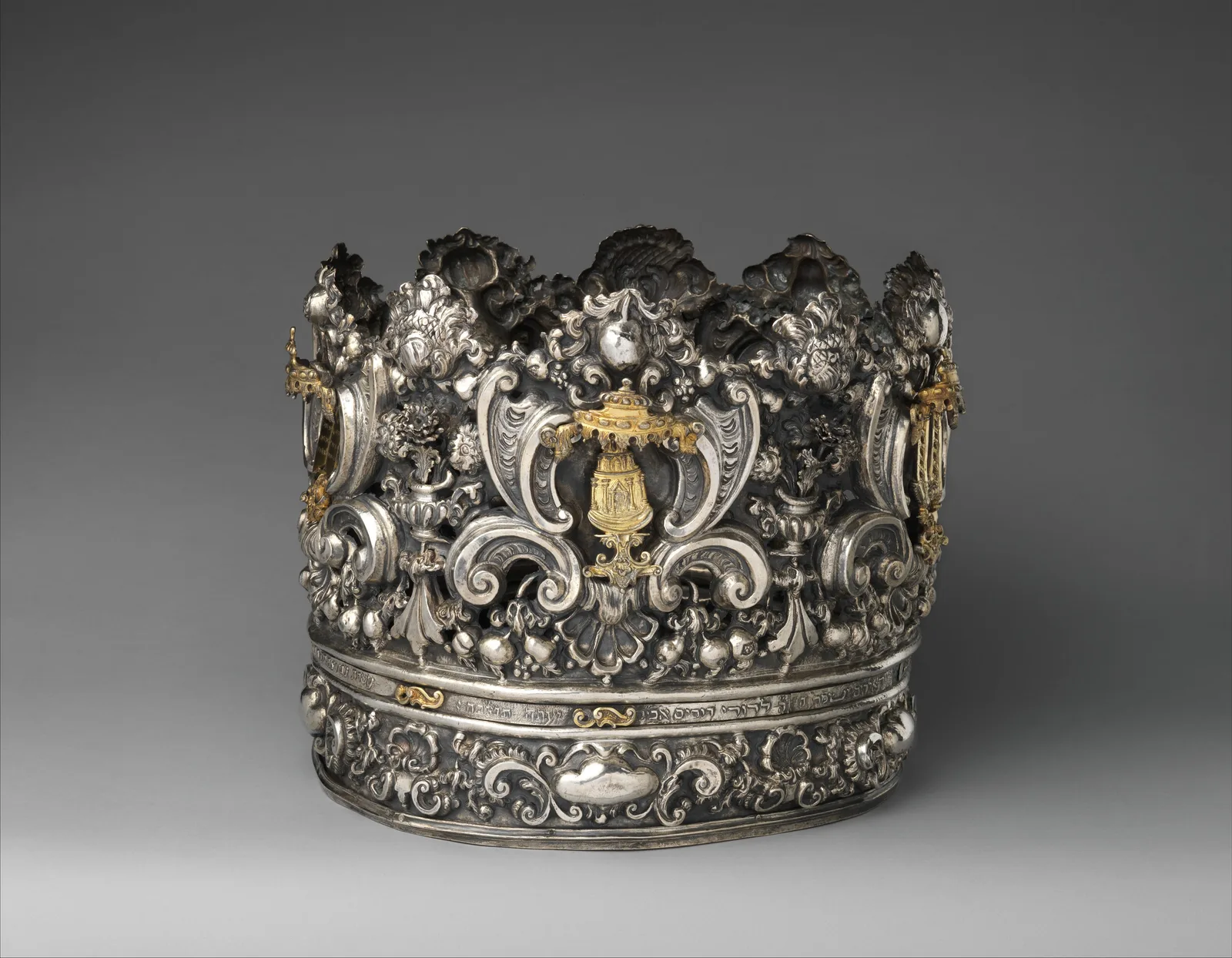
The turning point came in medieval Prague. The city's Jewish community received the right to its own banner, and a six-pointed star was placed on it. From the fourteenth century the hexagram appears more and more often on seals, gravestones and official documents of the Prague community as an identifying mark. Step by step it turned from a general magical symbol into the emblem of a specific group of people. It was from Prague that the symbol began to spread to other European communities as a marker of Jewish identity, and by the eighteenth and nineteenth centuries that process had reached most of Europe.
The nineteenth century: the star on synagogues
In the nineteenth century, as Jewish communities across Europe left their cramped quarters and built large, visible synagogues, they needed a recognisable outward sign, as clear as a cross on a church or a crescent on a mosque. Magen David fit perfectly. The star was set on the facades, gables and domes of new synagogues all over Europe, and that is when the symbol finally settled in the public mind as "Jewish." Architecture did as much to spread the sign as books and seals did: thousands of people saw the star on a building every day and tied it to a specific community.
The Zionist movement: a symbol of the nation
The hexagram took its decisive step toward the status of a national symbol at the turn of the nineteenth and twentieth centuries. The emerging Zionist movement was looking for a recognisable sign, clear without words, and chose Magen David. At the First Zionist Congress in Basel in 1897 a flag with a six-pointed star was discussed: blue stripes on a white field echoed the motif of the tallit, the prayer shawl, with the star in the centre. From a religious and communal sign the symbol became fully political and national, the emblem of a whole people striving for a home of its own.
The flag of Israel
When the State of Israel was founded in 1948, a blue Star of David between two stripes became the basis of the national flag. So the symbol that had been by turns an ornament, an amulet and a community mark took its place on the banner of a sovereign country. Today, for millions of people the flag is the main context in which they see the hexagram, and that largely shapes how the symbol is read in jewellery: as a sign of belonging, pride and connection to history.
The yellow star: a page that cannot be passed over in silence
The symbol has a tragic chapter too. During the Nazi persecutions, Jews were forced to wear a sewn-on yellow six-pointed star, meant to mark them publicly and humiliate them, to strip a person of a name and reduce them to a sign. Millions of those marked with this star were murdered. For many families the hexagram is forever bound up with that memory as well. To wear Magen David today means, for some, a quiet answer to that attempt to erase: a sign meant to be a brand became a symbol of dignity and survival. This history should be neither hushed up nor dramatized; it is enough to know and remember it, in order to understand the weight of the symbol on your own neck.
Customer reviews
Zevira is a real jewellery shop. Genuine payments, deliveries and customer thank-yous.
🥰🥰🥰 gracias
Ok, ¡gracias! 🙂
Religious and secular meaning today
What the symbol means in religious tradition
In Judaism, Magen David is above all a sign of belonging to a people and a faith, of protection and of connection to the Creator. It is placed on synagogues, scrolls, ritual objects and gravestones. Kabbalistic thought filled the two triangles with meanings of the union of heaven and earth, masculine and feminine, mercy and severity. Yet it is worth saying honestly: Magen David is not a sacred object in the same sense as a Torah scroll or tefillin. It is a symbol of identity, not a ritual object, and so it is worn far more freely than strictly religious items.
A secular reading: identity and memory
For many people the star moved beyond religion long ago. A secular Jew, far from observing the commandments, may wear Magen David as a sign of origin, family history, solidarity. It is a way to say "this is where I come from" without a single word. In that sense the symbol works much like the national signs of other peoples: it is less about faith than about belonging to a long history and a living community.
A symbol of protection in folk tradition
Beyond lofty theology, the star has a grassroots, everyday layer of meaning that comes from medieval amulets. In folk tradition Magen David was long held to be a guard against misfortune, illness and the evil eye; it was hung over the cradle, painted on the house, carried on a journey. That protective meaning survives in how many people see it today: the star is given as a wish to stay safe, without any strict ritual content attached. The amulet theme links it to a whole family of protective signs from different peoples.
The star as a family heirloom
There is a separate life to stars that pass down through inheritance. A grandmother's silver pendant, carried across moves and generations, means far more to a family than its metal and size. Such a Magen David stops being only a sign of a people and becomes a personal thread linking a grandchild to a great-grandfather. That is why choosing a star as a gift is taken seriously: the piece is bought not for a season but on the expectation that it will be worn for a long time and perhaps handed on.
Can non-Jews wear it
This is a delicate question, and there is no outright prohibition. Magen David is not a closed sacred sign, and a person who wears it out of respect, sympathy, in memory of a loved one or for other personal reasons usually raises no objections. The tone is what matters. A star as a conscious mark of respect and connection reads very differently from a star as a random fashion accessory put on without any idea of what it means. If the symbol is dear to you for a specific reason, wear it calmly. If you simply liked the shape, it is worth at least knowing what exactly is around your neck.
Upload a photo of your pet, someone you love, or an object. We'll build a 3D model and hand-cast it in pewter.



The Star of David and the pentagram: what is the difference
How many rays, and where they come from
The main difference is obvious at a glance: Magen David has six rays, the pentagram has five. The Star of David is built from two triangles; the pentagram is drawn with one continuous line in five strokes. This is different geometry and a different history. The hexagram came from ornament and became a Jewish symbol; the pentagram was known to the Pythagoreans and early Christians, and later it settled firmly into esoteric lore.
Different fields of meaning
The pentagram is linked to the five elements, to the human figure, to protection in magical traditions, and, when inverted, to occult currents. Magen David has a different field of meaning: a people, a faith, a state, memory. Mixing them up is a bad idea, because someone who puts on one symbol instead of the other out of ignorance risks saying something quite different from what they intended. We have gathered a detailed look at the five-pointed star and why it attracts so many myths in a separate piece on the pentagram in jewelry.
When to choose which symbol
If the theme of Jewish identity, history and faith is close to you, the choice is obvious: Magen David. If you are drawn to astrology, esoterica, the natural elements, protective magic in a broad sense, the pentagram will be nearer. And if you simply want a "star" motif with no specific religious charge, there are many other star pieces, from a scatter of tiny stars to a crescent with a star. There is, by the way, a separate look at the crescent moon and star; that is a quite different symbol with Islamic roots.



Jewellery with Magen David: forms and carriers
A pendant on a chain: the most common format
A star pendant on a thin chain remains the most popular way to wear the symbol. It rests at the collarbones, reads at a glance and suits both every day and a night out. The size of the pendant sets the volume of the statement: a tiny star under a shirt is a quiet personal sign, a large star over clothing is already a visible declaration. An open, openwork version, where the interlacing of the triangles is visible, looks lighter, while a solid, filled one looks denser and weightier.
Rings and signets
The star is placed on rings too: on engraved signets, on broad bands, as raised relief. A ring with a star is a more intimate gesture than a pendant, noticed only during a handshake or a movement of the hand. This format appeals to those who want to wear the symbol all the time without putting it on their chest. An engraved star on the inside of a ring becomes a wholly personal sign, visible only to its owner.
Earrings and bracelets
Small stud stars or star drops in earrings add the motif delicately, without putting the emphasis on it. On bracelets the star most often appears as a charm or as the central element on a thin chain. These are restrained formats that pair well with other jewellery and do not pull all the attention to themselves.
How to choose the size of the star
The size of the pendant decides how loudly the symbol speaks. A very small star of a centimetre or less hides under a shirt and reads as a private sign for yourself. A medium size, around one and a half to two centimetres, is the golden mean: visible but without challenge, fitting both every day and a night out. A large star of three centimetres or more is already a noticeable piece over clothing; it calls for an open neckline and a calm background. As for height and build, the rule is simple: a delicate star suits a small frame, while a larger star will not get lost on a tall, broad one.
Which chain to pick
The chain should be in proportion to the pendant. A light openwork star is hung on a thin chain, a dense or large one on a sturdier chain, otherwise a heavy pendant will overload and break a fragile link. Length sets the position: a short chain holds the star at the base of the neck, a medium one lays it on the chest, a long one drops it toward the solar plexus and looks good in layered looks. It makes sense to take a chain in the same metal as the pendant, so the tones do not clash.
Men's and women's jewellery with the star
The men's version
Magen David is worn just as naturally by men and women; it is not a gendered symbol. In men's pieces the star is usually made larger and plainer: solid metal without stones, clean edges, a flat or slightly raised surface, a heavier chain. Often it is silver or yellow gold, a spare form with no decoration. Such a star reads as a sign of strength and belonging rather than as jewellery in the usual sense.
The women's version
Women's models lean toward refinement: thin lines, openwork, sometimes a scatter of small stones along the outline, delicate chains. The star may be tiny and almost unnoticeable or, on the contrary, an expressive pendant on a long chain. There is more freedom here in decoration, materials and combinations; the symbol fits easily into layered looks with other pendants.
Unisex and gifts within the family
Many models are deliberately made neutral so they can be given to anyone in the family. A medium silver star on a simple chain suits a teenager, an adult, a man and a woman alike. That is why Magen David often becomes a family gift, passed between generations or given for an important date.
Leave your email, we'll send your discount code. No spam, unsubscribe anytime.
The code arrives by email, valid on your first order.
Metals and stones: what the star is made of
Silver 925
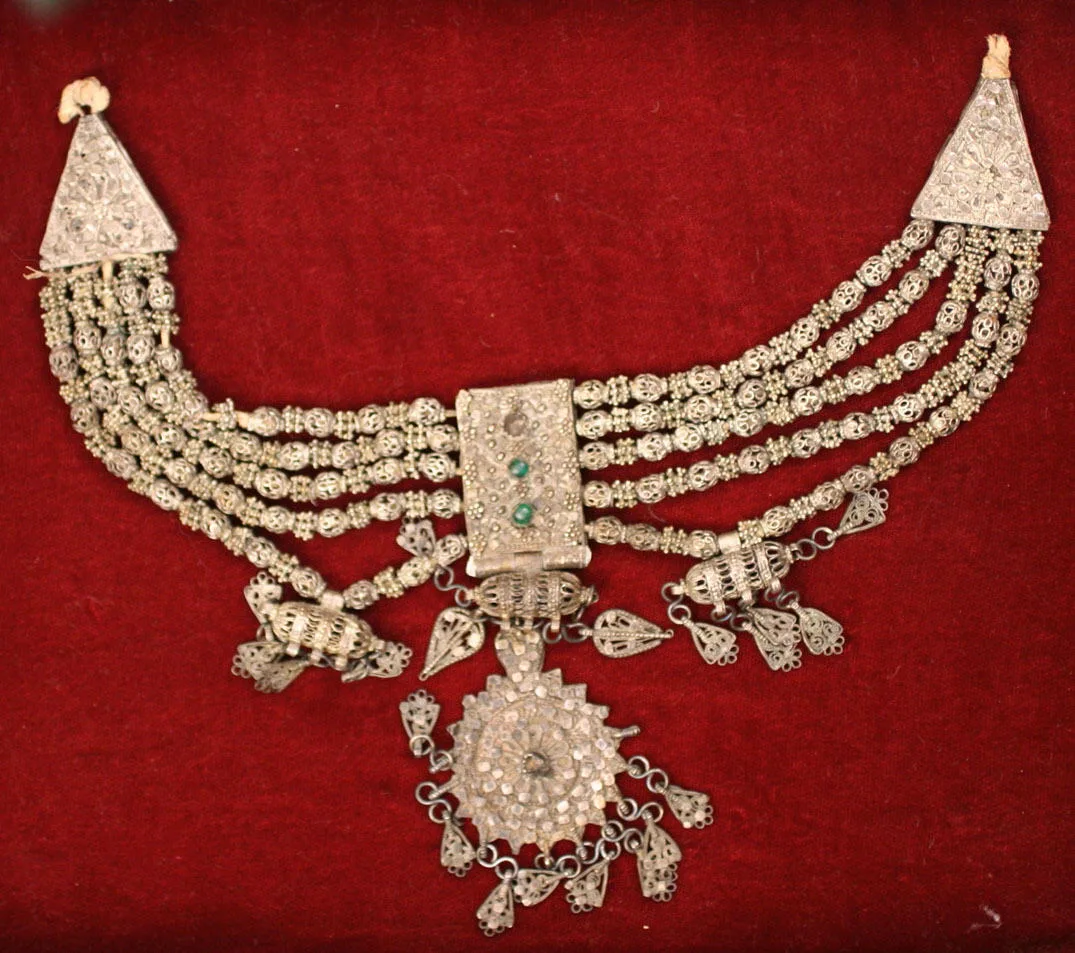
Silver remains the most accessible yet noble material for a Magen David. It is cool and white, holds the clean geometry of the edges well, and suits men, women and any age. A silver star is often the first symbol given to a child or a teenager: dignified, not showy and not frightening in price. If you want to understand how real silver differs from fakes and what a hallmark means, look into our piece on silver 925.
Gold
A gold star is seen as a weightier, higher-status and more durable choice, often bought for a significant event or as a piece for life. Yellow gold gives a warm, traditional look, white looks more modern and plainer, rose softens the symbol and gives it a gentler mood. The choice of shade is a matter of taste and of how the star will sit with the rest of your jewelry. We covered the differences between kinds of gold in detail in the piece on white, yellow and red gold.
A star with stones
Sometimes the outline of the star is set with small stones, most often colourless or blue, nodding to the colours of the Israeli flag. Stones add sparkle and festivity, but they change the character of the symbol: with them the star becomes less austere and more celebratory. For everyday wear and for men's models, plain metal without inserts is more often chosen, while the version with stones is taken as a dressier or gift piece.
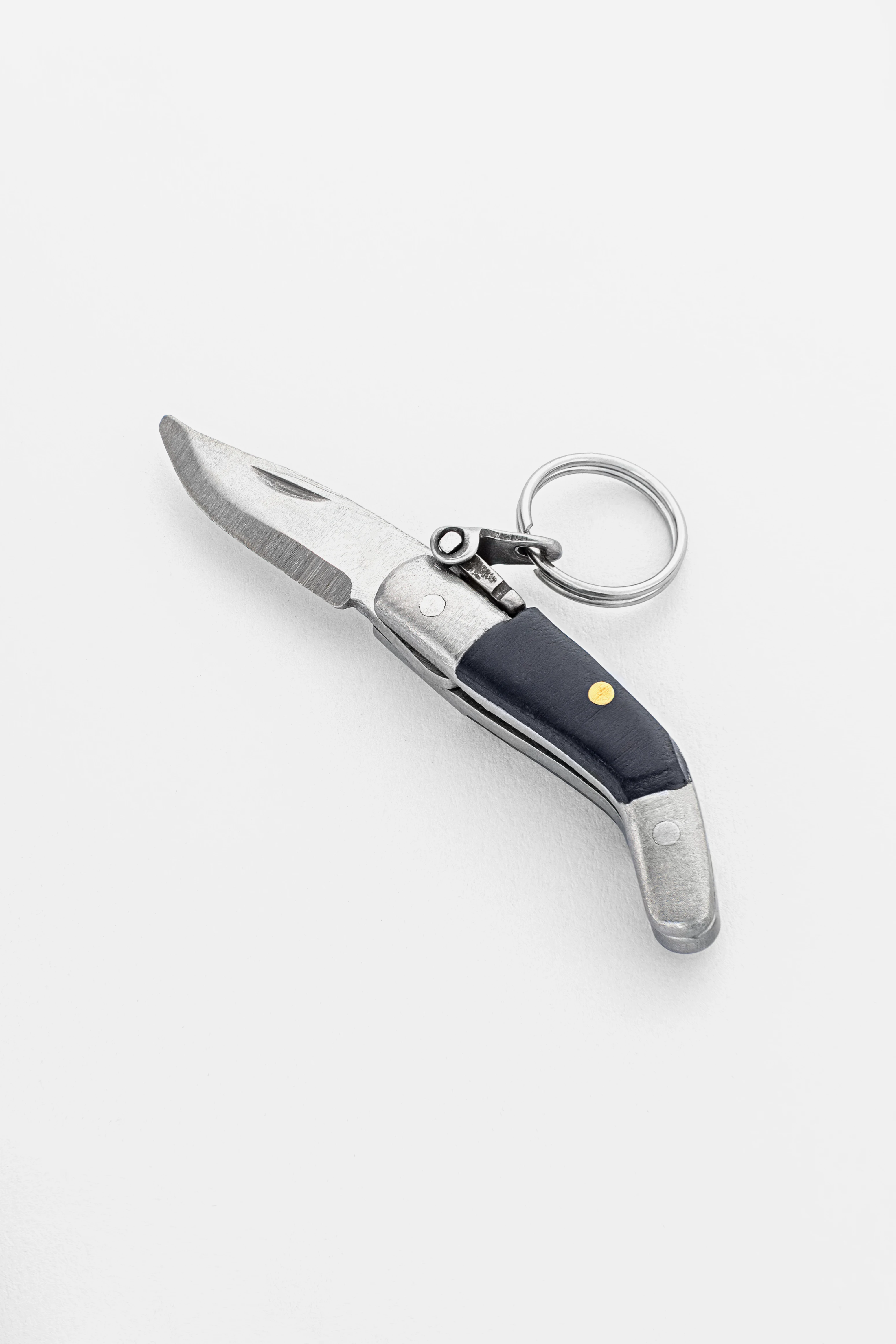
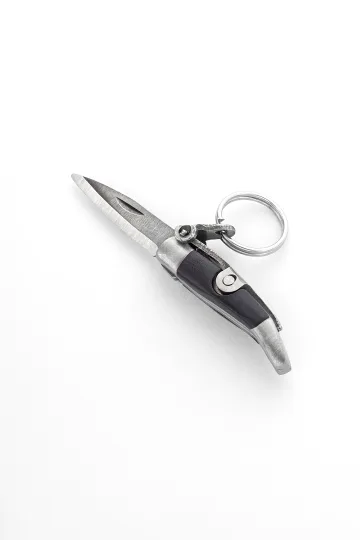
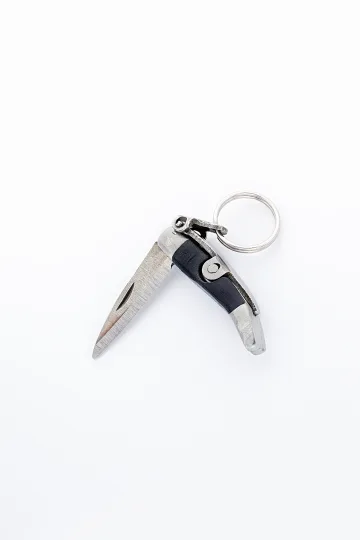
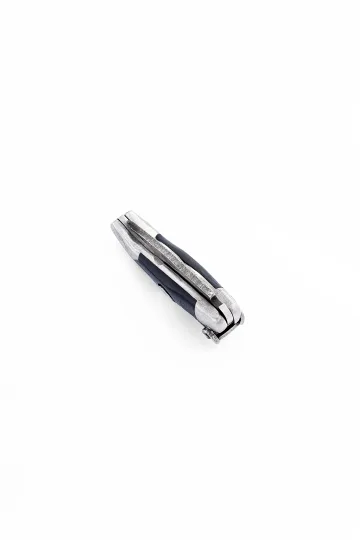
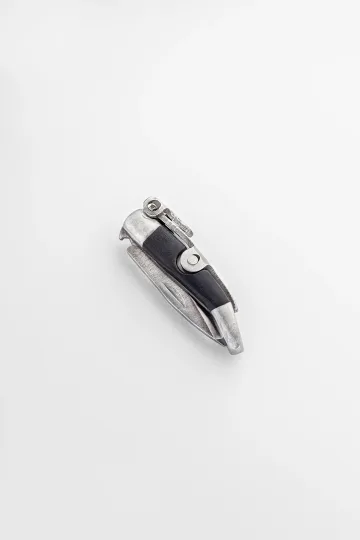
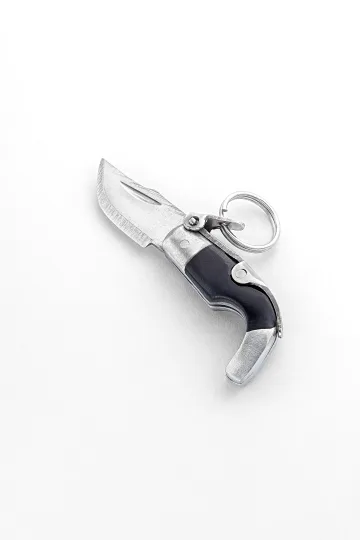
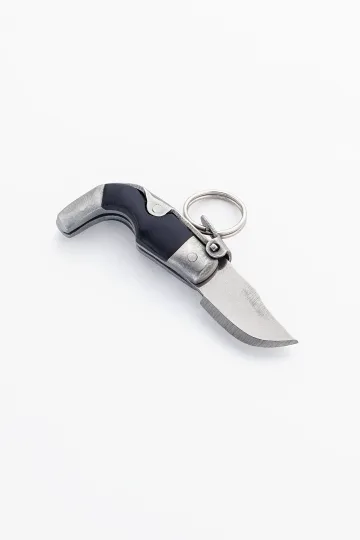
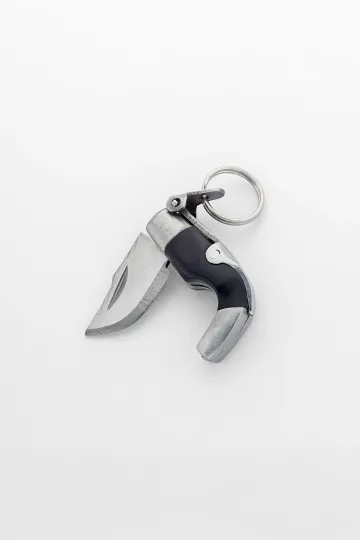
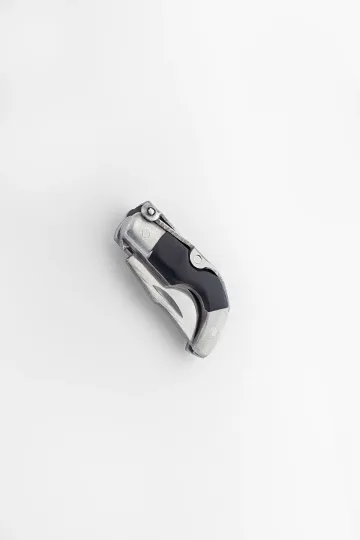
CAPAORA mini knife pendant
The 18th-century Spanish navaja in miniature: 40 mm of stainless steel, a real folding mechanism and a Palanquilla lock that clicks. An affordable gift to remember.
Authentic · Ships from Spain · 14-day returns
Other Jewish symbols alongside the star
Chai: the symbol of life
One of the most common neighbours of Magen David is the symbol "chai," two Hebrew letters that spell the word "life." It is worn as a pendant on a par with the star, and sometimes together with it. "Chai" is a wish for life and health, a warm and universal sign given for happy occasions. The star speaks of belonging, "chai" of life itself, and together they form a common pair.
Hamsa: the hand of protection
The hamsa, an open palm, is known in both the Jewish and the Arab traditions as a sign of protection against the evil eye. It is often worn beside the star or in place of it, especially by those for whom the amulet theme matters. The hamsa is gentler in meaning; it is not about identity but about protecting a home and a person. We told its history and meaning in detail in a separate article on the hamsa, the hand of Fatima.
A mezuzah pendant
A mezuzah is a small case with a scroll, traditionally fixed to the doorpost of a home. In jewellery form the mezuzah is made as a miniature case pendant, sometimes with a tiny scroll inside. Such a pendant is worn as a portable sign of home and protection, especially valued by those often on the road or living far from home. It is a rarer and more personal symbol than the star.
The menorah and other signs
Among the neighbouring symbols are the menorah, the seven-branched lampstand, one of the oldest Jewish signs, and the word "shalom," peace. They appear in jewellery less often than the star but fill out the same circle of meanings: faith, peace, home, life. Magen David remains the most universal and recognisable of them all, which is why it is most often the first choice.
How to combine the star nicely with other pendants
If you want to wear the star not on its own, keep to one circle of meaning and one metal. Star plus "chai" is the classic pair: belonging and life. Star plus hamsa adds the theme of protection. To keep the look from seeming overloaded, separate the pendants by length: one higher, one lower, on chains of different lengths. Combining the star with symbols of rival or distant traditions just for the look is a poor idea; such a set reads as a collection of random badges rather than a considered choice. Better fewer signs, but ones connected to each other.
Is the star given for a bar mitzvah or bat mitzvah
What the occasion is
A bar mitzvah for boys at thirteen and a bat mitzvah for girls mark a teenager's entry into adult religious life, one of the most important family celebrations. For this date it is customary to give meaningful, memorable things, and a piece of jewellery with meaning fits perfectly.
Why Magen David is a common gift
The Star of David is one of the most traditional gifts for a bar mitzvah and a bat mitzvah. It links the teenager to the people's history, stays with them for years and reads as a wish for belonging and protection. Often a silver or gold star of medium size is chosen, one the person will be able to wear as an adult too. It is not a one-time souvenir but a piece that often becomes a constant.
How to choose the gift
For a teenager it is better to take a sturdy, not too fragile version on a reliable chain. Silver is a sensible and dignified choice; gold is taken for an especially significant celebration. An engraving with a name, a date or a short wish makes the gift personal. If you want to add a second meaning, the "chai" symbol, life, looks good beside the star. We wrote in detail about protective symbols as gifts and how they work in the guide to amulets, talismans and protective charms.
What to put on the engraving
An engraving turns a standard star into a personal piece. The most common choices are a name and the date of the celebration, a short wish in English or Hebrew, the giver's initials. In Hebrew the words "mazal tov" (congratulations, a wish of good luck) and "le chaim" (to life) are popular. If there is room, the date by the Jewish calendar goes on the back. The main rule, as with any engraving, is to check the spelling before it is cut: correcting an engraved mistake is almost impossible, especially in an unfamiliar alphabet.
Gifts for other Jewish occasions
The star is given not only for coming of age. It is fitting for the birth and naming of a child, for a wedding, for an anniversary, for a loved one's departure on a long journey as a sign of protection and connection to home. For Hanukkah a small star or the "chai" symbol is often given as a personal gift among others. The universality of Magen David is that it suits almost any happy and significant event in the life of a person and a family, without being tied to one particular date.
Send a friend a discount code, they save on their first order.
Facts that surprise
The hexagram appeared on coats of arms and coins unconnected to Jews
The six-pointed star turned up for centuries where there was no connection to Jewish tradition at all. You can find it on medieval European coats of arms, on old coins of various countries, in the decor of churches and mosques. For many cultures it was simply a handsome and convenient geometric sign, and only the history of the last few centuries fixed one specific meaning to it.
It was called the seal of Solomon
In medieval magical literature, among both Arab and European authors, the hexagram was often called not the Star of David but the seal of Solomon, linking it to the legend of King Solomon's ring, with which he commanded spirits. The five-pointed and six-pointed stars were constantly confused, and both were considered strong protective symbols.
In the synagogue at Capernaum it sits beside a swastika ornament
In the decor of the ancient synagogue at Capernaum the six-pointed star stands in the same row as other geometric motifs, including a meander-swastika, which in antiquity was an ordinary ornamental element with no sinister meaning at all. This shows vividly that for a craftsman of those centuries the hexagram was simply a pattern.
The name "star" appeared later than "shield"
Within Jewish tradition itself the symbol was always the "shield of David," Magen David. European languages made it a "star" in the modern era. So it happened that the world knows the symbol under one name, while inside the tradition it was called something else for centuries, and both names live side by side to this day.
The flag's colour was taken from the prayer shawl
The blue and white of the Israeli flag and of many star pieces go back to the tallit, the prayer shawl with blue stripes on a white field. When the national colours were chosen, they started from the object familiar to every believer rather than inventing them from scratch.
One and the same sign became both a brand of shame and a symbol of pride
A rare fate for a symbol: the very same six-pointed star in the twentieth century was both a sewn-on brand of humiliation and the emblem on the flag of a state of its own that appeared only a few years later. This contrast largely gives Magen David its special emotional weight.
Caring for jewellery with a star
A silver star
Silver darkens over time; this is the natural reaction of the metal with air and skin. To keep the star bright longer, store it separately in a soft pouch, take it off before the shower, the pool and sleep, and do not apply perfume or creams near it. Tarnished silver is brought back to a shine with a soft silver cloth or warm water with a drop of mild soap and a brush, gently working over the edges and the interlacing of the triangles.
A gold star
Gold does not darken, but it gathers grease and dust, which makes it dull. It is enough to rinse the star now and then in warm water with mild soap, clean the openwork areas with a soft brush and wipe it dry. White gold with rhodium plating may in time need the plating refreshed by a jeweller; this is a normal scheduled procedure.
A star with stones
If the star has inserts, avoid aggressive products and ultrasound unless you are sure the stones will withstand them. A soft brush, warm water and careful drying will do in almost every case. Check that the stones sit firmly in their settings, especially if you wear the piece every day.
Storage and daily wear
Thin openwork stars are afraid of snags and sharp tugs on the chain, so take the piece off before sport and active work with the hands. Store the star apart from hard and large pieces so as not to scratch the surface. With careful handling both a silver and a gold star last for decades and pass calmly to the next generation.
Frequently asked questions
Is the Star of David a religious or a national symbol?
Both. Historically it became a sign of the Jewish community and faith, and from the late nineteenth century a national symbol as well, which later went onto the flag of Israel. Today some wear it chiefly for faith, others as a sign of origin and belonging, and both readings are equally valid.
How does the Star of David differ from the pentagram?
By the number of rays and by origin. Magen David has six rays from two triangles; the pentagram has five and is drawn with a single line. Different history and different meanings: the star is about Jewish identity and faith, the pentagram about the elements and esoterica. These are two completely different symbols.
Can a non-Jew wear the Star of David?
Yes, there is no direct prohibition; the symbol is not a closed sacred object. The tone matters: a star worn out of respect, in memory of a loved one or from a personal tie to history is taken normally. A random fashion accessory with no understanding of its meaning looks worse. If you wear it, it is worth knowing what exactly is around your neck.
Which metal to choose for a star?
Silver is a universal, accessible and dignified choice for every day and for a gift to a teenager. Gold is taken for a significant event or as a piece for life, with the shade chosen to taste. Stones make the star dressier but less austere; for everyday wear, plain metal is more often chosen.
Is the Star of David given for a bar mitzvah or bat mitzvah?
Yes, it is one of the most traditional gifts for these celebrations. The star is chosen as a memorable piece linking the teenager to the people's history, more often silver or gold of medium size, often with an engraving of a name and date, so the person will wear it as an adult.
Can the star be worn with other symbols?
Yes, if it is meaningful. Magen David goes well with the "chai" symbol (life), the hamsa, a mezuzah pendant, the menorah. It is best not to mix it thoughtlessly with symbols of rival traditions just for the look. A combination within one circle of meaning looks natural and respectful.
Why is the symbol called a "shield" and not a "star"?
In Hebrew it was always "Magen David," that is, "shield of David," from the legend of the legendary king's shield. European languages made it a "star" in the modern era because of its outward likeness to a radiant star. So one symbol came to have two parallel names.
Do men wear the Star of David?
Yes, it is not a gendered symbol; both men and women wear it. Men's models are usually larger and plainer, of solid metal without stones, on a heavier chain. Women's lean toward refinement, openwork and sometimes stones. There are also many neutral models that suit anyone.
The Star of David at Zevira
Silver 925 and gold, men's and women's forms, spare and openwork. A star with a history that is a pleasure to wear every day and no shame to pass on.
See jewellery with the starBuying it as a gift? Each one arrives ready to give.
 A branded Zevira box and a little card come with every order.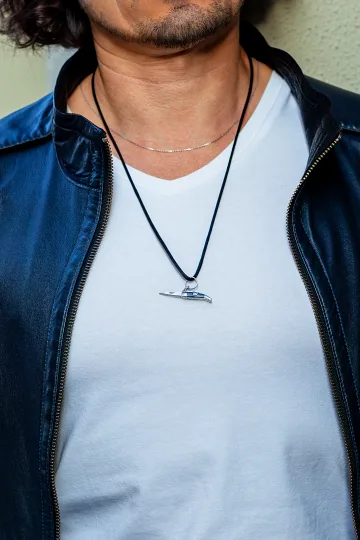






About Zevira
Zevira makes jewellery with meaning behind it, where the form follows. We love symbols with a history and try to tell about them honestly: where the truth is, where the legend, and where a later invention. Magen David is one such sign for us, with centuries of ornament, protection, community, statehood and memory behind it. If you want to wear the star consciously, we will help you choose the metal, size and form to fit your story.