The Unicorn in Jewelry: A Horn Worth More Than Gold, Narwhal Instead of Magic, and Why This Beast Is Everywhere Again
In medieval Europe, a "unicorn horn" sold for ten times its weight in gold. It was ground into powder and stirred into the wine of monarchs, who believed it neutralised any poison. People carved goblets and sceptre tips from it. Yet the beast whose horn was guarded so jealously in royal treasuries never existed. What was sold as alicorn was the tusk of an Arctic whale, the narwhal, taken off the coast of Greenland.
This swap held for centuries, and it captures the whole truth of the unicorn as a symbol. A beast nobody ever saw became one of the most durable images in Western culture. Greek historians described it as a real animal of India. A translator's slip wrote it into the Bible. It became the emblem of an entire kingdom. It was turned into an allegory of Christ and into a badge of maidenly purity. And in our own time it has returned in a rainbow shimmer, on children's pendants and grown-up rings, and somehow everyone understands it at once, without explanation.
This article is about how one non-existent animal travelled from an Indian "wild ass" to a pearly charm, what it actually means, which stones give that rainbow palette, and who really suits a piece like this.
What a Unicorn Is and How It Looks in Jewellery
Where the Image Comes From: Horse, Goat, Narwhal
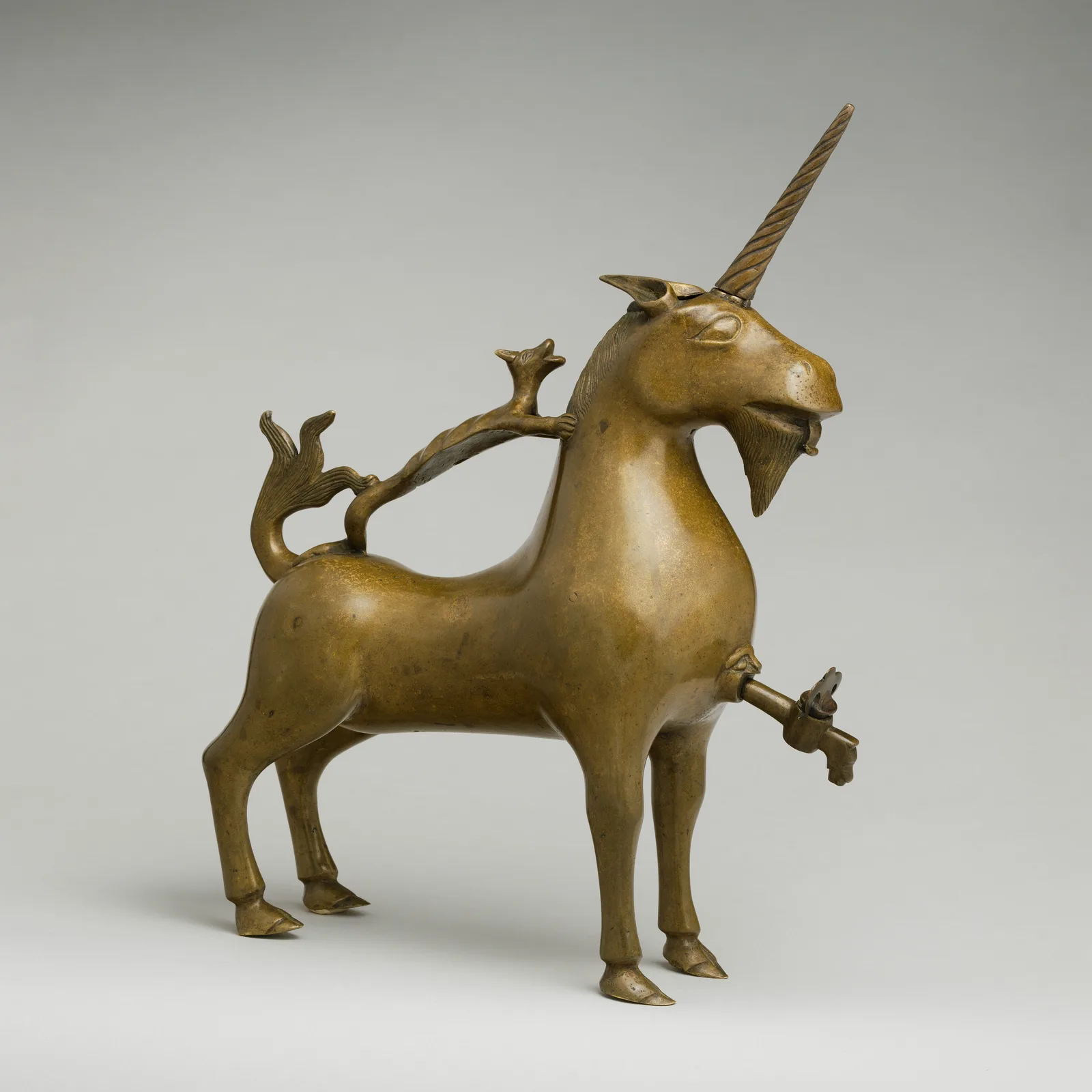
The unicorn we picture, a white horse with a twisted horn on its brow, is a late assembly from several sources. Ancient authors described a beast the size of a horse, but with cloven hooves, a goat's beard and the tail of a boar or a lion. The horse's body only attached itself to the image by the late Middle Ages. The corkscrew horn came straight from the narwhal: it was the spiral shape of its tusk that became the canon of a "proper" alicorn. So the unicorn is a collage: the head and body of a horse, the legs and beard of a goat, the horn of an Arctic whale. It copies none of these animals on its own.
How the Unicorn Arrives in Jewellery
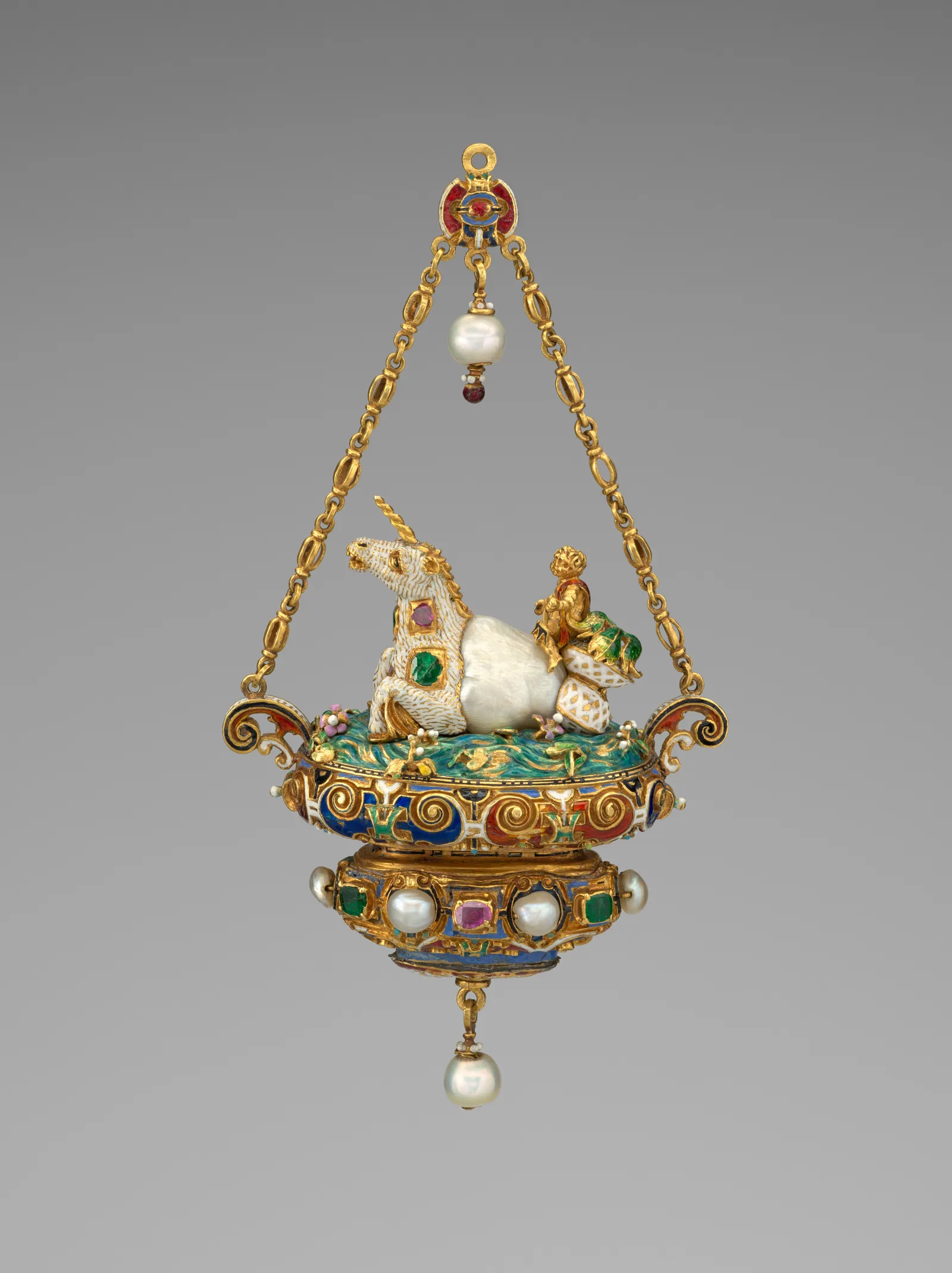
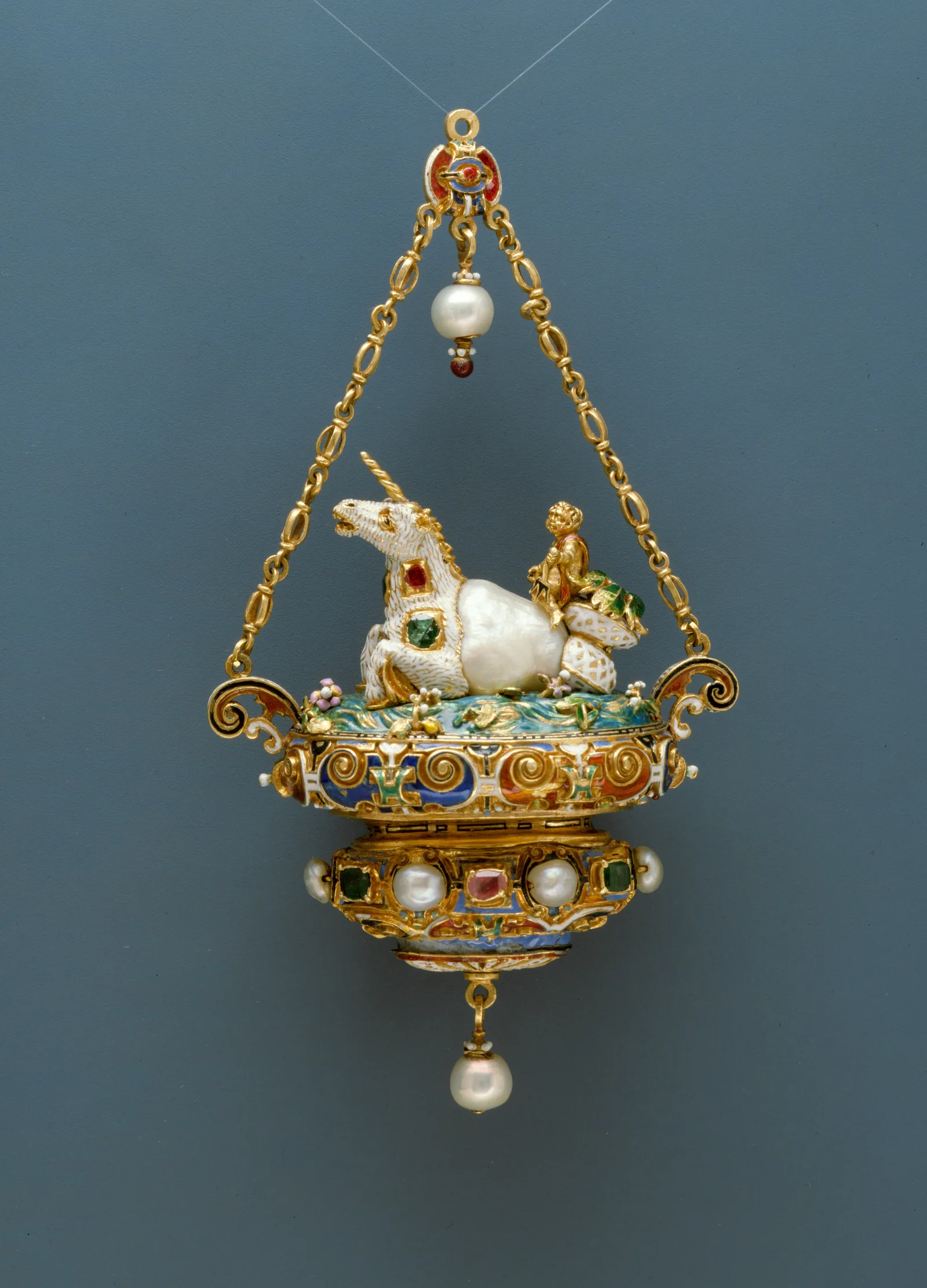
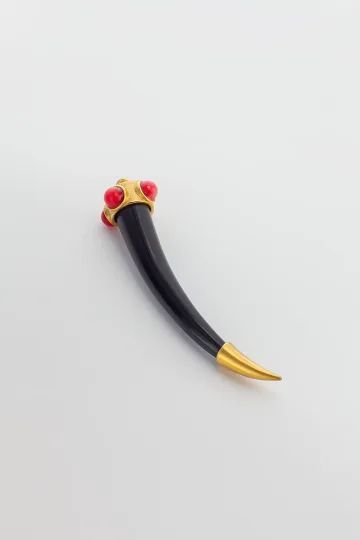
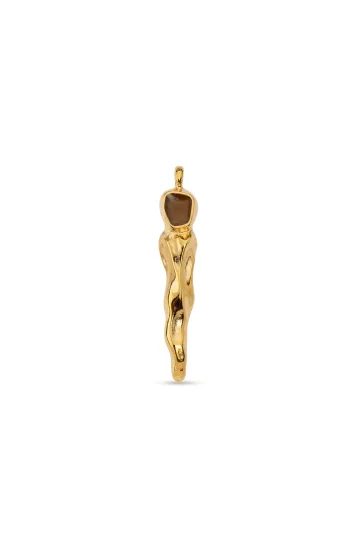
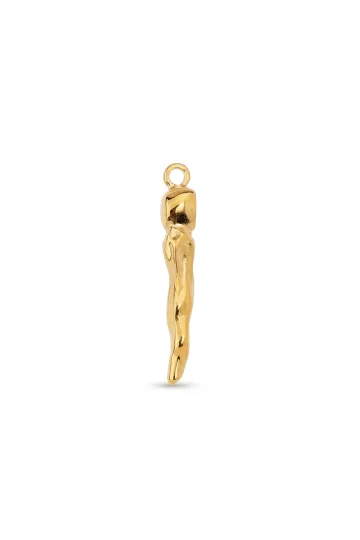
In jewellery the unicorn lives in a few recognisable formats. The classic head in profile, with a flowing mane and a horn, usually as a pendant. The full figure of a galloping or rearing horse, more often on larger pendants and brooches. A minimalist silhouette reduced to the outline of a head with a single horn, for thin chains and studs. And the horn itself stands apart as a motif of its own: a long twisted shape with no beast, spare and grown-up. Most often the unicorn is made of 925 sterling silver with enamel or a rainbow finish, less often of gold with coloured stones.
Wear the symbol, don't just read about it. These are in stock:




How a Unicorn Differs From Just a Horse in Jewellery
The horse as a jewellery motif has existed for thousands of years and reads very differently: strength, speed, nobility, the status of the rider. The unicorn takes the bodily grace of the horse but flips its meaning. The horse is earthly, working, military or racing. The unicorn is unearthly; you cannot saddle or harness it. That is why a unicorn in jewellery is almost never shown with tack, a saddle or a rider, while a horse often is. The unicorn is always on its own, free, and it is exactly that unbridled quality that reads as part of its magic.
Why the Horn Matters More Than the Beast
Remove the horn and you are left with an ordinary horse. The whole meaning rests on a single detail, and this is a rare case in animal symbolism where the heart of the image is not the animal but its anomaly. The horn is what makes an ordinary horse magical, singular, invulnerable. So in jewellery the horn is almost always emphasised: gilded, picked out in contrasting enamel, given a pearly sheen or set with tiny stones. A unicorn pendant on which the horn gets lost is considered a failure, because the whole idea drains out of it.
The History of the Unicorn: From Ctesias to a Royal Coat of Arms
The unicorn was not born all at once. It was assembled over nearly two and a half thousand years, and each era added its own layer of meaning. Let us take those layers in turn, because they are what we pack into the small figure on a chain today.
Ctesias and Pliny: The Unicorn as a Real Animal
The first detailed description came from the Greek physician Ctesias of Cnidus, around 400 BCE. He served at the Persian court and retold stories about India, a country he never saw himself. Ctesias wrote of "wild asses" the size of a horse, white-bodied, with a dark red head and a single horn on the brow, white at the base, black in the middle and crimson at the tip. A cup made from such a horn, he claimed, protected against poison and seizures. Most likely his account blended the Indian rhinoceros, the oryx antelope seen in profile and rumours of rare animals.
Four centuries later the Roman naturalist Pliny the Elder repeated the story in his Natural History and added that the unicorn could not be taken alive. That detail, its elusiveness, proved more important than anything else. The beast is rare, but the point is not even its rarity: it simply cannot be caught by force. From this would later grow the whole legend of the hunt.
The Biblical Re'em: A Translation Error That Made a Monster
In the Hebrew text of the Old Testament the word "re'em" appears several times, denoting a wild bull, a powerful and untameable aurochs. When the Bible was translated into Greek in the third century BCE, "re'em" was rendered as "monoceros," one-horned. The Latin Vulgate fixed this as "unicornis." So a bull turned into a unicorn inside the sacred text itself. The medieval reader found the unicorn in the Psalms and the Book of Job and did not doubt it was real: if it appears in Scripture, then it exists. This accident of translation gave the unicorn a theological weight that no other fabulous beast ever had.
Medieval Bestiaries and the Legend of the Hunt
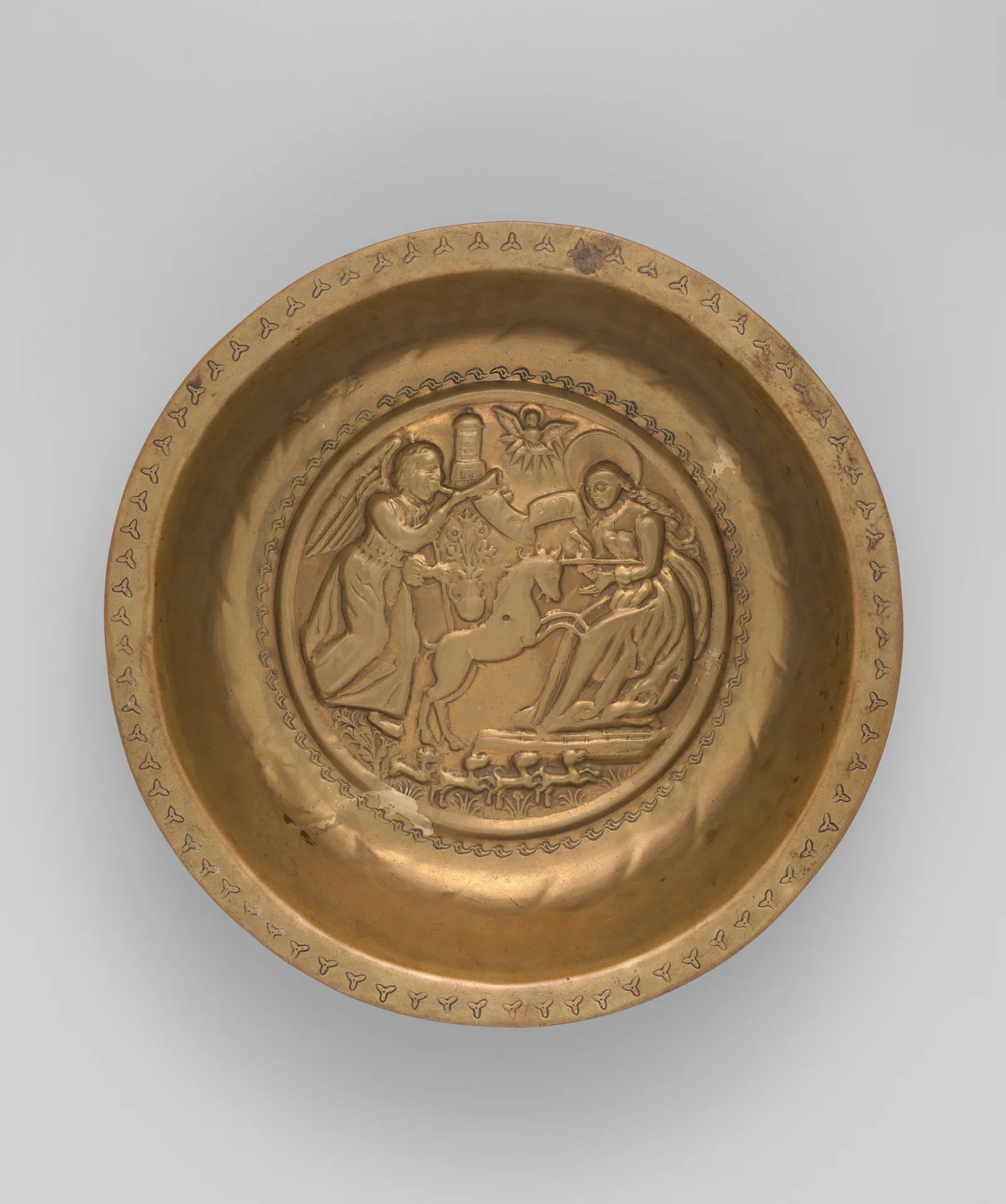
In medieval bestiaries, collections of animals paired with moral readings, the unicorn held a place of honour. It was there that the famous legend of the hunt took shape. The unicorn cannot be beaten by force; it is fierce and fast, and its horn runs the hunter through. But there is one trick: lead a young maiden into the forest, and the unicorn will come to her of its own accord, lay its head in her lap and fall asleep. Then the hunters step out from hiding and kill the sleeping beast.
This scene became one of the most copied subjects of medieval art. On the everyday level it read as both warning and poetry: even the most untameable creature is defenceless before purity. On the theological level it carried a second meaning, of which more below.
The "Lady and the Unicorn" and "Hunt of the Unicorn" Tapestries
Two tapestry series from the end of the fifteenth century cemented the unicorn in high art. The first, "The Lady and the Unicorn," is six tapestries, five of them devoted to the five senses and a sixth bearing the enigmatic inscription "To my only desire." On each panel a lady stands flanked by a lion and a unicorn, on a flowering red field strewn with a thousand plants and animals. The sixth tapestry has dozens of readings, and no single one has ever won out.
The second series, "The Hunt of the Unicorn," is seven tapestries in which the beast is tracked, cornered and killed, while in the last panel it is alive and lying calmly within a round enclosure among flowers, chained loosely to a tree. This ending is read both as an allegory of Christ's resurrection and as a symbol of marriage: the tamed beast by the fence is the spouse who has found peace. Both series set the visual note that jewellers still use today: a unicorn among flowers, white against a bright ground, gentle and untouchable.
The Christian Allegory: The Unicorn as Christ
Medieval theologians read the legend of the hunt as the story of the Incarnation. The elusive unicorn is Christ, the maiden is Mary, the horn is the unity of God the Father and the Son, and the hunt and death of the beast are the Crucifixion. What began as a hunting tale became a coded sermon. That is why the unicorn appears so often on religious objects of the late Middle Ages, on reliquaries, in manuscript illumination, in church carving. For a modern reader this is an unexpected turn: the sweet rainbow pony was once a serious symbol of the divine.
The Scottish Unicorn: A Whole Country's Emblem
The unicorn's most famous heraldic life is tied to Scotland. From the fifteenth century it became the royal symbol of the Scottish monarchs. The unicorn was chosen because in medieval heraldry it counted as the proudest and most untameable of beasts, one that could be held only by a golden chain. On the royal arms the unicorn is always shown bound by a chain: it is both a sign that only royal power can tame it and an old allusion to wild, free nature brought under the crown.
After the crowns of England and Scotland were united at the start of the seventeenth century, the arms were combined: on one side the shield is held by the English lion, on the other by the Scottish unicorn. Two heraldic rivals, the lion and the unicorn, who in folklore forever battle for the crown, ended up on opposite sides of the same shield. The Scottish unicorn remains a living national symbol to this day, and jewellery featuring it is popular as a mark of Scottish identity.
The Chinese Qilin: A Distant Relative
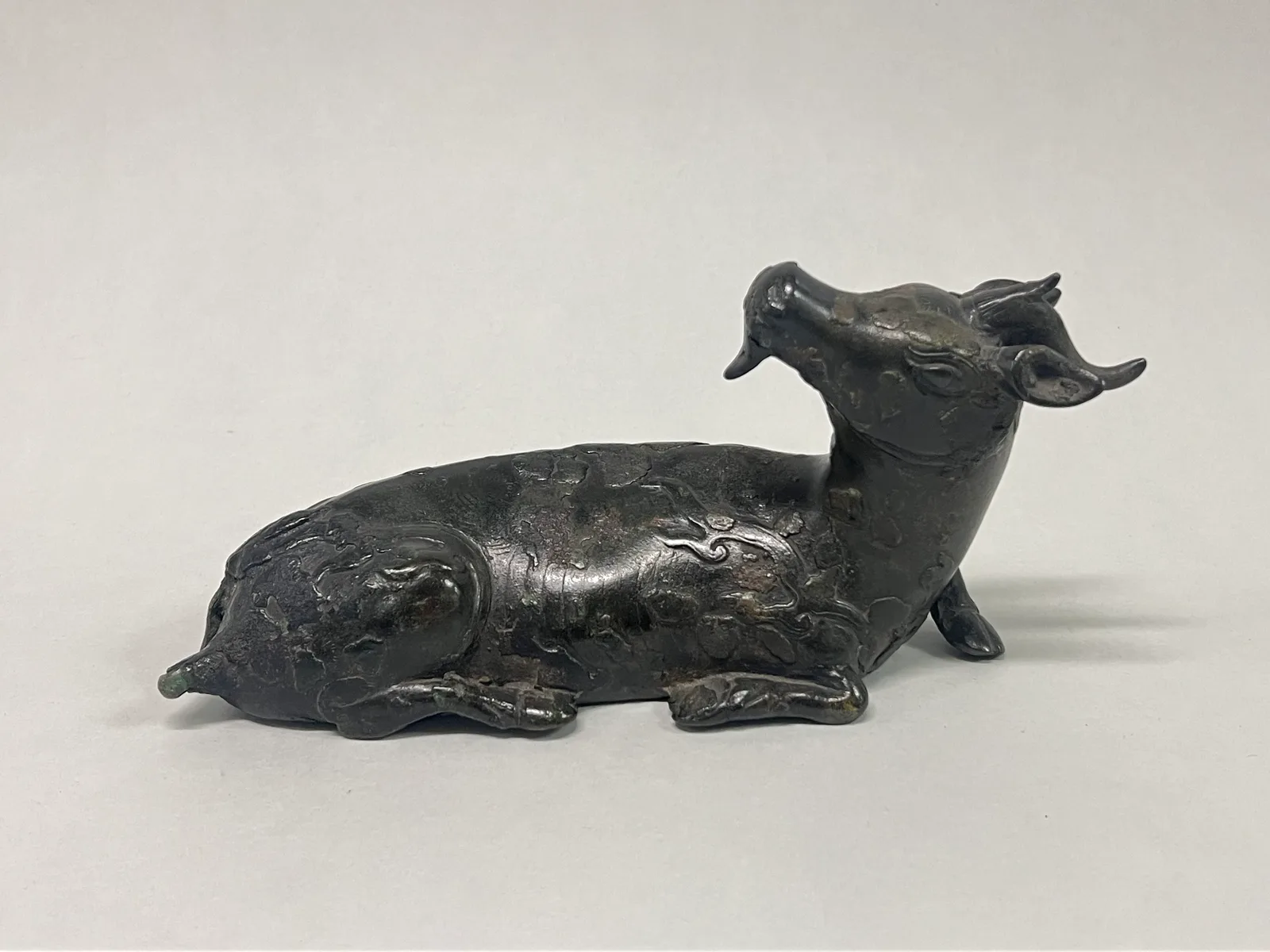
At the other end of Eurasia there was its own one-horned beast, the qilin. It is often called the "Chinese unicorn," though it looks quite different: a scaly body, hooves, sometimes a dragon's head, one horn or two. The qilin is an auspicious omen. By legend it appears at the birth or death of a great sage and never steps on living grass, so as not to harm it, and eats no living creatures. It is gentle, just, and brings children and prosperity. There is no direct kinship between the European unicorn and the qilin; they are independent images, but they echo each other strikingly: both one-horned, both symbols of purity and of a rare blessing, both embodying the thought that true strength can be gentle. In the jewellery of the East Asian tradition the qilin is a beloved motif in its own right, especially as a wish for the birth of a child.
A single silver horn says more than a saddlebag of rainbow rhinestones. Leave the glitter for the birthday party.
How to Wear a Unicorn
A unicorn has passed through my hands in dozens of versions, from children's studs to a strict gold horn. Here is what actually works, sorted by occasion.
Rainbow or spare: which should I choose? I look at age and at what the wearer wants to say. For a child or a teenager I recommend rainbow enamel, opal, anodised titanium; the shimmer belongs there. For an adult I suggest moving away from the fairy-tale and toward a single twisted horn or a clean head silhouette in silver or gold. A rainbow horn announces itself loudly, a spare one speaks quietly and reads as more expensive.
Against what background should the shimmer sit? A rainbow unicorn is a bright accent, so I choose a calm background for it: plain clothing, a minimum of other jewellery. Next to busy fabric the shimmer is lost, and I never allow that. A light top lifts the opal and enamel, a dark one makes the horn the main point of the look.
What length should I take for the neckline? I recommend a unicorn pendant on a short or medium chain, 42 to 55 cm, so the figure lands at the collarbone where it is seen. Under a V-neck the horn falls right into the centre. Under a high closed top I suggest a shorter chain, so the unicorn rests on the fabric rather than sinking under the collar.
What do I combine it with in a set? I pair the unicorn happily with lunar and celestial motifs: moon, stars, crystals, flowers. With opal and moonstone it builds a quiet lunar-rainbow line. A lion, though, I never place beside it by accident: a lion with a unicorn is already British heraldry, and that pairing has to be deliberate, not chance.
What suits the single horn? The single twisted horn is the most flexible motif of all. It works equally on a short choker and a long chain, never looks childish, and slides into any everyday set. For an adult drawn to the idea of freedom and their own difference, I almost always suggest the horn rather than the full figure.

Turn on your camera, pick earrings, a pendant or a ring, and see the piece on yourself in real time.
Switch items in one tap.
Everything runs in your browser: no photo or video is ever uploaded.
Customer reviews
Zevira is a real jewellery shop. Genuine payments, deliveries and customer thank-yous.
🥰🥰🥰 gracias
Ok, ¡gracias! 🙂
What the Unicorn Symbolizes
History gave the unicorn a dense set of meanings. They do not cancel one another out but layer up, and the wearer of a piece usually picks the one or two closest to them.
Purity and Innocence
The chief and most enduring meaning, born from the legend of the hunt. The unicorn approaches only a pure heart, and so it became an emblem of purity, innocence, untaintedness. In this sense the unicorn is often given at a christening, a first communion, to young girls. It is not about naivety but about a preserved ability to trust and to stay true to oneself.
Magic and Wonder
A modern layer, but one resting on the beast's ancient elusiveness. The unicorn is the very idea of a miracle, of what goes beyond the everyday. A wearer of such a piece often invests in it the thought of believing in the impossible, of the right to dream, of the idea that life leaves room for the inexplicable. The rainbow palette of these pieces works precisely on this meaning.
Healing and Protection
A direct inheritance from the legend of the alicorn-antidote. The unicorn's horn was held for centuries to be a universal cure and a charm against poison and disease. In a modern piece this layer sounds like a quiet talisman of health and protection from harm, without any literal belief in a magic horn. In this sense the unicorn sits alongside other protective motifs, which we cover in our guide to protective amulets, charms and talismans.
Independence and Freedom
The heraldic layer, descending from the Scottish arms. The unicorn is a beast that cannot be tamed by force, that submits only of its own will. In this sense a piece reads as a mark of inner freedom, pride, loyalty to oneself. This meaning is closer to an adult audience and sits well on a spare motif of a single horn with no fairy-tale trappings.
Uniqueness and Otherness
The freshest meaning, grown from the phrase "to be a unicorn," that is, the only one of its kind. The unicorn became an emblem of being unlike others, of the right to be different, of one's own distinctness. This layer explains why the image landed so well with a new generation: it lets you say "I am not like everyone else" gently and beautifully, without defiance.
Power and Dignity
The heraldic layer gives the unicorn one more meaning that is often missed: dignity, regality, nobility. A beast that became the symbol of Scottish royal power carried the idea of high birth and honour. In a piece this layer reads when the unicorn is made strictly, without whimsy, in cool silver or gold, with the emphasis on the proud set of the head. Such a unicorn is closer to the coat of arms than to the rainbow, and it is chosen by those for whom a note of restrained nobility matters.
The Feminine and Fertility
In medieval and Renaissance symbolism the unicorn is closely bound to the maiden, and through her to the feminine, to chastity and at the same time to the theme of marriage and fertility. The scene where the beast lays its head in a girl's lap was read both as a vow of faithfulness and as a pledge of a future union. On Renaissance wedding objects the unicorn appeared as a wish for a pure and fruitful marriage. This soft feminine meaning largely explains why the unicorn appears today more often in women's and children's jewellery than in men's.
Upload a photo of your pet, someone you love, or an object. We'll build a 3D model and hand-cast it in pewter.


The Alicorn Horn and the Great Narwhal Fraud
Medicine Dearer Than Gold
In the Renaissance the "unicorn horn," or alicorn, was one of the most expensive goods in Europe. It was owned by popes, emperors and the apothecaries of wealthy cities. The alicorn was believed to sweat or change colour near poison, to neutralise toxin in wine, to cure plague, epilepsy and snakebite. Monarchs who genuinely feared poisoning kept cups and tableware of alicorn and paid whole fortunes for a pinch of powder.
Where the "Horns" Came From
There were no unicorns, of course. What was sold as alicorn was the tusk of the narwhal, a small Arctic whale. In males the left canine tooth grows into a straight, perfectly spiralled tusk up to three metres long. It was this spiral shape that became the canonical look of the unicorn's horn. The tusks were hunted off the coasts of Greenland and northern Scandinavia by Norse and Pomor hunters, carried south and sold as a treasure, with the source carefully hidden. The famous "throne of unicorn horns" of the Danish kings is built entirely from narwhal tusks.
How the Alicorn Was "Tested" for Authenticity
Because the price was enormous, a whole practice of "testing" the horn existed. A genuine alicorn was supposed to sweat near poison, to boil the water it was dipped into, or to make a poisoned drink fizz. Spiders and scorpions placed inside a circle drawn with an alicorn could not, by belief, escape it. Apothecaries demonstrated these "experiments" to buyers, and every successful trick raised the price. In effect we are looking at one of the first documented markets in luxury counterfeit, where faith in a miracle was sustained by theatre rather than by proof.
When the Fraud Came to Light
By the seventeenth century naturalists began publicly linking the alicorn with the narwhal, and belief in the miraculous horn gradually crumbled. But by then the image was so strong that debunking the reality of the beast left it untouched. The unicorn ceased to be an apothecary's product but remained a symbol, and in that role it has survived to our day. If you want a short answer to whether the unicorn's horn existed: yes, it did, only it was a whale's tooth.



Why the Unicorn Is Everywhere Again
A Return Through Children's Culture
The image came back into everyday life mainly through children's goods and illustration. The unicorn turned out to be an ideal children's symbol: kind, unfrightening, bright, tied to magic and yet free of aggression, unlike dragons or predators. From children's books and toys it moved on to clothing, stationery and, of course, jewellery. For a whole generation the unicorn became the first "magical" beast, and that warm association stayed with them into adulthood.
The Rainbow Unicorn and the Right to Be Yourself
In parallel the unicorn became a symbol of being different and of self-acceptance. The rainbow palette, fused firmly to the image, added a sense of openness and diversity. "To be a unicorn" entered speech as a metaphor for something rare and precious: a one-of-a-kind specialist, a stroke of rare luck, a person unlike the rest. This layer of meaning lifted the unicorn out of the purely children's zone into the adult one, and today a piece featuring it is worn by people of any age.
The Aesthetic of Shimmer and Iridescence
Finally, a purely visual reason. Modern jewellery fashion loves mother-of-pearl, opal, holographic and iridescent effects, and the unicorn is an image built for exactly that palette. A rainbow horn, a pearly mane, an opal eye: the beast gives a designer the excuse to gather everything shimmering into one piece. So symbol and material found each other.
A Longing for Wonder as the Quiet Engine of the Trend
Beneath all the reasons above lies one more, less obvious. The more rational and calculated daily life becomes, the stronger the pull toward images that give us permission to believe in the inexplicable. The unicorn is a polite way to keep a scrap of fairy tale close without giving up adulthood. It demands no rituals, obliges you to no esoterica, does not look like superstition. A small horn on a chain is a compact reminder that not everything in life has to be useful and explainable, and this quiet function is probably what keeps the image afloat more firmly than any fashion.
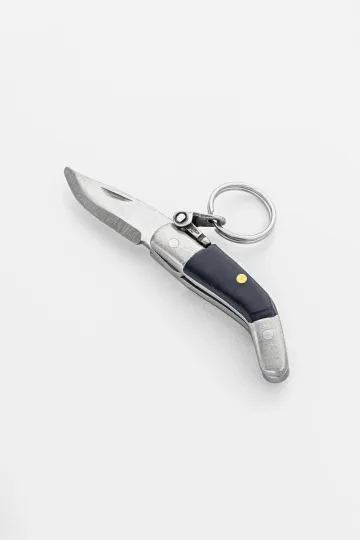
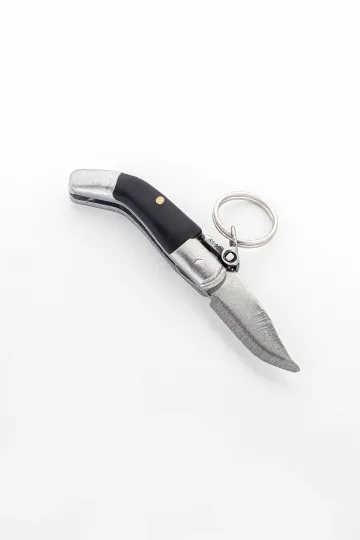
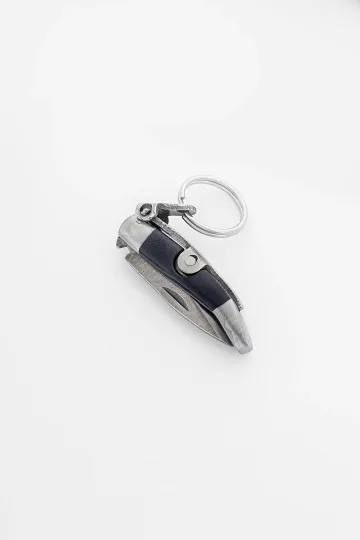
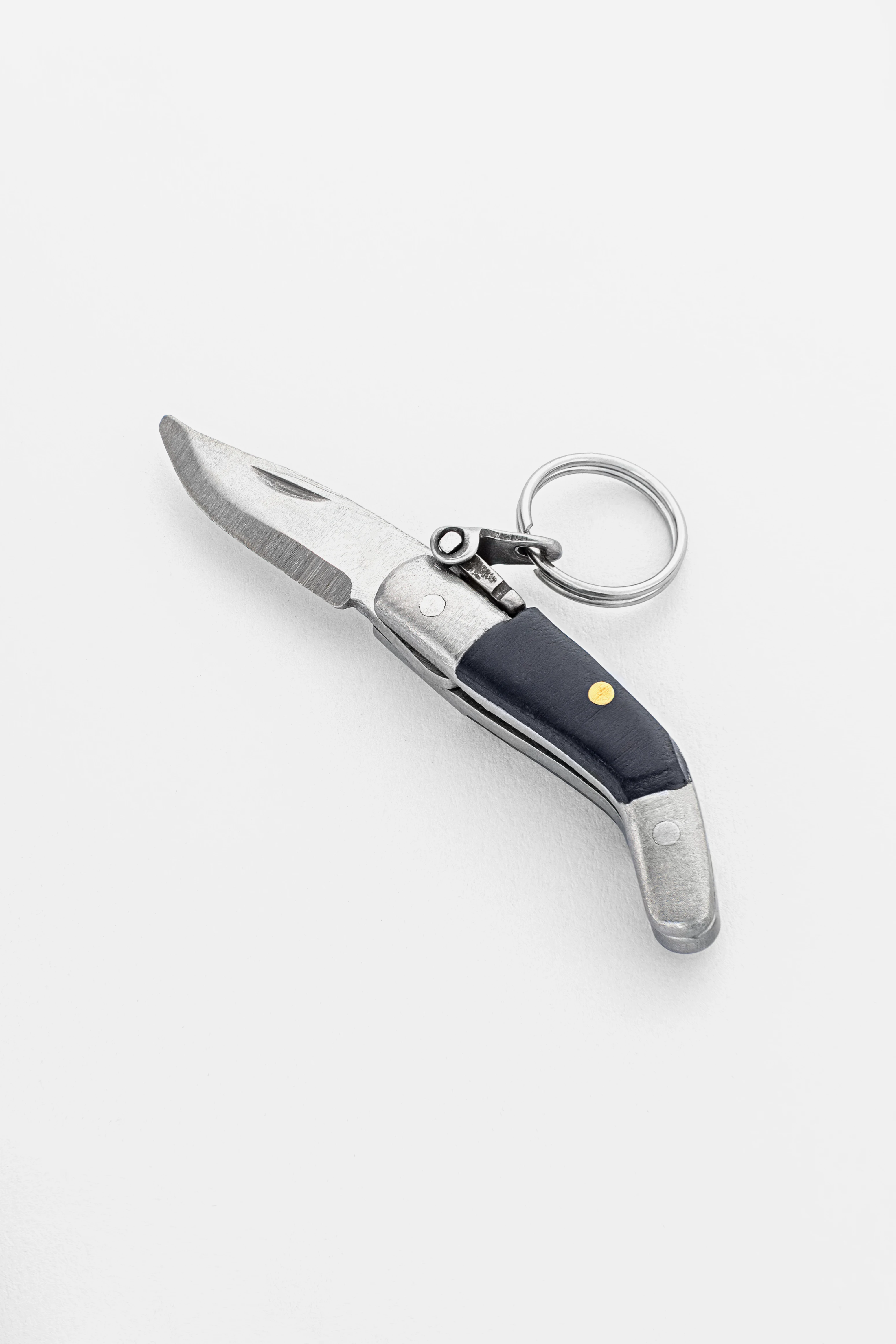
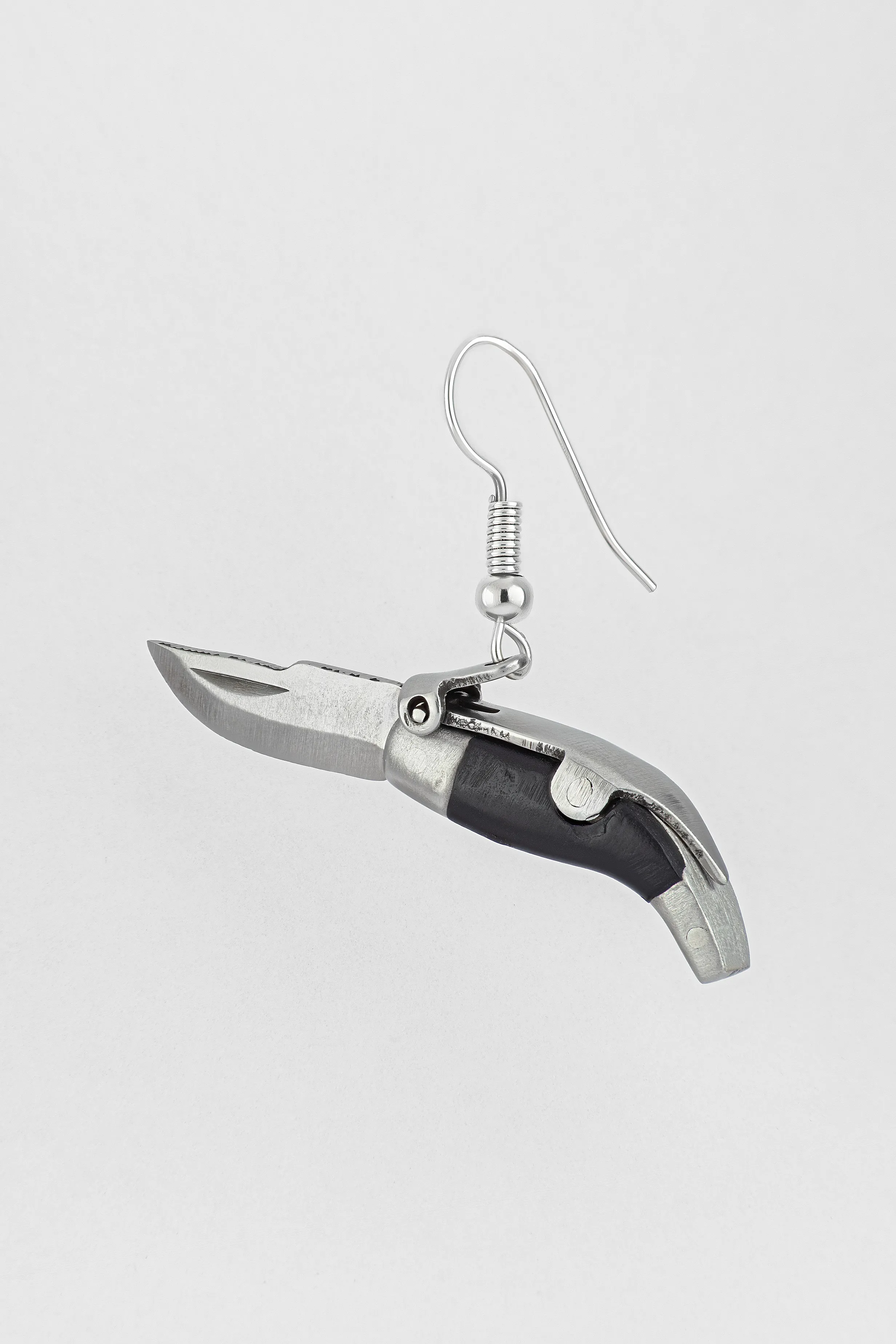
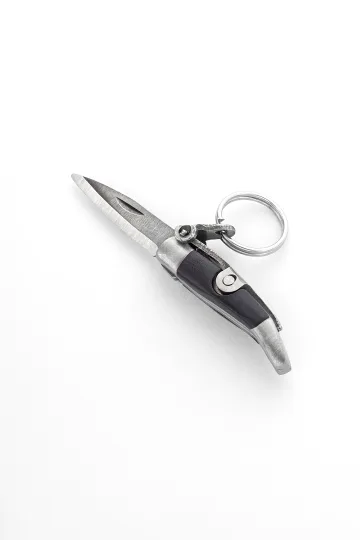
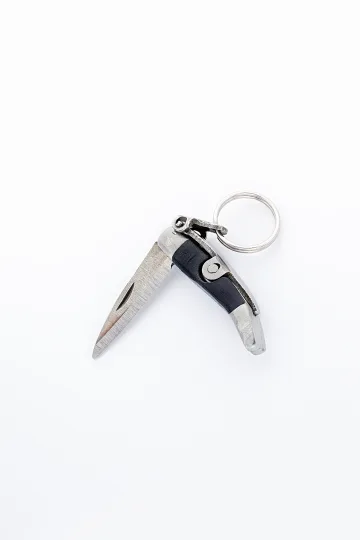
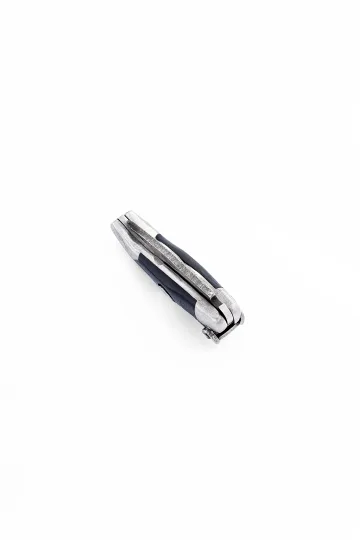
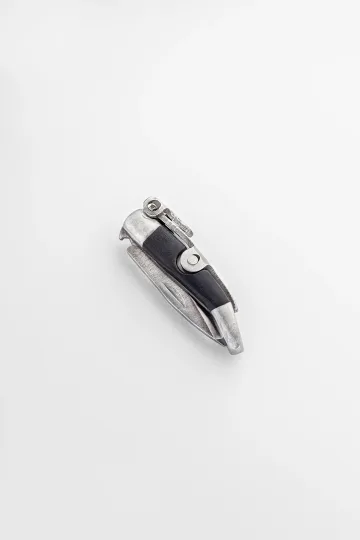
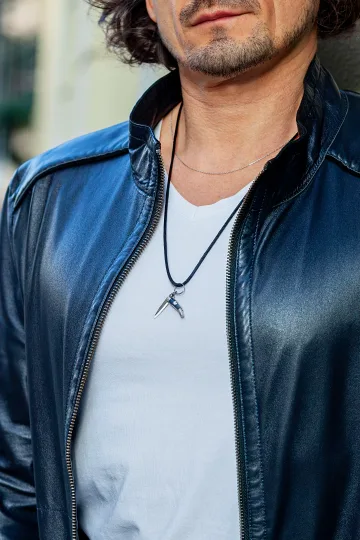
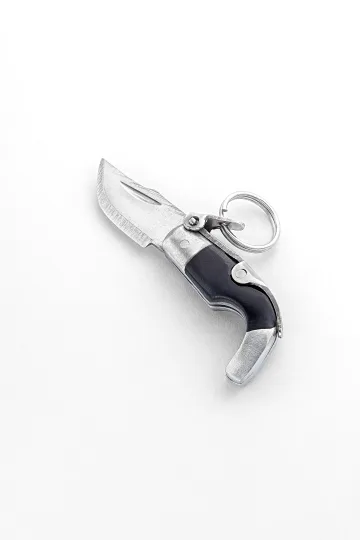
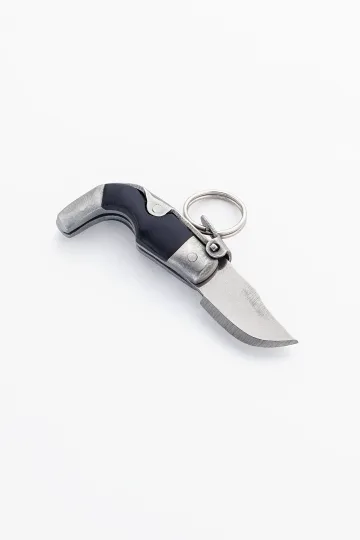
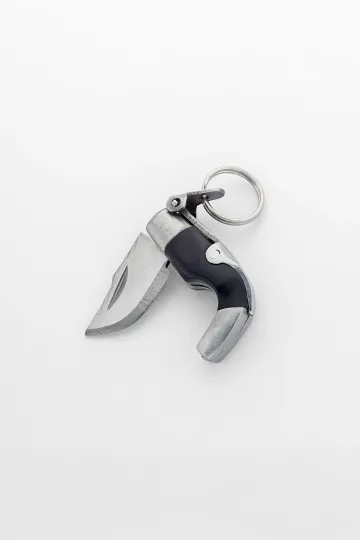
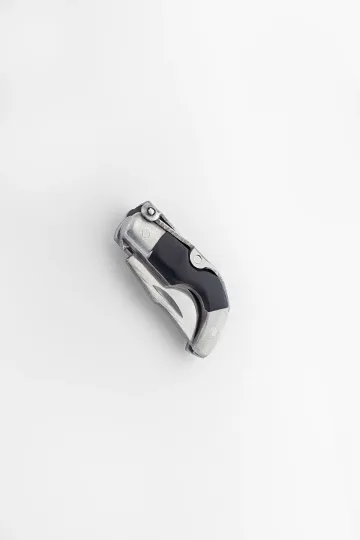
CAPAORA mini knife pendant
The 18th-century Spanish navaja in miniature: 40 mm of stainless steel, a real folding mechanism and a Palanquilla lock that clicks. An affordable gift to remember.
Authentic · Ships from Spain · 14-day returns
The Rainbow and Pearly Palette: Which Materials Produce It
The chief visual trait of the modern unicorn is iridescence. There are several ways to achieve it, and each sounds different and carries a different cost. Let us go through the main ones.
Opal: A Natural Rainbow in a Stone
Opal is a stone inside which light breaks into the spectrum, giving its famous play of color. No other natural stone conveys the idea of "a rainbow in one object" so exactly. In unicorn jewelry opal is most often set as the beast's eye, as the heart of a flower beside it, or as an inlay in the horn. Opal comes both as costly precious opal and as affordable synthetic, and both give iridescence. We cover this stone and its play of color in detail in our piece on opal and its rainbow glow.
Moonstone: A Cool Milky Glow
Moonstone gives not a rainbow but a soft bluish-white glow that drifts across the surface as you tilt it. This glow is called adularescence. For a unicorn, moonstone is about lunar, quiet magic, about a nocturnal fairy-tale quality rather than a bright celebration. It is chosen when you want a restrained, "grown-up" version of a magical piece. There is a separate guide on the properties and varieties of this stone, on moonstone and its meaning.
Mother-of-Pearl: A Warm Silky Sheen
Mother-of-pearl is the inner layer of a shell, giving a soft rainbow-white shimmer. It is often used to cover the body or mane of a unicorn, achieving the effect of a living silky sheen. Mother-of-pearl is warmer than opal and calmer; it does not shout but glows from within. It pairs well with silver and gold and gives a piece a costly, tender look.
Rainbow Enamel and Hot Enamel
Enamel is a glassy coating fused onto metal. Colored enamel builds up the mane and horn in segments, achieving a clean rainbow transition. Hot enamel gives a deep, saturated, durable color; cold enamel is simpler and cheaper but less long-lasting. Enamel likes care in wear, because it fears knocks and abrasives. How to care for enamel jewelry we set out in a separate piece on enamel and how to care for it.
Anodised Titanium and Holographic Finishes
The most modern way to get a rainbow on metal is the anodising of titanium. When treated with electric current, an ultra-thin oxide film grows on the titanium surface, and depending on its thickness the metal shimmers blue, violet, gold, green. The colour here is not paint but an optical effect of the surface itself, so it does not wear off like a coating. Holographic and iridescent sprays on steel or silver give a similar rainbow gleam more cheaply. For a unicorn's horn such technologies produce that very "neon" iridescence that the new generation loves.
Coloured Stones as an Accent
Besides iridescent materials, the unicorn is often brought to life with pinpoint coloured stones. A small pink or lilac stone in the eye or the horn adds a fairy-tale quality without turning the whole piece into a rainbow. Cubic zirconia and synthetic spinels give a clean bright colour at an affordable price; natural sapphires and amethysts sound costlier and calmer. This approach is good when you want a hint of magic rather than full iridescence: a single stone does the work of a whole palette.
What It Costs by Feel
The price range is huge and depends almost entirely on the material of the horn and the stones. A silver unicorn with cold enamel and a synthetic stone is a purchase on the level of a nice dinner out. Silver with hot enamel and a quality synthetic opal is closer to the cost of a concert ticket. A gold unicorn with a natural opal or moonstone and anodised details is already a gift for a serious occasion, comparable to a weekend trip away. The shape of the beast itself barely affects the price; the stones and the metal decide everything.
Plain Silver and Gold Without Iridescence
Not every unicorn has to be a rainbow. A spare silver or gold unicorn, especially as a single twisted horn or a clean head silhouette, looks restrained and grown-up. This version is chosen by those drawn to the heraldic or mythological meaning rather than the fairy-tale aesthetic. Sterling 925 silver is ideal here: it holds the detail of the horn and is easy to refresh with cleaning.
Leave your email, we'll send your discount code. No spam, unsubscribe anytime.
The code arrives by email, valid on your first order.
Children's and Adults' Unicorn Jewellery
A Unicorn for a Child
This is one of the most successful children's motifs. The image is kind, recognisable, free of frightening associations, tied to magic and dreams. A silver unicorn pendant on a child's chain, unicorn studs, a bracelet with a horn charm: a common gift for a birthday, a christening, a first school year. For the youngest, versions without small removable parts and without a sharp horn tip are chosen. Rainbow enamel and an opal eye make such a piece especially wanted by a child.
A Unicorn for a Teenager
In the teenage years the unicorn often reads as a mark of being different and of self-expression. Here bright rainbow pendants, anodised titanium, holographic effects and pairing the unicorn with other symbols in a set all work well. Teenagers like a piece that says something about them, and "to be a unicorn" in the sense of "to be yourself" is a message they understand.
A Unicorn for an Adult
The adult reading is subtler. Here you move away from childlike fairy tale toward spareness and material. A twisted horn in gold, a minimalist head silhouette, a unicorn with moonstone or precious opal, a heraldic Scottish unicorn in silver. Such an image is worn as a mark of inner freedom, of belief in wonder, of loyalty to one's own distinctness. The adult unicorn is not about the children's theme but about a preserved ability to dream, set in restrained design.
Jewellery Formats
The unicorn lives in almost any jewellery format. A pendant is the most versatile option, from a tiny silhouette to a large figure. Stud earrings with a unicorn head or matching drops. A ring with a relief head or a horn inlay. A bracelet with a unicorn or horn charm. A brooch, especially in the vintage and heraldic key. The single-horn motif stands apart, looking more modern and grown-up than a whole figure.
The Unicorn as a Gift: Which Occasions It Suits
This motif is easy to give, because its meaning is soft and safe, with no sharp edges. To a child it is given for a birthday, a christening, a first school year. To a teenager as a sign of support for their distinctness and their right to be themselves. To an adult woman as a wish to keep believing in wonder, or as a lunar-rainbow piece to suit her taste for iridescence. To a lover of Scottish culture as a heraldic emblem. The unicorn is almost never read as an inappropriate or offensive gift, and that is its strength: it is hard to go wrong with, if you know the person's taste for the fairy-tale or, conversely, the spare aesthetic.
Paired and Family Themes
The unicorn works well in a paired key too. A mother and foal on one pendant read as a family amulet. Two unicorns facing each other form a romantic paired sign. And the single-horn motif divides easily into a pair of matching pieces for people close to one another. We look at the theme of pairing and how symbols work in sets in more detail in our guide to protection rings and their meaning.
Caring for Unicorn Jewellery
Care depends on the material, and here there are a few simple rules. A silver unicorn is cleaned with a soft cloth or a special silver cloth; oxidised areas are touched only on the raised parts, so as not to wipe the blackening from the recesses of the horn and mane. Enamel dislikes abrasives, acids and knocks: it is enough to wipe it with a slightly damp soft cloth and dry it at once. Opal and moonstone are soft, sensitive stones; they are kept away from knocks, sharp temperature changes and prolonged contact with water and chemistry, so opal pieces are taken off before a shower, a pool and sport. Mother-of-pearl also dislikes cosmetics, perfume and chlorine. Anodised titanium and holographic finishes are more robust, but rough polishing that can scratch the optical film harms them too. The general rule is simple: take a piece off before a shower, swimming, sport and applying perfume, and store it apart from other items so the horn and the enamel do not get scratched.
Facts That Surprise
The unicorn's horn is a tooth. The canonical twisted shape of the horn is copied entirely from the narwhal's tusk, and the narwhal's tusk is, strictly speaking, an overgrown left canine that grows through the male's upper lip. The most expensive "horn" in history was a tooth.
The unicorn got into the Bible by mistake. The ancient Hebrew word "re'em" meant a wild aurochs bull. Greek and Latin translators rendered it as "one-horned," and so a beast that was never intended appeared in the sacred text.
The Scottish unicorn is always drawn in chains. On the arms it is bound by a golden chain, because in heraldry it was considered so wild and proud that only royal power could hold it.
The lion and the unicorn are enemies in folklore. An old English rhyme describes their endless battle for the crown. On the united arms of Britain they ended up on opposite sides of one shield, and this forced "friendship of enemies" has survived to our day.
The Danish throne is built from "unicorn horns." The coronation throne of the Danish kings is made of narwhal tusks, which in their time were thought to be genuine alicorns and prized as the greatest of treasures.
The qilin does not step on grass. The Chinese one-horned beast, a distant relative in meaning to the unicorn, is by legend so gentle that it does not crush living grass and eats no living creatures, so as to harm no one.
The unicorn was a serious Christian symbol. The sweet rainbow pony was, in the Middle Ages, a coded allegory of Christ, and the scene of the hunt for it was read as the story of the Crucifixion and Resurrection.
The oryx in profile looks one-horned. An oryx antelope with two long straight horns is easy to mistake from the side for an animal with a single horn, and this optical illusion may well have fed the ancient stories of a real unicorn.
Send a friend a discount code, they save on their first order.
Frequently Asked Questions
Did the unicorn really exist?
As a biological species, no, there was never a unicorn. But the image is assembled from real details: a horse's body, a goat's beard, and above all the twisted horn, copied entirely from the tusk of the Arctic narwhal. Ancient descriptions of the unicorn as a real beast most likely arose from confusion with the rhinoceros, the oryx antelope in profile and rumours of the rare animals of India. So the unicorn never existed, but each of its parts has a real prototype.
What was actually sold as a "unicorn horn"?
The narwhal tusk. In males of this Arctic whale the left canine grows into a long, straight, twisted tusk up to three metres. It was this spiral shape that became the canonical look of the unicorn's horn. In the Renaissance such tusks were carried from the north and sold as alicorn, a cure for poison and disease, dearer than gold, with the source carefully hidden. When naturalists linked the alicorn with the narwhal, belief in the miraculous horn crumbled, but the symbol itself remained.
What does the unicorn symbolise in jewellery?
Several things at once, and the wearer chooses the meaning closest to them. Purity and innocence, the oldest meaning from the legend of the hunt. Magic and belief in wonder. Healing and protection, the legacy of the legend of the horn-antidote. Independence and freedom, from the Scottish heraldic image of the untameable beast. And uniqueness, the right to be unlike everyone else, the most modern layer, grown from the phrase "to be a unicorn."
Is the unicorn only a children's symbol?
No. It has a children's reading, and it is very popular, but the adult one is strong too. The adult unicorn moves away from fairy tale toward spare design: a twisted horn in gold, a minimalist silhouette, moonstone or precious opal, a heraldic Scottish unicorn. In that form it reads as a mark of inner freedom and a preserved ability to dream, without any childishness.
Which stones and materials give the rainbow effect?
Opal, inside which light breaks into the spectrum, is the most exact "rainbow in a stone." Moonstone gives a soft bluish-white glow. Mother-of-pearl gives a warm silky sheen. Rainbow and hot enamel build a clean colour transition across the metal. And anodised titanium shimmers blue, violet, gold thanks to an optical film on the surface, and this colour does not wear off like paint. For a unicorn's horn, enamel, mother-of-pearl or anodising is most often used.
Can you give a unicorn to a child?
Yes, it is one of the most successful children's motifs: kind, recognisable, free of frightening associations, tied to magic. A silver pendant, studs or a bracelet with a unicorn is a common gift for a birthday, christening or first school year. The one practical caveat: for the youngest, choose pieces without small removable parts and without a sharp horn tip, for safety. For older children there are no restrictions.
What is the qilin, and is it connected to the unicorn?
The qilin is a Chinese one-horned beast, sometimes called the "Chinese unicorn." It looks different: a scaly body, hooves, sometimes a dragon's head. There is no direct kinship with the European unicorn; they are independent images, but they echo each other: both one-horned, both symbols of purity and of a rare blessing, both embodying the thought that true strength can be gentle. The qilin brings children and prosperity, and in East Asian jewellery it is a beloved motif in its own right.
How do you care for a unicorn piece with opal or enamel?
Opal and moonstone are soft and sensitive; keep them away from knocks, temperature changes and prolonged contact with water and chemistry, so such pieces are taken off before a shower, a pool and sport. Enamel fears abrasives, acids and knocks; wipe it with a slightly damp soft cloth and dry it at once. Silver is cleaned with a soft cloth, oxidised areas touched only on the raised parts. Anodised titanium is more robust, but rough polishing harms it too. The general rule: take it off before water, sport and perfume, and store it apart from other items.
Silver, gold, symbolism, iridescent stones and magical motifs.
Buying it as a gift? Each one arrives ready to give.
 A branded Zevira box and a little card come with every order.




About Zevira
Zevira is a Spanish jewellery brand from Albacete. Motifs with the unicorn, the alicorn horn and iridescent stones belong to our line of magical and symbolic jewellery. For current pieces and details, see the catalogue.
Wear the symbol, don't just read about it. These are in stock: