The Griffin in Jewellery: Meaning of the Gold-Guarding Lion-Eagle and Its Heraldry
The Scythians buried griffins in their burial mounds, and the gold from those mounds still sits behind museum glass. The Greeks believed griffins guarded veins of gold at the edge of the world and tore apart anyone who reached for what was not theirs. The beast was modelled onto temple treasuries and carved into signet rings that sealed anything valuable. A lion's body, an eagle's wings and head, and a gaze that never sleeps.
The griffin is one of the oldest composite creatures in the history of jewellery. It joins the king of beasts and the king of birds in a single body, and that idea outlived the Ancient Near East, Persia, the Scythian steppe, Greek myth and medieval coats of arms, and reached all the way to the pendant on a chain you can wear today. What follows, in order: who he is, where he came from, what he means, why he ended up on heraldry, what he is made from now, how and with what to wear him, and how he differs from the dragon, the lion and the eagle.
Who the Griffin Is
Lion Plus Eagle, King of Beasts Plus King of Birds
A griffin is a creature with the body, paws and tail of a lion and the head, wings and often the clawed forelegs of an eagle. Sometimes pointed ears are added, sometimes a crest or tuft. The logic of the image is simple and strong. The lion is the summit among beasts, the eagle the summit among birds. Join two sovereigns in one body and you get a beast that rules earth and sky at once. From that comes all his symbolism: double power, double vigilance, double strength.
The idea of joining the two greatest to get the greatest of all worked again and again in ancient cultures. The sphinx, the centaur, the chimera, the pegasus, all are stitched together from parts on the same principle. But the griffin stands apart in that both his halves are predators at the top of the food chain. He is no curiosity for curiosity's sake. He is a functional symbol of supreme power and of guardianship.
Wear the symbol, don't just read about it. These are in stock:


What He Was Called in Different Languages
The English "griffin" came down through Greek and Latin. In Greek he was "gryps" or "gryphos", in Latin "gryphus", which gave English "griffin" and "gryphon", French "griffon", Italian "grifone", German "Greif". In many readings the root is tied to a word for something hooked or curved, like a beak or a claw. That fits: the griffin's chief weapons are precisely his hooked beak and crooked talons.
There is also the bird called a "griffon" vulture, a real carrion bird, but the mythical griffin and the vulture are different things, even if the words are cousins. In jewellery and heraldry the meaning is always the composite creature, lion plus eagle, never an actual bird.
What the Griffin Looks Like in Jewellery
A canonical griffin is recognised instantly. An eagle's head with a hooked beak, a sharp eye, powerful wings at the back, a lion's body with strong hind legs and a lion's tail. The forelegs are usually an eagle's, with claws, more rarely a lion's. In jewellery the griffin appears in a few stock poses: seated and alert, walking with one paw raised, rearing up with open wings, or coiled in profile for a signet or a medallion.
The smaller the piece, the more the image is simplified. On a large pendant you can show every feather and every claw. On a slim ring or earring the griffin is reduced to a silhouette: the curve of a wing, the beak, the arc of the tail. A good designer keeps three identifying marks even in miniature, the beak, the wing and the lion's hindquarters, otherwise the beast just reads as "a bird" or "a lion".
History of the Griffin: From the Ancient Near East to Russian Coats of Arms
The Ancient Near East and Egypt
A creature with the body of a beast and the head of a bird of prey appeared long before the Greeks. The oldest images turn up in the Near East and Egypt, about five thousand years ago. In Elam, Mesopotamia and the Levant, winged lions with bird heads were modelled and carved, guardians of temples and palaces. They stood at the sides of entrances and thrones, driving off evil and ill-meaning people. The future logic of the griffin was already at work: guardian of the threshold, protector of what lies within.
In Egypt the winged lion with a falcon's head was linked to solar power and to the figure of the king. The falcon is the bird of Horus, the god who watches over the pharaoh, and the lion is the king himself in animal form. Joining the two gave a sign of supreme power, guarded from above. These early winged lions are not yet griffins in the pure Greek sense, but they are their direct ancestors.
Minoan Crete and Persia
On Crete, in the palace of Knossos, griffins guard the throne room. Frescoes at the sides of the stone throne show reclining winged beasts turned toward the ruler's seat. The meaning is transparent: the king's power is watched over by mythical guardians. This is one of the earliest uses of the griffin as a symbol set specifically by a throne rather than by an ordinary door.
In Persia the griffin became a constant motif of palace art. At Persepolis, capital of the Achaemenid empire, griffins and winged bulls adorned the capitals of columns and the reliefs of ceremonial staircases. The Persian griffin is a sign of imperial might, of the force that holds a vast realm together. Through Persian art the image then spread both east, into Central Asia, and west, to the Greeks.
Scythian Gold
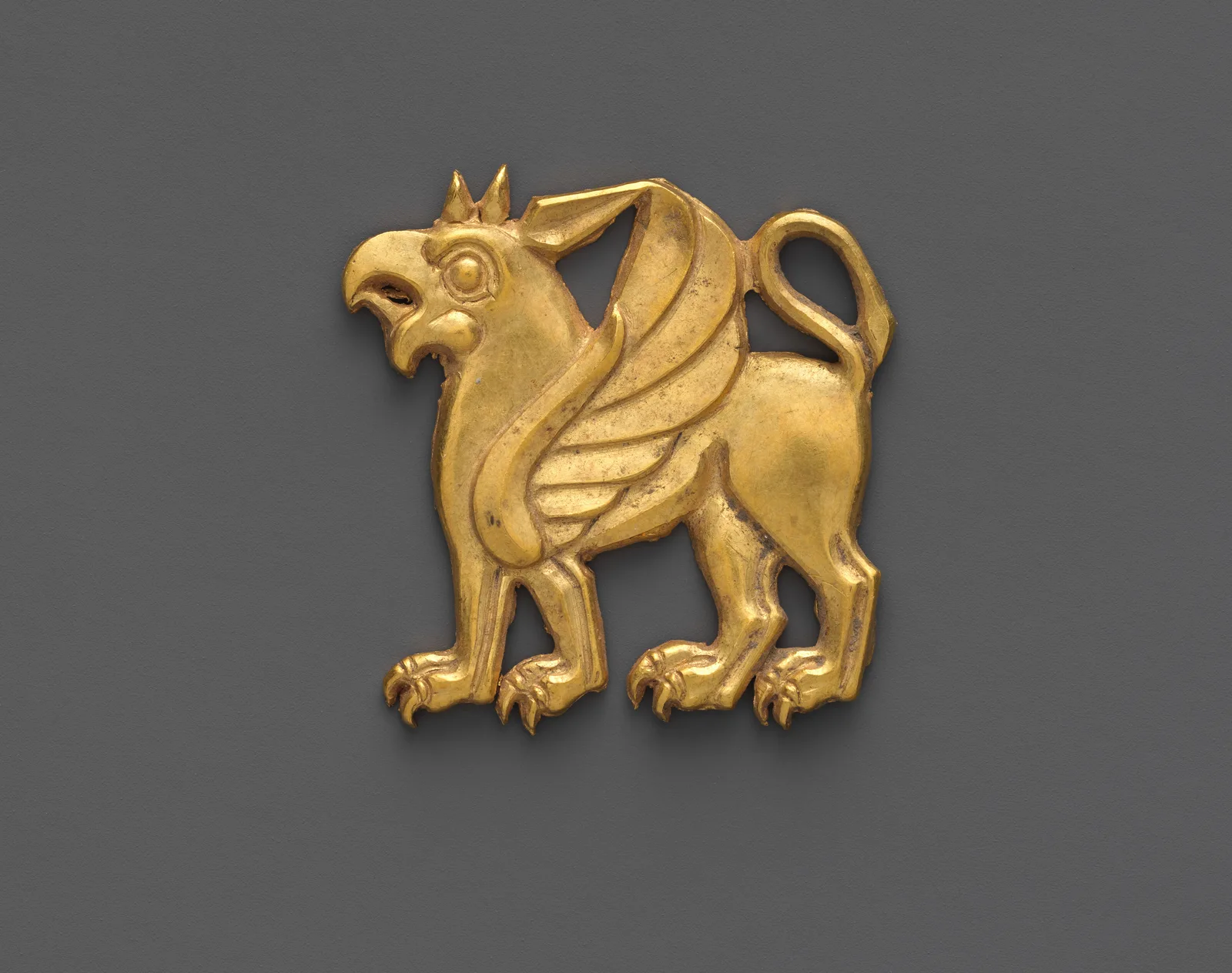
For many readers the closest chapter in the griffin's history is the Scythians. The nomads of the steppes around the Black and Azov seas made the griffin one of the central images of their animal style. Gold plaques, horse browbands, combs, pectorals, scabbards, all covered with figures of beasts, and the griffin holds a special place among them.
The Scythian griffin most often tears at its prey, a deer or a horse, gripping with beak and claws. It is an image of the predatory power of the steppe, of life's dominion over death, and at the same time of the protection of treasure. Griffins were placed in burial mounds together with the gold and weapons of noble warriors. The Greeks, trading with the Scythians through their Black Sea colonies, took over both the image and the legend of the gold-guardian attached to it. So the steppe griffin met the Greek myth.
Greece: Guardian of Gold at the Edge of the World
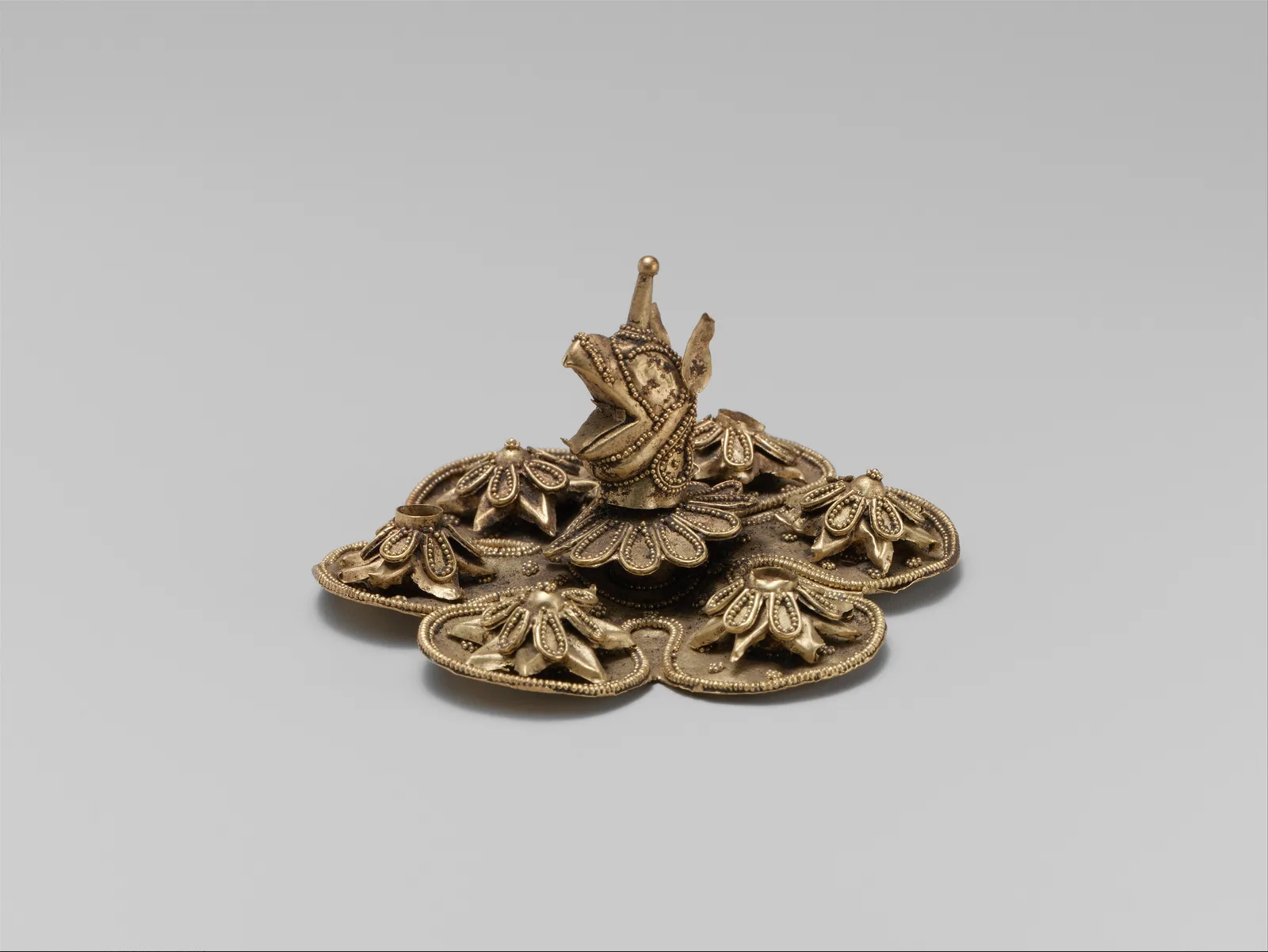
The Greeks took to the griffin and gave him his best-known legend. By their accounts, somewhere in the far north-east, among the Hyperboreans, vast deposits of gold lie in the mountains. Griffins guard this gold. A one-eyed people, the Arimaspians, try to seize it, and between griffins and Arimaspians runs an endless war over the treasure. The poet Aristeas wrote of it, and so did the historian Herodotus, retelling what he heard from the Scythians.
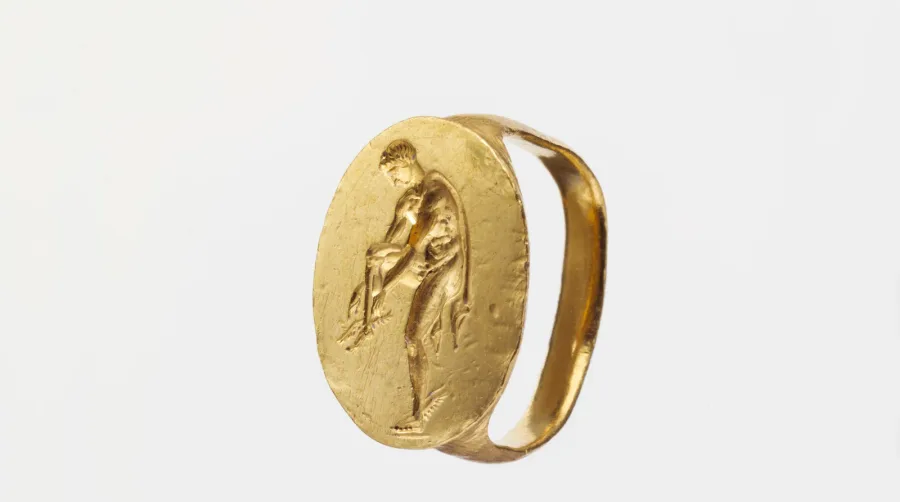
For the Greeks the griffin is linked to Apollo, god of sun and light. He draws Apollo's chariot or escorts him, and in that role the griffin becomes a solar, bright creature, enemy of all darkness and dishonesty. At the same time he is the companion of Nemesis, goddess of retribution: the griffin guards the wheel of fate and punishes those who cross the line, who show greed or pride. In Greek art griffins were modelled onto temple treasuries, struck on coins, embossed on vessels and, of course, cut into the signet rings that sealed property. A seal with a griffin is a plain statement: what lies under this seal is guarded.
Rome and Early Christianity
Rome inherited the griffin from the Greeks and made him an ornament for altars, furniture, weapons and armour. The griffin accompanied the cult of Apollo and the goddess Nemesis, keeping his sense of just retribution and guardianship. Wealthy Romans set paired griffins on table legs and the arms of chairs, turning the beast into a household guardian of property.
Early Christianity received the griffin with mixed feelings. Some theologians saw in him a dangerous pagan image. But in time a fine reading took shape. Since the griffin joins the king of beasts and the king of birds, earth and sky, he came to be read as a symbol of the double nature of Christ, both human and divine. In that role the griffin appears on church carving, on column capitals in cathedrals, on book covers. The most famous literary example is the griffin in Dante's Divine Comedy: he draws the chariot of the Church and is read directly as an image of Christ in two natures.
Medieval Heraldry
In the Middle Ages the griffin moved onto coats of arms, and here his second great life begins. A knight who took a griffin onto his shield declared everything about himself at once: the courage of the lion, the keen sight and high reach of the eagle, the loyalty of one who guards his own. The griffin was held to be an enemy of falsehood and cowardice, a protector of treasures and secrets, so he was especially favoured by families who prided themselves on valour and faithfulness.
An important heraldic distinction also developed. The ordinary griffin with wings and eagle forelegs is the "male" griffin in the usual sense. A creature with a lion's body, no wings, and rays or spikes jutting from its body was named separately as its own figure. The key point is that a griffin on a coat of arms always read as a guardian and a fighter, never as a peaceful beast.
The Griffin in Russia
In Russian culture the griffin appears early and holds on firmly. Through the Scythian inheritance, through Byzantium, through European heraldry, he entered princely and royal use. Griffins turn up on early Russian jewellery, on the white-stone carving of Vladimir-Suzdal churches, for instance on the walls of the famous cathedrals of the pre-Mongol period, where winged beasts sit beside lions and birds.
Later the griffin took root in Russian heraldry. He found his way onto family arms, and in the imperial era a gold griffin became the armorial figure of the Romanov house: a black griffin on a gold field with a sword and a shield. Griffins still guard the entrances of large buildings in the old capitals, hold up lamps on bridges, look out from facades. To a Russian eye the griffin is steppe gold, temple carving and ceremonial imperial symbolism all at once.
A griffin wants a heavy chain and an open collar, not a timid thread under a tie. Don't hang this beast on a nervous neck.
How to Wear a Griffin
I have taken the griffin through dozens of shoots, from strict menswear to unisex sets. Here is what actually works, sorted by occasion and by the character of the piece.
How do I wear a griffin every day? For daily wear I recommend steel or oxidised silver on a dense chain, fifty-five to sixty centimetres, so the beast sits on the chest. A dark top (graphite, khaki, navy) turns the griffin into the accent; a light one (white, grey, sand) lifts the relief and the oxidising. A single griffin on a clean chain always beats one crowded among other pendants, so give the beast room.
Silver, gold or steel, which one suits me? I look at your undertone and at the job the piece has to do. A cool undertone I send to oxidised silver: it reads graphic and carries across a room. A warm undertone I take to gold, which echoes the legend of the guardian of gold and adds standing. If you want a working, no-fuss beast, I choose 316L steel, which never tarnishes and leaves no marks on the skin.
Signet ring or pendant? It depends on what you want your hand or your neck to say. A signet with a griffin I recommend for a strict, classic look, next to a watch and cufflinks; on the little finger of the working hand it reads as a personal seal. A pendant I choose when you want a large, visible image on the chest. Either way one rule holds: one strong griffin piece stands on its own, so I never set a second like it beside it.
Does a griffin belong in the office? It does, as long as you keep it restrained. Under a jacket I suggest silver or matte gold; a pendant at fifty-five centimetres slips under the top shirt button and reads as a quiet detail. A signet works here even better than a pendant: severe, on the working hand, next to the cuff. Loud shine and coloured enamel I leave out of a business look.
Who is a griffin the right gift for? I give a griffin to people with a direct, firm character: those who answer for others, who are starting something big, who have earned a name for reliability. For a soft, romantic person I pick a different symbol, because the griffin wants a recipient to match. For a gift I recommend oxidised silver or gold, and I choose the format, pendant or signet, to fit what the person already wears.

Turn on your camera, pick earrings, a pendant or a ring, and see the piece on yourself in real time.
Switch items in one tap.
Everything runs in your browser: no photo or video is ever uploaded.
Meaning of the Griffin: Guardian, Strength and Power
Guardian and Protector
The main meaning of the griffin has not changed across the millennia: he is a guardian. He protects treasure, threshold, throne, secret, person. In jewellery the griffin works as a personal protector, a sign that the wearer is under guard and knows how to guard what is theirs. It is a symbol for those who watch over family, work, borders, name.
The link with guardianship makes the griffin a natural protective charm. He is given as a wish for protection, set on seals and locks in both the figurative and the literal sense, worn as a pendant to "close off" oneself from outside intrusion. If the theme of protective signs speaks to you, look at the general guide to charms, amulets and talismans: the griffin stands in the same row, but with a character of his own, proud and battle-ready.
Strength Together with Keen Sight
The griffin joins two different kinds of strength. The lion's strength is power, drive, the ability to press through. The eagle's strength is height, the wide view, precision. Together you get a rare combination: one who strikes hard and sees far. In human terms it is a symbol of mature power, resting both on raw force and on intelligence, calculation and foresight.
That is why the griffin is close to people who value exactly this pairing. The leader who guides a team and must both push decisions through and see what is coming. The protector who is strong yet attentive. The one learning to lead not by force but by looking higher and further than others.
Power and Dignity
From the earliest times the griffin stood by thrones and on palaces. He is a sign of lawful, guarded power, not the power of an invader. That is what sets him apart from purely predatory symbols. The griffin is not a destroyer, he is a keeper. He guards what is held to be valuable and right, and punishes whoever encroaches on it.
In jewellery this reads as dignity. A griffin on a ring or pendant is a statement of inner footing, of a person who knows their own worth and holds their line. Not aggression, but a confident strength that needs no proof.
Guarding Treasure and Secrets
The legend of the gold-guardian gave the griffin one more layer: keeper of the hidden and the precious. This reaches well past money. It is about everything a person hides and keeps safe, a secret, a plan, what is not for outside eyes. A griffin on a seal sealed property, a griffin on a casket guarded the contents, a griffin on a coat of arms protected the honour of a house.
So the griffin suits the person who knows how to keep things. To keep a word, to keep another's secret, to keep family memory. In a world where everything is on display, a symbol of skilful silence and guardianship rings out unexpectedly strong.
Customer reviews
Zevira is a real jewellery shop. Genuine payments, deliveries and customer thank-yous.
🥰🥰🥰 gracias

Ok, ¡gracias! 🙂

The Griffin in Heraldry
What the Griffin Means on a Coat of Arms
In heraldry the griffin is one of the most respected figures. His meaning is built from the two parts of the arms. From the lion comes courage, nobility, strength. From the eagle comes vigilance, speed, loftiness of spirit. Together the griffin reads as a guardian, a protector, a tireless fighter for a just cause, an enemy of cowardice and deceit. A family that took the griffin declared its valour and its readiness to guard its own to the end.
The griffin found his way onto the arms of cities, regions and whole lands, not only families. He is held on the arms of coastal and Baltic lands, on the arms of a number of European regions, on the emblems of universities and old trading companies. Everywhere the meaning is one: we are keen, we are strong, we guard what is entrusted to us.
Poses of the Griffin in Heraldry
Heraldry describes a beast's pose with strict words, and the griffin is no exception. The most frequent pose is "rampant", when the griffin rises on his hind legs, lifts his forelegs and opens his wings, ready to fight. There is "sejant", seated and alert, there is "passant", walking with one paw raised, there is "reguardant", looking back over the shoulder. Open wings almost always mean active defence and readiness to take flight or strike.
Colour on a coat of arms carries meaning too. A gold griffin is a sign of nobility and high value, red is courage and martial ardour, black is steadfastness and constancy, silver and white are purity of intent. The combination of a black griffin on a gold field, as in the Romanov arms, reads as a union of steadfastness and supreme dignity.
The Griffin Alongside Shield, Sword and Crown
In coats of arms the griffin is often joined to other protective signs. He holds a shield, grips a sword in his claws, wears a crown on his head as a sign of power. These pairings passed into jewellery too. A pendant with a griffin holding a shield reads as double protection. A griffin with a sword is active, fighting guardianship. A griffin with a crown is guarded, lawful power. Knowing the language of heraldry, you can assemble a piece that says a precise phrase rather than staying a "beautiful beast" with no meaning.
Upload a photo of your pet, someone you love, or an object. We'll build a 3D model and hand-cast it in pewter.

Materials: What the Griffin Is Made From
Silver
Silver is the most popular material for a griffin, and that makes sense. The cold gleam of the metal suits the predatory, proud image, and the workability of silver lets you bring out feathers, claws and the texture of the mane. Sterling 925 silver is the standard for fine silver, durable thanks to a small copper addition and safe for the skin of most people. A griffin in silver works on a man's ring, on a large pendant and on a signet.
Silver takes oxidation well. Dark recesses between the feathers and in the folds of the lion's body make the relief deep, and the beast becomes three-dimensional and a touch fierce. An oxidised griffin is one of the most expressive options: light raised areas and dark hollows give a graphic effect that reads even from a distance.
Gold
A gold griffin points straight to the legend of the gold-guardian and to the heraldic tradition, where a gold griffin is a sign of the highest nobility. Yellow gold gives a warm, solar image that echoes the griffin's role beside Apollo. White gold gives a strict, cold look, closer to silver but more durable and more costly. Red gold adds character and looks good on heavy men's pieces.
A gold griffin is a piece of standing, suited to a signet, a family ring, a large pendant. It belongs where the image of power and guardianship is meant to come through at full strength, without modesty.
Steel and Other Metals
Jewellery-grade 316L stainless steel gives a tough, low-maintenance griffin for everyday wear. Steel does not tarnish, is unbothered by water and sweat, and leaves no marks on the skin. It is the choice for those who want a rugged, working image of the beast without upkeep. A griffin in steel looks good large, on a dense-link chain.
The griffin turns up in other metals too: brass and bronze give a warm vintage tone and a patina over time, titanium gives lightness and a grey, austere shade. For heraldic, historical pieces bronze is especially good: it recalls ancient cast figures and old temple ware. Over time a bronze griffin darkens in the recesses and lightens on the raised parts, and the beast seems to live out a small history right on the owner's hand.
Coatings are a topic of their own. A steel or silver griffin can be darkened by vacuum deposition, giving a graphite, black or smoky tone that holds for years without fading. A black griffin reads especially severe and suits a rugged image well. Rose-gold or yellow plating on steel gives the look of gold at the price of steel, a sensible option for a large, eye-catching piece you will not mind wearing every day.
Stones and Enamel
The griffin's eye is often made into an accent: a dark stone, red or black, brings the face to life and sharpens the gaze. On larger pieces inserts are added along the wings or on the shield the beast holds. Enamel lets you bring in heraldic colours: a red field, black feathers, a gold outline. A coloured griffin is closer to the armorial tradition, a monochrome one to the sculptural.
The choice of stone can reinforce the meaning. Dark onyx underlines the protective, nocturnal side of the image. A red garnet or red enamel adds martial ardour. A clear, light stone in the eye makes the gaze especially keen and alive.





The Griffin in Jewellery Across the Ages
Antiquity: Seal, Earring, Finial
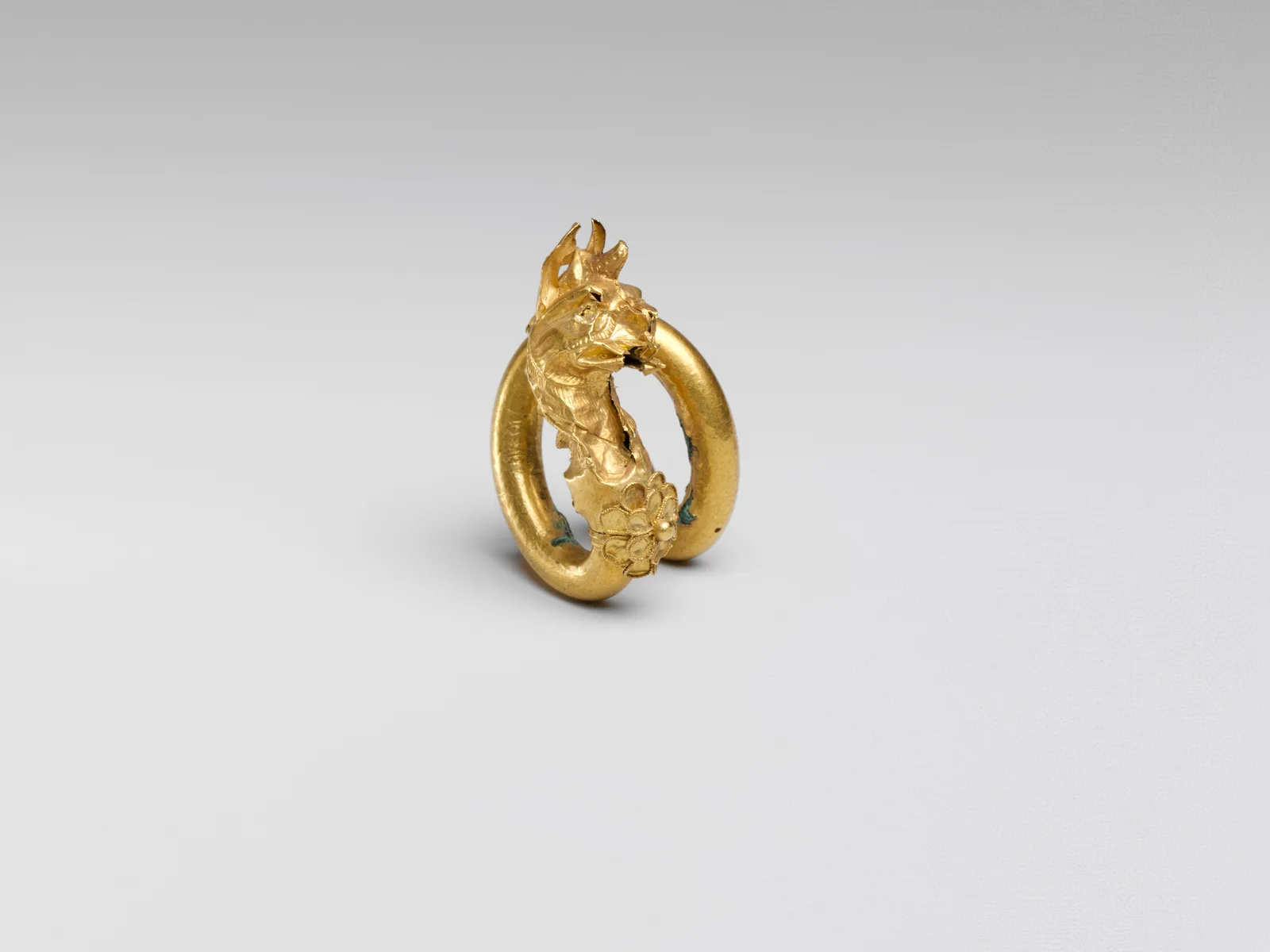
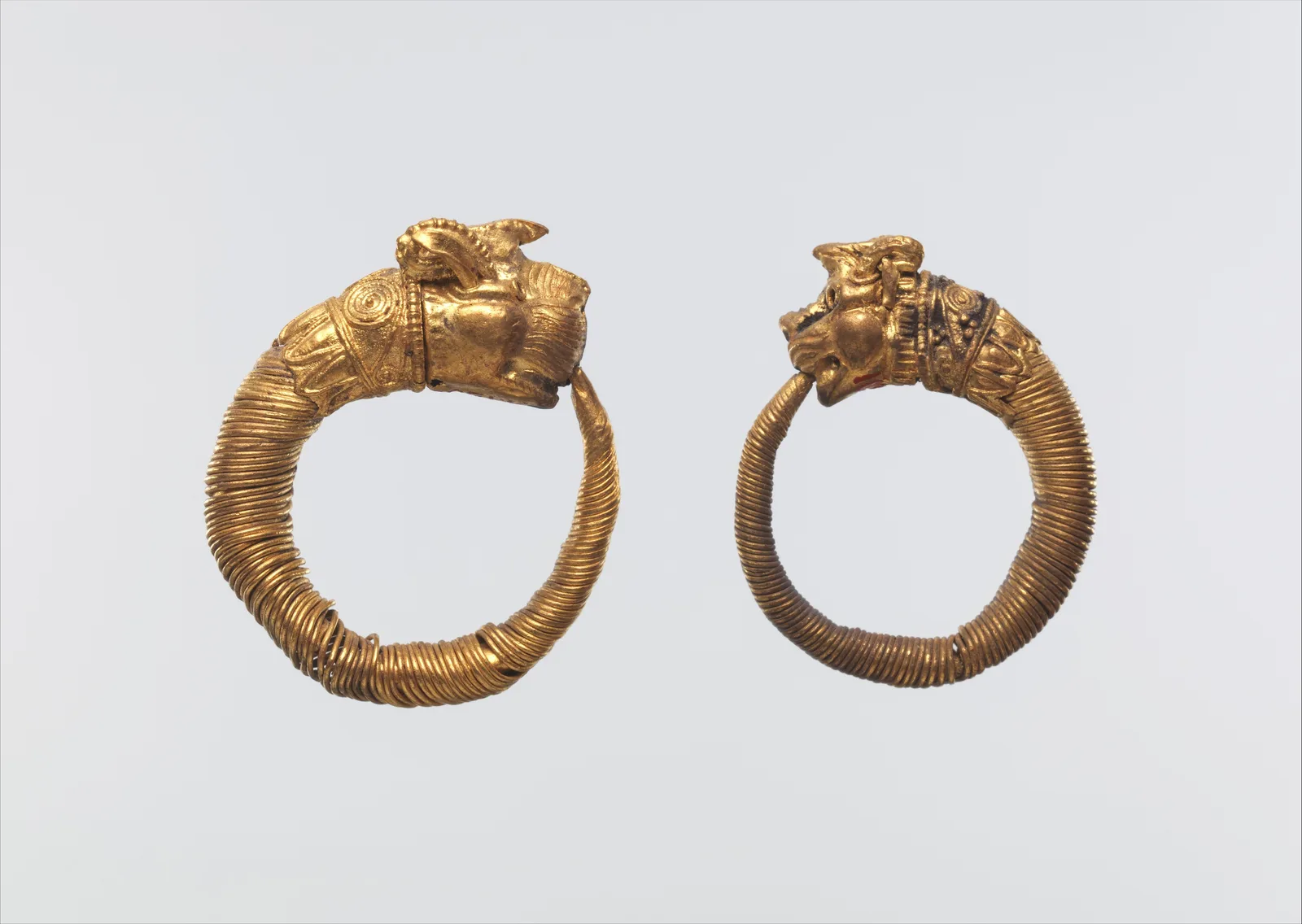
The earliest griffins in jewellery are not pendants but objects of power and guardianship. In the Greek and Scythian world the beast was carved into signet rings, cast as the finials of staffs and spirals, and shaped into the terminals of earrings and bracelets. The griffin here is not merely beautiful, he is functional: a seal with a griffin sealed property, an earring with a griffin's head showed the wearer's status, a finial turned a staff into a sign of rank. Ancient craft loved the griffin's head on its own, without the body: the hooked beak and sharp eye read at once and sat well in metal. The skill of ancient masters, visible in the surviving works on ancient sculpture in jewellery, could fit a whole beast into the tiny face of a signet without losing a single beak or wing.
The Middle Ages: A Coat of Arms on Metal
In the Middle Ages the griffin in jewellery is above all heraldry carried onto the body. Signet rings with the family griffin, brooches and cloak clasps, fittings for belts and weapons. The beast grows stricter and flatter, obeying the rules of the coat of arms: a clear silhouette, a recognisable pose, no surplus naturalism. Colour is introduced with enamel, repeating the armorial tints of the house. A griffin on a medieval piece is first of all a sign of belonging: to a family, an order, a city. To wear it was to declare whose you were and what you were ready to defend.
Renaissance and Baroque: The Beast in Full Splendour
With the revived interest in antiquity the griffin returned as an ornament for beauty and learning, no longer only an armorial figure. Gem-carvers revived ancient glyptics and cut griffins onto signets and cameo pendants. In the Baroque the beast became opulent: wings spread, the body curving, woven into ornament of scrolls, leaves and shells. The griffin adorned the settings of large stones, held a pendant in his paws, formed handles and finials. This is the era of the rich griffin, the theatrical griffin, where what matters is not armorial strictness but scale and play of form.
The Nineteenth Century and Historicism: Knightly Nostalgia
The nineteenth century, with its pull toward the past, raised the griffin again. The fashion for the Gothic and for chivalry brought heraldic beasts back into jewellery: brooches, cufflinks, signets, pendants with griffins pointing to family honour and valour. A revived interest in Scythian gold and in ancient finds gave another wave: griffins were copied from museum models, repeating ancient forms. The griffin of this period is jewellery with the mood of lineage and history, a sign of respect for one's roots, a frequent motif on signets and family rings.
Today: Character on a Chain
The modern griffin in jewellery has freed itself from obligatory heraldry and become a sign of character. He is worn by those drawn to the theme of strength and guardianship, regardless of coat of arms or lineage. Technology has widened the choice: griffins are printed by lost-wax modelling with the finest feather detail, made in steel with a black coating, cast in silver and gold. The image reads in a large, rugged pendant, in a restrained signet and in a slim silhouette on an earring. Today's griffin is a personal statement of the protector's role, not a certificate of origin, and in this he is closer to the ancient charm than to the medieval coat of arms.
Leave your email, we'll send your discount code. No spam, unsubscribe anytime.
The code arrives by email, valid on your first order.
The Griffin in Art and Myth Across Cultures
The Griffin in Ancient and Medieval Art
Ancient masters modelled griffins onto everything they wanted to guard or to elevate: temple treasuries, altars, ceremonial vessels, weapons and armour. A griffin on a helmet or breastplate made a warrior look guarded from above. At Pompeii frescoes and furniture with griffins have been found, in Greek sanctuaries bronze griffin heads adorned large ritual cauldrons, driving evil away from offerings.
In the Middle Ages the griffin moved onto church carving and book illumination. Romanesque cathedrals are covered with stone griffins on column capitals and portals. In the Gothic the beast grows finer and more mobile. On the pages of manuscript bestiaries the griffin was drawn among real and invented animals, described as a guardian of gold and an enemy of horses, which he supposedly hates above all. This medieval book tradition fixed the appearance of the beast we know.
The Griffin in the East and Central Asia
The East produced its own versions of the winged predator. In Persia and Central Asia griffins and winged lions adorned palace textiles, silver plates, ceramics. The Iranian griffin, the simurgh and other winged creatures wove into one rich image of a heavenly guardian. Along the Silk Road these motifs travelled both ways, influencing Chinese and European art alike.
In Islamic decorative art, which avoided depicting people, fantastical beasts such as the griffin remained an allowed and a favourite motif. They were woven into costly fabrics, embossed on metal, carved in bone. A griffin on an Eastern textile read as a sign of strength and royalty, fit for the garments of the nobility.
The Griffin and the Gods of the Greek Pantheon
In Greece the griffin was not a god in himself, but he kept company with the brightest figures of the Greek pantheon. First of all he is the companion of Apollo, god of sun and light: the griffin draws his chariot and guards his sanctuaries, which is why there is so much that is solar and bright in him, hostile to all darkness. This link explains why a gold, yellow griffin sits so well in jewellery, it echoes his solar role beside Apollo.
His second patron is Nemesis, goddess of just retribution. The griffin guards her wheel of fate and helps punish those who cross the line: who grew proud, who got rich dishonestly, who encroached on what was not theirs. From this pair comes an important facet of the beast's character: the griffin is not blind force but force in the service of justice. He punishes not just anyone, but the guilty. Knowing this kinship with the gods, you understand why a griffin in jewellery reads as a sign not of mere might but of righteous might, guarding law and dignity rather than sweeping everything away.
The Griffin as a Living Modern Image
The griffin has not stayed in the past. He looks out from the arms of modern cities and countries, from the emblems of universities, banks, sports clubs, publishing houses. His silhouette instantly says "we guard, we are strong, we can be trusted", which is why organisations that trade on reliability are so fond of him.
In literature and fantasy the griffin became a noble winged steed and a faithful ally of heroes, unlike the dragon, who is more often made an adversary. The image of the good, proud guardian took hold so firmly that a modern reader almost automatically counts the griffin a creature on the side of good. This reputation makes the griffin a pleasant symbol for jewellery: he is strong but not malicious, formidable but just.
This double reputation, ancient and modern, is the secret of the griffin's longevity. A beast imagined five thousand years ago still works as a clear sign: it needs no explanation, it is read at first glance. When a griffin looks out from the facade of an old bank, from the page of a book or from a pendant on someone's chest, it says the same thing in every language and in every age. A strong, keen, faithful guardian. Few symbols can carry so clear a message across millennia without loss.
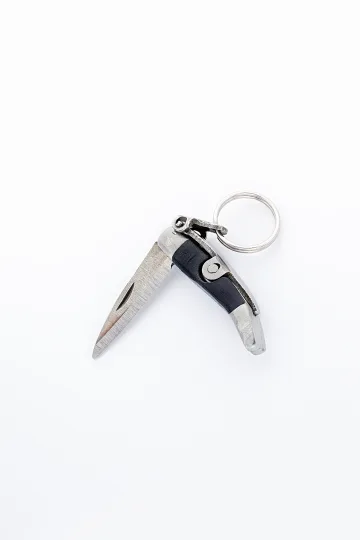
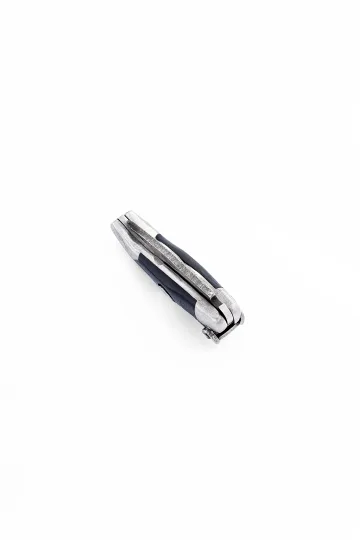
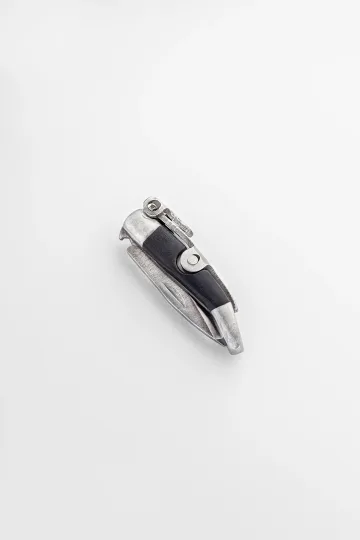
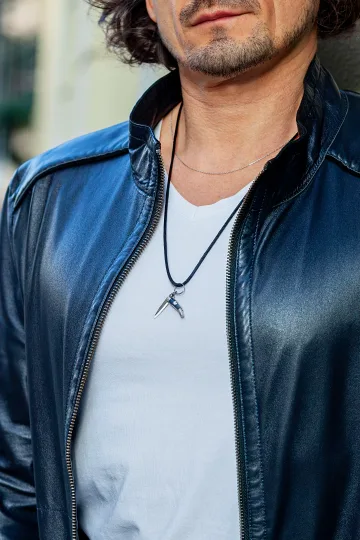
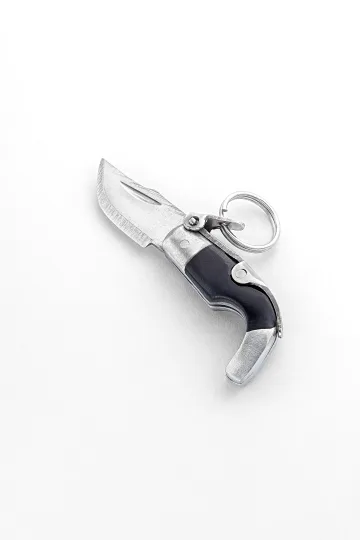
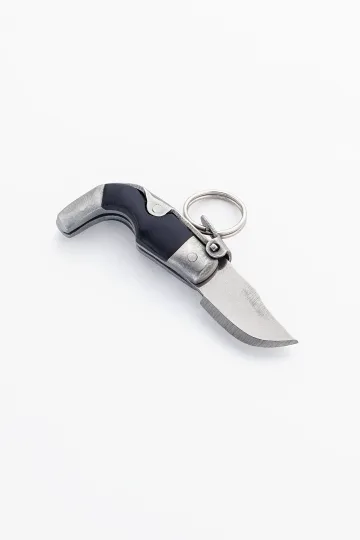
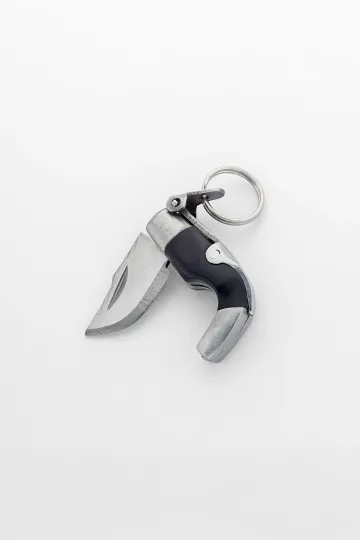
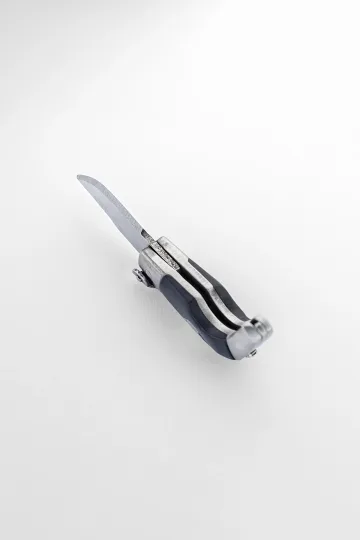
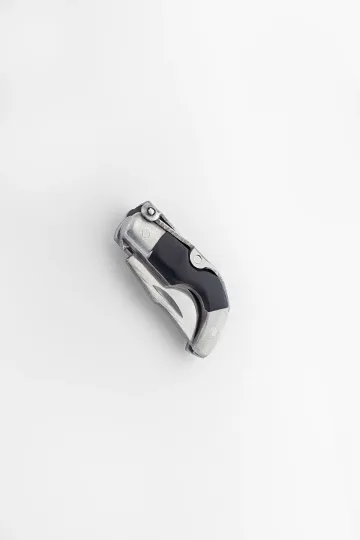
CAPAORA mini knife pendant
The 18th-century Spanish navaja in miniature: 40 mm of stainless steel, a real folding mechanism and a Palanquilla lock that clicks. An affordable gift to remember.
Authentic · Ships from Spain · 14-day returns
The Psychology of Choosing a Griffin
Why People Are Drawn to the Image of a Guardian
The griffin does not draw random people. More often he is chosen by those who play the part of protector in life: for family, for a team, for a cause. Psychologically the image of a strong guardian works as a support. A person wearing a sign of protection less often runs anxious scenarios in their head, because part of their attention is, as it were, handed over to the symbol. It is like the calm of a backup of important files: the real chance of trouble does not change, but the background hum of worry drops. The griffin is especially handy here, because he joins two qualities everyone understands, strength and keen sight, and the wearer seems to try them on.
There is the identity side too. Jewellery with meaning works as a quiet statement of who you are. The griffin says "I guard my own and can stand up for myself", first of all to the wearer, second to those around. Identity anchors raise resilience to stress, which is why armies need regimental badges and a person with responsibility sometimes needs a guardian beast on a chain. Each glance at the griffin briefly recalls the chosen role and helps hold it.
The Griffin as a Gift and Its Effect
A symbol of protection given to you acts more strongly than one bought for yourself, and this goes beyond folk belief. Research into the psychology of gifts shows that an object handed over with a clear, kind intention affects the recipient more noticeably than the same self-purchase: the memory of the giver attaches to the object. The griffin, with his meaning of guardianship, is the ideal such gift. In giving him you give not a beast of metal but a wish of strength and protection, and every touch of the pendant brings that wish back to life.
Whom the griffin fits especially well: a person beginning a great undertaking, one taking on responsibility for others, one who has earned a reputation for reliability. It is a gift with character, and it needs to land on the character of the recipient. To a soft, romantic person the griffin may feel foreign. But to a direct, firm person with an inner backbone he says exactly what is needed, without a single word.
The Griffin Versus the Dragon, the Lion and the Eagle
The Griffin and the Dragon
The griffin and the dragon are often set side by side as two great mythical beasts, and in medieval tradition they are frequently enemies. The difference lies in their essence. The dragon is closer to the elements, to fire, to the primal force of earth and depths, and in the Western tradition he is more often made an adversary, guarding gold out of greed. The griffin guards gold too, but out of duty, not avarice. He is a just guardian, the dragon a dangerous one.
In jewellery this divides them by mood. The dragon is an image of wild might, sometimes fierce and chaotic. The griffin is an image of ordered, noble strength, closer to the chivalric tradition. One who feels the elements and the drive within chooses the dragon. One who values duty, guardianship and dignity chooses the griffin.
The Griffin and the Lion
The lion is one half of the griffin and his earthly counterpart. The pure lion is a symbol of royalty, courage, solar strength on the earth. The griffin takes that lion's strength and adds wings and an eagle's keen sight to it, lifting the image higher, into the sky. The lion is earthly power, the griffin power that sees from above.
One drawn to the pure image of the king of beasts and solar courage stays with the lion. One who also values height, the wide view, foresight, adds a wing and moves to the griffin. In essence the griffin is the lion given the sky.
The Griffin and the Eagle
The eagle is the second half of the griffin, his heavenly counterpart. The eagle is a symbol of freedom, height, sharpness of sight, a link with the sun and with supreme power. The griffin takes that eagle's height and grounds it with a lion's body, giving the image the weight and might a bird alone lacks. The eagle is light and swift, the griffin heavy and inexorable.
In jewellery the eagle reads as a sign of freedom and ascent, the griffin as a sign of guardianship and strength. If the eagle is about "flying higher", then the griffin is about "guarding and holding". Of the kindred images, the dragon, the lion, the eagle, the pegasus, the phoenix, the griffin is the most defensive: he is not about the burst of impulse but about reliable protection.
The Griffin and the Chimera
The griffin and the chimera share that both are assembled from parts, but they are assembled with different aims. The chimera in the Greeks is a lion in front, a goat in the middle and a serpent behind, a monster unnatural, dangerous, born of monsters. She was killed as a threat, and in the figurative sense a "chimera" is an empty, unattainable fancy. The griffin is assembled from two sovereign predators, and assembled beautifully: lion and eagle strengthen each other rather than quarrel. One is stitched together for horror, the other for strength and order.
In jewellery this divides them completely. The chimera is chosen rarely and usually for the theme of inner complexity, the struggle of different principles in a person. The griffin is a sign of whole, gathered strength. Where the chimera speaks of contradiction, the griffin speaks of accord between two natures in one character. That is why the griffin appears far more often on coats of arms and charms, while the chimera stays a figure more literary and uneasy.
The Griffin and the Sphinx
The sphinx is closer to the griffin than it seems: both join the lion with something higher. But the sphinx adds a human head to the lion, the griffin an eagle's. And the meaning parts at once. The sphinx is a riddle, hidden knowledge, a trial by mind, a creature that guards an entrance with a question rather than a claw. The Egyptian sphinx lies by the pyramids as guardian of the kings' rest, the Greek one poses deadly riddles. The griffin guards not with a riddle but with strength: he does not ask, he does not let you pass.
For jewellery this means the following. The sphinx suits one drawn to the theme of mind, mystery, hidden knowledge, calm motionless wisdom. The griffin suits one closer to active defence and battle-ready vigilance. The sphinx thinks, the griffin acts. Both are royal, but one rules by riddle, the other by claw and wing.
The Griffin and the Manticore
The manticore is the griffin's most predatory neighbour. She has a lion's body, a human face with three rows of teeth, the tail of a scorpion or porcupine with venomous spikes she supposedly throws like arrows. The manticore is a man-eater, an image of pure threat, and in medieval bestiaries she was drawn beside the griffin, but their meanings are opposite. The griffin protects, the manticore devours. One is the guardian of treasure, the other the devourer of travellers.
In jewellery the manticore is almost never seen, precisely because of her predatory, ill-meaning reputation: few want to wear a man-eater on the chest. The griffin, for all his menace, reads as "one of ours", as a protector. This pair shows well what sets the griffin apart from a merely frightening beast: menace without malice, strength on the owner's side rather than against the person. The griffin frightens strangers but keeps his own safe, and in that lies the whole difference.
The Griffin and the Unicorn: Two Noble Beasts
The griffin and the unicorn often stand side by side as the two most noble mythical creatures, but they embody different sides of nobility. The unicorn is purity, gentleness, the unattainable, a creature that yields only to a pure heart and dies of deceit. The griffin is strength, guardianship, battle-ready vigilance. One is noble through softness, the other noble through valour. It is no accident that in old heraldry they were sometimes set on either side of a single shield: the unicorn on the left as tender purity, the griffin on the right as steadfast defence.
For jewellery the choice between them is a choice of tone. The unicorn speaks of subtlety, the ideal, faithfulness to oneself. The griffin speaks of protection and dignity. One seeking a soft, bright symbol is closer to the unicorn. One needing a guardian with character is closer to the griffin. Together they describe well the two halves of a noble nature: the ability to keep purity and the ability to defend it.
Facts That Surprise
The griffin gathered oddities over thousands of years, and some of them are still not obvious.
The Greeks held griffins responsible for fossils. The historian Adrienne Mayor suggested the legend of the gold-guardian was born from finds. In the deserts of Central Asia, along which caravans went for gold, the skeletons of protoceratops lie on the surface, a four-legged beast the size of a lion, with a beak and a bony frill. Ancient people saw a beaked skull beside gold deposits and drew a conclusion: here lives a beaked beast that guards the gold. So palaeontology may have given rise to the myth.
The griffin is an enemy of horses. Medieval bestiaries insisted the griffin especially hated horses and hunted them. From this came the old saying about the impossible crossing of a griffin and a horse, which by legend gave the hippogriff, yet another winged creature.
A griffin's claw was sold as medicine. In the Middle Ages antelope horns and tusks were passed off as "griffin claws", set in gold and silver. A cup made from a griffin's claw was thought to darken near poison. Such "claws" were kept in church treasuries as relics.
Dante's griffin draws the chariot of the Church. In the Purgatorio the griffin pulls a chariot and is read as an image of Christ: the lion's body is the human nature, the eagle's head the divine. This is the loftiest meaning ever ascribed to the beast.
A black griffin on gold is the Romanov coat of arms. The family arms of Russia's ruling dynasty included a gold field with a black griffin holding a sword and a shield. So the steppe beast of the Scythians reached the summit of Russian power.
Griffins guard the bridges and buildings of old capitals. In St Petersburg griffins hold the chains of the Bank Bridge, in other cities they guard the entrances of banks and palaces. The choice is no accident: the gold-guarding beast on a building where money is kept is a direct nod to the legend.
Words for a slate pencil and a guitar neck are related. A root tied to something hooked and gripping gave a whole nest of words. There is no direct kinship with the mythical beast here, but the shared idea of "the hooked, the grasping" is one.
Griffin eggs were valued above gold. In medieval treasury inventories "griffin eggs" were listed among the relics. In fact they were ostrich eggs, which travellers brought from the south and passed off as spoils from the nest of the legendary beast. They were set in precious metal and hung in churches, held to be a wonder.
The griffin could tell innocence from guilt. By one medieval belief the griffin did not touch an honest person and threw himself on a liar and a thief. From this belief grew his reputation as an enemy of cowardice and deceit, later picked up by heraldry. The beast became a guardian of gold and a judge of intentions.
The griffin made it onto the earliest maps of the world. On medieval maps the lands where, by legend, griffins lived were drawn in the far north-east, beside the gold deposits and the one-eyed people. Cartographers marked the beast as a real inhabitant of the edge of the world, and so the myth of the gold-guardian turned into a geographical fact for the people of that age.
Send a friend a discount code, they save on their first order.
Frequently Asked Questions
What does the griffin symbolise in jewellery?
The griffin symbolises protection, strength together with keen sight, dignity and the guarding of what is valuable. He joins the lion, king of beasts, and the eagle, king of birds, so he stands for double power, over earth and over sky. In jewellery he works as a personal guardian and a sign that the wearer keeps their own and can stand up for themselves.
Is the griffin a masculine or a feminine symbol?
There is no rigid tie to gender, but the griffin is more often taken as a masculine or unisex image because of his fighting, guarding nature. He is chosen by people of firm character regardless of sex. The griffin suits a woman if she is drawn to the idea of strength, protection and dignity rather than to softness and romance.
Can a griffin be worn as a protective charm?
Yes. Since the time of the Ancient Near East the griffin was a guardian of threshold, throne and treasure, so it is natural to wear him as a protective sign. The griffin puts the accent on the active defence of one's own, unlike passive charms that simply reflect outside negativity. If the theme of protection speaks to you, he can be paired with other charms and amulets.
How does the griffin differ from the dragon?
Both guard gold, but for different motives. The dragon in the Western tradition is a dangerous and often greedy guardian, an image of wild elements and fire. The griffin is a just, noble guardian, closer to chivalric honour. The griffin combines lion and eagle, the dragon is a reptilian element in his own right. More in the article on the dragon in jewellery.
Why does the griffin appear so often on coats of arms?
Because he conveys perfectly the qualities a family or city wants: the courage of the lion, the keen sight and height of the eagle, the loyalty of one who guards his own. The griffin was held to be an enemy of falsehood and cowardice, a protector of treasures and secrets. To take a griffin onto a coat of arms was to declare valour and a readiness to guard honour, land, values.
Which metal is best for a griffin?
Sterling 925 silver is the all-round choice: it holds detail beautifully, oxidises well, is safe for the skin. Gold underlines standing and points to the legend of the gold-guardian. 316L steel gives a low-maintenance, rugged image for everyday wear. The choice depends on which griffin you want: one of standing, one that is graphic, or one that works hard.
Who is a griffin a good gift for?
For one who answers for others and values reliability: a leader, a protector, a person whose word is firm. The griffin fits as a wish of strength and protection for one beginning a great undertaking or taking on responsibility. It is a gift with character, for direct and strong people, not for lovers of soft symbolism.
Does the griffin bring luck?
He does not work directly as a "money" talisman, his strength lies elsewhere, in protection and guardianship. But as a guardian of treasure he is linked to the idea of saving and increasing what one has. Psychologically a sign of protection lowers anxiety and lends confidence, and a confident person more often makes good decisions. So indirectly the griffin helps rather than hinders.
Conclusion
The griffin is one of the oldest and most enduring symbols in the history of jewellery. Lion plus eagle, earth plus sky, strength plus keen sight, all of it has held together in one image for five thousand years, from the temples of the Ancient Near East to the bridges of St Petersburg and the modern pendant. He passed through Scythian gold, the Greek myth of the treasure-guardian, Roman altars, church carving and knightly coats of arms, and nowhere lost his essence. The griffin is a guardian: of what is valuable, of what is secret, of what a person counts as their own.
In choosing a griffin you take a sign with a clear character, not jewellery for the sake of looks. He speaks of protection, dignity and a strength that rests on intelligence. In oxidised silver, in gold on a signet, in steel on a dense chain, in any form the griffin stays himself, a proud and keen keeper.
Silver, gold, symbolism, charms, rings and pendants with character.
Buying it as a gift? Each one arrives ready to give.
 A branded Zevira box and a little card come with every order.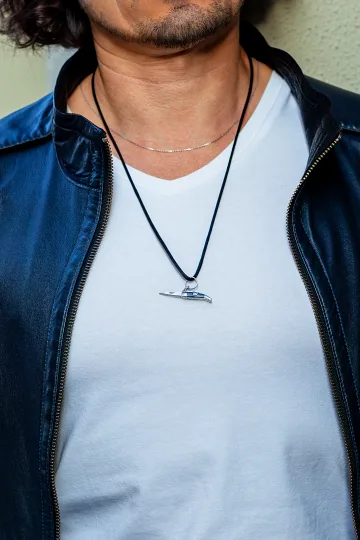




About Zevira
Zevira is jewellery with meaning: symbols, charms, the classics of silver and gold. We gather pieces that have character and a history, from protective signs to strict heraldry. The griffin, as we see it, is jewellery for those who value strength, guardianship and dignity, and want to wear it every day.