Cremation Jewellery: How Much It Holds and What Else Goes Inside
A fillable pendant takes between a quarter and half a teaspoon of ashes. That figure lands badly if you arrived expecting to hand over a meaningful portion, and it lands differently once you know it is fixed by the chamber and not by anyone's judgement about how much is appropriate.
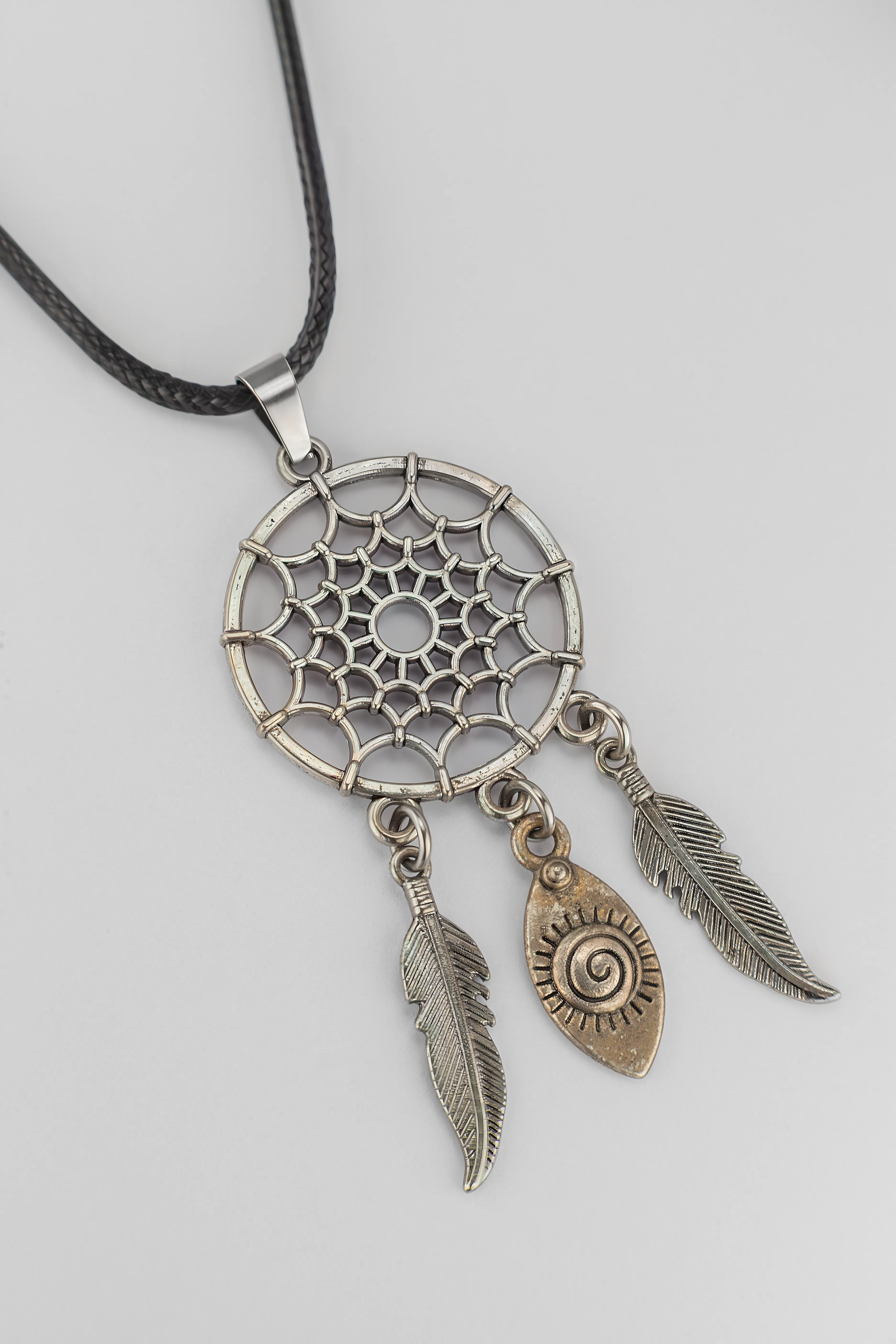
Capacity is the first thing people search for and the first thing that reframes the object. A pendant is not a share of the urn. It is a token, and once that lands the rest of the decisions get easier: what goes inside, which format survives daily wear, what happens at an airport, and what happens on the day the chain breaks.
One more thing is worth saying at the start, because it saves people a good deal of distress later: none of this has to be decided at once. A pendant can be bought empty and filled a year afterwards, and a piece ordered now can be left unfilled indefinitely while the family works out what it wants. Timing matters more here than anywhere else in jewellery, but it matters unevenly. Ashes will wait indefinitely. Fabric waits only until the clothes are given away. A fingerprint waits barely at all, and nothing reopens that window once it closes. The sections below are ordered the way the questions actually arrive, starting with the ones people ask in the first week.
How much a cremation pendant actually holds
A quarter to half a teaspoon
Fillable pieces take between a quarter and half a teaspoon. Written down it reads austere. In the hand it reads differently, because the volume is set by the chamber and does not expand to meet anyone's wishes. Whatever a family feels about the quantity, the engineering has already settled it, and that removes a decision rather than imposing one.
Why the remainder stays where it is
A keepsake portion leaves everything else intact. Burial, scattering, a garden, an urn on a shelf: none of those are foreclosed by filling a pendant, because the amount involved is negligible against the whole. Families who believe they must choose between wearing and burying are usually working from a badly wrong estimate of the volume.
Ordering several pieces at once
Where there are children, siblings or a surviving partner, several identical pieces are common, and even five together consume very little. Fill them all in one sitting rather than returning to the urn repeatedly. Each reopening is its own small ordeal, and doing it once spares everyone the rest.
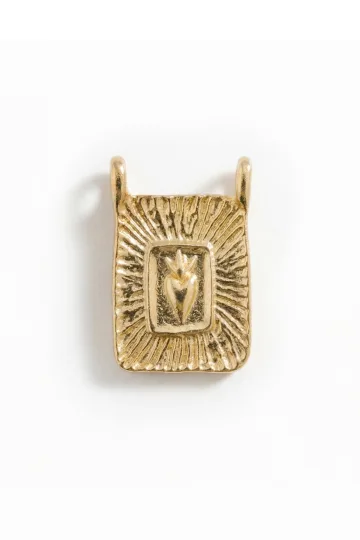
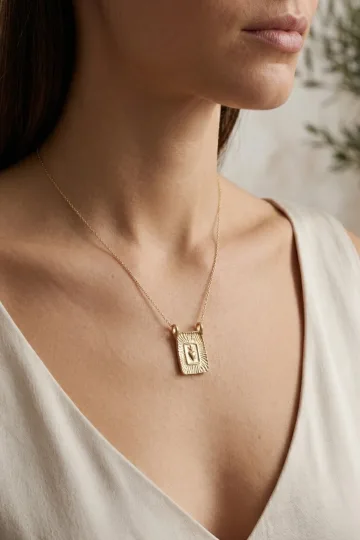
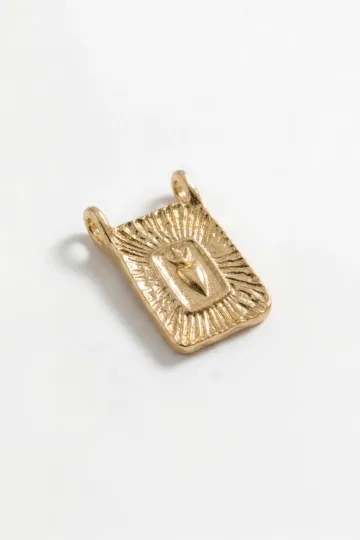
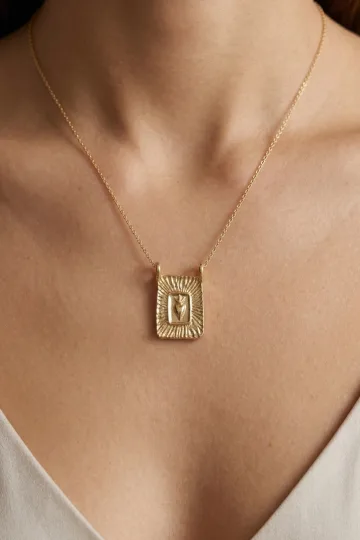
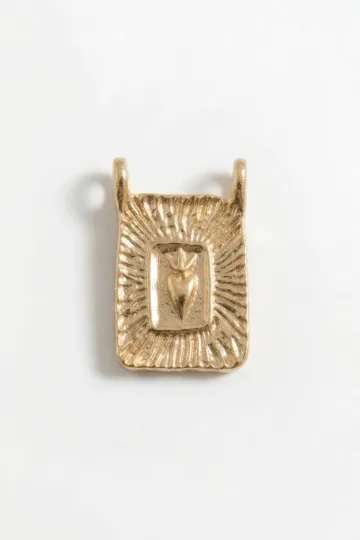
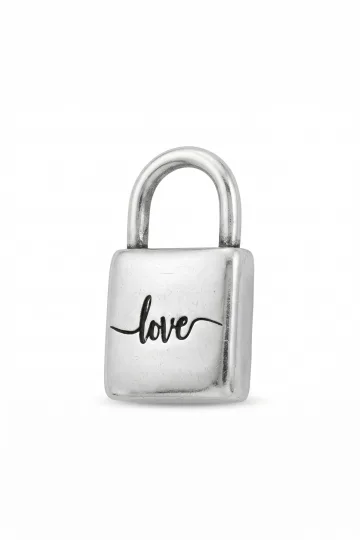
Wear the symbol, don't just read about it. These are in stock:
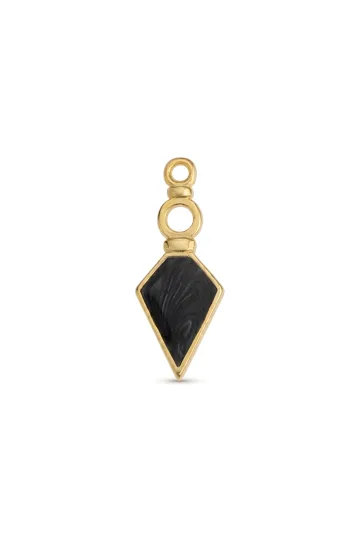
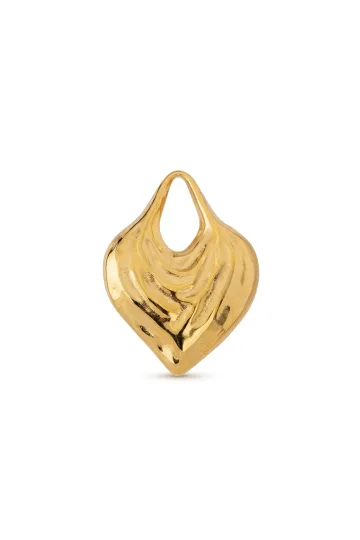


Can it leak, and what happens if you lose it
This is the anxiety that stops people buying, and it deserves a direct answer rather than reassurance.
Screw closures and how to check one
Chamber pieces close with a threaded screw. Ask where the screw sits, whether the thread is sealed, and whether the piece can be reopened later without damage. A finished chamber should be silent when shaken and the screw should seat flush. Neither check is exotic, and a maker who cannot answer plainly has told you something useful.
Resin and glass have nothing to open
A piece with ashes suspended in clear resin, or fused into glass while it is worked, has no cavity at all. Nothing escapes from a solid. The tradeoff runs both ways: the contents can never be removed, moved to another piece, or divided later.
The loss people actually experience
In practice the failure is rarely leakage. It is a broken chain, a piece set down in a hotel bathroom, or a pendant removed at a security tray and left behind. Plan for it rather than dread it. A heavier chain and a secondary clasp cost little. Photograph the piece, keep the order number, and ask whether the design file is retained, because a replacement can then be made from the same drawing.
What can be remade and what cannot
A remade pendant is a real consolation, because the object was always a container rather than the thing itself. The contents cannot be remade, which is the argument for never putting the last of anything into a single piece and for keeping a small reserve at home. A folded paper envelope in a drawer, holding a little more hair than the pendant needed, converts a catastrophe into an errand.
Nobody plans for the practical side of this while arranging a funeral, and it feels grotesque to think about clasps and order numbers in the first week. The decisions get made anyway, usually fast and with very little information to hand, which is the reason for setting them out plainly rather than tastefully.
Flying with it
Travel comes up constantly and generates far more worry than it warrants.
Wearing it through a checkpoint
In the United States the Transportation Security Administration does not prohibit memorial jewellery and places no restriction on wearing it through a checkpoint. Small items of jewellery are among the least troublesome things anyone carries. Rules elsewhere are set locally rather than universally, so for an unfamiliar airport the question belongs with the airline before departure rather than with a queue.
The tray is where pieces disappear
The real risk is loss rather than interception. A small object removed at a checkpoint, dropped in a tray and forgotten while attention is elsewhere is how these pieces are lost. Decide before reaching the airport whether it stays on the body for the whole journey or goes into a zipped compartment, then do not improvise at the belt.
Travelling from a British or European airport
Screening staff in Britain and across Europe see memorial jewellery regularly and a worn pendant passes without comment in the great majority of cases. What differs from country to country is not the pendant but the paperwork attached to remains in any larger quantity, and that sits with the airline and the airport rather than with a general rule anyone can quote at you. A short call or an email to the airline a few days before the flight settles it, and the answer arrives in writing, which is worth more at five in the morning than anything remembered from a forum.
If the journey crosses a border with the ashes themselves, the crematorium and the funeral director are the people who know what a receiving country asks for, and they arrange documents of this kind as ordinary work. Asking them early costs nothing. Discovering at a check-in desk that a certificate was needed is the version to avoid, and it is entirely avoidable.
Carrying a full urn as well
If a full urn is travelling too, that is a separate procedure with its own requirements around container material and paperwork, arranged with the airline in advance. The pendant is not part of that problem and does not need to be declared alongside it.
Filling it
Doing it yourself
Filling kits vary between makers, so ask what arrives in the box and whether anything else is needed. Whatever the kit contains, the method is the same and unglamorous: a sheet of white paper on a flat surface, a small quantity poured out, the opening guided rather than tipped, the screw seated fully, and any sealant applied only once the piece is closed the way you want it. Work slowly and over paper, because anything spilled can be gathered up again.
What to do with anything left over
Ask before the appointment what happens to material that does not go in. Ask it plainly rather than assuming, and ask before anything changes hands. Bring a small sealed container for the return journey, because handing back a paper envelope in a car park is a poor end to the afternoon. If several pieces are being filled from one container, work out the order in advance so nobody is doing arithmetic with a funnel in their hand.
Handing the task to someone else
Plenty of people cannot face doing this, and there is no virtue in forcing it. Funeral directors and jewellers fill pieces as a service. Ask when the piece is ordered rather than discovering at the last moment that you are expected to manage it alone at a kitchen table.
What else goes inside besides ashes
Several options here are open to anyone, including people who have no ashes at all and people whose loss happened decades ago.
A lock of hair
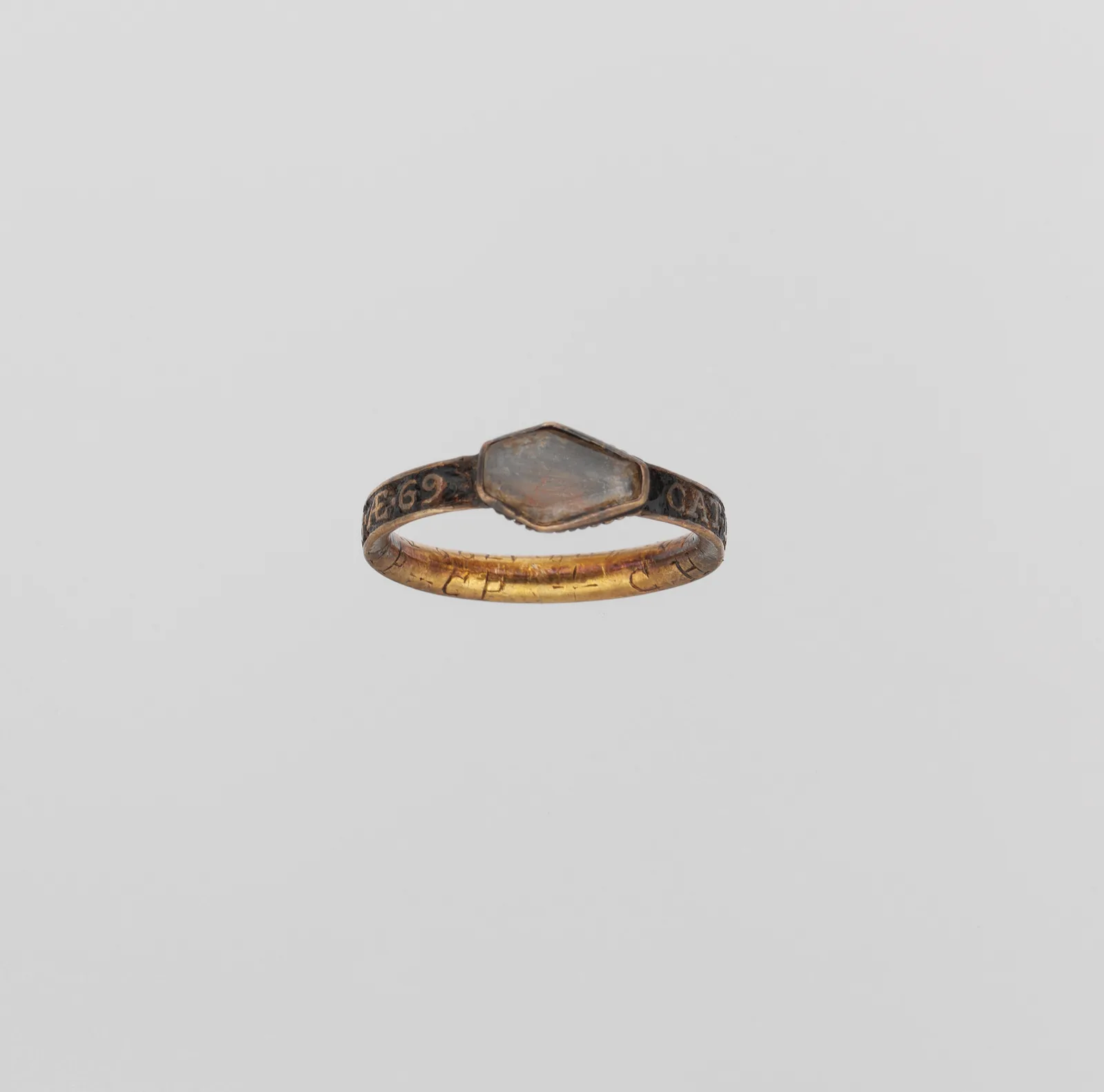
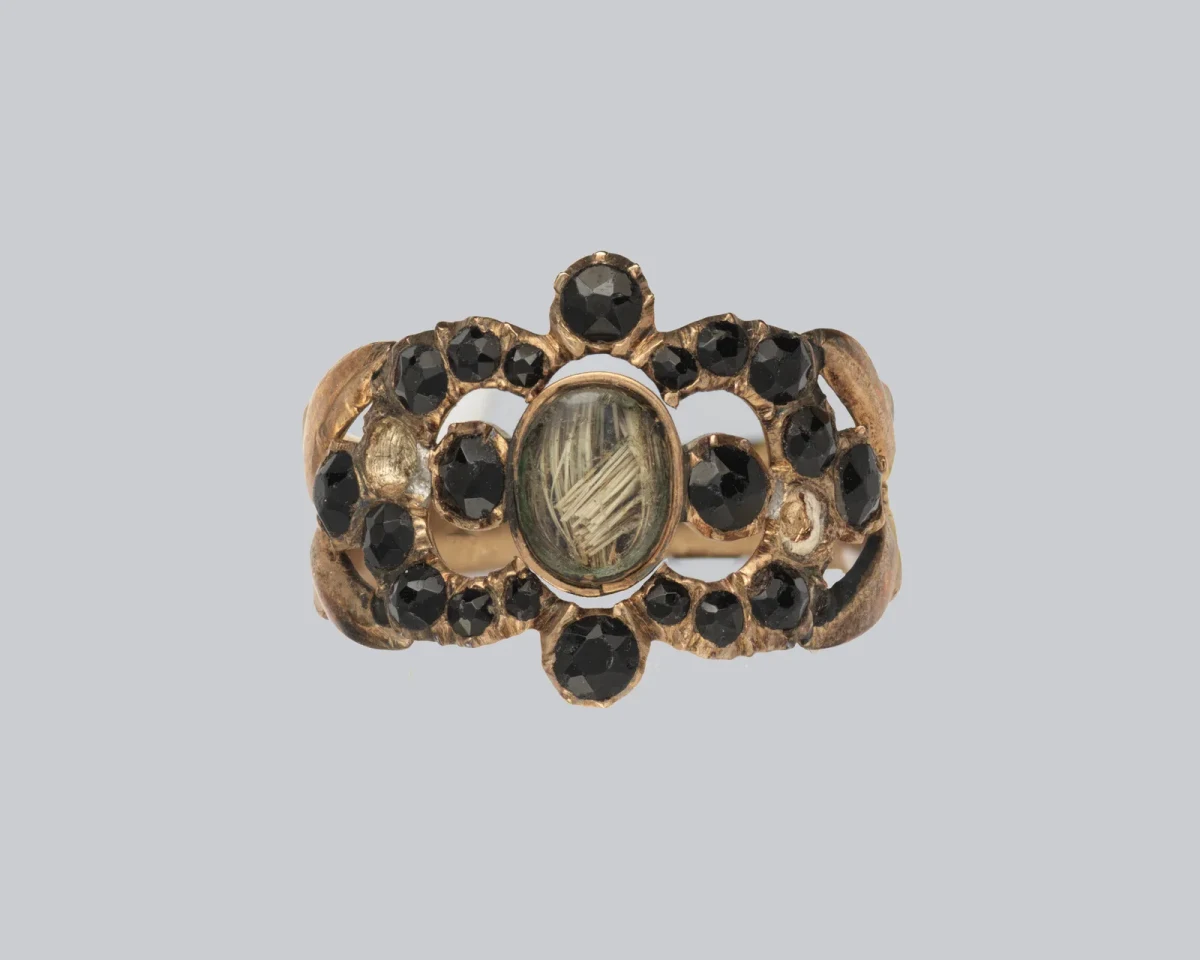
Hair is far more durable than soft tissue. Kept dry and under glass it holds shape and colour for decades, which is why a lock became a standard keepsake long before photography existed. A strand about the width of a match is plenty. Hair can also be taken from the living, which is why locks from a first haircut end up in pendants as often as mourning pieces do.
Fur and whiskers
For an animal the equivalent is a small twist of fur, usually set in resin so it holds together. Whiskers are worth raising with whoever makes the piece: stiff, distinctive and instantly recognisable to the person who lived with the animal. Cats shed them naturally, so many households already have one put away without ever having planned for this.
Dried flowers from the service
Petals pressed flat and sealed in resin have become a common request. The material comes from the day rather than from the body, which some families find far easier to carry. Flowers have to be dried thoroughly first, because moisture sealed into a chamber will spoil them.
Soil from a place that mattered
A pinch of earth behaves like ashes mechanically and quite differently emotionally. A grave, a childhood garden, a field, a cemetery in a country nobody can easily return to. For anyone living far from where their people are buried, a little of that ground worn daily can carry more weight than a headstone they never visit.
Fabric from clothing
A scrap the size of a fingernail solves a specific problem: clothes that cannot be worn and cannot be thrown out. Taking a small piece releases the rest of the wardrobe. This option has a deadline attached, because it depends on the clothes still being in the house.
The comparison above is worth reading with one question in mind: what is actually still available to you. The rest follows from that answer, including which conversations need to happen this week rather than next year.
Customer reviews
Zevira is a real jewellery shop. Genuine payments, deliveries and customer thank-yous.
🥰🥰🥰 gracias

Ok, ¡gracias! 🙂

Fingerprint and handwriting jewellery
Traces behave differently from particles. They are copied rather than contained, which changes both what is possible and when.
How a print is captured
An impression is taken with ink, a soft moulding compound or a scan, then converted into a relief cut into the metal. The result can be felt with a thumb. Running a finger across it is the entire point of the object, and it is why these pieces get worn rather than kept in a drawer.
The window is measured in days
A print from someone who has died is taken while there is still access to the hands, which in practice means the funeral home during preparation. Ask about it in the first conversation with the funeral director, alongside the questions about paperwork. Almost nobody thinks to raise it in that first week, and once the moment passes there is no print at all.
Handwriting and signatures
A line written by hand is reproduced from a photograph of the original: a signature on a card, a phrase from a letter, a shopping list in a familiar slant. Handwriting is as recognisable as a face and survives in drawers for decades, so anyone who kept a birthday card already holds the source material. Our guide to engraving choices covers what transfers cleanly and at what size a line stays legible.
A soundwave from a voice message
A recording is rendered as a waveform and cut as a line across a bar or a disc. A greeting, a laugh, a child's first word, a fragment of voicemail. A photograph preserves a face and not a sound, and the waveform closes exactly that gap.
Prints taken from the living
None of this requires a death. Parents commission pieces from a newborn's footprint, couples exchange thumbprints, grandchildren give grandparents a pendant carrying their own handprint. Taking an impression from someone living costs a few minutes and can be done at any time, which is worth knowing years before anyone needs it.
Memorial diamonds and glass
Two routes transform remains rather than storing them, and both come up constantly in English language searching.
Carbon from ashes or hair
Ashes and hair both contain carbon, the element diamonds are made from. Specialist laboratories extract it and grow a stone under heat and pressure, producing a laboratory grown diamond that can be set like any other. Anyone considering this should be clear that it is a transformation and not a container: material goes in, a stone comes out, and the step does not reverse.
Ashes fused into glass
Glass artists work a pinch of ashes into molten glass, producing a pendant or bead where the remains appear as a pale thread through colour. No two are alike, because the swirl cannot be repeated. Glass shares the virtue of resin: with nothing hollow inside, there is nothing to work loose.
Ask about the timeline before committing
Neither route is immediate. If a piece is meant to exist by a particular date, a memorial gathering or a first anniversary, say so at the outset and get the schedule in writing. Discovering the lead time late is the disappointment in this part of the field.
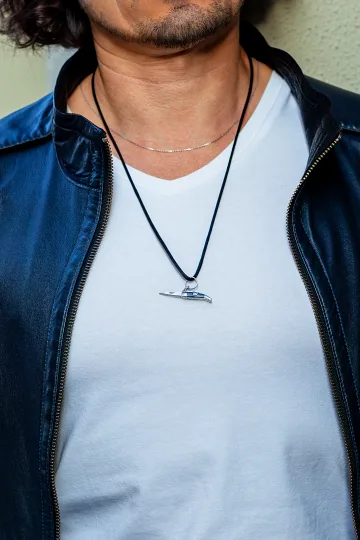
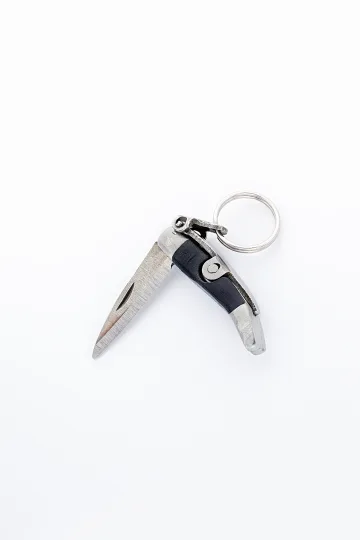
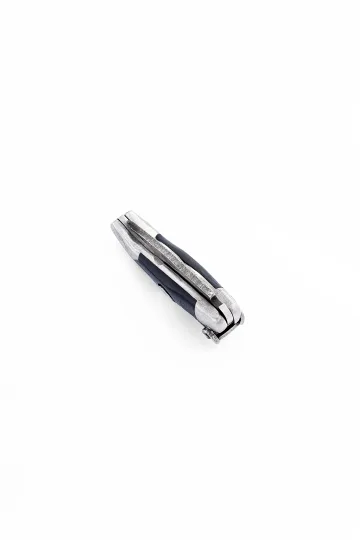
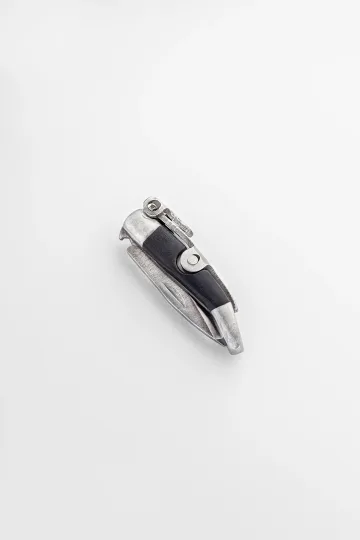
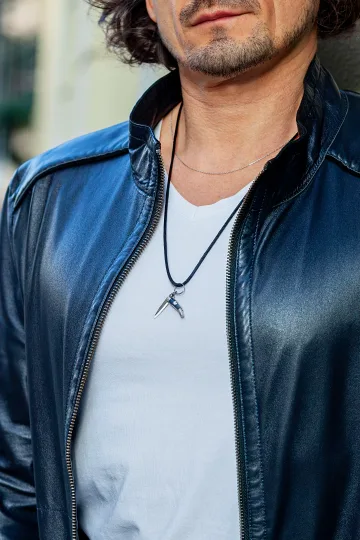
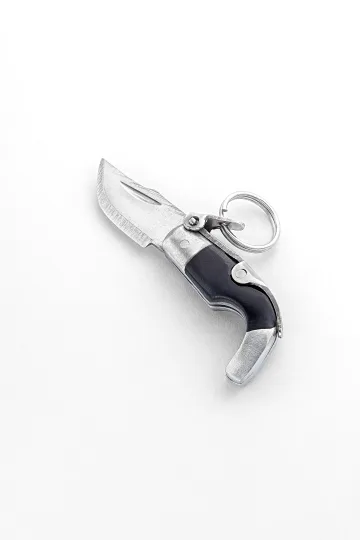
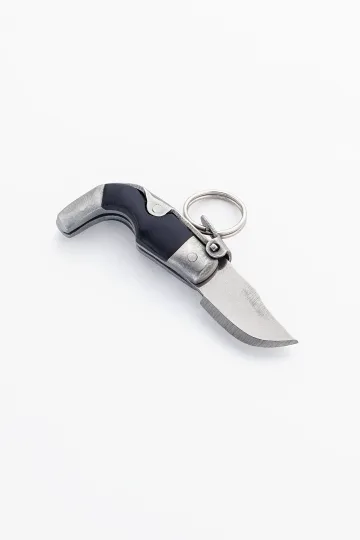
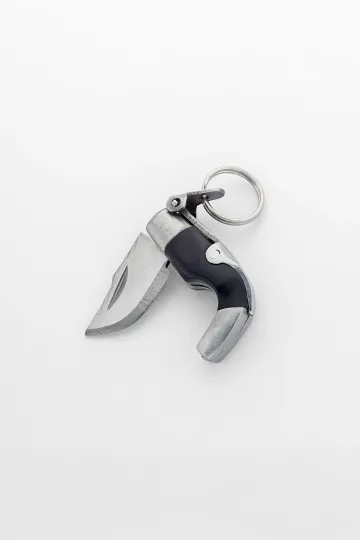
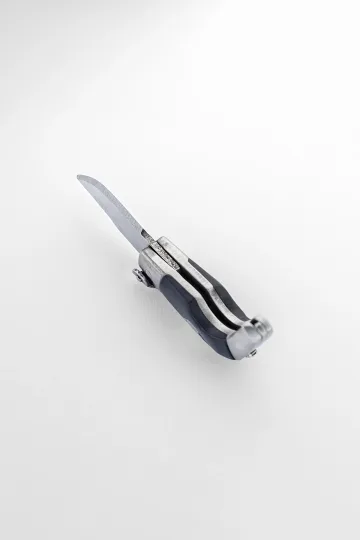
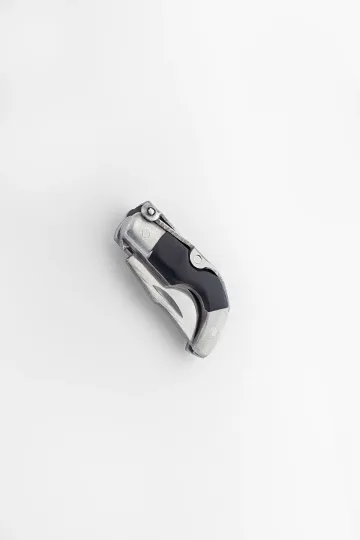
CAPAORA mini knife pendant
The 18th-century Spanish navaja in miniature: 40 mm of stainless steel, a real folding mechanism and a Palanquilla lock that clicks. An affordable gift to remember.
Authentic · Ships from Spain · 14-day returns
Pet cremation jewellery
This is now a substantial category in its own right, for reasons as much social as sentimental.
Paw prints and nose prints
A paw print is taken like a human one, with ink or moulding compound, and transferred to metal. The nose carries a detailed relief and is captured the same way. Impressions from a living animal take minutes at home or at the practice, and nothing stops you doing it while the animal is well.
Fur, whiskers and ashes
Fur set in resin is the most common filling. Whiskers appear often. Ashes for animals work exactly as they do for people, with the same chambers and the same quantities. Ask the crematorium what portion is returned and in what form, because arrangements differ.
A silhouette from a photograph
A profile cut from an ordinary photograph gives a recognisable outline of one specific animal rather than a generic dog or cat. It requires nothing physical, which makes it the option still available to owners whose animal died years ago, and it can be worked from any surviving picture.
Why this grief gets dismissed
Losing an animal is experienced as a genuine bereavement, and there is rarely anywhere to put it. No leave is granted, condolences are thin, and the phrase about it only being a pet still gets said out loud. An object carries more weight here than it otherwise would, because it is frequently the only thing in the house treating the loss as real.
Choosing a piece you will actually wear
A piece that ends up living in a drawer usually failed on wearability rather than on design, and wearability is decided by weight, size and chain long before anything is engraved.
Silver, steel and gold
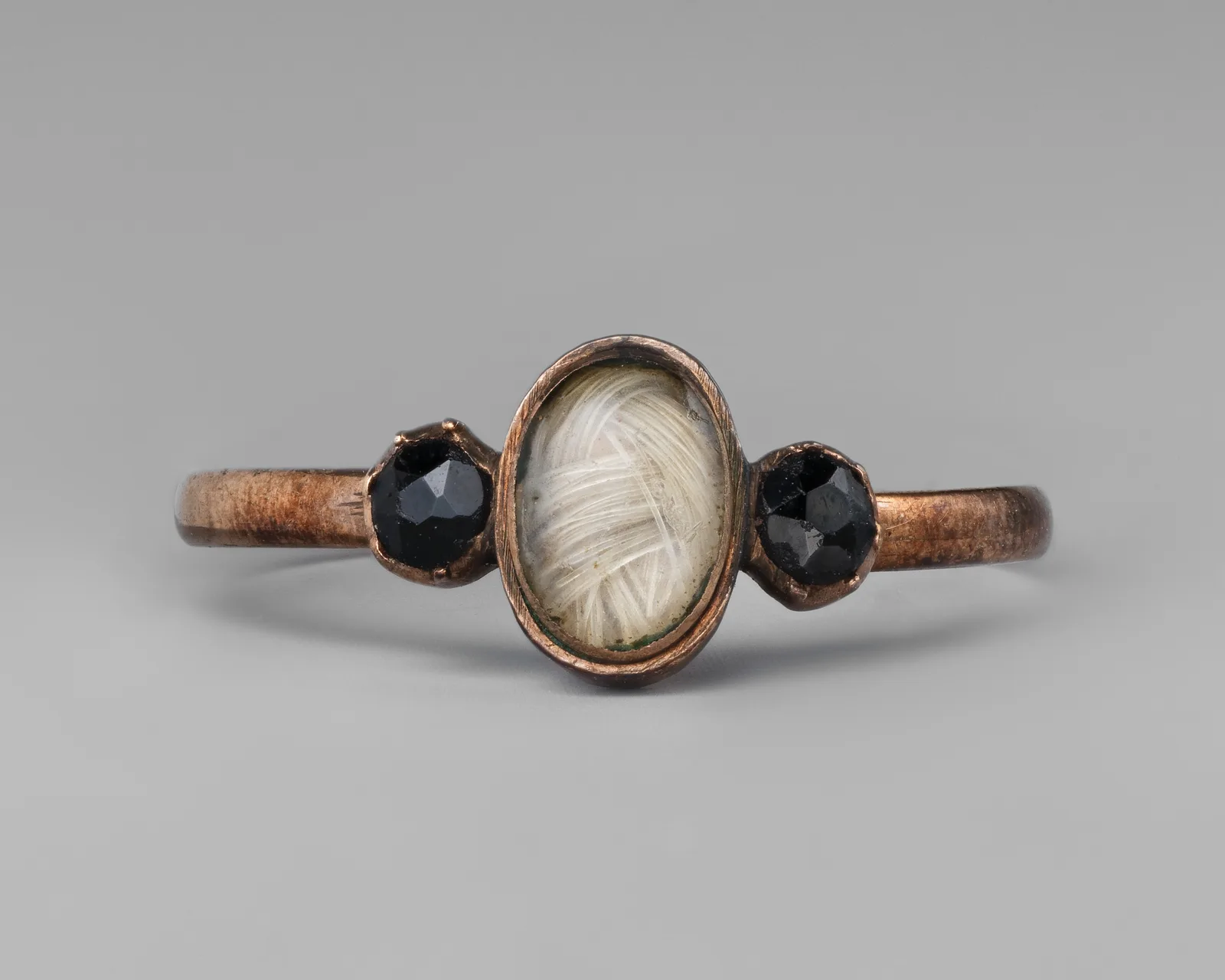
Sterling silver is the default and tarnishes, which a polishing cloth corrects. Stainless steel resists scratching and tarnish and suits someone who will never take the piece off. Gold sits between them: soft enough to mark, stable enough to last, and the easiest of the three for a jeweller to repair. Any of them outlives its owner if the closure is sound, which matters more than the metal.
Weight and size
A piece worn daily has to be light enough to forget. Anything heavy ends up in a box within a month, however meaningful it felt at the moment of ordering. Chambers add bulk, so a fillable pendant always sits larger than an engraved disc of similar presence. Chain length does as much work as the pendant itself: a shorter chain keeps the piece under a collar and out of the way of seatbelts and steering wheels, while a longer one puts it where a hand can find it without looking. Anyone who works with their hands or lifts children should ask about clasp strength rather than only about the pendant.
Water and what actually damages the contents
Metal handles water. The contents may not. Anything organic sealed inside, hair, fur, fabric or petals, does badly with repeated moisture, so a chamber piece should come off before swimming and before the sea. Solid engraved pieces and glass carry no such constraint.
Formats other than a pendant
A pendant is the usual answer because it hangs out of the way and can be worn under a collar, but it is not the only one, and for some people it is the wrong one. The question to ask is where on the body an object will be tolerated every day, since that decides whether it gets worn at all.
A ring with a chamber or a print
A ring puts the object in the field of view constantly, which some people want and others find too insistent. Practically it is the hardest position: hands are washed, knocked and worked with, so a chamber in a ring needs a closure that seats properly and a band robust enough to take daily contact. An engraved fingerprint on the outer face of a band wears smooth over years of handling, while the same print on the inner face stays sharp and stays private, which is why so many people choose the inside.
A bead on a bracelet
A bead threaded onto an existing bracelet suits anyone who does not want a new object so much as a small addition to one they already wear. It also solves a family problem quietly: several beads made together look like a set without announcing themselves as anything, and each person decides how visible theirs is. Bracelets take more knocks than chains, so the fitting matters more than the bead.
Pieces that are not worn at all
Not everything has to go on the body. A print engraved on a small disc kept in a wallet, a keyring, a cufflink worn only for particular occasions, a plaque set into the lid of a box: all of them do the same work for people who find something at the neck too close. There is no hierarchy here and no correct format. The object that gets carried is the right one, and that is known only by the person carrying it.
Leave your email, we'll send your discount code. No spam, unsubscribe anytime.
The code arrives by email, valid on your first order.
Buying one: questions and timelines
What to gather first
Decide what is going inside, secure it physically, and photograph anything that needs reproducing before it leaves your hands. Hair goes into a paper envelope rather than plastic. Ashes travel in a sealed container. Handwriting is photographed flat, in daylight, with no shadow across the line.
Timelines and why they matter
The making itself takes a few weeks for most formats, longer for anything involving a print transferred to metal or material sent to a specialist workshop. That part is predictable and can be planned around. What cannot be planned around is the other clock, the one running on the material itself, and it runs at very different speeds depending on what you intend to keep.
Ashes wait indefinitely once they are in a sealed container, so nothing about them is urgent. Hair keeps for decades in a paper envelope. Fabric waits only as long as the clothes stay in the house, and clothes are usually given away in the first months, often by someone trying to be helpful. A fingerprint is the one that closes: it can be taken by a funeral director in the days before a cremation and not afterwards, and no technique reopens that window.
The practical consequence is worth stating plainly. Secure the material first and decide about the jewellery later. An envelope in a drawer and a photograph of a signature commit you to nothing, cost nothing and can be acted on in a year, whereas a decision postponed on a fingerprint is a decision made.
Questions worth asking
How does the chamber seal, and can it be reopened. Who fills it. Is the design file kept, so the piece can be remade if it is lost. What happens to material left over. Reputable makers answer all of these without hesitation, and hesitation is itself an answer.
Checking the finished piece
Handle it before committing to wear it. The screw should seat flush, the seam should be even, nothing should shift or sound when the piece is shaken. An engraved print should read at arm's length rather than only under a lamp.
Looking after a memorial piece
Maintenance sounds like the least important part of this and turns out to be one of the more useful, because most damage to these pieces comes from routine rather than accident.
Everyday cleaning by metal
Silver darkens, and a soft polishing cloth restores it in a minute without any liquid going near a chamber. Steel wants nothing beyond a wipe. Gold is easily cleaned in warm water with a drop of mild soap, though a chamber piece is better cleaned on the outside only, with the seal kept dry. Ultrasonic cleaners are the one thing to refuse outright at a jeweller's counter: vibration and warm fluid have no business near a sealed chamber or a resin inlay, and a piece handed over for a routine polish should be flagged as memorial jewellery so it does not go into the tank with everything else.
The chain and the clasp
The chain fails long before the pendant does. A worn spring ring, a stretched jump ring or a link thinned by years of rubbing are what put these objects on a pavement, and all three are visible to anyone who looks. A quick check every few months is enough: pull gently at the clasp, run the chain through your fingers and feel for a link that has gone thin. Replacing a clasp is minor work at any jeweller. Anyone who lifts children, works with their hands or sleeps in the piece should ask for a heavier clasp from the start rather than after the first loss.
Checking the seal, and what to do if it opens
On a screw closure the join should sit flush and turn smoothly, with nothing shifting or rattling when the piece is shaken. If a chamber does work loose, stop wearing it and take it to a jeweller rather than resealing it over the sink, where anything that falls is unlikely to be recovered. Resin and glass pieces have no seal to check and nothing that can be opened, which is a limitation on one side and a reassurance on the other. Keeping a spare portion of whatever is inside, somewhere separate, removes most of the fear here, and it is the single practical step that turns a lost piece from a catastrophe into a repair.
Sharing between family members
Matching pieces
Splitting memory across several objects removes the worst version of this problem, which is one piece and an argument about who keeps it. Linking the set visually, through the same engraving, silhouette or stone, makes the group read as one thing even when the members wear them differently: one on a chain, one on a bracelet, one kept in a box and taken out on dates. Matching engraved pieces work the same way for couples.
The conversation about dividing ashes
Dividing remains between relatives is a conversation worth having openly and early, before feelings sharpen. A quiet decision by one person to take a portion wounds the others more than the division itself. Where agreement cannot be reached, a workable rule is that whoever handles the burial decides, and announces the decision in advance rather than afterwards.
Where to ask what is actually allowed
Families reasonably want to know whether dividing ashes is permitted at all, and the answer is one of the few things in this article that cannot be given as a single sentence. Arrangements in Britain differ from those on the continent, and they differ again between one country and the next, so anything stated here as a rule would be wrong somewhere. The people who deal with it as routine work are the funeral director and the crematorium, and both are used to the question. A crematorium office can say what it will do, in what container, and what it records; a funeral director can say what a receiving cemetery or a family plot will accept.
What is worth knowing before that conversation is simply which questions to put. Can a portion be separated and placed in a small container. Will that be noted anywhere. If part is to be buried or interred and part kept, does the burial ground have its own requirements. If some of the family lives abroad, who arranges the documents for sending a portion there. The answers come back specific to your situation, which is the only form in which they are any use.
Nothing about this needs settling quickly. A crematorium will hold remains while a family works out what it wants, and a pendant ordered in the meantime can wait unfilled for as long as it takes.
When someone declines
A relative refusing a share should be met calmly. People frequently come round a year or two later, and keeping the option open costs nothing. Ordering one extra piece and holding it unfilled is a quiet way of leaving the door open without pressing anybody. It also removes the argument from the room, because nobody has to justify wanting one or not wanting one: the object simply exists and waits.
Giving one as a gift
Supporting someone who is grieving
The safest version carries no remains at all: a piece engraved with a name, a date, or a handwritten word taken from a card the recipient already owns. It offers the gesture without making decisions that belong to the bereaved.
For someone who has lost an animal
This is where a gift lands most reliably, precisely because so little else acknowledges the loss. There is no funeral to attend and no card aisle for it, so an object arriving from outside the household does work that nothing else is doing. A silhouette from a photograph is the safest form, since it needs nothing physical from the animal.
What to avoid
Never take material without asking. Do not commission something containing ashes on someone else's behalf as a surprise. Do not attach a note explaining what the piece is supposed to do for them. Hand it over plainly and let them decide what it means.
Ashes and possessions belong to more than one person, and decisions about them work better spoken aloud than presented as a finished result. That holds whether the object is a pendant, a ring or a bead on somebody's bracelet.
Where the habit comes from
Following the practice backwards explains why so many of these objects look the way they do.
Mourning rings
Rings enamelled in black, some carrying a skull or an urn, were distributed to mourners at funerals for centuries. They were handed out as a matter of etiquette rather than chosen by the wearer, which is the opposite of how memorial jewellery works now.
Victorian jet
Victorian Britain formalised mourning dress to an extraordinary degree and jewellery followed. Jet, a light black stone that takes a deep polish, suited deep mourning and was light enough to wear all day. The same black stone was worked in Spain for pilgrims travelling to Santiago, and Spanish azabache carries a parallel history worth reading alongside the British one.
Hair work at home
Hair jewellery was made domestically and commissioned professionally at the same time, and the difference shows in surviving pieces: a simple plaited coil under glass was household work, an elaborate composition was ordered. Most of them have outlived everybody who knew whose hair they held, which is why museum records name the maker and not the mourner.
The twentieth century pause
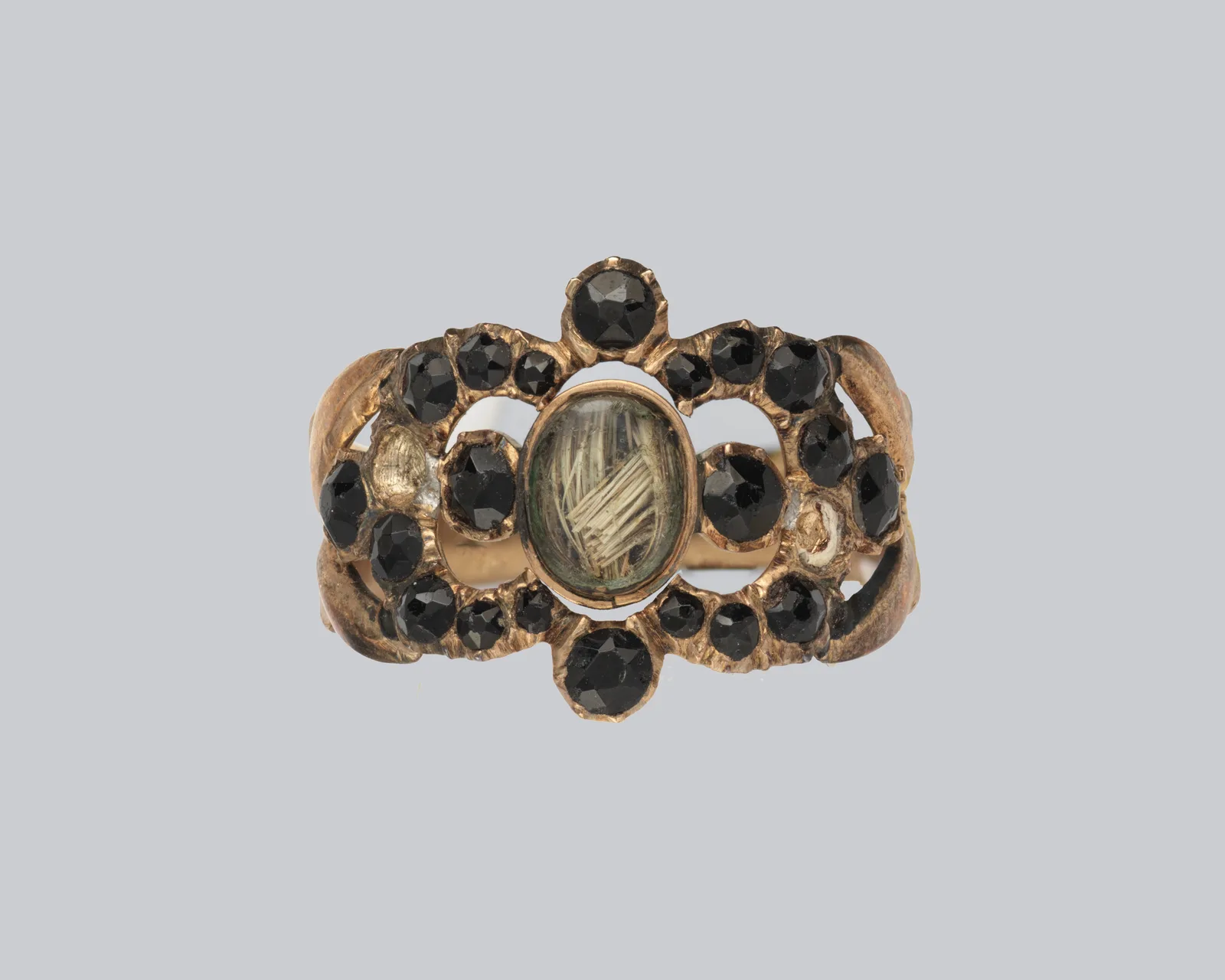
Mourning jewellery faded as death moved out of the home and became something not displayed. Its return is recent, helped by techniques that made ashes, prints and voice practical to work with, and by grief becoming speakable in public again.
Cremation jewellery or the alternatives
Or a tattoo
Both put memory on the body. A tattoo is permanent and always visible, a pendant is removable and private. People who want the option of a day without it choose the pendant.
Or an urn at home
An urn stays in one room and carries a formality some households find oppressive. A pendant travels. Many families do both, keeping the main volume in an urn and a token portion in something wearable.
Or scattering
Scattering is a release, and some people find afterwards that they released everything. A small retained portion allows both: the ceremony of letting go, and something deliberately kept back.
Send a friend a discount code, they save on their first order.
What the object actually does
Presence instead of absence
The purpose runs opposite to what people expect. The piece does not remind its owner of a loss they are in no danger of forgetting. It asserts a presence: something of the person is physically here, in a form that can be carried.
A transitional object for adults
A transitional object helps someone tolerate separation by holding the feeling of connection in place. For a child it is a toy that never gets put down. In grief the same role can fall to a pendant, because a physical object gives an attachment somewhere to sit.
Permission to remember without being stuck
The fear that wearing a memorial traps someone in mourning is understandable, and the object has an opposite motion available to it. If the connection lives in one specific thing that is always there, the rest of life is allowed to move. Whether to wear one is a personal decision and both answers are normal. What causes harm is not the jewellery but the prohibition on speaking about the loss. How grief itself moves through such an object is a subject in its own right, taken up in our guide to memorial jewellery after the loss of someone close.
Facts that surprise
Security does not care about your pendant
American security screening places no restriction on memorial jewellery, which surprises people who expect an interrogation. The practical risk runs the other way entirely: pieces are lost in trays, not confiscated at them.
A pendant can be bought empty and filled years later
Nothing obliges anyone to decide at the moment of purchase. Pieces are bought, worn empty, and filled at some later point, and a chamber left unfilled is not a failure of nerve. This matters most for people who want the object in hand while they are still working out what belongs inside it.
Hair can be taken from the living, and rarely is
The whole category reads as belonging to death, yet its most durable keepsake can be taken from anyone at any time, at no cost and without ceremony. Very little of it is done in advance. The people who end up glad they did are the ones who cut a lock during an illness, put it in a paper envelope and then forgot about it.
Domestic work and workshop work ran side by side
Hair jewellery was made at home and ordered from professionals simultaneously, and the difference is visible in the object. What is strange about surviving pieces now is how thoroughly they have outlived their context.
The coin was payment, not a memento
The obol placed in the mouth of the dead was the fare for the ferryman, a strictly practical transaction within that view of the world. The change of meaning matters more than the coin: the same object later began working in the opposite direction, for the survivors rather than the deceased. Our piece on ancient coins in jewellery follows that shift.
A locket is named after its latch, not its contents
The word comes from the Old French loquet, a small latch or bolt, and points to the clasp rather than to whatever the case holds. The name describes a thing that closes and opens, which is exactly the property that separates a locket or a screw chamber from a solid resin or glass piece: the former can be reopened and shared years later, the latter forecloses that for good.
Buying it as a gift? Each one arrives ready to give.
 A branded Zevira box and a little card come with every order.





Frequently asked questions
How much ash actually goes into a pendant?
Between a quarter and half a teaspoon. The remainder stays with the family for burial or scattering, and filling a pendant forecloses none of those options.
Can I fly wearing cremation jewellery?
In the United States there is no restriction on wearing memorial jewellery through screening. Elsewhere the rules are local, so check with the airline if the airport is unfamiliar. The greater practical risk is leaving the piece behind in a tray, so decide in advance whether it stays on you for the whole journey.
Can I put something other than ashes inside?
Yes. Hair, fur, dried flowers, soil, a scrap of fabric and a folded note all go into the same chambers. Anything organic must be thoroughly dry before it is sealed.
Can a piece be opened again?
Screw closure pieces can be reopened by a jeweller, though it is not meant as a routine operation. Resin and glass pieces cannot be opened at all.
What if the funeral has passed and we have no fingerprint?
Handwriting takes its place. A signature from a card, a line from a letter or a shopping list transfers to metal from a photograph.
Does hair inside a pendant decay?
Not in any practical sense while it stays dry. Moisture is what damages organic contents, which is why chamber pieces should come off before swimming.
What happens if I lose it?
The chain and the setting can be remade, and many makers keep the design file so an engraved piece can be reproduced exactly. The contents cannot be replaced, which is the argument for never putting the last of anything into one object.
Are we allowed to divide ashes between family members?
This varies by country and, in places, by the individual crematorium and burial ground, so it is not something to take from an article. The crematorium office and the funeral director handle the question as routine and will tell you what applies in your case, including what is recorded and what container is used.
Can a jeweller clean it in the usual way?
Say what the piece is before handing it over. A polish and a new clasp are ordinary work, but ultrasonic cleaning is not suitable for a sealed chamber or a resin inlay, and a counter will not know unless told.
Can I have a piece made from someone still living?
Yes. Fingerprints, handwriting and locks of hair are all taken from living people, and many pieces are made this way with no bereavement involved.
Not sure which format fits?
Browse the full range and see what sits comfortably for daily wear.
View the catalogueAbout Zevira
Zevira works with symbols that carry weight, which is why memorial pieces sit naturally alongside the rest of what we make. Every design is drawn in Spain, in a region with a long history of working metal by hand. We publish guides like this one because these decisions get made quickly, under pressure, and usually with very little information to hand.
If you are at the start of this and unsure what is even possible, the sections above are ordered the way the questions actually arrive. Our silver locket guide covers the photograph route for anyone who finds remains difficult to carry.