Filigree: metal lace soldered together without a single cast part
The word filigree is built from two Latin roots: filum, meaning thread, and granum, meaning grain. Behind that name sits a craft where lace is soldered from the thinnest wire and tiny metal beads, and not one element is cast. Everything holds together on fire, tweezers, and the steady hand of a maker who lays the pattern out one curl at a time.
The technique works the same way wherever it travels. A maker first twists two fine wires into a strand, then flattens that strand into a notched ribbon that looks like a tiny rope, and from that rope builds scrolls, hearts, and spirals. Granulation sits alongside it: microscopic balls of metal, soldered so densely that the surface starts to glitter like dew on a spiderweb. The finished piece weighs almost nothing, yet it looks woven rather than forged. Russian tradition even has its own name for this, skan, from an old verb meaning to twist or spin a thread, and it stands as one regional voice in a much larger story.
This article is about how lace is born from wire and a dust of metal beads, lace worn by Etruscans, Byzantine empresses, and noblewomen across half the world. Where the truth ends and the myth begins, how background filigree differs from openwork, why a single brooch can take a maker a whole day, how to tell hand soldering from stamping, and how to clean this kind of lace without crushing it.
What filigree, openwork, and granulation actually are
Filigree and its regional names: one craft, many words
Filigree is a single craft that travels under several names. The English word comes through Italian filigrana, which goes back to the Latin filum and granum, thread and grain. In Russian the same technique is called skan, from a verb meaning to twist or spin. Other regions have their own labels, but the principle never changes: a pattern built up from wire and soldered together with no casting involved. People sometimes reserve one word for the technique itself and another for fine openwork in general, yet underneath the vocabulary the work is identical.
The thing that sets this craft apart from ordinary jewellery is that nothing gets poured into a mould. Casting is when molten metal fills a ready cavity and hardens into one solid part. Filigree runs the other way around: the maker takes wire that is already drawn, bends elements from it, and solders them to one another. The pattern assembles like a mosaic made of metal threads.
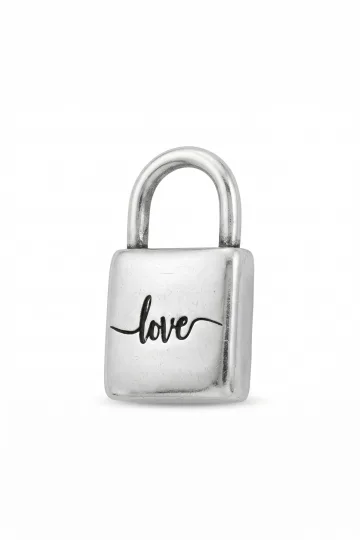
Wear the symbol, don't just read about it. These are in stock:








What granulation is and where the tiny beads come from
Granulation is surface decoration made from a scattering of the smallest metal balls. They can measure fractions of a millimetre, and a good antique piece carries hundreds of them. The making is clever. Finely chopped wire or shavings are spread on a charcoal plate dusted with carbon and then heated. The heat melts each fragment, and surface tension pulls it on its own into a perfect sphere, the way a drop of water rounds itself. After that the maker sorts the balls by size and solders them onto the base.
Granulation and twisted wire almost always travel together. The twisted wire gives the line, the contour, the scroll, while granulation fills, accents, and brings the surface alive. Where the wire draws the outline of a flower, the beads scatter across its centre. Where filigree marks a border, the beads run along it like a row of seed stitches. In a good maker's hands these two methods work like a pencil and a dotted line.
What the pattern is built from: smooth wire, rope, and beads
A filigree maker keeps several kinds of wire on hand, and each one has its own voice. Smooth round wire gives a clean, fine line. A strand twisted from two wires and then flattened into a ribbon becomes the rope with its slanting notches, the signature texture of the craft, its most recognisable surface. There is flat smooth ribbon, there is toothed ribbon, there is a fine coil wound around a needle. From this set, as if from an alphabet, the maker spells out any ornament, from strict geometry to lush plant scrolls.
Background and openwork filigree: two ways of building
Background filigree: pattern on a metal base
Background filigree, also called applied filigree, is when the wire pattern is soldered onto a solid metal plate that serves as a base. First the backing is cut out, then the ornament is drawn or scratched onto it, and finally the wire elements are laid along that drawing and soldered down. The background can stay smooth, or it can be chased, gilded, blackened with niello, or filled with enamel. This kind of filigree is sturdier, heavier, and calmer: the pattern rests on a firm support and barely fears bending. Makers love it for icon covers, crosses, cigarette cases, and caskets, anything that has to last and hold its shape.
Openwork filigree: lace all the way through
Openwork filigree, also called pierced filigree, is a pattern with no base at all. The elements are soldered only to one another, and light and skin show through the gaps. This is the real metal lace: a piece that looks woven from air and thin threads. Openwork is light, transparent, dazzlingly festive, and also temperamental. It has no backing to keep its shape, so it fears being squeezed or struck. Earrings, pendants, openwork brooches, tiaras, little vases, and baskets are most often made this way.
Three-dimensional and sculptural filigree
A separate peak of the craft is three-dimensional filigree, where openwork parts assemble into objects with real volume: small goblets, caskets, boxes, figures of birds and animals, miniature carriages. Flat openwork walls are bent and soldered into a box or a vessel, then a bottom, a lid, and feet are added. This is the highest level of skill. It is not enough to build the pattern; the fragile lace also has to be made to hold its shape in three dimensions. Pieces like this come out of large workshops, and one complex casket can take a maker weeks.
Filigree is a soloist, never a choir. Lace over lace is what people wear when they have nothing to say. One piece, clean ground, no arguments.
How to wear filigree
After years working with openwork I have learned one thing: this craft cannot stand any fuss around it. Here is what actually works when you want the lace to be seen and not lost in the shuffle.
Which filigree should I wear every day? For daily wear I recommend small and tough pieces: little openwork studs, a thin pendant on a smooth chain, or a narrow filigree ring. They add a handmade quality and do not snag when you are in a hurry. Silver freshens fair skin, a gilded thread warms a deep tone. One neat filigree accent works better than a handful of jewellery at once.
How do I build an evening look with openwork? For evening I suggest large openwork on a clean ground: palm-sized earrings, a bold brooch on a smooth dress, a festive set. Under artificial light the weave flares and reads from across the room. I choose a rich plain top (wine, emerald, black) so the lace works like a crown of light instead of getting lost in the fabric.
Which clothes suit filigree best? Openwork loves a calm background. I choose smooth dense fabrics: silk, fine knit, linen, a plain top with no print. On a busy pattern the lace fragments and disappears. Retro and folk looks flatter filigree especially: an Iberian heart or chandelier earrings come alive next to embroidery and texture, while for strict minimalism I take one fine piece and nothing else.
Can I wear filigree with filigree? Rarely, and carefully. If you have large openwork earrings on, I recommend keeping the pendant and ring smooth and quiet, otherwise the look breaks into a fine mesh and tires the eye. The reverse works: one filigree piece leads, the rest holds a smooth background. And a practical note: do not lay openwork against chains where it snags, and do not pile it in layers that bend the threads.
Who does filigree suit? Almost everyone, because it is about texture, not age. On the young it gives a vintage note against the smooth mass-market; on older faces the fine lace softens the features and plays with light. Large openwork earrings visually lengthen a round face. There is a line for men too: restrained filigree cufflinks, a tie clip, a ring with geometric openwork look sharp and expensive. The point is to give the lace a clean background and not overload the look.

Turn on your camera, pick earrings, a pendant or a ring, and see the piece on yourself in real time.
Switch items in one tap.
Everything runs in your browser: no photo or video is ever uploaded.
How filigree is made: from ingot to finished lace
Drawing: how a thread is pulled from an ingot
Everything begins with wire, and wire is pulled. A scrap of silver or gold is rolled into a rod and then drawn through a draw plate, a steel die with a row of holes, each one slightly smaller than the last. As the metal passes through a hole it shrinks in diameter and grows longer. Pass after pass, the wire gets thinner, down to tenths of a millimetre, several times finer than a human hair. Between passes the metal is annealed, heated and cooled, otherwise it work hardens and snaps. A tiny piece of silver yields metres of thread.
Twisting: the birth of the rope
Two fine wires are laid together and twisted into a tight strand by turning one end. The result is a spiraled thread with visible coils running along it. The strand is then rolled in a mill or flattened with a small hammer, and the slanting notch appears on it, the signature mark of filigree. This flattened rope is the working material: scrolls and spirals are bent from it, it lies down as pattern, and its notch catches the light beautifully.
Laying the pattern: tweezers instead of a brush
On paper, or directly on the base, the maker marks out the ornament. Then comes the handwork that cannot be hurried. With tweezers the maker picks up a length of wire, bends a scroll to the right radius, lays it along the drawn line, and holds it in place. The next element goes down beside it, and the next. In openwork the parts are laid on a fireproof support and tacked with a drop of paste so they do not drift before soldering. The pattern is assembled like a puzzle of hundreds of tiny bent pieces, and the evenness of every scroll decides the whole piece.
Soldering: the moment fire decides everything
The most nerve-wracking stage. Solder is applied to the joints, an alloy with a melting point just below that of the base metal, usually as fine shavings or a paste with flux. Then the whole assembled composition is carefully heated with a torch. The solder melts and flows along the seams, locking the wires to one another while the filigree itself stays whole. The trick is that the temperature gap is tiny: overheat a little, and an openwork thread as fine as a hair slumps or collapses. An experienced maker walks the flame across the work, reading the colour of the metal, and lifts the fire at exactly the right second.
Granulation and finishing: beads, pickling, and shine
If the pattern carries granulation, the balls are arranged in place and soldered the same way, sometimes in a single firing with the wirework. After soldering, the piece goes into a pickle, a mild acid bath that strips the firescale and flux residue, and the metal brightens. Then come grinding, polishing, and where needed blackening, gilding, or enamel. The finished lace is washed, dried, and only now seen at full strength: what looked like a grey tangle of wire on the bench flares into a silver or gold weave.
Customer reviews
Zevira is a real jewellery shop. Genuine payments, deliveries and customer thank-yous.
🥰🥰🥰 gracias
Ok, ¡gracias! 🙂
The history of filigree: from the ancient East to far northern workshops
The ancient East and Sumer: the first threads and grains
People learned to twist wire and roll granulation very early. By the third millennium BCE, makers in Sumer and ancient Egypt were decorating gold pendants and diadems with the finest granulation and twisted thread. The famous finds from the royal tombs of Ur are full of gold scattered with microscopic balls, and to this day scholars argue about exactly how they were soldered without modern tools. Mesopotamia, Egypt, Troy: everywhere there was gold, granulation appeared very early too.
The Etruscans: the riddle of perfect granulation
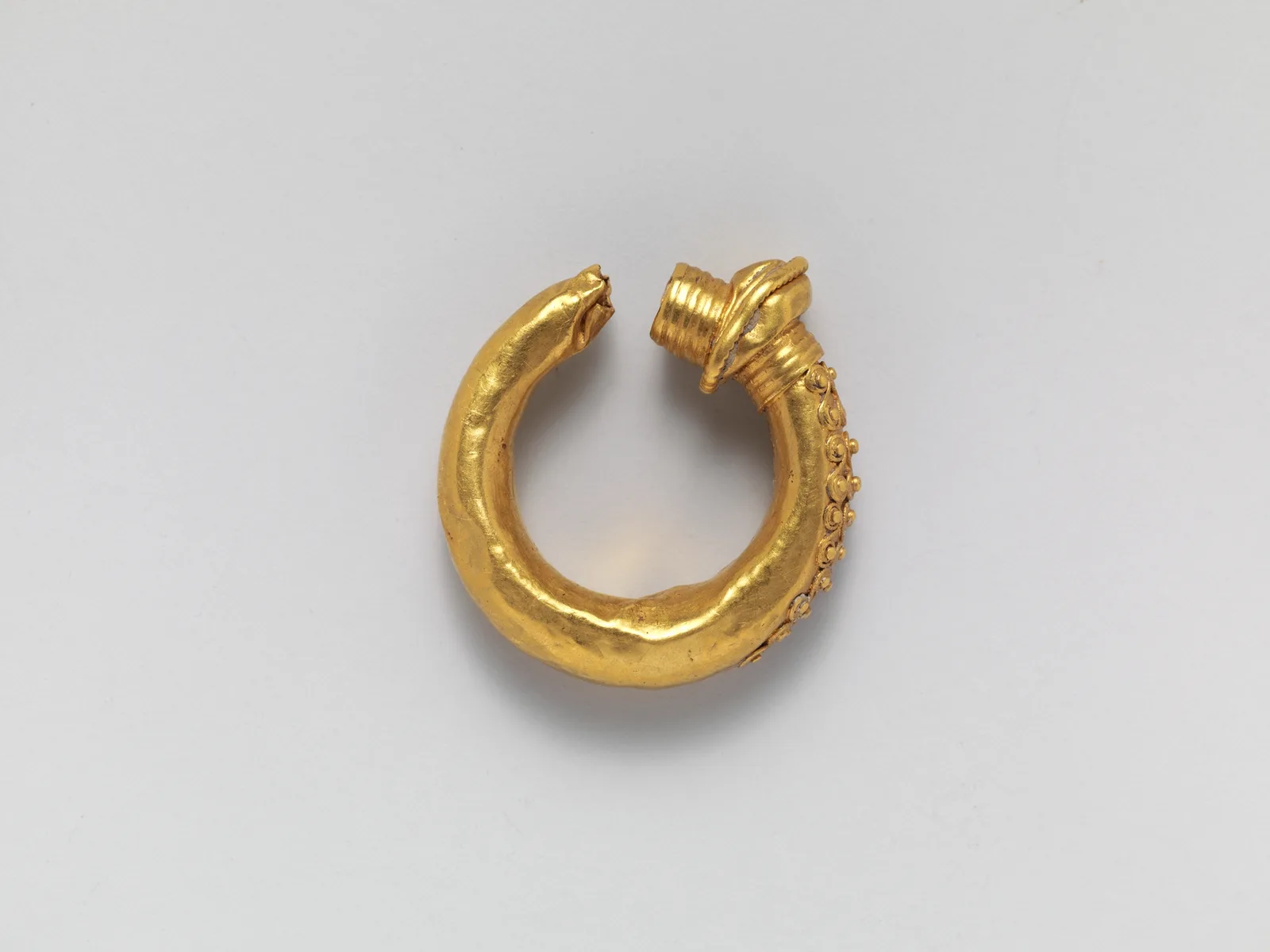
A legend of the craft all its own belongs to the Etruscans, an ancient people of Italy. In the first millennium BCE, Etruscan goldsmiths brought granulation to such perfection that their secret was puzzled over for centuries afterward. On gold fibula clasps and pendants they laid fields of balls so small that the eye reads them as a velvety surface rather than separate grains. The beads held with no visible solder. Only in the twentieth century did anyone work out the method: a combination of a copper salt and organic glue under heat produced an almost invisible bond. Etruscan granulation is still the benchmark that makers reach for.
Byzantium and Kievan Rus: filigree heads north
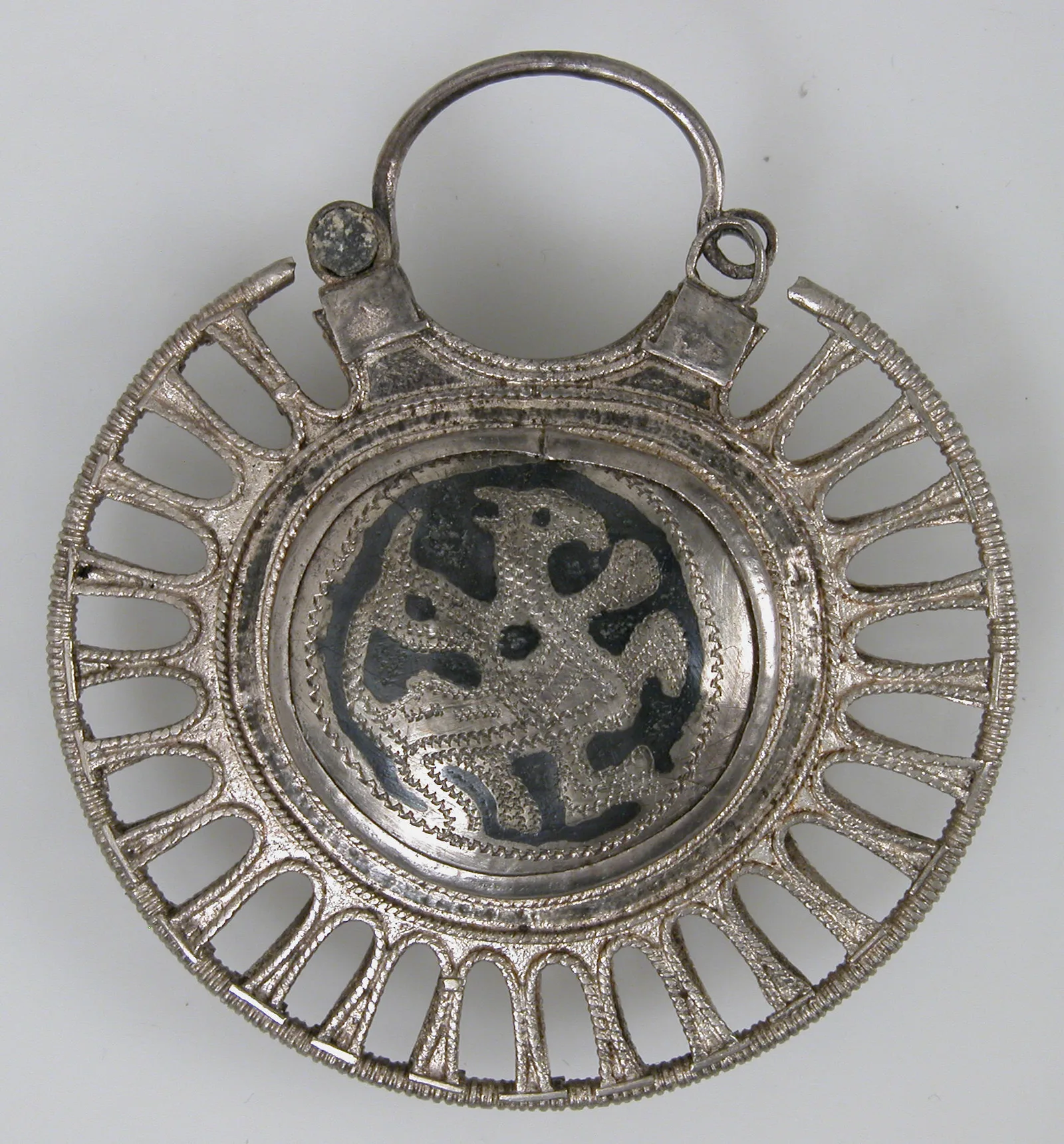
From the Greco-Roman world the art of twisted thread passed into Byzantium, and from there, along with Christianity and trade, it spread north and east. By the tenth to twelfth century, brilliant filigree makers were at work in Kiev: gold kolts (hollow pendants for the headdress), collars, and devotional plaques covered entirely with filigree, granulation, and cloisonné enamel. This was court luxury of the highest order. The Mongol invasion of the thirteenth century cut off many traditions, but filigree survived and slowly revived in workshops to the north.
A golden age: covers, caskets, and royal gifts
By the fifteenth to seventeenth century, this northern filigree reached a golden age. Court workshops covered icon frames, Gospel bindings, censers, chalices, ladles, and royal crowns with filigree. A distinctive manner took shape: lush plant ornament, filigree combined with coloured enamel, niello, and precious stones. Both church plate and secular luxury were dressed in it. This is the moment that gave us what many still recognise as classic filigree lace: dense, colourful, richly patterned.
Northern schools and the silver belt
The far north of the region gave the craft its own schools. Some towns grew famous less for pure filigree than for niello on silver, but they worked with filigree too, and many methods went hand in hand. Northern makers paired twisted wire with a blackened ground, getting a contrast of bright pattern and dark depth. A whole band of country was a silver-working region, where filigree lived side by side with enamel and engraving.
Twentieth-century openwork: the village workshops
In the twentieth century certain village workshops became the main centres of openwork filigree. Here three-dimensional pierced filigree went into steady production: little vases, candy dishes, glass holders, caskets, brooches, and earrings made of silvered wire. The manner is recognisable at a glance: light, airy, purely openwork lace with no background, often from base alloys with a silver coating. The craft is still alive today, and for many people it is exactly these airy little pieces that the word filigree calls to mind.
Italy and the Mediterranean: pottery towns and goldsmiths
Italy, from the Etruscans through the Renaissance, held the bar of filigree high: Genoese and Roman work was prized all across Europe. Italian filigree leans toward fine openwork and geometric restraint, and it was from Italy that the very word filigree entered most European languages. Other regions famous for one craft, such as pottery, often gave their countries skilled metalworkers as well, and the two trades fed each other.
Eastern and Iberian filigree
In the East, filigree never faded. Yemen, Iran, the Caucasus, India, Central Asia: each has its own manner of twisted thread and granulation, often very dense, carpet-like. Caucasian makers, Armenian and Georgian, were famous for fine blackened filigree. And in Europe a special pride belongs to the Iberian tradition: Salamanca and Córdoba in Spain, and the northern Portuguese town where the filigree heart became a national symbol. Iberian filigree is recognised by its hearts, chandelier earrings, and large chest ornaments made for regional costume. Zevira, as a Spanish brand from Albacete, feels a particular warmth toward this Iberian line of fine metalwork.
Upload a photo of your pet, someone you love, or an object. We'll build a 3D model and hand-cast it in pewter.


Why filigree is so costly and labour-intensive
Hours of handwork in a single piece
Filigree resists automation in the very part that makes it filigree. A machine can draw the wire and roll the rope, but only a hand can lay the pattern out from it. Every scroll is bent with tweezers in place, every joint is soldered on its own. A simple pair of earrings takes hours, a complex openwork brooch takes a day, a three-dimensional casket takes weeks. The price of a piece is first of all the maker's paid time, which is why genuine filigree costs noticeably more than a stamped piece of the same weight.
Why the weight misleads
The paradox of filigree is that the piece weighs almost nothing while the labour in it is enormous. Thin wire uses little metal, so judging the price of filigree by the weight of silver makes no sense: you pay not for grams but for the weave. An openwork brooch the size of a palm can weigh less than a plain wedding band yet hold a day of work and hundreds of solder joints. This is the opposite of casting, where there is a lot of metal and little handwork.
Mistakes that cannot be fixed
In soldering filigree there is almost no margin for error. Overheat one seam and the neighbouring thread slumps; warp the base and the pattern goes wavy; let the solder run wrong and a granulation bead drowns. Some pieces go back for rework or into the scrap. That rate of failure is built into the price too: for one successful piece a maker sometimes pays with several ruined ones. The finer the thread and the more complex the openwork, the higher the stakes.
Skills that take years
You cannot sit down to filigree and pick it up on a whim. Pulling the strand evenly so the notch lies straight; bending fifty identical scrolls by eye; sensing the second to lift the fire before the thread flows; scattering granulation so the beads fall in formation rather than a heap. Each of these skills is drilled in over months, and the whole set over years. So the cost of a finished piece includes both the day at the bench and the long road the maker walked before any of it came out right. A scroll that looks simple is paid for with someone's earlier ruined spools of wire.
Which metals filigree is made from
Silver: the main metal of filigree
Silver is the native material of filigree. It is soft enough to draw into the finest thread and bend without cracking, strong enough to hold the pattern, and it solders beautifully. Most openwork filigree is made of silver, usually the standard 925 grade: this alloy gives the right balance of pliability and strength. Silver lace looks good in plain white shine, under niello, and under a light gilding.
Gold: filigree for the few
Gold filigree is the height of luxury and the oldest form of the craft. It was in gold that the Etruscans, the Kievan makers, and Eastern goldsmiths did their granulation. Gold is even more pliable than silver, draws into an utterly weightless thread, and does not tarnish, which is why ancient gold filigree has come down to us still gleaming. Today gold filigree is rare and doubly expensive: both the metal and the labour cost dearly. A common compromise is gilded silver.
Gilded and silver-plated filigree
The most widespread option on the market is filigree from an inexpensive pliable metal with a precious coating. Silver filigree is gilded to get a warm tone at an accessible price; base-metal wire is silvered, as in some village workshops, so that white lace stays affordable. The coating works on two fronts at once: it decorates and it protects. Gilding does not tarnish, and silvering freshens the colour and hides any reddish-yellow cast of base metal under a white shine. There is one drawback: a thin layer wears away over time on the raised spots, and it has to be renewed by a jeweller. The good news is that on openwork the wear goes slower than on a smooth ring: hands touch lace less often than a ring that rubs against everything.
Platinum and rare alloys
Filigree is almost never made from platinum: the metal is high-melting, stiff, and temperamental to solder, awkward for fine twisted thread. Now and then makers work with silver-based alloys for colour, or with special solders, but the classics of the genre stay the same: silver, gold, and their gilded and silvered versions.



The fragility and strength of openwork: what filigree fears
Why openwork looks fragile
Pierced filigree has no backing, and it holds together only on the joints between the threads. So the intuition is not wrong: openwork lace really is more delicate than a cast ring. The main enemy is being squeezed or struck. If you sit on an openwork earring, step on it, or pinch it among keys in a bag, the thin threads bend and the joints can split. Bent openwork can be restored, but that is a jeweller's job, not a two-minute fix at home.
Where filigree is surprisingly strong
And yet filigree is not as defenseless as it looks. Many elements soldered to one another form a lattice, and a load spreads across the whole net rather than pressing on a single point. Background filigree on a solid base is sturdy outright: the backing holds the shape, and bending such a piece is harder than it seems. A carefully worn openwork brooch lasts for decades, and museums hold filigree a thousand years old, whole and gleaming. The fragility of filigree is a fragility toward rough handling, not toward time.
How to wear it without crushing it
The rules are simple. Openwork earrings and pendants come off before sleep, sport, dozing on the road, and dense outerwear that might catch the pattern. Do not store filigree in a heap with chains and rings, where it snags and bends; keep it in its own pouch or compartment. Filigree rings are not worn on the working hand for heavy tasks. And most of all: openwork does not like being adjusted by fingers at random. If a part has come loose, do not force it; take it to a maker.
Leave your email, we'll send your discount code. No spam, unsubscribe anytime.
The code arrives by email, valid on your first order.
Caring for filigree: cleaning lace without bending it
A soft brush and warm water
Filigree needs gentler cleaning than smooth jewelry, because dust and skin oils collect in the gaps and you cannot rub it hard. The basic method: warm water with a drop of mild soap and a soft toothbrush or an artist's brush. With the brush you gently go over all the scrolls, driving the dirt out of the cells, with no pressure. Then rinse in clean water and dry. That is enough for regular care. The general principles of cleaning silver and gold at home are covered in a separate article.
What you must never use on filigree
A stiff brush, abrasive pastes and powders, dry baking soda: all of it scratches the fine surface and rubs off the blackening and gilding. Aggressive store-bought silver dips are risky for filigree: they strip the patina unevenly and can lodge in the hard-to-reach cells, where you cannot wash them out. An ultrasonic bath, handy for smooth pieces, is dangerous for fine openwork and for filigree with enamel or glued-in stones: the vibration loosens the fragile joints. If in doubt, stop at soapy water and a brush.
Drying and storage without dents
After washing, filigree should not be rubbed with a towel; the nap catches on the threads and bends them. Shake off the water, blot it, and finish drying in air or with a hair dryer on a cold setting, blowing through the gaps. Store filigree separately, in a soft pouch or a box with compartments, away from heavy jewellery. Silver filigree is best kept in a closed box: less air, slower tarnish. If a film appears on a blackened or gilded piece, remove it only gently and only along the direction of the pattern.
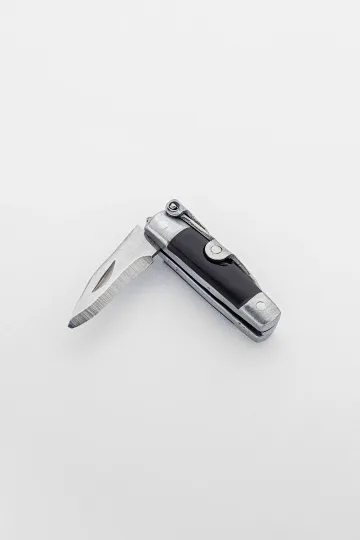
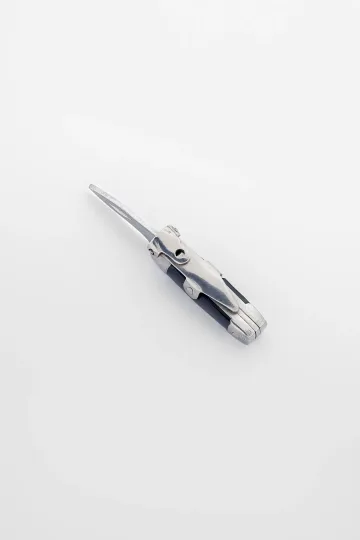
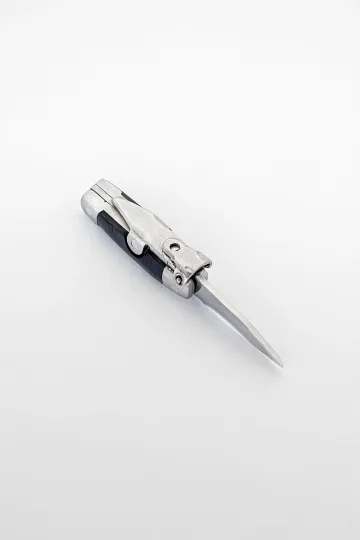
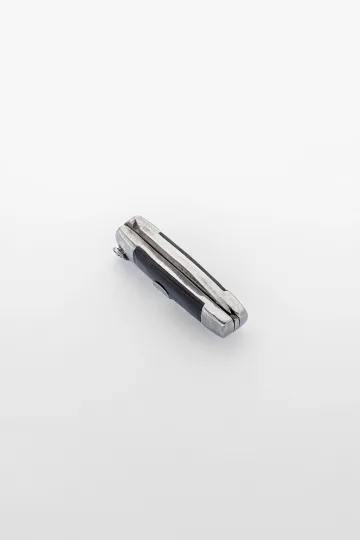
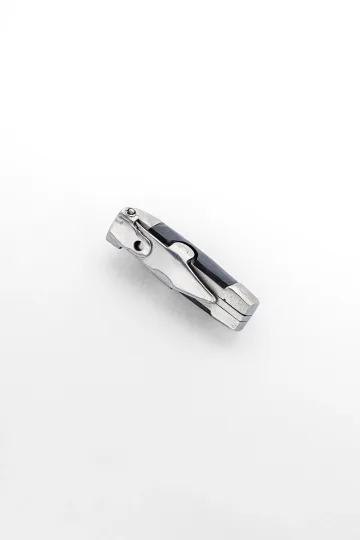
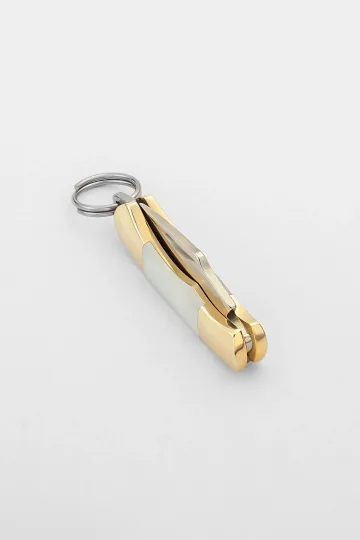
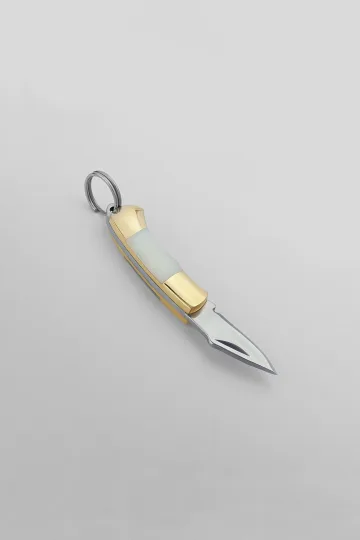
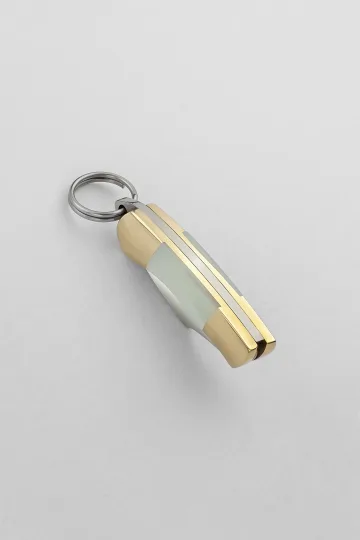
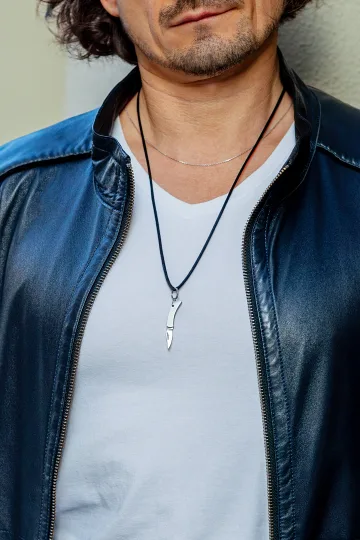
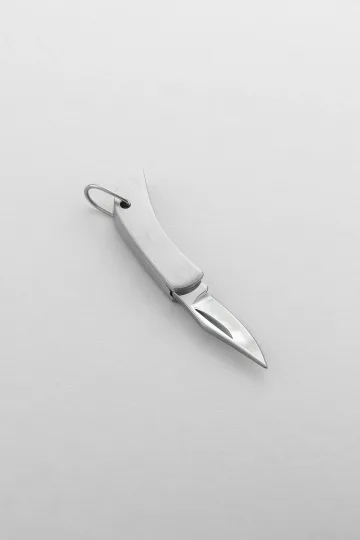
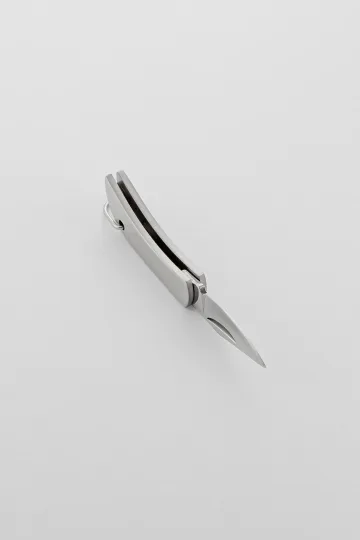
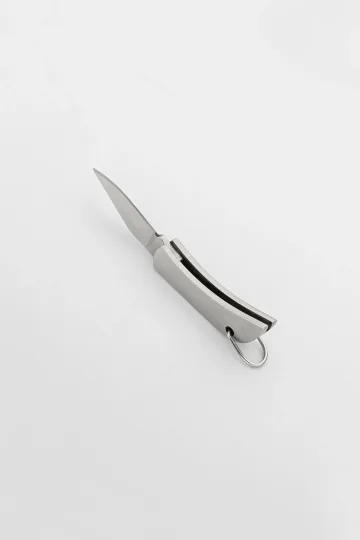
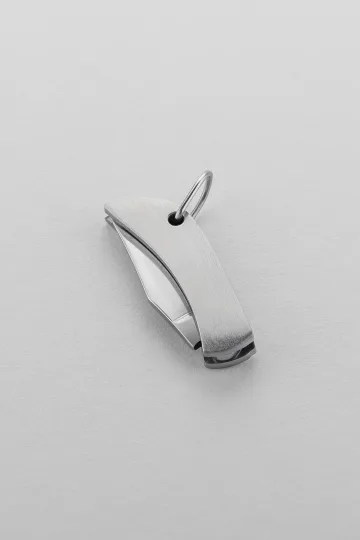
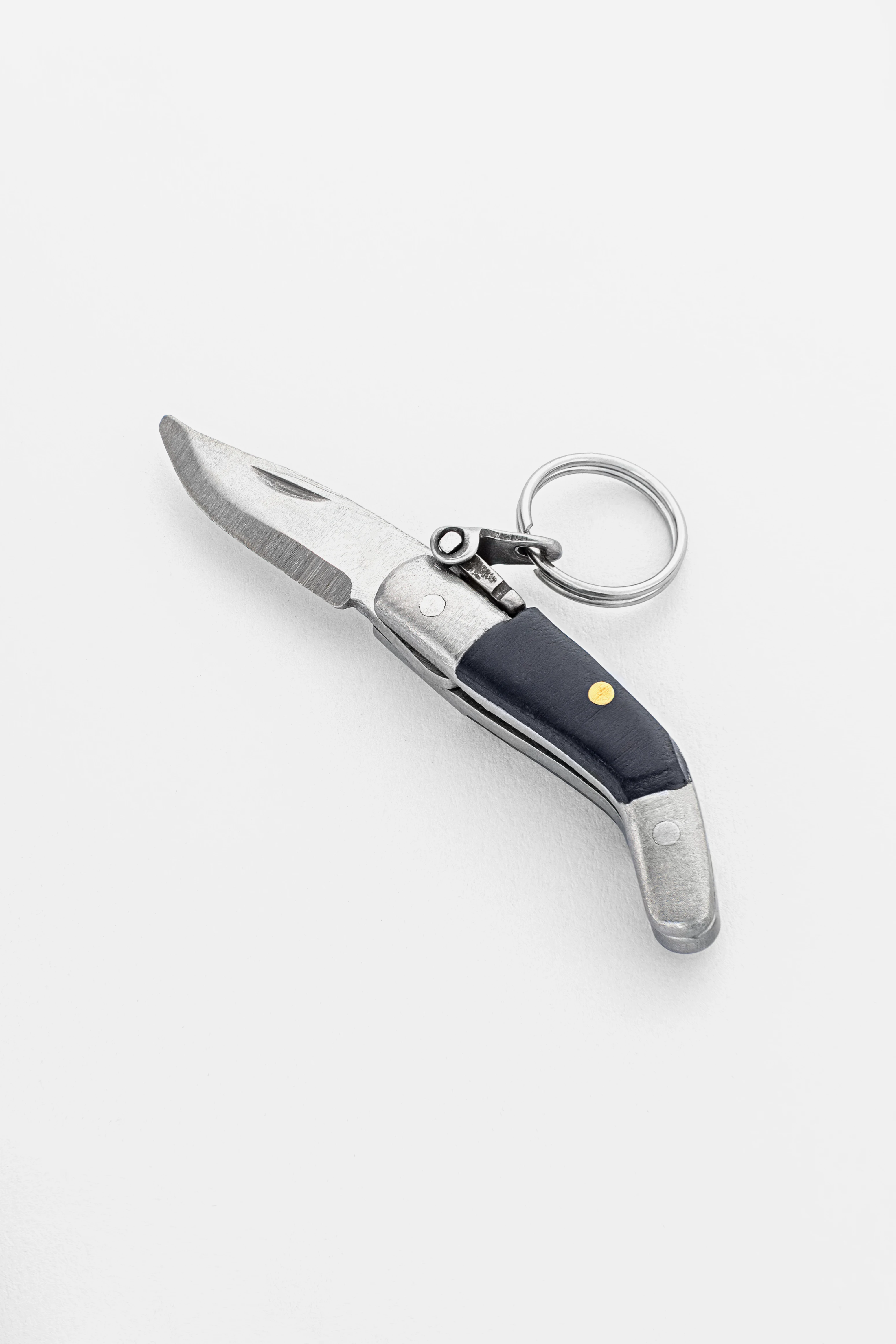
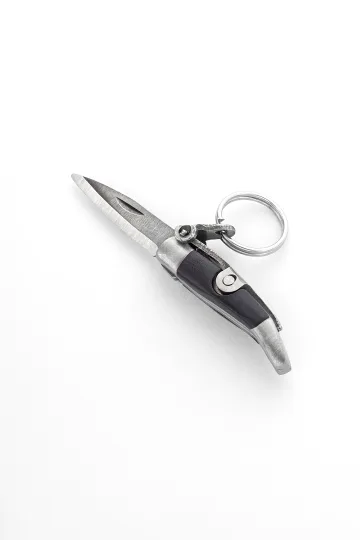
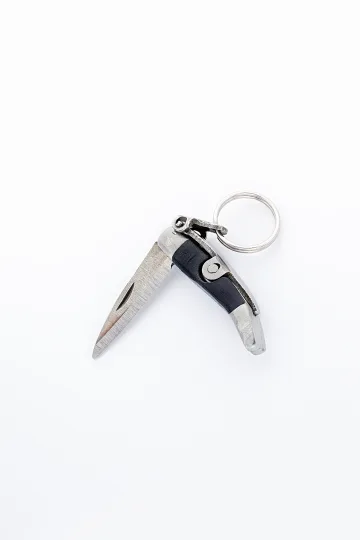
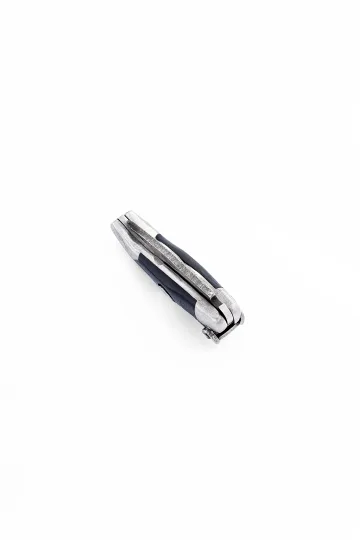
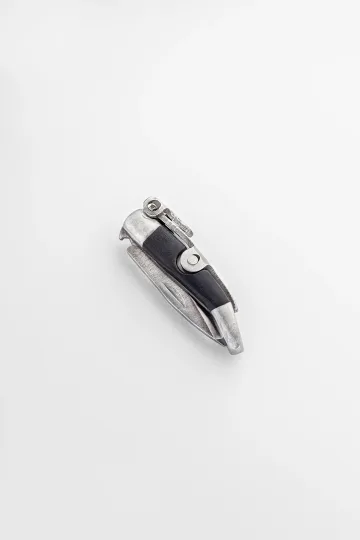
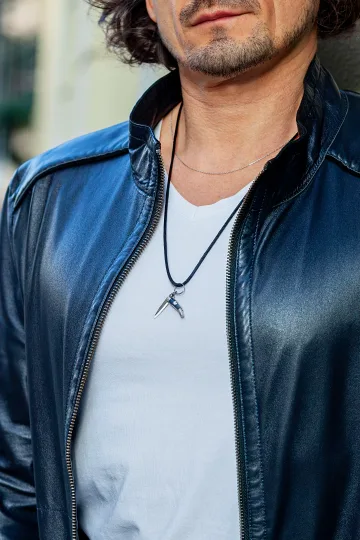
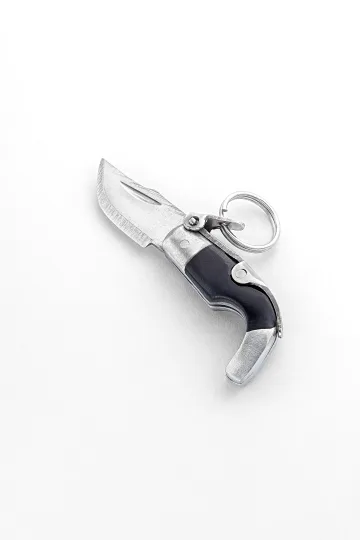
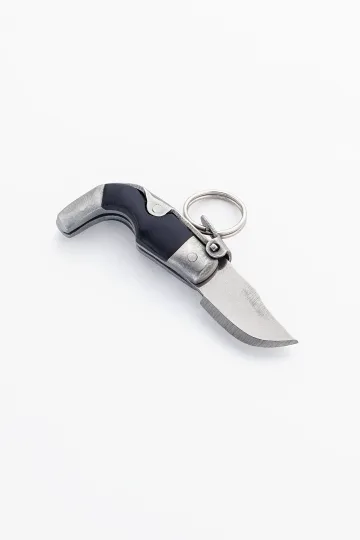
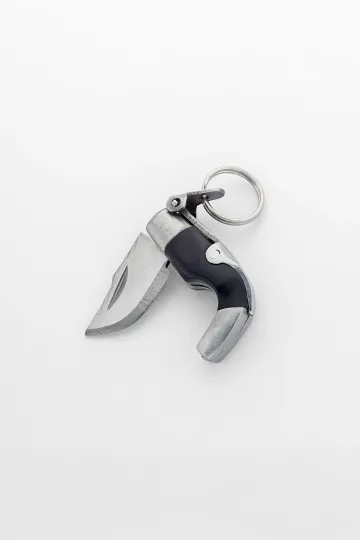
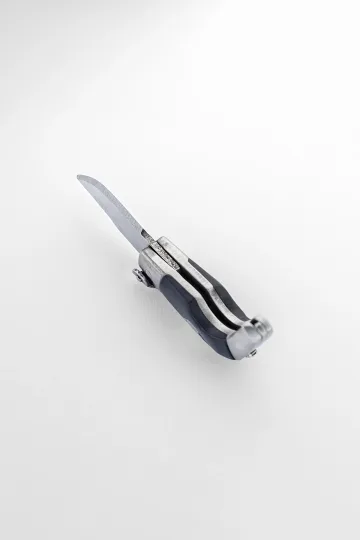
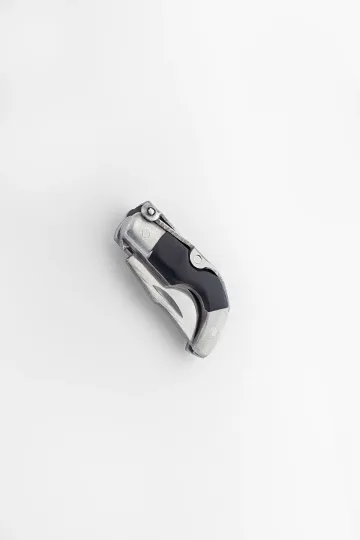
CAPAORA mini knife pendant
The 18th-century Spanish navaja in miniature: 40 mm of stainless steel, a real folding mechanism and a Palanquilla lock that clicks. An affordable gift to remember.
Authentic · Ships from Spain · 14-day returns
How to tell real filigree from a cast imitation
Stamping and casting: the cheap double
Cast or stamped pieces are often passed off as filigree. It is done simply: a mould is taken from real filigree and a whole copy is cast, or relief that looks like lace is stamped from sheet. From a distance the imitation looks like handwork, but it is a solid piece of metal imitating wire, not a weave made from it. The fake is cheap, because it is cast by the dozen in minutes, and it usually weighs more than real filigree at the same size.
What to look at: the notch, the beads, the back
The signs of hand filigree read up close. On twisted wire you can see the slanting notch from the twist; on casting it is blurred or repeats identically across the whole surface. Granulation in handwork is made of real separate balls, sometimes slightly different in size; on casting the balls are fused to the base and identical, like peas from one mould. The gaps in real openwork are pierced through and clean; on casting they are often filmed over with a thin skin of metal or carry flashing. The back helps a great deal: in hand filigree you see the joints, traces of solder, the relief of the wire from behind; on casting the back is smooth or carries marks of the sprue.
Weight, sound, and plain logic
Real filigree is unexpectedly light for its size; a cast copy is noticeably heavier. Sometimes casting shows tiny pores and pits, small bubbles of metal that cannot exist in wrought wire. And plain logic: a thin openwork piece priced like stamping is almost certainly stamping. Hand filigree cannot cost the same as casting, because the hours of work are paid for in it. Cheap and lace-like is a signal to look closer.
Regions and styles: where and how filigree is made
Lush plant patterns
One major tradition is recognised by its richness and its plants. These are dense patterns of scrolls, sprigs, and floral rosettes, often combined with coloured enamel, niello, and stones. From court icon covers to little openwork vases runs a single line: this filigree loves abundance, the pattern carpets the surface and fills the whole plane. Modern workshops in this tradition make both strict openwork and ornate enamel-and-filigree brooches in the old spirit.
Italian and Iberian filigree: geometry and hearts
The Mediterranean school leans toward lighter, more graphic openwork. Italian filigree, since Etruscan times, loves geometry, precision, transparency. Iberian filigree, Spanish and Portuguese, gave the world its signature motifs: filigree hearts, chandelier earrings, large chest ornaments for regional costume. This is festive, ceremonial lace, tightly bound to national dress and folklore.
Eastern filigree: carpet density
The Caucasus, Iran, Yemen, India, Central Asia: Eastern filigree is often very dense, almost without voids, with an abundance of granulation and blackening. Caucasian makers are famous for fine blackened filigree, where the bright pattern sinks into a dark ground. Eastern openwork loves symmetry, repetition, the filling of every millimetre. This manner sits closer to a woven carpet than to airy European lace, and it casts its own spell.
How filigree sits beside other techniques
Filigree rarely lives alone. It is gilded and silvered, its gaps filled with colored enamel, set off with niello, and fitted with stones and pearls in their nests. It has kin among other hand metalworking methods: chasing, engraving, and the Japanese mokume-gane technique with its woodgrain pattern from layers of different metals. All of it is a family of handworked metal, where the hand is prized over the weight. To grasp how much labor stands behind any such piece, it helps to read the general account of how jewelry is made.
Filigree today
Jewellery: earrings, brooches, pendants
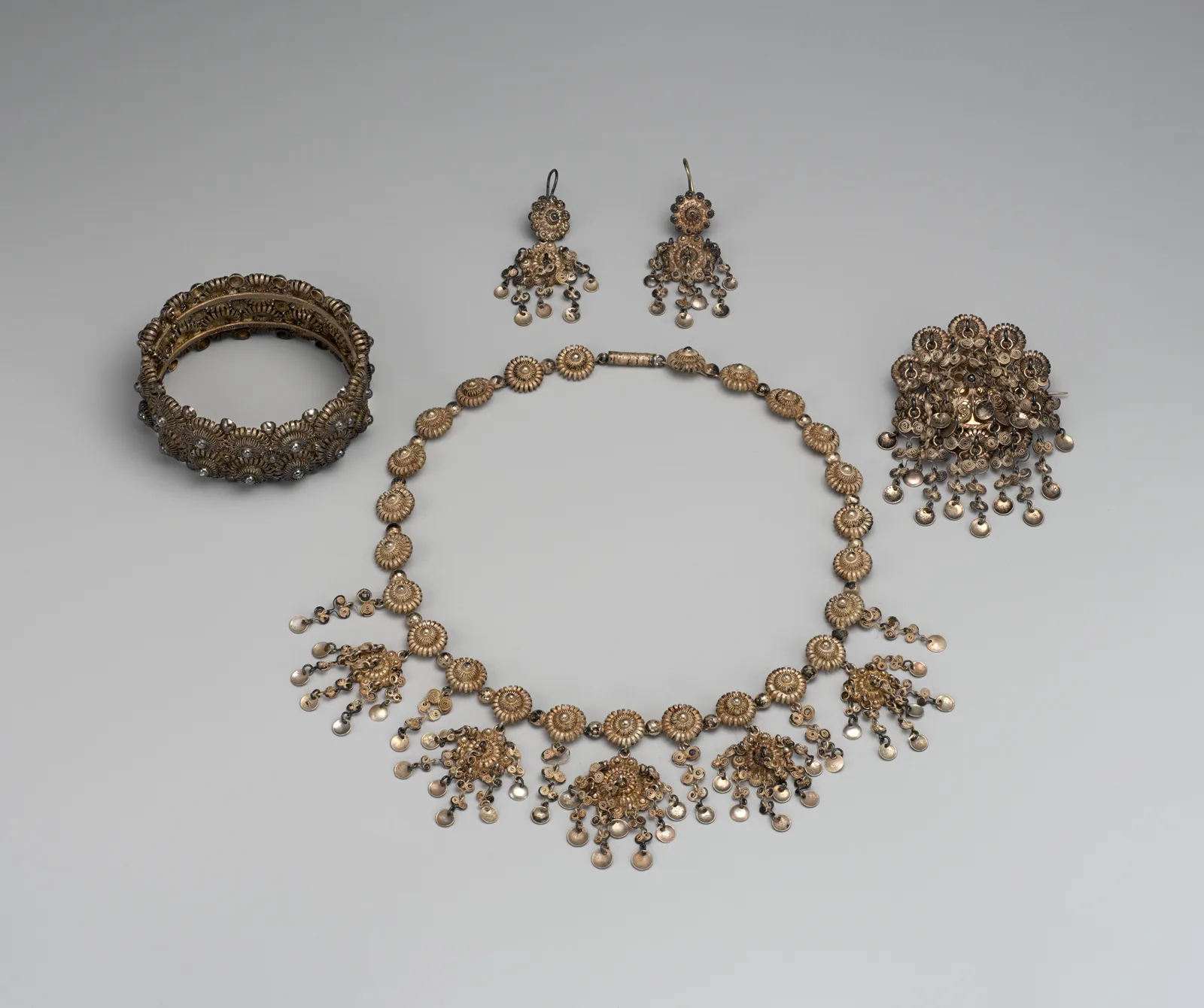
Today filigree lives above all in jewellery. Light openwork earrings you can barely feel in the ear, lace brooches, pendants, tiaras for weddings and the stage. The airiness of filigree makes it ideal for pieces that look large but weigh nothing: an earring can be palm-sized and never drag the lobe. Brides and lovers of vintage aesthetics choose filigree for its retro richness and its recognisable heritage nobility, fashionable once again.
Interior objects and keepsakes
Three-dimensional filigree has gone into decorative things: openwork vases, candy dishes, glass holders, caskets, Christmas ornaments, miniature carriages, and little ships. This is the tradition that turned metal lace into a keepsake art. Such objects rarely have a practical use; they are valued as small sculptures made of light and wire.
Designer and studio filigree
Contemporary studio jewelers return to filigree as a language of handwork, the opposite of stamping. Studio filigree can be far from traditional: minimalist, asymmetric, blending an old technique with new forms. The value here lies precisely in the handmade: in a world where any form can be printed and cast in runs, a piece assembled with tweezers from a hundred soldered threads reads as a luxury of time and skill. To learn how to tell genuine handwork from a copy, it helps to look at the example of a handmade ring.
Send a friend a discount code, they save on their first order.
Facts that surprise
Etruscan granulation took two thousand years to crack
The Etruscans soldered granulation beads so that the bond is almost invisible, and their secret was lost with the fall of their civilisation. Nineteenth-century European goldsmiths struggled with the riddle, trying to repeat the invisible bond, and failed. The answer came only in the twentieth century: a special reaction between a copper salt and organic glue under heat fuses the ball to the base with almost no visible solder. It took two thousand years to relearn what ancient Italic makers already knew.
Granulation balls roll themselves on charcoal
No one turns or casts the perfectly round granulation balls one at a time. Pieces of metal are spread on charcoal and heated, and surface tension itself pulls the molten crumb into a sphere, the way a drop of dew gathers into a perfect bead. Physics does the finest work for the maker; all that is left is to sort the finished balls by size. The same tension that rounds a drop of water rounds a drop of silver.
Wire finer than a hair
Fine filigree works with wire in tenths of a millimetre, several times thinner than a human hair. To get such a thread, the starting rod is drawn through dozens of shrinking holes, with the metal annealed between passes. A tiny silver ingot yields metres of cobweb thread. When you look at a finished piece, it is hard to believe this mesh is built from a material that snaps at a careless move until it is soldered into a lattice.
The weight misleads: lace lighter than a ring
An openwork brooch the size of a palm often weighs less than a plain wedding band. Filigree uses little metal and a great deal of labour, so judging its value by grams makes no sense. This is the complete opposite of a massive cast piece, where there is much metal and almost no handwork. In filigree you pay for the air between the threads, or more precisely, for the hand that built that air.
Filigree is older than many familiar jewellery techniques
Granulation and twisted thread are older than many techniques that feel timeless. They decorated gold thousands of years before faceted diamonds, transparent enamels, or electroplated gilding existed. When the makers of Ur rolled their balls, the cutting of the diamond was still millennia away. Filigree is one of the oldest living jewellery techniques on earth, reaching us almost unchanged in its essence.
Common questions about filigree
How does filigree differ from openwork or granulation? They are not the same thing but parts of one craft. Filigree is the broad name for a pattern built from wire and soldered without casting. Openwork is filigree with no backing, lace you can see through. Granulation is the decoration with tiny soldered balls that usually accompanies the wirework. Different traditions use their own names for the technique, but the principle is identical.
What is granulation? It is surface decoration made from a scattering of the smallest metal balls, sometimes under a millimetre. The balls are rolled by melting metal crumbs on charcoal and then soldered onto the pattern. Granulation almost always goes together with filigree: the wire draws the lines, the beads fill and accent.
Why is filigree so expensive when there is so little metal in it? Because you pay not for metal but for time. Thin wire is bent and soldered by hand, element by element, and a single piece takes hours or days. A machine cannot lay the pattern out. A light openwork brooch can hold a whole day of work and hundreds of solder joints, and that is its price.
Is filigree very fragile? Is it frightening to wear? Openwork filigree fears being squeezed or struck, but not time and not careful wear. Many soldered threads form a strong lattice, and museums hold whole filigree pieces a thousand years old. Just do not sit on the earrings, take them off at night and for sport, and store them separately, and a piece will last for decades.
How can you tell real filigree from a cast fake? Look up close: handwork shows the slanting notch on twisted wire, separate granulation balls, clean pierced gaps, and traces of soldering on the back. Casting imitates wire with solid metal, its back is smooth, it may have pores, and the copy weighs noticeably more. A thin lacy piece priced like stamping is almost certainly stamping.
Which metal is best for filigree? The classic is silver, usually 925 grade: it is pliable, strong, and solders beautifully. Gold filigree is more luxurious and doubly expensive. Gilded silver and silvered wire are very common: a precious look at an accessible price. The coating wears off the raised spots over time and gets renewed.
How do you clean filigree at home without breaking it? Warm water with a drop of mild soap and a soft brush or toothbrush, no pressure: gently drive the dust out of the gaps, rinse, dry in air. No stiff brushes, abrasives, aggressive dips, or ultrasound, especially with enamel or stones. Do not rub with a towel; the nap bends the threads.
Can bent filigree be repaired? It can, but it is a jeweller's job. Bent openwork is carefully straightened, split joints are resoldered. Do not force the threads straight at home: thin wire breaks, and a bent piece easily becomes a broken one. If a part has come loose, better not touch it and take it to a maker.
The short version
Filigree is metal lace with not a single cast part in it. A thread finer than a hair is pulled from an ingot, twisted into a rope, bent into scrolls with tweezers, laid along a drawing and joined with fire, while granulation, balls the metal rolls for itself on charcoal, scatters into the gaps. The technique is thousands of years old: the Sumerians knew it, the Etruscans perfected it, Byzantium carried it north, and it lives on in Italy, Spain, the East, and far northern workshops. Filigree is misleadingly light, gentle toward rough handling and tough toward time, and you pay in it not for grams but for hours of the hand. The notch on the wire, the separate beads, and the pierced gaps tell it apart from stamping, and it is best cared for with a soft brush, its own pouch, and the habit of taking openwork off where it might be crushed.
Silver, warm metals, handwork, symbolism, coloured stones, and matching sets.
Buying it as a gift? Each one arrives ready to give.
 A branded Zevira box and a little card come with every order.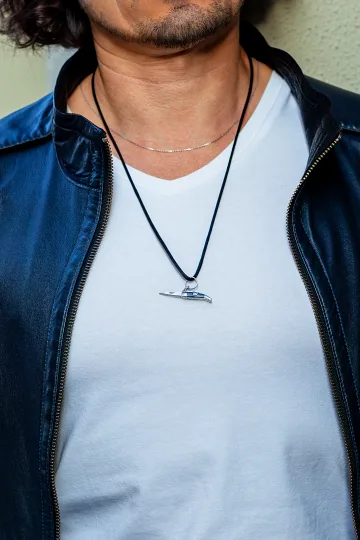




About Zevira
Zevira is a Spanish brand from Albacete, a city of metalworkers. We love pieces with character and handwork: fine weave, the living shine of silver, colored stones, and symbolism with a story. The Iberian filigree tradition, Spanish hearts, and chandelier earrings are especially close to us. If you want to understand metal, start with a breakdown of the 925 grade, and to grasp the price of handwork, the piece on a handmade ring will help.