Jewelry and MRI: Can You Keep It On and What to Remove
The magnet inside an MRI scanner is tens of thousands of times stronger than the one holding a note to your fridge. It can rip a steel gurney off the floor and hurl it into the bore of the machine. Against that backdrop your thin chain feels like a trifle, yet that chain is exactly why a scan can come out ruined and the skin under your ring can end up burned. That is why everything comes off before an MRI.
Magnetic resonance imaging does not shine rays through your body the way an X-ray does. It works through a constant, powerful magnetic field and bursts of radio waves. Metal behaves unpredictably in that field: some of it gets pulled, some of it heats up, some of it warps the picture and hides the very problem you were sent in to find.
Let us lay it out cleanly: why metal and the scanner do not mix, which three risks are real, what exactly to take off before the procedure, and how to handle what you cannot take off, from permanently welded bracelets to piercings and implants. No panic, but no carelessness either, because the price of a mistake here is measured not in money but in your health.
Why metal and MRI are dangerous, in plain words
To understand what to remove and why, you first need a feel for how the machine actually works. Without that, every rule sounds like a nurse being fussy, and these rules are anything but.
It is a magnet, not an X-ray
The most common patient misconception is mixing up MRI with X-rays or CT scans. Those genuinely use radiation, and metal simply casts a shadow on the image. The magnetic resonance scanner works on a different principle. Inside the bore sits a constant magnetic field of colossal strength. It does not switch off while the machine is running, and it acts on anything that enters the room.
Field strength is measured in tesla. A fridge magnet gives you hundredths of a tesla. A clinical scanner runs at 1.5 or 3 tesla, and research machines reach 7 and higher. The difference is not a few percent, it is tens of thousands of times. In a field like that a piece of metal stops being jewellery and becomes a physical object pushed and pulled by powerful forces.
Wear the symbol, don't just read about it. These are in stock:


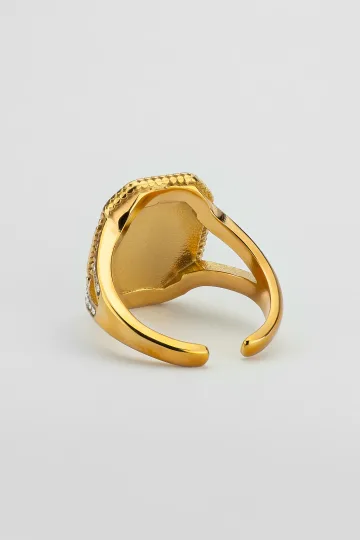
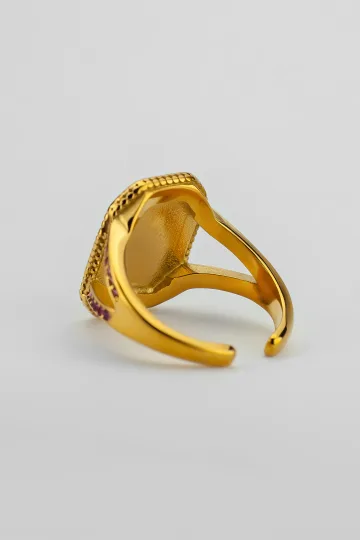

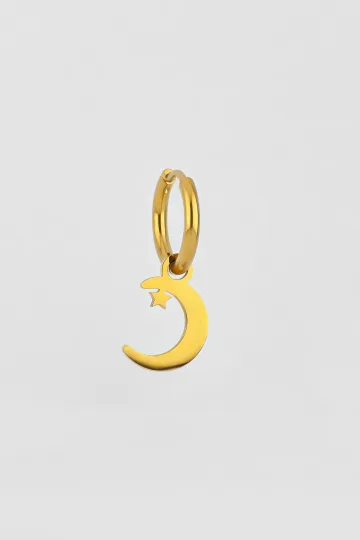



The field is on all the time, even when nothing is being scanned
Another dangerous illusion is the idea that the magnet switches on for a minute, takes the picture, and switches off. It does not. A superconducting magnet holds the field constantly, around the clock, even when the room is empty and the machine looks idle. That is precisely why you cannot walk into the magnet zone with any metal object at all, not only during the scan itself. The case where someone strolls in with keys or scissors in a pocket is the source of most incidents.
The magnet is switched off only in rare emergencies. Dumping the field is called a quench, and it is expensive: the liquid helium that cools the coils boils off, and the machine then takes days to bring back. So staff treat the magnet zone as a constant hazard, not as a device you flip off and on. For you it means one thing: the entry rules apply always, and arguing with the technologist about your removed chain gets you nowhere.
Radio waves add heat
On top of the constant magnet, the machine sends short radio-frequency pulses. They are what make body tissue respond and form an image. These pulses carry energy, and that energy is readily soaked up by conductive loops of metal. A closed loop of conductor in a changing field works like a tiny heating element. That is where the second big risk comes from, and we turn to it next.
Three real risks, each on its own terms
There are exactly three dangers, and they are fundamentally different in nature. One is about attraction, the second about heat, the third about image quality. Jewellery comes off because any metal falls under at least one of these risks.
Risk one: heating and burns
Radio-frequency pulses induce an electric current in metal. If the metal forms a closed loop, the current circulates round and round and heats the object. Closed contours are the real danger: hoop earrings, thin chains, bracelets, captive ring piercings. A straight stud heats less, a hoop heats more.
A burn during an MRI is rare but well documented. The skin under heated jewellery reddens, and in bad cases a blister forms. A person lies inside the bore without moving, sometimes for forty minutes, and does not always notice right away that an item has started to sting, especially under sedation or with reduced sensitivity. So the rule is simple: no closed metal loops on the body.
Why the loop matters so much is worth holding onto. A straight piece of metal, say a smooth earring stud, induces only a weak current and heats barely at all. A hoop, a chain with a closed link, or a bracelet form a circuit the current runs around with no way out. The longer and thinner the loop, the stronger the effect. A thin gold chain is in this sense more dangerous than a chunky signet ring with no holes through it, and that runs against the intuition that bigger means more dangerous.
Wires and any conductive threads heat up separately, so you do not enter the room with headphones, in clothing woven with conductive fibres, or wearing patches that contain metallic foil. If you wear a nicotine or pain-relief patch, mention it: some of them hold a thin layer of metal and can heat. Heat builds slowly and is not always felt at once, so the bet is on prevention rather than on the patient complaining in time.
Risk two: the projectile effect
Ferromagnetic objects, meaning ones that contain iron, nickel, or cobalt in magnetic form, are drawn to the magnet with enormous force. In the trade this is called the projectile effect. Steel scissors, hairpins, paper clips, and clasps turn into little bullets flying toward the centre of the bore at a speed no hand can stop.
For jewellery the risk is lower than for large steel objects, but it is there. A steel hairpin can be torn out of your hair. Cheap costume jewellery of unknown alloy can shoot toward the wall of the machine. And even if your chain is gold and not attracted, the projectile effect covers everything you might have forgotten on you or in a pocket: keys, coins, hairpins, buckles.
The pull grows steeply as you approach the centre of the bore. At the doorway the magnetic force is still weak, and a person calmly holds an object in hand. Two steps further and that same object is torn from the fingers. It is this nonlinearity that deceives: it seems that since all was quiet at the entrance, it will stay quiet further in. So the no-metal rule starts at the threshold, not at the machine.
The most common projectiles are not jewellery at all but everyday odds and ends: keys, a phone, scissors, spray cans, oxygen cylinders, chairs. Jewellery is dangerous mostly because people forget it, dismissing it as trivial. An earring in the cartilage of the ear, an unnoticed piercing, a thin anklet under trousers. So staff ask you to remove everything and change clothes to rule out the forgotten, not because they distrust your gold.
Risk three: image distortion and the hidden problem
The third risk is not about injury but about the point of the whole exam. Metal near the scan area creates artifacts: dark voids, glowing halos, geometric distortions around itself. A black blot appears on the picture, and under that blot the very thing the radiologist was looking for can be hidden.
Even a nonmagnetic gold or titanium piece warps the magnetic field in its vicinity. If they are scanning the neck and a chain sits on it, the artifact lands right on the area of interest. The scan has to be redone, which means a new appointment, a new wait, and sometimes another dose of contrast. So even what does not heat and is not attracted still comes off: it gets in the way of seeing.
The artifact can be many times larger than the jewellery itself. A small steel earring can darken a whole lobe of the brain on a head scan. The stronger the machine's field, the bigger the distortion, which is why modern high-field scanners have stricter metal rules, not gentler ones. What slipped through unnoticed on an old weak machine produces a huge black zone on a new one.
The trouble is that an artifact masquerades as a problem or hides one. A dark void where the metal sat is easy to confuse with a disease focus, and a bright halo around it with inflammation. The radiologist loses time working out what is in front of them: a real finding or the trace of a forgotten earring. In the worst case an early tumour or a vascular problem sits under the artifact and simply cannot be seen. So a metal-free scan is not a formality, it is a condition for a correct diagnosis.
The magnet doesn't care that it's your wedding band. Everything off, and don't play the hero.
How to pick jewellery you won't fight before an MRI
Hundreds of looks have passed through my hands, and nearly every one has a piece that has to come off at the clinic. Here is what genuinely makes it easier: what to wear daily so it slips off in a second, and how not to lose a piercing on the way through the scanner.
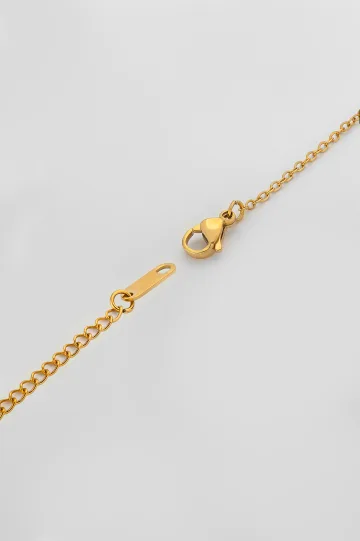
What do you suggest for everyday pieces that are easy to remove? I recommend a thin chain with a simple lobster clasp and studs on a classic butterfly back. That set comes off in a couple of seconds at the front desk, no fiddling with screws. A light top lifts silver and steel, a dark one turns even a small pendant into the accent. The rule: no clever clasps you can't undo yourself without a mirror.
How should I dress on an MRI day? I choose clothes with no metal at all: a cotton tee, knitwear with no zips, no underwires, no rivets. Keep jewellery minimal that day and set it aside in one small pocket rather than scattered over your body. That way you won't forget the earring hidden under your hair, and you won't be fumbling in the changing room.
What do I do with a piercing so I don't lose the hole? If the jewellery has to stay out for a while, I recommend buying a nonmagnetic retainer in bioplast, glass, or titanium ahead of time. A fresh piercing can close in hours, so an empty hole is a bad bet. Clear bioplast is nearly invisible, passes the safety check calmly, and the hole stays where it is.
Is a welded bracelet worth it if I get scans often? Honestly, think twice. A permanent piece looks great, but before every MRI it has to be cut off or explained to the radiologist as magnetic or not. If you go through the procedure regularly, I suggest a piece on an ordinary clasp you can remove yourself in a second, not one sealed on for good.
Which rings are easier for someone often asked to take everything off? I choose smooth rings with no sharp prong-set stones and no engraving on the inner band, so they glide over the knuckle. Titanium and gold aren't attracted, but they still come off: metal distorts the scan regardless of magnetism. Keep rings slightly loose in fit so you aren't wrestling them over the sink before the procedure.

Turn on your camera, pick earrings, a pendant or a ring, and see the piece on yourself in real time.
Switch items in one tap.
Everything runs in your browser: no photo or video is ever uploaded.
What to remove before an MRI: the full list
The short answer is everything. The long answer is below, because jewellery hides in places people forget in a rush. Walk through this list at home, not at the machine.
Earrings and any piercing
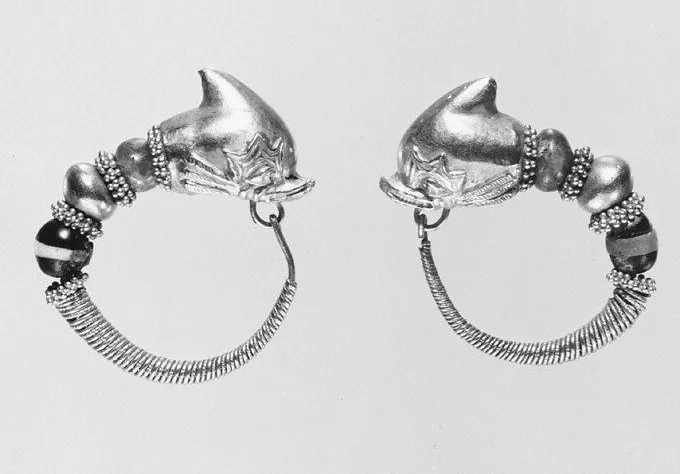
Earrings always come off, whatever the metal. Hoops in the ears and any body piercing are closed loops, which makes them prime candidates for heating. A fresh piercing you are scared to leave without a bar is its own topic, covered in the section on retainers. Do not forget the small studs in the cartilage and in extra holes: they are easy to miss, and they are just as risky as the big ones.
Chains, pendants, and necklaces
A chain on the neck almost always lands in the scan zone for the head, neck, or chest. Off comes the chain and the pendant alike. A pendant with a stone too: the stone spoils the picture less, but the metal setting and the chain will leave an artifact.
Rings and wedding bands
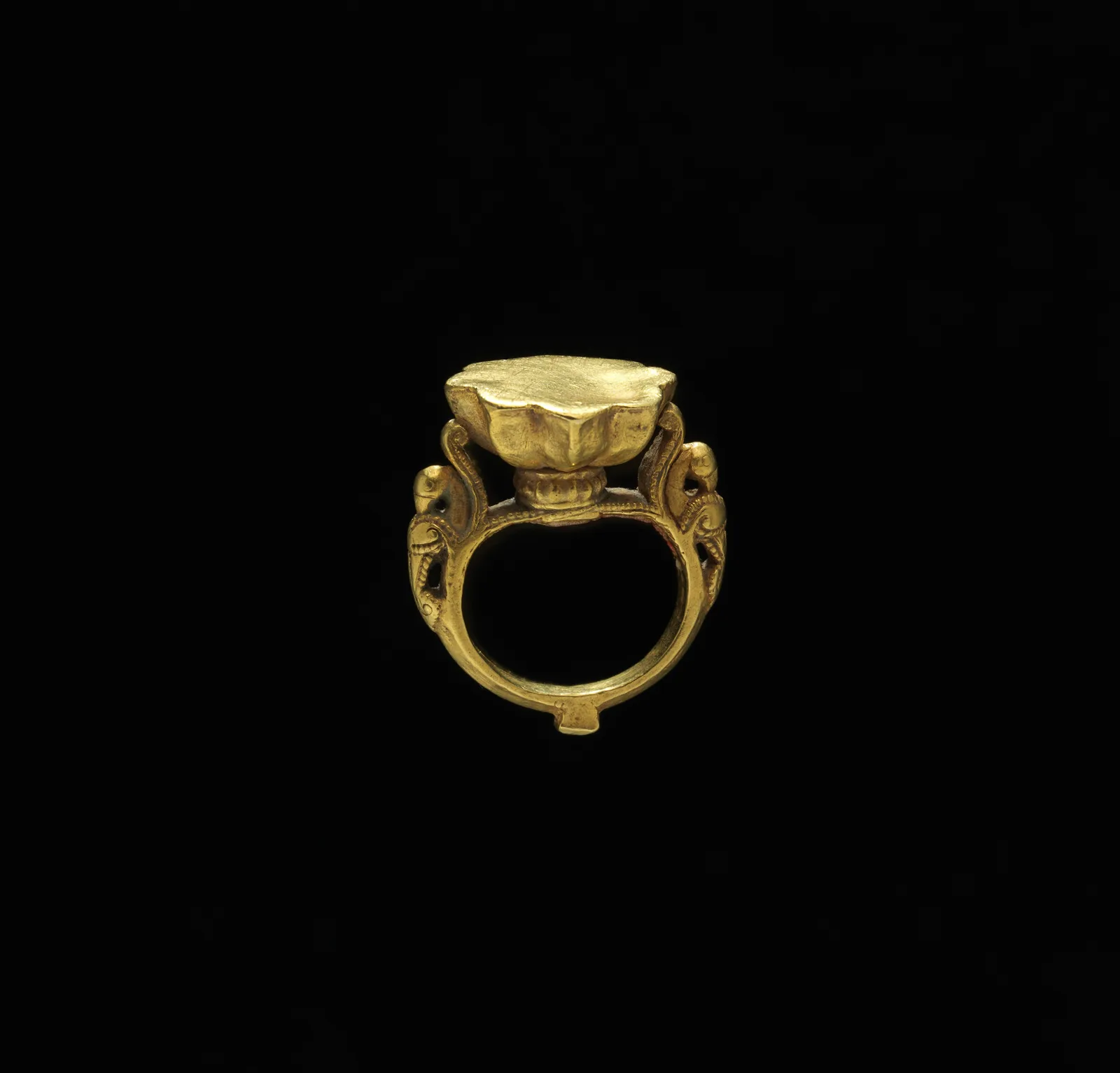
All rings come off, the wedding band included. Yes, it is precious to you and sometimes sits tight, but a ring is a closed contour on the finger, and it heats. If a ring will not budge, say so in advance, before you are at the machine, so there is time to spare. A tight ring usually gives way if you soap the finger with cool water and twist it off rather than yank it. Toe rings, rings on the toe, and navel piercing hoops come off too, though people remember them last.
Watches, fitness bands, and smart rings
Watches come off for two reasons at once: metal plus electronics. The magnetic field will reliably kill a mechanical watch and ruin many electronic ones. Fitness bands, smart rings, any gadget on the body come off as well: they have no place in the field. A mechanical watch is the saddest loss: the field magnetizes the spring and balance, after which the watch runs fast or stops, and you need a watchmaker to demagnetize it. Cheaper to take it off beforehand than to repair it later.
Hair clips, pins, and bobby pins
Hair is the favourite hiding place for forgotten metal. A steel bobby pin is small, but it is a perfect projectile and a source of artifact during a head scan. Before a head MRI, let your hair down and clear every bit of metal from it, including hair ties with a metal crimp.
Hidden metal: buckles, underwires, clothing hardware
This also covers anything that is not jewellery but is metal: belt buckle, snaps, zippers, bra underwires, denim rivets. That is why an MRI often means changing into a disposable gown. Do not resist it: it is not a whim, it is protection from projectiles and artifacts.
Cosmetics and accessories people forget
Metal hides where you do not expect it. Shimmer eyeshadow and mascara sometimes contain metal particles and in rare cases heat slightly near the eyes during a head scan, so it is best to wash makeup off before a head MRI. Coloured contact lenses with a metallic coating come off too. A hearing aid, a removable denture with metal clasps, a wig on a metal mesh, magnetic false lashes: all of it goes before the procedure.
Customer reviews
Zevira is a real jewellery shop. Genuine payments, deliveries and customer thank-yous.
🥰🥰🥰 gracias
Ok, ¡gracias! 🙂
A practical checklist before the procedure
So nothing slips through, walk this list at home, the evening before, calmly. At the machine it is too late to remember.
The day before the MRI
Take off at home everything that comes off with effort, tight rings above all. If a ring will not go, do not pull it until it hurts, call the clinic and ask how to proceed. Prepare a nonmagnetic retainer if you have a fresh piercing. Find the cards for your implants if you have any. Take off the mechanical watch and leave it at home, so you do not carry it into the magnet zone.
What to wear to the procedure
Choose clothing without metal: elastic-waist sweatpants with no zips or rivets, a tee with no snaps, underwear with no underwire. That saves you the change of clothes and speeds things up. Leave at home or in a locker your phone, keys, bank cards, and flash drives: the magnetic field corrupts their data.
What you must tell the staff
Report every implant, prosthesis, plate, pin, pacemaker, pump, coil, and shrapnel fragment. Mention pregnancy if it is possible. Tell them about non-removable jewellery and piercings that are hard to take out. Do not stay quiet about large or old tattoos in the scan zone. A full picture in the radiologist's hands is your safety.
Upload a photo of your pet, someone you love, or an object. We'll build a 3D model and hand-cast it in pewter.



Magnetic and nonmagnetic metals: why both come off
A logical patient question: if my gold is not drawn to a magnet, why take it off? Because magnetism is only one of three risks, and the lack of attraction does not save you from the other two.
What gets pulled: steel, iron, nickel
Ferromagnetic materials react the strongest: ordinary steel, iron, cobalt, nickel in magnetic form. Cheap costume jewellery is often made of steel alloys and is noticeably attracted. Surgical steel, used for much piercing jewellery, can be weakly magnetic too. All of it is a projectile and a heating candidate at the same time.
The catch is that the word surgical reassures. Surgical steel grade 316L is genuinely medical and relatively weakly magnetic, but it is not zero in its field response, and it heats nicely and leaves an artifact. Nickel-plated and chrome-plated costume jewellery looks noble and shines like platinum, while inside sits a steel core that will shoot toward the magnet. Colour and shine tell you nothing about composition.
What is barely pulled: gold, platinum, silver, titanium
Precious metals and titanium are practically nonmagnetic. Gold, platinum, fine silver, and titanium will not shoot toward the wall of the machine. It seems you could leave them on, but that is a trap. They still conduct current, which means they heat in a closed loop. And they still warp the field, which means they leave an artifact. No attraction, yet the other two risks are present.
Alloy composition matters too. Pure 999 gold is almost never used in jewellery, it is too soft, so alloys with copper, silver, and sometimes nickel go into the mix. White gold often holds nonmagnetic additions, but palladium and nickel versions exist. Silver in jewellery is usually 925, with the rest most often copper. All these additions are nonmagnetic, but they only raise conductivity, which means they raise heating too. So the nobility of the metal does not cancel the rules.
Why any metal comes off regardless
The take-it-all-off rule was born from practice, not from overcaution. The technologist is not obliged to judge your chain's alloy by eye, and you are not obliged to know the fineness of a gifted bracelet. Simpler and safer to remove everything than to guess whether the alloy is magnetic and whether it lands in the scan zone. Comparing how different metals behave is covered in our piece on brass, steel, and silver: the difference in composition explains the difference in response to a magnet.
Non-removable jewellery: what to do with welded bracelets
A headache of its own is permanent jewellery. A thin clasp-free bracelet or chain is put on and welded shut around the wrist, to be worn for years without taking off. And then the person is scheduled for an MRI.
Can you have an MRI with a non-removable bracelet
With a non-removable metal bracelet on the area being scanned, an MRI is a no: it both heats and warps the image. If the scan zone is far from the wrist, the radiologist sometimes makes a call case by case, but that is always their call, not yours. You cannot just hope on your own that it goes unnoticed and slips through.
Do they cut off non-removable jewellery
Yes, before an MRI a permanent bracelet is, as a rule, carefully snipped or filed off. This is a routine situation, staff handle it calmly, and the piece can be re-welded later at a studio. Better to arrive early and settle it without a rush than to discover the problem a minute before the procedure. More on how such pieces are made and removed is in the article on non-removable welded bracelets.
Snipping a thin chain with nail clippers is easy, and the link is simple to solder back afterward. It is harder if the bracelet is thick or rigid: it gets filed, and the file mark is then masked at re-welding. An important detail: cutting metal right in the magnet zone with a steel tool is forbidden, the tool is a projectile in itself. So the bracelet comes off in a safe room, not at the machine. If the scan zone is on the arm, say the wrist joint, there is no chance of keeping the bracelet, it has to come off, full stop.
How to prepare if you wear permanent jewellery
If you wear non-removable jewellery and an MRI is scheduled, warn the clinic when you book. Ask whether to have it removed beforehand by a jeweller or whether they will do it on site. Bring the contact of the studio that welded it, so you can restore it afterward. Plan the re-welding as a separate visit, not as an afterthought squeezed in between things. If the MRI is urgent and there is no time for the studio, do not worry: the chain comes off on site, and re-welding can happen later. The piece itself does not suffer from this, you only lose the weld, which is easy to restore. The main thing is not to try to keep the bracelet on the sly: you risk the scan and the skin under it.



Piercings and retainers: how not to lose your hole
A piercing is a closed loop, often weakly magnetic steel, and almost always near the scan zone. Removing it is a must, but the problem is the fresh piercing, which can close up during the procedure. This is especially true for piercings in awkward spots: tongue, septum, intimate piercings, holes in cartilage. They are not easy to remove yourself in a hurry, so the prep has to happen at home.
A fresh piercing: why you cannot just pull it out and forget
A fresh piercing closes up within hours. If you take the bar out for the MRI and leave the channel empty, you can return to a closed hole and have to pierce again. So the metal does need to come out, but the channel has to be held open with something that is not metal.
A nonmagnetic substitute: bioplast, glass, PTFE
The way out is to swap the metal bar for a nonmagnetic insert, a retainer. They are made of bioplast, special medical glass, or PTFE. These materials do not heat, are not attracted, and do not warp the scan, while keeping the channel open. A glass retainer goes into a fresh piercing in advance, at home, calmly, not on the clinic doorstep.
Each material has its strengths. Glass is smooth and hypoallergenic, holds a fresh channel well, but is brittle. Bioplast and PTFE are flexible, easy to insert, and handy for piercings in mobile spots like the lip or tongue. For a scan of a specific area even a nonmagnetic retainer is sometimes asked to come out if it falls right in frame: plastic leaves almost no artifact, but a small field distortion from the insert is possible. So the retainer decision is agreed with the clinic, not made by guesswork.
What to ask the radiologist about piercings in advance
When you book the MRI, say you have a piercing and where it is. Ask whether you can come with a nonmagnetic retainer or whether they will ask you to remove it anyway. For fresh piercings, check with the piercer who did it which retainer suits your particular channel. Better to spend a day on prep than to lose the piercing.
Leave your email, we'll send your discount code. No spam, unsubscribe anytime.
The code arrives by email, valid on your first order.
Tattoos, implants, and prosthetics: what to discuss with the radiologist
Not everything comes off. Some metal is inside the body or in the ink under the skin. Here only the radiologist decides, and here you hide nothing.
Tattoos with metal-bearing inks
Some dark inks, especially old and home-made ones, contain metal particles, iron oxides for example. In rare cases the area of a fresh or large tattoo can heat slightly or give a light tingle during an MRI. Cases are rare and usually harmless, but if the tattoo is large and falls in the scan zone, warn the radiologist. Modern quality pigments react weakly.
This is worth remembering most for owners of large black or colour old-school work and for anyone who got inked recently. Permanent brow and eyelid makeup belongs here too: the pigment sits close to the eyes, and a head scan is exactly that area. The answer is not to cancel the MRI but to warn them and, at any tingle, to signal at once through the alarm bulb every patient is given. A tattoo is almost never a reason to refuse the exam, but it is a reason to mention it in advance.
A word on the inks separately: the myth that any tattoo boils under an MRI is wildly overblown. Serious heating is the exception, not the rule. Far more often a tattooed person sails through the procedure and feels nothing. No need to panic, just to inform.
Implants, prosthetics, and pacemakers
Dental implants, joint replacements, plates, pins, stents, pacemakers, insulin pumps: that is a serious separate conversation. Most modern implants are made MRI-compatible, but that is decided by the radiologist from the documents for the specific device, not by a general rule. Never stay silent about implants. For some old pacemaker models an MRI is categorically contraindicated.
The difference between a compatible and a dangerous implant is measured not by material but by the specific model and conditions. A modern titanium joint replacement will most likely pass but will leave an artifact in its zone. Old ferromagnetic clips on brain vessels are an absolute contraindication: in the field they can shift. Cochlear implants, neurostimulators, and insulin pumps require a special protocol, sometimes they are temporarily switched off or removed. That is exactly why the device card with model and maker is worth more than any words: with it the radiologist finds in a minute whether the implant is safe on this machine.
What matters to tell the radiologist before the procedure
Tell the radiologist about every metal thing in the body: operations, prosthetics, fragments, intrauterine coils, pumps, hearing aids. Bring the implant card if you have one. If you do not recall what was put in, give at least the date and place of the operation: that helps pin it down. The decision to allow the MRI is always the radiologist's, and your job is to give the full picture. Mention separately any history of metal shavings in the eye for those who have worked with metal: that needs a check before a head scan. Better to say too much than to omit the important.
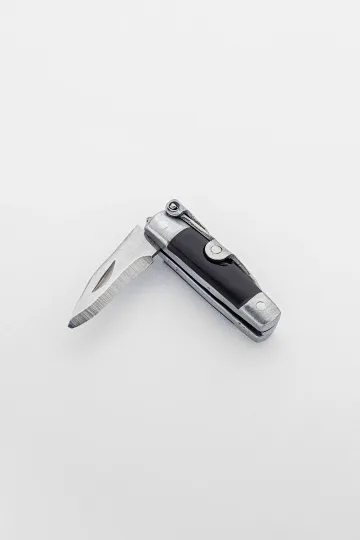
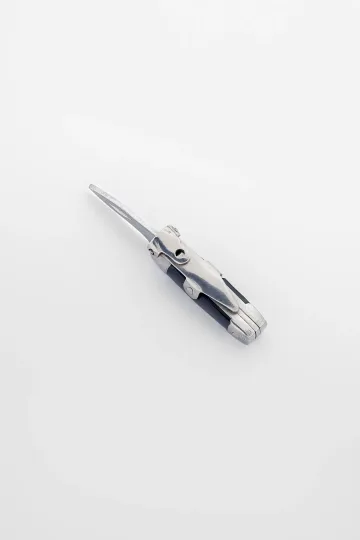
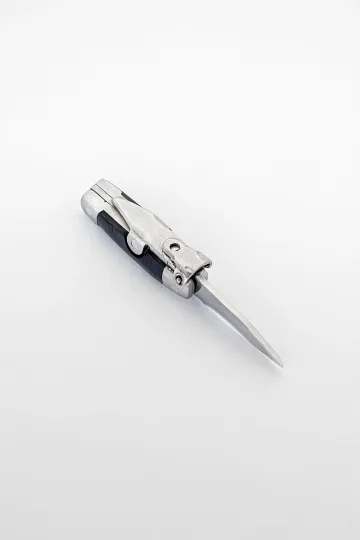
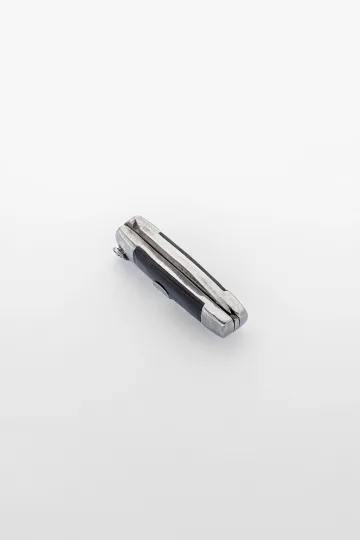
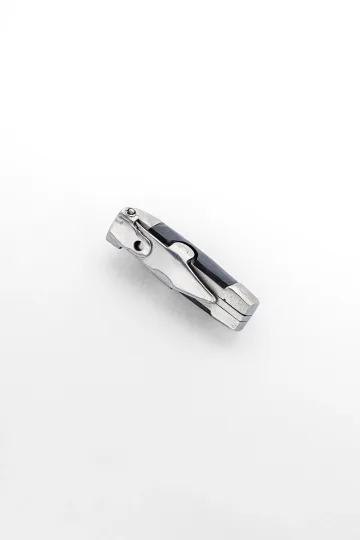
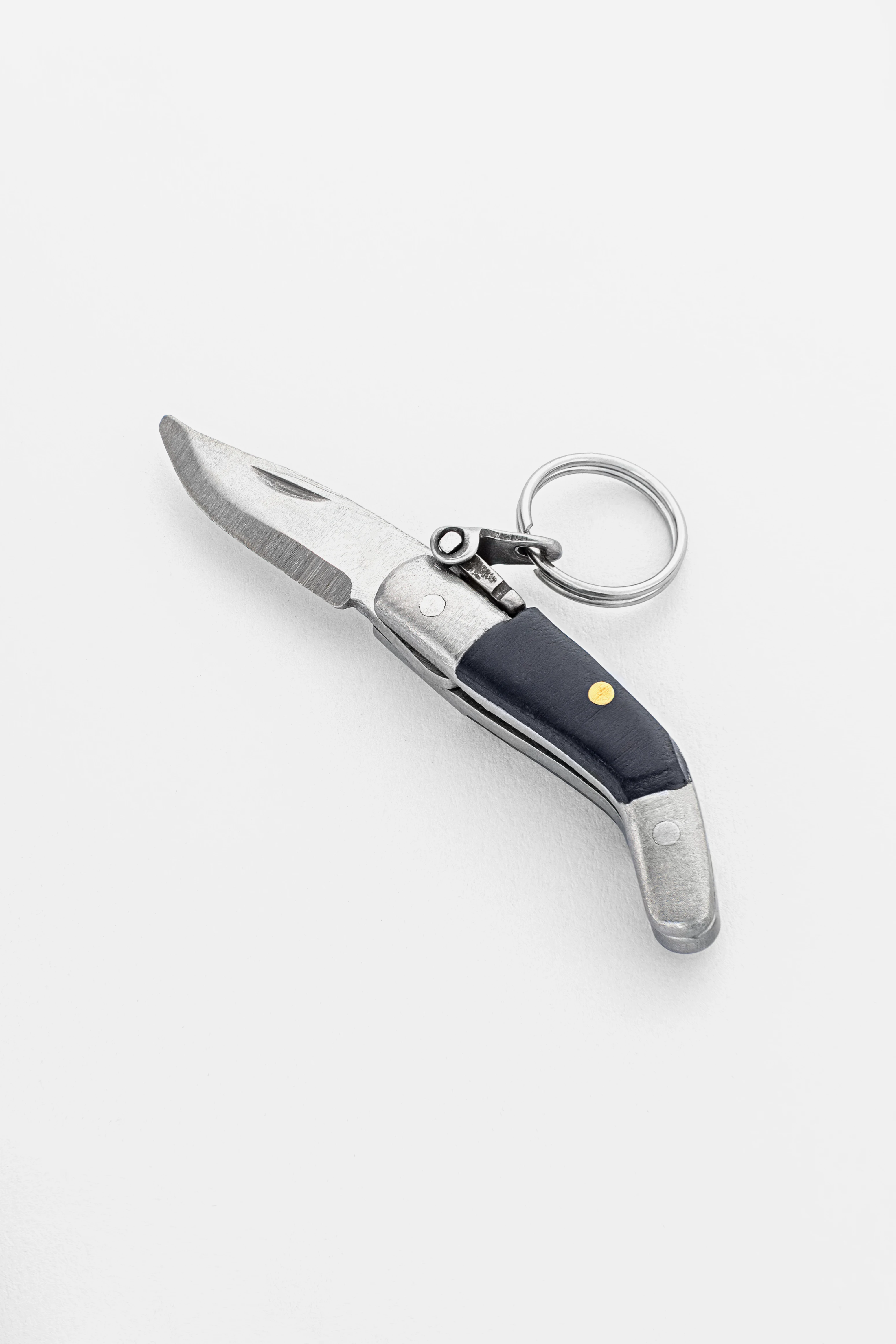
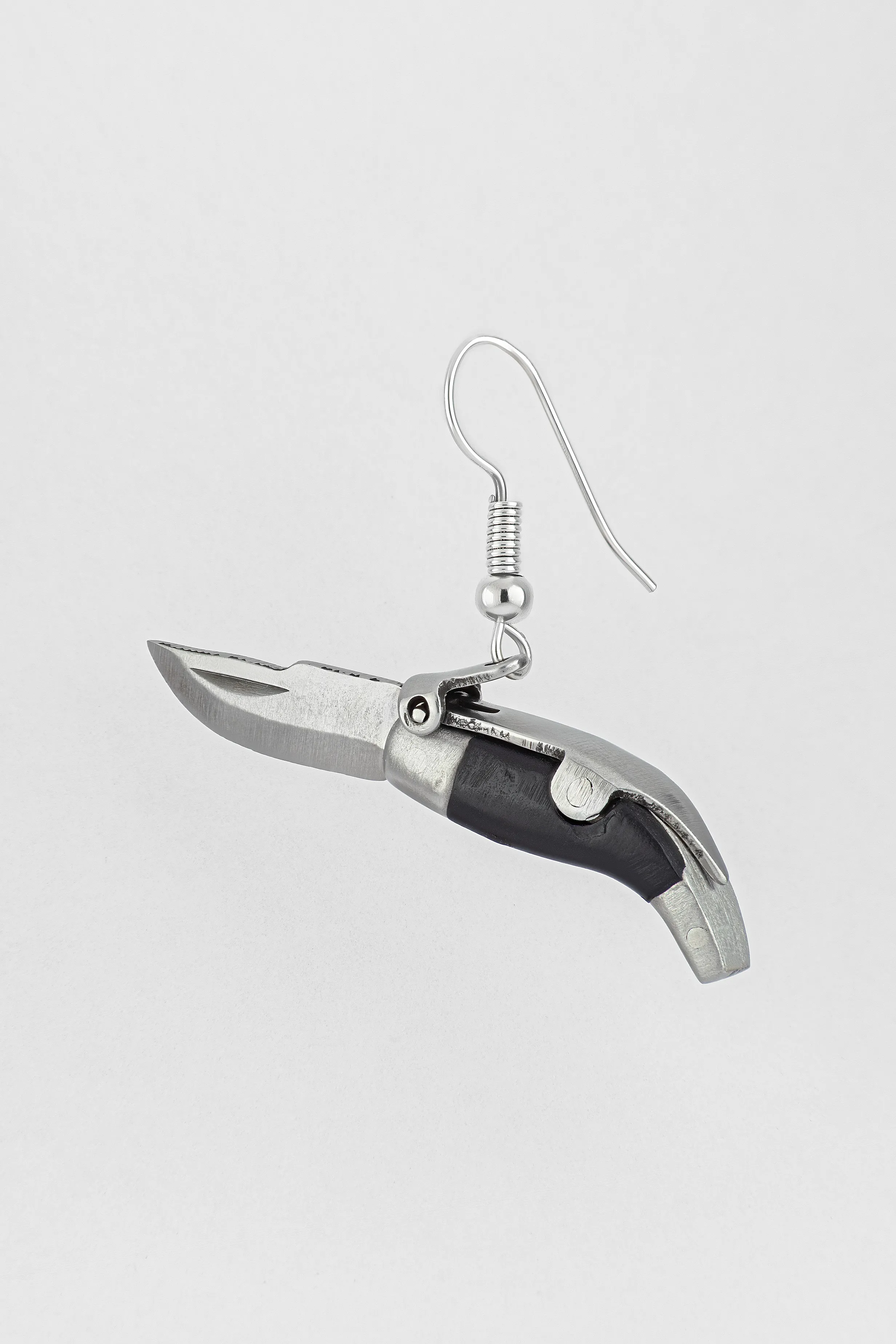
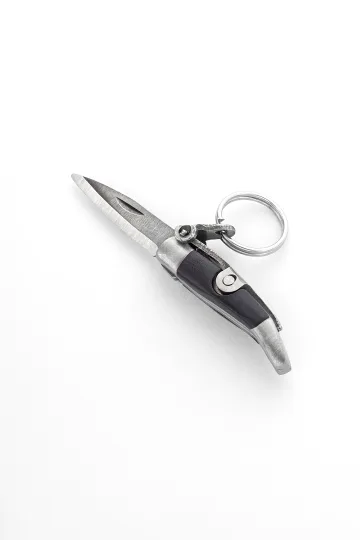
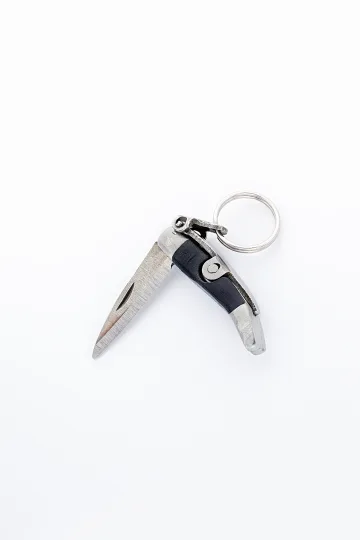
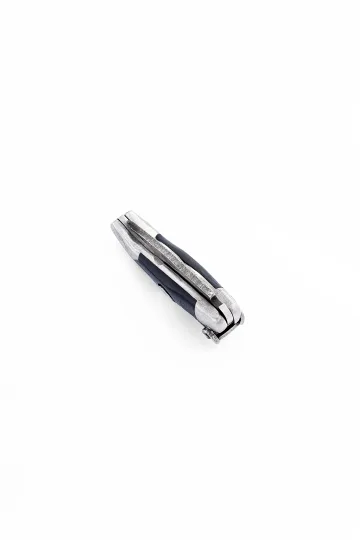
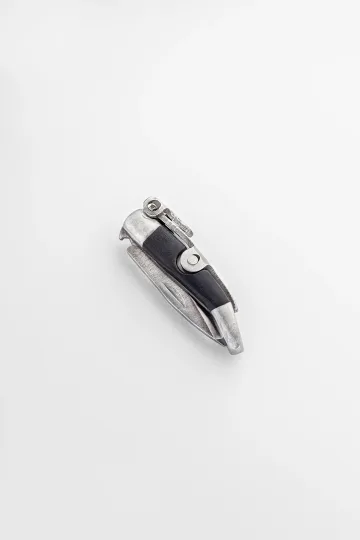
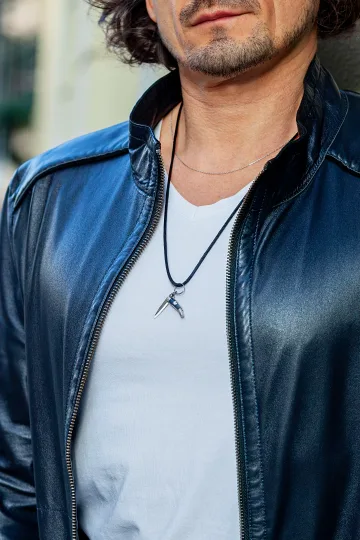
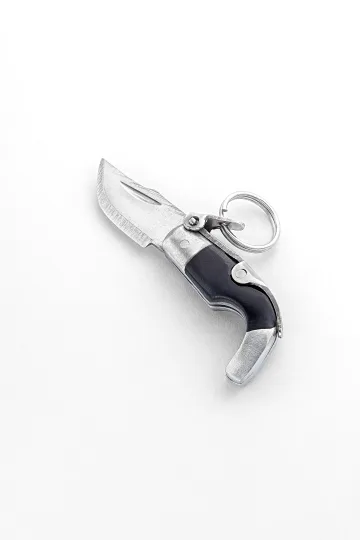
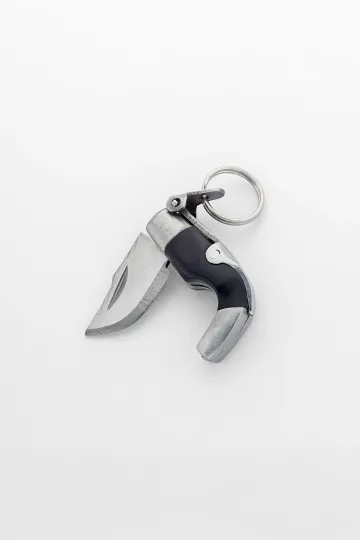
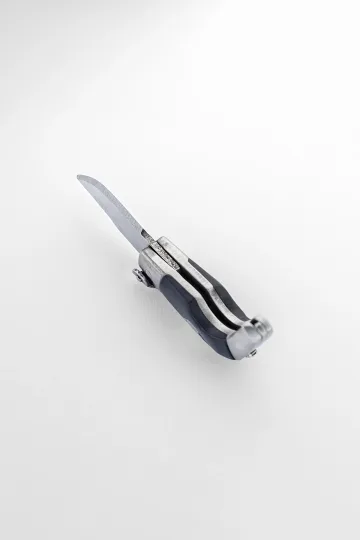
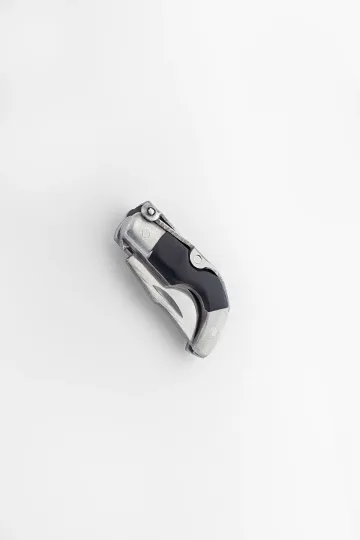
CAPAORA mini knife pendant
The 18th-century Spanish navaja in miniature: 40 mm of stainless steel, a real folding mechanism and a Palanquilla lock that clicks. An affordable gift to remember.
Authentic · Ships from Spain · 14-day returns
Jewellery with stones: the stone is calm, the setting is not
It seems a piece with a big stone is safer, since a stone is not metal. That is half the truth.
The stones themselves are not magnetic
A diamond, sapphire, emerald, pearl, amethyst, any natural or grown stone is not drawn to a magnet and does not heat. From the projectile and heating angle the stone itself is harmless. Minerals are mostly crystals of oxygen compounds, and magnetic iron in them is negligible. Even lab-grown stones behave as calmly as natural ones.
There are a few minerals with notable iron content, magnetite or hematite for instance, and those do react weakly to a magnet. In fine jewellery they appear rarely, more often in beads or souvenir hematite bracelets. But even here the problem is more theoretical: the stone comes off with the whole piece, and you never have to dwell on its magnetism.
But the setting is metal
A stone almost always sits in metal: a gold bezel, silver prongs, a steel costume setting. The setting is what gives both heat and artifact. So a piece with a stone comes off like any other: for the metal part, not for the stone.
A special case: stones with metal inclusions
Rare materials like meteorite iron or pieces with metal inlay react more strongly than an ordinary stone. If you wear something unusual in composition, treat it as metal and take it off without a second thought. This includes pieces with coatings, enamels on a metal base, and pendants with mechanical innards like a watch or compass. Anything more complex than a uniform stone in a simple setting is best removed without pondering the composition.
What happens at the clinic: the order of checks
To arrive prepared it helps to know how the procedure works at the door. Then removing jewellery will not catch you off guard or turn into a nervous scramble.
The safety questionnaire and interview
Before an MRI you fill out a form about metal in the body, operations, implants, allergies, and pregnancy. Answer honestly and in detail: it is not a formality, it is a filter that catches contraindications. If you forgot to write something down, say it out loud. Staff ask follow-up questions precisely to catch a forgotten earring or an old plate.
Locker, changing, and the detector
Jewellery, phone, keys, and cards go into a locker. Often you are handed a disposable metal-free gown. At the entrance to the magnet zone there is sometimes a handheld or fixed metal detector that catches the forgotten. This is the last line before the bore, and a beep on a buckle or a bobby pin surprises no one, the item is simply removed.
The alarm bulb and contact during the scan
Inside the bore you are given a bulb or button you can squeeze at any moment. If something has started to heat, a tingle appears, it gets stuffy or scary, squeeze without hesitation. The operator hears and sees you, and the procedure will be stopped. It is a normal tool, not a reason to feel like a nuisance.
If a piece would not come off
Sometimes a ring is stuck to the finger, an earring will not unclasp, and a piercing sits in a fresh hole you are scared to disturb. Do not decide this yourself in the corridor. Tell the radiographer before the start: some gold and surgical-steel pieces will be no problem, and the radiologist makes the call by the specific metal and scan zone. If the item is in the area of interest or made of an unknown alloy, the exam is postponed or another method is chosen. Cutting an earring's wire or knocking off a ring in a rush before the camera is not the move: better to lose a day and book again than to ruin the jewellery or get a burn under the machine.
Myths about jewellery and MRI
A lot of half-truth has piled up around this topic, and it leads people to leave the extra on. Let us sort out the main misconceptions.
Gold is nonmagnetic, so it can stay on. No. Gold genuinely is not attracted, but it heats in a loop and leaves an artifact on the scan. Magnetism is only one of three risks.
Titanium is MRI-safe, so a titanium ring need not come off. No. Titanium is nonmagnetic and often used in implants, but a ring is a closed contour that heats, and its conductivity warps the field near the scan zone.
A thin chain is too small to ruin anything. No. Thin closed contours are exactly what heat best, and a chain on the neck lands right in the scan zone for the head and neck.
An MRI is just an advanced X-ray. No. An X-ray uses radiation; an MRI uses a constant powerful magnet and radio waves. Metal behaves in fundamentally different ways.
Send a friend a discount code, they save on their first order.
Facts that surprise
A few things about MRI and metal that patients are rarely told.
The magnet in the scanner does not switch off even at night. A superconducting magnet holds the field constantly. To dump it in an emergency you run a quench, and that is an expensive procedure needing days to bring the machine back.
A steel cylinder or gurney, flying into the bore, can trap the patient inside. That is why nothing steel is brought into the magnet zone, and the cleaning gear and furniture there are special, nonmagnetic.
A piercing is sometimes found by accident right on the scan. It happens that a person forgets an old intimate piercing or a small stud in the cartilage, and the metal gives itself away with an artifact. Better to recall everything in advance.
Old dark tattoos react more strongly than new ones. It comes down to pigment composition: black inks used to contain iron compounds more often. Modern studio pigments react weakly.
MRI contrast dye contains no iodine, unlike CT. An allergy to the iodine contrast for CT does not mean a ban on MRI contrast: these are different substances, the MRI one based on gadolinium.
A magnetic field can wipe data from a bank card and an old phone. The card's magnetic stripe, flash drives, and mechanical watches are best not brought into the room at all: they are easy to ruin.
The scanner's noise reaches jackhammer levels. This is not from the magnet as such but from the rapid switching of the gradient coils. So the patient is given earplugs or headphones.
The colour and shine of a metal tell you nothing about its magnetism. Chrome steel shines like platinum but is attracted, while matte titanium is nonmagnetic. You cannot judge an alloy by eye, so everything comes off.
Frequently asked questions
Can you have an MRI in jewellery at all? No. Before an MRI all jewellery comes off without exception: earrings, chains, rings, bracelets, watches, piercings. This applies to precious metals and costume jewellery alike.
Why can a gold ring not stay on, it is not even magnetic? Magnetism is only one of three risks. Gold is not attracted, but it heats in a closed loop and warps the scan. So it comes off along with the rest.
What do I do if a ring will not come off the finger? Say so when you book and arrive early. Cooling the finger and soap sometimes help. As a last resort the ring is carefully snipped, like non-removable bracelets. Sort it out before the procedure, not at the machine.
Will they cut off my welded bracelet for the MRI? If it is in the scan zone or could heat, it will be snipped or filed off. This is a routine procedure. Bring the contact of the studio that welded it, so you can restore it afterward.
What do I do with a fresh piercing so the hole does not close? Put in a nonmagnetic retainer of bioplast, glass, or PTFE. It holds the channel open, does not heat, and does not warp the scan. Do this at home in advance.
Are tattoos dangerous during an MRI? In most cases no. Rarely a large or old tattoo with iron-bearing ink heats slightly. If the tattoo is large and in the scan zone, warn the radiologist.
And implants and prosthetics, are they a contraindication? Not always. Most modern implants are MRI-compatible, but the radiologist decides from the device documents. Be sure to report all metal in the body, a pacemaker especially.
Can I put the jewellery back on afterward? Right after the procedure, as soon as you leave the room. The magnetic field does not change the metal, it affects things only while you are inside. Check watches and electronics: the field sometimes knocks them out.
In short
Before an MRI everything metal comes off, and there are three reasons: heating of closed loops, the projectile effect of magnetic objects, and artifacts that hide a problem on the scan. Gold and titanium are not attracted, but they heat and warp the picture, so they come off too. Non-removable bracelets are snipped or filed off, a piercing is swapped for a nonmagnetic retainer, and implants and large tattoos must be flagged to the radiologist. Prepare at home, walk the list in advance, and the procedure goes through with no ruined scans and no surprises. And if your question is not about the patient but about what to wear on shift, that is another topic, covered in the article on jewelry for doctors.
Jewellery that is easy to take off before a procedure and just as easy to put back on after: clear clasps, honest metal, nothing extra.
View MYSTICAL DANCE NECKLACE →
Buying it as a gift? Each one arrives ready to give.
 A branded Zevira box and a little card come with every order.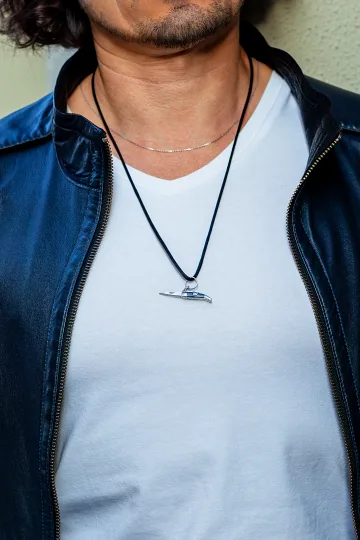





About Zevira
Zevira is a Spanish jewelry brand from Albacete. We make jewelry with a clear composition and comfortable clasps, so it is simple to take off and put back on in any situation. If metal sometimes gives you a reaction, look into our breakdown of nickel allergy, and for water, sport, and everyday wear we covered it in the article on whether you can wear jewelry in the shower, pool, and sea.