Manicures, Gel Polish and Rings: What to Take Off and How to Protect Your Jewelry
A single manicure can ruin the gold plating on a ring you love, and the culprit is neither the polish nor the lamp. It is the liquid used to take the polish off. Acetone dissolves a thin layer of gold, clouds resin, and strips the shine from rhodium-plated silver in minutes while you sit waiting for the old coat to lift. A ring that has survived ten years on your hand can give up in one visit to the salon.
This is the story of what happens to jewellery in the chair at the salon and at home over a dish of cotton pads. Where the real danger is, where the panic is overblown, which rings can stay on your finger, which need to come off ahead of time, and why a wedding band that no longer slides off deserves a plan of its own. We will go through it by material, by stage of the procedure, and by plain common sense, with no superstition and no scare tactics.
Why Acetone Is Dangerous for Jewellery
What Acetone Actually Does to Metal and Coatings
Acetone is a powerful solvent. It exists to melt polymers, and it does that without discrimination: dried gel polish or the protective layer on your ring, it makes no difference to the chemistry. With solid metal, gold or silver in the mass, acetone barely reacts, because a noble metal is chemically inert. The trouble starts wherever the metal is not on its own but wrapped in something thin: lacquer, rhodium, a flash of gold plating, an organic-based enamel. Coatings and bonds suffer first, and they suffer in silence, until you notice the shine has changed.
How Acetone Kills Gold Plating and Gold Flash
Gold plating is a layer of gold a micron thick over brass or silver. Acetone does not dissolve gold itself, but it washes away the protective lacquer many makers seal the plating with, and it degreases the surface so thoroughly that the layer is left defenseless against friction. After an acetone soak, a couple of passes with a wipe is enough for the gold film to come away in patches, baring the yellow brass underneath. You cannot fix this at home: it takes re-plating in a workshop. If you wear thin gold plating, keep it well away from any procedure that brings a solvent into play. For more on how flash plating differs from solid gold and how long each micron lasts, see the breakdown of gold-plated versus solid gold.
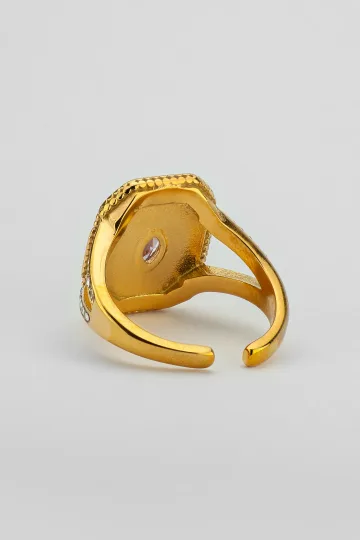
Wear the symbol, don't just read about it. These are in stock:






Why Rhodium-Plated Silver and White Gold Suffer
White gold and many silver pieces are finished with rhodium: a thin layer of a platinum-group metal that gives a cold, mirror-bright shine and protects against tarnish. Rhodium is hard, but the layer is measured in fractions of a micron. Acetone does not eat rhodium directly, but soak after soak it degreases and dries the surface, speeding the wear of that thin film on edges and high points. The ring starts to go warm-yellow along the rim before its time, and the underlying gold tone or grey of silver shows through. This is no disaster, since rhodium can be refreshed at a workshop, but frequent acetone baths bring that day closer. For how rhodium protects silver and why silver darkens without it, read the piece on why jewelry tarnishes and how to bring back its shine.
What Acetone Does to Resin, Epoxy and Glue
The most vulnerable part of a piece is not the metal but whatever holds it together. Epoxy resin, the kind poured over hearts, initials, dried flowers and glitter, reacts to acetone at once: it clouds, whitens, bubbles, and loses its clarity. Glue holding rhinestones and unset cabochons is simply dissolved by acetone, and the stone drops out. Any costume piece with a resin pour, anything with stones glued rather than held by prongs, must come off before the bottle is even opened. There is no bringing clouded resin back.
Which Stones Cloud and Crack from Acetone
Acetone leaves some stones alone: quartz, corundums, spinel, dense solid minerals take it in stride. But porous and organic stones fear a solvent. Pearl loses its lustre and can go blotchy, because acetone dissolves the thin layer that gives nacre its glow. Opal, with water inside its structure, clouds and cracks. Turquoise, especially when stabilised with wax or resin for strength, fades and dulls. Amber is fossilised resin to begin with, so a solvent is its direct enemy. Any stone that has been treated or coated risks losing its looks. When you are unsure about a stone, assume it fears acetone and take it off.
Which Rings to Take Off Before a Manicure, and Why
The Main Rule: Remove Anything That Is Not Solid Noble Metal
A simple guide for when there is no time to think it through: anything that is not solid high-karat gold, platinum, titanium or bare steel is better off. Gold plating, silver plating, rhodium, enamel, resin, soft and organic stones, glued joints, all of it is vulnerable to solvent, file, heat or some combination of them. Solid metal will survive almost any procedure, while a coating and a bond will not. If a ring matters to you, whether as a keepsake or as an object, the golden rule is simple: take it off and tuck it in your pocket rather than test its endurance on your hand.
Rings with Gold Plating and Thin Coatings
Thin gold plating and the thinnest gilding are first in line to come off. They are harmed by acetone, by friction against the file, and by creams. The layer is so thin that any mechanical or chemical contact shortens its life. Take such rings off for the whole session, not just for the polish-removal step: even filing a nail with the tech in gloves brushes against jewellery more often than you would think.
Rings with Enamel and Resin Fill
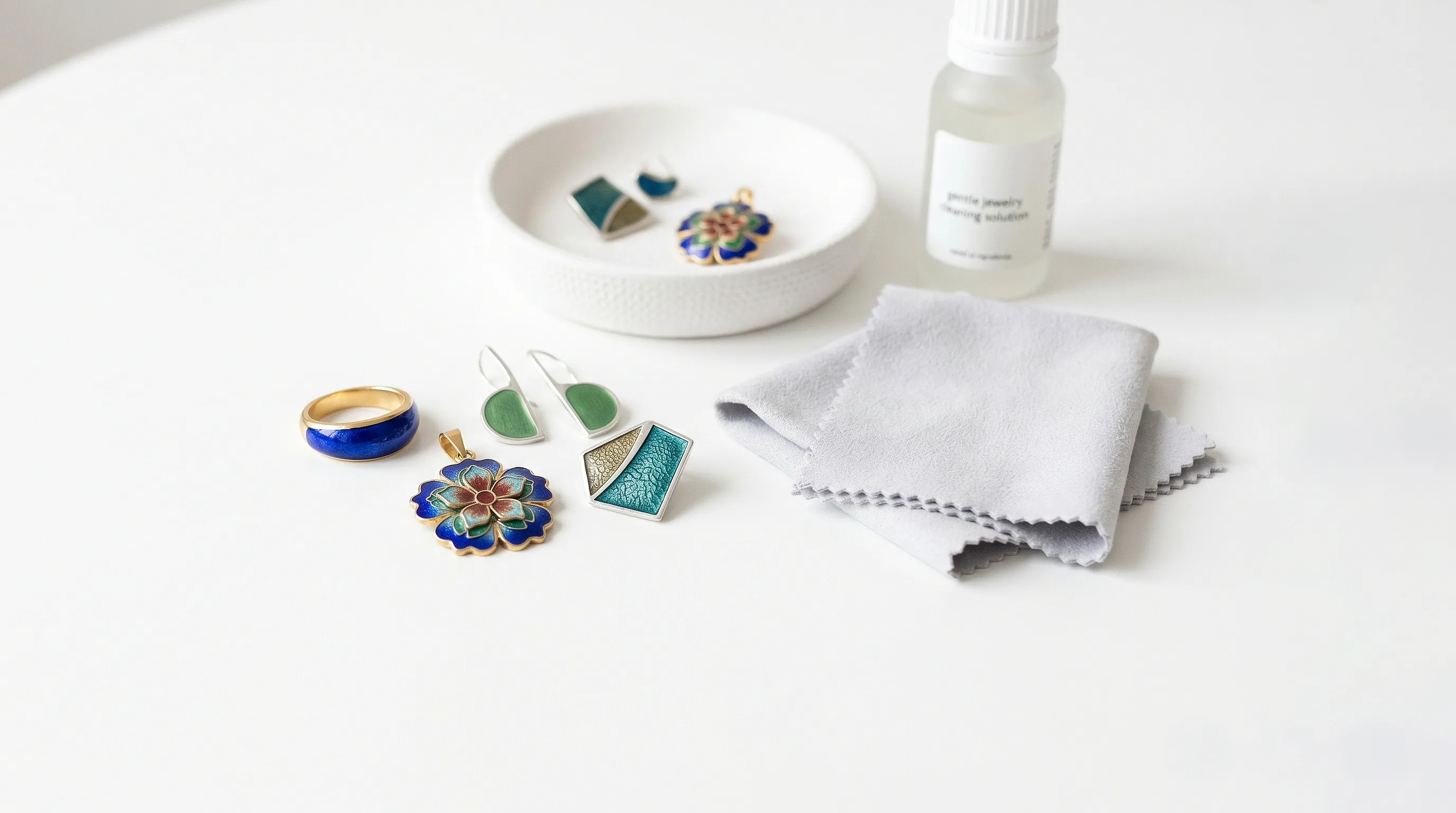
Hot enamel, fired in a kiln, does not fear acetone, since it is essentially colored glass. Cold enamel and organic-based epoxy fill are the vulnerable ones. The catch is that telling hot enamel from cold by eye is far from easy. Since you cannot know your ring's technique for certain, the safer path is to assume the worst and take it off. For how to care for enamel so it does not flake, there is a separate guide to enamel jewelry care.
Rings with Pearl, Opal, Turquoise and Amber
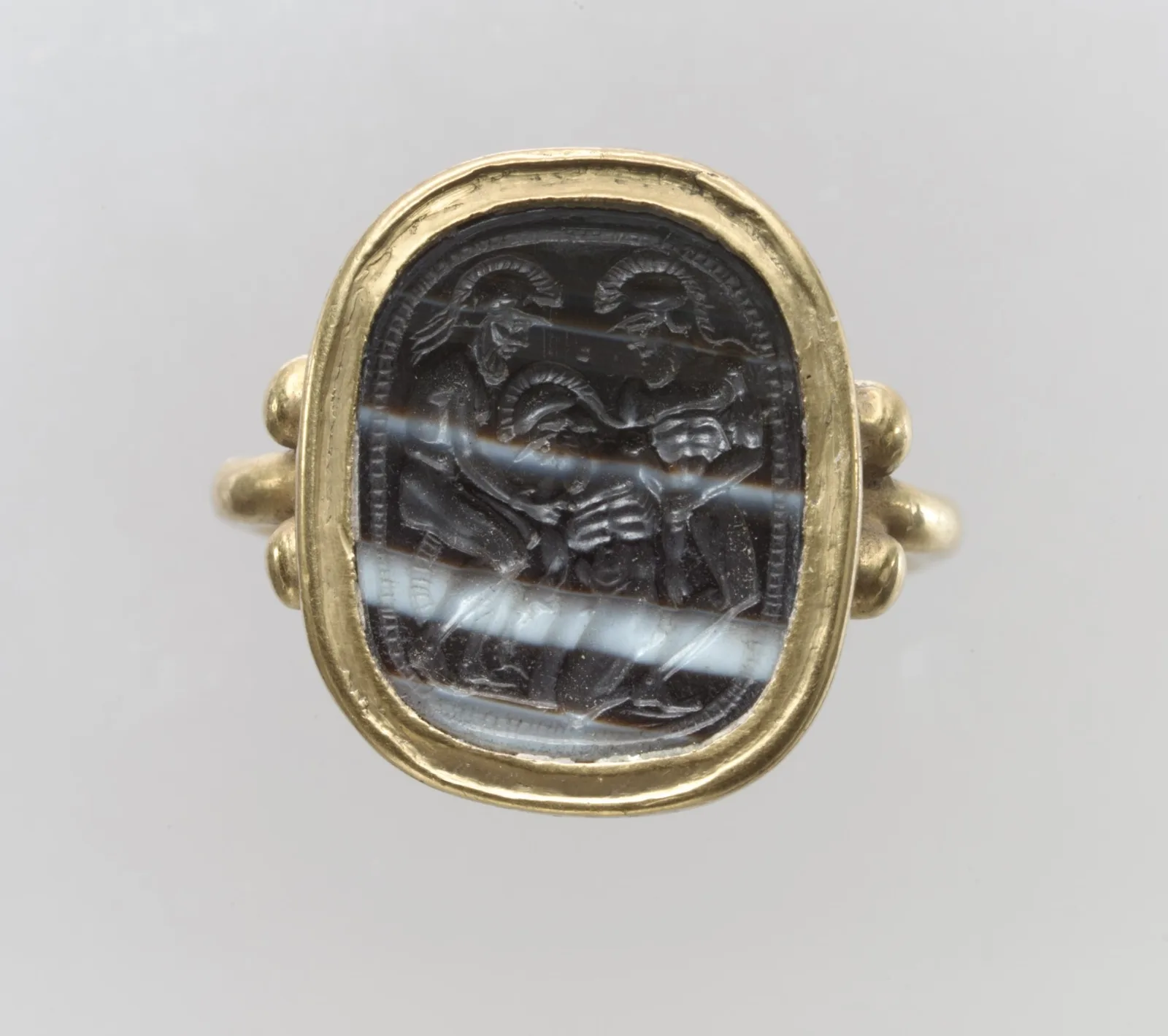
These four stones sit in the zone of highest risk. Pearl and opal also fear both acetone and the dehydration under the lamp. A ring with such stones always comes off and goes aside on its own, not into a shared pile with metal, so that harder pieces do not scratch the soft surface. Pearl is softer than a fingernail on the hardness scale, and opal is only a little harder.
When a Ring Can Stay On
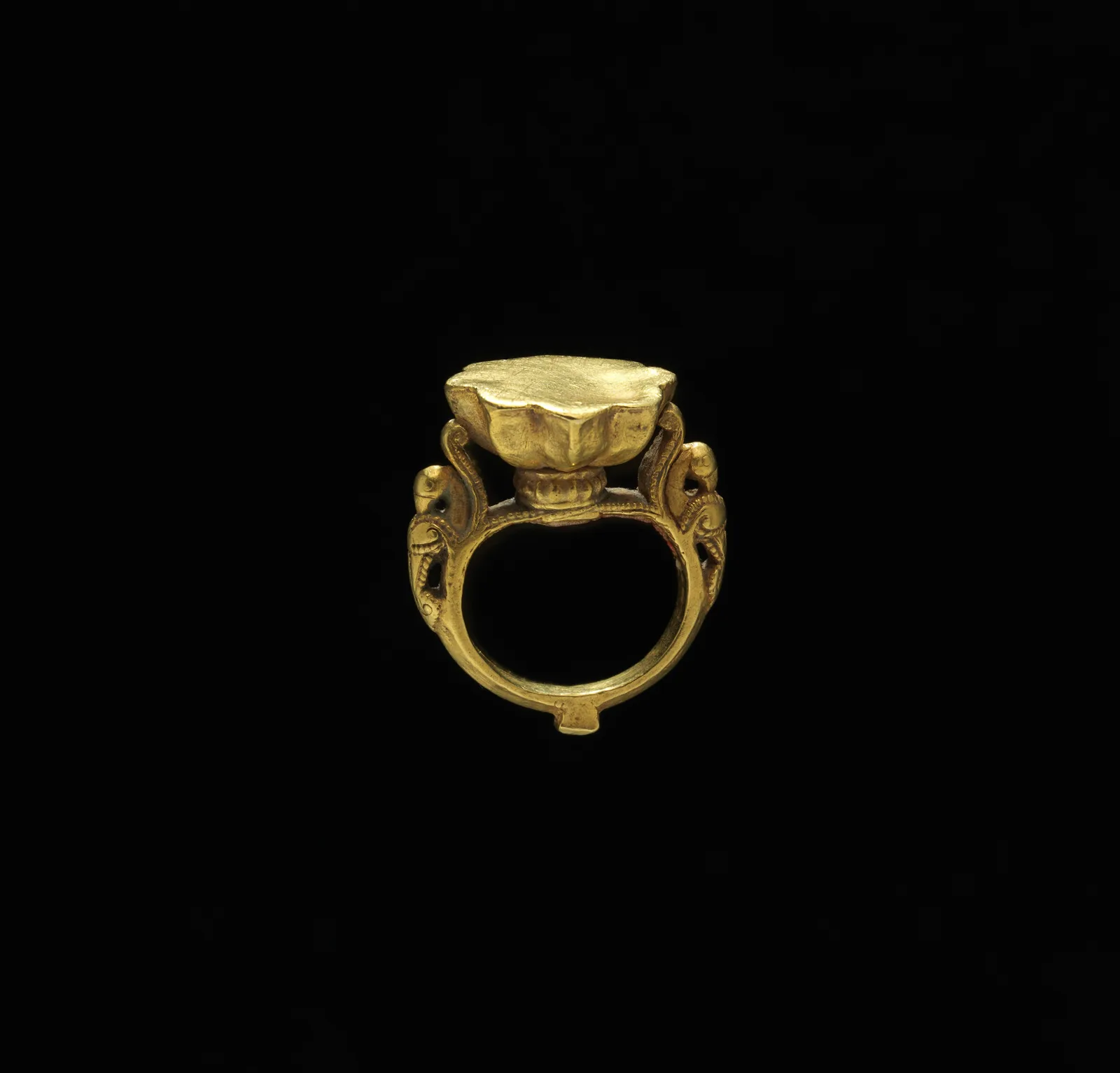
If you are wearing solid 14k or 18k gold with no enamel or glued parts, a platinum or titanium ring, or a steel piece with no coating, and the manicure does not involve removing old polish with acetone, the ring can stay put. Even then it is wise to slide it away from the working area, or take it off for the filing stage, so the file and e-file leave no scratches on the polished surface. Solid metal will not dissolve, but it is easy to scuff its shine with an abrasive.
Solid silver shrugs off any manicure. Cheap gold plating in the nail chair? It will flake, and serve you right.
Which Rings to Wear If You Get Manicures Often
Over years on shoots I have watched a good ring die in the manicure chair. So I steer clients toward pieces that survive acetone, the lamp and the e-file, instead of making you flinch over every soak. Here is what I recommend keeping on your hand if a manicure lands in your calendar more often than a haircut.
Which ring should I wear on manicure day? I recommend solid metal with no coating: sterling silver, steel, titanium. A ring like that fears neither solvent nor heat, so you hand it over to the tech without a second thought. Plating, enamel and soft stones I leave at home, so there is nothing to worry about.
How do I match a ring to a fresh manicure? I suggest playing metal against polish. With a cool nude or a milky shade I choose silver or steel for a clean line. With warm ochre, wine or terracotta I recommend yellow metal to echo the warm pigment. A loud neon I pair with plain silver, so the hand does not turn into a carnival.
Should I wear stacked rings every day? I love thin stacked rings for how they move an outfit, but before a manicure I slide them off as a set and store them in the same order. For daily wear I suggest two or three rings in one metal: the hand reads composed, not overloaded.
What suits a nude manicure, and what suits a bold one? With a nude I recommend one clear ring with character to lead the look. With bold polish I choose calm smooth metal and no stones instead: the nails have spoken, the ring only holds the line. Two accents on one hand argue.
Which ring can I simply never take off? Solid silver or steel with no stones and no coating survives almost anything but an acetone soak. If you wear a single ring around the clock, choose exactly that: smooth, honest metal, no fragile stones. Fewer reasons to flinch in the chair.

Turn on your camera, pick earrings, a pendant or a ring, and see the piece on yourself in real time.
Switch items in one tap.
Everything runs in your browser: no photo or video is ever uploaded.
UV Lamp, Gel Polish and Jewellery
Does Jewellery Heat Up Under the Lamp
Gel cures under a UV or LED lamp, and the process itself gives off heat: the finger warms noticeably in the first few seconds. Metal conducts heat better than skin, so a ring heats up faster than the nail under the lamp. It will never reach temperatures dangerous to gold, and the metal will take it fine. Stones react differently, though: a sharp, local surge of heat is a stress for a stone, especially one that holds water or organic material.
What Happens to Pearl and Opal Under the Lamp
Pearl and opal hold bound water. Repeated heat under the lamp dries them out: nacre clouds, and opal can develop micro-cracks. The effect is cumulative, so a single session does nothing, but a regular manicure with the ring on your finger will visibly age a soft stone over a year. That is why pieces with these stones come off first, even before the lamp.
Do Stones Fade Under Ultraviolet
The UV lamp for nails shines in a narrow band, yet some stones are sensitive to ultraviolet. Amethyst and quartzes with radiation or heat treatment can lose saturation over time. Enhanced shades of topaz and some coloured beryls can fade under prolonged UV too. For one-off procedures the risk is small, but if you sit for a manicure every two weeks and never take the ring off, the stone's colour slowly dims. Taking the ring off is easier than guessing how stable your particular stone is.
Does the Coating or Metal Itself Yellow
Rhodium or gold itself does not change colour under the lamp. Cheap lacquer on costume jewellery, however, can yellow and cloud from heat and ultraviolet. If a ring is sealed with a clear protective lacquer, the lamp gradually ruins that lacquer. One more reason to keep costume pieces out of the working area.
Files, E-File and Metal: Scratches and Scuffs
Why an Abrasive Threatens Polished Metal
A file and an e-file are abrasives built to grind down nail keratin and hardened gel. Polished metal is softer than many abrasive bits, and a fine-grit e-file in particular leaves matte scratches on gold and silver with ease. One slip of the tool across a ring and a web of fine lines appears on the mirror surface, visible at a certain angle. High-karat silver and gold are soft, so it shows especially clearly on them.
Why the High Points and Edges Suffer Most
An abrasive catches whatever sticks out: the edges of the band, the facets of cut metal, raised elements. Flat, recessed areas get touched less. So the high points of a ring dull first, the very points that carry the shine. On a rhodium-plated piece it stings twice over: the e-file both scratches and rubs the thin rhodium layer off the highest spots.
How to Avoid Scratching a Ring
If a ring cannot come off, ask the tech to work with protection: a cloth or a scrap of glove between the tool and the metal, and care during the filing stage. But it is more honest to take it off. Any work with an e-file near jewellery is a gamble, and it is simpler to pocket the ring for the ten minutes of filing than to polish scratches out at a workshop later.
Customer reviews
Zevira is a real jewellery shop. Genuine payments, deliveries and customer thank-yous.
🥰🥰🥰 gracias
Ok, ¡gracias! 🙂
Should You Take a Ring Off During Base Coat and Polish
What Risk Base, Top and the Colour Gel Carry
Base, colour gel and top coat are acrylate-based polymers. Cured, they are inert, but in liquid form, before they cure, they can leave a sticky film on metal that has to be taken off with that same acetone. A drop of base that lands on a ring and gets flashed under the lamp turns into a hard deposit you will have to scrape off with solvent, and that means risk to the coating all over again. The gel by itself does not corrode metal, but it drags acetone along at the cleanup stage.
Primers and Dehydrators Near Jewellery
Before the base, the nail is treated with a primer and a dehydrator. Acid primers are aggressive chemistry, and bonds and dehydrators contain solvents. Splashes and fumes of these settle on skin and on metal alike. For solid metal this is nothing, but for a thin coating or resin, any extra contact with chemistry is unwelcome. A clean work area with no jewellery on it spares you the fuss.
The Simple Takeaway for the Application Stage
During the base and polish stage a solid-metal ring with no stones can stay on, if you are ready to carefully clear away stray drops afterward. But once a ring is going to take part in the procedure at all, it makes more sense to take it off once at the start and put it back at the end than to guard against every drop. Fewer decisions, fewer risks.
Upload a photo of your pet, someone you love, or an object. We'll build a 3D model and hand-cast it in pewter.



The Wedding Ring That Will Not Come Off
Why a Ring Stops Coming Off
A finger changes in size over the years, with heat, salt, hormones, weight, swelling. A ring slid on at your wedding can sit fast behind the knuckle a few years later. This is normal and no cause for panic. But it does mean you cannot take it off before a manicure, and you will have to protect it right there on your finger.
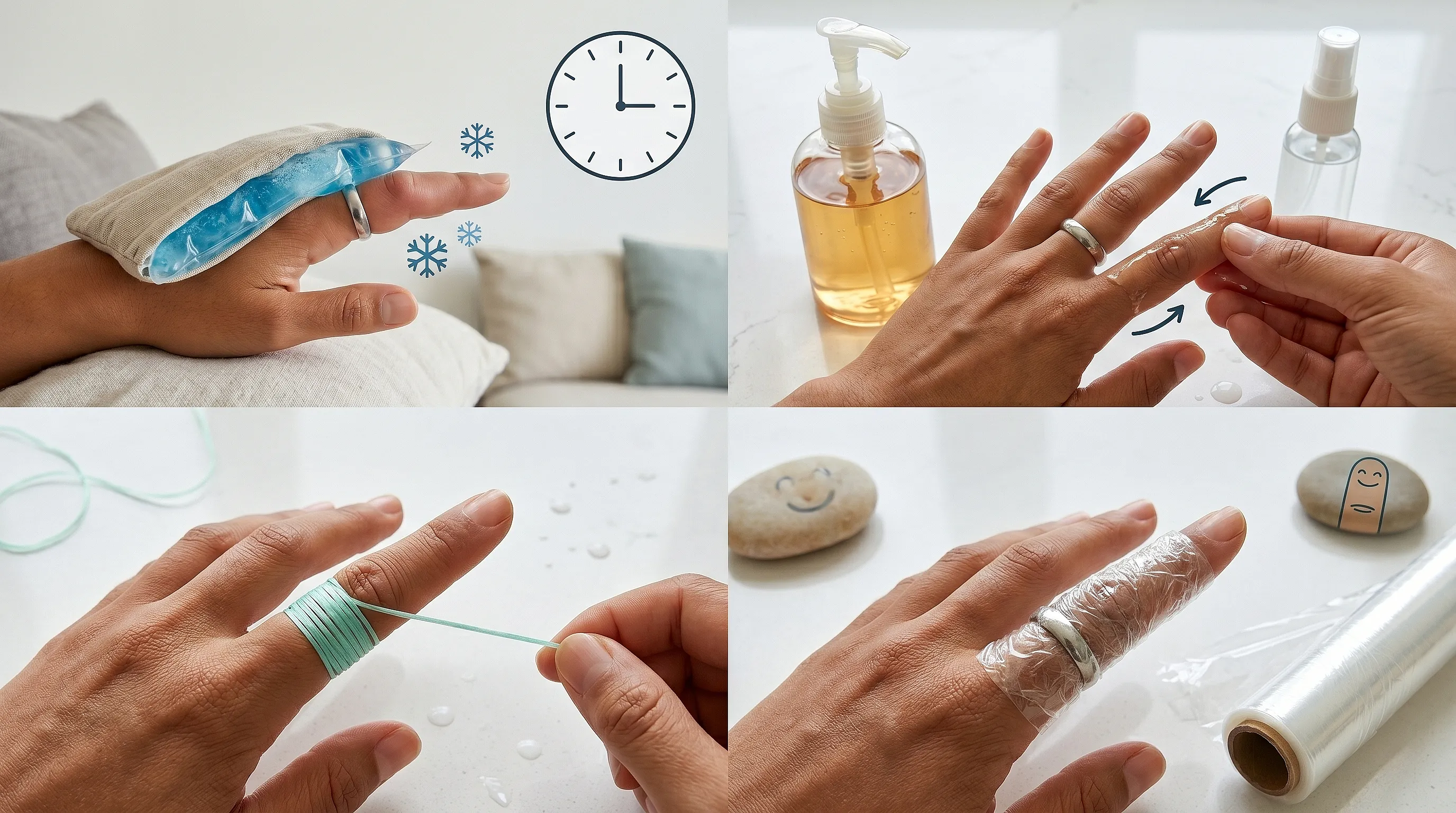
How to Remove a Stuck Ring Without Injury
If you do want to get it off, do not yank it through the pain. Raise your hand above your head for a few minutes so the swelling drops, cool the finger under cold water, coat it generously with soap, oil or cream, and ease the ring off with small rocking motions rather than a tug. There is an old trick with thread: wind it tightly around the finger above the ring, coil against coil, to drive the swelling down, then slip the ring off along the thread. If the finger turns blue or the ring will not budge at all, it is a job for a jeweller or an emergency room, where the ring is cut in a minute with a special cutter and no harm to the finger. This is a routine, quick procedure and nothing to fear: a special jeweller's cutter neatly parts the band in about a minute without touching the skin, and the ring is then easily soldered back together and sized to fit.
How to Protect a Stuck Ring During the Procedure
Since the ring stays on, you isolate it. The simplest approach is to wrap the band with a narrow strip of plastic wrap, or slip a finger cot over the adjacent knuckle so it covers the metal. Before an acetone soak this matters especially. Warn the tech that the ring will not come off, and ask them to keep the e-file well clear of it. Solid uncoated gold will get through the session without isolation too, but the wrap will not hurt.
Creams, Cuticle Oils and Metal Shine
Why a Greasy Film Dulls Jewellery
A manicure ends with cuticle oil and hand cream. Grease by itself does not destroy metal, but it settles as a film that dust and skin oil cling to, and the ring dulls faster. Under stones in closed settings, oil pools and darkens, smothering the play of the stone. This is not damage, just ordinary grime, but if you apply oil over a ring time after time, the shine goes.
Oils and Matte Silver, Oxidation, Patina
Silver with oxidation and a deliberate patina is a story of its own. The dark pattern in the recesses is a thin layer that greasy products and frequent rubbing gradually lighten. Cuticle oil that gets into an oxidised design slowly washes out the contrast over time, and the pattern fades. Pieces with a patina like dryness and minimal friction, not a bath of cream.
What to Do After the Procedure
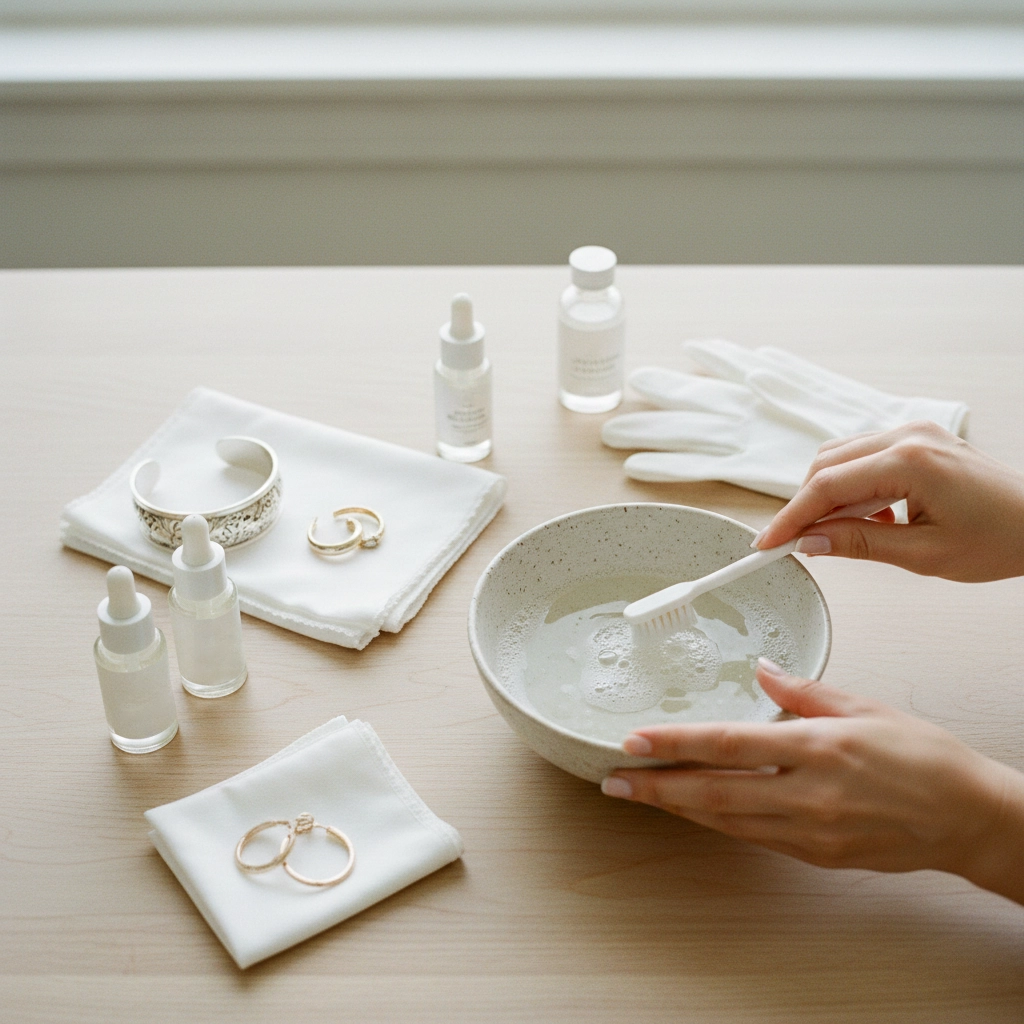
Clearing the film is simple: wipe the ring with a soft cloth or a polishing cloth to lift the grease. If oil has packed in under a stone, a soft brush and warm soapy water, followed by drying, will help. Do not pour oil onto your hand over a ring you are wearing; apply it once the piece is off, or at least keep it clear of the stones. Basic home care for metal is covered in the guide on how to clean gold and silver jewelry at home.



Separate Procedures: Removal, Paraffin, Extensions
Removing Gel Polish at Home with Foil and the Risk to Rings
At home, gel polish is most often removed by soaking: a cotton pad with acetone on the nail, foil on top, and ten to fifteen minutes like that. During this your hand lies fully wrapped in acetone, and the ring on your finger sits in a cloud of solvent fumes longer than it would in the salon. Acetone vapour reaches the neighbouring fingers and the metal under the foil. Take all your rings off before you wrap the first pad, not after, when your hands are already busy. If you do the removal at a sink over a dish, set your jewellery in another room so you do not accidentally drop it into the solvent.
Paraffin Therapy and Hot Soaks: Heat and Wax in the Links
A paraffin bath and warm hand soaks heat the whole hand, and the ring warms along with it. Solid metal does not care, but pearl, opal and glued stones suffer from prolonged heat just as they do under the lamp. The paraffin itself is a separate nuisance: liquid wax seeps into the links of chains, under stones and into openwork, sets there, and collects dirt. Cleaning set wax out of a fine setting is hard. Before paraffin therapy, take off both rings and bracelets.
Acrylic, Extensions and File Dust in the Setting
Acrylic and polygel extensions add two factors. The first is the monomer and acid primers, aggressive chemistry that has no place near a thin coating. The second is dust: filing the extension material raises a cloud of fine particles that settles in the stone's setting and under the prongs. Over time this compacted dust smothers the stone's shine and stops light from playing in it. After extensions, pieces with open stones are worth rinsing with a soft brush in warm soapy water.
Antiseptic and Alcohol in the Salon for Silver and Gold Plating
Before the session, hands are treated with antiseptic, and it is applied to the client's skin too. Alcohol by itself does not destroy metal, but it degreases the surface and dries thin coatings, speeding their wear, and silver dulls faster from frequent contact with alcohol-based products. If antiseptic gets on a ring, wipe the metal dry with a soft cloth and do not let the alcohol dry on gold plating or enamel. The best solution is the same as ever: take the piece off before the hands are treated.
Allergy to Metal and Gel at the Same Time
Sometimes after a manicure the skin under a ring goes red and itchy, and the blame lands on the metal. But the reaction can come from gel components too, especially under-cured acrylates if the polish was poorly dried under the lamp. When irritation appears right after the procedure, the offender may not be the ring's alloy but the manicure chemistry, trapped under the metal against the skin. Taking the ring off for the session settles the question. If the skin reacts to the piece itself with no manicure at all, the alloy is to blame, and then it is worth looking into nickel allergy in jewelry.
Acetone Got on a Ring: What to Do Right Away
If solvent does reach a piece, time is against you, so act fast. Take the ring off at once and rinse it under cool water with a drop of soap to wash the acetone off and keep it from drying on the surface, then pat it dry with a soft cloth. Do not rub the piece hard with a wipe while solvent is still on it: it is exactly that friction over a softened coating that wears the gold plating and rhodium away. With a resin stone or a glued stone there is no time to lose at all, since here it comes down to seconds. If the shine is gone after rinsing or a cloudy patch has formed on resin, no home remedy brings it back, and a workshop is needed.
Thin Stacking Rings Come Off First
The habit of wearing several thin rings on one finger adds risk in the salon chair. A thin band bends more easily than a heavy one, and a careless move of the e-file or a pinch of the tool can deform it, and the rings also rub against each other and scratch their neighbours. Before the procedure, such stacks come off whole and go into a case in the same order, so you can put them back in the familiar stack afterward. This also spares thin gilding, which wears off fastest where stacked rings touch.
Leave your email, we'll send your discount code. No spam, unsubscribe anytime.
The code arrives by email, valid on your first order.
How to Tell Your Nail Tech About Your Jewellery
Why It Is Worth Saying Out Loud
A nail tech is not obliged to know whether your ring is gold or flash-plated, a solid stone or a glued rhinestone. Their job is nails, not the materials science of your jewellery. So the responsibility is yours: to warn them that you will take the ring off yourself, or to ask them to be careful if it will not come off. A calm sentence at the start of the session saves both of you the nerves.
What Exactly to Say
Say it short and to the point: I will not take this ring off, it will not come off, please do not touch it with the e-file and keep it away from acetone. Or: I will take my jewellery off myself, give me a wipe, I will set it aside. If you are getting gel removed, check whether it will be done with acetone or the e-file, so you can decide what to do with the ring in advance. A good tech will take this with understanding, since for them it is part of the job.
Where to Put Removed Rings in the Salon
Do not just set removed jewellery on the table: it is easy to sweep off, forget, or mix up. Carry a small pouch or box, drop everything you take off into it, and stash it in your bag. Keep stone-set rings apart from smooth ones so they do not scratch each other. The habit of carrying a soft case helps in the salon, at the gym, the pool, and on a trip.
Restoring Dulled Gold Plating and Coatings
Can You Bring Worn Plating Back at Home
The honest answer: worn gold flash cannot be restored at home. There is no home method to grow the gold layer back, and any folk recipe only masks the problem for an hour. If plating has come off in patches, the one path is re-plating in a workshop, where a new layer is laid down by electroplating. This is inexpensive relative to the cost of a new piece and gives the ring its looks back. So thin plating is easier to protect than to restore.
What Actually Helps at Home
If the coating is still intact but dulled by grease and grime, gentle cleaning helps. A soft cloth, warm soapy water, a soft brush for the texture, and thorough drying. No abrasive pastes, baking soda, tooth powder or stiff sponges: they scrape the thin gold layer away faster than acetone does. For gold plating, abrasive is enemy number one.
When to Take It to a Jeweller
It is worth going to a workshop if the layer has worn down to the base, if rhodium has yellowed across the whole ring, or if a stone has clouded or worked loose in its setting. Re-plating, re-rhodium, and resetting a stone are routine operations for a jeweller. Refreshing the coating every year or two is the normal price of wearing a piece with a thin metal layer every day.
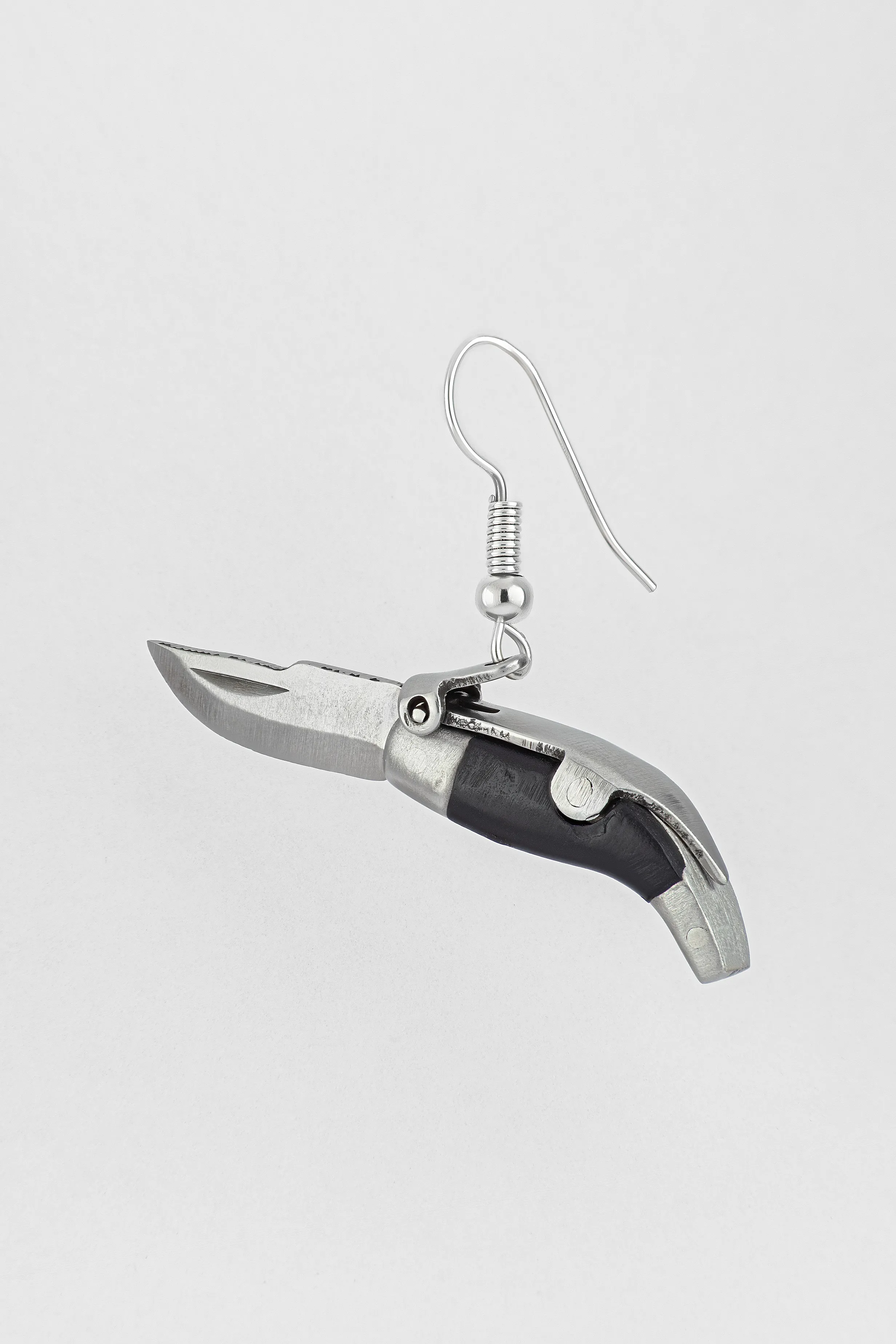
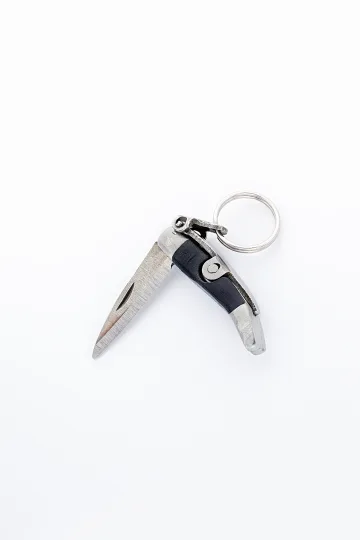
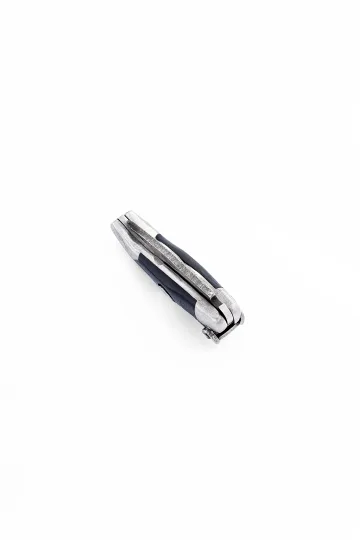
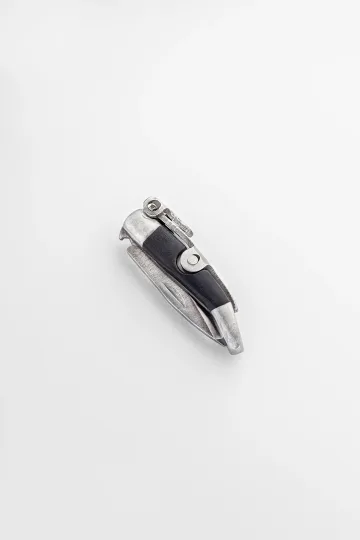
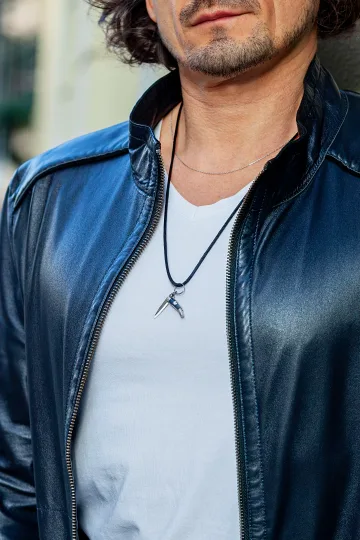
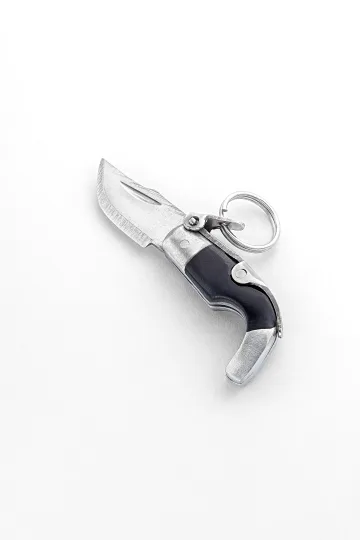
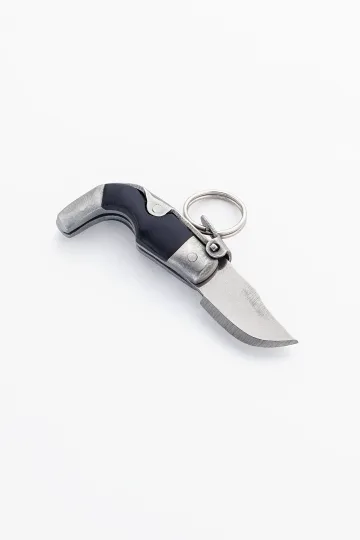
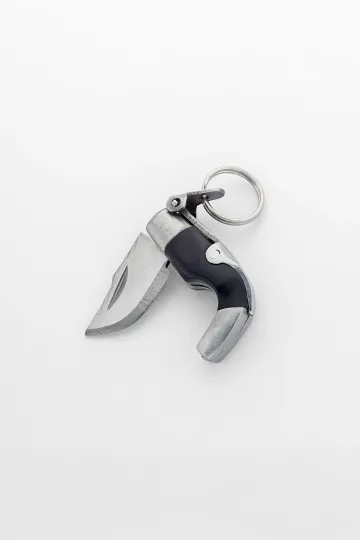
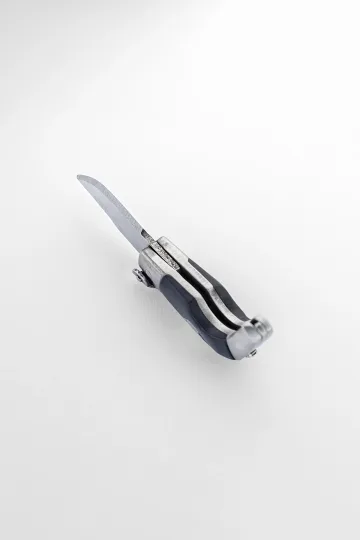
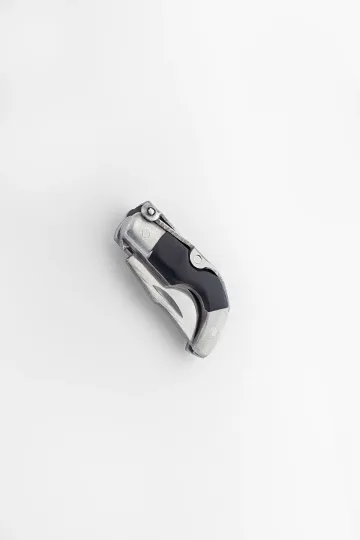
CAPAORA mini knife pendant
The 18th-century Spanish navaja in miniature: 40 mm of stainless steel, a real folding mechanism and a Palanquilla lock that clicks. An affordable gift to remember.
Authentic · Ships from Spain · 14-day returns
Gel Polish, Silver and Tarnish
Why Silver Darkens Near Manicure Chemistry
Silver darkens from sulphur and reactive substances in the air and on skin. Some manicure products, especially cheap dehydrators and removers based on aggressive solvents, contain compounds that speed silver's tarnishing. Silver itself does not dissolve in acetone, but it reacts to the surrounding chemistry and the salon's atmosphere faster than at home. So after a procedure a silver ring sometimes looks darkened.
Oxidised and Blackened Silver in the Risk Zone
Bright silver darkens evenly, and that cleans off easily. Pieces with artificial oxidation, however, react unpredictably: in one spot the pattern deepens, in another the chemistry lightens it, and the contrast is thrown off. Such rings are especially worth taking off before any treatment.
How to Bring Silver's Shine Back After a Manicure
Light tarnish lifts in minutes: a silver polishing cloth, a soft buff with a cloth, and for heavier film, mild soapy water. Drastic methods like foil and baking soda work but are aggressive and unfit for blackened silver and stones. If silver tarnishes constantly and fast, the piece on why silver darkens helps sort out the causes, and to understand the hallmark and metal content there is the guide to 925 silver.
A Safe Order of Steps: Checklist
Before You Leave Home
Decide in advance what you are taking off. Bring a soft case or pouch for your jewellery. If you plan to remove gel polish with acetone, thin gold plating and rings with pearl, opal, turquoise, amber, enamel and resin are better left at home altogether than carried to the salon and back.
At the Start of the Session
Take off every ring that will come off and put it in the case in your bag, not on the table. Warn the tech about a stuck ring and ask them to keep it safe from the e-file and acetone. Isolate the stuck ring with wrap before the solvent soak.
During the Procedure
Keep removed jewellery well away from the working area, the lamp and open acetone. Stones apart from smooth metal. Do not put the rings back on your hand until the filing, the soak and the oil are done.
After the Manicure
Let the oil and cream soak in, wipe your hands, and only then put the rings on clean, dry skin. Wipe the metal with a soft cloth if grease has settled on it. At home, at the first chance, refresh the shine with a polishing cloth.
The Order in One Line
Off, away, isolate the stuck one, run the procedure, clean the hands, on over dry skin. Five steps that save trips to the jeweller.
Which Materials Survive and Which Do Not
What Survives a Manicure Almost Untouched
The materials sturdy to the procedure are uncoated stainless steel, titanium, solid high-karat gold of 14k and 18k, and platinum. These metals are inert to acetone, do not fear heat under the lamp, and do not dissolve from chemistry. Their only weak point is mechanical: the abrasive of an e-file can leave scratches, especially on soft gold. But chemistry holds no terror for them.
What Sits in the Middle Risk Zone
Uncoated silver survives the chemistry but will darken from the surrounding substances and need a clean. Solid hard stones, quartzes, corundums, spinel, garnets, take acetone but dislike abrasive and knocks. These materials are not forbidden, but they call for care and a wipe afterward.
What Suffers First
In the red zone is everything thin and bonded: gold plating and any flash, rhodium on the edges, cold enamel, epoxy resin, glued stones. Among stones it is pearl, opal, turquoise, amber, malachite, everything porous, organic and treated. Acetone, heat and abrasive harm these materials directly and often beyond repair. The rule is simple: if a piece has a coating, a bond or a soft stone, it goes into the case before the procedure begins.
Send a friend a discount code, they save on their first order.
Facts That Surprise
Solid Gold Fears Acetone Less Than Cheap Lacquer Does
Here is the paradox: real 18k gold has nothing to fear from acetone at all, while one soak can ruin the looks of a penny brass ring under lacquer. Pricier does not mean more fragile, quite the reverse. The plainer and more honest the material, the sturdier it is against manicure chemistry.
Pearl Is Softer Than Your Fingernail
On the hardness scale, pearl is about two and a half on Mohs, a fingernail is roughly the same, and the steel of an e-file is far harder. You could scratch a pearl with your own nail, let alone a tool. That is why pieces with pearl come off before all others, before the tech even touches the nails.
A Green Mark Under a Ring Is Not the Manicure
Sometimes after a procedure a green mark turns up under a ring, and acetone takes the blame. In truth it is the copper in a cheap ring's alloy reacting with sweat, cream and acids, and it has simply become more visible on clean skin. Acetone has nothing to do with it, and the green is copper chemistry. Why this happens and what to do about it is covered in detail in the piece on why jewelry turns your skin green.
Rhodium Is a Relative of Platinum and Costs More Than Gold
The thin bright layer on white gold and silver is rhodium, a platinum-group metal that usually beats gold on price per gram. And that whole precious layer on your ring is many times thinner than a human hair. No wonder it wears off from the e-file and acetone baths faster than you would like.
Opal Carries Water Inside
In the structure of a precious opal, up to a tenth of the weight is water. That is exactly what gives the play of colour. Sharp heat under the lamp and dehydration by acetone drive the water out, and the stone clouds and cracks. Opal likes humidity and calm, and the manicure table is a stress for it.
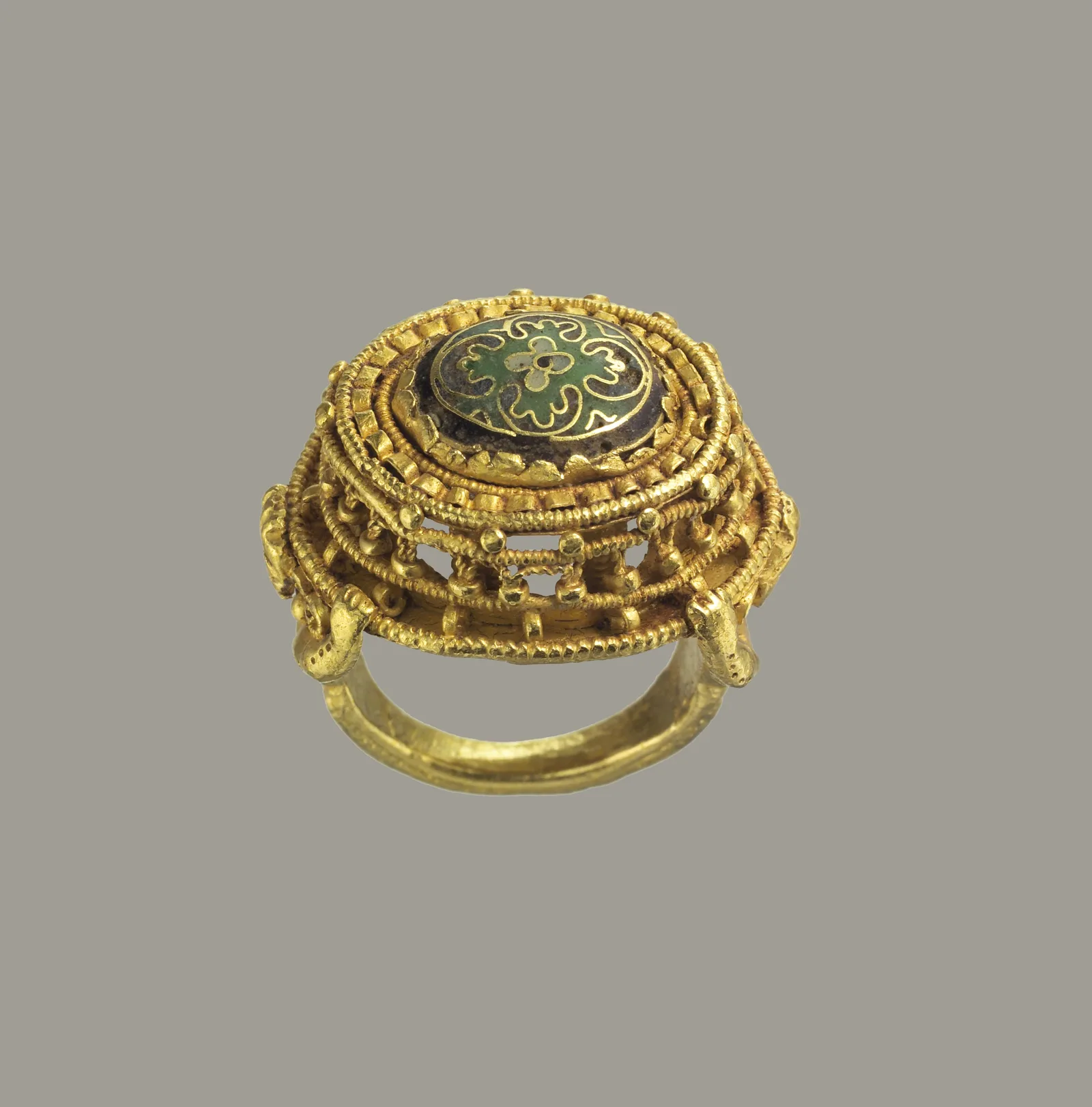
An Enamel Miniature Outlasts Centuries, While Cold Enamel Will Not Outlast a Session
Hot enamel on antique jewellery, fired glass, holds its colour for centuries and does not fear acetone. Modern cold enamel on a polymer base, the kind that often colours inexpensive pieces, dissolves in that same acetone in minutes. The same coloured layer to the eye behaves in opposite ways depending on the technique.
Frequently Asked Questions
Can I get a manicure without taking my wedding ring off? If the ring is solid gold or platinum with no stones or enamel, and you are not having gel removed with acetone, it can stay on, but it is better isolated with wrap during the filing and soak stages. If the ring is flash-plated, set with stones, or will not come off at all, cover the metal and warn the tech.
Will acetone ruin a gold ring? Solid high-karat gold is not dissolved by acetone, and nothing will happen to it. Gold flash, plating and a thin coating do suffer: acetone washes away the protective lacquer and degreases the layer, after which it wears off easily. The difference is whether you have solid gold or a thin layer over another metal.
What happens to a silver ring after a manicure? Silver is chemically resistant to acetone, but it can darken from the surrounding products and the salon atmosphere. The tarnish lifts easily with a polishing cloth. Blackened and oxidised silver is better taken off, because the chemistry spoils the pattern unpredictably.
Can I keep a diamond ring under the UV lamp? A diamond does not fear the heat of a nail lamp, since it is sturdy. The danger is in the setting and other stones: if there is pearl, opal or glued elements next to the diamond, the ring is worth taking off. The gold with a diamond will take the lamp in stride.
Why did my ring go dull after a manicure? Most often it is a film from cuticle oil and hand cream settled on the metal, plus fine scratches from the e-file and grime from the chemistry. Wipe the ring with a soft cloth or a polishing cloth and the shine returns. If the dulling is deep and patchy, the coating may have worn through.
Which stones must never face acetone and the lamp? In the risk zone are pearl, opal, turquoise, amber, malachite and any treated or organic stones. They cloud, fade and crack from solvent and heat. Take such rings off before the procedure begins and keep them apart from hard metal.
How do I protect a ring that will not come off? Wrap the band with a narrow strip of plastic wrap or cover the metal with a finger cot, especially before an acetone soak. Warn the tech so the e-file does not touch the ring. Solid metal will survive the session anyway, but isolation protects the coating and stones.
Can worn gold plating be restored at home? No, you cannot grow the gold layer back at home, and home remedies only mask it for a while. Worn plating is restored by re-plating in a workshop, which is inexpensive relative to a new piece. While the coating is still intact, protect it from acetone and abrasive and do not let it reach the point of re-plating.
The Short Version
A manicure is not dangerous to every ring, only to the thin and bonded ones: gold plating, rhodium, cold enamel, resin, soft and organic stones. Solid gold, platinum, titanium and steel survive the procedure almost untouched, their only weak point being scratches from the e-file. The main enemy is acetone and abrasive, not the polish or the lamp themselves. The solution is simple: take off anything that is not solid noble metal, put it in a case, isolate a stuck ring with wrap, and put jewellery on clean, dry skin at the very end. Five steps instead of a trip to the jeweller for re-plating.
Rings in 925 silver and steel, solid metal that fears neither acetone nor the lamp.
Buying it as a gift? Each one arrives ready to give.
 A branded Zevira box and a little card come with every order.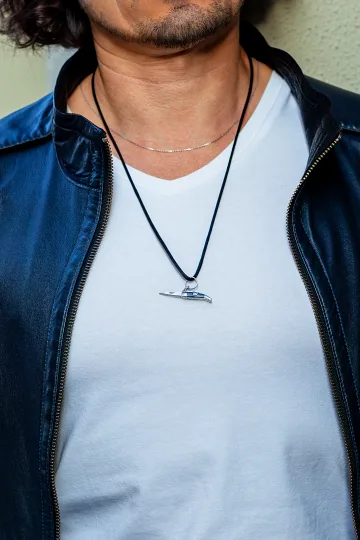




About Zevira
Zevira is a Spanish brand from Albacete, a city of metalworking masters. We make jewelry from solid metal and honest materials: 925 silver, steel, warm alloys, colored stones. If you want to understand how flash plating differs from real gold and why one fears acetone and the other does not, start with the breakdown of gold-plated versus solid gold, and for home care of metal there is the guide to cleaning gold and silver.