The Kenaz Rune: Meaning of the Torch, Knowledge and Creative Fire in the Elder Futhark
Before electricity, knowledge smelled of pine resin. In the northern evening a splinter of resinous pinewood burned in its holder, and only that small flame let you read, carve, mend harness, tell the sagas. The rune Kenaz, sixth sign of the Elder Futhark, literally named that hand-made fire: the torch, the pine-splinter, the flame a person lights for themselves.
Here is the paradox worth starting with. The same sign was called cen, torch, by the Anglo-Saxons and read as light and clarity, while the Scandinavians named it kaun, ulcer, a sore, and spoke of pain and rot. The light of knowledge and the heat of infection turned out to be two faces of one rune. Kenaz is about fire that can light a workshop or burn a house down, heal by cautery or scar the skin.
What follows in order: where the symbol came from, how it sounded to different peoples, what the torch meant and what the ulcer meant, what a runic pendant is made of, how to wear it, who it suits and how Kenaz differs from other runes of fire and knowledge.
Why the Torch Became a Sign of Knowledge
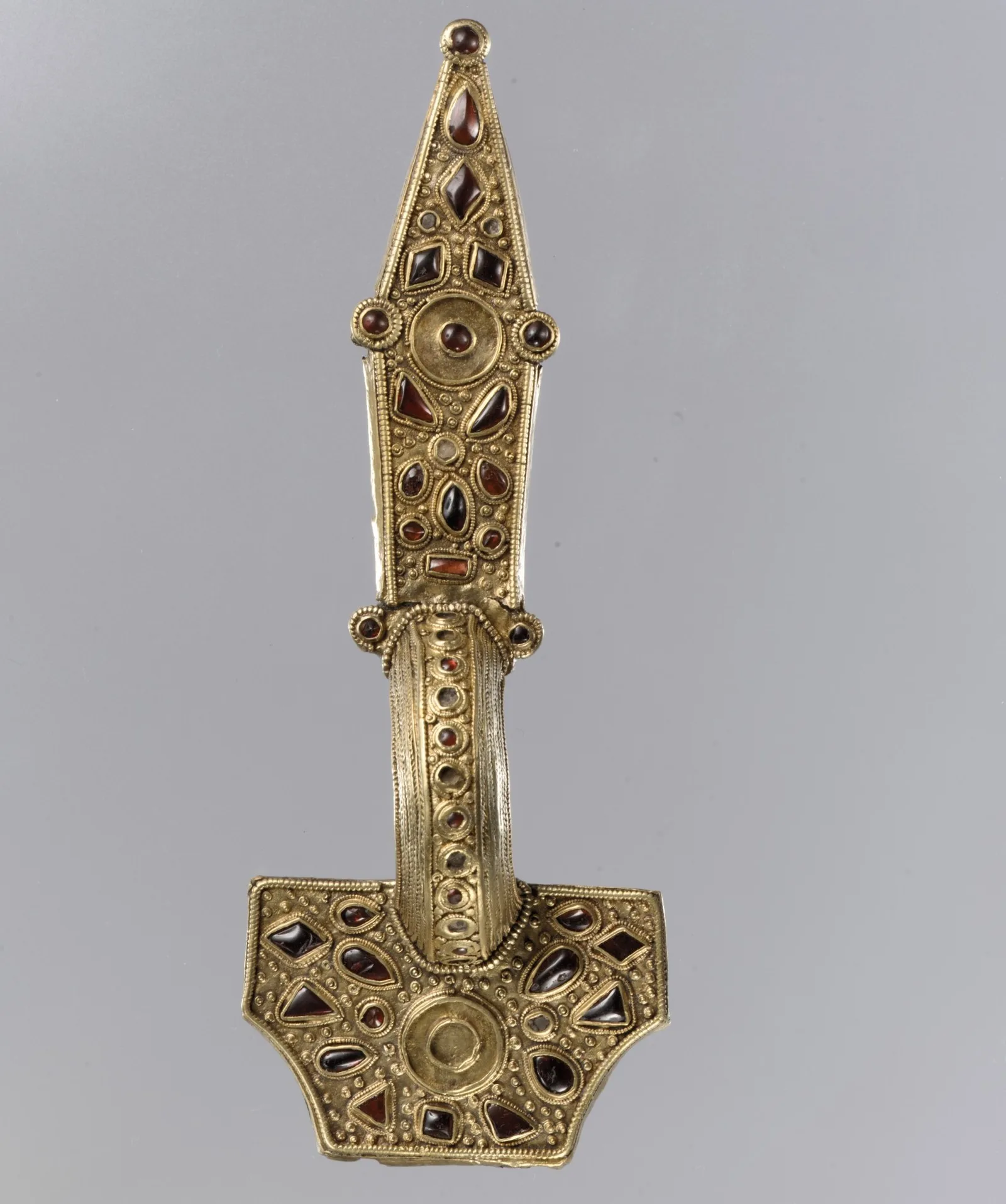
The name of the rune goes back to two close Proto-Germanic roots, and there lies its whole duality. The first, kenaz, meant torch or pine-splinter, carried on by Old English cen, that resinous light. The second, kaunan, meant boil or ulcer, preserved by the Scandinavian tongues. One rune, two names, light and wound.
For a society without lamps or electricity, controlled fire was not a domestic detail but the border between blindness and sight. By day the sun worked, and the moment it set the whole house lived inside a circle of light from the hearth and the splinter. Inside that circle you could craft, read runes, teach the young, keep count. Beyond it lay darkness and guesswork. The torch literally widened the world available to a person after dusk.
Wear the symbol, don't just read about it. These are in stock:



Kenaz took that experience and compressed it into a sign. A simple angular shape, like a tongue of flame or an angle opening to the right, points both to the sharp fire of a splinter and to the flash of a spark. Knowledge in the old culture was no abstraction out of books. It was the light by which you saw the work of your hands, and the heat of the forge in which a thing was born. Kenaz joined those two fires in one symbol.
Kenaz is easier to grasp with its two layers in mind. The first is practical: it is a letter, standing for the sound K, an ordinary unit of runic writing. The second is symbolic: each rune carried a name and a meaning, and Kenaz answered for fire, light, craft and learning. Both layers lived at once. A carver could cut Kenaz simply as a K in someone's name, and just as easily, in a charm, as a sign of skill and insight.
What the Kenaz Rune Is
The Meaning of the Name and Its Sound
Kenaz is the sixth rune of the Elder Futhark, the oldest runic alphabet of the Germanic peoples. It carried the sound K and closed the first of three aettir, the groups of eight into which the whole row was divided. Gebo and Wunjo followed it to complete the first eight.
The name of the rune diverged more sharply across the Germanic world than any other. To the Anglo-Saxons it was cen, torch; to the Scandinavians kaun, ulcer; the Gothic form is reconstructed as kusma. Scholars still debate whether there was one original root that split into light and wound, or two similar words that merged under one sign. For the rune's meaning, what matters is that both senses reached us together and work as a pair.
What the Symbol Looks Like
The Kenaz shape is angular and open: two short strokes meeting at a sharp angle, apex to the left, opening to the right. It resembles a Latin V laid on its side, a checkmark, or a tongue of flame. Unlike many runes, Kenaz has no full-height vertical stave; it stands on the angle itself.
An important detail: runes were cut, not written. Straight lines and sharp angles were not a style but a demand of the material. Along the grain of wood or bone a straight diagonal cuts easily, a smooth curve almost not at all. So the whole Futhark is built of verticals and diagonals, and the open angle of Kenaz is a model of the economical, cuttable form, legible even by the weak light of that same splinter.
Variant Forms and the Younger Futhark
The shape of Kenaz was never fixed. In the earliest inscriptions the angle usually points to the left, but carvers tilted and reversed it often enough that a single sign taken on its own cannot always be told from a related rune. When the Elder Futhark contracted in the north to the sixteen signs of the Younger Futhark, the fire rune changed appearance altogether: it came to be cut as a single sloping stroke with a short branch, and its name was now kaun. That one mark carried the sounds k, g and a hard ng between them, so a reader worked out which was meant from the sense of the word.
A doubled variant also exists, with two angles set mirrored, apex to apex, producing something like an hourglass or a lozenge tipped on its side. This turns up in later divinatory and decorative systems and is read as an intensified fire sign. The historical Futhark does not support it: it is ornament and modern practice rather than antiquity. Doubled Kenaz does appear in jewellery, and a buyer is better off knowing that what they are looking at is an artistic development of the form rather than an ancient one.
For anyone choosing a piece, this matters practically. A workshop that has copied the Younger Futhark kaun and labelled it Kenaz has not made a mistake exactly, but it has given you a different rune from the one on the packaging, and the two are worth telling apart before the engraving is cut.
Its Place in the Elder Futhark
The Elder Futhark was used from roughly the second to the eighth century across Germanic Europe, from Scandinavia to the Black Sea. Its twenty-four signs fell into three rows of eight, each named for its first rune. Kenaz stands sixth in the first aett, sometimes called Freyr's aett, after the god of fertility and plenty. Before it come Fehu, Uruz, Thurisaz, Ansuz and Raidho.
Its neighbours say much about its character. Right before Kenaz stands Ansuz, the sign of word and inspiration, and right after comes Gebo, the sign of gift and exchange. Kenaz sits between inspiration and gift: between the spark of an idea and the finished thing you can give away. That is the maker's place, turning an idea into an object.
The Torch and Hearth as a Source of Light
For the peoples of Northern Europe artificial light was costly and troublesome. Beeswax candles were dear, so an ordinary house burned a resinous splinter fixed in a holder, or an oil lamp. Such fire needed attention: it had to be trimmed, its sparks watched, the house guarded from burning. Light always came bundled with risk.
From this grows the rune's whole depth. Kenaz is not the sun that shines freely on all, which is the business of Sowilo. Kenaz is the fire a person wins, keeps and holds under control. It is the light of skilled hands, knowledge as effort rather than a gift of the sky. That is why the rune ties so tightly to craft, learning and any work whose result depends on mastery.
History: From the Proto-Germans to Today
Proto-Germanic Roots
Long before the first runic inscriptions, both words behind Kenaz already lived among the Germanic tribes. The root meaning torch or to burn gave not only the runic name but a whole nest of words for light and heat in the Germanic languages. The root meaning boil or ulcer was ancient too, shared across the northern branch. The rune did not invent the link of fire and knowledge; it fixed an existing experience in a letter.
When the Germanic peoples, in the first centuries of our era, created or borrowed runic writing, they gave the sixth sign the name of an object known to everyone: the household fire. Among the southern, continental tribes and the Anglo-Saxons the sense torch won out; among the northerners, the Scandinavians, the sense ulcer. So a fork between light and pain stayed forever inside one letter.
The Scandinavian Iron Age and the Viking Era
Runic writing flowered in the Iron Age and the Viking era, roughly from the eighth to the eleventh century. Kenaz was cut on weapons, jewellery, amulets, wood and stone. By then the Elder Futhark in the north had given way to the shorter Younger Futhark of sixteen signs, and the fire rune survived there under the name kaun, its shape slightly changed.
In Viking society fire and craft were highly prized. A smith who could forge a sword was valued as a man close to a mystery, and his forge was thought a place of special power. Light was cherished through the long northern winter. Kenaz as a sign of controlled flame fitted that culture exactly: both the hearth that keeps a house alive and the forge that gives birth to a blade.
The Anglo-Saxon Rune Poem
The brightest medieval commentary on the rune survives in the Anglo-Saxon rune poem, written down in England probably in the tenth century. The stanza on the rune cen runs roughly thus: the torch is known to every living thing by its fire, it is bright and clear, and it burns most often where noble people rest within their halls.
The stanza paints a cosy, peaceful scene. The torch here is the household light by which nobles feast and rest under a roof, a sign of civilisation, warmth and order. No pain, no threat, only a clear, white flame plain to everyone. The English tradition remembered Kenaz as the rune of a kind, serviceable fire.
The Norwegian and Icelandic Rune Poems
The Scandinavian rune poems, Norwegian and Icelandic, look at the same rune very differently, because they read its name as kaun, ulcer. The Norwegian stanza says the sore is a bane for children; sickness makes a person pale as a corpse. The Icelandic goes further and calls kaun the bale of children, a place of battle and a house of rotting flesh.
The contrast is striking. Where the Anglo-Saxon poet saw a peaceful torch, the Scandinavian saw a festering wound and child mortality. One and the same rune turned out to be both hearth-light and the heat of inflammation. The northern tradition honestly held both sides of fire: it warms and heals by cautery, and it also burns, festers, kills. That duality makes Kenaz one of the deepest runes of the row.
The Decline of Runic Writing
With Christianity and the Latin alphabet, runes gradually left everyday use. In Scandinavia they held on longer, in places into the late Middle Ages, but as the main script they yielded to Latin letters. Kenaz, with the whole Futhark, passed from a living alphabet into the realm of antiquity: inscriptions on stones, marks on tools, memory.
Yet the runes never vanished completely. In rural Scandinavia runic calendars and household marks survived into the modern era, and the names and meanings of the runes were kept in learned works and folklore. The sign of fire and craft outlived its own oblivion together with the whole row.
The Revival in the 20th Century
Fresh interest in runes came with the nineteenth and twentieth centuries and their taste for Germanic antiquity, folklore and mysticism. Systems of runic divination appeared, then books of interpretation, and behind them jewellery. That is when Kenaz settled into the role of the rune of knowledge, creativity and inspiration in which it is most often known today.
It is worth keeping in mind that modern divinatory reading is a reconstruction and a creative development, not a direct copy of what Iron Age people meant. The historical Kenaz was a letter and a double idea, torch and ulcer. Today's Kenaz has also absorbed a layer of esoteric lore about creative fire, grown over the last century and a half. Both layers are real; they simply belong to different eras.
Upload a photo of your pet, someone you love, or an object. We'll build a 3D model and hand-cast it in pewter.
Kenaz in Inscriptions, on Bracteates and Stones
The rune survives in real objects rather than in alphabet tables alone. Kenaz has come down to us on gold bracteate pendants, on weapons, on memorial stones. These finds show how the sign lived in people's hands rather than in scholarly lists.
Bracteates and Amulets
Bracteates are thin gold medallions of the fifth and sixth centuries, worn at the neck as pendants and, on all the evidence, as protective charms. Many carry runic lines, sometimes meaningful, sometimes resembling strings of letters used as a formula, with Kenaz standing among other signs. Objects like these tie the fire rune not to everyday writing but to the world of protection and luck: they were hidden in hoards, given as gifts, buried in anxious times. For the story of Kenaz the point is that the rune of fire was worn close to the body long before any modern pendant, and it was worn for its meaning rather than for decoration. British collections hold examples from finds in Kent and East Anglia, where Scandinavian and Anglo-Saxon material overlaps.
Inscriptions on Weapons and Household Objects
On spearheads, scabbard mounts, combs and brooches the runes were cut short, most often a name: the owner's or the maker's. Here Kenaz worked as an ordinary letter k, a unit of writing rather than a symbol. But weapons show the link between the rune and craft most plainly of all. The blade came out of the forge, out of exactly the fire that stands behind the name of the sign, and the carver's mark was cut into an object born of that fire. Letter and meaning met on the same piece of metal.
Runestones
Later, in the Viking age, runes were cut into large memorial stones raised for the dead. Those texts were written in the Younger Futhark, and kaun, the heir of Kenaz, appears in them inside perfectly ordinary words. The value of the stones is what they show: by that point runes were a script for everybody rather than secret knowledge held by a few. A neighbour commissioned an inscription from a carver much as somebody today orders engraving on a gift, and the fire rune lived quietly inside that everyday business. The same is true of the runic inscriptions cut into stone in the Isle of Man and in the north of England, where Norse settlers left memorials in a script their neighbours could read.
Customer reviews
Zevira is a real jewellery shop. Genuine payments, deliveries and customer thank-yous.
🥰🥰🥰 gracias
Ok, ¡gracias! 🙂
The Meaning of the Kenaz Rune: Torch, Knowledge, Creative Fire
The Torch and Controlled Fire
The first and chief meaning of Kenaz is controlled fire, the light a person lights and keeps in hand. Not a wildfire and not the distant sun, but the hand-held flame of a torch, a splinter, a hearth. Fire that has a master.
In this key Kenaz stands not for force itself but for power over force: the ability to kindle, direct and, in good time, put out. So modern practice ties the rune not to wild energy but to focused action: to carry an idea through to a deed, to light up a dark question, to bring the complex under control. It is the fire of a maker, not the fire of a blaze.
Knowledge and Insight
Light and knowledge were near synonyms in the old culture. To shed light, to clarify, to have an insight are metaphors of sight that became metaphors of understanding. Kenaz, as a sign of light, naturally took in the theme of learning: to see the heart of a thing, to work it out, to master it.
From this grows the rune's second layer. Kenaz is not wisdom from above, received as revelation, which is Ansuz with its divine word. Kenaz is knowledge won by labour and attention, the understanding that comes when you look long at a task by the light of your own splinter. The rune of study and careful reasoning is often chosen by students, researchers, everyone who lives by the mind.
Creative Fire and Craft
The third layer is the most alive: Kenaz is the fire of creation and craft. The smith's forge, the potter's kiln, the hearth by which people spin and carve. Any craft where raw stuff becomes a thing under fire and skilled hands stands under this rune.
Creativity in the Kenaz sense is not inspiration as a whim but mastery as a skill. An idea becomes an object only through work, tool and patience. That is why a Kenaz pendant is often chosen by artists, musicians, makers of applied crafts: as a sign of that working fire which turns a plan into a finished thing.
Kenaz, the Smith and the Mystery of Fire
In northern culture the smith stood apart. A man who tames fire and turns ore into weapons seemed close to magic, and sometimes dangerous. In myth the smith Wayland, skilled and vengeful, shows both the grandeur of craft and its dark underside. Kenaz as the rune of the forge inherits that image of the master whose power over fire draws both respect and wariness.
The mystery of fire is that it transforms irreversibly. Metal that has passed through the forge will never again be a lump of ore. In that sense Kenaz speaks of transformation through heat: real skill changes both the material and the maker. Craft does not only make things, it makes the person.
Fire in Norse Myth
In the northern picture of the world fire stands at the beginning of time and at its end. The world, in the Eddic poems, is born where the ice of Niflheim meets the heat of Muspelheim, the fiery land to the south. At its border sits the giant Surt with a burning sword, and in the last battle at Ragnarok it is his flame that will burn the world. Fire to the northern mind was no small matter of the hearth but a force that creates and destroys, exactly like two-faced Kenaz.
The flame has a trickster's face as well. Loki, the god of cunning, was drawn close to fire in later tradition: useful and treacherous at once, warming and burning, serving and betraying. Kenaz as the sign of controlled fire stands on the bright side of that theme, but its proximity to the untamed flame of myth explains why power over fire was valued so highly. An element that gets out of hand cannot be called back.
Craft too is sanctified by myth. The dwarfs, the underground smiths, forge the chief treasures of the gods in their own furnaces: the hammer Mjolnir, Odin's spear, the golden hair of the goddess Sif. Their art borders on sorcery, and a human smith at his own fire repeated in small what the dwarfs did for the gods. Kenaz gathers these threads together: the light that lets you see, the heat that makes the thing, and the danger that is never far away.
Health and the Ulcer: The Dark Side
The Scandinavian name of the rune, kaun, ulcer, gave it an unexpected medical layer. In antiquity inflammation, a boil, a festering wound could be deadly, especially to children, as the rune poems say plainly. The same fire that lights and forges turns, in the body, into the heat of disease.
Yet there is light here too. Cautery with red-hot iron was an old way to stop infection and bleeding. The fire that wounds also heals. So Kenaz is linked not only to sickness but to healing through heat, to the idea that pain and cure travel one road. The dark side of the rune does not cancel the bright one; it completes it with an honest reminder: any force is dangerous without measure.
Reversed Kenaz
Divinatory practice also weighs the reversed position of the rune, when the sign falls opening the other way. A reversed Kenaz is read as a fading light: creative block, loss of clarity, ignorance, sickness, a broken bond with the work. If upright Kenaz is a lit torch, reversed is one gone out.
There is no historical basis to seek here; the split into upright and reversed meanings is already a development of modern practice. But as a system of images it is logical: light either burns or is out, and both possibilities are honestly built into the nature of fire.



Kenaz in Divination: Positions, Combinations and Bindrunes
Runic divination in its present form is a practice of the last century and a half rather than a direct inheritance from the Iron Age. It is more honest to treat it as a language of images than as prediction: a spread helps you put a question to yourself rather than learn your fate. Read that way, Kenaz has a recognisable role.
What Kenaz Means in a Spread
Drawn upright, the fire rune is usually read as a good sign for anything involving the mind and the hands: a plan will clarify, study will go well, skill will bear fruit. It is interpreted as a light being lit, the moment when a dark question becomes comprehensible and the work starts to move. On questions of creativity and learning Kenaz is counted among the most favourable runes of the row, alongside Sowilo and Wunjo.
Combinations With Other Runes
Neighbouring runes shade the meaning. Beside Ansuz, Kenaz is read as study and clear thought, word plus understanding. With Fehu, the rune of wealth, it becomes craft that earns, the fire of a workshop that feeds its owner. With Gebo, the gift, it suggests a good collaboration or a present made by hand. Next to the harder runes such as Hagalaz or Isa, the light of Kenaz is read as hope in a difficult hour, the splinter of burning wood that keeps you from getting lost in the dark. These are not fixed formulas but prompts for thought: the neighbouring sign turns the fire toward work, or money, or relationships.
Bindrunes With Kenaz
A bindrune is several runes merged into a single sign on a shared stave. Kenaz is often woven into such combinations as the igniting element: its sharp angle is added to runes of purpose or protection, the intention being to lend them light and clarity. The historical basis for most bindrunes is thin, and they are best treated as a personal motto in symbol form rather than as an ancient formula. As a personal sign, though, a bindrune with Kenaz works honestly enough: joining the fire rune to the rune of your own aim gives you a visible reminder of what you want to achieve, worn as a small daily marker.
What Kenaz Jewellery Is Made Of
The material of a runic pendant carries its own meaning and changes both the look and the character of the piece. With Kenaz, the rune of fire and craft, the choice of metal is especially apt to tie to the theme of mastery itself. Here are the main options and what to know about them.
Gold
Gold is itself born of the forge fire and rhymes well with the theme of Kenaz. The warm sheen of the metal echoes the flame of a torch, and the sharp clean angle of the rune reads brightly on gold. Most often 14 or 18 karat is used: it holds the keen edge of the sign and does not fear daily wear.
Gold suits a gift for a real occasion: a degree defended, a workshop opened, a creative debut. It is the metal for a moment when you want to mark an achievement of mind or hands, not merely adorn the neck.
Silver
Silver looks restrained and severe and conveys well the cool clarity of knowledge. On the white metal the sharp angle of Kenaz looks graphic, almost like a drawing. Historic 925 sterling silver was the Vikings' main measure of value, so the material is close in spirit to the age of the runes.
A silver rune is a universal everyday choice, sturdy and low-maintenance. It sits well with a leather cord and a rougher texture in the Scandinavian key, and over time it gathers a noble patina in the grooves of the carving, which only makes the sign more expressive.
Bronze and Brass
Bronze gives a warm, slightly archaic tone close to ancient finds, and is loved for its museum look. Brass is cheaper and brighter, nearer gold in colour. Both alloys render the relief of the carving well and in time gather a patina that many find fitting for an old sign of fire.
Copper alloys have one drawback: they can leave a dark or greenish mark on the skin. The cause is a reaction of copper with sweat and cosmetics, and it is not a fault. It is worth reading separately about why skin turns green from jewellery and how to avoid it.
Wood and Bone
For Kenaz, wood is especially apt: the rune itself means a pine-splinter, a wooden light. A dark-wood pendant with the carved sign is closest to the historical spirit of the fire rune. Such pieces are light, warm to the touch, and each has its own grain, like a real splinter.
The price of authenticity is fragility and fuss. Wood fears damp, bone is sensitive to swings in conditions, and both need gentle care. Such an amulet is more often chosen as a ceremonial or collector's piece than for daily wear.
Stainless Steel
A pragmatic modern choice, and a fitting one for the smith's rune: steel itself comes out of the forge. Grade 316L does not darken, fears neither water nor sweat, leaves no mark on the skin and holds the keen angle of the sign for years. The symbolism sits entirely in the form, not in the rarity of the material.
A steel Kenaz suits those who wear jewellery constantly and would rather not think about care. It fits an everyday, working, street look and easily survives what wood or bone would not forgive.

Turn on your camera, pick earrings, a pendant or a ring, and see the piece on yourself in real time.
Switch items in one tap.
Everything runs in your browser: no photo or video is ever uploaded.
How to Wear the Kenaz Rune
At the Neck as a Pendant
The commonest way to wear a rune is as a pendant at the neck, close to the body. Here both the chain length and how the sign sits in the neckline matter. A short chain (40-45 cm) holds the rune high, at the collarbones. A medium one (50-55 cm) brings it to the chest, where the sharp angle reads large. A long one (60-70 cm) hides the amulet under clothing, nearer the heart.
By a common view in practice, a protective rune is worn so the sign is oriented rightly for its owner, that is, readable to them. There is no strict historical rule here, but many value the feeling that the symbol faces them. A separate guide to choosing chain length can help you pick.
On a Ring and a Bracelet
Kenaz sits well on a ring and a bracelet too. The sharp angle of the sign looks graphic on a flat signet or on a bracelet plate and does not catch the eye, which those who wear a symbol for themselves appreciate. A ring with a single rune is handy because the sign is always in view on the working hand and easily becomes a private reminder of a task or goal.
A bracelet with the fire rune echoes the Scandinavian arm-rings and looks good paired with leather and rough texture. For a maker who works with their hands, a ring or bracelet is sometimes handier than a pendant: the symbol beside the tool rather than under clothing.
Direction and Correct Form
When choosing a piece, check that the rune is cut right: the angle apex to the left, opening to the right, both strokes of equal length. A mirrored or reversed sign is read in divinatory tradition as a light gone out rather than lit, so the workshop should orient Kenaz clearly and steadily.
This is no superstitious quibble but a matter of meaning. If you take a rune for its meaning, it is logical for the meaning to be upright, that is, burning. With a good maker the orientation of the sign is checked, and the pendant has a clear top.
What to Pair It With
Kenaz is spare and gets on with almost any style. It looks good on a rough leather or rubber cord in the Scandinavian key, on a thin chain in a minimalist look, and in company with other northern symbols. Fitting neighbours are the Ansuz rune as a sign of word and inspiration, the Algiz rune as a sign of protection, and a pendant with the Norse gods.
The one thing to avoid is clutter. A single rune on a clean cord reads stronger than one squeezed among five pendants. If you want layers, give Kenaz its own length so the sign is not lost.
Leave your email, we'll send your discount code. No spam, unsubscribe anytime.
The code arrives by email, valid on your first order.
Who Kenaz Suits and Who It Is Given To
Kenaz is not tied to gender, age or profession, but it has themes it especially chimes with. It is a rune of fire, knowledge and craft, so it is most often chosen and given in connection with study, creativity and mastery.
People take it:
- For those who create with their hands. For artists, musicians, makers of applied crafts, the rune of working fire fits better than most: it is about the skill to carry an idea through to a thing.
- For students and researchers. The sign of light and learning works as a visual anchor of attention, a quiet reminder of what the study is for.
- As a gift for a degree, a business start, a creative debut. A wish of clarity and mastery in tangible form.
- For lovers of northern culture and runic tradition. Kenaz is a logical rune for those who collect the symbols of the Futhark and value its double depth.
- For sceptics who care about meaning, not magic. The story of the sign, from splinter to forge, is interesting in itself, while belief in a creative power stays a private matter.
As a gift Kenaz is easy because its meaning reads kindly: a wish of light, clarity and skilled hands. A jewellery gift guide can help you choose the right version for the occasion.
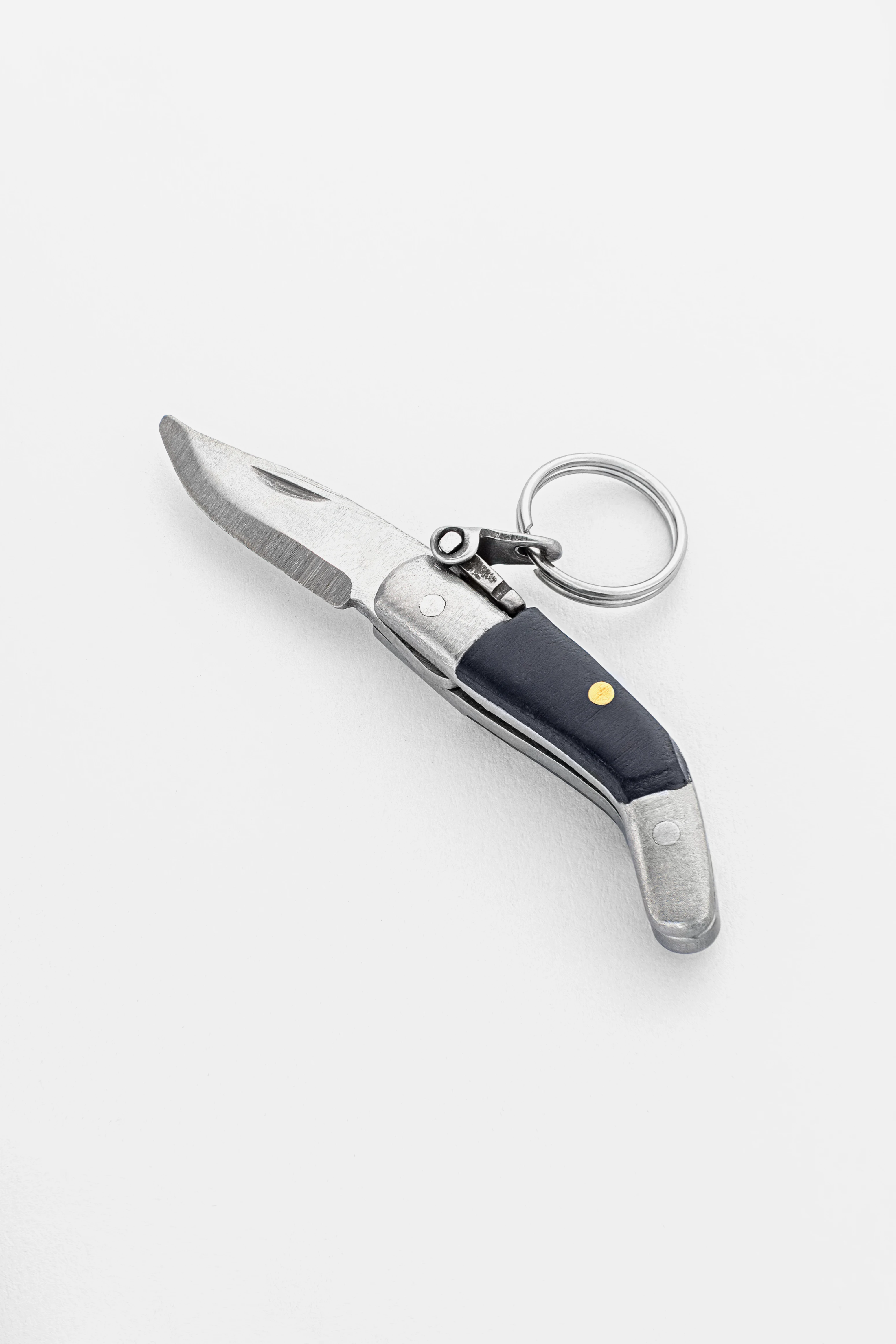
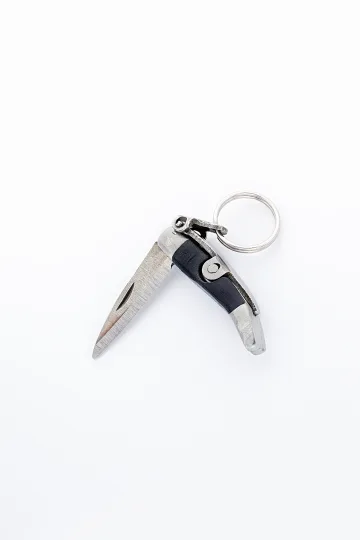
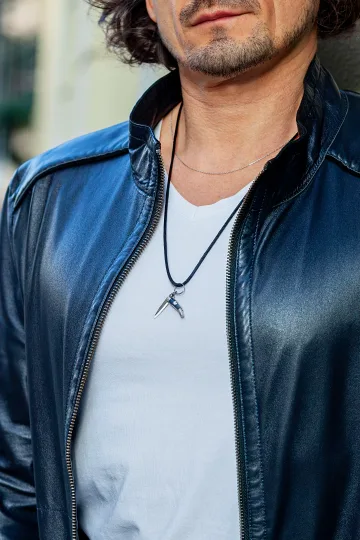
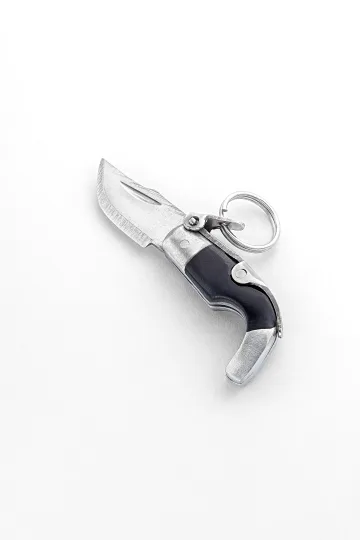
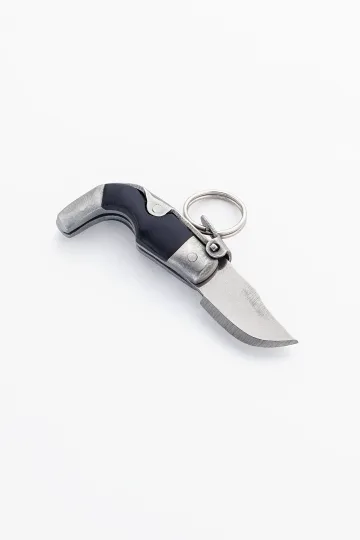
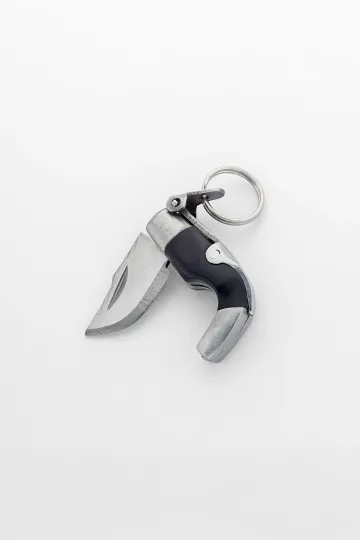
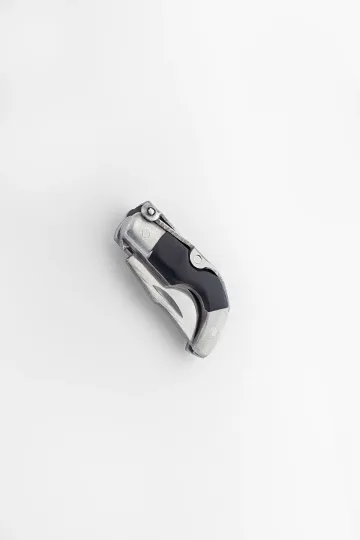
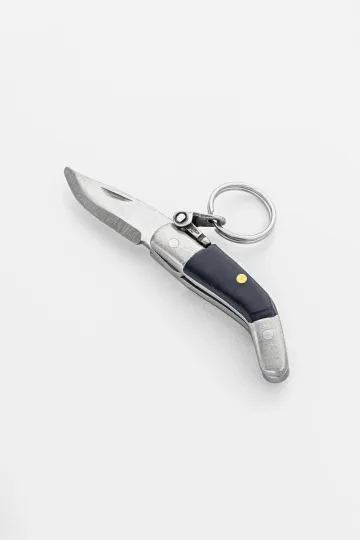
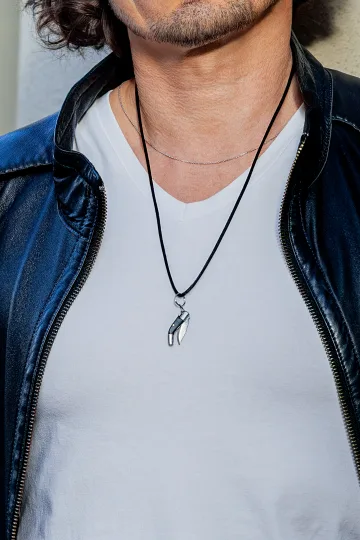
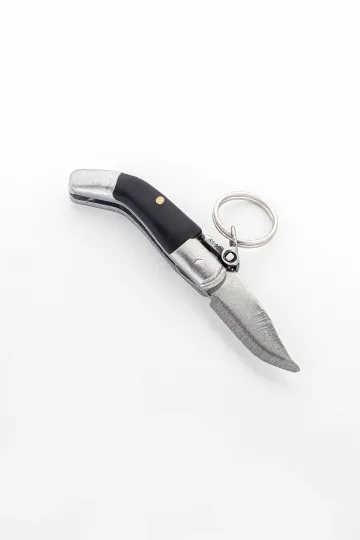
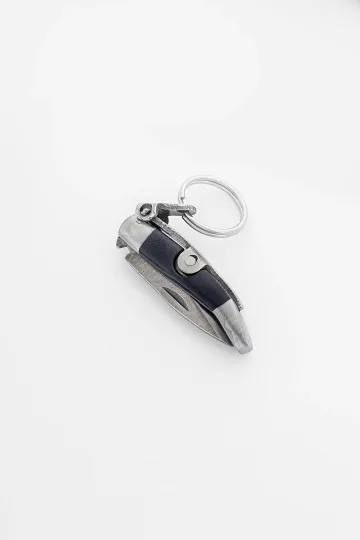
CAPAORA mini knife pendant
The 18th-century Spanish navaja in miniature: 40 mm of stainless steel, a real folding mechanism and a Palanquilla lock that clicks. An affordable gift to remember.
Authentic · Ships from Spain · 14-day returns
How to Choose Kenaz Jewellery
Correct Form and Orientation
The first thing to look at is the accuracy of the sign. A sharp angle, two strokes of equal length, apex to the left, opening to the right. The pendant needs a clear top so the rune does not end up reversed or mirrored in wear. For the fire rune upright form especially matters, because a reversed sign reads in tradition as a light gone out.
Checking is simple: lift the pendant by its loop in its natural position and make sure the angle points sideways with its apex, not down. If the workshop made the sign legible and steady, that is a good mark of attention to meaning, not only to form.
Craft Versus Stamping
Mass stamping gives an even but faceless sign, often with blurred relief. Hand carving or good casting hold clean edges, and the sharp angle of Kenaz looks alive. For a symbol whose whole strength is in its form, crisp lines are no quibble but the point, all the more for a rune that itself praises craft.
If you want a piece with character, look for versions with hand finishing, honest metal texture, faint tool marks. Such pendants are closer to the spirit of runic craft, where each sign was cut separately and by hand.
Size and Proportion
For an everyday pendant a size of 2-4 centimetres is comfortable. Under two, the angle is lost on the chest; over four, it starts to look massive. For a man's look and a broad neck take nearer the upper bound; for a slighter build, the lower. Rings and bracelets need finer, neater engraving, or the sharp angle looks crude.
Kenaz and Other Runes of Fire and Knowledge: What Is the Difference
Light, knowledge and inspiration in the Futhark are carried not by one rune but by several, and they share the meanings out. Knowing the differences helps you pick your own.
Kenaz and Ansuz: The Fire of Craft and the Word of Wisdom
The chief pair on the theme of knowledge is Kenaz and Ansuz. Both are about learning, but of different kinds. Ansuz is word, breath, inspiration from above, wisdom received as a gift of the gods and passed on in speech. Kenaz is knowledge won by hands and attention, skill grown by labour at one's own fire.
The pair stands handsomely near in the row itself: Ansuz fourth, Kenaz sixth, Raidho the journey between them. From the heard word, along the road, to the made thing. If Ansuz is about what was revealed to you, Kenaz is about what you learned yourself.
Kenaz and Sowilo: The Torch and the Sun
Both runes are about light, but of different scale. Sowilo is the sun, cosmic light that shines on all for free, a sign of victory and vitality. Kenaz is the torch, the hand-held fire a person lights and keeps under control. Sowilo gives light, Kenaz wins it.
The difference is subtle but matters in choosing. If you want a sign of great bright force and optimism, Sowilo is nearer. If closer to you is the idea of skill, focused labour and a light you make with your own hands, your rune is Kenaz.
Kenaz and Gebo: Mastery and the Gift
Right after Kenaz in the row stands Gebo, the rune of gift and exchange. Their link is logical: first the maker fashions a thing at their fire (Kenaz), then gives or trades it (Gebo). Skill gives birth to what can be handed on. Kenaz is about creating value, Gebo about its movement between people.
Once these differences are clear, it is easier not to confuse the bright runes and to choose a sign for a concrete intent rather than by the general theme of fire and knowledge.
The Psychology of a Runic Amulet
You need not believe in the magic of runes for a Kenaz pendant to work. The mechanisms that make such an amulet useful are quite earthly and well described.
An anchor of intent. When a person ties an object to a concrete goal, a glance at that object returns the mind to the goal. A rune of fire and knowledge at the neck becomes a daily quiet reminder of the task it was put on for: to finish the course, to finish the piece, to carry the project through. It works as a visual bookmark for attention, with no mysticism at all.
A confidence effect. Sports and cognitive psychology describe a lucky-object effect: a person sure their talisman is with them acts calmer and more collected. Anxiety falls, focus grows. For someone facing an exam, a stage or a defence, the sign of skill can do exactly that.
Ritual and control. Putting on a sign before an important day is a small ritual, and rituals restore a sense of control where much is beyond us. For a creative person, whose work is full of uncertainty, such an anchor is especially welcome.
Identity and values. To wear a rune of mastery is to state quietly, above all to oneself, one's priorities: to learn, to make, to create. Anchors of identity raise resilience to hardship, and in that sense an ancient sign works for a thoroughly modern person who lives by mind and hands.
There is nothing supernatural in this. An amulet does not change reality; it changes the wearer's relation to reality, and it does so in a measurable, useful way.
Kenaz in Culture and Heritage
Runes long ago left archaeology and live in language, folklore and modern culture. The trace of Kenaz is hidden in the most everyday words about knowing.
In language. Many researchers bring the rune's name near a Germanic root of knowing, from which come English ken (to know, to grasp) and German kennen (to know) and koennen (to be able). Even if strictly torch and to know go back to different roots, the very likeness of sound makes Kenaz a handy symbol of knowledge for speakers of Germanic tongues. Light and understanding meet in these words as they met for the person with a splinter in hand.
In the image of the smith. Northern folklore is full of smiths whose power over fire borders on sorcery. Wayland, the skilled master of song, shows both the grandeur of craft and its dangerous underside. Kenaz as the rune of the forge is firmly tied to this circle of images, where skill, fire and mystery are woven into one.
In modern symbolism. The revived interest in northern antiquity made the Futhark a recognisable visual language. Runes adorn books, games, music covers, handmade goods. Kenaz as a handy sign of creativity and inspiration holds a firm place in this set, especially among those who make things by hand.
One important caveat is worth keeping. In the twentieth century certain runic signs were used by political movements of grim repute, and a heavy context clings to some symbols. Kenaz does not belong to that circle and remains a neutral sign of fire and knowledge, but a general sensitivity to what, and beside what, you wear is fitting here.
Send a friend a discount code, they save on their first order.
Facts About the Kenaz Rune That Surprise You
One rune meant both torch and ulcer. To the Anglo-Saxons its name cen meant a pine light; to the Scandinavians kaun meant a festering boil. The light of knowledge and the heat of infection turned out to be two faces of one sign, and both readings reached us in the rune poems.
The rune poems disagree about this rune. The Anglo-Saxon poet praises the clear white flame by which the nobility rest. The Scandinavian, in the same slot of the row, writes of a sickness that kills children and makes a person pale as a corpse. A rare case of traditions reading one sign in opposite ways.
Kenaz literally meant a pine-splinter. Not a hero's torch from film, but the everyday resinous light by which northern homes lit the evening. The rune of knowledge grew from the most domestic and cheapest source of light, within a poor person's reach.
The rune's fire both healed and wounded. Cautery with red-hot iron was an old way to stop infection. The same heat behind the word ulcer stood behind its cure. Kenaz honestly holds pain and healing in one sign.
The rune's name echoes the words to know and to be able. English ken, German kennen and koennen chime with the name Kenaz. Even if the roots are strictly distinct, the sound link bound the fire rune to the idea of knowledge in the Germanic languages.
Kenaz stands between inspiration and gift. In the row before it comes Ansuz, word and inspiration, and right after it Gebo, gift and exchange. The maker's rune ended up exactly in the middle: between the spark of an idea and the finished thing you can give away.
Kenaz has no vertical stave. Unlike most runes, it stands on a single sharp angle, with no long vertical. The shape resembles a tongue of flame or a checkmark, legible even by the weak light of the splinter from which the rune took its name.
The smith in northern culture was almost a sorcerer. A man who tamed the forge fire and brought weapons out of ore drew respect and unease at once. Kenaz as the rune of that working fire inherited the double regard for the master: admiration and wariness.
Silver, gold, runic and Norse symbolism, amulets, matching sets.
Buying it as a gift? Each one arrives ready to give.
 A branded Zevira box and a little card come with every order.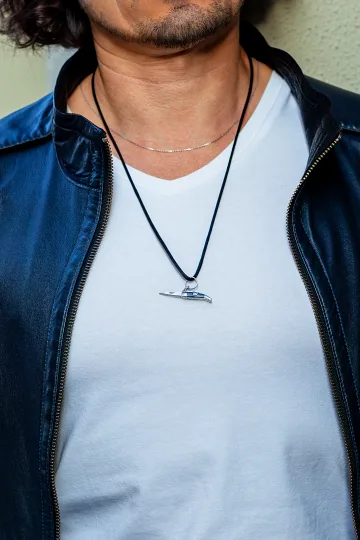




Frequently Asked Questions About the Kenaz Rune
What does the Kenaz rune mean? Kenaz is the sixth rune of the Elder Futhark, standing for the sound K. Its name meant both torch or pine-splinter to the Anglo-Saxons and ulcer or boil to the Scandinavians. Broadly the rune symbolises controlled fire, light, knowledge, creativity and craft, and in its dark layer disease and healing through heat.
Is Kenaz a rune of knowledge or of sickness? Both, and that is its depth. The Anglo-Saxon tradition read the name as torch and tied the rune to light and clarity. The Scandinavian read it as ulcer and spoke of sickness. Modern practice usually takes the bright layer, knowledge, creative fire, inspiration, but an honest reading keeps the dark side in mind too.
What does the Kenaz rune look like? It is an open sharp angle: two short strokes of equal length meeting apex to the left and opening to the right. It resembles a V laid on its side, a checkmark, or a tongue of flame. The rune has no full-height vertical stave and, like the whole Futhark, no horizontal lines.
What does a reversed Kenaz mean? In divinatory tradition the reversed position is read as a light gone out: creative block, loss of clarity, ignorance, sometimes sickness. It is the flip side of the rune: upright is a lit torch, reversed one put out. The split into upright and reversed meanings arose in modern practice, not in antiquity.
Who suits the Kenaz rune? Those who live by mind and hands: students, researchers, artists, musicians, makers of applied crafts. It is a rune of learning, creativity and skilled work, so it is often chosen and given for a degree, a business start or a creative debut. Gender, age and belief play no part.
Can I wear the Kenaz rune every day? Yes. Silver and stainless steel are handy for daily wear: sturdy, low-maintenance and non-tarnishing. Gold suits too. Wood is especially apt in meaning, since Kenaz means a wooden splinter, but it is fragile and fears damp, so it is more often chosen as a ceremonial or collector's piece.
How should the rune sit on a pendant? The sharp angle should point sideways with its apex, not down, both strokes of equal length. The pendant needs a clear top so the sign does not end up reversed or mirrored in wear. For the fire rune upright form matters, because a reversed sign reads in tradition as a light gone out.
Do I need to believe in rune magic to wear Kenaz? No. Many wear a rune for its meaning and history rather than for a creative power. The sign is interesting in itself: over fifteen hundred years old, tied to the language, craft and mythology of northern Europe, and holding a rare duality of light and pain. Belief stays a private matter.
Runes, Norse amulets and symbolism in silver, gold and steel.
Conclusion
Kenaz travelled from a resinous splinter in a dark house to a symbol of creative fire on a silver chain. Over fifteen hundred years the sources of light and the ways to learn have changed, but the rune's essence has stayed the same: knowledge is a fire a person lights themselves and keeps under control, in order to see, to make and to understand.
The sixth rune of the ancient alphabet tells both truths at once. Fire lights, warms and gives birth to a thing, and it also burns, festers, kills if it slips past measure. Whether you wear Kenaz for its meaning, for the beauty of the keen northern form or for a quiet reminder of a task, you carry one of the most human symbols in history: the sign of the light we win for ourselves.
Wear the symbol, don't just read about it. These are in stock:
About Zevira
Zevira makes jewellery in the artisan tradition of Albacete, Spain. Runic symbolism is one of the themes close to us: an ancient form, readable without words, equally at home on a rough leather cord and a thin chain. We reproduce Kenaz with a checked orientation of the sign and a clean carving of the sharp angle, in modern materials and proportions.
What you can find with us on the theme of northern symbols:
- Runic pendants in silver, gold and steel
- Norse amulets: protective runes, signs of the gods, matching sets
- Leather and rubber cords and chains of various lengths for a rune of any size
- Set options for those who collect the symbols of the Futhark
- The option of personal engraving
Every piece can be personalised with engraving. 925 silver and 14-18K gold.