La Mano Poderosa (The All-Powerful Hand): meaning of the amulet and the Holy Family on five fingers
La Mano Poderosa (Spanish for "The Powerful Hand" or "The All-Powerful Hand," also called Mano Todopoderosa, "The Almighty Hand") is a Catholic folk devotional image and amulet: the right hand of Christ, pierced by a nail wound in the palm, with five figures of the Holy Family standing on the tips of the five fingers. Five saints on a single hand, and every finger given over to its own patron.
A Spanish or Mexican grandmother hangs a medal like this above her grandchild's bed with a short prayer, and sets a lit candle beside it. One image gathers around the wounded palm of Jesus his whole earthly family: his mother, his foster father, his grandmother and grandfather. That is the promise sewn into the name, help will come from every side at once.
What La Mano Poderosa is
La Mano Poderosa is a devocional, an object of folk piety, rather than a church icon in the strict sense. At the centre of the image is an open right hand, raised palm outward toward the viewer. A wound darkens the middle of the palm, a stigma, the mark left by a crucifixion nail, sometimes with a drop of blood. It is precisely the wound that tells you the essential thing: this is not an abstract "hand of fate" but the concrete hand of Christ, the very one pierced on the cross.
On the five fingers, as on five small pedestals, stand the figures of the Holy Family. In the most common arrangement the thumb holds Saint Joseph, the index finger the Virgin Mary, the middle finger, the tallest, the Infant Jesus, the ring finger Saint Anne, and the little finger Saint Joachim. The result is a family tree folded into a palm: the child at the top, the parents at his sides, the grandparents on the lower fingers. We will take each finger in turn below, but even from here you can see that the image rests on the idea of lineage, where a whole chain of kin stands behind the child.
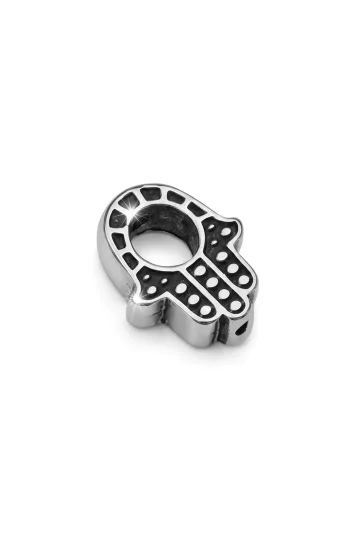
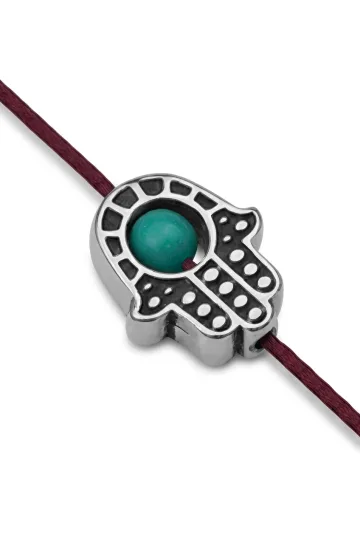
Wear the symbol, don't just read about it. These are in stock:






How the image looks
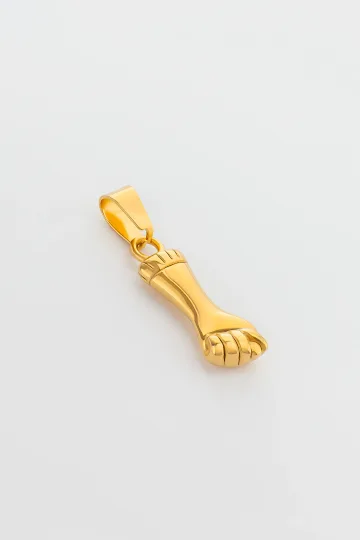
A classic Mano Poderosa is recognised at a glance. The hand faces the viewer, back or palm forward, the fingers spread and slightly raised, as though the hand were giving a blessing. Light or a thin ray often streams from the wound in the palm. The fingertips are crowned with tiny full-length figures in coloured garments, each with its own attribute: Mary in a blue mantle, Joseph with a staff and lily, the Infant with a little hand raised in blessing.
The format of the image shifted over the centuries. In the most lavish Baroque versions the hand grows out of a cloud, ringed by angelic heads and rays, with a heart blazing at the base of the wrist or blood running into a chalice. In humble folk prints, cheap paper images, everything is reduced to something plain and clear: the hand, the five saints, the caption "La Mano Poderosa." Between these two poles lie hundreds of intermediate versions, from painted tin retablos to stamped medals the size of a fingernail.
The wound in the palm: why this is the hand of Christ
The stigma in the palm is the key to the whole image. Without the wound you would have simply a hand with figures on it, beautiful but nameless. The wound ties the picture to the Gospel crucifixion and turns the hand into a symbol-relic. Folk piety reads it plainly: the hand that received the nail for the sake of humankind is now stretched out to the one who prays for help. The wounded palm is at once a memory of sacrifice and a promise of intercession.
From this detail grows the particular tone of the image. La Mano Poderosa does not threaten or ward off, as many evil-eye amulets do. It asks and it promises. People turn to it in desperate straits, when "there is nothing left but to pray," and the logic here is bodily: if this hand endured the cross, it can endure my trouble too.
Mano Poderosa, Mano Todopoderosa, the All-Powerful Hand: getting the name right
The image has several names, and they all point to one thing. The Spanish La Mano Poderosa translates as "the Mighty" or "the Powerful Hand." Alongside it lives the variant Mano Todopoderosa, "the Almighty Hand," carrying a shade of supreme, boundless force. In English "the All-Powerful Hand" and "the Powerful Hand" have both taken hold, with "the Almighty Hand of the Lord" heard now and then. In everyday Latin American usage the image is often called simply La Poderosa, "the Powerful One," dropping the word "hand," because the meaning is understood.
The point is not to confuse the name with a same-root gesture or a brand: here Poderosa is the adjective "powerful," not the name of a place or a person. The meaning lies in the power of the hand itself, or more precisely in the power of the one to whom it belongs, and of the kin gathered on its fingers.
La Mano Poderosa: translation and pronunciation
Word for word, La Mano Poderosa renders from Spanish as "the Powerful Hand," where mano is "hand" and poderosa is "strong, powerful." It is pronounced roughly "la MAH-no po-de-RO-sa," with the stress on the second syllable of each word. The variant Mano Todopoderosa, "the Almighty Hand," intensifies the sense with the prefix todo, "all, whole." Knowing the exact translation helps you avoid confusing the image with place names or brands, where the same word functions as a proper noun. Here Poderosa is always an adjective, and all the power is referred to the wounded hand of Christ and the family gathered on its fingers.
La Mano Poderosa: the meaning of the image in brief
If you boil the meaning down to a single phrase, La Mano Poderosa is a prayer for help folded into a picture. The wounded palm recalls the sacrifice of Christ, while the five saints on the fingers gather his entire earthly family around it. People turn to the image when they need swift support in trouble and protection for the home. The meaning lies not in the magic of an object but in the intercession of those depicted on it: Mary, Joseph, the Infant, Anne, and Joachim. So the short meaning runs like this: a powerful hand, backed by a whole family, is held out to a person in a hard moment. Everything else, the history, the materials, the rites, only unfolds this simple core of the image.
A Catholic amulet in the shape of a hand
Among the many hand-shaped amulets, La Mano Poderosa holds a special, Christian place. The form of the palm as a protective sign has been known around the Mediterranean for thousands of years, from ancient amulets to the Eastern hamsa, but here it is filled with Gospel content. This is not a deflector of the evil eye, nor a gesture that mocks evil, but an open hand of blessing bearing the wound of the crucifixion. As a Catholic amulet it works through prayer and veneration of the Holy Family, not through "energies" or "charging." That is exactly why the image sits easily alongside a baptismal cross and holy medals of the saints: it comes from the same world of folk piety. For a believer it is a visible reminder that protection comes as an answer to prayer, not as a property of metal.
What follows, in order: who exactly sits on each finger and why, where the image came from, what it means, how it is worn, to whom it is given, how one prays to the All-Powerful Hand, and how it differs from the hamsa, the higa, and the votive milagros.
It is convenient to work through the image starting from its main feature. On most hand amulets the palm stays empty or carries a single sign, an eye, a pattern, an inscription. The All-Powerful Hand is built differently: it gives each finger over to a separate figure and assembles a short family scene out of five saints. So it makes sense to read the image finger by finger, from thumb to little finger, working out who stands where and what lies behind that choice. That order echoes the composition itself, where the eye travels from the base of the hand to its edge, from the head of the family to the eldest generation. Keeping this arrangement in mind, it is easier not to get lost among the variants, of which this folk image has plenty. Below each finger is treated separately, with the name of its saint, that saint's attribute, and the role it plays within the family of Christ, so that the whole scene on the palm reads with meaning rather than as a random cluster of figures.
Five fingers, five saints: the Holy Family on a hand
The main feature of La Mano Poderosa is its populated fingers. Where the hamsa leaves the palm empty or sets a single eye on it, the All-Powerful Hand seats a separate saint on each finger. Let us go through the arrangement that appears most often, remembering that folk tradition allows for rearrangements too.
The thumb: Saint Joseph
On the thumb usually stands Saint Joseph (San José), the earthly father and head of the Holy Family. He is known by his staff with the flowering lily, a sign of purity and of being chosen. In folk devotion Joseph is the patron of the family, the home, workers, and the "good death," that peaceful passing among loved ones. Placed at the base of the hand, sturdy and dependable, he holds the family from below, the way a foundation holds a building.
The choice of the thumb for Joseph reads symbolically. The thumb stands opposite all the others; without it the hand cannot close or grip anything. So too with the head of the family: without his labour and protection the other figures would hang in the air. Folk piety loves this logic, where the anatomy of the hand becomes a picture of how a family is ordered.
The index finger: the Virgin Mary
The index finger holds the Virgin Mary (Virgen María), the mother of Christ, in her familiar blue or white mantle. In Catholic tradition Mary is the chief intercessor, the mediator between people and heaven, the one turned to in every kind of need. On the All-Powerful Hand she stands beside her son, just below him, and this captures her role exactly: closest of all to Christ, the first to hear a request and pass it on.
The index finger is no accident. This is the finger that points the way, the one that "shows." Mary on it seems to point the one who prays toward her son, and to point the son toward the one who prays. In an image assembled for the sake of intercession, such a place for the chief intercessor looks entirely fitting.
The middle finger: the Infant Jesus
The middle finger, the tallest on the hand, is crowned by the Infant Jesus (Niño Jesús), often with a little hand raised in blessing or an orb resting in his palm. That it is the Infant, and not the adult Christ, who stands at the summit stresses the point: this is the Holy Family in the time of Jesus's childhood, a warm domestic scene rather than Golgotha. Although the hand itself is adult and wounded, the figures tell the story of a childhood surrounded by kin.
The highest point of the hand is given to the child not out of seniority but out of meaning. The whole composition is built around the Infant; the other four gathered for his sake. This is a family gazing at a child, and so the child is lifted above them all, at the very centre of attention. The one who prays, raising his eyes to the image, first meets the Infant at the top of the middle finger.
The ring finger: Saint Anne
The ring finger is given to Saint Anne (Santa Ana), the mother of the Virgin Mary, that is, the earthly grandmother of Christ. In folk devotion Anne is the patron of mothers, grandmothers, expectant women, and the family hearth; people come to her with requests for children and for harmony in the home. Her presence extends the family a generation deeper: behind Mary stands her own mother.
It is Anne, and Joachim after her, who turn the image from a "holy family of three" into a genuine family tree. Catholic tradition calls the extended kin of Christ the Sagrada Parentela, the "Holy Kinship," and La Mano Poderosa is that Kinship in its most compressed form, fitted onto a single hand. The grandmother on the ring finger is a reminder that protecting a child is the work not of one generation but of a whole line of ancestors.
The little finger: Saint Joachim
On the little finger stands Saint Joachim (San Joaquín), the husband of Anne, the father of Mary, the grandfather of Christ. He closes the group of five and the elder generation of the family. Joachim and Anne, by tradition, went childless for a long time and received Mary as a gift after many prayers, which is why they are especially honoured by childless couples and all who are hoping for a child. At the edge of the hand, on the smallest finger, the grandfather stands as the last, most distant support of the line.
The arrangement, from the Infant at the summit down to the grandfather on the little finger, builds a clear ladder of generations. The top is the future, the child, for whose sake everything exists; the bottom and the edges are the roots, the ancestors on whom everything rests. The five fingers add up to a short but complete family saga, where no one is forgotten.
Why these five in particular
The five on the fingers were not gathered at random but by the logic of Gospel kinship around Christ. The Infant is at the centre, the parents at his sides, Mary and Joseph, and at the edges the grandmother and grandfather on the maternal line, Anne and Joachim. This is the core of what theology calls the Holy Kinship. The image contains no random saints from outside, only the blood and adoptive family of Jesus, and there lies the strength of the design: the one who prays turns at once to everyone who was closest to Christ in life.
It is worth remembering that the arrangement of the fingers wanders in folk tradition. In some prints Joseph is on the thumb, in others on the index finger; in some places Anne and Joachim swap. There is no church canon on the matter, because the image itself is a folk one. What stays constant is the set of five figures of the Holy Family and the central role of the Infant, while the exact "who on which finger" depends on the workshop and the region.
La Mano Poderosa: the meaning of the five fingers
The five fingers of the All-Powerful Hand are not decoration but a meaningful map of the family of Christ. Each finger is occupied by its own saint, and together they read as a brief family tree: the Infant at the top, the parents at the sides, the grandparents at the edges. The meaning of the arrangement is that the one who prays turns at once to everyone who was closest to Christ in life, and asks for intercession from every side. Hence the promise sewn into the name: help will come not from one saint but from a whole family. Even if the order of the figures wanders from one workshop to another, the meaning stays the same, five fingers hold five intercessors, and no relative is forgotten.
The Holy Family on a hand: why the whole clan is gathered
The Holy Family on a hand is not a random set of figures but the theological idea of the Sagrada Parentela, the "Holy Kinship," the extended family of Christ. The fingers gather the blood and adoptive kin: the foster father Joseph, the mother Mary, the Infant himself, the grandmother Anne, and the grandfather Joachim on the maternal line. Gathering the whole clan onto a single hand meant showing that the child is never alone; a whole line of loved ones and heavenly intercessors stands behind him. Such a scene was born from the Spanish Baroque love of crowded family images and shrank into a compact sign, convenient for a medal and a print. For a believer, the Holy Family on a hand is family as protection, folded into a single palm.
La Mano Poderosa in silver, on black cloth. On a busy print the five saints get lost, like guests at someone else's wedding.
What to wear La Mano Poderosa with
The All-Powerful Hand is first of all a prayer image, not a fashion pendant, and I put it together for a client with that caveat in mind. The stylist's task here is a modest one: to let the scene of five saints read clearly, and to let the metal sit well against the skin. Below is what actually works, sorted by occasion.
Which metal to choose for your skin? For a cool skin undertone I recommend silver; for a warm one, gold or gilding. I suggest silver 925 for every day: it is calm, sturdy, and does not argue with clothing. Gold and gilded relief I choose for a gift and an important date; they sound more solemn. Enamel suits the case where you want the figures of the Holy Family to read by colour rather than relief alone.
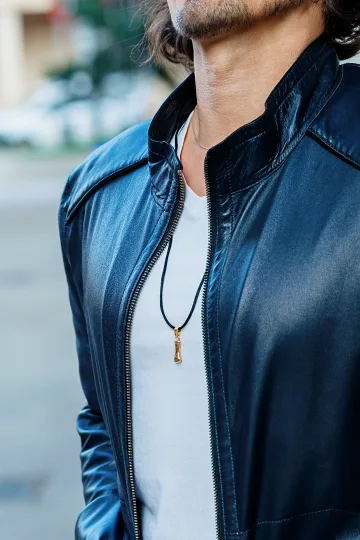
Plain fabric, or can it go over a print? Plain, and preferably dark. On black, navy, or wine, silver and gilded relief read well and all five figures are visible. A busy print swallows the small scene, and the image turns into an indistinct blot. When I put a look together, I choose a smooth, patternless top under the medal so the relief can do its work.
What length to take? The kind where the medal lies closer to the heart, not dangling low. Under a closed neckline I suggest a shorter chain, around 45 to 50 cm, so the image rests on the chest. Under an open neckline you can go a little longer, but not so long that the scene leaves the field of view. A medal is valuable for being recognisable, so I keep it where it can be seen.
On bare skin or over clothing? Both are appropriate. On bare skin near the collarbones the relief catches the light and reads best. Over a plain sweater or shirt the image sits evenly too. For anyone who prefers quiet, unshown wear, I recommend a cloth reliquary or a scapular, a sewn-in image under the clothing: it is not displayed but kept close as a personal holy thing.
What to pair it with? With a cross and a medal of a favorite saint, this is the familiar Catholic set, and there is no clash between them. The main thing is not to overload the neck with a cluster of pendants, so the five saints stay readable. One image on a clean chain is always stronger than one squeezed among five charms. With amulets from other traditions, the hamsa or the higa, I combine deliberately: these are things from different pictures of the world, and mixing them is worth doing with understanding.
And for a special occasion, a baptism or a wedding? For a celebration I choose gold or gilding with enamel; it echoes the festivity of the occasion. Such an image often goes as a keepsake gift for a baptism, a first communion, a wedding, and is then kept and passed down through the family. And a rule that never fails: treat the image with respect, as a holy thing rather than a fashion accessory, and then it will sit right in a look as well.

Turn on your camera, pick earrings, a pendant or a ring, and see the piece on yourself in real time.
Switch items in one tap.
Everything runs in your browser: no photo or video is ever uploaded.
The history of the image: from the Spanish Baroque to Mexican retablos
The All-Powerful Hand was born at the meeting point of theology, Baroque art, and folk piety. Its lineage is worth untangling thread by thread, to understand why the image turned out so unusual.
Spanish roots and the Holy Kinship
The ground for the image was laid in Catholic Spain, where the Sagrada Parentela, the Holy Kinship, the extended family of Christ, had long been venerated. Baroque painters loved to depict crowded scenes with Mary, Joseph, the Infant, Anne, Joachim, and other relatives. From this love of Christ's kin grew the idea of gathering the key five into a single compact sign. The hand as a "holder" of the figures was suggested both by the gesture of blessing and by the old symbolism of the palm as an image of power and protection.
Spanish devotion also gave the image its prayerful frame. Already on printed sheets and altar paintings the hand was accompanied by short appeals for help in need. From there runs its link to the idea of intercession: Spain cultivated the cult of intercessory saints for centuries, and the All-Powerful Hand became its most concentrated version, with five intercessors gathered at once on a single hand.
Mexico and Latin America: the folk print
The image reached its true flowering across the ocean, above all in Mexico. Spanish missionaries brought both the Holy Kinship and Baroque iconography here, and local folk piety took up the All-Powerful Hand and made it its own. In Mexico the image spread in thousands of cheap printed prints, found its way onto home altars, into botánica shops, onto medals and candles. Here, too, it earned its reputation as a swift helper in hopeless matters.
Across Latin America, from Mexico to Peru and Colombia, La Mano Poderosa entered the daily life of folk Catholicism. It was printed on prayer cards, cast in metal, painted on tin retablo thank-offerings. The image proved convenient precisely for its all-embracing reach: you did not have to choose which saint to approach with your trouble, since the chief ones were gathered on a single hand.
Retablos, prints, and cloth reliquaries
La Mano Poderosa lives in several material forms, and each has its own history. Retablos are small thank-offering paintings, most often on tin, which believers commissioned in gratitude for a granted request and left in a church or at a home altar. Prints (estampas) are printed images, cheap and mass-produced, tucked into prayer books, carried in a wallet, hung on a wall. Cloth reliquaries and small medals are already the wearable form, a tiny image on the chest.
Through these forms the image spread so widely. A costly retablo was commissioned by someone to whom an important thing had happened, whether a recovery or a rescue on the road. A penny print could be bought by anyone. A medal or cloth image was worn constantly, as personal protection. The very same All-Powerful Hand worked both as an altar image and as a pocket amulet, changing only its material and size.
Folk Catholicism and syncretism
In the folk Catholicism of Latin America the All-Powerful Hand at times stood side by side with local and imported traditions. In Afro-Caribbean practices, in Mexican household magic, in the stock of botánicas, the image sometimes landed in the same row as other "powerful" symbols of protection and luck. The official Church regarded such blendings with reserve, but did not forbid the image itself, since it depicts, in the end, the Holy Family.
This borderline life of the image explains its double reputation. For some, La Mano Poderosa is a deeply Christian sign, a prayer to the family of Christ folded into a picture. For others it is also a "powerful talisman" from the folk magical tradition, approached for urgent help in one's affairs. Both lines coexist to this day, and both rest on the one promise sewn into the name: the power of this hand is great.
The All-Powerful Hand in folk Catholicism today
Today La Mano Poderosa lives above all in the folk Catholicism of Latin America and Spanish-speaking communities. It is still printed on prayer cards, cast in medals, set on home altars. In Mexican and Central American families the image is handed down together with the story of granted requests, and those leaving home are given a pocket print or a small cloth medal for the road. The image has spread through the diasporas as well: it travelled with people into the cities of North America and Europe. Its double reputation has gone nowhere, for some it is a prayer to the family of Christ, for others a powerful folk amulet. The image's staying power rests on what it stood on for centuries: the promise of help from every side at once.
Customer reviews
Zevira is a real jewellery shop. Genuine payments, deliveries and customer thank-yous.
🥰🥰🥰 gracias
Ok, ¡gracias! 🙂
The meaning of the amulet: protection, help in need, family
The meaning of the All-Powerful Hand rests on three supports: swift help in trouble, the patronage of the family, and protection-as-blessing. All three grow from a single root, the image of the wounded palm of Christ surrounded by kin.
Help in a desperate situation
The first and chief role of the image is intercession in a hard moment. People traditionally turn to La Mano Poderosa when a matter seems hopeless: a grave illness, the threat of losing a home, discord in the family, a dangerous road. The logic is simple: the hand that endured the cross is stronger than any trouble, and the kin gathered on the fingers multiply the intercession. The one who prays is, as it were, knocking at five doors at once, asking the whole family of Christ to intercede for him.
It is this reputation as a "swift helper" that made the image so beloved by the people. Where individuals go to a single saint with a specialised request, they come to the All-Powerful Hand with trouble of any kind. It is felt to be a universal intercessor of last hope, approached when the usual means have run out.
Patronage of family and home
The second layer of meaning is family. The image is literally made of the family of Christ, so people come to it for harmony in the home, for the health of children, for the reconciliation of relatives, for help for childless couples. The presence of Anne and Joachim, who waited so long for a child, makes the All-Powerful Hand especially close to those who dream of children. Mary and Joseph answer for marriage and parenthood, the Infant for children.
In home devotion La Mano Poderosa often becomes a "family" image, one the whole household turns to. It is hung in the common room, set by the family altar, handed down through the generations. Such an image works as a visible reminder: behind every member of the family stands a whole line of loved ones and heavenly intercessors; no one is alone before trouble.
Protection and blessing
The third layer is protection and blessing. The raised open palm has been read since ancient times as a gesture of "stop evil" and, at the same time, as a gesture of blessing. The All-Powerful Hand unites both meanings: it both wards off trouble and blesses the one who prays. The wound in the palm adds to this the idea of a sacrificial love that covers over the person.
Unlike amulets that work by warding off, La Mano Poderosa protects through patronage. It does not frighten evil with a horn or a mirror; it covers the person with a blessing, the way a hand covers what it wants to keep safe. For a believer this is protection that is not magical but prayerful: it is not the object that drives away trouble, but the saints turned to through the image.
Prayer and the novena to the All-Powerful Hand
The meaning of the image is inseparable from prayer. People turn to La Mano Poderosa with short appeals such as "All-Powerful Hand, come to my aid," and pray a novena before it, a nine-day prayer with daily repetition. A novena is usually timed to an acute need: illness, a trial, an important decision, a long journey. Nine days is a stretch of concentrated request, during which a person returns to the image every day and keeps his matter in focus.
It is prayer practice that makes the image an "amulet" in the strict Catholic sense. The picture or medal is not endowed with power apart from faith; it only helps a person gather himself and turn to the family of Christ. So in the pious tradition the point is not to "charge" the object but to pray before it, and protection is understood as an answer to prayer, not as a property of metal or paper.
The All-Powerful Hand as an amulet: what that means
The word "amulet" beside the All-Powerful Hand calls for a caveat. In popular usage the image really is called a "powerful amulet" and worn as protection, but its meaning is not magical but prayerful. The All-Powerful Hand as an amulet means not a charged object that drives away trouble on its own, but a constant reminder to turn to the family of Christ for help. The one wearing the medal carries not a "luck charm" but a sign of faith and intercession. So in the pious tradition the point is that what protects is not the metal but the saints turned to through the image. In this the All-Powerful Hand differs from luck talismans: its power is understood as an answer to prayer, not as an object's power over fate.
The Hand of Power: why the image is called that
The All-Powerful Hand is called "the Hand of Power" because of the direct translation of the name: poderosa means "mighty, powerful." But this power is of a particular kind, it lies not in the palm itself but in the one to whom the hand belongs, and in the kin gathered on the fingers. The amulet's meaning as a "hand of power" rests on the image of a hand that endured the cross, and is therefore, by folk logic, stronger than any trouble. People turn to such a hand in the most desperate situation, when the usual means have run out. Hence its reputation as a swift helper in hopeless affairs. In calling the image the "Hand of Power," it is worth remembering that this is the power of intercession and prayer, not the power of a talisman over fate.
Upload a photo of your pet, someone you love, or an object. We'll build a 3D model and hand-cast it in pewter.
La Mano Poderosa as an image and as an amulet
It is worth separating two aspects of the All-Powerful Hand, because they are often confused here. There is the image, the depiction on an altar, a print, a retablo, which one addresses in prayer at home or in church. And there is the amulet, a worn medal or cloth reliquary that a person keeps on his person at all times. Both are the same La Mano Poderosa, but their role differs.
The image on a wall or at an altar is a point of prayer, a place people come to with a request, light a candle, pray a novena. It is tied to the home and addressed to the whole family. The worn amulet is the personal, always-with-you form of that same protection: a medal at the neck goes with a person on the road, at work, in the hospital. Folk tradition combines both forms without trouble: the altar image at home, the medal on the chest.
There is a third, in-between form as well, a pocket print or a small image in a wallet. This is neither jewellery nor an altar but a little prayerful companion, carried with one's documents and taken out in an anxious moment. In Latin American life such cards with the All-Powerful Hand are very common; they are given for the road, placed in the car, tucked into a letter to a loved one.
Materials: silver, gold, enamel, wood
The material of the All-Powerful Hand means a good deal: it determines the look, the purpose, and whether the image will be a worn amulet or a home altar object.
Silver and gold: medals
The metal Mano Poderosa is above all a medal for the neck. Silver 925 gives a sturdy, hypoallergenic, everyday option: such a medal is not afraid of wear, pairs easily with a chain, and lasts for years. A gold medal is a more solemn, gift-worthy choice, often for an important date such as a baptism or a wedding. Metal holds relief well, so the tiny figures on the fingers read even on a small medal.
Metal medals are convenient precisely as an everyday amulet. They are worn under clothing, close to the body, taken on a journey and into the hospital, handed down through the generations. Unlike a paper print, metal is not afraid of moisture or time, so a silver or gold medal often becomes a family heirloom passing from grandmother to grandchildren.
Enamel and colour print
A separate, large line is the coloured images: enamel on metal, print under glass, laminated cards. Colour carries meaning here, since each figure of the Holy Family has its own traditional garments: Mary's blue mantle, Joseph's green or brown robe, the Infant's light clothing. A coloured Mano Poderosa is closer in spirit to the folk print and is especially loved in Latin America.
Enamel and printed images are cheaper than metal reliefs and therefore more widespread. It was in this form that the image reached the homes of families of modest means, found its way into prayer books and wallets. A bright picture is easier to read; you can see at once who stands where, so coloured versions suit those just getting acquainted with the image.
Wood and retablo
The home, altar Mano Poderosa lives in wood and on painted tin. Carved wooden images and tin retablos are set by the family altar, hung on the wall, with a candle lit before them. Wood is warm and "homelike"; it suits an image the whole household turns to. The tin retablo is a distinct folk genre in its own right, the thank-offering painting for a granted request.
These forms are not worn on the body; they have other work, to be a constant point of prayer in the home. A large wooden or tin image sets a place people come to with trouble and with thanks. Candles, flowers, and notes with requests usually gather around it, and gradually it accrues a family history.
Cloth reliquaries, scapulars, and small medals
An in-between niche is held by the cloth and paper worn forms: cloth reliquaries, scapulars, sewn-in images. A scapular is two pieces of cloth bearing images, joined by cords and worn over the head, an old Catholic way of carrying a holy thing. A tiny print or medal is sewn into a cloth reliquary. Such forms are very light and are worn right against the body under clothing.
Worn cloth images come closest to the idea of a personal amulet. They are not jewellery, are rarely shown, and work quietly and constantly. For a believer this is a way to keep the image always at hand without putting it on display, just as one wears a baptismal cross. The material is secondary here; what matters is the habit of keeping a holy thing close to the body.
A Mano Poderosa medal: which to choose
If you need a worn image, a medal is most often the choice. When choosing, people look at three things: the metal, the size, and the readability of the scene. Silver 925 is convenient for everyday wear, being sturdy and unafraid of moisture; gold is taken for a gift on an important date. The size is chosen so the figures of the Holy Family stay distinct on the medal: too small an image blurs the five saints, and the scene loses its sense. It is good when the relief is crisp and the wound in the palm and Joseph's staff are visible without a magnifying glass. The chain length is taken so the medal lies closer to the heart. For quiet wear under clothing a modest image on a thin cord will do; for a gift, a more solemn gilded version.



Who it suits and to whom it is given
The short answer: the All-Powerful Hand is most fitting where Catholic tradition is alive, or where a person is drawn to the idea of family intercession.
For the family and the protection of the home
The chief recipient of the image is the family. La Mano Poderosa is given and hung as an amulet for the home, a patron of everyone living under one roof. It suits a housewarming, the birth of a child, a family anniversary. An image made of the family of Christ naturally reads as a wish for harmony, health, and protection for the whole household.
The image is especially fitting where a family is passing through a trial: the illness of a loved one, a move, a hard stretch. In such times the All-Powerful Hand is set in a prominent place and the whole household turns to it. It becomes a visible sign that the family holds together and asks for help as one.
In a hard time
The image is also given, on its own, to a person in a heavy stretch: before an operation, in a long illness, in a difficult lawsuit, in dangerous work. Here its reputation as a "swift helper in a hopeless matter" comes into play. A small medal or cloth reliquary is placed with the sick person, given for the road, tucked into a letter. The meaning of the gift is support: a loved one passes along, together with the image, his own prayer and care.
Such a gift is clear and fitting even outside deep religiosity, if the idea itself is close to the recipient. The All-Powerful Hand in a hard hour is a way of saying without words, "I am praying for you, you are not alone." For many it is precisely this, and not a literal belief in a miracle, that makes the image dear.
As a gift for a baptism and important dates
By Catholic tradition an image or medal of the All-Powerful Hand is fitting for a baptism, a first communion, a confirmation, a wedding. At a baptism it is given together with a cross as an amulet for the child at the threshold of life. A gold or silver image in this case becomes a keepsake, kept and passed on further. For godparents and relatives this is a familiar, "correct" gift, behind which stands a clear wish for protection and family patronage. The child grows up, but the image with the story of his baptism remains a family heirloom. Alongside the baptismal cross people often also give votive milagros images, tiny request-pendants for health. In Latin American and Spanish families such a gift is as natural as a baptismal cross is elsewhere.
Appropriateness outside the Catholic tradition
Can someone not very religious, or not from a Catholic culture, wear the All-Powerful Hand? Here it is worth being honest: this is first of all a Christian prayer image, not a neutral luck talisman. Wearing it as a pretty pendant with no relation to its meaning is possible, but it is more respectful to understand what is actually depicted, whose household has gathered on the fingers of the hand.
If the image is close to you as a symbol of family, intercession, and the bond between generations, there is nothing objectionable in wearing it, even if you are not a churchgoer. Catholic tradition does not treat La Mano Poderosa as a closed sign "for insiders only." But it is more fitting to approach it with the same respect one shows a cross or a saint's medal, rather than as a fashion accessory without content.
The All-Powerful Hand: its meaning as a gift
As a gift the All-Powerful Hand carries a clear message: "I wish protection for your family and I am praying for you." The meaning of the gift depends on the occasion. For a housewarming and the birth of a child the image is given as a patron of the home; for a baptism and a wedding, as an amulet at the threshold of a new life; in a hard stretch, as a sign of support and prayer. What is valuable here is not the cost of the thing but the wish placed within it: behind the person stands a whole family, earthly and heavenly. So even a modest image or cloth reliquary reads warmly if the giver explains what is depicted. Such a gift is fitting even outside deep religiosity, when the idea of family, intercession, and the bond between generations is close to the recipient.
La Mano Poderosa: who it suits and whether there are restrictions
Tradition sets no strict prohibitions on wearing the All-Powerful Hand: the image is open to anyone drawn to its idea. It suits families most of all, along with those passing through a trial and people to whom the thought of intercession and the bond between generations is dear. The one thing the pious tradition asks for is respect for the meaning. Wearing the wounded hand of Christ as an empty fashion pendant, without understanding whose household has gathered on the fingers, looks out of place. Giving the image to a person of another faith is worth doing tactfully, explaining that it is Christian and not a neutral talisman. No "pass" into churchgoing is needed for wearing it; what matters is only the care with which one treats a cross or a saint's medal.
Leave your email, we'll send your discount code. No spam, unsubscribe anytime.
The code arrives by email, valid on your first order.
The tradition of prayer and rite
The All-Powerful Hand cannot be understood apart from prayer. It is prayer practice, not the object itself, that fills the image with meaning in the eyes of a believer.
The novena to the All-Powerful Hand
The central practice is the novena, a nine-day prayer. People pray a novena to La Mano Poderosa in an acute need, repeating the same appeal every day for nine days running and keeping their request in mind. The nine refers to the Gospel nine days between the Ascension and the descent of the Holy Spirit, and in folk piety it marks a stretch of concentrated waiting. A novena is often begun at a turning point: before a trial, an operation, an important decision.
The texts of the novena vary, but the tone is one: an address to the wounded hand of Christ and to the family gathered on it, with a request for help and protection. A believer does not "work magic" but prays, and the nine days give a rhythm in which he returns each day to his matter and to the image. Even from a purely human side this works as a way not to abandon a hard task and to keep hope.
A prayer to La Mano Poderosa in one's own words
Not every prayer to the All-Powerful Hand is a long novena. In folk tradition people also address the image with short appeals in their own words: "All-Powerful Hand, come to my aid," "Holy Family, protect my home." Such a prayer is said before the image or medal when there is no time for the nine-day rite and help is needed now. The point is not the exact formula but the sincere turning to the wounded hand of Christ and the kin gathered on it. A believer does not "cast a spell" on the object but asks the saints for intercession. So a prayer in one's own words is as fitting as a memorised text: what matters is not the letter but the trust with which a person turns to the family of Christ in a hard moment.
The home altar
Many families keep the All-Powerful Hand on a home altar, a small corner with images, candles, and flowers. There the image becomes a constant point of prayer: a candle is lit before it, notes with requests are left, thanks is given for what has been granted. A home altar is a living centre of a family's devotion, and La Mano Poderosa on it answers for the "shared" troubles that touch everyone.
Caring for such a corner is itself part of the tradition. A fresh candle, a clean space, a short daily prayer keep up the family's bond with the image. In Latin American homes an altar with the All-Powerful Hand often stands beside photographs of the departed, and the image of Christ's family, as it were, takes the household's own earthly family into itself.
How the image is treated
In the pious tradition the image is treated with respect, as a holy thing rather than a luck charm. It is not tossed just anywhere; a worn-out print is not thrown in the trash but burned or brought to a church. A medal received by inheritance is kept and passed on, together with its story. It is this attitude that distinguishes a prayer image from a mere souvenir.
It matters, too, that protection here is not understood mechanically. A believer does not think the metal or paper wards off trouble on its own; the power is attributed to the saints turned to through the image. So the tradition has no "charging" or "activation" of an object, only prayer. This is a subtle but crucial distinction of La Mano Poderosa from magical talismans.
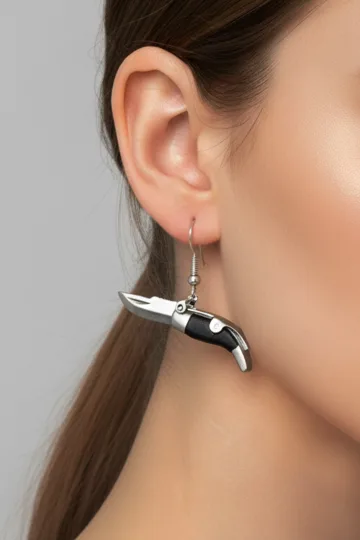
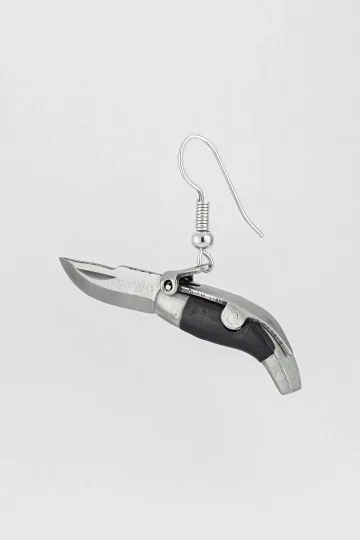
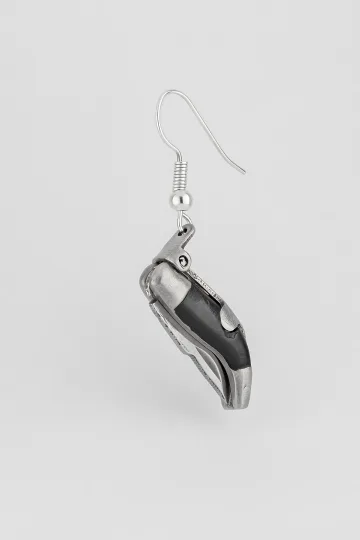
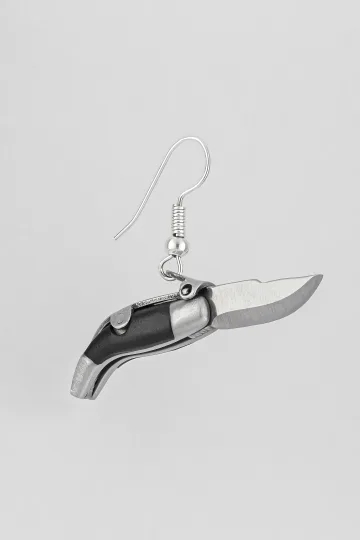
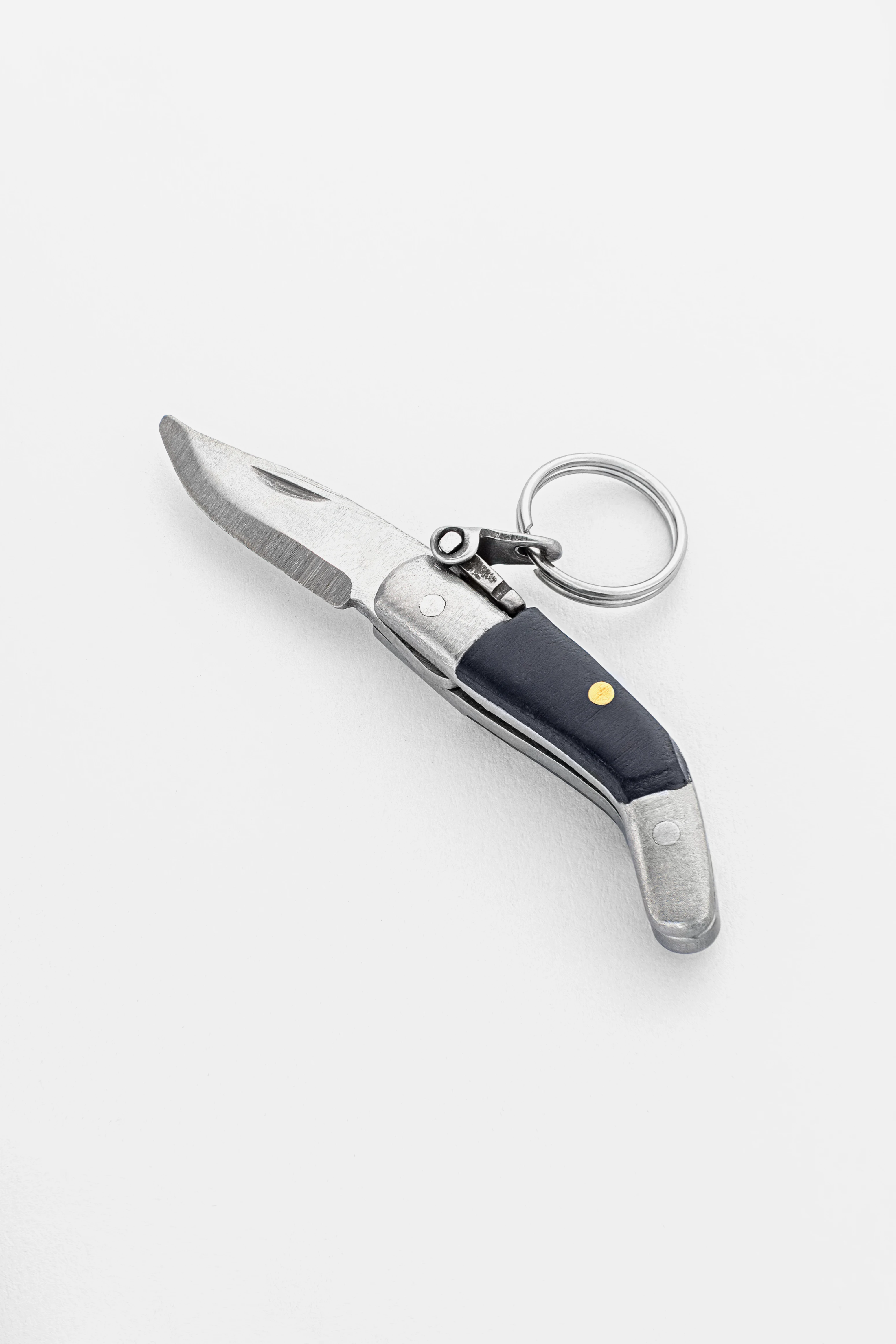
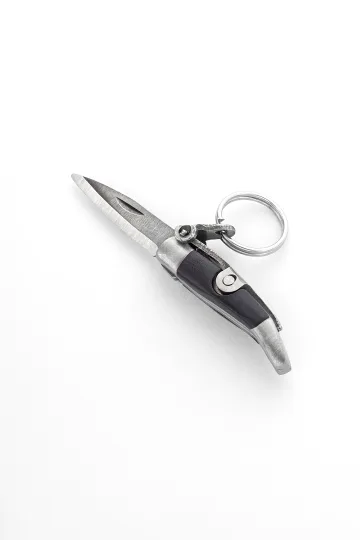
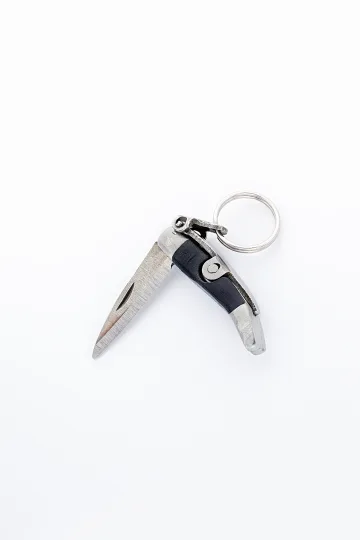
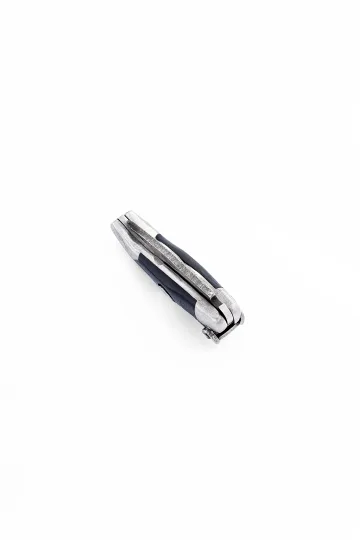
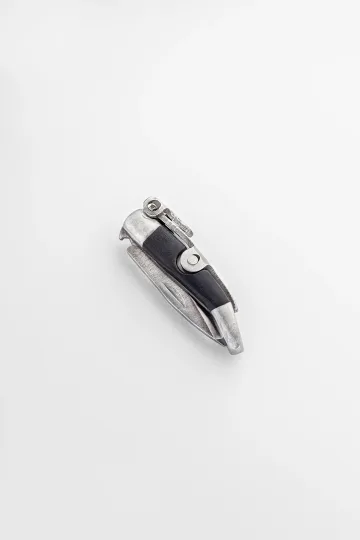
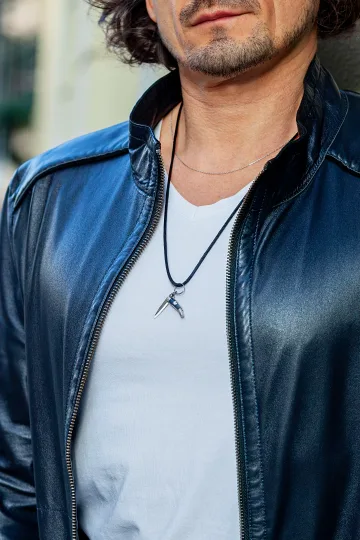
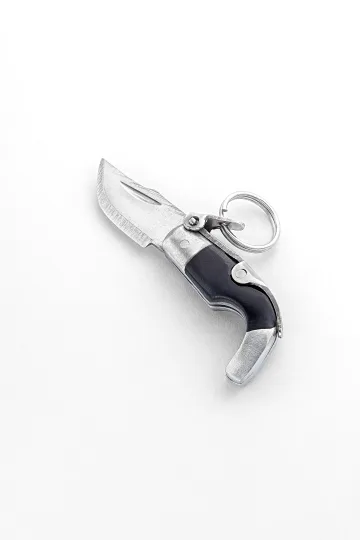
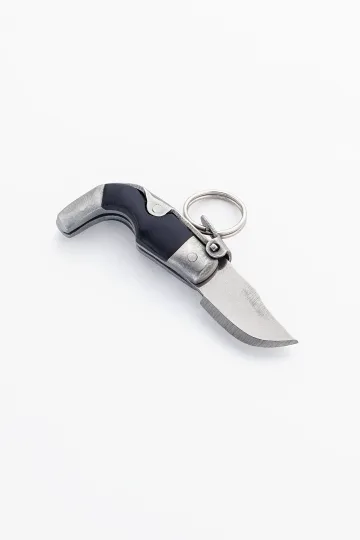
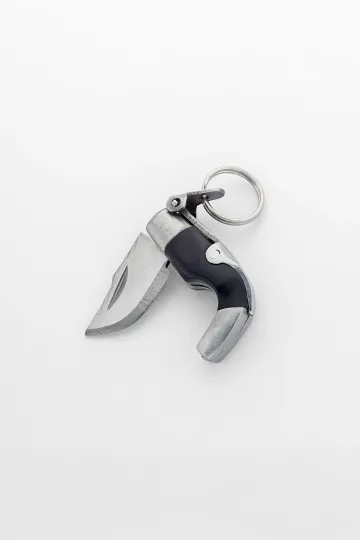
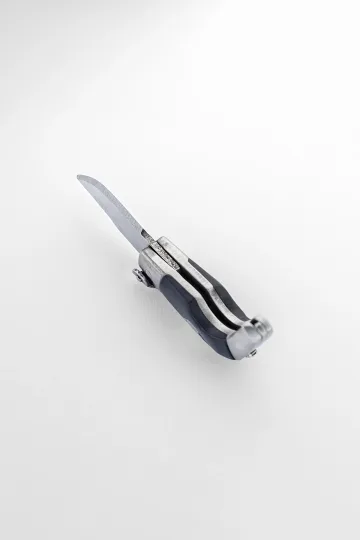
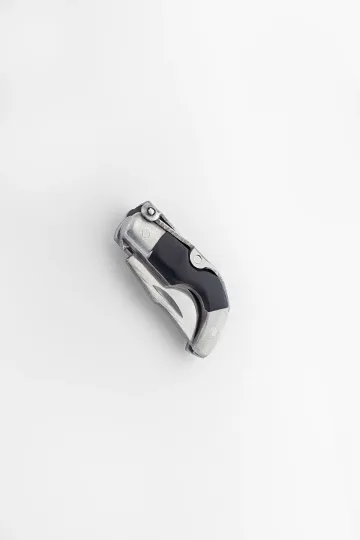
CAPAORA mini knife pendant
The 18th-century Spanish navaja in miniature: 40 mm of stainless steel, a real folding mechanism and a Palanquilla lock that clicks. An affordable gift to remember.
Authentic · Ships from Spain · 14-day returns
La Mano Poderosa, the hamsa, and the higa: what the difference is
The All-Powerful Hand is easy to mistake for other "hand" amulets, but their nature differs. Let us work out how the Catholic image differs from the Eastern hamsa, the Mediterranean higa, and the votive milagros.
La Mano Poderosa versus the hamsa
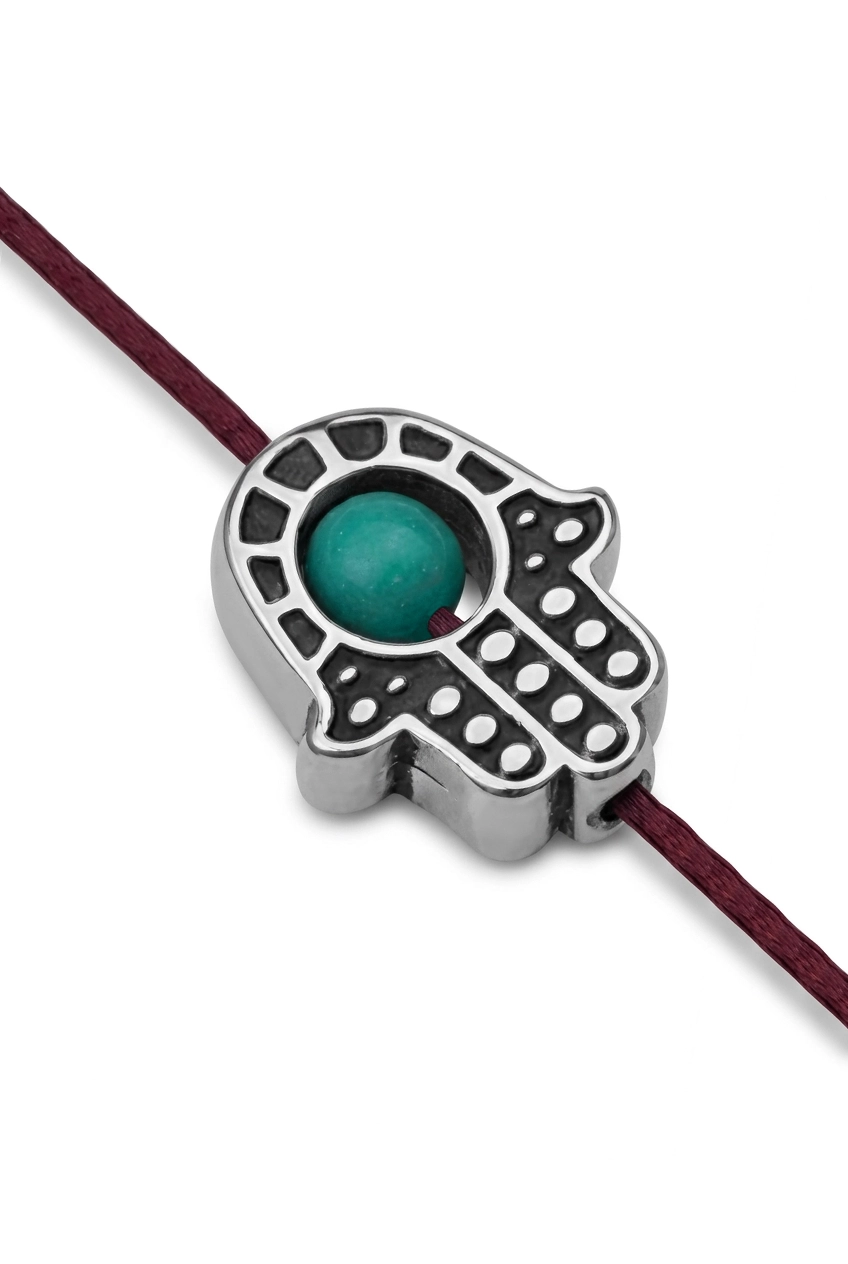
Both La Mano Poderosa and the hamsa are an open palm with five fingers, and here people confuse them most often. But their origin and meaning are opposite. The hamsa, the "Hand of Fatima" or "Hand of Miriam," comes from the Middle East and North Africa; it is an amulet of Islam and Judaism, guarding against the evil eye, often with an eye at the center of the palm. La Mano Poderosa is a Catholic Christian image, the hand of Christ with a wound and the Holy Family on the fingers, working through prayer and intercession rather than through deflecting the evil eye.
The difference shows in the details too. The hamsa's palm is usually symmetrical, with a mirrored thumb on both sides and an eye at the centre. The All-Powerful Hand is an anatomically "real" right hand, a wound in the palm, and tiny figures on the fingertips. An empty or "eyed" palm against a palm populated by five saints, two different pictures of the world on the shared form of a hand.
How to tell La Mano Poderosa from the hamsa by sight
Telling the two images apart is not hard once you know where to look. The hamsa's palm is more often symmetrical, with two identical thumbs at the sides, and at the centre there is frequently an open eye, a sign of protection from the evil eye. La Mano Poderosa's hand is anatomically real, usually the right one, with a single thumb, a nail wound in the middle of the palm, and tiny figures of saints on the fingertips. The hamsa is geometric and often patterned; the All-Powerful Hand is figurative and tells a family scene. One more clue is the caption: under the Catholic image there is often the inscription "La Mano Poderosa." See an eye at the centre, and you are looking at a hamsa; see five saints and a wound, and it is the All-Powerful Hand.
La Mano Poderosa versus the higa
The higa (figa) is a wholly different hand: a clenched fist with the thumb thrust between the index and middle fingers, the same "fig" gesture. The higa is Mediterranean and Latin American, and it guards against the evil eye by mocking evil with a bold gesture. La Mano Poderosa, on the contrary, is an open palm of blessing, turned toward heaven with a request rather than toward evil with a jeer.
Curiously, both "hands" live side by side in Latin America but do the opposite. The fist-higa crudely pushes trouble away; the open All-Powerful Hand gently asks for protection. One taunts evil, the other prays to the family of Christ. You can confuse them only by the word "hand"; in essence they are poles apart: a clenched-fist amulet against the evil eye and an open-palm prayer.
La Mano Poderosa versus the milagros
The milagros, tiny votive "miracle" pendants in the shape of a hand, a leg, a heart, also come from the Ibero-Catholic tradition, and they are often met alongside the All-Powerful Hand. But their role differs. A milagro is a votive sign-request: a person brings a figure of an ailing hand or leg to a saint's image, asking for healing of exactly that part of the body. La Mano Poderosa is itself the object of prayer, the image to which such requests are addressed.
In essence the milagros and the All-Powerful Hand work as a pair. To an image of La Mano Poderosa a believer may bring a milagro-hand, asking on behalf of a loved one's ailing hand. One is the addressee of the prayer, the other its material form. Understanding this difference helps you not confuse the "hand-image," to which one prays, with the "hand-milagro," which is brought as a request.
Can these signs be worn together? In a Catholic setting La Mano Poderosa and the milagros are combined without trouble; they come from one tradition. With the hamsa and the higa it is more complicated: these are amulets from other pictures of the world, and combining them with a Christian image is worth doing consciously. If the theme of protective symbols is close to you, take a look at the guide to evil-eye amulets and their differences.
Skepticism and faith: how to relate to the image
Around the All-Powerful Hand, as around any strong folk image, two views converge, and both deserve respect.
From the standpoint of faith, La Mano Poderosa is a concentrated prayer to the family of Christ. Its power, for a believer, lies not in metal and not in paper but in those the image addresses: in Mary the intercessor, in Joseph the patron of the home, in the grandmother and grandfather who waited so long for a child. Prayer before it gathers a person, gives him support and hope in a hard moment. This is not the magic of an object but an address to a heavenly family, and in this sense the image works exactly as any sincere prayer works.
From the standpoint of a sober observer the image has a quite earthly effect as well. It lowers anxiety: a person who "has someone to turn to" spins the worst scenarios in his head less. It holds focus: a nine-day novena keeps one from abandoning a hard task and giving up. It links the generations: an image received from a grandmother lifts up a whole chain of warm memories and the feeling that "a lineage stands behind me." None of these effects requires literally believing in a miracle to be of use.
A reasonable approach does not pit these views against each other. The believer sees in the image the intercession of the saints; the skeptic, a mechanism of calm and connection with family; and both are right in their own way. The one thing worth avoiding is reducing the All-Powerful Hand to a "luck talisman": that flattens both the faith and the history. The image is richer: behind it stand centuries of devotion, Baroque art, the family memory of whole peoples. Wearing it or praying before it makes sense when you know whose household has gathered on the fingers of the wounded hand.
Superstitions and myths around La Mano Poderosa
A good deal of lore has grown up around the All-Powerful Hand, and it is worth separating the tradition from the invention.
People often think La Mano Poderosa is a "magical luck talisman" that brings money and fortune on its own. In the pious tradition this is not so: the image is a prayer to the family of Christ, not a fortune charm. The idea of a "powerful talisman" came from the folk magical milieu and lives in parallel, but it is neither the chief nor the church view. The image is also confused with the hamsa, taken to be protection from the evil eye, though it works otherwise, through intercession rather than through deflecting the evil eye.
Another common misconception concerns the arrangement of the fingers: the notion that there is a single "correct" order of saints, and that an error in it strips the image of power. In fact there is no church canon here; the order wanders from workshop to workshop, and only the five of the Holy Family and the central role of the Infant stay constant. Finally, one meets the opinion that the image may be worn only by a deeply churchgoing person. Tradition is gentler: the All-Powerful Hand is open to anyone drawn to its idea; what matters is respect for the meaning, not a "pass" into the faith.
Send a friend a discount code, they save on their first order.
Facts that surprise
Even an image as familiar to many as the All-Powerful Hand holds the unexpected.
A whole family tree of Christ fits on five fingers. The Infant at the summit, the parents at the sides, the grandmother and grandfather on the lower fingers, three generations of a family gathered on a single hand.
The wound in the palm turns a "hand of fate" into the concrete hand of Christ. Without the stigma it would be a nameless hand with figures on it; it is precisely the nail mark that ties the image to the Gospel crucifixion.
The middle finger is given to the Infant not by seniority but by meaning. The highest point of the hand went to the child for whose sake the whole family gathered, not to the eldest of the saints.
The image has several names, and they all point to one thing. La Mano Poderosa, Mano Todopoderosa, La Poderosa, "the All-Powerful" and "the Almighty" Hand, these are variants of a single folk image.
Joachim and Anne on the lower fingers are the patrons of the childless. By tradition they waited a long time for a child and received Mary as a gift, so couples dreaming of children come to the edge of the hand where they stand.
The arrangement of the saints along the fingers is not fixed by canon. In different prints Joseph stands now on the thumb, now on the index finger, and Anne and Joachim swap places, and this is not counted an error.
The All-Powerful Hand was commissioned on tin as a thank-offering. Folk retablos, "thank-you" paintings for a granted request, were left at the altar, and from them today one reads the stories of strangers' troubles and rescues.
The image lives in two pictures of the world at once. For some it is a deeply Christian prayer to the family of Christ, for others a "powerful talisman" from folk magic, and both lines run back from the one name.
Frequently asked questions
What is La Mano Poderosa (the All-Powerful Hand)? It is a Catholic folk image and amulet: the right hand of Christ with a nail wound in the palm, and on the tips of the five fingers stand figures of the Holy Family: Joseph, Mary, the Infant Jesus, Anne, and Joachim. In Spanish La Mano Poderosa, "the Powerful Hand," or Mano Todopoderosa, "the Almighty." People turn to it for help in need and for the patronage of the family.
Who is depicted on the fingers of the hand? In the most common arrangement, on the thumb is Saint Joseph, on the index finger the Virgin Mary, on the middle finger, the tallest, the Infant Jesus, on the ring finger Saint Anne, and on the little finger Saint Joachim. This is the core of the Holy Kinship, the family of Christ. The order may vary in folk tradition; what stays constant is the five itself and the central role of the Infant.
How does La Mano Poderosa differ from the hamsa? These are two different hands. The hamsa, the "Hand of Fatima," comes from the Middle East, an amulet of Islam and Judaism against the evil eye, often with an eye at the centre of the palm. La Mano Poderosa is a Catholic image, the hand of Christ with a wound and the Holy Family on the fingers, working through prayer and intercession rather than through deflecting the evil eye.
How does one pray to the All-Powerful Hand? Most often with short appeals for help and with a nine-day novena, when the same prayer is repeated nine days running while keeping one's request in mind. A novena is prayed in an acute need: before an operation, a trial, an important decision, a long journey. The power is attributed not to the object but to the saints turned to through the image.
What are the image and medals made of? Worn amulets are more often of silver and gold; there are enamel and printed images in colour. Home altar images are made of wood and painted tin (retablo). The worn cloth forms are cloth reliquaries and scapulars with a sewn-in print. Metal is for everyday wear, wood and tin for the home, cloth for quiet wear under clothing.
Can I wear La Mano Poderosa if I am not Catholic? It is first of all a Christian prayer image, not a neutral luck talisman. You can wear it, but it is more respectful to understand what is depicted: the wounded hand of Christ and his family. If the idea of family, intercession, and the bond between generations is close to you, there is nothing objectionable in wearing it; what matters is to treat the image as carefully as you would a cross.
Can the All-Powerful Hand be given for a baptism? Yes, in Catholic tradition this is a familiar gift for a baptism, a first communion, a wedding. An image or medal is given together with a cross as an amulet at the child's entry into life. A silver or gold image often becomes a keepsake, kept and passed on further through the family.
Is it true that La Mano Poderosa brings luck and money? In the pious tradition, no: this is a prayer to the family of Christ, not a fortune charm. The reputation of a "powerful luck talisman" came from the folk magical milieu and lives in parallel, but it is not the church view. People come to the image for help in trouble and for the patronage of the family, not for luck in a lottery.
Conclusion
La Mano Poderosa travelled from the Spanish veneration of the Holy Kinship and Baroque altar paintings to the cheap Mexican print on a kitchen wall and the tiny silver medal on the chest. Materials and countries changed, but the intent held: to gather Christ's whole earthly family around his wounded hand and to hold that hand out to whoever is in trouble.
Whether you believe in the intercession of the saints or see in the image above all the memory of a family and the bond between generations, the All-Powerful Hand remains one of the most human signs of folk Catholicism. There is no threat or warding-off in it, only a request and a patronage: an open palm on which a whole family tree has found room, and a promise that in a hard moment a person is backed not by himself alone but by a whole family.
Images, medals, and amulets: the All-Powerful Hand, milagros, protective symbolism in silver, gold, and enamel.
Buying it as a gift? Each one arrives ready to give.
 A branded Zevira box and a little card come with every order.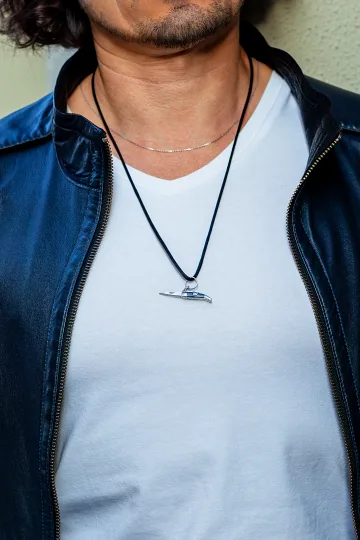




About Zevira
Zevira makes jewellery in the artisan traditions of Albacete, Spain. La Mano Poderosa is one of the images close to us: an Ibero-Catholic form, clear without words, where a whole family has gathered on the five fingers of a wounded hand. We reproduce the recognisable scene with a crisp rendering of the Holy Family's figures, but in modern materials and proportions suited to everyday wear.
What you can find with us on the theme of holy images and amulets:
- Medals of the All-Powerful Hand in silver and gilding
- Votive milagros pendants and saints' medals
- Symbolism of protection and family patronage
- Chains of various lengths and weaves for a medal of any size
- Leather and cloth cords for quiet everyday wear
Personal engraving available. Silver 925 and 14-18K gold.