A Stone Fell Out of Your Ring: What to Do, How to Fix It, and How Not to Lose Another
A stone almost never falls out suddenly
A stone almost never falls out suddenly. It works loose over months and quietly warns you: it shifts a little under your finger, snags on a sweater, darkens underneath, starts to click. The trouble is that these signals are easy to miss, and easy to wave away once noticed. Then one morning you find an empty socket where the stone used to sit.
The good news: in most cases the stone is not lost forever, the setting is not ruined, and the panic is unnecessary. The bad news: from here people usually make one of three mistakes. They keep wearing the ring with a loose stone and lose it for good. They reach for super glue and damage both the stone and the socket. Or they hide the ring in a drawer for years, because the idea of taking it to a jeweller feels scary and the cost feels unknowable.
Below, everything in order: why stones fall out at all, which settings hold better, how to catch a loose stone weeks before disaster, what to do the moment a stone is already out, whether you can fix it at home, what a jeweller can do, roughly what it costs, and how to keep it from happening again. A separate look at the difficult stones: cubic zirconia, opal, pearl. Plus a section of facts that genuinely surprise people.
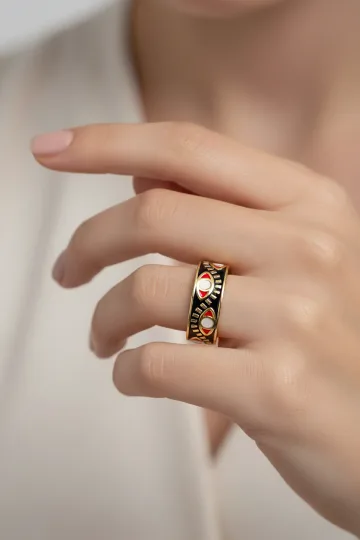
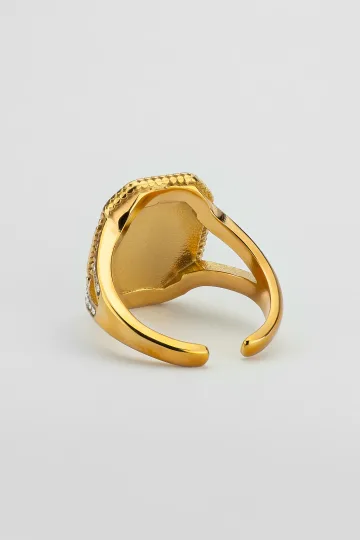
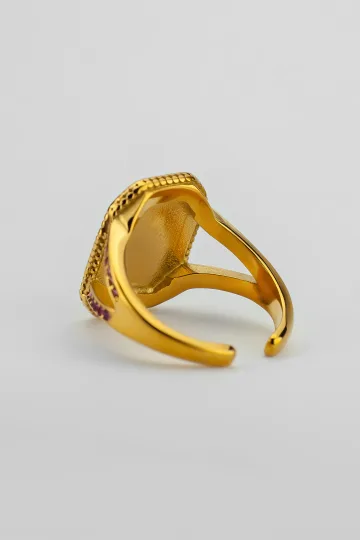
Wear the symbol, don't just read about it. These are in stock:





Why stones fall out of rings
A stone stays in a ring not by magic but by metal: prongs, a rim, the walls of a channel, or glue. All of that wears down. Understanding the cause helps you choose a ring that lasts and spot trouble before the socket empties.
Worn prongs and bent claws
This is reason number one. A prong, also called a claw, is a thin metal finger bent over the stone to hold it down from above. In gold and platinum these claws are soft. Over years of wear they rub against fabric, bag handles, keyboards, door frames, and the metal slowly thins. A claw that was once round and full becomes thin and sharp, then bends outward, then breaks off. Lose one of four prongs and the stone hangs on by little more than habit. Lose two and it drops at the first knock. On rings worn daily for more than five to seven years, thinned prongs are the norm, not the exception.
Impact and snagging
A sharp knock of the stone's edge or the setting against a hard surface bends a prong instantly. A door handle, the rim of a sink, the back of a chair, a dumbbell at the gym, a handrail on the train. High settings are especially vulnerable: the higher the stone sits above the finger, the longer the lever and the easier it is to catch. Snagging on a knitted sweater or on hair pulls the claw upward again and again until it tires. One hard knock can do in a second what wear needs years to achieve.
Temperature swings and thermal stress
Metal and stone expand differently when heated. If a ring keeps plunging into hot water and then stepping out into the cold, the socket breathes ever so slightly and the fit loosens. Temperature swings alone rarely knock a stone out, but they shake a setting that is already worn. This is its own concern for heat-sensitive stones: an opal can crack from an abrupt change between hot and cold while still in the socket, and a crack changes the fit at once.
Old dried glue in cabochons
Smooth, facetless stones, that is cabochons, along with pearl and many turquoise, opal, and amber inlays, often sit not on prongs but on glue in a closed socket. Glue does not last forever. Over years it dries, loses its flexibility, cracks from temperature changes and from contact with water, creams, and perfume. A cabochon that held rock-solid suddenly starts to turn in its socket, then simply drops into your palm. This is a classic scenario for inexpensive costume pieces and for old inherited items.
Wear of the setting itself and a thin socket
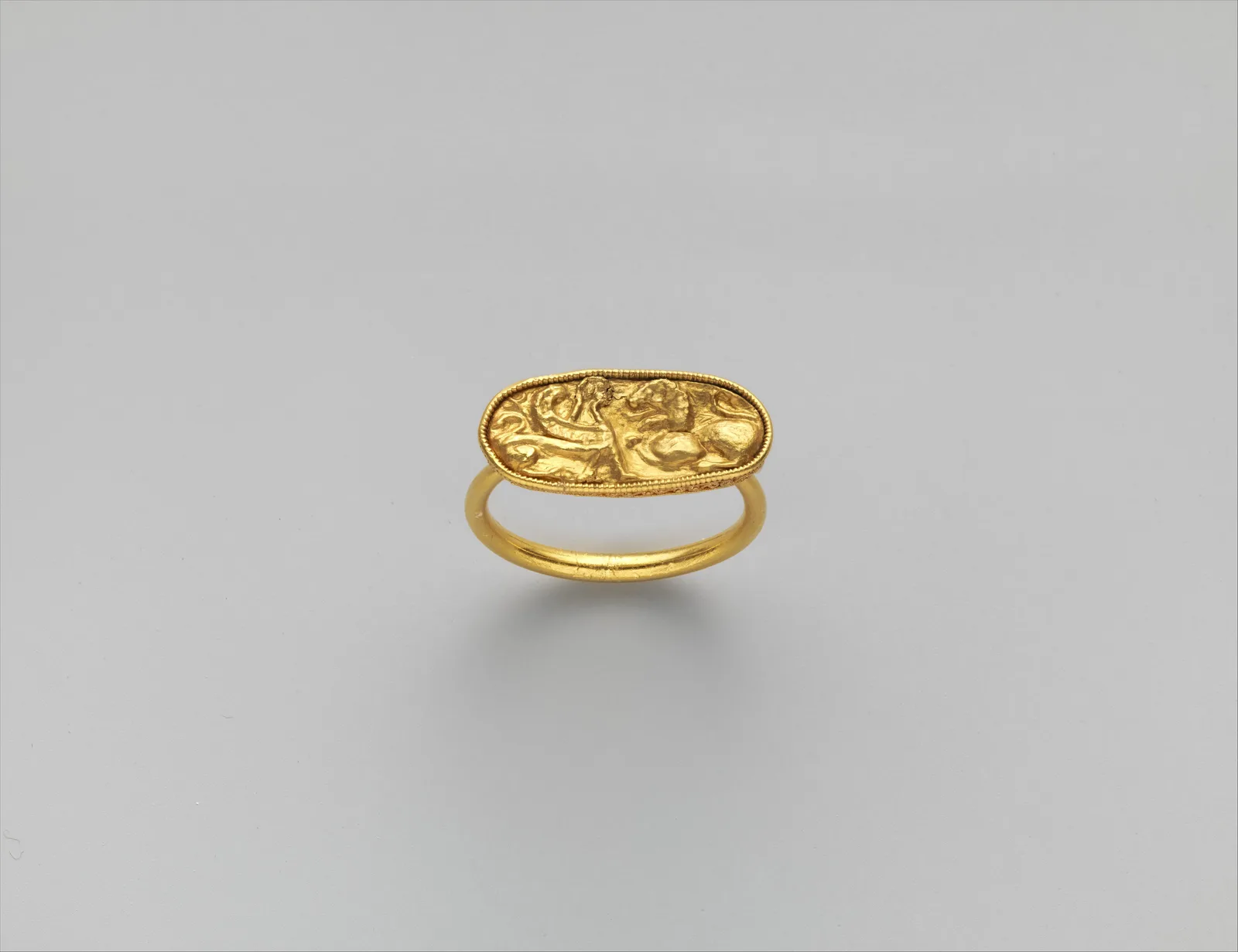
Sometimes the prongs are not to blame, the whole socket is. The thin band of a ring wears and deforms over time, especially along the bottom, where your finger presses against a desk or a steering wheel. A deformed band tilts the platform that holds the stone, and the fit fails. On bezel settings a thin rim can bend outward from a knock. On cheap pieces the socket is sometimes made of metal that is too soft or too thin to begin with, and the stone starts to wobble after a single season.
Hands busy all day? Bezel setting, no arguments. Prong sparkle lasts exactly until the first door handle.
Stylist's notes: how to choose a ring that won't lose its stone
Over years on shoots I have seen my share of empty settings, and I know this: half the losses are decided in the fitting room, at the moment you choose the ring. Here is what actually protects the stone, sorted by case.
Which ring should I buy if my hands are busy all day? For active hands I recommend a bezel setting: the metal wraps the stone on every side, so snagging or knocking it is almost impossible. I suggest saving the sparkle of prongs for pieces you put on for the occasion. For daily wear I choose a lower profile, so the ring does not knock its stone against door handles and keyboards.
How do I keep the sparkle but lower the risk of loss? If you want the sparkle of a prong setting, I suggest six prongs instead of four: you can lose one and five will still hold the stone. I recommend gold or platinum with rounded rather than sharp prong tips, and taking the ring to a jeweller once a year for a preventive tightening. That keeps the shine and keeps the setting in check.
Which stone gives the least trouble day to day? For wear without worry I choose hard, hardy stones in a secure setting: they forgive knocks and shrug off water. Opal, pearl and turquoise I suggest protecting and wearing by mood rather than every day, since they are soft, absorb cosmetics and sit on ageing glue. If those are the stones that pull at you, I recommend a protective bezel and a gentle routine.
How should I wear a ring so the setting lasts longer? I recommend taking the ring off before sport, cleaning and kneading dough: impact and chemistry age a setting faster than anything else. I suggest putting jewellery on last, after perfume and cream, and giving the removed ring one fixed spot so it does not end up down the sink. And do not step out into the frost with a ring that was just warming in hot water.
What should I check when choosing a ring in the shop? Right at the counter, nudge the stone with a fingernail: it should sit rock solid. I recommend checking that the prongs are even, matched and rounded at the tips, and that the setting is tight, with no gaps. I suggest asking about a warranty on the setting and free prong tightening, which serious sellers offer. And buy the ring in your exact size: a loose one knocks its stone against things and works the setting loose.

Turn on your camera, pick earrings, a pendant or a ring, and see the piece on yourself in real time.
Switch items in one tap.
Everything runs in your browser: no photo or video is ever uploaded.
Which settings hold better and where the risk lies
The type of setting decides how protected the stone is and how easily you can lose it. A full breakdown of every type lives in a separate article on ring setting types; here is the short version, focused on what matters for security and for losing a stone.
Prong setting: beautiful but exposed
The stone is held by claws, usually four or six. Light passes through the stone from every side, so it sparkles most of all. The price for that brilliance: the claws are open on all sides, they wear, bend, and break. Six prongs are safer than four, since you can lose one and keep the stone. This is the most common setting for engagement rings and the most frequent reason people visit a jeweller about a wobbling stone.
Bezel, also called rim setting: the safest
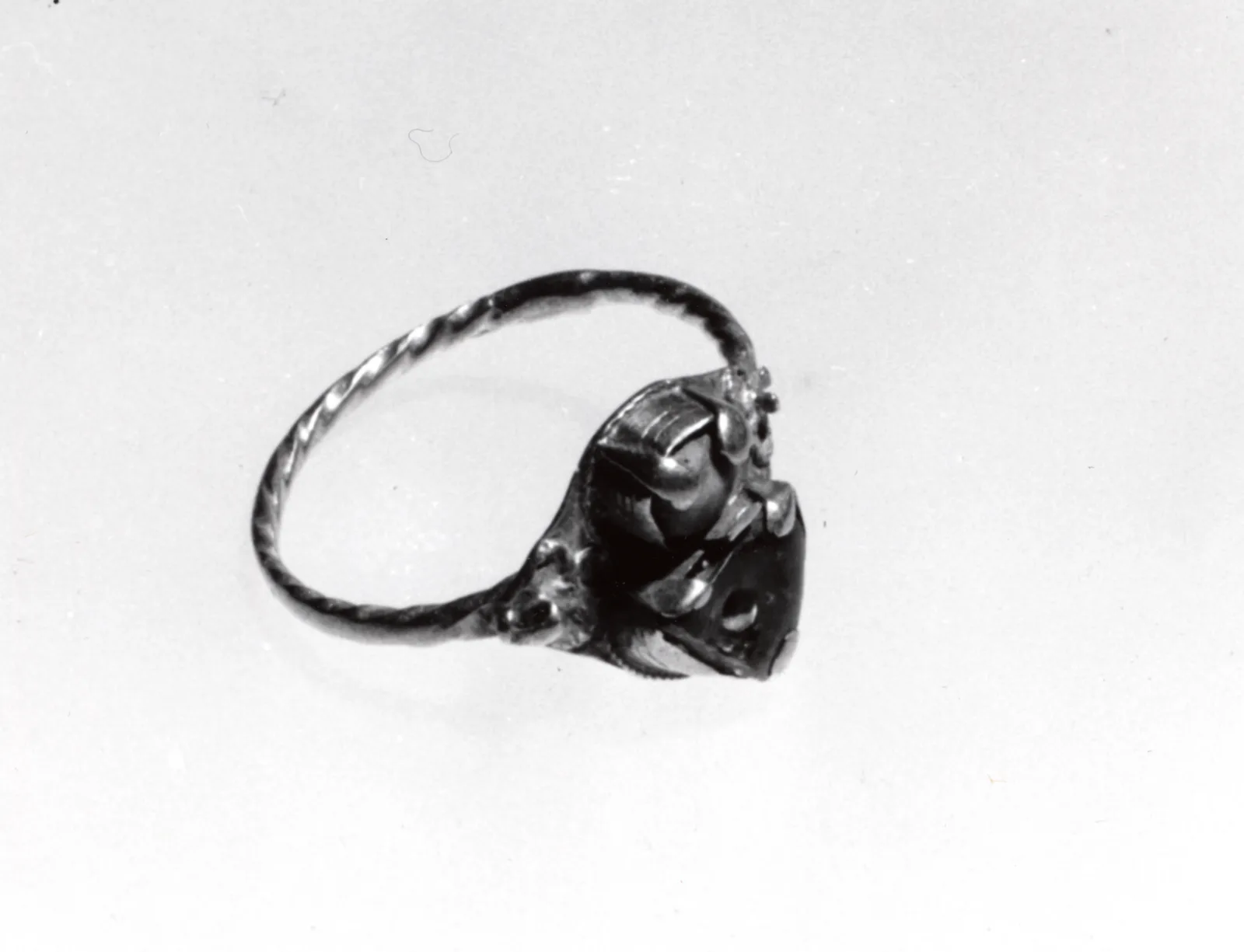
A solid metal rim hugs the stone on every side, like a frame around a photograph. There is nothing to snag, the stone is almost impossible to strike, and edge protection is at its highest. The cost is less sparkle: the rim covers part of the stone and blocks light from the sides. For active hands, sport, and work with the hands, this is the best choice. A stone rarely falls from a sound bezel setting.
Pavé: many small risks at once
Dozens of tiny stones sit in the surface of the metal, held by miniature beads of metal raised from it. The effect looks like a solid sparkling path. Each little stone on its own is small and inexpensive, but it also clings to microscopic grips. From a knock or from wear, individual stones drop out of pavé regularly, and it happens almost unnoticed until you spot the empty pit. The losses themselves are small, but frequent.
Channel setting: strong but treacherous when deformed
Stones are lined up in a row between two metal walls, or rails, with no claws. The construction is sturdy, there is nothing to catch on, and the line looks clean. The weak point: if the ring is deformed, say while trying to pull off a stuck band or from a heavy blow, the channel walls spread apart and the stones spill out all at once. That is why a deformed ring with a channel setting must never be straightened by hand.
Glue setting: where the main risk hides
A cabochon, a pearl, or a flat stone is set on jeweller's glue in a closed socket or onto a post. The method is justified for stones that cannot be gripped with claws and for pearls on a post. The main risk has already been named: glue ages and lets the stone go. Glued settings need checking and refreshing more often than the rest, especially if the piece often meets water and cosmetics.
How to tell a stone has worked loose
A stone warns you in advance; you only need to know how to hear the signal. These checks take a minute and save the stone weeks before it would have dropped out.
It shifts under your finger
The most direct sign. Hold the ring up to your ear, press lightly on the stone with a fingernail, and try to rock it in different directions. A securely set stone is motionless, as if poured in place. If it rocks even slightly, sinks, or lifts on one edge, the fit has loosened. Any movement of the stone is a reason to stop wearing the ring and show it to a master.
It rings and clicks
A loose stone in its socket makes a faint, dry sound when your hand moves or when you tap it lightly with a nail. Jewellers call this the ring or rattle of the stone. If the piece answers with a thin rattle when shaken or tapped, the stone, or its pavé neighbours, are sitting loose.
It catches on everything
If the ring has suddenly started to snag on sweater threads, tights, and hair, when it used to glide smoothly, a claw has bent upward and is sticking out with a sharp edge. A bent claw is both a sign of wear and the cause of further snags that will finish off the fit. A ring that catches needs checking immediately.
It has darkened under the stone
Look under the stone against the light. A dark patch, a gray film, or dirt collected in the socket means moisture and dust are getting under the stone, which happens once the fit is no longer tight. A clear stone that once sparkled and now looks dimmed from within is often simply dirty underneath, but sometimes a dark socket is a trace of a failing setting. Regular cleaning of your jewelry at home also helps you notice such changes.
The thread and breath tests
Two home tests that jewellers use and that anyone can do. The thread test: run a fine silk thread or dental floss around the base of each prong. If the thread catches, the claw has thinned or bent and formed a hook. The breath test, for checking cracks in the stone itself: breathe on the stone so it fogs up and watch how the moisture clears. Fogging that lingers along one line longer than across the rest of the surface betrays a crack, and a crack near the edge changes the fit. Do both checks every few months.
Customer reviews
Zevira is a real jewellery shop. Genuine payments, deliveries and customer thank-yous.
🥰🥰🥰 gracias
Ok, ¡gracias! 🙂
What to do right now if the stone has fallen out
Acting in the right order matters more than acting fast. A few calm steps will save both the stone and the setting.
Take off the ring and stop wearing it
First, take the ring off your finger. An empty, sharp socket scratches the neighbouring fingers and catches on everything, and if another loose stone remains in the setting, more wear will finish it off too. Put the ring in a separate soft pouch or small box, not in the shared jewellery box, where it will rub against other pieces.
Keep the fallen stone safe and separate
If the stone is in your hand, that is the best outcome: setting the original stone back is always cheaper and better than finding a replacement. Put it in a small box, a lens case, a matchbox, or wrap it in a tissue and tuck it somewhere it will not roll away or end up in the wash. Do not carry the stone in a pocket and do not leave it on the edge of a sink: that is exactly how an already rescued stone gets lost. Do not try to slip it straight back into the socket, or it may fall out and roll off again.
Find the stone on the floor if it flew off
If the stone has dropped and vanished, do not move sharply and do not sweep. A detailed look at searching follows in its own section below. The key rule for the moment: stop, so you do not step on the stone by accident and send it under the baseboard.
Do not reach for the super glue
The temptation to glue the stone back right now is strong, especially if you need to wear the ring this evening. Do not do it. Exactly why is covered below, but in short: household glue ruins both the stone and the setting, and the jeweller's repair then costs more. Better to arrive at your appointment without the ring than with a ruined one.
If the stone falls out on the road or at work
Away from home, the main thing is not to lose the stone you have already rescued. Wrap it in a tissue and tuck it into an inner zip pocket, a wallet, or a headphone case, anywhere it will not lie loose and fall out again. Take the ring off and put it there too. Do not try the stone back in its socket on a train or over a sink: that is where it is most often lost for good. If the stone flew off in a crowded place and finding it is hopeless, do not blame yourself: keep the ring, the receipt, and any photos, and a master will match a replacement from them. Photograph the empty socket right away, while you still remember how the stone sat; it will help with the match.
Upload a photo of your pet, someone you love, or an object. We'll build a 3D model and hand-cast it in pewter.



Can you glue the stone in at home, and why it is better not to
Everyone asks the question, and the answer is almost always the same: a home repair creates more problems than it solves.
How super glue harms the stone and the setting
Household cyanoacrylate, that same super glue, releases fumes as it cures that leave a whitish matte film on the stone, especially visible on the facets of clear stones and on the polished surface of cabochons. This film bites in, and removing it without re-polishing is often impossible. Glue seeps into microcracks and under facets, changes how the stone looks, and porous stones such as turquoise, opal, and pearl simply soak it up and are ruined for good. On metal the glue leaves marks and clogs the socket, and the jeweller then has to clean all of it out with solvent before making a proper setting.
Why a glued fix does not hold
A stone in a ring must be held mechanically: by claws, a rim, or walls. Glue is not built for constant loads, knocks, and contact with water, soap, and creams. A home repair falls off within weeks and the stone drops out again, now most likely for good, because the owner gets used to the ring being mended and stops watching it. You will spend an evening, get a ruined stone, and end up back where you started, only worse.
The one home action that is justified
If the stone fell from a closed socket where it used to sit on glue, and you know for certain it is inexpensive costume jewellery of no value, you can manage for a while with a special jeweller's glue for stones, sold separately, not the first tube you grab. But for any valuable, inherited, or simply cherished ring, a home repair is out of the question. Better to spend money on a master than to lose the stone for good.
What a jeweller can do
A jeweller solves almost any problem with a fallen or loose stone, and it is often faster and cheaper than it looks from the outside.
Tighten the prongs and rebuild the claws
If the claws have simply bent or loosened, the master carefully presses them back with special pliers, and the stone sits like new again. If a claw has thinned or broken off, the jeweller builds it up, adding metal and reshaping the claw. This is a basic, inexpensive operation. A preventive tightening of the prongs on all your rings once a year is what extends the life of any piece with stones.
Replace or re-set the setting
When the socket is worn out entirely, deformed, or made of metal that is too soft, the jeweller replaces the setting itself: fitting a new one, sometimes sturdier than before. A stone in an open prong setting can be moved into a closed bezel if you want to forget about wobbling once and for all. This is a sensible upgrade for active hands and for stones you would hate to lose.
Match a stone if it is lost
If the original stone is not found, the master will match a replacement by size, cut shape, and colour. For clear colourless stones the match is almost invisible. For coloured stones a close shade is chosen, and here an honest conversation with the jeweller matters most: you can set a natural stone, a lab-grown one, or a more affordable equivalent. The master will also check the other stones in the piece and secure any that have begun to wobble, so you do not return with the same trouble in a month.
What to bring to the jeweller
Gather everything related to the ring: the piece itself, the fallen stone if you saved it, the receipt, the warranty card, and the stone's certificate if there was one. A certificate with the cut and size details makes matching a replacement much easier, and a warranty may make the repair free. If the stone is lost, photos of the ring before the loss are useful, especially close-ups: from them the master matches size and shade more precisely. Do not wash or aggressively clean the ring before the visit, so you do not dislodge any remaining loose stones; a wipe with a soft cloth is enough.




Roughly what the repair costs
Exact figures depend on the city, the workshop, the metal, and the stone, so we will speak in segments rather than numbers.
Minor repair: the price of a coffee or a lunch
Tightening bent claws or snugging up one stone is the cheapest service, comparable to a couple of coffees or an inexpensive lunch for two. It is often done while you wait, in a few minutes. If the ring was bought recently and the problem is a factory fault in the setting, the warranty may cover it entirely.
Mid-range repair: the price of dinner out
Building up a broken claw, replacing one setting, or setting a new inexpensive stone in place of a lost one runs about the cost of a good dinner for two at a restaurant. Securing several loose pavé stones in a single visit falls here too.
Serious repair: the price of a weekend, or matching a stone
A full setting replacement, a switch to a different setting type, or matching a valuable coloured stone to replace a lost one is already at the level of a short weekend away or a small trip, and for rare natural stones there is essentially no upper limit: the stone can cost more than all the rest of the repair combined. That is why finding and keeping the original stone is almost always cheaper than any replacement.
Leave your email, we'll send your discount code. No spam, unsubscribe anytime.
The code arrives by email, valid on your first order.
Can you swap the stone for a different or a lab-grown one
Losing a stone is sometimes a chance to restore the ring and improve it at the same time.
Swapping for a larger or different stone
The socket is sized for a particular stone, but a jeweller can rework it or fit a new setting for a stone of a different size or even a different cut. So a loss turns into a refreshed ring. The same solution suits you if you fell out of love with the original stone long ago: a repair is a convenient moment to swap it for one that feels closer now.
A lab-grown stone as a sensible replacement
Lab-grown stones are indistinguishable from natural ones in composition and appearance, yet cost noticeably less at the same clarity and size. For replacing a lost diamond this is especially practical: you can set a lab-grown stone that is larger and cleaner than the natural one was, for the same money. The difference between natural and lab-grown, with the pros and the fine print, is covered in the article on moissanite versus the lab-grown diamond. For heirloom rings, where the stone's own history matters, people choose to restore the original; for practical everyday pieces, a lab-grown stone is the justified call.
When it makes sense to redesign the ring entirely
If the setting is worn, the stone is lost, and the ring itself is dear as a keepsake, it is sometimes wiser not to patch but to rebuild the piece around the surviving stones. How to turn an inherited item into something current without losing its meaning is covered in the article on redesigning a grandmother's ring.
How to find a lost stone at home
A small stone rarely flies far, and the odds of finding it are better than they feel in the first minute of panic.
Freeze and check yourself
First, check yourself: a stone often lodges in clothing, in a cuff, in a rolled-up sleeve, in a shoe, or in your hair. Carefully inspect your palm and fingers, your sleeve, your hem, and the folds of clothing above where you were standing. Only then move to the floor, going slowly so you do not step on it.
Search by sparkle and low to the floor
A faceted stone catches the light, so look for it under bright, directed light: shine your phone flashlight low along the floor at a sharp angle, and the stone will flash. Get down to floor level and look along the surface rather than from above. Check the gaps between tiles, the seams of parquet, the baseboards, the legs of furniture, and the carpet along its pile. Stones roll under furniture and toward walls.
Vacuum with a stocking, and a magnet for the metal
A proven trick: pull a nylon stocking or thin cloth over the vacuum nozzle, fix it with a rubber band, and go over the floor and carpet. The stone sticks to the cloth instead of flying into the bag. Then lift the cloth over a light sheet and pick through what you collected. If you lost the ring itself or a metal part, a magnet helps, though it is indifferent to gold, silver, and most stones. After cleaning, do not throw out the vacuum bag until you have found the stone: tip its contents onto a white cloth and sift through them.
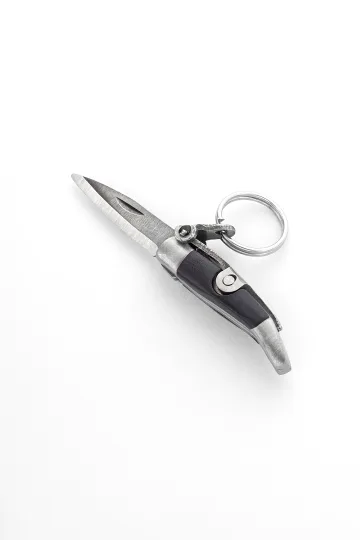
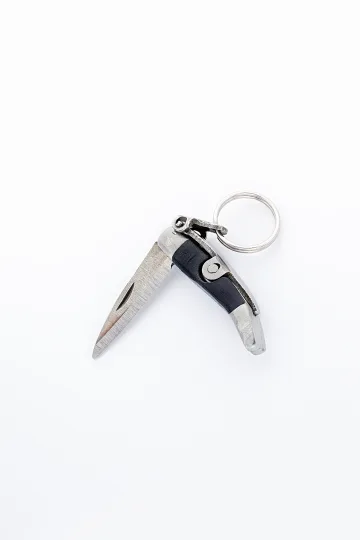
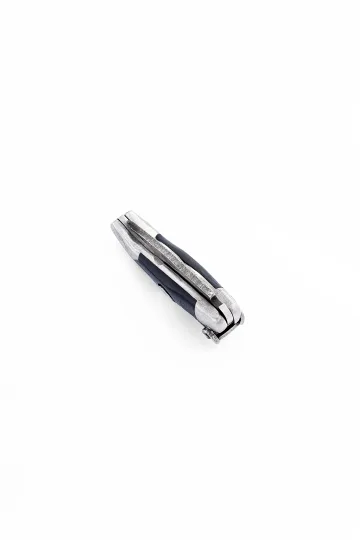
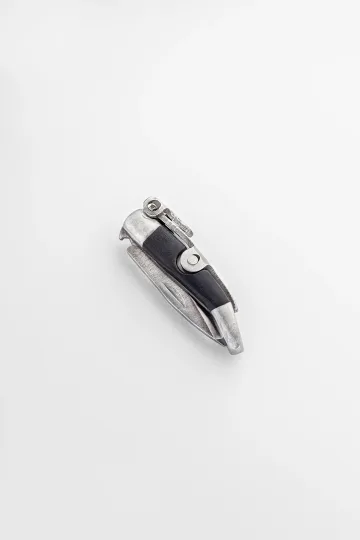
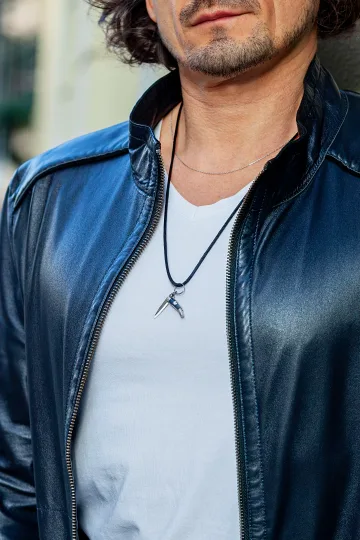
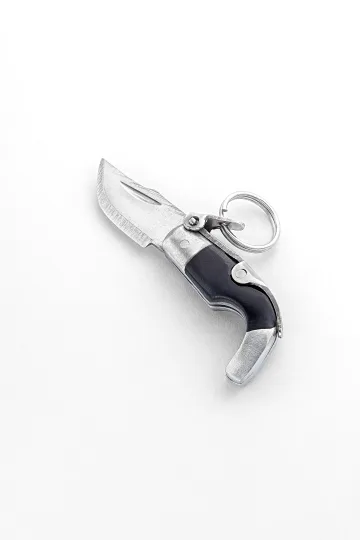
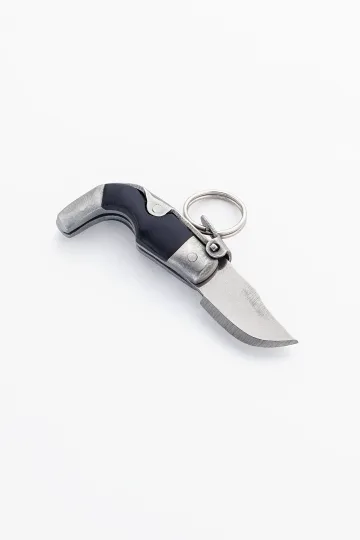
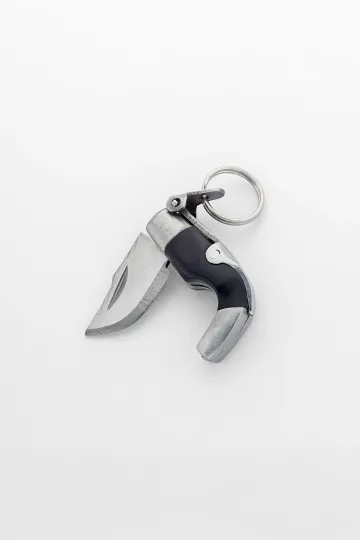
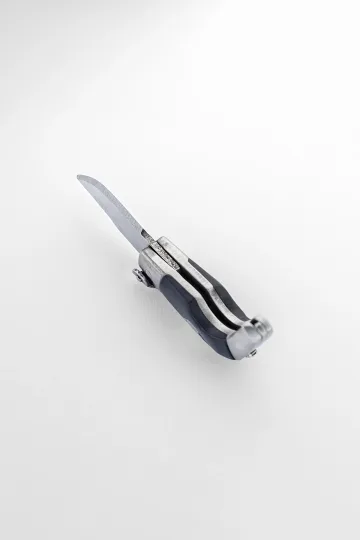
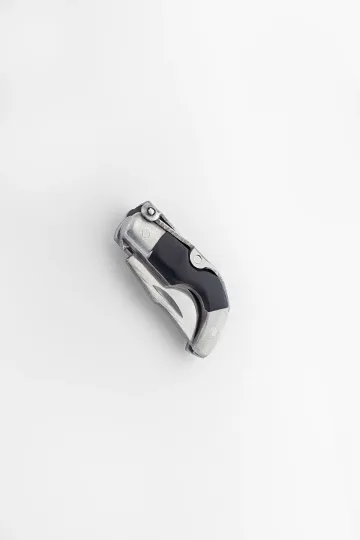
CAPAORA mini knife pendant
The 18th-century Spanish navaja in miniature: 40 mm of stainless steel, a real folding mechanism and a Palanquilla lock that clicks. An affordable gift to remember.
Authentic · Ships from Spain · 14-day returns
Prevention: how to stop losing stones
Stones do not fall out for the unlucky; they fall out for those who never check the ring. A few habits cut the risk almost to zero.
Take the ring off for sport and cleaning
The main enemies of a setting are knocks and chemistry. Take rings off before the gym, before lifting weights, before any work with the hands, before cleaning with household chemicals, before washing dishes, before kneading dough. Pool chlorine and cleaning products corrode the metal of the claws and age the glue. Give the ring a permanent spot so that, once removed, it does not get lost or slip by accident into the sink.
Check the fit every six months
Twice a year, spend a minute on the test: rock each stone with a nail, run a thread around the prongs, inspect the ring against the light. Once a year, show your pieces with stones to a jeweller for a preventive prong tightening and a clean. It is cheaper than any repair and beyond comparison cheaper than losing the stone. Many workshops do this check for free, counting on future repairs.
Do not wear rings in frost and heat
Sharp temperature swings loosen the fit and are dangerous for fragile stones. Do not step out into hard frost with a ring that was just in hot water, do not hold ringed hands under a very hot stream, and do not leave jewellery in the sun in a car or by the stove. Stone and metal expand differently, and the thermal swings slowly shake the socket loose, while an opal or a pearl can suffer at once.
Treat high settings and pavé rings with care
If you have a ring with a high-set stone or a scatter of pavé, treat it as dressy rather than everyday. A high stone is easier to catch; small pavé stones drop out unnoticed. For daily wear it is sensible to have a ring in a secure bezel setting and to put the dressy high-set piece on for the occasion.
Clean the ring gently and without force
Rough cleaning harms the setting no less than knocks do. Stiff brushes and toothpicks bend thin claws, and ultrasonic baths shake out already loose stones and are dangerous for opal, emerald, pearl, and any glued settings. Warm water with a drop of mild soap and a soft brush every couple of weeks is enough, after which the ring is wiped dry. During this cleaning, inspect the socket and claws as you go: the dirt collected under the stone is the very signal that the fit is no longer tight.
Cubic zirconia, opal, pearl: the quirks of setting
Different stones behave differently in the socket, and the difficult ones need separate attention.
Cubic zirconia and why it falls out more often
Cubic zirconia, an inexpensive and pretty imitator, is often set in cheap thin claws or simply on glue in costume jewellery. That is why it falls out of inexpensive pieces most of all: the issue is the budget setting, not the stone. Cubic zirconia itself is hard and stable, and set properly it holds as well as any other. A lost piece of cubic zirconia is easy and cheap to replace, so there is no need to dramatize the loss, but the fit on cubic zirconia jewellery should be checked more often.
Opal: fragile and sensitive to temperature
Opal is soft, fragile, and afraid of an abrupt change between hot and cold, as well as of drying out: it contains water and can crack. Because of that fragility, opal is almost always set in a protective bezel, often as a cabochon on glue, since gripping it with claws is dangerous for the stone. The main dangers for opal are impact, temperature swings, and aging glue. An opal ring is best worn carefully, taken off in water and in the cold, with the fit checked regularly, because the glued base ages.
Pearl: on a post and on glue
Pearl is almost never held by claws: they would damage its soft nacreous surface. A pearl is set on a post in a drilled hole and fixed with a special glue. This glue dries over time, especially from contact with perfume, hairspray, and sweat, and the pearl starts to turn, then slips off the post. Pearl fears cosmetics and acids, so it goes on last and comes off first. A pearl that has slipped off can almost always be returned to its post by a master, if it is intact. Caring for sensitive inlays such as enamel and soft stones is much the same: less water, less chemistry, fewer knocks.
Insurance and checking quality at purchase
The best repair is the one you never needed, and the best protection against losing a stone is built in at the moment of purchase.
What to check before you pay
Before buying a ring with a stone, inspect the setting: the claws should be even, matched, with rounded rather than sharp tips, and fit snugly to the stone with no gaps. Rock the stone with a nail right there in the shop; it should sit rock-solid. For daily wear, choose a secure setting and a fit that is not too high. Ask about a warranty on the setting and about a free check and prong tightening: serious sellers offer this. By the way, so the ring does not wobble and knock the stone against things, it must fit your hand precisely, and how to find your ring size is covered separately.
Warranty, certificate, and insurance
For valuable rings it makes sense to take out insurance against the loss or damage of the stone and to keep the stone's certificate with its details: it will help with repairs, with matching a replacement, and with an insurance claim. Keep the receipt and the warranty card. If the setting fails in the first year, that is a warranty case and the repair should be free. Make a habit of bringing valuable rings in for an annual check; many jewellers log these visits, and regular servicing is sometimes a condition of keeping the warranty.
How insurance covers the loss of a stone
If the ring is insured, when a stone is lost keep everything that confirms its existence and value: the certificate, the receipt, photos, an appraisal. The insurer usually covers either the repair with a matched, equivalent stone, or the appraised value of the lost one. The more detail the documents give about the stone, the easier it is to get fair compensation, so the certificate for a valuable stone is worth keeping separate from the ring itself. Without papers it can be hard to prove that the socket held a genuinely valuable natural stone rather than an imitation, one more reason to photograph valuable jewellery right after purchase.
Send a friend a discount code, they save on their first order.
Facts that surprise
A few things about fallen stones that surprise even people who have worn rings for years.
Stones are most often lost in bed
A loose claw often pushes the stone out in sleep of all times: the hand rubs against pillow and blanket all night, the load is constant, and the sleeper feels nothing. That is why a jeweller's first thought when a stone goes missing is the advice to shake out the bedding and search the bed. Many people find their diamond between the sheet and the mattress.
Six prongs are safer than four, and not for looks
It seems the number of prongs is a matter of style, but it is about safety: with six prongs you can lose one painlessly, the stone is held by the other five. With four, losing one already half-collapses the setting. That is why, for stones you would hate to lose, masters advise six prongs or a bezel.
A stone rarely costs less than the price of losing it
The paradox: people go years without bringing a ring in for a repair that costs about a lunch, then lose a stone worth dozens of times that repair. A preventive prong tightening is the best-value insurance in the world of jewellery: a trifling service that protects a stone whose price can rival a car's.
Porous stones drink your perfume
Opal, turquoise, and pearl soak up water, oils, perfume, and sweat, and that changes their look and the fit alongside it: the glue beneath them ages faster precisely from the chemistry. The old rule of putting jewellery on last, after perfume and cream, was born not from etiquette but from care for the stones and their settings.
A fallen stone is sometimes better than the old one
Replacing a lost diamond with a lab-grown equivalent often yields a stone that is larger and cleaner for the same money. It happens that a loss turns into an upgrade, and the owner later admits the new one is liked more than the old.
Frequently asked questions
The stone wobbles but still holds. Can I wear the ring until I get to a jeweller? No. A wobbling stone is a stone halfway out. Every day of wear brings the loss closer, especially in sleep and during work with the hands. Take the ring off, put it in a separate pouch, and do not wear it until it is repaired. Tightening the claws takes a master minutes.
The stone fell out and I saved it. Can the original go back in? Yes, and it is the best option. The original stone is always cheaper and better to set back than to find a replacement. Do not try to do it at home: give the master both the stone and the ring, and they will rebuild the claws or the socket and secure the stone reliably.
Can I glue the stone with super glue at least for one evening? Better not. The glue fumes leave a whitish film on the stone that cannot be removed later, the glue seeps under the facets and into the socket, and it ruins porous stones for good. Such a fix will not hold anyway. Arriving for the evening without the ring is safer than ruining the stone and the setting.
How much does it cost to set a fallen stone back in? If the stone is saved and only the claws need tightening, it is the cheapest service, comparable to a couple of coffees. Building up a broken claw or fitting a new setting costs more, about a dinner out. The most expensive part is matching a valuable stone to replace a lost one, which is why the original stone is worth protecting.
Small stones keep falling out of my costume jewellery. Is that normal? In inexpensive pieces the stones often sit in thin claws or on glue, so they fall out more often. It is a matter of the budget setting, not the quality of the stone. If a piece is dear as a keepsake, it makes sense to give it to a jeweller for a proper re-setting; otherwise it is easier to take such losses calmly.
I lost a stone and cannot find it. What do I do first? Freeze, do not sweep, and do not move sharply. Check your clothing, sleeves, shoes, and hair. Then shine a flashlight low along the floor: a faceted stone will flash. Go over the area with a vacuum with a stocking on the nozzle. Most often the stone is nearby, including in the bed and in the folds of clothing.
Can I replace a lost diamond with a lab-grown one? Yes, it is a practical solution. A lab-grown stone is indistinguishable from a natural one in look and composition, yet costs less, so for the same money people often set a larger, cleaner stone. For heirloom rings, where history matters, the original is usually restored; for everyday pieces, a lab-grown equivalent is justified.
How often should I check the ring so the stone does not fall out? Check the fit yourself every six months: rock the stone with a nail, run a thread around the prongs, look against the light. Once a year, show your pieces with stones to a jeweller for a preventive prong tightening. It is cheaper than any repair and reliably protects the stones.
The short version
A stone does not fall out suddenly; it works loose over months and gives signals: it shifts, catches, rings, darkens underneath. Hearing them is a matter of a minute-long check every six months. If the stone is already out, take off the ring, keep the stone separate, do not glue it at home, and bring it to a jeweller: most often the original goes back in, and the repair costs less than it seems. The difficult ones, opal, pearl, and glued settings, need extra care, and the best protection is built in at purchase: a secure setting, a precise size, a warranty, and the habit of taking the ring off wherever the hands are at work.
Rings with secure settings, coloured and lab-grown stones, silver and warm metals, symbols with a history.
Buying it as a gift? Each one arrives ready to give.
 A branded Zevira box and a little card come with every order.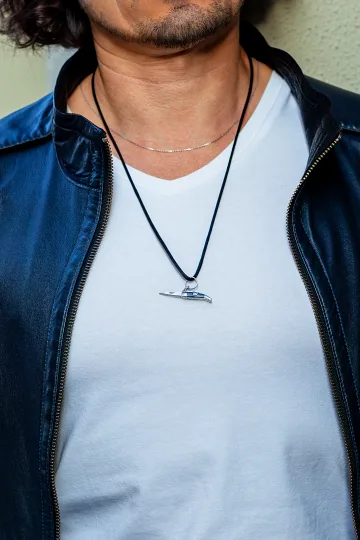




About Zevira
Zevira is a Spanish brand from Albacete, a city of metalworkers. We make jewelry meant to be worn every day, so a secure stone setting is not a small thing for us but a promise. If you are choosing a ring with a stone, start with the breakdown of ring setting types, and before you buy, find your ring size.