The Wheel of Fortune in Tarot: Meaning, Symbolism and Jewellery of Arcanum X
A redundancy notice, an unexpected inheritance, a chance meeting that rerouted a whole career. The biggest turns in a life almost never appear in the plan. They are not earned and not chosen: they simply happen.
That is exactly what Arcanum X describes. Not bad luck, not good luck. Not a reward for merit, not a punishment for mistakes. The wheel turns, and your position on it changes regardless of what the passenger intends. It was at the top, now it is at the bottom. It was at the bottom, now it climbs. The question is not whether you deserved the turn. The question is what you do while it happens.
In this guide we take the Wheel of Fortune apart from every side: the history from the medieval Rota Fortunae to the Thoth deck, every symbol on the Waite card, the archetype of cyclicity and the uncontrollable, the link to Jupiter and to Kabbalah. And above all: which pieces of jewellery work with this theme, and why the horseshoe, the ouroboros, the hourglass and the labyrinth carry a meaning that resonates directly with Arcanum X.
Place in the system: the centre of the Major Arcana
A tarot deck holds 78 cards, of which 22 belong to the Major Arcana. They are numbered from 0 (the Fool) to 21 (the World). The Wheel of Fortune sits in the tenth position, and that is no accidental seat.
Split the 22 Major Arcana into two halves and an interesting picture appears. The first eleven cards, from the Fool (0) through the Wheel of Fortune (10) inclusive, are traditionally tied to the outer world: here is the Magician with his tools, the High Priestess with hidden knowledge, the Empress and the Emperor with power, the Lovers with choice, the Chariot with the victory of willpower, Justice with her scales. These are arcana of action, authority and event.
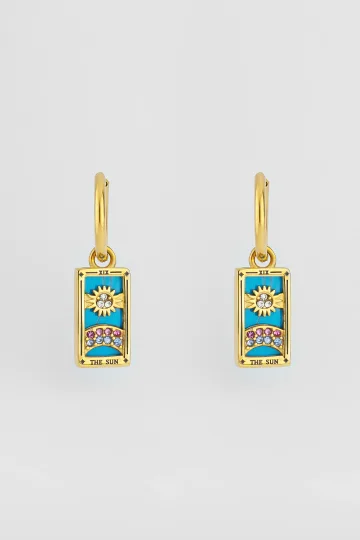
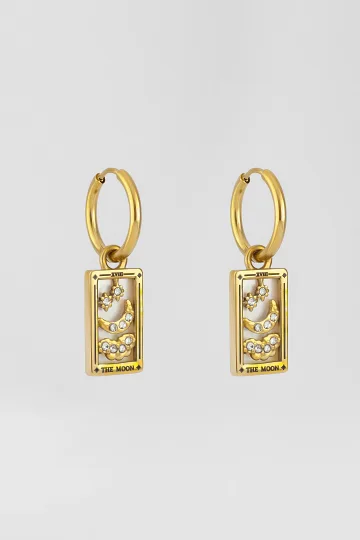
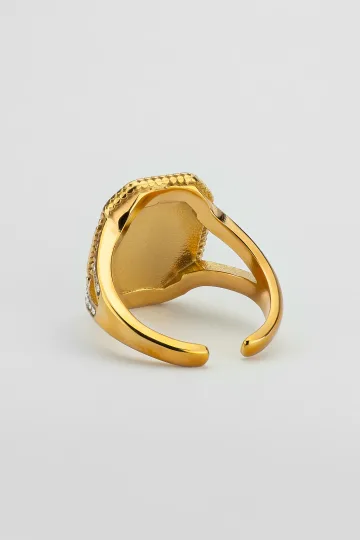
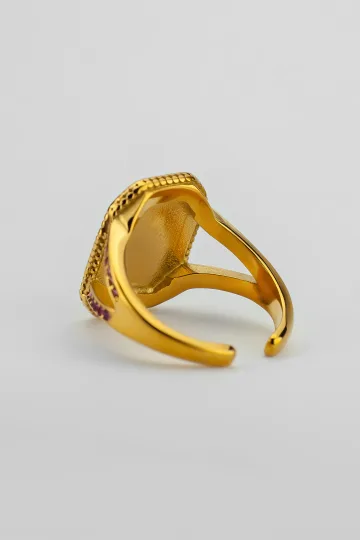
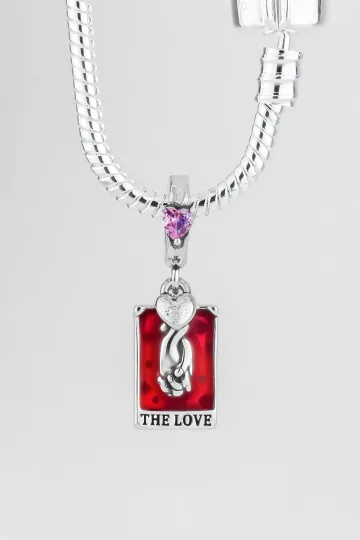
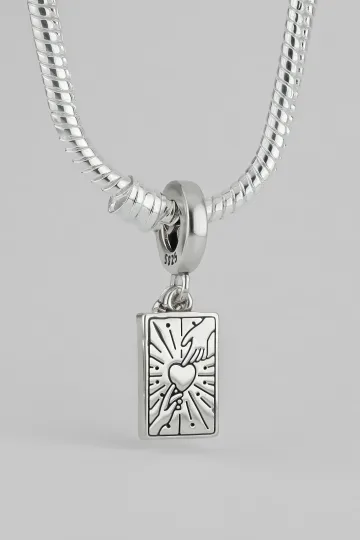
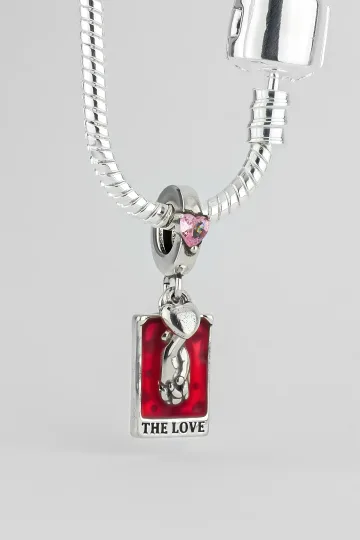
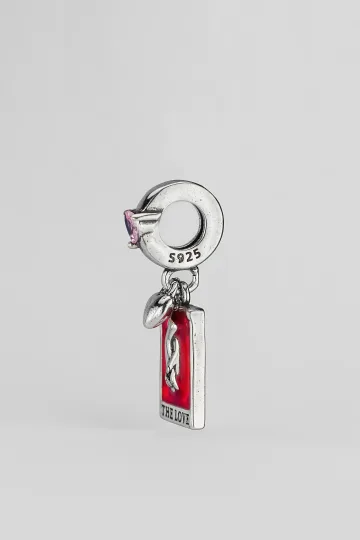
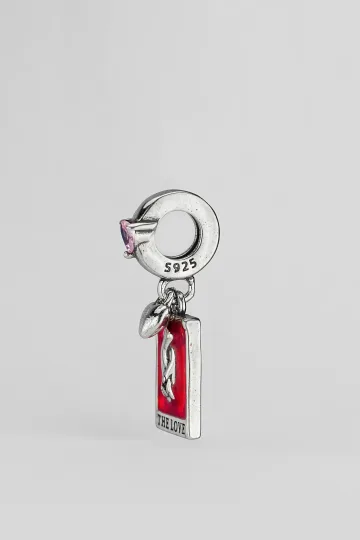
Wear the symbol, don't just read about it. These are in stock:




From Arcanum XI (Strength or Justice, depending on the tradition) onward, the theme moves inward: the Hermit, the Hanged Man, Death, Temperance, the Tower, the Star, the Moon with its zone of the unclear and illusory, the Sun, Judgement, the World. These are cards of transformation, the inner road, acceptance.
The Wheel of Fortune stands right on the seam. It is at once the last card of the first half and the point of crossing into the second. It is the hinge of meaning for the whole system: the outer world gives way to the inner, and that handover happens precisely through the image of the uncontrolled turn. You cannot steer the Wheel. You can only decide how to relate to it.
In the tradition of the Fool's journey through all the arcana, the tenth card marks the moment when the hero meets a circumstance that does not depend on his will. Until then he learned from the Magician how to wield the tools of will, gathered wisdom from the High Priestess, lived through the crisis of the Tower. Now something external and independent arrives. Fate spins the wheel.
The ten in tarot numerology also reads as 1+0=1. The one means the start of a new cycle. The Wheel carries the road forward, launching a fresh turn. This is a card where the old cycle closes and the next one begins.
History: from the Rota Fortunae to the Thoth deck
Boethius and the Consolation of Philosophy: the hinge of the medieval mind
The image of the wheel of fate existed in European culture long before tarot. Its main source in the medieval tradition is the Latin treatise by Boethius, "De consolatione philosophiae" (The Consolation of Philosophy), written around 524 AD.
Boethius was no abstract philosopher. Anicius Manlius Severinus Boethius held the office of consul, advised the Ostrogothic king Theodoric, and was reckoned one of the most learned men of his age: he translated Plato and Aristotle, he wrote treatises on mathematics and music. In 523 he was accused of treason and imprisoned at Pavia. He knew an execution was coming. He wrote the book while waiting for it.
That very circumstance is what makes the Consolation so persuasive. Boethius stood at the lowest point of the Wheel, and what he wrote was not a complaint but a philosophical dialogue. In the text the lady Philosophy appears to him and unfolds an argument about the nature of Fortune. In one of the most quoted passages Fortune speaks in the first person: "This is my art, this is the game I never stop playing. I turn the wheel that spins. I delight to see the high come down and the low rise up."
The core of the Boethian argument: the man himself made the mistake of staking his happiness on something that is by nature inconstant. Fortune breaks no contract, because inconstancy is precisely her nature. The true good lies within, not without. The wheel turns, and that is normal.
The book became one of the most widely read texts of the Middle Ages, alongside the Bible and the writings of the Church Fathers. Alfred the Great translated it into Old English. Dante quoted Boethius in the Divine Comedy. Chaucer rendered him for an English audience. Jean de Meun folded his ideas into the Roman de la Rose. The image of the Rota Fortunae entered the visual arts: cathedrals preserve twelfth and thirteenth century windows where the wheel is shown literally, with kings rising, reaching the top, falling, lying at the base, then rising again.
The Consolation was written by a man standing at the bottom of the Wheel. That is exactly why its arguments hold. He does not say "this too shall pass" as empty comfort. He says: Fortune is like this by her nature. You yourself chose to bet your happiness on her. That is your error, not hers.
The Wheel of Fortune in Gothic architecture: cathedral roses
Between the eleventh and fourteenth centuries the Rota Fortunae moved from books into stone. The Gothic cathedrals of France carry it within them quite literally.
The vast rose windows in the western façades of those cathedrals, wheels of stone spokes filled with stained glass, were read by contemporaries as Wheels of Fortune. This is not a metaphor after the fact: in the sermons and theological texts of the period the link was named directly. The wheel stood for the cyclicity of the worldly, the view from heavenly height down onto the churning of human fates.
Chartres Cathedral (twelfth and thirteenth centuries) holds three celebrated rose windows. Inside the cathedral there is also a direct depiction of the Wheel: one of its chapels preserves a window where Fortune literally turns a wheel crowded with human figures, the classic medieval Rota Fortunae. Four figures sit along the rim: one rising on the left with the word "regno" (I reign), one crowned at the top with "regnavi" (I have reigned), one falling on the right with "regnabo" (I shall reign), one lying at the bottom with "sum sine regno" (I am without a kingdom). The whole cycle is read in a single glance.
The Basilica of Saint-Denis near Paris, the first Gothic cathedral and royal burial place, also used circular structures in its glazing. Abbot Suger, who created this architecture in the twelfth century, wrote directly about symbols of light and their theological meaning.
When Waite and Smith placed the wheel in the sky in 1909, they were continuing the same tradition. A heavenly wheel, out of reach from the ground, ripe for contemplation but not for control.
Visconti: the first playing decks
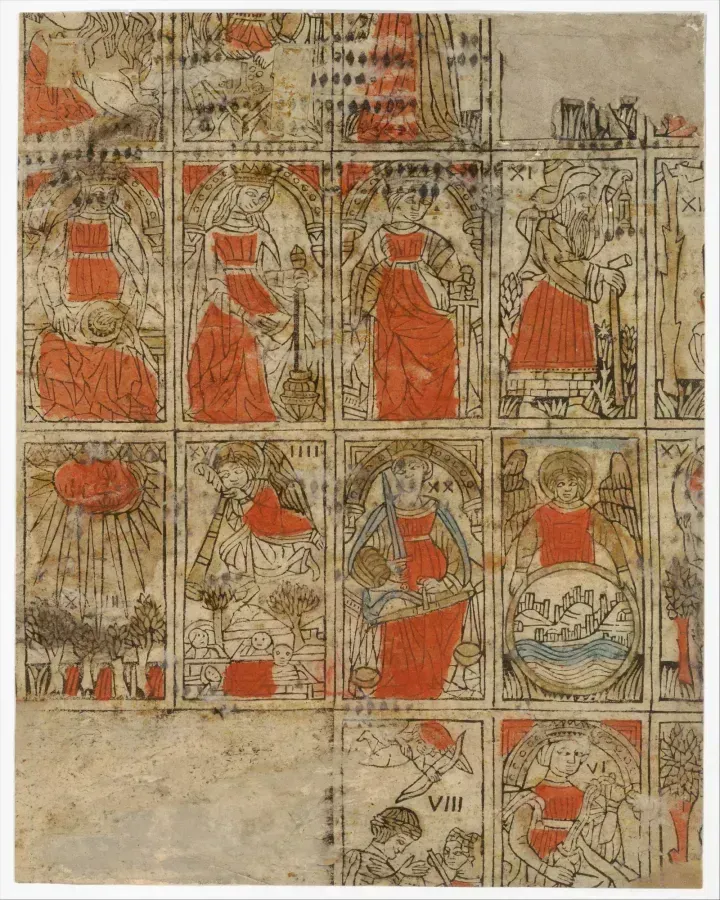
The earliest known cards showing the Wheel of Fortune appear in Italian playing decks from the first half of the fifteenth century. The Visconti-Sforza deck, made around 1450 for the ducal court of Milan, contains a card with a wheel bearing human figures in different poses: some rise, others sink. Above the wheel stood, often, the figure of Fortune herself or a crowned king at the summit.
The imagery was tied directly to medieval depictions of the Rota Fortunae: not an abstract symbol but a literal wheel with people on it. The philosophical idea of Boethius was translated into a card game.
The Marseille tradition: La Roue de Fortune
In the seventeenth and eighteenth centuries the standardised Marseille deck took shape. French card-makers unified the images for mass production. The card was called La Roue de Fortune.
On the Marseille cards the wheel usually carried several figures: one rising on the left side, one at the top (often crowned), and one descending on the right. Animals were sometimes added. The wheel held the centre, without the elaborate astrological symbolism that Waite would later add.
Waite-Smith 1909: a synthesis of occult systems
In 1909 Arthur Edward Waite and the artist Pamela Colman Smith created a deck that became the canon for most modern interpretations. Both were members of the Hermetic Order of the Golden Dawn, an organisation that fused Kabbalah, astrology, alchemy and Hermeticism into a single system.
Their Wheel of Fortune card is a whole encyclopaedia of symbols. The wheel is placed in the sky, the Latin letters TARO on the rim, between them the four Hebrew letters יהוה (Yod-Heh-Vav-Heh, the Tetragrammaton). The inner circle is filled with alchemical symbols. At the corners of the card sit four winged figures of the tetramorph. On the wheel a Sphinx rides the top, the serpent Typhon on the left, the jackal Anubis on the right.
This is the visual programme of an occult system, not a playing card.
Aleister Crowley and the Thoth deck
In 1944, after Waite's death, the Thoth deck appeared, designed by Aleister Crowley and painted by the artist Frieda Harris. Crowley was a former member of the Golden Dawn who later founded his own system, Thelema.
In the Thoth deck the Wheel of Fortune is called simply "Fortune". Harris worked in the technique of projective geometry, and the card holds a multi-layered sense of space. There is no tetramorph at the corners in the classic arrangement, but the Sphinx, Typhon and other figures appear in fresh positions. Crowley underlined the astrological aspect of the card and its link to the wheel of samsara.
Wear the wheel where luck can see it, at the open collarbone, never buried under a turtleneck.
How to wear the symbolism of the Wheel
Dozens of looks with this motif have passed through my hands: the ouroboros, the horseshoe, the wheel medallion, the hourglass. Here is what actually works, sorted by occasion.
What do I wear the symbol with every day? For an everyday look I recommend one understated element: a fine ouroboros ring on the middle or index finger, or a short wheel medallion on a chain to the collarbone. Jeans, knitwear, a loose shirt. A light top lifts silver, a dark one turns gold into the accent. Nothing extra, the symbol reads on its own.
Is it right for the office? Yes, as long as you keep it restrained. I suggest a horseshoe or a mandala on a fine chain over a plain blouse or a polo neck, strictly one metal: silver against cool fabrics, gold against warm beige. Small earrings to match. Under a jacket the motif reads as a quiet detail, not a loud accent.
How do I build an evening look? For evening I choose an open neckline and a long pendant: an ouroboros or an hourglass on a chain below the collarbone draws out the line of the neck. A deep colour (black, wine, emerald) makes the metal stand out. Here two chains of different length work well, and a pair of fine rings on one hand.
And for a special occasion? For a milestone, a new turn in life or a gift to yourself I allow a larger accent piece: a wheel medallion or a labyrinth at the centre of the look, everything else deliberately quiet. One strong element holds attention better than a scatter of small ones.
Who does this motif actually suit? Almost everyone, but it sits with particular ease on those drawn to a calm, slightly philosophical style: minimalism, natural fabrics, muted colours. Two rules that never fail. You may mix silver and gold if you repeat each metal at least twice across the look. Match the pendant length to the neckline, not the other way round.

Turn on your camera, pick earrings, a pendant or a ring, and see the piece on yourself in real time.
Switch items in one tap.
Everything runs in your browser: no photo or video is ever uploaded.
Iconography of the Waite card: what every symbol means
The wheel in the sky
The wheel hangs in the air, not on the ground. That is fundamental. The force that governs cycles is not earthly. It is not a mechanism you can repair or stop. The wheel in the sky recalls the astrological tables: the motion of the planets also happens in the sky, also obeys cycles, also lies beyond human control.
TARO, ROTA, ORAT, TORA: the anagram on the rim
The outer rim of the wheel carries four letters: T-A-R-O. Between them stand four Hebrew characters forming the Tetragrammaton יהוה: Yod, Heh, Vav, Heh, the unutterable name of God in the Jewish tradition.
Members of the Golden Dawn worked out an intricate system of anagrams from these letters. Read TARO around the circle and several words emerge at once. The occultist Paul Foster Case developed this idea into a five-word Latin phrase: ROTA TARO ORAT TORA ATOR.
Each word carries its own meaning:
- ROTA, the wheel (the Latin root behind "rotation")
- TARO, the Tarot itself
- ORAT, prays, speaks (from the Latin "orare")
- TORA, law (Torah, the Hebrew Law)
- ATOR, the Latinised name of the Egyptian Hathor, goddess of love and beauty
A literal rendering of the phrase: "The Wheel of the Tarot speaks the Law of Hathor." Or, read another way: "The Wheel of the Tarot prays to the Law of Nature." All of it lives in a single ring of four letters.
This is not idle wordplay. For Waite the multiple reading was a matter of principle: one set of symbols unites Jewish mysticism, Egyptian myth, the Latin tradition and the card system itself. Four letters, four languages, four systems, all about one thing.
The spokes of the wheel also carry Hebrew letters, including the Tetragrammaton again. The spokes bind the rim (outer events) to the hub (the inner, unchanging essence): the link between manifestation and first principle.
Alchemical symbols: the four primaries
Between the outer rim and the hub of the wheel sit eight symbols. Four of them are alchemical: mercury, sulphur, water, salt. These are the four basic alchemical primaries, the building blocks of the material world. They also correspond to the four elements and the four temperaments.
In the Golden Dawn tradition the alchemical primaries sit on the rays running out from the centre to the rim:
- Fire (south, will, Leo), sulphur
- Water (west, intuition, Scorpio), mercury
- Air (east, mind, Aquarius), mercury in another aspect
- Earth (north, body, Taurus), salt
The wheel turns through all four elements. Any event passes through all four dimensions: the fire of impulse, the water of feeling, the air of understanding, the earth of embodiment.
The Sphinx at the top: keeper of the mystery, sword in hand
A sphinx sits at the top of the wheel, a sword in hand. In the Egyptian and Greek traditions the sphinx is the keeper of the mystery. It poses a question that must be answered correctly. It is at once the riddle and the one who solves it.
The sphinx holds a sword, the symbol of discernment. The sword cuts through illusion, parts the lasting from the passing. The wisdom the sphinx embodies is not knowledge of particular answers but the skill of asking the right questions. At the top of the Wheel this means: the one who understands the nature of the cycle stays steady at the point that seems highest.
The wheel turns, figures rise and fall, but the sphinx looks on serenely. The sword is the symbol of discernment between what is in your power and what is not. This is a Stoic principle, inherited straight from Boethius.
Typhon-Set: the descending current
Down the left side of the wheel slides the figure of a serpent. This is Typhon. In Greek myth Typhon is a monstrous being born of Gaia and Tartarus, the embodiment of the destructive forces of chaos. In the Egyptian tradition he is identified with Set, god of chaos, the desert and destruction, the slayer of Osiris.
Typhon-Set descends down the left. This is the falling current of the cycle: the drop, the ruin, the difficult stretch. In Egyptian myth Set is not absolute evil but a necessary force. He guards the solar barque of Ra from Apep (primordial chaos), fighting at the prow of the boat. Destruction as part of the cycle, without which renewal is impossible.
Typhon reaches the lowest point and will rise again. The wheel is round. The descending force does not annihilate, it lowers, so that the next ascent becomes possible.
Anubis-Hermes: the ascending psychopomp
Up the right of the rim climbs a figure with the head of a jackal. This is Anubis, the Egyptian god of the underworld and guide of souls. He escorts the dead through the judgement of Osiris, weighing the heart against the feather of Maat.
Anubis rises, and this is the ascending arc of the cycle. In the Hermetic tradition that Waite and his colleagues fused, Anubis was associated with Hermes Psychopompos, the guide of souls in Greek myth. Both lead through transformation, both bind the worlds.
It is telling that the guide for the rising period is a god tied to death and passage. The ascent on the Wheel is not always easy and pleasant. It may demand letting something former go, passing through a symbolic death of the old, before the new begins.
The tetramorph: four winged figures at the corners
At the four corners of the card sit winged beings, each in a cloud. A human (upper left), an eagle (upper right), a bull (lower left), a lion (lower right). Each holds a book or a scroll. All four are winged.
This is the tetramorph, one of the oldest symbolic images in the Western tradition, the assembly of four beings: the human (or angel), the lion, the bull and the eagle. Its history spans millennia.
The vision of Ezekiel. Around 593 BC the Hebrew prophet Ezekiel, in Babylonian captivity, described a vision. Out of a cloud came four living creatures, each with four faces: a human, a lion, a bull and an eagle. They bore above them a glittering vault, and above that a throne. This is the vision of the Merkabah, the "chariot" of God. Literally: a heavenly throne with wheels. The link between Ezekiel's vision and the wheel as a symbol of heavenly power is direct.
The Apocalypse of John. In the Revelation of John the Divine (first to second century AD) the four creatures appear again around the heavenly throne. Early Christian interpreters identified them with the four evangelists: Matthew (the angel or human), Mark (the lion), Luke (the bull), John (the eagle). This identification settled into Christian iconography by the fourth century and survives to this day.
Astrological parallels. The four symbols of the tetramorph coincide with the four fixed signs of the zodiac: Taurus (the bull), Leo (the lion), Scorpio (the eagle in older astrology), Aquarius (the angel or human). This is no chance coincidence. In Babylonian astrology those four constellations held key positions in the sky as guardians of the four seasons. Ezekiel knew Mesopotamian astrology well: he lived in Babylon.
On the tarot card. On the Waite card all four figures of the tetramorph hold books and have wings. The wings mean stability in motion: they stay still while the Wheel turns. The tetramorph on this card carries the same message as the sphinx: beyond the inconstant Wheel there is something steady.
The Kabbalistic map: the letter Kaph and the Tree of Life
In the Golden Dawn system each tarot Arcanum corresponds to a Hebrew letter and a path on the Tree of Life. Arcanum X corresponds to the letter Kaph (כ).
Kaph means "palm" or "the grasping hand". The image is exact: the palm seizes, holds, but also lets go. To shake hands with luck. To grab an opportunity. And to release it when the Wheel turns.
On the Tree of Life the path of Kaph joins Chesed (the sphere of Mercy, the fourth position) and Netzach (the sphere of Victory or Eternity, the seventh). Chesed is ruled by Jupiter, and that is a direct confirmation of the link between Arcanum X and Jupiter. Netzach is the realm of desire, of passion, of the striving for beauty.
The movement from Mercy (accepting the gift) to Eternity (what remains beyond the temporary) runs through the grasping palm of the Wheel. This is the path: accept what is given without clinging to it forever. Pass through the cycle without sticking at any one point.
The path number of Kaph is 20. Add another 10 to the 10 (the number of the Arcanum) and you reach 20. The ten is a number of completion: 1+0=1, the start of the new. Kaph as path 20 sits in the space between the already finished and the not yet begun. It is in that very space that the Wheel stands.
The ancient Tyche: the Greek goddess of chance
The story of the goddess who turns the wheel reaches deeper than Boethius and deeper than Rome.
In Greek myth Tyche (Τύχη) was the goddess of luck and chance. She did not strictly belong to the Olympian pantheon, yet she was honoured everywhere. Unlike the goddesses of fate, the Moirai, who spin, measure and cut the thread of life by law, Tyche embodied the unpredictable, that which happens without cause.
Her iconography varied: a cornucopia (wealth), a ship's rudder (the steering of fate), a wheel or a sphere (instability), a blindfold (blindness). She is neither kind nor cruel: she is simply inconstant. Each city had its own patron Tyche.
The most famous monument to the cult of Tyche is the sculpture by Eutychides of Sicyon, made around 300 BC. This is the Tyche of Antioch, patron goddess of the newly founded city of Antioch on the Orontes. The sculptor Eutychides, a pupil of Lysippos, created an image that became canonical: the goddess seated in a mural crown (the symbol of the city), ears of grain in her hand, and at her feet the swimming river-god Orontes. Tyche stands literally above the current of events, steering them. The sculpture itself is lost but survives in dozens of marble copies. Tyche's mural crown later became an attribute of Fortuna Primigenia and of other civic goddesses.
Customer reviews
Zevira is a real jewellery shop. Genuine payments, deliveries and customer thank-yous.
🥰🥰🥰 gracias

Ok, ¡gracias! 🙂

Roman Fortuna: a cult from Antium to Praeneste
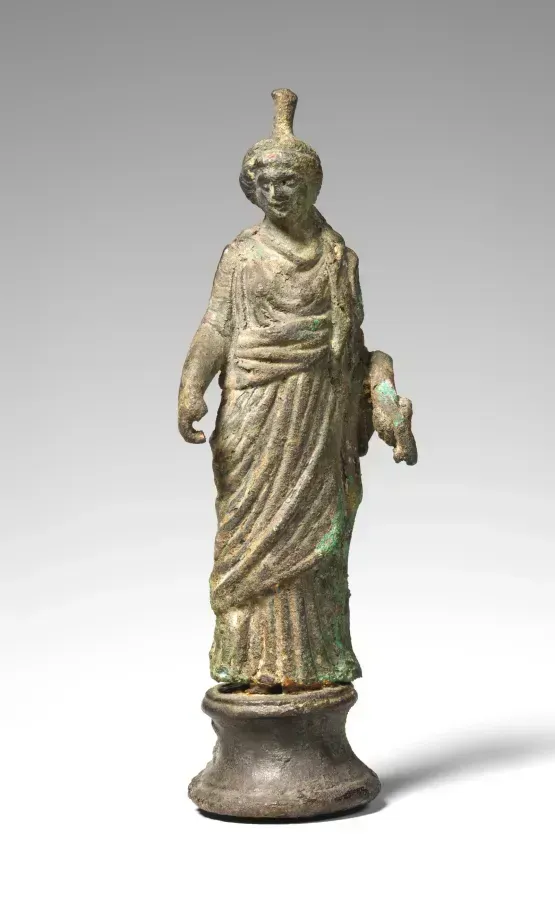
The Romans took up the Greek Tyche and made her into Fortuna, one of the most venerated deities of the Republic and the Empire.
The cult of Fortuna in Rome was extraordinarily popular. Dozens of temples in different cities were dedicated to her. The best-known sanctuaries stood at Antium (modern Anzio, south of Rome) and at Praeneste (modern Palestrina).
The sanctuary of Fortuna Primigenia at Praeneste is one of the grandest religious complexes of antiquity. Built in the second century BC, it climbed the hillside in terraces and ended in a round temple at the summit. Here oracles were given: wooden tablets bearing images were drawn by a small boy from a chest of oak leaves. Chance was built literally into the mechanism of prophecy.
At Antium stood another famous sanctuary, that of Fortuna Antiatis. Here were kept the two statues of Fortuna which, by tradition, the very founder of Rome, Numa Pompilius, honoured as revelation. Cicero, Virgil and Horace wrote of Fortuna as a force to be accepted, not conquered.
In iconography Fortuna appeared with a wheel, she turns it, you hold on. Sometimes blind: luck does not discriminate. Sometimes with a cornucopia: there are seasons when she is generous. In the late Roman tradition a two-faced Fortuna appears, laughing and weeping at once, like changeability itself.
Fatum and Fortuna: a difference of concepts
In Roman philosophy Fortuna and Fatum (Fate) are distinct ideas that are often confused.
Fatum (Fatum) comes from the verb "fari", to speak. Literally: that which is spoken, pronounced by the gods. It is predetermination, an unchanging law, what must happen regardless of anything. The Moirai of the Greeks spin and cut the thread of fate, and that is Fatum. It cannot be changed, only accepted.
Fortuna is fundamentally different. She is not predetermined. She is inconsistent, chaotic, she can turn in any direction. That is precisely why people called on her, built her temples, sought to appease her. With Fatum there is no bargaining. With Fortuna you can try.
Boethius drew a subtle distinction: Providence (Providentia) knows the whole plan in advance, and from the highest vantage everything that happens is lawful. But the one who looks from below sees only Fortuna, the seeming chaos of the turns. These are two views of one event: Providence sees the whole wheel, the human being sees only the point on which they stand.
This distinction matters for understanding Arcanum X. The Wheel of Fortune is not a card about determinism. It is about the fact that part of life's circumstances lies beyond control, and that is not a tragedy but a condition of existence.
Boethius offered a Stoic resolution of this tension: once you understand that Fortune is by nature inconstant, you stop making your inner wellbeing depend on her turns. Real happiness lies within, not without. Philosophy as a tool for release from the illusion of control over the outer.
That is exactly why the Consolation was written in prison. Prison is the extreme point of outer limitation. Yet thought stays free. Boethius proved his teaching by the very act of writing the text. This is not abstract philosophy, it is its practice. And that is why the book was read for a thousand years: it was written from the very lowest point of the Wheel and speaks of what can be seen from there.
The medieval monks who copied and read Boethius passed the image of the Wheel on to the generations that followed. By the fifteenth century, when the first tarot cards appeared, the Rota Fortunae was already a settled iconographic formula with its own clear theological programme.
Upload a photo of your pet, someone you love, or an object. We'll build a 3D model and hand-cast it in pewter.




The wheel in Eastern philosophy: the Dharmachakra, Anahata, the Kalachakra
The image of the wheel as a symbol of cyclicity and transformation appears far beyond the European tradition.
The Dharmachakra: the eight-spoked wheel of the Buddha
In Buddhist iconography the Dharmachakra (the wheel of the Dharma, the wheel of the Law) is one of the central symbols. The eight-spoked wheel stands for the Noble Eightfold Path that the Buddha set out in his first sermon at Sarnath, the "first turning of the wheel of Dharma".
The eight spokes are right view, intention, speech, conduct, livelihood, effort, mindfulness and concentration. The rim is the discipline of practice that holds the elements together. The hub is meditation, the centre around which everything turns.
An important difference from the Wheel of Fortune: the Dharmachakra turns by the choice of the practitioner. The Wheel of Fortune turns you regardless of will. Yet both images work with the idea of cyclicity and transformation through movement. The Buddhist wheel speaks of how to respond. The Wheel of Fortune speaks of what happens.
The wheel of samsara: the Bhavachakra
In Tibetan Buddhism the Bhavachakra (the wheel of existence) is a detailed picture of the cycle of rebirths with all its realms and states. Yama, the god of death, holds it in his teeth. Inside, at the hub, three animals: a cock (desire), a snake (hatred), a pig (ignorance). These are the three poisons that keep a being in the cycle. Release from the wheel (nirvana) is the highest goal.
The structural likeness to Arcanum X: here too the turning is driven by forces the person does not consciously control. The difference is in scale: the Bhavachakra spans many lives, Arcanum X a single one. But the principle of the cycle is the same.
To this wheel of rebirths in Indian thought a pair of ideas corresponds. Karma is the principle of cause and effect across many lives: what is sown will be reaped, though not necessarily in the same incarnation. Karma explains why the Wheel turned just so for a particular person. Dharma is its opposite: not accumulated consequences but the order proper to you, your nature and your path. To fulfil your dharma is to live in accord with what you are, regardless of your current position on the Wheel. Dharma is what stays steady while the Wheel turns, like the sphinx at the top. The connection with Arcanum X here is not literal: tarot grew from the Western tradition, not from the Vedas. But the structural likeness is real.
Anahata: the heart chakra as a wheel
In the system of chakras Anahata, the heart chakra, comes fourth. Its traditional symbol: two crossed triangles forming a six-pointed star, set inside a circle of twelve petals. This too is a wheel.
Anahata governs love, acceptance, the balance between the lower chakras (instinct, feeling, will) and the upper (expression, vision, unity). It is the middle chakra, as Arcanum X is the middle card. In both: a crossing between two halves, the point where the outer meets the inner.
To accept the Wheel without resistance is a heart practice in the most literal sense.
The Kalachakra mandala: time as a wheel
The Kalachakra ("the wheel of time") in Tibetan Buddhism is one of the highest tantric practices. Its mandala is built as an intricate circular structure with several layers: the outer wheel of time (astronomical and astrological cycles), the inner (the cycles of body and energy), the other (meditative cycles). All of it turns at once and interlinked.
The idea of the Kalachakra echoes the card: what happens outside (the outer rim of the Wheel with its TARO) corresponds to what happens within (the alchemical symbols on the rays). Microcosm and macrocosm mirror each other.
Jupiter in the astrology of expansion
In the astrological system of tarot each Arcanum corresponds to a planet or a sign. The Wheel of Fortune corresponds to Jupiter.
Jupiter in Western astrology is the planet of growth, abundance, expansion, optimism and higher learning. It rules the sign of Sagittarius and is exalted in Cancer. Its orbital period is about 12 years: every 12 years Jupiter completes a full circuit of the zodiac, returning to the position it held at a person's birth (the "Jupiter return"). In astrology this twelve-year cycle often coincides with significant turning points in life.
Jupiter rules the ninth house (philosophy, higher learning, distant travel) and the twelfth (the hidden, the spiritual, restrictions). In a natal chart a strong Jupiter in the houses of success, the first, the tenth, the eleventh, is traditionally tied to periods of expansion. In analytical astrology a transit of Jupiter across the Ascendant, the Midheaven or the natal Sun marks turning points, exactly what Arcanum X speaks of.
A retrograde Jupiter (about four months a year) signals inner work on what Jupiter stands for: a review of beliefs, a rethinking of the scale of a goal. In the context of the Wheel of Fortune the retrograde is a period of reworking the previous cycle before the next turn.
The link between Jupiter and the Wheel is exact from several sides. Jupiter expands everything it touches: both luck and the scale of problems. It is neither kind nor cruel, it simply enlarges what is already there. If you are at a point of growth, Jupiter gives you a tailwind. If you are at a point of ruin, it adds speed to the fall.
Jupiter is also tied to a philosophical stance toward life: the view from above, the grasp of the larger picture, the ability to see beyond the present moment. This very quality helps you survive the turn of the Wheel: not to sink fully into the current point, but to remember that the wheel is round. The same link of Jupiter to Arcanum X is fixed on the Tree of Life too, through the path of Kaph that runs from Jupiter-ruled Chesed (more on this in the Kabbalah section above).





Jung on the cycle and individuation
Carl Gustav Jung approached the symbolism of the wheel through the concept of individuation, the process of becoming a whole personality.
Individuation, for Jung, is not linear progress but a spiral movement. The psyche returns to the same themes and complexes, but each time with greater depth of understanding. It is a wheel that turns, yet every revolution happens on a new level. That is precisely why the same life situations repeat: not because the person "failed to learn", but because the cycle deepens.
The mandala became a tool in Jungian therapy for working with the psyche. Jung noticed that at critical points of analysis patients began spontaneously to draw circular structures, mandalas. He read this as the psyche's attempt to find a centre and restore balance at a moment of chaos. The mandala is the Wheel that the psyche itself draws when it feels the need for a point of support.
The turning of the psyche, for Jung, passes through four functions: thinking, feeling, sensation, intuition. These are four points on the circle, corresponding to the four elements and the four symbols of the tetramorph on the Waite card. A healthy psyche engages all four. Neurosis arises when one or two functions are blocked and the wheel runs lopsided.
The sphinx at the top of the Wheel, in the Jungian reading, is the Self (das Selbst), the central archetype that stays steady while the Ego rises and falls. The wheel turns around the Self as an axis. The task of individuation is not to hold on at the top but to find the axis.
The psychology of chance and control
Psychological science has examined what Arcanum X describes through several concrete concepts.
Rotter's locus of control
In 1954 the psychologist Julian Rotter introduced the idea of the locus of control: a person's sense of where the source of control over their life lies.
A person with an internal locus is convinced that the events of their life are determined by their own actions and decisions. A person with an external locus perceives events as the result of outside forces: luck, chance, other people, fate.
An excess of the internal locus leads to the illusion of total control: the person takes responsibility for everything, including what is objectively beyond their power. When the Wheel turns the wrong way, it is felt as personal guilt.
An excess of the external locus leads to passivity: why do anything if chance decides it all?
Arcanum X describes a healthy balance: part of events really is determined by outside forces (the Wheel), part by personal decisions (the sphinx, who knows how to discern). Wisdom lies in knowing which is which.
Seligman's learned helplessness
Martin Seligman in 1967 described the phenomenon of learned helplessness: animals (and people) who repeatedly found themselves in situations of uncontrollable negative events stopped trying to change the situation even when the chance appeared.
This is an exact description of what happens to a person who stays too long at the lowest point of the Wheel and forgets that the wheel keeps turning. The helplessness is not objective, it is learned. Resisting the Wheel and accepting the Wheel are different things. The first drains you. The second frees you.
The post-Jungian approach: acknowledging the uncontrollable
Post-Jungian therapists, in particular James Hillman with his archetypal psychology, stressed that accepting the chance event as meaningful (synchronicity, in Jung's terms) is a more mature psychological position than trying to explain everything by cause and effect.
Jung introduced the concept of synchronicity to describe events that coincide in meaning but are not causally linked. Arcanum X as a card describes exactly such an event: a chance turn turns out to be significant. Not because a cause stands behind it, but because the person meets it as meaning.
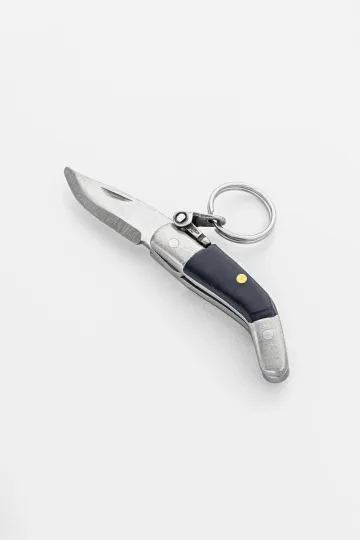
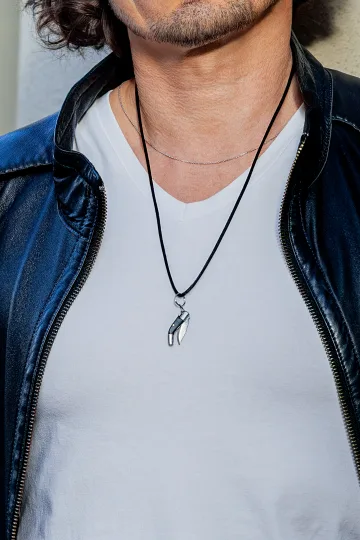
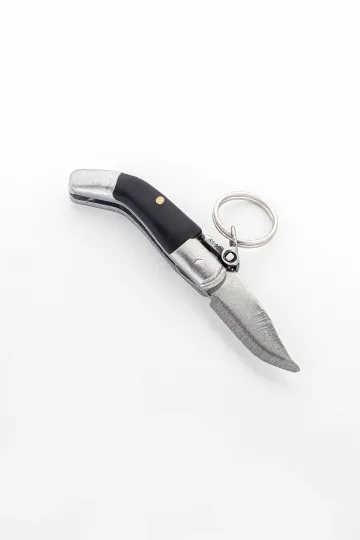
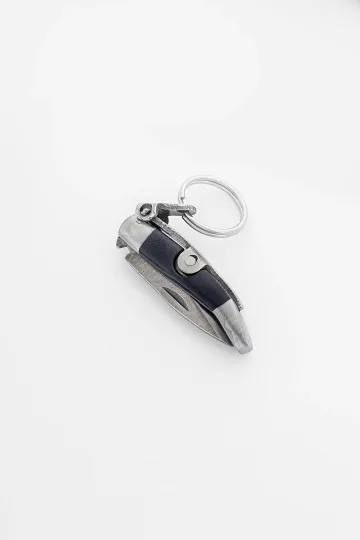
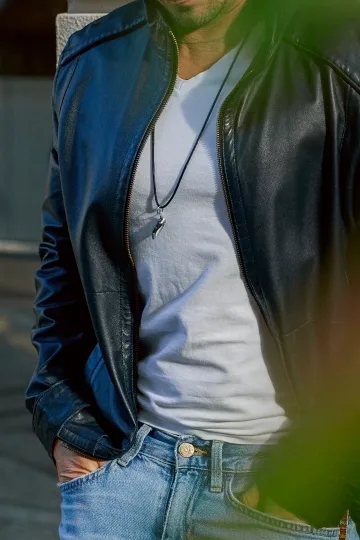
CAPAORA mini knife pendant
The 18th-century Spanish navaja in miniature: 40 mm of stainless steel, a real folding mechanism and a Palanquilla lock that clicks. An affordable gift to remember.
Authentic · Ships from Spain · 14-day returns
The Wheel of Fortune in literature
The image of the Wheel of Fortune runs through Western literature as a through-line.
Geoffrey Chaucer (The Canterbury Tales, fourteenth century). "The Monk's Tale" is, quite literally, a series of stories about people who fell from the top of the Wheel: Nebuchadnezzar, Zenobia, Nero, Croesus, Julius Caesar, Peter of Cyprus. Each was great, and each fell. Chaucer quotes Boethius and Dante directly. Here the Wheel is a teaching device: remember that the one who has risen will fall.
William Shakespeare (King Lear, 1606). Edgar, speaking of the turns of fate, says: "The wheel is come full circle." It is a metaphor: the whole of Lear is the turning of the Wheel. Lear at the top (power, wealth, honour) turns it himself, of his own will, by giving up power, and falls into madness and loss. The ending is the lowest point of the fall, from which death follows. The wheel is driven to a full revolution. "As flies to wanton boys are we to the gods; they kill us for their sport."
John Milton (Paradise Lost, 1667). The fall of Satan is also the Wheel: from the highest point (the angel Lucifer) to the lowest (the lord of hell). Milton uses the image of fortune directly in several key episodes.
Fyodor Dostoevsky (The Gambler, 1866). The roulette wheel as a literal Wheel of Fortune. Alexei Ivanovich understands that play is not mathematics but a struggle with Fortune. "One has only to be daring once, and in a single minute you learn the whole secret." Dostoevsky wrote a novel about addiction, but at the same time about the illusion of control over the Wheel. The hero is convinced he can beat chance with a system, and that conviction destroys him.
Gabriel García Márquez (One Hundred Years of Solitude, 1967). The Buendía family passes through a complete cycle: the founding of a town, its flowering, wars, decline, final destruction. Márquez calls it, directly, a "wheel": the line was fated to pass through it all again and again. Colonel Buendía, who fought thirty-two civil wars and lost them all, is a man who cannot step off the wheel.
Leave your email, we'll send your discount code. No spam, unsubscribe anytime.
The code arrives by email, valid on your first order.
The Wheel of Fortune in cinema
The cinema of the twentieth and twenty-first centuries reworked the archetype of the Wheel through several key images.
Forrest Gump (1994, Zemeckis). The whole film is a demonstration of chance as fate. "Life is like a box of chocolates" is, literally, the formula of Fortune. Forrest does not steer the turns: he simply stays open to them. He is in the right place at the right time, again and again. His life traces a full revolution of the Wheel through every significant event of American history.
Slumdog Millionaire (2008, Boyle). The structure of the film is the Wheel of Fortune in its pure form. Jamal is not supposed to know the answers, he knows them by accident, through trauma and loss. Each answer to a quiz question came through a fall. The lowest point of the Wheel gave the knowledge that led to the top. The film's central question is set out in an intertitle: "Is it destiny? Luck? Genius? Or something else?"
Once Upon a Time in Hollywood (2019, Tarantino). Rick Dalton (Leonardo DiCaprio) is an actor whose career traces the descending arc of the Wheel. He was at the top, he is falling, he resists the fall. Cliff Booth (Brad Pitt) is a man who has accepted his place on the Wheel without resistance. The end of the film is an unexpected turn that lifts Rick back up through an entirely chance run of events. Tarantino works with the archetype knowingly: Hollywood as a Wheel that raises and lowers regardless of talent.
Rush (2013, Howard). Niki Lauda and James Hunt, two poles of one Wheel. Lauda controls, calculates, dominates. Hunt lives on impulse. The crash at the Nürburgring, the lowest point of the Wheel for Lauda, overturns the balance of forces. Lauda returns, makes the choice to stop at the season finale. This is not defeat but the wisdom of the sphinx: to know when to hold the rim and when to let go.
Cinema returns to this archetype again and again, because the viewer recognises the experience. Every person has lived through at least one turn of the Wheel they did not expect. And every time the question is the same: are you holding the rim, or have you found the axis?
The archetype: a cycle that cannot be stopped
The Wheel of Fortune card speaks of one phenomenon from several sides: of inconstancy as a fundamental property of the world.
This is not a philosophy of pessimism. It is a description of reality that frees you, if you accept it honestly. As long as you are convinced that good seasons ought to last forever, every turn of the Wheel will be a catastrophe. Once you accept cyclicity as the nature of things, the turn becomes simply a turn.
On the Wheel, looked at honestly, there is no place for a permanent presence at the top. Four positions: at the top, descending, at the bottom, rising. All four are normal. All four are temporary. A fall does not mean you are a bad person. A rise does not mean you earned it. The wheel turns.
For Jupiter, to whom Arcanum X belongs in the traditional astrological system of tarot, this works out differently. Jupiter is the planet of growth, expansion, abundance. But growth by its nature is cyclical. There is no permanent expansion. There is expansion and contraction, and then expansion again.
Upright and reversed
Upright
The Wheel of Fortune upright speaks of a moment of active change. Something is happening, and it happens not because you did or did not do some particular thing. Change has arrived. More often it reads as a favourable sign: if you were at the bottom, the wheel is going up.
The upright Wheel promises no particular outcome. It speaks of change in motion. The best answer to this card is not an attempt to control but a readiness to adapt.
The key themes of the upright position: a shift of circumstances, luck, opportunity, a turn for the better, chance that proves significant, meeting the right people at the right time.
Reversed
The reversed Wheel is more complex. Two main readings.
The first: resistance to change. The person clings to what is already ending, will not let the Wheel turn. It is like gripping the rim, braking the rotation. The result is not a saved position but a delay with accumulated tension. Sooner or later the Wheel turns the harder for it.
The second: a misfortune that came through no fault of the person. Outer circumstances turned against them, and it is not the result of poor decisions. The reversed Wheel in this case suggests accepting the fact of the fall and concentrating on what is available from below: on what was not visible from the top.
An important difference between the reversed Wheel and other "heavy" cards: it is a temporary position. The Wheel is reversed only at the moment of the question. It keeps turning.
The Wheel in spreads
Arcanum X behaves in a particular way in spreads. It often points not to a concrete event but to a context: the situation is in a movement that is not defined by personal action alone.
In the position of the past, the Wheel says that the current situation became the result of an outer turn, as well as of personal decisions.
In the position of the present, it points to a moment of active change. Something is unfolding right now. The best stance: to watch and be ready to move in whichever direction the impulse goes.
In the position of the future, it warns of an approaching new cycle. Not necessarily good or bad, but new. It is useful to let go of attachment to how everything looks now.
In the position of advice, the Wheel often says: accept what is not in your power. Use what is. Tell one from the other.
The lottery and unexpected luck. The Wheel in a spread about finances is one of the most direct signs of an unexpected turn. Not the result of work, but a chance run of circumstances: an inheritance, a win, an unexpected contract. The card does not promise, but it indicates: something may come from outside.
A career turn. In a career spread the Wheel often precedes a sharp change of direction. Not planned but happened: a restructuring, the closing of a department, a chance meeting that opens a new path.
An anniversary and a new cycle. The Wheel in the position of a year card (a Celtic cross for the year, a year-card) means a year of active change. A year when life moves into a new phase. A good time not to resist but to be flexible.
Unexpected news. In the position of "what to expect", the Wheel often foreshadows news that cannot be foreseen. It may be good or difficult, the card does not specify. The neighbouring cards specify.
Famous tarot readers on the Wheel
Experienced tarot readers traditionally single out Arcanum X as one of the hardest cards to interpret concretely, precisely because it describes a context, not an event.
Rachel Pollack, in "Seventy-Eight Degrees of Wisdom", treats the Wheel as the point where the Fool first meets a reality he did not create. Until then he worked with tools (the Magician), gained knowledge (the High Priestess), lived through structures (from the Empress to the Chariot). But the Wheel is the first experience of meeting something fundamentally external. The reaction to it defines the whole second half of the road.
In the Marseille tradition the Wheel is often read first of all as a promise rather than a threat. The guarantee that everything changes works both ways: if things are bad now, that will change. The Wheel stops for no one.
In a reading close to the Buddhist one, the Wheel is linked to the concept of anatta (not-self): if there is no permanent "self" that must be kept at a fixed point on the rim, then the Wheel itself ceases to be a threat. It turns, and let it. You are not a point on the rim, you are the axis.
Another widespread reading sees in the Wheel a card of humility: no point belongs to you forever, neither the lowest nor the highest. Once that is accepted, you are already a little on the hub rather than the rim.
Card combinations
Wheel + Hermit (IX). The Hermit withdraws into solitude for wisdom. The Wheel brings a turn. Together: the wisdom gathered in a period of solitude turns out to be needed exactly at the moment of change. Knowledge stored in silence becomes a resource for movement.
Wheel + Justice (XI, VIII). Justice is consequence, the cause-and-effect balance. Beside the Wheel it says: the turn is not random, it has a context in past actions. Karma in Western terms.
Wheel + Tower (XVI). Both are arcana of sudden change. Together they amplify each other. The Tower is ruin, the Wheel is cyclicity. Ruin as part of the cycle. After the tower falls, the wheel keeps turning.
Wheel + an Ace of any suit. An Ace is the seed of a new cycle. Beside the Wheel it speaks of a concrete new beginning in the sphere of that suit. Ace of Cups + Wheel: an emotional or romantic change. Ace of Swords + Wheel: a breakthrough of clarity, or conflict.
Wheel + Star (XVII). One of the finest combinations. The Star is hope and recovery after a hard time. Together: the turn of the Wheel will bring what is awaited.
Send a friend a discount code, they save on their first order.
Jewellery: the wheel, the horseshoe, the ouroboros, the hourglass, the labyrinth
The symbolism of Arcanum X is rich, but a pendant in the shape of the tarot card itself is not the only option. The theme of cyclicity, luck and the acceptance of the uncontrollable lives in several traditional jewellery motifs.
The horseshoe and the clover: luck as accepting chance
The horseshoe is one of the most widespread symbols of luck in the European tradition. People have worn it since the tenth and eleventh centuries. Iron in itself was held to be a protective material. The shape of the horseshoe echoes the crescent moon, a symbol of protection. The seven nail holes corresponded to the seven planets of medieval astrology.
Orientation matters fundamentally. A horseshoe with the openings up holds the luck in, keeps it from pouring out. With the openings down, on the contrary, it pours luck out onto those who pass beneath. This argument about the correct orientation has run for several centuries and was never settled, which itself says a great deal about how people relate to luck: as something undefined.
The link with the Wheel of Fortune is direct: both the horseshoe and Arcanum X speak of luck as something that does not depend wholly on the person. You can create the conditions, you can stay open, but the arrival of the luck itself is uncontrollable. More on the symbolism in the guide to horseshoe and clover jewellery.
The four-leaf clover works in a similar way. An ordinary clover has three leaves. The four-leaf one is the exception, a mutation, a matter of chance. That very chance is what makes it a symbol of luck: to find something rare means that today you are in the flow of possibility. It is about the same thing as the Wheel: an unexpected turn brings something rare.
The ouroboros: the serpent that bites its tail
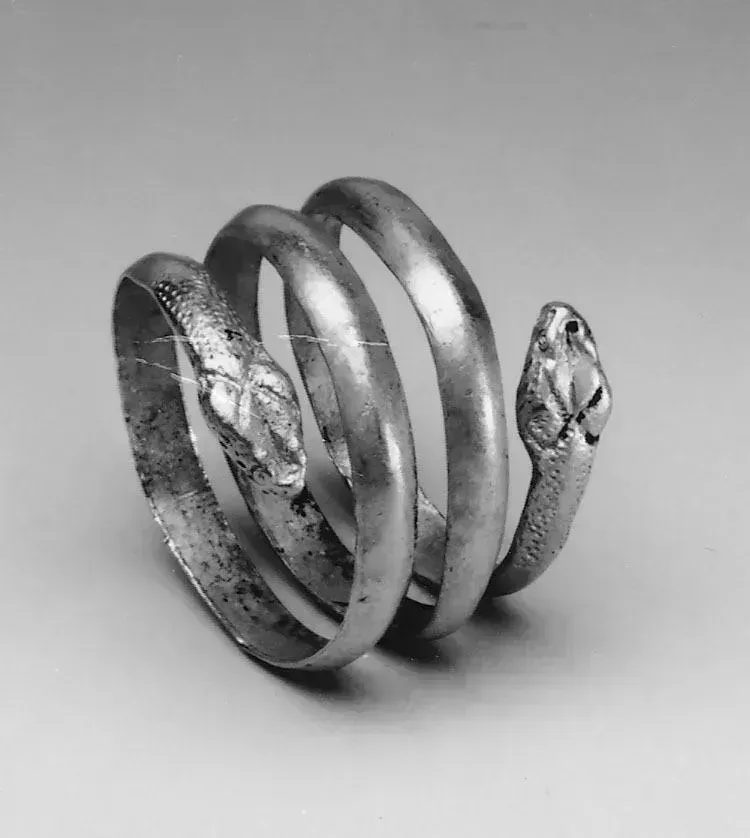
The ouroboros, a serpent or dragon biting its own tail, is one of the oldest symbols of cyclicity. It appears in Egyptian texts around 1350 BC, in the Greek alchemical tradition, in the Norse myth of the Midgard Serpent, in Gnostic texts.
Its basic meaning: a cycle without beginning or end. Time as a circulation. Death as part of life, not its opposite. Destruction as the condition of new birth.
That is exactly what the Wheel of Fortune says: what ends gives rise to the next. The ouroboros as a piece of jewellery carries this meaning with visual precision: a ring or a bracelet where neither beginning nor end can be seen, where the serpent consumes itself and gives birth to itself at once. Read the full history of the symbol in the guide to the ouroboros.
The hourglass: visible time
The hourglass works with the same material as the Wheel: time and cycles. But it does so differently. The hourglass makes time visible and measurable. When all the sand has run through, the glass is turned over and everything begins again.
It is an exact metaphor for Arcanum X: each turn of the Wheel is the turning of the glass. One cycle is finished, a new one begun. The inverted glass is not an end but a change of phase.
In jewellery the hourglass carries the memento mori and, at the same time, a reminder of the cyclical nature of time. More in the guide to hourglass jewellery.
The labyrinth: a path through the unforeseen
The labyrinth as a symbol describes a situation in which there is movement, but it cannot be foreseen in advance. In a classic labyrinth (unlike a maze of tangles) there is a single path with no dead ends. You do not know where it will turn, you cannot see the exit, but the path exists and leads to the centre.
This is the experience of the Wheel from within. You do not see where life will turn, you cannot plan every bend, but the movement continues and it leads somewhere. The labyrinth as a piece of jewellery reminds you: the path exists even when it cannot be seen. More on the symbolism in the guide to labyrinth jewellery.
The wheel pendant as a motif
A direct image of the wheel in jewellery appears in several forms. Rosettes, mandalas, medallions with spokes or petals radiating outward. In some traditions Arcanum X is depicted literally as a medallion bearing the symbols of the card.
A piece of jewellery in the shape of a wheel speaks of accepting cycles as the norm. It is not a wish for luck in the narrow sense, but the deliberate wearing of a symbol that means: I understand that life turns, and I am in it with dignity.
Who the symbolism of Arcanum X suits
The symbolism of the Wheel of Fortune resonates with those who are living through a turn right now.
Entrepreneurs and founders. Business is cyclical by nature: surges, crises, restructurings. A person who has grasped that cyclicity runs a company differently from one who is convinced that good times ought to last forever. The symbol of the Wheel, for an entrepreneur, is about a mature relationship with change.
Those living through forced change. Redundancy, illness, divorce, a move not of one's choosing. When the Wheel turned against your wish. A piece of jewellery with the symbolism of the cycle, in this context, is not "everything will be fine" but "this too is part of the road, and it is temporary".
Those on the rise. People turn to this symbol not from crisis alone. Someone whose luck is running now also gains from a reminder of cyclicity: luck is temporary, like difficulty. It keeps the view sober and lets you use the summit wisely, without spending everything on the assumption that the summit is permanent.
Lovers of philosophy and Eastern practice. Karma, dharma, the Buddhist ideas of impermanence: all of it is a parallel language for the same idea. Arcanum X as a piece of jewellery, for a person with this interest, is an exact fit.
Astrologers and tarot practitioners. For them the symbolism is obvious and direct. A piece of jewellery with the Wheel is a straight reference to the practice.
Buying it as a gift? Each one arrives ready to give.
 A branded Zevira box and a little card come with every order.













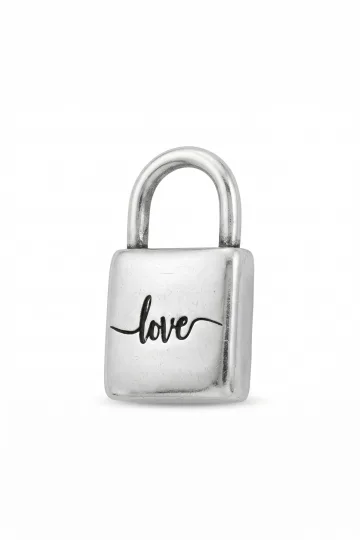
A gift: when to give the symbolism of the Wheel
After a hard time. Illness, loss, the way out of a difficult stretch. The Wheel turned, and the darkest part is behind. A gift with the symbol of cyclicity says: I know what that was. And I know it is not forever. It is not "everything will be fine", it is "you got through, the wheel moves on".
At the start of a new cycle. A new job, a move, a return to something important after a pause. Not "congratulations" but "a new circle has begun, and it will be its own".
For someone learning to accept uncertainty. The symbolism of the Wheel is about accepting what you do not control. A gift for someone in that process.
For a milestone. Especially a round date: forty, fifty, sixty. A life has passed through several full revolutions. A piece of jewellery with the symbol of the cycle says: it is normal that things changed. That is what life is.
FAQ
Is the Wheel of Fortune a card of luck or of fate?
Both, but with an important distinction. Luck, in the sense of Arcanum X, is not a prize for correct behaviour. It is what happens at a certain point in the cycle. Fate here is not rigid determinism either: it is the understanding that part of life's circumstances is set from outside, regardless of personal will. The card speaks of both aspects at once.
What does it mean if the Wheel of Fortune comes up often?
A frequent appearance of this card in spreads is read as a sign of a long period of active change. Either life is at an intense point of the cycle, or the person is resisting change and the card recurs as a call to let go.
How does the Wheel of Fortune differ from the Tower?
Both arcana speak of change that comes from outside. The difference is in character. The Tower is a sudden, often painful break with an illusion: something that seemed reliable collapses. It is a one-off event. The Wheel is a cycle: not a catastrophe but a turn. The Tower destroys. The Wheel keeps turning.
Should I worry if the Wheel comes up reversed?
A reversed Wheel is not a verdict. It points either to resistance to change (in which case it is worth asking what exactly you are clinging to) or to a temporary difficult period. In either case the Wheel keeps turning. It is a temporary position.
The Wheel of Fortune in a love spread: what does it mean?
In a romantic context the Wheel speaks of change in the relationship. Upright: the relationship moves to a new stage, something changes for the better, an unexpected meeting is possible. Reversed: a period of stagnation or of forced change that the partners live through differently.
Can you wear tarot symbolism without knowing the tarot system?
You can. Many people wear jewellery with the motifs of the ouroboros, the horseshoe, the labyrinth, without knowing their direct link to Arcanum X. The symbols work at the level of meaning, not of a label. If the image of cyclicity and the acceptance of change resonates with you personally, jewellery carrying that meaning is fitting regardless of any knowledge of the tarot system.
Does a spoked wheel in jewellery always mean Arcanum X?
No. The wheel as a motif in jewellery has many sources: the rosette, the mandala, the zodiac wheel, the Celtic wheel of the year, the Buddhist Dharmachakra. Arcanum X is one of the contexts, not the only one. The wearer establishes the link, through intention and knowledge.
How is the Wheel of Fortune linked to Jupiter in a practical sense?
In astrology, periods when Jupiter is activated in the natal chart often coincide with the turning points that Arcanum X describes. The return of Jupiter to its birth position every twelve years is traditionally held to be a time of opportunity and the start of a new large cycle. For those who work with astrology, a piece of jewellery with the symbolism of the Wheel is especially fitting during a Jupiter return.
What is the difference between Fatum and Fortuna?
Fatum is what the gods have spoken and what cannot be changed. Providence from the highest vantage. Fortuna is inconstant, chaotic, and can be called upon. Boethius explained: looked at from the height of Providence, everything is lawful; standing below and seeing only the present point, it seems all chance. These are two views of one and the same wheel.
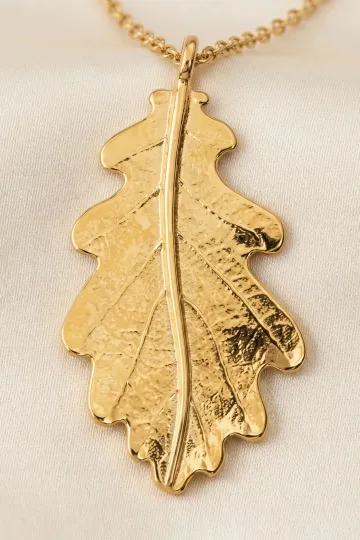
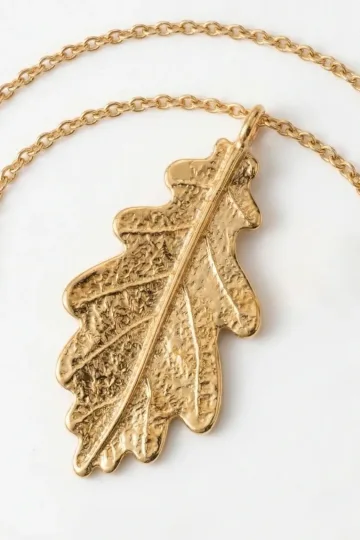
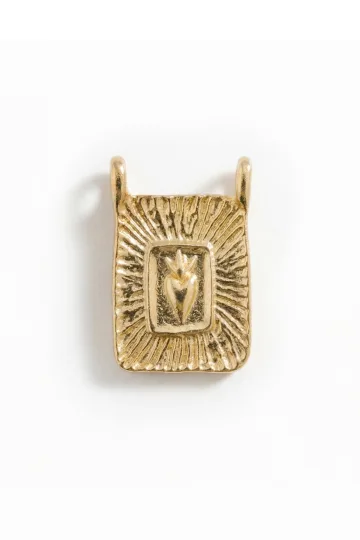
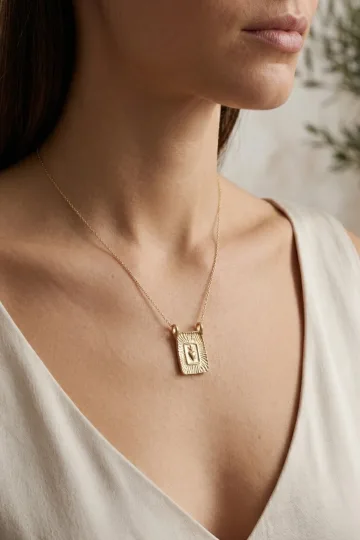
Wear the symbol, don't just read about it. These are in stock:
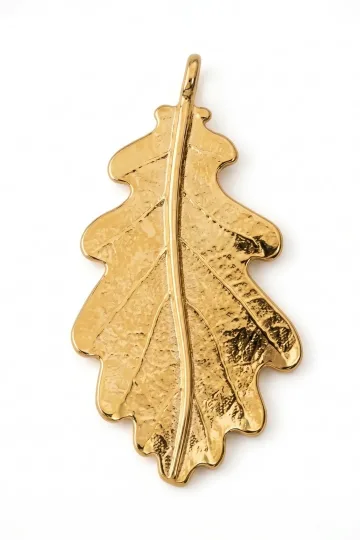
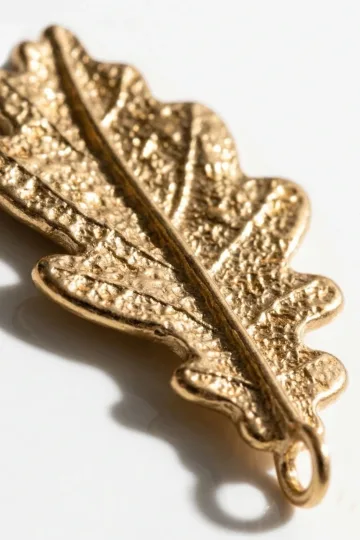
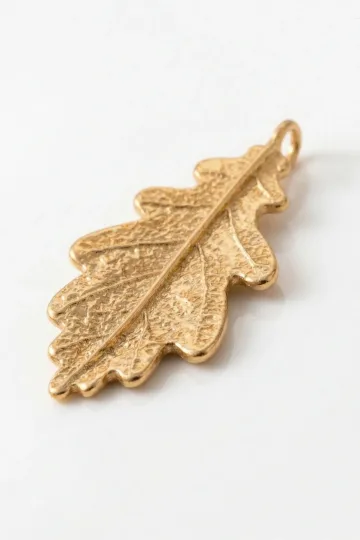
Conclusion
The most important turns are rarely written into the plan. A redundancy, a chance referral, an unexpected offer. The Wheel can turn several times in a couple of years, and each turn brings something that could not have been known in advance.
Arcanum X does not say that it must be so for everyone. It says: this is how the world is built, and it is not a bug but a feature. The cycle is the nature of things. What is controlled is not the turn itself but the reaction to it.
The sphinx at the top of the wheel is serene not because it is shielded from change. It is serene because it understands the nature of the wheel. Typhon-Set descends, Anubis-Hermes rises, the letters TARO fold into ROTA fold into ORAT fold again into TORA, and each time the meaning is different, depending on the point from which you look. Boethius wrote of this in prison. Chartres laid it out in stained-glass stone. Chaucer, Shakespeare, Dostoevsky, Márquez, each in his own language. The Buddhist Dharmachakra and the Kalachakra mandala in theirs. Jung with his spiral path of individuation in his.
And the wheel keeps turning.
Jewellery that resonates with this Arcanum: the horseshoe with its unpredictable luck, the ouroboros with its endless cycle, the hourglass with its visible time, the labyrinth with its path that has no map laid out in advance. Each of these symbols carries one idea in different words. Not everything is in your power. That is normal. Carry on.
On jewellery with the symbolism of the other Major Arcana and a full reading of the Fool card in our separate guides.
Silver, gold, wedding rings, symbolism, matching sets.
About Zevira
Zevira makes jewellery in the artisan tradition of Albacete, Spain. The theme of cyclicity, the acceptance of change and the symbolism of fate is one of the steady clusters of meaning in our collections.
What you can find with us carrying the symbolism of Arcanum X:
- Ouroboros rings and bracelets (the cycle with no end and no beginning)
- Horseshoe pendants (luck as accepting chance)
- Mandala medallions (the wheel as structure)
- Labyrinth pendants (the path through the unforeseen)
- Hourglass jewellery (time as a cycle)
Each piece is made by hand by a master, with the option of personal engraving. We work with 925 silver and 14 to 18K gold.