Yggdrasil: the world tree in jewellery
At the top of one tree sits an eagle, at its roots the dragon Nidhogg gnaws at the trunk, and up and down the trunk darts a squirrel named Ratatoskr, carrying their insults back and forth. This is not a woodland fable. This is how the people of the North pictured the whole universe: the ash tree Yggdrasil, on which the nine worlds hang, and which holds existence itself in place.
A Yggdrasil pendant is not worn as a picture of a tree. It is a sign of connection: everything is woven into everything else, the roots reach down toward the same place the branches reach up, and life moves in a circle. The Norse cosmos in a single silhouette.
What Yggdrasil is
Yggdrasil is the world tree of Norse mythology, a giant evergreen ash that binds and carries all nine worlds of the Northern universe. Its roots run down into underground springs, its trunk passes through the middle world of humans, and its crown rises above the realm of the gods. As long as Yggdrasil stands, the cosmos stands with it. When the tree shudders, the end of the world is at hand: Ragnarok.
The name itself is usually read as "Odin's steed", where Ygg is one of Odin's bynames. The steed here is no animal but a gallows. According to the myth, Odin hung on this tree for nine days, pierced by his own spear, sacrificing himself to himself for the knowledge of the runes. In the language of skaldic poetry, "to ride the tree" meant to be hanged, which is why the ash became "Odin's horse". The very name carries the idea of sacrifice and of wisdom won through suffering.
Wear the symbol, don't just read about it. These are in stock:





What the symbol looks like
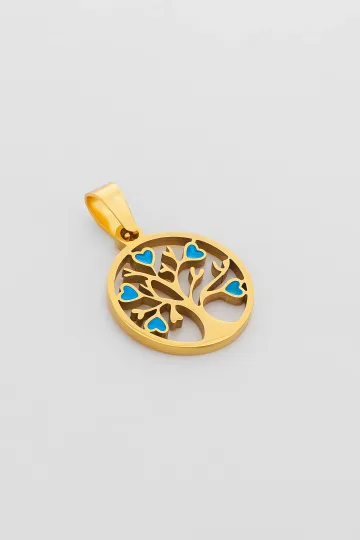
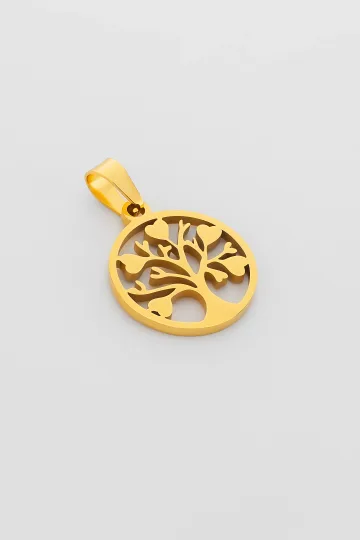
In jewellery, Yggdrasil is almost always shown inside a circle. A spreading crown of branches above, mirrored roots below, and often crown and roots interlace into a single pattern, closing into a circle or a sphere. This is no accident: it shows that high and low, sky and underworld, growth and memory are one whole. The lines frequently knot together in the Celtic and Norse interlace style, with no beginning and no end.
Where the image of the tree comes from
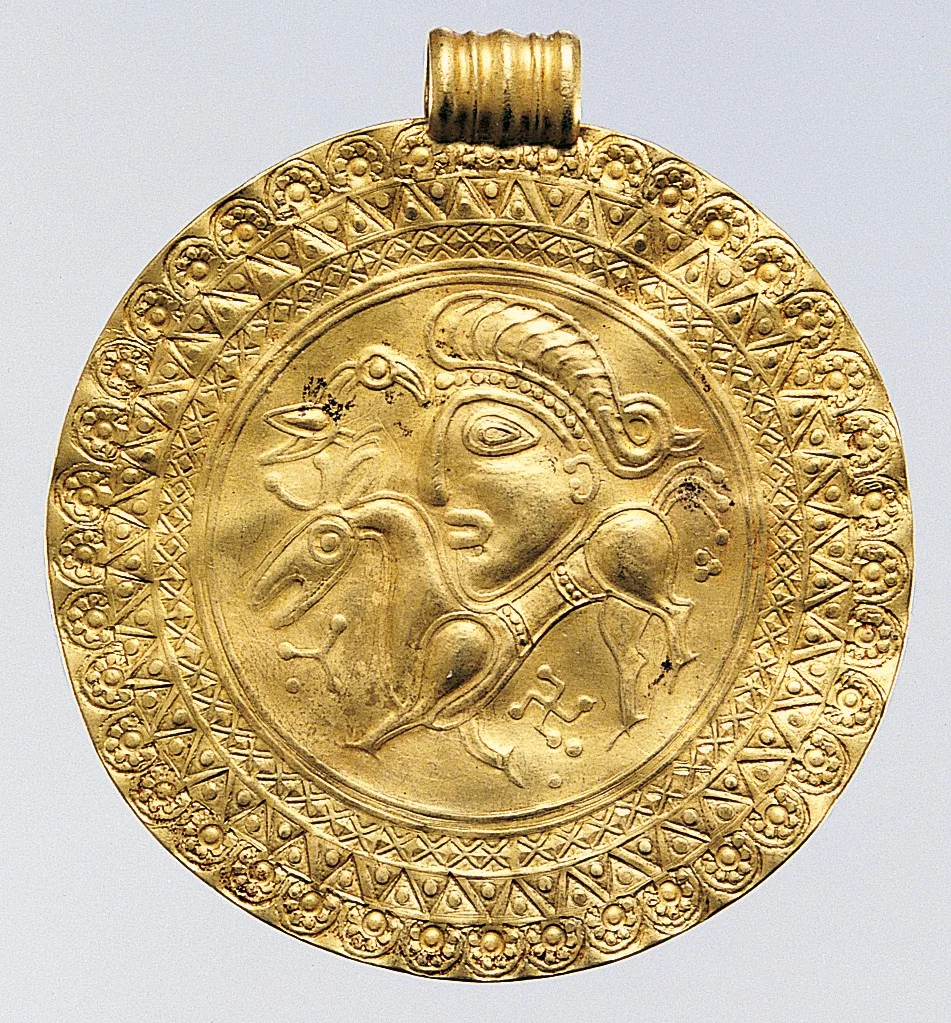
The idea of a tree that holds up the world is not unique to the North, but few traditions developed it so fully. A huge ash or oak as the axis of the cosmos appears among many peoples of Eurasia. Among the Norse, the image reached us in its richest form thanks to the Icelandic manuscripts, where the tree has a name, a precise anatomy, its own inhabitants and a role in the fate of gods and men.
Ash or yew
Most often Yggdrasil is called an ash, and the Prose Edda names it as one directly. But some scholars push back: an ash is never evergreen, while the texts describe the tree as green all year round. So a theory arose that it was really a yew, a conifer that does stay green through winter and can live for thousands of years. The question is unsettled, and tradition has fixed on the ash, but it helps to know about the yew, because it explains why the tree is "forever green".
How Yggdrasil differs from just "a tree"
A tree in jewellery can be read a dozen ways: family tree, nature, ecology, growth. A few marks set Yggdrasil apart from that crowd. First, symmetry: crown and roots are nearly mirror images, the top repeating the bottom. Second, the closing into a circle or sphere, where branches and roots meet. Third, the Norse graphic language: hard lines, knots, sometimes runes around the rim. If a tree carries these traits, you are looking at the Northern world tree, not a garden motif.
Yggdrasil across spellings
The name appears in different forms across sources and languages: Yggdrasil, Yggdrasill, sometimes Ygdrasil. These are all ways of rendering a single Old Norse word. Catalogues and descriptions use more than one form, so when you choose a piece, go by the recognisable silhouette of the tree in a circle rather than the exact spelling.
History and myth
Yggdrasil is the meaning behind the whole Northern picture of the world. To understand the pendant, it helps to take the tree apart piece by piece: its worlds, its roots, its springs and its inhabitants.
Nine worlds on the branches and roots
The Northern universe is made of nine worlds, and all of them rest on Yggdrasil, hung across its branches and roots. The exact list drifts a little between retellings, but the classic set runs: Asgard, the sky fortress of the gods; Vanaheim, home of the Vanir; Alfheim, world of the light elves; Midgard, the middle world of humans; Jotunheim, land of the giants; Svartalfheim, world of the dark elves and dwarves; Muspelheim, realm of fire and flame giants; Niflheim, world of primal ice and mist; and Hel, the underworld of the dead.
The tree is both a map and a frame at once. Gods above, humans in the middle, the dead and the monsters below, yet they are joined not by separate roads but by a single trunk and shared roots. That is the whole idea: the worlds are not isolated, they grow out of one tree.
Three roots and three springs
Yggdrasil has three great roots, and each reaches toward its own spring. The first runs to the Well of Urd, where the Norns dwell and the gods gather in council. The second descends to Mimir's Well, the well of wisdom. The third leads to Hvergelmir, the seething spring in the world of ice, source of all rivers, where the dragon gnaws at the root.
This threefold structure matters. The tree rests not on a single support but on three different powers: fate, wisdom and the primal chaos of the waters. Each root feeds the tree in its own way, and each is bound to its own set of creatures and meanings.
Here lies the beauty of the Northern picture: the world stands not on any one thing, but on the balance of different forces. Fate, knowledge and raw nature each pull the tree their own way, and as long as they hold each other in check, Yggdrasil endures. Keep this scheme in mind, and a tree pendant stops being mere ornament: behind every root stands a well, a story and a meaning of its own.
The Well of Urd and the Norns
The Well of Urd is the sacred place beneath one root, home to three Norns: Urd, Verdandi and Skuld, whose names are tied to the past, the present and the future. The Norns are the Northern spinners of fate, deciding the lot of humans and gods and weaving the thread of every life. Each day they draw water from the spring and pour it over the root of Yggdrasil, mixed with white clay, so that the tree neither rots nor withers.
The result is a living image: fate is not somewhere far off but right at the roots of the world, sustaining the tree of life itself. At the Well of Urd the gods hold court, riding in over the rainbow bridge. This is the heart of the Northern cosmos, where fate and law meet.
Mimir's Well and Odin's eye
At the second root rises Mimir's Well, which holds all wisdom and knowledge. Its keeper, the wise Mimir, drinks from it every morning and so knows more than anyone. Odin, a god consumed by the thirst for knowledge, came to the spring and asked for a draught. The price was steep: Mimir demanded an eye as a pledge. Odin gave up his eye, and it rests forever at the bottom of the well.
Ever since, Odin is one-eyed, and this is no injury but a mark: the highest wisdom demands sacrifice. Together with the story of the nine days on the tree, this is the central motif of the whole Yggdrasil myth. Knowledge is never free; depth is paid for in body and in pain.
Deer and a goat on the branches
The crown of Yggdrasil is browsed by four stags that roam its branches and nibble the young shoots. At the very top of the tree lives an eagle, with a hawk perched between its eyes. Among the branches grazes the goat Heidrun, from whose udder flows not milk but mead, which feeds the warriors in Valhalla. Beside her grazes the stag Eikthyrnir, from whose antlers drips the moisture that gives rise to the rivers.
The tree is teeming with life. It is eaten, gnawed, milked and worried at from every side, and still it stands. The image carries a thought about endurance: the world bears constant wear and yet holds together.
The squirrel Ratatoskr
Up and down the trunk of Yggdrasil scurries a squirrel named Ratatoskr. Its occupation is strange and very human: it carries spiteful words between the eagle at the top and the dragon Nidhogg at the roots, spreading gossip and setting the heights against the depths. This messenger squirrel is just about the most amusing inhabitant of the world tree, and yet there is a grim sense in its role: the feud above and below never dies down, because someone is always feeding the fire.
In jewellery, Ratatoskr appears less often than the tree itself, but it is known and loved as a symbol of connection and communication, even if not of the kindest sort.
The eagle and the hawk at the top
At the very crown of Yggdrasil sits a wise eagle that knows a great deal, and between its eyes perches a hawk named Vedrfolnir. The eagle is an image of celestial wisdom and keen sight, the view from above over the whole world. It is the eagle that the dragon at the root feuds with, and it is their quarrel that the squirrel carries. The eagle above and the dragon below are the two poles of the tree: soaring intellect and creeping ruin, and between them the whole vertical of the cosmos is stretched.
The mead of poetry and the link to creativity
Yggdrasil is bound, indirectly, to the theme of inspiration too. Odin, who won the runes on the tree, in another myth steals the mead of poetry, which grants the gift of verse. Tree, sacrifice, knowledge and word twist together in the Northern tradition into a single knot: everything of value is won at the cost of effort and risk. For this reason the world tree is often chosen by creative people, who see in it a sign of inspiration grown out of the depths.
The dragon Nidhogg
At the lowest root, in the spring of Hvergelmir, dwells the dragon Nidhogg. It gnaws ceaselessly at the root of the world tree, wearing it away from below. Its name is read as "the one who strikes with malice" or "terror of the dark". Beyond the root, it tears at the bodies of the dead who have fallen to the darkest regions of the afterworld.
Nidhogg is the force of ruin that wears the world away from within. The Norns heal the tree with water from above, the dragon gnaws it from below, and this pull up and down keeps Yggdrasil in eternal tension between life and decay. After Ragnarok, the prophecy says, Nidhogg will still be alive, carrying corpses away on its wings.
Odin on the tree and the runes
The chief myth that ties Yggdrasil directly to humankind is Odin's sacrifice. The god wished to grasp the runes, the secret signs of power and fate, and to do so he offered himself to himself. He hung on the branches of the world tree for nine days and nine nights, pierced by his own spear, without food or drink, gazing into the abyss. At the last he cried out, seized the runes and fell from the tree, having gained the knowledge.
This scene binds tree, sacrifice and wisdom into one knot. That is why the runes and Yggdrasil are so closely linked: the very writing of the North was won on this tree. Whoever wears a runic inscription touches the same tradition, and it is worth reading more in the pieces on the Algiz rune and the Othala rune.
How we know any of this at all
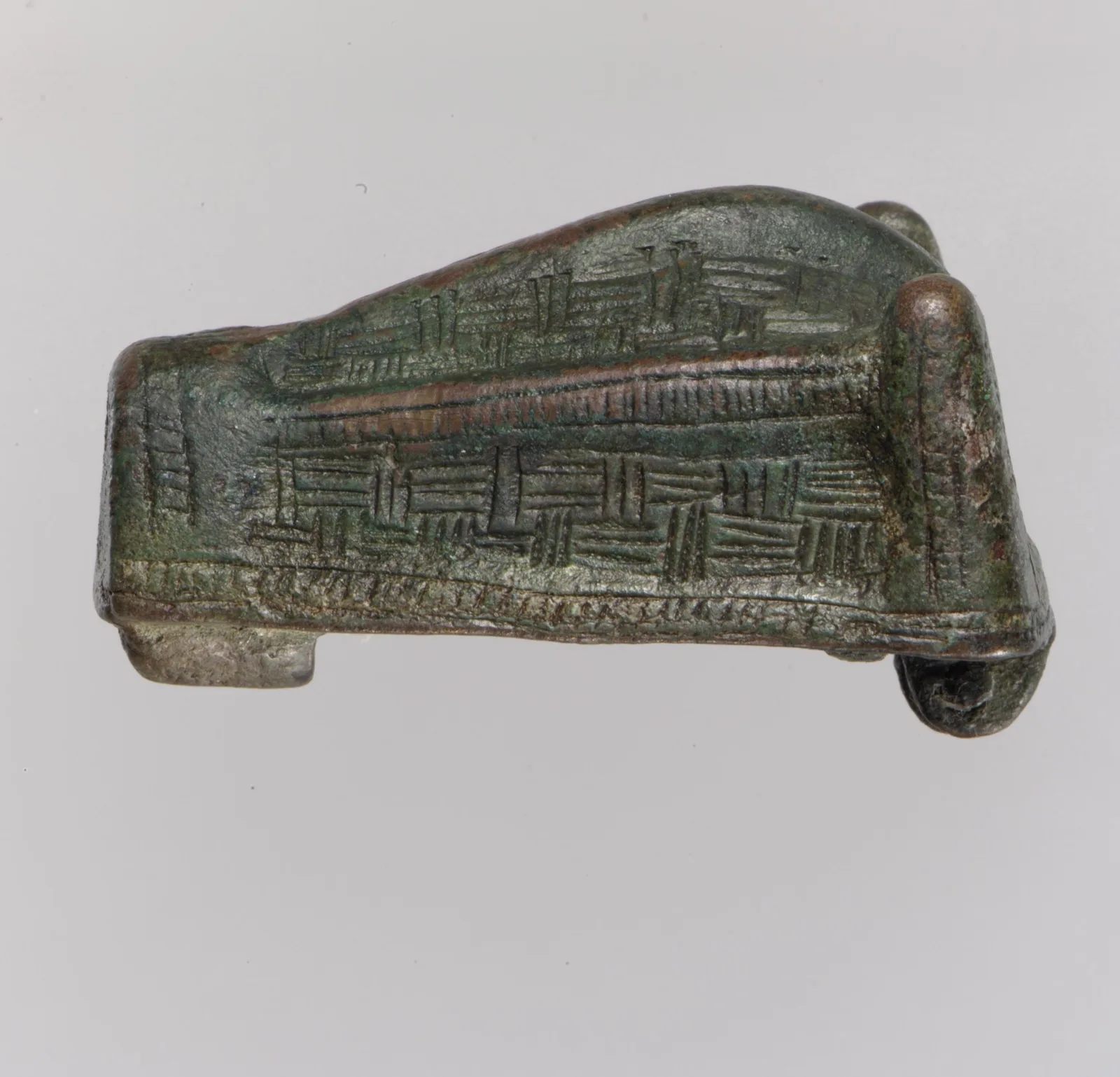
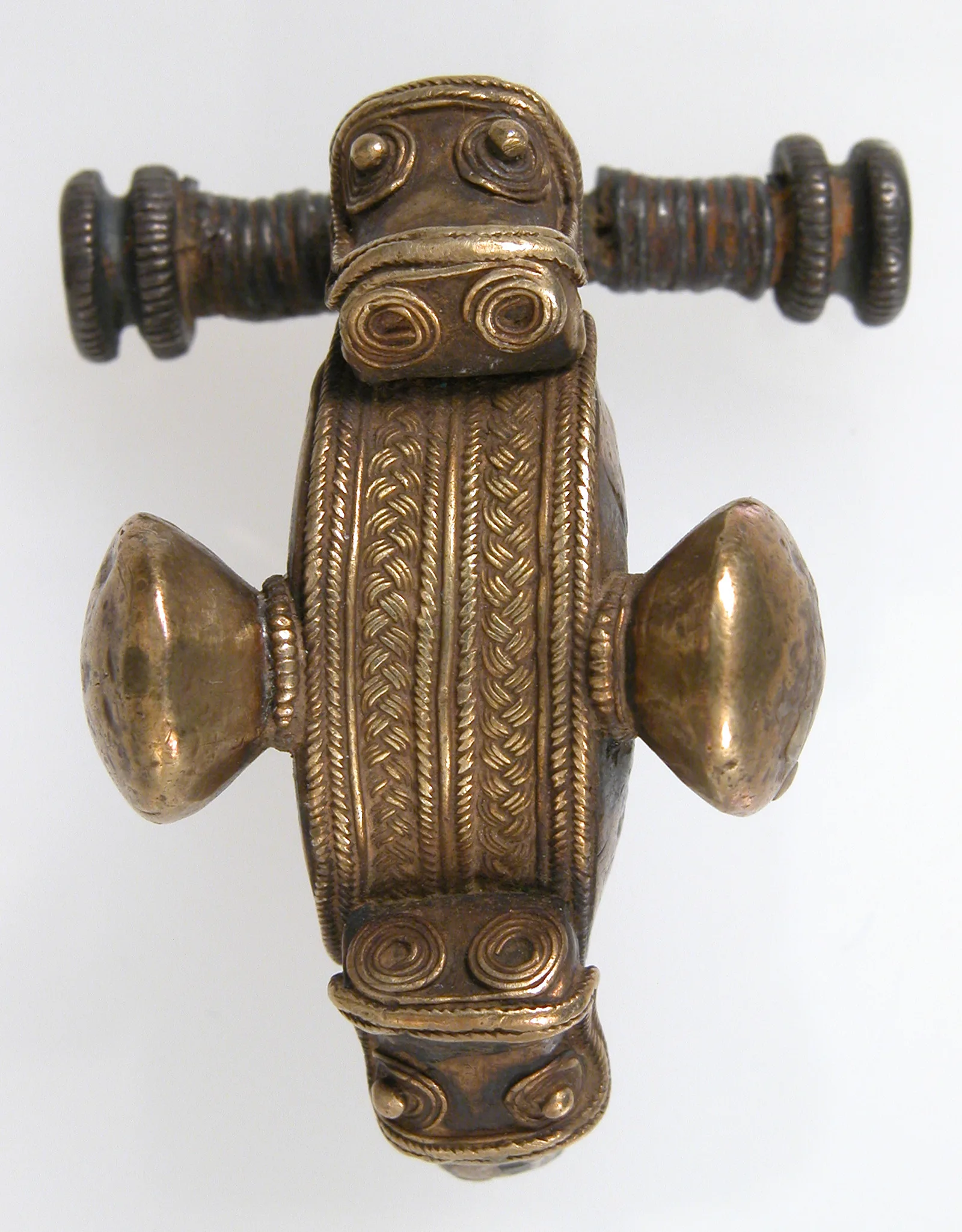
Norse mythology has reached us mainly through two Icelandic texts of the 13th century. The Poetic Edda is a collection of ancient songs about gods and heroes, while the Prose Edda was written by the learned Icelander Snorri Sturluson as a handbook for poets, and it gives the most detailed account of Yggdrasil. Both texts were written down already in the Christian era, centuries after the beliefs themselves, so much has come down in fragments and with later edits. Archaeology fills out the picture: rune stones, amulets and carvings of the Viking Age show that the image of the tree and the creatures around it lived long before they were written.
Yggdrasil and Ragnarok
The fate of the tree is tied directly to the end of the world. The prophecy says that before Ragnarok, Yggdrasil will shudder and groan, and this will be the sign that the doom of the gods is upon them. In the final battle Odin, Thor, Freyr, Heimdall and almost all the rest will fall, the world will burn and sink beneath the waves. But the tree will stand. Within its trunk two humans, Lif and Lifthrasir, will shelter, and after the catastrophe they will come out to people the renewed world anew. So Yggdrasil is not a symbol of doom but a sign that after the end there is always a continuation.
Wear the tree on a heavy chain over a sweater, not on a bare collarbone. A thin gold twig is a keyring, not the North.
How to wear Yggdrasil
Over years on shoots and in the fitting room this Northern symbol has passed through dozens of looks with me. Here is what actually works, sorted by occasion.
What do I wear the tree with every day? For daily wear I recommend a mid-sized silver tree on a thin chain over a sweater, a shirt or a plain tee. A light top lifts the oxidised relief, a dark one turns the tree into the accent. This pendant sits closer to the neck and works softly, with no fuss.
How do I build a strong Northern look? For a look that stands out I suggest a large round medallion on a rugged link or curb chain. The heavier the chain, the louder the Northern character. Under that accent I choose a dark, dense palette: graphite, khaki, navy, leather.
Do you wear the tree alone or in a set? Yggdrasil builds well into a set with Thor's hammer, the valknut and runes. If you want a coherent stack, I suggest keeping one strong accent on show and the rest quiet. The guide to Viking jewellery and the piece on the Norse pantheon help you assemble it.
Are bronze and gold too much? Not too much, but that is dressier territory. Large bronze or gold I recommend for a considered look and dark fabric, not for the everyday. On a signet ring or a cuff the tree is given as a silhouette or engraving: a piece worn constantly, as a personal sign.
Who does the tree suit and who is it for? The symbol is unisex, so it suits a man or a woman; the difference is size and metal. I recommend it for someone going through a major turn who you want to wish endurance and a new beginning: a move, a birthday, a recovery. The only thing that matters is that the person feels the meaning of roots and growth, not just the silhouette.
Turn on your camera, pick earrings, a pendant or a ring, and see the piece on yourself in real time.
Switch items in one tap.
Everything runs in your browser: no photo or video is ever uploaded.
Customer reviews
Zevira is a real jewellery shop. Genuine payments, deliveries and customer thank-yous.
🥰🥰🥰 gracias
Ok, ¡gracias! 🙂
Meaning
Yggdrasil is one of the most concentrated of Northern symbols: a single tree carries several large meanings at once, and people wear it in different ways depending on what speaks to them most.
The connection of all worlds
The chief meaning of Yggdrasil is connection. Nine worlds hang on one tree, roots and branches interlace, high and low are joined by the trunk. It is an image of unity: everything is connected to everything, nothing exists alone. A world tree pendant is often chosen for exactly this idea, as a sign that a person, their family, nature and fate are woven into a common web.
Fate and the threads of the Norns
The Norns spin fate at the roots of the tree, and Yggdrasil cannot be separated from the theme of what is fated. The tree holds the flow of time: the past in the roots, the present in the trunk, the future in the crown. To wear this symbol is to acknowledge that life holds both freedom and what is set down, and to meet the course of events with Northern dignity.
Growth and development
A tree always means growth. Yggdrasil is forever green, reaching upward despite the stags in its crown and the dragon at its root. So the world tree also reads as a personal sign of development: of moving forward, of taking root and reaching toward the light at the same time. This meaning speaks even to those who are not drawn to mythology but simply love the idea of a life that refuses to give in.
Endurance and support
Yggdrasil carries the whole world on itself and yet withstands constant wear: it is eaten, gnawed and worried at, and still it stands. From this comes the meaning of endurance and inner support. It is a strong sign for anyone going through a hard stretch who wants a reminder that you can hold on, even when you are being worn at from every side.
The cycle of life
The crown and roots of Yggdrasil are often woven into a circle, and not by chance. It is the idea of the cycle: life and death, growth and decay follow one another and turn into one another. After Ragnarok, the doom of the gods, the survivors come out from beneath the tree and the world begins again. Yggdrasil is a symbol of both the end and the new beginning.
A link to ancestors and family
A tree with roots reaching deep is easily read as an image of lineage: ancestors below, descendants in the crown, the person in the middle. The Norns at the roots spin the thread of every fate, and in this sense Yggdrasil sits close to the idea of the family tree, but in its Northern, austere form. Such a pendant is often chosen as a sign of memory for one's family and the bond between generations, especially where there are Scandinavian roots in the family or an interest in Northern culture.
Protection and a talisman
Although Yggdrasil is not a battle sign like Thor's hammer, people do wear it as a protective charm. The logic is simple: the tree holds the whole world and withstands any wear, so it symbolically strengthens the one who wears it. For many it is a calm, unaggressive amulet of endurance, unlike the more warlike Northern signs. You can read more about the difference between a protective charm, an amulet and a talisman in the general piece on protection charms and talismans.
Upload a photo of your pet, someone you love, or an object. We'll build a 3D model and hand-cast it in pewter.
Yggdrasil versus the general "tree of life"
Yggdrasil and the "tree of life" are often confused, drawn alike and sold under a single label. But they are not the same thing, and the difference is fundamental.
The "tree of life" is a broad, cross-cultural symbol. A tree with roots and crown as an image of life, family and the bond between earth and sky appears among almost all peoples: in ancient Egypt, Mesopotamia, the Celtic tradition, Christianity, Judaism. It is a general, gentle idea of unity, roots and growth, with no tie to any one myth. This line is examined in full in the separate piece on the tree of life and in the guide to nature symbols in jewellery.
Yggdrasil is a specific Northern cosmos-tree. It has a name, a species (ash), a precise anatomy: three roots, three springs, nine worlds, an eagle, a squirrel, a dragon, the Norns. It is not an abstraction but a map of the cosmos from a particular mythology, with Odin's sacrifice, the runes and Ragnarok inside it. When a person chooses Yggdrasil rather than the general tree of life, they choose the Northern world in particular: austerity, fate, valour in the face of the end.
Visually you can often tell them apart this way: Yggdrasil is usually set in a strict circle, with mirror symmetry of crown and roots, in the Norse or interlace style, often with runes or other Northern signs nearby. The general tree of life tends to be softer, more naturalistic, without the hard geometry. If the Northern meaning is what matters to you, look for a tree in a circle with Norse graphics, not just any "tree".



Materials
Northern symbolism has always lived in metal, and Yggdrasil is no exception. The choice of material changes both the look and the character of the piece.
Silver
Silver is the historic metal of the North. The Vikings prized it over gold: silver was both money and status, traded, melted down and worn on the body as capital. The cold, moonlit shine of silver suits the Northern theme perfectly, and oxidising in the recesses brings out the interlace of branches and roots. Most Yggdrasil pendants are made from 925 sterling silver: it is strong, noble and easy to care for.
Bronze and brass
Bronze and brass give a warm, slightly archaic golden tone that carries a sense of age well. These alloys are cheaper than silver and look "museum-like", like a find pulled from the earth. The drawback is that bronze darkens over time and can leave a mark on the skin, so it is often given a protective coating. For a large, high-relief tree, bronze looks striking.
Gold
Gold lifts Yggdrasil into the premium tier. Yellow gold echoes the golden halls of Asgard and makes the symbol ceremonial, while white gold gives a strict, almost steely Northern cold. A gold world tree is a piece for life and for passing on as an heirloom, which rhymes neatly with the very meaning of the tree and the threads of lineage.
Wood, bone and combinations
Sometimes Yggdrasil is carved from wood or pairs metal with an inset of wood, bone or stone at the centre of the circle. This is the most "natural" option, close to the idea of the living ash. A stone in the core (a dark onyx, say, or green aventurine) adds colour and turns the tree into a small cosmos with a heart of its own.
Runes and engraving on metal
Runes are often placed beside the tree or around the rim of the circle: a name, a protective inscription or a single sign. Runes add depth and personal meaning to a piece, but they call for respect toward the tradition: each sign carries its own name and meaning rather than working as an ordinary letter.
Oxidising and patina
Northern jewellery almost always benefits from oxidising, where the recesses of the design are darkened and the raised parts left bright. On Yggdrasil this technique opens up the interlace of branches and roots, making the tree dimensional and easy to read. Oxidised silver looks older and more austere, closer to archaeological finds. Over time the patina may wear off the raised spots, and that is normal: the piece lives alongside its owner and gathers character.
Size and weight
Yggdrasil is made both as a large medallion the size of a palm and as a small pendant a couple of centimetres across. A large piece reads as a statement in its own right and holds the image, but it sits noticeably heavy on the neck, especially in bronze or thick silver. A small pendant is easier for everyday wear and does not compete with clothes. When choosing a size, it is worth picturing honestly whether you will wear the piece every day or bring it out for the occasion.
The world tree among different peoples
Yggdrasil is the Northern version of a very ancient and wide-ranging idea: the tree as the axis of the world, joining sky, earth and underworld. Similar images exist among many peoples, and the comparison helps to see exactly where the Northern version is strong.
Siberia and Central Asia
Among the peoples of Siberia and the Turkic-Mongol world, the world tree is the centre of the shamanic universe. Up its trunk the shaman in a trance climbs to the sky and descends to the lower world, as if along a road between worlds. Often it is a birch or larch with notches for steps. The idea is exactly the same as with Yggdrasil: the tree as axis and as a path between the tiers of the world.
The ancient East
In Mesopotamia and Assyria a sacred tree, often stylised and flanked by winged spirits, was a symbol of life, fertility and royal power. The Indian tradition has an inverted tree whose roots reach up into the sky and branches down, an image of a cosmos growing out of a divine source. These trees sit closer to the idea of life and order, without the Northern theme of doom.
The Celtic world
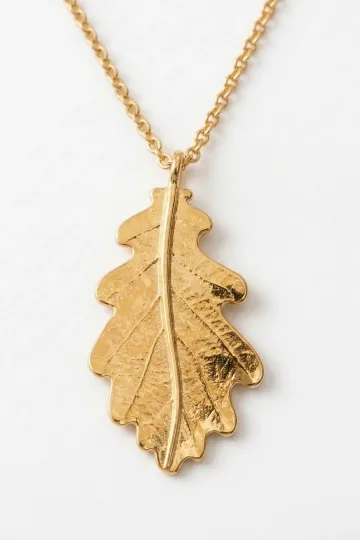
Among the Celts a sacred tree, more often an oak, stood at the centre of the tribal land and was held to be the link with the world of ancestors and gods. The Celtic "tree of life", with interlaced roots and crown, is graphically very close to Yggdrasil, and not by chance: both grew out of a shared North European soil and are often drawn in the same interlace style. It is exactly this resemblance that leads people to mix up the Celtic and Norse trees in jewellery, even though the myths behind them are different.
The Slavic world
The Slavs too had their own world tree, most often an oak, joining the three tiers of the world: heavenly, earthly and underworld. Birds sat at the top, a serpent dwelt at the roots, and human life ran in the middle. The likeness to Yggdrasil is striking, right down to the eagle above and the serpent at the roots, and it shows once more how ancient and widely shared the very idea of the tree as the world's axis was among the peoples of Northern Eurasia.
The Abrahamic traditions
The Bible has both the tree of life in the garden of paradise and the tree of knowledge. In Kabbalah the "tree of the sefirot" is a scheme of how the world is built and of the paths toward the divine. Here the tree becomes less a living plant than a map of spiritual levels. It shows how far the idea of the world tree can go: from a living ash to a pure diagram of being.
Leave your email, we'll send your discount code. No spam, unsubscribe anytime.
The code arrives by email, valid on your first order.
The psychology of choosing a Northern sign
Yggdrasil is chosen for a reason, and the reasons rarely come down to a fashion for "all things Scandinavian".
A need for support
Most often people are drawn to the world tree at a moment when they need inner support: a move, a divorce, a loss, a change of career. The image of a tree that carries a whole world and withstands the dragon at its root works as a quiet reminder of one's own steadiness. It is a calm symbol, without aggression, unlike the warlike hammer of Thor, and so it suits those who are looking for strength rather than a challenge.
A pull toward a whole picture of the world
Yggdrasil appeals to people for whom the idea of everything being connected matters. In a world that splinters into parts, the image of a single tree on which all the worlds rest gives a sense of order and meaning. It is the choice of those who think in systems and value the big picture over isolated fragments.
An interest in roots and history
Northern symbolism often draws people who are researching their ancestry, or who are simply fascinated by history and mythology. A tree, with its roots and generations, fits this need more precisely than any other sign. For many it is a way to wear their connection to the past without turning it into a museum exhibit.
Aesthetics without grand words
There is a purely visual motive too. Yggdrasil in a circle is a graphically balanced, spare symbol that looks good in silver and slots easily into a calm, restrained style. Some people choose it precisely as a piece of handsome geometry with depth behind it, and there is nothing shallow in that.
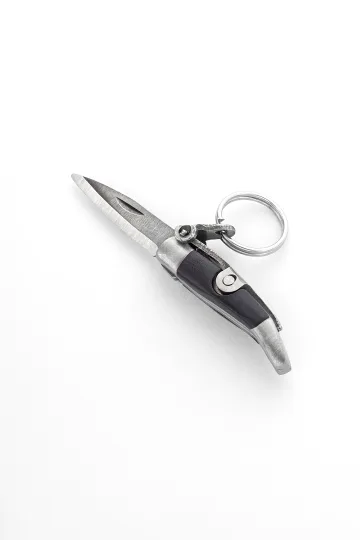
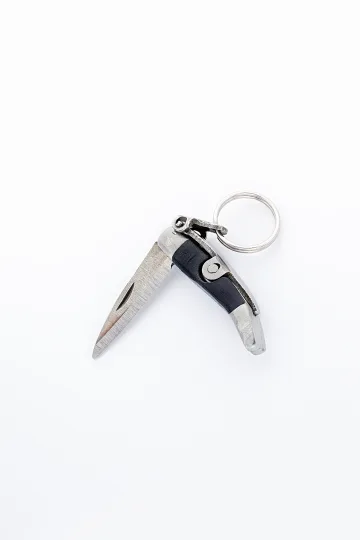
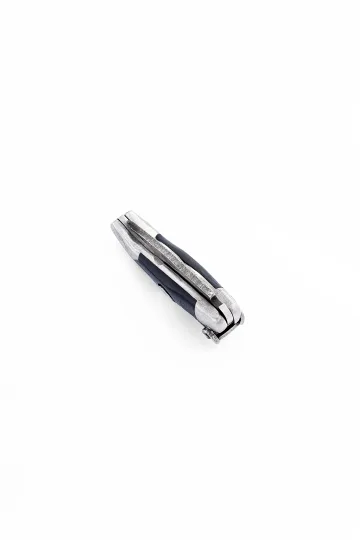
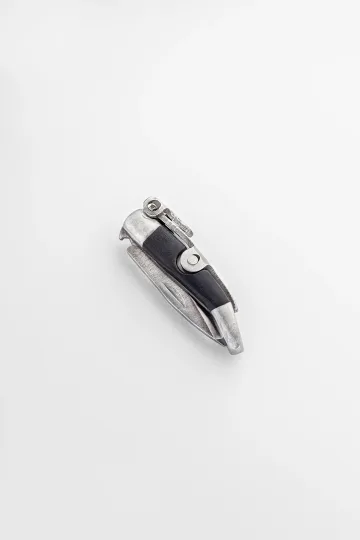
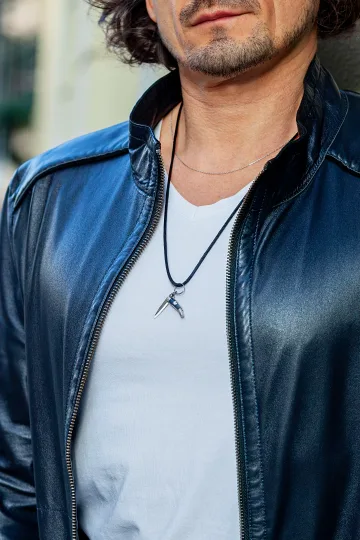
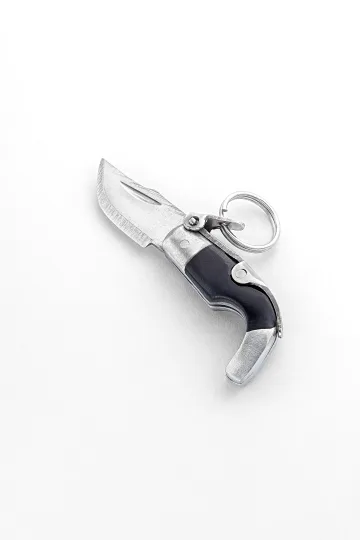
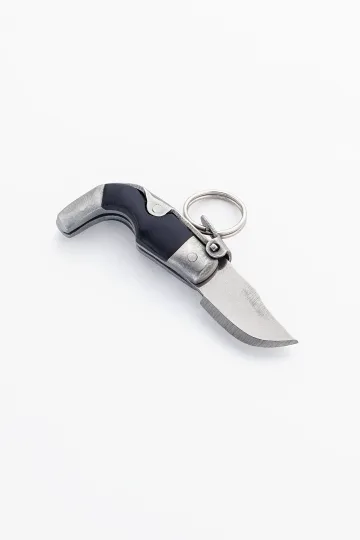
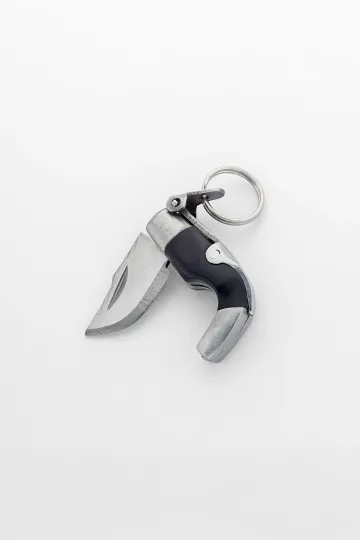
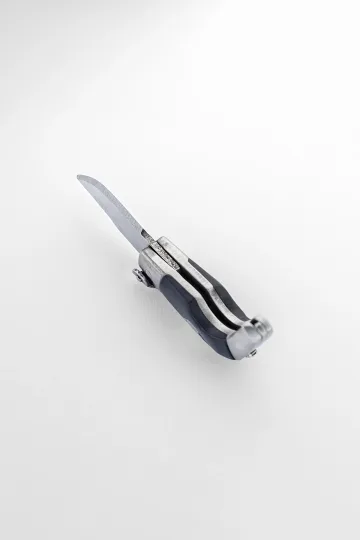
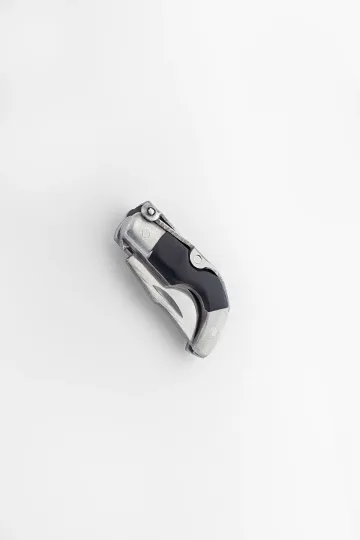
CAPAORA mini knife pendant
The 18th-century Spanish navaja in miniature: 40 mm of stainless steel, a real folding mechanism and a Palanquilla lock that clicks. An affordable gift to remember.
Authentic · Ships from Spain · 14-day returns
The world tree in art and culture
The image of Yggdrasil left the old texts long ago and lives on in art, music and popular culture.
Romanticism and national revival
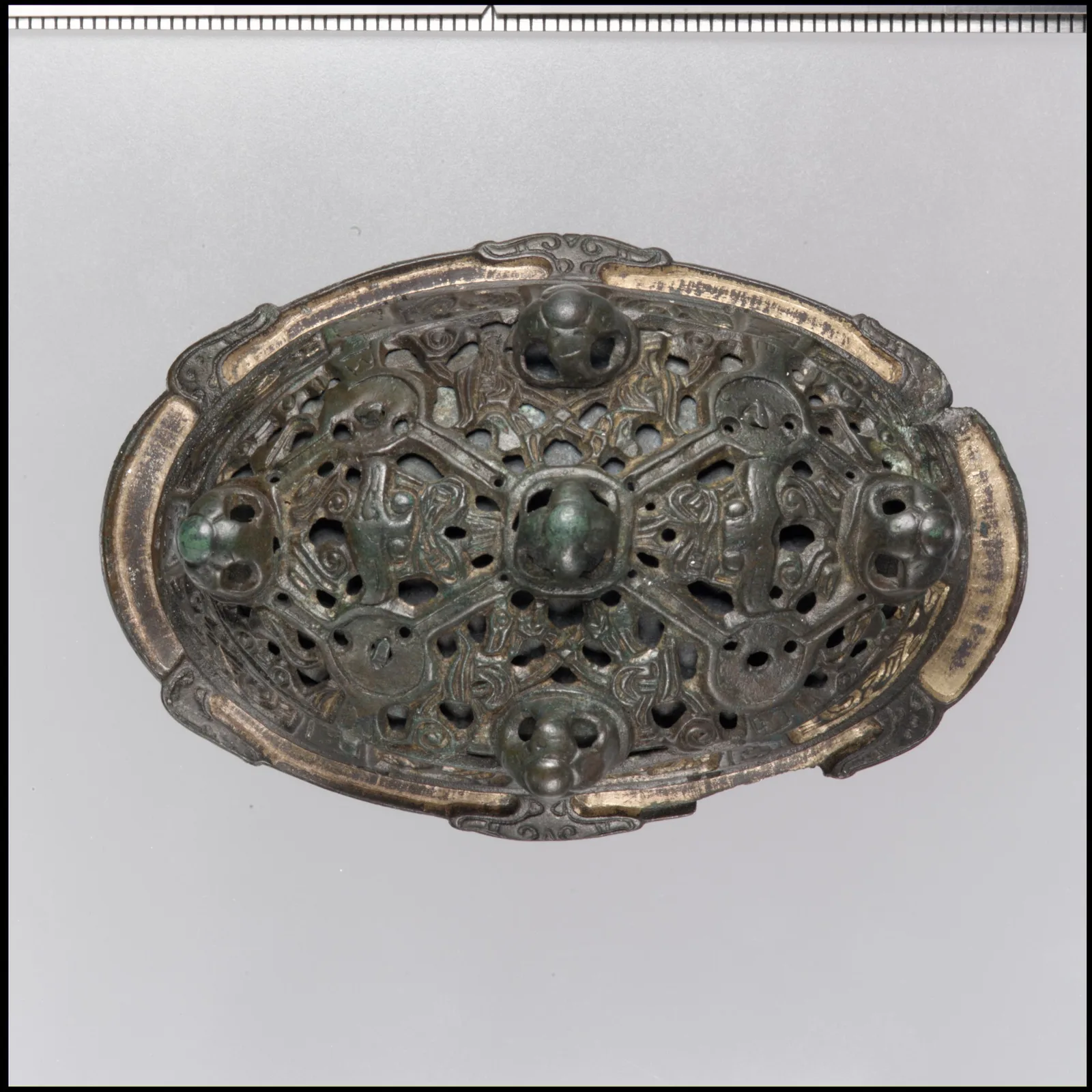
In the 19th century, on a wave of interest in national roots, the Northern myths returned to the major art of Scandinavia and Germany. Artists and illustrators drew the world tree with its eagle, squirrel and dragon, turning the spare lines of the Edda into detailed scenes. It was then that the recognisable face of Yggdrasil we see today took shape: a tree with mirrored crown and roots, peopled with beasts.
Yggdrasil in graphics and illustration
The 20th century fixed the world tree as a favourite subject of book illustration and the poster. The symmetry of the tree falls perfectly into a circular composition, which is why Yggdrasil is so often shown in a medallion or on a round emblem. It is this illustration tradition that feeds modern jewellery design directly: a pendant with a tree in a circle is, in effect, a book engraving carried over onto metal.
In music and contemporary culture
The Northern theme has gone through a powerful revival in music and popular culture over recent decades. Folk and heavy genres, historical series and games on Scandinavian motifs have brought Yggdrasil back into the everyday lives of people who never opened the Edda. For many it was from here that the interest in the world tree came, and only afterward the interest in its real meaning. That is a normal path: the image catches you first, and the depth opens up next.
Scandinavian design and nature
It is curious that the modern Northern aesthetic, with its love of clean lines, wood and natural forms, echoes the ancient image of the world ash. The idea of a life growing out of nature and bound into a single whole has proved remarkably durable. Yggdrasil, in this sense, is the ancient ancestor of all the Northern love of nature and order.
A symbol that outlived its faith
The most striking thing about Yggdrasil's fate is that it outlived the very religion that bore it. Belief in the Northern gods faded more than a thousand years ago, but the tree that held up their world remained a living image, and today it is worn by people of the most varied views. This is often how it goes with strong symbols: the myth departs, but the form and meaning remain and fill up with new content. A world tree pendant is a bridge to a picture of the world dreamed up by the hard people of the Northern seas, and every owner finishes building it in their own way.
Facts that surprise
Norse mythology is full of details that rarely make it into short descriptions, and it is they that make Yggdrasil so alive.
The very name of the tree, "Odin's steed", is a hint at execution by hanging: to hang on a tree was, in poetry, "to ride the horse of the gallows". A grim etymology for a symbol of life.
The squirrel Ratatoskr is busy not with gathering nuts but with spreading slander: its only task in the myth is to carry insults between the eagle above and the dragon below, setting them against each other.
The Norns pour over the root of the tree not ordinary water but water mixed with white clay from the Well of Urd, and from this moisture, the text says, everything that falls into it turns white, which is where the explanation came from for why eggshells are white.
Yggdrasil will outlast the end of the world. After Ragnarok, in which almost all the gods perish, the tree will stand, and within it two humans, Lif and Lifthrasir, will hide, from whom the human race will begin again.
The tree has its own goat that gives mead instead of milk. Heidrun browses the foliage of Yggdrasil, and from her udder flows the heady mead with which the fallen warriors of Valhalla are served: an endless bar right on the trunk of the world.
The "ash or yew" debate has gone on for centuries: an ash is never evergreen, so some scholars hold that a yew lay at the root of the image, a tree that is green in winter too and lives for two or three thousand years.
Odin sacrificed himself for the runes on this very tree, hanging for nine days. So the writing of the North was literally "taken down" from the world tree, and a runic inscription on a piece of jewellery points straight back to that scene.
Send a friend a discount code, they save on their first order.
Frequently asked questions
What does Yggdrasil symbolise in jewellery?
First of all the connection of all things and all worlds, and also fate, growth, endurance and the cycle of life. It is a Northern sign of the unity of the cosmos: everything is woven together by roots and branches. It is worn as a reminder of one's bond with family and nature, and as a charm of endurance through a hard period.
How does Yggdrasil differ from an ordinary tree of life?
The tree of life is a broad cross-cultural symbol of unity and growth, with no tie to any one myth. Yggdrasil is a specific Northern cosmos-tree with a name, a species, three roots, nine worlds and inhabitants of its own (eagle, squirrel, dragon, Norns). If the Scandinavian meaning is what matters, choose a tree in a circle with Norse graphics.
What kind of tree is Yggdrasil, ash or yew?
The texts call it an ash, and that is how tradition has fixed it. But since an ash is not evergreen, while the tree is described as green all year round, some scholars believe a yew was the original model. The question is unsettled, but in jewellery and descriptions the word used is usually "ash".
Can I wear Yggdrasil if I do not believe in the Norse gods?
Yes. Today it is first of all a cultural and personal symbol of connection, family and endurance, not an object of worship. Anyone who feels close to the idea of the unity of the world and nature can wear it. Respect for the tradition does not hurt, though: it is worth understanding exactly what is depicted.
How many worlds are on Yggdrasil?
Nine. The classic set: Asgard, Vanaheim, Alfheim, Midgard, Jotunheim, Svartalfheim, Muspelheim, Niflheim and Hel. The exact list shifts a little between retellings, but the number nine stays constant and is itself sacred in the Northern tradition.
Which metal is best for a Yggdrasil pendant?
For historical authenticity and everyday wear, silver is best, the metal of the North. Bronze gives a warm, archaic look; gold moves the piece into the premium tier and toward becoming an heirloom. The choice depends on budget and character: cold silver is more austere, warm bronze softer, gold more ceremonial.
Is Yggdrasil a masculine or feminine symbol?
Unisex. The world tree is worn equally by men and women; only the size, metal and manner of wearing change. Large, rugged pendants are more often taken for a masculine look, fine and delicate ones for a feminine one, but there is no hard division.
Can I combine Yggdrasil with runes and Thor's hammer?
Yes, and it is natural. Yggdrasil is the axis of the whole Northern world, so it comes together beautifully in a set with Thor's hammer, the valknut, the Viking compass and runic inscriptions. The main thing is not to overload the look: one large accent on show, the rest kept quiet.
Conclusion
Yggdrasil is one of those rare cases where a whole universe stands behind a piece of jewellery, and one drawn down to the smallest detail: with its eagle and squirrel, its three springs and the dragon at the root. The people of the North poured into this tree their central thought about the world: everything is connected, everything grows, and everything will one day give way to a new turn. To wear the world tree is to carry a fragment of that picture, where life moves in a circle and endurance matters more than eternity.
If it is the Northern meaning you want, and not the general idea of a tree, choose Yggdrasil in a circle with Norse graphics and runes. And if the softer, cross-cultural symbolism of family and growth speaks to you more, look toward the general tree of life.
The Northern tree in silver
Yggdrasil, runes, Thor's hammer and the whole set of Northern symbolism in one place. Choose your own world tree and build a coherent Scandinavian look.
Browse the jewelleryBuying it as a gift? Each one arrives ready to give.
 A branded Zevira box and a little card come with every order.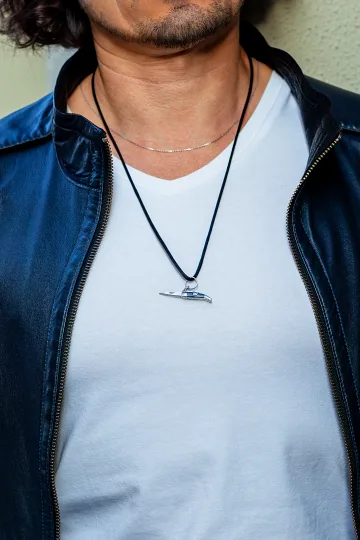




About Zevira
Zevira makes jewellery with a story: behind every symbol stands a myth, a culture and a real meaning that goes beyond the shape. The Northern line is special to us: austerity, silver and a character proven over the centuries. We write about what we sell, so that you choose your sign with awareness, understanding exactly what you wear on your body.