A 70th Birthday Gift: Jewellery as a Sign That a Person Stays
Seventy is the age when a gift starts to become an inheritance for whoever receives it next. The giver senses this: the object handed to a seventy-year-old relative will soon become an object that lives on without them. This guide is about how to make a gift that bridges generations.
Why Seventy Is a Different Genre of Gift
At thirty you give someone a future. At forty you give the present. At fifty you give achievement. At sixty you give freedom. At seventy you give what will go on living after the recipient.
This is not a gloomy observation, and it is not a conversation about death. It is a practical fact that changes everything in choosing jewellery. By seventy a person looks at their possessions differently than they did at forty: what you choose for a 40th birthday gift solves a completely different problem than a gift for seventy. They begin to sort things into two categories: what stays with me to the end, and what I want to pass on. A gift that lands in the first category gets worn. A gift that lands in the second is carefully kept and eventually goes to children, grandchildren, great-grandchildren.
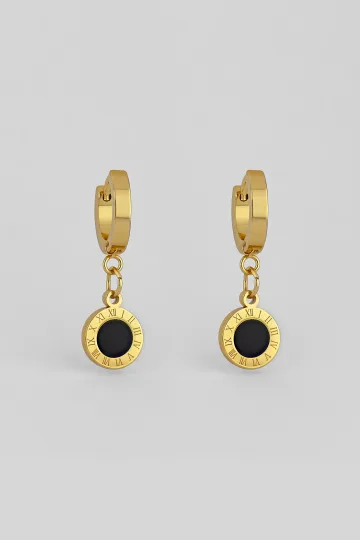
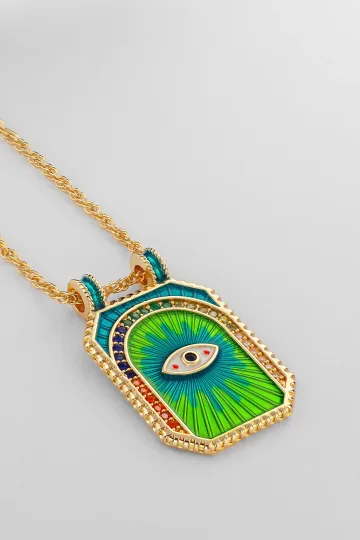
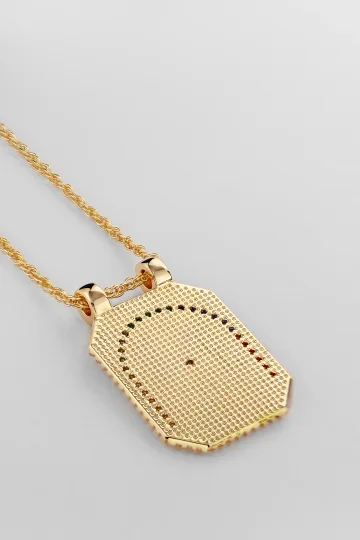
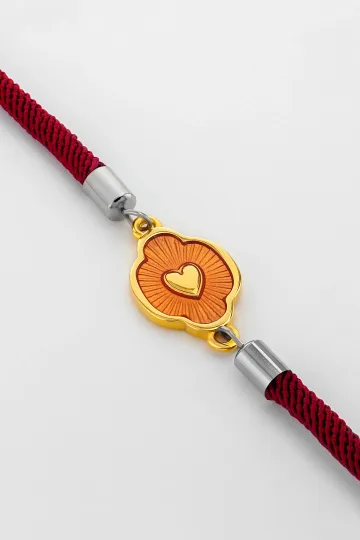
Wear the symbol, don't just read about it. These are in stock:


A good 70th birthday gift can live in both categories at once. It is worn now, and it becomes an inheritance later. That is why seventy is not just one more round number in a row of anniversaries. It is a special moment when giving overlaps with inheritance inside a single object.
It helps to compare with the neighbouring step. At sixty a person is still in the phase of freedom, and the gift says "a new phase lies ahead of you." At seventy a person is already in that phase, and the gift says "you are here now, and you stay." Sometimes a seventieth birthday coincides with other important dates: if the recipient married at twenty, their fiftieth wedding anniversary falls exactly on seventy, and for some people retirement sits close by too. When dates overlap you can make one gift that works in both senses, or two separate ones.
In most families this transition is never said out loud. Nobody announces at a seventieth birthday: "This piece is from us to you, and in twenty years it will pass to our daughter." Yet that is exactly how it goes. The giver feels it. The recipient understands it. The future heir is sometimes physically present at the party as a small grandchild or a teenager.
This guide treats the 70th birthday gift precisely as a dual-purpose object: jewellery for a living person plus a family heirloom in the making. Every recommendation, the choice of metal, the form of engraving, the symbol ideas, works through this double lens.
What Changes in the Giver
When you give something to a seventy-year-old, the scale stretches. You are not only thinking about them. You are thinking about how this object will look in twenty years in the hands of their granddaughter. Whether she will wear it herself. Whether she will know who gave it and why. Whether she will pass it on.
This is different mental work. It needs more time to decide. It needs a different relationship with the material: sterling silver and 14K gold last for centuries, costume jewellery does not last even ten years. It needs a different relationship with the engraving: what is engraved in 2026 must be legible in 2046 and understood in 2066.
A giver who grasps this scale makes a different choice. They are not buying "an anniversary present." They are laying the first brick of a family heirloom. And that is often why, in thoughtful families, the 70th birthday gift becomes one of the most carefully chosen objects of the year.
What Changes in the Recipient
A person turning seventy has changed too. They count things differently now: no longer in the category of "want" or "need," but in the category of "what will be left of this."
This is not pessimism, and it is not depression. It is a shift from the logic of accumulation to the logic of passing on. By seventy it is far more visible in many people than at any younger age.
So a seventy-year-old opening a gift box reads it differently. They do not think "where will I wear this," they think "this is for me, but who will it go to afterwards?"
A gift that takes this inner question into account lands precisely. A gift that ignores it sails past.
The Bridge Gift: a Working Definition
I will use the term "bridge gift" throughout this guide. It is not a marketing phrase. It is a concrete, practical category that differs from an ordinary gift on several counts.
An ordinary gift is meant for the recipient. Full stop. The giver chooses something the recipient will like, hands it over, and that is the end.
A bridge gift is meant first for the recipient, then, after a certain number of years, for a specific future heir or class of heirs. The giver holds both in mind. They choose a material that will outlive the recipient. They choose a form that will not date stylistically across two or three generations. They choose an engraving that descendants will still understand.
In practical terms, a bridge gift for a seventieth birthday is:
- A piece in real sterling silver or 14K gold, not plating or costume jewellery
- A classic form recognisable in any era (a locket, a signet ring, a chain with a pendant)
- Engraving with specific dates, names, or facts that will not go out of date
- A documented provenance, if you are melting down material from the family
- Where possible, a box or pouch that stays with the piece
If even one of these is missing, the gift stays in the category of "gift" and does not become a bridge. That does not make it bad. It means it has a different purpose. And at a seventieth the difference between these two categories is felt more keenly than at any other anniversary.
The Psychology of Seventy: What Goes On Inside the Recipient
Turning seventy changes a person's inner workings not like a birthday but like a quiet turn most people never put into words. It is not a "crisis of seventy." It is a shift to a new way of thinking about time, about things, about loved ones and about oneself. Grasping this shift is critical to choosing a gift, because jewellery that falls along one psychological line gets worn, and jewellery that falls along another stays in the box.
Awareness of Time's Finitude
By seventy a person begins, for the first time, to count the time left not in years but in concrete events. Not "I have fifteen or twenty years ahead," but "how many more times will I see the first snow at the window, hear the bells on a feast day, watch a granddaughter marry."
This shift does not depend on the state of one's health. It happens to physically robust people, to keen travellers, to veteran athletes. The arithmetic simply catches up with everyone at one moment. At sixty a person can still convince themselves that "the whole of life" lies ahead; at seventy that phrase no longer rings true even inside one's own head.
Many notice this shift in themselves and in those close to them. When a person feels time is limited, they stop investing energy in a wide circle of acquaintances and weak ties. They concentrate on a narrow circle of intimates and on emotionally rich experiences. They stop going to office parties. They invite the children to a family supper more often. They watch the news less and look through old photographs more.
This changes what a gift must do. A seventy-year-old does not want one more "pleasant trifle." They want a thing that works on their new scale of time. Jewellery worn every day and seen hundreds of times across the years that remain. An object that falls into the emotionally rich category, not the functionally useful one.
A Reappraisal of Values
Alongside the awareness of finite time runs the work of reappraisal. What matters. What does not. What I held important for forty years that did not pay off. What I ignored that held me up my whole life.
This reappraisal is not necessarily dramatic. It is often quiet, almost invisible to those around. A person simply stops reacting to some things and starts reacting to others. They stop taking offence at things that wounded them twenty years ago. They begin to weep over photographs of their children that touched them only on the surface five years before. They argue less. They watch and stay silent more.
In practical terms, reappraisal means that a seventy-year-old's list of "what I would like to receive" differs radically from that of a twenty-, forty-, or sixty-year-old. Expensive, fashionable things drop into the background. Meaningful personal objects come to the fore. A gift that means something specifically to this person is felt many times more strongly than a gift that is merely pretty or merely costly.
That is exactly why personalisation works differently at seventy. Engraving a granddaughter's name inside a locket is not "a sweet detail." It is a direct hit on the new value system. A son's birthstone on a ring is not decoration. It is a material anchoring of what matters in this era.
The Wish to Simplify: Letting Go of the Surplus
One of the most visible psychological processes after seventy is deliberate simplification. A person starts giving things away. Sorting through cupboards. Deciding what to keep, what to hand on, what to discard.
Swedish culture gave this process the name döstädning, which translates literally as "death cleaning." Despite the grim term, it is a thoroughly positive practice, described by the writer Margareta Magnusson in 2017 in a book that became an international bestseller. The idea is simple: after a certain age a person consciously eases the future burden on their heirs by sorting through their own belongings in advance, while they still have the strength and the memory.
In Britain and across much of Europe the process has no settled name, but it happens just the same. A seventy-year-old woman goes through a chest and hands the young ones dresses that "don't suit me any more anyway." A seventy-year-old man clears out the shed and gives the tools to his grandchildren. This is not preparation for death. It is freeing up space and clearing one's lines.
This process matters to the giver because it changes the logic of buying. Giving a thing that takes up room, that expands an already shrinking inventory, runs counter to the recipient's inner work. Jewellery, in this sense, is almost the ideal gift: it takes up less space than a framed photograph and carries more meaning. It does not belong in the "must simplify" category. It belongs in the "must keep" category.
The Wish to Leave Something Meaningful
Alongside simplification runs the opposite process: a stronger wish to leave something meaningful behind. Not possessions. Not money. A sign, a symbol, a mark that will tell the next generations: "I was here, I loved, I thought this."
Psychologically this is the work Erik Erikson described in the eighth stage of his theory of personality development as "integrity versus despair." A person either arrives at the sense that the life lived has meaning, or experiences it as a chain of missed chances. This is inner work done alone. But outer signs matter. They help.
A piece of jewellery from the family at seventy, especially one bearing the symbols of the lineage, the names of descendants, an engraving, is an outer sign that supports the work of integrity. Through material form it tells the person: "your road was seen, it was acknowledged, it mattered." This is not a compliment. It is material confirmation of something the person is not fully sure of at this point in life.
That is why a reliquary gift, a gift bearing the tree symbol, a gift set with the birthstones of children and grandchildren, works ten times harder at seventy than at any other anniversary. It hits the person's inner question at the very moment that question is at its sharpest.
The Paradox of Fragility and Strength at Once
Another feature of the psychology of seventy worth knowing: the simultaneous experience of one's own fragility and one's own strength.
A person feels the body has become less reliable than it was twenty years ago. They notice slower movement, tiredness, changing eyesight. It is not a catastrophe, but it is there in the background.
At the same time they feel inwardly stronger than ever. They have more experience. More understanding. Fewer illusions and more precision. They know themselves more deeply than they did thirty years ago.
These two feelings live side by side, and a good gift honours both. Jewellery that is too heavy presses on the fragility. Jewellery that is too decorative ignores the strength. A gift that works strikes a balance: light in physical weight, heavy in meaning.
A silver locket on a fine chain, a mid-sized signet ring in 14K gold, a light pendant with a tree symbol, stud earrings with a single pearl, all of these land in the right balance of fragility and strength. Heavy three-strand chains, massive bracelets with elaborate clasps, layered pendants with ten elements do not.
The Inner Conversation with the Departed
At seventy most people have lost at least one parent. Many have lost both. Some have lost a contemporary, a childhood friend, a former spouse. At seventy a person lives at once with those who are near and with those who are gone.
This inner dialogue with the departed becomes a regular part of mental life. A seventy-year-old woman silently asks her mother for advice about the grandchildren. A seventy-year-old man, on hard days, speaks in his mind with his father. This is normal. It is part of a mature consciousness, described across many cultural traditions.
Jewellery that physically links the recipient to the departed works in this dimension in a particular way. A stone from a grandmother's ring, reset into a new mount. A father's gold ring turned into a pendant. A lock of a younger brother's hair, placed in a locket under glass. These objects make the invisible dialogue tangible.
And here is where the theme of heritage remelting begins, to which I will give a separate large section below. Seventy is the age when such a gift lands in exactly the right place.
Accepting One's Place in the Line
The last of the great psychological tasks of seventy is accepting one's own place in the line. For the first time a person clearly sees their position: they stand between their parents (who are gone or soon will be) and their grandchildren or great-grandchildren. They are the bridge. Literally and figuratively they connect those who came before with those who will come after.
This is not a philosophical observation. It is a concrete experience that happens to most people in exactly this age range. It can arrive unexpectedly: at the dinner table, when you suddenly see a great-grandchild's likeness to a long-dead great-grandfather. Or at a festival, when you realise that a rite you keep was kept in just the same way by your great-grandmother.
A gift that strengthens this experience hits the current work of consciousness directly. A chain with three pendants (one for the children's generation, one for the grandchildren, one for the great-grandchildren). A tree of life with stones for every branch. A locket with three miniature portraits. These forms work because they materialise what the person already feels but has not put into words.
This is the chief distinguishing mark of the right gift at seventy: it does not teach the person a new emotion. It gives voice to the one they are already living but have not yet found a form for.
Customer reviews
Zevira is a real jewellery shop. Genuine payments, deliveries and customer thank-yous.
🥰🥰🥰 gracias
Ok, ¡gracias! 🙂
A real seventieth-birthday gift outlives the one who chose it. Leave the costume trinkets at the door, and no arguments.
What to Wear It With at Seventy
A piece given at seventy joins a wardrobe that is already built, and my job as a stylist is to fit it so it supports the look rather than fights it. Here is what actually works, by occasion.
What works for every day? For daily wear I recommend a silver locket or a fine chain with a pendant: they get on with knitwear, a shirt, a roll-neck. Under a closed collar I suggest about 50 centimetres, so the pendant rests on the chest rather than hiding at the throat; under an open or V-neck I choose a shorter 45-centimetre chain. Stud earrings with a single stone suit almost any look and ask for no occasion.
And for home and quiet days? For someone who spends much of the day in a dressing gown or a soft cardigan I suggest a piece that is good to run through the fingers: a charm bracelet, a locket, prayer beads. Here touch matters more than being seen from across the room, so I choose a shape that sits in the hand rather than one that shouts.
How do I build a look for an outing? For a family celebration, church on a great feast, or a grandchild's wedding I build the look larger: a pearl necklace under an open-necked dress, drop earrings to swept-up hair, a brooch on a lapel or coat. I recommend setting a brooch on dense fabric, wool or tweed; on fine silk it drags the cloth, so under a light blouse I suggest a pendant instead.
How do I mix metals without overdoing the layers? Restraint suits a seventy-year-old, so I keep one accent instead of several: a large locket I balance with small earrings, and the reverse. Gold and silver can share a look, but through one linking piece, say a ring that holds both metals. Warm yellow gold sits more softly on tanned and darker skin, while silver and white gold look fresher on fair, cool skin.
How do I match it to the recipient's character? For an active person I recommend lean, sturdy forms that do not snag in movement. For the one who lives by memory and quiet, a piece with inner meaning is closer: a reliquary, a locket with a photo, an engraving worn against the skin. On length, a short chain flatters a shorter frame while a long pendant lengthens it. On metal, when in doubt I choose sterling silver or yellow 14K gold, which suit almost everyone and age beautifully.

Turn on your camera, pick earrings, a pendant or a ring, and see the piece on yourself in real time.
Switch items in one tap.
Everything runs in your browser: no photo or video is ever uploaded.
Types of Recipient: Active, Homebound, Believer, Agnostic
Seventy is not one kind of recipient. It is four broad psychological categories, each with its own relationship to age, body, time and gift. Understanding these categories helps you avoid missing. A gift that fits one type like a glove can miss another entirely.
I will describe four broad types: active, homebound, believer, agnostic. They are not mutually exclusive, but in each person one of them dominates. The giver usually senses intuitively which type their seventy-year-old belongs to. If not, these descriptions will help.
The Active Seventy-Year-Old
The active recipient at seventy is someone who has not slowed down. They travel, sometimes more than at fifty. They play chess or cards with friends. They swim or go Nordic walking. They master gadgets and use a smartphone with the same curiosity as the grandchildren. They have plans for the next five years, and those plans are achievable.
The active seventy-year-old comes close, physically and mentally, to the sixty-year-old of the 1980s on most measures. This is not a longevity advert or marketing. It is the real demographic picture: the length of active life has grown over recent decades, and seventy today is lived differently than half a century ago.
The gift for this type:
A signet ring with a symbol or engraving, worn on travels and not lost. A chain with a compass or compass rose, physically nodding to motion. A pocket watch on a chain with room for engraving. Mid-sized hoop earrings that suit both a tracksuit and an evening dress. A bracelet with a single large stone that does not snag clothing or hinder the hands.
What does NOT work: heavy multi-element pendants that get in the way of an active life. Jewellery that needs a formal setting (tiaras, say, or large pearl necklaces) that the active person simply never puts on for their regular pursuits. Jewellery with fragile elements that would be dangerous to lose or break.
Engraving for the active type: the coordinates of a favourite place they return to every year. The date of an important trip or climb. A personal motto. Active people value engraving tied to actions, not to age.
Tip: ask about their plans for the next two years, and the gift will choose itself. If they are walking part of a long pilgrimage route, a shell pendant suits them. If they are planning to travel the world, a globe pendant fits. If they are starting to learn Italian, a quote in Italian on the engraving works.
The Homebound Seventy-Year-Old
The homebound recipient at seventy is someone who lives more by memories than by plans. They go out rarely. They spend most of their time at home. They look back through photographs. They reread the books they read in their youth. They phone friends less and wait more for calls from children and grandchildren.
This is not a "worse" type. It is a different type. Many people at seventy naturally drift towards this way of living, and for them it is normal. The inner world in this model grows larger than the outer one. Memories become living participants in daily life.
The gift for this type:
A locket that opens, with photographs of children, grandchildren, parents. A homebound person opens a locket many times a day. It is their direct contact with those they love and cannot see in person.
A silver charm bracelet, each charm tied to a specific memory: the birthstone of each child, a tiny symbol of an important place, initials. The bracelet becomes a material archive to finger and remember.
A reliquary pendant holding a fragment of life: a pinch of earth from the family garden, a lock of a grandchild's hair from a first haircut, a tiny leaf from a beloved book. The reliquary is a very deep form for the homebound person, because it becomes direct contact with what matters.
A chain with three miniature pendants of different generations (more on this below). The homebound person wears it every day, fingers it through the day, and each pendant becomes a point of connection.
What does NOT work: jewellery built for grand outings. If the person rarely goes out, a matinée-length necklace or chandelier earrings will sit in the box. Better to choose an everyday form.
Engraving for the homebound type: the names of loved ones. Birth dates. Quotations from the books they reread. The homebound person values engraving that is close to their inner world.
Tip: look at the walls of their room. What hangs there? What photographs stand on the shelves? A gift that continues what already surrounds the person lands precisely.
The Believing Seventy-Year-Old
The believing recipient at seventy is someone whose faith has deepened with age. They go to church more than they did at fifty. They pray regularly. If they are Christian, they most likely wear a cross constantly.
Faith at seventy is not a return to childhood habits but often deeper work than at any other age. A person meets questions the young mind does not answer. They find answers in the liturgy, in prayer, in tradition.
The gift for this type:
An additional cross, not instead of the everyday one but a finer piece to wear over clothing on feast days. Silver or gold, of a classic Byzantine or Western form. Possibly engraved with a name and a baptism date.
A medallion with a miniature icon or holy image. The patron saint by name and birthday. The image should match the recipient's specific tradition, not an abstract "general religious image."
A pendant with a symbol of faith expressed with restraint. A dove for the Holy Spirit. An anchor for hope. The Sacred Heart for the love of Christ. These symbols work for believers who value faith expressed not on a placard but through the subtle language of tradition.
A rosary or a prayer bracelet. A Catholic rosary, Orthodox prayer rope, Muslim tasbih, Jewish tzitzit. Each tradition has its own objects, and they work only within their tradition. Giving a Catholic rosary to a Muslim is not a gift but an error.
Engraving for the believer: a short prayer. The "Our Father" in a tiny font on the inner face of a medallion works for Christians. The "Shema Yisrael" works for Jews. The shahada works for Muslims. Names of saints, dates of religious feasts, quotations from Scripture also work.
What does NOT work: jewellery with symbols that contradict the specific religion. A pentagram for a Christian. Any pagan or occult symbol for a religious recipient.
Tip: ask about their patron saint. Most believers know the name of their saint by their feast day or their birthday. A gift bearing that specific saint hits the very heart of the person's spiritual life.
The Agnostic Who Lives "Now"
The agnostic at seventy is someone who has not found religious conviction and is not seeking it. They are not a combative atheist but rather a philosopher of the everyday. They have learned to value each day lived precisely because they do not believe in a continuation after death. This is not pessimism but a definite philosophical stance that crystallises in many people exactly around seventy.
An agnostic may be culturally bound to the religion of their ancestors (attending services at major feasts, keeping holidays as family traditions) yet not treat it as a source of truth. They build meaning from other elements: family, work, nature, art, travel, friendship.
The gift for this type:
Jewellery with symbols of nature and the cosmos. A pendant with the moon, with stars, with the sun. These symbols are culturally neutral, not tied to a particular religion, and yet carry deep meaning (more in the guide on celestial jewellery). The agnostic values symbolism that speaks of the universe as such, not of its religious interpretation.
A pendant with a tree symbol, which is likewise not tied to one religion (it exists in Celtic, Norse, Kabbalistic, Christian traditions, and in secular philosophy). For the agnostic, the tree of life works as an image of lineage continuity, not as a religious symbol.
A bracelet or ring with a philosophical engraving: a quote from a secular classic, a personal motto, the coordinates of a place of personal significance. The agnostic values engraving that does not appeal to an authority but states a personal position.
Birthstones or zodiac signs. These systems exist independently of religion and, for the agnostic, work as culturally neutral markers of identity.
Pieces of master craftsmanship. The agnostic often values the craft itself, sees in a jeweller's fine work something that does not reduce to money or status. A gift in which the hand of the maker is visible is especially valuable to the agnostic.
What does NOT work: jewellery with overt religious symbolism. Crosses, icons, rosaries are not for the agnostic. They will either sit in a box or stir a slight inner resistance.
Engraving for the agnostic: a quote without religious subtext. Carpe diem. Memento vivere (remember to live). The coordinates of a favourite place. A word that matters in their personal value system. The names of loved ones.
Tip: ask which book they are rereading now. Which philosophical quotation they feel close to. A gift that materialises that quote or that book lands right at their centre.
When the Types Overlap
In reality most people are not pure types but mixtures. An active believer climbs mountains and then prays in a chapel at the summit. A homebound agnostic reads the classics and values a jeweller's skill. A believer who is physically homebound spends most of their time with a prayer book.
When you choose a gift, try to work out which type dominates and match the form to it. If the recipient is both active and a believer, give them a silver cross of sturdy design that will survive travel and not snag on a rucksack.
If they are both homebound and an agnostic, give them a locket with secular symbolism and photographs of loved ones inside.
A category is not a cage you force a person into. It is a set of coordinates that helps you avoid missing. The final choice is always made for the specific person with their specific biography.
Thirty Ideas for a Seventieth Birthday Gift
This list is not the usual "top 30 jewellery items." It is thirty specific forms and devices, each of which works precisely at seventy and works less precisely at other anniversaries. I will group them: heritage devices, reliquary pendants, lineage symbols, material devices, coordinate devices.
1. Heritage Remelting as the Central Device of Seventy
This is the main idea for a seventieth birthday. You take material from the ancestors (a grandmother's gold ring, a mother's earrings, a father's cufflinks) and remelt it into a new form for the generations to come. Not chiefly for the recipient, but through the recipient for those who come after.
The logic: a seventy-year-old stands on the threshold beyond which the ancestors' material will either be remelted with understanding and love, or sold off to chance pawnshops by children who do not know the story. The decision to remelt now, in the recipient's presence, with their participation, on their anniversary, is an act of preserving family memory that other moments in life simply do not afford.
Technically, remelting is done by a workshop that works with client-supplied material. This is a special category of jeweller; not every workshop takes it on. Silver pieces are remelted relatively simply; gold requires accounting for purity and proper documentation.
There is a separate large section on this device below.
2. A Reliquary with Fragments of Family History
A reliquary is a special pendant or medallion that can hold several different fragments inside. Not one photograph, but several layers of material memory.
What can go inside:
- A microfiche photograph: a portrait laser-reduced to a few millimetres, set under mineral glass
- A pinch of earth from the recipient's birthplace or a parent's grave
- A handwritten text rolled into a tube two or three millimetres across (a wish, a prayer, a quote)
- A lock of a grandchild's hair from a first haircut
- A dried rose petal from the family garden
The reliquary is a form our culture has half-forgotten, but it was highly developed in eighteenth- and nineteenth-century Europe. Today it is made to order by jewellers who specialise in personalised pieces. It is not a cheap form, but it is one that reaches the heart of a seventy-year-old more strongly than any standard piece.
3. A Silver Signet Ring with the Initials of All Living Grandchildren
The signet ring is a traditional form for a man of mature years. At seventy the version with the initials of all the recipient's living grandchildren cut into the face works especially strongly.
If a grandfather has three grandchildren named Alexander, Mary and Nicholas, three initials are engraved: A, M, N. The arrangement is monogrammatic, interwoven, executed by a calligraphic master so that it reads as a mark of the line rather than a string of letters.
The grandfather wears the ring for the rest of his life. After his death it passes to one of those grandchildren whose initials it bears, most often the eldest male. The handover is made explicit: "Grandfather wanted you to have this ring."
4. A Chain with Three Miniature Pendants
One pendant represents the children's generation. One the grandchildren's. One the great-grandchildren's (if they already exist, or with an eye to the future).
The pendants are chosen in different shapes or with different symbols. For example: a circle for the children (wholeness, the completed generation that lived alongside the recipient for most of their life), a heart for the grandchildren (love, the chief bond of the present), a star for the great-grandchildren (the future, the new generation).
Inside each pendant there may be the birthstone of the eldest member of that generation, or an engraving of initials, or a tiny photograph.
This chain is worn every day. After the recipient's death it often stays undivided as a family heirloom, passed on whole to the next in line.
5. A Medallion with a Miniature Map of the Home Region
Inside the medallion goes a miniature map of the area where the recipient was born or spent most of their life. The map is taken from open cartographic sources, simplified to the main roads, rivers and streets, and transferred by laser engraving at a resolution down to 25 microns.
A marker on the map shows a specific house: where they were born, where they lived with their parents, where they raised their own children. Sometimes several markers on one map mark the key points of a life's route.
The medallion opens, and the person sees the map of their life in miniature. On the reverse there may be a photograph or another engraving. This device works especially strongly for people who have changed cities several times, or who feel nostalgia for a home place they no longer return to.
6. A Pocket Watch with the Date Set in Star Form
Pocket watches were traditionally given on anniversaries to men of mature years. At seventy they work if you choose a model that allows engraving and setting.
The device lies in how the anniversary date is engraved. Not "25.03.2026," but in the form of the arrangement of the stars on that day and at that place. The natal chart of the seventieth. A small astrolabe by the coordinates of the place where the party is held and the exact time of giving.
This turns the date into a cipher. On the surface it is an unreadable pattern, intelligible only to the initiated. Inside the box comes a card with the key: "25 March 2026, 18:42, the coordinates of the house."
Years later the heir who inherits the watch will find the key and learn what it was.
7. Drop Earrings a Wife Wears at Her Own Seventy as Acceptance of Age
This point is about a gift to oneself. A seventy-year-old woman gives herself drop earrings as an act of accepting her age and her beauty within it. Drop earrings are a traditional mature form in which a woman acknowledges that she has entered a different phase of beauty, and accepts it calmly.
A mid-sized pearl drop, or a moonstone drop, or a small silver drop-shaped necklace with a single small pearl at the base, all of these work as a woman's self-presentation to herself. This is not a gift from relatives. It is a gift to oneself.
Many women never give themselves gifts and grow used to receiving only from others. Seventy is a good moment to change that habit. The logic of choosing here is close to the one described in the guide on a jewellery gift for a woman turning 30, only the horizon of wearing and the weight of meaning are entirely different.
8. A Bracelet with Seven Stones for Each Decade
A silver bracelet set with seven small stones. Each stone marks a decade lived. The first stone for the first decade of life (childhood), the second for the second (youth), and so on, to the seventh for the present decade just beginning.
The stones can vary by type or be identical. If they vary, you can use birthstones by the year of each decade. If they are identical, say seven small pearls, it works as a rhythm of time.
This gift is especially charged at the moment of giving, when the giver speaks aloud what each stone means. "This is your childhood, this your school years, this your youth, this your motherhood, these the years of maturity, this your freedom, this is now."
9. A Ring Engraved with Five Generations of the Line
A signet ring or a classic wide-band ring with an engraving listing five generations: great-grandfather, grandfather, father, the recipient themselves, their son or daughter. The names are set in one line or in a column, depending on the ring's form.
This is a very masculine gift (though it works for a woman too if you choose the maternal line). It materialises what a person feels especially keenly at seventy: their place in the chain of generations.
You can additionally engrave the years of the departed and the birth year of the living. The result is a miniature family chronicle on the finger.
10. Earrings with Paired Children's Stones
Each earring carries a stone representing one of the recipient's children. If there are two children, the earrings are symmetrical. If there are three, two earrings carry the first and second children's stones, and the third child is represented by a matching pendant on a chain (forming a set).
This is a very subtle device, because it literally materialises the family on the body. A seventy-year-old mother wears her children on her ears. Each time she puts them on, she thinks of them.
The gift works especially when the children are few (two or three) and close. If there are many children, or relations with one are strained, the form may cause complications.
11. A Pendant with a Cluster of Grandchildren's Stones
If the recipient has several grandchildren, a pendant with a cluster of stones (each stone a specific grandchild by their birth month) works as a small family map. Which stone matches which month is set out in the guide on birthstones by month.
The stones are arranged in a cluster or in a line, by seniority or at random. The design is up to the maker. The point is that each stone be a definite grandchild, and that the link be clear when the gift is given.
If a new grandchild or great-grandchild is born, a new stone is added to the pendant. This turns the piece into a living family document.
12. A Charm Bracelet of Life's Milestones
A silver bracelet on which each charm marks an important event in the recipient's life. Not birthstones, but concrete milestones: first job, marriage, the birth of each child, the birth of each grandchild, the loss of parents, important trips, a doctorate, retirement.
There can be many charms, up to fifteen or twenty. They form a physical chronology of a life on the wrist.
This form suits especially people who love to tell of their past, and those for whom it matters to fix their own road in material form.
13. A Pendant with a Miniature Portrait of a Departed Parent
If the recipient has lost one or both parents, a pendant with a miniature portrait of the departed parent is a deep gift. Not a locket with a photo, but a miniature portrait, painted by a miniaturist from a photograph.
This device worked in eighteenth- and nineteenth-century Europe, when photography did not yet exist. Today it is revived by miniaturists on request. The portrait is painted in watercolour or oil on a plate (a modern substitute for ivory) or on enamel, set in an oval frame, glazed.
This gift works especially strongly when the giver writes on the card: "we know how much you miss her." Not every relationship allows such a statement, but where it does, the effect is powerful.
14. A Chain with a Single Pearl of the Generations
One pearl on a chain, representing the continuum of generations. A pearl layers itself year on year, and in that sense it is a precise metaphor for a many-generation family.
The gift is simple in form (one large or medium pearl on a fine silver or gold chain) but rich in meaning. On the card you can explain: the pearl is the years that layered upon one another to form something whole and precious.
This form works especially for women who value minimalism and dislike complicated jewellery. One pearl is a whole life in a single point.
15. A Sterling Silver Protective Bracelet
A bracelet with traditional protective signs from the recipient's heritage, Celtic, Nordic, or other. Each sign is a specific mark of protection passed down the generations in that cultural tradition.
Seventy is a good time for such a gift, because a person of this age feels the link with tradition more deeply than in youth. The amulet here works not as a magical object but as a cultural sign: "I am part of this tradition, I carry it, I will pass it on."
16. A Cameo with the Profile of the Recipient's Mother
The cameo is a traditional European technique of carving a layered stone (agate, onyx, shell) with the profile of a person. At seventy you can give the recipient a cameo with their mother's profile, made by a carver from a photograph.
This is a deep and rather costly gift. A good cameo carver will restore the profile from a photograph with precision, and the recipient receives a unique portrait of their mother in the form of an antique cameo. The cameo is set into a brooch or pendant.
17. A Pendant with the Coordinates of a Parent's Grave
A subtle device, not always fitting, but sometimes very strong. On the back of the pendant the GPS coordinates of the recipient's parent's grave are engraved. No caption, no explanation. An intimate sign worn over the heart.
The fitness of this device depends on family relations and on how the recipient relates to the memory of the departed. If they often visit the grave and treat it as a significant place, the coordinates will be felt as a deep acknowledgement. If they avoid talk of the departed, it will be a wound.
18. A Silver Tie or Scarf Pin
For a man or woman who wears a tie or a scarf. A minimal pin, with one small stone or a tiny engraving of the seventieth date. This is more an accessory than jewellery, and it suits people who do not wear jewellery as such but use functional accessories.
The engraving can be hidden (on the inner face) or open. For people of restrained style, hidden works better.
19. A Pendant with the Symbol of a Profession
If the recipient identifies strongly with their profession (scholar, doctor, soldier, sailor, musician, artist), a pendant with its symbol works as an acknowledgement of their road. Not "grandfather," not "father," but "doctor," "captain," "maestro."
The symbols can be classic (the Bowl of Hygieia for a doctor, an anchor for a sailor, a treble clef for a musician) or individual (a fragment of the plan of a favourite building for an architect, a formula from a defended thesis for a scholar).
More on this in our guide a jewellery gift for a musician, and in the guides for pilots, travellers, sailors.
20. A Silver Brooch with Initials in Monogram Script
The brooch is an old-fashioned form that looks elegant on a seventy-year-old woman rather than "old-ladyish." The recipient's initials are worked in the monogram script of the eighteenth and nineteenth centuries, interwoven into a single sign.
The brooch is worn on a coat, a jacket, a scarf. It is a visible sign that the person displays outwardly. A good gift for women who like jewellery to be part of an ensemble rather than hidden under clothing.
21. Paired Rings for Spouses on Both Their Seventieths
If both spouses celebrate seventy near the same time (or at once), paired rings stand as a form of their own. Not a renewal of the wedding bands, but additional rings symbolising the part of life lived together.
On the inner face of each ring is engraved the other spouse's name and a date. On his, her name; on hers, his. A very warm and beautiful form that works for steady marriages.
22. A Catena Chain for a Pectoral Cross
This is a special form for believing recipients. A fine but strong chain made specifically to carry a cross the person already owns, but whose chain has worn out over decades. The new chain is given as a renewal, a continuation.
This device is very delicate, because the gift here goes to something that already exists, not replacing but supporting it. It works as an act of respect for the recipient's spiritual life.
23. A Ring with the Birthstone of a Spouse
A seventy-year-old woman may receive a ring with her husband's birthstone. A seventy-year-old man, a ring with his wife's. This form materialises the bond of the spouses in a daily-worn object.
The stone need not be huge or costly. The point is a precise match to the month. Aquamarine for March, emerald for May, garnet for January.
24. Stud Earrings with a Single Birthstone
The most minimal form for a woman. Two matching studs, each with one small birthstone of the recipient. Worn every day, never in the way, always fitting.
This form suits women who dislike complicated jewellery and prefer an unshowy elegance.
25. A Locket with Grandchildren's Hair
A locket is a special kind of medallion that can hold a lock of hair or another material fragment inside. At seventy you can give a locket with locks of all the grandchildren's hair, neatly braided or simply placed in divided compartments.
This form was once widespread in Victorian Europe. Today it is rare, and that is exactly why it works: the recipient receives something not bought in an ordinary shop.
26. A Bangle Engraved Around Its Circumference
A bangle (not on a clasp but solid, slipped on by hinging open) engraved all the way round. The engraving may be the recipient's full name in an archaic script, a quote from a beloved book, or a list of children's and grandchildren's names with birth dates.
A bangle is not lost and does not come unclasped, which is convenient for an older person. It is worn for years without being taken off.
27. A Pendant with a Coin from the Year of Birth
A coin from the recipient's birth year, mounted as a pendant. A material sign of a specific year, given as a gift. The coin must be genuine (not a copy), in good condition.
The gift works especially if the coin is tied to a particular event of the year: a coronation coin, a commemorative coin of a historic event, a coin of the country where the recipient was born.
28. A Pendant with a Fragment of Family Lace in Resin
A grandmother's lace doily or a fragment of a mother's wedding dress, set in clear jewellery resin and finished as a pendant. This is a form for preserving the family's textile memory in solid form.
Technically this is work for a maker skilled with resin and fabric. The result can be very beautiful: lace inside resin looks like a frozen moment.
29. A Silver Patron-Saint Pendant
For believers in the Catholic tradition. The patron saint depending on name, profession, circumstances. A pendant that is not placard-like but finely worked, in the style of Baroque or classical religious jewellery.
30. A Gift to Oneself at Seventy
A special form: a seventy-year-old makes themselves a piece by remelting all their unworn jewellery into one significant object. It is an act of one's own will, without relatives.
There are workshops that specialise in such commissions. The client brings a handful of old gold and silver lying unused, and the maker turns it into one new piece: a large pendant, a ring with a history, a medallion.
This form works as an act of self-acknowledgement and a rethinking of one's own past. All the pieces that lay idle for various reasons become one that will be worn.
Upload a photo of your pet, someone you love, or an object. We'll build a 3D model and hand-cast it in pewter.



Five Detailed Cases: How This Works in Life
Theoretical recommendations are good, but real situations are always more complex. Here are five detailed cases with concrete solutions, to show how the principles described apply in real life.
Case 1. A Daughter to a Mother of Seventy: a Teacher, Widowed Five Years Ago
The situation. Mother is turning seventy. She taught English language and literature in a school for thirty-five years, has been retired ten years, but still tutors privately, preparing children for exams. Five years ago she lost the husband she had lived with for forty-six years. She lives alone in the same flat they shared. She has two children: a daughter (the giver of this gift) and a son. She has four grandchildren.
The emotional background. Mother is outwardly strong, holds herself together. Inwardly she grieves, though with time the grief has grown quieter. Her chief experience of age: loneliness in the evenings. Her chief joy: the grandchildren, especially the youngest, who comes every Sunday to do homework together.
What does NOT work. Another jumper, more crockery, another book. Mother has all of that. Nor does a "cheerful" gift work, one that seems to ignore her widowhood. Mother needs her difficult emotional position acknowledged, not denied.
The solution. A reliquary pendant remelting her husband's wedding ring into a new form, plus a locket that opens with photographs of her children inside.
Technically it works like this: the daughter takes the father's wedding ring (if it remained with mother as a keepsake, her consent is needed to remelt it). The ring goes to a jeweller who works with client-supplied material. The ring's material is made into a new mount for the locket. Inside the locket go two miniature photographs: the daughter and the son. On the outer face are engraved the parents' wedding date and the date of giving (the seventieth).
The giving happens privately, not at a large family party. The daughter explains: "Mum, I know dad's ring was sitting in a box. I thought it should live on, not as a ring in a box, but as a locket round your neck. It is his metal, now holding the faces of his children."
The effect. This gift strikes at the very heart of several psychological processes at once: grief for the husband, love for the children, the wish to preserve a material sign of the past, the fear of forgetting him. Mother wears the locket every day. After her death it will pass to the daughter, then to the daughter's daughter. The gift becomes a bridge across four generations.
Budget. The jeweller's remelting plus making the engraved locket. The "cost of a good family holiday" category, but the material is largely the family's own.
Case 2. A Son to a Father of Seventy: a Retired Officer
The situation. Father spent most of his career in the armed forces and retired with rank. He has been retired the last twelve years. He now does voluntary work in a veterans' association, reads a great deal of history, and goes to church at weekends. He has one son (the giver). The son already has a fifteen-year-old boy of his own, whom the father loves dearly.
The emotional background. Father is a restrained, direct man who dislikes sentimental scenes. He dislikes "feminine" gifts. He sees himself as head of the line and takes that role seriously.
What does NOT work. Flowers, fragrance, elegant scarves. Modern tech gifts are not great either: gadgets irritate him. A gift "for the elderly" marked with health will be taken as a hint that he is ageing.
The solution. A gold commemorative medal in the form of a large pendant on a short chain, engraved with five generations of the line: the great-grandfather's name (born in the late nineteenth century), the grandfather's name (born in the early twentieth), the father of the recipient (born in the 1920s), the recipient himself (born in 1956), his son (born in 1985), his grandson (born in 2011).
On the back of the medal-pendant a short family phrase can be engraved, for instance the family motto if there is one, or the name of the village where several generations of the ancestors lived, or the family crest if there was one.
The giving happens at a family supper, in the presence of the son and the fifteen-year-old grandson. The son speaks briefly and plainly: "Dad, this is the mark of our line. Five generations we know. Next will be your grandson."
The effect. Father accepts the medal as a mark of patriarch status. He wears it under his shirt every day. At fifteen the grandson sees grandfather's gift and understands that his name too is on that list. It plants in him a sense of belonging to the line.
Years later, after the father's death, the medal passes to the son, then to the grandson. Each time a new generation is added, you can make a new medal with six names, passing the old one on as an heirloom.
Case 3. Grandchildren to a Grandmother: a Silver Bracelet with Seven Stones
The situation. Grandmother is turning seventy. She has three grandchildren aged 12, 18 and 24. The grandchildren want to give a joint gift without involving the adult children. They have a small combined budget but want to do something meaningful.
The emotional background. Grandmother is warm, plain, values attention more than material. She does not wear costly jewellery but loves small pretty things. A warm personal bond with all three grandchildren.
The solution. A sterling silver bracelet with seven small stones. Each stone marks a decade of grandmother's life lived.
The stones can be simple (semi-precious); the point is to choose them rightly. For example: a pearl for the first decade (childhood, purity), a garnet for the second (youth, passion), turquoise for the third (young adulthood, love), rose quartz for the fourth (motherhood, warmth), amber for the fifth (maturity, gold), moonstone for the sixth (wisdom, calm), citrine for the seventh (light, a new phase).
On the inner face of the bracelet, in a small font, are engraved the initials of the three grandchildren and the Latin "Septem decades" (seven decades).
The giving happens like this: each grandchild speaks about one part of grandmother's life (in turn, starting with the eldest). The eldest speaks of the first three decades. The middle one of the next two. The youngest of the last two. They learn their text in advance and prepare.
The effect. Grandmother weeps, but not from sadness, rather from her life having been so seriously worked through by the grandchildren. Afterwards she remembers what decade each stone means. The bracelet is worn every day.
After grandmother's death the bracelet passes to the eldest granddaughter (if there is a successor), or is kept by the family as a shared heirloom.
Budget. The "group gift from three people" category, that is, each grandchild contributes roughly a third. The sum is manageable even for a twelve-year-old if they work at weekends or save from pocket money.
Case 4. A Daughter-in-Law to a Father-in-Law of Seventy: Mending Relations
The situation. The daughter-in-law is in her late thirties. The father-in-law is seventy. Their relationship has historically been difficult: the father-in-law thought his son could have found someone "worthier." Fifteen years of marriage have passed; they share a grandchild. Gradually the relationship is warming, but still with wariness on both sides. The father-in-law plans to mark seventy at home, in a small circle.
The emotional background. The father-in-law is conservative, fond of speaking of the place where he was born (a village in the south that almost no one visits any more). Not sentimental, but in recent years he has taken to recalling his youth more often.
What does NOT work. A "heartfelt" gift with a big emotional message will be taken as false. A costly gift will be taken as buying the relationship. A too-symbolic gift will be taken as preaching.
The solution. A silver tie pin with the coordinates of the village where the father-in-law was born, engraved in a small font on the back.
This is a very restrained gift. Outwardly the pin is simple and elegant. On the back a small set of figures: 50.9097, 1.8568 (an example of coordinates). No caption. Only the coordinates.
The giving happens without ceremony. The daughter-in-law hands it over at a fitting moment during the party, saying briefly: "I thought you would like it. There are coordinates on the back, have a look later."
Later, alone, the father-in-law studies the pin, sees the coordinates, recognises them. At first, perhaps, he does not understand. Then he does. It is his village.
The effect. This gift works because it shows that the daughter-in-law heard what the father-in-law said about his home place. She remembered, she found the coordinates, she had them engraved. It is an act of attention that needs no words.
After this gift the father-in-law often changes his attitude to the daughter-in-law. He does not speak of it, but he grows warmer than before. The bridge gift mends relations precisely because it does not try to fix them loudly, but does so quietly.
Case 5. A Gift to Oneself at Seventy: Remelting a Collection
The situation. A woman of seventy, successful in her career, long widowed, with grown children living apart, relations with them warm but not close. She has accumulated a great deal of jewellery over a lifetime: gifts from her husband, from her parents, from relatives, her own purchases. Most of it sits in a box unused.
The emotional background. At seventy the woman feels she has entered a new phase of life. She wants to simplify, to be free of surplus, but not to throw away memory. The idea of remelting several unworn pieces into one significant object came spontaneously.
The solution. The woman approaches a jeweller herself and asks to remelt seven pieces (chosen from the collection on the principle of "what I will never wear but cannot throw away") into one large pendant.
She chooses the jeweller carefully, with a portfolio of work in client-supplied material. She agrees the form (she wants a large round pendant with a miniature tree of life at the centre). She hands over the metal (9-carat gold from various pieces). She receives a handover document stating the weight.
The maker melts the metal, refines it, casts it into a new form. The engraving: inside the pendant, in a small font, the first words from each source are listed: "wedding ring from my husband, mother's gift on my 18th, mother-in-law's gift..." and so on. A secret document for herself.
The giving happens as an act of self-presentation. No ceremony. The woman collects the finished pendant, puts it on on her birthday, by herself, for herself.
The effect. This gift transforms the past: things that did not serve become one thing that does. All the sources are preserved in the form of an engraved list. Years later the heir who receives this pendant will read the list and learn the story of each fragment.
Budget. Chiefly the jeweller's services (the material is her own). The "cost of one good dinner at an expensive restaurant" category, which for a woman of her income is negligible.



A 70th Birthday Gift for Your Grandmother: When the Grandchildren Give
At Gran's seventieth there are three generations round the table, and a present from the grandchildren lands differently from one given by her children. A daughter gives to her mum. Grandchildren give to the woman who taught them to ride a bike and slipped them sweets behind their parents' backs. One finished example of this kind of gift is already set out above, in the case of the bracelet with seven stones. This section is about putting something similar together yourselves, whether there are three of you or ten, and whether you are seven or thirty-five.
Who Gives: Grandchildren of Different Ages, or the Whole Family
Two set-ups work. In the first, the grandchildren give on their own. The older ones, the ones with a pay packet, cover the money, the order and the delivery. The younger ones handle what they can: a handwritten card, a drawing, a box tied with ribbon they chose, two sentences when the gift is handed over. Nan will remember an eight-year-old's wobbly card as long as she remembers the jewellery, so the little ones have a real share; it is simply a different one.
In the second, the whole family clubs together for one piece. Then it helps if each generation has its own job: the children choose the jewellery, the grandchildren write the words. What to avoid is splitting the present into "from us" and "from Mum and Dad" with three small boxes. One piece from everyone carries more weight than three trinkets from different branches of the family.
Split the cost however you like, but Gran has no need to know who paid what. Everyone signs the card, in the same pen, with no amounts.
What Works: The Grandchildren's Initials, Birthstones and Dates
For a grandmother of seventy, the grandchildren are the heart of the matter, so take the personal details from them. Each grandchild's initial, their birthstones (the month-by-month list is in our birthstones guide), their dates of birth. On a piece like that she sees her particular people. If the piece has a flat surface, a local engraver can add the initials; if there is no room, the letters and dates move into the card, which lives in the same jewellery box. Why "To Grandma" works less well than names is covered in its own anti-pattern further down.
A strong option without buying anything new is a family piece. Her own mother's ring sitting unworn in a drawer, Gran's earrings with the broken butterfly back, a chain of Mum's that nobody wears any more. A jeweller repairs it, cleans it and replaces the fastening, and the grandchildren give it back with a card saying where it came from and why it is coming home to her. If the piece is past saving and remelting is on the table, that is the next section.
Comfort: The Clasp and the Weight of Earrings
A lovely piece that she cannot put on by herself will end up in the box. So ask two questions before you buy.
The clasp. A tiny bolt ring on a fine chain is fiddly to open when fingers are stiff or arthritis plays up. The fix is simple: any jeweller can fit a larger lobster clasp, an inexpensive one-visit job. Bracelets are harder, because fastening one on your own wrist one-handed is awkward at any age, so a hinged bangle or a pendant is the safer choice.
The weight of earrings. With the years the earlobe loses its firmness, and a heavy earring visibly drags it down. Light studs or small drops can be worn all day without bother. If her ears are not pierced, or she stopped wearing earrings long ago, skip this option altogether. Shapes, lengths and earring weight for mature ears are covered in more depth in our guide to jewellery for women over 50.
What Not to Give a Grandmother at 70
Pendants reading "Best Nan" and a big number 70: pieces like that live for one evening, which our 50th birthday jewellery guide explains at length, and the rule holds at seventy. A ring without knowing the size: fingers change with age, and even her old size may no longer fit. Heavy chains and large hoops. Anything she would be frightened of losing: if she worries about a piece, she will keep it safe in the box rather than wear it. And a "for later" piece meant for a granddaughter that Gran is supposed to pass on: that is your plan, not her birthday.
If the gift is being chosen by a son or daughter rather than a grandchild, the reasoning shifts a little, and it is set out in our gift for mum guide.
What to Choose from the Zevira Catalogue
From what is in the catalogue now, the sterling silver 925 from the Acosta en Plata line suits a grandmother of seventy well (according to the product pages, these are designer pieces from Rodrigo Acosta's workshop in Valencia):
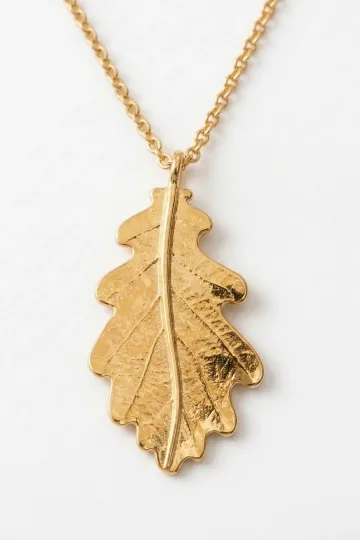
- Mini Roble Earrings: small sterling silver studs; in the photo, a faceted deep-blue plate crossed by a textured silver bar. They are small, so they are light and will not pull on the lobe.
- Mini Roble Necklace: the same blue plate as a pendant on a fine silver chain. With the earrings from the same line, that makes a pair rather than a formal parure.
- Gota Necklace: two discs on a fine chain, a blue drop shape and a matt silver circle. Two elements side by side are easy to play on in the card: Gran and Grandad, or Gran and the grandchildren. In the photo the clasp is a small ring, so if her fingers are stiff, have it swapped for a lobster clasp.
If the grandchildren simply cannot agree, there is the gift certificate. It is electronic and valid for 24 months. The anti-patterns below call a voucher a poor idea, and for a grandmother who will never browse an online shop alone, that holds. It works another way: a grandchild hands it over, sits beside her with a phone, and they choose together over a cup of tea, without hurrying. Then the certificate becomes one more visit. And for choosing when someone's taste is a complete mystery, see our guide to a jewellery gift when you are unsure of their taste.
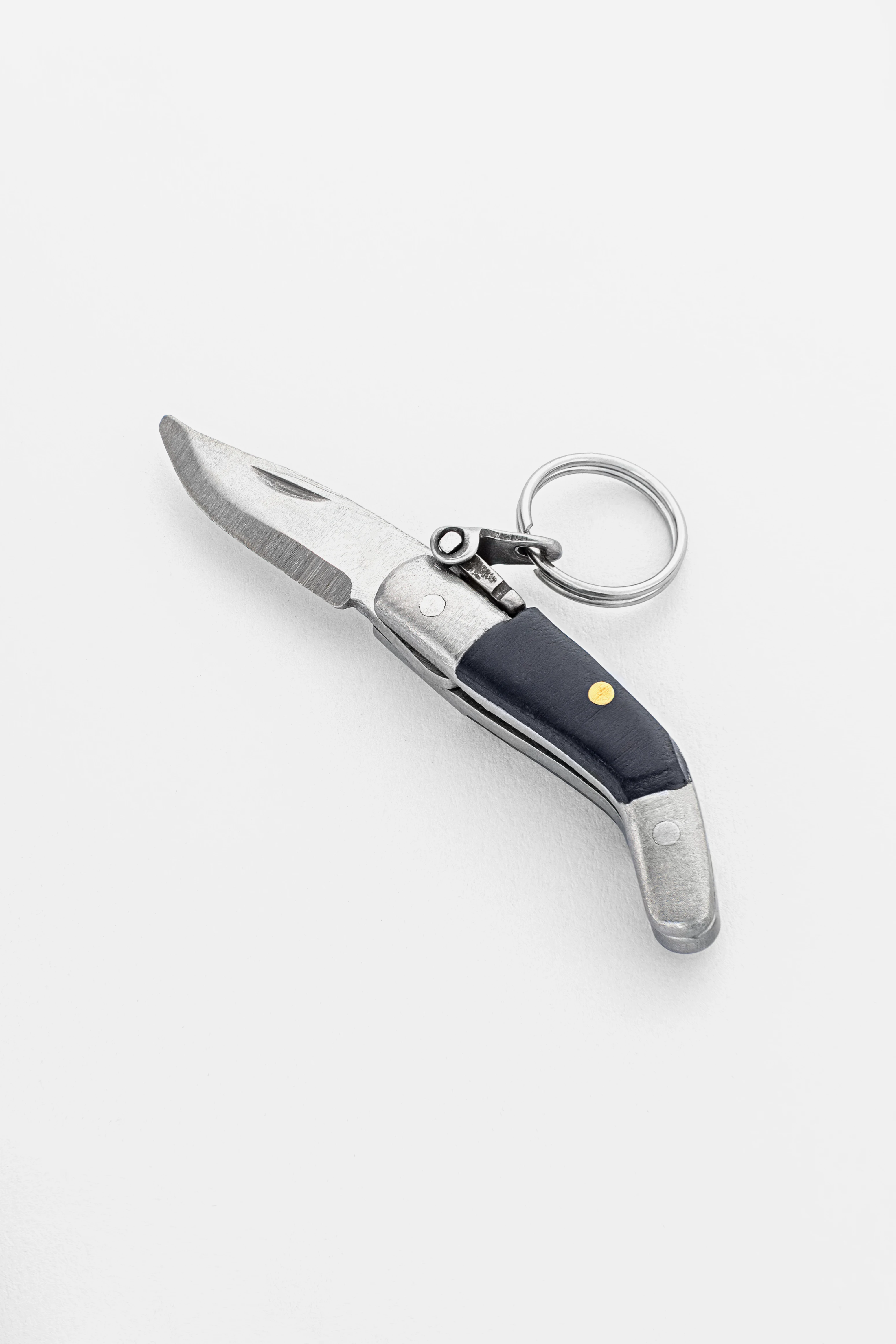
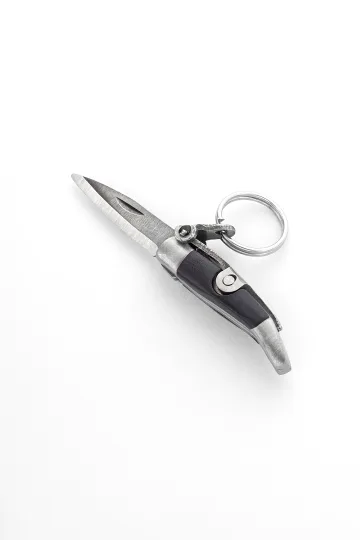
CAPAORA mini knife pendant
The 18th-century Spanish navaja in miniature: 40 mm of stainless steel, a real folding mechanism and a Palanquilla lock that clicks. An affordable gift to remember.
Authentic · Ships from Spain · 14-day returns
Heritage Remelting as the Central Theme of Seventy
I promised a separate large section on remelting. Here it is. This is the strongest device for a seventieth birthday gift, and it deserves a detailed treatment.
Why Now Is the Right Time
Seventy is the age when the things accumulated over the previous fifty or sixty years must either be remelted with understanding, or passed on with understanding, or they will be remelted or sold without understanding.
That is a hard formulation, but a precise one. Most seventy-year-olds have jewellery in their boxes that they no longer wear: a deceased spouse's wedding ring, a mother's earrings, a grandfather's ring, a grandmother's chain. These things sit in boxes for twenty or thirty years, not doing their main job.
What happens to them after the owner's death? Most often they go to children or grandchildren who do not know the story, do not understand whose was whose, and take one of these decisions:
- Keep them indefinitely, also unworn, passing them on as a set that has finally lost its context
- Sell them to a pawnshop for the value of the material, with no sense of the symbolic worth
- Divide them by simple logic (by weight, by beauty, by sentiment), often unfairly or with conflict
- Leave them with one person as "the family piece," but without active use
All four scenarios are bad. They lead to the ancestors' gold and silver, accumulated over several generations, losing its link with memory and either lying as dead weight or being frittered away without understanding.
Seventy is a good moment to stop this. A seventy-year-old already has a considered relationship with death and inheritance. They understand their time is not endless. And they still have enough strength, clarity and time to decide what to do with what they have accumulated.
Remelting, by the recipient's own decision or with their consent at the moment of giving, is an act of consciously managing family memory. Instead of leaving chaos to the heirs, the person structures their own relics into new forms that have a clear meaning and a clear purpose.
What to Remelt
Not everything. Remelting suits:
Gold without stones, or with simple stones. Rings, chains, hoop earrings, chain bracelets in 9- or 18-carat gold. In remelting the metal is preserved (losses are minimal with proper work), the form changes to a new one.
Silver without enamel or fine engraving. Chains, simple pendants, earrings. Sterling silver remelts into new forms relatively simply.
Stones are removed and reused. If a grandmother's ring held a sapphire, it is not lost: it is taken from the old mount and set into a new one. This is separate technical work, but standard for a good jeweller.
Several pieces into one. This is the strongest option. When the material of five to seven old pieces is made into one new, especially significant one. Conditions: the total weight of metal must be enough for the future piece (at least 15-20 grams for a large pendant).
What NOT to Remelt
Not everything can be remelted. A separate category must be kept in its original form:
Antique pieces of historical value. If a grandmother's ring is the work of a known maker or belongs to a particular era of the jeweller's art, remelting it is destruction. Such pieces are appraised by an antiques expert before any decision.
Pieces with enamel, fine engraving, miniature portraits. Enamel work requires enormous skill; remelting it is possible but a loss of the maker's work. If the piece is beautiful in its original form, better to keep it.
Religious objects. Crosses, icons, any objects consecrated or used in rite are not remelted in the Christian tradition. It is a matter of religious ethics to respect even if the giver is not a believer.
Pieces with inscriptions from the departed. If a chain bears the engraving "From mum, 1972," it is a material document. Remelting destroys the testimony. Better to keep it as it is.
Pieces the recipient wears regularly. If grandmother has worn her wedding ring daily for the last thirty years, it is not remelted under any circumstances. It is her living object, not material for reprocessing.
How to Explain It to Children and Grandchildren
A decision to remelt often meets resistance from other family members. Children and grandchildren may feel remelting is "destroying" grandmother's ring. This resistance should be foreseen and worked through in advance.
A few key arguments that help:
Remelting does not destroy the metal. A gram of gold stays a gram of gold. The atoms are the same. Only the form changes. It is like rewriting a poem more beautifully, keeping all the letters.
Remelting gives new life to an object now lying unused. If grandmother's ring has sat in a box for thirty years, it serves no one. After remelting into a pendant that mother will wear every day, its material begins to work again.
Remelting preserves family memory better than keeping it unused. A pendant that mother wears is seen by all. All hear the story "this is grandmother's ring, remelted into this pendant." A ring in a box tells that story to no one.
Remelting is done with respect: the jeweller draws up a handover document, there is a photographic record of the original. Years later you can show the heirs the original photos and say "this was grandfather's ring, and now it lives in mum's pendant."
The decision stays with the recipient. If grandmother is against remelting, there will be no remelting. No one forces anyone. But if grandmother agrees, it is her right to manage her own property.
The explanation is best done before the seventieth, in advance, in a calm setting. Give everyone time to think it over. After the party, begin the remelting with everyone's participation or permission.
Timeframes for Remelting
The remelting itself is done by a jeweller who takes on client-supplied material: what matters to the giver is not the workings of the process but the timeframe and the fact that the ancestors' metal is preserved while the form changes. A full cycle for one large piece takes three to six weeks depending on the workshop's load and the complexity of the form. With sketch and approvals included, it should be ordered at least two months before the seventieth.
The Ethics of Remelting
A few ethical notes to bear in mind:
If a piece has several potential heirs (a great-grandmother's chain claimed by two granddaughters, say), the decision to remelt must be taken by all. One heir cannot single-handedly remelt shared property.
If the recipient hands over their own piece to be remelted, they must be of clear mind and in good health. Decisions taken in a poor state may later cause regret.
If the remelting is done as a surprise for the recipient (a daughter wanting to remelt something of mother's into a new pendant without her knowing), it is risky. Better to agree it. Mother may turn out to be against.
Religious objects are not remelted (see above).
When in doubt, better to postpone the decision and think again. Remelting is irreversible.
Leave your email, we'll send your discount code. No spam, unsubscribe anytime.
The code arrives by email, valid on your first order.
Anti-Patterns: What NOT to Give at Seventy
A few forms of gift that work badly at seventy. Sometimes even harmfully. These anti-patterns seem logical at a glance, but on closer look prove to miss.
A New, Modern Piece That Does Not Match the Way of Life
The idea "I will give something fashionable so the recipient feels modern" works at other ages, but not at seventy.
A seventy-year-old has already settled stylistically. They have their own image, their own language of dress, their own set of objects that are "theirs." A fashionable piece that differs from their usual style is not felt as a "pleasant update." It is felt as "not mine."
Besides, fashion in jewellery changes. What is fashionable in 2026 will, by 2031, look like a piece "of its era," recognisable and dated. A seventy-year-old buys (or receives) jewellery meant for decades. Fashionable design runs against this logic.
Instead: classic forms tested by time. A locket, a signet ring, a chain with a pendant, stud earrings, pearls. These forms look equally good in any era. In twenty years they will look good too.
The Generic "70 Years Young" Gift
A very common mistake of givers: placard-style gifts in the vein of "seventy is the new forty" or "seventy years young." This message sounds positive but actually denies the recipient's reality.
A seventy-year-old knows perfectly well they are seventy, not forty. And they do not want to be told otherwise. This is not politeness; it is condescension disguised as a compliment. Condescension is read in an instant.
A gift that says "you look younger than your years" reads as "age is bad, and I pretend it has not arrived." It does not work. A seventy-year-old values age being acknowledged and respected, not denied.
Instead: gifts that work with the reality of seventy. The engraving "70 years" right on the piece. The anniversary date without euphemism. Symbolism that acknowledges the road travelled.
Jewellery That Is Too Heavy
The physical weight of a piece is an often-ignored parameter. A young woman can wear a heavy chain of large links without trouble. A seventy-year-old woman in the same necklace will feel her neck tire within five minutes.
The same goes for heavy bracelets on the wrist (especially with joint problems), massive earrings (which drag the lobe), large rings (which press on the finger).
Many beautiful pieces are too heavy for an older person. The designer made them for a young audience. Giving such a thing to a seventy-year-old creates a discomfort that then leads to the piece sitting in a box.
Instead: light forms. Sterling silver is comfortable in weight in most forms. 14K gold is also lighter than 18K (with its smaller share of gold). Pearl jewellery is light by nature. Fine chains with miniature pendants work better than massive constructions.
A check: a piece should feel "present," not "pressing." If at a fitting in the shop there is a sense of weight, that is already a warning.
A Piece That Repeats What They Already Have
If grandmother already has three lockets, a fourth will not be special. If grandfather already has two signet rings, a third is surplus. Find out before buying what the recipient has, and do not duplicate.
This concerns form and material both. If grandmother has always worn silver, unexpected gold may unsettle her (it may seem to her that silver is "not worthy" of this anniversary, though it is). If grandfather prefers simple design, an elaborate enamelled piece will be felt as "not mine."
Instead: continue what they have, or try a new segment. If grandmother has three lockets, you can give a reliquary locket (a different subtype) or an addition to an existing one. If grandfather has two signet rings, you can give a locket with photos of grandchildren (a different category). Many seventy-year-olds fall into the category of people who already have everything; devices for such cases (personal narrative, remelting, coordinates) are set out in detail in the guide on a gift for the person who has everything.
A Piece Engraved "To Grandma" or "To Grandpa"
The words "grandma," "grandpa" are not bad in themselves. But in engraving they work badly.
The reason: these words name a role, not a person. The engraving "To dearest Grandma from the grandchildren" makes the piece interchangeable: the same words could be on any grandmother's piece in any family. They carry no specifics of this family and this person.
Instead: the recipient's name, the specific names of grandchildren (not a general "grandchildren"), a specific date, a specific place. "To mum Anne from Helen and Sam, 25 March 2026" works ten times better than "To dearest Grandma."
A Set "For a Grand Occasion"
Many givers buy a "full set": earrings, necklace, bracelet, ring in one style. The logic: "seventy is a celebration, you need a formal set."
The trouble is that a seventy-year-old rarely goes out in a full set of jewellery. A formal set is put on for a grandchild's wedding (once in several years), for big anniversaries (once in five years), and that is it. The rest of the time the set sits in the box.
Instead: one strong piece you can wear every day. One locket. One ring. One pair of earrings. That single object gives more emotion than a full set.
A Piece Aimed at the Grandchildren's Young Aesthetic
Sometimes givers choose a piece that seems beautiful to them (the young givers), not allowing for the fact that a seventy-year-old's aesthetic is different. Minimal neon design, a large asymmetrical pendant, a chain with piercings: these are the grandchildren's tastes, not grandmother's.
Instead: ask yourself whether your mother would have worn such a piece at fifty. If the answer is no, she most likely will not wear it at seventy either.
A Piece "For Beauty," with No Symbolism
At twenty, thirty, forty you can give a "simply beautiful" piece, and it works. At seventy simply beautiful works less well. Without symbolism, without engraving, without personal meaning, a piece stays "a pleasant thing" but does not enter the category of an heirloom.
Seventy demands meaning. At least a simple engraved date. At least one symbol. At least one word. Without it the gift sails past the central psychological work of the age.
Perfume, Cosmetics, Textiles as a Gift
This is not a jewellery category, but I will mention it. A seventy-year-old already knows what perfume they use. What face cream. What lipstick. Gifts in these categories almost always miss, because the person already has their favourite brand and does not want to change.
Instead: the jewellery category is more universal. A good engraved piece does not depend on the recipient's habits.
A Gift Voucher for a Jewellery Shop
Many think: "I don't know their taste, I'll give a voucher, let them choose themselves." This works badly at seventy. The recipient often will not go to the shop (especially if homebound, especially if shy of spending "someone else's" money). The voucher sits, then expires.
Instead: better to choose one specific piece, having consulted other family members about taste. Even if the recipient wants to change it, that is solvable: shops usually exchange an item if it has not been used.
Engraving: What to Write on a Piece
Engraving turns a piece into an heirloom. Without it a good piece stays a good piece but does not become family memory. Engraving for seventy has its features: it works both now and for decades afterwards, for the heirs. So the wording is chosen with both horizons in mind. The technical details (kinds of engraving, fonts, timeframes) are set out in a separate guide on engraving on jewellery.
Septuagesimus Annus and Latin Formulas
"Septuagesimus annus" is Latin for "the seventieth year." This wording works on a piece better than the English "70 years" for several reasons.
First, it is concise: two words fit easily on the inner band of a ring or the back of a pendant.
Second, it is solemn, not a placard. Latin carries a hint of ancient seriousness that matches the weight of the anniversary.
Third, it is timeless: in a hundred years "Septuagesimus annus" will sound just as it does today. The English "70 years" may sound slightly dated in a hundred years.
Other Latin formulas that work:
- "Annus septuagesimus, 2026" (the seventieth year, 2026)
- "Semper noster" (always ours; for a woman, "semper nostra")
- "Memoria aeterna" (eternal memory, not as an epitaph but as a vow to remember)
- "Vita longa" (a long life, as a wish)
- "Per aspera ad astra" (through hardship to the stars, as the sum of a road)
- "Ad multos annos" (to many years, the traditional anniversary wish)
Latin works with educated recipients, with people of classical upbringing, with lovers of history. Before using it, make sure the recipient can read the phrase or at least recognise it. If they do not know Latin, the box should hold a card with a translation.
Quotations from the Literary Classics
A great novelist who wrote his late works after seventy resonates especially with this age, because he reflects on the same questions that occupy a seventy-year-old: the meaning of a life lived, relations with loved ones, death, legacy.
Quotations that work in engraving:
- "All I know, I know only because I love"
- "Life and truth are one and the same"
- "Every person lives not only their own life, but takes part in the life of all"
And from the family theme:
- "All happy families are alike" (a piece works better with this opening half of the famous line)
Such quotations are chosen with the specific person in mind. If the recipient values the author themselves, the quote works ten times harder. If they read the author "for school" and never returned, the quote may be felt as pretentious.
A literary quotation needs room: the phrases are long. Usually it fits on the inner face of a wide ring band or the back of a large medallion. For small pieces, choose shorter formulas.
Attributing the author in the engraving is optional: the recipient and the heirs who read it will understand the source. But if you wish, you can add the initials at the end.
The "Our Father" in a Tiny Font for Believers
The "Our Father" fits in full on the inner face of a large medallion or the back of a large pendant when laser micro-engraving is used. The font is tiny, legible only on close inspection.
This works for Christian believers. The text may be in modern English or in the older liturgical form ("Our Father, who art in heaven"). For Catholic recipients, Latin works ("Pater noster qui es in caelis").
The full text runs to about a hundred to a hundred and twenty characters. This is the technical limit for engraving on a mid-sized piece. A good laser engraver at a resolution down to 25 microns manages without loss of legibility.
Placement: the prayer on the inner face (hidden); on the outer face, one or two words nodding to the prayer: "Pater noster" or "Pater" for brevity.
Alternatively you can engrave one key line of the prayer:
- "Thy kingdom come"
- "Give us this day our daily bread"
- "Forgive us our trespasses"
These lines fit on smaller pieces and carry meaning without the full text.
The Jewish tradition: "Shema Yisrael" ("Hear, O Israel") is the central prayer of Judaism, of six words. It fits on any piece and works for believing Jews.
The Muslim tradition: the shahada ("There is no god but God") is likewise short and fits on any piece.
Each of these formulas works only within its tradition. Giving the "Our Father" to a Muslim or the shahada to a Christian is a gross error.
Children's Names in a Monogram
A monogram is a stylised interweaving of initials into a single sign. At seventy you can make a monogram into which the initials of all the recipient's living children are woven.
If grandmother has three children, Alexander, Mary, Nicholas, the monogram holds the letters A, M, N, interwoven into one sign. The design is done by a calligraphic master or a specialist heraldic artist.
The monogram can be in the style of:
- Baroque (rich script with flourishes, seventeenth to eighteenth century)
- Empire (strict classical forms, early nineteenth century)
- Victorian (soft patterning with floral motifs, mid-nineteenth century)
- Art Nouveau (flowing lines, early twentieth century)
- Constructivist (sharp geometric forms, 1920s)
The style is chosen to suit the recipient's aesthetic. If grandmother loves the classics, Baroque or Empire work. If she is modern and minimal, Constructivist or Art Nouveau.
The monogram is usually engraved on the outer face of a pendant, the face of a ring, or the outer lid of a medallion. It is a visible sign that others can notice too.
Years later, after the recipient's death, the heir who comes to own the piece will see the monogram and understand: these are her children's initials. If they are themselves one of those children, they will find their own letter inside the interwoven sign.
Numbers and Dates
The simplest and yet strongest engravings use numbers.
The recipient's birth date: 25.03.1956 or in expanded form "25 March 1956."
The anniversary date: 25.03.2026 or "25 March 2026."
Both dates together: 25.03.1956 to 25.03.2026. This format recalls a headstone, where the first date is birth and the second death, and so it unsettles some. But if you think about it, between the two dates lies not the mark of death but the span of a life lived. Seventy years in one line.
The Julian date: 25 March 2026 is JD 2461125 (the Julian day). It is a continuous count of days from 1 January 4713 BCE, used by astronomers. The number is short, fits compactly in engraving, and is read only by the initiated.
A date in another calendar: if the recipient is bound to a particular culture, the date can be in its calendar. The Japanese calendar (Reiwa 8 for 2026), the Ethiopian, the Coptic, the Iranian. This works for people with a cultural identity.
Age in words: "Septuaginta" (Latin), "Seventy" (English), "Soixante-dix" (French), "Setenta" (Spanish). A word in a foreign language looks more mysterious than a number in digits.
The Coordinates of a Place
Engraving GPS coordinates is one of the most elegant devices of modern jewellery personalisation. Coordinates look like a cipher, read only by those who know.
Format to choose:
- Decimal: 51.5074, 0.1278
- Degrees-minutes-seconds: 51°30'26"N 0°07'39"W
The decimal format is more modern and shorter, and sits better in engraving.
What places can be ciphered:
- The house where the recipient was born
- The house where they grew up
- The address of the work where they spent most of their life
- The place they met their spouse
- The place their children were born
- A place especially significant in their memory
- A parent's grave (a subtle device, see above)
Coordinates are engraved on the inner face, not the outer (outwardly they look like an unreadable string of digits). Inside they are read only by the owner.
The box holds a card with the key: "the coordinates of the house where you were born."
What NOT to Engrave
A few rules of exclusion that help you avoid missing:
Do not engrave "epitaph" formulas. "Eternal memory" sounds like a headstone. "Remembered and loved" too. The recipient is alive, and the engraving must work with that fact.
Do not engrave general greeting-card phrases. "Happy anniversary!", "70 years young," "Wishing you many years" are placard phrases with no bearing on the specific person. On a piece they look empty.
Do not engrave "floating" quotes with no author. If the phrase "Never give up on a dream" is engraved without an author, in ten years no one will recall its source. Better either a known classic with the author's initials, or a personal family phrase whose context will pass on with the givers.
Do not engrave wrong dates or names. This is obvious, but it is the most common mistake. Before ordering, check three times that the year is right, that the names are spelled without error. An engraved error is hard to fix.
Do not engrave too much text. A piece is not a book. If three phrases are crammed onto a small pendant, the font becomes illegible. Better one short, clear, visible formula.
Do not engrave, without the recipient's consent, something that may distress them. The name of a departed parent without discussion may bring the recipient to tears (though meant as a warm gesture). Better to discuss in advance if in doubt.
Depth and Style of Engraving
Engraving is done two main ways: by hand (the burin and hammer of an engraving master) or by laser (computer-controlled at a resolution down to 25 microns).
Hand engraving is deeper, more expressive, but slower and dearer. The master chooses the font, or it is set to order. It is the work of a craft master, with its own price.
Laser engraving is more even, finer, faster. It suits micro-text (prayers, long quotes, coordinates with six decimal places). Less "warm" but more precise.
The choice depends on the type of piece and the effect wanted. For large pieces with a short inscription, hand engraving is better (it reads as a maker's work). For micro-text or complex monograms, laser is better (it fits more information with better legibility).
The font style is chosen too:
- Classic Roman (universal, neutral)
- Cursive (softer, more emotional)
- Gothic (for lovers of the medieval aesthetic)
- Calligraphic (for monograms and stylised inscriptions)
- Technical (for coordinates and numbers)
Comparing Forms and Materials
When the choice has narrowed to a few forms, it helps to lay them side by side and compare them on the parameters that matter precisely at seventy: suitability for daily wear, visibility, the potential to become an heirloom, sensitivity to the type of recipient. The table below brings the main forms into one grid.
What to Wear and What to Keep: the Practical Part
Once the piece is given and accepted, its life as a daily object begins. A good piece in sterling silver or 14K gold, with minimal care, serves for decades. A seventy-year-old needs to know that caring for the gift is not difficult and needs no special skill.
Sterling Silver
Silver darkens over time. This is the normal process of oxidation, not a defect. A dark silver pendant in the recesses of its relief is patina, which brings out the detail of the piece. Many silver lovers value patina as a sign of age and authenticity.
To restore the shine: a soft polishing cloth for silver, available in any jewellery shop. Move along the surface, without pressing. A few seconds of work and the piece shines again.
If there is engraving or complex relief: a soft toothbrush with warm soapy water. Move along the engraving, not across. Rinse, wipe with a soft cloth.
What to avoid: chlorinated water, perfume, cream, bleach. The piece is taken off before swimming in a pool or in the sea.
Storage: in a soft box or a separate compartment, so the silver does not scratch against other items. Ideally in a closed container that slows oxidation.
14K Gold
Gold does not darken and does not need polishing as often as silver. It can pick up a greasy film from the skin, especially rings and bracelets. Wipe with a soft cloth after wear. Every few months wash in warm soapy water and dry.
Gold with stones needs care in cleaning: some stones fear ultrasound (emeralds, opals), some scratch (pearls), some change colour with heat. When in doubt, better take it to a jeweller for professional cleaning once a year or two.
Pearls
A pearl is a living material and needs particular handling. A few rules:
Put it on last, after applying perfume, cream, hairspray. Take it off first. Cosmetics and fragrance destroy the surface of a pearl.
Wipe with a soft cloth after each wear. This removes the skin's acid, which breaks down the nacre layer.
Store apart from other jewellery; a pearl is soft and scratches against metal items.
Wear it regularly; a pearl literally becomes better from contact with skin. The skin's moisture and warmth maintain the lustre.
The thread of a pearl necklace: if the pearls are strung on a thread (not on wire), the thread wears and stretches over time. Every few years it is worth having a jeweller check whether the necklace needs restringing. How to tell a real pearl from a fake and how to match a set is set out in the full guide to pearls.
A Locket with a Photo
The main task: do not force the locket's hinge. A good locket opens easily; if it will not open, you need a jeweller's help, not force.
If a locket has not been opened for a long time, do not press. Take it to a jeweller, who will gently clean the mechanism.
The photo inside is protected by glass or a clear sheet. If you need to change the photo, you can do it yourself with a small tool or a pin. The kinds of locket, what to put inside and how to choose the form are set out in detail in the full guide to the silver locket.
Passing It to an Heir
One of the chief aspects of a seventieth-birthday piece is its fate after the recipient's death. That fate is worth planning in advance.
Best practice: the recipient decides who will receive the piece. They can express this wish aloud (to the children, before witnesses), write it in a diary, set it down as a note in the box with the piece, or include it in a will.
By a note in the box: "I want to pass this locket to my granddaughter Marina when I am gone. Date: 25 March 2026." The note is signed by the recipient. This is not legally enough for formal inheritance, but morally it is a direction for the family.
By a will: if the piece is especially valuable (gold with stones, an antique), it can be mentioned separately in a will. This legally protects the recipient's wish.
By passing it on in life: you can give the piece to an heir while still living, explicitly, at a meaningful moment. On a granddaughter's eighteenth birthday, say. This works if the recipient is of clear mind and in good health. It removes many family conflicts after their death.
Send a friend a discount code, they save on their first order.
How to Give the Gift: the Ritual Matters
Seventy is not the case where a gift is put in a bag and left at the door. The moment of giving is part of the gift's meaning, and it is worth thinking through as carefully as the gift itself.
When to Give
At the anniversary party, surrounded by family. Seventy is a family event, and a gift handed over among the close ones gains witnesses. Years later the recipient will remember both the piece and the moment.
Not at the start of the party. When everyone has just arrived there is noise, bustle, no mood for an emotional moment. Better to wait, let everyone sit, drink, relax. The ideal moment is the middle of the party, when the first toast is past, the talk is warm, all are tuned to family.
Not at the very end. When everyone is tired and getting ready to leave, an emotional scene does not work. Better before that moment.
Who Gives
If the gift is collective (from all the children or all the grandchildren), the eldest of the group hands it over. The eldest daughter from the children. The eldest grandchild from the grandchildren.
If the gift is individual, the giver hands it over.
If the givers are small grandchildren, better that they hand it over themselves under the adults' watch. A direct handover across a generation is a strong moment.
How to Open It
The recipient opens it themselves. No one opens it for them. It is their moment.
If the recipient hesitates, say: "Open it, open it." If they linger, wait.
It is good when the recipient reads the engraving themselves (if there is one and it is visible). This seals the emotional contact.
What to Say
A few simple rules.
First: speak for yourself, do not read out wording from a card.
Second: speak of the person, not the gift. Not "we chose this locket because it is beautiful," but "we chose this locket because inside are the portraits of your children who love you."
Third: speak of the specific symbol, if there is one. If the piece bears a tree of life: "it is the symbol that your family is a tree, and you are its trunk." If a compass: "it is the symbol that you always found the way for us."
Fourth: speak briefly. One or two sentences. Not a speech. Not a toast. Just a few words at the moment of giving.
A Handwritten Card
The box with the piece must hold a handwritten card. Not printed, but written. Handwriting carries a warmth that a font does not convey. Even ungainly handwriting works better than a perfect font.
On the card: a few lines of personal content. An explanation of why this gift was chosen. The signatures of all the givers, if there are several.
The card stays in the box forever. In ten or twenty years the recipient will open the box again, read again what was written by hand, and hear your words again.
If the Recipient Reacts Emotionally
Seventy is an especially emotional moment. The recipient's tears when opening the gift are normal and even welcome: they mean the gift has landed.
Do not embarrass them and do not rush to the next item on the programme. Allow a pause. If they weep in silence, sit beside them quietly. If they say "this is so dear to me," do not hurry them either. The emotional moment is part of the gift, not a surplus.
If your own emotions overflow, that too is good. Seventy is a moment when you can weep together. This warm family scene will enter the long memory of all present.
After the Party
In the first days after the party, ask the recipient whether they are wearing the gift. This is not control; it is showing interest.
If they are not wearing it, try to understand why. Perhaps the size did not fit (then the jeweller will alter it). Perhaps the clasp is wrong (also solvable). Perhaps the form is not theirs (harder, but it can be exchanged).
The ideal scenario: the gift becomes the recipient's everyday piece. They put it on every day or nearly so. Within a few months the object is already "theirs," part of their image.
Buying it as a gift? Each one arrives ready to give.
 A branded Zevira box and a little card come with every order.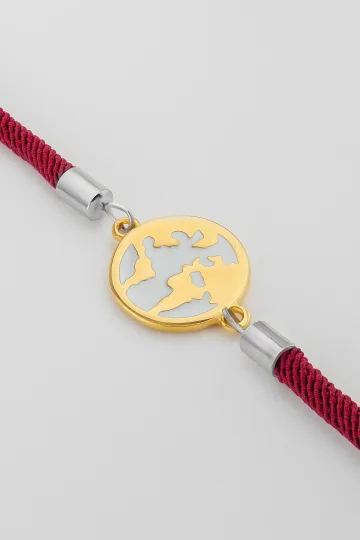


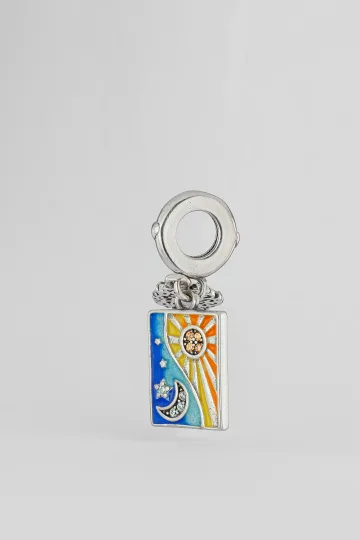
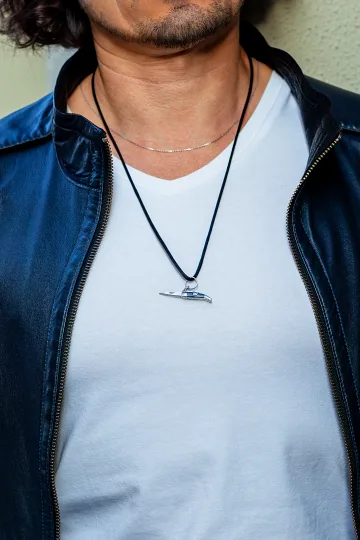
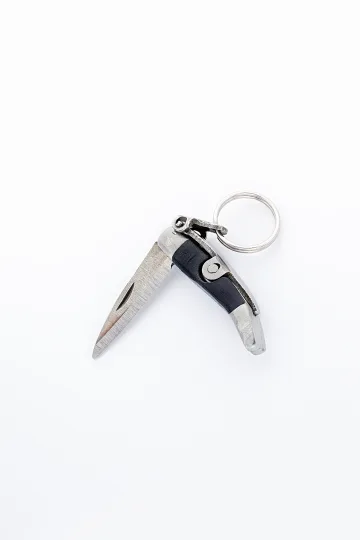


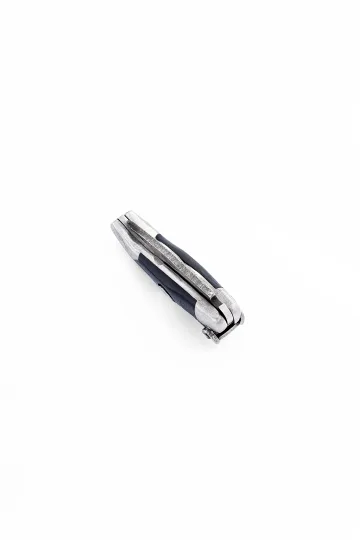

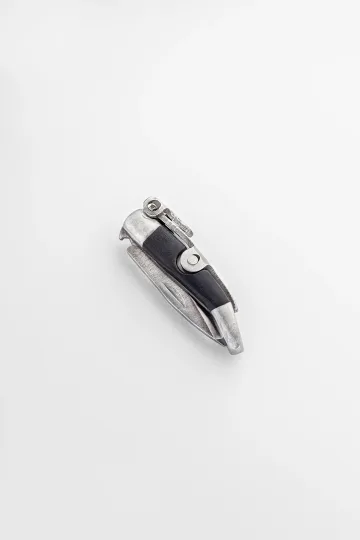
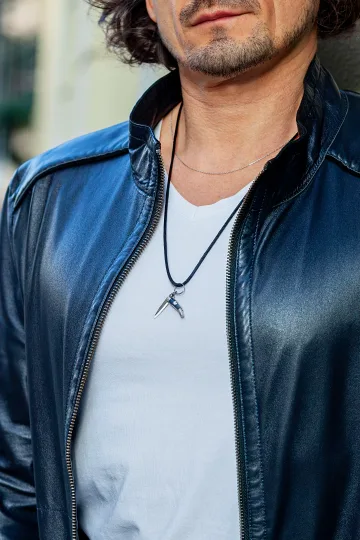

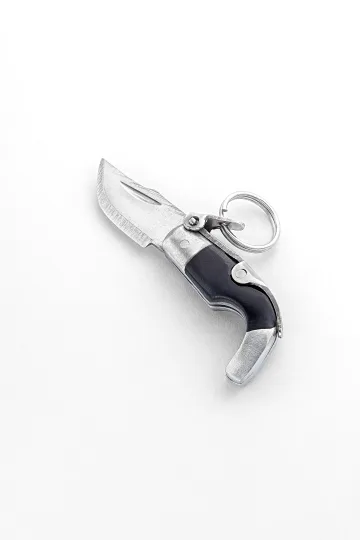
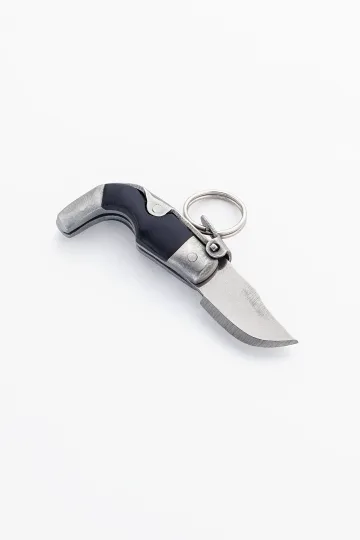
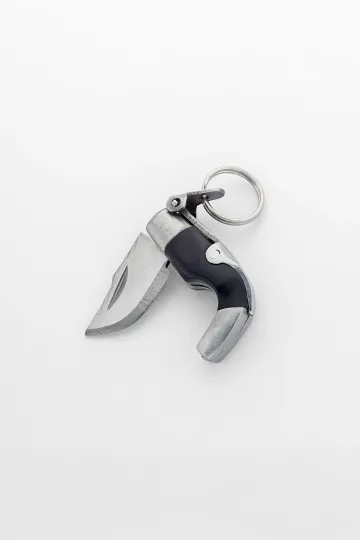
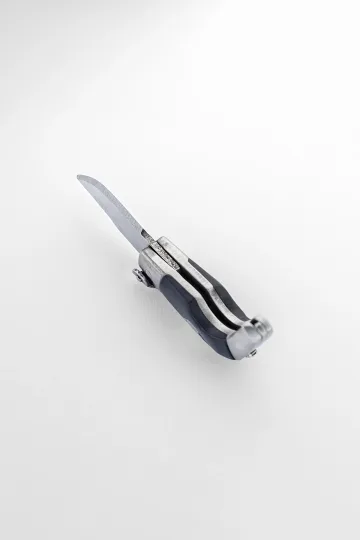
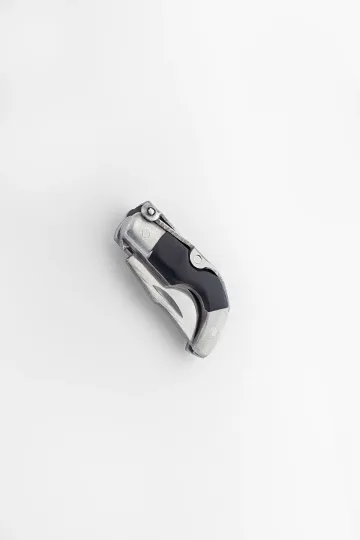
FAQ: the Questions Asked Most Often
What to give a father for his 70th?
It depends on what kind of father yours is. For an active father, a signet ring with a monogram, a chain with a compass, a pocket watch engraved with the date. For a homebound father who spends more time at home, a locket with photos of children and grandchildren, a gold medal engraved with five generations of the line. For a believing father, an additional cross (not instead of the everyday one), a patron-saint pendant. For an agnostic, a tree-of-life symbol, a pendant with the coordinates of his home place.
If your father never wore jewellery, start with a signet ring or a locket on a short chain under the shirt. This is not "jewellery in the usual sense" but an object with dignity that a man can accept. The male view of jewellery and how to overcome the objection "I don't wear jewellery" is set out in detail in the guide on what to give a grandfather.
The main thing is the engraving. Without it a gift from a son or daughter stays an object. With grandchildren's names, the anniversary date, coordinates, it becomes a sign.
What to give a mother for her 70th?
It depends on mother's style. If she is classic and loves traditional jewellery, a pearl necklace or pearl earrings with grandchildren's names possibly engraved on the clasp. If she is modern and active, a chain with a minimal tree-of-life pendant, stud earrings with a single stone. If she values symbolism, a reliquary locket with a fragment of family history inside.
An especially strong form for a mother is a pendant remelting her husband's wedding ring (if she is a widow) or a pendant with a cluster of grandchildren's birthstones.
Engraving is essential. The recipient's name, the children's or grandchildren's names, the anniversary date. Without engraving a piece stays a gift, not an heirloom.
What is an heirloom gift?
A piece intended at the moment of giving for both the present recipient and their future heirs. This is the "bridge gift" category the guide treats at the start: real silver or gold, a timeless form, engraving with specific dates and names, and where possible a documented provenance.
An important point: an heirloom gift need not be costly in material. A simple sterling-silver locket with the right engraving works as an heirloom more strongly than a heavy gold brooch with no meaning.
If a 70-year-old loved one is ill, what gift to choose?
Illness changes the logic of a gift. A few rules:
A light form. Heavy pieces are avoided. A light pendant on a chain or stud earrings are more comfortable than massive bracelets or large necklaces.
A simple clasp. If the recipient's hands are weak (after a stroke, with arthritis, with Parkinson's), complex clasps are unworkable. Magnetic catches or simple lobster clasps work better.
Wearable in bed. If the recipient is bedbound, the piece should not get in the way. A pendant on a short chain (45 cm or less) under clothing is comfortable. Stud earrings too.
Warm, not "epitaph" symbolism. A gift to an ill person should not speak of death. "Remembered and loved" sounds like a requiem. Better "We love you, mum" or simply the recipient's name with the anniversary date.
Emotionally, a gift to an ill person can be especially precious. They feel lonely and unloved because of their state, and a material sign of the family's attention works powerfully.
A gift to a 70-year-old from grown children: what to keep in mind?
A few key points:
The giving children are usually of mature age (40-50). They have the resource for a good gift. The budget may be higher than it seems at first.
A collective gift from all the children works more strongly than separate ones. If there are two to four children, pooling budgets allows one significant piece instead of several mediocre ones.
Engraving the names of all the children inside the piece is essential. It turns the gift into a family document.
Giving it in the presence of all the children at once. If one of the children lives far away, better to wait for a moment when all can gather than to give it in turns.
The emotional moment of giving from children to a parent is especially strong. Do not hurry. Do not distract the children. Let them say the words they want to say.
Can you give a piece that has been worn before?
Not "second-hand," but family. A grandmother's ring, a mother's earring, a grandfather's ring in a new mount. This is not used jewellery in the commercial sense but an heirloom.
Best practice: the ancestors' material is remelted into a new form suited to the recipient. A grandmother's ring becomes a pendant on a chain for a daughter. A grandfather's cufflinks become the band of a ring for a son. The old form goes, the material stays.
Direct giving of "a grandmother's ring in its original form" works if the ring truly suits the recipient in size and style. But this is a rare situation: tastes change between generations.
How much does a 70th birthday gift cost?
I do not give specific sums, because they depend on region, currency, jeweller. But the markers:
Entry level: a sterling-silver piece with engraving. The dignity of the gift does not depend on cost. A simple engraved silver locket can work more strongly than costly costume jewellery.
Mid-range: 14K gold in simple forms, silver with stones, AA-grade pearls. This is a "weighty" gift, visible both emotionally and materially.
Premium: 14K-18K gold with engraving and stones, AAA-grade pearls, antique or maker's pieces. This is a gift for important anniversaries in well-off families.
A collective gift from the family: the budget is made up of several givers' contributions. This allows a piece above average, out of reach for one giver alone.
Tip: the budget should be manageable for the giver without strain. A gift saved up for over six months, then paid for with half a year of going without, does not work: the giver then subconsciously waits for a gratitude that will seem insufficient.
Can you give jewellery to a man who has never worn jewellery?
Yes, with the right choice of form.
What works with men who have not worn jewellery:
A signet ring. This is historically a man's object, not "jewellery in the usual sense." It carries a connotation of status, line, identity. Many older men accept a signet even when they reject other forms.
A locket on a short chain under the shirt. A chain of 45 cm or less. The locket is unseen most of the time. It is worn for oneself, not for others.
A bracelet with a minimal engraving on the inner face. Outwardly just metal. Inside a word or a date. The meaning is visible only to one who knows.
A pocket watch. Not a wristwatch but specifically a pocket one, with a chain and room for engraving. This is an object with a history, not "a modern thing."
A tie or scarf pin. A functional accessory, not jewellery.
All these forms are received by older men differently from "jewellery." They are accepted.
What to do if the recipient dislikes jewellery at all?
Find out what exactly they dislike. Often the phrasing "I don't like jewellery" really means "I don't like the jewellery I was usually given."
If they really are wholly indifferent to the jewellery form, consider functional ones: a pocket watch (a useful object, not decoration), cufflinks or a tie pin (part of the wardrobe), an engraved silver pen (a useful tool with engraving).
If they accept male forms (signets, lockets) but not "jewellery for beauty," work in the male category. That solves half the problem.
If the recipient refuses even male forms, perhaps a jewellery gift is not for them. Better to give something from their circle of interests: a book from a rare auction, a craftsman's tool, a ticket to a play they wanted.
How to choose the metal for a seventy-year-old?
The main rule: follow what the person has worn all their life. If grandmother was always in silver, stay with silver. If grandfather was always in gold, give gold. To change metal at seventy is to upset a settled style.
By properties: sterling silver is lighter in weight and care, gives a patina over time (many value it as an advantage). 14K gold is a weighty, undemanding choice, lighter than 18K. Gold-plated silver does not do for an heirloom; it wears off in 5 to 15 years. Platinum is hypoallergenic, but it can be a little heavy for an older person. How to care for each metal is set out in the care section above.
What to do if you are choosing a gift and the recipient dies before the anniversary?
This happens. Preparing for an anniversary often begins months ahead, and anything can happen in that time.
If the piece is already bought or ordered, it is not wasted. Several options:
Give it to the surviving spouse as a keepsake from the one who did not live to see it.
Keep it in the family as an heirloom, pass it to an heir in the future (a granddaughter on her coming of age, say).
Place it at the grave in a standard box (a local custom, not accepted everywhere).
Use the material for another piece dedicated to the memory of the departed.
Do not throw away or sell such a piece if it was ordered personally for the departed. It becomes part of the family memory.
How to arrange heritage remelting?
The process in detail, what to remelt and what not to, how to explain it to the family and how to honour the ethics, is set out in the large section on heritage remelting above. In brief: find a jeweller who works with client-supplied material, agree everything with the recipient, hand over the metal under a handover document with a photographic record of the original pieces, keep the documents for future heirs.
The time for a full cycle is about 2 to 3 months from the first conversation to the finished piece. Order in advance.
Can you give a piece engraved with a deceased parent's name?
You can, but it is a delicate device. It helps if the recipient speaks openly of the departed parent, misses them, keeps their memory. It wounds if the wound is still fresh or if the recipient closes off from the theme.
Best practice: discuss it in advance in a neutral setting. "Mum, I'm thinking of giving you a locket with a photo of grandma inside. Would you like that, or would it be too hard?" The mother's answer decides whether to do it.
If the recipient is grateful for the discussion and agrees, it is the strongest gift, joining three generations. If they avoid the theme or resist, better to decline and choose another form.
How many pieces is it best to give one person?
One. Two at most, if they form a set (stud earrings plus a pendant in the same style).
Several different pieces in one box, "a set for grandma," works badly. They look like an attempt to make up in quantity for quality. One rightly chosen piece with engraving matters more than five random ones.
How soon to expect the first wear?
The ideal scenario: the recipient puts the piece on at the moment of giving, right there at the party, and wears it on.
A good scenario: the recipient puts it on within the first week after the party. That means the gift is accepted.
A suspect scenario: the piece sits in the box a month or more without being worn. Perhaps the size did not fit, or the form is not theirs. Ask tactfully.
A bad scenario: the piece sits for a year or more. Admit it: the gift did not land. It happens, and it is not a catastrophe. Next time you will choose more precisely.
Can you add to a gift over time?
Yes, this works.
For example: at seventy a bracelet was given with the charms of four grandchildren. Two years later a fifth was born. Add a charm with their name to the existing bracelet. This turns the gift into a living family document.
Or: at seventy a chain with one pendant was given. Five years later add a second pendant. The recipient feels the gift did not "close" in one moment but goes on developing.
Can you give jewellery as a gift to oneself?
Yes, and it is a special form. Seventy is a good time to give yourself a gift without relatives.
Best practice: remelting one's own unworn jewellery into one significant piece. It is an act of one's own will and of simplification. See Case 5 above.
An alternative: buy yourself a piece you long wanted but kept putting off. At seventy you can say to yourself: "I have earned it."
This form is especially important for people with no close family or with difficult family relations. A gift from oneself to oneself works when no gift comes from anywhere else.
What symbol is universal for the 70th?
The tree of life. This symbol works across all cultural and religious traditions. For a believer, the tree of life in Kabbalah or in Christian iconography. For an agnostic, the structure of the line. For all, a symbol of roots and continuation. The history of the symbol across cultures is set out in the guide on the tree of life.
If you are unsure which symbol to choose, the tree of life almost always hits the mark.
An alternative: the date 70 or the anniversary year in star notation. Also universal, needing no cultural context.
What to do if the recipient opens the gift and does not react?
This happens. A seventy-year-old can be restrained in showing emotion. The absence of a reaction does not mean the gift was not liked.
Sometimes the full reaction comes later. The next day the recipient phones and says: "I thought about your gift all night, thank you." That means the emotion landed, just not at once.
Do not demand an instant reaction, and do not take offence if there is none.
Can you give a piece ordered for a specific person to someone else?
If the piece is engraved with a name or specific personal information, no. The gift becomes non-transferable.
If there is no engraving, or it is neutral (a date without a name), then yes, you can pass it to another if needed.
Best practice: order a piece with a specific person in mind, and do not plan to transfer it. If it later turns out the gift did not suit, exchange it with the jeweller.
Wear the symbol, don't just read about it. These are in stock:
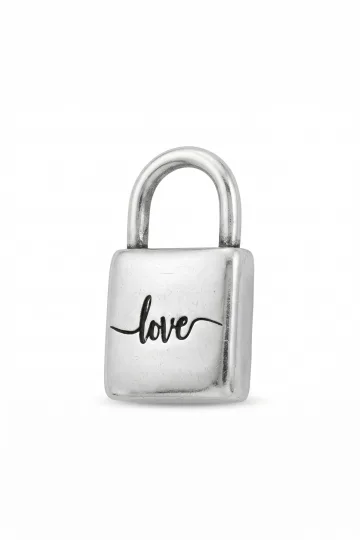
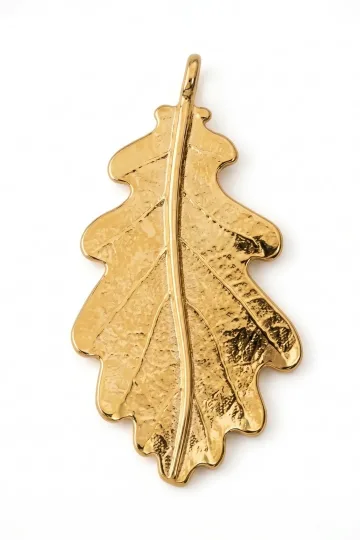
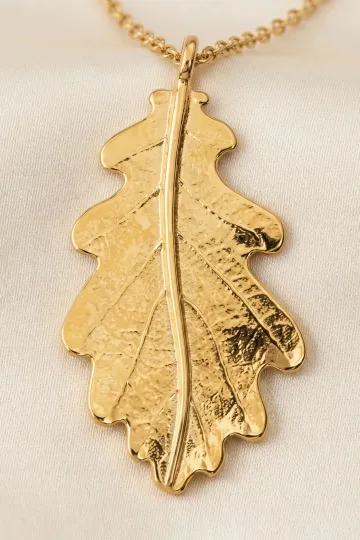
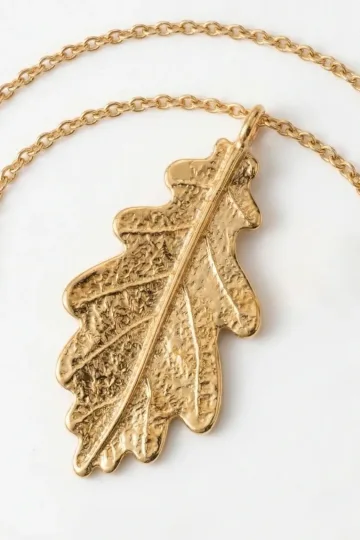
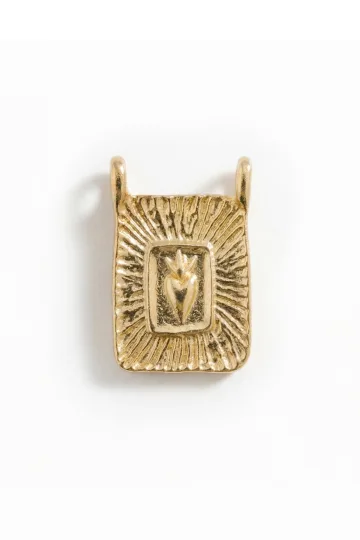
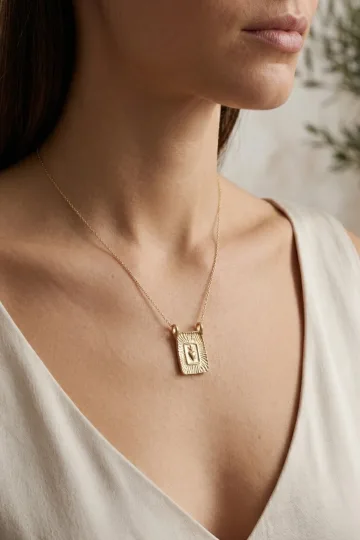
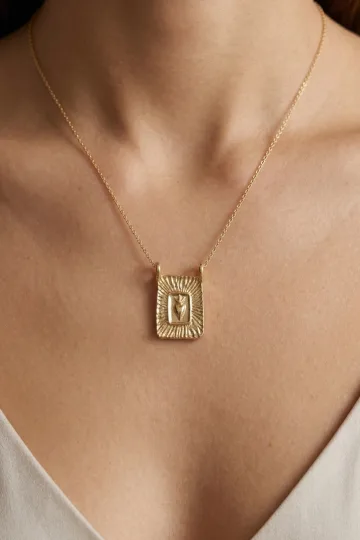
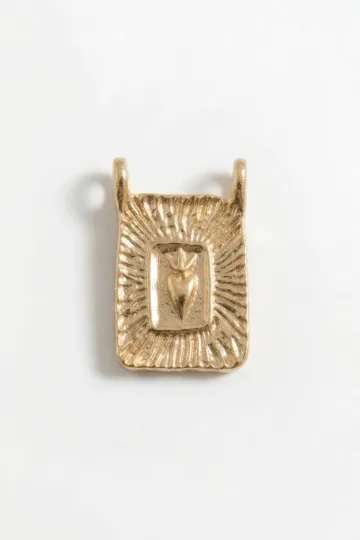
The Bridge Gift: Once More on the Main Thing
I will end this guide where I began. Seventy is the age when a gift becomes an inheritance for whoever receives it next.
A giver who understands this does not buy jewellery in haste. They think, research, choose. They discuss with the recipient what matters, what is close, what was dear to departed parents. They find a jeweller who can work finely. They order the engraving with specific names and dates. They prepare a box with a handwritten card.
And at the moment of giving they say briefly: "This is for you now. And then, in many years, it will be your grandchildren's. And they will know that you loved them."
The recipient weeps. The giver too. The family sees a scene they will remember for decades. The gift becomes a bridge that people begin to cross, and that bridge grows stronger each year.
That is a seventieth-birthday gift made rightly. Not "an anniversary present." But the first brick of a family heirloom in the making.
Sterling silver, 14K gold, lockets, pearls, symbolic pendants. Engraving included. Work with client-supplied material for heritage remelting.
About Zevira
Zevira makes jewellery in the artisan tradition of Albacete, Spain. Sterling silver and 14K gold, lockets with photos, pendants with symbols, pearl jewellery, pieces with birthstones.
For a seventieth birthday you will find with us:
- Lockets that open, with room for engraving
- Pearl jewellery in various forms
- Pendants with symbols (tree of life, compass, celestial)
- Pieces with personal stones
- Signet rings for men
- Reliquaries to hold fragments of family memory
- Remelting of client-supplied material with a handover document
Each piece is made by hand by a master. Engraving is available on most items. For heritage remelting we recommend contacting us at least two months before the anniversary.