What to give your grandfather: jewellery as a sign of the bond between generations
A grandfather is the first authority figure who never grades you. A gift to him is addressed to three generations at once: to the grandfather himself as a quiet "you are not forgotten", to his children as "I love your father", and to grandchildren not yet born as an example of what a family does and why. It is a rare gesture that looks backward and forward at the same time.
Why this gift is so hard to put together
This is one of the most common things people search for, and it is not a seasonal accident tied to a date. It is a chronic problem that refuses to be solved once and for all. Your grandfather has seventy or ninety years behind him, and everything he genuinely needed was bought long ago. He has slippers. He has a kettle. Socks arrive every winter. Medicine, a blanket, a new phone he will never master: all of it is optional.
But there is one thing he certainly does not own: an object that says out loud "you are still important". Nobody manufactures that object on a production line, and you will not find it on a supermarket shelf. A gift for a grandfather solves a question of belonging, not utility. It does not fill a gap in his wardrobe, it closes the distance between generations. That is why the standard answers fall flat.
Wear the symbol, don't just read about it. These are in stock:


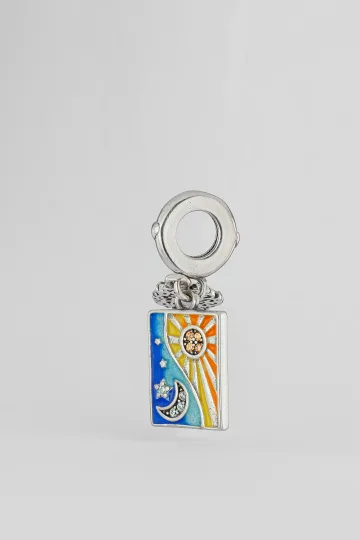
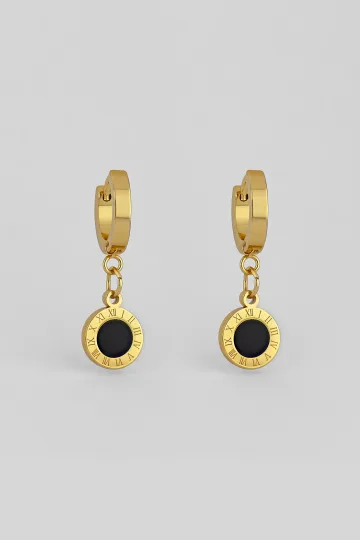

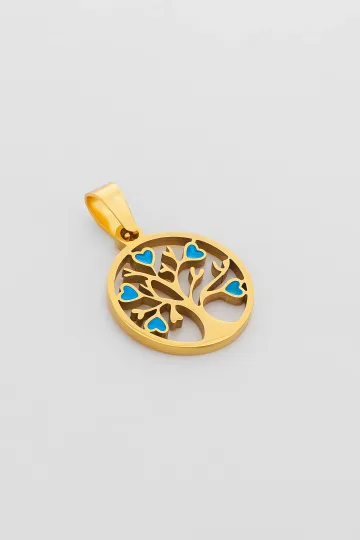
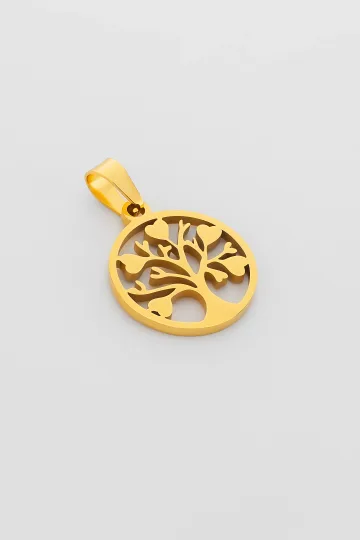
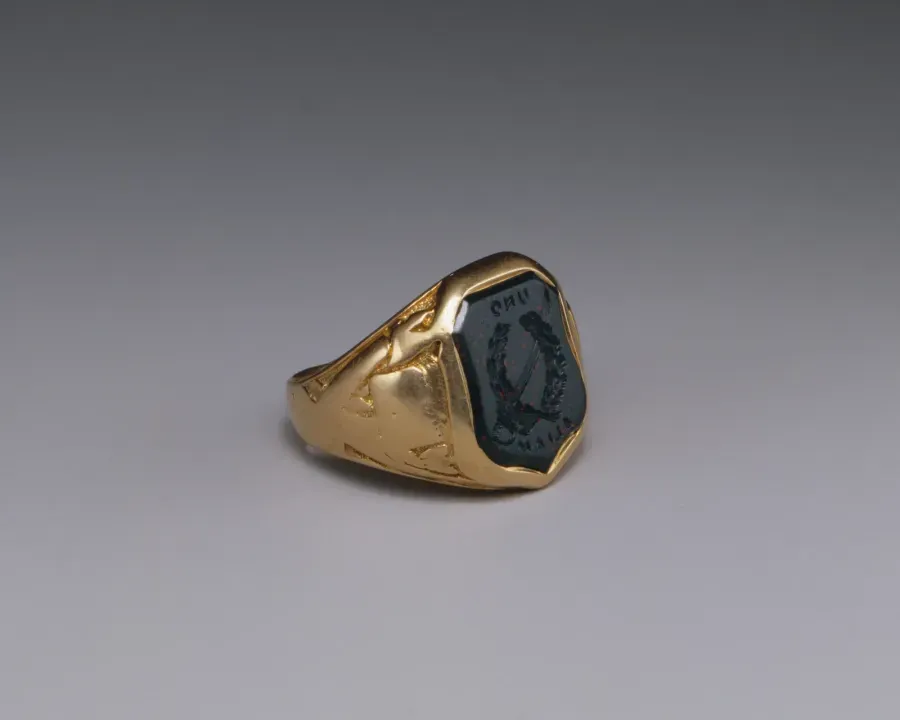
Older people in Britain, across Europe and beyond are now a large and growing group, and they keep their spending power and their active lives for longer than any previous generation. It is a huge segment, yet a gift that genuinely moves them stays a rarity. Most grandfathers receive the predictable: a shaving set, a thermos, a pair of house slippers. Those things sit on a shelf and say nothing to the grandchild. What he wants is a conversation without words, because old men of that age will never say it out loud.
The psychology of a gift for a grandfather: what matters after 65
How a person changes from the inside with age is harder to see than how the body changes. The body changes predictably: blood pressure, joints, eyesight. Something different happens with the way a gift is received, and grasping that before you choose matters more than knowing his ring size.
What becomes important after 65 or 70
Memory. Not as a brain function, but as a value. A man of seventy has lived through so much that individual episodes can no longer be recalled without an external anchor. A photograph, a name, a date engraved on metal. The anchor works literally: without it the memory slips away, with it the memory returns with its full context. A locket holding a photo of the grandchildren is therefore not a sentimental flourish for a seventy-year-old, it is a function: it literally keeps the memory within reach.
Continuity of the line. The phrase feels awkward to say aloud in a modern city, but it lives quietly in a seventy-year-old mind. When a man has grandchildren, he sees his own life for the first time as a link in a chain rather than a self-contained stretch. Until that moment a biography feels like a personal project. After grandchildren arrive it feels like one segment of a line running through great-grandfather, grandfather, father, himself, his son, his grandson, and onward. A gift that marks that link lands on the tenderest and the brightest spot at the same time.
The family story. A grandfather often becomes the only person who remembers details no one else can recall. Where his grandmother lived, the name of a distant relative, the village where his mother was baptised. That information sits in his head, and in ten years it may no longer be there. A gift that forces him to tell the story (a locket that needs a photo, a ring that needs a monogram, a compass that needs coordinates) works as a way to pull that data out before it disappears along with the man who holds it.
Recognition. Not "thank you for everything", but something more specific. Recognition of a role. Recognition that he was someone in this family, and the eldest of all. Grandfather held things together, grandfather showed the way, grandfather stayed silent when others shouted. These roles are rarely spoken aloud in a family. Silence is the convention. But a gift can voice what conversation never will: "you did this, and we saw it".
What stops mattering
Status. A grandfather of eighty no longer needs to prove to anyone that he is worth something. That case is closed. An expensive label stops being an argument. Sometimes an expensive label even irritates him: it reads as an attempt to measure a relationship in money.
Price. Connected to the above, but broader. An older man does not read the sum, he reads the time and attention. A gift bought with money but no attention reads instantly as a delegated task: an assistant phoned, it was delivered, it was wrapped. A gift made with attention (a symbol chosen, an engraving thought through, a note written by hand) reads as presence. In his frame of reference presence is worth more than any label.
Novelty. When you are thirty, a new object is pleasant simply because it is new. When you are eighty, a new object can unsettle: another thing to find a place for, another tool to learn. A gift with a history (gold melted down from your grandmother's ring, a fragment of an old medal, a child's handprint) fits into the life already there and adds no new item to manage.
Fashion. A grandfather of eighty has watched six or eight fashion cycles come and go. He tells fashion from style, and his own style was formed before you were born. A gift that tries to "modernise" him reads as pressure. A gift in his own style reads as respect.
The paradox of being judged by no one
A grandfather usually differs from a father in one way: he does not grade you. Your father expected results: marks at school, a place at university, a job, a family. Your grandfather expects nothing. He watches, nods, tells you his own story and goes off to make a cup of tea. He is the first authority figure in a child's life who hands out no marks. That is exactly why the bond with a grandfather often runs deeper than the one with a father: it carries no weight of expectation, it is not wired to anxiety, it does not hang on inspections.
A gift to a grandfather should match that structure. No evaluative weight. Not "you deserve it", not "thank you for everything". Those phrasings imply the gift is handed over for a duty performed. A grandfather has no duty. He simply is. The gift should reflect that: "you exist, and that is reason enough".
Age "corridors" and how they change the choice
65 to 70. He still feels middle-aged. Many in this range still work, drive, travel. The gift can be "active": a compass marked with the coordinates of a place he visits regularly, a signet ring as a symbol of an identity that continues, a bracelet for everyday wear. The tone of the gesture: "you are still in the game".
70 to 80. The radius of activity gradually shrinks, thoughts turn to the past more often, old photographs get pulled out more often. The gift begins to work as a bridge to memory: a locket with photographs, engraved dates, the names of grandchildren. The tone: "you remember, and we remember alongside you".
80 to 90. The radius is narrow, but the emotional depth grows. The gift becomes more tactile and less functional: an object you can hold, open, study. The size shrinks, the meaning expands. The tone: "you are not alone".
After 90. A very small but qualitatively distinct category. A grandfather who has reached this age has seen more history than anyone in the family, and he knows it. The gift should be physically very simple and saturated with meaning. One symbol. One engraving. One person whose photograph is held inside. The tone: "you walked the whole road, we came to meet you".
Physiology of age and physical comfort
A subtlety that often gets forgotten: after seventy, the hands and neck of most people change. Fingers grow thinner or thicker depending on the individual, the skin on the neck becomes more sensitive, joints can ache from metal that used to be worn without trouble. A long heavy chain presses on the cervical vertebrae, especially for someone with arthritis of the neck. A ring with a large stone is heavy for arthritic fingers. A bracelet with a stiff clasp is awkward for trembling hands. Low-grade silver tarnishes quickly on skin that has grown more acidic with age.
The ideal format for a very elderly recipient: sterling silver (platinum or gold if the budget allows, neither of which tarnishes), light weight (under 10 grams for a pendant, under 5 for a ring, under 15 for a bracelet), a magnetic or carabiner clasp (easy to fasten unaided), and a short chain that does not tangle.
Silver under the shirt, never a gold chain over it. A grandfather reads the engraving, not the carats, and don't you dare carve "world's best".
What to wear a grandfather's piece with
When I put together a look around a gift for a grandfather, I start not from the shine but from one plain question: will he wear it every day, or hide it in a drawer? Here is where I usually land.
What should he wear every day? For daily wear I recommend a light pendant under the shirt or a bracelet on a leather strap. Silver works more softly here than gold: it does not glare and stays personal. A leather strap takes the dressy edge off a bracelet, and a Spartan grandfather accepts it as an ordinary thing, not jewellery.
And for a formal outing, an anniversary or a visit? Under a jacket I suggest what shows in the right place: cufflinks on the cuffs, a pocket watch with a chain in the breast pocket, a signet on the right hand. Under a dark suit I choose silver or platinum with a cold shine; under warm-toned shirts, yellow gold sits better. I keep the collar buttoned, since a deep open neck does a grandfather no favours.
How many pieces at once? One piece, two at most. Layering does not suit an older man; to him a stack of chains reads as fuss. I build a pair like a pendant plus a ring, or a watch plus cufflinks, and keep to a single metal so the look reads as one whole.
What if he already wears a ring or a cross? If the wedding band is on the left hand, I suggest the new signet on the right. If he wears a cross, I put the new pendant on its own short chain, so the two do not tangle or argue with each other.
What length and weight after seventy? I recommend a short chain, 45 to 50 cm, so the pendant does not swing or catch. Heavy long chains press on the neck, and I steer clear of them. I choose a simple clasp, a lobster or a magnet, so he can put it on and take it off himself with ease.

Turn on your camera, pick earrings, a pendant or a ring, and see the piece on yourself in real time.
Switch items in one tap.
Everything runs in your browser: no photo or video is ever uploaded.
Types of grandfather: one gift does not suit them all
A grandfather is not a category, he is a specific man with a biography. Different biographies call for different gifts. Below are nine archetypes, each with its own selection scenario.
The military grandfather
Profile: ten to forty years of service, two or three or four postings or garrisons, medals in a box or in a case, sometimes on a dress uniform hanging in the wardrobe. Spartan in everyday life, sceptical about jewellery, but deadly serious about insignia. For him military marks are almost a language, not decoration.
What works. Cufflinks in silver or platinum, with the coordinates of his posts engraved on the inner face. Two points per cufflink make four places of service. A miniature ribbon bar worn as a pendant or brooch (not strictly to regulation, but as a personal mark): a silver plate enamelled in the exact colours of his real decorations, done in hot enamel. A signet ring with the emblem of his branch engraved inside the band, plain on the outside.
What does not work. Any "civilian" aesthetic without insignia. Decorative pendants, fashionable chains, yellow gold in a "trendy" register. He will read it as a needless bourgeois thing.
A further note. If he served in a specific conflict, the coordinates can be tied not to a garrison but to a point that mattered, or to a place where he lost a comrade. That is a very heavy note, and you should only touch it if you know he is ready to talk about it himself.
The working-man grandfather
Profile: thirty or forty years in a factory, a depot, a workshop, a garage. Hands that know a tool. Often a man of few words. He treats jewellery the way he treats a spare gasket: "doesn't work, doesn't need it". But he treats a tool with a respect that borders on love.
What works. A bracelet in the shape of a nut or a bolt (silver, properly stylised, not a souvenir-shop trinket). A pendant shaped as a gear with the tooth count engraved to match a real gear from his lathe. A miniature hammer as a fob on a watch chain or keyring. A ring engraved with a 13 mm spanner (or whatever size was "his"). Cufflinks shaped as a spanner or a micrometer.
What does not work. Any "delicate" jewellery. Thin chains, thin pendants, smooth gold with no form. He will not register it, he will put it aside.
A further note. If he worked on the railways, a miniature locomotive fits. If in aviation, the silhouette of an aircraft (a specific model he worked on, ideally). If in shipbuilding, the silhouette of a ship or an anchor. The specificity of the trade matters more than a generic "industrial" style.
The intellectual grandfather
Profile: a university degree, often a doctorate, a teaching post or a research career. He reads every day, writes for the desk drawer or for colleagues. His memory works in text and formulae. He may wear no jewellery at all, but he treats a fine book, an old pen, a rare edition as artefacts.
What works. A silver nib as a pendant (a miniature of the classic steel writing nib): right for a writer, a philologist, an editor. A miniature book as a pendant, with the first line of his favourite work engraved inside. A signet ring engraved with a line from his favourite author. Cufflinks engraved with a formula from his own dissertation. A pendant with a Latin motto: "Sapere aude" (dare to know) for a humanist, "Per aspera ad astra" (through hardship to the stars) for a scientist, "Quod erat demonstrandum" for a mathematician.
What does not work. Coarse "masculine" jewellery, thick chains, aggressive signets with skulls or knives. He reads it as cheap taste.
A further note. If he works with archives or manuscripts, a miniature magnifying glass as a pendant or fob fits beautifully, antique or made to look so.
The country grandfather
Profile: all his life or most of it spent on the land. His own village, his own plot, his own garden. He knows the names of the herbs, tells a ripe apple from an overripe one by the faintness of its smell, reads the weather without a forecast. The urban aesthetic is often foreign to him. But he treats the soil, the wood, the fruit with a basic reverence.
What works. A pendant made of local wood (oak, birch, apple, walnut) in a silver setting: a fragment from a tree he planted, or from the plot where his childhood happened. A silver locket with a pinch of soil from his land sealed inside (a tiny reliquary, an airtight capsule). A pendant shaped as a leaf or a grain (wheat, rye, maize, depending on what he grew). A ring engraved with the outline of his plot from the land registry.
What does not work. Urban masculine jewellery. Chains, "business-casual" signets. Not his language.
A further note. If he keeps bees, a pendant shaped as a bee or a honeycomb cell fits. If there is a particular favourite tree on the plot, engrave its coordinates to five decimal places, down to the trunk.
The traveller grandfather
Profile: a sailor, a geologist, a soldier with a wide posting radius, a journalist, a diplomat. His life passed in motion. At home he keeps a collection: coins of different countries, postcards, maps, sometimes suitcases plastered with hotel labels. He is attached not to one place but to a trajectory.
What works. A compass as a pendant, with the coordinates of a place he always wanted to return to engraved on the back. A map pendant: a miniature of the world with the points of his route marked. A ring engraved with the latitude of his home town. A pocket watch engraved with the time zones he passed through most often. A bracelet hung with little flags or coins from different countries (you can set his own coins in silver).
What does not work. Tying it to a single place. "The coordinates of the family home" often fail for a traveller, because in his picture of the world there is no family home, there is a route.
A further note. If he was a sailor, an anchor works literally and figuratively. If a geologist, a piece of rock from a specific expedition. If a diplomat, a coin from the country where his most significant work was done.
The believing grandfather
Profile: a practising Christian, less often a Jew, a Muslim, a Buddhist. Religion for him is a daily practice, not a "cultural identity". He prays, he fasts, he wears a cross or a symbol of his faith.
What works. A handmade silver cross, distinct from the standard church models: engraved with his name, with the date of his baptism, with the image of the saint whose name he carries. A rosary in silver or with silver dividers (a Catholic rosary, an Orthodox prayer rope of thirty-three or a hundred beads, a Muslim misbaha of thirty-three). A ring engraved with an icon or a symbol (a cross within a circle, a Chi-Rho monogram; the Sacred Heart for a Catholic; the calligraphy of a short verse for a Muslim; the Star of David or a menorah for a Jew). A locket with a miniature icon inside.
What does not work. Secular symbolism. An anchor with no religious context, a compass as a metaphor, abstract geometric pendants. He will read it as irrelevant.
A further note. Find out the name of his patron saint, the date of his baptism, his favourite prayer or verse. That specificity is what the whole gift is built on.
The widower grandfather
Profile: his wife passed before him, sometimes long ago, sometimes recently. The marriage lasted half a century or more. Her photographs are still in the house, her things, her scents slowly fading. Often quieter than before, sometimes withdrawn. He still wears his wedding ring, sometimes moved to the right hand.
What works. A paired gift: a melted-down fragment of his wife's brooch combined with new silver into a fresh brooch or pendant. A locket with her photo on one side and his own on the other (so they face each other when it opens). A ring made from the melted gold of her wedding band, in a new design for his finger. A silver pendant engraved with the date of their wedding, plus the coordinates of the place where they married.
What does not work. A loud declaration of loss. A direct inscription such as "in memory of grandmother" reads as ritual condolence, and what he needs is not condolence but a quiet presence.
A further note. If you can, ask him whether he wants such a gift at all. Some widowers react hard: the object becomes a trigger for grief rather than comfort. If he speaks of his wife often and calmly, the gift is right. If he goes silent and closes off, choose something neutral.
The active, sporting grandfather
Profile: seventy and over, but he runs in the morning, swims, walks in the hills or simply covers five kilometres a day. He wears his body as a tool. Lean, with a straight back and quick reactions. He bristles at being looked at through a pitying, geriatric lens.
What works. A modern band-style bracelet or a fitness pendant designed for someone who is anything but retired, in silver or titanium. A pendant shaped as a mountain (the silhouette of a specific summit he climbed) engraved with its height. A ring engraved with the time of his best marathon or a record he still remembers. A pocket watch engraved with his personal best in his favourite sport.
What does not work. Heavy lockets, long chains, any jewellery that gets in the way of movement.
A further note. If he swims, silver dulls in chlorinated water: titanium or platinum is better. If he runs, the pendant must be light and flat so it does not knock against his chest.
The housebound grandfather with his memories
Profile: eighty or ninety, walks little or not at all, days spent in an armchair, in bed, by the window. Sometimes illness, sometimes simply age. The mind is usually clear, the body tired. Time is measured not in tasks but in what gets remembered over a day.
What works. A light locket on a short chain, so it can be held and opened without effort. Inside, two photographs: one old (him as a young man, or the whole family decades ago), one recent (the grandchildren now). A tactile bracelet on a magnetic clasp, light enough to put on and take off unaided. A stone that is warm to the touch in a pendant (amber, agate, haematite) for hands that like to hold something.
What does not work. Heavy stiff clasps, small prongs (they catch on clothing), sharp decorative details, long chains (they tangle), tiny engraving (he cannot read it without a strong loupe).
A further note. If there is early-stage dementia, a locket with faces helps: a point of attachment to reality. "These are your grandchildren, look." Every time anew, and every time it works.
Customer reviews
Zevira is a real jewellery shop. Genuine payments, deliveries and customer thank-yous.
🥰🥰🥰 gracias

Ok, ¡gracias! 🙂

30 gift ideas for a grandfather: from the obvious to the rare
The list does not claim to be universal. Each entry works in its own context, and out of thirty, only two or three will suit a particular grandfather.
1. Cufflinks with a fragment of a military medal
A silver or platinum pair, each set with a tiny fragment of material from one of his real decorations (after melting, with permission, or a fragment of the ribbon bar in a sealed capsule). Used only with his consent and only when he has several decorations, one of which can be reworked. The keeper of the medal must be in the loop.
2. A pendant with the coordinates of his childhood home
A silver disc, engraved with coordinates to five decimal places (accuracy to the metre). The coordinates of the place where he was born, or of the house where his childhood happened. If the house is gone, the coordinates remain, and that turns the pendant into a map of a vanished place.
3. A silver locket with a photograph from decades ago
Microfilm technique: the photograph is reduced to 5 to 7 mm and placed inside the locket under a lens. From the outside the photo is invisible; it opens through a thin catch. Inside, him as a young man, in uniform or with his young wife. A face he remembers less clearly than he thinks.
4. A pocket watch engraved with his name
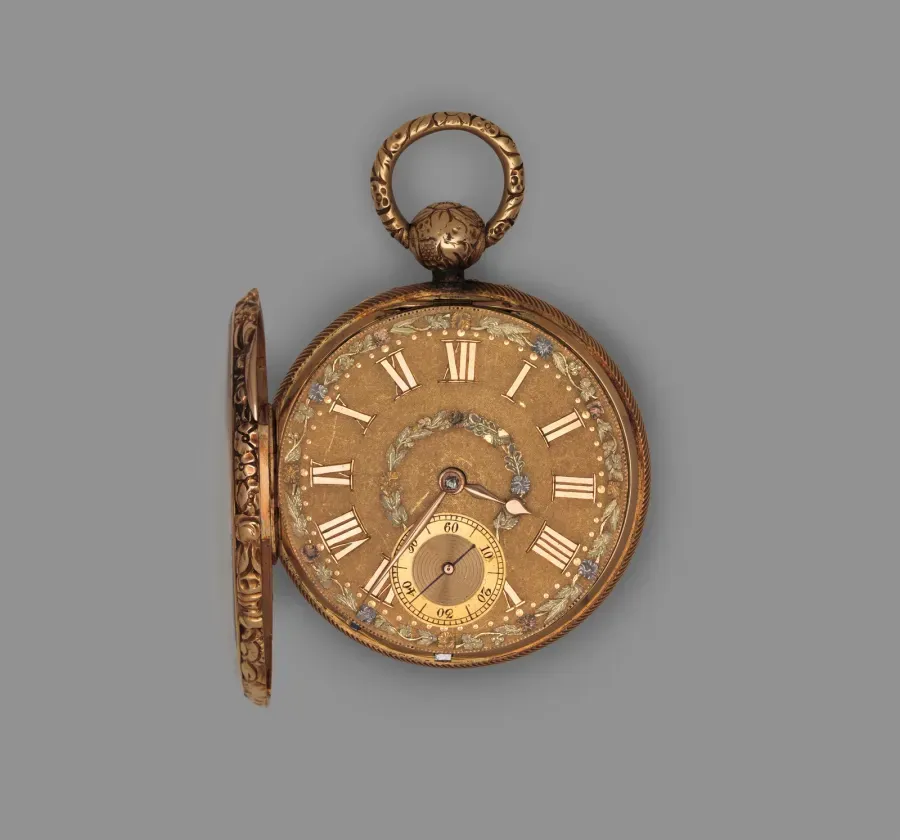
A silver pocket watch on a chain with a hinged cover. His name engraved on the outer cover. On the inner cover (seen only by the owner) the birth date of his first grandchild or another date that matters. The watch must run: an accessory, not a souvenir.
5. A rosary or a religious pendant
For a Catholic: a rosary with a silver cross and a saint's medal. For a Muslim: a misbaha of thirty-three, sixty-six or ninety-nine beads, possibly with amber or coral inserts. For an Orthodox Christian: a silver prayer rope of thirty-three beads with cross dividers. For a Jew: a pendant with the letter "chai" (living) or the Star of David.
6. A signet ring with initials
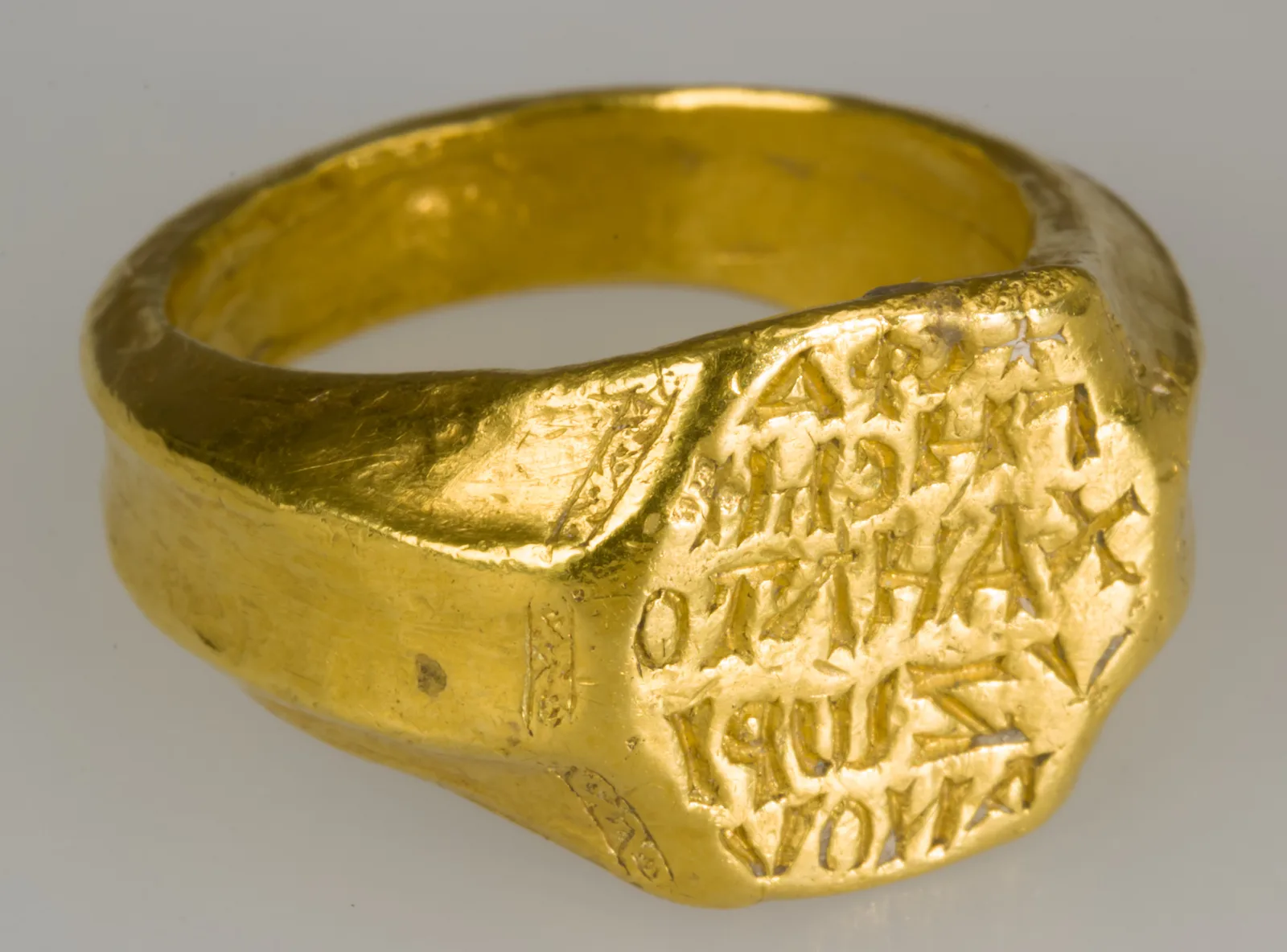
A ring of classic form (an oval or rectangular plate), engraved with his initials as a monogram. An English monogram (two interwoven capitals), a heraldic one (initials in a frame of foliage), or a classical Roman capital. A date or a child's name can be added inside the band.
7. A coin commemorating his wedding day
A silver or gold medal 25 to 30 mm across, struck as a single piece to special order. On the face, a portrait of him with his wife from their photograph, or the outlines of their profiles. On the reverse, the wedding date, the names, sometimes the place. Kept in a box, not worn, but taken out each anniversary.
8. A reliquary with a pinch of soil
A silver capsule-pendant the size of a fingernail, airtight, with a clear window (natural quartz or sapphire glass). Inside, a pinch of soil from his birthplace, or the yard of his childhood, or his parents' grave. The soil is gathered by a daughter or grandchild, always with a description (where, when, on whose behalf). A literal piece of a place.
9. An anchor pendant
A silver pendant shaped as an anchor, minimalist or detailed. The anchor as a symbol of steadiness: the one who held the family together all these years. Engraved inside: "you held on when no one else could". The anchor suits a former sailor as a professional mark, a believer as an early Christian symbol of hope, the head of a family as a metaphor.
10. A lighthouse pendant
The silhouette of a lighthouse in silver or silver with enamel, 25 to 30 mm. The lighthouse suits a man who showed the way without moving himself. Engraved: "you gave the light" or "north is wherever you are". It works especially well as a gift from a granddaughter to her grandfather.
11. A compass pendant
A decorative compass, non-functional but with a clear wind rose. On the back, the coordinates of a place that matters. Right for a traveller, a sailor, a man with a geographical profession.
12. A nut-shaped bracelet
A silver nut link on a leather or silver strap, the size of a real 17 mm nut. A gift for the mechanic, the engineer, the driver. Recognised instantly, no explanation needed.
13. A ring engraved with a spanner
A silver ring with the outline of an adjustable or open-ended spanner of a certain size engraved on the outer face. A gift for the grandfather who worked with his hands all his life.
14. A silver nib
A pendant shaped as the classic steel writing nib, 35 to 40 mm long. Engraved with his name or the first word of his first published article. A gift for a teacher, a scholar, a writer.
15. A book-shaped pendant
A miniature book with a silver "cover" that opens. The first line of his favourite work engraved on the inside of the cover. Right for a philologist, a translator, a teacher of literature.
16. A gear pendant
A silver gear-shaped disc, the tooth count matching a real part from his lathe or his machine. A gift for the mechanic, the turner, the milling-machine operator.
17. A pendant with a grain or a leaf
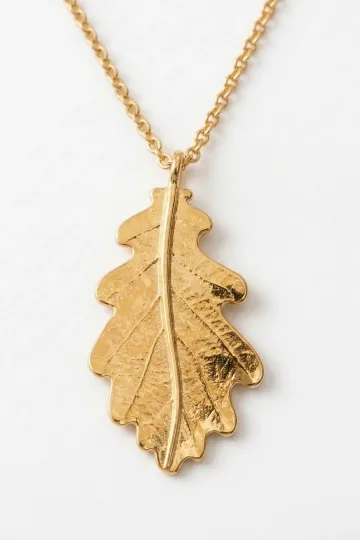
A silver pendant shaped as a grain of wheat, an ear of maize, an oak leaf or an apple seed. Right for the gardener, the farmer, the country man. Can be combined with the name of a specific variety or tree.
18. A silver pocket watch with a chain
The full set: watch plus chain with a fob. Engraving on the cover, on the chain, on the fob. A gift for a grandfather of formal habits, a former railwayman, an engine driver, a military man.
19. An engraved keyring
A silver or platinum keyring engraved with his name and year of birth. Not strictly jewellery, but in his pocket every day. A good option for the grandfather who categorically refuses to wear jewellery: "it isn't jewellery, it's for the keys".
20. A handmade cross pendant
Not the standard church model, but engraved with his name or a short prayer of his choosing. For a Catholic, a Latin saying. For a Protestant, a line of Scripture.
21. A pendant with a grandchild's fingerprint
A silver disc, on one side a tiny fingerprint (or handprint) of the grandchild, transferred through a silicone mould and casting. On the back, the child's name and a date. A gift from a young mother to the grandfather on behalf of the great-grandchild.
22. A silver pendant with a child's drawing
A drawing by a grandchild or great-grandchild, made at any age, transferred into engraving on metal by scanning its outline. It works best when the child has drawn the grandfather himself or a scene with him.
23. A bracelet with date charms
A silver bracelet with five to eight small plaque charms, each engraved with the name and birth date of one of the grandchildren. The family's chronology on the wrist. When the next grandchild arrives, a new charm is added.
24. A pressed-flower silver pendant
A dried leaf or flower from the grandfather's garden, set in clear resin and framed in silver. A gift for the gardener. The flower lives on in metal: an evergreen dried specimen.
25. A ring with the family crest
If the family has a recovered or surviving crest, its outline is hand-engraved with a graver onto the ring plate. If there is no crest, you can commission one from a heraldic artist according to the rules of blazon.
26. A polyptych locket
A locket that opens not into two but four or six compartments (like a folding icon). Inside, a photo of each grandchild. Especially right for a grandfather with many grandchildren (three or more).
27. A silver pendant with a fragment of the grandmother's award
If the grandmother held awards (for work, for motherhood, military) and is no longer here, a fragment of that award (after agreement with the other heirs) is melted into a pendant or combined with new silver. Worn by the grandfather as "she is with you".
28. A tool-shaped pendant
A hammer, screwdriver, spanner, soldering iron or calliper in miniature, made of silver with fine detail. A gift for the craftsman grandfather. Recognised instantly.
29. A pendant with the coordinates of the parents' grave
A silver disc engraved with the precise coordinates of where the grandfather's parents are buried. A pinpoint anchor that works as a quiet message: "they are with you, you are not alone". Worn or not, but kept.
30. A ring engraved with a date in an old calendar
If the grandfather is tied to history (a believer, fond of the old country ways, born in a village), his birth date can be engraved by an older calendar reckoning. That turns a plain date into a historical document.
Upload a photo of your pet, someone you love, or an object. We'll build a 3D model and hand-cast it in pewter.




Materials for a grandfather's gift: what and why
The choice of metal, stone and secondary materials shapes how long and how comfortably the gift will live alongside the grandfather. A few practical thoughts on each category.
Sterling silver: the universal choice
Sterling silver is 92.5% pure silver and 7.5% alloy, usually copper. It is the standard jewellery grade, balancing softness for engraving against durability for daily wear.
Advantages for a grandfather's gift. Affordable (you can invest in meaning rather than metal). It takes engraving well, both laser and hand-graving. With age it develops a light patina that reads as "an object with a history" rather than a new trinket. It causes no skin reaction in most people.
Drawbacks. It tarnishes in contact with air, especially in humid rooms or near the sea. It tarnishes faster on acidic skin, which is common in older people. It needs occasional polishing with a special cloth.
The solution for a grandfather who will not bother with upkeep: rhodium-plated silver (a thin layer of rhodium prevents oxidation for three to five years, after which the plating can be renewed).
14K and 18K gold: for the grandfather used to quality
14-carat gold is 58.5% pure gold, the rest alloy (copper, silver, sometimes nickel). 18-carat gold is 75% pure. The higher the carat, the softer and yellower the metal.
Advantages for a grandfather's gift. It does not tarnish, needs no upkeep, stays the same across decades. It carries more status than silver. Yellow gold is traditional for men's jewellery: wedding rings, military decorations, academic medals.
Drawbacks. Substantially dearer than silver. Less interesting as a background for dark engraving (silver gives more contrast).
When to choose gold. If he wears a yellow-metal watch and a gold wedding ring, and his aesthetic is "golden". If the budget allows and the gift is meant as a family heirloom for forty or fifty years ahead. If family gold (an inheritance) is being melted down and you want to keep the material in its original nature.
Platinum 950: for those who understand the difference
Platinum 950 is 95% pure platinum and 5% alloy, usually iridium or ruthenium. It is 30% heavier than gold, more scratch-resistant, does not tarnish, hypoallergenic.
Advantages for a grandfather's gift. The highest prestige among metals. No allergic reaction (important for older people with sensitive skin). Stronger than gold and silver, never loses its shine. Right for the Spartan grandfather, because it looks restrained (a grey shine without a flashy yellow undertone).
Drawbacks. Substantially dearer than gold. Rarer in standard workshops, requiring a jeweller experienced with it. Harder to melt (melting point 1768 degrees, needs an induction furnace).
When to choose platinum. For a very close grandfather, for a rare gift with great meaning, for the case where you want a truly permanent material that will keep its look under any circumstances. It pairs well with meteorite iron and other rare materials.
Titanium: for the sporting grandfather
Grade 5 titanium (Ti-6Al-4V) is an aerospace alloy used in modern men's jewellery. Grey in colour, light (40% lighter than silver), exceptionally strong, hypoallergenic.
Advantages for a grandfather's gift. Ideal for an active older man who plays sport, swims, walks in the hills. It does not scratch, tarnish or react to chlorinated water. Far lighter than precious metals, it tires neither neck nor finger.
Drawbacks. A cold, technical look that does not suit everyone. Hard to hand-engrave (harder than steel), though laser engraving works perfectly. It is not read as a "precious" material, which can be a drawback for an aesthete.
When to choose titanium. For an active, sporting, technically minded grandfather. For a gift worn constantly in conditions where a precious metal would suffer.
Stones: what suits a grandfather
Diamond. Universal, but often excessive for a grandfather. If used, then very small (under 0.1 ct), as an accent in a signet ring or a locket. A large diamond on an older man reads as "bought for his wife".
Garnet and almandine. Warm dark-red stones with a long jewellery history. They suit signet rings, lockets, pendants. A democratic price, a serious look.
Sapphire. A deep blue colour, associated with wisdom and dignity. It suits the scholar, the teacher. A dark, almost ink-blue sapphire is especially good, rather than a pale gem-grade one.
Opal. A stone with a play of colour, for the aesthete. It suits the grandfather who values the unusual. It needs careful handling (fragile, sensitive to temperature).
Amber. Warm, light, tactile. It suits the very elderly grandfather who likes to hold something living in his hand. Amber often appears in rosaries.
Haematite. Grey-steel with a metallic sheen, heavy, tactile. It suits the military man, the craftsman. No upkeep, durable.
Meteorite iron. Not a stone in the strict sense, but a material in the same "rarity" category. Campo del Cielo (Argentina), Gibeon (Namibia). Each specimen has a Widmanstätten pattern (a crystalline figure revealed by etching) that cannot be faked. A strong gift for a grandfather drawn to space, machinery, science.
Wood and organic materials
Sometimes, for the gardener or the country grandfather, wood works harder than metal. A silver pendant set with a fragment of oak, walnut or apple from his own plot carries a literal piece of his life.
The technique: the wood is impregnated with a stabilising resin (preventing rot and cracking), polished smooth, and set into silver by cold press-fitting. Upkeep is minimal, the lifespan decades.
Where to find the material: from the grandfather's own plot (a fragment of a tree he planted), from places of his childhood (old furniture from the family home), from symbolically meaningful places (driftwood from the beach where he met his wife).





Packaging, presentation and the moment of giving
A gift for a grandfather does not end with choosing the object. Half the effect depends on how, where and when you hand it over. A grandfather of eighty reads the context of a gift more carefully than the gift itself. A few practical rules.
The box and the presentation
No plastic. No bags with a shop logo. No bright ribbons with cartoons.
A good box for a grandfather's gift: dark wood (rosewood, ebony, walnut) or stiff card covered in fabric (navy, burgundy, dark-green velvet or suede). The box a little larger than the piece, so it lies with space around it rather than crammed in. Inside, a backing of the same material with a recess for the object.
If the budget allows, an engraving on the box itself: his monogram, his name, or simply the date of the gift. That turns the box from "packaging" into a "case" for keeping.
The handwritten note
A mandatory element. Not a card with ready-made text, not a factory "Happy Birthday". A handwritten letter on good paper (heavy white or cream, A5 or smaller).
The structure of the note: three to five sentences. First, what the object is. Second, why this symbol or this engraving. Third, what you wanted to say through the gift. Fourth (optional), a wish or a line without sentimentality. Fifth, a signature and a date.
An example. "Grandad, this is a silver anchor pendant. Sailors once wore the anchor to remember home. You held us up our whole lives, the way an anchor holds a ship. On the back are the coordinates of the cottage where you were always yourself. Wear it or keep it as you like, the main thing is that you know. Yours, James, 15 May 2026."
The note is kept with the gift. In forty years, when James's own grandchild opens the case and finds the pendant, he will find the note too, and understand the whole story.
Where and when to give it
Giving it in person is always stronger than at a distance. If your grandfather lives in another town, find a way to come with the gift; do not send a courier.
The timing: not in the noise of a feast, not in the general swirl of a family celebration. Better a separate moment. In the morning over tea, in the afternoon in the garden, in the evening in the kitchen one to one. He needs time to look, to read, to understand. In a crowd that is impossible.
What to say as you give it: one sentence, no more. "Grandad, I made this for you." Then a pause. Let him open it, read it, ask. Do not explain in advance. Let the object do the work.
If the giving has to be remote
If you cannot come and the gift goes by post or courier, minimise the loss of effect with a few moves.
Tell him in advance that the gift will arrive on such a day. That creates an anticipation without which the parcel looks accidental.
A video message recorded for this moment. Short (two or three minutes), unrehearsed, unprofessional. You simply speak to the camera: "Grandad, there's a pendant in the box. Open it over tea, read the note, then call me."
A call right after it arrives. Let him open, read and look, and then be sure to call, or have him call. A remote giving needs a conversation by video or voice, otherwise the gift stays "a thing in a box".
What to do if he reacts with restraint
Many grandfathers show no emotion when receiving a gift. That is a generational trait, not a personal one. A man born in the 1930s or 1940s may have been raised never to display joy or sorrow. Do not confuse restraint with indifference.
Signs that the gift is working despite the outward calm. He takes the object out several times over the evening, looks at it, puts it back. He asks clarifying questions (what does this date mean, where are these coordinates from). He shows the object to a neighbour or a friend. He puts it on, or sets it beside his other important things (the watch on the table, the photograph on the wall).
If none of that happens on the first evening, do not panic. Often the effect arrives days or weeks later. He puts it in a drawer first, then takes it out, then starts to wear it. That is a normal rhythm.
CAPAORA mini knife pendant
The 18th-century Spanish navaja in miniature: 40 mm of stainless steel, a real folding mechanism and a Palanquilla lock that clicks. An affordable gift to remember.
Authentic · Ships from Spain · 14-day returns
Five detailed cases: how it works in life
Theory takes shape only in specific cases. Below are five composite scenarios. These are not real clients or testimonials: names, dates, towns and circumstances are invented to illustrate the approach. Any resemblance to real people is coincidental.
Case 1. A grandson, a military grandfather of 88: a silver pendant with the coordinates of four postings and a miniature ribbon bar
A composite example, not a real client. A grandfather born in 1937, a career soldier, in the army from eighteen. An artilleryman, then an engineer, four main places of service across his career, the last one near the city where he settled after retiring. By eighty-eight he had grown withdrawn, speaks little, sits by the window in the evenings. He wears only his wedding ring.
His grandson, thirty, an engineer. From childhood he had heard about those four places in fragments, but had never seen his grandfather in uniform at a parade. The grandfather does not tell war stories without prompting. The eighty-eighth birthday is near, a quiet occasion, and the grandson wants to make a gesture his grandfather will read without explanation.
The solution took half a year to assemble. Through a veterans' organisation they tracked down the precise coordinates of the four garrisons (some no longer exist or have passed into civilian use). They commissioned a silver disc pendant 22 mm across, 2 mm thick. On the face, four coordinate points laser-engraved in a single column. On the back, a short line: "Grandfather, you served." Alongside the pendant they ordered a miniature copy of his ribbon bar as a brooch 25 by 8 mm, enamelled in the exact colours of his real decorations. The ribbon bar is not an official award, it is a copy for daily wear, an aesthetic object.
The giving took place at a family dinner the night before the birthday. The grandson handed over the box without a speech. The grandfather opened it, saw the disc, read the coordinates aloud, did not recognise the first point at once, but knew the second and third instantly. At the fourth he fell silent. The grandson explained line by line. The grandfather took the ribbon bar in his hands, looked at the enamel, said quietly: "I have one like this on my dress uniform. This one is lighter." A year later the pendant lives in the breast pocket of his shirt, worn to family dinners. The ribbon bar is kept in a case with his real decorations.
What worked. Coordinates as a "language". A military man relates differently to words and to numbers: numbers are fact to him, words are often ornament. Four points on metal give fact without a word. The ribbon bar as a copy of his real decorations works on territory familiar to him. The combination is double: one object speaks of the geography of his life, the other of its content.
Case 2. A granddaughter, a teaching grandfather of 80 in slow decline: a silver nib engraved with the first word of his first article
A composite example, not a real client. A grandfather born in 1944, a teacher of literature for forty-four years, then fifteen more at a teacher-training college. A scholar, the author of textbooks, around twenty published articles. Since last year a diagnosis no one says aloud, though everyone in the family knows it: a degenerative condition, a slow decline of cognitive function. His memory for the distant past is still good, the recent fades. His wife passed six years ago.
His granddaughter, twenty-eight, a literary editor. He was her first reader, the first editor of her school essays, the first person to explain to her the difference between "it seemed" and "so it seemed". She knows his professional biography better than anyone else in the family. For his eightieth she decides on a gift that will give him back, for one minute, the taste of his own youth.
The solution called for archive work. In a national library she found the issue of an education journal from 1972 carrying his first article (he was then twenty-eight). The first word of the first sentence: "When".
She commissioned from a workshop specialising in filigree and hand-engraving a silver nib 38 mm long, a precise stylisation of the classic steel writing nib. On the face, hand-engraved with a graver, a single word: "When". A serif typeface, 4 mm, readable from any distance. On the reverse, smaller, the date of publication. A silver chain 50 cm long, so the nib sits low on the chest and does not get in the way.
The giving took place on his birthday, in his room, with her mother present. The granddaughter took out the box and handed it over. He opened it, saw the nib, smiled politely at first ("is this for me?"), then saw the engraving. For thirty seconds he looked at the word "When" in complete silence. Then he said: "This is my article. I had forgotten this word." He wept. So did she. Six months later the pendant hangs over his shirt; at home he never takes it off. When the illness advanced and he began to forget the names of his grandchildren, he would still say the same thing each time, holding the nib: "This is my article. I wrote it." It became an anchor of identity.
What worked. The principle of specificity taken to its limit. Not "for a teacher", not "for a philologist", but one concrete word from one concrete sentence in one concrete article. That level of precision is possible only with a deep knowledge of the recipient's life. Archive work in gifts is rare, and that is exactly why it works. He received not "a thing" but proof that his word was remembered.
Case 3. A teenager, a farmer grandfather of 75: a silver bracelet shaped as a nut
A composite example, not a real client. A grandfather born in 1949, all his life in the countryside. A tractor driver, then a smallholder, he still keeps a small holding: a vegetable plot, a greenhouse, half a dozen hens, an old car he repairs himself. He treats jewellery with mild contempt ("that's for women"); apart from his wedding ring he wears nothing. He loves tools. In his shed he keeps a "golden shelf" of spanners, sockets, sets of bits, callipers, all in perfect order.
His grandson, fourteen, a city boy who sees his grandfather two or three weeks a year in the summer. There is a wide aesthetic distance between them (the grandson in headphones and a hoodie, the grandfather in boots), but real affection. The teenager wants to make his first "real" gift to his grandfather out of his own saved money. His mother nudges him: look at what your grandfather keeps in the shed.
The solution came together with the help of a jeweller his mother knew. They ordered a bracelet centred on a real hexagonal nut link sized to a 19 mm spanner, made of sterling silver. On either side, two plain silver links, one engraved with the grandfather's name, the other with the grandson's. The bracelet is on a black leather strap (a silver chain under the grandfather's jacket would have looked foreign). The length is adjustable, the clasp a simple metal one.
The giving took place at the house, after lunch, as the grandfather was about to go and fix the greenhouse. The teenager pushed the box over: "Here, for you." The grandfather opened it, turned the nut in his fingers, recognised the size by touch (he can tell spanners and nuts apart with his eyes shut). He said: "Nineteen. Just the right one, you remembered." The grandson replied: "I looked in the shed, you've got three of them." The grandfather put the bracelet on, looked at it, nodded. Since then the bracelet is always on him, taken off only for the bath. When he shows it to neighbours, he says: "My grandson gave me this. Nineteen. He chose it himself." That is a story he is still telling a year later.
What worked. The teenager made an inner move adults often skip: he looked at his grandfather's tools before choosing. The nut is not a souvenir stylisation but a real object the grandfather has held a thousand times. Silver is dearer than steel, and that contrast ("the same as mine, but in silver") lands on the sense of fitness. The leather strap strips away the "jewellery" feel, turning the piece into a tool.
Case 4. An adult grandson, a widower grandfather: a melted fragment of the grandmother's brooch in a new brooch, "she is always with you"
A composite example, not a real client. A grandfather born in 1942. His wife passed four years ago; they lived together fifty-six years. He is alone in the flat now, walks little, grieves in silence. Her clothes are still in the wardrobe, her jewellery on the dressing table. He does not touch the jewellery, but he does not put it away either.
His grandson, thirty-five, a bank employee living in another city. He sees his grandfather two or three times a year and writes regularly in between. He understands that his grandfather holds on through the memory of his wife, and wants to make a gesture that strengthens that memory without making it heavier.
The solution took a year and a half. First came a long conversation about "grandmother's things" over tea. The grandson asked carefully whether his grandfather would like one of her things "to go on living". The grandfather first refused ("let everything stay as it is"), then two months later phoned himself and said: "She had a brooch she didn't wear in her last years. Maybe you could make something." That mattered: the consent came from him, not from the grandson.
The brooch turned out to be gold, with two small almandines. The grandson took it to a trusted workshop. First the metal was assayed, to know what they were working with. Then the almandines were removed cold and the gold melted into a new form. From it they cast a new brooch shaped as a twisted ribbon with the two almandines at the ends. On the back, hand-engraved: "She is always with you."
The giving took place on their wedding anniversary. The grandson came specially. He handed over the box without explanation. The grandfather opened it, saw the brooch, recognised the almandines at once: "These are hers." He wept quietly. He read the engraving with trembling hands. Then he was silent for a long time. By dinner he had pinned the brooch to his lapel. Since then he wears it every time he leaves the house, even to the shop. To neighbours' questions he answers: "My wife's. My grandson reworked it so I could wear it."
What worked. The grandfather's consent was drawn out through a pause, not begged for. That was critical: heritage reworking without the memory-keeper's consent becomes a violence. The almandines were kept whole (not melted), because stones remember a story differently from metal. A brooch, not a pendant: a jacket with a lapel is part of his daily dress, a pendant under a shirt would not have worked.
Case 5. A young mother, on behalf of her child, to the grandfather: a silver pendant with the great-grandchild's fingerprint
A composite example, not a real client. A grandfather born in 1936, who lived to see great-grandchildren. His wife passed ten years ago. By eighty-nine he has declined sharply, walks with difficulty, speaks briefly, recognises faces. He sees the great-grandchild (a three-year-old boy) rarely, two or three times a year, when his daughter brings the child for the summer.
The grandfather's daughter (forty, the great-grandchild's mother) understands that his ninetieth birthday will most likely be the last at which he can consciously enjoy a gift. She decides to make something that will outlive him and stay with the child as a memory.
The solution worked in two directions at once. The mother made a "print on paper" with her three-year-old son: paint on the small palm, pressed onto a white sheet, and a separate fingerprint taken in ink. The best print was scanned at high resolution. A jeweller specialising in sculptural casting turned the print into a silicone mould and then into metal (by lost-wax casting): a silver oval pendant 28 by 22 mm, on one side the relief of the child's fingerprint at life size. On the other, the child's name and date of birth engraved. A short chain, 45 cm, so the grandfather could keep the pendant in his shirt pocket or hang it and hold it near.
The giving took place at the ninetieth birthday in the grandfather's house, with daughter, grandson and great-grandchild gathered. The mother handed over the box and said: "This is from him." The little one, not fully understanding, repeated: "From me." The grandfather opened it, saw the pendant, touched the print with his finger. He did not understand at once what it was; his daughter explained. The grandfather said to the boy: "Is this your finger?" The child nodded. The grandfather raised the pendant to the light and said: "You'll be in my pocket." He put it in the pocket of his pyjamas and never took it out again. Three months later the grandfather died. The pendant was in his pocket, beside the photograph of his wife that he always carried. The pendant is now with the great-grandchild; the mother keeps it until he comes of age, to tell him that for the last three months of his life his great-grandfather held his finger in his hand.
What worked. Touch instead of image. A grandfather of ninety may not see photographs clearly, may confuse faces, but he feels a child's fingerprint with his finger, and that works at the level of sensation, not sight. A gift on behalf of a small child through the mother frees the child from the task of putting it into words, and gives the grandfather a literal continuation of the line in his hand.
A history of gifts from grandchildren: 19th to 21st century
In European tradition, a gift from a young person to an elder was an institution, not a private impulse. It followed rules, took shape in family rituals, and passed meanings between generations that today are partly lost. Understanding this history is useful not for academic show, but to see where today's gift stands in a long line.
The 19th century: a gift as duty and as admiration
In European households of the 19th century, a gift from a grandchild to a grandfather was part of an obligatory yearly cycle. The grandfather's name was honoured at home, his name day marked with a dinner, and the young ones came with a gift. Most often it was something made by hand: an embroidered handkerchief, a drawing, copied-out verses. Something bought was considered less precious than something made.
In the literature of the period, a child's handmade gift to an elder is regularly described as a full gesture, no lesser in weight than a serious purchase from a shop. Embroidery, a drawing, copied-out verses were received with the same respect as an expensive thing. The child's gift was valued precisely for the effort, not for the price.
In bourgeois families a different practice appeared: the jewellery offering. A silver watch, an engraved ring, a signet with initials. These were gifts from a grown son or grandson to the head of the family. Such objects often passed from generation to generation, forming what the English tradition calls an heirloom.
In rural families there was a tradition of their own: the gift was expressed through work. A grandson tended his grandfather's sheep, helped in the field, mended a tool. A material gift was rare and usually very functional: a tobacco pouch, a cap, a belt. Jewellery was almost absent in this context, apart from a christening cross, usually given by the grandmother to her godchild.
The handing-down of family heirlooms from grandfather to grandson
In European tradition there was a ritual of handing down a family object along the male line. Most often it was a watch, a signet ring, sometimes a snuffbox or a small icon. The handing-down happened at a particular moment: a grandson's coming of age, his wedding, or the grandfather's deathbed. The object came with a spoken (sometimes written) history: where it came from, who made it, how many generations it had already passed through.
In the memoirs and fiction of the turn of the 20th century, family objects appear constantly as quiet but essential participants in a biography: behind each one stands a short story of who received it and in what circumstances. In some countries this tradition broke during the upheavals of the century: objects were sold for bread, melted down, vanished without trace. Many families were left with nothing material from the 19th century but a few preserved photographs.
War created a new tradition of its own: objects tied to it. A medal from a great-grandfather to a grandson, a front-line photograph, a letter from the front. These became new heirlooms. For many modern families the oldest family object is exactly the war decoration of a grandfather or great-grandfather.
The 20th century: rupture and recovery
The 20th century was, in many places, a century of rupture. Heirlooms were lost, traditions torn. The more striking, then, that modern families revive practices no one formally handed down: grandchildren once again give grandfathers personalised things, commission engravings, melt the old into the new. It is not a "return to tradition", because the tradition was broken. It is a rediscovery in a situation where physical proof of the bond between generations became necessary.
In Italy, Spain, France, lockets and rings with 19th-century engravings still lie in the cases of modern families, and a gift to a grandfather from a grandchild often becomes a continuation of that line rather than its foundation.
The 21st century: personalisation and the micro-story
Today's tradition of a gift from a grandchild to a grandfather differs from any before it in one respect: the level of individualisation. Modern technology lets you engrave on metal what was impossible in the 19th century: precise coordinates, photographs in microfilm, fingerprints, voice spectrograms, fragments of DNA. The gift becomes not "a gift from a category" but a unique artefact.
This changes the meaning of the gift. In the 19th century a watch engraved with a name and a year was passed along the line "family A gave to family B". In the 21st century the gift is passed along the line "this grandchild to this grandfather in this year for this reason". Universality has gone; in its place has come precision.
A paradox: the more possibilities for universality (anyone can buy anything), the higher the value of individual specificity. The 21st-century grandfather receives exactly what he could never have had fifty years ago: an object that physically contains data about his own life.
A gift as a speech act through metal
Linguistics has the notion of a speech act: an utterance that does not describe reality but changes it. "I forgive you" is not a description, it is an action. "I agree" is not a statement, it is consent. A gift to a grandfather is built the same way. It does not give him information (which he hardly needs), it performs an act of recognition, of love, of connection.
The peculiarity of an act through metal is that it is impossible in speech. If the grandson says aloud, "you held the family together all these years like an anchor", it comes out pompous, awkward, even false. If the grandson gives his grandfather an anchor pendant engraved "you held on", and the grandfather opens the box, nothing needs to be said. The act is done, both sides know it, no one has to speak.
That is the chief function of a gift in families where silence stands between the men of different generations. The silence remains, the act is performed. The grandson leaves with a sense of something done, the grandfather stays with a sense of being recognised. No conversation needed.
A gift as inheritance in reverse
The usual logic of inheritance: from elder to younger. A grandfather passes a watch, a house, a library to a grandchild. That is the work of time: what is gathered over a life moves on.
A gift from a grandchild to a grandfather inverts that logic. It is inheritance in reverse. The young give to the old. It is unusual, and that is precisely why it works: the grandfather usually expects nothing from the young (a grandchild is still at the "receiving" stage, not the "giving"), and a gift from the young becomes a surprise by the very structure of the act.
Today's gift to a grandfather stands in that same line. The young give the old material proof: you walked the whole road, and now your descendants come to you bearing gifts. It is a symbolic recognition of his role, one the grandfather rarely receives in any other form.
Leave your email, we'll send your discount code. No spam, unsubscribe anytime.
The code arrives by email, valid on your first order.
Anti-patterns: how people get a grandfather's gift wrong
Eight typical misfires, each of which kills a good idea.
Anti-pattern 1: an expensive piece he will never wear
The most common error. A grandchild or adult child buys an expensive gold piece hoping that "quality" will do the work. A grandfather who has lived eighty years without jewellery and refuses it on principle will not wear even the dearest piece. The expensive thing ends up in a box forever.
The fix: check whether he wears jewellery at all. If not, there are two options. Either choose an object not read as jewellery (a keyring, a pocket watch, cufflinks for a dress shirt, a cross), or change the format entirely (a locket with a photo sits on the bedside table, it is not worn).
Anti-pattern 2: a design that is too youthful
A silver skull pendant with diamond-set eye sockets. A ring in the style of heavy hip-hop jewellery. A thick chain like the one your grandfather's favourite rapper wears. To a grandfather of eighty all of this reads as "something strange that I do not need".
The fix: look at his own style. If he wears a classic shirt and trousers, the gift should be in that same register. Hide the modernity in the technology (laser engraving, precise microfilm), not in the form.
Anti-pattern 3: a generic "to a beloved grandfather"
An engraving "to a beloved grandfather from his grandchildren" on a plain silver disc. That inscription sits on hundreds of thousands of identical pendants around the world. He will read it as a mass-market product, and the gift instantly drops into the "ordinary" category.
The fix: specifics instead of general phrases. Not "to a beloved grandfather", but his name. Not "from his grandchildren", but their actual names (or one grandchild's). Not a generic date, but the Julian day of his birth. Not a generic line, but one line possible only in your family.
Anti-pattern 4: a gift with no personal contact
He lives in another town. The grandchild orders a piece online, sends it by courier, with a sticker on the box reading "Happy 90th". The gift arrives, he opens it alone, looks, sets it down. A week later he forgets.
The fix: a gift for a grandfather should be handed over in person if there is the slightest chance. If not, the gift must come with a handwritten letter (not a card with ready-made text), and ideally a video message recorded for the moment. Personal presence, at least by voice or handwriting, changes the perception completely.
Anti-pattern 5: trying to buy a relationship
A gift dearer than the level of closeness. A grandchild who has seen his grandfather twice in five years and called three times gives an expensive gold piece for the ninetieth. The grandfather reads it: "he felt guilty and is closing the gap with money." That destroys the gift.
The fix: match the scale of the gesture to the real level of the relationship. If contact is rare, modest silver with a very specific engraving works better than expensive gold with no layer of meaning. He will value the honesty, not the scale.
Anti-pattern 6: a memorial gift while he is alive
When the gift is conceived from the start as "something to remember him by" while he is still living. He reads it instantly and heavily: "they are already burying me." It hits hardest if he is in a low phase or after losing his wife.
The fix: a gift for a grandfather is made for a living grandfather and about his present life. Not "in memory", not "to be remembered by", not "to pass on". Those meanings will arise of their own accord with time. At the moment of giving, the focus must be on the here and now.
Anti-pattern 7: guessing the ring size
A ring gift that does not fit. Either it will not go on, or it slides loose and falls off. A ring that cannot be worn becomes not a gift but a reproach.
The fix: take the size from an existing ring (the wedding band) on the quiet, or measure with a thin thread, or wait for a chance to try one on. If the ring cannot be measured and the size cannot be found out, choose an adjustable design or change the format from a ring to a pendant.
Anti-pattern 8: neglecting packaging and presentation
Expensive silver in a plastic shop bag. An engraved pendant in a box left over from some random earrings. No note. No explanation. "Here, I bought you this."
The fix: a box of dark card or wood with a velvet backing, a handwritten note of three to five sentences (where it is from, why, what it means), giving it in person or at least a personal video. Presentation takes 10% of the effort and gives 50% of the effect.
Engraving for a grandfather: what to write
Engraving turns a plain object into a document. A few formats proven over decades.
"Pater patris": the father of my father
A Latin formula that literally means "the father of my father". It is not the classical Roman kinship term (the Romans called a paternal grandfather "avus"), but a descriptive construction, and that is exactly why it reads clearly: "the father of my father" is plain without a dictionary. It sounds solemn without sentimentality, and works for a grandfather with a classical education, or for anyone who feels the weight of Latin.
Alternatives if you want the strict classical terms. Paternal grandfather: "Avus paternus". Maternal grandfather: "Avus maternus". Great-grandfather: "Proavus".
His name in a historical script
If the grandfather is drawn to history and old letterforms, his name can be given in a historical form of his own language's script. For different traditions there is an equivalent. Armenian: the name in the letters of the age of Mashtots. Georgian: in the Asomtavruli or Nuskhuri script. Greek: in Greek letters with diacritics. Latin: in Roman capitals (the classical letterforms of the Trajan inscription).
His date of birth
The simplest and the strongest option. The date is engraved in a non-standard format to avoid the feel of an identity-card entry.
The Julian day (a continuous count of days from 1 January 4713 BC). The date 7 July 1937 in the Julian count is JD 2428732. Seven digits the grandfather has most likely never seen in that form. To the question "what is this?" you can explain, or leave it a riddle.
Roman numerals. 17 November 1942: XVII·XI·MCMXLII. Dots are used as separators, as in Roman epigraphy. A clear, serious notation without sentimentality.
A date by another era. If the grandfather is a believer: the date by the church calendar plus the name of the saint on whose day he was born. If tied to another culture: a date by the Coptic, Iranian, Chinese calendar. Exotic, but in the right context it works powerfully.
A line from a work he loved
What matters here is not the favourite author as such, but a specific line from a specific work the grandfather quoted in the family or often spoke of. If he loved a particular novelist, not the line everyone knows, but the one he himself singled out.
If there is a household tradition: write down or recall the phrases he repeated at the table, in conversations with his children, in letters. One of these is engraved in his own version, even if it is grammatically non-standard. "As he used to say" is not the author's quote, it is the grandfather's.
For a believer: a line from a psalm, the Gospel, a favourite prayer. For a man of letters: a line from a writer he loved (but not the school-anthology one, rather from a lesser-known work). For a classicist: a Latin maxim of Seneca or Marcus Aurelius.
A grandchild's name and date
A simple format that works without fail. On the inner side of a ring, the back of a pendant, the inner cover of a locket: the grandchild's name and date of birth. If there are several grandchildren, you can list them all. If there are many, choose one (the one on whose behalf the gift is given) or a single line: "My grandchildren", and a list.
The grandchild's date works on this principle: the grandfather receives a reminder that there is a specific person with a specific birthday he is meant to remember. It becomes an anchor.
The coordinates of a place
Already covered above: the coordinates of the childhood home, the workplace, the parents' grave, the cottage, the garrison, the church of his baptism, the restaurant where he proposed. Any place with emotional weight becomes a cipher.
Accuracy to five decimal places ties the point to ten centimetres. The sixth place is excessive. Coordinates are best engraved in decimal degrees (more compact) or in degrees, minutes and seconds (more beautiful visually). The choice depends on the size of the piece.
Engraving typeface for a grandfather
Both the text and the typeface affect how engraving is read. A few types and the contexts where each fits.
Serif typeface. The classic of book typography (Garamond, Caslon, Bodoni). Reads easily, looks dignified, without slipping into decoration. The universal choice for most engravings.
Roman capitals (Trajan, Optima). Capital letters in the style of ancient Roman inscriptions. Right for short Latin sayings, for monograms, for a name. Solemn.
Calligraphic script (English Script). Right for an intimate short phrase, for a warm handwritten note. On the back of a locket or inside a ring. Do not overuse it: script reads worse on large engravings.
Sans-serif (Helvetica, Futura). For a modernist grandfather, for a gift with a minimalist aesthetic, for coordinates and precise numbers. Colder and more technical than serif.
Monospace (Courier). For a grandfather who was an engineer or worked with machines. Each letter the same width, as on a typewriter.
Calligraphic handwriting. The warmest option: you write the phrase in your own hand on paper, the jeweller scans it and transfers it by laser. Your handwriting on the metal. No typeface can match that.
Engraving languages for a grandfather
Latin. For a grandfather with a classical education, for a doctor, a lawyer, a soldier, a scholar. "Pater patris" (the father of my father). "Vita brevis, ars longa" (life is short, art is long). "Per aspera ad astra" (through hardship to the stars). "Memento mori" for a philosophical cast of mind.
Greek. For a philologist, a mathematician, a man with a classical education. "Gnothi seauton" (know thyself), the inscription from the temple at Delphi.
His own language. The basic and universal choice, in modern or historical letterforms depending on context.
The language of his origins. For a grandfather of a particular heritage, his name in the script of his ancestors lands as legacy, not decoration. It is especially strong if he returned to the language of his forebears in adult life.
Hebrew. For a believing Jew. "Ahava" (love), "shalom" (peace), "chai" (living), his name in Hebrew.
What to avoid in engraving for a grandfather
General formulas such as "to a beloved grandfather from his grandchildren", "to the best grandfather in the world", "with love forever" are written on millions of identical pieces and carry no information.
Names of departed partners (unless it is the grandfather's own wife). Contentious political symbols. Any inscription that may age within five to ten years.
Jokes and memes. A current joke is unclear in a year, embarrassing in five, illegible in ten.
Text that is too long. The inner side of a ring holds thirty to forty characters. The back of a pendant up to eighty. More turns into an illegible field.
When the grandfather is gone: what to do with memory
A memorial gift? No, that is not a gift.
A gift assumes a recipient. When the grandfather is no longer here, there is no recipient. A gesture in his direction becomes a rite of remembrance, not a gift. That is a different category of action, and the two should not be confused.
A gift for a grandfather is made while he is alive. That is the basic rule. All the words you want to say to him through metal must be said now, not put off until "later, when I'm ready". Later may never come.
What is done after he is gone: heritage melting
When the grandfather is gone, different work begins. Not a gift to him, but a gift to yourself and the next generations in his memory. Heritage melting turns his old things (a watch, a ring, decorations, metal-framed glasses) into new objects for the grandchildren.
The technique is the same as in life (assay analysis, refining, adding alloy, casting a new form), but the emotional architecture is different. This is not a gift to the grandfather, it is a gift from the grandfather through metal. A grandson who receives a ring made from his grandfather's melted gold wears on his finger the literal atoms of his grandfather's life. A strong gesture, but a heavy one.
A few rules that apply specifically to posthumous reworking.
Wait. At least six months after the loss, better a year. A fresh wound of grief sits badly with an engineering operation like melting. The head should cool, so the decision is considered, not reactive.
Agree it with the heirs. If the grandmother is still living, his ring belongs to her. If there are several children and grandchildren, a ring or a watch is shared among all. One grandchild deciding alone to melt down his father's watch breeds conflict for decades.
Keep the documentation. Before melting, photograph the original from several angles. Record its history in the family archive. In twenty years, whoever wears the reworked piece should be able to see what it once was.
Do not melt everything. One or two objects can be melted; the rest is better kept as they were. Melting down a whole inheritance turns memory into impersonal material, which contradicts the very idea of heritage.
Alternatives to melting after he is gone
If you do not want to melt, or cannot, there are other ways to extend the grandfather's material presence in the family.
Cleaning and restoration. An old silver watch with patina can be gently cleaned (not to a mirror shine, but to legibility), the strap replaced, the mechanism brought back to working order. The grandson receives not "new from old" but literally the old, alive again.
A display capsule. The grandfather's watch, ring, medal, cigarette case in one display box with little labelled plaques (name, years, a brief description). A family museum in miniature on the wall or in a cabinet.
A reliquary. A silver pendant with a small capsule inside, holding a lock of the grandfather's hair (if kept), a pinch of soil from his grave, a fragment of his shirt. A strong, contentious format, not for everyone, but in some families it works.
A book or a film. Not a material gift, but an oral history recorded and shaped. The grandson gathers everything he remembers about the grandfather (from himself, from his parents, from neighbours) and makes a book or a short documentary for the family archive. It is work over years, and worth more than any metal.
A gift from a departed grandfather to a grandchild (through intermediaries)
A special case. The grandfather asked, in life, that after his passing something specific be handed to a grandchild. "When I am gone, give my ring to the youngest." "This is for my granddaughter on her coming of age."
Such a gift is carried out literally to his instruction. If he wanted an engraving, the engraving is done. If he wanted melting into a new form, the melting is done. If he simply wanted it passed on as it is, it is passed as it is. The grandfather's wish is law in this case.
A grandchild who receives such a gift receives not a thing but his last will. It is a level of responsibility that demands seriousness. Not "a birthday present" but inheritance in the strict sense.
The family archive: what to keep and how
When the grandfather is gone, sorting his things becomes the work of an archive. Worth keeping: photographs (the early ones especially), documents with his signature, decorations with their papers, the jewellery he wore, his notes and the objects he was attached to. Documents are kept in acid-neutral boxes, metal in a case with anti-tarnish paper, and each object comes with a description: who, when, in what circumstances. In fifty years, without a description, a thing becomes anonymous.
It is not a museum, but material for future gestures through metal. A great-grandfather's photograph will go into a locket for a great-grandchild, a medal with the family's agreement will be melted into new silver, his handwriting scanned and transferred to engraving. What is not kept today does not exist tomorrow.
When a memorial gift is appropriate after all
It was said above: after the loss a memorial gift is not made, because there is no recipient. But there is an exception. A memorial gift made for the next generations in his memory does work.
It is a different genre. Not a gift to him, but a gift about him. For example: a silver pendant with his portrait, which a mother commissions for her child (the grandchild of the departed). On the pendant a portrait and a short line, the years of his life. The child wears it, and everyone who sees it learns of the grandfather.
The genre demands delicacy. A memorial gift should not turn into funereal symbolism. Quiet, neutral formats work better: the name, the years, perhaps a short motto. Without a cross on the edge, without "forever with you", without excess weight.
Engraved lockets, signet rings, pendants with symbols (anchor, lighthouse, compass, cross), silver nibs and charms. Sterling silver and 14 to 18K gold. Personalisation available: coordinates, names, dates, monograms.
Send a friend a discount code, they save on their first order.
Grandfather and grandchild: a conversation through an object
The best conversations between generations happen around specific objects. Not "tell me", but "look what I have". A gift for a grandfather becomes an occasion for conversations that would otherwise never happen.
What an object he never had shows the grandfather
A new thing for an older person works as an event. Not on a grand scale, quiet, but an event. Especially if the thing carries a layer of meaning that needs explaining. A pendant with coordinates does not read on its own: the grandfather asks "what is this", the grandchild tells him. Through the explanation a conversation arises, sometimes a long one, sometimes drifting into other subjects.
This is especially valuable where there is distance between grandfather and grandchild. Of age, of geography, of taste. The object lowers the threshold for talking. Not "let's talk about life", but "here is a compass, I chose the coordinates of the village where you grew up, tell me about it". A grandchild who heard for ten years that "grandfather doesn't like to talk about the war" sometimes gets forty minutes of stories, because he showed a pendant with coordinates. This side effect of the gift often turns out to matter more than the object itself.
How to take part in the choice together with the grandfather
Sometimes the right approach is not a surprise but a shared one. This works when the grandfather is actively interested in the choice, or when the gift is so personal it cannot be made without his part in it.
The conversation: "Grandad, I want to make you a pendant. What symbol would you like, and what engraving?" Then he chooses: anchor or compass, lighthouse or cross. The engraving: which name, which date, which coordinates.
This format removes the risk of a misfire ("he won't wear it", "I aimed wrong"), but loses the surprise. Whether to use surprise or shared choice depends on the grandfather's character. A silent, Spartan man responds better to a surprise. An open man who likes to discuss will choose the shared approach.
When the grandchild is very young
A teenager or a child who wants to give his grandfather jewellery cannot do it alone. But he can take part in the process.
Choosing the symbol: what meaning the gift should carry. The child decides, and the adults help him put it into words. "I want grandad to have a lighthouse, because he always showed me where to go." That sentence from a ten-year-old is worth more than any technical detail.
Choosing the engraving: what should be written. The child invents a phrase or picks a date. The adults check the spelling, the grammar, the facts.
Financial participation. If the child saves pocket money, he contributes part of the cost (even a symbolic ten per cent). That matters to him: the gift becomes "his", not "mum's" or "dad's".
Giving it in person. The child hands the box to the grandfather himself. No intermediaries. No "we all bought it together for you". "This is from me."
FAQ: common questions about a gift for a grandfather
What to give a grandfather for his 60th?
Sixty: the first major milestone. He is usually still active, often still working. A gift: a signet ring with a monogram (an object of maturity, not a retirement gesture), or a compass engraved with the coordinates of a place that matters (a symbol of a path that continues). The tone: "you are in the middle of the road, not at the end".
What to give a grandfather for his 65th?
Sixty-five: the age of official retirement in many countries. The gift can mark the passage to a new stage or, on the contrary, assert that the passage is only nominal. An anchor pendant (a symbol of steadiness), or a silver pocket watch with an engraving (a classic gift for a man who has led).
What to give a grandfather for his 70th?
Seventy: a threshold by which many grandfathers already have several grandchildren. A gift: a locket with photographs of the grandchildren (if there are three or four, a polyptych locket with several compartments is handy), or a bracelet with date charms (one charm per grandchild, with name and birth date). The tone: "the whole family is with you".
What to give a grandfather for his 80th?
Eighty: a biographical landmark. Behind him a history no one else in the family remembers. A gift: a silver pendant with the coordinates of a place that matters to him alone (the home village, the garrison, the place he met his wife), plus a name and a date in a non-standard calendar (the Julian day, Roman numerals). The tone: "we remember what only you remember".
What to give a grandfather for his 90th?
Ninety: the age at which the gift should be physically very simple and saturated with meaning. A light pendant or locket on a short chain, one engraving (a name, a date or coordinates), one photograph inside. The tone: "you walked the whole road, we came to meet you".
My grandfather doesn't wear jewellery, what then?
Several strategies. First: switch the format from jewellery to "an object in the pocket" (a pocket watch, an engraved keyring, a silver coin). Second: choose a piece worn under clothing (a locket on a short chain, not seen from the collar). Third: give a piece that is not worn but kept in a case or on the bedside table (an album-locket that opens and closes, lying by the bed).
A gift for a grandfather from an adult grandchild: what to choose?
An adult grandchild, unlike a child, can afford a serious gesture. A signet ring with the grandfather's monogram, an anchor pendant engraved "you held on", the reworking of a fragment of the grandmother's piece into a new brooch or pendant. The level of the gesture matches the level of the relationship: if the grandchild is close, the gift can be deep; if the distance is wide, modest silver with very precise engraving beats expensive gold with no layer of meaning.
How much to spend on a gift for a grandfather?
Direct prices are not named by the rules of this article, but the logic is simple. The gift should not be dearer than the level of closeness with the grandfather. The tier: roughly from the cost of a good dinner for two up to several such dinners, depending on the format. More on matching the gesture to the relationship in the sections on anti-patterns and on the gift from an adult grandchild above.
If the grandfather has no watch, is there any point in giving one?
A pocket or wristwatch is a gift that needs explaining. If he has not worn a watch for eighty years, a new one will not start the habit. But a pocket watch as a decorative object in the waistcoat pocket (for formal occasions, for family dinners) can work. The fix: ask him if you can, or give a format that does not require "wearing" (a keyring, a decorative chain with a fob, a watch-pendant that hangs on the wall).
Can I give a piece I wore myself?
Yes. This gesture in reverse (from grandchild to grandfather) works especially strongly. "I wore this for three years, now I want it to be yours." It is not handing over something used, it is handing over something with accumulated personal meaning. The level of trust and closeness must be high for such a gesture.
What to do if the grandfather refuses to accept the gift?
Do not insist. Set the gift down beside him, say: "This is yours. You needn't wear it, you needn't take it out. The main thing is that you have it." Often a piece refused at the giving turns up in his pocket within a month or in a case within a year. Resistance is not a refusal of the gift, it is a reaction to the genre.
A gift to a great-grandfather from a great-grandchild: possible?
Possible and rare. Four generations in one family meet seldom. The best format: a locket engraved "great-grandfather and [the child's name]" with the child's birth date. Or a silver pendant with the great-grandchild's fingerprint transferred to metal (see the case above). A gift of this kind becomes an heirloom at once.
Can I give a cross to a grandfather who is not a churchgoer?
Only if you know he is baptised and does not object. A cross is clear and familiar to a churchgoing grandfather. To a baptised but non-practising one it may be neutral (kept, not worn). To someone definitely unbaptised or of another faith, a cross must not be given. At the slightest doubt, ask his daughter or sister.
Hand engraving or laser, which is enough?
It depends on the budget and the meaning. Laser engraving is more precise, cheaper, done in one to three working days. Hand engraving with a graver is deeper, looks more "alive", costs more, takes two or three weeks. For the aesthete, for a family heirloom of decades, for a very significant gift, hand engraving is preferable. For daily wear, for precise current information (coordinates, numbers), laser works perfectly.
What if the grandmother is still alive and disapproves?
If she objects categorically, the gift is cancelled or the format changed. A marriage of fifty or sixty years is a system not to be meddled with from outside. If the objections are mild ("what does he need that for"), arrange separately with her: perhaps she needs a similar gift, so there is no sense of unfairness. Paired gifts often solve this.
When is the best time to give a gift to a grandfather?
An anniversary is the classic occasion. But "for no reason" sometimes works more strongly. A gift with no formal pretext says: "you matter on a date that has no name." That beats the anniversary protocol. If you choose "for no reason", make sure the moment is quiet: not at a noisy family party, but in a private conversation one to one or in a small family circle.
What to do with the gift after the grandfather's death?
A gift you handed him in life becomes a family heirloom after his passing. It is kept by the grandmother (if she is still alive), then returns to you or to one of your children. Never sell it. Never throw it away. If there is nowhere to keep it, give it to another relative or store it in the family archive. In a generation or two the gift may become the family's chief object.
Can I give a grandfather something not jewellery at all?
You can, and sometimes you should. If the grandfather rejects jewellery in any form, the format changes: a book with an engraved plaque on the binding, a set of tools with an engraved plaque, a frame of photographs plus a small silver disc engraved with names. What matters is not the object but the layer of meaning you put into it. A silver engraving can sit on a non-jewellery object and work just as strongly.
A gift to a grandfather you saw in childhood but then lost contact with?
A difficult scenario. Contact is restored through the gift, not through a long conversation. A silver pendant engraved "grandfather" and the dates of your last meetings. A short note, without sentiment: "I remembered you." Then give him time. The gift opens the door; the rest depends on both of you.
How to choose a jeweller for a bespoke gift?
A few pointers. Look for makers with a physical workshop (not online only), with their own portfolio (not aggregators), with the ability to hand-engrave with a graver, with experience of heritage reworking (if melting is planned). Good starting points in Europe: Toledo (Spain), Pforzheim (Germany), Vicenza (Italy). First contact by letter with a description of the task, not by phone.
Can I use someone else's photographs for the grandfather's locket?
Only your own family ones. No stock images, none from the internet, none of strangers. A locket works because the faces inside are specific people from his life. A stranger's photograph destroys the whole meaning.
What if the grandfather lives abroad and you cannot come quickly?
If a visit is planned within a few months, wait and give it in person. If coming is impossible, use a video giving: the gift is sent ahead, the grandfather receives it, and at an agreed time you both open a video call and he opens the box with you watching. It does not replace personal presence, but it keeps 70% of the effect.
Buying it as a gift? Each one arrives ready to give.
 A branded Zevira box and a little card come with every order.

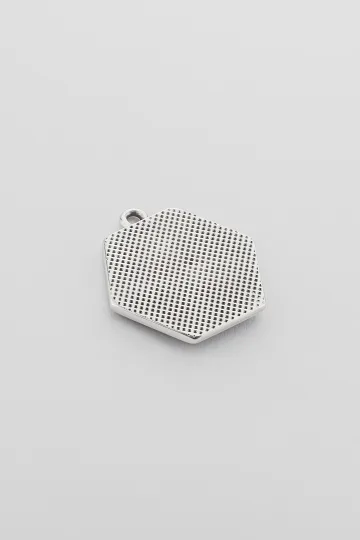

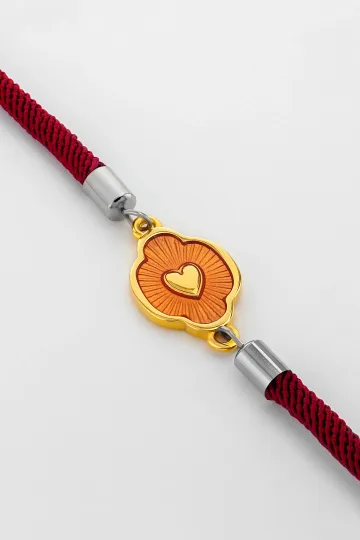
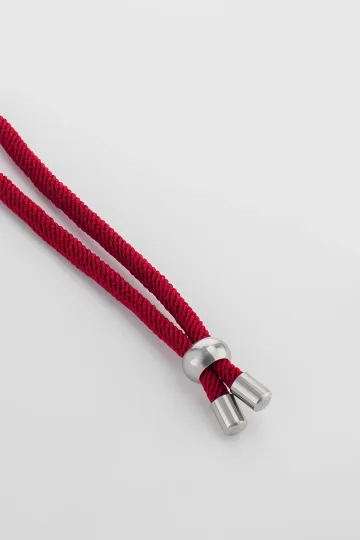














Cultural differences: a gift for a grandfather across traditions
A gift for a grandfather reads differently depending on the family's cultural background. Understanding these differences helps you choose the right tone.
The European tradition
In Western European families men's jewellery is more normalised than elsewhere. Signet rings are worn across generations, lockets pass from father to son as standard inheritance. For a European grandfather, jewellery as a gift is less unexpected.
A particularity: in the British tradition the hierarchy of metals matters. Silver for everyday, gold for formal. The subtlety is useful to know even if not strictly observed. In the German tradition men's jewellery is often tied to guild or academic symbols (graduates' signets, the rings of professional bodies). In the Spanish and Italian traditions men's jewellery is tied to religious symbolism: medals worn at the neck, images of patron saints.
The Latin tradition: religious symbolism
In Spain, Italy and Latin America, men's jewellery with religious symbolism is normal at every age. Medals of saints worn at the neck, the Sacred Heart, the anchor as a Christian symbol of hope: all of it fits naturally into the existing cultural practice.
For a Spanish or Italian grandfather the Sacred Heart or a saint's medal is no surprise. It is a language he knows. Better to choose a specific saint (his own patron, the saint of his family, the saint of his town) than a generic Christian symbol.
The Jewish tradition
In the Jewish tradition men's jewellery is restrained but has clear symbolism. The Star of David, a mezuzah pendant (a miniature of the scroll with a text from Deuteronomy), the letter "chai" (living). For a Jewish grandfather a gift with this symbolism works literally, with no explanation.
A point: in Judaism there is a prohibition on mixing materials in one object (shatnez), which applies to clothing but is sometimes extended to jewellery. If the grandfather is strictly observant, check with a rabbi before commissioning a multi-part piece.
The Asian tradition
In the Chinese, Korean and Japanese traditions men's jewellery with jade, inlay and symbolic marks has always been worn by family elders. A jade ring, a jade pendant, jade beads: all signs of dignity and belonging.
For a grandfather with Asian roots the gift can include specific symbols: the character for longevity for the very elderly, the character for family, a clan mark, the symbolism of the birth year in the lunar calendar.
Universal principles regardless of culture
Despite the cultural differences, a few rules of a grandfather's gift are universal.
Specifics always work better than abstraction. "The coordinates of the childhood home" work in every culture, because everyone has a childhood home.
A name always works. A name engraved in the grandfather's own language, in his own spelling tradition, lands on the most essential spot.
The tone must match his cultural background. A loud, pompous gift sits badly in traditions where restrained dignity is the convention. A quiet gift sits badly in traditions where demonstrative generosity is expected.
Wear the symbol, don't just read about it. These are in stock:
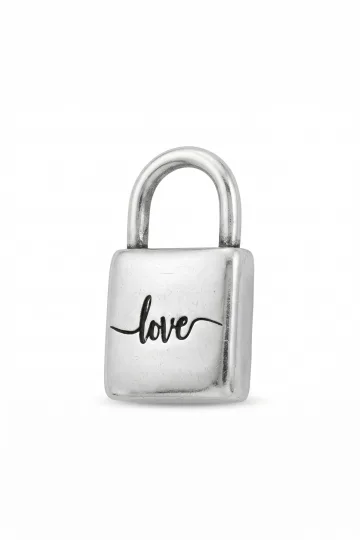
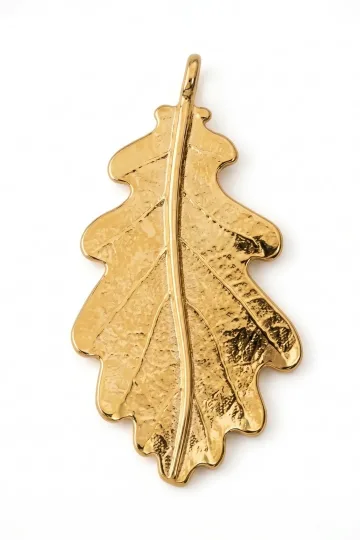
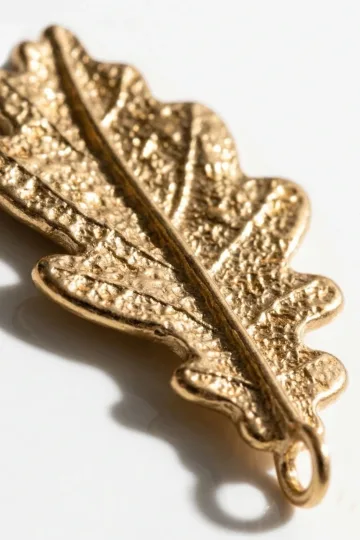
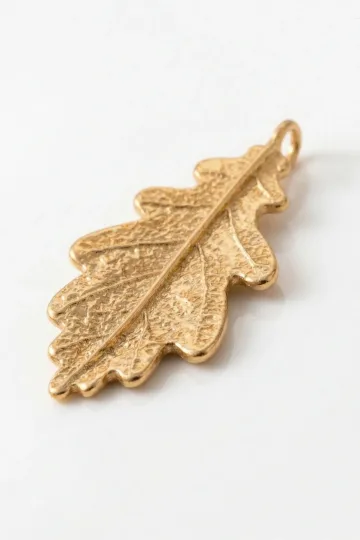
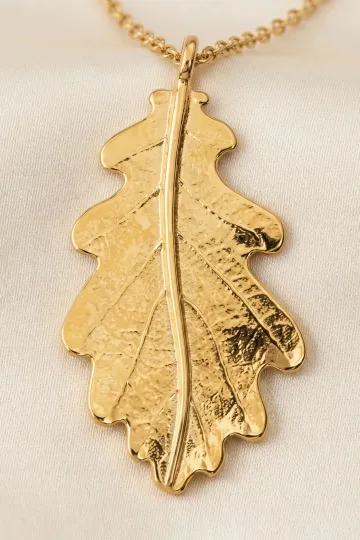
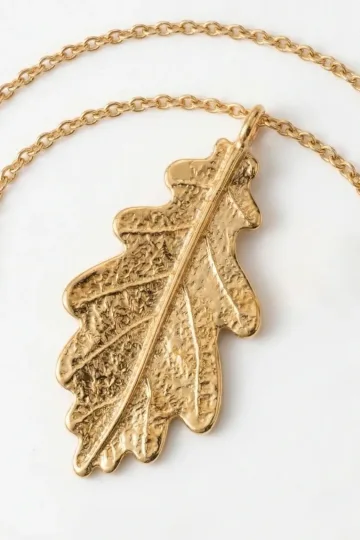
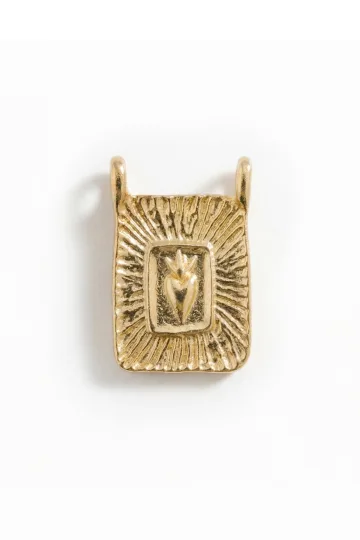
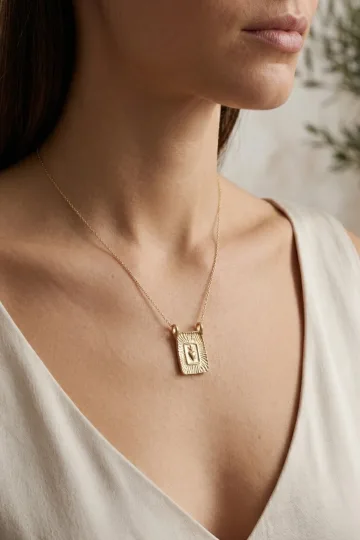
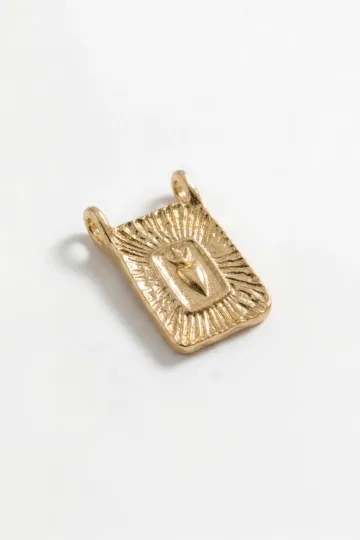
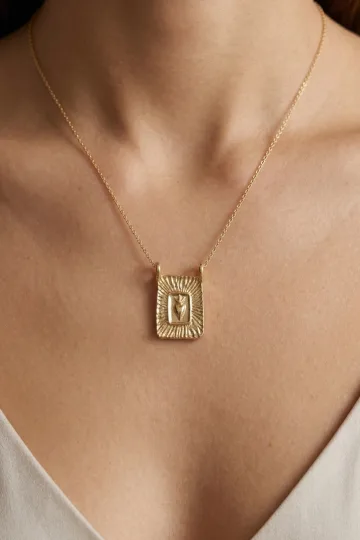
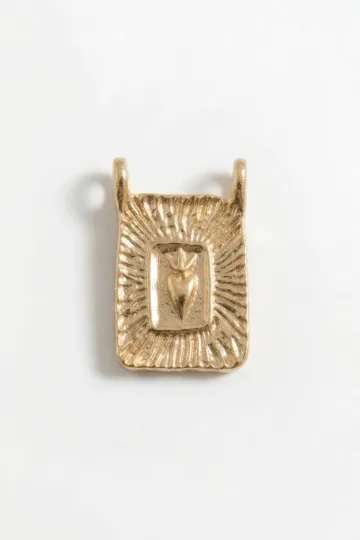
About Zevira
Zevira makes jewellery in the artisan tradition of Albacete, Spain. For a grandfather's gift we have several lines of work:
- Lockets in sterling silver and 14 to 18K gold, with engraving and the option to set photographs
- Signet rings with a monogram, a crest or a branch emblem
- Pendants with symbols: anchor, lighthouse, compass, cross, Sacred Heart
- Silver nibs, book miniatures, tool pendants (nut, gear, spanner)
- Cufflinks with engraving and the setting of fragments of memorable objects
- Pendants with the coordinates of a place, made to order
- Heritage reworking: melting family gold into a new form
Every piece passes assay inspection and receives a state hallmark. Personalisation is available: hand engraving with a graver, laser engraving, monograms, coordinates, dates by various calendars, miniature photographs by the microfilm technique.
Conclusion: what remains after the gift is given
A gift for a grandfather solves a rare task: it says without words what a family usually keeps silent. "You are still important." "We remember who you were and who you are." "You are not alone."
The words can be spoken aloud, but older men often will not accept them. The words seem excessive to them. Metal is accepted more easily, because it asks for no answer. The grandfather opens the box, reads the engraving, sets it on the bedside table or puts it on. In a year or five the gift becomes part of his everyday. In twenty years, when he is gone, the same object will pass to a grandchild and go on speaking.
A gift for a grandfather is built like a long note. First it sounds for him. Then, after his passing, it goes on sounding in the family. The third generation, the fourth, the fifth: all of them are potential recipients of the meaning you laid into one small silver object with a specific engraving.
That is why the choice carries weight. Not "something decent as a gift", but a specific symbol, a specific engraving, a specific person as the addressee. Every detail works toward a horizon you cannot see now, but which is certainly there.
Related reading: A gift for your mother in jewellery, The silver locket: a full guide, The anchor as a symbol in jewellery, The lighthouse: meaning of the symbol, The compass rose and compass in jewellery, The signet ring: a guide, The Sacred Heart in jewellery, Jewellery for retirement.