Aztec and Maya Jewelry: Symbols, Meaning, and Tradition
When the Spanish entered Tenochtitlan in 1519, what stunned them was not the quantity of gold. It was that gold cost less than green stone. A ruler wore jade earrings, while gold went into dust and glitter. To Europe this sounded absurd. To Mesoamerica it was a clear hierarchy of value.
Aztec and Maya jewellery was a whole language. Every bead, every pendant, every turquoise inlay told you who stood in front of you: a warrior, a priest, a merchant, or a ruler. Wearing someone else's sign was forbidden. You could be punished for it.
Here is the path ahead: who the Aztecs and Maya actually were, where their jewellery came from, what the main symbols meant, why jade ranked above gold, how to wear this style today, and how to do it with respect, without confusing two distinct cultures.
Who Were the Aztecs and the Maya
Let us clear up a common mix-up first. The Aztecs and the Maya were two different peoples who lived in different times and different places. They get lumped together constantly, and that is like merging the Vikings and the ancient Egyptians simply because both built something impressive.
The Maya: A Civilisation of Cities and Stars
The Maya came first. Their classic flowering ran roughly from 250 to 900 CE, though their roots reach a thousand years deeper. They lived in southern Mexico, in Guatemala, Belize, and Honduras. This was not a single empire but a web of city-states: Tikal, Palenque, Copán, Calakmul. Each had its own ruler, its own wars and alliances.
The Maya left writing, a precise calendar, and mathematics with a concept of zero. Their priests calculated the movements of Venus centuries in advance. By the time the Spanish arrived, the great classic Maya cities had long stood empty, swallowed by jungle. Yet the Maya themselves never vanished. Their descendants, millions of people, still live in Mesoamerica today and speak Mayan languages.
Wear the symbol, don't just read about it. These are in stock:





The Aztecs: An Empire That Was Not a Thousand Years Old
The Aztecs, more precisely the Mexica people, arrived in the Valley of Mexico much later. They founded their capital Tenochtitlan in 1325 on an island in the middle of a lake. Within two hundred years they built a powerful state, collected tribute from conquered peoples, and dominated central Mexico. By the moment they met the Spanish, their empire stood at its peak.
So when the Aztecs were only laying out their main city, the classic Maya civilisation had already lived through its golden age centuries earlier. Whole centuries separate them. What unites them is the shared cultural background of Mesoamerica: similar gods under different names, the cult of maize, the ball game, a love of green stone and feathered birds, stepped pyramids.
What Mesoamerica Is
Mesoamerica is a historical and cultural region covering central and southern Mexico and part of Central America. For thousands of years peoples followed one another here: the Olmec, the Zapotec, the Teotihuacanos, the Toltec, the Maya, the Aztecs. They borrowed symbols, deities, and crafts from each other. That is why a feathered serpent or a cult of jade shows up across many cultures of the region, not just in one. Jewellery here was part of this shared fabric of meaning.
The oldest are considered to be the Olmec, sometimes called the mother culture of Mesoamerica. Three thousand years ago they were already carving the finest figures and masks from green stone, planting the love of jade that everyone after them would inherit. The city of Teotihuacan, whose giant pyramids stand near Mexico City, was a vast metropolis long before the Aztecs, and the Mexica themselves believed it was the place where the gods created the present sun. Each following culture leaned on the legacy of the ones before, so Aztec jewellery is in a sense the result of a tradition many thousands of years old, not the invention of a single people.
The History of Aztec and Maya Jewellery
The history of Mesoamerican jewellery is the story of how culture, not the metals market, decides what a thing is worth. What is treasure to one people is raw material to another.
Green Stone Worth More Than Gold
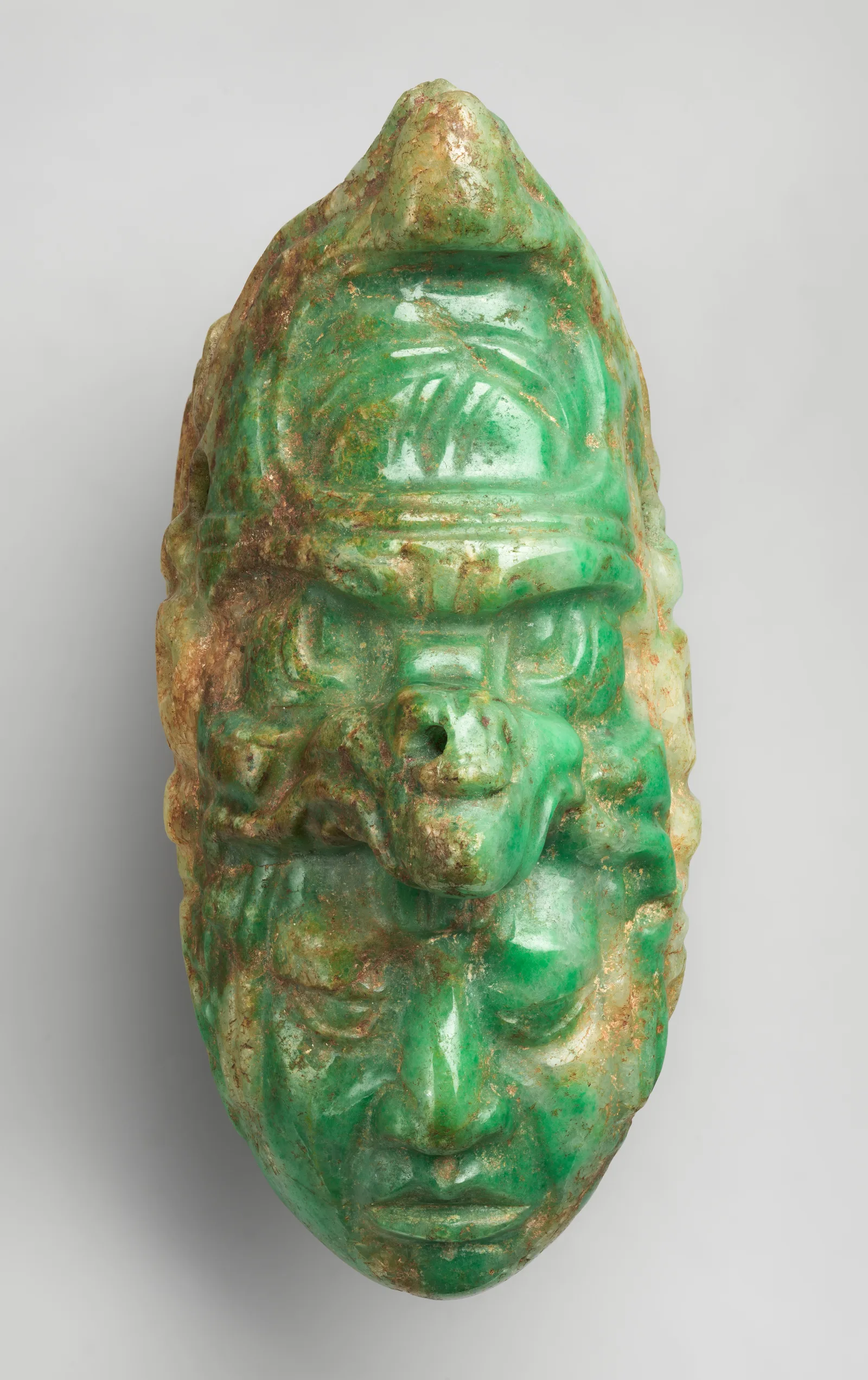
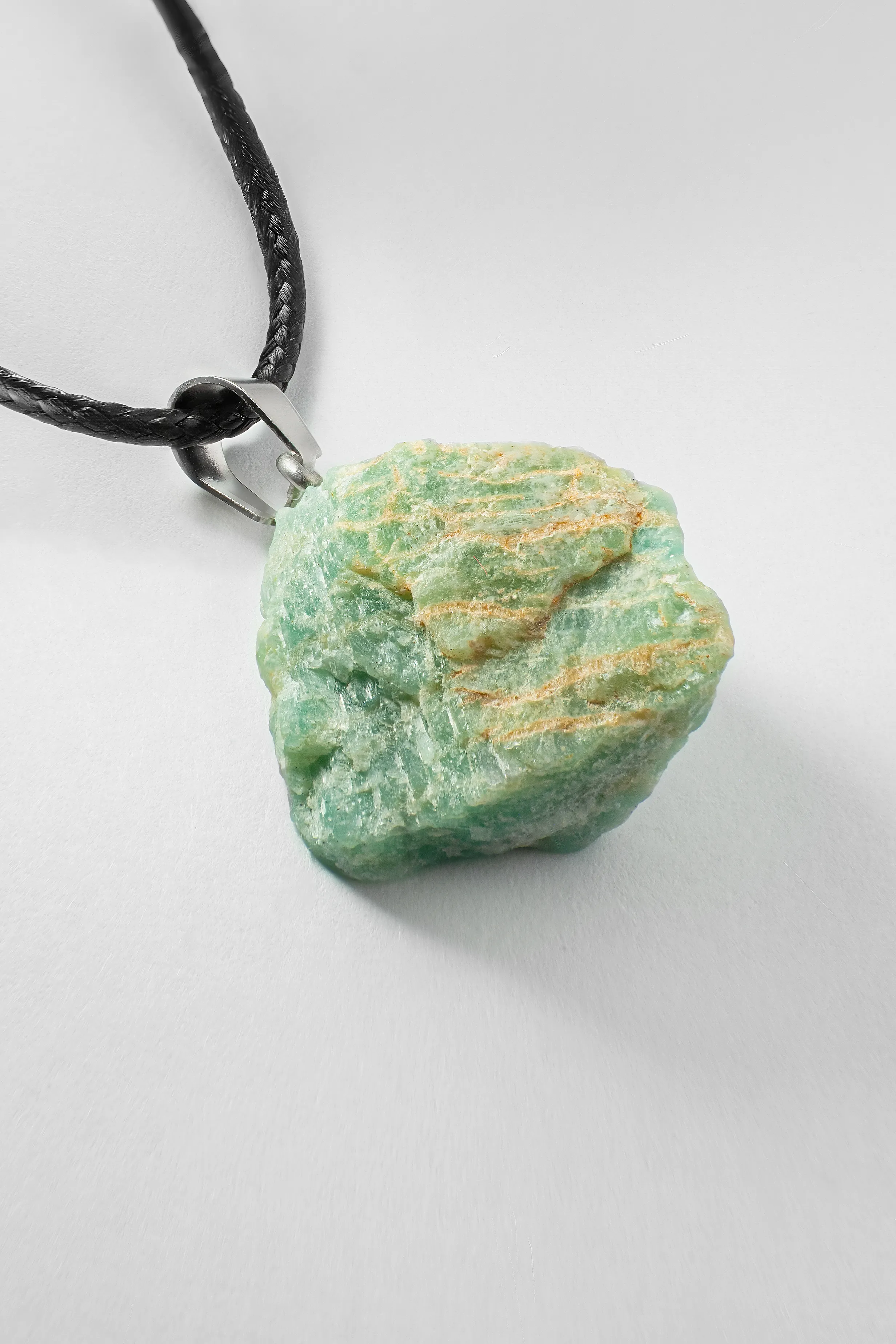
The chief treasure of Mesoamerica was jade and its relative jadeite. Green stone carried associations with water, maize, growth, breath, and life itself. Green is the colour of a young ear of corn, the colour of a quetzal bird's feather, the colour of what grows and feeds.
Gold came into use later and was valued for its solar shine rather than its price. The Aztecs called it "the excrement of the gods" or "the sweat of the sun." Beautiful, but lower in the hierarchy than green stone. A Maya or Aztec ruler would sooner show his rank with a large jade pendant than with a heap of gold. There is more on the stone itself and its fate in the article on jadeite.
Jewellery as a Mark of Status
Who wore what was strictly defined. The Aztecs had laws governing dress and ornament. A commoner was forbidden to wear gold, jade, quetzal feathers, or patterned cotton. These materials were the privilege of the nobility, the priesthood, and warriors of the highest ranks.
Lip plugs, or labrets, held a special status. A warrior who distinguished himself in battle and took captives earned the right to set an ornament of gold, jade, or obsidian into his lower lip. It was a visible mark of merit, read at a single glance. Ear spools in the lobes, nose ornaments, chest pectorals, bracelets on the wrists and forearms all came together into a full costume of power.
Jewellery and the Gods
Many ornaments depicted gods or their attributes. During ceremonies priests wore masks and pectorals bearing the faces of deities. Turquoise mosaic covered ritual masks that, by belief, came alive in the rite. The ornament served as a channel of contact with the world of the gods, not as decoration alone.
It is worth saying plainly and without detail: the religion of Mesoamerica included human sacrifice, understood as upholding the order of the world and feeding the sun. Many ritual objects, jewellery among them, are tied to these ideas. We mention this as a historical fact, without judging it by modern measures and without painful detail. Understanding the context keeps you from turning someone else's sacred things into an empty label.
The Spanish Conquest and the Melting Down
Between 1519 and 1521 the Spanish under Cortés seized Tenochtitlan. What followed was a cultural catastrophe. Gold ornaments and ritual objects were melted into ingots by the ton to ship to Europe. The finest work of the Mexica goldsmiths, pieces that impressed even sophisticated Europeans, was turned into faceless bars of metal.
Only a tiny fraction of what once existed has reached us. Most of what we know about Aztec goldwork comes from written descriptions, a few surviving objects, and archaeological finds such as the treasures from tombs. Jade fared a little better: the Spanish had no interest in green stone, so they did not melt it. That is why more Maya and Aztec jade pieces survive than gold ones.
How Craftsmen Worked Stone Without Metal
The craft itself deserves separate astonishment. The Maya and Aztecs had no iron tools, no lathe, no abrasive wheels in our sense. And still they cut and drilled one of the hardest stones on earth. Jadeite is close to quartz in hardness; an ordinary knife will not touch it.
The secret lay in patience and in abrasive. The stone was sawed with a taut cord or a thin wooden blade, with wet quartz sand fed underneath. The grains slowly gnawed through the stone, while the tool itself was only the carrier of the abrasive. Holes were drilled with hollow reed tubes, spun between the palms and again fed with sand: the tube ground out a neat circle. The finished piece was polished with leather, gourd pulp, and powder from even harder minerals. A single large pendant could take weeks of work. Knowing this, you understand why a green bead meant so much: behind it stood an enormous amount of human labour.
Who Made the Jewellery: The Master Jewellers
Among the Aztecs, jewellers and feather workers were not ordinary craftsmen but a separate, respected caste. The goldsmiths were called tolteca, after the Toltec people, whom the Aztecs regarded as a model of high culture. The word itself became almost a synonym for mastery. These people lived apart, had their own patron gods, and passed the craft down through families.
There were whole quarters of artisans specialising in gold, in stone carving, in feather mosaic. The feather workers, the amanteca, laid out true pictures from tiny coloured feathers on shields, headdresses, and capes. This work demanded jeweller's precision and was counted among the highest arts. The craft was not anonymous labour but an honoured calling, surrounded by ritual and the secrets of the guild.
Jade wants sun-kissed skin, obsidian is for the pale. Mix them up and you look like a gift-shop tourist. Don't.
How to Wear Aztec and Maya Jewellery
Over years on shoots these symbols have run through dozens of my looks, from pure ethnic to a strict office. Here is what actually holds a look together, by occasion.
What do you wear a Mesoamerican symbol with every day? For everyday I recommend one bold sign (a sun disc, a feathered serpent or a green stone) on a leather cord or a chain over a simple top: a tee, a linen shirt, a plain dress. A light top lifts the silver and the green stone, a dark one turns the symbol into the accent. One strong sign always reads better than a handful of small ones.
Does a symbol like this work at the office? It does, once you drop the ethnic scale. I suggest a small disc or a silver pendant under a shirt collar, with no layering and no fringe. Dark obsidian works here as a strict graphic detail, while a green stone adds a calm note of colour. Keep it to one piece and the dress code stays intact.
How do you build an evening look? For evening I choose an open neckline and rich smooth fabric: wine, deep green, black. A golden sun disc or green jade belongs here, catching the warm light at the collarbones. I recommend a shorter length so the sign sits on bare skin rather than hiding under fabric.
Whom does the Mesoamerican style suit? Anyone who likes jewellery with character over neutral minimalism. It looks best on a warm or olive undertone, echoing a tan and dark hair. Green jade next to deeper skin sounds the richest of all. Even so, the clean geometry suits everyone equally.
One symbol or layers? If you lean toward layers, I suggest keeping them in one range: green stone plus silver plus leather, with no stray bright colours. Mesoamerican signs are saturated on their own, so one bold piece on a clean chain almost always beats five pressed together. When you want volume, give each its own length.

Turn on your camera, pick earrings, a pendant or a ring, and see the piece on yourself in real time.
Switch items in one tap.
Everything runs in your browser: no photo or video is ever uploaded.
The Main Symbols of Aztec and Maya Jewellery
Mesoamerican symbolism is dense and layered. One and the same image could mean a deity, a force of nature, and a calendar sign all at once. Let us go through the key symbols that appear most often in jewellery and in modern pieces drawn from it.
The Sun Stone and the Calendar
The most recognisable Aztec image is the so-called Sun Stone. A huge carved monolith almost four metres across, found in Mexico City in 1790. It is often called the Aztec calendar, though that is a simplification. It is more a cosmological map: a face in the centre, surrounded by signs of days, world ages, and directions.
The Aztecs kept two interlocking counts of time: a sacred cycle of 260 days and a solar year of 365 days. They met in a great round once every 52 years. The calendar signs, the symbols of days such as the reed, the rabbit, the house, the knife, became a popular ornament. In modern jewelry the disc of the Sun Stone has become a concentrated symbol of Mesoamerican culture as a whole. The theme of counting time and celestial cycles echoes the Slavic and universal tradition of celestial jewelry with the sun and stars.
Quetzalcoatl, the Feathered Serpent
Quetzalcoatl, which translates roughly as "feathered serpent" or "serpent of quetzal feathers," is one of the chief gods of Mesoamerica. His Maya counterpart was called Kukulkan. He is a serpent covered in green feathers: a joining of the earthbound, crawling principle with the heavenly, flying one.
Quetzalcoatl is tied to wind, to the morning star Venus, to knowledge, writing, and culture. By the myths, it was he who gave people maize and the crafts. In jewellery the feathered serpent appears as a pendant, as a motif on bracelets and rings, as a curving figure with a crest of feathers. He is one of the most magnetic images of the region: wisdom that knows how to crawl along the ground and rise into the sky.
The snake in jewelry by itself, in nearly every culture, carries the idea of renewal and hidden knowledge, since it sheds its skin and is, as it were, born again. Mesoamerica added wings to this. In the Maya city of Chichén Itzá the feathered serpent was called Kukulkan, and on the days of the equinox the shadow from the steps of the main pyramid formed the figure of a serpent slowly sliding down the staircase. This was no accidental effect but a precise architectural calculation: the temple itself showed the god on the right day of the year. Few symbols joined astronomy, faith, and spectacle so literally.
The Jaguar
The jaguar is the king of Mesoamerican fauna and a symbol of power, night, and the underworld. Rulers and the highest warriors wore jaguar skins, and the Aztecs had an order of jaguar warriors. The spotted pelt was associated with the starry night sky. A shaman or ruler was believed able to turn into a jaguar, travelling between worlds.
In jewellery the jaguar appears as a snarling head, as a paw, as a stylised spotted pattern. It is a sign of strength, fearlessness, and a bond with secret, nocturnal knowledge.
The Eagle and the Eagle Warriors
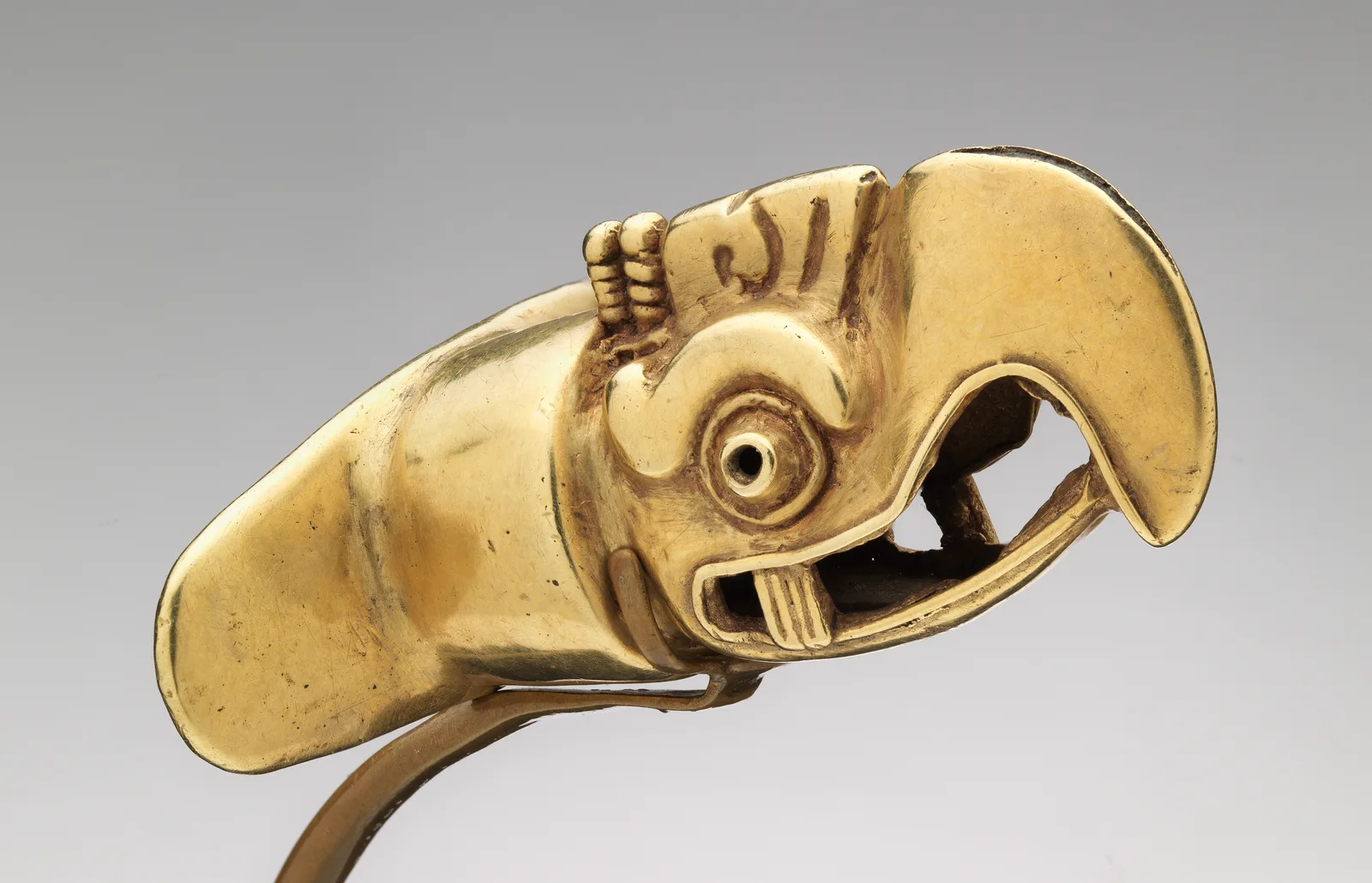
If the jaguar is night and earth, the eagle is day and sky. Among the Aztecs the eagle was tied to the sun and to the war god Huitzilopochtli. There was a second elite military order, the eagle warriors, paired with the jaguar warriors. Together the eagle and the jaguar embodied the two sides of martial valour.
The legend of the founding of Tenochtitlan says the Mexica were to build their city where they saw an eagle perched on a cactus. That image has lived to our own day: the eagle on a cactus appears on the coat of arms and the flag of modern Mexico. In jewellery the eagle means courage, solar strength, and a high flight of the spirit.
The Sun God and the Celestial Forces
The sun stood at the centre of everything in Mesoamerica. The Aztecs believed they lived in the age of the Fifth Sun and that the sun had to be sustained, or the world would perish. The sun god had different names and forms: Tonatiuh among the Aztecs, various solar deities among the Maya. A radiant disc, a face with a protruding tongue, four directions around a centre, all of this is solar symbolism.
Beside it stand the Moon and Venus. Venus as the morning and evening star was especially important, and its cycles were carefully tracked. The duality of the day and night luminaries echoes the universal motif of the sun and moon in jewelry.
Obsidian and the Mirror of the God
Obsidian, black volcanic glass, played an enormous role. From it people made blades, points, and mirrors. One of the most fearsome Aztec gods bore the name Tezcatlipoca, "smoking mirror": his attribute was an obsidian mirror in which he saw everything happening in the world.
The black gleam of obsidian was linked to night, mystery, divination, and the underworld. In jewelry obsidian is a deep black stone with a mirrored or smoky sheen. There is more on its properties and working in the article on obsidian.
The Quetzal Feather
The quetzal bird, with its long emerald-green tail feathers, was a living embodiment of celestial beauty. Quetzal feathers were valued on a par with jade, sometimes higher. They were made into lavish headdresses and fans. Killing a quetzal for its feathers was forbidden: the bird was caught, a few feathers plucked, and it was let go.
The green feather symbolised vegetation, renewal, nobility, and a bond with the gods through the feathered serpent himself. In jewellery the feather motif appears as an elegant elongated form, often in green tones of enamel or stone.
Customer reviews
Zevira is a real jewellery shop. Genuine payments, deliveries and customer thank-yous.
🥰🥰🥰 gracias

Ok, ¡gracias! 🙂

The Materials of Mesoamerican Jewellery
The easiest way to understand Aztec and Maya jewellery is through its materials. The hierarchy of value here was its own, unlike the European one.
Jade and Jadeite: Above Gold
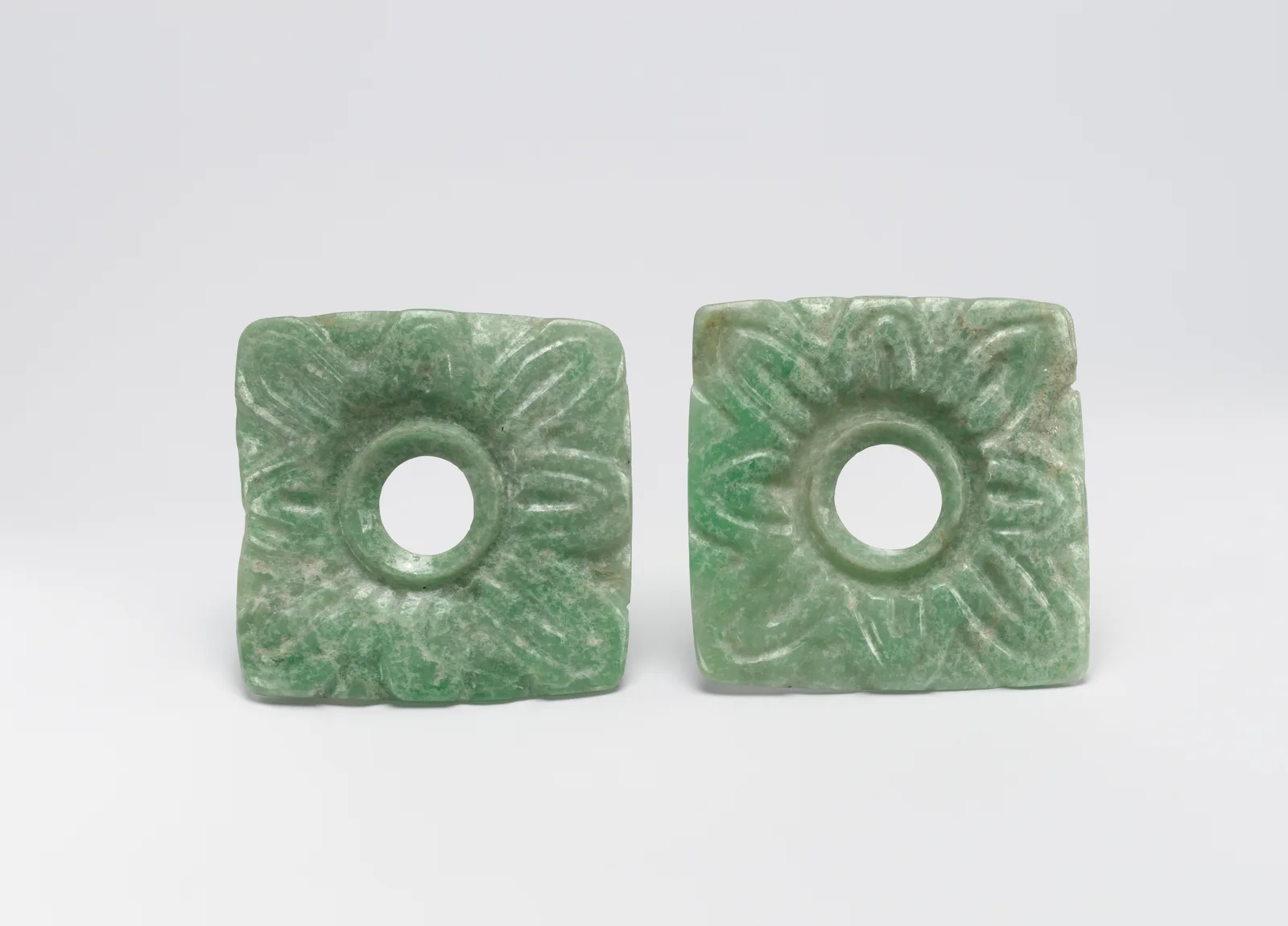
Green stone stood at the summit. The general word "jade" in Mesoamerica meant mostly jadeite, a very hard and dense mineral. The Maya mined the best jadeite in the valley of the Motagua River in Guatemala, the only major source in the region.
The stone was extremely hard to work: the Mesoamerican craftsmen had neither iron nor steel. Jadeite was sawed with cords and sand, drilled with reed tubes and abrasive, polished for hours. A finished jade bead or pendant was the result of immense labour. Green stone was placed in the mouth of a dead ruler, made into funerary masks, and worn as the highest mark of status.
Gold
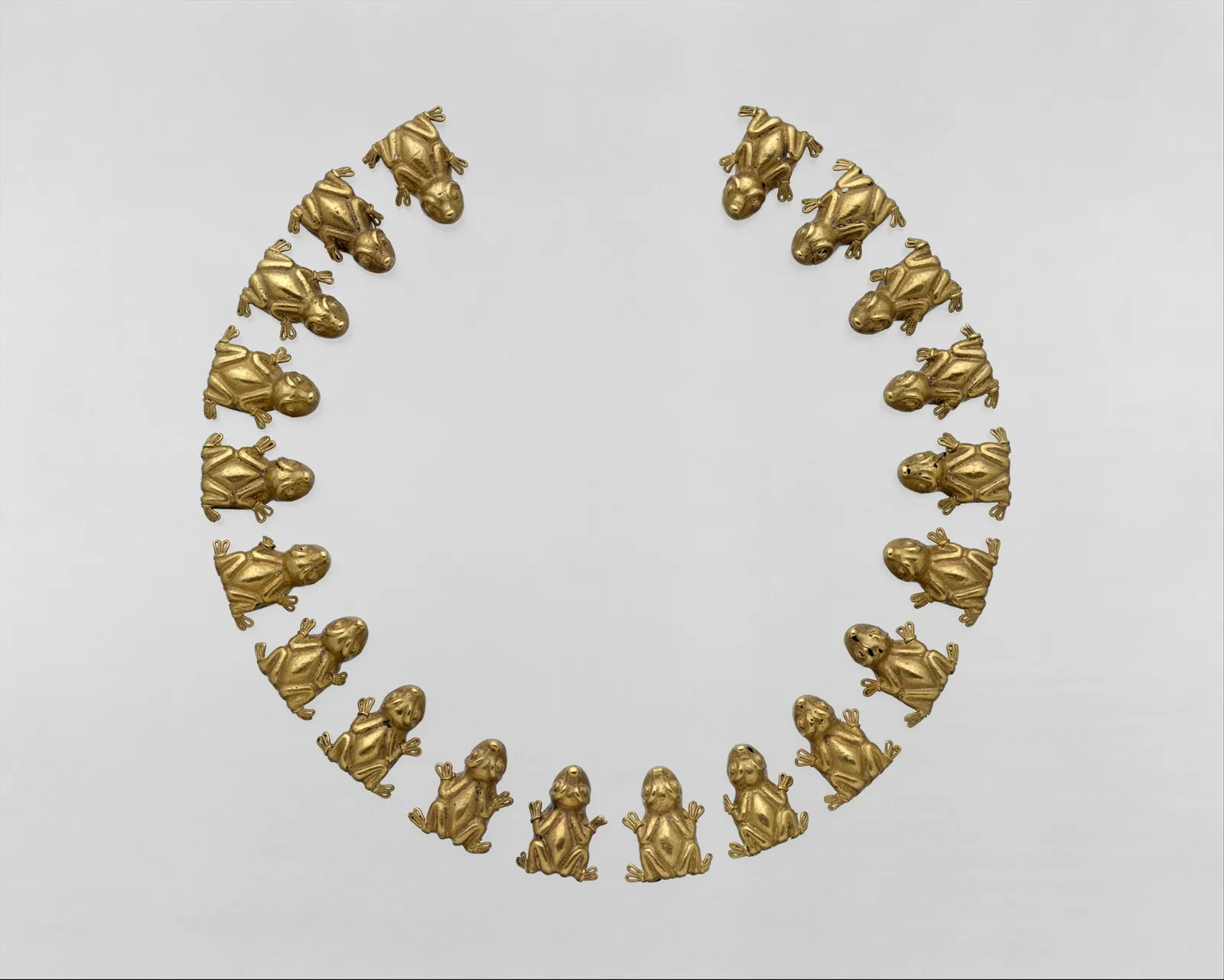
Mesoamerican craftsmen took up gold relatively late, around the 900s; the technique came from the south, from South and Central America. But the Aztec jewellers brought work with it to virtuosity. They mastered lost-wax casting, could cast the finest movable parts, and made gold bells and figures with detailed features.
Gold was valued for its solar shine and its bond with the day star, not for its weight. It was precisely this fine work that almost entirely perished in the melting. The surviving pieces, for example the gold from the tombs of Monte Albán, show a level of mastery that the Spanish destroyed forever for the sake of ingots.
Obsidian
Obsidian was both a material of craft and a treasure. From it people made razor-sharp blades, points, ritual knives, mirrors for divination, and ornaments. Black, sometimes with a golden or rainbow sheen, obsidian gave a deep gleam beyond the reach of other stones in the region. Ear inlays and beads of polished obsidian were worn both as ornament and as a charm tied to the gods of the night.
Turquoise Mosaic
Turquoise came along trade routes from the north, from lands that are now the southwestern United States. From small pieces of turquoise, mother-of-pearl, coral, and shell, Aztec craftsmen laid out mosaic on a wooden or stone base. This is how they created ritual masks, handles, chest discs, and serpent figures. A few such turquoise masks have reached our day and are counted among the heights of Mesoamerican decorative art.
The work was almost microscopic. Thousands of tiny plates were ground to the right shape and set into resin so tightly that the finished surface shimmered as a single field of turquoise. The famous double-headed serpent of turquoise mosaic, a curving figure with two heads, is regarded as one of the symbols of the whole Aztec civilisation. The turquoise colour was linked to the sky, fire, and divine power, so such pieces were worn not every day but in the most important rites. For everyday wear there were simpler ornaments: shell beads, obsidian earrings, jade pendants of middling rank.
Shell and Other Materials
Shell and coral from both coasts went into beads, pendants, inlay, and trumpet horns. The red Spondylus shell was especially prized and associated with blood and life force. Rock crystal, amethyst, bone, wood, and ceramic were also used. Quetzal feathers and those of other bright birds completed the costume of the nobility. From all of this came a rich, colourful, many-layered image.
Upload a photo of your pet, someone you love, or an object. We'll build a 3D model and hand-cast it in pewter.




The Meaning of the Symbols: What They Stood For
Mesoamerican symbols worked as a coherent language. Each image had a core of meaning that repeated from culture to culture. Here are the key meanings, still clear today.
The Sun: Time, Order, Life
The sun meant light and warmth, and with them the very flow of time and cosmic order. A solar disc with calendar signs reminded people that the world moves in cycles, that everything has a beginning and an end, and that a person is built into this vast rhythm. To wear a solar symbol was to acknowledge a bond with that order.
The Feathered Serpent: Wisdom and Duality
Quetzalcoatl joins opposites: earth and sky, body and spirit, serpent and bird. His chief meaning is wisdom gained through joining what differs. The feathered serpent does not choose between the low and the high; he encompasses both. As a symbol of an ornament he is a sign of wholeness, knowledge, and transformation.
The Jaguar: Strength and Nocturnal Knowledge
The jaguar means strength, but not the crude kind: gathered, feline, silent. It is power that acts at night, secretly, precisely. The jaguar is tied to intuition, fearlessness, and the ability to see in the dark, both literally and figuratively. The jaguar image suits someone who values inner strength over outer noise.
Jade: Life, Water, and Breath
Green stone was the embodiment of life. It was linked to water, without which there is no harvest, to young maize, to breath and the soul. A jade bead was placed in the mouth of the dead as a symbol of the soul and the continuation of life. To wear green stone was to keep close the very idea of growth, renewal, and vitality.
Obsidian: Night, Mirror, and Divination
Black obsidian meant the opposite of the sun: night, mystery, the underside of the world. But this was not "evil" in the Christian sense. It was rather a force that sees the hidden. The obsidian mirror of the god Tezcatlipoca showed truth, not lies. So the stone was linked to insight, self-knowledge, and honesty with oneself. To wear obsidian was to not fear looking into the dark, including the dark within.
The Eagle and the Sun: Daytime Valor
The eagle carried a meaning of direct, open strength: daylight, height, flight, martial honour without cunning. If the jaguar acts in the shadows, the eagle strikes in the open, from above, in the light of the sun. The pair of eagle and jaguar described two legitimate strategies of strength: the visible and the hidden. In jewellery the eagle motif reads as a sign of courage, clarity, and a striving upward.




Mesoamerican Symbols in Art and Architecture
Jewellery is easier to understand if you see where the craftsmen drew their images. The same symbols covered temples, codices, and ceramics, and the jewellery was only the portable part of this shared visual language.
Stone Carving and Reliefs
The Maya cities were books of stone. Stelae, slabs, and door lintels were covered in dense carving with figures of rulers in full ceremonial dress. From these reliefs archaeologists reconstruct exactly how jewellery was worn: huge jade ear spools, multi-tiered necklaces, chest discs, feather headdresses. The Aztec Sun Stone and the reliefs of Palenque are the primary sources from which modern designers read the ornament.
Codices and Painting
A few Mesoamerican manuscripts, codices folded accordion-style from bark or hide, have reached us. In them gods, rites, and calendar signs are depicted in bright colours. The codices show the colour that did not survive on stone reliefs: turquoise, vermilion red, ocher. It is from them that we know how vivid and saturated the costume of the nobility looked with its jewellery. Painting on Maya ceramics adds scenes of court life with the same pendants and bracelets.
Feather Mosaic and a Lost Art
Featherwork barely survived the centuries: a feather is fragile and short-lived. Literally a few pieces remain, and each is counted a treasure of world rank. The famous headdress of green quetzal feathers, ascribed to the Aztec tradition, gives a sense of the luxury this lost art held. Feather mosaic stands beside the jeweller's craft: the same mastery, the same precious materials, the same bond with status and the gods.
Leave your email, we'll send your discount code. No spam, unsubscribe anytime.
The code arrives by email, valid on your first order.
Why People Choose Mesoamerican Symbols
Interest in Aztec and Maya jewellery is rarely accidental. Behind the choice of such a symbol there is usually a clear inner reason, and it helps to recognise it before buying.
Often it is a pull toward roots and authenticity. In a world of smooth identical things, a symbol with a thousand-year history gives a feeling of footing on something real. The Sun Stone or the feathered serpent is no fashionable print but an image that outlived whole civilisations. To wear it is to join a very long line of meaning.
Another reason is the draw of strength and nature. The jaguar, the eagle, the sun, green stone are images of might, wild and calm at once. They appeal to people drawn to the idea of inner strength without showy gleam. There is no luxury for luxury's sake here; there is character.
A third reason is purely aesthetic. Mesoamerican geometry with its clear lines, steps, and spirals is strikingly modern. It sits well in graphic minimalism and in rich boho alike. Many are simply caught by the visual rhythm of these patterns, and that is a wholly sufficient reason. The symbol then works quietly in the background, adding depth.
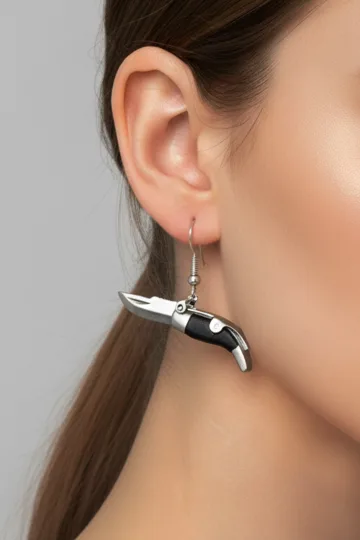
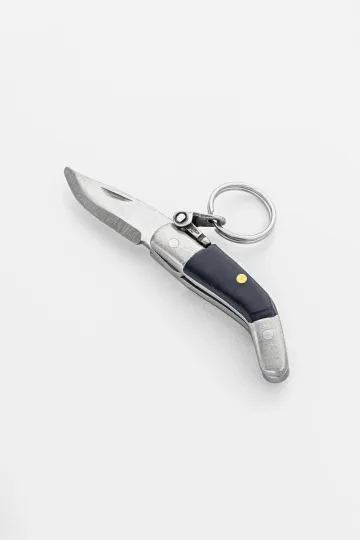
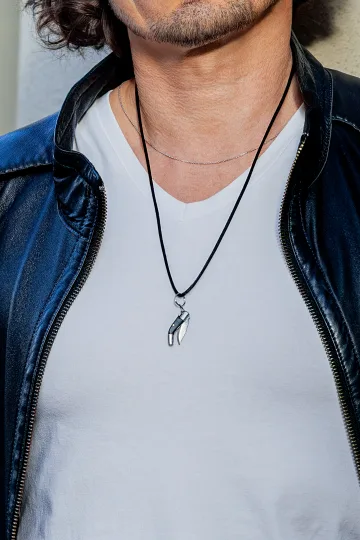
CAPAORA mini knife pendant
The 18th-century Spanish navaja in miniature: 40 mm of stainless steel, a real folding mechanism and a Palanquilla lock that clicks. An affordable gift to remember.
Authentic · Ships from Spain · 14-day returns
Authenticity and Respect for the Culture
Here is an important conversation. Aztec and Maya jewellery is the heritage of living cultures, not a prop. You can and should wear this style, but with an understanding of what exactly you are wearing.
Do Not Confuse the Aztecs and the Maya
The most common and most galling mistake is to blend the two peoples. The caption "Maya calendar" under the Aztec Sun Stone is wrong. Quetzalcoatl is an Aztec name; among the Maya the same god is called Kukulkan. If you choose a piece with a specific symbol, it helps to know which culture it belongs to. This is not pedantry but basic respect, like not calling a Scot an Englishman.
A Careful Word on Appropriation
Mesoamerican symbols are not a closed club, and interest in them is good in itself. The line runs where an ornament is passed off as a genuine sacred artifact of an indigenous people, or where sacred images are used as empty exotica without any understanding. A modern piece drawn from a culture is fine, as long as it honestly stays a piece drawn from a culture and not a forgery of a sacred thing. Knowing the history of a symbol and treating it with respect is the best way to wear this style beautifully.
How to Recognise a Worthy Piece
A good piece in the Mesoamerican style renders the symbol accurately, does not confuse cultures in its description, and is made from honest materials. Green stone, obsidian, silver, quality enamel read as respect for the tradition. Cheap stamped plastic with a vague "Indian" pattern is, by contrast, a cheapening. Price is secondary here: what matters more is the accuracy of the image and the quality of the work.
Living Heritage: The Symbols Today
It is a mistake to think the Aztecs and the Maya remained only in museums. Their heritage lives, and that changes how you relate to the style.
The Descendants of the Maya Are Alive Now
In southern Mexico, in Guatemala, in Belize, millions of people speak dozens of Mayan languages. They wear traditional woven clothing with ancient patterns, keep part of the old customs, and hold a bond with their roots. Green stone remains for them a prized and recognisable symbol today. This is not an extinct culture but a living branch with a voice. So it makes sense to treat its symbols as you would those of any living people: with interest and tact.
Mesoamerica in National Symbolism
The Aztec past became part of the identity of modern Mexico. The eagle from the cactus on the coat of arms, the image of Quetzalcoatl in art, the word "Mexica" inside the very name "Mexico." Artists of the Mexican mural movement in the early twentieth century consciously revived pre-Columbian motifs as a mark of pride and identity. So the ancient symbols gained a second life, now as marks of national dignity.
Modern Jewellery Design
Today Mesoamerican images inspire jewellers around the world. The clear geometry of calendar discs, the silhouette of the feathered serpent, the deep green of jade and the black of obsidian translate beautifully into the language of modern jewellery. The best pieces do not copy the artifact literally but take its essence: the rhythm, the symbol, the material, and make something wearable every day. So the tradition continues without becoming a museum cast.
Facts That Surprise
Mesoamerica is full of things that break the usual picture of "wild tribes." A few facts worth knowing.
Green stone was worth more than gold. For the Aztecs and the Maya, jade and jadeite stood at the top of values, and gold followed. For a long time the Spanish could not understand why captive natives calmly handed over gold and hid green pebbles.
They had zero before Europe did. The Maya used the concept of zero in their mathematics centuries before it took hold in European counting. Their calendar was more precise than the Julian one Europe used at the time.
The quetzal bird was not killed for its feathers. The bird's feathers were prized as a treasure, but they were gathered humanely: catch it, pluck a few feathers, let it go. To kill a quetzal was considered a crime.
Gold adorned the body like glitter. Beyond jewellery, the Aztec nobility sometimes coated the skin with fine gold dust for ceremonies. Gold was a material of shine, not of accumulation.
Mirrors were made from obsidian and pyrite. There was no glass, and Mesoamerican craftsmen polished obsidian and plates of pyrite to a mirror gleam. Such mirrors were used both for beauty and for divination.
Turquoise travelled thousands of kilometres. The turquoise for Aztec masks was brought from the far north along long trade chains. A small piece of stone could make a journey longer than most people of that era walked in a whole lifetime.
The eagle from the cactus is still on the flag of Mexico. The ancient Aztec legend of the founding of Tenochtitlan lives on in the symbolism of the modern state. Few myths have lasted so literally and so long.
Send a friend a discount code, they save on their first order.
Frequently Asked Questions
How does Aztec jewellery differ from Maya jewellery?
They are different cultures of different eras. The Maya flowered earlier, roughly between 250 and 900 CE, lived in southern Mexico and Central America, and were famed for jade work and writing. The Aztecs appeared later; their empire reached its peak by the early sixteenth century, and they worked gold and turquoise mosaic with virtuosity. The symbols are partly shared because of the common Mesoamerican background, but the names of the gods and the style differ.
Why did the Aztecs and the Maya value jade above gold?
Green was linked to water, young maize, growth, and life itself, and these were the highest values of a farming culture. Gold was valued for its solar shine but ranked lower. Jade was labour-intensive to work and rare, so a large green pendant spoke of status more strongly than gold.
What does the Sun Stone, called the Aztec calendar, mean?
It is a huge carved disc, a cosmological map of the world with a face in the centre and the signs of days and world ages around it. It is called a calendar loosely: it reflects the Aztec idea of the cycles of time and the five world ages, or suns, rather than serving as an everyday calendar in the familiar sense.
Who is Quetzalcoatl and why is he a serpent with feathers?
Quetzalcoatl is the "feathered serpent," one of the chief gods of Mesoamerica, known among the Maya as Kukulkan. The feathers join him to the sky, the serpent body to the earth. He is patron of the wind, the morning star, knowledge, and culture. The image symbolises wisdom through the unity of opposites.
Can I wear jewellery with Aztec and Maya symbolism if I am not from that culture?
Yes. These symbols are open to interest and respect. What matters is not to pass off a modern piece as a genuine sacred object of an indigenous people, and not to confuse cultures in the description. If you know what you are wearing and treat the image respectfully, this style is fitting for anyone.
What materials were Mesoamerican ornaments made from?
The main one was green stone, jade and jadeite. Then came gold, obsidian, turquoise for mosaic, shell and coral, quetzal feathers, rock crystal, bone, and wood. The hierarchy of value differed from the European one: green stone and feathers ranked above metal.
Why have so few Aztec gold ornaments survived?
After the conquest in 1521 the Spanish melted gold pieces into ingots by the ton to ship to Europe. The finest jewellery work was destroyed for the metal. Jade pieces survived better, because the Europeans had no interest in green stone and did not melt it.
What does the jaguar symbolise in Mesoamerican jewellery?
The jaguar means strength, power, night, and a bond with secret knowledge. There was an elite order of jaguar warriors, and rulers wore the skin of this beast. The spotted pelt was associated with the starry sky, and the jaguar itself with the ability to see in the dark and travel between worlds.
Conclusion
Aztec and Maya jewellery grew out of a world where the value of a thing was set not by the rarity of metal but by meaning. Green stone meant life, the quetzal feather meant sky, the jaguar meant strength, the feathered serpent meant wisdom. It was a coherent language spoken across the whole region for thousands of years.
Most gold pieces perished in the melting, but the symbols outlived the conquest. They reached us in stone, in the codices, in the living culture of the Maya descendants, and in the state symbolism of Mexico. To wear a piece drawn from this tradition is to touch one of the deepest visual languages humanity has made. To do it with understanding is to give it its due.
Symbolism, charms, green stone, obsidian, silver, and gold with character.
Buying it as a gift? Each one arrives ready to give.
 A branded Zevira box and a little card come with every order.













About Zevira
Zevira makes jewellery in the artisan tradition of Albacete, Spain. Mesoamerican symbols are among the images we love: they are strong, clear, and understood without words. We carry the solar disc, the feathered serpent, and the geometry of the calendar into modern proportions and honest materials, without passing a piece off as a museum artifact.
What you can find with us on this theme:
- Pendants with solar and calendar symbolism
- Pieces of green stone and obsidian with a deep natural gleam
- Symbolic pendants in an ethnic and boho spirit
- Sterling silver 925 as a base for sturdy everyday pieces
- Leather and rubber cords for a large symbol
- Paired and set options for a layered look
Each piece is made by a craftsman by hand, with the option of personal engraving. Sterling silver 925 and 14 to 18K gold.
Related themes: the snake in jewelry, celestial jewelry, and the sun and moon.