Berber and Moroccan jewellery: silver and the symbols of the Amazigh
For the Berbers, gold was the metal of the evil eye. Wealth that draws envy. So the women of the Atlas and the Sahara wore silver instead: heavy, cast, ringing with every step. Not ornament for its own sake, but purse, passport and shield in one. A family's entire fortune hung on the chest and at the temples, melted into fibulae and forehead pendants.
What follows, in order: who the Amazigh are and why their silver looks nothing like Arab gold, where the tizerzai fibula and the heavy coral-and-amber necklaces came from, what the diamonds, triangles and Tifinagh signs mean, and how to wear Berber silver today without turning it into fancy dress.
Who the Berbers (Amazigh) are and their silver
The Berbers call themselves Amazigh, or Imazighen in the plural, usually translated as "free people". They are the indigenous population of North Africa, living here long before the Phoenicians, Romans and Arabs arrived. Their lands stretch from the Saharan oases to the Atlas mountains, from the Moroccan coast to Libya. The word "Berber" came from outsiders, from the Greek "barbaros", meaning "one who speaks unintelligibly". The Amazigh themselves dislike the name, and it is fairer to call them by the name they use for themselves.
For the Amazigh, jewellery is a language. The shape of a fibula, the pattern on a bracelet, the colour of the enamel told you which tribe a woman belonged to, whether she was married, how old she was, how wealthy her family was. Silver spoke for a person before she ever opened her mouth.
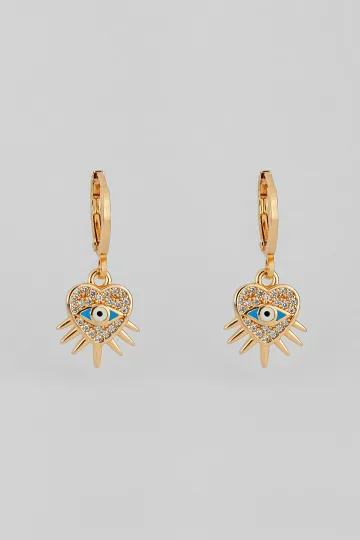
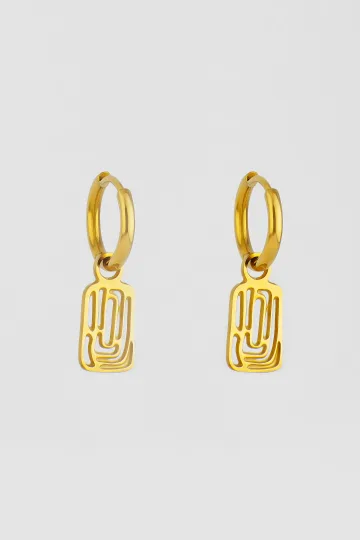
Wear the symbol, don't just read about it. These are in stock:





Why silver rather than gold
In the settled Arab-Muslim culture of the cities, status was measured in gold. Among the Berbers, especially the nomadic and semi-nomadic tribes, the opposite held true. Gold was linked to greed, to the evil eye, to an impure energy that pulls misfortune toward you. Silver, by contrast, was held to be pure, lunar, protective. It drove off evil spirits, the jinn, and guarded its owner.
There was a practical reason too. A nomad cannot keep savings in the house, because there is no house, only a tent and camels. Wealth had to be carried on the body. Silver melted down easily, divided easily, sold easily in a hard year. A heavy necklace was, quite literally, the family bank that was always with you.
Silver as purse and dowry
When a girl married, the silver became her own property, not her husband's, not his family's, but hers. It was a financial cushion in case of divorce, widowhood or famine. The husband had no right to dispose of this silver. A woman could sell a piece, melt it down, pass it to her daughter.
That is why Berber jewellery is so massive. Its value was measured by the weight of the metal, not by the fineness of the work. The heavier the fibula, the longer the necklace, the more confidently a woman could look to the future.
A history of Berber jewellery: nomads, coins and coral
Silverwork among the Amazigh reaches deep into antiquity, but the look familiar to us today took shape over the past few centuries. The story of these pieces is a story of trade routes, melted-down coins, and craftsmen who were not Berbers themselves.
Ancient roots and the Roman legacy
The fibula, a clasp for a cloak, came to North Africa in antiquity. The Romans pinned their togas with exactly this kind of hooked brooch. The Berbers adopted the form but filled it with their own meaning, turning a utilitarian fastener into the foremost female amulet. Rings, bracelets and pendants are found in Berber burials two thousand years old. Ancient authors describing the inhabitants of North Africa noted their love of metal ornaments and amulets, so this tradition runs unbroken from antiquity to our own day. Techniques and materials changed, but the idea of carrying both protection and means on the body stayed the same, century after century.
Silver from melted coins
For a long time the Amazigh had no silver mines of their own. The metal came from where it could be found: from coins. Spanish reales, French francs, Ottoman piastres and Maria Theresa thalers settled in North Africa through trade and were melted into jewellery. The Austrian silver thaler bearing the empress's portrait became a genuine currency in the Sahara, accepted everywhere, and the very same coin was turned into bracelets. So a coin from a European court became a Berber fibula.
Who actually made the silver
Here lies a curious paradox. The Berbers themselves wore silver more often than they forged it. For centuries much of the jewellery work in Morocco and southern Algeria was done by Jewish craftsmen living in Berber and Arab towns and villages. They mastered the fine techniques: enamel, granulation, niello. A Berber woman commissioned a piece, a Jewish master made it, and together they created the style the whole world now calls Berber. After the mass departure of the Jewish communities in the mid-twentieth century, many of the secrets of these techniques came close to being lost.
Coral and amber from the trade routes
Silver rarely stayed bare. Into it went red coral from the Mediterranean and honey-coloured amber, which reached the Sahara along the caravan roads all the way from the Baltic. Red coral was held to be the blood of the sea, a symbol of life and fertility, and was prized especially in the Anti-Atlas region. Amber, warm and light, was worn against illness; people believed it drew out sickness and protected the throat. A string of large amber beads on the necklace of a High Atlas woman was worth a whole herd.
Niello and enamel
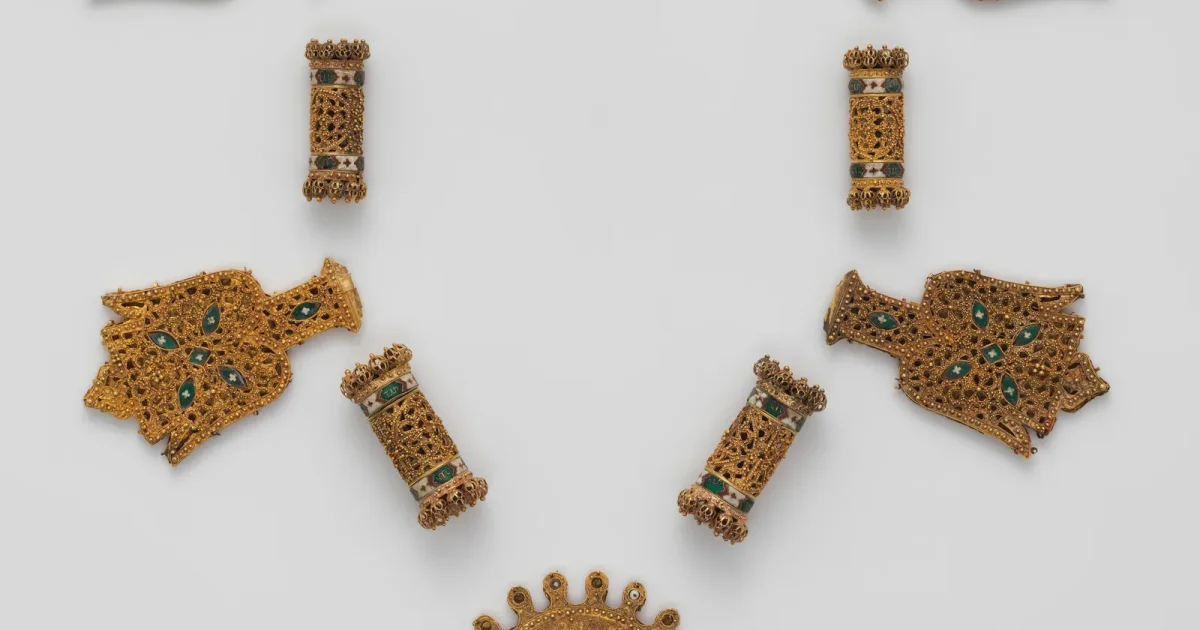
Two techniques made Berber silver unmistakable. Niello, a dark paste of silver, copper and sulphur, fills an engraved design. The pattern turns black against a light ground, the contrast sharp and graphic. The second technique, cloisonné enamel, brought particular fame to the town of Tiznit and the southern oases. The master laid out thin silver partitions and poured enamel between them: bright green, yellow, blue. The result blazed with colour against the austere metal.
Other methods lived alongside these. Granulation, where the surface is built up from tiny silver beads, gave texture and a play of light. Filigree, a pattern of twisted silver wire, made a piece feel airy. Lost-wax casting allowed complex fibula shapes to be repeated. Most old workshops combined several techniques in a single object: a cast frame, engraving, niello in the recesses, enamel on the shields, a coral set into bezels. It is precisely this layering that distinguishes a genuine handmade piece from a later stamped imitation.
From wedding to grave: jewellery across a woman's life
Silver accompanied a Berber woman all her life, and her set of ornaments changed with her age and standing. A little girl received her first simple bracelets and amulet earrings. The richest set was prepared for the wedding: part assembled by the bride's family as dowry, part given by the groom's family as bride-price. On her wedding day a woman put it all on at once, sometimes several kilograms of silver, coral and amber, the peak of her ceremonial appearance for her whole life.
A married woman wore the signs of her new status, and neighbours could see at a glance that here stood the mistress of a house. With the birth of children came amulets of fertility and protection for mother and infant. In old age part of the silver was passed to daughters and daughters-in-law, while part was kept as an untouchable reserve. After death the jewellery almost never went into the ground: it was divided among the heiresses, and a single fibula could pass through several generations of women in one family.
A Berber fibula belongs on linen and a bare wrist, never over a boardroom blazer. And don't you dare buff it to a shine - the tarnish is the whole point.
How and with what to wear Berber silver today
Over years on shoots I have put Berber silver on dozens of looks, from bare linen to strict monochrome. Here is what actually holds its shape, sorted by occasion.
What do I wear a large fibula with by day? For daytime I recommend a fibula on loose linen or heavy cotton in an earthy tone: sand, ochre, deep green. One heavy piece takes the solo, the rest stays quiet. The metal reads better on matte natural fabric than on smooth knit, so I suggest a living texture.
How do I fit the silver into a sharp look? I take monochrome, black or white, clean lines, and set a single Berber piece as the only accent: a large fibula in place of a lapel brooch, or a massive ring. An ancient form against a minimalist ground works hardest, because nothing gets in its way.
How much silver should you wear at once? I suggest one or two genuine pieces on a calm base, no more. A full set of fibula plus necklace plus forehead chain I leave to the stage and the shoot; in ordinary life it reads as costume. If you want layers, build them from related silver, not from random pendants.
Which metals and colours should it avoid? Glossy gold and rhinestones argue beside rough silver, so I keep them apart. I never double bright enamel with an equally bright clothing print, or the colour shouts from two sides. A formal, pressed suit with stiff shoulders I dial down too; this craft loves a soft line and natural texture.
Whom does Berber silver suit? Anyone who is not lost beside a conspicuous piece. Tall stature and a broad frame carry massive fibulae naturally; for the petite I choose smaller forms or a single detail as an accent. Cool silver is especially handsome on dark and olive skin, and on fair skin I support it with dark or saturated clothing.

Turn on your camera, pick earrings, a pendant or a ring, and see the piece on yourself in real time.
Switch items in one tap.
Everything runs in your browser: no photo or video is ever uploaded.
The main forms of Berber jewellery
Berber silver has its own repertoire of forms, and nearly every one was born of a practical need before it gathered symbolism around it. Here are the principal types.
The tizerzai fibula: a clasp that became an amulet
The tizerzai (often written tizerzaï, or simply "fibula") is a paired clasp with which a woman pinned her wrap at the shoulders. Two large silver brooches, more often triangular or teardrop-shaped, were joined by a chain or a string of beads. Without the fibulae the wrap simply slipped off, so the piece was as obligatory as a button.
But the form soon outgrew its usefulness. The triangle of the fibula came to be read as a female symbol, a sign of fertility and protection. Its sharp points, by belief, pierced the evil eye. The size and weight of a fibula showed wealth: a rich woman's brooches were enormous, almost the size of a palm. Today the tizerzai is perhaps the most recognisable Berber object, an emblem of the whole region, which even appears on Algeria's state symbols.
Heavy necklaces of silver, coral and amber
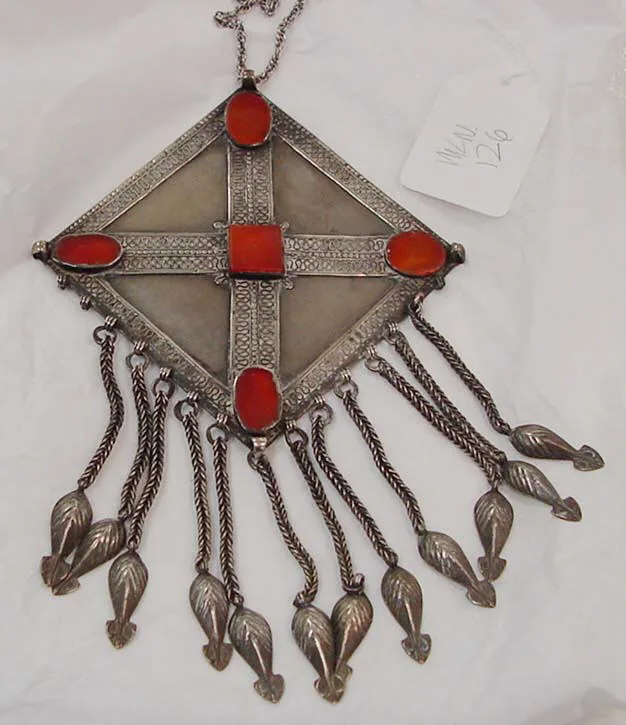
A Berber necklace is rarely modest. It is a many-stranded construction of silver beads, rattle-balls with shot inside (they whisper softly with movement), coral twigs, amber spheres and amulet pendants. At the centre often hangs a large medallion or a box-amulet, into which a folded prayer or herbs were placed.
Such a necklace sometimes weighs more than a kilogram. It was not removed for weeks. The ring and rustle of silver at every step were part of the look: a woman was heard before she was seen.
Khalkhal: silver anklets for the ankle
The khalkhal is a massive ankle ring, worn in pairs on both ankles. It was often hollow inside, with pellets, so that it rang with every step. Among nomadic tribes the khalkhal could be so heavy that it changed a woman's very gait, making it slow and flowing. The ringing announced the approach of its wearer and, by belief, drove evil spirits away from the feet, the part of the body most vulnerable to wickedness travelling along the ground. Ankle ornaments across different cultures are covered in detail in a separate guide to anklets.
Forehead and temple ornaments
A Berber woman adorned her head especially richly. Heavy temple pendants hung at the sides of the face, fastened to the headdress or to the hair. Across the forehead ran a silver diadem or a chain hung with coin pendants. These ornaments framed the face, rang, and at the same time served as that same purse: coins on the forehead were savings on display.
Rings, bracelets and earrings
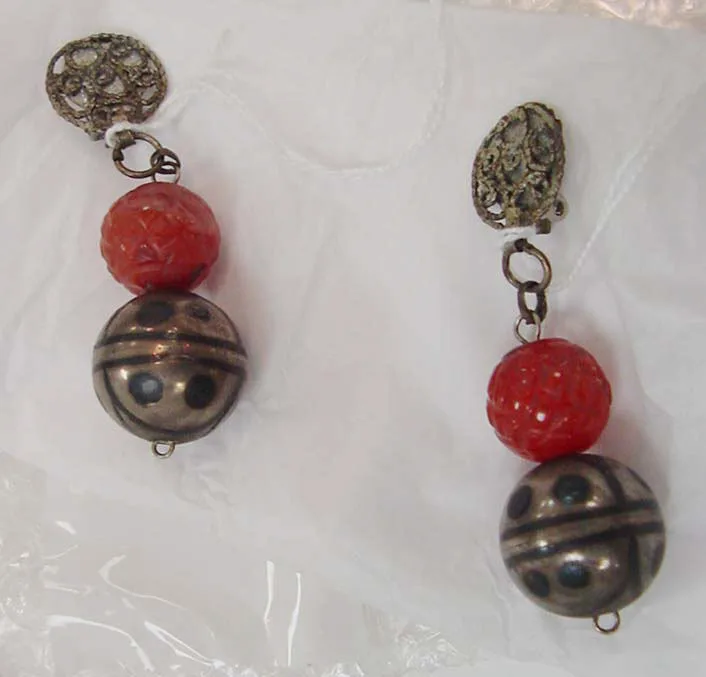
Berber bracelets are more often rigid, cast, in the shape of an open hoop with thickened ends, sometimes with spikes. Rings are massive, with signet faces or coral and glass settings. Earrings were often so heavy that they were hung both from the earlobe and from the headdress, to spare the ear. Every piece is large, conspicuous, substantial.
The herz amulet box: silver casing for a prayer
The herz deserves a word of its own: a flat or cylindrical silver amulet box hung at the centre of a necklace over the chest. Inside went a folded sheet bearing a prayer, a line from the Qur'an, a protective incantation or a pinch of herbs. Among the Tuareg such a box is often rectangular, with austere geometry; among Moroccan Berbers it can be richly worked in enamel. The herz joined two systems of protection at once: the pre-Islamic belief in the power of silver, and the written word. To carry a prayer in metal close to the heart was held to be the surest armour.
Customer reviews
Zevira is a real jewellery shop. Genuine payments, deliveries and customer thank-yous.
🥰🥰🥰 gracias
Ok, ¡gracias! 🙂
Regional traditions of Berber silver
The Berbers are not a single people but a multitude of tribes scattered across an immense territory. Each region has its own hand in silver, and a connoisseur reads the origin of a piece at a glance. Here are the most striking schools.
Kabylia (Algeria)
Mountainous Kabylia, east of Algiers, became famous for enamel. Its jewellery, especially from the village of Beni Yenni, is entirely covered in bright cloisonné enamel in three colours, green, yellow and blue, into which pieces of coral are set. Kabyle fibulae and diadems look almost like stained glass: here the silver is merely a frame for colour. This recognisable style became the calling card of all Algerian Berber silver.
The High and Anti-Atlas (Morocco)
The Atlas mountains gave a sterner, heavier silver. Here there is less enamel and more bare metal, engraving and niello. High Atlas necklaces astonish with the size of their coral and amber beads, and the fibulae are massive and simple in form. In the Anti-Atlas large red coral was especially prized, and a woman's necklace from the Tiznit and Tafraout region was a veritable exhibition of the family's fortune.
Tiznit and the southern enamel school
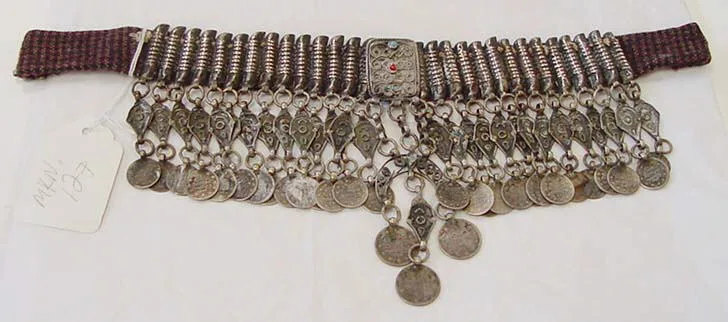
The town of Tiznit in southern Morocco is the capital of Berber enamel. Local masters brought the technique to perfection, and "Tiznit silver" is now a brand in itself. Here too Jewish jewellers traditionally worked, passing the secrets of enamel from one generation to the next. Tiznit bracelets and fibulae with bright enamel inlays travel across all of Morocco and beyond.
The Tuareg of the Sahara
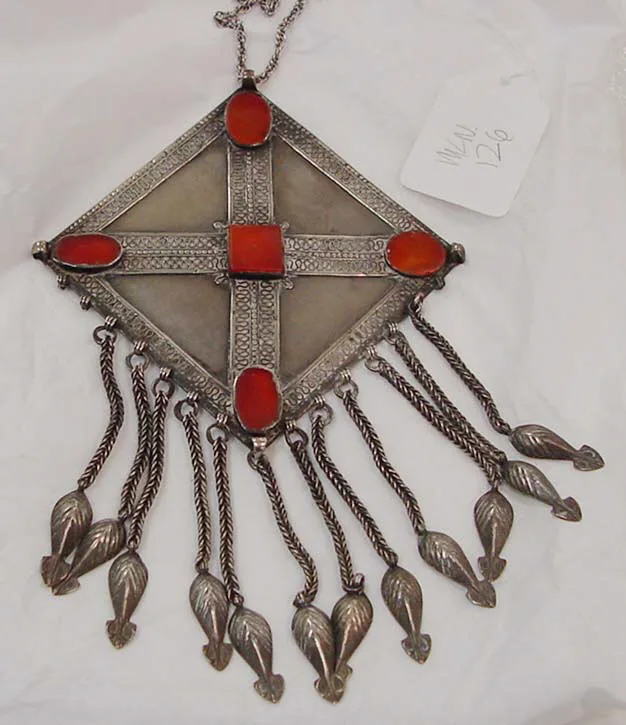
The Tuareg, "the blue people of the desert" (the nickname came from the indigo that dyed their clothes, the colour rubbing off onto the skin), stand apart. Their silver is austere, graphic, almost devoid of colour: pure geometry, crosses, diamonds, fine engraving on smooth metal. Among the Tuareg men wear jewellery too, unusual for the region, and silver is prized above gold to such a degree that gold pieces were long held to be almost improper. The famous "cross of Agadez", with its dozens of regional variants, is a Tuareg symbol that a father traditionally gave his son with words about how the world is wide and its paths run off in every direction. The Tuareg inadan smiths are a caste of their own, and their work is prized by collectors the world over.
Upload a photo of your pet, someone you love, or an object. We'll build a 3D model and hand-cast it in pewter.


Symbols in Berber jewellery
Berber ornament is a system of signs, protective and well-wishing, read by everyone around, and not at all abstract beauty. Many of the symbols are pre-Christian and pre-Islamic; they are older than any of the world religions of the region.
The hand of Fatima (hamsa)
The open palm is perhaps the best-known protective symbol of North Africa. Among Muslims it is called the hand of Fatima, after the Prophet's daughter, but the image of the hand itself is far older than Islam and appears among the most varied peoples. The five fingers drive off the evil eye, halt evil as a raised palm halts someone walking toward you. The Berbers set the hamsa into pendants, embossed it on fibulae, engraved it on bracelets. The full history of this sign is laid out in the article on the meaning of the hamsa, the hand of Fatima.
The eye against the evil eye
Beside the hand the eye often appears, protection against the wicked gaze, the very "evil eye" whose fear runs through the whole Mediterranean and North Africa. The blue and green inlays in Berber silver are no chance decoration: blue was held to be the colour that turns away envy. The same principle underlies the Turkish blue eye, described in detail in the article on the nazar against the evil eye.
Diamonds and triangles
Geometry in Berber ornament is almost always female. The triangle pointing downward is the most ancient sign of the female principle, the womb, fertility. The diamond, made of two triangles, was read as the joining of male and female, as a wish for offspring. These figures recur in silver, in carpet patterns, in tattoos, in wall paintings. The same visual language worked across all the crafts at once.
Tifinagh signs
Tifinagh is the Amazigh's own script, an ancient alphabet still used by the Tuareg of the Sahara. Its letters look like simple geometric signs: circles, dots, crosses, lines. Sometimes these letters found their way into the ornament of jewellery, becoming half inscription, half pure pattern. Today Tifinagh is undergoing a revival; it has been officially recognised in Morocco, and modern craftsmen deliberately weave these signs into silver as a symbol of Berber identity.
The frog, the fish and other signs of fertility
The frog in Berber culture is linked to water, rain and fertility, dearer than gold in an arid climate. Its figurines and stylised images were hung on women who longed for children. The fish meant abundance and also protected against the evil eye. Birds, especially partridges and doves, stood for beauty and love. A serpent coiled into a bracelet guarded the home. This whole menagerie lived in silver alongside abstract geometry.
Sun, moon and stars
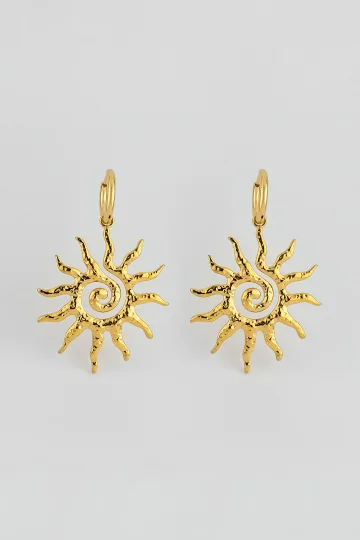
Celestial signs hold a special place in Berber ornament. The sun, a circle with radiating beams, meant life, warmth and the male principle. The crescent was linked to silver, female energy and the cycles, not by chance was the metal itself thought lunar. The eight-pointed star, a frequent motif on fibulae and pendants, was read as a sign of luck, of order and of protection from all eight directions at once. These symbols are older than Islam, but later settled in comfortably with Muslim culture, where the crescent and star also became important signs.
Crosses and rosettes
The cross in Berber silver carries no Christian meaning. It is an ancient sign of the four cardinal points, the four winds, the crossroads, especially important to the nomads and traders of the desert. The famous Tuareg cross of Agadez is about exactly this: the choice of a path, and how the roads run off in every direction. The rosette, a flower with petals set within a circle, is also a frequent motif, read as sun, flowering and a wish for prosperity.
Materials of Berber jewellery
Understanding the materials helps you tell a genuine traditional piece from a tourist souvenir and judge what exactly you are holding.
Silver and its fineness
Old Berber silver is rarely of high fineness. Because the metal came from melted coins of varied origin, the alloy turned out unpredictable, often silver below the 925 standard we are used to, with a noticeable copper content. This is normal for antique pieces. Modern workshops working for export more often use precisely the standard 925 silver, durable and fit for daily wear.
Niello
The black niello paste is an alloy of silver, lead, copper and sulphur, fused into the engraving. After polishing the design stays dark and the ground light. The technique gives a noble, graphic contrast and protects the recessed pattern well from wear. On Berber bracelets and fibulae niello appears constantly.
Cloisonné enamel
Enamel is a glass powder poured between silver partitions and fired until it fuses into coloured glass. Berber enamel is recognisably bright: grass-green, ochre-yellow, deep blue. The town of Tiznit in southern Morocco became famous for exactly this work. Enamel turned austere silver festive.
Coral
Red Mediterranean coral is the classic Berber inlay. It was prized for the colour of blood, for its bond with life and fertility, for its protective properties. Today natural coral is rare and dear, its harvesting restricted, so new jewellery often uses pressed coral, dyed bone or glass. This material, its varieties and how to check authenticity, is written about in detail in the guide to coral in jewellery.
Amber
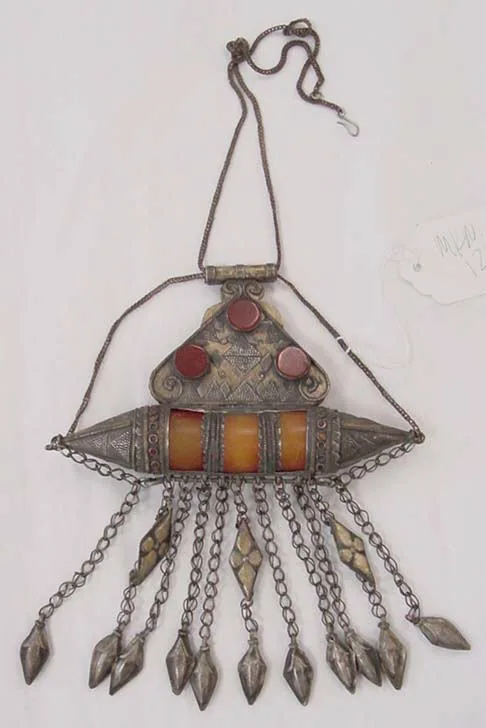
Amber reached the Sahara from the Baltic, crossing thousands of kilometres, and so was prized very highly. Warm, light, honeyed, it was held to be healing and protective. Often genuine amber was mixed in a necklace with imitations of resin and phenol-formaldehyde resins (the so-called "African amber", which is not amber at all). The nature of the stone and the ways to tell a fake are covered in the article on amber in jewellery.
Coins, enamel beads and glass
In necklaces and forehead ornaments real silver coins appear constantly, hung as both decoration and savings. Beside them were strung enamel beads, glass canes, beads of coral glass. A Berber ornament is rarely homogeneous: it is an assembly of everything of value that came into a family's hands.



The meaning of Berber jewellery
Behind every piece stands not a single function but a whole knot of meanings. One and the same fibula at once fastened the wrap, kept the money, guarded against spirits and announced status. Let us lay these layers out one by one.
Protection from evil and spirits
The chief task of silver among the Amazigh is to be an amulet. The metal, its gleam and its ring, were thought to frighten off jinn and the evil eye. The sharp points of fibulae pierced evil, blue inlays turned away envy, hands and eyes halted the ill-wishing gaze. A woman in full attire was, quite literally, sheathed in protection from head to foot.
Fertility and the continuation of the line
A huge part of the symbolism is bound up with childbearing. Triangles, diamonds, frogs, fish, red coral, all of it a wish for healthy children and a strong family. A bride received jewellery saturated with signs of fertility, because in a traditional society her chief purpose was held to be the continuation of the line.
Status and wealth
The weight of the silver directly showed the family's fortune. The more coins on the forehead, the heavier the fibulae, the longer the necklace, the higher the standing. The jewellery was worn in full for weddings and feasts, displaying all the accumulated wealth at once. It was a shop window of prosperity that could not be faked: the silver is either there or it is not.
Tribal and personal belonging
By the style of the jewellery a knowing person could tell which region and tribe a woman came from. The fibulae of Kabylia in Algeria differed from those of the High Atlas; Tiznit enamel cannot be confused with Tuareg silver. The pattern worked like a coat of arms, a tribal passport. And certain amulet pendants were personal, with a folded prayer inside, belonging to the owner alone.
Six fast checks, no tools. Leave your email, we'll send the PDF and a discount code.
No spam, unsubscribe anytime.
Silver, tattoos and a single language of signs
Berber ornament lived not only in metal. The same diamonds, triangles, dots and crosses women wore on the skin as tattoos, wove into carpets, painted on the walls of mud-brick houses and applied in henna to the hands before a wedding. It was a single visual code, repeated across all the crafts at once.
The tattoos on Berber women's chins, foreheads and hands carried the same protective and fertile symbolism as the silver. A vertical line on the chin, rows of dots, small crosses on the cheeks, all of it drove off the evil eye and announced status. With the spread of strict Islam and urban fashion the tattoos almost vanished, and silver remained the chief keeper of the ancient signs. So in reading the pattern on an old fibula we are, in essence, reading what was once worn right on the face.
This connection explains why Berber silver feels so whole. Behind the ornament stands not a master's whim but a millennia-old system in which every sign knew its place and its task.
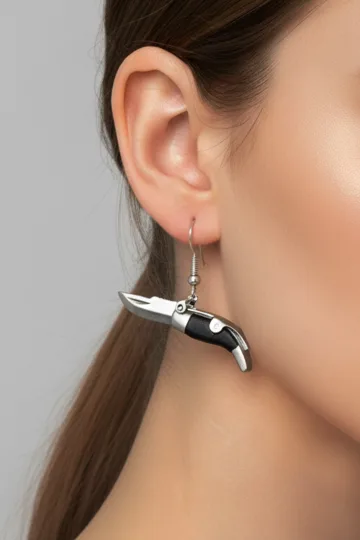
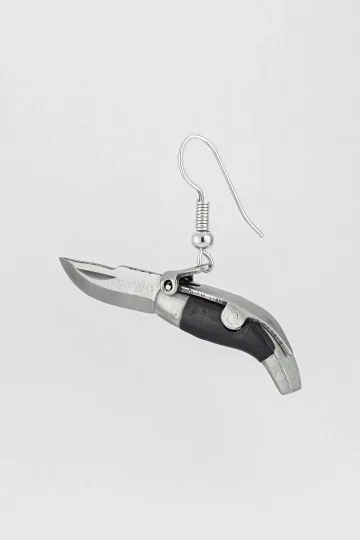
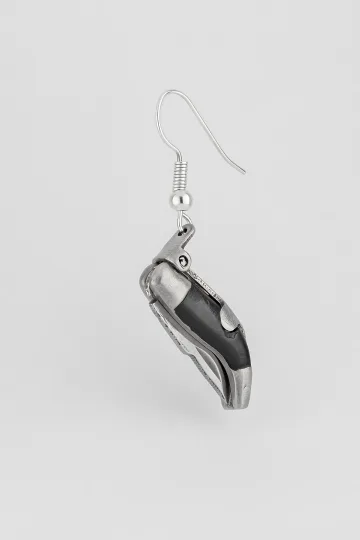
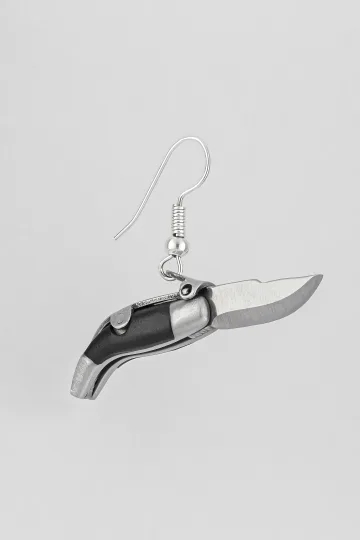
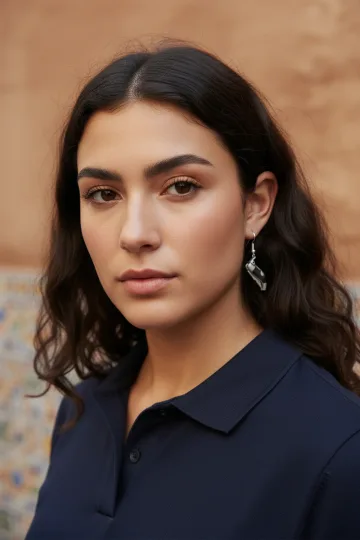
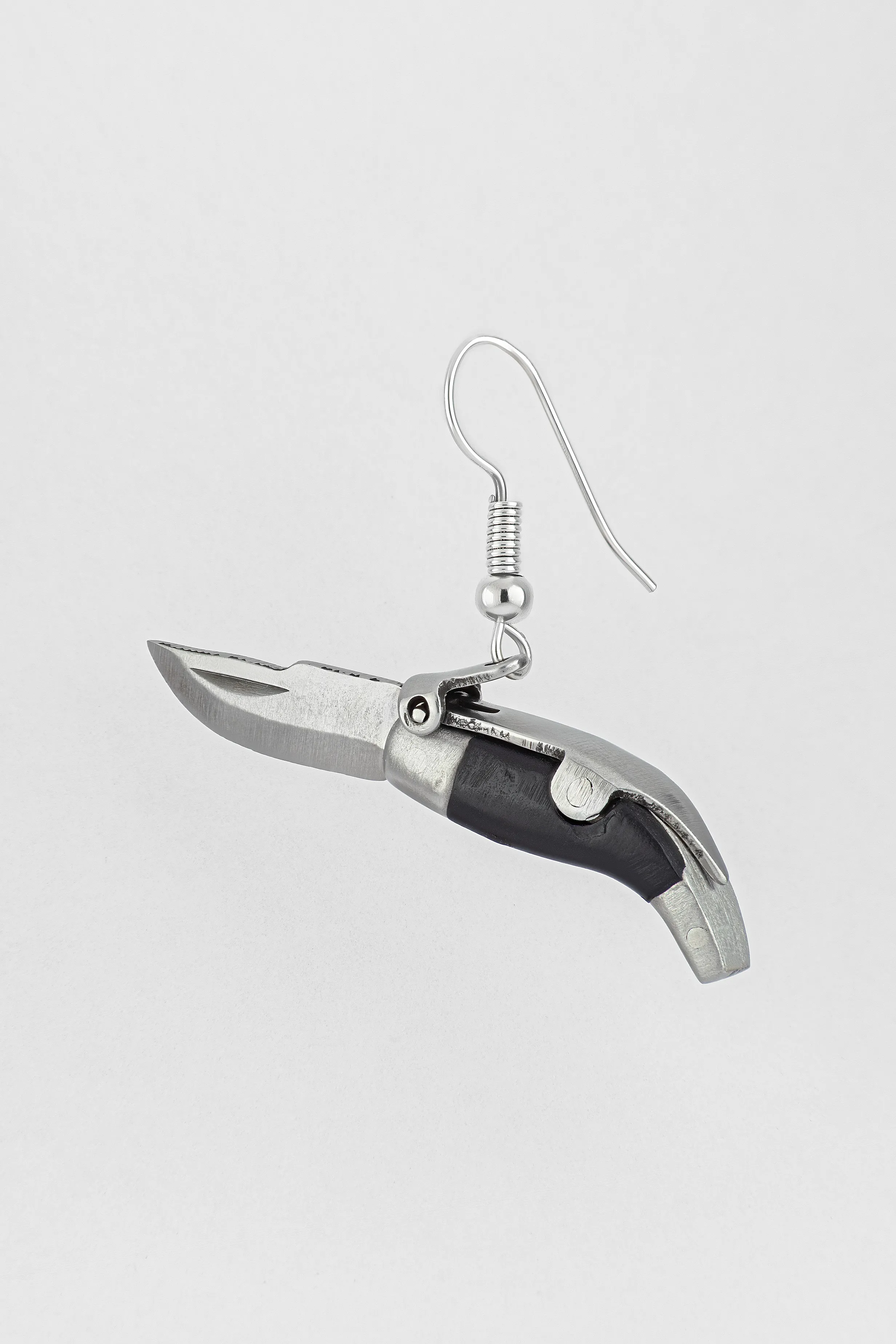
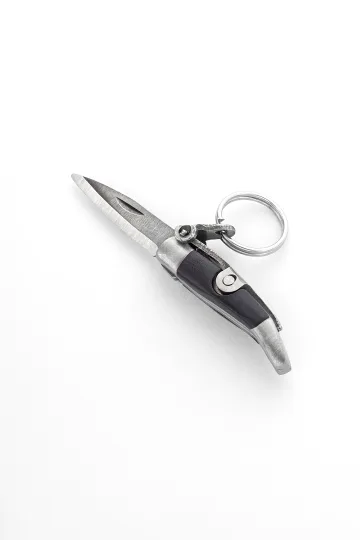
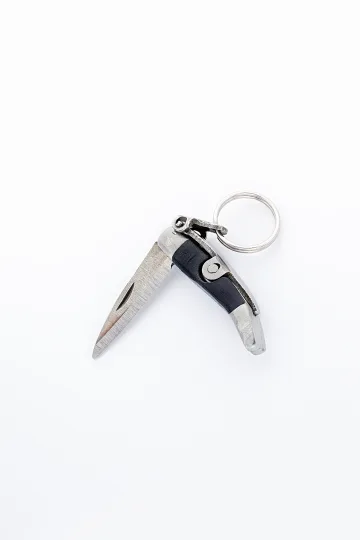
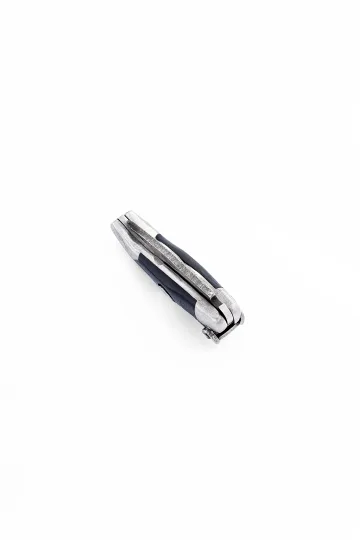
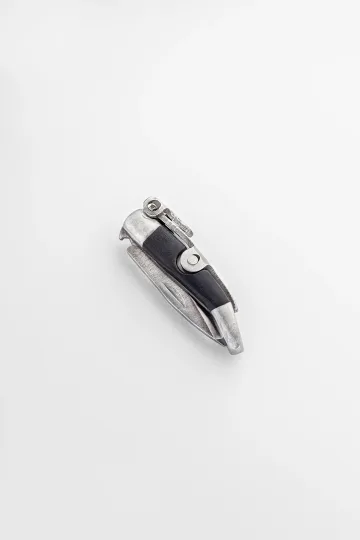
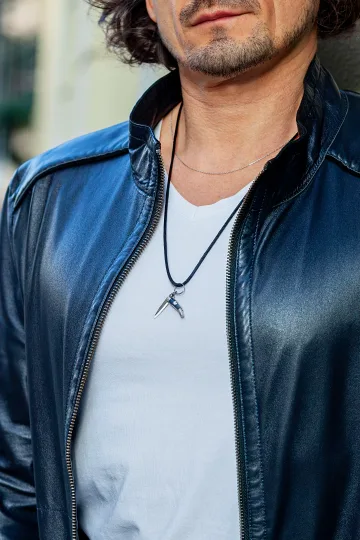
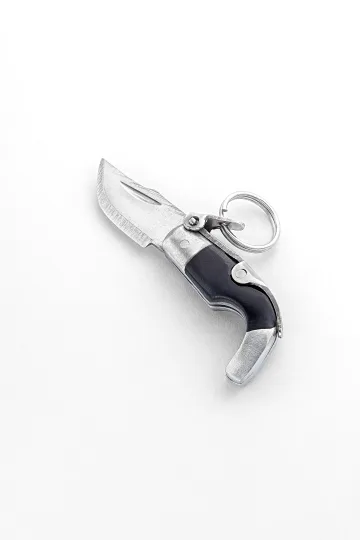
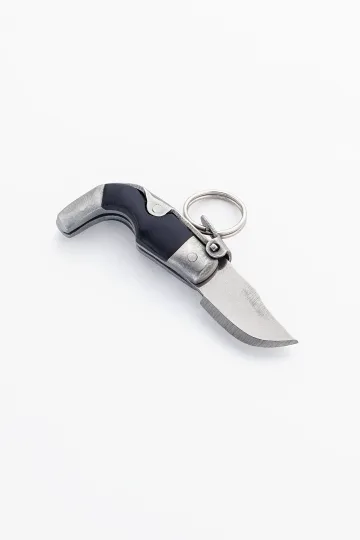
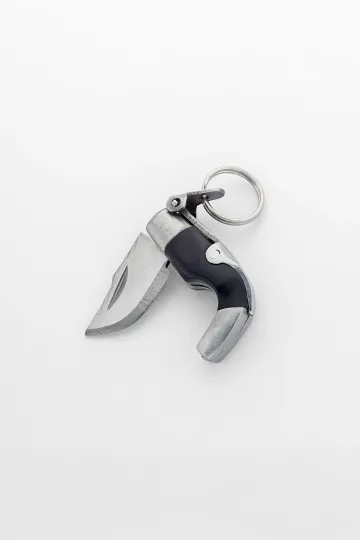
CAPAORA mini knife pendant
The 18th-century Spanish navaja in miniature: 40 mm of stainless steel, a real folding mechanism and a Palanquilla lock that clicks. An affordable gift to remember.
Authentic · Ships from Spain · 14-day returns
The psychology of Berber jewellery
You need not believe in jinn and the evil eye to understand why people wore kilograms of silver for centuries. Behind the tradition stand entirely intelligible human mechanisms.
The first is the feeling of safety. An object that, in its owner's conviction, drives off misfortune lowers anxiety and gives a sense of control over an unpredictable world. Nomadic life in the desert and mountains was dangerous, and a silver amulet worked as an anchor of calm, regardless of whether it drove off spirits or not.
The second is material confidence. A woman carrying a financial cushion on her body does not feel helpless. Silver on the chest is literal independence, the possibility to leave, to feed oneself, not to perish. Psychologically this is mightier than any amulet.
The third is belonging. An ornament by which your tribe and your line can be seen ties a person to a community, and the sense of belonging raises resilience to stress. Berber silver is a wearable "I am one of yours, I am from here", said without a single word.
And the fourth, the most contemporary, is memory. Today an old fibula is kept as a bond with a grandmother, with a homeland, with a vanishing tradition. The object becomes an anchor of warm recollection, and each glance at it returns a person briefly to their roots. The magic is not in the metal. The magic is that the metal remembers.
Berber silver in museums and collections
The finest holdings of Berber jewellery today are kept not in North Africa but in the museums of Europe and in private collections. This makes it possible to trace how the style changed over the past two centuries.
Many outstanding sets were assembled by researchers and collectors in the first half of the twentieth century, when the tradition was still alive and the old silver had not yet gone into the melting pot. Complete wedding ensembles are especially prized: fibulae, necklace, forehead diadem, temple pendants and bracelets, gathered as a single set from one tribe. Such sets are a rarity, because silver was usually broken up, sold and melted piece by piece.
A separate collecting category is the Tuareg crosses of Agadez and old inadan silver, as well as Kabyle enamel up to the mid-twentieth century, when the last masters of the old school were at work. The price of antique Berber silver at specialist auctions has risen markedly over recent decades: interest in ethnographic jewellery is growing, while genuine old material grows ever scarcer.
This turns the purchase of a genuine old piece into a considered choice. You take a fragment of a vanishing culture, something someone once wore every day, not just another trinket.
Authenticity and respect for the culture
Berber silver is the living tradition of a particular people, not a fashionable picture for the feed. It deserves to be handled attentively, both as to authenticity and as to meaning.
How to tell the genuine from the souvenir
Old Berber silver is heavy, imperfect, marked by wear and repair. The alloy is often darker and warmer in tone than modern 925 silver, because of the high copper content. Niello and enamel on antique pieces are slightly worn, the coral dimmed, the coins real, with legible dates. A tourist souvenir, by contrast, is light, gleams like new, the enamel is perfectly even, the "coral" suspiciously bright and warm to the touch (which means plastic). Neither is worse than the other: the new piece is more honestly worn every day, the antique is more precious as an object with a history. The main thing is to understand what you are buying.
Appropriation or respect
To wear Berber silver as someone from another culture is fine, if it is done with understanding. The Amazigh sold jewellery to outsiders for centuries; the silver trade was part of their economy, and the style itself took shape in exchange with Jewish craftsmen and European coins. The line runs not along the right to wear but along the attitude. Respectful: to know where a piece comes from, to value the handwork, not to pass off cheap stamping as a sacred relic. Disrespectful: to dress silver up as "savage exotica", to mangle the names, to treat a living culture as a stage set. The difference is whether you see the people behind the ornament.
Buying and supporting the craftsmen
The worthiest way into this subject is to buy a piece from those who carry on the tradition: from contemporary Berber and Moroccan workshops that work by hand and pay their craftsmen. So the tradition stays alive rather than turning into a museum exhibit and a smuggling of antiquities. Berber forms and symbols inspire contemporary silver design too, including collections built around protective symbolism.
Send a friend a discount code, they save on their first order.
Facts that surprise
Among the Berbers silver was held to be a "cold", lunar metal, and gold a "hot", dangerous one. Many tribes therefore avoided gold on principle, and silver was no forced poverty but a conscious choice.
The Maria Theresa thaler, an Austrian coin of 1780, is still minted to this day precisely because it was loved in North Africa and Arabia. Berbers and Tuareg melted these thalers into jewellery for centuries, and the demand held so long that the coin went on being struck with one and the same date for more than two hundred years.
Most "Berber" silver was made not by Berbers but by Jewish craftsmen. They held the secrets of enamel and niello, and after their mass departure in the mid-twentieth century many techniques came close to being lost.
The Berber tizerzai fibula was placed on Algeria's state symbols and banknotes. A utilitarian clasp for a wrap became the emblem of a whole nation.
Amber in a Saharan necklace could be worth more than a camel. Baltic resin made a journey of thousands of kilometres across all of Europe and the Sahara, and was prized above many precious stones.
Heavy khalkhal anklets changed a woman's gait on purpose. A slow, flowing step to the ring of silver was held to be a mark of dignity and wealth; to hurry was unbecoming.
The Tifinagh alphabet, sometimes used to decorate silver, is one of the oldest in the world and survived the centuries almost unchanged. The Tuareg of the Sahara use it to this day, and Morocco has officially returned it to its schools.
Frequently asked questions
How do Berber ornaments differ from Arab ones?
The main difference lies in the metal and the philosophy. The Berbers, especially the nomads, staked everything on silver, holding it pure and protective, while gold they linked to greed and the evil eye. Arab urban culture, by contrast, measured status in gold. Berber silver is massive, cast, read as amulet and purse, with geometric pre-Islamic symbols. Arab gold is finer, the ornament more often floral and calligraphic.
Why did Berber women wear silver rather than gold?
For several reasons at once. Silver was held to be a lunar, pure metal that drove off evil spirits, while gold was linked to the evil eye. For nomads it was more convenient to keep wealth in silver: it is easy to divide, melt and sell in a hard year. And the silver was the woman's own property, her personal financial cushion, untouchable by the husband.
What is the tizerzai fibula?
It is a paired silver clasp with which Berber women pinned the wrap at their shoulders. Two large brooches, more often triangular, were joined by a chain or a string of beads. Over time a purely practical fastener became the foremost female amulet and a symbol of fertility, and today the tizerzai is the most recognisable Berber object.
Is the coral in Berber necklaces real?
In antique pieces the coral is more often natural, Mediterranean, dimmed by time. In modern and tourist jewellery it is frequently pressed coral, dyed bone, plain bone or glass. Natural coral is heavier, cooler to the touch and has fine lengthwise striations. Details are in our guide to coral.
Can I wear Berber jewellery if I am not from this culture?
Yes, if you treat it with respect. The Amazigh sold silver to outsiders for centuries; the trade was part of their life. Respect means knowing where a piece comes from, valuing the handwork and not passing off a cheap souvenir as a sacred relic. Disrespect means turning a living culture into caricatured "exotica".
What fineness of silver is in Berber jewellery?
In antique pieces the fineness is often lower than we are used to, because the metal came from melted coins of varied composition, with a large copper share. This is normal for antiques. Modern workshops working for export usually use standard 925 silver, durable and convenient for everyday wear.
What do the triangles and diamonds in Berber ornament mean?
These are ancient signs of the female principle and fertility. The triangle pointing downward symbolises the womb and female power; the diamond of two triangles is read as the joining of male and female, as a wish for offspring. The same figures recur in carpets, tattoos and wall paintings, a single visual language of Berber culture.
How do I care for Berber silver?
Silver darkens from air and contact with skin, which is natural. Light blackening is removed with a soft silver cloth, but the old patina in the recesses of a pattern is better left, it is part of the object's character. Enamel and coral fear knocks and harsh chemicals, so the jewellery is taken off before showering, sport and cleaning, and stored separately so the metal does not scratch the inlays.
Conclusion
Berber silver is a rare case where an ornament tells you everything about a person honestly: where they come from, what they own, what they believe, what they fear. It was born of a nomad's practical need to carry wealth on the body, gathered protective symbolism older than any religion of the region, and reached us as one of the most expressive jewellery languages in the world. A heavy fibula, a ringing khalkhal, a necklace of coral and amber, all of it the memory of a whole people, cast into a metal that does not rust or tarnish to the end. Beauty here is a consequence, not the aim.
Silver, protective symbolism, ethnic motifs, amulets and paired sets.
Buying it as a gift? Each one arrives ready to give.
 A branded Zevira box and a little card come with every order.




About Zevira
Zevira is jewellery with meaning: silver, protective symbols and forms with a history. We love objects with a tradition behind them, from Mediterranean amulets to North African geometry, and we carry this language of signs into pieces that are easy to wear every day. If the theme of silver and symbolism speaks to you, you will find something of your own here.