Bar Necklace: Horizontal Line on the Collarbones
The bar necklace emerged around 2012-2014 as a response to the puffy pendants of the 2000s. A horizontal line 25 mm long with a single engraved name, that's the entire design. Minimalism here isn't a style but the absence of distracting elements from the meaning.
Where the Horizontal Bar Came From
When people say "modern minimalism classic," they mean something that looks like it's always existed. Bar necklace went through this journey in ten years: from a craft workshop on Etsy to a shelf in any jewellery store from Barcelona to Vladivostok. The history of the format is short by jewellery standards, but it explains why it stuck.
Shadow of the Victorian Plate
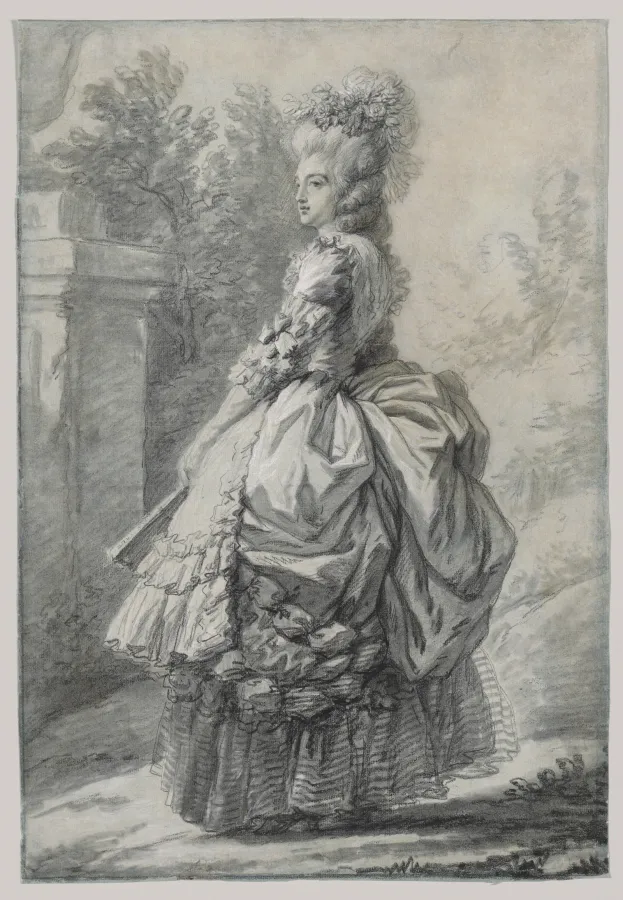
The direct ancestors of the bar necklace appeared in the mid-19th century. Victorian nobility wore thin silver or gold plates on chains with engraved names and addresses, mainly children from wealthy families. These were identification plates. In case of accident, loss, or illness, such a plate allowed those around to understand whose child this was. They wore it under clothing, right on the collarbones, about two centimetres long, about five millimetres wide.
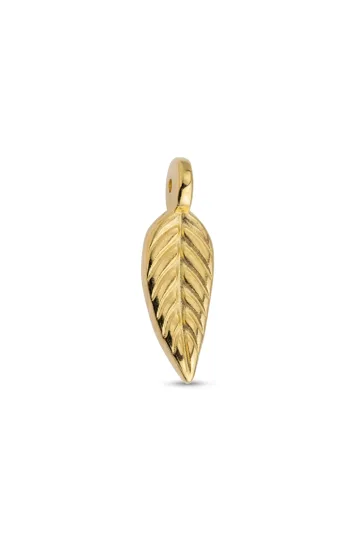
Wear the symbol, don't just read about it. These are in stock:





At the same time, a tradition formed of engraving on such plates not just the owner's name but also a phrase addressing the finder: "return to the home of [name] at [address]." The Victorian identification plate was the first mass jewellery format that combined utilitarian function (a passport around a child's neck) with aesthetics (precious metal, fine engraving, anchor-link chain). Seventy years later, the same principle would move to military dog tags of World War I.
In Russia, a similar format was worn by children of noble families at the end of the 19th century: a silver plate with a child's name, surname, sometimes family crest engraved. These plates are now found in antique shops and family auction sales, and their form is recognisable: a flat bar 15-30 millimetres long on a thin chain.
Military Dog Tags as a Mass School
The second lineage of the bar necklace comes from military dog tags. In the US Army during World War I (1917-1918), mandatory identification tags were introduced, dog tags, as a rectangular aluminium or zinc plate with a stamped name, number, and blood type. The tag was worn on a chain around the neck, two copies: one on a long chain, the second on a short one attached to the first through a carabiner. If killed, one tag stayed with the body, the second went to headquarters.
The dog tags of the World Wars created a stable image in mass culture: a horizontal plate with engraved text on a chain around a man's neck. By 1950-1960, this image became associated with discipline, courage, belonging to something greater. Tags were made from commercial steel, then from brass and stainless, and they began selling in military supply shops as souvenirs or actual memorial things.
From the 1980s, dog tags went beyond military. Tourist shops in Canada, the US, then Europe began selling "personal tags" with engraved names or short phrases. These were no longer military plates but civilian reinterpretation. Teenagers and young people wore such tags as symbols of belonging to a sports team, rock band, group of friends. The size remained military, about 50 millimetres long and 25 millimetres wide, chain from bead weaving with 2-3 mm beads.
The Instagram Era and Shift to Thin Geometry
By the early 2010s, the culture of the tag lived in mass fashion but not in the jewellery segment. Jewellery of the 2000s tended toward something else: large pendants, multi-layer boho necklaces, complex chains, abundance of stones. Minimalism existed as a niche aesthetic for Scandinavian and Japanese designers.
The shift happened around 2012, triggered by three factors. First: the visual platform Instagram launched in 2010 and by 2012-2013 became the channel through which jewellery craft studios could show things to a global audience without middlemen. Second: high-precision laser engraving (fibre lasers with 25-micron resolution) became cheap enough for small studios and opened the possibility of writing clear text on small plates serially. Third: the growth of craft economy through Etsy and analogs. In 2010-2014, thousands of small jewellery shops opened on Etsy, for which the format "small plate with engraving" was ideal: cheap to produce, easily personalised, photogenic in the square frame of the platform.
By 2014, major jewellery shops in Los Angeles, Brooklyn, London, Paris already had shelves with thin horizontal bars on thin chains. By 2016, the format came to the mid-market, by 2018 it went into mass production in Eastern Europe and Asia. Russian studios picked it up around 2016-2017.
What Changed in the Aesthetics
Between the Victorian plate, the military dog tag, and the modern bar necklace, there's continuity of form and a break in tone. The Victorian plate was functional, the military tag was strict, the modern bar necklace is lyrical and quiet. The format is the same, but the meaning shifted.
Old plates were about identification in the outside world: so someone would find and identify you. Modern bar necklace is the opposite, about self-identification: engraving for the owner, not for a passerby. If on a Victorian plate they wrote full name and address in capital letters, on a modern one, it's usually a single name or short phrase in small font, readable only on close inspection.
This shift is typical of all minimalist aesthetics of the 2010s: jewellery stopped being a message to others and became a personal note. Read more about this shift in the article about minimalist jewellery. Bar necklace is one of the best embodiments of this logic: visible but not showy, readable but not loud.
Parallel Return to Academic Aesthetics
From 2020 on, after a period of loud "cold" minimalism with mirror surfaces, a different context returned to bar necklace: academic bohemia, the aesthetics of old university libraries, craft chic. Bar necklaces started engraving Latin mottos (Per aspera ad astra, Memento vivere, Carpe diem), Julian calendar dates, quotes in ancient Greek. This is no longer "a name plate for a teenager" but a thing with cultural layers for an educated adult woman.
In parallel, the format caught the male segment. A thin plate of stainless steel or 925 silver with engraved wife and children names became an alternative to heavier men's chains. The size grew (bar to 50 mm, chain to 55 cm), the aesthetics became more brutal (black steel, patinated silver), but the logic stayed the same: one horizontal line with engraving.
Anatomy of Bar Necklace
To choose the right format, you need to understand what parameters make up the thing. Bar necklace is assembled from four components: the bar itself (form, size, thickness), its orientation, the chain (weave, thickness, length), and attachments (how the bar is attached to the chain and how the clasp closes). Each component affects how the jewellery reads and is worn.
Bar Length
The most important parameter. Length determines how much text fits, how the jewellery looks on collarbones, and which visual category it falls into.
Micro (5-10 mm). Fits one character: a dot, dash, initial as a minimalist mark. Text doesn't fit. Micro-bar works only as part of a stack of several plates or as an accent on a thin chain for teenagers. As an independent piece, it shouldn't be taken, it gets lost on collarbones and carries no independent load.
Mini (10-15 mm). Fits one letter, one initial, a symbol like a heart or star. Suitable for teen wear, first jewellery, as accent to a larger bar in a stack. Looks best on 40 cm chain, tightly fitted to neck.
Standard (20-28 mm). The most universal category, accounting for about 70 percent of all bar necklaces in stores. Fits one medium-length name (up to 8 characters), short date (15.04.24 without separators or 15.04 if year isn't important), pair of initials, short word (mama, papa, amor, home, path). Size is visually proportional to collarbone width on most adult women. A 42-45 cm chain places the bar in the dip between collarbones or slightly below, the base of the neck is open, the upper edge of the neckline is free.
Extended (30-35 mm). Fits full date with separators (15.04.2024), coordinates in decimal degrees (43.7384, 7.4246), short phrase up to 12-14 characters with spaces. Visually the bar occupies a noticeable portion of the collarbone gap and reads as an independent accent. Suits mature wear, everyday thing for a woman wanting one noticeable detail in the look.
Accent (38-50 mm). Fits short Latin phrase (Sine qua non, Per aspera, In aeternum), a series of two-three words. The bar occupies almost all the inter-collarbone space and works only as solo, without layers. Larger length begins to clash with neck proportions: the upper sensible limit is about 45 mm, beyond that the bar visually becomes more of a horizontal pendant.
These guidelines work for women of average build. If the wearer has narrow shoulders and thin neck, the range shifts down five millimetres: instead of 25 mm better 20, instead of 30 mm better 25. If the wearer has broad shoulders and wide neck, the range shifts up five millimetres.
Bar Width
The second parameter affecting engraving readability. Thin bar is more elegant but has less space for text; wide bar is roomier but visually heavier.
Thin (2-3 mm). Barely visible metal strip, fits a name in one row at 1.2-1.5 mm font. The most delicate format, looks great on a delicate neck, under a loose-collar shirt, in a stack of same-width bars.
Medium (4-5 mm). Universal range. Fits 2 mm font text with comfortable margins above and below. Doesn't look crude, doesn't look thin, readable from 1.5 metres distance.
Wide (6-8 mm). Already visually heavy bar, but gives space for two-line text or large 3-4 mm font. Suits premium pieces with hand engraving where the craftsperson wants to show their touch. Suits male wear where robust proportions are appropriate.
Wider than 8 millimetres, the bar loses bar form and becomes a miniature plate. That's another format with its own logic, and bar necklace logic stops working on it.
Bar Thickness
The third parameter, rarely discussed, yet it determines the durability of the piece and readability of engraving through decades. Thickness is the bar's cross-section perpendicular to the face plane.
Thin (1-1.2 mm). Minimum thickness where quality engraving is still possible. Light, elegant, cheaper to produce. Minus: at this thickness a fibre laser cuts maximum 40-50 microns, otherwise metal deforms. After 20-30 years of daily wear, edges start to blur, engraving loses depth.
Medium (1.5-2 mm). Optimal ratio of weight, strength, and potential engraving depth. On a 2 mm bar, a burr can cut 80-100 microns, laser 60-80, and both will survive half a century of wear. Most decent studios make bars this thickness by default.
Premium (2.5-3 mm). Noticeably weightier bar, felt on the neck as a "real" thing. At this thickness, you can do relief engraving (letters raised, background recessed), deep burr carving, enamel inserts. Minus: heavier (for 925 silver a 30x5x3 mm bar weighs about 3.8 g, for 950 platinum about 7 g), can chafe the collarbone in sedentary work.
Thicker than 3 millimetres, the format begins to clash with thin chain. If you want mass, better switch to a pendant with rounded edges than thicken the bar.
Orientation
Standard bar necklace is horizontal: long axis parallel to collarbone line. This is the basic orientation the entire format is designed for. But vertical variants exist.
Horizontal. 90 percent of the market. Text reads left to right like normal writing. The bar lies between collarbones and underlines their line. Works for all engraving types except long vertical texts.
Vertical. Bar rotated 90 degrees: long axis perpendicular to collarbone line, hangs down from the attachment point. Text writes top to bottom: each character rotated 90 degrees clockwise, or letters simply go vertically one under another without rotation. Vertical bar visually elongates the neck (same effect as long chains on short neck) but limits itself textually: a long phrase becomes a column, not everyone finds it comfortable to read.
Angled (Diagonal). Rare format where the bar tilts 15-30 degrees to horizontal. Visually dynamic, but requires conscious style from the wearer: looks weird on office dress code, fits fine on free clothing. More common in author collections than mass market.
Chain
The chain must be thin. This is a rule; breaking it turns bar necklace into something between a bar and an anchor chain, and something in-between doesn't work as either.
Chain Thickness. From 0.5 to 1 mm. Standard for women's wear 0.7-0.9 mm, for men's 1-1.2 mm. If chain thickness exceeds half the bar width, proportions break.
Weave. Most common types:
- Anchor (anchor): open weave from round or oval links, light, strong, reads clearly.
- Cable (cable): dense weave from identical links, classic, doesn't tangle.
- Venetian / Box (box): square links, very elegant chain with fine geometry, perfect for minimalism.
- Snake (snake): solid snake weave without visible links, expensive to make, looks like a single continuous thread.
- Ball / Bead (ball): from small beads, echo of military dog tags, better for men's wear.
Rolo (rolo), dense weaves like "Bismarck" or "Figaro" don't suit bar necklace: they're too decorative and argue with bar sparseness.
Chain Length. Standard range 40-45 cm, princess length. At this length the bar falls into the dip between collarbones or slightly below, the base of the neck is open, upper neckline edge is free. A detailed guide on chain length is in a separate article, covering all variants from choker to lariat.
Extender. Many bar necklaces come with built-in extender 3-5 cm: additional chain with clasp allowing length adjustment. Convenient for those wanting to wear under high collar (shorter) or over a blouse (longer).
Bar Attachment to Chain
Attachment style affects how the bar sits. If one attachment point (centre of top face), the bar swings side to side when moving: living necklace, but at fast walking the bar can twist. If two attachment points (at bar edges), it's fixed and doesn't swing, lies flat. Most modern bar necklaces have two attachments: small loops the chain threads through.
Less common is "sew-through" attachment: chain passes through two holes in the bar itself, no loops. This gives the cleanest visual effect (bar as if strung on chain) but weakens metal at the holes.
Clasp
Standard jewellery clasps:
- Lobster claw (lobster claw): most reliable, opens easily one-handed, visible in back.
- Spring ring (spring ring): miniature spring clasp, more elegant than lobster, harder to open in dark.
- Magnetic: convenient for people with dexterity issues, but less reliable on thin chain (can come open from impact).
- Hidden hook clasp: high craft, no visible clasp, chain joins through hook and loop. Pricier and less reliable, but prettier.
For daily wear, use lobster or spring ring. Magnetic only if you know the wearer doesn't move actively. Hidden only for dress occasion piece.
Customer reviews
Zevira is a real jewellery shop. Genuine payments, deliveries and customer thank-yous.
🥰🥰🥰 gracias
Ok, ¡gracias! 🙂
One bar across bare collarbones, full stop. Pile on five pendants and you've got a flea market, not a neckline.
How to Wear a Bar Necklace
Hundreds of bars have passed through my hands: engraved with names, dates, coordinates. Here is what actually works, sorted by occasion, so you are not left guessing in front of the mirror.
How do I wear a bar every day? For daily wear I recommend a thin silver or steel bar, 22-25 mm on a 42-45 cm chain. It settles in the open space at the base of the neck over a plain tee, an unbuttoned shirt or a boat-neck knit. With pale cotton and jeans it reads as a neat detail, not an occasion piece.
Does a bar work at the office? It shines there. I suggest a neutral metal (silver, white gold or platinum), a thin 0.7-0.9 mm chain and an engraving with no flourishes. Under a turtleneck the bar hides along the body while the thin line of chain stays above the collar and keeps the look composed. A strict dress code is no obstacle.
How do I wear a bar in the evening? Under an open neckline or a V-neck I choose a longer bar, 45 cm, and keep it solo, no layers. Warm 14K or 18K gold is softer than cool metal at night and catches the light along the collarbones. One accent beats five.
What do I pick for a special occasion? For a wedding, an anniversary or a graduation I recommend a wider 30-35 mm bar in 18K gold or platinum with a meaningful engraving (a date, initials, coordinates). Skip the stones and a second necklace; the bar carries the meaning on its own.
How do I layer a bar? I keep layers on a rhythm: two bars in a stack at most, 3-4 cm apart in length, plus thin studs and a single ring. You can mix metals deliberately, silver with gold, as a warm-and-cool contrast. Keep the chain thinner than half the bar's width, or the proportions fall apart.
Turn on your camera, pick earrings, a pendant or a ring, and see the piece on yourself in real time.
Switch items in one tap.
Everything runs in your browser: no photo or video is ever uploaded.
What Metals and Alloys the Bar is Made From
Material determines durability, colour, price, engraving potential, and how the piece will age. Choose metal by three axes simultaneously: owner's budget, lifestyle (how often and actively worn), aesthetic preference (warm, cold, neutral tone).
925 Silver
Alloy 92.5% silver and 7.5% other metals (usually copper, less often germanium or zinc). Most common material for bar necklaces in mid and budget segments. We'll dwell on it in detail because it covers three-quarters of requests.
Appearance. Cool white with slight blue tint, reflective polished surface. Over time, metal patinas: silver darkens from sulfur exposure (in urban air, sweat, water). Patina can be unwanted flaw or artistic effect: on engraved surface, patina highlights relief, and old bar with dark letters on light background looks more noble than new polished. More on silver properties in the 925 silver guide.
Engraving. 925 silver has hardness around 79-90 Vickers (pure silver 25 HV, copper 369 HV). Fibre laser cuts silver easily, burr too. Engraving depth to 100 microns without risk of bar deformation. Contrast is black: silver darkens in engraving depressions from micro-oxidation, letters look clear.
Durability. A 1.5-2 mm thick silver bar withstands 30-50 years of daily wear without shape loss. Engraving reads through all that time. Minuses: scratches (soft metal, hard object in pocket leaves mark), darkening (needs periodic cloth cleaning or baking soda bath).
Price. Budget segment. Silver bar with laser engraving costs like dinner at an average restaurant. With hand burr engraving costs like a weekend in a small hotel.
14K Gold (585 Fineness)
Alloy 58.5% gold and 41.5% other metals: copper, silver, zinc, nickel, or palladium in various proportions. Proportions determine colour: yellow gold (copper + silver), white (palladium + silver or nickel), rose (more copper than silver).
Appearance. Warm yellow, cold white, or pink depending on alloy. Less shiny than silver, more matte at the same polish. Doesn't tarnish: gold doesn't react with air sulphur or sweat, so a 585 bar looks like a year of wear after twenty years.
Engraving. Hardness 130-150 HV, slightly above silver. Fibre laser cuts well, burr too. Engraving depth 60-80 microns optimal, deeper and metal deforms (on thin 1.5 mm bar). Contrast: engraving depressions look darker from optical effect but don't chemically darken.
Durability. A 1.5-2 mm thick 585 bar is designed for 50-70 years of daily wear. Passes to heirs in original condition.
Price. Mid segment. Standard 585 bar costs like a short European vacation.
18K Gold (750 Fineness)
75% gold, rest alloy. Premium alloy preserving rich warm colour (in yellow) and rarely causing allergies (nickel content in alloy minimal).
Appearance. Saturated, recognisable "gold" colour in yellow variant, noble cold white with slight grey tint in white variant. Recognized instantly by a specialist and experienced wearer: 750 fineness differs from 585 in colour depth, weight (denser), and metal behaviour (softer, slightly warmer to touch).
Engraving. Hardness 100-130 HV, softer than 585. Burr goes on 750 like butter, and experienced craftsperson sees their slightest hand movement. Laser works but deeper than 70 microns not recommended (metal too soft, depression edges collapse).
Durability. At 2 mm thickness, bar survives a century. At 1.5 mm, you need careful wear (don't catch on hard surfaces) because soft metal bends easier.
Price. Premium segment. 750 bar costs like an extended vacation with flights or half an average annual vacation budget.
950 Platinum
95% platinum, rest iridium, palladium, or ruthenium. Most expensive of common jewellery metals and most durable.
Appearance. Cool white with slight grey tone, slightly darker than 750 white gold. Doesn't reflect light as intensely as silver but gives soft velvet shine. Doesn't tarnish, doesn't patina, reacts with nothing but aqua regia.
Engraving. Hardness 130-165 HV, on average harder than gold. Fibre laser cuts normally, burr more complex: platinum is "sticky," shavings don't come off easily, craftwork on platinum costs more from tool wear. Engraving depth 80-100 microns standard.
Durability. Practically eternal. A platinum bar after a hundred years looks almost the same as purchase day, maybe with fine scratches.
Price. Collectible segment. Platinum bar costs like a new mid-class car or expensive apartment renovation. More on choosing between platinum and white gold in the platinum vs white gold guide.
Rose Gold
Gold alloy 585 or 750 fineness with increased copper content (instead of standard silver-copper alloy). Colour from delicate powder to saturated copper-rose depending on proportions.
Rose gold peaked in popularity in 2015-2020: everyone wore it, teenagers to older women, and in mass it looked like an era trend. After 2021, the trend quieted, but the material stayed: those it suited by skin tone kept wearing. Especially rose gold works with warm skin tone (beige, olive, golden) and doesn't suit cold (porcelain, pinkish) tone.
On bar necklace, rose gold gives unexpected effect of softening geometric form: cold silver or platinum emphasise rectangle strictness, warm rose gold makes bar lyrical, more "human." If the piece is given tied to tender personal story (child birth, first-meeting anniversary), rose gold is justified. If the piece has strict Latin quote, better cold metal.
Black Steel and Surgical Steel
Modern material from medicine and watchmaking that came to jewellery. Surgical steel 316L is iron, nickel, chromium, molybdenum alloy, strong, non-allergenic, corrosion-resistant. Black steel is the same 316L with PVD coating (physical vapour deposition) in graphite or anthracite colour.
Appearance. Cold grey or deep black depending on coating. Matte or satin surface. Black steel looks modern, associates with gothic, sports, tech aesthetics.
Engraving. Fibre laser on steel works through metal removal and heat-caused oxidation: on black PVD coating, laser uncovers the silvery layer below, letters come out light grey on black background. Engraving depth on steel 50-80 microns.
Durability. Steel doesn't scratch as easily as silver or gold (hardness 200-250 HV). PVD coating lasts 10-20 years of daily wear, then starts wearing on edges. Without coating (polished steel) serves decades without visible change.
Price. Budget segment. Cheaper than 925 silver at same width and length.
Male bar necklaces often choose steel, teens, sporty people, silver allergics. More on brass, steel, and silver difference in the guide.
Vermeil (Gold-Plated Silver)
925 silver with gold 585 or 750 fineness coating at least 2.5 microns thick. US standard (FTC) requires this minimum thickness; in Europe, from 1 micron allowed. Price lower than gold bar, looks similar. Good compromise for those wanting warm tone but not ready for full gold bar.
Coating durability: at daily wear, vermeil lasts 5-10 years, then gold layer starts wearing, especially on edges and corners. Restored by replating at a workshop. More on vermeil and other plating in the plating or real gold guide.
Mixed Metals: Two Bars of Different Materials
Avant-garde format: two bars on one chain or on two connected chains, one 925 silver, other 585 gold. Creates warm-cold, silver-gold contrast reading as intentional gesture. Suits those wanting a piece with visual tension, not monotone. Mixed metals logic detailed in the mixing metals guide.
Upload a photo of your pet, someone you love, or an object. We'll build a 3D model and hand-cast it in pewter.

What to Engrave on the Bar: Ten Working Scenarios
Bar necklace's main feature is that it exists for engraving. Without text, bar becomes a boring geometric object; with right engraving, becomes a personal piece working decades. Let's review concrete variants with real examples and nuances.
1. One Name
The simplest and strongest approach. Name on the bar belongs either to the wearer (on her bar) or to the most beloved (son's name on mother's bar, wife's name on husband's bar). Name length matters: 4-6 letters optimal, 7-8 the limit for standard 25 mm bar.
Short names (Anna, Leo, Lisa, Mia, Sema) should be engraved in large 3-3.5 mm font, centred with wide margins. This makes the name a graphic accent, readable from two metres.
Medium names (Pauline, Michael, Daria, Arthur) engrave at 2-2.5 mm font, also centred.
Long names (Alexandra, Sviatoslav, Victoria) either need extended 30-35 mm bar, or shrink to 1.5 mm font but then readable only on close inspection.
Font for single name: usually cursive (Italic, Script) for tender aesthetics or sans-serif (Helvetica, Futura) for modern strictness. Serif also works, especially for classic tone.
2. Children's Names (Stack or One Bar)
If two children with short names (4-5 letters each), fit on one standard 25 mm bar through divider: "Anna • Leo", "Mia + Sema". Dot divider looks cleaner than plus.
If three or more children, or long names, format shifts to stack: one bar per child, different chain lengths, so bars hang cascading without overlapping. Stack details below in separate section.
3. Date
Date of important event: wedding, child birth, treatment completion, house move day, thesis defence. Formats:
DD.MM.YYYY: European, eight digits + two dots, about 12-14 characters with spaces. Fits extended 30 mm bar. Example: 15.04.2024.
MM/DD/YY: American, fits standard 25 mm bar. Example: 04/15/24.
DD MMM YY: short with letter month, reads cozier than digits. Example: 15 APR 24, fits standard bar.
Julian Day: astronomical format, continuous count of days from January 1, 4713 BCE. Used in astronomy and space calculations. April 15, 2024 is JD 2460416. Seven digits look like code, readable only to those initiated. Fits tech people, physicists, those with special number relationship.
Roman Numerals: eternal form. April 15, 2024 is XV.IV.MMXXIV, about 13 characters. Not instantly readable to all, but for those understanding, looks timeless.
4. Place Coordinates
One of the strongest modern bar approaches. Coordinates of first meeting place, childhood home, proposal place, hospital window where child was born, parent's grave. Two main formats.
Decimal Degrees. More modern, better fits engraving. Example: 43.7384, 7.4246 (this is Monaco, bay). Five decimal places precision = one metre accuracy, six places = 10 centimetre accuracy. Sixth place excessive unless insisting on specific bench.
Degrees-Minutes-Seconds. More traditional but visually overloads bar with special symbols. Example: 43°44'18.2"N 7°25'28.7"E. Fits if wanting "navigator" look, for sailors, pilots, travellers.
For coordinates, monospace font (Courier, Consolas, Roboto Mono) works best: all digits one width, sequence looks like navigation screen. Font 1.5-2 mm. Engrave outside decimal format (one line), inside, format with minutes and seconds (two lines if bar allows).
5. Short Quote
Quote works when short (to 14 characters with spaces), not banal, and tied to wearer. List of working phrases with context.
Latin. Per aspera (through thorns) for those through hard times. Memento (remember) as daily reminder. Carpe diem (seize the day) for classic philosophy lovers. Sine qua non (without which impossible) for irreplaceable person or principle. In aeternum (forever) for marriage bar. Dum spiro spero (while I breathe, I hope) long phrase, needs extended bar.
Ancient Greek. Γνῶθι σεαυτόν (know thyself), Καιρός (moment, favourable occasion), one word expressing philosophy. For those in philology, philosophy, classical tradition.
Ancient Hebrew. Brief Psalm phrases or Song of Songs in square script. Needs calligrapher for font file prep.
Cyrillic. Short Russian words: "home", "path", "light", "own". Single-word Cyrillic engravings work more lyrically than multi-word.
English. Hope, Faith, Forever, Always. Modern photogenic aesthetics, but avoid clichés: phrase should mean something to wearer, not be "pretty jewellery text."
Absolutely avoid banal "love" / "forever" / "for ever and ever" on minimalist bar in any language. These words on minimal form sound especially loud as emptiness because there's no other graphic element to soften the cliché.
6. Sound Wave (Waveform)
Short phrase (5-10 seconds) recording becomes wave form that laser transfers to bar. Each wave is unique as a fingerprint because it's built from specific voice recording.
What to record: "I love you" from 3-5 year old child (child voice unambiguously recognisable), voice of departed parent from old video (audio track extracted programmatically), laugh of most beloved in happy moment.
Technically: source as wav or mp3, duration to 10 seconds. Audio analysis program (Audacity free, Adobe Audition paid) generates waveform visualization. File converted to svg and sent to engraving studio. Laser transfers line to bar, usually lower half, taking 60-70% of length.
Effect: for wearer it's specific person's voice in metal; for stranger it's abstract wavy pattern. Multiplicity that works.
7. Numeric Code
Strong approach for those trusting numbers more than words. What to engrave:
First company's tax ID. If that work was destiny-defining (first salary, first professional peak), its ID becomes personal number. Ten digits, fit standard bar at 2 mm font.
First car license plate. Government registration sign you remember by heart. 6-7 symbols plus region, about 10 symbols total. Fits standard bar.
Own chess game record. 1.e4 e5 2.Nf3 Nc6 in standard notation. Too long for one bar, usually first move only.
Family business founding year. Four digits. Fits if there's generations-long history (workshop, house, farm).
Favourite psalm number. Psalm 137 for those remembering rivers of Babylon. Three digits look mysterious on bar: insiders read, strangers don't.
UTM projection coordinates. Alternative to geographic, precise, monospace font works perfectly. Example: 32U 369128 4807128.
8. Mountain Height Line or Landscape Silhouette
Not text but graphic engraving. Profile line of mountains visible from bedroom window. Horizon line of hometown. Church bell silhouette of parent church. Lake or river coastline.
Technically: landscape photo processed in graphics editor, converted to black outline silhouette 2-4 mm high, bar-width length. Vector file (svg, ai) sent to fibre laser studio.
Result: bar with one long wavy line top or bottom. Recognized by those knowing these mountains or this bell. Quietest approach of all: no letters, no numbers, just line.
9. Morse Code (Secret Message)
Short word converted to Morse alphabet becomes pattern of dots and dashes (long dashes). "Mama" in Morse is: -- -- -- · -- -- (dash-dash, space, dash-dash, space, dot, space, dash-dash). "Love" is: ·-·· --- ···- · . "Own" (transliterated as "svoy" in Latin) converts similarly.
For engraving, dots become small circles or squares, dashes become short 2-3 mm lines. Pattern placed along bar's centre horizontal axis. Those knowing Morse decrypt in five seconds. Those not knowing see decorative punctuation.
Suits secret message between pair: you know what's there, no one else does.
10. Family Crest
If family has crest (noble families with documentary proof) or heraldic tradition formed, crest miniature engraves on one bar side. Size 8-12 mm, takes left or right third, rest space for owner name.
If no crest but family wants its own, commission heraldy specialist per blazoning rules. Not aristocracy pretense but creating own house sign for descendants.
Heraldic engravings need burr master: hand work with fine details (crowns, laurel branches, animals) laser can't reproduce at needed quality. Laser cuts outline but doesn't convey tone and texture.



Five Cases with Engraving
Concrete scenarios with step-by-step choice of material, size, font, interpretation.
Case 1. Mother 50th Birthday from Three Adult Children
Given: Mother turns 50, three adult children (32, 29, 26) want to gift together. Budget about two-week salary each. Mom already owns some jewellery (wedding ring, earrings, necklace with pendant) but no bar necklace.
Solution: stack of three bars, one name per bar. Each bar 22 mm long, 3 mm wide, 1.5 mm thick. 925 silver, chains 40, 43, 46 cm so bars hang cascading. Fibre laser engraving, sans-serif font (Futura or Helvetica) 2.5 mm, centred.
Children's names in birth order: eldest name on top (40 cm) bar, middle on middle (43 cm), youngest on bottom (46 cm). When mom wears, top bar near neck, bottom lowest. "Eldest above" logic respectful and clear.
Additional detail: back of each bar engraves that child's birth date (DD.MM.YY, 1.8 mm font). Outside shows names, inside touches skin with dates.
Cost at mid-segment: three silver bars with laser engraving plus three different-length chains costs like dinner for four in good restaurant plus theatre tickets. Affordable for three adults pooling.
Case 2. Wife from Husband on Wedding Anniversary
Given: ten years of marriage. Husband wants non-ring, non-pendant thing. Wife has thin neck, loves minimalism, wears one thin chain with initial.
Solution: one bar 30 mm long, 3.5 mm wide, 1.8 mm thick. 750 gold, white alloy (palladium alloy). Box chain 0.7 mm, 43 cm long. Hand burr engraving (master with portfolio invited), sans-serif with light cursive font, first-meeting place coordinates in decimal degrees.
Example: 51.5074, -0.1278 (this is central London). If meeting place was specific cafe, decimal to five places pins building. Back of bar engraves date in DD.MM.YYYY, 1.5 mm font.
Effect: strangers see inexplicable numbers, for wife it's concrete place where life turned. Each time touching bar with fingers she remembers that cafe, street, conversation. Emotional anchor that won't lose power in twenty years because place is objectively significant, not seasonal.
Cost at premium segment: 750 gold, hand burr, individual commission costs like a week's European vacation with flight. This is ten years' weight in one piece.
Case 3. Self-Gift on New Job
Given: woman 34 gets position she worked seven years toward. Wants milestone she'll see daily. Moderate budget, to monthly salary.
Solution: one bar 25 mm long, 3 mm wide, 1.5 mm thick. 925 silver. Anchor chain 0.8 mm, 45 cm with 3 cm extender. Fibre laser engraving, monospace font (Roboto Mono or Source Code Pro) 2 mm, first work day in Julian Day format.
Example: first day September 1, 2024 is JD 2460555. Seven digits on bar look like access code or serial number. Only wearer and those told know it's a date.
Effect: each morning putting on bar she reminds herself through years of work to reach this point. Engraving not as date but Julian Day adds "this is mine, personal, no stranger deciphers."
Cost at budget-mid segment: silver bar with laser engraving costs like dinner for two with wine.
Case 4. Teen Daughter on 16th Birthday from Parents
Given: daughter turns 16, parents want first serious jewellery she'll wear years.
Solution: one bar 18 mm long, 2.5 mm wide, 1.2 mm thick. 925 silver with white rhodium coating for extra shine (rhodium doesn't darken first 2-3 years). Box chain 0.6 mm, 40 cm no extender. Laser engraving, cursive font (Italic or Snell Roundhand) 2 mm, daughter name on face, birth date on back.
Name engraves without surname, centred. Cursive font gives lyrical tone right for age: not yet strict adult bar, but not teen bijou.
Effect: first jewellery surviving decades. When daughter is 36, she removes this bar, sees old engraving, and it's one of life's most touching moments with her young self.
Cost at budget segment: silver bar with coating and laser engraving costs like family dinner for four.
Case 5. Godmother from Parents of Godson
Given: godson's christening anniversary. Godmother not relative but close circle, attended baptism. Parents want to mark her role in child's life.
Solution: one bar 25 mm long, 3 mm wide, 1.5 mm thick. 925 silver with thin rhodium coat. Cable chain 0.7 mm, 45 cm. Laser engraving, serif font (Garamond or Times) 2 mm.
Face of bar engraves godson name and baptism date through thin divider: "Michael · 14.05.2023". Back engraves godson name in full form (if different from everyday) or short blessing parents choose.
Effect: godmother gets piece physically fixing her role in child's life. Not "gift-token" but "spiritual kinship document" in metal. Worn years, passed down (e.g., to godmother's daughter who might become godchild's godmother).
Cost at budget-mid segment: silver bar with laser engraving and quality chain costs like short weekend getaway.
Stack of Several Bars
A stack is composition of two or more bar necklaces worn at once, hanging cascading. Each bar reads separately but together create unified pattern. Stack is one of most popular bar uses because it lets include multiple names, dates, coordinates without overloading one thing.
Logic of Lengths
In a stack, chains must be different lengths with 2-4 cm step. Smaller step and bars overlap and read as one. Larger step and empty space appears between, breaking composition.
Stack of Two Bars. Chains 42 and 45 cm. Top bar on 42 cm lies between collarbones, bottom on 45 cm sits 1-1.5 cm lower. Compact composition, both bars fully visible.
Stack of Three Bars. Chains 40, 43, 46 cm. 3 cm step between bars. Top tight at neck base, bottom below collarbone dip. Vertically stretched composition.
Stack of Four Bars. Chains 40, 42, 45, 48 cm. Variable step (2 and 3 cm) creating rhythm. Stack starts leaving minimalism category, approaching academic bohemia or craft chic.
Stack of Five Plus. Overstack, composition overload in boho-maximal style. For target audience consciously choosing "many thin layers" aesthetic. Not everyday office wear.
Content Logic
What to write on each bar in stack:
Family Stack. One name per bar, close people. Classic: mom + dad + child (three-level), or mom + four children (five-level). Name order top to bottom: either by age (eldest above) or by closeness (closest to heart, lower bar).
Chronological Stack. Important event dates. Top bar birth date, middle wedding date, bottom first child birth. Reads as small biography on neck.
Geographic Stack. Significant place coordinates. Top bar childhood home, middle study place, bottom work place or dream place. Small life map.
Layered Stack of Meanings. Different formats on different bars: child name on top, birth date in middle, hospital coordinates on bottom. One meaning (child), three angles.
Logic of Width and Colour
Stack bars can be same width (classical row) or different (dynamic row). Same width (e.g., all 3 mm) gives calm composition reading as conscious unity. Different width (e.g., 2, 3, 4 mm) gives rhythmic composition looking livelier but needs confident taste.
Metal colour in stack: all one metal classic, two-three different metals in one stack (e.g., silver + 585 gold + rose gold) gives mixed metals effect now appreciated in modern aesthetics. Key is the choice be conscious, not random.
Technical Stack Nuances
Chains in stack tangle: during body movement, chains braid together, and after an hour bars are twisted. Solution: either thread all bars on one chain with fixed length (classic "multilevel" chain) or use special back-of-neck connector-separator holding chains at right distance.
Clasp: each chain has own clasp, but opening four carabiners in sequence tires. Modern shops offer "main" clasp: one large carabiner with hooks for all chains.
Details on layered wearing principles in the layering guide.
Leave your email, we'll send your discount code. No spam, unsubscribe anytime.
The code arrives by email, valid on your first order.
Antipatterns: What Not to Do
Bar necklace in mass looks simple, but has typical errors turning potentially beautiful bar into banal jewellery. Let's review.
Too Long Bar
Bars longer than 40 mm pass natural collarbone line and read more as horizontal pendant than bar. "Horizontal line on collarbones" effect lost because line too long for neck-chest proportions.
Upper limit for standard-build female neck: 38-40 mm. Beyond that, bar looks "cheaper" than it is: long flat plates associated with 2010s mass when format was everywhere and proportions ignored.
Want more volume? Better widen bar (3 to 5-6 mm) than lengthen. Wide short bar looks weightier than thin long.
Deep Engraving on Thin Bar
Bar 1 mm thick, burr cuts 80 microns deep, metal deforms: back side shows small protrusion echoing engraving outline. Felt on touch, visible in light.
Extreme: engraving punctures bar and letters become cut slots, unintended design. This is defect.
Solution: thin bar (1-1.2 mm) engrave fibre laser at max 50 microns or surface laser mark (no metal removal, only oxidation). Burr leave for bars 1.5 mm+.
Banal "love", "forever", "for you"
These words on minimal form sound especially loud because nothing else softens them. On 2000s massive pendant with stones, "forever" was lost in decor. On bare 25 mm bar, "forever" becomes sole element reading immediately as cliché.
Solution: write something concrete (name, date, coordinates) or use less-worn words in other languages (latin: in aeternum, semper; french: toujours; italian: per sempre) but only if the word means something personally to wearer. If phrase chosen just because "sounds pretty," it evaporates from memory in two years.
Chain Too Thick on Thin Bar
Thin bar (1-1.5 mm thick, 2-3 mm wide), thick chain (1.5-2 mm diameter) breaks proportions. Chain visually outweighs bar, bar reads as small charm on rope.
Proportions rule: chain thickness shouldn't exceed half bar width. 3 mm bar = max 1.5 mm chain. 4 mm bar = max 2 mm chain. Always better take slightly thinner chain: on 0.7-1 mm chain, bar any standard width looks right.
Bar with Lots of Text
Standard 25 mm bar at 1.5 mm font fits about 14-16 characters with spaces. Try squeezing 30 characters, font shrinks to 1 mm, becomes unreadable without magnifying glass.
Jewellery engraving should read with naked eye from half-metre distance. If you need to hold close to face, engraving is decorative not functional. Quote "What doesn't kill me makes me stronger" is 33 characters with spaces, unreadable on standard bar.
Wrong Font Category
A typeface carries the tone of voice of the text, and choosing the wrong category is the quietest way to spoil a good idea. Italic and script faces sound soft, lyrical, personal, and they suit a name, a tender phrase, a dedication to a child. Sans-serif faces such as Helvetica or Futura sound modern, neutral and slightly technical, which is exactly right for coordinates, dates and anything with numbers in it. Serif faces such as Garamond or the classic book romans sound formal and academic, which suits a Latin motto, a line of poetry, or a full name with a surname.
The mismatches are easy to spot once you know to look for them. Italic script for a set of GPS coordinates reads as a mistake rather than a choice. A crisp sans-serif for the name of a three-year-old daughter reads like a corporate report. A stately serif for a husband's everyday nickname reads as pretentious, because the letterform is doing formal work while the word is doing intimate work.
The test is simple. Say the engraved text out loud in the tone you mean it, then look at the typeface and ask whether it is speaking in the same voice. If it is not, change the face and keep the words.
Two Sides Engraved Without a Common Plan
If the front carries a child's name in a flowing script and the back carries the hospital coordinates in a monospaced face, the two sides argue with each other. Each is attractive on its own, and together they look like two different pieces of jewellery glued back to back.
Three ways out. Use one typeface on both sides even when the content differs. Or use two faces from the same family, for example a sans-serif on the front and its monospaced companion on the back, so the shapes clearly belong together. Or leave the back plain and let the front do all the talking, which is very often the strongest option on a small bar.
The same applies to alignment and size. If the front text is centred at 2 mm, the back should not be left-aligned at 1.2 mm. A bar this small has no room for two design systems.
Untreated Silver and Tarnish
Sterling silver darkens in contact with air, sweat, perfume and household cleaners. On an engraved bar the effect is uneven, and it cuts both ways. Inside the engraved letters the darkening emphasises the relief and makes the text more readable, which is a genuine gain. On the flat polished field around the letters it appears as a dull grey film, which simply looks unclean.
An untreated sterling bar needs wiping with an impregnated silver cloth roughly once a week. Plenty of owners forget or cannot be bothered, and after six months the piece looks neglected in a way that has nothing to do with its quality.
Three solutions. Rhodium plating, a thin layer from the platinum group that holds for one to three years and can be renewed. A protective jeweller's lacquer, which is a specialist product and not a hardware-shop varnish. Or simply choosing rhodium-plated silver or gold in the first place, if the wearer is honest with themselves about how much upkeep they will actually do.
A Ready-Made Bar with a Stock Name
The mass market sells pre-engraved bars carrying popular names off the shelf: Alex, Maria, Lily, Sophie. It is a production-line product, and as a gift it reads exactly like what it is, something found on a rack with the right letters already on it. There is no romance in it and no individuality either.
Always order a bar engraved for the specific person, with the name they actually use and a typeface chosen for them, rather than buying one that already exists. The difference in cost is small. The difference in meaning is the whole point of the object.
There is a practical benefit too. A custom engraving lets you set the size, the alignment and the position on the bar, so the name sits in proportion to the metal around it. Stock engraving is set for an average that fits nobody in particular.
Micro-Bar as the Main Piece
A bar of 5 to 10 mm reads as a dot or a dash rather than a line. Put text on it and the letters occupy seventy per cent of the surface, at which point they stop being legible and become texture.
The micro-bar works as an accent within a stack, once the wearer already owns a standard or large bar to anchor the composition. On its own, as the single piece on a chain, it disappoints, because the whole appeal of the format is the horizontal line across the collarbones, and a micro-bar is too short to draw one.
Stack with Tangled Chains
Chains naturally tangle in a stack. Solution: use special back-of-neck connector keeping chains at right distance, or thread all on one main chain with individual attachment points.
Glossy Bar with Rough Hands
On everyday wear, bar scratches from pocket items, skin friction. Glossy finish shows scratches. Matte or satin finish hides wear better.
Choice: if wearer careful, glossy beautiful. If active life, matte ages more gracefully.
Wrong Size
Bar too small: text cramped and unreadable. Bar too large: doesn't fit between collarbones, visually becomes something else. Standard 25 mm fits 70% of cases.
Measure: look at collarbone dip width. That's your starting point for bar length choice.
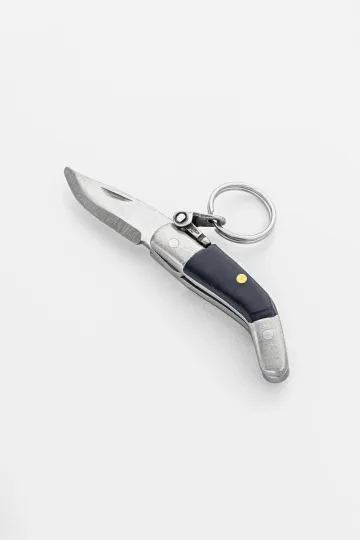
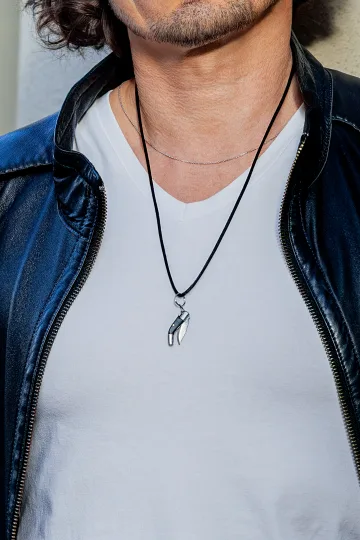
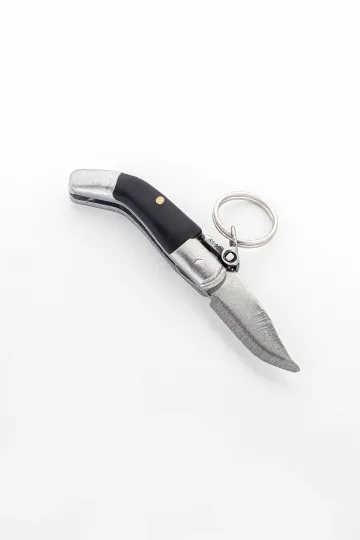
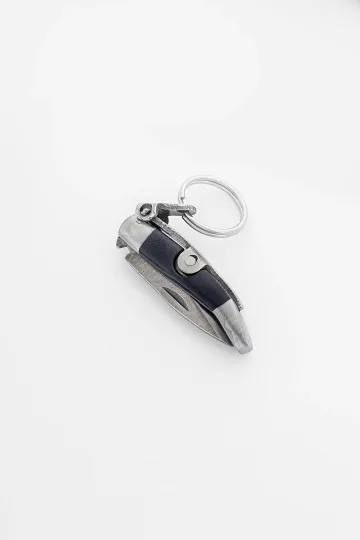
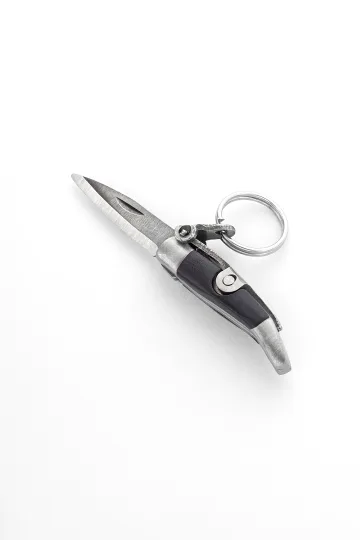
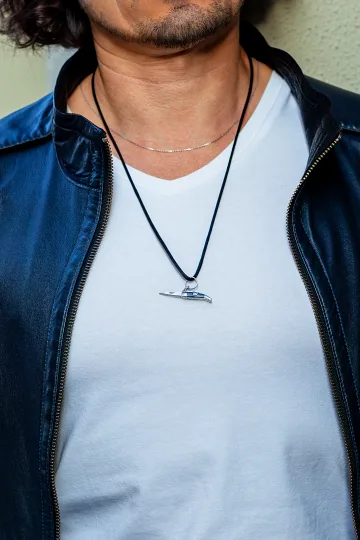
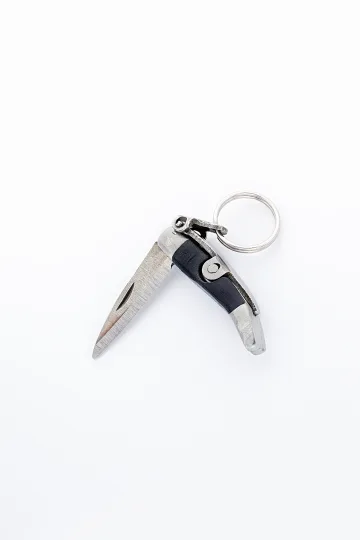
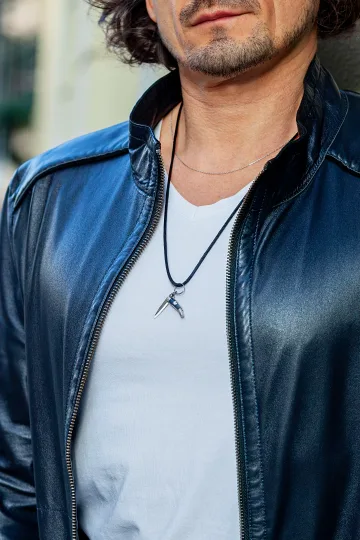
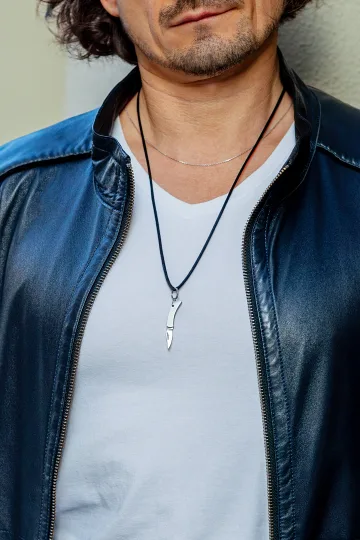
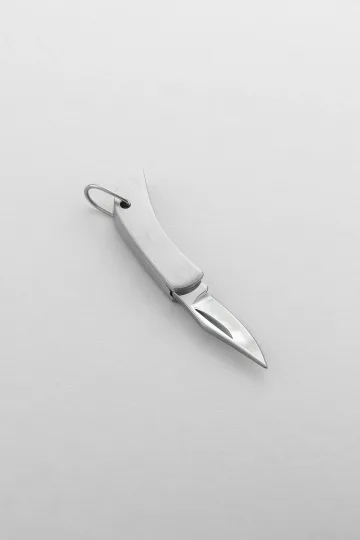
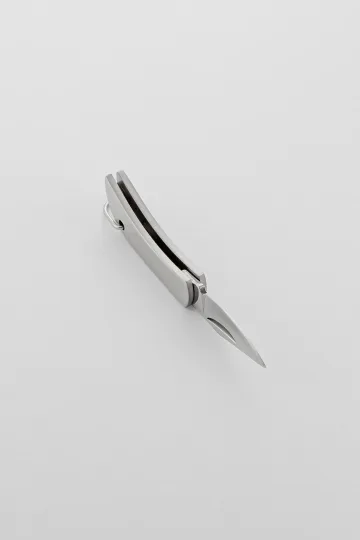
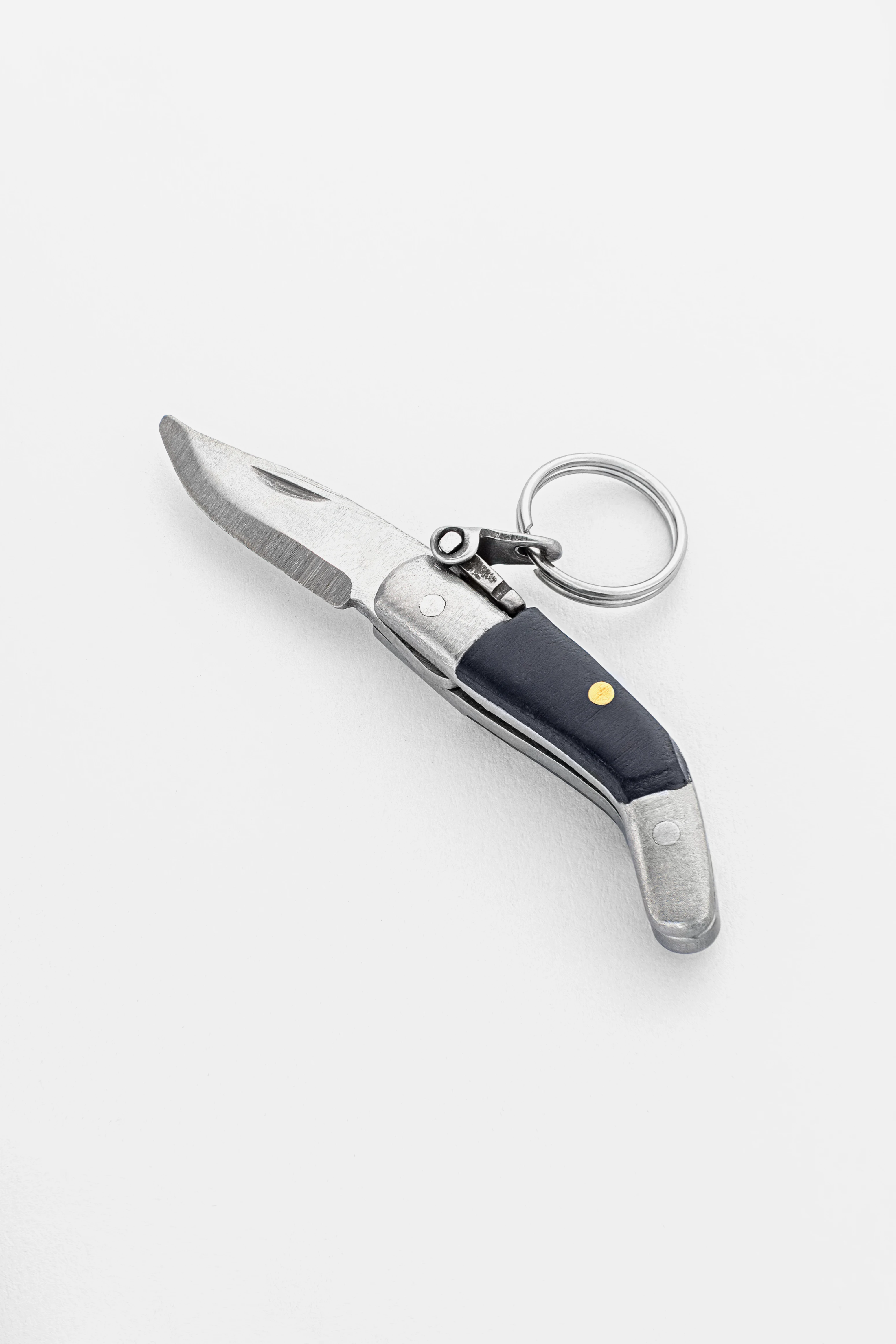
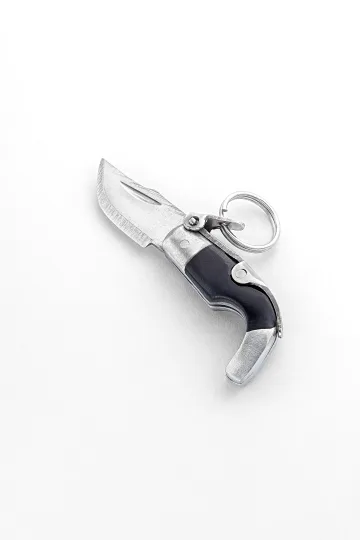
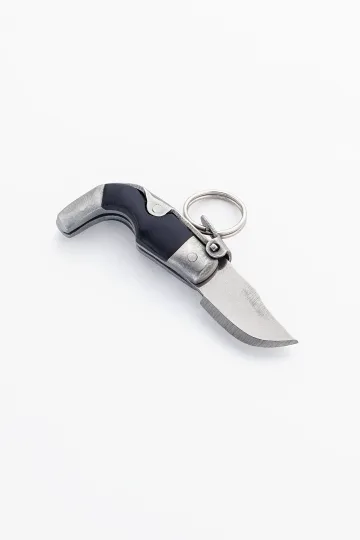
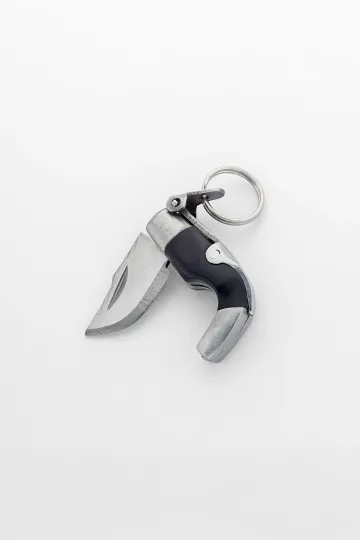
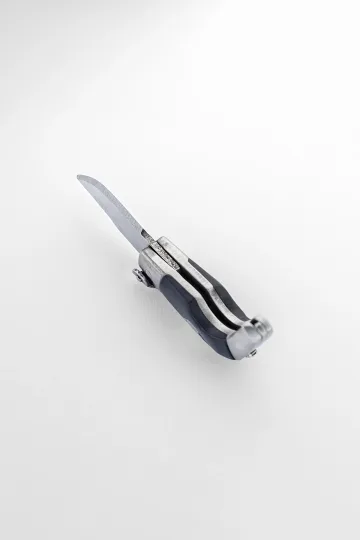
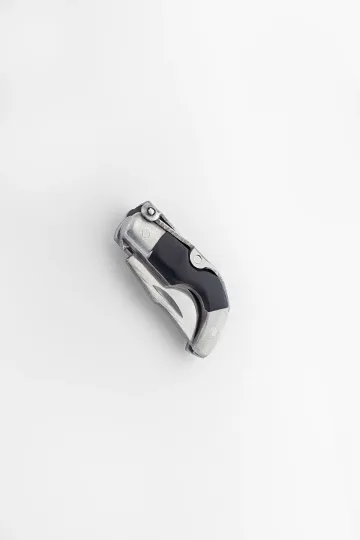
CAPAORA mini knife pendant
The 18th-century Spanish navaja in miniature: 40 mm of stainless steel, a real folding mechanism and a Palanquilla lock that clicks. An affordable gift to remember.
Authentic · Ships from Spain · 14-day returns
Antipattern: Neglecting Back
Many engrave front and forget back. Back of bar offers second surface for related info: front gets name, back gets date or coordinates. This duality enriches piece without overloading front.
Example: front "Maria", back "15.04.1989" (birth date). Front "coordinates place", back "Coordinates self on date found".
Engraving Technologies on a Thin Surface
Engraving determines both the durability of a bar and the character of its text. On a thin flat surface a handful of technologies are in real use, and each has its own strengths and its own proper occasion.
Fibre Laser
The modern industrial standard for metals. The laser produces a fine, high-intensity beam that vaporises metal from the surface of the bar, forming a recess of precise geometry. Depth is controlled by power and by the number of passes, from a surface mark of around five microns to a deep cut of 100 to 120 microns.
What it gives you. Crisp lettering at any size from 0.5 mm upwards. Reproduction of a digital file to within about 25 microns, which means the proof you approve on screen is the thing you receive. Speed: a standard 25 mm bar is engraved in two to five minutes.
What it does not give you. Tactile depth that a fingertip can read while stroking the bar, which needs a burin. Calligraphic lettering with the stroke weight changing inside a single letter, since a laser cuts evenly while a hand plays with pressure. And the living irregularity of handwork.
When to choose it. Coordinates, dates, names of moderate length, monospaced faces, and anything generated digitally such as a waveform, a mountain profile or a code. This is the right answer for the great majority of bar necklaces.
Surface Marking Laser
A laser that does not remove metal but induces a chemical change in the top layer: oxidation, a shift in colour, the formation of a film. The result is a dark or pale trace on the surface with no recess at all.
What it gives you. Very low cost and very high speed. It handles complex images, fine patterns and photographic halftones at high resolution. On pale steel it produces a clean black mark.
What it does not give you. Longevity. Surface marking wears away within three to five years of active wear, particularly where the piece rubs against clothing. A bar necklace spends the whole day in contact with the fabric of a blouse or a shirt, which is the worst possible case for a mark with no depth. On gold it performs poorly in any event.
When to choose it. When the budget is minimal and the piece is expected to last two or three years, a first necklace for a teenager who will want something different by the time they are twenty. For a piece meant to be kept, it is the wrong tool.
Hand Burin
The oldest method. The engraver works a burin, a hardened cutting tool, by hand under a loupe or a microscope, cutting each stroke with a movement of the wrist. The technique runs back through Renaissance goldsmiths to Roman gem-cutters and Greek glyptic work, and the tool itself has barely changed.
What it gives you. A living stroke of varying depth and width that no machine reproduces. Calligraphic faces with hairlines and swelling downstrokes, the English roundhand and copperplate hands that were designed for exactly this kind of cutting. Tactile depth you can feel with a fingertip. And authorship: many engravers put a small mark of their own on the reverse.
What it does not give you. Speed, since one bar takes anywhere from two hours to a full working day depending on complexity. Or economy, since hand engraving multiplies the cost of a piece by a factor of two to four. Or exact repeatability, because two bars from the same hand will always differ slightly, which is either the point or a problem depending on your temperament.
When to choose it. Premium pieces in 18K gold or platinum, objects meant to be inherited, calligraphic lettering, a family crest, a name cut in a formal hand. When time and budget allow, the burin almost always beats the laser on emotional return.
Acid Etching
Chemical engraving, in which acid bites away metal in the areas left open by a resist mask. It is an industrial technique, used for larger lettering, patterns and images.
What it gives you. Complex decorative patterning across a broad surface. Depths of 100 to 200 microns. Consistent results across a production batch.
What it does not give you. Fine precision at small sizes. Below about 2 mm of letter height the edges go ragged, and even at that size they are softer than a laser cut. On a thin bar it also removes a great deal of metal, which works against the structure of the piece.
When to choose it. For a large decorative ground, a pattern or an ornament covering most of the bar. For text, a laser or a burin will serve better.
Diamond Cutting
A method in which the engraved surface is given a fine faceting: each letter or line carries several micro-facets that catch the light. The result is lettering that is recessed and sparkling at the same time.
What it gives you. An additional visual effect on a bar that is already engraved. The text begins to glitter as the wearer moves and draws the eye from a distance.
When to choose it. For a ceremonial piece where the engraving is meant to be visible across a room. On a quiet everyday bar it is more than the object needs, and it works against the restraint that makes the format appealing in the first place.
What to Choose for Which Occasion
Entry segment, an everyday piece. Fibre laser on sterling silver. The best ratio of cost to durability that this format offers.
Mid segment, an everyday piece meant to last decades. Fibre laser on 14K gold, or on good sterling silver with rhodium plating. Expect thirty to fifty years of service with ordinary care.
Premium segment, a piece meant to be inherited. Hand engraving with a burin on 18K gold or 950 platinum. Effectively permanent, and the emotional return is the highest of any option here.
A particular aesthetic brief. Acid etching for a large pattern, diamond cutting for a ceremonial piece, surface marking for complex photographic forms where impermanence is acceptable and understood in advance.
Send a friend a discount code, they save on their first order.
Frequently Asked Questions
Q: Can I add engraving to an existing bar I already own? A: Yes, engraving can be added if there's space. Contact a laser or burr studio. Cost lower than new bar.
Q: How long does laser engraving take? A: Production 1-3 days. Custom orders 5-10 days. Rush service available with premium.
Q: Is hand engraving better than laser? A: Different. Laser is precise, consistent, affordable. Burr (hand) shows master's touch, warmer, takes longer. Choose by budget and aesthetic preference.
Q: Can I engrave on the side of the bar instead of top? A: Yes, creative orientation. Needs custom design and master consultation. Takes longer, costs more.
Q: What if my engraving has a typo? A: Engraving can't be undone. New bar must be ordered. This is why careful proofs matter.
Q: Should I get my child's bar with their birth date or current date? A: Depends. Birth date makes it heirloom from day one. Current date marks the moment of receiving. Both valid, choose by meaning.
Q: Is bar necklace sturdy enough for daily wear? A: Yes, especially if 18k gold or platinum. Silver needs patina management. 14k gold strong enough for constant wear.
Q: Can bar necklace cause skin irritation? A: Rarely. If metal is pure enough (925 silver, 18k+ gold). Surgical steel, platinum, no issues. Some react to nickel-containing alloys, choose nickel-free.
Q: What if I lose a bar from a stack? A: Order replacement bar with same specs. Your notes of dimensions/engravings help. Chains and clasps preserved.
Q: How to keep bar from twisting after wear? A: Use two-attachment system (loops on sides) or special connector. Single-attachment bars more prone to swing.
Q: Is a bar necklace suitable for a wedding, or only for everyday wear? A: Both, and the difference is size and metal. For every day: sterling silver or 14K gold, a bar of 20 to 28 mm, a chain of 42 to 45 cm, a neutral typeface. For a wedding: 18K gold or 950 platinum, a wider bar of 30 to 35 mm engraved with the date and the couple's initials, on a box chain of 45 to 50 cm. At the wedding itself the bar can sit alone against an open neckline with no other chains, reading as the single accent. Afterwards it is worn for years alongside the wedding ring, and the two together build a small coherent set of family symbols.
Q: Can the engraving on a finished bar be changed? A: Technically yes, at a cost. The old engraving is ground away, removing 50 to 100 microns of metal from the face, and the new text is cut into the fresh surface. One re-grind takes 100 microns off the thickness, two takes 200, and by the third the bar is noticeably thinner than it began. A 1.5 mm bar reaches about 1.3 mm after two cycles, which is close to the edge of what will hold. If there is any real chance the text will need to change, a partner's name in a new relationship being the obvious case, choose a format that does not depend on the words: a plain bar, or one carrying a symbol not attached to any particular person.
Q: How many children's names fit on one bar? A: On a standard 25 mm bar at 2 mm letter height, one name of up to about eight characters sits comfortably, or two very short names of up to four characters each with a separator between them. Three names already crowd the field and start reading as a run of letters rather than as separate names. With three children or more the format shifts to a stack: one name per bar, two to four bars on chains of different lengths. Every name then gets full-size lettering and the composition stays legible. The section on stacking above goes through the length logic in detail.
Q: What length of bar does a four-letter name need? A: A four-letter name such as Anna, Theo, Mia or Noah sits comfortably on a bar of 18 to 22 mm at 2.5 to 3 mm letter height. Below 18 mm the bar is visually too small for a name and reads as a dash. Above 22 mm the name floats with too much empty metal on either side. The standard 25 mm bar is already slightly generous for four letters: either the name shifts towards one end, or it sits marooned in the middle. If you particularly want the 25 mm length, add a second element, a full stop, a small symbol, or a date in a smaller size, to give the composition a second point of interest.
Q: Burin or laser for a partner's name? A: It depends on the metal and the budget. On sterling silver in the entry segment, a fibre laser covers ninety per cent of cases and gives a result that lasts. On 14K and 18K gold the difference starts to show: the laser cuts evenly, the burin plays with pressure, and a practised eye separates the hand from the machine at a glance. On platinum, hand engraving is close to obligatory for a premium effect, because a laser mark on platinum looks technical while a cut one looks considered. On cost, a laser adds ten to fifteen per cent to the price of a bar, a burin multiplies it by two to four. For a piece intended to last a decade or more, the burin earns its keep. For a few years of daily wear, the laser is the sensible answer.
Q: Is rose gold dated now? A: Rose gold passed its trend peak in the second half of the 2010s and lost momentum afterwards. It has stopped being the default choice for contemporary pieces, but it survives as a deliberate one for people whom the warm tone genuinely suits. On a bar necklace rose gold reads softer than white metal, because the warmth takes some of the hardness out of a rectangle. If the wearer already owns rose gold rings and earrings and has a warm skin tone, adding a bar in the same register makes sense. If the box is mostly silver and white gold, adding rose gold either creates a clash or forces a rebuild of the whole set. Our guide to choosing the colour of gold goes through the comparison properly.
Q: Does a bar necklace work under a roll-neck? A: It does, and this is one of its quieter strengths. A flat bar lies along the body without projecting, so under a roll-neck it is invisible while the wearer knows perfectly well that it is there. The chain usually stays visible at the base of the neck above the collar line, so a thin line of metal reads as an accent while the message itself stays private. People who dislike putting jewellery on display but like feeling it there tend to love this format for exactly that reason. It behaves in the opposite way from a large pendant, which needs an open neckline to make any sense at all.
Q: Can the chain be lengthened if it turns out too short? A: Three ways. The simplest is a separate extender, three to five centimetres of chain with its own fitting, clipped to the loop on the clasp. Most modern lobster clasps have that loop. The second is to have a jeweller splice extra links into the existing chain, which works on open weaves such as cable and anchor but not on a snake chain, where the construction has no separable links. The third is to replace the chain entirely with a longer one. That is the better answer for a piece you intend to wear for years, because the new chain can be matched properly in gauge to the bar and there is no visible join anywhere.
Q: Does a stack of several bars look excessive? A: It depends on the number and on the rest of the outfit. Two bars read as a deliberate minimalist gesture: the wearer has clearly thought about the composition. Three bars start to demand something of the wardrobe around them, and in a strict office dress code with a formal blouse they will look out of place, while with looser clothing or an academic register they sit well. Four or more moves out of minimalism into a bohemian maximalism, which is entirely coherent for someone who already wears layers, long dresses, scarves and cardigans, and entirely wrong for a boardroom. If in doubt, start with two and add the third once you know the format suits you.
Q: What is the difference between a bar and an ordinary horizontal pendant? A: Proportion, and it is a real distinction rather than a naming convention. A bar is long and narrow, with a length-to-width ratio of five to one or greater, and it lies as a line. A pendant has length and width in the same range, a ratio of two to one or less, and it reads as a figure. In practice a bar might be 30 mm long and 3 mm wide, a ratio of ten to one, while a pendant of the same length would be 10 to 15 mm wide. Aesthetically the bar is a minimalist gesture and the pendant is a full object. Engraving on a bar works through the horizontal run of the text; on a pendant it works through composition around a central shape.
Q: Is sterling silver hypoallergenic for sensitive skin? A: Sterling silver contains 7.5 per cent alloy, usually copper, occasionally zinc or nickel. Nickel is the commonest allergen in jewellery alloys, and roughly one European woman in ten is sensitised to it. Most sterling contains no nickel at all, since the alloy is copper based, but cheap unbranded material sometimes does. In the European Union and the United Kingdom the nickel release limit for items in prolonged skin contact is set by regulation, which is one practical reason to buy from a seller who can tell you what is in the alloy. The reliable alternatives are 18K gold, whose palladium and silver alloy is well tolerated, and 950 platinum, which is hypoallergenic by definition. Our guide to nickel allergy in jewellery covers the testing and the labelling.
Q: How do I clean an engraved silver bar without damaging it? A: Three methods, in order of gentleness. First, an impregnated silver cloth from any jeweller: thirty to sixty seconds on each side lifts the tarnish, and it does not touch the engraving because the cloth never reaches into the recesses. Second, warm water with a drop of mild washing-up liquid, a soft toothbrush, a minute of careful work, then a rinse and a dry with a soft cloth. Third, for neglected cases, a bicarbonate solution, a teaspoon to a cup of warm water, for ten to fifteen minutes, then rinse and wipe. Never use abrasives, including bicarbonate made into a paste or tooth powder, because they leave microscratches on the polished field. There is a full method in our article on cleaning gold and silver at home.
Q: How much does a standard bar necklace weigh? A: It depends on metal and dimensions. A standard bar of 25 by 3 by 1.5 mm weighs roughly 0.9 g in sterling silver, 1.1 g in 14K gold, 1.4 g in 18K gold, 1.8 g in 950 platinum and 0.8 g in 316L steel. The chain adds one to three grams depending on weave, gauge and length. Total weight for a standard piece is therefore two to five grams, which is nothing at all on the neck: most people do not register a necklace below about ten grams. Even a premium platinum bar of 35 by 5 by 2 mm on a platinum box chain comes to eight or nine grams in total, still well inside the comfort zone.
Q: Can I wear a bar necklace in the shower and in the sea? A: It depends on the metal. Sterling silver: possible but not advised, since sulphurous water from thermal springs and chlorinated pool water both accelerate tarnishing, and seawater causes surface corrosion. Taken off periodically and cleaned, it survives. Gold at 14K and 18K: yes, gold does not react with water of any salinity, and the only real risk is mechanical, a chain catching while you swim. Platinum: yes, without reservation. 316L steel: yes. PVD coating on black steel: better removed, since repeated contact with salt water wears the coating at the edges. Our guide to wearing jewellery in the shower, pool and sea has the metal-by-metal detail.
Q: Does a bar necklace suit an office dress code? A: It does, and this is one of the strongest arguments for the format. Under a strict code, a bar of 20 to 25 mm in silver, white gold or platinum, engraved with a name or one neutral phrase, reads as a restrained personal gesture. A fine chain of 0.7 to 0.9 mm sits at the base of the neck and draws no attention to itself. Unlike a stone-set pendant, which can read as too much, or a heavy chain, which belongs to a casual register, the bar lands in the neutral zone: personal enough to be visible, quiet enough to stay out of the way. Our guide to jewellery and dress codes sets out the boundaries for different workplaces.
Q: Does a bar necklace work for a man? A: The men's bar exists as a format and works well. The dimensions shift: a bar of 35 to 45 mm long, 4 to 6 mm wide and 2 to 2.5 mm thick, on a chain of 1.2 to 1.5 mm gauge at 50 to 55 cm. Materials are 316L stainless steel, black steel, sterling silver, more rarely gold. Engraving runs to a wife's name, children's names, the coordinates of a first child's birthplace, a wedding date. Stylistically the men's bar sits closer to a military tag than to a delicate women's piece: squarer, more architectural, without decorative refinement. It suits a man who wears jewellery deliberately rather than one who has simply been given some.
Q: If a bar gets bent by accident, can it be straightened? A: Yes, by a jeweller. Sterling silver and 14K gold are ductile alloys and straighten under cold pressure in a press or over a former. A thin bar of 1 to 1.5 mm comes back without a trace; a thick one of 2.5 to 3 mm may need heat. The engraving survives if the deformation was gentle. If the bar was bent sharply, caught on fabric and folded near a right angle, a microcrack can remain along the fold, and the jeweller has to judge whether a solder repair is needed before polishing and, if appropriate, re-plating. Steel bars in 316L are harder to straighten and can crack in the attempt.
Q: What should I engrave if I have no idea what to write? A: A safe list, in order of how universally it works. Your own name, if the piece is for yourself. The name of the person closest to you, if it is a gift. A short word that means something to you: home, north, light, still. The date of a day that mattered. One word in a language you love. If none of those produces any feeling at all, put the decision aside for a few weeks. The right engraving arrives on its own, at the moment you realise you would be happy to see those letters for the rest of your life. There is no hurry: a blank bar waits far better than a badly engraved one.
Q: Does a bar necklace suit a man who already wears a wedding ring? A: It does, and the two do not compete. The ring is a public symbol of status; the bar is a private sign under a shirt. Plenty of men wear a bar with a wife's or a child's name where nobody else sees it, which is the same sentiment as the ring turned inward. On metals, match where you can: a yellow gold ring pairs with a yellow gold bar, platinum or white gold with the same. Steel with gold, or silver with gold, also works if the mix is clearly deliberate rather than accidental.
Q: How do I choose a workshop to make it? A: We deliberately name no manufacturers, because that choice needs your own inspection and any direct comparison is out of date within a couple of years. The criteria that matter: a stated alloy specification, particularly for sterling silver; a proper hallmark, which in the United Kingdom means an Assay Office mark from London, Birmingham, Sheffield or Edinburgh on anything above the weight threshold; written terms covering guarantee and after-sales service; genuine bespoke engraving from your own artwork rather than a template library; a working hand engraver on the premises if you want burin work; and reviews with photographs of client pieces after five years or more of wear. A small workshop with a decade of history often beats a large brand, because the maker knows every piece they have produced and a repair twenty years later is a real prospect rather than a hypothetical one.
Conclusion
A bar necklace is a meditation on simplicity. In an era of information overload, it offers a form that says as little as possible, but what it says counts. A single name, a date, a coordinate, a word, each carries weight without decoration.
The bar necklace works because it respects the wearer's attention. It doesn't shout. It doesn't compete with face or clothing. It sits quietly on collarbones and waits for someone to bend close to read it. This is the opposite of status signals. This is privacy in public.
A well-chosen bar becomes almost invisible after weeks of wear. You forget it's there. And then, at some moment, light catching it, a hand raised, someone asking what it says, you remember why you chose those letters. And it matters again.
That quiet strength is what separates a bar from an ordinary pendant. It is a wearable memory that respects your intelligence and your solitude.
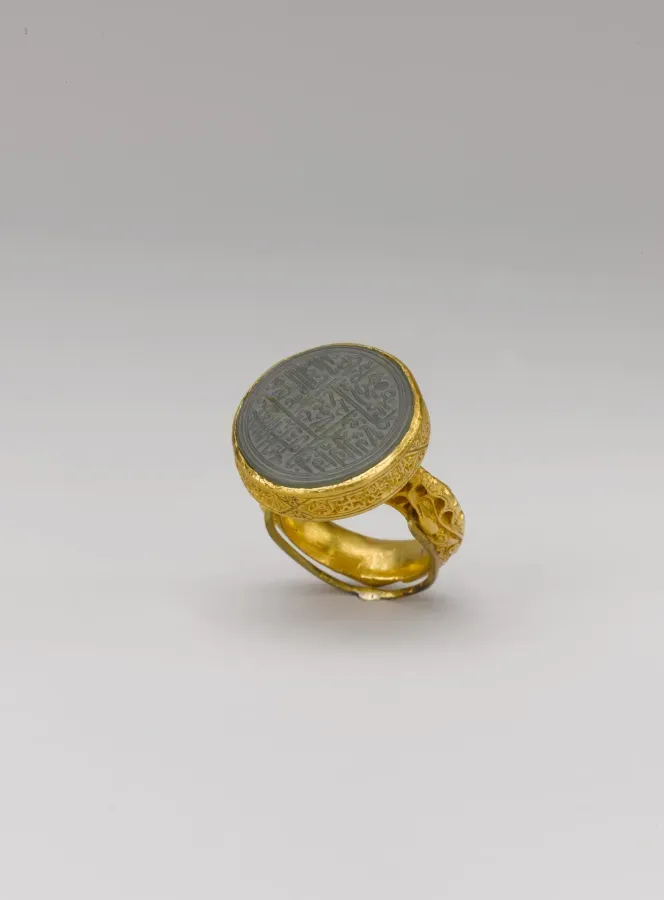
There is a real difference here from every other engraved piece. Inside a wedding ring the engraving is hidden and appears only when the ring comes off. On a locket it usually sits on the back, against the skin, invisible to the world. On a signet the engraving was once functional, an impression in wax, and is now largely ceremonial. Only on a bar does the engraving live on the front face, in plain view every time the wearer looks down. That is the particular character of the format: a private sign that is read daily, by one person, without ceremony.
The format is unusually universal. It works for a woman of sixteen and a woman of eighty, in a wardrobe that runs to strict tailoring or to loose bohemian layers, and across every segment from plain sterling silver to platinum. What it will not survive is an engraving with no meaning behind it. Without meaning the bar becomes a blank strip of metal that happens to have letters on it. With meaning it becomes a small, steady act of self-recognition.
One test is worth running before you order. Picture yourself wearing this bar every day for ten years. If the engraving still means something at the end of that decade, the choice is right. If it might date, because it belongs to a trend, a new relationship or a passing mood, think again. A bar necklace is not a piece for a season. It is a piece for a period of a life, and the period should be long enough to justify a daily reminder of itself.
Buying it as a gift? Each one arrives ready to give.
 A branded Zevira box and a little card come with every order.
About Zevira
Zevira is a Spanish jewellery house based in Albacete, a town whose metalworking tradition goes back centuries. Our range covers minimalist engraved pieces, bespoke commissions engraved by laser or by burin, and the reworking of family jewellery into new forms. We ship internationally with insurance and work with clients across Europe and further afield. Every piece is checked for alloy specification and comes with its documentation and hallmark.
For a bar necklace the practical starting points are these. Standard lengths of 22, 25 and 30 mm cover most requirements, with a wider 35 mm option for a ceremonial piece. Sterling silver, 14K and 18K gold. If you have a specific scenario in mind, a name, a date, a set of coordinates, a line of text, or a stack built around a family, tell us and we will work through the typeface, the size, the metal and the fineness, and agree the artwork with you before anything is cut. Reworking is possible too: the gold of a grandmother's ring can become a bar necklace for the next generation, carrying a granddaughter's name.
Silver, gold, engagement rings, symbolic jewellery, paired sets.