Riviera Necklace: Unbroken Line of Diamonds at the Throat
Riviera is tennis bracelet on the neck. The same principle of continuous line of identical stones, only three times more expensive due to labour volume and ten times more visible. The main jewel of 18th-century royal visits and 21st-century inauguration gowns. Below we break it down by facts: history, anatomy, stones, investment potential, antipatterns.
What is a Riviera and Why the French Word Became a Term
The word rivière in French means "river." When in 18th-century Versailles jewellers assembled necklaces from an unbroken line of identical precious stones, the necklace's outline literally reproduced the flow of water in which individual drops are indistinguishable from one another. Stones of one size, one cut, one colour, set tightly, without gaps, without inlays, without pendants. A line without interruptions. This is how the term bijou de rivière, or river jewel, appeared in jewellery inventory catalogues of that period.
The term entered the English language through diplomatic links between the English and French courts. By the early 19th century, the word appeared in London auction catalogues and descriptions of royal collections without translation, because no exact English equivalent existed. Today, riviera in the international jewellery vocabulary has a single meaning: an unbroken row of identical precious stones, usually diamonds, running the full length of the necklace.
Wear the symbol, don't just read about it. These are in stock:








An important definition that separates riviera from similar necklace types. A necklace is considered riviera if three conditions are met simultaneously. First: stones run in an unbroken line from clasp to clasp, without decorative gaps and without pendant drops. Second: stone size is identical or graduates smoothly from the centre to the ends, without sharp transitions and without individual elements being enlarged. Third: each stone is set in an individual mounting, connected to its neighbours through flexible hinges, allowing the necklace to lie along the line of the throat.
If a necklace features a central large stone or pendant, it is no longer riviera but a classic solitaire necklace with a strand. If stones are alternated with chain links, it is a tennis chain or tennis necklace variation, related to the tennis bracelet. If the line alternates stones of different cuts or sizes, it is a cocktail necklace. Pure riviera looks like a waterfall of identical drops, without highlighted spots.
The canonical format is princess length, 41 to 46 centimetres, lying at the base of the neck at the level of the collarbones. This is the length that makes the jewel visible with a dress with a neckline and with a suit with an open collar. Shorter choker versions (35-38 centimetres) sit high on the throat, and longer matinee lengths (50-60 centimetres) drop to the chest. But in eight out of ten cases, when people say "riviera," they mean precisely princess length.
Read more about necklace lengths and their names in our guide on neck chain length.
History: From Versailles to 21st-Century Inauguration Gowns
The history of riviera is the history of a jewellery canon that survived three revolutions and six shifts in fashion, remaining recognisable. Here what matters is not individual designer names but the epochs and techniques that made the jewel possible.
Versailles in the 18th Century: 1200 Diamonds and One Task
The first documented riviere appeared in France in the second half of the 18th century. The court of Louis XV and then Louis XVI introduced fashion for jewellery where the brilliance of the stone mattered more than the ingenuity of the setting. Diamond-cutting technology had by then reached the old European cut of 58 facets, which gave bright play even in candlelight. Jewellers began assembling necklaces from identical round diamonds set in silver mountings with gold backs (this was done so the whiteness of the metal on the front emphasised the cold brilliance of the stone).
The most famous riviera of the 18th century was never completed. From 1772-1785, Paris jewellers Bömer and Bassange assembled a necklace of 647 diamonds weighing about 2800 carats for Madame Du Barry, favourite of Louis XV. After the king's death and Du Barry's disgrace, the necklace remained with the craftsmen without a buyer. In 1785, the notorious "necklace affair" began, which became one of the triggers of the French Revolution: the schemer Countess de La Motte convinced Cardinal de Rohan that Queen Marie-Antoinette wanted to buy this necklace secretly, forcing him to act as intermediary. When the deception was exposed, a scandal erupted, damaging Marie-Antoinette's reputation, though she was actually uninvolved in the affair. The necklace was disassembled into individual stones and sold in London in pieces.
The figure of 1200 stones often cited in connection with this story refers not to one necklace but to all the jewellery commissioned from the same jewellery house for Du Barry. The actual riviera for Du Barry had 647 stones in its final form. This history reveals another characteristic of riviera: it was assembled over years, because finding a large number of diamonds identical in size and colour in the 18th century was a task for years of searching. One stone might wait for its neighbours in the line for several years.
English Crown in the 19th Century: Queen Victoria and Her Rivières
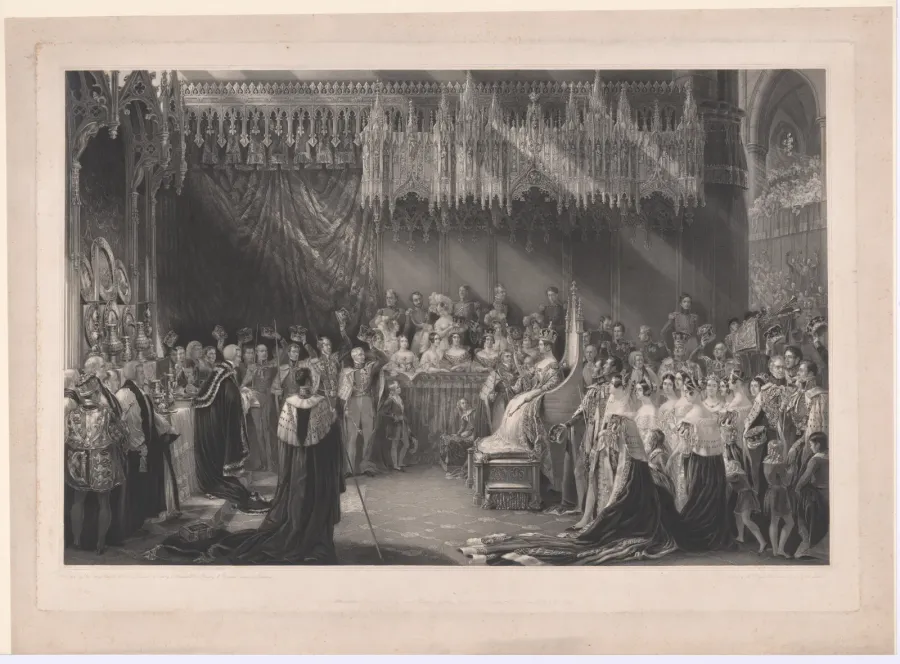
In the 19th century, the centre of riviera production shifted from Paris to London. The English crown inherited diamonds from colonial reserves, including Indian stones of old cuts, and Queen Victoria made diamond jewellery part of the official court code. Her personal collection inventories mention several rivières: one of 36 large diamonds given to her in 1858 as a wedding gift for her eldest daughter, another of 47 stones, assembled after Prince Albert's death from stones included in his personal gifts.
Victorian setting technique for riviera differed from the French. The English used cluster prong setting, in which each stone is held by four or six metal prongs that open it maximally. This gave more brilliance than the French silver collar. Stones looked larger and brighter. The price for this effect was that prongs could break with impact, and owners had to show their jeweller the necklace after each major outing.
The Victorian era also established the custom of wearing riviera with a tiara. At official receptions, the queen wore necklaces of large diamonds at the same time as diadems of smaller stones, and the brilliance of this combination became the calling card of the English court of that period.
Edwardian Technique: Platinum and Millegrain
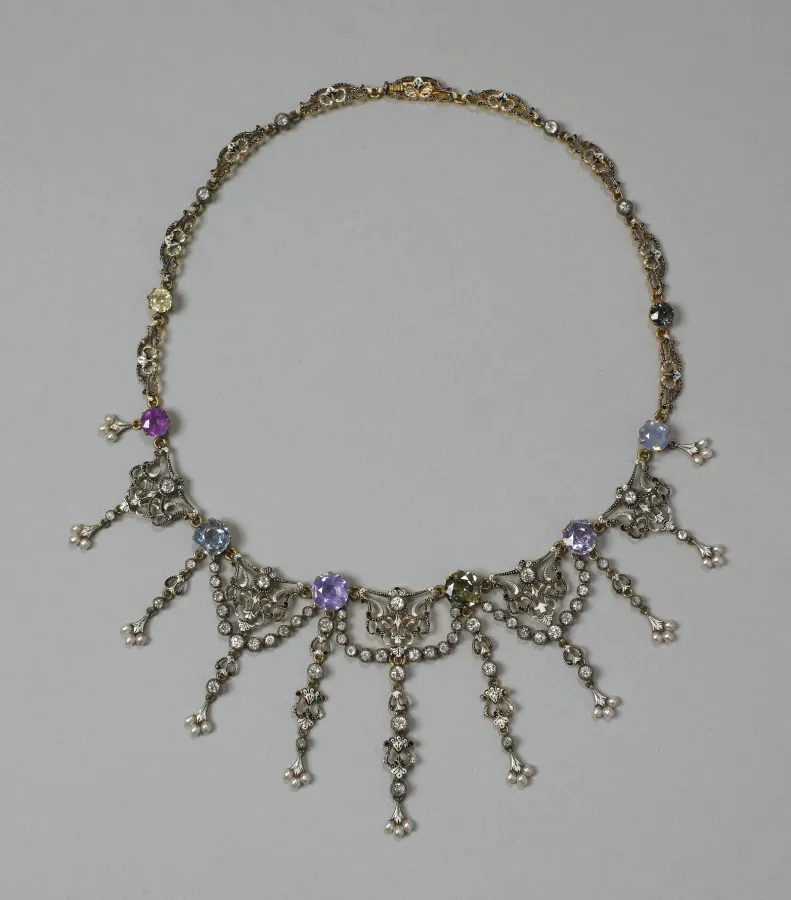
In 1900-1915, platinum became fashionable. Until this time, platinum was considered too difficult to work and hard for jewellery work. Technological progress of the early 20th century allowed casting and processing of platinum details on a small scale, and several European houses immediately began using it for rivières.
Platinum has two advantages for diamond jewellery. First: it is whiter than white gold and does not yellow the vicinity of a cold stone. Second: it is one and a half times stronger than gold, allowing the setting to be thinner while maintaining reliability, and the stone is visually freed from the metal. Edwardian riviera looks like a line of stones where metal is almost invisible: thin platinum prongs merge with transitions between facets.
At this time appeared the millegrain technique, or "thousand grains." Along the edge of the setting, the jeweller would run a miniature wheel, leaving a row of microscopic dots. This decoration gave the setting's rim a texture that caught light in addition to the stone. Edwardian rivières with millegrain are easily recognised by this feature on the side contour: it looks like lace trimming between stone and metal.
Art Deco 1920s: Geometry and Platinum Ribbons
After World War I and the crisis of aristocracy, large rivière commissions came not from courts but from private collectors of the new bourgeoisie. The Art Deco aesthetic of 1920-1935 brought geometric motifs to riviera: stones began to be set in platinum ribbons with ornaments of baguette diamonds alternating with round ones. Rivières of square princess-cut stones appeared, emerald cuts, asymmetric compositions.
Paradoxically, it was in Art Deco that riviera briefly stopped being pure riviera. Many necklaces of that period have a central accent pendant or graduated stone size with sharp transitions. This is why collectors distinguish between "Art Deco necklaces in riviera style" and actual riviera: the former belongs to Art Deco, the latter to classic style of any era.
Post-War Parisian Houses of the 1950s
After World War II, 1950s Parisian houses (whose names are now familiar from windows on Place Vendôme) returned riviera to its original, Versailles appearance. Mainly because post-war collectors wanted timeless classics rather than the 1920s geometry burdened with associations of crisis. Platinum riviera of princess length with round diamonds of one carat each became the image of riviera that is reproduced today in high jewellery catalogues in all variations.
This same era also established an informal standard: the number of stones in riviera corresponds to the neck length of the wearer. A 41-centimetre necklace usually carries 30-40 one-carat stones, a 46-centimetre necklace 35-50 stones. If stones are smaller (0.5 carats each), the same length accommodates 60-80. This is mathematics that has not changed since the 18th century.
21st-Century Inauguration Gowns
In the 21st century, riviera returned to public view through the wives of political leaders. At the inauguration of the U.S. President in 2017, the President's wife appeared in a platinum riviera with round diamonds, which the press estimated at 75 carats total. At the inauguration of the French President that same year, an invited royal guest wore a sapphire riviera of 28 Royal Blue stones. These appearances returned riviera to the category of jewels seen by millions of viewers simultaneously, updating its status as a canon.
What is important to understand: riviera is not for everyday wear. This is jewellery for "major occasions." It is worn to inaugurations, state dinners, wedding ceremonies, opera premieres, in the rarest cases to top-level corporate receptions. In the jewel box of the owner, such a necklace is usually one, and it accompanies her for decades.
Read more about diamonds as a stone in our guide on diamond 4Cs: carat, cut, colour, clarity.
Customer reviews
Zevira is a real jewellery shop. Genuine payments, deliveries and customer thank-yous.
🥰🥰🥰 gracias
Ok, ¡gracias! 🙂
A riviera leaves the safe ten times a year, and never for jeans. This is for a grand entrance, not a coffee run, and I won't hear otherwise.
How to Wear a Riviera
Across years of shoots and formal appearances the riviera has passed through dozens of looks with me. Here is what actually holds up, sorted by occasion and by neckline.
What dress does it even go with? I recommend a matte, dense fabric in a deep dark colour: black, wine, emerald. Shiny silk and sequins I suggest you retire, they fight the stones for light and both lose. The riviera wants a smooth backdrop where the line of stones reads as the only jewel in the frame. A V-neck opens the area below the collarbone exactly where the necklace sits best.
Which length for my neckline? Classic princess, 41 to 46 cm, I suggest for an open collar and décolletage: the necklace settles at the base of the neck and shows in full. Under a high closed collar I choose a shorter choker so the line does not drown in fabric. The rule is simple: choose the length for the neckline, not the other way round. If in doubt, try two lengths in the mirror and see where the stones land on bare skin.
What do I pair it with so I don't overload? Nothing large. I recommend stud earrings with a single stone of the same cold brilliance and stopping there. Bracelets, a second chain and chunky rings I suggest you take off: the riviera owns the whole neck and décolletage, there is nothing to add. One strong piece per zone of the body, the rest stays quiet.
Which metal for my skin? For a cool undertone I choose platinum or white gold: they do not yellow next to a diamond and hold that icy line. A warm undertone I suggest pairs with yellow gold or a warm stone, sapphire or ruby, where the setting works for colour. With a sapphire or emerald riviera I take a dress in a complementary tone so the stone's colour echoes the look instead of dying on it.
Can I wear it every day? I would not. The riviera gains its power from rare outings: inauguration, wedding, premiere, a grand reception. With jeans and a tee it reads as an accident, not a statement. For everyday I recommend a tennis bracelet or a thin chain with a single pendant, and let the necklace wait for its event. That way every appearance of it is noticed.

Turn on your camera, pick earrings, a pendant or a ring, and see the piece on yourself in real time.
Switch items in one tap.
Everything runs in your browser: no photo or video is ever uploaded.
Anatomy of Riviera: What You Buy in Grams and Carats
Before discussing stones, it is worth breaking down the structure of the piece. Understanding the construction directly affects the assessment when buying and when reselling.
Number of Stones
Standard range 15-100 stones. The specific number depends on two variables: the size of each stone and the length of the necklace. At one carat per stone and princess length of 41-46 centimetres, a necklace carries 30-50 stones. At half-carat stones in the same length, 60-80 fit. At 0.25-carat stones and smaller, you can reach 100-120.
The larger the individual stone, the more expensive the riviera per carat of total weight. This is the basic law of the diamond market: one stone weighing 1 carat costs significantly more than two stones of 0.5 carats each, of the same quality. Accordingly, a riviera of 30 large stones and a riviera of 80 small stones with the same total weight will cost differently, sometimes two to three times apart.
Individual Stone Size
Typical range 0.25-2.0 carats per stone. The most common middle ground: one carat as the standard of a classical princess riviera. Stones larger than 2 carats in riviera are rare, because assembling 30-40 identical stones of such size is a task of years of searching with astronomical cost.
When choosing size, it is important to consider proportionality with neck circumference. For necks up to 32 centimetres circumference (standard female size), optimal stone is 0.75-1.0 carats: visible but not disrupting facial proportions. For a large neck or teenage riviera (if this happens, usually as a heirloom), it is reasonable to shift towards 0.5 carats. For a formal riviera for an inaugural reception, stones can start at 1.5 carats and above.
Length
Princess length of 16-18 inches (41-46 centimetres) is classic. This is the length at which the necklace lies at the base of the neck and when emerging from the dress neckline is seen in full. If the neck is long, princess sits slightly below the collarbones, which is considered appropriate. If the neck is short, princess sits right at the collarbone, which also works.
Choker length of 14-15 inches (35-38 centimetres) is found in Victorian rivières and in modern ultra-formal pieces. Sits high, pressed closely to the throat. Suitable for V-necks and deep décolletés. Not suitable if the wearer has neck features (moles, scars, removed thyroid) she does not want to emphasise.
Matinee length of 20-24 inches (50-60 centimetres) is rarer, belonging to more evening and theatrical looks. Drops onto the top of the chest. Suitable for dresses with high collars, under which only the lower part of the necklace is visible.
Stone Setting
Three main types.
Cluster prong (prong setting) is the most common. Each stone is held by 4 or 6 metal prongs. Stone openness is maximum, brilliance too. Minus: prongs wear and can bend with impact, eventually leading to stone loss. Regular checking is mandatory.
Channel setting: stones lie in a groove between two metal borders. No prongs outside, borders hold the stone from above at the edges. This setting is more reliable than prong and more resistant to impact. Minus: stone brilliance is slightly less because part of the side facets are covered by metal.
Bezel (full bezel) setting: the stone is completely surrounded by a metal rim. The most reliable setting of all. Minus: the stone visually appears smaller because part of its perimeter is hidden by the setting. In classical riviera it is rare, more common in modern interpretations.
Clasp
Box clasp with double safety is standard for rivières. Inside the box-shaped body lies a spring plate that fixes the clasp tongue. Double safety means there is a safety loop clasp on top of the main one. This is critically important for expensive necklace: one clasp malfunction should not lead to loss of the jewel.
In some upper-segment rivières, a figure-8 safety clasp is used, an additional clip in the shape of a figure eight that enters the main clasp and is held by friction. This is a third safeguard on top of the first two. For a necklace in which capital is invested, such reliability is justified.
Read more about jewellery metals in our guide on hallmarks and assay marks 925, 585, 750.
Upload a photo of your pet, someone you love, or an object. We'll build a 3D model and hand-cast it in pewter.



Stones in Riviera: What Goes in Line and Why
Riviera can be assembled from any precious stones of identical size and quality. But in practice, the market is divided into several stable categories, each with its own selection logic.
Diamonds: Canon and Standard
Classic. Diamond riviera is what is meant by default when one says "riviera" without clarification. Standard parameters for a classical investment riviera: colour F-G (colourless), clarity VS1-VS2 (inclusions not visible to the naked eye), cut Excellent (ideal light play), individual stone weight 0.75-1.5 carats.
Colour F-G is chosen as a compromise between colourlessness (D, E, F) and availability. D-E stones are 30-50% more expensive at the same mass, but the colour difference between F and D is not visible to the naked eye on stones of this size. For riviera it is more important that all stones in the line be the same colour than for the colour to be maximally high. A line of 40 identical F-G stones looks more uniform than a mixed line of D, E, F.
Clarity VS1-VS2 follows the same logic. Stones above (FL, IF, VVS) are more expensive, but inclusions in VS stones are not visible under a ten-times magnifying loupe to an inattentive eye, and in jewellery at half a metre from the viewer they are not visible at all. It is financially disadvantageous to pay for VVS in riviera.
Excellent cut (by GIA scale) is a necessary condition. Riviera is jewellery built on light play. A poorly cut stone in the line is immediately read as "dull" among its neighbours. If budget is limited, it is more sensible to buy a riviera with fewer stones of better cut than many stones of mediocre cut.
Sapphires
Sapphire riviera is less common but has its collectors. The main technical task is to gather stones of one shade. Sapphire has a range from blue to light blue, from deep ink to pastel. Top colour Royal Blue (deep saturated blue with a light velvety note) is simultaneously the most expensive and most difficult to match in quantities of 30-40 stones. One Royal Blue stone can be found. Forty stones of identical shade is a years-long project.
Alternative Cornflower Blue (lighter, periwinkle) and Velvet Blue (with purple undertone). These shades are slightly more accessible and easier to match in line. Modern sapphire rivières are often made from Ceylonese sapphires (Sri Lanka), which have even colour and relatively stable parameters in large batches.
Sapphire riviera is more complex as an investment than diamond riviera. The sapphire market is less liquid, pricing depends on origin (Burmese stones are valued higher than Ceylonese in the same category), and it takes longer to find a buyer on resale than for diamond riviera. Aesthetically such a riviera is stronger: colour on the throat works in one gamut with eye colour or dress colour, which is impossible for diamonds.
Rubies
Ruby riviera is even rarer. The main difficulty: even "pigeon blood" colour (Pigeon Blood, saturated red with a light blue note) in large sizes is rare. Most rubies in nature carry noticeable inclusions and uneven colour. Assembling 30 stones of identical ruby colour is a task of magnitude where fewer than a dozen projects exist in the world per decade.
Visually, ruby riviera produces the maximum effect on the red carpet and with dark clothing. The contrast of red on skin is higher than that of blue or white, making ruby riviera the most "noticeable" in a photo. Price is appropriate: a high-quality ruby riviera falls into the auction jewellery category rather than store stock.
Emeralds
Emeralds in riviera occur but with caveats. Emerald is a fragile stone with internal inclusions in practically all known specimens (the so-called "garden" of the emerald, jardin). When set in prongs, emerald is sensitive to point pressure, and a careless impact can crack the stone along a plane of inclusion.
If an emerald riviera is made, only channel or bezel setting is used, which distributes load around the entire stone circumference. Stones are selected from Colombian (brightest green, Muzo Green colour) or Zambian (cooler green with a bluish note). A riviera of emeralds looks unique but is jewellery for rare occasions, not for active wear.
Mixed Colour Stones: Rainbow Riviera
Modern trend that appeared in the 2010s. A riviera in which stones follow a rainbow colour sequence: ruby, orange sapphire, citrine or yellow sapphire, emerald, blue sapphire, amethyst, pink sapphire. All stones must be cut identically and of comparable size.
Rainbow riviera is not classic and is not quoted in the investment category. This is jewellery for one owner's collection, assembled to custom order and sold rarely. Nevertheless, it is a legitimate format variation, and the market accepts it as "contemporary riviera."
Lab-Grown Diamonds
A separate category requiring direct discussion. Lab-grown diamonds have exactly the same physical and optical properties as natural ones: the same carbon, the same crystal lattice, the same brilliance, the same hardness. Indistinguishable to the eye and under a gemologist's loupe with standard checking. The difference is revealed only by special equipment based on microscopic peculiarities of crystal growth.
Lab-grown diamond price is significantly lower than natural with the same 4C parameters. Lab-grown diamonds of one carat of good quality cost three to four times less than the natural equivalent. This makes lab-grown riviera more financially accessible.
But there is an important nuance affecting decision-making. Lab-grown diamond costs fall every year as production becomes cheaper. A stone bought today will be worth even less on the wholesale market in a few years. This is normal for jewellery bought for beauty and worn. It is unacceptable for jewellery bought as an asset.
Lab-grown riviera is a reasonable choice if the decision is made consciously: the goal is maximum brilliant jewellery on a moderate budget, investment motive is absent, future resale is not planned or planned at symbolic price. Natural riviera is a reasonable choice if there is desire to combine aesthetics with long-term financial aspect. Mixing these two scenarios in one purchase does not work: they have opposite selection logic.
Comparison of lab-grown and natural stones is covered in detail in the guide Moissanite vs Lab-Grown Diamond.




Five Cases: When Riviera is Appropriate
Riviera is jewellery for specific events. Away from an event, it looks excessive. Below are five scenarios where it works naturally.
Bride for Wedding as Something Blue
English wedding tradition requires the bride to have something blue. Usually it is a small ribbon under the dress or a brooch on the bouquet. A sapphire riviera solves this task with different scale: the blue becomes the focus of the look, not a hidden symbol.
Parameters for this case. Ceylonese Cornflower Blue or Velvet Blue (Royal Blue is too dark for a wedding dress). Length princess or shorter (choker) so the necklace reads with a V-neck or bare shoulders. Individual stone weight 0.5-0.75 carats (not larger so as not to overload the bride's look). Setting platinum or white gold, not yellow (warm metal does not work with blue-white palette).
The case works if the wedding is "grand style" format: country residence, classical cathedral, banquet for one hundred or more guests. For forest or beach wedding, riviera is unsuitable in tone. For city registration with dinner for twenty people, it is disproportionate.
Wife for 25 Years: Diamond Princess Length
The twenty-fifth wedding anniversary is traditionally marked with silver but in the premium segment has shifted to diamonds as a sign of "the path travelled." Diamond riviera in this case works symbolically: an unbroken line of identical stones is a metaphor for relationship continuity. This image works without explanation, and the owner understands it immediately.
Parameters. Natural diamonds F-G, VS1-VS2, Excellent cut, 1 carat each, princess length 41-43 centimetres (exactly to the wearer's neck length, measured beforehand). Platinum or white gold 750. Number of stones 35-40. GIA certificates on major positions (not all small stones, this is unrealistic, but on specimen quality).
The case works as a material symbol of long-term relationship and simultaneously as an asset that will remain in the family. In thirty years such a necklace will pass to the next generation, and its preservation does not depend on fashion.
Mother for 75 Years: Inherited Riviera in New Setting
If the family keeps an old riviera (from mother-in-law, grandmother, aunt), it can be remade for the mother's jubilee. The most common scenario: stones are preserved, metal is replaced. An old setting of high-assay gold or platinum 950 after half a century of wear is worn, prongs may be bent, clasp weakened. Modern remounting returns reliability to the jewel and adapts the length for contemporary wardrobe.
Remounting parameters. A gemologist takes the old necklace, re-writes all stones with size and estimated quality indications, preserves stones in the craftsman's work. The new setting repeats the original canon (if riviera was princess, it remains princess) or is adapted per preferences (shorten to choker, lengthen to matinee). The clasp is set to a modern one with double safety. All stages are photographed and documented.
The emotional aspect of the case is more important than the technical. When mother receives a riviera whose diamonds remember her mother-in-law or mother, this is a combination of three generations in one thing. A gift of this level reads as "you are part of family history," which for a seventy-fifth birthday is a strong message.
Read more about remaking inherited jewellery in our article how to remake grandmother's ring.
To Herself for the Deal of the Century
A scenario entering common practice in 2010-2020s. A woman closing a major deal (company sale, successful IPO, large fee, favourable inheritance distribution) buys herself a riviera as a symbol of the result. This is not a gift, this is a material marker of a stage.
Parameters are chosen for herself. The cut is one the owner likes, not the one that is "correct." If a woman loves round brilliant diamonds, round are chosen. If she prefers emerald cut, riviera is assembled from emerald cuts. Length and number of stones are matched to figure, height, typical looks for this woman. No compromises to others' expectations.
This case is also important financially. Buying a riviera for herself at the peak of career, a woman creates an asset that will be with her for the next decades. In fifteen years on the horizon, when career highs are behind, the riviera remains a reminder of the moment when the choice was free. This works psychologically too: wearing such a thing returns you to the moment of success each time the necklace is on the neck.
Wife of Company President to Inauguration Reception
A scenario of public images. When a husband becomes head of a public company or is appointed to a political position, his wife becomes part of official protocol receptions. At such events her look is photographed and hits the press, and it indirectly affects the image of the institution.
Riviera here works as a uniform of the highest segment. It does not highlight the wearer as "fashion-conscious," it integrates her into the canon. This is important because at an official reception the primary fact is belonging to the canon itself, and individuality remains in clothing and manner.
Parameters. Platinum diamond riviera princess length, classical round stones 1 carat each, without modern interpretations. No rainbow variations, no asymmetries. Pure classic, which any world-level photographer recognises. This is a thing where you cannot go wrong, because its recognisability is half its strength.
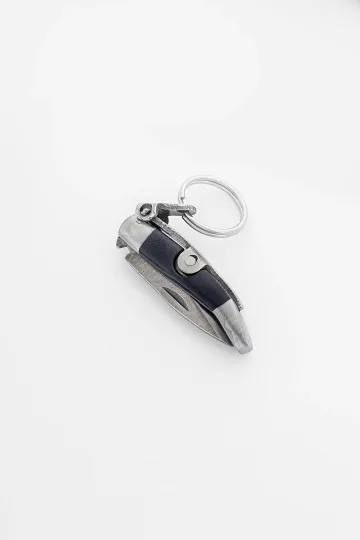
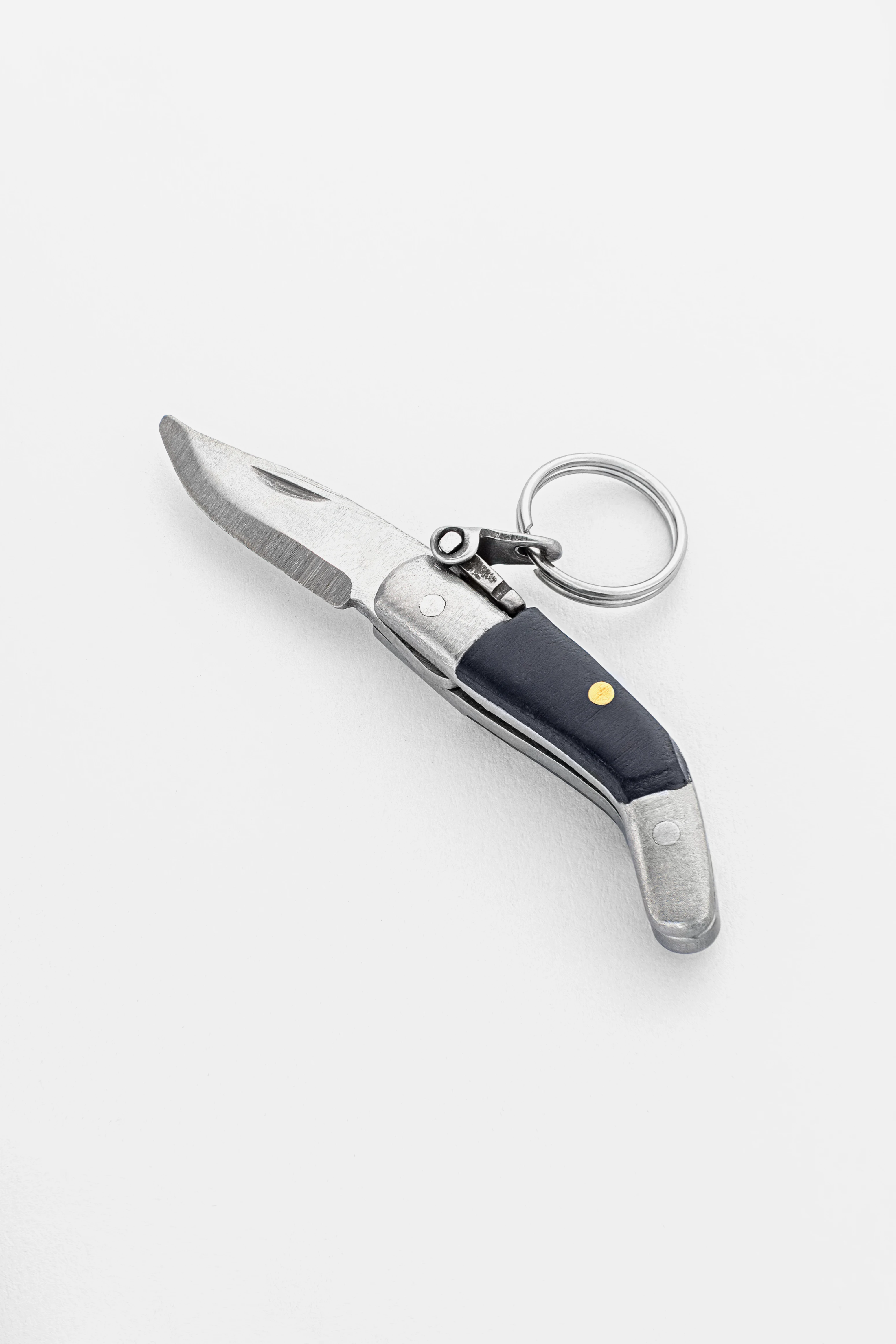
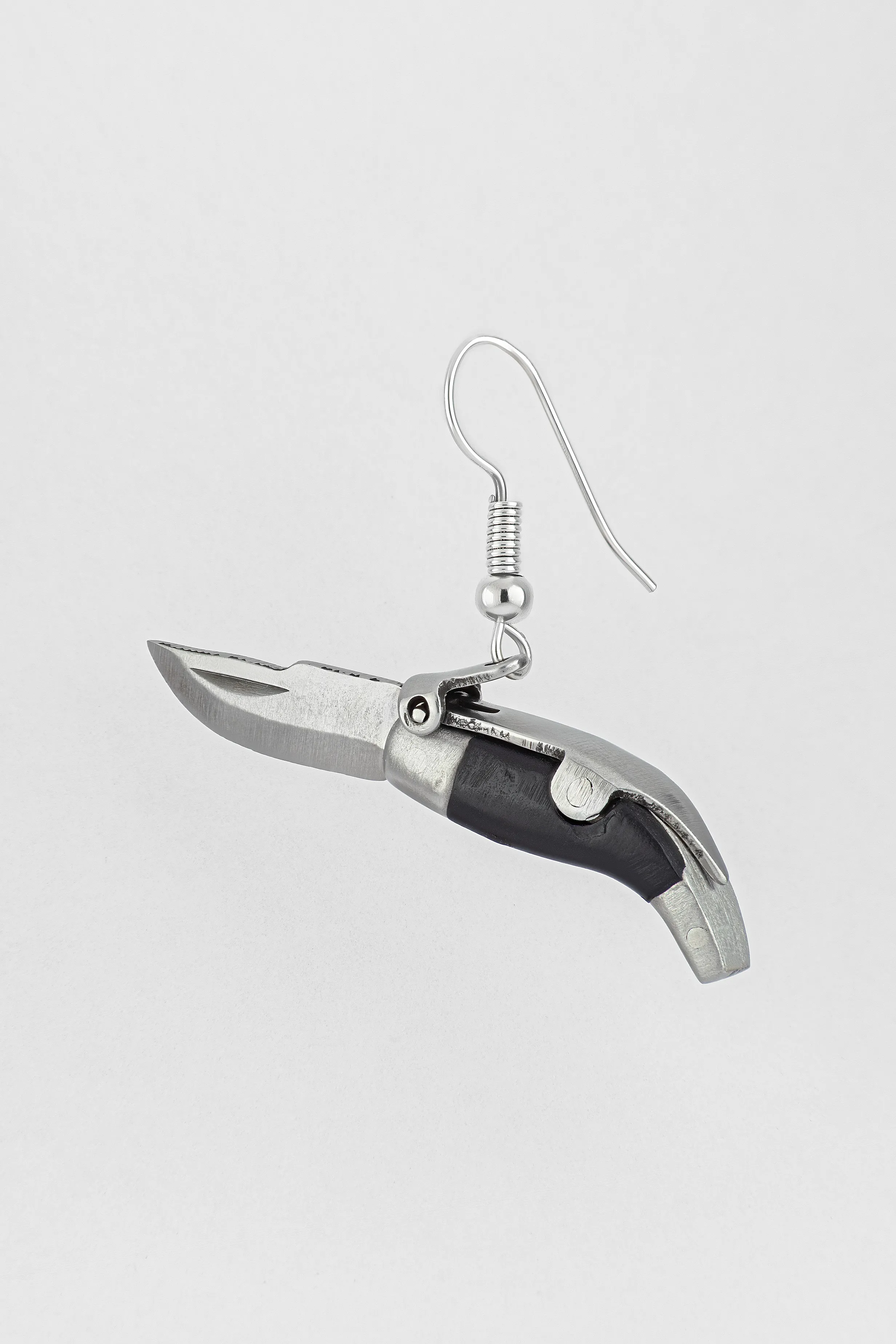
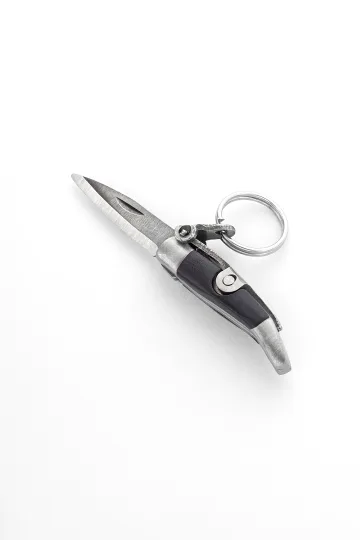
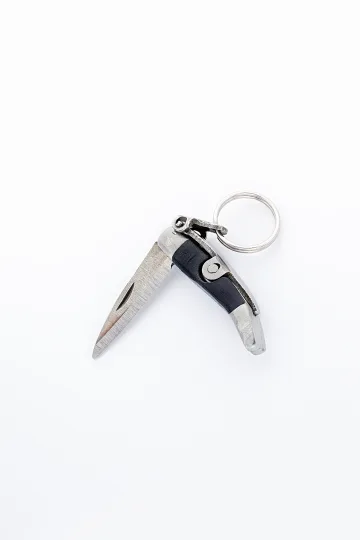
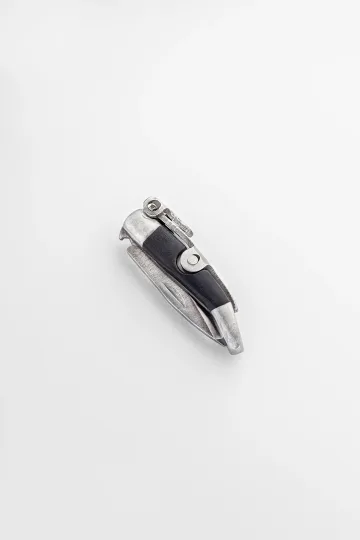
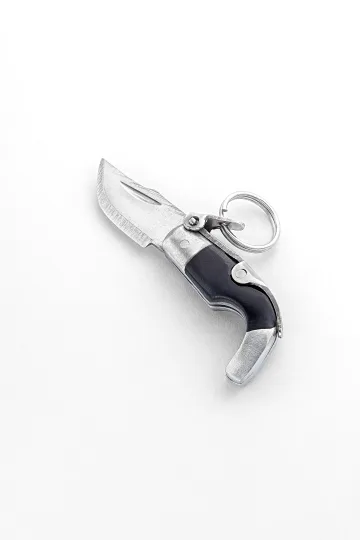
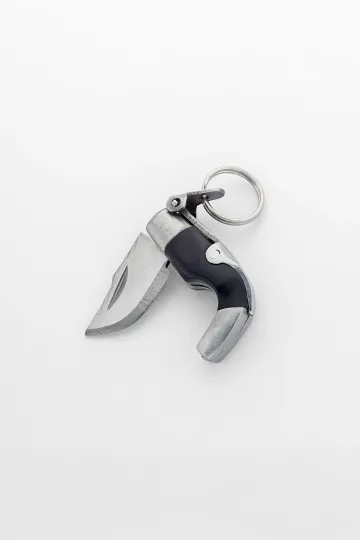
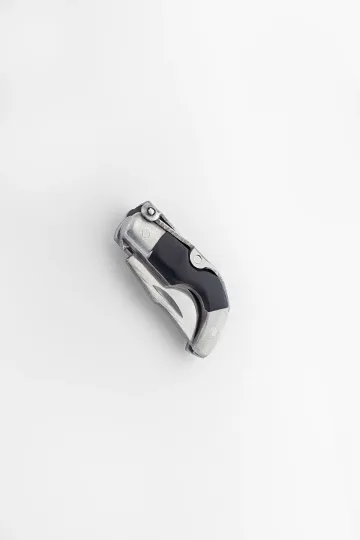
CAPAORA mini knife pendant
The 18th-century Spanish navaja in miniature: 40 mm of stainless steel, a real folding mechanism and a Palanquilla lock that clicks. An affordable gift to remember.
Authentic · Ships from Spain · 14-day returns
Riviera as Investment: What You Need to Know
Riviera belongs to a narrow category of jewellery whose resale value tends to hold up relatively well under certain conditions, though resale prices vary and nothing is guaranteed. This section is informational and is not investment advice. The conditions below do not happen automatically. Direct discussion is needed here.
Stone Certification
Each large stone in riviera should have a certificate from an independent gemological laboratory. GIA (Gemological Institute of America) is the strictest and most recognised standard in the world. IGI (International Gemological Institute) is also recognised, especially in Europe and Asia. AGS (American Gem Society) is an alternative with emphasis on cut quality.
The certificate documents stone parameters by the 4C system: weight in carats, colour on a scale from D to Z, clarity on a scale from FL to I3, cut quality. Without a certificate, the stone is assessed by the buyer "on his word," and at resale this gives a significant discount.
Limitation: individual certificates are not made for small stones (under 0.15 carat). Certification cost would exceed a reasonable percentage of the stone's own cost. For riviera with small stones, this means documentation will be partial: individual certificates on large specimens, general certificate on batch for small ones. This is industry standard, not a defect of a specific piece.
Provenance Documentation
If the riviera came from family or was bought through an auction house, it is important to preserve provenance: who made it, when, for whom, through whose hands it passed. At the level of an investment asset, provenance is documentary history that raises price at resale by 15-30% compared to an anonymous equivalent of the same quality.
Specifically: records, photographs, auction catalogues with mention, newspaper publications (if the riviera hit the press), records at the jeweller who serviced it. All this is collected into a single dossier of the piece. The longer and more detailed the dossier, the higher the liquidity of the riviera on the specialised market.
Insurance
Jewellery insurance is mandatory for an investment-grade piece. Standard home insurance has a low limit on jewellery (usually several thousand currency units on all jewellery combined). Specialised jewellery insurance covers theft, accidental loss, mechanical damage, damage from fire or flood.
Cost is 1-2% of the appraised value of the piece per year. For a riviera valued like a medium-size country house, this is an annual cost in the "expensive vacation" category. These are significant annual expenses that must be factored into the calculation of investment returns.
Insurance appraisal differs from market sale price. Appraisal shows the cost of replacing a similar piece in the retail market, which is usually 2-3 times higher than the price at which riviera will sell on the secondary market. It is important to understand this difference upfront.
Reappraisal Every 5 Years
Prices for diamonds and precious stones change over time. An appraisal done five years ago does not reflect current market situation. To maintain adequate insurance coverage and to understand the real position of an asset, reappraisal every 5 years is recommended practice.
Reappraisal is conducted by an independent certified gemologist with no financial interest in the transaction (not the one who sold the piece initially). The cost of reappraisal is several hundred currency units plus time for meetings. This is an investment in the relevance of documentation.
How a Diamond Riviera Holds Resale Value (No Guarantees)
Resale value depends on the market at the moment of sale, and there are no guarantees. As a rough tendency, a riviera with high-quality natural diamonds, certificates and documentation often retains a larger share of its purchase price on the secondary market than ordinary mass jewellery does, but actual outcomes differ from piece to piece and from year to year. The numbers below are illustrative, not a promise of any specific return. This section is not investment advice.
Even in the better case, a riviera does not necessarily grow in price and may not return the initial outlay. To break even or get a positive result, a long horizon is usually needed plus a coincidence of several factors: the direction of natural diamond prices in that period, piece preservation, presence of documentation, and a fortunate sales channel. None of these can be relied upon in advance.
Detailed analysis of the investment nature of diamond jewellery by the same logic is in our article tennis bracelet as investment. Riviera in investment terms works by roughly the same principles as tennis bracelet but in more pronounced form due to larger stone volume.
Where Riviera Does Not Work as an Asset
Lab-grown diamonds do not work as an investment. Lab diamond prices fall each year, and a riviera from them over 10 years is valued on the secondary market close to the value of the metal plus small markup for work.
Riviera without certificates. A buyer on the secondary market either declines the deal or offers a price as for uncertified goods, which usually means 40-60% discount.
Riviera with small stones (under 0.5 carats each) with total weight under 20 carats. On the secondary market such a piece is valued closer to metal cost than stone cost, because small diamonds are poorly liquid.
Short ownership horizon. If you intend to sell the riviera in 3-5 years, losses relative to purchase price are almost certain. This is the mathematics of retail markup, not the quality of a specific piece.
Leave your email, we'll send your discount code. No spam, unsubscribe anytime.
The code arrives by email, valid on your first order.
Antipatterns: When Riviera Looks Bad
Mistakes in riviera purchase and wear usually cost dearly. Below are the main ones.
Cheap Riviera with Small Stones
The most common mistake. Desire to buy "a Versailles-style riviera" on a limited budget leads to purchasing a necklace with dozens of tiny 0.05-carat stones in low-assay metal (gold 375 or silver plating). Visually such a riviera looks like costume jewellery from a mall: dull brilliance, darkening metal after a couple of years, stones falling out.
The problem is that riviera requires a certain amount of material to look "like riviera." When stones are many but small, the line loses visual weight. The necklace reads not as "unbroken stream of precious gems" but as "child's thin chain with sparkles." This effect cannot be avoided in the cheap segment: the stone line is inherently weaker than expensive alternatives.
If budget does not allow for a classical riviera, it is more sensible to buy a different necklace type: thin chain with pendant, earrings with large stone, tennis bracelet (it works on the wrist as a "riviera on the hand" with significantly fewer stones). This is better than a bad riviera that will not look like riviera anyway.
Riviera with Large Pendant
If a large pendant (medallion, cross, figure) hangs from the riviera, it is no longer a riviera but a chain necklace with pendant. The additional mass in the centre disturbs the balance of the line and takes attention from the unbroken stone stream.
If you want to combine riviera with a pendant, select a separate chain for the pendant that is worn under the riviera (it is shorter or longer so it does not cross). Double necklace works, riviera with pendant on it does not.
Riviera in Casual Settings
Wearing riviera with jeans and a t-shirt is a mistake that seems harmless but actually undermines the look. Riviera requires event context. For a standard restaurant dinner it is excessive. For a city walk it is inappropriate. For an office meeting it is absurd.
This is "major occasion" jewellery. Among 20th-century high society there was a rule: riviera leaves the safe no more than ten times a year. This rule makes sense today. If riviera sits without outings, it "gathers strength," and each outing becomes an event. If riviera is worn as everyday jewellery, it loses status weight and reads as a "fashion accessory," which for jewellery of this class is a category drop.
Alternative for everyday wear is tennis bracelet, thin chain with one pendant, stud earrings. These jewels work in casual settings and do not suffer from frequent use.
Poorly Matched Stones by Colour
If riviera is assembled from stones of different shade (one stone whiter, the neighbour yellower, the third with a light blue note), the line reads as "uneven." The eye catches this difference at a distance, even if each individual stone is of good quality.
Matching stones of identical colour is a craftsman's task, and this is one of the main reasons for high riviera price. For a batch of 40 identical F-G stones, a supplier usually spends several months working with different cutters and wholesalers. If riviera is offered in a store at suspiciously low price, it means selection was "loose," and the line will not be even in colour.
Before purchase, it is worth laying out the necklace on a white background (white paper or white fabric) and running your eye along the line. Do all stones look identical in tone? One not yellower than the rest? One not lighter or darker? If difference is visible to the naked eye, this is bad riviera, and it will remain so.
Too Short or Too Long
Princess length is standard because it suits most female types. If riviera is made as choker and the neck is short, the necklace "chokes" and visually shortens it further. If riviera is matinee and the neck is tall, the necklace "gets lost" on the chest, does not work on the throat.
Length is chosen for a specific person and for the types of dress necklines she wears. Before buying riviera (especially expensive and custom), it is worth trying different lengths in the store and understanding which works on this specific neck.
Riviera and Thin Chain with Pendant Together
If riviera and a longer thin chain with pendant are on the neck simultaneously, this overloads the décolletage area. The eye does not know where to look. The rule: one major jewel in one body area. Riviera occupies the neck and décolletage zone completely, and nothing else can be added there.
If you want to wear both riviera and some family or sentimental pendant, the latter is worn on a chain of very different length: either high on the neck (under riviera, not visible) or very low (at solar plexus level, in the dress décolletage). Nothing should be between these extremes.
Riviera Care and Storage
Jewellery of this level requires systematic maintenance. Carelessness leads to stone loss, metal damage and value reduction.
Professional Cleaning Once a Year
Diamonds and precious stones accumulate skin oil, cosmetic residue, dust particles on themselves. To the eye the necklace looks clean, but under a loupe a microscopic coating is visible that reduces light play. Professional cleaning restores brilliance.
Two main methods: steam cleaning (pressurised hot steam jet that blows dirt from setting crevices) and ultrasonic (necklace is submerged in solution through which ultrasound is passed, causing dirt to separate from the surface). Both methods are gentle for diamonds but not for all stones. Emeralds and rubies with inclusion filling are ultrasound-sensitive; for them only steam cleaning or manual methods apply.
Cleaning is done at a jeweller's workshop, not at home. At home you can wipe the necklace with soft cloth or rinse with warm water and baby soap, but this does not replace professional procedure. Cost of professional cleaning is several dozen currency units at a local workshop, and this is reasonable annual expense.
Storage in Individual Box
Riviera is stored separately from other jewellery. Diamond is harder than almost any material (10 on Mohs scale) and easily scratches other stones and metal on contact. If riviera lies in the same box as other jewellery, after a year neighbours end up with metal scratches or stone scratches. The riviera itself can also suffer: the setting and prong clasps are sensitive to impacts.
Standard solution is an individual box with soft padding of velvet or suede, in which the necklace lies extended. If the box does not allow laying the necklace in a line (which often happens with princess length, requiring at least 50 centimetres of space), a special roller-stand is used on which the necklace is "worn" and stored in a semi-circle shape. This prevents line deformation and keeps hinges in working condition.
The box should be in darkness and at stable temperature. Temperature fluctuations (for example, box on a windowsill in direct sun) can lead to micro-cracks in stones and setting deformation. A safe or closed cupboard in an inner room of the apartment are optimal options.
Prong Check Every 2 Years
Prong-setting prongs wear over time. Microscopic impacts with door frames, countertops, other objects gradually bend the prong tips. When a prong is bent enough, the stone starts to shift in the socket, and at a certain degree of wear it falls out.
Standard procedure every two years: a jeweller-gemologist checks each clasp under a loupe, assesses prong condition, tightens if necessary or restores them. This takes the craftsman an hour or two of work. Cost is within several hundred currency units if only checking and tightening is needed, significantly more if the setting needs replacement.
If the riviera is heirloom or old, checking is done more often, once a year. Old metal is fatigued in structure, and stone loss risk is higher. Better to spend money on regular checking than to lose a stone and pay for its replacement (which sometimes is impossible: finding exactly the same stone is sometimes difficult or impossible).
Insurance Renewal Every 3 Years
Jewellery insurance policy is usually written for a term of one to three years. Upon expiration renewal is required. At renewal the insurance company may request an updated appraisal (if the previous one was long ago), and may change the rate taking into account market changes.
It is important not to miss the renewal deadline. If insurance expires and the necklace is stolen or lost in that period, the insurance company does not pay compensation. Renewal calendar should be kept as carefully as medical examination calendar.
Every three years it makes sense to conduct an independent reappraisal by a gemologist not connected to the insurance company. This gives an objective picture of current value and helps in negotiations with the insurance company on rate. Sometimes the necklace value grows (if natural diamonds became more expensive in the period), and the insurance sum should reflect this.
What to Do in Case of Damage
If a stone falls out of the riviera, it is important to stop wearing it immediately and place the necklace in a protected place. Do not try to insert the stone yourself. Do not wear the necklace with an empty socket "until needed," because neighbouring stones may start falling too due to neighbouring clasp deformation.
A gemologist takes the necklace, documents the characteristics of the lost stone (by certificates and by neighbouring stones, which should be identical), searches the wholesale market for a stone with the same parameters and instals it. This procedure may take from several weeks to several months, depending on parameter rarity. It costs a lot but restores the piece to working condition.
If the setting is broken (for example, a prong tip broke or a chain link cracked), repairs are done by replacing the damaged section, not the entire necklace. An experienced craftsman makes replacements so the repair site is indistinguishable from the original work.
Transportation
Riviera transportation is a separate procedure. On a plane the necklace must be in hand luggage, never in checked baggage. In a car in a closed box, not in an open bag. To an appointment the necklace is brought in a box or special protective pouch, put on at the location, after returning it goes back to the box.
If the riviera is expensive, transportation may require a customs declaration (for international transport) and temporary insurance policy for the transport period. Expensive jewellery logistics is a separate industry, and if needed you can hire a specialist courier who will deliver the necklace door-to-door under signature.
Read in detail about storing expensive jewellery at home in our guide how to store jewellery at home.
FAQ: Answers to Main Questions
How Many Stones in a Riviera?
Standard range 15-100 stones. The specific number depends on the size of each stone and the length of the necklace. Princess length with 1-carat stones usually carries 30-50 stones. With 0.5-carat stones the same length fits 60-80. With 0.25-carat stones it can reach 100-120.
Can You Make a Riviera with Lab-Grown Diamonds?
Yes, technically this is a full riviera. Lab diamonds have the same physical and optical properties as natural ones. Aesthetically such a riviera works to the same power. Financially it is substantially more accessible than a natural equivalent of comparable quality (three to four times cheaper). But as an asset, lab riviera does not work: lab diamond prices fall every year, and over 10 years on the secondary market such a necklace is valued close to metal cost.
How to Tell a Real Riviera from a Fake?
First by documentation: certificates on large stones from GIA or IGI, piece passport indicating metal and assay, receipt from seller. Without documents riviera automatically falls into "risk of purchase on trust" category.
Then visually: stones of one colour and size, line even without gaps, metal with maker mark and assay, reliable clasp with double safety. If diamonds are suspiciously cheap for stated parameters, this is a red flag. Diamonds are not "significantly cheaper than market": either they are worse than stated or they are lab-grown, passed off as natural.
Final check through an independent gemologist. Before buying an expensive riviera, it is sensible to spend a few hours and money on consultation with a specialist not connected to the seller. This is standard practice for purchases of this level.
What Stone Size to Choose?
For standard neck circumference (up to 32 centimetres), optimal size is 0.75-1.0 carats per stone. This is the size that is visible at a distance but does not disrupt facial proportions and does not "weigh down" the look.
For a large neck or for a striking evening look, size can be increased to 1.5-2.0 carats. For teenage riviera (if this happens, usually a heirloom) or for a delicate wearer of small build, size is decreased to 0.5 carats.
Most important: stones in riviera must be proportional to the wearer. Too large on a thin neck look grotesque, too small on a large figure get lost.
How to Care for Riviera at Home?
Between professional cleanings once a year, home care consists of simple actions. Before storage wipe the necklace with soft cloth (microfibre, not paper napkins). Once a month or two you can rinse the necklace in warm water with baby soap, rinse in clean water and dry on soft cloth. Do not use a home ultrasonic bath: cheap household devices are not precise enough and can damage clasps.
Do not wear the necklace in the shower, in a pool, in the sea. Chlorine, sea salt, shampoos and cosmetics form coating on diamonds and can react chemically with metal. Necklace is put on last when dressing and removed first when returning.
Can You Shorten or Lengthen Riviera?
Technically yes. Shortening is done by removing one or several links from both ends of the necklace closer to the clasp. Lengthening is done by inserting additional links with the same stones (if available) or a special bridging piece without stones.
But any modification reduces the investment value of the riviera. A piece in its original length and composition is valued higher than the same piece after modifications. If you plan to pass the riviera down through generations, better keep it in original length and adapt to another wearer through dress choice and style.
How Much Does a Riviera Weigh?
Total necklace weight depends on number of stones, their size and metal weight. A typical princess length with 1-carat round diamonds and platinum setting weighs 60-100 grams. This is the weight of a small mobile phone.
When worn the weight is felt moderately. On the neck it lies distributed across the full length, no individual pressure points. Wearing riviera for hours is comfortable, which is important for social events that can last all evening.
Where to Keep Riviera: Bank or Home Safe?
Depends on frequency of wear and risk level in your location. If riviera leaves the box once a year for one event, a bank safe deposit is a sensible choice: less theft risk, simpler insurance. If riviera is used more often (several times a year for different events), a high-security home safe is more convenient, with insurance-confirmed characteristics of fire resistance and break-in resistance.
Hybrid option: riviera is kept in a bank, comes out a day before the event and returns a day after. This requires logistics but gives optimal combination of security and access.
Can You Wear Riviera Every Day?
Technically yes, but not recommended. Daily wear increases risk of physical damage (impacts with door frames, contact with clothing, perspiration), and the necklace loses status weight, becoming a "fashion accessory." For everyday wear other jewellery exists: thin chains, tennis bracelets, stud earrings.
If you really want to wear riviera often, it is sensible to make a duplicate piece from lab-grown diamonds for daily wear, and keep the original for events.
What if Riviera Came to You by Inheritance but You Don't Like It?
First, do not rush. An inherited riviera carries emotional weight, and the first impulse to sell or modify may be hasty. It is useful to keep the necklace for a year or two to understand if you really "don't like it" or it is just a temporary rejective effect of newness.
If the decision remains to make changes, options are: Remounting: stones are preserved, setting is changed to contemporary (new length, new clasp style, new clasp). Disassembly with use in other jewellery: stones go into a ring, into earrings, into a bracelet, across several pieces. Sale at a specialised auction with provenance history.
Complete sale to a buyer is not the best option. Buyers pay at the lower end of the market, and emotional connection to family is lost forever for low price.
Riviera or Tennis Bracelet: Which to Choose?
These are different formats for different purposes. Tennis bracelet on the wrist, everyday jewellery, worn regularly, relatively liquid asset on the secondary market. Riviera on the neck, event jewellery, worn rarely, asset of the highest category with higher entry barrier.
If budget is limited and you want one piece, tennis bracelet is more universal. You can wear it with office suit, casual dress, light evening out. Riviera does not have such flexibility. If budget allows and there is a specific event occasion, riviera is stronger.
In an ideal collection there are both: tennis bracelet for everyday and riviera for occasions. They do not compete but complement each other.
At What Age is it Appropriate to Wear Riviera?
Age restrictions are soft. Technically riviera can be worn from age 25, when the wearer has an adult appearance and events of appropriate level. Under 25 riviera might read as "wearing mother's" (unless this is actually mother's necklace for a family event).
There is no upper age limit. Many women wear rivières into old age, and in mature years such jewellery especially works on a look. Wrinkles, grey hair, experienced hands combined with a diamond line on the throat create an effect of "lived full life" that no other jewellery gives.
Can You Give Riviera to Someone Other Than a Wife (e.g., Sister, Mother, Daughter)?
Yes. Riviera is not exclusively a symbol of marital status. This is high-level gift jewellery, appropriate from parents to daughter at 30th birthday, from children to mother at 70th birthday, from sister to sister at a significant jubilee. The context of the gift can vary.
What matters: a gift of this level assumes an appropriate occasion. Riviera is rarely given just like that, without reason. This creates awkwardness for the recipient because it creates obligation for an equal return gift.
How Long Does It Take to Make a Custom Riviera?
From several months to several years, depending on stone size and material availability. A simple riviera of 0.5-carat diamonds of standard quality can be assembled by a craftsman in 3-4 months. A riviera of 1-carat stones of high quality with colour and cut selection takes 6-12 months. A riviera of sapphires or rubies of one shade in quantity of 30-40 stones can take 1-3 years.
This explains why a high-quality riviera is bought in finished form from an established house rather than custom-made from scratch. The finished piece has already passed assembly, and the wearer does not wait for it for years.
Send a friend a discount code, they save on their first order.
Conclusion: Jewellery That Holds a Century
Riviera is a narrow, specific jewellery format not for everyone and not for every day. But for those events and people where it is appropriate, it has no parallel. An unbroken line of identical precious stones works as a visual gesture that cannot be simplified, replaced or simulated with a cheap alternative. Either riviera is real, or it is nothing.
In the owner's jewel box such a piece is usually one, and it accompanies her for decades. A diamond riviera from the mother-in-law passes to the wife of the son, from her to the daughter, and in a few generations it might end up with the great-granddaughter on her wedding day. This is jewellery of "long time," which works on the horizon of biography, not seasonal fashion.
From a financial standpoint, a high-quality riviera may hold resale value relatively well compared with ordinary jewellery, but this varies with the market and there are no guarantees of any return. This is a thing for those for whom both aesthetics and long-term financial aspect matter. Those who buy only for investment will be disappointed: liquidity is low, markup high, annual insurance costs substantial. Those who buy only for aesthetics and do not think about money can get a good financial result if they simply keep the piece for fifteen to twenty years.
Three things worth remembering from this breakdown. First: riviera is event jewellery, and its power is in rare outings, not frequent wear. Second: natural diamonds and lab-grown are two different products with different financial futures; confusing them in decision-making is impossible. Third: quality of stone matching by colour and cut matters more than quantity; a riviera of 30 identical high-quality stones is stronger than one of 80 mismatched small ones.
If the purchase decision is made, it is important to act by the same rules that experienced collectors follow: documentation, certification, insurance, reappraisal every five years, professional maintenance. These are not additions to the purchase, they are its necessary continuations. Without them, even an expensive riviera over time becomes an "obscure thing without history," difficult to sell and difficult to pass down.
Buying it as a gift? Each one arrives ready to give.
 A branded Zevira box and a little card come with every order.







About Zevira
Zevira works with jewellery for people who understand the difference between a "fashion thing" and a "thing for decades." Our catalogue includes jewellery for everyday wear and rare investment-level pieces like riviera. If the decision about such a purchase has come, our consultant can discuss with you the parameters, documentation and succession scenarios. We do not rush and do not persuade: a deal of this level is made once a decade, and the correctness of choice matters more than the speed of decision.
Wear the symbol, don't just read about it. These are in stock: