The Jera Rune: Meaning of the Symbol of the Year, Harvest and Reward for Labour in the Elder Futhark
The twelfth rune of the Elder Futhark is not about luck or a gift of fate. Jera means "year," or more exactly the half of it when the field gives up its grain. It is the one rune that says plainly: you get exactly what you grew. No more, no less.
That is where its particular character begins. Jera stands right after the three runes of trial, hail, need and ice, and it reads like an exhale after a long winter. First the cold and the patience, then the reaping. The sign promises not a sudden inflow but an honest outcome: sow in season, wait out the term, gather your own.
The rest follows in order: where the rune's name came from, how "year" and "harvest" are linked, why Jera has two halves and no reversed position, what the rune poems said of it, what a pendant is made of, how to wear it, and how Jera differs from Fehu and Othala, the other runes of prosperity.
Why the Year Meant the Harvest
The word "Jera" goes back to Proto-Germanic jēra-, meaning "year, harvest season, good time." The same root gave English year, German Jahr, Dutch jaar and Gothic jer. Every time a person says the word "year," they repeat the name of an ancient rune without knowing it.
The point is that "year" here is not an abstract stretch of three hundred and sixty-five days. For a farmer of Germanic Europe the year was measured not by a calendar but by the field: the time from sowing to reaping. A "good year" meant a rich harvest, and a "bad year" meant famine. So the rune's name is at once about time and about its fruit, about the cycle and about the reward at the cycle's end.
Wear the symbol, don't just read about it. These are in stock:


The Jera rune took this doubleness and locked it into form. The sign is made of two separate parts turned toward each other, as if the two halves of the year, light and dark, summer and winter, had closed in an eternal turning. Neither part touches the other, yet together they complete a circle. So the rune shows not a point but a motion: sowing, growth, harvest, rest, and sowing again.
Jera is best understood through two layers. The first is practical: it was a letter for the sound "y," an ordinary unit of writing in the runic row. The second is symbolic: every rune carried a name and a meaning, and Jera owned the theme of the yearly round, the harvest and just reward. Both layers lived at once. A carver could cut Jera as a sound in a name and, in the very next breath inside a charm for a good harvest, as a sign of fertility.
What the Jera Rune Is
The Meaning of the Name and Its Sound
Jera is the twelfth rune of the Elder Futhark, the oldest runic alphabet of the Germanic peoples. It carried the sound "y" (as in "yard") and stood in the middle of the row, closing the first half of the second aett. The rune's name is reconstructed as jēra-, and it holds firmly around the ideas of "year," "harvest" and "abundance of the season."
Across the Germanic world the name sounded a little different. To the Norse it was ár (year, harvest, good season), to the Anglo-Saxons ger or gear with the same meaning, and to the Goths jer. Interestingly, in Norse the initial "y" sound wore away over time, and jara became ár. The rune changed its own sound but not its meaning: both "jera" and "ár" are equally about the fruitful year.
What the Symbol Looks Like
Jera's shape resembles no other rune of the Futhark. Instead of the usual vertical stave with branches, here are two separate angular parts, turned toward each other and interlocked without touching. One half points up and to the right, the other down and to the left, with a gap left between them. The sign reads like two brackets or two wedges set to meet.
There is meaning in the form. The two halves are often read as the two half-years, warm and cold, which replace each other and cannot exist apart. Summer needs winter so the field can rest; winter needs summer so there can be sowing. The rune depicts not a static object but the very turn of the wheel of time, where one thing flows into another.
There is a practical detail too. Runes were carved into wood and bone, along the grain, and Jera with its diagonals cuts easily. At the same time its open form made the sign unstable in writing: in different inscriptions the halves were set now closer, now farther, sometimes almost merged. It is one of the most variable runes of the row in its carving.
Its Place in the Elder Futhark
The Elder Futhark was used roughly from the 2nd to the 8th century across Germanic Europe, from Scandinavia to the Black Sea. Twenty-four signs split into three rows of eight, the aettir, each named after its first rune. Jera stands twelfth, right in the middle of the row, and closes the first half of the second aett, "Hagalaz's aett."
Jera's position is eloquent. The second aett opens with three severe runes: Hagalaz (hail), Nauthiz (need), Isa (ice). These are runes of trial, standstill and cold, the winter part of the path. And right after them comes Jera, the good year, release, reward. The whole aett reads as a story: first the frost and the patience, then the harvest. Jera here is the turning point, the moment when the ice breaks and the field begins to work again.
Jera and the Farmer's Yearly Cycle
For the herders and ploughmen of Northern Europe the whole way of life rested on the cycle of seasons. Whether the grain was sown in time and the weather fell kindly decided a family's life for a year ahead. The year was divided not into months in our sense but into two great half-years, winter and summer, each with its own work and feasts.
The depth of the rune grows from this. Jera is not about random luck or free abundance. It is about the order of labour in time: to sow in season, to tend the shoots, to wait for ripeness and gather. Reward in this picture of the world does not fall from the sky; it ripens. That is why Jera is tied to patience, timing and an honest outcome, rather than to sudden good fortune.
History: From the Proto-Germans to Today
Proto-Germanic Roots
Long before the first runic inscriptions, the Germanic tribes already had the word jēra- and the concept of a good year behind it. The Indo-European root that gave the word is kin to Greek hōra (time, season, hour) and to the Slavic "yara" in the sense of spring, ardent. The idea "time equals the fruitful season" was shared across a vast circle of peoples before writing.
When the Germanic peoples created or borrowed runic script in the first centuries of our era, they gave the twelfth sign the name of a concept that already existed. The rune did not invent the link between the year and the harvest; it fixed it in letter form. And the link proved so strong that it lived on into our words "year" and "Jahr."
The Scandinavian Iron Age and the Viking Era
Runic writing flourished during the Iron Age and the Viking era, roughly from the 8th to the 11th century. By that time the Elder Futhark in the north had already given way to the shorter Younger Futhark of sixteen signs. The rune of the year survived there, but under the name ár and in a simplified form: the open sign of Jera turned into a single stave with a short branch.
In a society where the harvest meant life, the wish for "a good year and peace," til árs ok friðar, was a set formula. It was spoken at feasts, carved on memorial stones, addressed to the gods of fertility. The rune of the year stood right behind that wish, as the sign of what people begged of sky and earth before all else: that the field should yield and the family survive the winter.
The Rune of the Year in Inscriptions and on Bracteates
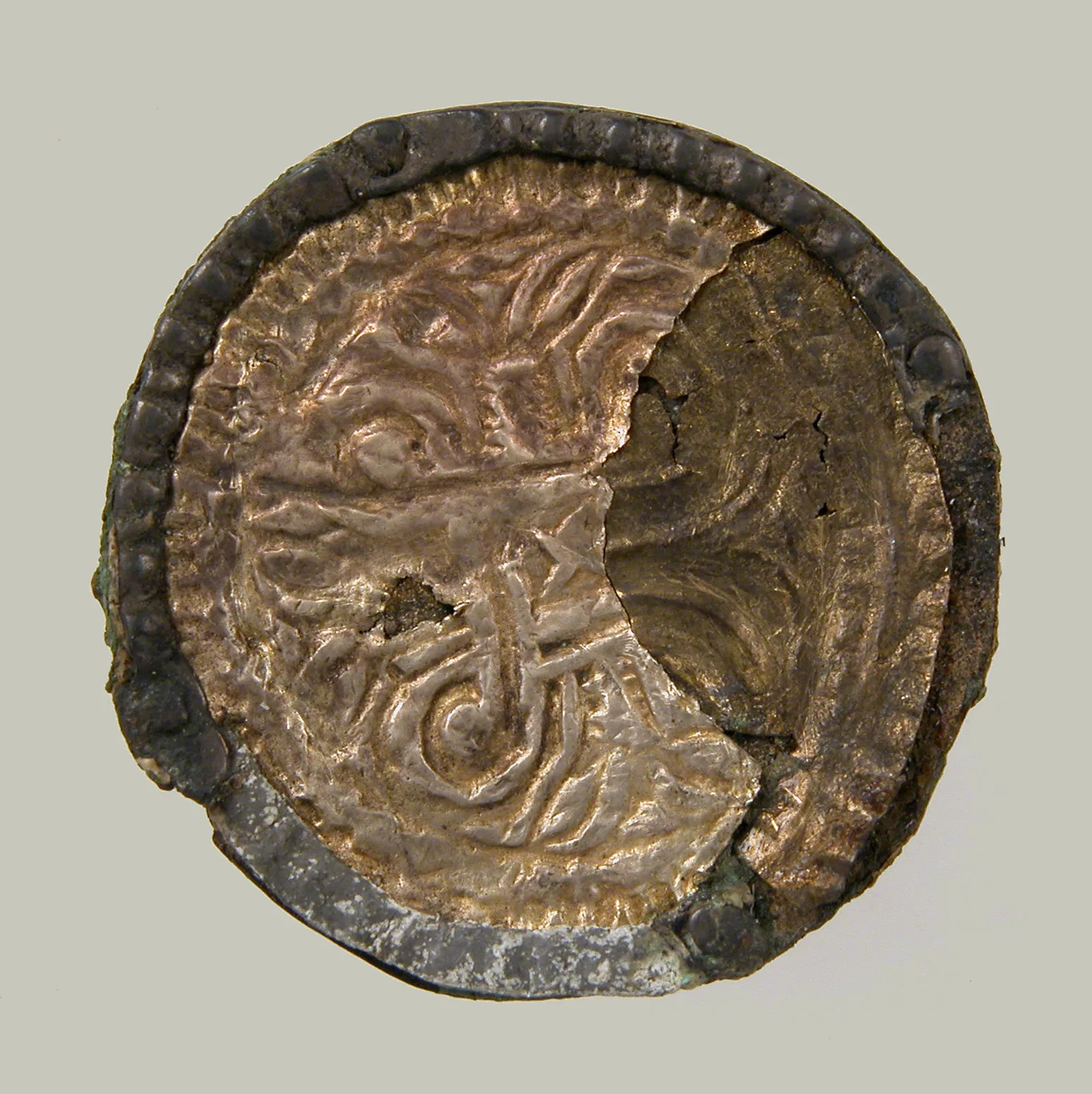
Jera turns up in real objects, not only in later commentary. On gold bracteates, the thin medallion pendants of the fifth and sixth centuries worn at the neck as a mark of standing and as a charm, runologists read short inscriptions carrying words of luck and of a good harvest. The format of the bracteate itself, a round disc with a stamped image, echoes the sun wheel and the turning of the year that the rune stands close to. A medallion like that worked as a wearable wish for a good season, and several such finds have come out of English soil as well, carried west by trade and settlement.
Reading those inscriptions is awkward work. The carvers were not always literate, the metal has worn, the stone has crumbled, and specialists still argue over individual signs. The general direction is clear enough: the rune of the year lived as part of a working language of asking for bread rather than as an abstract emblem. The word ár stood behind a wish on which the life of a household depended, and so it reached both precious metal and rough memorial stone.
A chapter of its own belongs to the runic calendar staves, the primstav of Scandinavia. On a wooden rod or board, runes and small marks laid out the whole year: weeks, feast days, phases of the moon, the dates of field work. Such calendars outlived runic writing itself and survived in northern villages almost into the modern period. In them the idea of the yearly round that stands behind Jera lasted longest of all, no longer as a letter of an alphabet but as a working instrument for measuring the time of sowing and reaping. The parallel in Britain is the clog almanac, a notched wooden calendar used in the north of England well into the seventeenth century for exactly the same purpose.
The Anglo-Saxon Rune Poem
The warmest medieval commentary on the rune of the year survives in the Anglo-Saxon rune poem, written down in England probably in the 10th century. The stanza on the rune ger runs roughly like this: harvest, the good year, is a joy to men when God, the holy king of heaven, bids the earth give bright fruits to rich and poor alike.
The stanza is strikingly bright. Unlike many runes, whose poems find a dark side, here there is only gratitude. The harvest comes to all in equal measure, to rich and poor, because the earth makes no distinction of rank. The Christian scribe credited the gift to God, but the joy of a good year itself is far older and reaches into a pre-Christian sense of a person's dependence on the bounty of the field.
The Norwegian and Icelandic Rune Poems
The Scandinavian rune poems, the Norwegian and the Icelandic, also praise the rune of the year, but in their own way. The Norwegian stanza says: "A good year is a boon to men; I say that Frothi was generous." The Icelandic one goes further and calls ár "a boon to men, a good summer and a fully ripened field."
The name Frothi is no accident. In Scandinavian legend Frothi (Fróði) is a legendary Danish king of a golden age, under whom peace and unheard-of plenty reigned, the "peace of Frothi." By legend he owned a magic mill, Grotti, that ground out gold and calm. Tying the rune of the year to Frothi, the poem plugs it into the image of a lost paradise on earth, where the field yields on its own and there are no wars. The "fully ripened field" of the Icelandic stanza is perhaps the purest praise in the whole body of rune poems.
The Decline of Runic Writing
With the arrival of Christianity and the Latin alphabet, runes gradually left everyday use. In Scandinavia they held on longer, in places into the late Middle Ages, but as the main script they yielded to Latin letters. Jera, along with the whole Futhark, passed from a living alphabet into the realm of antiquity, of inscriptions on stones and memory.
Even so, the rune of the year left its deepest trace exactly where writing met the rural calendar. Runic calendar staves, primstavs, survived in the northern countryside into the modern age. On them signs marked feasts and the terms of work, and the notion of a good year lived on beside the runic notches long after runes had ceased to be a script.
The Revival in the 20th Century
Fresh interest in the runes arrived with the 19th and 20th centuries and their fashion for Germanic antiquity, folklore and mysticism. Systems of runic divination appeared, books of interpretation, and jewellery in their wake. That is when Jera took on the role of "the rune of reward and completion" by which it is known today: the sign that labour will pay off and that what has begun will reach fruit.
It is worth holding in mind that the modern divinatory reading is a reconstruction and a creative development, not a direct copy of what Iron Age people meant. Historical Jera was a letter and a concept of the harvest year. Today's Jera has also absorbed a layer of psychology and esotericism that grew over the last century and a half. Both layers are real; they simply belong to different eras.
Upload a photo of your pet, someone you love, or an object. We'll build a 3D model and hand-cast it in pewter.
The Meaning of the Jera Rune: Year, Harvest, Reward
The Year and the Cycle of Time
The first meaning of Jera is the circle of time itself. Not a line with a beginning and an end, but a wheel where sowing inevitably leads to harvest and harvest to a new sowing. The rune teaches you to see your work as part of a larger cycle: what looks like a standstill is often just winter before the shoots, and what looks like an ending is the start of the next turn.
In this sense Jera is about accepting a rhythm. There is a time to sow and a time to wait, a time to gather and a time to lie fallow. The one who tries to reap before the term is left with nothing. The one who misses the sowing loses the year. The rune of the year reminds you that everything has its time, and the strength is not in haste but in agreement with the rhythm.
The Harvest and the Reward for Labour
The second and most recognisable meaning of Jera is the harvest as reward. And a reward earned, not granted. The field gives back exactly what was put into it: as much as you sowed, that much you gather, minus what the weather and luck took. Jera speaks of an honest outcome, where the result is tied directly to the effort.
Hence its difference from the "money" runes. Jera promises no sudden wealth and is not about gambling. It is about long work that comes to fruit. That is why a Jera pendant is often chosen by people who play the long game: those who have put themselves into a business, a study, a project and are waiting for what was sown to ripen. The sign works as a promise that the effort will not be wasted.
Patience and Timing
The third layer of Jera's meaning is patience of a particular kind, not passive waiting but precision in time. The farmer does not sit idle; he does the needful thing at the needful moment and does not rush what cannot be rushed. Jera values timing: to start in season, to wait in season, to gather in season.
This lesson sounds surprisingly modern. Many undertakings fail not from a lack of strength but from impatience: a person quits a step short of the shoots or forces a result that has not yet ripened. As a visual anchor, Jera reminds you to keep your distance and to trust the process where haste only harms.
Jera and the Gods of Fertility
The theme of harvest ties Jera directly to the gods of plenty and earth, above all to Freyr of the Vanir. Freyr answered for harvest, sunlight, peace and prosperity, and it was to him that the wish for a good year was addressed. To read more about how this world of deities is arranged, see the overview of the Norse pantheon.
The earth in the Northern picture of the world is also divine: she was called Jord, Fjorgyn, the mother of the harvest who feeds people. In this circle of images Jera works as the sign of a union of sky and soil, sun and seed. To wear the rune of the year is in part to reach toward that ancient bond, where light, rain and labour together give bread.
Why Jera Has No Reversed Meaning
In divinatory practice many runes have a "reversed" position with an opposite sense. Jera has none. Because of the symmetry of its form, two parts turned to meet, the sign reads the same when turned. So in most systems Jera is placed among the runes with no reversed meaning, alongside Sowilo, Isa and a few others.
This gives the rune a particular weight. The sign cannot be turned to ill by a simple flip; it stays itself. Many read this as an image of a justice that cannot be faked: the harvest is honest, you cannot cheat the field, and the law of cause and effect works the same however you turn it. The absence of a reversed meaning makes Jera one of the cleanest and most kindly runes of the row.
Customer reviews
Zevira is a real jewellery shop. Genuine payments, deliveries and customer thank-yous.
🥰🥰🥰 gracias
Ok, ¡gracias! 🙂
What Jera Jewellery Is Made Of
The material of a runic pendant carries its own meaning and changes both the look and the character of the piece. Here are the main options and what is worth knowing about each for the rune of the year.
Gold
The most eloquent choice for Jera. The colour of ripe gold is the colour of a ripe field and an autumn sun, so metal and meaning line up directly. A gold rune of the year reads as festive and suits milestone occasions: finishing a course of study, completing a big undertaking, meeting a new stage. Most often 14 or 18 karat is used; both hold the crisp carving of the sign and are unafraid of daily wear.
This version works well as a gift "for the outcome": when a person has brought something to its end and earned a reward. The warm sheen of the metal chimes with the very idea of the harvest, and form reinforces content.
Silver
Silver was the Vikings' main measure of wealth, far more common than gold, and its cool sheen sits well on the "winter" half of the rune of the year. Sterling silver 925 gives a restrained, severe sign, at home both on a rough leather cord in the Scandinavian key and on a thin chain.
A silver Jera is a universal everyday option, sturdy and undemanding in care. For a sign whose force lies in the form of two interlocked halves, plain silver is good because it underlines the relief and does not distract with extra colour.
Bronze and Brass
Bronze gives a warm, slightly archaic tone close to ancient finds, and so it is loved for its "museum" look, fitting for an ancient farming sign. Brass is cheaper and brighter, nearer to gold in colour. Both alloys render the relief of the carving well, and over time they take on a patina that many find noble.
Copper alloys have one drawback: they can leave a dark or greenish mark on the skin. The cause is a reaction of copper with sweat and cosmetics, and it is not a defect. It is worth reading separately about why skin turns green from jewellery and how to avoid it.
Wood and Bone
The most authentic option from a craft point of view: wood and bone are exactly what runes were originally carved into, and the calendar staves with runes of the year were wooden. A hand-carved Jera in wood or bone is closest to the historical spirit of the sign. Such pendants are light, warm to the touch, and each has its own unique grain pattern.
The price of authenticity is fragility. Wood fears moisture, bone is sensitive to changes in conditions, and both materials call for careful handling. This kind of amulet is more often chosen as a ritual or collector's piece than for daily wear.
Stainless Steel
The pragmatic modern choice. Steel 316L does not darken, does not fear water or sweat, leaves no mark on the skin and holds the crisp carving of the sign for years. Here the symbolism lives entirely in the form, not in the rarity of the material.
A steel Jera suits anyone who wears jewellery constantly and does not want to think about upkeep. It fits an everyday, sporty or streetwear look and easily survives what wood or bone would never forgive.



How to Wear the Jera Rune
At the Neck as a Pendant
The most common way to wear the rune is as a pendant at the neck, close to the body. Here both the chain length and the way the sign sits in the neckline matter. A short chain (40-45 cm) holds the rune high, near the collarbones. A medium one (50-55 cm) brings it onto the chest, where the symbol reads large. A long one (60-70 cm) tucks the amulet under clothing, closer to the heart. A separate guide to choosing chain length can help you settle on the right one.
Because of Jera's open form, it is worth choosing a mount that holds both halves of the sign and does not let them "drift." A good pendant keeps the gap between the parts and the legibility of the turning, the very thing the rune is worn for.
On a Ring and a Bracelet
Jera sits well in a ring and in a bracelet too. Engraving the rune on a flat signet ring or on the plate of a bracelet looks spare and does not catch the eye, which appeals to those who wear the symbol "for themselves." A ring with a single rune is handy because the sign is always before your eyes and easily becomes a personal reminder: keep to the rhythm, let the work ripen.
A bracelet with the rune of the year echoes the idea of a circle and a turn; a closed line on the wrist is itself an image of a cycle. For those who love paired pieces, Jera reads beautifully alongside a rune of beginnings or protection on a second line.
Symmetry and Form
With most runes it matters not to confuse top and bottom, or the sign "reverses." With Jera it is simpler: because of the symmetry of the two parts it reads the same when turned, and it has no reversed meaning. That removes the common worry, "have I put the charm on upside down?"
At the same time another test of correctness remains: the two halves should be equal, turned to meet, and divided by a gap. If a maker has fused them into a single figure or made the parts of different sizes, the sign loses the meaning of the turning. Check that before you is exactly two interlocked but non-touching halves.
What to Pair It With
Jera is spare and gets along with almost any style. It looks good on a rough leather or rubber cord in the Scandinavian key, on a thin chain in a calm look, and paired with other Northern signs. Fitting neighbors include the Fehu rune as a sign of multiplying the fruits, and the Algiz rune as a sign of protection over what grows.
The one thing worth avoiding is clutter. A single rune on a clean cord reads more strongly than one hemmed in among five pendants. If you want layers, give Jera its own length of chain so its open form does not get lost among other signs.
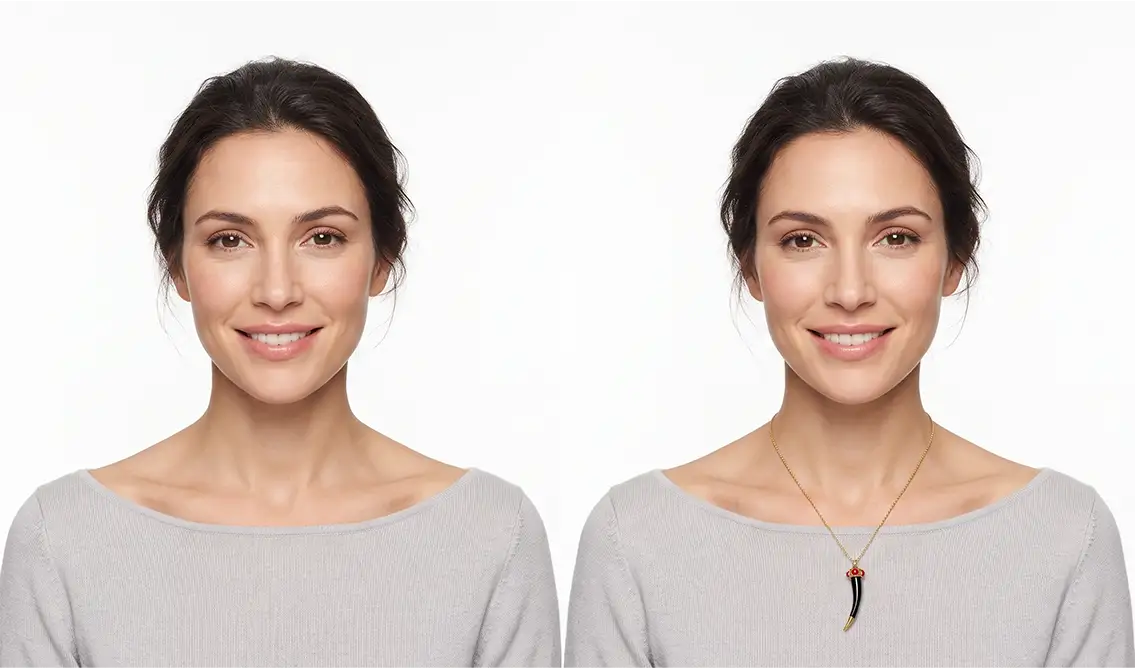
Turn on your camera, pick earrings, a pendant or a ring, and see the piece on yourself in real time.
Switch items in one tap.
Everything runs in your browser: no photo or video is ever uploaded.
Who Jera Suits and Who It Is Given To
Jera is not tied to gender, age or profession, but it has themes it is especially in tune with. It is the rune of long labour, patience and an earned outcome, so it is most often chosen and given where what matters is not quick success but the right result in its own time.
People take it:
- For those running a long project. A dissertation, a build, a business, a book, anything that takes years and patience. Jera works as an anchor: do not quit a step short of the shoots.
- As a gift for a completion. A graduation, a defence, the end of a big stage. The sign of harvest reads as "you earned this by your own work."
- As a wish for a good year. For the new year, a birthday, the start of a new cycle. The formula til árs ok friðar, "a good year and peace," lives on in this gift.
- For those learning patience. For anyone who needs not to force a result but to trust the rhythm of the work. The rune of the year keeps you calm.
- For lovers of Northern culture and the runic tradition. Jera is a logical rune for anyone collecting the symbolism of the Futhark and valuing its earthy, farming wisdom.
As a gift Jera is convenient because its meaning reads warmly and without an esoteric weight: a wish that labour should bear fruit. A jewellery gift guide by occasion can help you pick the right version.
How to Choose Jera Jewellery
The Correct Form of the Two Parts
The first thing people look at is the accuracy of the sign. Jera has two separate angular parts, turned toward each other and divided by a gap. Both should be roughly equal in size and mirrored in direction. If a maker has fused the halves into a single figure or made them of different sizes, the rune loses its main idea, the turning and the balance.
Checking is simple: before you should read exactly two brackets set to meet, not a solid mark. A good workshop keeps the gap and the symmetry, because in them lies the whole meaning of the rune of the year.
Craft Versus Stamping
Mass stamping gives an even but faceless sign, often with a blurred relief, and with Jera it is exactly the gap between the parts that suffers; it "fills in." Hand carving or quality casting hold crisp edges, and both halves read separately. For a symbol whose whole force is in its form, crisp lines are not a quibble but the essence.
If you want a piece with character, look for versions with hand finishing, an honest metal texture, a light living asymmetry to the carving. Such pendants are closer to the spirit of runic craft, where each sign was carved separately.
Size and Proportion
For an everyday pendant a size of 2-4 centimetres is comfortable. Jera has a subtlety: because of its open form, too small a sign loses the gap and blurs into a spot, so the rune of the year is better not made very small. For a masculine look and a broad neck people take it nearer the upper edge, for a slender build nearer the lower. A ring and a bracelet call for neat engraving where the halves still stay distinct.
Leave your email, we'll send your discount code. No spam, unsubscribe anytime.
The code arrives by email, valid on your first order.
Jera and Other Runes of Prosperity: What Is the Difference
More than one rune reflects the theme of prosperity in the Futhark; several do, and they share the meanings out among themselves. Understanding the differences helps you choose "your own."
Jera and Fehu: Process Versus Result
The main pair by meaning is Jera and Fehu. Fehu is about movable wealth: cattle, silver, money in circulation, the finished result you can count and set to work. Jera is about the process that leads to that result: the yearly labour, the sowing, the growth and the reaping. Fehu is a barn full of grain; Jera is the road from seed to barn.
Together they describe the full circle of prosperity. The labour in season that Jera speaks of yields fruit that becomes the movable wealth of Fehu. Many wear them as a pair for exactly this reason: one rune about patience and ripening, the other about inflow and turnover. If Fehu answers the question "how much do I have," Jera answers "will what I invested in ripen."
Jera and Othala: Earned Versus Inherited
The second important pair is Jera and Othala. Both are tied to the land, but in different ways. Othala is inherited holding: ancestral land, the house, what is received from ancestors and passed on, not bought and not sold. Jera is what the land yields here and now, the harvest of this season, the fruit of your own labour rather than an inheritance.
The difference is subtle but important. Othala is about roots and belonging, about what was before you and will be after. Jera is about your personal contribution to the current year, about what is earned rather than received for free. Othala is the field as inheritance; Jera is the bread you gathered from that field with your own hands.
Jera and Sowilo: Patience Versus Triumph
The pair of Jera and Sowilo, the rune of the sun, is interesting too. Both are tied to light and fertility, both lack a reversed meaning, and both are kindly. But the accent differs. Sowilo is the sun at its zenith, victory, energy, a bright moment of triumph. Jera is the sun working the field all season long, the slow ripening, the outcome of long labour.
Sowilo is about the flash of success, Jera about its preparation and gathering. The one drawn to the idea of a fast bright victory leans toward Sowilo. The one who values patient work and an honest reward at the road's end chooses Jera. Once you have sorted through these differences, it is easier not to confuse the "bright" runes and to choose a sign for a specific intent.
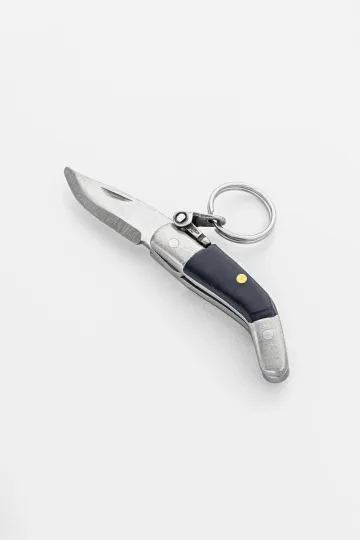
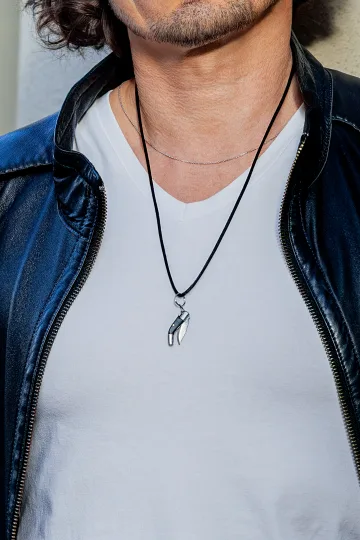
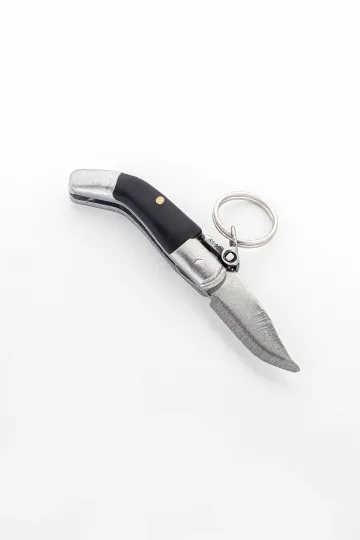
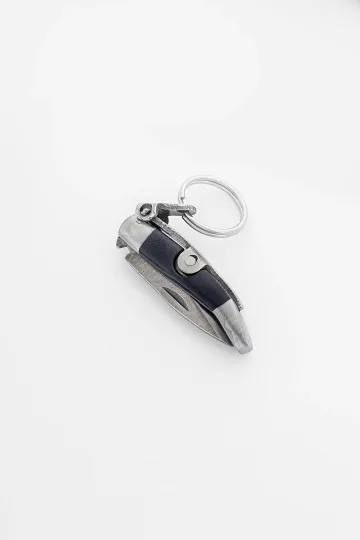
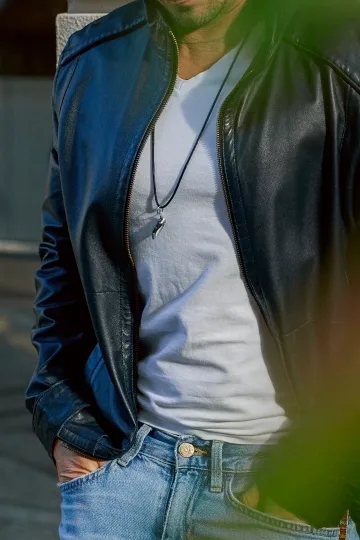
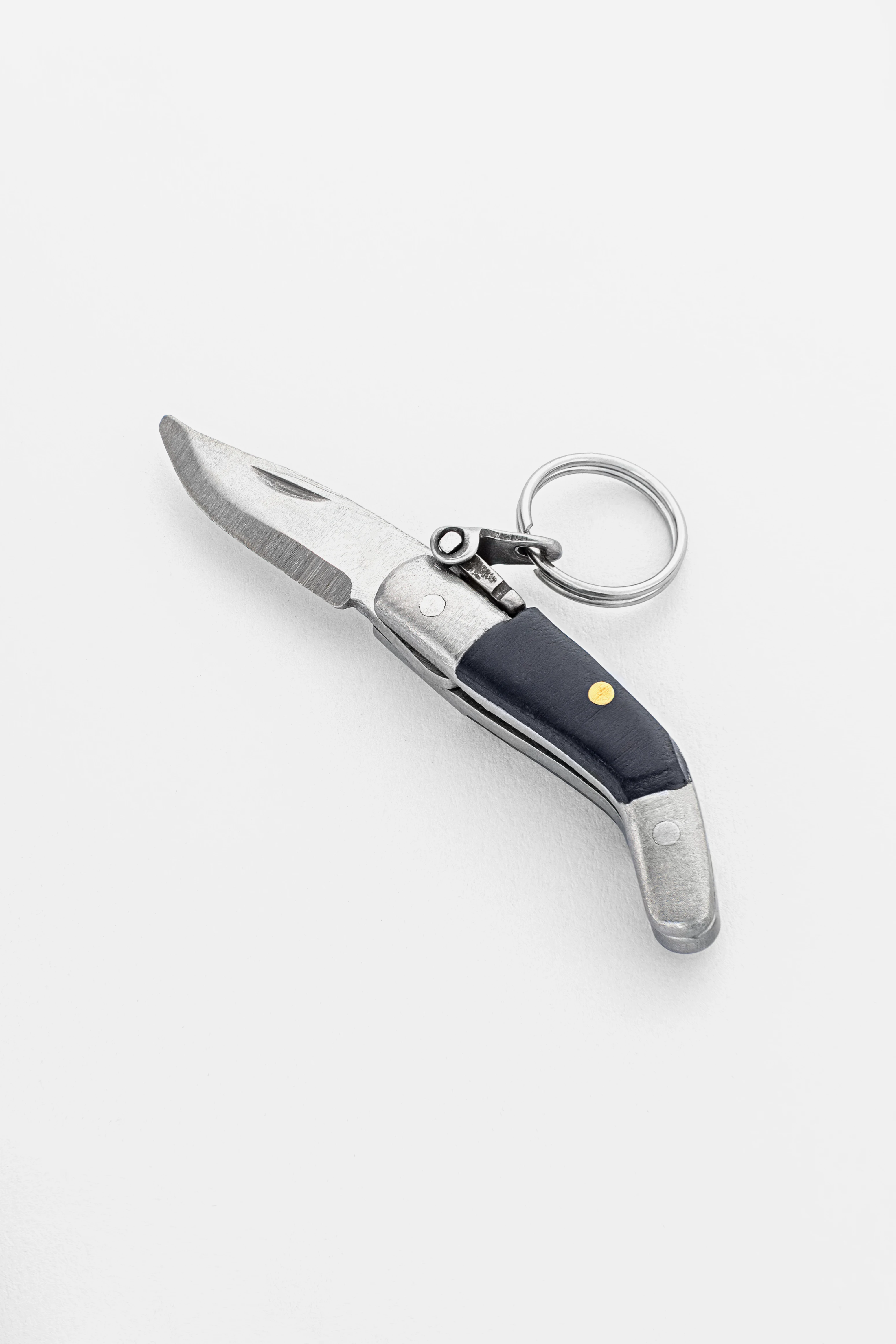
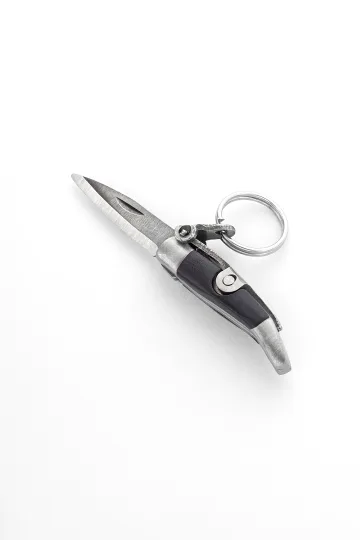
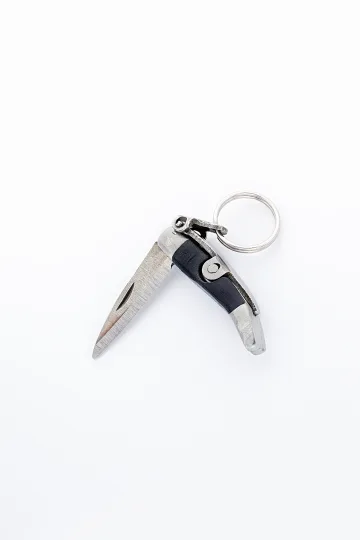
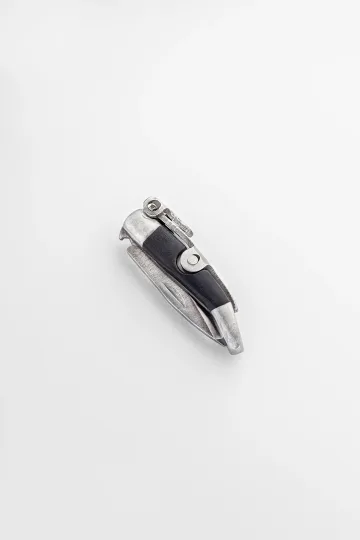
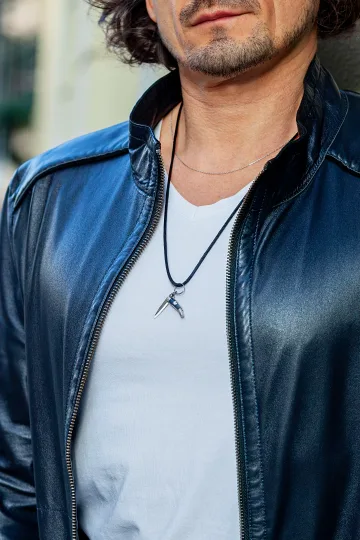
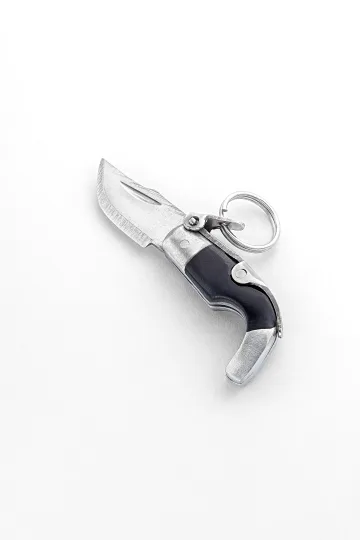
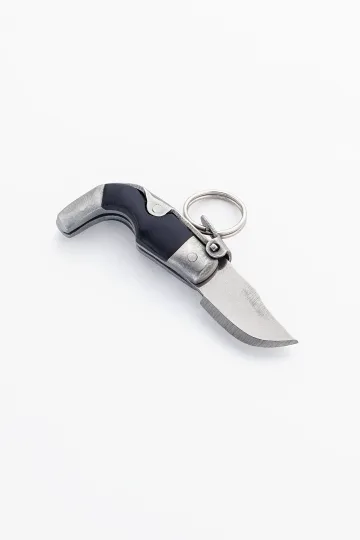
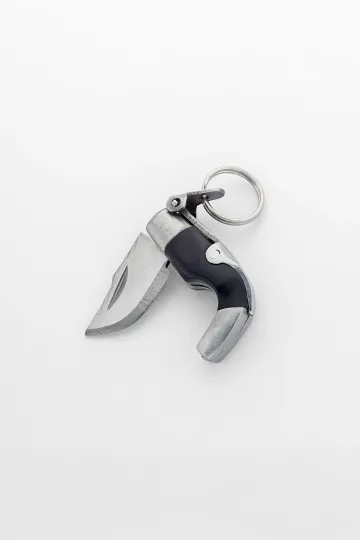
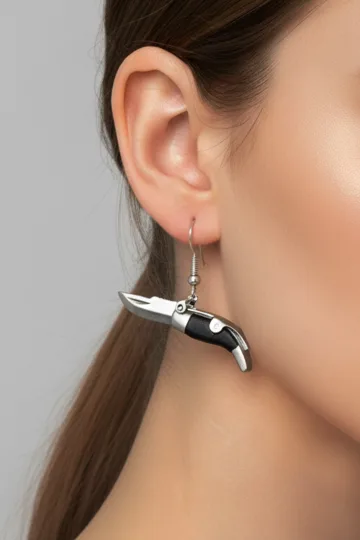
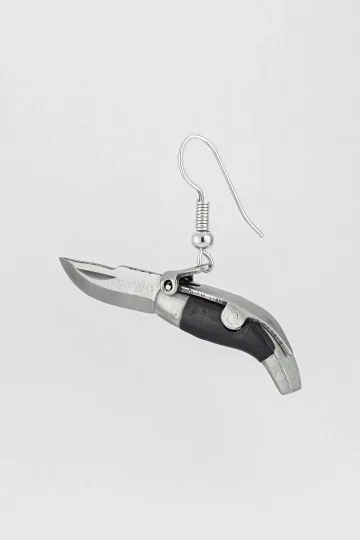
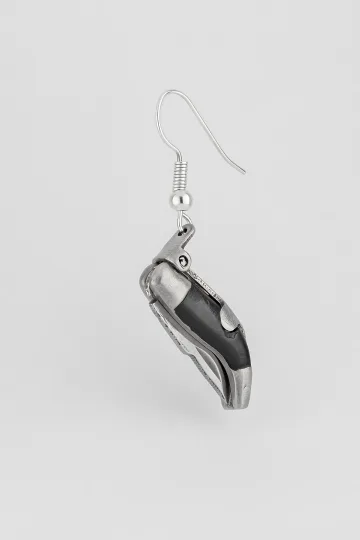
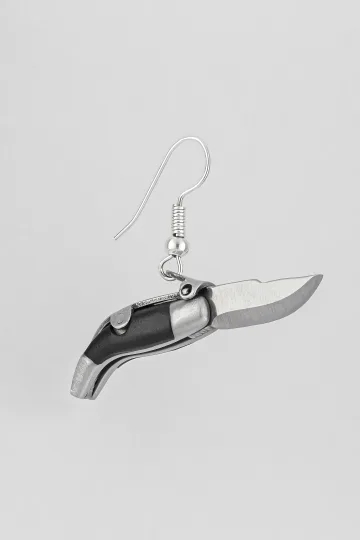
CAPAORA mini knife pendant
The 18th-century Spanish navaja in miniature: 40 mm of stainless steel, a real folding mechanism and a Palanquilla lock that clicks. An affordable gift to remember.
Authentic · Ships from Spain · 14-day returns
Jera in Runic Divination
The historical Jera was a letter and an idea of harvest, but over the past century and a half a developed divinatory tradition has grown up around it. In that tradition the rune of the year is read as an answer about timing, outcomes and patience. It is a late reconstruction rather than a direct inheritance from the Iron Age, and yet within its own logic it holds together, and it sits surprisingly well on the older sense of the sign.
What Jera Means in a Reading
A Jera that comes up is almost always a good sign. It says the matter is moving under its own power and will come to fruit if the work is carried through to its term. This is a rune of ripening rather than of instant luck: it promises an honest return on effort rather than a gift. To the question "when," the rune of the year answers evasively and precisely at once: in its own time, not now and not tomorrow, but when it is ready.
Where a situation needs clarifying, Jera asks for patience. If the question concerns work, study or a long project, it confirms that the course is right and that quitting would be a mistake. If the question concerns quick gain and hurry, the same sign gently pulls the reins: too early, give time its work. In effect the rune returns the querent to the rhythm that all of its symbolism describes.
The Upright Position and the Absence of a Reversal
Because of its symmetry Jera has no reversed meaning: turn it any way you like and the sign reads the same. In a spread that removes the usual question about the dark side of a rune. Jera cannot be drawn upside down to yield an opposite sense, as happens with most of the Futhark, which is why its appearance rarely alarms anyone at the table.
The shading comes from the neighbouring runes. Beside heavy signs such as Nauthiz (need) or Isa (ice), the rune of the year reads as "hold on, winter is not over, but the year will turn." Beside bright ones such as Sowilo or Wunjo, it reads as "the reaping is close and the outcome will be good."
Jera in Combination with Other Runes
Readers take runes in linked pairs rather than singly, and a neighbour shifts the shade of meaning. A few settled combinations with the rune of the year:
- Jera and Fehu. Ripening plus wealth: the labour will come due and turn into profit. One of the most favourable pairs about money that is earned rather than won.
- Jera and Berkano. The year plus growth and birth: a good season for family, home, or a new venture that will take a long while to mature.
- Jera and Nauthiz. The year plus need: the harvest will come, but through hard work and constraint, and the reward will be paid for in sweat.
- Jera and Dagaz. The year plus breakthrough and daybreak: a cycle completed and a turn onto a new one, the end of one season and the start of the next.
The sense of these pairings always circles time and outcome: Jera sets the rhythm, and the neighbouring rune specifies which harvest is meant.
Bindrunes with Jera
A bindrune is several runes merged into a single sign for the sake of one shared wish. Jera is woven into bindrunes when the maker wants to insist on a good ending: joined with Fehu for profit arriving on time, with Berkano for the growth of a family, with Sowilo for the light and strength to carry a thing through. The symmetrical shape of the year rune suits such mergers, since its two halves settle easily around a shared stave without breaking the drawing.
It is worth holding in mind that few authenticated ancient bindrunes specifically for a good year have reached us, and that most of the combinations in circulation are the work of the last few decades. Their value lies in the meaning and the intent of the person assembling them rather than in a supposed antiquity of the design.
An Important Caveat
There was no runic canon of divination in the Iron Age, at any rate not in the form modern handbooks present. What we call the meanings of runes in a spread grew up across the nineteenth and twentieth centuries out of the rune poems, philology and occult schools. That does not devalue the practice, but it is more honest to treat it as a young symbolic system built on ancient material rather than as a direct decoding of what a carver meant fifteen hundred years ago. The beauty of Jera is that even this late reading settled onto its original sense without strain: in both cases the subject is patience and an honest result.
The Psychology of a Runic Amulet
You do not have to believe in the magic of runes for a Jera pendant to "work." The mechanisms that make such an amulet useful are quite earthly and well described.
An anchor of patience. When a person ties an object to a concrete stance, a glance at that object returns the mind to it. A rune of the year at the neck becomes a quiet reminder: let the work ripen, do not quit a step short of the reaping. It works as a visual bookmark for attention, without any mysticism, and it is especially valuable where you feel like dropping everything before the term.
The effect of calm. Cognitive psychology describes the "anchor object" effect: a person confident that a talisman is with them acts calmer and fusses less. For many, Jera lowers the anxiety of waiting, when the work is done and the result is still ripening and nothing more depends on you.
Ritual and rhythm. Putting on a sign at the start of a new stage is a small ritual, and rituals restore a sense of control and mark out time. The rune of the year fits such milestones neatly: a new year, a new project, a new season. It helps you feel you have entered the cycle deliberately.
Identity and values. To wear a rune of harvest is to state quietly (first of all to yourself) your priorities: long work, an honest outcome, trust in the process. Anchors of identity increase resilience to hardship, and in that sense an ancient farming sign works for a thoroughly modern person who is learning not to force a result.
There is nothing supernatural in this. An amulet does not change reality; it changes the wearer's relationship to time and waiting, and it does so in a measurable, useful way.
Jera in Culture and Heritage
Runes have long moved beyond archaeology and live in language, the calendar and modern culture. Jera's trace is at once the most invisible and the most everyday: it hides inside a word we say hundreds of times a year.
In language. English year, German Jahr, Dutch jaar, Norse år all reach through a shared root toward the same "good harvest year" concept that stands behind the rune. Every time Europeans wish each other a happy new year, they repeat, without knowing it, the name of the twelfth rune of the Futhark.
In the calendar. Runic calendar staves, primstavs, were used in the northern countryside right up to the modern age. On a wooden stick, runes and signs marked feasts, phases of the moon and the terms of work, laying out the very yearly round that Jera speaks of. So the rune of the year held on longest exactly in the role of a measure of time, not of writing.
In modern symbolism. The revived interest in Northern antiquity has made the Futhark a recognisable visual language. Runes decorate books, games, music covers and craft goods. Jera, as the sign of the cycle and a good outcome, holds a firm place in this set, especially where people value the idea of patience and reward for labour.
One important caveat is worth keeping. In the 20th century some individual runic signs were used by political movements of grim repute, and a heavy context surrounds certain symbols. Jera does not belong to that circle and remains a neutral farming sign, but a general awareness of what you wear and what you wear it beside is fitting here.
Send a friend a discount code, they save on their first order.
Facts About the Jera Rune That Surprise You
The word "year" is the rune's name. English year, German Jahr and Norse år go back to the same root jēra- that gave the twelfth rune its name. Wishing someone a happy new year, we literally pronounce its title.
Jera has no reversed meaning. Because of the symmetry of its two interlocked halves, the sign reads the same when turned. It is one of the few runes that cannot be "flipped to ill," and it is read as an image of a justice you cannot cheat.
Jera stands right after winter. In the second aett its place is exactly behind three severe runes: hail, need and ice. The whole row reads as a story: first frost and patience, then the good year and the harvest. Jera is the moment when the ice breaks.
The Icelandic poem praises it without a single caveat. For many runes the poems find a dark side, but ár is called "a boon to men, a good summer and a fully ripened field." It is perhaps the brightest stanza in the whole body of rune poems.
The rune changed its own sound. In Norse the initial "y" wore away over time, and jara became ár. In the Younger Futhark the sign was renamed and its form simplified. A rare case where a rune changed its name but not its meaning.
"Year" originally meant not 365 days but the harvest season. For a farmer of Germanic Europe the year was measured by the field, the time from sowing to reaping. A "good year" meant a rich harvest, not a stretch of calendar.
A legend of a golden age stands behind the rune. The rune poems tie the good year to King Frothi, under whom peace and plenty reigned, the "peace of Frothi," and a magic mill ground out gold and calm. Jera is plugged into the image of a lost paradise on earth.
The two halves of the sign are the two half-years. The Germanic peoples divided the year not into twelve months but into two great seasons, winter and summer. Jera's open form is often read as an image of these two halves, closed in the eternal turning of the wheel.
Silver, gold, runic and Scandinavian symbolism, protective charms, paired sets.
Frequently Asked Questions About the Jera Rune
What does the Jera rune mean? Jera is the twelfth rune of the Elder Futhark, standing for the sound "y" and the concept of the harvest year. In a broad sense it symbolises the yearly cycle, the harvest, the reward for labour, patience and an honest outcome. The name goes back to Proto-Germanic jēra-, "year, harvest, good season," the same root as the modern word "year" and German Jahr.
Is Jera the rune of the year or the harvest? Both at once. For a farmer of Germanic Europe the year was measured not by a calendar but by the field, the time from sowing to reaping. A "good year" meant a rich harvest. So Jera is at once about the cycle of time and about its fruit, about the season itself and about the reward at its end.
Does the Jera rune have a reversed meaning? No. Because of the symmetry of its two interlocked halves, the sign reads the same when turned, so Jera is placed among the runes without a reversed position, alongside Sowilo and Isa. This makes it one of the kindliest runes of the row: it cannot be turned to ill by a simple flip.
What does the Jera rune look like? Two separate angular parts, turned toward each other and interlocked without touching, with a gap between them. One half points up, the other down; the sign resembles two brackets set to meet. Its form is like no other rune of the Futhark and is often read as an image of the two half-years.
Can you wear the Jera rune every day? Yes. For daily wear silver and stainless steel are convenient: they are sturdy, undemanding in care and do not darken. Gold suits too, especially as a sign for the completion of a big stage. Wood and bone are authentic but fragile; they are more often chosen as a ritual or collector's version.
Who is Jera given to? To those doing long work and waiting for a result: students, authors, entrepreneurs, anyone who builds or grows a venture over years. Jera is given for the completion of a stage (a graduation, a defence), for the new year as a wish for a good year, and simply as a sign that "your labour will pay off." The meaning reads warmly and without an esoteric weight.
How does Jera differ from Fehu? Fehu is the finished result, movable wealth you can count. Jera is the process that leads to it: the yearly labour, the sowing and the reaping. Fehu is about inflow and turnover; Jera about patience and ripening. They are often worn as a pair: what is sown in season (Jera) yields fruit that becomes prosperity (Fehu).
Do you have to believe in the magic of runes to wear Jera? No. Many wear the rune for its meaning and history rather than for a "magic of harvest." The sign is interesting in itself: it is more than fifteen hundred years old and is bound to the language, calendar and farming culture of Northern Europe. As an anchor of patience it works without any belief at all. Belief stays a private matter.
Runes, Scandinavian charms and symbolism in silver, gold and steel.
Buying it as a gift? Each one arrives ready to give.
 A branded Zevira box and a little card come with every order.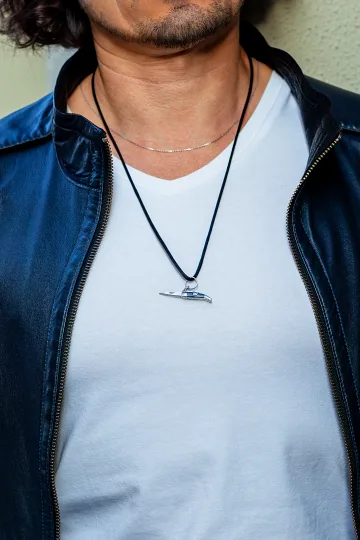




Conclusion
Jera travelled from a sign for the harvest season to a symbol of an honest outcome on a silver chain. Over fifteen hundred years both the way of measuring time and the order of labour changed, but the essence of the rune stayed the same: you get exactly what you grew, and it comes in its own time, not on first demand.
The twelfth rune of the ancient alphabet tells a calm, grown-up truth. Reward ripens; it cannot be begged for or hurried, but it can be earned by patient work and a sure sense of timing. Whether you wear Jera for its meaning, for the beauty of its open form or for a quiet reminder to let the work ripen, you carry with you one of the most honest symbols in history: the sign that labour in season bears fruit.
Wear the symbol, don't just read about it. These are in stock:



About Zevira
Zevira makes jewellery in the artisan tradition of Albacete, Spain. Runic symbolism is one of the themes close to us: an ancient form, legible without words, equally at home on a rough leather cord and on a thin chain. We render Jera with the gap between the halves preserved and crisp carving, in modern materials and proportions.
What you can find with us on the theme of Northern symbols:
- Runic pendants in silver, gold and steel
- Scandinavian charms: protective runes, signs of fertility, images of the gods
- Leather and rubber cords and chains of various lengths for a rune of any size
- Paired and set versions for those who collect the symbolism of the Futhark
- The option of personal engraving
Every piece can be personalised with engraving. Sterling silver 925 and 14-18K gold.