Jewelry with Chinese and Japanese characters: what your pendant actually says
A tourist brought a silver pendant home from Asia, fell for one elegant character, and wore it for three years as a sign of strength and wisdom. At a party, a native speaker quietly took him aside: the pendant read "cheap instant soup." The story sounds like a joke, but it happens all the time. The character a vendor sells you as "strength" can just as easily be the name of a dish, a brand, or a random cluster of strokes with no meaning at all. Jewellery behaves exactly like a kanji tattoo, with one mercy: the pendant comes off.
A character is beautiful in its own right. It is a drawing that calligraphers refined over thousands of years, and even without knowing the language, the eye senses its balance. But the beauty of a sign and its meaning are two separate things, and a souvenir seller rarely knows the second. This piece is about how Chinese characters differ from Japanese ones, why the same character can mean different things on opposite shores of the same sea, which signs genuinely carry "luck," "love," and "long life," how to avoid buying an upside-down character or pure nonsense, and how to wear someone else's writing with respect rather than as exotic decoration.
Hieroglyph, kanji, hanzi: what the difference actually is
Why English speakers say "hieroglyph" loosely
In casual English people reach for all sorts of words for an East Asian sign: "Chinese symbol," "that hieroglyph," "a cool kanji," often interchangeably and often wrong. "Hieroglyph" actually comes from Egypt, the Greek name for the "sacred carvings" of the pharaohs, and it stuck to Chinese and Japanese signs out of habit. It is more accurate to say Chinese characters (hanzi) and Japanese characters (kanji). These are logograms: one sign carries not a sound but a whole word or idea. That is why there are thousands of them rather than a couple of dozen, as with letters in an alphabet. For jewellery this matters: you are wearing a finished word, not a letter, and one wrong stroke can change the meaning entirely.
Hanzi: the Chinese system everything else grew from
Hanzi are the Chinese characters, the oldest continuously living writing system in the world. They are more than three thousand years old and grew out of divination scratched onto turtle shells and ox shoulder blades. Mainland China now writes in simplified forms (after the reform in the mid twentieth century), while Taiwan, Hong Kong, and many diaspora communities kept the traditional, more intricate shapes. The same character for "love" looks different in simplified and traditional form, and on a piece of jewellery that detail instantly betrays where the maker or the source pattern came from.
Wear the symbol, don't just read about it. These are in stock:



Kanji: the same signs, settled in Japan
Kanji are the Chinese characters Japan borrowed more than a thousand years ago, literally "Han characters." Many kanji look identical to hanzi, but Japan went its own way: it simplified some signs differently, shifted some meanings, and invented others outright. So kanji and hanzi are relatives, not twins. A kanji pendant and a hanzi pendant can carry the same drawing yet be read and understood differently in Tokyo and in Beijing.
Where kana fits in: hiragana and katakana
Beyond kanji, Japanese has two syllabic scripts: hiragana (soft, rounded shapes) and katakana (angular ones). These are no longer logograms but sounds, like our letters. Kana shows up on jewellery less often than kanji because it looks "simpler" to a Western eye, yet kana is exactly what records foreign names. If your name is written on a pendant in Japanese, it is almost certainly katakana rather than a "character," and that is perfectly normal: a name is carried by sound, not by meaning.
Why the "Chinese or Japanese" mix-up is so persistent
Souvenir sellers rarely tell the systems apart, and buyers even less so. The sign on a pendant gets called a "Chinese hieroglyph" or a "Japanese symbol" more or less at random. Sometimes a single piece mixes simplified Chinese with Japanese kanji, and to anyone who reads the script it looks like a sentence where two related alphabets have been shuffled together. Understanding the basic difference is the first defence against buying beautiful nonsense.
The characters people search for most
福 fú: luck and happiness
福 (fú) is perhaps the most recognisable "lucky" character in China. It means well-being, fortune, and happiness, and it hangs on doors, windows, and the necks of millions of people, especially around the New Year. On jewellery, fú appears on red backgrounds, on jade, on gold. It is a safe, clear, and respected choice: its meaning is unambiguous, and a native speaker will read it exactly as you intended.
愛 ài: love
愛 (ài in China, ai and koi in Japan) is "love" in the broad sense, from the romantic to the parental. The character is complex and many-parted, with the element for "heart" tucked into its middle. The simplified Chinese version dropped that heart, and many who write in traditional script feel that "love without a heart" has been impoverished. For a paired piece, ài is a frequent choice, but decide in advance which form you want: with the heart inside or without.
力 lì and 強 qiáng: strength
Strength carries the most traps. 力 (lì) is physical strength, might, raw energy, a simple sign of two strokes. 強 (qiáng) is strength in the sense of toughness and resilience. Vendors slap anything "strong-looking" onto "men's" pendants, and sometimes what you get instead carries a very different shade: "violence," "stubbornness." If you want strength of spirit specifically, it is better to confirm the exact character than to trust the word on the tag.
寿 shòu: longevity
寿 (shòu) is long life, one of the most revered auspicious signs. It is given to elders, shown on milestone-birthday gifts, and carved into jade. There is a decorative "round" form of this character that calligraphers turned into something close to an ornament, and that is the version that often graces medallions. Shòu is a wish for many years, so as a gift to a young person it lands a little oddly, while for an older relative it is just right.
双喜 shuāngxǐ: double happiness
双喜 (shuāngxǐ), "double happiness," is two "joy" characters set side by side and fused into one symmetrical drawing. It is a wedding sign: people paste it on windows, print it on invitations, and give it to newlyweds. On paired rings and pendants it reads plainly: happiness doubled by the union of two people. If you are after a symbol for a couple with a clear and joyful meaning, double happiness is one of the surest options, recognisable to any Chinese reader at a glance.
财 cái and 富 fù: wealth and abundance
Here it is easy to slip up again. 富 (fù) is abundance, plenty, a full bowl (it sounds the same as "happiness" 福, but it is a different character). 财 (cái) is money, material wealth. The two are often joined into a wish for prosperity. On jewellery, the signs of abundance pair with gold and jade, especially as a gift for the opening of a business or for the New Year. Just understand that you are wearing a wish for money specifically, not for some abstract "harmony."
和 hé and 安 ān: harmony and peace
For anyone drawn to calmer symbolism, 和 (hé) and 安 (ān) fit well. 和 is harmony, peace, accord, the very sign hidden inside Japan's own name for itself in the sense of "peace and concord." 安 is calm, safety, peace within the home. Both read gently and suit a man or a woman, a gift or yourself. These are signs for someone who does not want to shout "luck" or "strength" but is looking for a quiet wish for inner balance.
龍 lóng: dragon as a character, not a picture
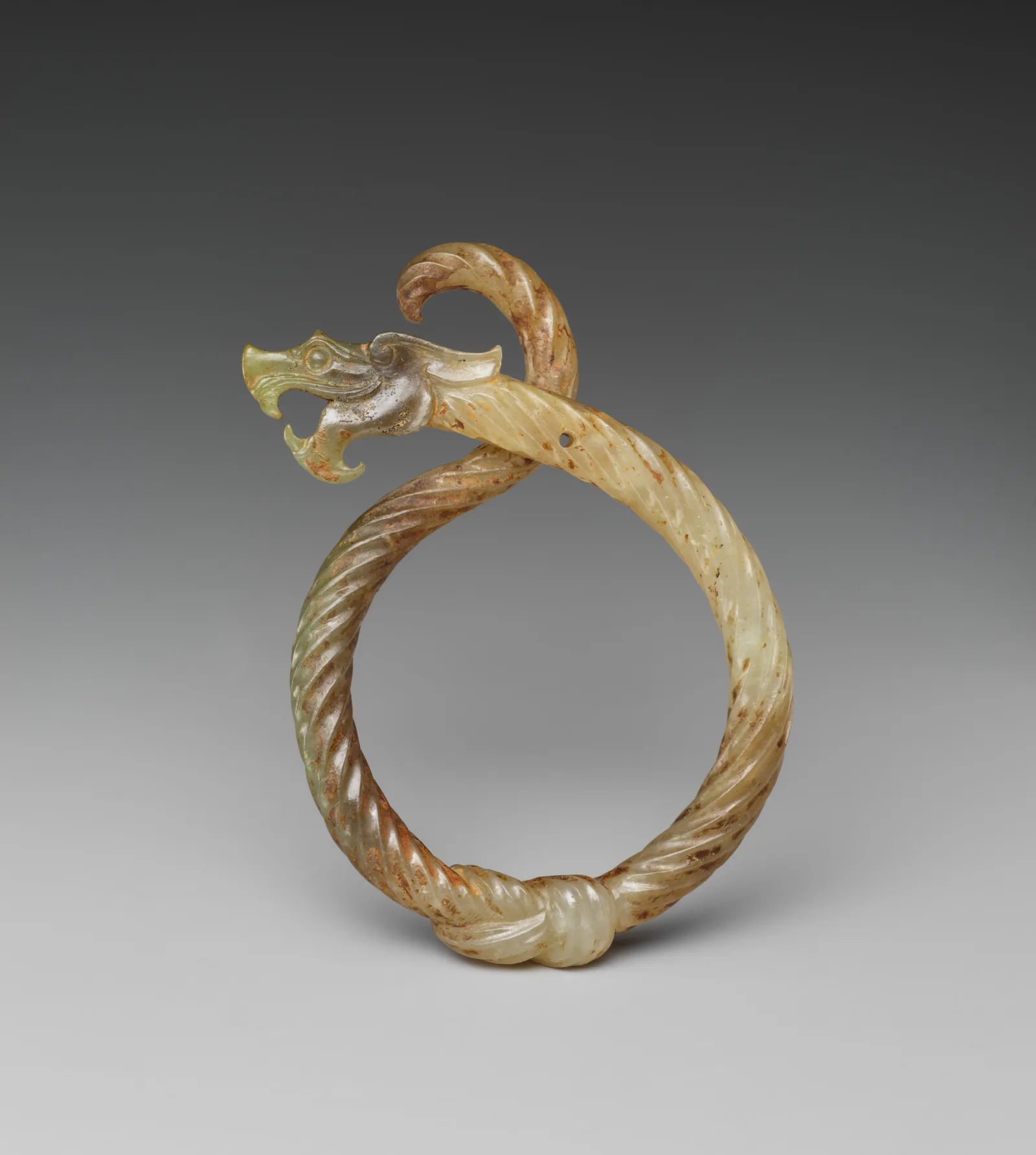
The character 龍 (lóng) deserves its own mention: it is "dragon" written as a word rather than drawn as a figure. In the Eastern tradition the dragon is a benevolent creature, a symbol of strength, wisdom, and luck, not the wicked serpent of Western tales. The sign is complex in its stroke count and so it is especially striking in calligraphy. It exists in traditional, simplified, and Japanese forms, and all three are noticeably different: a vivid example of how one idea can look distinct across three writing systems.
A character belongs on a red cord, full stop. A cheap chain turns an amulet into a price tag, and I will not hear otherwise.
How to style a character pendant
Over years on shoots I have put these amulet characters into dozens of looks, from jade on a red cord to a crisp silver engraving under a collar. Here is what actually works, by occasion.
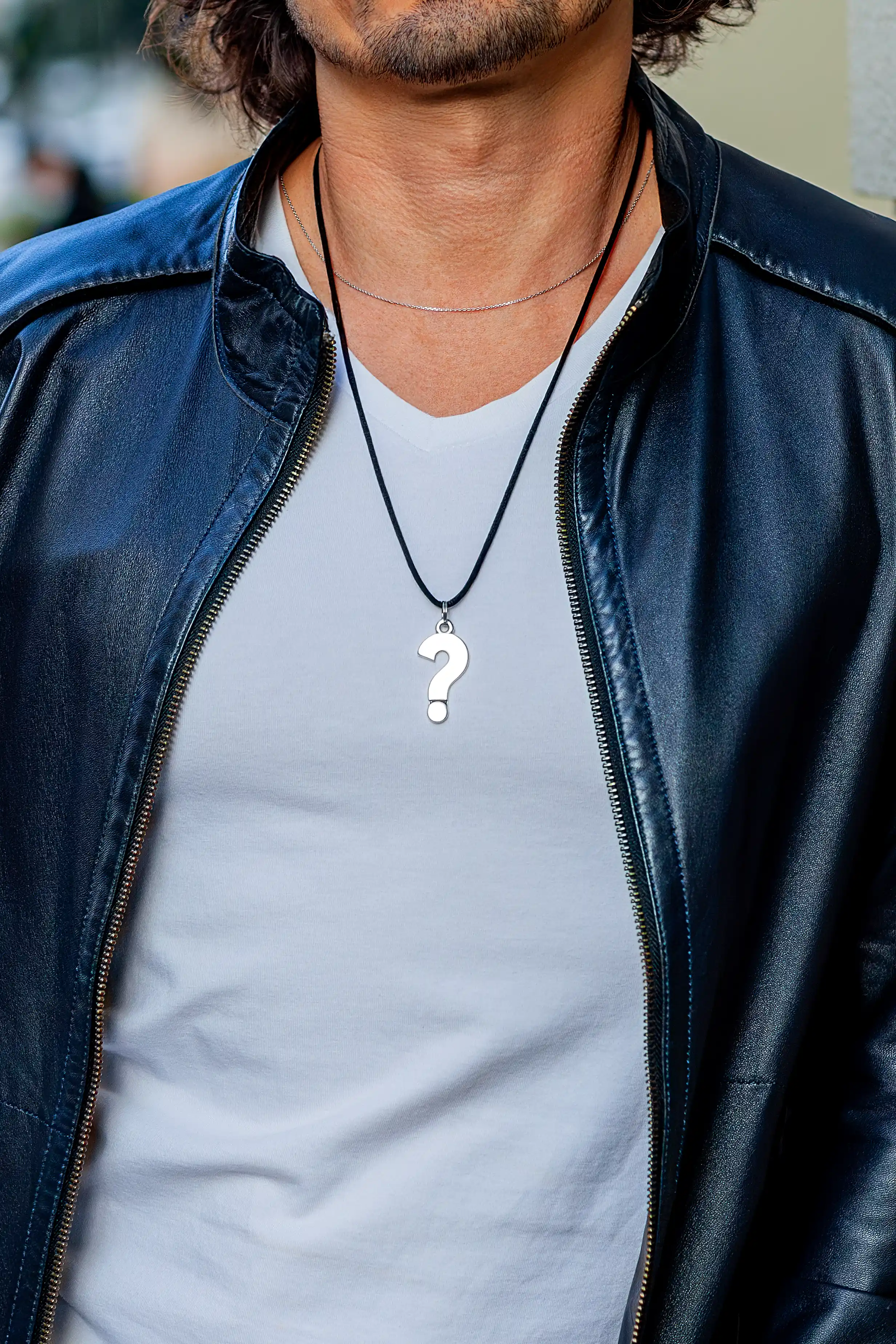
How do I wear a character every day? For everyday I recommend a silver or steel character on a fine chain or a thin red cord over a plain tee, a linen shirt or knitwear. A light top lifts the metal, a dark one turns the character into the accent. Under a V-neck it sits right in the centre, which is its best spot.
Red cord or a fine chain? I choose by the outfit. A braided red cord with a knot gives a whole Eastern look where colour, knot and character pull together, and I suggest it for jade and gold. A fine metal chain reads quieter and more European; for the office and for minimal outfits that is what I recommend.
How do I keep a jade character from fighting my clothes? Green jade looks best against one solid muted colour: sand, graphite, navy, wine. I would drop a busy print, it swallows the carving. One jade character on a clean cord beats one crushed between five pendants.
Is a character right for the office? Yes, if you keep it restrained. I recommend silver with a clean engraving, 45-50 cm long so the character slips under the top shirt button. Under a jacket it reads as a quiet detail, not a loud accent.
Who suits a large gold luck character? Anyone with a warm undertone and a taste for dressing up. A gold fu, especially with red enamel, catches the light and asks for an open neckline and a rich colour: wine, emerald, black. This is a piece for a celebration and a gift, not a quiet weekday.

Turn on your camera, pick earrings, a pendant or a ring, and see the piece on yourself in real time.
Switch items in one tap.
Everything runs in your browser: no photo or video is ever uploaded.
Why one character means different things in China and Japan
A shared root, meanings that drifted apart
Japan took the characters from China, but the language beneath them was its own. Over a thousand years the meanings drifted. The classic example is the pair 手紙. In Japan it means "letter" (the kind you write and send), while those exact two characters in China mean "toilet paper." One drawing, two completely different ideas. So a pendant carrying a Japanese word, read as Chinese (or the reverse), can broadcast an awkwardness the owner never suspected.
Simplified, traditional, Japanese: three versions of one character
Many characters exist in three forms at once: traditional Chinese (Taiwan, Hong Kong), simplified Chinese (the mainland), and Japanese kanji, which sometimes matches one of the other two and sometimes stands apart. The sign for "dragon" looks markedly different across these three systems. For jewellery this is a question of origin and taste: the traditional form is richer in strokes and more "antique," the simplified one is leaner. The key is not to mix them within a single word.
Readings: one character, several sounds
In Japanese, a single kanji is usually read in more than one way depending on the word. A sign that by itself means "life" sounds entirely different in various combinations. That means "how does my pendant read" does not always have one answer. If the sound matters to you specifically (for a name, say), ask someone who knows for the exact reading rather than assuming.
Why "beautiful" and "correct" are not the same thing
A Western designer often picks a character by shape: this one sits nicely in a circle, that one fills a square well. A native reader looks at meaning and fitness. A sign can be graphically flawless yet carry a shade that looks strange on the body: "cheap," "demon," "the end." A beautiful form is no insurance against a meaning that misfires, and that is the central lesson of the whole subject.
Customer reviews
Zevira is a real jewellery shop. Genuine payments, deliveries and customer thank-yous.
🥰🥰🥰 gracias
Ok, ¡gracias! 🙂
Common errors and upside-down characters
A character set upside down
The most common flaw of mass production: the sign is mirrored or flipped. To an eye that cannot read the script, top and bottom are not obvious, and the stamping machine sets the character however it lands. An inverted character either turns into nonsense or, more rarely, into a different sign with a different meaning. The check is simple: find a reference image of the character and compare where the "heavy" part sits and which way the strokes point.
A mirror reflection
A separate trap is the mirrored sign, where the shape has been flipped left to right. This happens when a pattern is copied from the reverse side or from a photo held up to the light. A mirrored character looks to a native reader the way a backwards letter "R" looks to us: vaguely recognisable, clearly wrong, and an instant giveaway that whoever made it could not read the script.
Nonsense and "pseudo-characters"
Some signs simply do not exist: a designer "added" a stroke, combined parts at random, and produced a pattern that resembles a character but means nothing. It is like a word made of random letters. For decoration that is even acceptable, as long as you know you are wearing an ornament rather than a text. The trouble starts when such a pseudo-sign is sold as an "ancient symbol of luck."
A real character with the wrong shade
Sometimes the sign is genuine and correctly written, yet its meaning is not what was promised. "Free of charge" instead of "freedom," "illness" instead of "health and long life" through one wrong stroke, "slave" instead of "servant of destiny." A stroke or two decides everything. So treat the word on the tag as a rough draft of a translation rather than a guarantee.
A calligraphic liberty mistaken for an error
The reverse happens too: a character is written correctly, simply in a cursive or archaic style, and an untrained eye takes it for wrong. The decorative round form of "longevity" or the grass-script flourish of "happiness" is not a mistake but an artistic rendering. So before declaring a pendant "botched," check whether it is a calligraphic variant.
Where mass-production errors come from
Almost every flipped or meaningless sign is born at one stage: when the design is drawn by someone who cannot read the script, working from someone else's picture. They copy the silhouette without grasping where the "top" of the character is, which strokes are essential and which are incidental. The stamp then reproduces the error by the thousand. A serious workshop works the other way around: a native speaker writes or checks the sign first, and only then is it transferred to metal. That is why "who drew this sign" can matter more than "what does it mean": a literate source rules out all four typical disasters at once.
Upload a photo of your pet, someone you love, or an object. We'll build a 3D model and hand-cast it in pewter.



How to check the meaning before you buy
Compare against a reference, stroke by stroke
The most reliable method is to compare the sign with a reference form from a dictionary or a trustworthy source. Look not at the overall silhouette but at the individual strokes: their number, direction, and order of "weight." If a stroke is missing or extra, it is either a different character or an error. That one minute of comparison spares you the "cheap soup" story for the entire life of the piece.
Ask a native speaker, not a photo translator
Automatic translation from a photo often stumbles on stylised and calligraphic signs. A living native speaker reads the sign in a second and will tell you at once whether there is a catch in its shade. If you know no one, language communities are happy to decode such finds. A single question, "what does this say," costs less than a return.
Confirm whether it is Chinese or Japanese
Before buying, ask the seller directly: is this simplified Chinese, traditional, or Japanese kanji. If the seller does not know, that is already a signal. A serious maker usually knows which system they are working in and can name both the character and its reading. A vague "it is an Eastern symbol of luck" means no one checked the meaning.
Decide what matters most: meaning, sound, or shape
Before buying, answer honestly why you want the sign. If meaning matters, verify the translation. If the sound of a name matters, it will be an approximation through kana or through sound-matched characters. If only the beauty of the line matters, a decorative form will do, but then do not pass it off as "text." A clear goal removes half of all disappointments.
Calligraphic styles: one character, different temperaments
Regular script: clear and readable
Regular (printed) script means strict, separated strokes, each in its place. It is how textbooks are written and, most often, how characters are engraved on jewellery, because the sign reads without effort. If you want clarity and zero ambiguity, choose regular script: it leaves no room for "what if this is actually a different character."
Seal script of the ancient seals
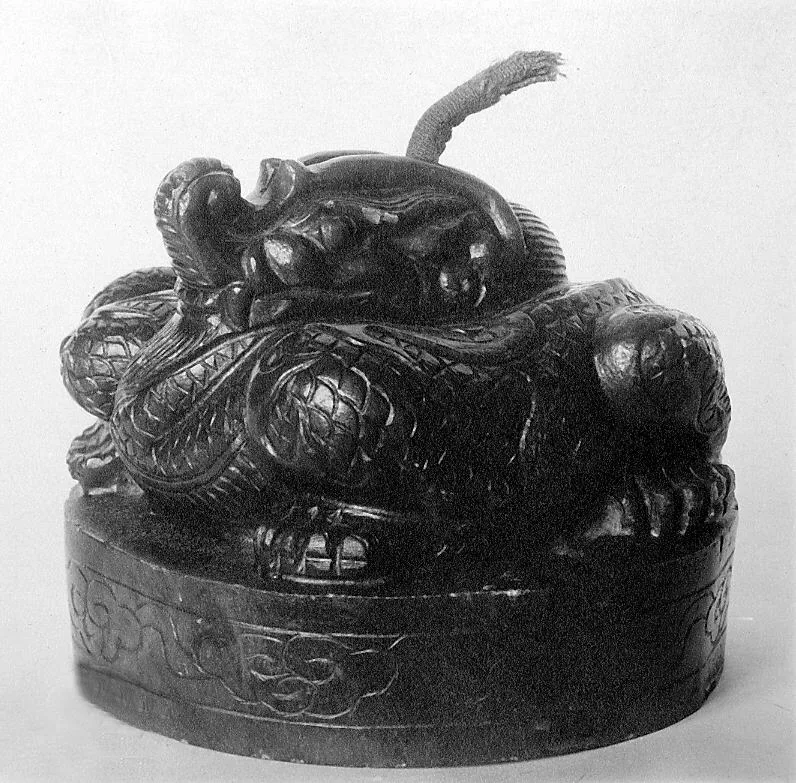
Ancient seal script (the kind carved into stone seals) looks archaic, with rounded, symmetrical lines. It is beautiful on signet rings and metal pendants, and it nods to antiquity and gravitas. The downside is that an untrained person can barely read it, so it is a choice made for aesthetics and history rather than for "so everyone understands."
Cursive script: alive, but risky
Cursive (grass script) means characters written in one flying motion, strokes melting into one another. It is the summit of calligraphic art and at the same time the riskiest choice for jewellery: even native readers are not always sure of cursive. A cursive pendant is about the beauty of a master's gesture, not about an unambiguous message.
Semi-cursive: the golden mean
Between strict regular script and flying cursive lies semi-cursive: the strokes are still recognisable but already flow and connect. It is a frequent choice for engraving a name or a short wish, when you want both the life of the hand and legibility. Many bespoke pieces with inscriptions are made in exactly this style.
Who held the brush: the handwriting matters
Unlike a typeface, a calligraphic sign carries the handwriting of a specific person. A pendant is sometimes made from a model written by a master calligrapher, and then the piece holds an individual gesture: the pressure, the speed, the breath of the hand. People prize this the way they prize an artist's signature. When choosing a piece with a long inscription, it is worth asking whether the sign was written by hand or taken from a printed font: the first is warmer and costlier, the second is more even and cheaper, and both are honest as long as you know which you are getting.



The character as a charm and in feng shui
A wish in words instead of an abstract symbol
In the Chinese tradition an auspicious character is itself a charm. 福 on the door, 寿 on a gift for an elder, 双喜 at a wedding all work as a materialized wish. Unlike abstract symbols, a character speaks the desire out loud in words, and that is its strength: it does not hint, it names luck, longevity, abundance directly. For how protective signs work in general, the guide to charms, amulets, and talismans goes into detail.
Red and gold: the colours that amplify a sign
In feng shui a sign rarely stands alone; colour matters too. Red is the colour of joy and protection from harm, gold is wealth and the sun. That is why 福 is most often red with gold rather than black on white (white is the colour of mourning in this tradition). If a piece with an auspicious sign is made in "mourning" tones, to someone inside the culture it rings false, like congratulations on a black card.
Pairing and symmetry
Eastern aesthetics love pairs: two characters, two fish, doubled happiness. A symmetrical sign reads as balanced and harmonious. That is why the wedding shuāngxǐ is precisely a doubled joy, and good wishes often come in pairs. The idea of balance between two forces runs deep in the philosophy described in the article on yin and yang as a symbol of balance.
Where to wear a charm character
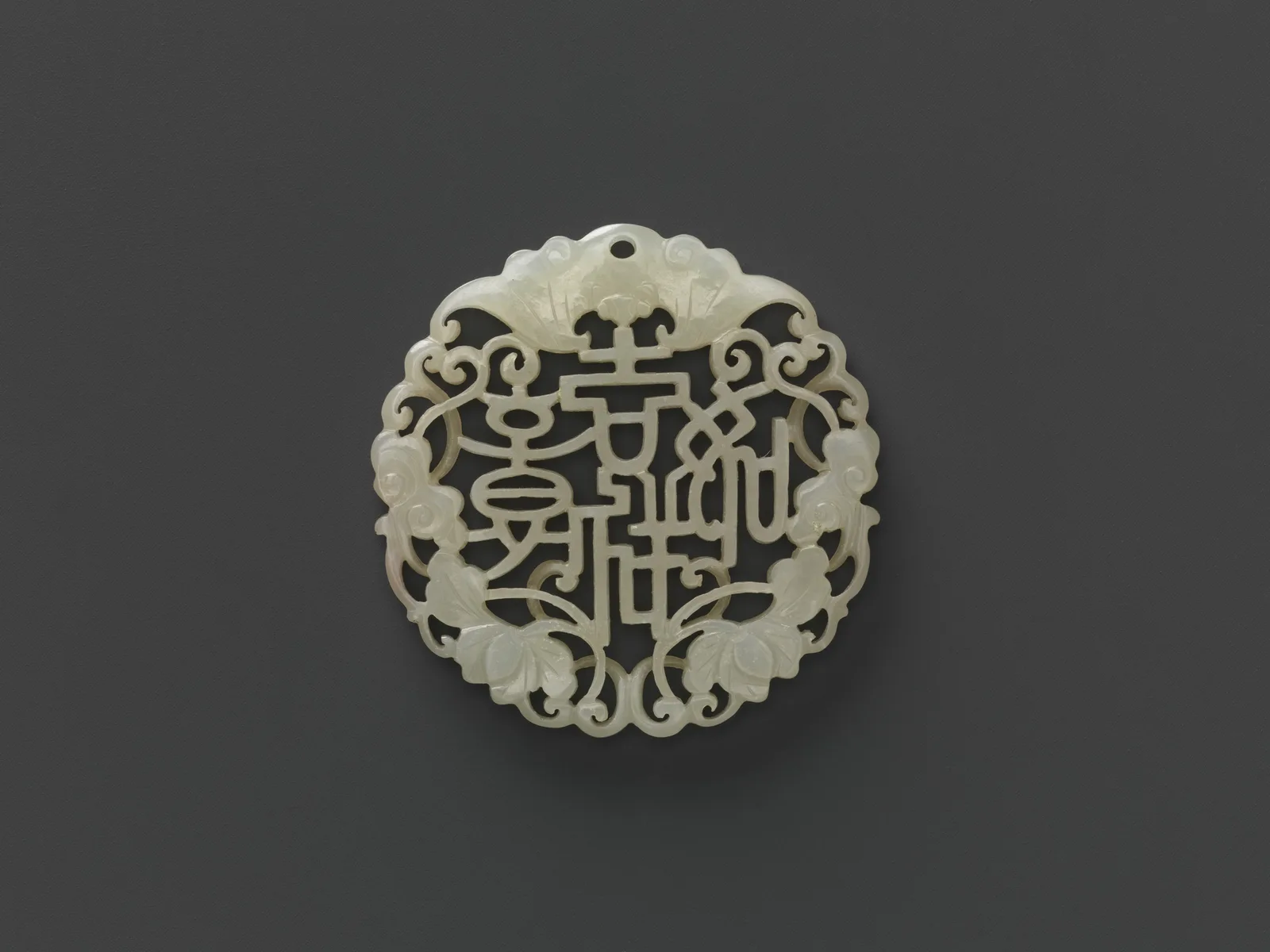
An auspicious sign is worn close to the body, at the neck or wrist, to keep the wish "on you." A jade pendant with fú is often placed on a child as protection, and a longevity ring is given to elders. The principle is simple: a charm is kept close and not paraded for show; its meaning lies in a personal wish rather than in display.
Leave your email, we'll send your discount code. No spam, unsubscribe anytime.
The code arrives by email, valid on your first order.
A character as a name: why it is always an approximation
A name is carried by sound, not meaning
You cannot write a European name "in characters" in any literal sense, because the signs carry concepts while a name is just a sound. So a name is rendered by its sound: in Japan through kana, in China by selecting characters that resemble the sound. "Maria," "Anna," "Alexander" become a string of syllables. It is always an approximation: another language does not hold all of your sounds, and something is lost.
The Chinese route: characters chosen by sound and meaning
In China a foreigner's name is assembled from characters close in sound, and a good selection also weighs the meaning: so that the signs both sound like the name and carry something pleasant (beauty, light, virtue). A poor selection gets the sound right but the meaning absurd. So a Chinese "name" on a pendant is a small work of craft, best entrusted to someone who knows rather than to a generator.
The Japanese route: katakana for foreign names
In Japan foreign names are written in katakana, the syllabic script for everything "non-Japanese." It is an honest and accepted method: the name sounds as close as possible to the original and lays no claim to a false meaning. If someone offers to write your name in "beautiful kanji with meaning," remember that this is an artistic liberty, not your real name.
When a name turns into a curiosity
Trouble comes when a name is chosen at random for the beauty of the characters, without checking the result. The sound seems to match, yet the assembled signs read together as nonsense or carry an unlucky shade. So a name pendant is worth ordering where the selection is made by a native speaker who can explain every sign. A name you carry for life is no place for a surprise.
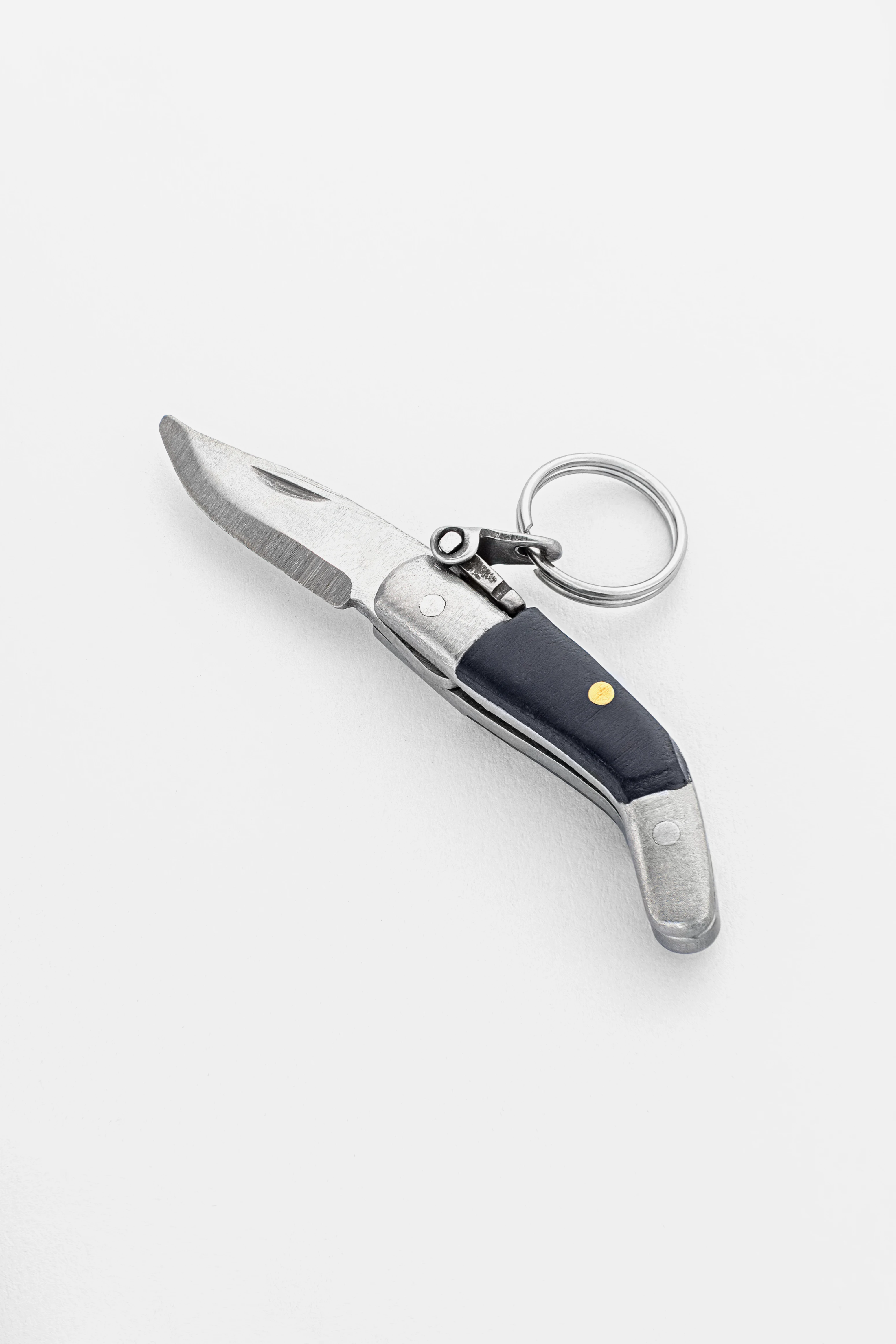
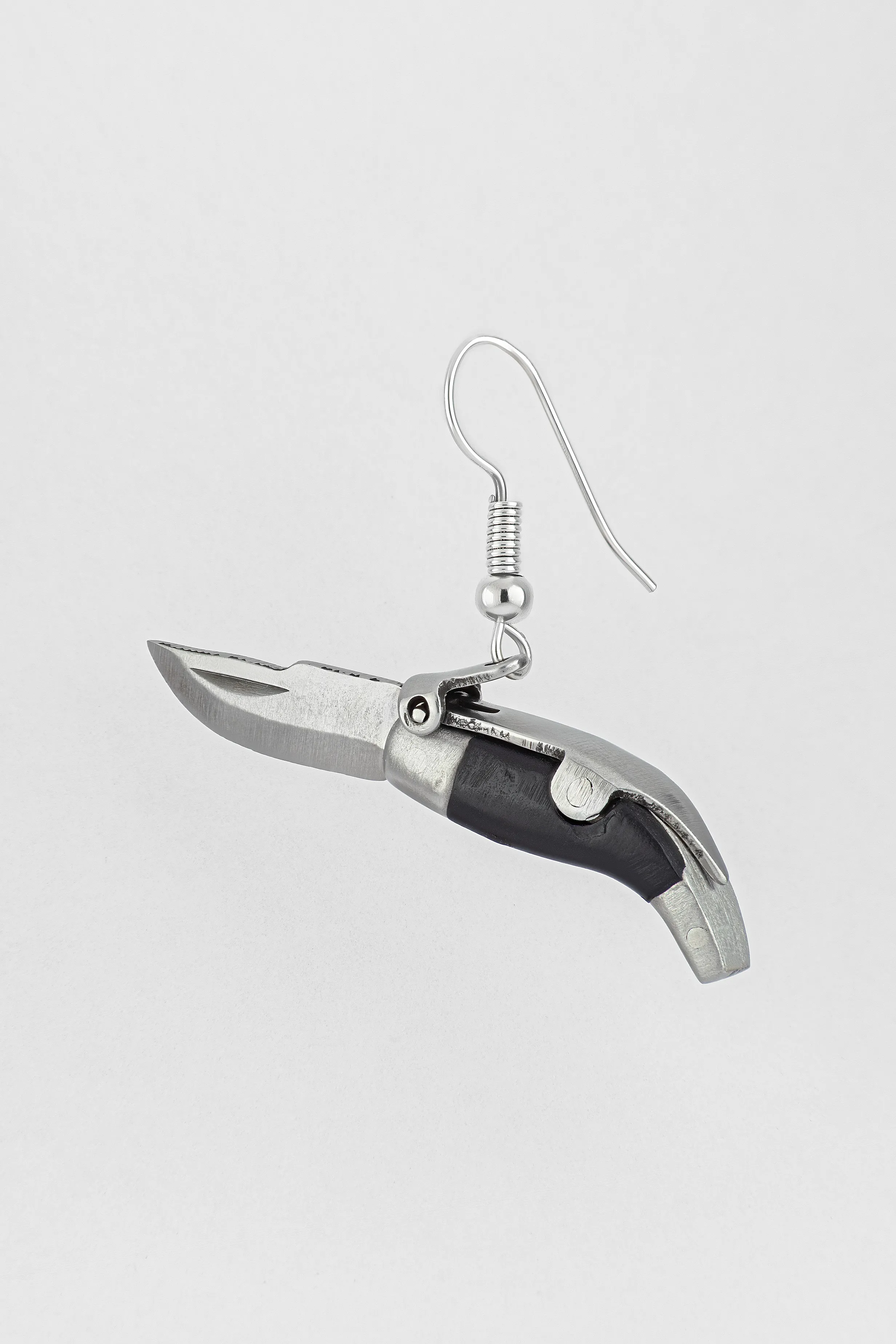
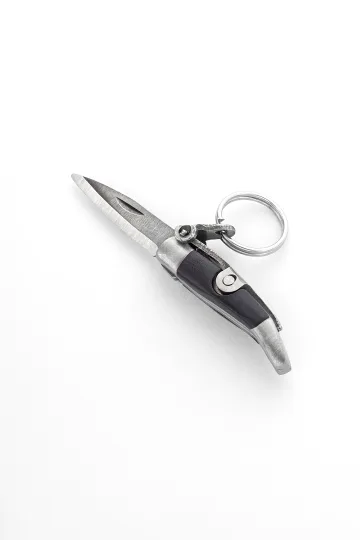
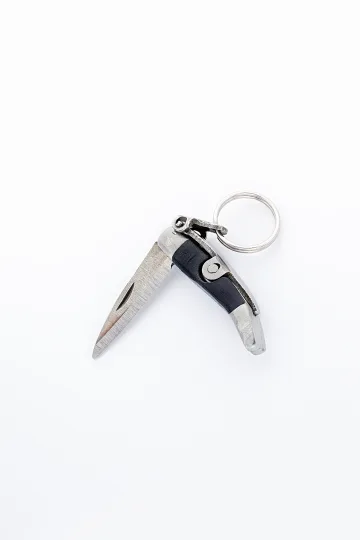
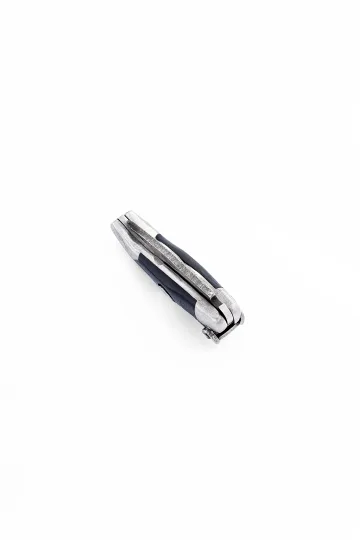
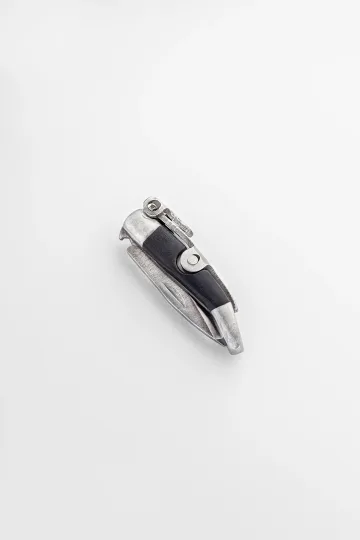
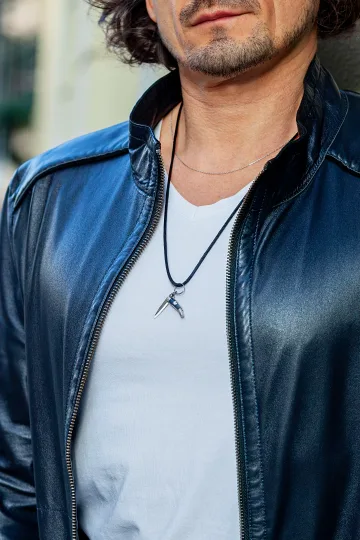
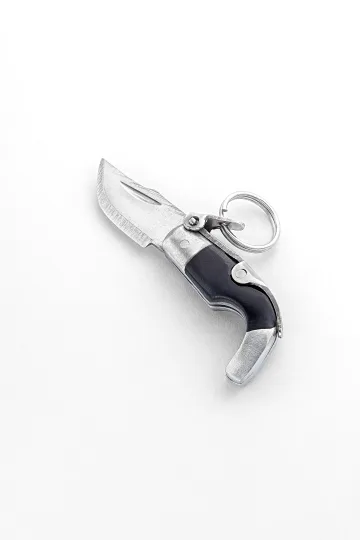
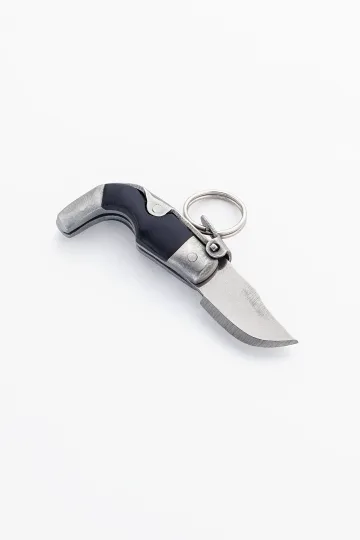
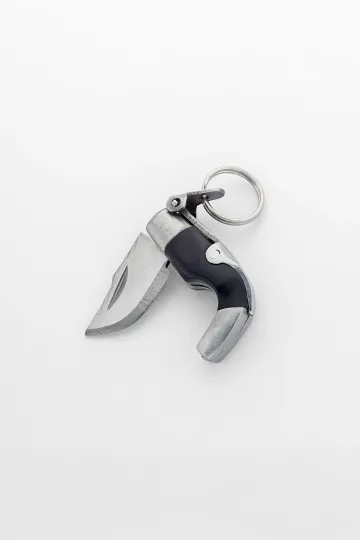
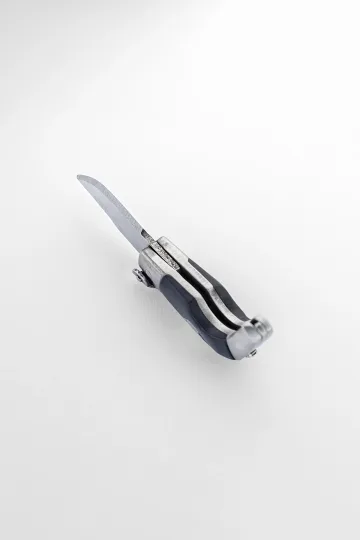
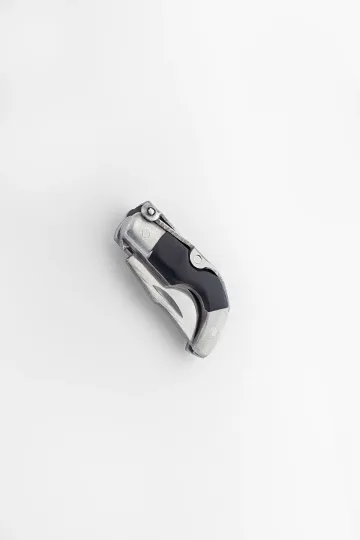
CAPAORA mini knife pendant
The 18th-century Spanish navaja in miniature: 40 mm of stainless steel, a real folding mechanism and a Palanquilla lock that clicks. An affordable gift to remember.
Authentic · Ships from Spain · 14-day returns
Materials: what the character lives on
Jade: the stone born for auspicious signs
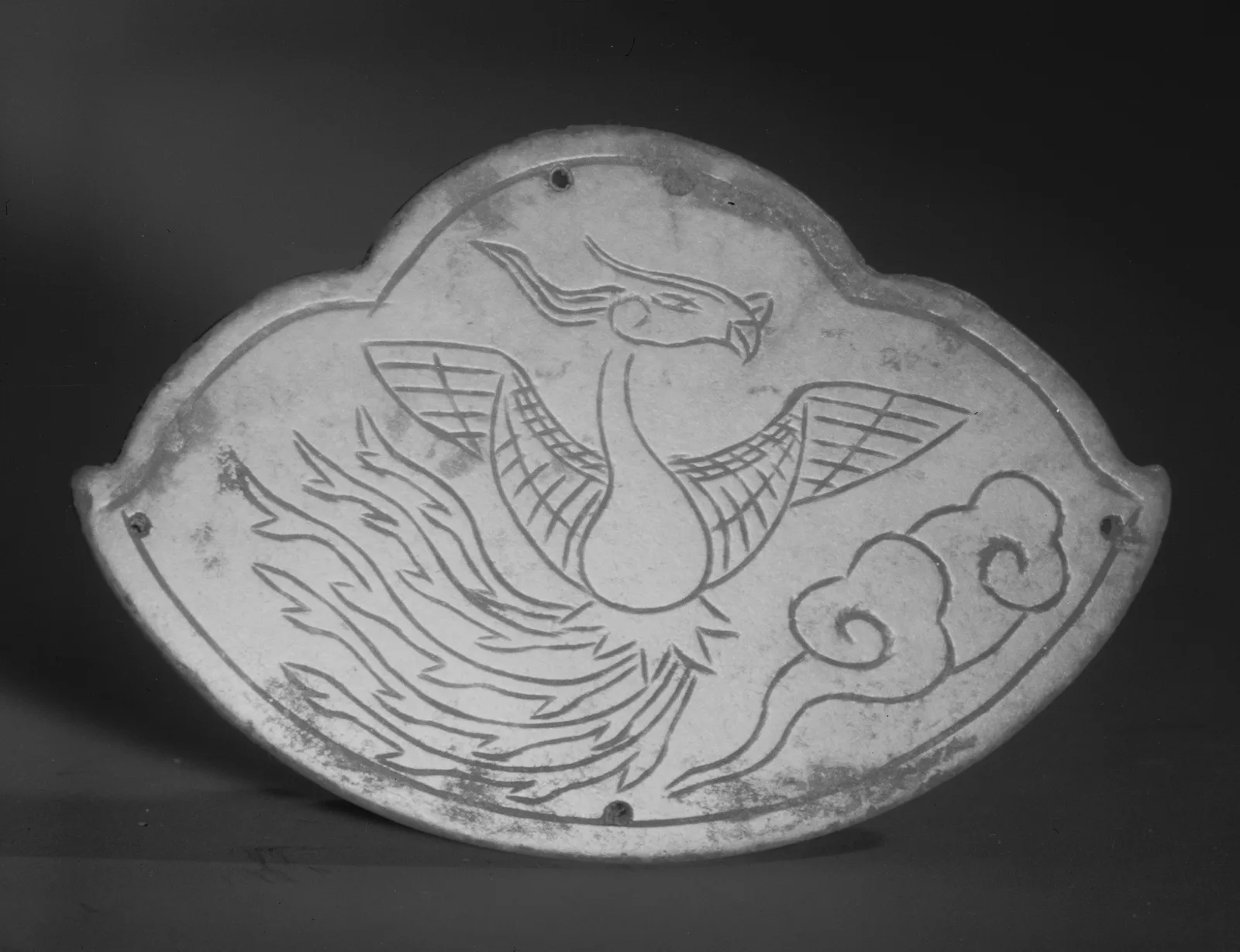
Nephrite and jadeite are the materials most closely tied to the Chinese culture of characters. A carved fú or shòu on green jade is a classic thousands of years old: the stone itself is held to be noble and protective, and the sign reinforces the wish. Jade pendants with a character are given at a birth, a wedding, a milestone birthday. For the stone itself, its types and properties, there is a separate guide to nephrite.
Silver: crisp engraving and durability
Silver is a rewarding material for a character: the sign is engraved or carved into it deeply and crisply, and the strokes do not blur. A silver medallion with fú or with a name reads clearly, and the metal patinates so that the recesses of the sign darken and the drawing stands out in relief. For anyone choosing between grades and wanting to understand what a hallmark means, the breakdown of 925 silver helps.
Gold and gold plating: the sign as a treasure
Gold with a character is about abundance and celebration. Signs of wealth and happiness on gold are given for the New Year, for a wedding, for the opening of a business, because both the metal and the meaning say the same thing. A gold fú on a red cord is close to the canonical New Year gift in the Chinese tradition. Here the sign and the metal reinforce one another rather than argue.
Enamel: the colour that finishes the meaning
Hot enamel lets you flood the sign or the background with color, and for characters this matters because color carries meaning in this culture. Red enamel around a gold fú reads to someone inside the tradition as "right": festive and canonical at once. Enamel turns a flat sign into a small painting, and the possibilities of the technique are described in the article on enamel jewelry.
Wood, bone, ceramic: warm carriers of a sign
Beyond metal and stone, signs are carved into wood and bone and shaped on ceramic. A wooden pendant with a carved fú is a warm, homely thing, and a ceramic pendant nods to craft. These materials are cheaper and simpler, but for that very reason they carry errors most often: a mass-market souvenir is rarely checked. A warm carrier does not cancel the need to verify the sign.
Cord and knot: the setting speaks too
In the Chinese tradition a character pendant is rarely hung on a plain chain. It is worn on a red braided cord with a knot, and the knot itself is a separate auspicious symbol: the Chinese "endless" knot means the continuity of luck and longevity. A red cord with a gold or jade sign is a complete picture, where colour, knot, and character reinforce one another. Swapping the cord for a thin metal chain makes the piece look more European, and that is a matter of taste rather than correctness.
How to wear it, and for whom, with respect
A sign is someone's language, not an ornament
The main rule is simple: a character is not an abstract pattern but a living word of a living language spoken by more than a billion people. To wear it respectfully means knowing what it says and treating it as an inscription rather than an exotic squiggle. Someone who can explain their pendant looks dignified. Someone who wears "something Chinese, luck I think" risks an awkward moment.
Where the line of appropriateness runs
The topic of cultural appropriation around characters is often blown up, but common sense holds. Wearing an auspicious sign while understanding its meaning and origin is fine, and even pleasing to people inside the culture: their writing is being valued. Problems start where a sign is torn from its context, distorted, turned into a caricature, or passed off as "just a trendy print." Respect is about knowledge, not prohibition.
A gift with a character: verify the meaning in advance
A character makes a powerful gift when the sign is matched to the occasion: longevity for an elder, double happiness for newlyweds, luck for the New Year. But it is in a gift that an error stings most, because the recipient notices. So the meaning of a sign on a gift is worth checking twice, especially if the recipient is inside the culture: they will read the pendant instantly.
Combining with other symbolism
A character lives well beside Eastern symbolism of the same circle: jade beads, knots, paired motifs. It works less well when signs from different cultures collide on one piece for no reason. If you want to assemble a meaningful set of symbols, the general guide to the meaning of symbols on jewelry shows what goes with what by meaning.
Caring for jewellery with a character
Clean by material, not by sign
You care for the material the sign is made on, not for the "character" itself. Silver is cleaned with a soft cloth and dedicated products, without scratching the recesses of the sign. Jade is wiped with a soft damp cloth and protected from knocks: the stone is strong under pressure but chips on carved edges. Gold is washed in warm water with a mild soap. The sign itself needs no special attention beyond care in its grooves.
The grooves of a sign like a soft brush
A carved or engraved character collects dirt and skin oil in the recesses of its strokes, and over time the drawing goes "soapy." A soft brush (a brow brush, for instance) with warm soapy water restores its crispness. A hard brush and abrasives are best avoided: they wear down the fine strokes and the patina that gives the sign its expressiveness in the first place.
Enamel and colour: guard against knocks and chemicals
If the sign or the background is filled with enamel, the main thing is to protect it from knocks (enamel is glass, it chips) and from harsh chemicals. Take such a piece off before cleaning the house, the pool, and perfume. Wiping it with a dry or slightly damp soft cloth is enough. Then the red field around a gold sign stays bright rather than going cloudy.
Storage: separate and dry
A piece with a sign is stored like anything valuable: separately, so the carving does not scratch against other items, and in a dry place, so silver does not darken beyond measure. A jade pendant is best kept in a soft pouch. Check the cord or chain for wear from time to time, especially if the sign is heavy: the sad part is losing not the metal but the meaning tied to it.
Send a friend a discount code, they save on their first order.
Facts that surprise
An upside-down happiness character is deliberate. For the New Year, people in China paste 福 (fú) upside down on the door. It sounds like a mistake, but it is a pun: "upside down" and "arrived" sound the same (dào). "Happiness upside down" reads as "happiness has arrived." This is the one case where upside down is not a defect but a wish.
Stories about celebrities with botched kanji tattoos have circulated for decades. One inked "free of charge" instead of the sign they wanted, another "madman," another a meaningless cluster of strokes. We will name no names, but the lesson is the same: what happens to a permanent tattoo happens to a pendant too, except the pendant comes off.
The oldest character is older than most alphabets. Chinese writing grew out of divination inscriptions on turtle shells more than three thousand years old, and the line never once broke. The fú sign hanging on doors today is a relative of those very ancient forms.
"Love" on the mainland is written without a heart. The simplification reform tossed the "heart" element out of the middle of 愛, and partisans of traditional script still joke that love was impoverished. On traditional pendants the heart inside the sign is still there.
One character can sound five different ways. In Japanese, a kanji reads differently depending on the word, so the question "how does my pendant read" does not always have a single answer, even for a native speaker.
Colour matters more than it seems. An auspicious sign in white tones rings, to someone inside the tradition, like congratulations on a funeral card: white is the colour of mourning. That is why luck and happiness almost always come on red and gold.
Frequently asked questions
How do I tell whether my pendant has a real character or an invented pattern? Compare the sign with a reference form from a dictionary, looking at the number and direction of the strokes rather than the overall silhouette. If the strokes do not add up to any real character, you are looking at a decorative pseudo-sign. The fastest way is to show your find to a native speaker: a real character they will read in a second.
Are Chinese and Japanese characters the same thing? They are relatives: Japan borrowed the Chinese characters more than a thousand years ago. But in that time the forms and meanings drifted apart, and China and Japan simplified the signs differently. The same drawing can be read and understood differently. So it is worth knowing which language the inscription is in.
Can I write my name in characters? Not literally. The signs carry concepts, while a name is a sound. In Japan a name is written in the katakana syllabary by sound; in China characters close in sound are chosen (and a good maker also weighs a pleasant meaning). Any such version is an approximation, and the selection is best entrusted to a native speaker.
What does an upside-down happiness sign on a door mean? It is deliberate. The words "upside down" and "arrived" sound the same in Chinese, so 福 (fú) inverted reads as "happiness has arrived." It is a New Year tradition, not an error. On jewellery, though, the sign is usually set upright; upside down belongs on door decor.
Which character is the safest to choose so I do not go wrong? 福 (happiness and luck) and 寿 (longevity) are the most unambiguous and revered signs, with a clear, kind meaning. 双喜 (double happiness) is ideal for a couple and a wedding. These signs are hard to read "the wrong way," and people inside the culture receive them warmly.
Is it fine for a European to wear a character? Yes, if you know what it means and treat it as a word of another language rather than as exotic decoration. People inside the culture are usually pleased when their writing is valued with understanding. What looks awkward is not the wearing itself but not knowing your own pendant: someone who can name their sign and its meaning never ends up in a silly story, unlike someone wearing "something Eastern for luck."
Why are auspicious signs almost always red and gold? Because in this tradition colour carries meaning: red is joy and protection, gold is wealth and the sun, while white is mourning. A happiness sign on a red field "rings true," whereas the same sign in white or black tones reads as strange at best.
How do I care for a carved character on jade or silver? Clean by material: silver with a soft cloth and a silver product, jade with a damp soft cloth, gold with warm water and mild soap. Clean the grooves of the sign gently with a soft brush and soapy water so the drawing does not go soapy. Avoid abrasives and hard brushes: they wear down the fine strokes.
In short
A character on a piece of jewellery is not an ornament but a word, and that is the whole difference between a beautiful object and an awkward story. Chinese hanzi and Japanese kanji are relatives but not twins, and one sign can mean different things on opposite shores of the same sea. The surest signs are happiness 福, longevity 寿, and double happiness 双喜: their meaning is unambiguous, and people inside the culture read them with warmth. The main traps are flips, mirrors, pseudo-signs, and the wrong shade, and all of them are undone by one minute of checking against a reference or one question to a native speaker. A name is carried by sound, not meaning, so any name pendant is an approximation. To wear someone else's writing with respect simply means knowing what it says.
Silver, gold, jade, and coloured stones, symbolism with a meaning you can name, paired sets.
Buying it as a gift? Each one arrives ready to give.
 A branded Zevira box and a little card come with every order.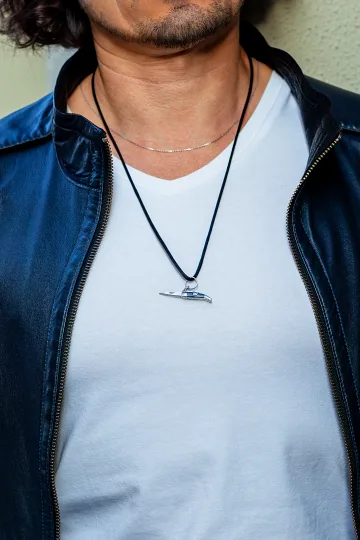




About Zevira
Zevira is a Spanish brand from Albacete, a city of metalworkers. We love things with meaning: symbols with a history, noble metals, colored stones, and signs worn with understanding rather than at random. If symbolism interests you in general, start with the guide to the meaning of symbols on jewelry, and for protective signs there is the piece on charms and talismans.