The Seal of Solomon: the ring that legend says commanded spirits
The Seal of Solomon is the legendary signet ring of King Solomon, engraved with the secret name of God. Tradition holds that it gave him power over spirits, jinn and beasts, and its emblem, a six pointed or five pointed star, has been worn as a charm against evil by three faiths for more than two thousand years.
One ring, three religions and a whole shelf of medieval books on magic. The Jewish Talmud, the Arabic Quran and Latin grimoires disagree about almost everything, yet they meet on one point: Solomon had a ring, and it worked.
Let us take it in order: what this seal actually is, where the legend came from, why its emblem gets confused with the Star of David and the pentagram, what such jewellery is made from today, and who it suits.
What the Seal of Solomon is
Three different things hide behind one name, and the confusion starts right here. The Seal of Solomon is a specific object from legend (an engraved signet ring), the impression that ring left behind (the seal itself, a mark of authority), and a geometric symbol that in time took on a life of its own on amulets, on mosque walls and on the covers of occult books.
The word "seal" here is closer to its medieval sense. In an age when few people could write, a signet ring stood in for a signature. You pressed it into wax or clay, and the impression confirmed that an order came from the owner of the ring. The Seal of Solomon, legend says, confirmed orders given not to people but to beings of another order entirely. That is why it stuck in memory.
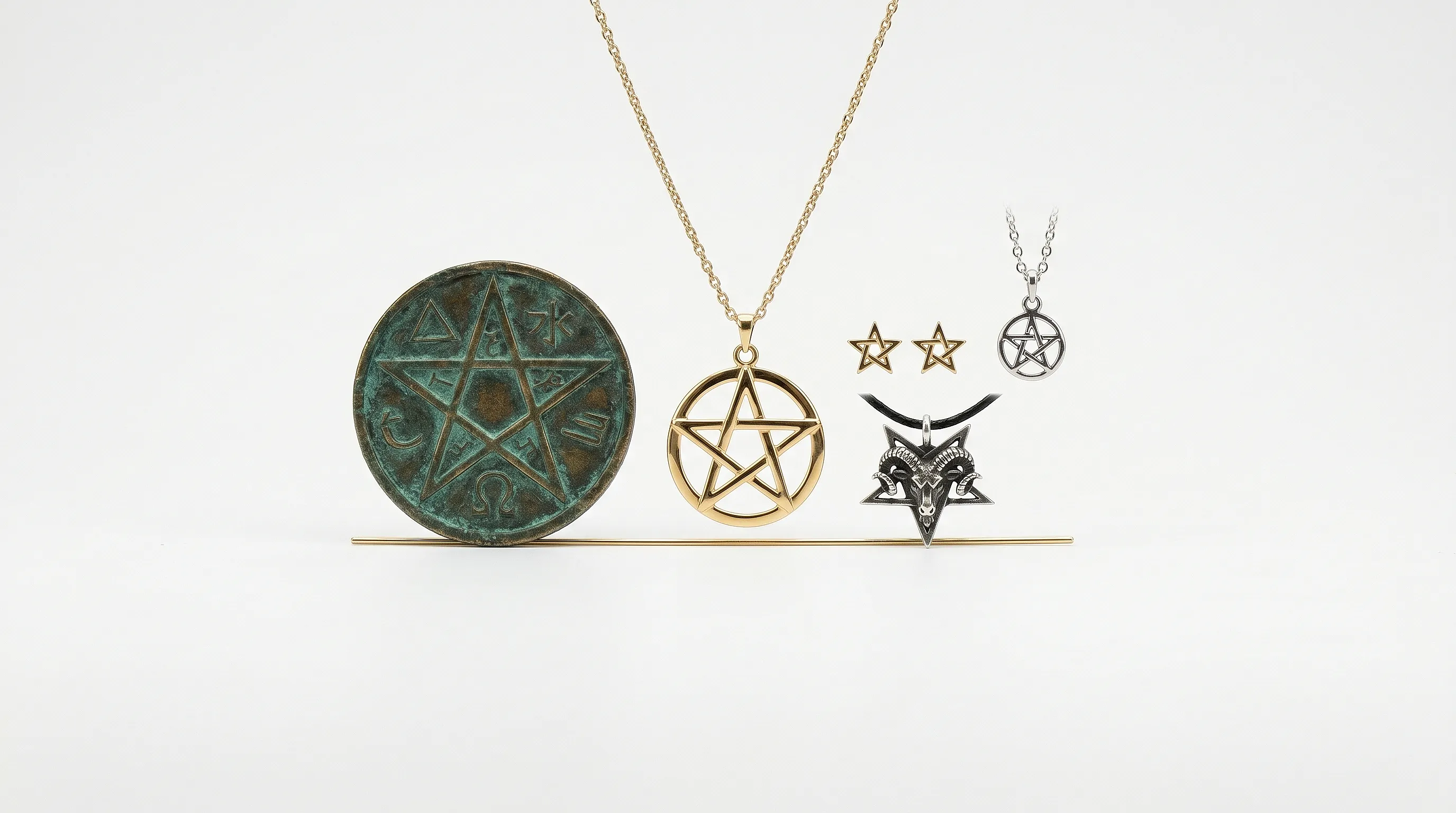
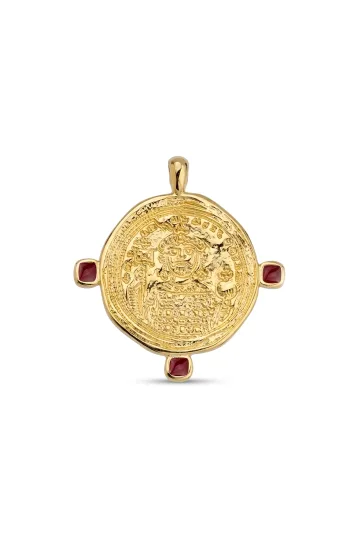
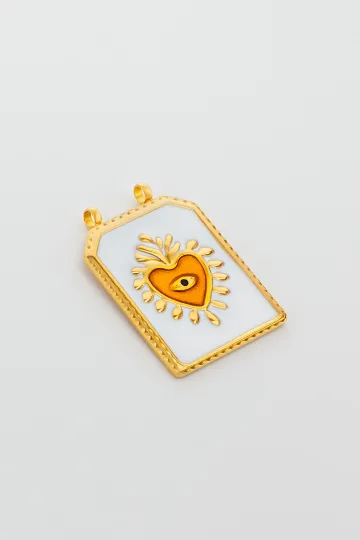
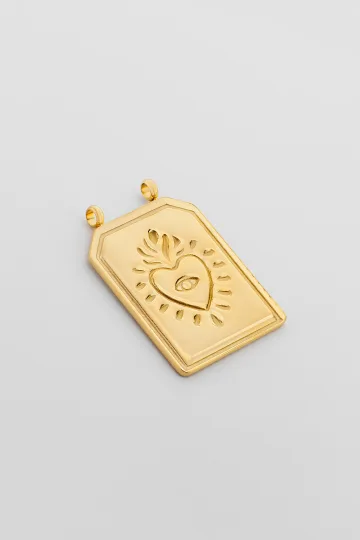
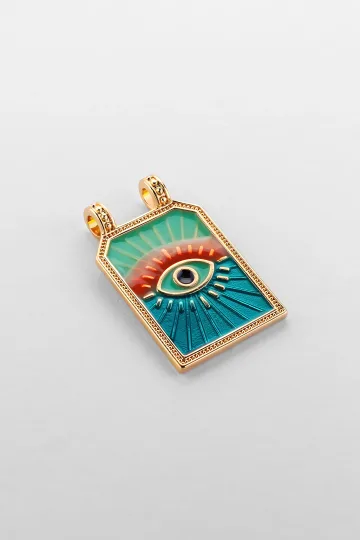
Wear the symbol, don't just read about it. These are in stock:

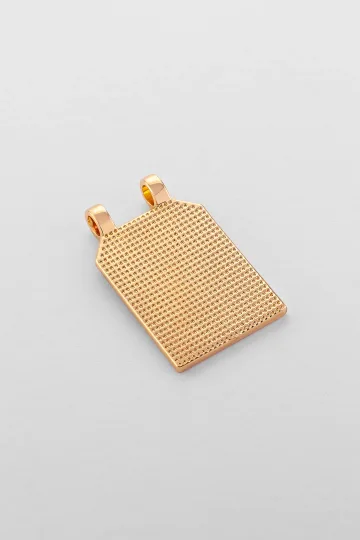
Ring, impression and symbol: three meanings of one name
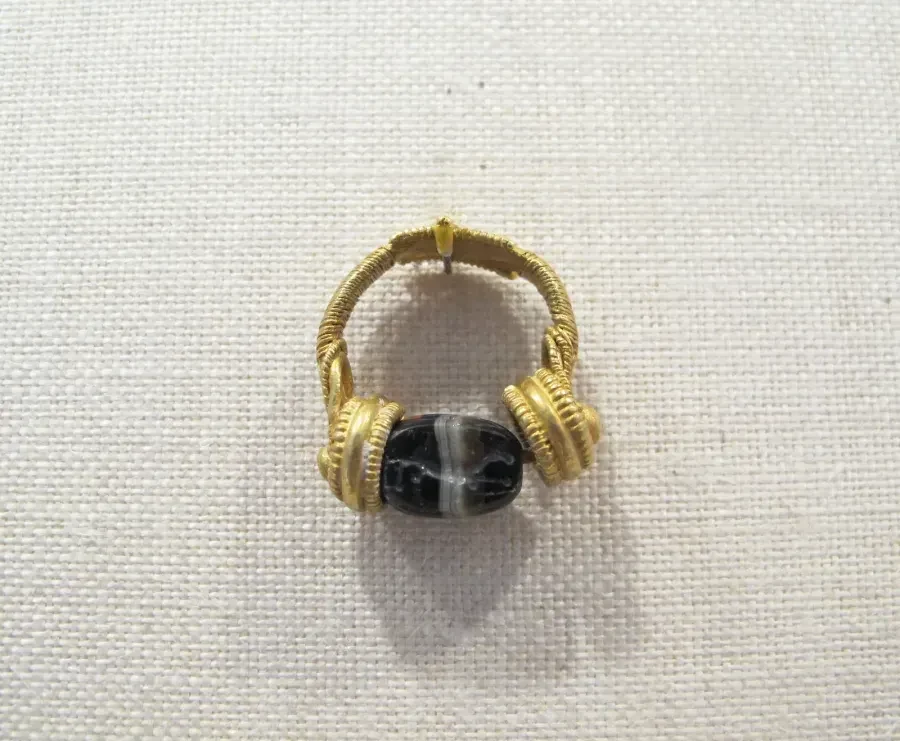
When someone says "Seal of Solomon", it helps to know which of the three they mean. If it is the object, that is a signet ring, most often described as copper and iron, or gold set with a stone, engraved with an emblem and, in the Jewish version, the unpronounceable name of God. If it is the impression, that is the mark with which Solomon "sealed" spirits, the way you seal a jar. If it is the symbol, that is a figure of two overlaid triangles (a hexagram) or a five pointed star (a pentagram) enclosed in a circle.
In jewellery today all three meanings work at once. A signet ring nods to the object. The engraved emblem on the bezel nods to the impression. And the star shape itself carries the symbolic weight. That is why the Seal of Solomon looks so convincing on a heavy signet: form and legend line up.
Hexagram or pentagram
The main question people ask about the Seal of Solomon is how many points the star has. The honest answer: it varies, and this is not a flaw in the tradition but a feature of it.
Most medieval sources call the Seal of Solomon a hexagram, a six pointed star made from two interlaced triangles, one pointing up and one pointing down. But in some Greek and Latin manuscripts, especially where they speak of the "pentacle of Solomon", you meet a pentagram, a five pointed star. Both figures travelled for centuries under the same name, and arguing over which one is "real" is rather like arguing over the correct shape of a horseshoe.
There is a difference in meaning between the five pointed star and the six pointed one, and we will come to it below. But for the legend of the king and the spirits, what matters is not the arithmetic of points but the idea: a closed star, drawn without lifting the hand or assembled from perfect triangles, holds power inside itself and lets no evil out.
Khatam Sulayman: the name in many languages
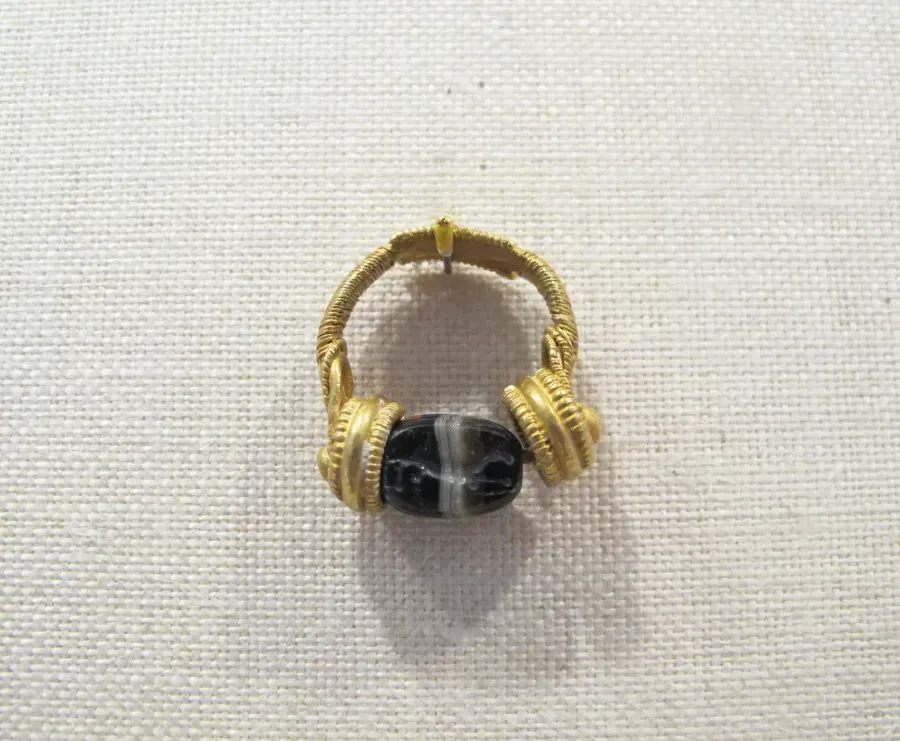
The Seal of Solomon has dozens of names. In Hebrew it is tied to "hotam Shlomo" and to the Magen David, the "shield of David". In the Arab world it is "khatam Sulayman", the seal of Sulayman, and the word "khatam" itself means "seal, signet, that which seals". In Latin books the figure is called Sigillum Salomonis, and the same shape gave its name in botany to a plant, Solomon's seal, whose rootstock supposedly shows the print of a seal.
One name, many languages, many cultures. That is the first sign of how deeply this symbol entered the shared stock of the Mediterranean. It will grow clearer how that happened.
Before we step into history, one thing about the character of this symbol needs saying. The Seal of Solomon belongs to no single religion and no single people. It was born on the seam of the Jewish, Christian and Islamic traditions, and for centuries it served as a bridge between them. A merchant in Cairo, a rabbi in Toledo and a monk copyist in Paris could all draw the same star and read into it a closely related meaning: protection, order, power over chaos. It is a rare case of a symbol that unites people who differ on so much else.
That is also why it lasted. Signs tied to one nation or one cult live exactly as long as that culture lives. The Seal of Solomon outlived empires precisely because it was useful to everyone at once: to those who sought a theological meaning in it, and to those for whom simple protection over the door was enough. That double footing, high philosophy and household superstition in one mark, is rare, and it makes a symbol surprisingly durable. It can speak both to a scholar and to a child whose grandmother hung a little star at the neck against the evil eye. Keep that in mind and it becomes easier to see why the legend of the ring kept gathering new detail and never fell out of fashion.
History: from the Temple in Jerusalem to medieval grimoires
The history of the Seal of Solomon is the history of one legend that grew like a snowball. Beginning with a few lines in ancient texts, over two thousand years it gathered demons, fish, archangels and whole instruction manuals. Let us trace it layer by layer.
Solomon in scripture: the king whom spirits obeyed
The historical Solomon ruled the kingdom of Israel around the tenth century BCE and is remembered as the builder of the First Temple in Jerusalem and a model of wisdom. In the Bible he asks God not for riches and not for long life but for an understanding heart to judge his people, and he receives wisdom the like of which there had never been.
The earliest biblical text says nothing directly about a ring or power over spirits. Yet the seeds of the legend are already there: Solomon understands the language of nature, commands vast resources, raises a temple by means that seem superhuman. Later tradition supplied the missing link: if the king was so wise and so mighty, then surely more than men served him. So arose the idea of a ring by which he mastered those servants.
The Talmud: the ring, Asmodeus and the fish
The most vivid version of the legend comes from the Jewish Talmud, from a tractate that tells the story of Solomon and Asmodeus, king of the demons. To build the temple without raising iron over the stone, Solomon needed the shamir, a wondrous worm or stone that could cut rock. Only Asmodeus knew the secret, and the king sent a servant to catch him with the help of the ring engraved with the name of God.
From there the plot turns almost theatrical. Asmodeus tricks the ring away from Solomon and flings it into the sea, then hurls the king himself so far that he loses his throne and wanders as a beggar, repeating, "I was king." Months pass. One day Solomon buys a fish, slits it open and finds inside his own ring, once swallowed in the waves. His power returns. The moral is harsh: even the wisest loses everything the moment he leans on an object more than on his own character.
It is from this story that the enduring image grows: a ring bearing the name of God that gives power over demons, and the fragility of that power. The seal is strong only as long as its owner is worthy of it.
The Testament of Solomon: a seal from an archangel
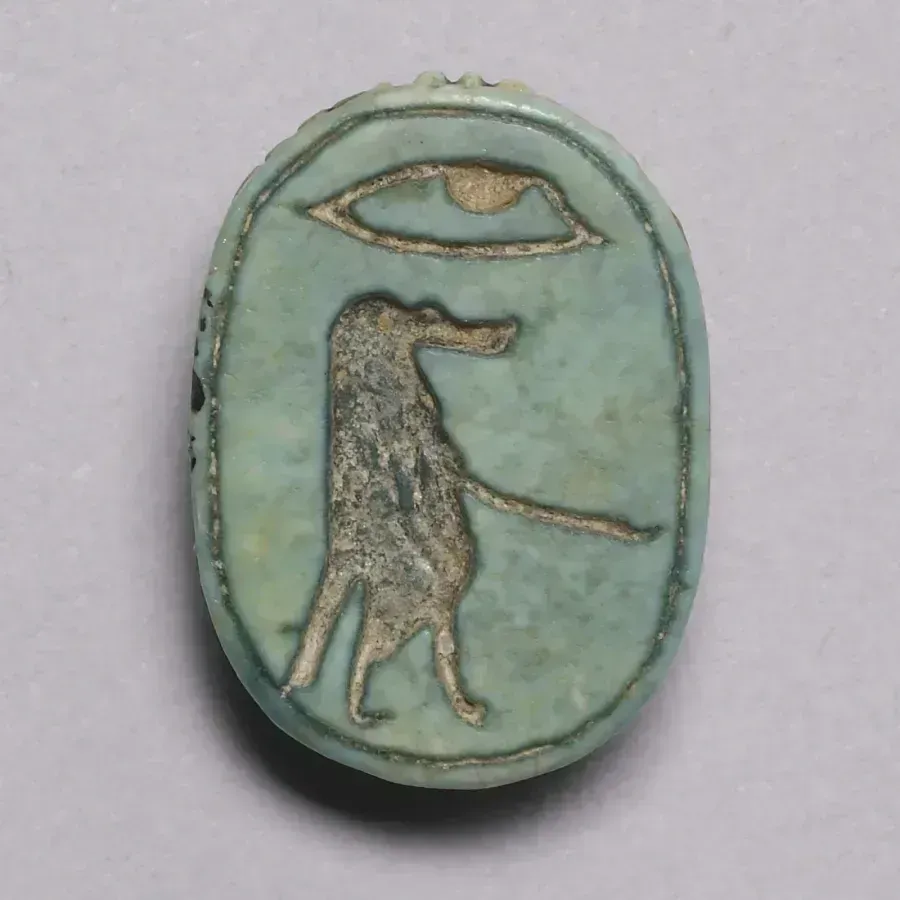
A separate text, known as the Testament of Solomon, took shape in the first centuries CE in Greek. It is essentially a handbook of demonology framed as a tale told by the king. In the story a workman on the temple site is tormented by a demon, and Solomon prays for help. An archangel (in some versions Michael) brings him a ring engraved with a seal and says: with this ring you will command every spirit.
Solomon then summons the demons one by one, each naming itself, its particular harm and the angel who subdues it. In this way the king forces the unclean powers to haul stone and water for the temple. The Testament of Solomon matters because it is the first to bind firmly together a specific object, a seal bearing a definite emblem, and the practice of controlling spirits. From here it is a short road to the medieval books of magic.
The Islamic tradition: the ring, the wind and the jinn
In Islam, Sulayman (Solomon) is one of the honoured prophets, and the Quran paints his power vividly. The wind is subject to him and carries him; the jinn dive into the sea for treasure and build whatever he commands; the language of birds is open to him. Famous is the account of the hoopoe that brings Sulayman word of the Queen of Sheba, and of the jinni who offers to deliver her throne in an instant.
The Quran does not describe a ring directly, but the folk and literary tradition of Islam quickly fixed the image of the "khatam Sulayman", the seal of Sulayman, with which the prophet sealed rebellious jinn in vessels of copper and cast them into the sea. From here come the fairy tale "spirits in a bottle". The emblem itself, more often a six pointed star and sometimes a five pointed one, became one of the most widespread protective motifs in Islamic art. It was carved on amulets, struck on coins, laid in tilework across the Maghreb, Andalusia and the Near East. For millions of people it is first of all an Islamic charm, and only after that something else.
The seven pointed star and the seven signs of Sulayman
The Arabic "khatam Sulayman" has a guise almost unknown in the West: a seven pointed star. In some Islamic talismans the seal of the prophet was drawn precisely as a seven rayed figure, and the number seven in this tradition counted as especially blessed, hence seven heavens, seven days, seven gates. The seven pointed star was carved on signet rings, struck on hamail amulets and set into geometric ornament alongside the six pointed one.
More common still was not a single star but a row of seven separate marks, called for that reason the "seven seals of Solomon". It is a set of simple figures: a star, a circle, three strokes, a letter rather like a Latin "h", a little ladder and others. They were written out in sequence on paper, metal or ceramic as a protective formula whose meaning faded in time but whose power, by belief, remained. The seven seals travelled through Arabic talisman books, turned up on door lintels and on amulets for women in labour and for children. For its owner the seal of Sulayman is therefore not always a star: sometimes it is a whole alphabet of protection, with seven holding the structure together.
Medieval magic: the Key of Solomon and seventy two spirits
By the late Middle Ages the name of Solomon had become a mark of quality for books on magic. The best known are the Key of Solomon (Clavicula Salomonis) and the Lesser Key of Solomon (the Lemegeton). In them, with diagrams, are described pentacles, that is protective discs bearing seals, along with a list of seventy two spirits that the magician can supposedly summon and subdue, repeating the path of the king.
These grimoires have nothing to do with the historical Solomon or with the canonical religious texts. They were written and copied in Christian Europe, often anonymously, shielding their risky content behind an authoritative name. Yet it is they that fixed in Western culture the pairing of "Seal of Solomon plus control of demons" and gave later occultists a rich visual language of circles, stars and secret signs.
Kabbalah: the power of the name and the divine letters
A separate strand of meaning runs from Jewish mysticism, the Kabbalah. Here the focus fell not so much on the star as on what legend said was engraved on the ring: the secret name of God, the unpronounceable four letter Tetragrammaton. Kabbalists held that the world rests on divine names and letters, and that whoever knows the right name and can pronounce it correctly gains power over the hidden forces of creation. The legend of Solomon fitted this idea perfectly: the king commanded spirits because he possessed the name, not because he wore a handsome emblem.
In the late medieval and Renaissance Christian Kabbalah the hexagram came to be linked with the structure of the cosmos: the six points were matched to the six days of creation, or to the six directions of space (up, down and the four points of the compass), and the centre was read as a seventh point, a point of rest, the Sabbath. So a simple figure of two triangles turned into a folded diagram of the whole created world. This learned tradition explains why the Seal of Solomon settled so easily among European thinkers of the Renaissance, absorbed in the search for a single hidden language of nature.
The symbol travels: from the Maghreb to Gothic cathedrals
While the theologians argued, the star lived a life of its own. The same emblem can be seen on a medieval mosque and on a Christian church, on a Hebrew manuscript and on a Muslim talisman. In Granada in Spain the hexagram turns up in decoration alongside Arabic script. In Gothic cathedrals it appears as a symbol of harmony and of the perfection of creation.
The reason for this readiness to go anywhere is simple. The figure is built from the plainest elements, triangles; it reads from a distance; it is easy to carve and to draw; and it looks finished and "clever" all the same. Symbols with such qualities always travel faster than people. The Seal of Solomon travelled for centuries and settled almost everywhere the three religions of the Book met.
A seal is cut into gold, and that is exactly why it is a seal. The hexagram needs a clean polish and bare space around it: geometry does not tolerate clutter.
How to build a look with the Seal of Solomon
We have gone through the history and the legend; now for the wearing. I have gathered here what actually works when you take the star off the shelf and put it on a real person.
Which metal of the Seal of Solomon suits your skin tone? For a warm undertone (skin with a golden, peachy cast) I recommend gold: the seal of a king should sound kingly, and engraving on gold holds the edges of the star for decades. For a cool undertone (pinkish, porcelain) I advise silver with niello: the dark alloy in the grooves brings the hexagram out graphically, black on a light ground. If in doubt, take silver; it suits almost everyone and does not quarrel with your other rings.
A signet or a pendant? I look at the hand and at the character. A heavy signet I recommend to those with a firm hand who want the sign to read at once: the broad bezel is made to carry the star, and here form and legend meet. A pendant I advise if you want to wear the seal near the heart or hide it under a shirt, and at the same time not worry about finger size. For a gift I almost always choose a pendant: put it on and it is done.
What to pair the Seal of Solomon with and how to layer? When I build a look for a client, I keep the star the main accent and do not load it with neighbours. The geometry of the hexagram needs an empty field around it, or the lines drown in clutter. Good company is charms from the same Mediterranean family: the Hand of Fatima, a nazar, a plain chain without pendants. If you want layers, give the seal its own length so the bezel is not pinched between other signs. In layers I advise keeping metals in one tone: silver with silver, gold with gold.
What occasion and look does the Seal of Solomon suit? A silver signet or a pendant on a leather cord lives in an everyday look and asks for no fuss. For a strict, business outing I choose a gold seal with a clean polish: in a meeting it reads as a mark of composure rather than a souvenir. A niello star I recommend for dark fabric and the evening; graphics of black on silver love contrast. The calmer the clothing, the louder the seal sounds.
Who does the Seal of Solomon suit? The seal is not tied to gender or age, because its form is strict and clean. It sits especially well on those who value order in a look: one piece, clear geometry, nothing extra. A large signet I recommend for a broad hand and a confident arm; a slim ring or a fine pendant for those who like an unobtrusive charm. And check one thing before you buy: the triangles must meet exactly at the intersections, and the bezel must face outward, not into the palm. A careless star loses all the power of a clean form.

Turn on your camera, pick earrings, a pendant or a ring, and see the piece on yourself in real time.
Switch items in one tap.
Everything runs in your browser: no photo or video is ever uploaded.
What the Seal of Solomon means
Behind the geometry lies a whole layer of meanings, and they are surprisingly well ordered. Unlike many charms, where the meaning boils down to "for luck", the Seal of Solomon carries a considered idea of how the world is put together.
A union of opposites: two triangles
The key to the meaning of the hexagram is the two triangles. The one pointing up has been read since antiquity as fire and the masculine principle, a striving upward, toward the sky. The one pointing down is water and the feminine principle, a descent, toward the earth. Laid over each other they form a balance: fire and water, sky and earth, spirit and matter hold one another in check, and neither side takes the upper hand.
In alchemy the same figure was read as the union of the four elements: two triangles plus their intersections yielded fire, water, air and earth in a single sign. Read that way, the Seal of Solomon is a map of the whole world folded into one emblem. To wear it is to wear the idea of a harmony of opposites, not a choice of one side.
Power over the unseen
Legend gave the seal its chief function: to master what cannot be seen. Spirits, jinn, fears, temptations, everything that acts by stealth, all of it, by the tale, obeyed the owner of the ring. In a practical rather than fairy tale reading, this is a symbol of self command. A person who "commands spirits" above all rules themselves: their impulses, their anger, their anxiety.
That is why the Seal of Solomon is often chosen as a sign of inner discipline and a clear head. It reminds the wearer that real power begins with power over oneself, not over others. For a piece of jewellery with two thousand years behind it, that is a remarkably grown up message.
Protection from evil and the evil eye
The most common, most everyday role of the seal is that of a charm. Against the evil eye, envy, curses, ill intent. The logic is the same as with most protective signs: a closed, perfect figure lets no evil in and turns it back from the wearer. A star enclosed in a circle reads like a little fortress on the chest.
In North Africa and the Near East the Seal of Solomon rivals in this role the Hand of Fatima and the blue nazar eye. People hang it over the door, draw it on the threshold, strike it on pendants for children. Here the symbol works not as a philosophy of the elements but plainly and reliably: the sign is in place, so the house is watched over.
"As above, so below"
The famous formula often linked with the hexagram deserves a note of its own: "as above, so below." The idea is that the great world (the cosmos) and the small world (the human being) are built by the same laws, and that what happens in the heavens is mirrored on earth. The two mirror triangles of the seal illustrate the thought perfectly: the upper repeats the lower, the lower repeats the upper.
The formula came from the late antique Hermetic tradition and passed through alchemy into European occultism. For the wearer of the jewellery it turns the Seal of Solomon into a reminder of the connection of all things, of the fact that a person is not a separate grain of sand but part of a larger pattern. The thought is ancient, yet on the chest it sounds fresh.
The Seal of Solomon in alchemy
The alchemists of the Middle Ages and the Renaissance seized on the hexagram harder than most. For them the two nested triangles were a ready made formula for their chief task, the joining of what nature keeps apart. The triangle pointing up meant fire and its pair sulphur, the active, hot, "masculine" principle. The triangle pointing down meant water and mercury, the passive, moist, "feminine" principle. To bring these two principles together in one vessel without remainder was to accomplish the Great Work, to obtain the philosopher's stone. The Seal of Solomon was drawn in the margins of treatises as the emblem of this chemical wedding.
Hence the alchemical names for the figure, "the star of the wise" or "the seal of wisdom". In it they read not a star in the sky but a map of a process: vapour rises from below, dew settles from above, and where the streams meet a new substance is born. The symbol was convenient too because it hid its meaning from strangers: the uninitiated saw simply a handsome sign, the initiate read a recipe. The Seal of Solomon managed to be a charm, a theological diagram and a working badge of the laboratory tradition from which chemistry later grew.
The geometry of a perfect figure
It is worth saying why the star was thought worthy of such a load at all. The hexagram is assembled from two equilateral triangles, the most stable and simplest of the regular figures. Laid at an angle, they give a perfectly symmetrical outline with six equal points and a regular hexagon inside. The eye reads such a form as finished and "clever" at once, without explanation. The pentagram, in turn, can be drawn in a single continuous line without lifting the hand, and in old magic that very continuity was held to be the guarantee of protection: a closed outline has no gap through which evil could seep in.
The circle in which the star was often inscribed added another layer. The circle had long meant fullness and eternity, a boundary without beginning or end. A star inside a circle read as order enclosed in a protective fence, a small model of an ordered world. This geometric logic explains why the same figure was independently prized in the mosque, the synagogue and the laboratory: it persuaded not with words but with form itself.
The symbolism of the Seal of Solomon is generous, but people wear it as a thing, not as a diagram of the elements. So next comes the talk of material and form, of what such jewellery is made from and how it sits.
Customer reviews
Zevira is a real jewellery shop. Genuine payments, deliveries and customer thank-yous.
🥰🥰🥰 gracias
Ok, ¡gracias! 🙂
What the Seal of Solomon is made from
With a charm the material is far from mere background. Every metal and stone has its own logic, and understanding that logic helps you choose a piece that will last and will mean what you want it to.
Silver
The most common and most fitting choice for a Seal of Solomon. Silver has long been linked with the moon, with purity and with protection, and in folk magic it was the metal held to drive off unclean things. In practical terms 925 sterling silver is easy to engrave: fine lines of the star read clearly on it, and a slight darkening in the grooves over time only underlines the design, like patina on an old coin.
A silver seal looks restrained and does not shout. It sits equally well on a man's hand and a woman's, and it does not quarrel with the rest of your jewellery. For everyday wear it is the optimal choice.
Gold
Gold adds a solar, kingly note to the symbol, which for a ring of Solomon is more than fitting: the subject, after all, is a king. Yellow gold gives a classic, warm voice; white gold brings the piece closer to a strict modern style. A gold Seal of Solomon is the choice of those who want the charm to read as a serious piece of jewellery rather than a souvenir.
The drawback is plain: it costs more. But gold does not darken, holds engraving for centuries and, in the case of a family ring, comfortably outlives several generations. For a piece meant to be handed down, that is a weighty argument.
Engraving and niello
The heart of any seal is the carving. The emblem of Solomon can be laid down in several ways. Hand engraving gives the liveliest, slightly uneven lines in which the maker's hand is visible. Stamping is faster and cheaper, but the design comes out drier. A beauty of its own is niello, where the grooves are filled with a dark alloy and the star stands out graphically, black on silver. A niello Seal of Solomon looks especially striking and nods to an old technique once used to decorate weapons and icon covers.
Stones and settings
Sometimes the centre of the star or the bezel of the ring is completed with a stone. Dark stones, onyx, jet, obsidian, strengthen the protective, "evil absorbing" symbolism and make the piece stricter. Blue stones, lapis lazuli and sapphire, echo the celestial, starry theme. Red ones, garnet and carnelian, add vital force. A stone is not required here: a plain engraved star stands on its own. But a well chosen setting can bring the meaning to just the right shade.
Upload a photo of your pet, someone you love, or an object. We'll build a 3D model and hand-cast it in pewter.


How to wear the Seal of Solomon
The Seal of Solomon is that rare symbol that is equally convincing on a ring and on a pendant. The form suggests different scenarios, and it is worth choosing your own.
The signet ring
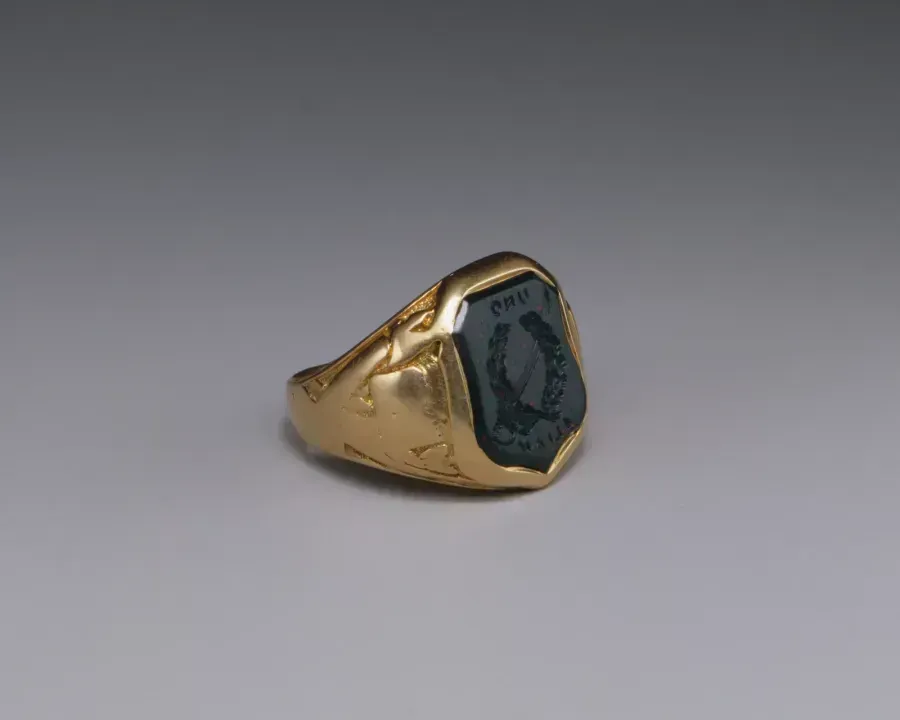
The most exact form for this symbol is the signet ring. The broad flat bezel is made precisely to carry an emblem, and the star of Solomon settles onto it as if poured in place. Such a ring points straight back at the legend: here is the ring, here is the seal, all just as the tale has it. A heavy signet looks good on a man's hand, but women's versions, a little slimmer and finer, entered everyday use long ago. A signet is usually worn on the little finger or on the ring finger of the non working hand.
On which finger
There are no strict rules here, but there is a useful logic. The little finger is the traditional place for a signet ring, hence the classic image of a "pinky signet". The ring finger suits you if you want the ring to read as significant, almost like a wedding band. The index finger was linked in old symbolism with authority and will, which chimes with the idea of power over spirits, so a seal ring on the index finger looks meaningful. The middle finger is neutral and simply comfortable. The main thing is that the ring fits snugly and the bezel does not swivel: the seal should face the world, not the palm.
Pendant and charm
If a ring feels too conspicuous, the star of Solomon lives happily on a chain. A round medallion with an engraved or pierced hexagram is a calm, everyday option, easy to tuck under clothing or to show. A pendant leans toward the everyday, charm like role of the symbol: it is worn near the heart, like most protective signs. For a child or as a gift a pendant is more practical than a ring, since you need not know a finger size.
What to pair it with
The Seal of Solomon is graphic and self sufficient, so it gets along with plain surroundings. It looks good on a single tone chain without extra charms, on a leather or woven cord for a simpler look, or paired with the Hand of Fatima or a nazar if you want to gather a "team" of charms from different traditions. The one thing to avoid is a pile up of bright symbols around it. The star likes a little air: then its geometry reads instead of drowning in the general clutter.



Who the Seal of Solomon suits
The short answer: almost anyone drawn to the idea of protection and inner order. The symbol is closed to no group, but there are people it fits especially well.
Men and women
The Seal of Solomon is one of the most gender neutral emblems in all of jewellery. Its strict geometry suits a man's hand and a woman's equally, and its range of readings, from a philosophy of the elements to a plain charm, lets each person find their own meaning. Men more often choose a heavy silver or gold signet, women a fine pendant or a slim ring. But there is no rule here, and a large signet on a woman's hand today looks strong and modern.
As a gift
The Seal of Solomon is a good gift with a story. It suits someone who values the meaning behind a thing: a person interested in culture, history, symbolism. It is given at an important turning point, a new job, a move, the start of a venture, as a wish for firmness and protection. Unlike many charms, this star is not tied to a particular faith, so you can give it without fear of a misstep: the meaning "order, harmony, protection" is universal. To make the gesture stronger, choose silver or gold with hand engraving and add a few words about the legend: a gift with a story told is twice as memorable.
How to choose a Seal of Solomon
Choosing a Seal of Solomon comes down to three decisions: which emblem, what size and what quality of workmanship. Let us take each.
Hexagram or pentagram: which to choose
If what matters to you is the classic, "correct" Seal of Solomon in its most widespread form, take the hexagram, the six pointed star. It is the historically primary version, recognisable and neutral. If you feel closer to the idea of the five pointed star with its symbolism of the five elements and the microcosm, the pentagram is also a legitimate form of the seal, especially in the context of the European magical tradition. The difference is more of accent than of "power". Choose the figure whose meaning is closer to you, and the one that simply pleases your eye more.
Size and proportion
For an everyday ring a medium bezel is best: large enough for the star to read, but not so large that it gets in the way. For a pendant, diameters from about one and a half to three centimetres are comfortable: smaller risks getting lost on the chest, larger begins to look heavy. Pay attention to the thickness of the star's lines: too thin and they wear away and read poorly, too thick and the fine geometry turns into a coarse stamp. A good seal is a balance, where the lines are clear but not heavy.
How to tell craft from a cheap stamping
Quality gives a Seal of Solomon away in the detail. The lines of the star are even, the angles sharp and symmetrical, the triangles meet exactly at the intersections. In hand engraving the cut edges catch the light and vary slightly in depth; in cheap casting the design is blurry, with softened edges. On a good piece the back of the bezel is finished, not left rough. Check the hallmark on the metal: a stamp tells you this is real silver or gold and not a coating over a cheap alloy that will wear off within a season.
Leave your email, we'll send your discount code. No spam, unsubscribe anytime.
The code arrives by email, valid on your first order.
Seal of Solomon, Star of David, pentagram and hamsa: the differences
Similar symbols crowd tightly around the Seal of Solomon, and they are constantly confused. Let us sort them onto their shelves.
The Seal of Solomon and the Star of David
This is the main confusion, because the figure is the same: a six pointed star of two triangles. The difference lies in context and history. The Star of David, the Magen David, is above all a symbol of Judaism and of the Jewish people, one that became a national emblem and reached the flag of Israel. The Seal of Solomon is a magical and protective symbol shared by three religions, and it is older than its role as a Jewish emblem. The same hexagon reads in a synagogue as the Star of David, on an Arab talisman as the khatam Sulayman, and in a book on alchemy as a sign of the elements. The form is shared; context sets the meaning.
Where the name "Star of David" came from
It is worth knowing that the tie between the six pointed star and King David in particular is relatively late. In antiquity and the early Middle Ages the figure was called the Seal of Solomon far more often than the shield of David, and it served as a protective sign, not a national one. The expression "Magen David", shield of David, originally referred to God as the protector and patron of the king, not to a geometric star. The firm attachment of the sign to the name of David settled gradually, largely through the Jewish communities of Central Europe in the late medieval and modern periods, where the star became an identifying symbol of the community.
The six pointed star became a general Jewish sign for good in the nineteenth century, when it was adopted as an emblem to match the Christian cross and the Muslim crescent in recognisability. Later it reached the flag of the Zionist movement and then the flag of the state of Israel. The Seal of Solomon meanwhile went nowhere: the same interlacing of triangles kept living in Islamic and occult use under its former name. So one figure ended up with two biographies, the old, pan Mediterranean one under the name of Solomon, and the new, national Jewish one under the name of David.
The Seal of Solomon and the pentagram
The pentagram is a five pointed star, and in the narrow sense it differs from the classic six pointed seal in its number of points and its symbolism. The five ends are traditionally linked with the five elements or with the human being, arms and legs spread (the microcosm). The six ends of the hexagram are the union of two principles and the fullness of the cosmos. At the same time, some magical texts call the pentagram a Seal of Solomon too, so there is no hard border. It is simpler to keep it like this: the pentagram is about the human being and the elements, the hexagram about the balance of heaven and earth.
The Seal of Solomon and the hamsa
Here everything is simpler, because the difference in form is obvious. The hamsa is an open palm, often with an eye at the centre, a charm against the evil eye widespread in the Near East and North Africa. The Seal of Solomon is a star. Both protect, both are popular in the same region, and they are often worn together. But the hamsa works through the image of a hand that stops evil with a "halt" gesture, and the seal through the image of a perfect figure that lets no evil in. Different metaphors for one task.
If the theme of protective signs interests you, look also into the guide to charms, amulets and talismans and the article on the all seeing eye, another symbol of protection and of a higher gaze.
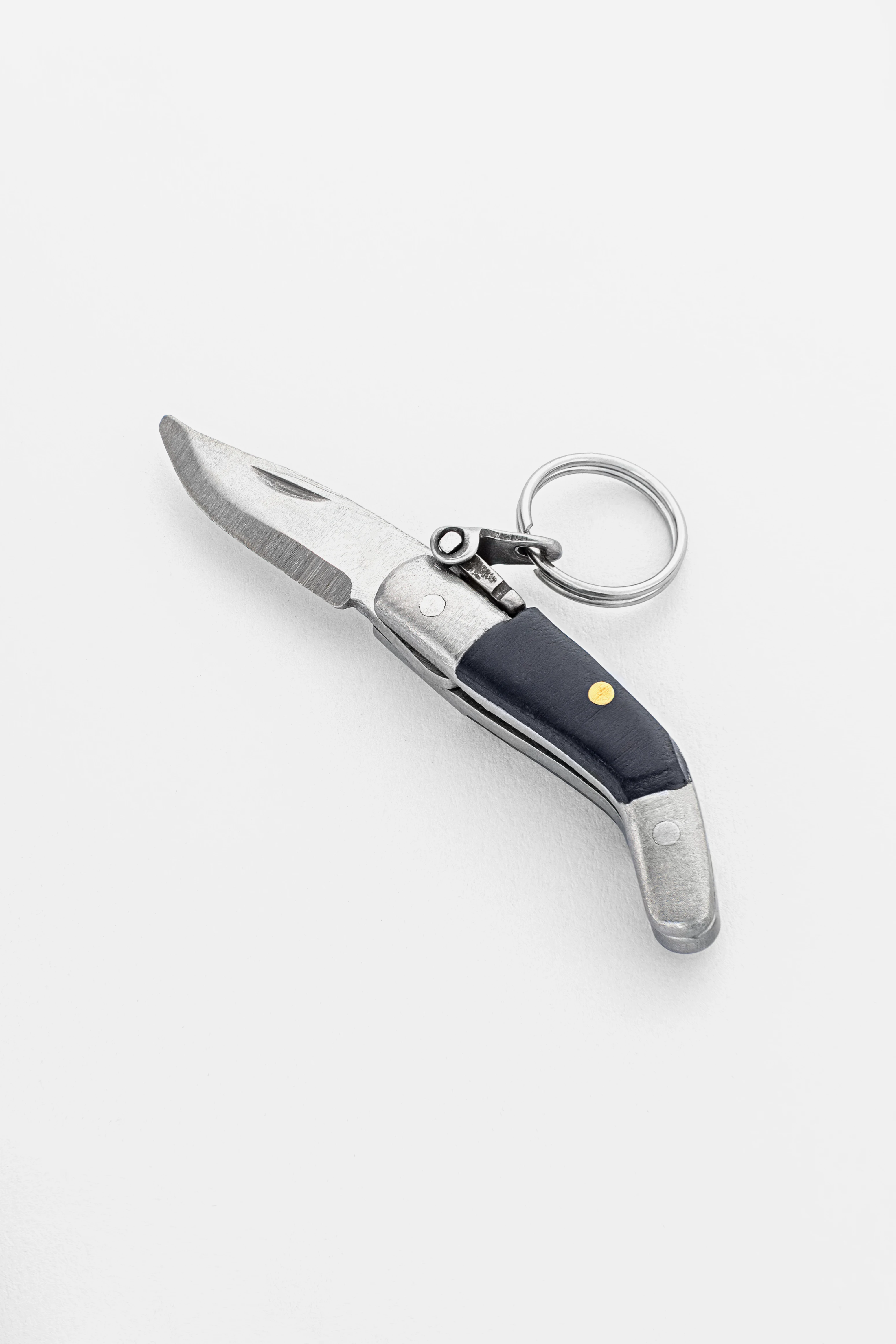
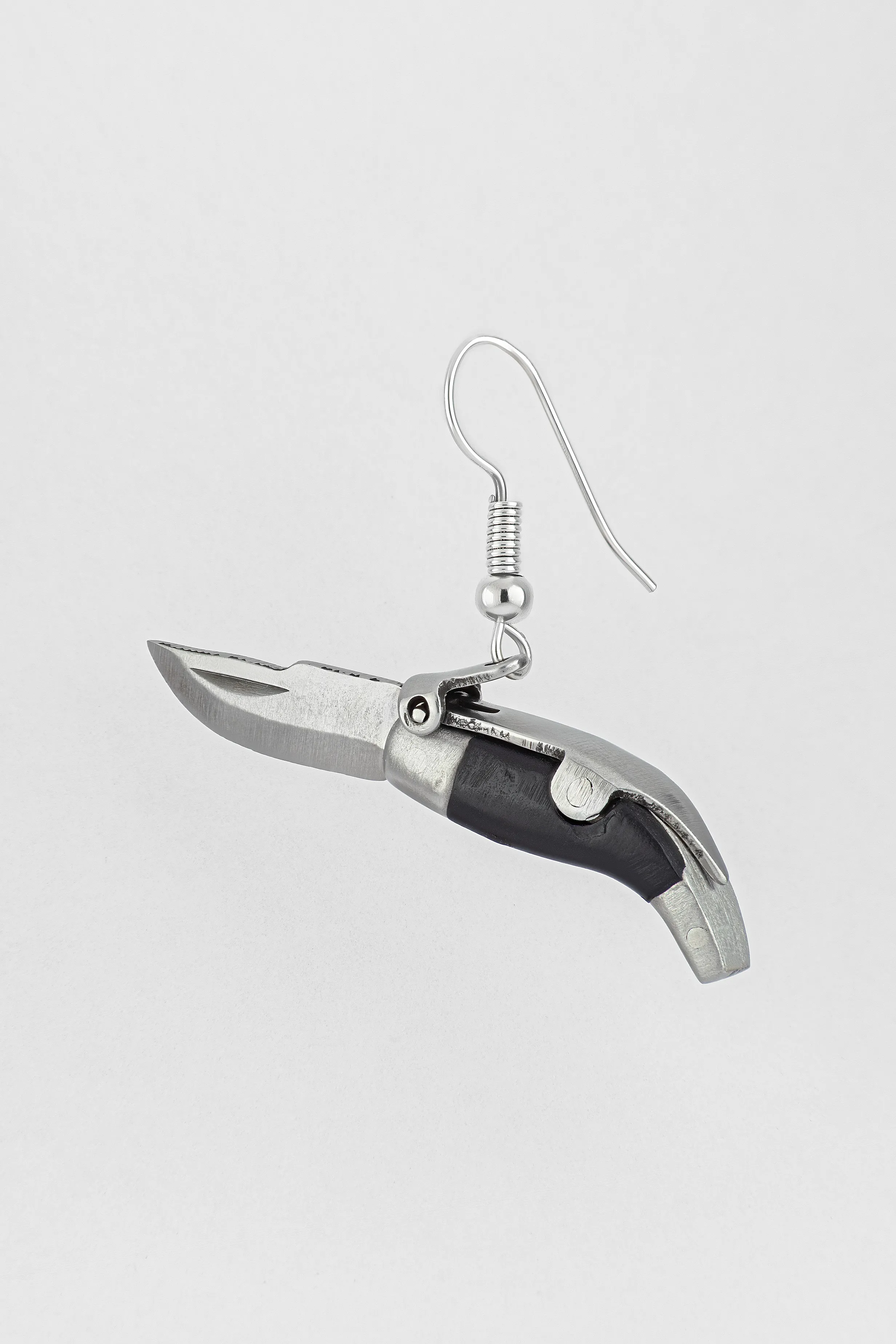
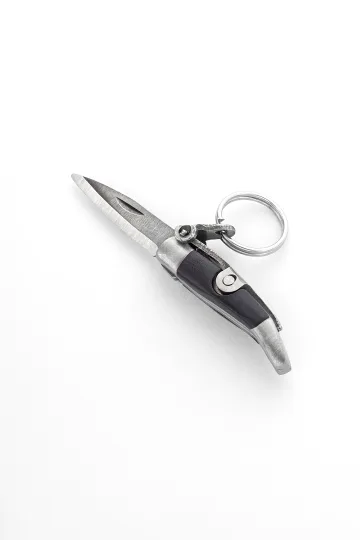
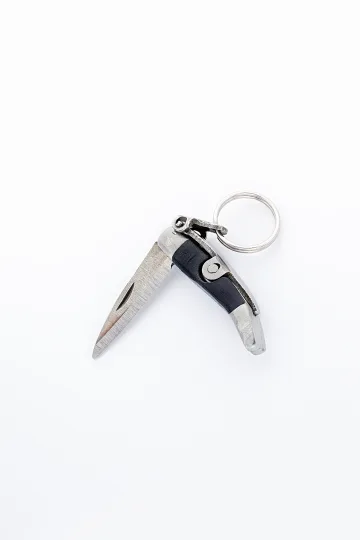
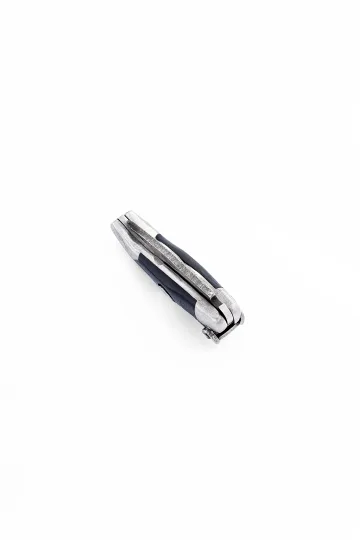
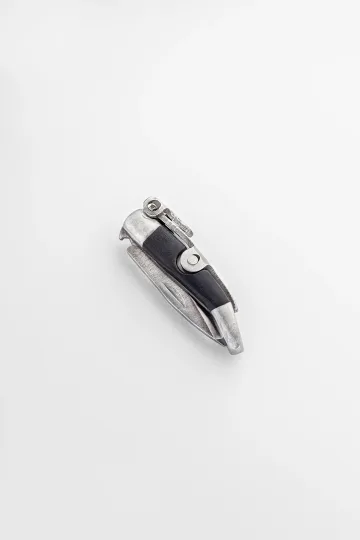
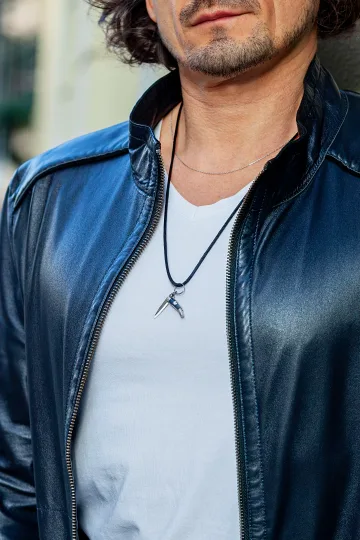
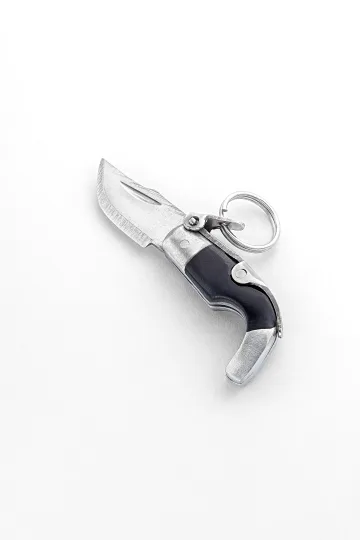
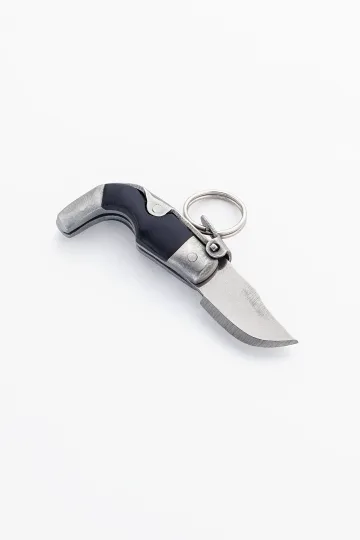
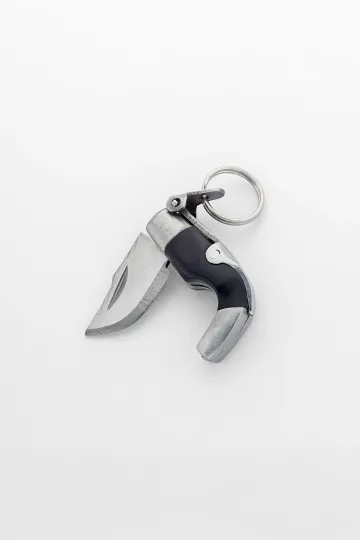
CAPAORA mini knife pendant
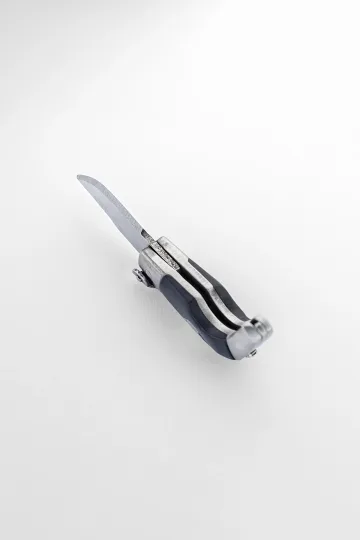
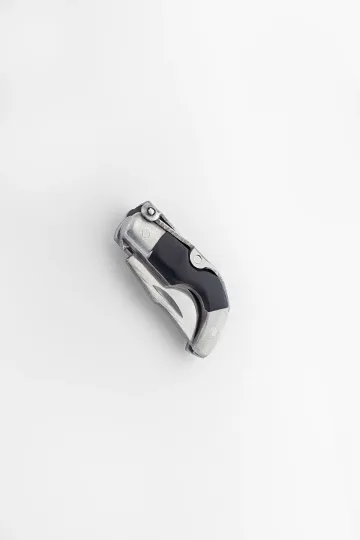
The 18th-century Spanish navaja in miniature: 40 mm of stainless steel, a real folding mechanism and a Palanquilla lock that clicks. An affordable gift to remember.
Authentic · Ships from Spain · 14-day returns
The Seal of Solomon in art and culture
A symbol that has lived two thousand years has left traces everywhere. To walk through them is to see how deeply the Seal of Solomon grew into culture.
In Islamic art
It was in the Islamic world that the Seal of Solomon became a truly mass decorative motif. The six pointed and five pointed star was laid in tilework in mosques and palaces, struck on coins, carved on amulets and weapons, woven into geometric ornament from Morocco to Central Asia. In the Arab tradition the khatam Sulayman is a benign, protective sign, and its abundance on walls is easily explained: the seal of the prophet was believed to guard a building and its inhabitants. In Spanish Andalusia, where three religions lived side by side for centuries, this star can be found in decoration next to Arabic calligraphy.
In European magic and literature
In Christian Europe the Seal of Solomon lived a double life. On one side, as an innocent symbol of harmony and of the wisdom of God in church art. On the other, as a working tool in the underground tradition of grimoires. From this second strand the image passed into literature. The motif of a magician who subdues a spirit with a seal or sign runs from the tales of the Thousand and One Nights with their jinn in sealed vessels through to European stories of summoned demons. Even the five pointed star that halts an unclean thing on the threshold belongs to the same family of ideas: a closed sign as both trap and protection.
On flags and coats of arms
The Seal of Solomon has a fully official biography too. The five pointed star on the flag of Morocco, the green "Seal of Solomon" as it is called there, is a direct heir of this symbol: it was added at the start of the twentieth century to what had been a plain red cloth. The six pointed star appeared for centuries on the seals, coins and coats of arms of various rulers of the East and of Europe long before it became an exclusively Jewish national sign. The history of the symbol on flags shows once again that the same star managed to be a charm, a mark of power and a religious emblem, depending on who raised it and when.
Solomon as an ancestor: the Ethiopian line
A separate and little known chapter of the legend was written in Ethiopia. The ruling dynasty there traced its line for centuries straight back to Solomon and the Queen of Sheba: by tradition their son Menelik became the first king of the Ethiopians and carried the holy things of Jerusalem to his country. This Solomonic dynasty officially ruled right up to the twentieth century, and the name of the wise king remained part of the state ideology. Here Solomon is no longer the owner of a magic ring but a forefather, the living root of a whole people. The example shows the scale the figure of the biblical king reached: from a ring on a finger to the founding of a royal bloodline.
A charm over the door: living customs
Beyond the high history the Seal of Solomon has a modest everyday life that reaches to this day. In Morocco and Tunisia the star is still laid in tilework at the entrance and drawn on amulets for the newborn. In mountain Berber villages it was struck on the silver fibulae and brow ornaments of women, where the sign served as dowry and charm at once. In Andalusia old tiles bearing this star still turn up in courtyards and on facades, recalling the centuries when three religions lived here side by side. A symbol the theologians argued over lives quietly in the hands of craftsmen and on the thresholds of houses, and it is precisely this quiet continuity that explains why it reached us without a break.
The psychology of a protective symbol
You do not have to believe in jinn for the Seal of Solomon to "work". Modern psychology explains fairly clearly why protective signs help people thousands of years after the legends that produced them took shape.
The first thing is a sense of control. When a person wears a sign that is "in charge of protection", part of the anxiety about the future is, as it were, handed over to the object. The real likelihood of trouble does not change, but the background worry drops, and with it calm and composure grow. The seal, with its idea of power over chaos, makes this especially vivid.
The second is an anchor of meaning. A symbol with a considered philosophy, the balance of the elements, power over oneself, the harmony of heaven and earth, works as a daily reminder of the wearer's values. The eye falls on the star, and a brief prompt surfaces: keep hold of yourself, keep order. Psychologists call such objects anchors, and they measurably help people gather themselves in a hard moment.
The third is a connection with history and roots. To wear a sign two thousand years old that once united whole civilisations is to feel part of something large. That sense of belonging by itself raises resilience to stress. There is nothing mystical about it: this is simply how human consciousness is built. The Seal of Solomon does not change reality; it changes one's attitude to it, and it does so in a helpful direction.
Silver, gold, symbolism, charms and matching sets.
Send a friend a discount code, they save on their first order.
Facts about the Seal of Solomon that surprise
- The ring was found in a fish. By the Talmudic legend, Solomon recovered his lost seal by slitting open a fish bought at market, which had once swallowed it in the sea. The plot of a ring inside a fish later travelled through dozens of tales from many peoples.
- The genie in the bottle comes from here. The image of a spirit sealed in a vessel comes straight from the legend of Sulayman, who used his seal to shut rebellious jinn in copper jars and cast them into the sea. Tales of a spirit freed from a bottle grew out of this account.
- The symbol has seventy two subordinates. The medieval Lesser Key of Solomon lists exactly seventy two spirits that a magician can supposedly summon with the seal. The number later became almost a brand of occult literature.
- The star gave its name to a flower. The plant Solomon's seal is so called in English and Latin: the cut of its rootstock shows round marks that resemble the impressions of a seal.
- One figure on mosque and synagogue alike. The six pointed star decorated Islamic, Jewish and Christian buildings for centuries as a shared sign of protection and harmony, and only in the modern age settled with a single tradition.
- On the flag of a whole country. The five pointed "Seal of Solomon" is carried on the national flag of Morocco, where it was added at the start of the twentieth century.
- Solomon understood the language of birds. In both the biblical and the Quranic traditions the king is credited with understanding the speech of animals and birds, and the famous hoopoe in the Quran brings him important news.
- A whole dynasty counted him an ancestor. Ethiopian kings traced their line to Solomon and the Queen of Sheba for centuries, and this Solomonic dynasty officially ruled the country right up to the twentieth century.
- The seal sometimes has seven points. Alongside the familiar six pointed and five pointed forms, Islamic talismans show a seven pointed "khatam Sulayman", as well as a row of seven separate marks called the "seven seals of Solomon".
- Alchemists called it the star of the wise. For them the two nested triangles were an emblem of the joining of sulphur and mercury, fire and water, that is a diagram for obtaining the philosopher's stone.
Frequently asked questions
What is the Seal of Solomon in simple terms? It is the legendary signet ring of King Solomon, engraved with a secret sign and, in the Jewish version, the name of God. Tradition says it gave power over spirits and jinn. Today the Seal of Solomon also names the symbol itself, a six pointed or five pointed star, worn as a charm.
Is the Seal of Solomon the same as the Star of David? The form is the same, a six pointed star, but the context differs. The Star of David is above all a national and religious symbol of Judaism. The Seal of Solomon is an older magical and protective sign, shared by the Jewish, Christian and Islamic traditions. The same hexagon reads differently in different hands.
How many points does the Seal of Solomon have, five or six? Most often six: the classic seal is a hexagram of two triangles. But some medieval magical texts call the five pointed star, the pentagram, a Seal of Solomon too. Both forms are considered legitimate; the difference is one of symbolic accent.
Is the Seal of Solomon an Islamic or a Jewish symbol? Both, and Christian as well. In Islam it is the khatam Sulayman, the seal of the prophet Sulayman, one of the most widespread protective signs. In Judaism it is linked with King Solomon and the shield of David. In Christian Europe it lived as a symbol of harmony and as a sign in books of magic. It is a rare symbol shared by three religions.
Can I wear the Seal of Solomon if I am not religious? Yes. The symbol asks for no faith. People wear it as a charm, as a sign of inner balance, and simply as handsome geometry with a deep history. The meaning "harmony of opposites and power over oneself" is clear regardless of religion.
On which finger do you wear a ring with the Seal of Solomon? There is no strict rule. The classic place for a signet ring is the little finger. The ring finger makes the ring more significant; the index finger chimes with the theme of will and authority. The main thing is that the ring fits snugly and the bezel with the star faces outward.
Is it true that the Seal of Solomon protects from evil? In the tradition, yes; that is its chief everyday role: a charm against the evil eye, envy and ill intent. A closed, perfect star, by belief, lets no evil in. Whether to believe this or to wear the symbol simply for its meaning and beauty is each person's own affair. Both approaches are equally valid.
How does the Seal of Solomon differ from the pentagram and the hamsa? The pentagram is a five pointed star linked with the five elements and the image of the human being, while the classic Seal of Solomon is six pointed and speaks of the union of heaven and earth. The hamsa is an open protective palm, an entirely different form. All three protect, but through different images, and they are often worn together.
What was engraved on the real ring of Solomon? By legend it bore a secret sign and, in the Jewish version, the unpronounceable name of God, that same four letter Tetragrammaton. It was the name, not the star, that was held to be the source of power over spirits. Later tradition added copper and iron to the ring as metals that demons fear.
Why is the Seal of Solomon called the star of the wise? That is what the alchemists called it. They read the two nested triangles as the union of opposite principles, sulphur and mercury, fire and water, and that union was the goal of their Great Work. The star served as a coded emblem of the process, clear to the initiated and innocent looking to everyone else.
Can the Seal of Solomon be worn with a cross or another symbol of faith? Yes. The Seal of Solomon is not tied to one confession and lives happily alongside other signs. It is often worn next to the Hand of Fatima, a nazar or a plain chain. The one thing to keep in mind is moderation: the star reads more clearly with a little air around it.
Is there a difference between giving a ring or a pendant with the Seal of Solomon? The meaning is the same; the convenience changes. A signet ring is closer to the legend of the ring itself, but it needs a known finger size. A pendant is more universal for a gift, can be put on at once, and is closer to the everyday, charm like role of the symbol. For a child, or to be safe, a pendant is the more practical choice.
Is it true that Solomon sealed jinn in vessels? So says the folk Islamic tradition: the prophet Sulayman used his seal to shut rebellious jinn in copper jars and cast them into the sea. From this account grew the tales of a spirit freed from a bottle. The Quran itself has no jars and no seal; it speaks of the jinn obeying Sulayman and working at his word.
Conclusion
The Seal of Solomon has travelled from lines in ancient books to a piece of jewellery you can put on a finger today. Along the way it gathered the legends of three religions, commanded demons in tales, adorned mosques and cathedrals, entered grimoires and reached a national flag. The form changed little: the same star of perfect triangles throughout. What changed was the meaning poured into it, and in that lies its strength.
Whether you believe in the ring that tamed jinn or simply value strict geometry with a two thousand year biography, the Seal of Solomon remains one of the wisest and most universal symbols you can wear. A star that speaks of balance, order and power over oneself sounds fitting in any age.
The Seal of Solomon and other charms: stars, Hands of Fatima, nazars in silver and gold.
Buying it as a gift? Each one arrives ready to give.
 A branded Zevira box and a little card come with every order.




About Zevira
Zevira makes jewellery in the artisan tradition of Albacete, Spain. The Seal of Solomon is one of those symbols we love: ancient, recognisable, clear without extra words and equally at home on a strict signet and on a fine chain. We reproduce the clean geometry of the star in modern materials and proportions, with hand engraving and an eye to lines that will read for years.
What you can find with us on the theme of symbolism and charms:
- The Seal of Solomon as a signet ring and as a pendant, in silver and gold
- Hands of Fatima and nazars, to gather a set of charms from different traditions
- Pendants with stars, eyes and other protective signs
- Signet rings ready for the engraving of a personal symbol
- Chains and cords of various lengths for a pendant of any size
Every piece can be personalised with engraving, with the option of personal engraving. Sterling silver 925 and 14 to 18K gold.