Spanish Folk Jewellery: The Costume Sets of Ibiza, Salamanca, Galicia and Aragon
What actually went on with the dress
On her wedding day an Ibizan bride was handed twenty four rings. Not a symbolic pair: twenty four, worn on every finger except the thumbs, made in filigree, some stamped with a family seal. Spanish folk jewellery was never decoration added to a dress. It was the household savings, worn where the village could count them.
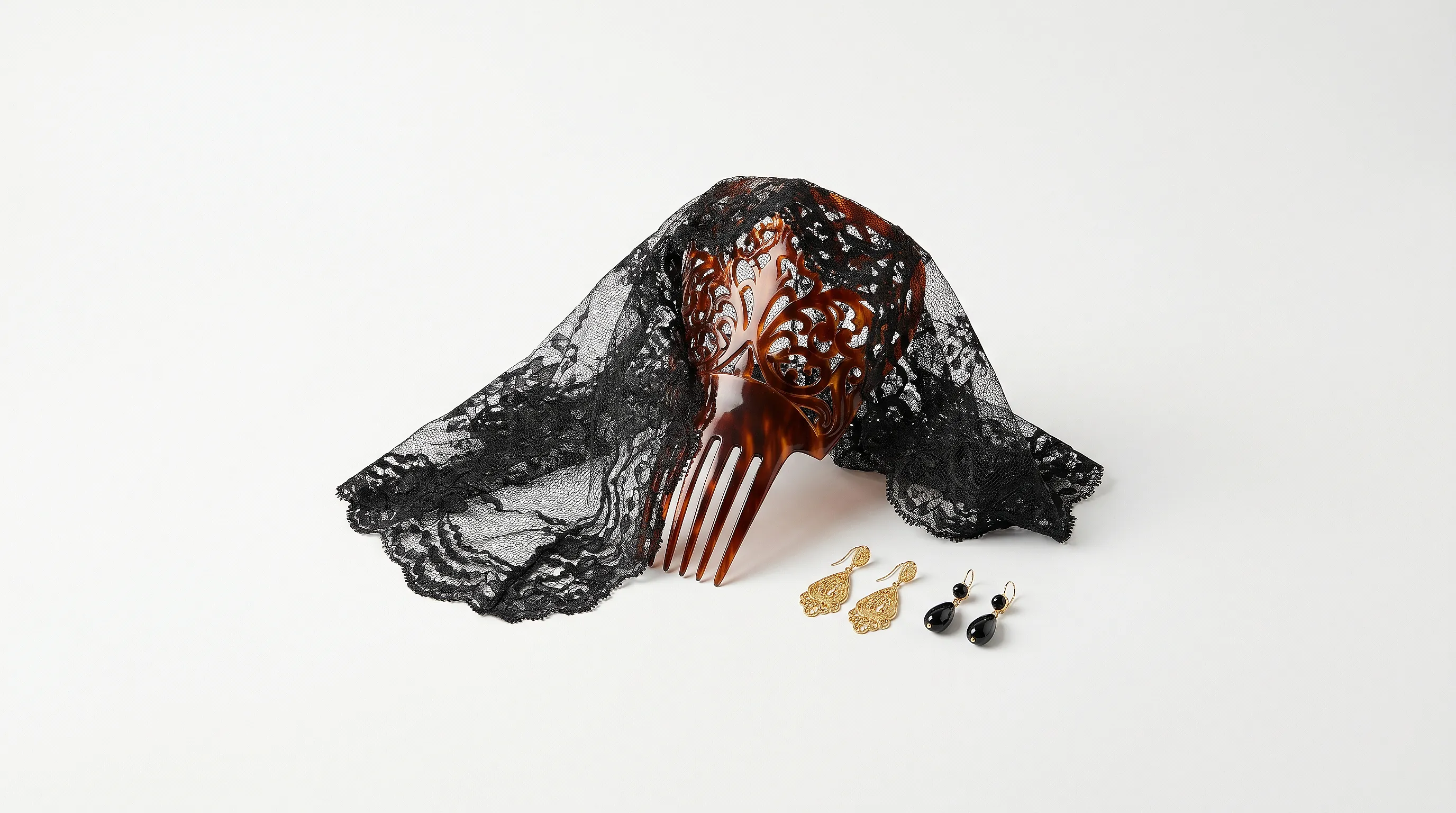
English readers meet Spanish costume through one image: the lace veil and the tall comb, worn by a woman at a bullfight or a Holy Week procession. That image is real, and we have written about it separately in the piece on the mantilla and the peineta. It is also the smallest part of the story, because the veil belongs to the head and the interesting things happened on the chest, in the ears and along the seams of a jacket.
What follows is the rest of it. The Ibizan emprendada, a chest full of gold that doubled as a dowry. The botón charro of Salamanca, a silver rosette sewn in rows down a man's coat. Galician sapos and black azabache carved by a guild that worked the last streets before the cathedral of Santiago. Aragonese earrings that arrived from Catalonia with a fair and never went home. Each of them answers a different question about what people did with metal when they had almost none of it.
Wear the symbol, don't just read about it. These are in stock:






An aderezo is a parure, and Spain thought in sets
The first word worth learning is aderezo. English has no clean equivalent, and the closest is the French parure: a group of pieces designed together, in one technique and one pattern, meant to be worn as a unit. A necklace, a pair of earrings, and usually a third item, a brooch or a set of pins. Spanish inventories treat the aderezo as one object, not three.
Why a village bought everything at once
The reason is not taste. A rural customer reached a goldsmith rarely, sometimes once in a lifetime, and ordered the whole group in a single sitting. That was cheaper per hour of labour, and it removed the risk that a later visit would fail to reproduce the same pattern. Buying earrings afterwards to match a necklace meant a second journey, a second negotiation, and a maker who might have changed the design or died. Set-thinking follows from how seldom the purchase happened, not from any idea of harmony.
The set as a line in the marriage contract
An aderezo was written into marriage papers next to bedding, land and livestock. It was liquid: silver and gold could be melted or pawned in a bad year, yet the object counted as the woman's own property rather than the household's. That explains a density of ornament that looks excessive to a modern eye. Nobody was choosing what flattered a face. They were wearing what the family owned, and wearing all of it.
Three outings a year, then back in the chest
The folk set was not daily wear. It came out for the patronal feast, for weddings, and for the religious procession, and spent the remaining eleven months folded in the same cloth it had arrived in. Anyone handling a surviving nineteenth century piece notices the same thing: the metal looks its age, the fittings barely do. That is the arithmetic of an object that spent almost its entire working life folded away.
In the set a piece worked by sheer mass. On its own it works by shape, and that is a different job entirely.
Wearing it now without dressing as a region
One mistake ruins this look in a city, and it is the obvious one: wearing the set. A complete regional group reads as a costume, a single piece from it reads as a piece, and after that everything depends on what stands next to it.
The pieces themselves are easier to place than people expect, because folk work was designed for exactly the conditions a modern wardrobe supplies. It is large, so it survives a coat. It is textured, so it holds up under bad lighting where a polished surface goes blank. It was built to be seen at a distance, which is how anyone actually sees you. What it was not built for is company, and that is the one habit worth unlearning: the village wore the whole set because the village owned the whole set, and copying that today produces a fancy dress photograph rather than an outfit that works on a Tuesday.
Where should someone start?
With one object, and the largest one. Folk jewellery is built on mass and relief, so it performs as a soloist and collapses in a chorus. I would take the earrings or the pendant, never both in the same outing, and I would strip everything else off: chain, bracelets, rings. The quieter the surroundings, the more convincing the piece becomes. This is the opposite of how the object was originally used, and it works precisely because of that.
What spoils it fastest?
Trying to support the piece with more of the same. A folk earring plus a folk necklace plus embroidery on the garment produces the impression of a stage, and the wearer reads as a performer. The second killer is bright polished hardware nearby. Textured silver against mirror finished steel is a fight between two surfaces, and the textured one always loses. Give the piece a matte neighbour or no neighbour.
What if it was inherited and it came as a set?
Then I break the set up by occasion rather than wearing it whole. Necklace for the evening and over something dark and plain. Earrings on their own on an ordinary day. Brooch on a coat, not on a dress. Nothing is destroyed by this: the group stays a group in its box and simply goes out in parts. It also extends the life of the fittings, because clasps and jump rings on old work wear out long before the body does.
What about the tarnish?
Leave it alone. Polishing an old folk piece to a shine erases the very thing it was cut for, since the dark tone in the recesses is the drawing. A soft cloth over the high points and nothing more. If a piece has gone black all over and that genuinely bothers you, hand it to someone who can tell patina from dirt, and say clearly that you want the recesses left dark.

Turn on your camera, pick earrings, a pendant or a ring, and see the piece on yourself in real time.
Switch items in one tap.
Everything runs in your browser: no photo or video is ever uploaded.
Where the folk set actually came from
The regional costume looks timeless in a festival photograph, and it is not. Its biography is short and traceable, and it runs roughly from the late eighteenth century to the middle of the nineteenth. Anything older in the chest is an inherited fragment, not the shape of the tradition.
Town fashion, one generation late
Folk forms are simplified versions of urban jewellery from the previous generation. The drop earring with coloured stones, the cross on several strands, the filigree brooch: each began in a city, travelled outward, lost detail, gained size, and then froze. The lag runs about a generation, which is why a peasant festival set of the 1850s answers the silhouette of a townswoman of the 1790s. Our wider survey of the Spanish jewellery tradition follows that same current from the court downward.
American silver, and what it made possible
Silver arriving from the Spanish American mines made the metal cheap in a way it had never been. Before that, rural ornament leaned on copper, brass, glass and bone. Rows of silver buttons on a single coat describe a specific economic moment rather than an ancient custom, and the same is true of the coral and mother of pearl that reached inland markets through the same trade.
The moment costume became costume
The naming came late. A dress becomes a traje regional only once educated outsiders start describing it, and in Spain that happened in the nineteenth century and hardened in the twentieth. The date to hold on to is 1922. In October of that year Alfonso XIII and Victoria Eugenia came to Salamanca for the third centenary of the canonisation of Saint Teresa, the queen admired the local dress, and the province had a full charro outfit embroidered in the town of Macotera and delivered to her in Madrid that December. Both her suit and the king's are kept in the Museo del Traje. A regional dress had become a national gift, and after that the variants stopped drifting.
Ibiza: the emprendada, a dowry you wore
The Balearic set is the one that surprises visitors most, because Ibiza is now filed under nightlife and the island's own jewellery is nothing like it. The emprendada is not a necklace. It is a mass of chains, strands, a cross, and a central jewel, layered over the chest of the payesa, the countrywoman, and built up over years.
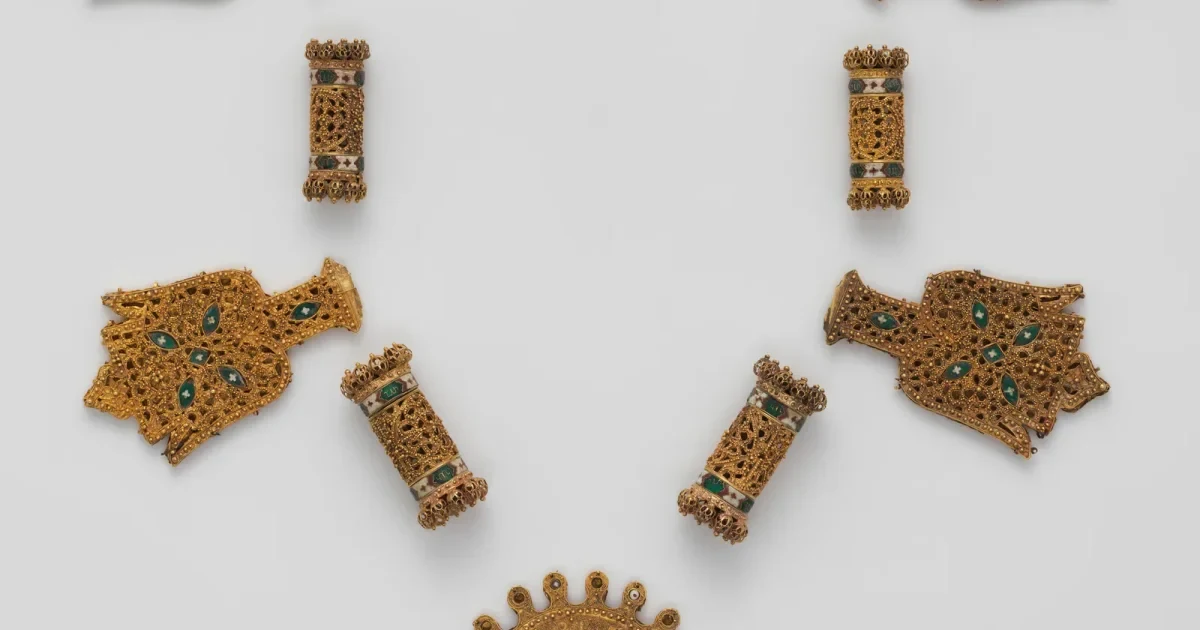
Two families of emprendada
There are two recognised versions. The older is silver and red coral: several rows of coral beads, rounded silver pins, and a silver cross finished with filigree and set with coral or mother of pearl. The later and more prestigious version is worked in laminated gold, and its core is the collaret, a chain of two rows of biconical elements, hung with a cross pendant and flanked by a pair of decorated rectangular pins. Red coral in that first version is doing two jobs at once, ornament and protection, a habit the whole Mediterranean shares and one we unpack in the article on coral in jewellery.
Sa joia, the jewel at the centre
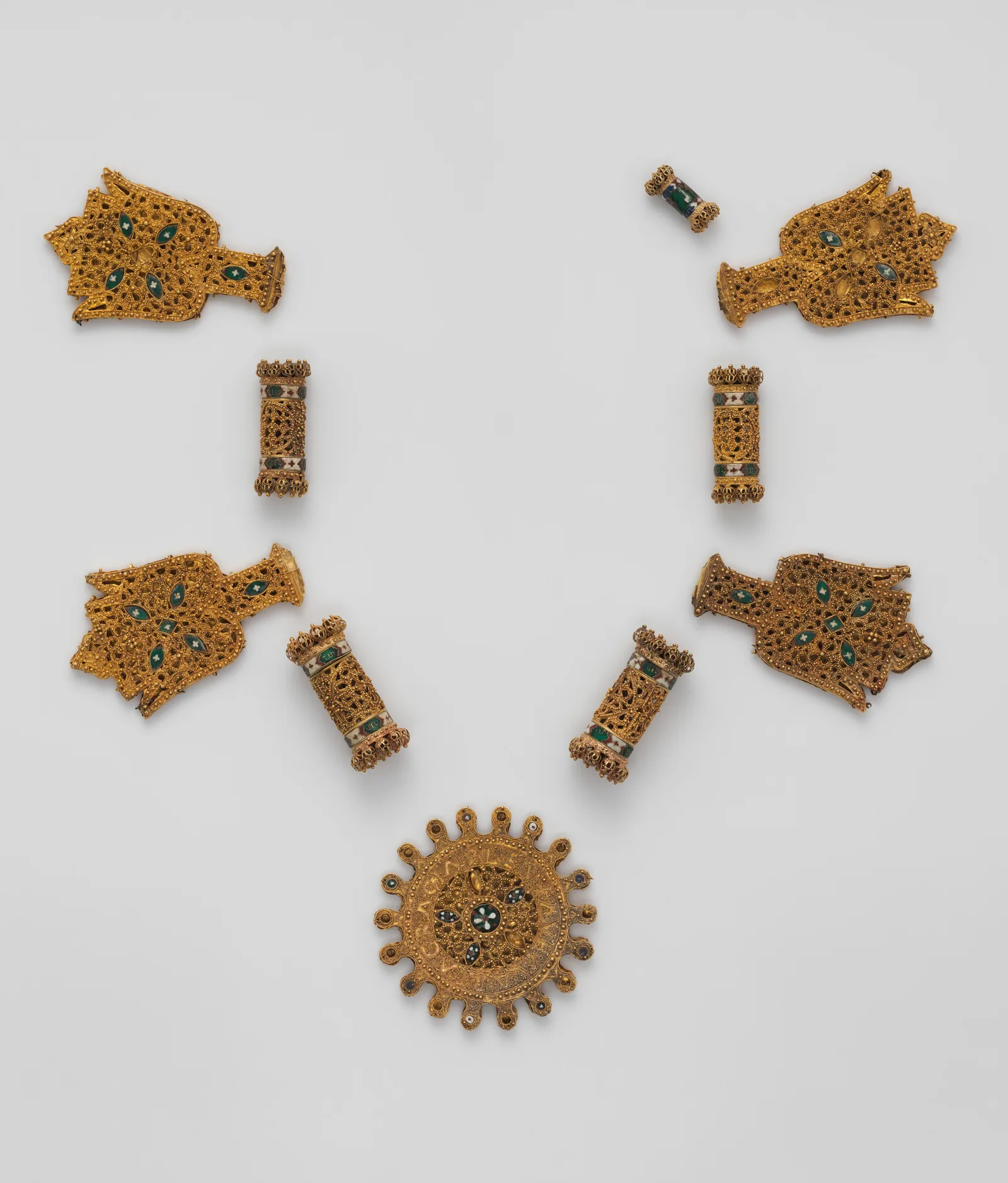
At the middle of the arrangement hangs sa joia. It is a reliquary rather than a pendant: a case with a glass window, an image of the Virgin behind it, filigree and stones around the frame, suspended on two gold chains. It is the piece the eye goes to and the piece a family names when it lists what it owns. Devotional object, portable capital and centrepiece in one, which is exactly the combination that makes folk jewellery hard to sort into modern categories.
Twenty four rings, and a chain at First Communion
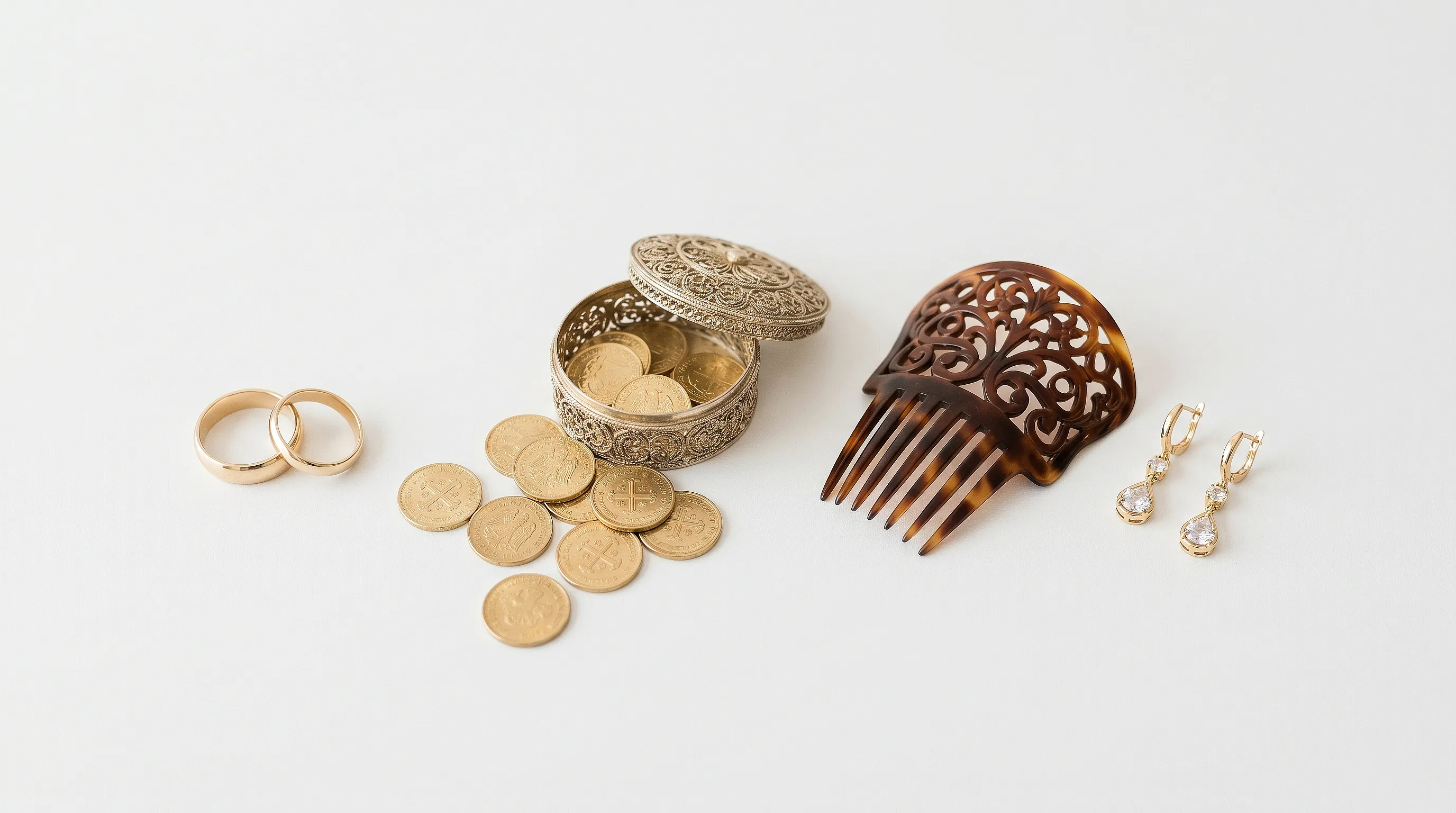
The set accumulated on a schedule. A girl received her first piece at First Communion, generally a small cross and a chain, and items were added year by year until she married. At the wedding the groom handed over twenty four rings, worn on every finger except the thumbs, some carrying family seals and the rest decorated in fine filigree. The number was the point. Anyone at the ceremony could count it.
Bells on the man, and the dance
The male Ibizan costume kept its metal lower and louder: filigree bells on the waistcoat that sound as the wearer moves. They exist for the baile payés, the peasant dance, where the woman moves in tight circles with her eyes down and the man circles her with his arms high. The jewellery was tuned to that choreography, which is why a still photograph of an emprendada on a mannequin tells you so little about it.
Customer reviews
Zevira is a real jewellery shop. Genuine payments, deliveries and customer thank-yous.
🥰🥰🥰 gracias

Ok, ¡gracias! 🙂

Salamanca: silver instead of a fastening
Move inland to the Castilian plateau and the signature piece is not a necklace or an earring. It is a button. The traje charro of the Salamanca countryside carries silver buttons down the front of the jacket and along the outer seam of the trousers, and they are counted in dozens.
How a botón charro is built
A botón charro is a spherical, slightly concave boss, and there is no casting in it. The maker draws a silver wire into a frame shaped like a flower, closes it into a rosette, and solders the centre. Each cell of that frame is then packed with spirals of two finer twisted wires until the surface is solid, powdered solder and a torch fix the filling, and the whole thing is finished with silver balls of graded sizes laid around a central bead. Hundreds of wire elements go into one button. Held in the hand it weighs almost nothing and reads, at three paces, as a small burst of light.
Charro, and the Mexican confusion
English search results for the word send you to Mexico, to the horseman's suit and the mariachi. The connection is popular belief rather than documented history: the Mexican outfit is often traced to sixteenth century Salamanca purely because charro is what people from that province are called, and there is no evidence for the descent. In Spanish the adjective carries a second meaning too, loaded with ornament to the point of being showy, and the Salamanca dress earned it honestly.
What the women of Salamanca wore
The charra set is one of the heaviest in the peninsula, and it stacks. Closest to the throat sits a gargantilla of three or four turns, often centred on a filigree heart. Below it come crossed strands hung with enamelled crosses, then a wider necklace of filigree balls, and among all of it the scallop shell of Santiago and the flat oval brooch the region calls a galápago. Large drop earrings and rings finish it. The quantity was read as directly as a bank statement.
Silver, documented from the seventeenth century
Silver buttons appear on the charro suit in seventeenth century descriptions and never leave it. The trade behind them is older still: Salamanca silversmiths organised themselves into a guild with its own religious brotherhood in the fifteenth century, and that continuity is the reason the technique survived when the costume stopped being clothing. Claims that push the form back to Celtiberian sun discs are guesses about a resemblance, not a documented line.
Aragon: earrings that arrived with a fair
The Aragonese festival look is recognised by its earrings, called baturra after the regional nickname for an Aragonese countrywoman. They are dated to the nineteenth century, made in gold with amethysts cut several different ways, and their design did not originate in Aragon at all.
The arracada, and why forms travel
The parent form is the Catalan arracada: a large drop earring that widens towards the bottom, usually stone-set, with parts that swing. Catalan workshops fixed its proportions, and documented nineteenth century examples in gold and amethyst carry the Barcelona hallmark. From there the shape spread outward along the fair circuit, changing its stones and its scale while keeping its construction. What became local was the name and the dress it was worn with, not the earring.
Why amethyst reads as Aragonese
Purple stone in warm gold looks like a regional signature and is really a matter of what was available and what was fashionable in that century. The combination does one thing very well, though, and the dress depended on it: amethyst holds colour under firelight and against olive skin, and this clothing was seen in the evening, in procession, by candle and torch rather than daylight.
Where the baturra set was actually worn
The earrings belong to a calendar rather than a wardrobe. Aragon organises its year around patronal feasts and the romería, a walking pilgrimage to a shrine outside the village that ends in a shared meal, and the full baturra dress comes out for those and for the jota, the regional dance. That last point governs the design. The jota is danced upright with the arms raised and the head turning sharply, and a long swinging earring is the only ornament that registers in it. A brooch is invisible at that speed and a bracelet disappears into a raised sleeve.
The set around the earrings is small by Balearic standards: a cross or a devotional medal on a short chain, a brooch closing the shawl at the front, and rings. The head takes over from the metal, with hair parted in the centre and gathered into a rear bun, and the shawl doing the work that a necklace does further south. In other words, Aragon spends its metal in one place and spends it well, which is the opposite strategy to Ibiza and produces a look that photographs far better than it inventories.
Upload a photo of your pet, someone you love, or an object. We'll build a 3D model and hand-cast it in pewter.




Galicia: filigree, black stone and the pilgrim trade
The north west runs on a different logic. Galician work is open, flat and spidery where the south is compact and solid, and it pairs bright silver with something black. That contrast is how these pieces are identified even in a poor photograph.
Filigree as the local hand
Filigree is drawn wire, not casting: the maker lays out a pattern in thread and solders it, so the object occupies a lot of space for very little metal. For someone wearing a full set through a long day of procession that is the whole argument. It also explains why surviving filigree so often arrives bent, since a wire lattice gives way where a cast body would not. The technique itself, and how it differs from granulation and from cannetille, is covered in our guide to filigree.
Sapos and doas
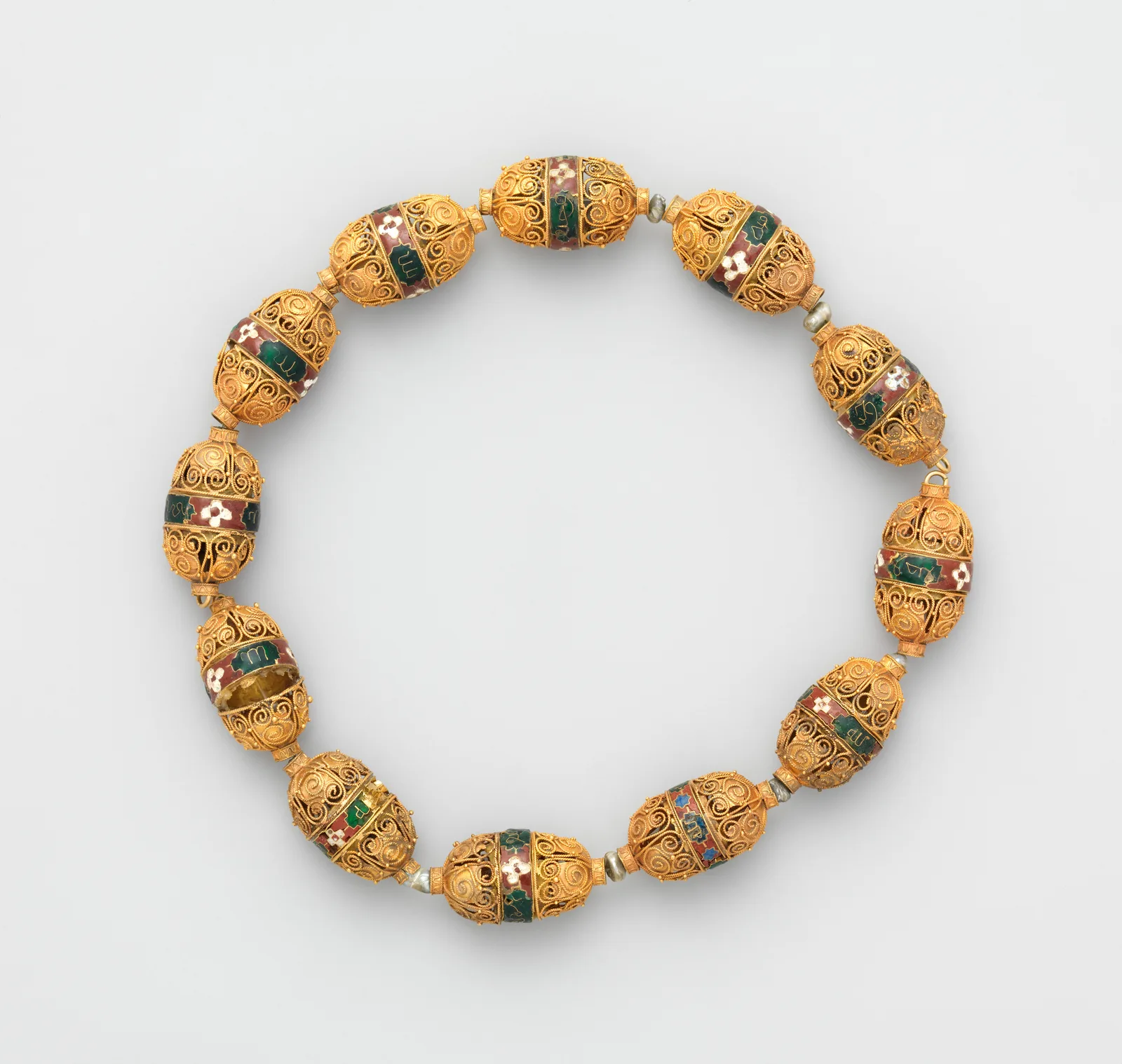
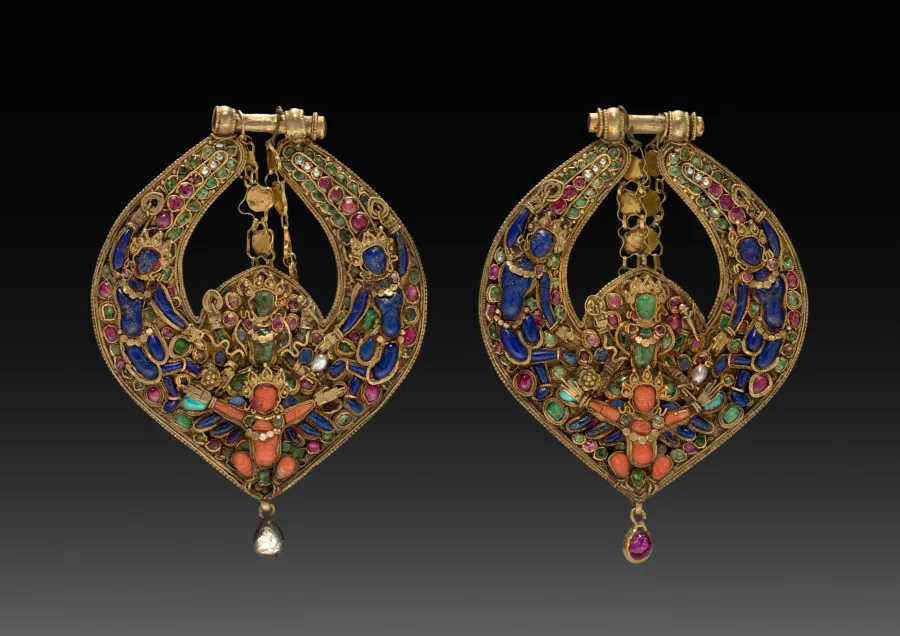
Two Galician words are worth carrying home. A sapo, literally a toad, is a pendant of three separate bodies linked by rings into an inverted triangle, and the name comes from that squat jointed outline. Doas are the silver beads strung to carry it. Together with earrings, crosses and brooches, in silver, gilt silver, coral or jet, they make up the set worn with the Galician dress, and the same forms cross the border into Asturias.
Azabache: the black stone that is not a stone
Azabache is jet, and jet is fossilised wood rather than a mineral. It is light, warm to the touch, and soft enough to be worked with tools meant for timber. Steel scratches it. Compostela has used it since the twelfth century, and the material became so bound to the city that the black carving and the pilgrimage are effectively one industry.
The azabacheros and their guild
The carvers had their own guild, supervised by the Church, which policed both the purity of the stone and the quality of the work. Their workshops sat on the final approach to the cathedral, so a pilgrim passed them in the last minutes of a journey of weeks. What they sold was scallop shells, small figures of Saint James, crosses, and the clenched fist called a figa, thumb pushed between index and middle finger, a gesture against the evil eye that the Mediterranean had been using since Roman times. Those objects went home in medieval saddlebags all over Europe, which makes them among the earliest souvenirs anywhere.
The figa on a child's cord
Of all the shapes the jet carvers sold, the one that travelled furthest is the figa, and its usual owner was a child. A small black fist on a cord went round the neck of a baby soon after birth, because infants were held to be the easiest targets for a jealous glance, and the same object turned up again decades later in a wedding set. The gesture is old Mediterranean rather than Spanish, and Roman examples in bone and amber survive from Britain to the Rhine, but jet is what made it read as north west Spanish. Black against a white shift, warm to the touch, light enough that a child would not fight it. The logic behind the whole family of protective shapes, and why so many of them are hands and eyes, is set out in our piece on the higa.
Andalusia: gold that works on a face
The Andalusian look is what the rest of the world means by Spanish costume, and it is the youngest thing in this article. The traje de flamenca entered the world in the nineteenth century, grew out of the majo dress that Goya painted around 1800, and took its familiar shape at the agricultural fairs around Seville in the middle of that century.
Why the earrings are large
A big drop earring beside a face does something a small one cannot: it lags behind the head and keeps travelling after the head has stopped. In dancing that is the entire effect. The same reasoning kills the fine chain, which disappears at any distance and vanishes altogether against patterned cloth. Weight is a balance too, heavy enough to swing back to vertical, light enough to survive a long day on a lobe, and makers solved it with hollow bodies and a high suspension point. An old Andalusian earring is lighter in the hand than it looks.
Coral and pearl at the feria
The fair set leans on hoops, brooches, bracelets and above all coral, which supplies the one strong colour against a printed dress. Pearl strands do the opposite job, sitting as a pale band between dark skin and loud fabric, and they run in several rows rather than one. Anyone choosing between the many things sold as pearl will find the distinctions laid out in our pearl guide.
Where the comb fits
The comb and the veil belong to this look and follow their own rules. The point to hold here is geometric: the peineta builds a vertical above the head while the jewellery works horizontally at the throat and the ears, and a set that gets this right does not have those two axes fighting. That is also why the enormous combs of fashion history, the peinetón that reached almost four feet across among the elite of Buenos Aires and Montevideo between the mid 1820s and the mid 1830s, never sat comfortably with a loaded chest.





The regions nobody names abroad
Outside Spain the whole country gets flattened into Andalusia, and the loss is real. Several more traditions deserve their own paragraph, including one that produced far more than it wore.
Valencia: a set built around the hair
The Valencian festival costume organises itself around the head. The hair is coiled into a rear bun and two side rodetes, and the metalwork answers that structure: la pinta, a large curved comb at the back, and two smaller rascamonyos fixed into the side coils. Only then come the long earrings, the neck jewel the region calls a joia, and the pins. The order matters. In Valencia the jewellery is chosen to fit an architecture already standing on the head, which is the reverse of how the Andalusian set is assembled.
Mallorca: the button set and the cross
Mallorca answers Ibiza with a different accent. The island's traditional pieces are the botonada mallorquina, a matched set of silver buttons, the Mallorcan cross, twisted cord chain and rosary beads, and surviving sets mostly date to the late nineteenth and early twentieth centuries. It is a quieter, more domestic look than the Ibizan chest of gold, worn with the vestit de pagès, and the two islands read as separate traditions rather than variations.
The Basque Country: restraint as a rule
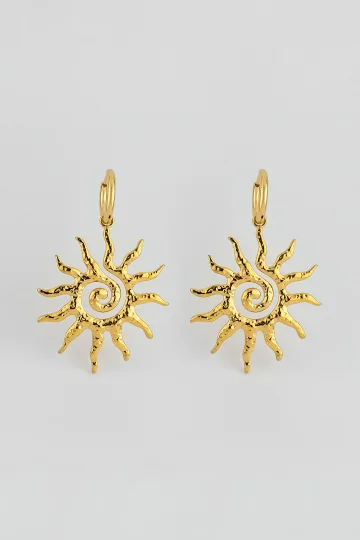
The northern set is drier. Fewer moving parts, less coloured material, more plain silver and simple geometry. That is a taste rather than a shortage, and it comes with its own symbols: the eguzkilore, a sun flower that was nailed to farmhouse doors to turn away harm, and the lauburu, the four headed cross. Both crossed from carved lintels into silver, and both are still the fastest way to identify Basque work on a table of unlabelled pieces.
Catalonia: the workshop that supplied the neighbours
Catalonia is interesting less for what its own countrywomen wore than for what its workshops sent elsewhere. The arracada that became the Aragonese baturra earring started here, Barcelona hallmarks turn up on gold and amethyst drops that ended their working life several provinces inland, and the same city supplied chain, clasps and cut stone to markets that had no jeweller of their own. That single fact rearranges the whole map. Folk jewellery in Spain is not a mosaic of sealed regions each inventing its own style. It is a network with a few production centres and a wide consuming periphery, and the difference between the two is usually the presence of a guild, a customs post and a road.
Extremadura and the Castilian borderlands
The dry provinces west of Madrid sit between the plateau and Portugal, and their sets borrow from both. Silver buttons come in from the Salamanca side, filigree comes up the old roads from the Portuguese north, and the local addition is a taste for large flat pendants and for coins mounted in a frame rather than pierced. The costume of Montehermoso is the piece most often photographed, and the metal there plays second to a straw hat covered in coloured wool. That inversion is worth noticing. In a poor region the visible expense moves to whatever material the household can produce itself, and the silver becomes the smaller half of the display rather than the whole of it.
What the whole thing is made of
Material explains folk jewellery better than ornament does. Three questions decided every choice: what could be had locally, what would survive a wooden chest, and what could be turned back into money in a bad year.
Silver, and why the tarnish stays
Silver is the metal of the north and of Castile. It is cheap enough to use in quantity, it casts well, and it draws into wire, so it serves both the solid cross and the filigree button. Old folk silver is dark in its recesses and bright on its ridges, and that is not neglect. The maker cut the relief expecting the low parts to blacken, because the contrast is what makes the pattern visible at arm's length.
Low carat gold, hollow bodies, thin leaf
Southern and eastern gold in these sets is rarely high carat, and it is often a thin worked sheet over a core or a hollow shell. Calling that a fake misses the point. It was the only way to get the volume the design needed out of the quantity of metal a family had. A large nineteenth century gold earring is frequently empty inside, and its weight in the palm is a fraction of what the eye predicts.
Coral, jet, mother of pearl, glass, and coins
Colour came from the sea and the forest rather than from faceted stones: red coral around the Mediterranean and the Balearics, black jet in the north west, mother of pearl wherever shell arrived. Glass settings are normal and were never sold as gemstone, because the value of the object sat in the metal and the hours. One more material belongs on the list and is easy to miss: coins. Spanish folk tradition mounted currency as ornament, pierced, framed and hung, and the collections of the Museo del Traje document the habit in detail. Money worn as jewellery, in a set that was already savings.
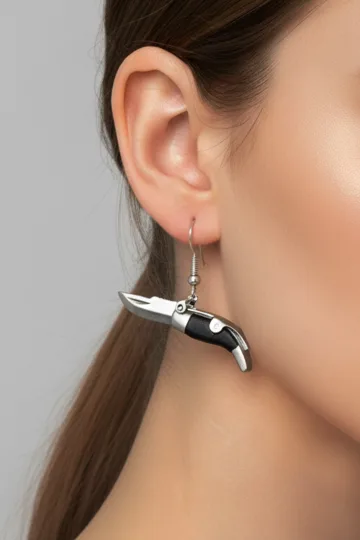
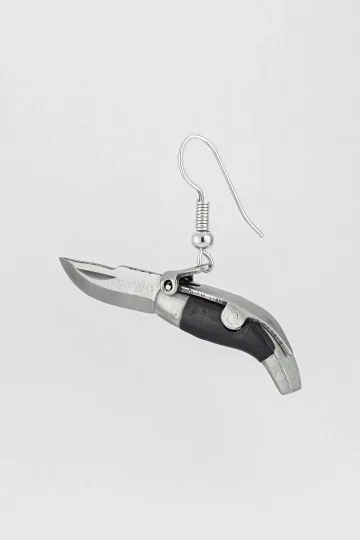
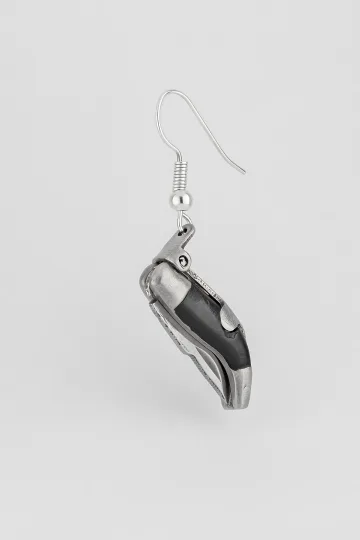
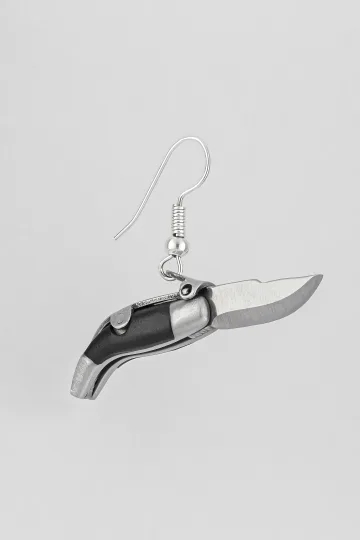
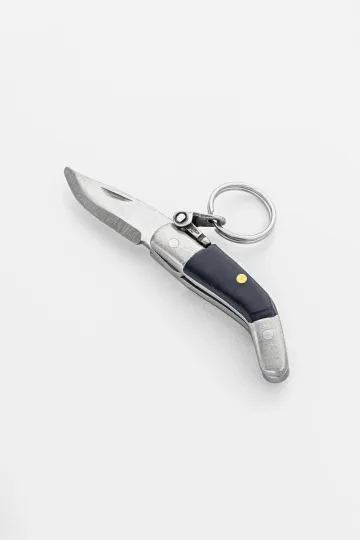
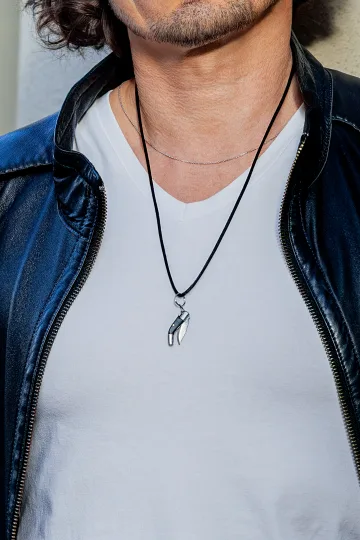
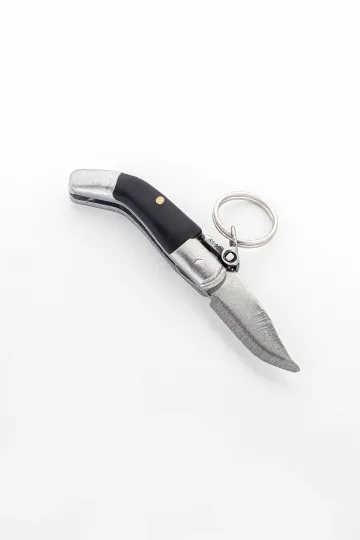
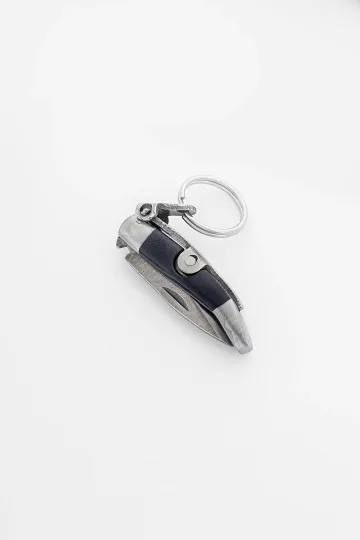
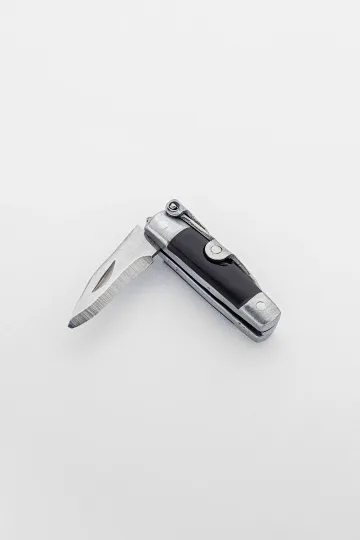
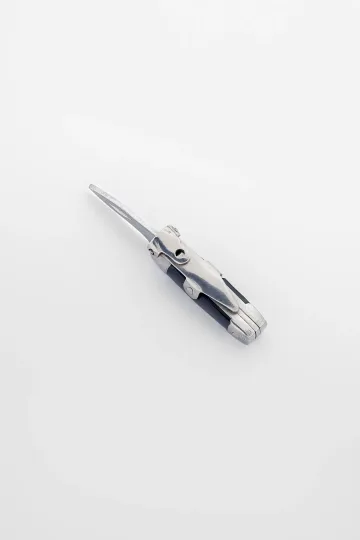
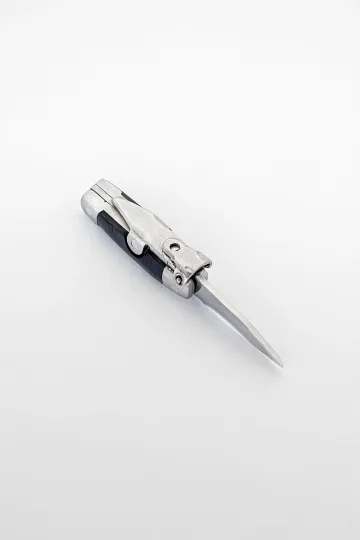
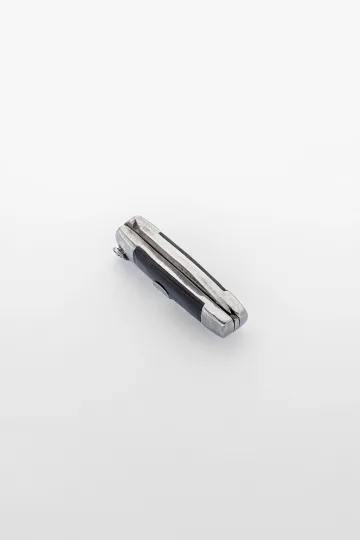
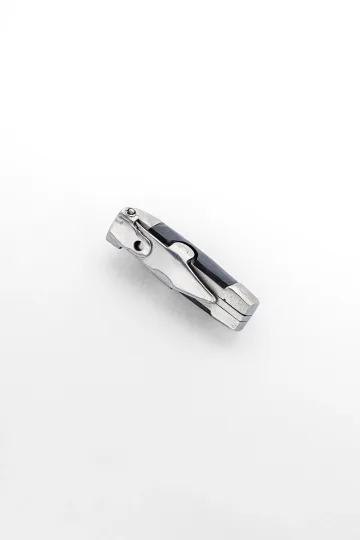
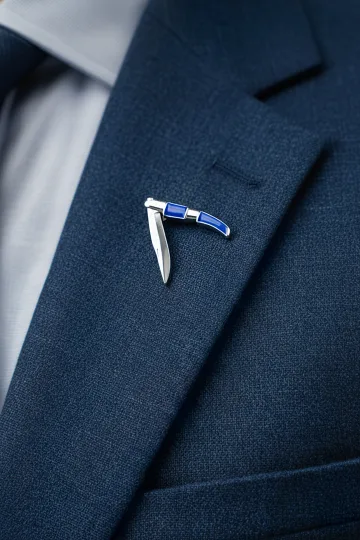
CAPAORA mini knife pendant
The 18th-century Spanish navaja in miniature: 40 mm of stainless steel, a real folding mechanism and a Palanquilla lock that clicks. An affordable gift to remember.
Authentic · Ships from Spain · 14-day returns
The religious half of the set
Separating ornament from devotional object in a folk set is a modern instinct that breaks the thing you are looking at. For the woman assembling it there was one category, valuable and worn on important days, and a cross, a saint's medal and a black amulet all belonged to it.
The cross as the constant
Crosses appear in every regional set in Spain, and they were not ornaments in the current sense. The cross was worn continuously while the rest of the set stayed in the chest, so it is the piece that shows genuine wear and the piece that has been repaired most. Its form varies sharply by region: soldered in open filigree in the north west, cast dense on the plateau, enamelled or stone set in the south. That makes the cross the most useful teaching object in the whole subject, because the function is fixed and only the solution changes.
Reliquaries and medals
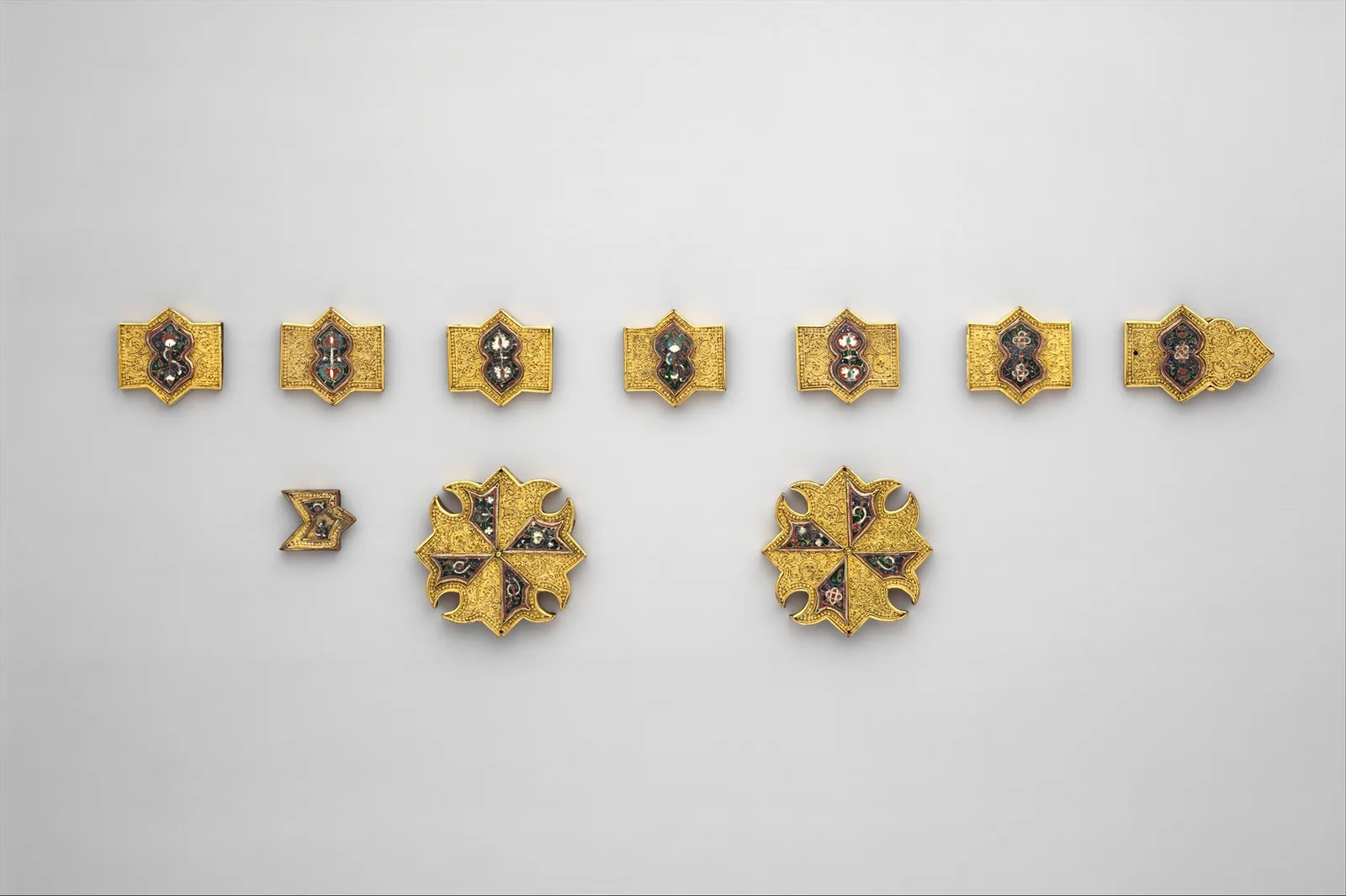
Beyond the cross sits a stranger class of object: pieces that carry a sign of faith and a physical content at the same time, which is to say containers. Sa joia on Ibiza is one, with its glass window and its image. Elsewhere the same idea shows up as a small case for a relic or a blessed fragment, hung among the strands and kept separately from the rest of the set. The double nature is exactly why these are the survivors, since a family that would sell a necklace would not melt a reliquary.
Votive pendants and the promise behind them
A separate layer sits alongside the set proper, and museums file it under devotion rather than jewellery. A votive object was given in payment of a promise, made when someone was ill or a journey was dangerous, and offered at a shrine once the thing asked for had happened. In Spain these are usually small flat plaques of silver in the shape of the part that was healed: a leg, an arm, a pair of eyes, a heart, a whole swaddled infant. They were hung around an image in the church, not worn, and a busy shrine could carry hundreds of them at once.
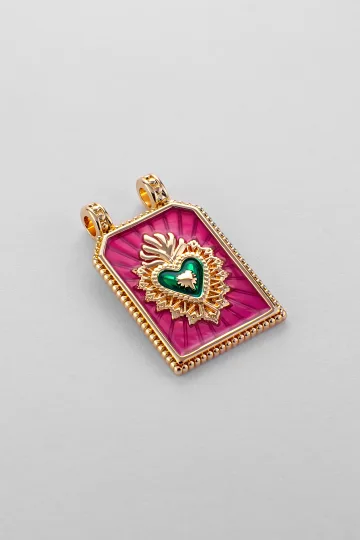
They matter here because their vocabulary leaked. The hand, the eye and the heart appear again and again in southern folk jewellery, and they arrived there from the wall of the shrine rather than from any pattern book. Once you have seen a rack of votive plaques the southern preference for anatomical shapes stops looking decorative and starts looking like a habit of asking for something specific. The silver heart on a chain and the silver heart nailed above an altar are the same object doing two different jobs.
Why the amulet never argued with the altar
A jet fist and a medal of a saint hung on the same cord without anyone feeling a contradiction. Folk religion in Spain absorbed pre-Christian protective habits without renegotiating them, and the jewellery shows the result plainly. The set is assembled from several sources of safety at once, on the practical principle that more cannot hurt.
Leave your email, we'll send your discount code. No spam, unsubscribe anytime.
The code arrives by email, valid on your first order.
How it was made, and what it said about you
Technique is the fastest identifier in this field, because a workshop repeated its own methods even when it changed its motifs to please a customer.
Four ways of working metal
Casting served crosses, buckles and pendants, anything needed repeatedly and identically, and it leaves a soft relief plus visible chasing where the pour came out unclear. Filigree, described above, gives volume for very little weight. Repoussé and chasing push a sheet into relief without any casting at all, which was how large plaques were made when silver was short, and it is why old plaques so often arrive dented. Settings in folk work are closed bezels rather than claws, and the reason is practical: a bezel survives knocks and a claw catches on a shawl. That last detail separates old work from modern reproduction faster than any other. Each of the four deserves a closer look, because each leaves a signature that outlives the fashion it served.
Casting, and the marks it leaves
Village casting was rarely the lost wax process of a city workshop. The cheap method used cuttlefish bone, two halves ground flat, the model pressed in, a channel cut for the pour, and the whole thing burnt out after a single use. It gives a faintly ridged surface, because the bone has a grain, and a maker who wanted a smooth face had to file it. Sand moulds served for larger runs. Either way the object came out of the mould unfinished, and the chasing that followed is where the individual hand shows. Look at a cross from a folk set under a lens and you will find the arms cleaned up unevenly, one side crisper than the other, because the maker worked until it looked right at arm's length and then stopped.
The other thing casting explains is repair. A cast body is thick enough to be drilled, re-soldered and given a new loop, which is why crosses survive in quantity while the chains they hung on almost never do. When a folk cross comes with its original suspension the pair is worth more than the sum, and it is rare.
Repoussé and the worked sheet
Pushing a sheet into relief gets you size without weight, and in a silver-poor household size was the goal. The sheet is laid on pitch, worked from behind with punches to raise the form, then turned over and chased from the front to sharpen it. Large plaques, belt fittings, the flat oval brooches of the plateau and the backing plates of pendants were all made this way. The tell is thinness. A repoussé plaque flexes if you press it, and it carries dents rather than scratches, because a knock spreads the metal instead of removing it.
That softness has consequences for anyone handling old material. A dented plaque can be eased back over a shaped block by someone who knows how, and it should not be hammered flat, since the relief was raised from one side and flattening from the other kills the drawing. Museum conservators generally leave the dents alone for exactly that reason, and a plaque that has been aggressively straightened usually looks tired in a way that is hard to name and easy to see.
Closed bezels, foil and glass
The folk setting is a wall of metal folded over the edge of the stone, and it does three things at once. It grips without projecting, so nothing catches on a shawl. It hides a chipped or irregular edge, which matters when the stone came off a market stall rather than a cutter's bench. And it makes room underneath for foil. Backing a pale stone or a glass paste with a thin sheet of coloured metal leaf was normal practice across Europe into the nineteenth century, and it turns a dull piece of quartz into something that answers candlelight. The consequence is practical and often learnt too late: never soak an old folk piece. Water gets behind the bezel, the foil corrodes, the stone goes cloudy from behind, and nothing brings it back. Claw settings on a piece sold as village work of the eighteen hundreds are a modern hand, since the claw is a jeweller's solution to showing off a stone, and nobody in this tradition was showing off the stone.
Money, status and where you were from
A festival set was read on sight, and not for hidden symbolism. Three plain facts came off it. Wealth, from the number of strands, the weight and whether the metal was gold or silver. Position in life, since unmarried, married and widowed women wore different things, and the widow's version dropped colour and movement in favour of dark silver and black stone, which is one reason jet is tied so closely to mourning in the north. And origin, from the pattern of the filigree and the shape of the earring, differences invisible to an outsider that members of folk associations still argue about.
How a set reached a family
Buying jewellery in a Spanish village was an event, and it was almost never spontaneous. There were three routes into the chest, and each of them left a different kind of trace on the objects.
The fair and the visiting silversmith
The main channel was the fair attached to a large feast. Makers came out from the towns for it, brought finished stock, and took commissions for the following year. That single arrangement explains most of what looks odd about the regional map. Forms migrated because the maker did, so a village a hundred miles from a workshop could be full of that workshop's proportions. A single household could own pieces made hundreds of miles apart without anyone travelling further than the next valley. And the fair set the pace of purchase: whatever was not bought that week waited twelve months.
Commissioned for a wedding
The second route was a direct order placed ahead of a marriage, often with a maker the family had used a generation earlier. These conversations started months in advance, and payment was frequently in kind rather than coin, in grain, oil, wool or labour, which stretched the making out across a season. It also gave the customer unusual leverage over the design. A commissioned piece is where you find the odd details: an unexpected saint on a medal, initials cut into the reverse of a clasp, a cross that copies one already in the family so that the two would sit together.
Inheritance, and the habit of remaking
The third route was the commonest of all, and the messiest for anyone trying to date things. Pieces were inherited and then altered to suit. A necklace was shortened, earrings were moved onto new wires when the old ones cut, a cross was re-soldered onto a different loop, a broken element was replaced with one from a different set. That is why a single old aderezo so often shows two or three hands at work, and why a confident date on one object is nearly always approximate. Read a folk piece as a record of use rather than as a snapshot of a year, and the inconsistencies stop being problems and start being the evidence.
What a stranger could read across a square
A festival set was a text, and everyone present could read it. Not in the sense of coded symbolism, which is where most popular writing goes wrong, but in the sense of ordinary public information that needed no explaining to anybody who lived there.
Wealth, counted rather than admired
The number of strands, the total weight, gold against silver. This was taken in at a glance and carried no malice, because in a village of two hundred people everyone already knew who was doing well. What the set did was confirm it in public, on the one day a year when confirming it was the point. The same arithmetic worked downward: a thin set was not a disgrace, it was a fact, and the following year it might have one more strand on it.
Married, widowed, or not yet spoken for
Unmarried, married and widowed women wore visibly different versions. The widow's set almost everywhere gave up colour and movement in favour of dark silver and black stone, which is one of the reasons jet binds so tightly to mourning in the north. Coming out of mourning was its own gesture, usually timed to a feast: the full set went back on, the colour returned to the chest, and the village understood the announcement without a word being said. Anyone used to reading Victorian mourning dress in Britain will recognise the grammar immediately, since jet did the same work at Whitby that azabache did at Compostela.
The village you came from
The pattern of the filigree, the shape of the earring, the way the shawl was pinned: all of it named a province and often a particular valley. To an outsider these differences are close to invisible, but members of folk associations still argue about them, and a wrong element in a set at a festival is noticed the way a wrong regimental tie is noticed. This is also the reason a single stray piece in a dealer's tray can sometimes be placed within thirty miles by someone who grew up with the material, while a laboratory could only tell you what the alloy is.
After the costume: the twentieth century, and where the pieces are now
Regional dress stopped being clothing and became performance, in Spain as everywhere in Europe. The difference is how much survived in private hands, and where that material sits today.
The chest emptied in two directions
When the festival dress left daily life the sets went one of two ways. Some stayed with families as memory. Others went for scrap, because silver is silver and the taste for old things arrived decades too late. That is the reason complete sets are scarce while single pieces turn up constantly, and it is why an intact emprendada or a full run of charro buttons from one hand is a different proposition from a loose element with the same stamp on it.
Folk associations became the new client
From the middle of the century onwards, groups performing traditional dance began commissioning sets again. That rescued the craft, since makers got steady work and passed it on. It also produced a large body of new objects built to old patterns, and those are precisely what a buyer meets when they think they have found an antique. The workshop was honest; the second hand market frequently is not.
Where to see the real thing
Photographs are useless here, because mass, thickness and movement do not survive a lens. Three places show the material properly. The Museo del Traje in Madrid holds more than five thousand pieces of traditional dress and its accessories, largely eighteenth and nineteenth century, gathered before 1925, and it keeps the two charro suits given to the royal couple in 1922. The Museo do Pobo Galego, in the former convent of San Domingos de Bonaval in Santiago, opened in 1977 and covers Galician dress and its metalwork. On Ibiza the ethnographic museum at Can Ros, in a farmhouse over three centuries old at Santa Eulària des Riu, shows the island's jewellery in its domestic setting. Add to those the living version, any local festival where the sets are worn for their original purpose.
The woman's set and the man's
Half of this subject usually goes unmentioned. The male side of Spanish folk metalwork is built on a completely different principle from the female side, and setting the two next to each other explains both.
Hers hangs on the body, his is sewn to the cloth
A woman's set hangs. Earrings, necklaces, pendants, strands: objects that move independently of the body and make a noise doing it. A man's set is fixed. Buttons stitched through the cloth, buckles, a watch chain, a cloak clasp, and on Ibiza the bells on a waistcoat, which are the exception that proves the rule since they are attached to the garment rather than to him. Nothing on the male side swings, and almost nothing on it can be taken off and worn with something else. The metal is a property of the suit, not of the person, and when the suit stopped being clothing the metal had nowhere to go.
Men's metal is counted, women's is examined
The two halves were also judged differently. A woman's piece was assessed for workmanship: the fineness of the filigree, the quality of the setting, whether the stone was worth having. A man's was assessed by quantity, meaning how many buttons, how far down the seam the row ran, whether the run was unbroken. That difference survives into the collecting market. Women's pieces are valued singly and by the hand that made them, and a good earring is a good earring on its own. Men's material is valued in complete sets, and a lone botón charro, however fine, is a fragment of something rather than a thing.
What outlived the costume
The male objects that survived are the ones with a job beyond ornament. Buckles, clips, watch chains and fobs moved into ordinary clothing and stayed there for another century, because a buckle still fastens something. The sewn-on button had no function outside the suit and became purely a collector's object the moment the suit came off. That asymmetry is still visible in what Spanish workshops make for men now: objects with a use, worn on the hand or attached to something, rather than pendants. The same instinct sits behind the knife-shaped pieces of the Albacete metal tradition, where the ornament is a tool first.
Where you can still see it worn
A folk set studies badly from photographs, because the three qualities that define it, mass, thickness and movement, are the three a lens flattens.
Costume museums and regional collections
The specialist costume collections show sets on a dressed figure rather than on a cushion, and that is the only way to understand the proportion. The same necklace looks like two different objects in the two settings: on a velvet pad it reads as heavy and excessive, on a mannequin in the full dress it suddenly looks correct, because the dress is loud and the metal has to compete with it. Regional ethnographic museums add the finer grain, sometimes down to individual valleys, and their labels are where the local words live. If you only have time for one, choose the one whose region you are actually standing in.
Festivals where the set is still worn
The living version beats every display case. A patronal feast or a performance by a folk association shows the objects doing the work they were designed for, and thirty seconds of that answers questions a catalogue cannot. You see the earring lag behind a turn of the head and catch up. You hear the strands. You understand instantly why a fine chain would be pointless against that cloth, and why the makers hollowed the big gold drops rather than making them smaller. The Ibizan baile payés, an Aragonese jota at a romería, a Galician procession behind the pipes: any of them, once, and the objects stop being ethnography.
Where Spanish work turns up in Britain
Anyone who cannot get to a Spanish festival has closer options than they think, though the material sits in the wrong departments to be easy to find. Spanish silver and jewellery in British national collections is usually filed under metalwork or under Europe rather than under costume, so it appears among goldsmiths' work and devotional objects instead of on a dressed figure. Ethnographic collections in the older university museums are the better hunting ground for the amuletic end of it, since Mediterranean charms against the evil eye were collected systematically in the nineteenth century and the Spanish jet examples came in with them. Country house collections and provincial museums with a Peninsular War connection sometimes hold pieces brought back by officers, catalogued vaguely and rarely displayed. Ask the curator rather than trusting the gallery, and expect a store room rather than a case.
Send a friend a discount code, they save on their first order.
Old piece or new one
This is the first practical question anyone asks once the material starts to appeal, and it has reliable answers that do not require a laboratory.
Wear happens in specific places
Genuine age is uneven. A suspension loop is worn on its inner curve, an earring on the edge that lay against the neck, a button on its reverse where the thread pulled. Even wear across an entire surface is artificial ageing, because real use is always local. Learn the four or five places a given form rubs, and inspect only those.
The back tells you more than the front
A nineteenth century maker finished the face and left the reverse working: file marks, uneven solder, fittings that are not quite symmetrical. A modern reproduction is often equally tidy on both sides, because it was made by a different process. A flawless back on something described as a century old peasant piece is a reason to slow down, not a reason to admire it.
Identical elements are a modern signature
In old work no two units match. Every filigree cell was laid by hand and every one is slightly different. If ten links agree to the millimetre, you are looking at castings from one model, and darkened metal does not change that. The same test works on filigree at close range: in old work the little spirals packed into a cell vary in tightness and sit at slightly different depths, while a modern equivalent has them laid to a pattern.
Weight, sound and hollow bodies
Pick the piece up before you look at it. Old folk gold is frequently hollow, so a large drop earring weighs a fraction of what the eye predicts, and a piece that feels as heavy as it looks deserves a second thought. Silver goes the other way. A cast folk cross is dense and dead in the hand, and a copy in plated base metal feels wrong immediately, lighter and somehow springier. Sound helps too. Silver strands falling against each other give a soft dull note rather than a bright ring, and a set that jingles brightly is usually thin plate over something else. None of this is conclusive on its own, and all of it is faster than any test you could send away for.
Ask where it was made, not how old it is
Sellers rarely lie outright, and they agree very readily. A question about age invites the answer you were hoping for, and once it has been given nobody in the conversation wants to take it back. A question about the workshop, the region and the method asks for something checkable instead. A concrete reply gives you a place to look, a hallmark to match and a technique to compare against known work. An evasive reply tells you what you need to know without an argument. The follow-up worth having ready is simply how the seller came by it, because a piece with a story that has a person and a place in it behaves quite differently from one that arrived in a box of mixed silver.
Spanish work without the costume
Pieces that carry the logic of the Spanish tradition, mass, relief and honest material, but that go out with ordinary clothes.
Buying it as a gift? Each one arrives ready to give.
 A branded Zevira box and a little card come with every order.












Facts that surprise
- The word for a matched Spanish set,
aderezo, also means dressing or seasoning. The same noun covers a parure and what goes on a salad. Azabacheis soft enough that steel scratches it, and carvers shaped it with woodworking tools, because it is compressed wood.- One documented Salamanca outfit lists nine separate necklaces worn at the same time, from a throat choker outward to a wide double wrap hung with six scallop shells.
- Queen Victoria Eugenia was photographed in her Salamanca outfit in 1923, and both royal charro suits are still in the national costume collection in Madrid.
- The comb fashion that started in Spain went to extremes in South America, where combs of nearly four feet were worn in the streets of Buenos Aires and Montevideo for about a decade from the mid 1820s.
- Spanish villages mounted coins as ornament, pierced and framed, so a person could literally wear currency.
- The jet carvers of Compostela had a guild supervised by the Church, which checked both the stone and the carving before it went to a pilgrim.
- The dress that foreigners call the Spanish national costume, the flounced flamenco dress, took shape at agricultural fairs outside Seville in the middle of the nineteenth century.
Frequently asked questions
What is Spanish traditional jewellery called?
There is no single national name, because there is no single tradition. The generic term for a matched set is aderezo. Beyond that you need regional words: emprendada on Ibiza, botón charro in Salamanca, baturra earrings in Aragon, sapos and doas in Galicia, botonada on Mallorca. Searching in English for Spanish jewellery returns the Andalusian fair look and almost nothing else, which is why the regional word is the useful key.
Is a peineta jewellery, and do I need a mantilla with it?
The comb is a hair ornament rather than jewellery, and in strict traditional use the two go together: the comb anchors the veil against the crown of the head, set into a bun. Worn alone it becomes a decorative comb, which is common now and bothers nobody. The pairing has rules of its own, and they are set out in the piece on the mantilla and the peineta.
Are the Spanish charro and the Mexican charro connected?
They share a word and possibly nothing else. The Mexican horseman's suit is often said to descend from sixteenth century Salamanca, but that claim rests on the shared name, and historians who have looked at it find no documented line. Treat them as two separate things that collided in a dictionary.
Can I wear folk pieces if I am not Spanish?
A single piece worn as jewellery, yes, without difficulty. What causes discomfort is wearing a complete regional set as a costume when you have no connection to the place, particularly at an event where locals are wearing the same thing seriously. The line is between an object and an impersonation, and one piece never crosses it.
Is azabache the same as black agate or onyx?
No. Jet is fossilised wood, light and warm in the hand, soft enough to scratch. Agate and onyx are minerals: heavier, colder, and hard. The difference is obvious by touch before it is obvious by eye. Old jet carries surface scratches that a stone of the same age would not.
What does the figa mean, and is it rude?
It is a clenched fist with the thumb between the index and middle fingers, a Mediterranean charm against the evil eye known since Roman antiquity, and in Spain it settled into black jet. The gesture has an obscene reading in some cultures, which is part of how a protective charm is supposed to work, but as a carved object worn on a cord nobody in Spain reads it that way.
Can I wear an antique folk piece every day?
The body will take it and the fittings will not. Clasps, hinges and jump rings on old work fail long before the metal does, and daily wear of an antique usually ends with something on the pavement. Keep the old piece for occasions and buy a modern one built on the same shapes for constant wear.
How do I tell which region a piece is from?
By combination, not by one feature. Open filigree with shells and crosses points north west. Spherical silver buttons point to the Castilian plateau. Rows of coral with gold point to the Balearics. Amethyst drops point to Aragon or Catalonia. No single sign proves anything on its own, since forms travelled with the fairs, and a Catalan design could spend a century in an Aragonese chest. The most reliable pairing is technique plus method of attachment, because a workshop repeated its own fittings even when it changed the motif.
Wear the symbol, don't just read about it. These are in stock:
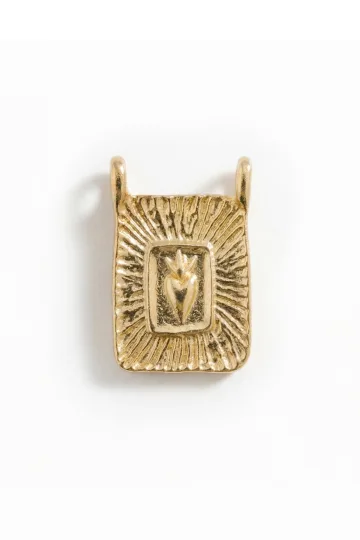
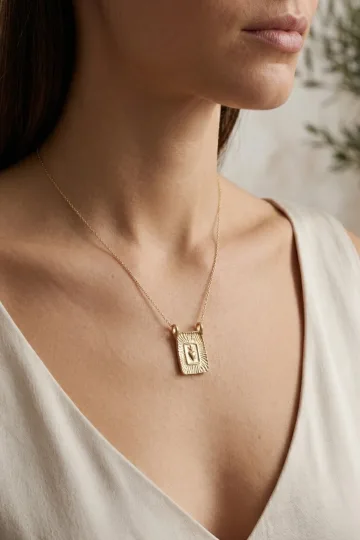
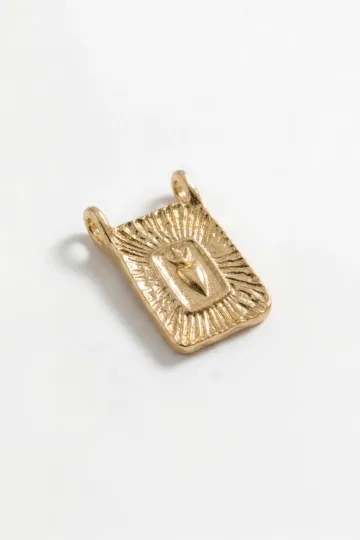
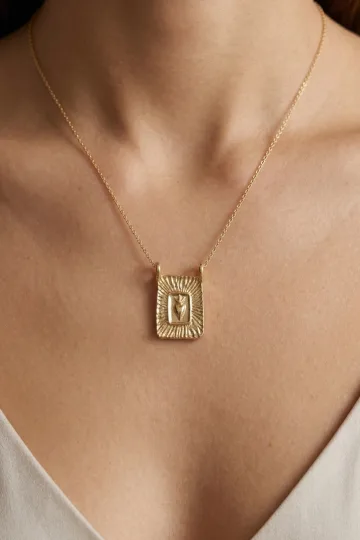




What survives a costume
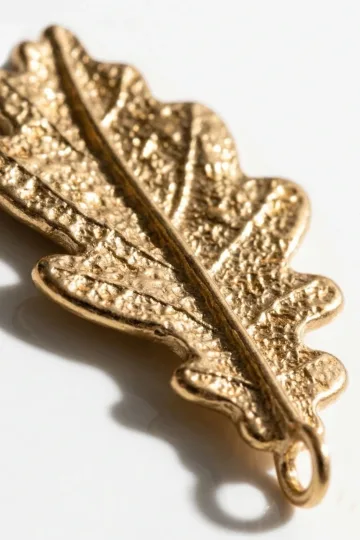
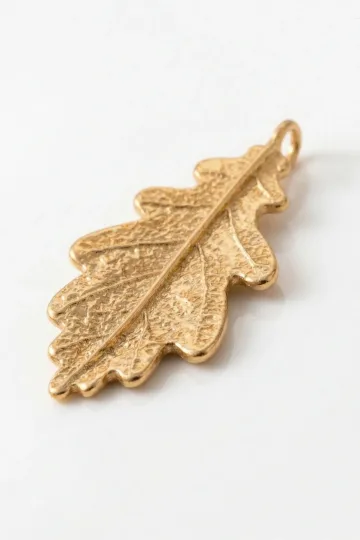
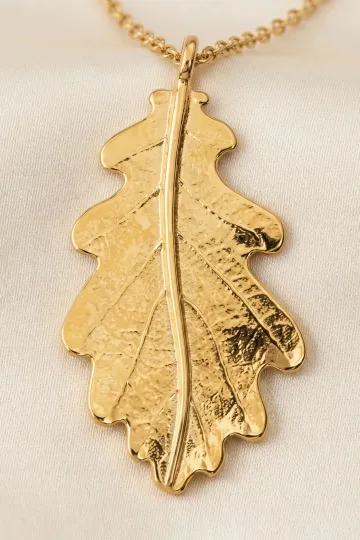
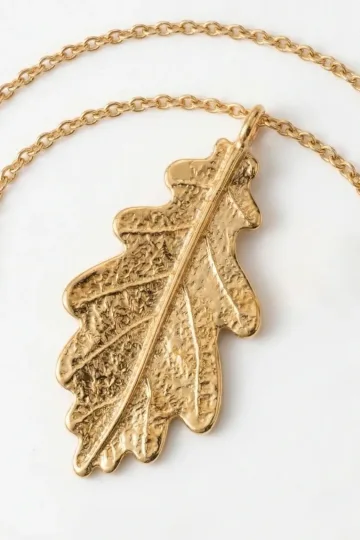
The Spanish folk set left daily life and left behind a working method. Make the object large. Cut relief into it and let the shadow do the drawing. Choose a material for how it ages and how it sits on skin under warm light rather than for what it costs. Build it to move, because it will be seen on a body and not on a cushion. That method is still legible in Spanish work today, and it is what separates it from the international jewellery accent that sounds the same everywhere.
If one idea is worth taking from all of this, take the principle of the set turned inside out. These pieces were made to tolerate neighbours because they always had them. Today the same piece is loudest with none.
About Zevira
Zevira gathers jewellery that carries meaning: symbols, history, and shapes with the metalworking tradition of the Spanish interior behind them. From the old costume sets we keep the part that still works without the dress, which is mass, relief and honest material.