Christmas and New Year jewellery gifts: what to give, when to order and where the whole custom came from
A Roman shopping list for the December feast puts a ring next to a candle, nineteen centuries before the first decorated tree. So jewellery is the oldest item on the list, not a retail invention. Below, in order: who gets what, how much to spend, and the date by which the parcel has to be ordered. The history follows.
The short answer, if there is no time to choose
A December present differs from every other kind in three ways, and those three settle the choice faster than an hour spent scrolling. The box is opened in front of the whole room, so the piece has to read from an arm's length away. Exchanging it afterwards means the worst queues of the year, so a size is better avoided than guessed. And the next chance to give comes round in twelve months, so the piece has to be wearable on more than one evening.
That produces a working shortlist. For a wife or partner, a pendant or a necklace: no size involved, visible the moment the box opens, wearable daily. For a mother or grandmother, stud earrings or a classic pendant, a calm shape rather than a fashionable one. For a daughter or a teenager, a fine chain with a simple symbol, because this is a first grown up piece and it should feel light. For a colleague, plain geometry with no personal symbol and no stone. For a man, cufflinks, a signet or a leather and steel bracelet, chosen by what he already wears rather than by what you would like him to wear. For dad, something the working day can see: a signet, a tie bar, a plain steel bracelet. For parents together, one piece for the house rather than two small ones split between them. For a friend, a symbol you both already understand, which is the whole reason a friend is easier than family. For a girlfriend, a fine chain or studs, not a ring. For yourself, the thing nobody else will risk buying.
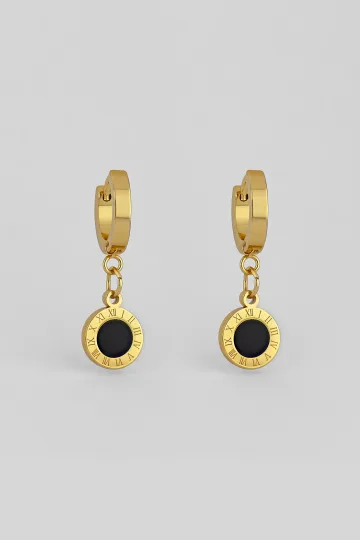
Wear the symbol, don't just read about it. These are in stock:






What not to grab in a hurry: a ring, unless it is a proposal and you know the size, and matching pairs, if the relationship is young. Both are unpacked below, by type and by recipient.
Christmas gift ideas, in one paragraph
If the whole thing has to be settled in five minutes rather than an evening: a pendant or a pair of stud earrings, in the metal the person already wears. Neither needs a size, both read the moment the box opens, and both get worn the next morning, which is where most Christmas gifts quietly fail. Everything below breaks that down by recipient, by type of piece, by budget and by the last date to order.
From what fits that description on our own shelves: a small gold tone angel pendant for the pendant route, and a pair of inverted teardrop earrings for the earring one.
What people actually give: type by type
The type of object decides more than the stone or the metal does. The general questions, how to choose a piece when you know little about the taste and how to take a size without being noticed, are dealt with separately in a jewellery gift when you do not know her taste and in a jewellery gift for mum. What follows is only what December changes: the box is opened in company, an exchange afterwards runs into the worst queues of the year, and the next chance to give comes round in twelve months.
The pendant forgives not knowing the size
A pendant on a chain forgives more than any other type, and it forgives twice over. First, it has no size in the sense that a ring and a bracelet do. A chain adjusts or gets replaced, and the pendant itself suits any build.
The second advantage is larger and concerns meaning. A pendant reads as a sign rather than as jewellery in general. A star, an angel, a letter, a monogram, the outline of an animal: the person can see that the thing was chosen for them rather than picked up as the first suitable object at the right price. Rings and earrings carry no such message, they are about shape and about the look of an evening.
There is a third, purely practical point. Pendants get worn by people who wear no jewellery at all: no pierced ears required, nothing in the way of working with the hands, nothing catching on clothing at a sensible length. If you are giving to somebody whose habits you do not know, the chance that the piece is worn at least once is higher with a pendant than with anything else.
It has one limitation. The chain length has to match the necklines the person actually wears. A short chain under a high collar is invisible, a long one under an open neckline sags. In December this shows up more than in summer: one thing is worn indoors at the table and another is worn out of doors under a coat, and the piece has to work in both, otherwise it waits until spring.
Stud earrings: entry without risk
Studs work where you know neither the style, nor the habits, nor the wardrobe. They are small, they suit any neckline and any way of wearing the hair, they go to work and to the table, and they can be slept in, which for many people is the deciding argument.
Their strength is that they compete with nothing. A stud does not argue with a necklace, does not snag a scarf and does not vanish under hair, because nobody expects it to be visible across a room. It is close range jewellery, noticed in conversation rather than from the doorway.
The one risk is technical: whether the ears are pierced. That is settled with a single glance in advance, and skipping the check is not an option, because a pair of earrings given to somebody unpierced turns into a suggestion that they get it done, and suggestions of that kind land badly.
December adds two arguments studs do not have the rest of the year. The ears stay visible under every layer of winter clothing, while anything hanging at the neck disappears outdoors under a coat and a scarf. And they go on at once, at the table, without a mirror and without help, and a present put on the same evening is remembered differently from a present carried home in a box.
Bracelets: where one size stops fitting
A bracelet looks as size free as a pendant, and that mistake costs a fair number of December presents. Bangles and cuffs are fitted to a particular wrist, and a miss is visible immediately: the thing either slides down to the knuckles or will not go on at all.
A chain bracelet with a clasp forgives more, because it carries a few links of slack, and even that has a limit. The gap between a slim wrist and a wide one is larger than it looks, and there is no such thing as an average.
The measurement is taken from a bracelet the person already wears, while they are busy with something else; the mechanics of that are set out in the article on giving blind. For December the more useful point is different: a bracelet is taken off and left lying about more often than anything else, which makes it the easiest size in the box to establish without giving your preparations away.
There is also the daily reality to weigh. A bracelet catches on sleeves, gets in the way of work with the hands, and is removed and lost more often than any other piece. For somebody who works with their hands it suits less well than it appears at the moment of choosing.
Rings: the present that can be read wrong
A ring is not about size, although it is about that too. A ring is about the message, and that is what separates it from everything else on the list.
A man giving a ring to a woman he is neither married to nor about to propose to sends a signal that will be read in her own way by her, by her relatives and by everybody else at the table. Even when the ring is obviously not an engagement ring, the moment a small box appears there is a pause, and everybody reads the pause identically.
The rule is therefore simple. If no proposal is intended, do not give a ring in December, take a pendant or earrings. If a proposal is intended, December is one of the best months for it, and then everything else around the ring becomes surplus: a second present that evening blurs the event.
Between relatives and friends the restriction does not apply at all. A sister, a mother, a daughter or a friend gets a ring freely and there is no second meaning in it. The only difficulty there is technical, the size, and it is solved the way the bracelet is, by measuring what already exists.
A necklace for the party neckline
A necklace is the one item on the list chosen for a dress rather than for a person. It wants an open neck, a particular line of neckline and a particular height of that neckline relative to the collarbone, and a blind choice here misses more often than it lands.
There is a second difficulty. A necklace is a conspicuous object worn for occasions rather than daily. A necklace that did not match the taste goes into a box for good, because it has no everyday setting in which the owner could get used to it.
So a necklace suits two cases. Either you know the wardrobe precisely and have seen what it will go with, or the person already has the habit of wearing conspicuous pieces and you are adding to a collection. In every other case a necklace is left for later.
The December correction to that is single and strong: a necklace needs an occasion, and in December the occasion is there. If the household keeps an evening around a laid table, the necklace gets its stage on the day it is handed over, and that is the best possible start for a conspicuous piece.
Cufflinks and the men's half of the counter
The men's side of the December counter is older and narrower than people assume, and it descends directly from the cracker. Inside a Victorian cracker a cufflink sat next to a brooch, which tells you that small men's jewellery was a Christmas present from the start.
The rule that makes it work now is the same one that made it work then: an object with a function or with a sign on it, rather than decoration for its own sake. Cufflinks, a tie bar, a signet, a pendant on a short cord, a bracelet in plain metal. Each of those has a reason to exist beyond looking well, and that reason is what gets a piece out of the drawer.
The ranking of the types is also reversed. A collar covers the neck from November to March while a cuff and a wrist are on show from breakfast onwards, which is the opposite of the order that applies to a woman in December, and it explains why the same household buys a pendant for one person and a pair of links for the other.
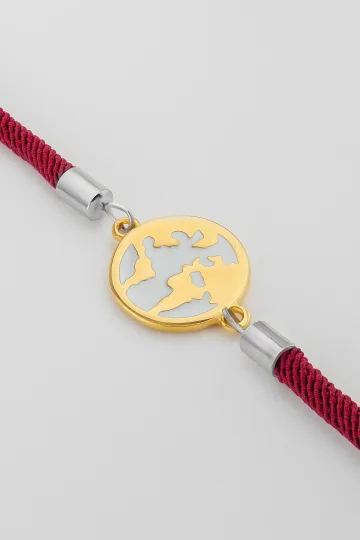
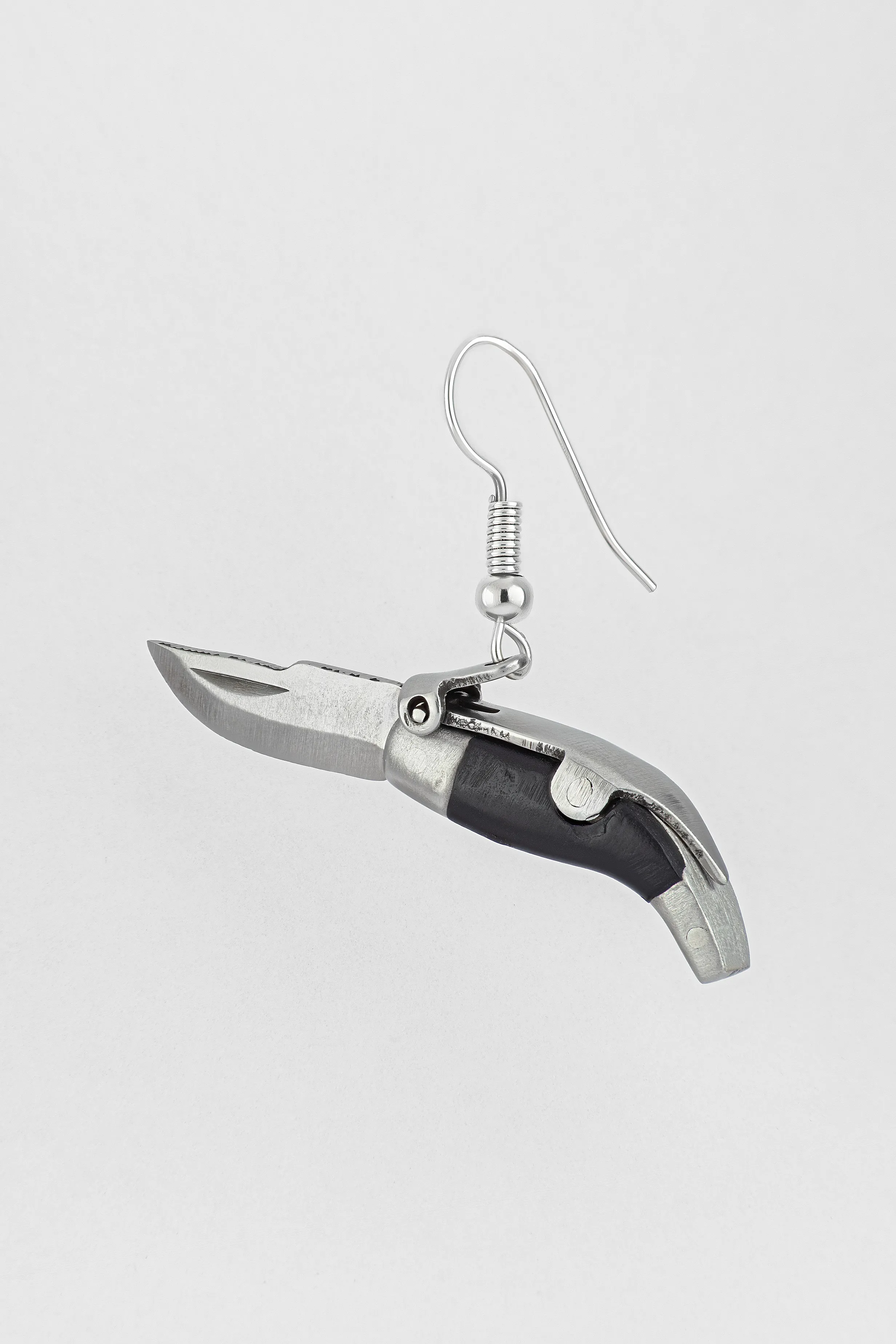
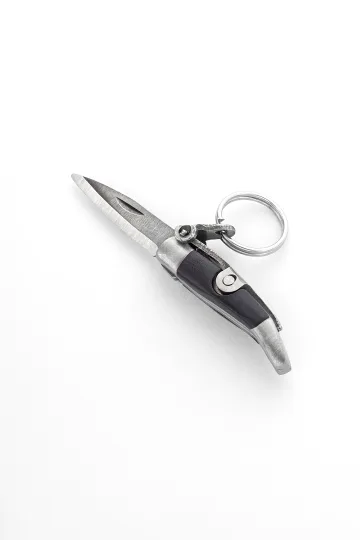
The pendant on a short cord is the part of that list we stock ourselves: a miniature navaja knife pendant, which is an object with a function and a sign at once, and for the wrist a bracelet engraved with a world map.
One type on that list carries a history nobody expects, and it is worth a detour before the recipients, because it explains why a black piece reads as festive in half of Europe and funereal in the other half.
One piece under the tree, not a shop window around the neck. Piled head to toe means you chose nothing.
What to wear it with
December is the one month when clothing sets harder conditions for a piece of jewellery than the occasion does. Collected here are the questions I get asked most in the weeks before the holidays.
Why does a fine chain stop working in winter? The knit eats it. A chunky jumper builds a relief of its own, and a fine chain sinks into it so completely that from two paces away nobody can see it. This is not a matter of taste, it is two patterns competing, and the larger one wins. Under dense knitwear I recommend a long pendant worn over the fabric, or earrings, which the clothing does not touch at all.
What should be worn at the table? At a table a person is seen from above and from the front, and the hands are on show constantly, passing a dish, lifting a glass. That is why I suggest earrings and rings there, because they work at full strength. A long necklace disappears under the tablecloth the moment everybody sits down, and nobody sees it for the rest of the evening.
And for going out into town? The priority reverses. The whole silhouette decides, together with how the piece reads in movement and at a distance. Earrings vanish under a raised collar and hair, so for going out I choose a visible pendant or a necklace and keep the earrings plain.
How does the light around a tree change the choice? More than people expect. Candles and fairy lights kill matt surfaces and lift shiny ones, so a piece that looked modest by day can be the only bright point in the room by evening. For a holiday at home I recommend smooth metal, because it catches warm light evenly rather than in scattered flashes.
How many pieces should go on at once? One. The occasion feels grand enough to justify wearing everything, which is exactly why people end up at the table in earrings, a necklace, a bracelet and three rings together. Choose the piece that will speak, let the rest keep quiet, and do not argue with me about it.
How do I know the present will not lie unworn until spring? Test it against winter clothing before you buy, not after. If the piece goes with no jumper and no collar in the recipient's wardrobe, it will wait for April, and the gift will be remembered as a miss even though the choice was sound.
What do I do if the piece has to survive a coat, a restaurant and a train home? I pick by the clasp and by the length rather than by the motif. A long pendant that can be tucked under a jumper for the journey and pulled out on arrival travels well. Anything with a delicate hook, a fine drop earring or a bracelet that hangs loose will be taken off at the first inconvenience and put in a coat pocket, and coat pockets are where December loses jewellery.

Turn on your camera, pick earrings, a pendant or a ring, and see the piece on yourself in real time.
Switch items in one tap.
Everything runs in your browser: no photo or video is ever uploaded.
Coal in the stocking: the punishment that turned into jewellery
The oldest December present is also the one that works in reverse. A present in midwinter was promised to everybody, but it was never handed out equally: anybody who had behaved badly got coal instead of sweets.
That punishment reached the present day having been inverted twice. First the coal was made edible, cast in sugar as a black lump indistinguishable from the real thing. Then the sugar coal turned into an ordinary January sweet, sold and placed beside the presents with no instructional purpose left in it at all.
So the penalty was made into a confection, and then the confection was made compulsory. The coal line holds strongest where the main giving day has shifted to Epiphany, in Italy and Spain, and it explains a second thing as well: why a black stone in a winter piece reads as festive there rather than funereal.
Befana and her sweet coal
In Italy the presents are brought by two figures rather than one man in red. On the night of 5 January, La Befana flies from house to house on a broom. The Roman version of the story runs like this: the Magi, on their way to Bethlehem, asked her for directions, she refused to help, then regretted being short with them and set out to find the child herself, taking along the sweets she happened to be baking. She never found him, and ever since she has handed them out to every child she passes, in the hope that the right one is among them.
Good children get sweets from Befana, bad ones get coal. Real coal in the stocking was long ago replaced by caramel: black, brittle, cast in the shape of a lump of coal, sold across the country in January under the name carbone dolce. It is made from sugar and egg white and coloured to a coal black.
The punishment has become a joke. Sugar coal is sold as an ordinary seasonal sweet and goes into the stocking alongside the presents rather than instead of them. For an adult it is a ready made excuse for a gift with a subtext: a black piece in December reads not as gloomy but as a reference to a family joke that needs no explaining anywhere in Italy or Spain.
Carbón de Reyes: the Spanish version
In Spain the main giving day is also 6 January, and the presents are brought by three kings who ride through the towns in procession the evening before. The logic of distribution is identical: toys for the good, a lump of coal for anybody who misbehaved. And in exactly the same way the coal went sugar long ago, carbón de Reyes, sitting in the pastry shops beside the ring shaped festive cake.
The difference from the Italian tradition is one of tone. Befana is a folkloric witch, mildly frightening, and her coal sounds like a genuine threat even when it is meant as a joke. The kings are biblical and ceremonial figures, so the Spanish coal is softer: closer to family teasing than to punishment. Adults give it to each other too, and it is a small domestic comedy genre of its own.
In a Spanish or Italian household the December present is not one box but a script across two dates: something small at Christmas and the main thing at Epiphany. Jewellery in that script is usually held back for 6 January, because that is the day carrying the weight.
From coal to black stone
Here the tradition and the jewellery meet at a point that is not metaphorical. The black glossy stone Europeans wore for centuries is not a mineral in the ordinary sense. Jet is fossilised wood, geologically a close relation of brown coal: the same plant origin, the same carbon nature, only compressed and hardened far enough to be carved and polished to a mirror.
Europe named it accordingly. Black amber, because it is light and warm to the touch. Black wood, for its origin. And on the north Yorkshire coast simply jet. The word took a different road from the mine: it reached English through the Old French jaiet, from the Latin gagates and the Greek name for the stone of Gagas, a town in Lycia. Whitby gave the trade its centre, Asia Minor gave the material its name, and English later borrowed that name again for the deepest black there is.
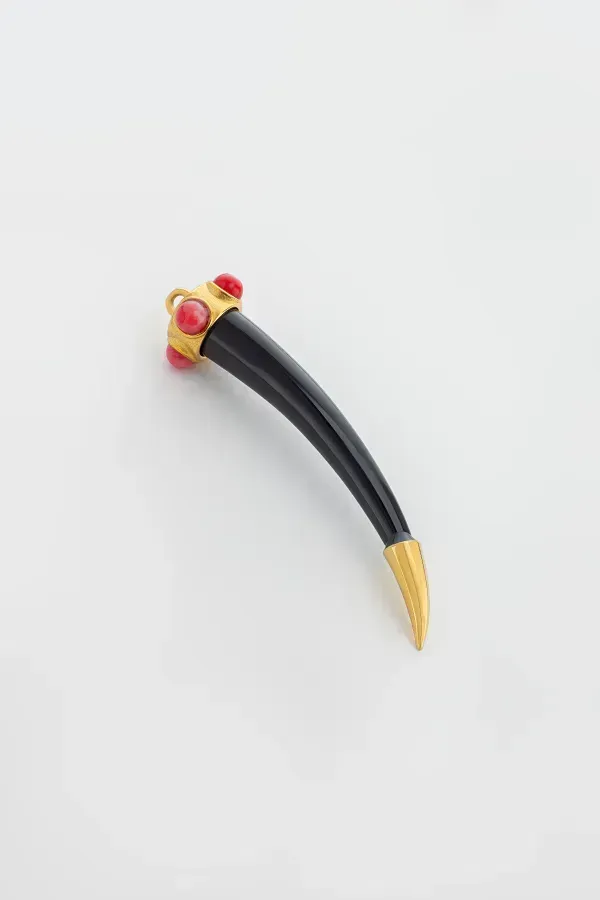
In Spain the same stone is called azabache, and the centre of its mining and carving grew up in Asturias, on the pilgrims' road to Santiago. From there came the black fig shaped charms and the habit of hanging azabache on a newborn for its first months as protection. The circle closes neatly: a European child got sugar coal in the stocking on 6 January and wore real coal on a cord the same day, only fossilised. The shape has outlived the material. Carved jet is scarce now, while the silhouette moved into metal and enamel, as in the black Italian horn, which a Mediterranean reader recognises instantly, because in that tradition it is the outline and the colour doing the work rather than the species of stone. The stone itself and its Spanish career are unpacked separately: azabache, Spanish jet in jewellery.
So the black stone is not an exception to the December range, it is one of its oldest members. With the types and their histories settled, the second half of the decision is the person on the other side of the box, because the same pendant is a different present depending on who opens it.
Who gets what: by recipient
For a wife or partner
This is the one case where a piece carrying a private meaning beats a universal one. A monogram, a date, the coordinates of a place, a birth month stone, an engraving inside: everything that would be intrusive for a colleague and awkward for a friend works here at full strength and reads as attention rather than as an incursion.
The reason is that a private detail requires knowledge, and knowledge is the proof of closeness. A beautiful universal object does not prove it: anybody could have chosen it for anybody.
The ring question is the single restriction here, and it is settled in full in the section on types above. What that section does not cover is the opposite error, which belongs to this recipient alone: a private detail works only if it is correct. A misremembered date, a birth month stone taken from the wrong month, a place that mattered more to you than to her turns the proof of attention into proof of the reverse, and it is the one kind of miss that cannot be laughed off at the table.
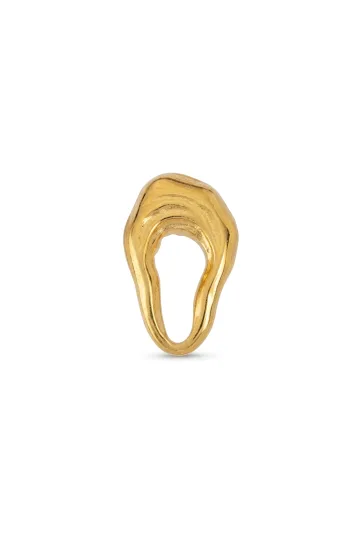
When the private detail is not available, or not certain enough to risk, the fallback is a shape that needs no explanation: a hammered heart pendant in gold tone, or teardrop earrings if her ears are pierced and you know it.
What to give mom for Christmas
The general treatment of this recipient sits separately in a jewellery gift for mum. The part of it that December needs is the mechanics, because the piece comes out of the box in front of everybody and goes on at once, at the table. A stiff clasp, a tiny lobster catch, a fine chain that tangles in the fingers turn a present into an object that never gets worn, because it cannot be fastened one handed without help.
Three things are worth checking. The clasp: large, magnetic, or a catch big enough to be gripped with confidence. The weight: noticeable in the hand, because a light piece is harder to locate and fasten blind at the back of the neck. The chain: a dense weave that will not knot itself if it is put into a drawer without a box.
The motif can be anything, and this is where the sentimental line does work: a piece referring to family history, to a birthplace, to grandchildren is received better than something neutrally pretty.
The December correction: it will be fastened in company and in a hurry, between the main course and the tea. A piece that could not be put on inside a minute stays in its box for that evening.
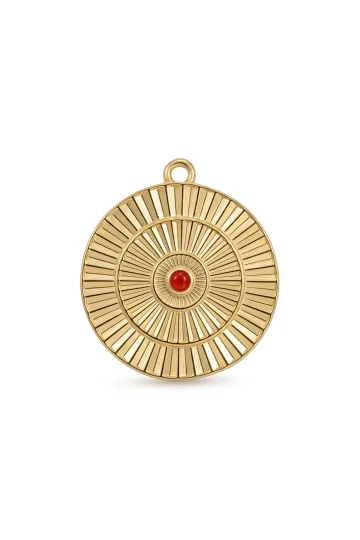
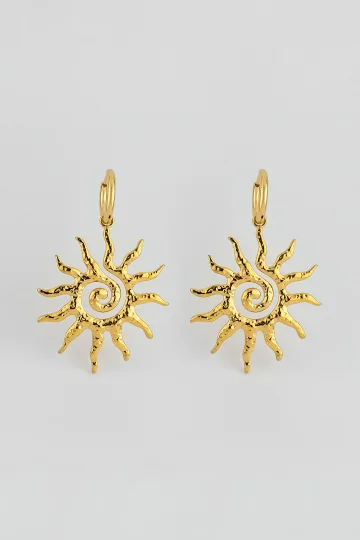
Two pieces that pass the weight and clasp test and keep to a calm shape: a radiant sun pendant in silver tone and a small gold tone cross, for a mother who already wears one.
For a daughter or a teenager
A teenager is being given a first grown up piece, and the main risk here runs the opposite way from the usual one. A piece bought to grow into, chosen to the giver's taste and put aside until adulthood, never gets worn: by the time it is allowed out it has dated and lost its connection to the owner.
What works is what can be worn tomorrow, to school and to friends, rather than something waiting for a special occasion. That means a plain shape, a durable metal and a size that does not demand careful handling.
The second point concerns the choosing. A teenager already has taste and is acutely sensitive to being ignored. A piece chosen without a single conversation about what the person actually wears reads as a present to oneself. The conversation does not have to give away the surprise: one look at what is already on the shelf is enough.
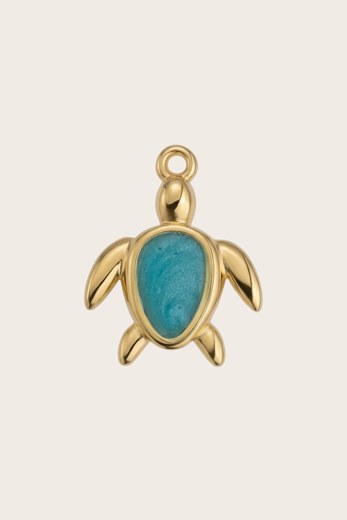
Of the pieces that can go to school the next morning: a small white starfish pendant or a gold tone turtle, both light, both plain enough to outlast a change of taste.
For a colleague and the office exchange
An office exchange runs on the rule of neutrality: the object must not hint at anything. Winter botany, geometry, a star qualify completely. A heart, a monogram, paired pieces, anything implying private knowledge or private feeling do not qualify at all.
The second rule is about cost, or rather about its invisibility. A present to a colleague must not place the recipient in debt: if the piece is obviously dearer than the level the office keeps to, it produces awkwardness instead of pleasure. In a blind exchange, where the giver stays unknown, the rule is stricter still.
And the third thing, which people forget: a colleague may not have pierced ears, you do not know about metal allergies, and you certainly do not know a size. What is left is a pendant on a chain of neutral length, and that is not a poverty of choice but the one type of object that requires knowing nothing about the person.
Two pendants that stay inside those rules: a sun amulet pendant and a small starfish in gold tone and blue, neither of which hints at anything beyond the season.
What to give a man for Christmas
The men's case is decided by two facts rather than by taste. His neck is covered from November to March, and his cuffs and wrists are visible all day. So the pieces that get worn are the ones the working day can see: cufflinks, a tie bar, a signet, a bracelet in plain metal, a pendant on a short cord for somebody who does wear one.
The second fact is that a man's jewellery is kept for far longer than a woman's and replaced far more rarely, which shifts the whole calculation towards plainness and towards the quality of the metal. A piece bought for one December will be in use in ten years, so the motif has to survive a decade of the owner's own changes of mind.
The third is the one to be careful with. A present that visibly aims to change how somebody dresses is read as a criticism, and in front of relatives at a table it is read loudly. Choose inside the range the person already occupies and extend it by one step, rather than proposing a new direction with an audience watching.
Cufflinks and signets suit the man who dresses for an office. For the one who does not, what actually gets worn is smaller and sits under the collar or on the wrist: a small knife pendant modelled on the Spanish navaja, worn on a cord or a chain, an anchor pendant in blue, a compass rose in gold tone or a world map bracelet. Each carries a sign rather than decoration, which is the condition under which most men will wear a piece at all, and none of them needs a size.
What to give dad for Christmas
A father is the hardest recipient in the list for one reason: he has spent decades saying he needs nothing, and he mostly means it. That rules out the surprise and rules in the replacement. Look at what he already wears every day and buy the better version of exactly that. A worn signet, a watch on a tired strap, cufflinks that came free with a suit thirty years ago: each of those is a present that needs no explanation and no adjustment.
The safe register is plain metal with no motif. Fathers who do not wear jewellery still wear fastenings, so the entry point is the cufflink, the tie bar and the collar pin rather than the chain. If he does wear a chain, match the metal he already has rather than introducing a second one, because two metals in one drawer usually means one of them stops being worn.
For a father who owns no shirt that takes a cufflink, the same logic points elsewhere. A pin goes on a jacket lapel or a cap the way a collar pin goes on a shirt, and a miniature navaja pin is exactly that kind of fastening. If he wears something at the neck, a small folding knife pendant on a cord or a compass rose pendant reads as an object with a story rather than as jewellery, which is the only form in which many fathers accept it.
What to give parents for Christmas
Parents are often given two small separate presents when one shared piece would land better. The pair version is worth a thought: matching plain bands worn as everyday rings, or two pieces in the same metal that visibly belong to one set. It reads as a family gift rather than as two items bought in the same ten minutes.
There is also the register that only works with parents, which is the piece meant to be passed on. A present bought with the next generation in mind changes the conversation at the table: it is received as a decision about the family rather than as a purchase. That is the one case where the plainest possible design is the strongest choice, because it has to survive the taste of somebody not yet born.
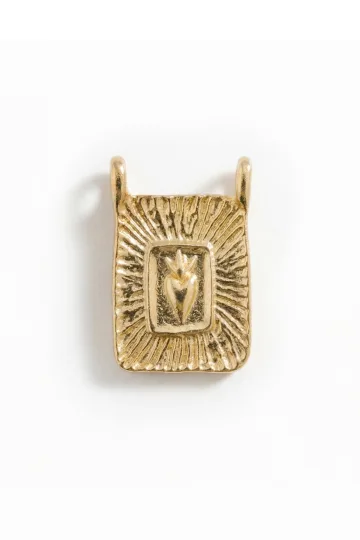
Among the pieces that carry that passed on register: a Saint Benedict seal pendant in red and gold tone, or a plain small cross, the oldest family piece there is.
What to give friends for Christmas
A friend is easier than family and people rarely notice why. With family you are guessing at a whole taste; with a friend you already share a set of references, and one of them is usually enough. The in joke that became a symbol, the place you both went, the animal she collects: any of those turns into a pendant that needs no card to explain it.
The trap is the opposite of the family trap. With a friend it is easy to buy something too personal for the room it will be opened in, particularly at a group exchange where everyone watches every box. Keep the private reference on a small piece and keep the scale modest, because a friend's present that is visibly more expensive than everyone else's puts the recipient in an awkward position rather than a flattered one.
Small pieces at that modest scale, for a friend whose reference happens to be the sea: a mini seahorse pendant or a white whale tail.
What to give a girl for Christmas, early on
Early on, the piece carries a statement about the relationship whether or not you intend it, and the statement is read by her friends within a day. That is the whole reason a ring is the wrong object here and a fine chain or a pair of studs is the right one. A ring proposes a status; a chain simply says you paid attention.
The reliable route is her own drawer. Note the metal she wears, the length she wears it at, and whether her ears are pierced, and stay inside those three facts. A first present that fits straight into the existing set gets worn from the next morning, which is the only real test it has to pass.
On a fine chain, the pieces that say attention and nothing more: a mini angel pendant in gold tone, which also happens to be the December motif, or a small hammered heart once a heart is no longer too early.
For yourself: a box under the tree with your own name on it
Buying for yourself in December is a separate and entirely real practice with a logic of its own. A thing bought at the end of the year acquires an attachment to a date and stops being simply a purchase: it marks a boundary the way a present from another person marks one.
It works best when the purchase is tied to a specific outcome of the year: a project finished, a hard stretch survived, something that deserves remembering. Then the object becomes a marker, and in a few years it will be remembered not as "bought in December" but as "bought when".
One practical detail: people buy themselves what others will not give them. The universal and the safe arrive from outside, while the personal and the specific has to be chosen by the owner.
The clearest example from our own range is the Forja Española set of five miniature navajas: nobody buys another person a collection, so it is the kind of thing an owner chooses alone.
The gifts of the Magi and the jewellery hidden in them
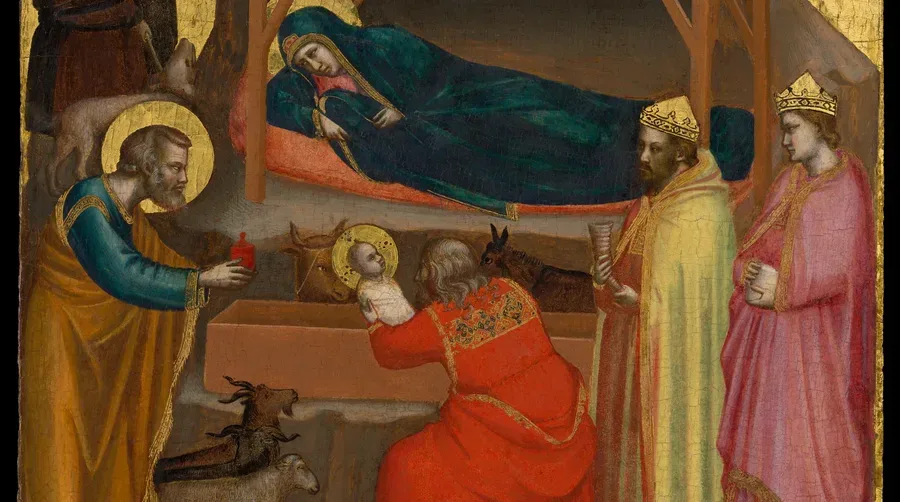
Coal is the first of the two points from which the whole Christmas gift culture grew. The second is older and far better known, though what was actually in it is usually remembered only approximately. It is the gifts of the Magi, and there is more jewellery in them than people assume: two of the three reached the human body not as a substance but as a hollow ornament.
Three gifts and why there are three
In the gospel account the visitors from the east bring the child three gifts: gold, frankincense and myrrh. The reading that settled into Christian tradition takes them as an address to three natures: gold for the king, frankincense for the god, myrrh for the man who will die, because myrrh was used to anoint a body for burial.
There are no names in the gospel text, and no count of the givers either. The number three came from the number of gifts, while Melchior, Balthasar and Caspar appeared later, in tradition, and spread across Europe as a fixed trio with fixed appearances: an old man, a man in his prime and a young one. In the Spanish street processions on 5 January they ride in precisely that order.
The number three also fixed itself in the pictures. From the early Middle Ages the Magi are shown as three, although eastern Christian traditions knew other counts, up to twelve. Europe settled on three for the plain reason that there were three gifts, and after that three riders went out across every procession, window and greetings card on the continent.
The pomander: how frankincense and myrrh reached the body
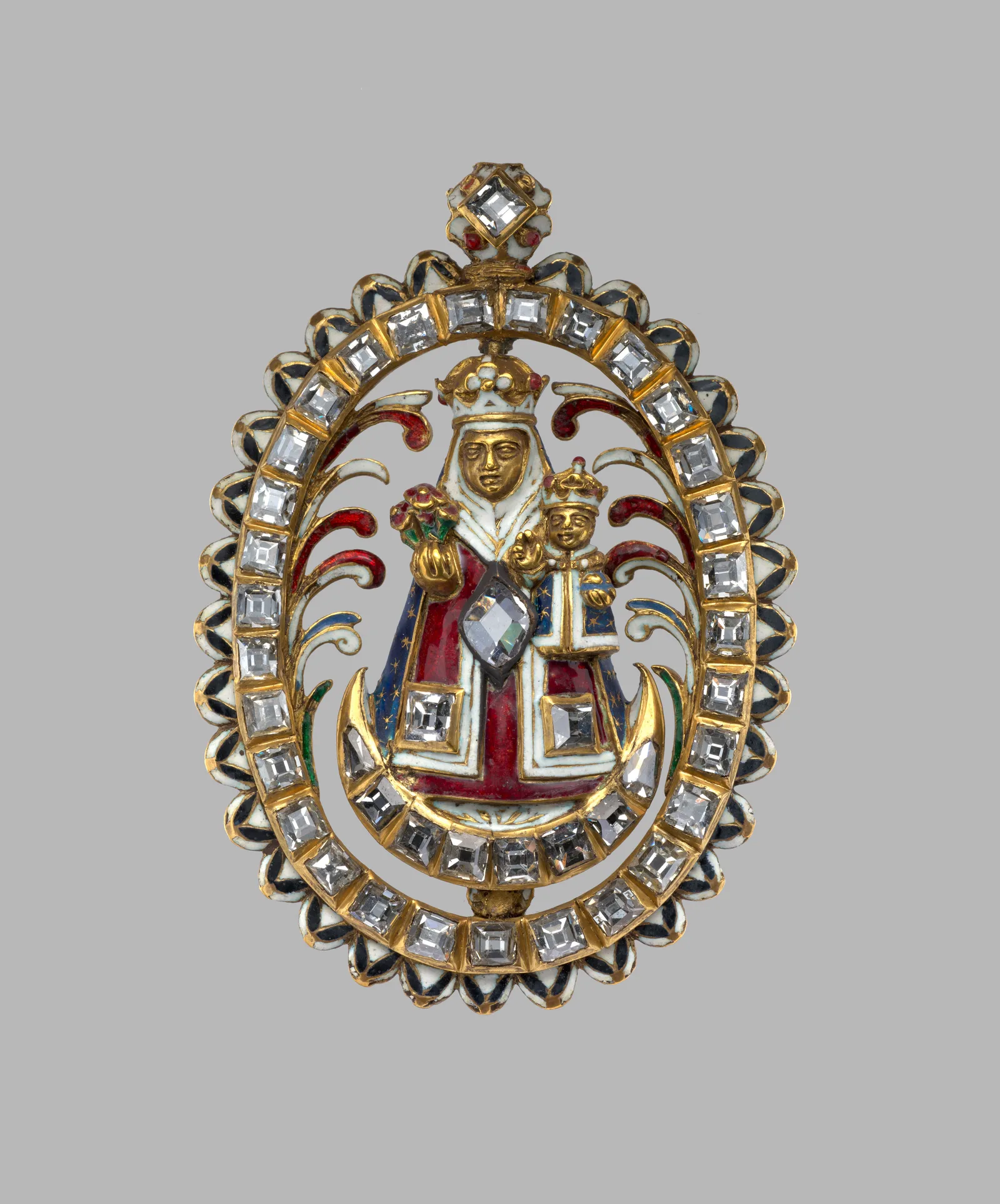
Gold is the one item on that list which turns into jewellery directly, and nothing about it needs explaining. The other two are more interesting. Frankincense and myrrh are aromatic resins, substances that burn and smell rather than things that are worn. They reached the body all the same, by an indirect route.
The route is called the pomander: a hollow metal ball, pierced with openings, hung from a belt or a long chain. Resin, spices or a scented paste went inside, the ball warmed against the body and released the smell slowly. In an age of infrequent washing and strong streets it was practical and status bearing at once, expensive metalwork holding expensive contents.
By the sixteenth century the pomander was an ordinary part of formal dress across Europe, and worn by men as readily as by women: men on a chain at the neck, women suspended from the girdle. The name comes from the French pomme d'ambre, apple of amber, and points at the contents rather than the shape, although the shape it was usually given was a ball. The most elaborate opened into segments, each holding its own scent.
The pomander on an English New Year gift roll
The English court kept written records of what it received, and that is where the pomander turns up in the driest possible form. Among the New Year gifts presented to Elizabeth I were scented balls in gold settings, listed and accounted for like everything else.
Two things follow from a line in a gift roll. First, a jewellery present for the midwinter feast was a court norm in England by the sixteenth century, with an inventory to prove it. Second, the English giving date at that point was New Year rather than Christmas Day: the roll is a New Year roll, and the giving was structured, expected and recorded in both directions, gifts to the Queen and gifts from her.
That is worth holding on to before the Victorian section, because the English habit of giving in the Christmas period is older than the tree, older than the card and older than the shops that later organised it. What the nineteenth century changed was the scale and the audience, not the practice.
From pomander to locket
The shape outlived its contents. A hollow pendant with a loop for a chain, holding something concealed, reached us as the locket, with a portrait, a lock of hair or a note inside instead of resin.
This is not one unbroken family tree. It is the same type of object holding its place in European use for five centuries running: ornament on the outside, something private within. That is also why a locket still behaves differently from every other pendant as a gift. It arrives half empty and asks the person who receives it to finish it, which is a rare quality in a bought object and the reason these pieces get kept when prettier ones are passed on.
The stocking by the hearth
The Magi explain why a present exists at all. The stocking explains how it reaches a person, and that detail has a history of its own, far more down to earth and tied directly to gold.
Nicholas and the three bags of gold
Underneath it lies the legend of Nicholas, bishop of Myra, the figure Father Christmas eventually grew out of. The story runs like this: a man in the city had fallen into poverty and had three daughters with no dowry between them. Without a dowry a girl was not married off, and the fate left to her is named plainly in the medieval life and reads like a sentence.
Nicholas, according to the legend, came three times at night and threw a bag of gold into the house, one for each daughter's dowry. He did not want to be recognised, so he worked in secret, through a window or down the chimney.
Two things matter here at once. First, the gift was anonymous from the start, and the whole apparatus of the night visit, the unseen giver and the rule against peeking grew out of that rather than out of a nursery game. Second, what was given was neither a sweet nor a toy but gold, which is to say the raw material of jewellery. A dowry in that period was not held in cash but in objects, and a substantial part of it was jewellery.
Why a stocking and nothing else
The legend then explains the container. The gold thrown down the chimney landed in the stockings the daughters had hung by the fire to dry after washing. From there comes the habit of hanging a stocking at the hearth on the night before the feast.
The domestic logic is watertight. The hearth was the only place in the house where wet clothing was dried, the chimney was the only opening from the street that was not barred at night, and a stocking was the only garment shaped like a bag and hanging open at the top. Nothing else in the house would have done the job.
Over time the real stocking gave way to a purpose made decorative one, not worn but only hung. In the English speaking countries it became an object in its own right, with a name embroidered on it, and presents in it are distinguished from presents under the tree: small things go in the stocking, larger ones underneath the branches. That split is useful to know before you buy. A jewellery box in a stocking reads as one of several small finds, a jewellery box under the tree reads as the main event, and the same piece lands differently depending on which you choose.
The orange in the toe is the gold that got away
The most durable detail of the whole story reached us as a citrus fruit. An orange or a tangerine goes into the stocking by tradition, and goes in right at the bottom, into the toe.
The explanation offered most often is direct: a round orange fruit stands in for a golden ball, which is to say for the bag of gold. There is no documentary chain behind that, yet the practice holds across northern Europe. When gold stopped being a possible present for an ordinary household, its place was taken by an object of the same colour and the same shape, which in a northern winter was also scarce enough to count as a real treat.
The British version carries a second layer that is easy to miss. An orange in a Victorian stocking was an imported luxury arriving by sea in the cold months, so the fruit and the season were linked by shipping schedules as much as by symbolism. That is a pattern worth remembering in December generally: a good many things that look like ancient custom are the residue of what was available.
Three golden balls over the pawnbroker
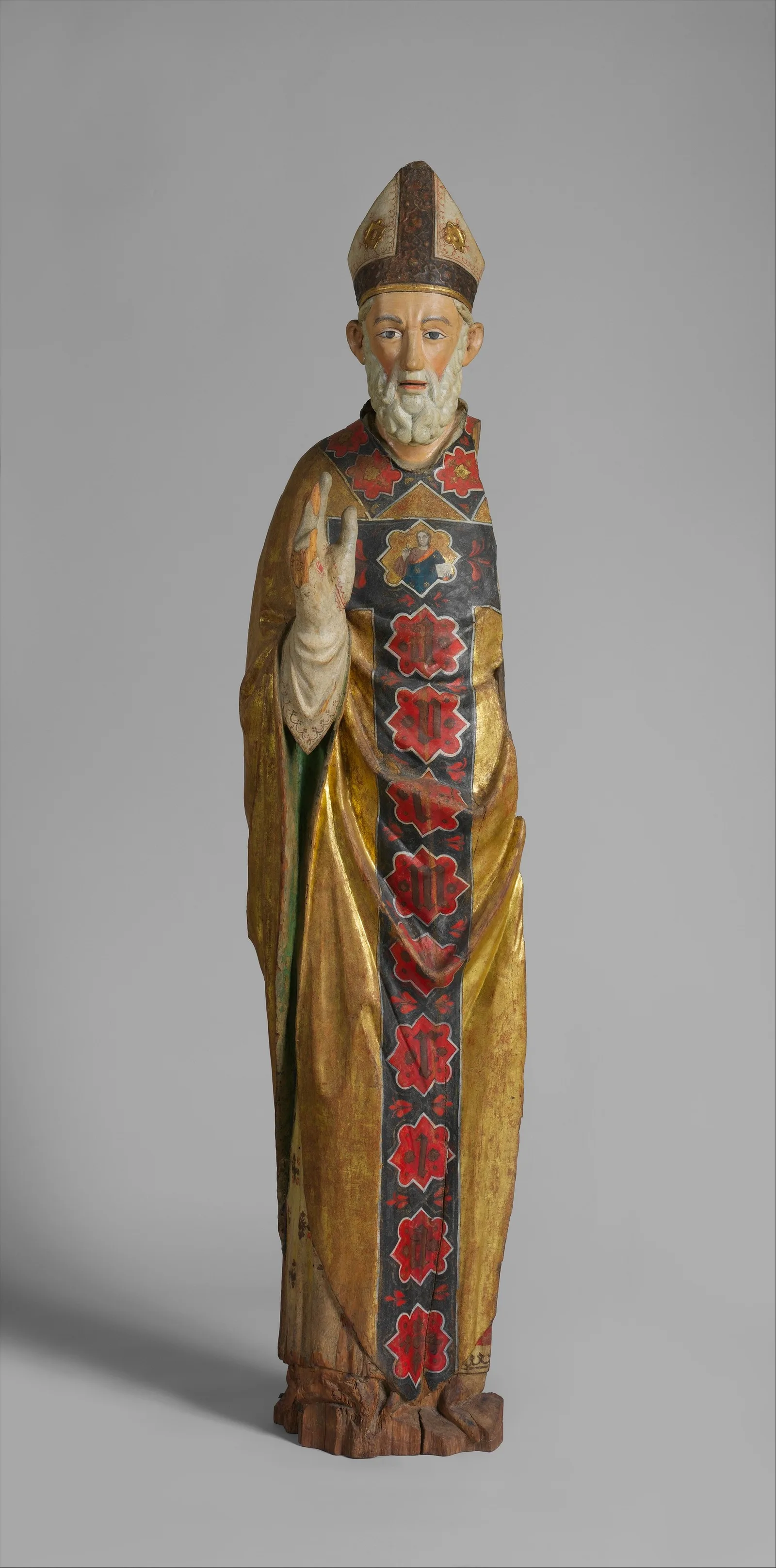
The story has a sequel that is still visible on the high street and that almost nobody connects to Christmas. The three bags of gold thrown by Nicholas turned, in the pictorial tradition, into three golden balls, and Nicholas became patron of sailors and travellers and of those who lend money against a pledge at the same time.
From there, on the most widely repeated account, comes the pawnbroker's sign: three gold balls hanging in a triangle. That version is not the only one. A second traces the balls to the arms of the Medici and to the Lombard bankers who gave the trade its name in English, yet the patronage of Nicholas over lending is recorded independently of it. The sign held across Europe for centuries and still turns up in older towns.
The night gift in the stocking, the golden ball, the pawnbroker's board and the orange in the toe are one object in four disguises, and all four are about how gold reaches a person who has none.
Customer reviews
Zevira is a real jewellery shop. Genuine payments, deliveries and customer thank-yous.
🥰🥰🥰 gracias
Ok, ¡gracias! 🙂
Symbols that work in December
The type of object is half the decision. The other half is the sign carried on it, and in December the working set of signs is not the set that works the rest of the year.
The star: from Bethlehem to the eight pointed
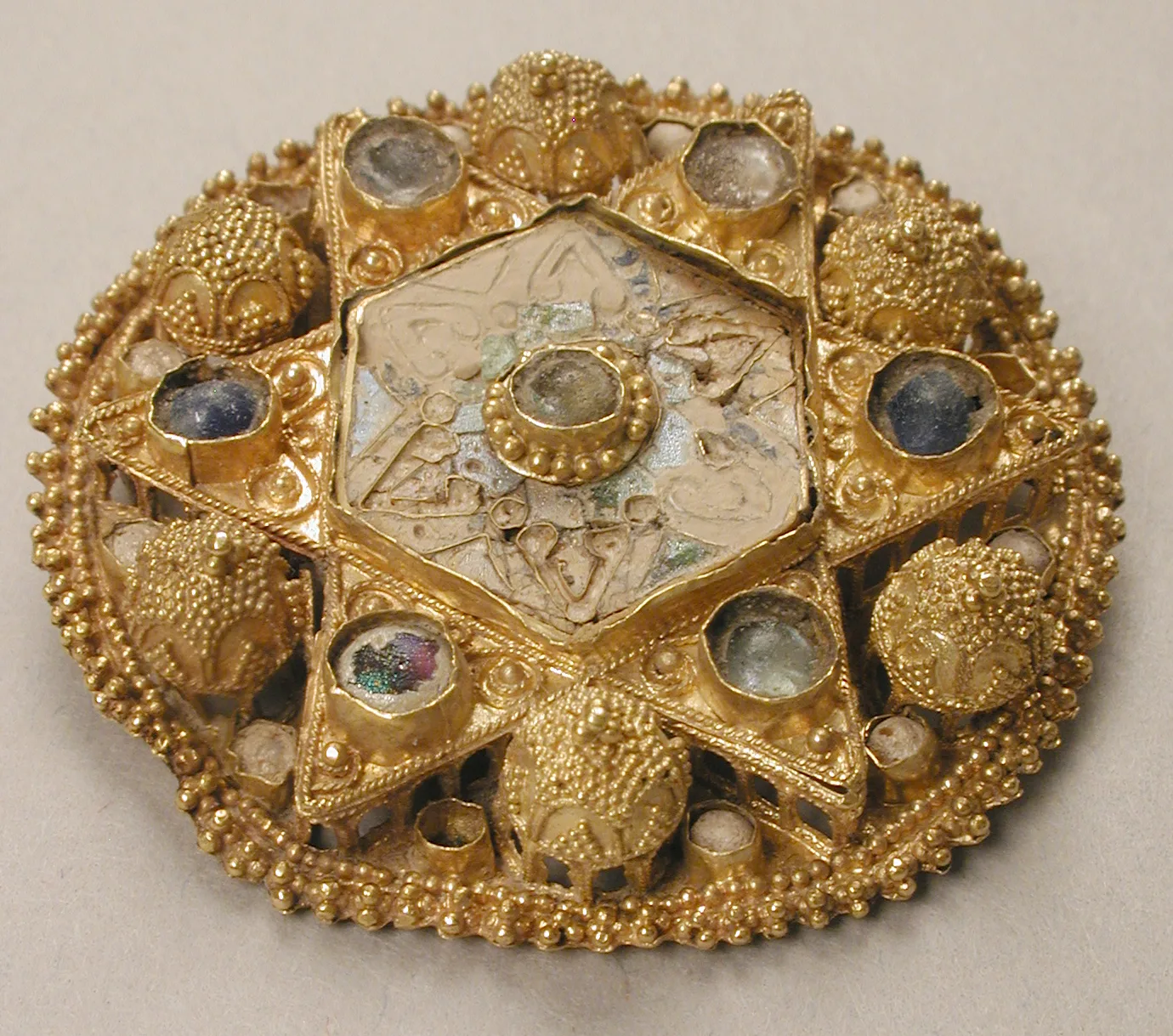
The star at the top of the tree is neither an abstract ornament nor a decorative shape. It stands for the star that led the Magi to Bethlehem, and that is why it sits where it sits: above everything else on the tree, because it was the thing they were following.
It is older than the glass balls. The tree was first hung with fruit, nuts and baked goods, and the balls arrived as a more durable replacement once glassblowing became cheap. The star never left the top: up there it works as a sign rather than as part of the decoration, and that distinguishes it from everything hanging lower down.
In jewellery the star took hold because it reads in any culture and asks for no explanation. It is the piece people reach for when they know nothing about the recipient's convictions: a mini star pendant will be read however the wearer likes, while the guardian star necklace adds a protective reading to the shape, which suits December too. The eight pointed form came out of an older Mesopotamian tradition, where it stood for the morning star and the deity attached to it, and it entered European art as a decorative motif that had already lost its former content. That is exactly why it can be given to somebody of any belief: it imposes no religious reading.
Practically the star has one more advantage: no age attached. It is worn at twenty and at seventy, which cannot be said of most winter motifs.
The angel: a present for a first Christmas
The angel takes second place in December and holds it on one simple function: it is given to babies and to children. A small angel on a chain is the classic present for a first Christmas in a life, and in Catholic Europe it sits in the same row as christening presents, often coming from the godparents.
There is a practical side to that. You cannot give a child a piece they will wear: up to a certain age a chain around the neck is simply unsafe. So a child's angel usually goes into a box and comes out later, at a first communion or at eighteen. The giver knows this and chooses something that will not date in fifteen years, which is to say something as plain as possible. The mini angel pendant is built on that logic: an object that will be taken out of a box a decade and a half later should not carry the fashion of the year it was given.
Adults are given angels too, with a different meaning: a sign of watching over rather than anything childlike. In that role it works where something anxious is coming, a journey, a move, an operation, a new job.
How the image changed through European art and why the angel has so many different appearances is covered separately in angels in jewellery.
Holly, ivy and the winter botany in metal
Holly, the pine cone, the fir branch, mistletoe: these are the plants that stay green or stay visible through a northern winter, which is precisely why they became signs of the season. The logic is ancient and pre Christian, something alive in the middle of a dead season, a promise that the winter ends.
Holly, with its red berries and spined leaves, entered Christian symbolism later and acquired a second reading, but it started as the most conspicuous green thing in a December wood. Mistletoe stood apart: it was gathered ritually, and the habit of kissing under it survived while losing every trace of what it originally meant.
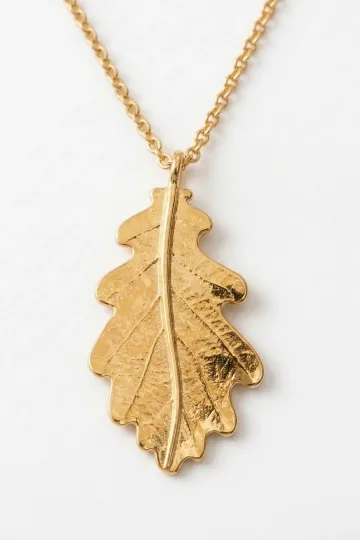
In jewellery this group has the advantage of carrying no religion and reading simply as winter. That makes it right where a religious symbol would be out of place or unwelcome: a colleague, a manager, somebody you barely know, a business contact. It greets the season rather than a particular confession, which removes an entire class of awkwardness.
The pine cone deserves a separate word. There is no obligation to read it as Christmassy at all: to an outside eye it is simply botany, and the piece survives comfortably into the summer, which the snowflake does not.
The snowflake and its age trap
The snowflake looks foolproof and is not. In volume production it has settled firmly into the children's and teenage end of the range, and a grown woman reads it as a piece not meant for her age even when the shape itself is well made.
The reason is the execution. A snowflake is usually made openwork, with a great many small rays and compulsory sparkle, and that is the visual language of children's jewellery. Then there is the seasonality: unlike the star, a snowflake cannot be worn in June, so the piece honestly sits in a box for eleven months of the year.
There is one exception and it works. A snowflake in strict geometry, with no scattered stones and no openwork, reads as an ordinary geometric motif and loses the age attachment. Pieces like that get worn all year, because the snowflake in them is invisible until you look closely.
The general rule: if you are hesitating between a snowflake and a star, take the star. It does the same job without the side effects.
Bells, cones and the quiet end of the seasonal range
Between the loud winter signs and the entirely neutral ones sits a middle group that is easy to overlook: the bell, the small cone, the plain sprig, the simple ring of a wreath. These carry the season without announcing it, which is exactly what a great many people want and cannot articulate at the counter.
Their strength is that they date nothing. A bell is a bell in March. A wreath shape is a circle. The December reading is supplied by the moment of handing over and by what is said then, which means the piece keeps the memory of the occasion without wearing a label for it.
Their weakness is the mirror image. If the point of the present is to mark this specific Christmas, and the recipient likes the season to be stated plainly, a quiet motif will read as an ordinary purchase that happened to arrive in December. That choice has to be made deliberately rather than by default, and the person who wants the holiday named out loud is usually easy to spot by the state of their house on the first of the month.
Upload a photo of your pet, someone you love, or an object. We'll build a 3D model and hand-cast it in pewter.



The German tree and how it reached an English drawing room
The stocking came out of a Mediterranean saint's life. The tree the presents lie under came out of Germany, and nearly everything now treated as Christmas scenery was assembled there. That is worth holding in mind while choosing a winter motif: the bulk of the familiar imagery is German in origin, and each piece of it has a point where it starts.
The guild trees of Riga and Reval
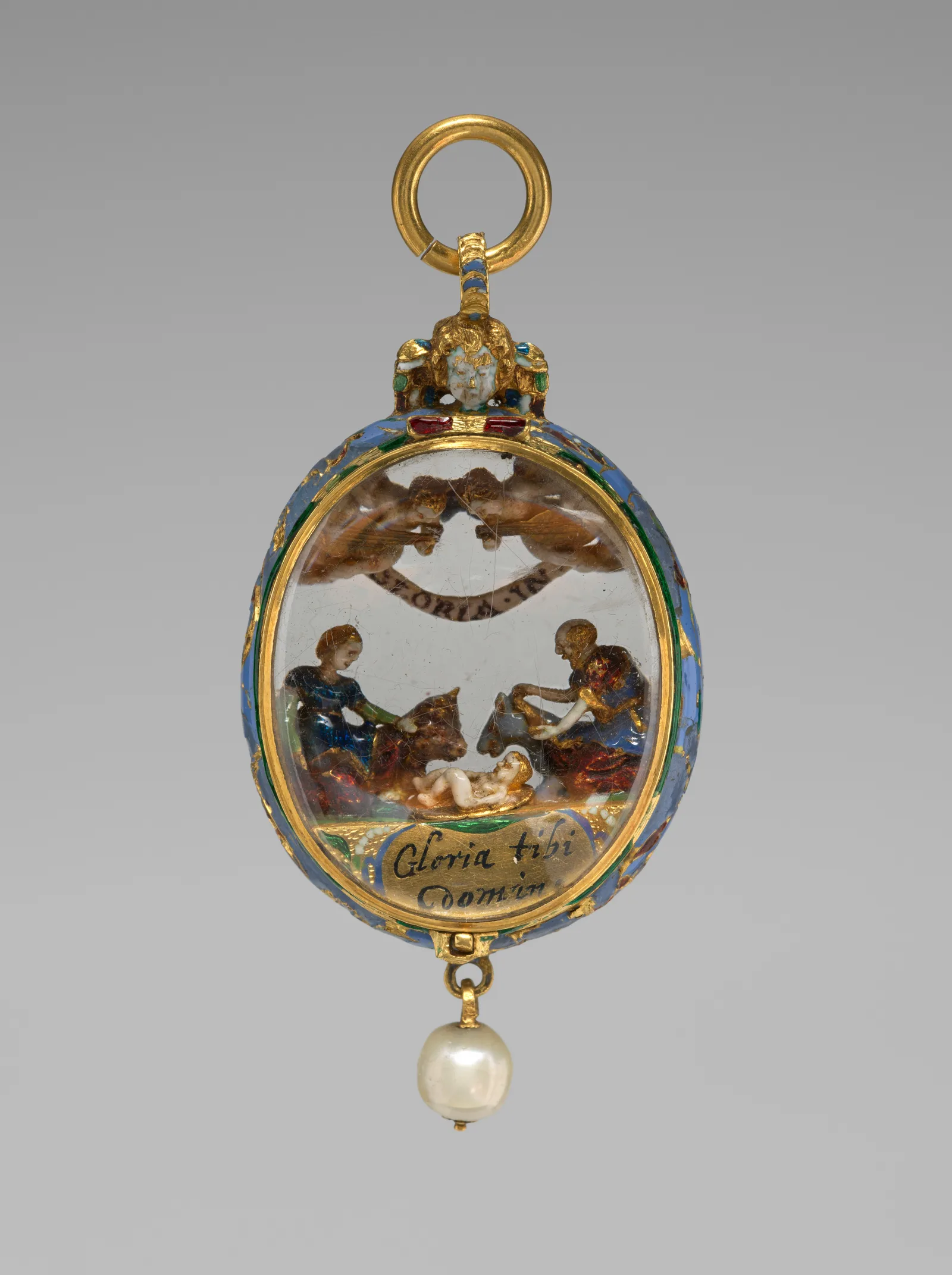
The earliest traces of a decorated tree lead not to Bavaria but to the Baltic ports with German merchant populations. Riga and Reval still argue about which came first, naming the fifteenth and sixteenth centuries. The fullest early description belongs to Riga and comes from the chronicle of Balthasar Russow, whose reworked edition appeared in 1584 and whose first printed edition had come out in 1578: apprentices set a fir up on the market square, danced round it with the women and girls of the town, and burned it at the end. The date belongs to the edition rather than to the tree, which matters, because in the account the tree is already an established habit rather than a novelty worth explaining.
This is not yet a domestic tree. It stood outdoors, it belonged to the town rather than to a family, and people danced around it rather than piling boxes beneath it. Two elements are nonetheless already in place: a conifer brought into civic life in winter, and decorated with made objects.
Strasbourg and the first trees indoors
The domestic tree is recorded in Alsatian documents at the start of the seventeenth century: in Strasbourg, townspeople set up firs in their houses and hung paper roses, apples, wafers and gilded tinsel on them.
Look at that list. The apples are not a random fruit but a reference to the tree of paradise from the medieval mystery plays, where an apple tree bearing fruit stood for the fall. The plays used a fir in its place because no other tree in a European winter still has leaves, and real apples were hung on it.
Everything that followed in the decorating of trees grows out of that. The tree carried edible and symbolic objects from the beginning, and decorative ones only afterwards.
How the apple became a glass ball
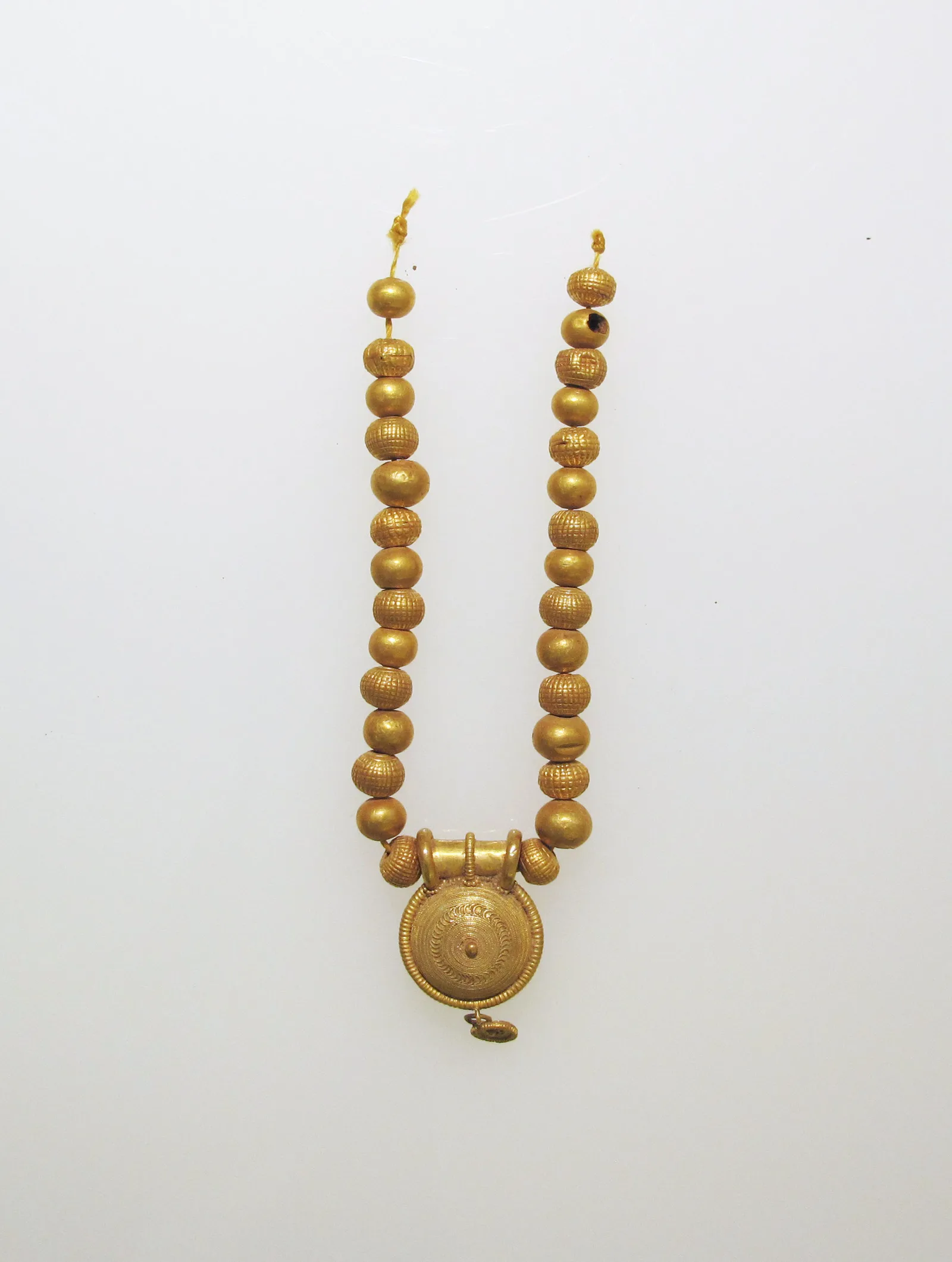
From here the story touches jewellery directly. In Lauscha, a glassblowing town in Thuringia, the nineteenth century saw blown glass balls coated on the inside with a reflective layer.
The tale explains the ball by a failed harvest: there were no apples to hang, so glass ones were blown instead. That version is disputed. The industrial side, on the other hand, is documented well: Lauscha became the centre of tree ornament production and exported across Europe and across the Atlantic, and the glass ball with a mirrored interior became the principal object on the tree.
The mirror did not arrive at once. The earliest balls were lined inside with a compound of lead and tin, and the silver nitrate coating that gives the true mirror came into use from 1870, although the silvering method itself had been worked out by Justus von Liebig in the 1850s. Between the first hollow balls, blown in Lauscha by Hans Greiner in 1847, and the shine everyone now thinks of as Christmassy lies a little over two decades, and the Lauscha boom starts at the far end of them.
For jewellery the connection is literal. The technique of coating the inside of glass with a reflective layer is the same one used in mirror making and in the imitation stones set into cheap pieces of the period. The glitter now read as festive was an industrial trick, and it arrived on the tree and in affordable jewellery at the same moment.
Lametta and why tinsel is silver
The second German contribution to the December shine is lametta, narrow strips of metal hung on the branches one at a time in imitation of frost and icicles.
It was originally cut from real silver, beaten thin, and hung strand by strand rather than thrown in handfuls. German households still carry an almost ritual strictness about it: lametta hangs vertically and straight, and a crooked strand gets fixed.
This is also where the colour code of December was set. Silver on the tree means frost and cold, gold means candlelight and warmth, and the same code reads across in jewellery: cool metal under a graphic winter look, warm metal for a domestic evening lit by candles. Anybody choosing a gift for a person whose collection they have never seen can lean on this without knowing a single preference: look at what their winter coat and scarf are, and match the metal to the light they will be standing in.
The Advent wreath has an author and a date
This is one of very few traditions with a name and a year attached. The wreath of candles was devised in Hamburg in 1839 by Johann Hinrich Wichern, who ran a home for children from poor families.
His problem was practical: the children kept asking how much longer there was to wait. Wichern took a cartwheel and fixed candles to it, one for each day of waiting, and lit the next one every day. The waiting became visible.
Out of that wheel came both the modern four candle wreath and the Advent calendar with its little doors, and out of the calendar, quite recently, came the calendar with jewellery inside: twenty four compartments, an object in each. The logic is Wichern's, with presents in place of candles. The practical difference for a buyer is the lead time. A picture calendar can be bought whenever you like, while a calendar full of objects has to be assembled, which means twenty four items chosen, ordered and delivered before the first of the month.



The budget of the holiday
A December budget goes wrong less often through meanness than through being spent on the wrong properties of an object. What follows sorts out which of those properties are visible to the person who opens the box.
Why inexpensive need not look cheap
What gives cheapness away is not the material but three things, and all three are fixed by choosing differently. The first is excessive sparkle. A lot of small glittering elements on a small area read as imitation, because real stones are not set that way.
The second is the seating of the stone. A crooked bezel, visible adhesive, a gap between the stone and the mount are all noticeable at arm's length, and that is the first place the eye lands.
The third is surplus detail. A modest piece in a strict shape reads dearer than a loaded one, because complexity costs money and an attempt to get complexity cheaply shows instantly. A plain shape is honest: it does not pretend to be what it is not.
The practical December rule follows directly: the smaller the budget, the plainer the shape should be. A smooth pendant with no stone in the modest end of the range looks better than a heavily decorated piece at the same level.
Three tiers and what people take in each
The entry tier is studs, fine pendants, plain rings without stones, narrow bracelets. Geometry and a clean line win here, and anything trying to look expensive loses.
The middle tier is pieces with a stone and with visible handwork: carving, texture, a complex shape. Choice by character rather than by shape alone starts here, which is also where a gift begins to say something specific about the person it is for.
The substantial present is the thing bought once and worn for decades, often with the intention of handing it on. It is chosen for the person rather than for the season, and December is simply a convenient occasion for it.
The typical December error looks like this: somebody takes one middle tier piece where two entry pieces would have worked better. Split into a main present and a companion, both look considered, and the recipient sees attention paid twice rather than a sum of money.
Victorian England: where the holiday became an industry
Germany supplied the tree, the Mediterranean supplied the stocking and the Magi, and the conversion of all of it into a shopping season happened in England in the nineteenth century, and happened fast, inside a few decades. For jewellery this is the decisive stretch: it is when a piece became an ordinary Christmas present rather than the privilege of a wealthy house.
The 1848 engraving that made the tree fashionable
The German tree reached Britain through the court. Queen Victoria's husband was German and kept a tree at home in the manner of his homeland. That would have stayed a private arrangement had an engraving of the royal family standing at a decorated tree not appeared in the Illustrated London News on 23 December 1848.
After that the same mechanism worked that works now. People saw how the model family lived, and copied it. Within a few years the tree had spread through British homes, and from Britain it went across the Atlantic. The German tree became international in London rather than in Germany.
The speed is the part worth noticing. One picture in one weekly paper, a court that had no intention of starting a fashion, and a habit that had taken three centuries to travel from the Baltic to Alsace to the Rhineland covered the last stretch in about five years. Anybody wondering how quickly a seasonal object becomes compulsory has the answer here.
The card Henry Cole invented to save himself time
In 1843 Henry Cole, a busy man buried in correspondence, ran up against the custom of answering every seasonal letter personally. Instead of doing so he commissioned a drawing from John Callcott Horsley, printed a run of cards carrying a ready made greeting, and sent those.
The Christmas card was born as a way of saving time, and for gift giving that turned out to be pivotal. What it established alongside itself was the idea that a greeting can be an object rather than words, and that the object can be bought ready made. From there the road runs straight to wrapping paper, to the card tucked into a parcel and to whatever goes inside the box with a piece of jewellery today.
Old Bond Street and the moment a greeting became a product
The second half of the Cole story is the one that decided the shape of the season. The run came to about a thousand cards in all, a good deal more than one man's correspondence needed, and what he did not send was not thrown away: the surplus went on sale through a shop on Old Bond Street.
So the first Christmas card was private correspondence and retail stock on the same day, in the same street where jewellery was already being sold. That is the whole Victorian pattern compressed into one object. A personal gesture is designed, it is manufactured in quantity because designing it once and using it once makes no sense, and the surplus is offered to strangers who then want one.
Everything that now looks like the commercial part of the Christmas period was built on that move, including the wrapped jewellery box. A piece of jewellery given in December is a personal object bought from stock, and the Victorians were the first to be entirely comfortable with the combination.
Tom Smith's cracker and the trinket inside
The most direct ancestor of the modern jewellery present under the tree is the Christmas cracker. It was devised by a London confectioner, Tom Smith, in the middle of the nineteenth century, after he brought back the idea of a French sweet wrapped in twisted paper from Paris in 1847.
First he simply wrapped the sweet. Then he added a motto inside. Then he worked out the snapping strip that fires when the wrapper is pulled apart, around 1860. And finally he replaced the sweet with a present. Inside went a paper crown, a joke on a slip of paper and a small object: a brooch, a ring, a cufflink, a thimble, a charm.
A small piece of jewellery as a Christmas surprise is therefore not an invention of modern retail but a Victorian practice with a century and a half behind it. And it worked on exactly the logic that still works: the thing is small but real, and it is discovered with a bang, at the table, in front of everybody.
Whitby jet and the Queen's black years
English jet has a biography of its own with no connection to the Spanish one. It was mined on the Yorkshire coast at Whitby, carved on the spot, and until the middle of the nineteenth century the trade supported a few dozen workshops and no more.
Everything changed when the Queen was widowed in 1861 and went into a mourning she never came out of. Court etiquette demanded jewellery and mourning etiquette forbade shine, and the material that satisfied both better than anything else was black jet: light, warm, carvable to a fine line, and matt where it mattered. Onyx, vulcanite, bog oak and black glass ran alongside it, yet jet was the easiest to wear and the finest to cut.
Then the court did its work. English aristocrats followed the Queen, European ones followed them, and by the 1870s and 1880s the town held more than two hundred workshops in place of the fifty it had started with. The fashion then drained away as quickly as it had arrived, and black jewellery stopped meaning loss. Today it is simply graphic: black against skin reads as severe and sits with winter clothing better than any coloured stone.
One substance therefore ran through four consecutive roles in a thousand years: a threat in the stocking, protection on an infant's neck, a mark of bereavement at court and a sugar joke in a January window. None of the roles cancelled the one before it, they simply settled in different countries, and the Whitby workshops added the lesson that a stone can be made fashionable by one visible person and unfashionable again within a generation.
Timing: when to order so that it arrives
Why December is not November
In December delivery times stretch along the whole chain, and the cause is volume rather than any one shop. In the last fortnight before Christmas the load on the post and the courier services is at its peak, sorting centres run at their limit, and the margin that was ample all year stops being ample.
On top of that, December runs out of the popular lines. Something in stock in November can be gone by the middle of December, and then the wait is for the object itself rather than for the delivery.
The practice is straightforward. Anything that has to be under the tree on 24 December is ordered with a fortnight in hand, not three days. Personalisation, engraving and resizing add their own days on top, and they add them precisely when production and the post are at their busiest.
Engraving, resizing and the days they add
Resizing is worth separating out, because it is the step people underestimate the most. Taking a ring up or down is work, not a minute at a bench, and in December the queue for it is longer than in any other month of the year.
Engraving has its own trap, and it is not the time. It is irreversibility combined with a queue: a mistake in the text cannot be undone, and the piece cannot simply be swapped for another because the next one has to be engraved too, from the back of the same queue. Whatever is going on the back of a piece should be checked by somebody other than the person who wrote it.
The counting back is therefore done in three parts rather than one: the days the workshop needs, the days the post needs, and the days you need in hand in case the first two go wrong. For the German and Polish evening of the 24th that means an object ordered at the end of November rather than in the middle of December.
What to do if you have left it too late
Being late is not a catastrophe as long as you do not try to hide it. An attempt to pass haste off as intention is spotted at once and damages the impression more than the delay itself does.
There are two workable options. The first is to hand over a card carrying a promise and to choose the piece together after the holidays. That is honest, and for a good many recipients choosing together is worth more than the surprise, particularly for anything with a size.
The second is to move the handover to a later date in the same season. In Britain Boxing Day gives you a day of grace, and in a Spanish or Italian household a present arriving after 25 December is not late at all, because the main day is still ahead.
What is not worth doing is grabbing whatever is available on the last day. A piece bought in a panic rarely matches either the taste or the size, and the recipient can feel it. The situation has its own treatment with a step by step plan here: a last minute gift.
Leave your email, we'll send your discount code. No spam, unsubscribe anytime.
The code arrives by email, valid on your first order.
When the gift is handed over: dates across Europe
From the evening of 5 December to the morning of 6 January
There is no single giving date in Europe, and that matters if the present is going abroad or if the recipient grew up in another tradition. The spread runs to a full month, from the Dutch evening of 5 December to the Spanish morning of 6 January, and in each country the local date is treated as the only correct one.
The difference is not a formality. It decides when the box is opened and who is in the room at that moment.
There is a second side to it that is rarely thought about. In households where the parents grew up in different traditions the handover splits: some presents go on one day and some on the other, and the arrangement is made in advance. An outside giver needs only one thing from this, and needs it reliably: ask which date this family treats as the main one, because the substantial piece goes on that date and something smaller goes on the other.
Asking outright is sensible rather than awkward. People inside Europe check the date with each other constantly, because mixed households are common and there is no single rule even within one country. Italy splits between Christmas and Epiphany along the north and south, and Germany and Poland run two dates in a row, 6 December and Christmas Eve.
The main handover dates, the figure who brings the present on each and what each one means for ordering are set out below.
One practical thing follows from the table and is easy to miss. The deadline is set by the recipient's calendar rather than by yours, and the spread between the earliest and the latest date is a month. The same parcel posted on 20 December has already missed the Dutch and German opening of the season by a fortnight, reaches a German Christmas Eve with nothing to spare, arrives in Britain on time and lands in Spain with a fortnight still in hand.
How to count the deadline when there are two dates
The difference in dates is not an ethnographic curiosity, it is two different deadlines, and they have to be counted from both ends.
At the near end stand the Dutch evening of 5 December and the German shoe on the morning of the 6th. Those are the earliest dates of the season and also the easiest to hit, because a week into December the post is still moving at its ordinary speed. The hardest date is a different one and should not be confused with them: the German and Polish evening of 24 December, when the piece has to be in the house by the 23rd, since the morning of the 24th is for wrapping and the evening is for opening. That one needs double the usual margin, because it falls inside the peak fortnight for the post.
At the other end stands 6 January: a parcel arriving on 26 December has missed nothing in Spain or in much of Italy, because it still has ten days ahead of it. The British pair, the morning of the 25th and Boxing Day, sits between the two and gives about a day of slack rather than a week.
A mistake in each direction costs differently. Missing the evening of the 24th cannot be repaired: the occasion has happened and the box gets opened in an empty room. A present arriving too early somewhere that waits for Epiphany simply sits and waits, and inconveniences nobody. So when in doubt, count to the earlier date.
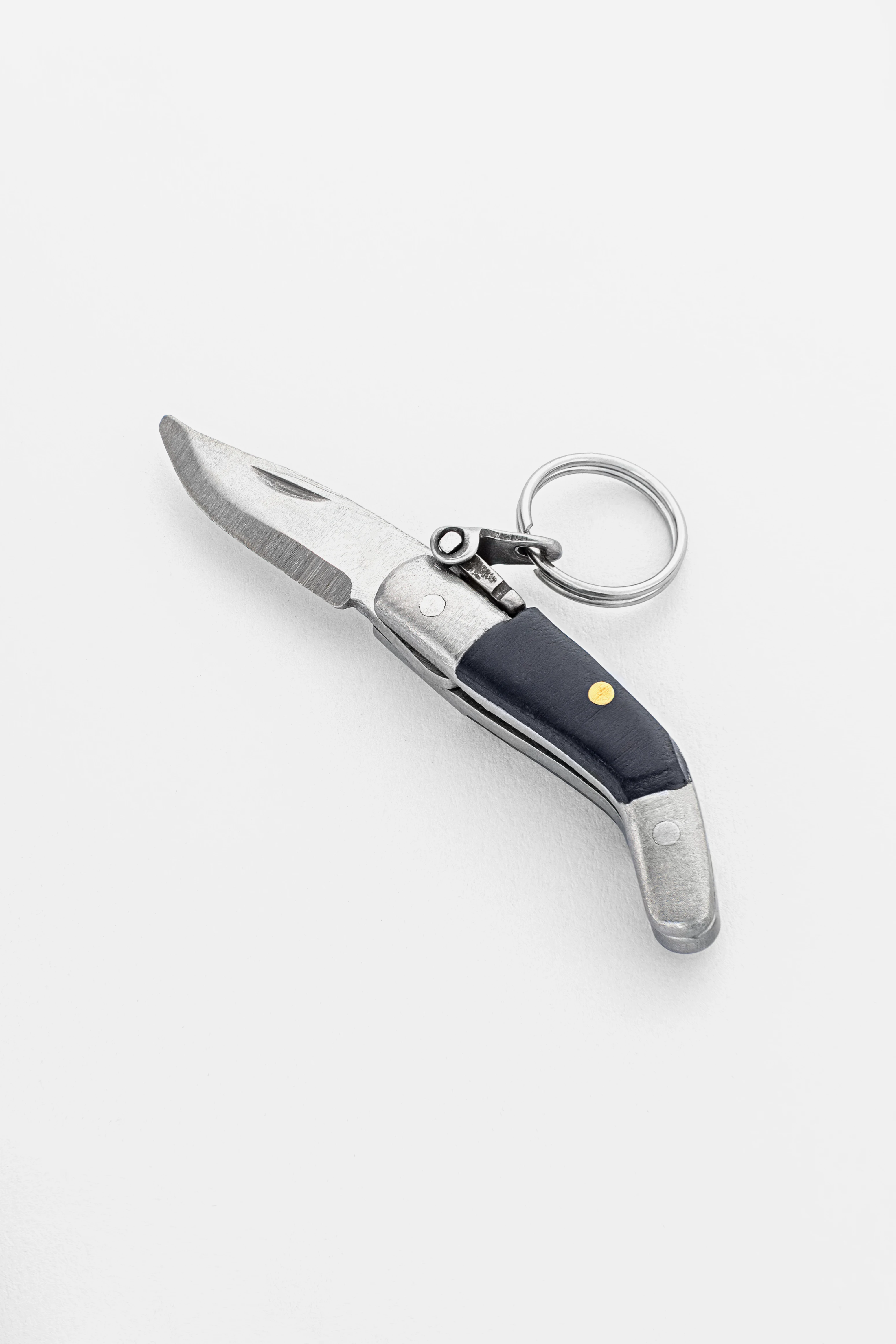
CAPAORA mini knife pendant
The 18th-century Spanish navaja in miniature: 40 mm of stainless steel, a real folding mechanism and a Palanquilla lock that clicks. An affordable gift to remember.
Authentic · Ships from Spain · 14-day returns
Where the December gift actually comes from
With the dates settled, the question of why any of them exist is worth answering, because the answer decides which motifs a December piece can carry. The habit of giving in midwinter runs about five centuries ahead of Christianity, counting from the dedication of the temple of Saturn in 497 BCE, and it was never borrowed whole. It was assembled out of several different festivals, each of which left one part behind. Laying them out in order is worth the effort, because otherwise it makes no sense that a single holiday contains a nativity, a pagan tree, a Roman habit of exchanging trinkets and a northern bonfire without any of them cancelling the others.
| When | What | What is left of it today |
|---|---|---|
| from 497 BCE | Saturnalia, 17 to 23 December | the midwinter gift itself, the feast, the reversed roles |
| last day of Saturnalia | Sigillaria | the small figure as a present, ancestor of the toy and the charm |
| Kalends of January | strenae, gifts for luck | the French and Italian words for a New Year present |
| pre-Christian northern Europe | Yule, the solstice | the evergreen indoors, the log, the fire, the roast |
| 4th century, traditionally from 274 | the feast of the Unconquered Sun | the date of 25 December as the birthday of light |
| 354 | first written record of Christmas on 25 December | the date fixed in the calendar |
| 4th to 6th centuries | the custom made Christian | the Magi as the explanation for giving at all |
Saturnalia: the week the order was turned upside down
The Roman December rested on Saturnalia, the festival of Saturn, which opened on 17 December and ran for a week. The count is taken from 497 BCE, when the temple of Saturn was dedicated in Rome. It was the best loved festival of the year, and its content ran directly against the ordinary order of things.
Courts closed. Schools closed. Declarations of war and executions were held over. Enslaved people sat at table with the household, and sometimes the household waited on them. Instead of the toga people wore loose clothing and the felt cap normally worn by a freedman.
The point of the reversal was practical. Once a year the social hierarchy was suspended, the pressure was let out, and afterwards everything went back where it had been. The same logic still runs underneath the modern feeling that December permits what the other eleven months do not, including money spent on things nobody needs.
Sigillaria: the day the city traded in presents
The final day of Saturnalia was called Sigillaria, and the name came from an object. Sigillaria were small figures of clay or wax, made for that one day and handed to friends and relatives.
Rome gave them their own market rows. That is seasonal retail in full: small objects manufactured for a single date in the calendar, and a defined part of the city where you go to buy them.
Figures were not the whole of it. Roman gift lists take in candles, tableware, writing kit, rings, coins and books, while a poor man could give something edible and be thanked for it. There were verses to go with the parcel, and jokes at the expense of a stingy giver, which means the entire mechanism was already assembled.
One detail matters for this article. The ring sits on that list next to the candle. Jewellery as a midwinter present is a Roman norm, and the trade did not invent it eighteen centuries later.
Strenae and the word that outlived the empire
A second line ran not from Saturnalia but from the new year. On the Kalends of January, the first of the month, Romans exchanged gifts for luck, and those gifts were called strenae.
At first they were branches of laurel and other evergreens cut on ground sacred to a goddess named Strenua: something green in midwinter stood for life and for a prosperous year ahead. Honey and dates were added so the year would be sweet, and coins so it would be profitable.
The word survived both the empire and the change of religion. The French word for New Year presents and the Italian word for a festive offering both come straight from it, and both mean exactly what the Romans meant: a thing given at the start of the year for luck.
This second line explains a split that Europe still lives with. Some countries give at Christmas, some at New Year, and the argument about which date is the correct one has been running since Rome, because there were two festivals from the beginning rather than one.
Yule: the tree and the fire from the north
While the south kept Saturnalia, the north kept the solstice. Germanic and Scandinavian Yule fell on the darkest days of the year and was built around fire and food.
What it left in the modern holiday is precisely what the Roman line lacks: evergreen branches brought indoors, a large log burned slowly, and a boar on the table. The word for Christmas in the Scandinavian languages is still Yule rather than anything derived from Latin.
The northern half is what gave the holiday its tree. Romans hung greenery on doors, but they had no tree standing in the house, while for northerners a green plant in winter was the main available proof that life had not stopped. In jewellery this layer survives as the tree of life: the tree of life pendant and the family charm say nothing about protection and nothing about light. They speak about lineage, which is why they end up going to parents and grandparents rather than to partners.
Why 25 December
The gospels carry no birth date at all, and the earliest Christian communities did not observe birthdays in principle, treating the custom as a pagan one.
The date arrived later and landed on a Roman festival that was already there. State honours for the Unconquered Sun are traditionally credited to Aurelian in 274, though the date and the scale of that cult are both argued over by historians. What is firm is different: by the fourth century the end of December in Rome was already a solar festival tied to the turn of the year, the point at which the daylight starts coming back. The first written evidence that Christians kept Christmas on 25 December sits in a Roman calendar of 354.
The overlap with a solar feast was discussed at the time, and the explanation offered was theological: light entering the world on the darkest day. Because of that, the rayed solar disc is the oldest December motif of the lot, older than the star, the tree and the stocking. A sun amulet is worn all year and does not turn awkward in January, because it is attached to no date whatsoever. The practical side is equally plain: the new feast landed on a habit the population already had, so nothing had to be broken.
The royal Christmas Eve and its ridiculous presents
The Victorian court that turned the tree into a fashion also imported a giving habit of its own that never spread with it, and the contrast is instructive for anybody deciding what a present is supposed to achieve.
Albert's habit and why the exchange happens on the 24th
German households open their presents on the evening of 24 December, and that is the custom Prince Albert brought to Windsor along with the tree. The tree went national. The date did not: Britain kept its parcels for the morning of the 25th, and the royal household kept the German evening.
The family has held to it since. Presents are exchanged on Christmas Eve, laid out on trestle tables, and each person is shown to their own place. The reporting on this comes largely from former household staff, so the details vary, and the part that is consistent is the date and the tone.
Why the joke gift works and what it costs
The tone is the surprising part. The rule at that Christmas Eve exchange is that the present should be cheap and funny rather than valuable: squeaky toys, novelty crockery, seaside souvenirs, the sillier the better. A family that could give anything gives a gag.
The reason is not modesty, it is arithmetic of attention. When everyone present can buy whatever they want, an expensive object carries no information, while a joke carries a great deal: it proves that the giver has been paying attention to something specific about the person all year. The value has to be moved out of the price, because the price has stopped saying anything.
That is worth borrowing even at a scale where money does mean something. A joke and a real piece given together beat one solemn box, because the joke carries the knowledge and the piece carries the occasion. The failure mode of the December present is not spending too little, it is a beautiful object that any of the people at the table could have chosen for any of the others.
Boxing Day: Britain's second giving date
Most of Europe hands over presents once. Britain built a second date into the calendar the day after Christmas, and it started out aimed at people outside the family altogether. It is the only major giving date in Europe that began as an obligation downwards rather than a gift sideways.
The boxes that went to the household staff
The name is a genuinely open question, and the explanation offered most often is the household one. On 26 December, the day after Christmas, the servants of a house, and the tradesmen who had served it through the year, received a box: money, leftovers from the feast, sometimes cloth or a small object. Staff who had worked through Christmas Day itself were given the 26th off to take their boxes home to their own families.
The social shape of it is worth spelling out, because it explains the awkwardness that still clings to the workplace present. This was a gift going down a hierarchy, given once a year, in a fixed form, at a fixed time, and it substituted for the many small courtesies that the rest of the year had no room for. It was also not optional in practice: the postman, the dustman and the errand boy all expected it, and a household that skipped it was noticed.
The alms box and the other explanation
The second account puts the origin in the church rather than the house. Parish alms boxes stood collecting through the Advent weeks and were opened on the day after Christmas, which is also the feast of Saint Stephen, and the contents were distributed to the poor of the parish.
A third strand, harder to document and repeated anyway, has apprentices carrying earthenware boxes that could only be opened by breaking them, which is the sort of detail that survives because it is vivid. None of the three excludes the others, and the honest position is that the name has several plausible parents and no birth certificate.
What all of them share is the direction of travel. Christmas Day was for the household, the day after was for everybody the household depended on, and the second date exists because the first one had no room for those people.
1871: the day it became a bank holiday
The date left custom and entered statute with the Bank Holidays Act of 1871, which made 26 December a bank holiday in England, Wales and Ireland alongside Easter Monday, Whit Monday and the first Monday in August. Christmas Day and Good Friday were already kept as holidays by long usage and did not need naming.
A bank holiday sounds like a technicality and was not. Once the banks shut, commerce shut with them, and a customary favour to servants turned into a day the whole country had off. That is the Victorian pattern once more: a private habit becomes national the moment an institution puts it in writing.
What Boxing Day means for a jewellery gift now
The staff boxes are gone, the date is not, and the practical consequence for a present is real. Britain has a second opening in the calendar, twenty four hours after the first, and a piece given then reads differently from the same piece given on Christmas morning.
Christmas morning is crowded. Parcels are opened in sequence, in pyjamas, with children setting the pace, and a jewellery box competes with everything else on the floor. Boxing Day is quiet, the household has usually thinned out, and a box handed over then is the only thing happening. For a piece that deserves a second look, that is the better slot, and it is the reason a good many people hold one box back deliberately.
It also solves a specific problem. Where two sets of relatives both expect to be present at the opening, the 26th gives you a second stage rather than a contested one, and nobody has to watch somebody else's present being admired first.
The spruce on Trafalgar Square and the gift between countries
One more British December fixture is itself a present, and it arrives from abroad every year with a reason attached.
A thank you that has been arriving since 1947
Since 1947 the city of Oslo has sent a Norwegian spruce to London to stand on Trafalgar Square through the Christmas period. It is a standing act of thanks for the war years, when the Norwegian king and government were based in Britain, and it has been repeated every year since without interruption.
The tree is not bought, not commissioned and not chosen by London. It is selected in the forest around Oslo, often years in advance, and it is usually somewhere upwards of half a century old by the time it is cut. The felling is a small ceremony in its own right, attended by the Mayor of Oslo, the Lord Mayor of Westminster and the British Ambassador to Norway.
Why a repeated gift outranks a generous one
The interesting part for anybody buying in December is the structure. The same gift, from the same giver, on the same date, for the same stated reason, for the better part of eighty years. Nobody has raised the stakes, nobody has switched to something more impressive, and the meaning has grown rather than worn out.
That runs against the instinct that a present has to beat the last one. It does not. Repetition is what turns an object into a tradition, and this holds for a family as firmly as for two capital cities: a piece of jewellery given every December in the same spirit, one small thing a year, builds something that a single large box never does. The tree also makes the second point, which is that a gift with a reason attached to it survives the people who remember the reason, provided somebody keeps saying it out loud.
How the neighbours do it
A parcel crossing the Channel lands in a different calendar, and sometimes in a different century of custom. What follows is the short tour: one paragraph of history and one practical consequence for each country, because the date, the giver and the kind of object expected all change as you move.
Three things shift at once and they shift independently of each other, which is what makes the map worth reading rather than guessing. The date moves first, and it moves by a full month, from the Dutch evening of 5 December to the Spanish morning of 6 January. The figure who brings the parcel moves with it: a bishop in the Netherlands, three kings in Spain, a witch in Italy, a winged child in southern Germany, thirteen mountain trolls in Iceland. And the kind of object a household expects moves as well, because every one of these countries has a material of its own that needs no explaining locally and reads as exotic anywhere else.
That last point is the one that catches senders out most often. A Spanish family reads black jet as festive, a Neapolitan one reads red coral as ordinary family practice, a Portuguese one takes a large openwork heart as a compliment, and a Polish one treats amber as the local default rather than as a souvenir. Sending the wrong material is rarely an insult, but sending the right one turns an adequate present into one that looks as though somebody had thought about where it was going.
Spain: the longest gift season in Europe
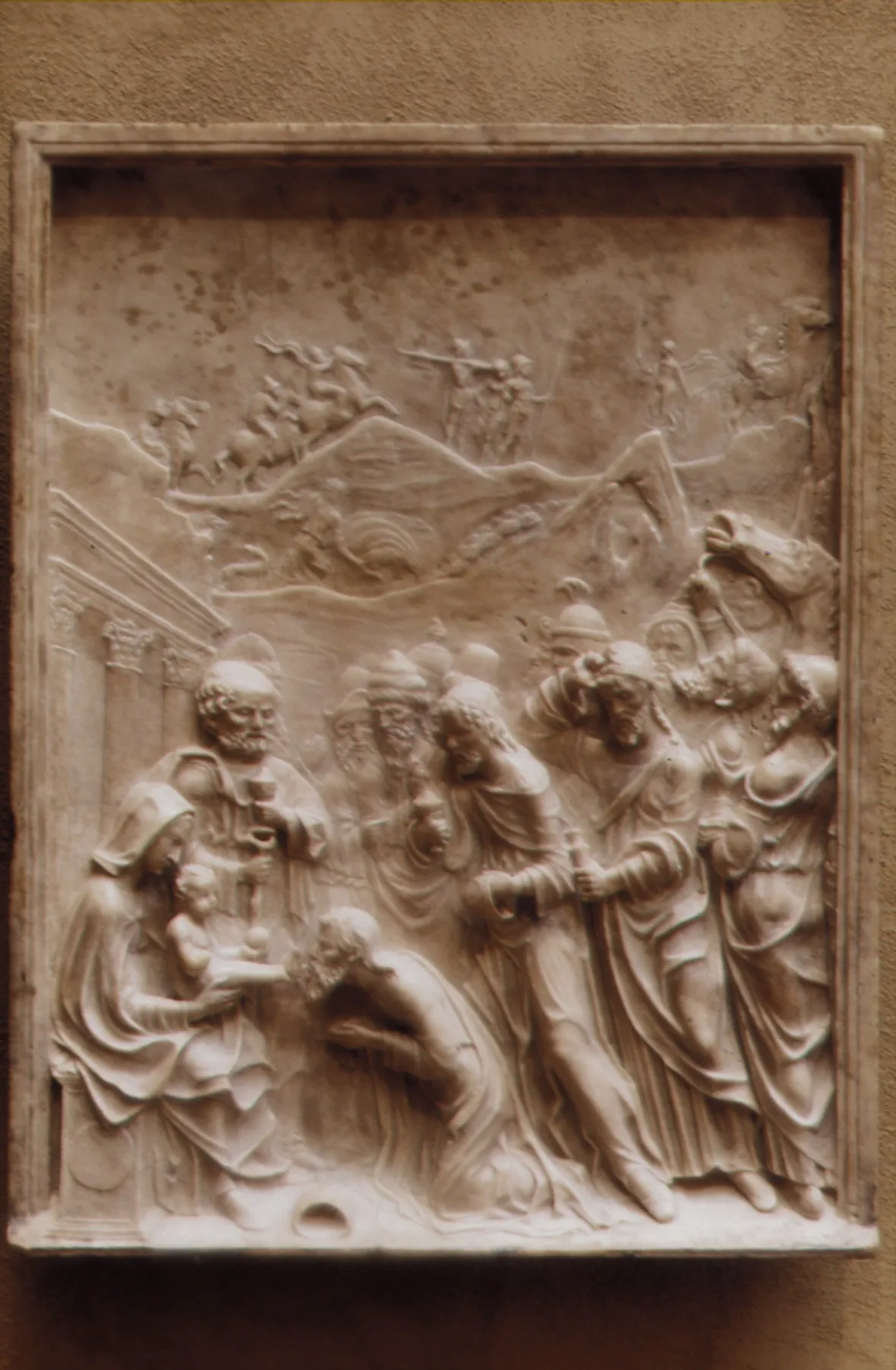
The main civic event of the Spanish December falls on 5 January rather than the 24th. The cabalgata goes through the streets, three kings on floats with music and sweets thrown into the crowd, children watch it, then leave out shoes and something for the kings and the camels, and receive their presents on the morning of the 6th. The season opens even earlier, on 22 December, with the national lottery draw sung by children from a boarding school on live broadcast, which is why a noticeable share of the buying happens once a family knows what it is working with. Spanish jewellery custom starts early in a life: girls have their ears pierced young by custom, and small gold studs go on from the start, and alongside them comes the azabache described at the start of this article, with one Spanish particularity: the piece does not stay a baby's, and the same black fig comes back on a chain for a first communion and for a Christmas years later. The same job is done by the mano figa pendant and by the eye that came across the same sea, the Nazaré necklace, the Oculis Nayra necklace and the protective eye ring, which are three ways of wearing one sign. The practical upshot for a sender: a parcel arriving on 28 December is early rather than late, and a piece of jewellery for a Spanish household is usually held for the 6th.
Italy: Befana, coral and three dates
The Italian December is spread across three points, and every region treats a different one as the main event. The presepe, the modelled nativity, is built at home and in the squares, and the Neapolitan school took it to the level of applied art: figures made in workshops over generations, dressed, and surrounded by miniature food and shops. Collections are assembled over years, so a single figure is itself a standard present. Then comes Saint Lucy's day on 13 December, when in parts of the north Lucy herself brings the presents and that day rather than Christmas stays the children's date. Then Befana on the night of 5 January. The jewellery side runs through one material: red coral, fished and carved in the south, with Torre del Greco near Naples as the world centre of the trade. Coral in Italy does the work that jet does in Spain, hung on an infant against the evil eye and carved into the horn, the cornicello, and given at a birth or a feast. Real branch coral has moved up into the higher reaches of the trade while the sign stayed common and now lives in metal and enamel: the cornicello protection pendant, the ethnic horn in brown and coral set in gold all read instantly to an Italian recipient, who sees ordinary family practice where a northerner sees superstition. Sardinia adds its own line, su cocu, a black bead of jet or obsidian held between two filigree cups, usually silver, hung on a child by a grandmother or a godmother and passed on afterwards. Outside Christian Europe the same idea runs through a gesture rather than a material: the open palm, the hamsa, covers exactly what the horn covers in Italy, which is useful when a December present goes to a household that does not keep Christmas at all.
France: the médaille de baptême and a long night
France puts the present inside a family rite rather than inside protection from the evil eye. Children leave shoes by the fireplace, sabots by name if not by material any more, and the handover happens on the night of the 24th, after the réveillon, the long supper that is the real event of the evening. In Provence the table finishes with thirteen desserts, for the number at the last supper, all set out at once so that everybody can try each. The French object with a fixed giver is the christening medal: a small gold disc, given by the godparents, with the tradition dividing it precisely, the medal from the godmother and the chain from the godfather. The image is usually the Virgin, a guardian angel or the child's star sign, and the name and date are engraved on the back. It is not worn daily, it is kept, brought out on occasions and handed to the next generation. The same category of keepable pieces takes in the Saint Benedict seal and a small plain cross, both restrained enough not to argue with a medal the child already has. Regional forms sit alongside it: Norman and Savoyard crosses, Provençal pendants, each with its own drawing and its own district, worn as a mark of origin rather than of faith. For a sender the rule is the German one: a French recipient expects the box on the night of the 24th, not on the morning of the 25th.
Portugal: the gold heart of Viana
Portugal has its own named piece, with an address rather than an abstract meaning. The coração de Viana, the heart of Viana do Castelo, is a gold pendant shaped as a heart with flames at the top and a fine filigree mesh inside. It is made in the north, in the Minho, and worn with traditional dress at festivals. The shape reads two ways at once and both readings live side by side: some see the flaming heart of religious iconography, others simply love, and because of that ambiguity the piece works equally as a gift to a bride, to a mother and to a daughter coming of age. The technique behind it, filigree, twists the finest gold wire into a pattern soldered onto a frame with the spaces left open, which makes a large piece that weighs almost nothing. That explains the local taste: the north likes bold, visible jewellery that is still light to wear, so a Portuguese recipient will take to a large openwork piece sooner than to a small dense one. The same silhouette lives well beyond the Minho in the flaming heart pendant and in Sacrae Cor. The main supper, the consoada, is on the evening of the 24th, with salt cod, cabbage and potatoes on the table, and presents are opened either straight after it or on the return from midnight mass. On 6 January the bolo rei goes on the table, the ring shaped cake with candied fruit and a dried bean baked inside, and whoever finds the bean buys the cake next year. Small presents used to be baked in as well, which is the direct parallel to the English cracker.
The Netherlands: a home made surprise and a poem
The Dutch main date is 5 December, the eve of Saint Nicholas, which makes it the earliest main giving date in Europe, and the present there has to satisfy two requirements at once. The wrapping must be home made and witty. It is called a surprise, and it is built out of cardboard, paper and household junk, usually representing something about the recipient: a hobby, a job, a story everybody laughed at during the year. The thing inside can be modest, the shell takes an evening. The second requirement is a poem, also written by the giver, mildly barbed at the recipient's expense, and read aloud in front of everyone. For a jewellery gift this is an unusually comfortable tradition, because a small object inside a large home made construction reads as a discovery rather than as thrift. Shop wrapping in the Netherlands reads as laziness, which reverses the usual advice about presentation.
Iceland: thirteen lads, a rotten potato and the Yule Cat
The Icelandic version of the punishment is funnier than the Spanish or the Italian one. Presents in December are brought by thirteen Yule Lads, folkloric creatures who come down from the mountains one at a time over the thirteen nights before the feast and leave again the same way. Children put a shoe on the windowsill and something appears in it each night: a sweet, a coin, a small object. Anybody who has behaved badly finds a half rotten potato. The logic is the coal logic, a dark useless inedible thing instead of a present, chosen from what the local household actually had, since coal was not it. Alongside the lads lives a creature with an openly instructional purpose: the Yule Cat, huge and vicious, which by tradition eats anybody who has not been given new clothes by Christmas. The threat was economic rather than moral. The autumn wool had to be worked before the cold came, the job was heavy and dull, and whoever shirked it went without a new garment, so the cat punished idleness. The consequence survives: in Iceland clothing is an expected and welcome present rather than a dull one, because it discharges an ancient obligation.
Sweden: the knock on the door
The Swedish word for a Christmas present, julklapp, literally means Christmas knock, and it is recorded in the language from 1741. The origin is direct: the present was not handed over, it was thrown. The giver knocked at the door, tossed the parcel into the room and ran, and those inside were left to guess who it had come from. A rhyming clue was written on the wrapping, which puts the Swedish custom next to the Dutch: in both, the parcel is accompanied by a text somebody wrote rather than by a bought card. The anonymity is not accidental either. It runs back to the same root as the night visit of Nicholas: a present is stronger when the giver is not named, because then it cannot be returned with an answering gesture and does not turn into an exchange.
Poland: amber and the first star
Polish jewellery tradition rests on a material lying on its own coastline. Baltic amber has been gathered and worked there for millennia, and Gdańsk remains the world centre of the trade. Amber is fossilised conifer resin, which makes it a relative of jet by origin: both are fossilised organic matter, one wood and one resin, and both are closer to a tree than to a mineral. As a present amber in Poland does the job the gold heart does in Portugal: it is local, recognisable and needs no explaining. The Polish Christmas Eve, the Wigilia, is more elaborately structured than its neighbours': hay under the tablecloth, twelve meatless dishes for the number of the apostles, and one place setting left empty for an unexpected guest. Before eating, everybody shares the opłatek, a thin unleavened wafer, going from person to person, breaking off a piece and speaking a wish, which takes time and sets the tone, so the presents are opened afterwards, once the pressure has eased. The meal does not start by the clock but by the sky: the table is taken when the first star appears. The star works there as a signal rather than as decoration, which is one more argument for it as a December motif.
Germany: a shoe on the 6th and two deadlines instead of one
Germany hands presents over twice, and the split is the one that catches senders out. On 6 December, Saint Nicholas day, children put a cleaned shoe outside the door and find sweets, nuts and small change in it in the morning. That is a direct descendant of the gold in the stocking with a different container: a shoe at the threshold rather than a stocking at the hearth. The main handover is on the evening of 24 December, and the figure who brings it differs by region: the Christkind, a winged luminous figure, in Catholic areas, the Weihnachtsmann in Protestant ones and in the north. Families keep to their own version and correct outsiders who get it wrong. The difference in container is a difference in deadline, and it produces two of them rather than one. The shoe goes out on the evening of the 5th, so anything meant for it has to be in the giver's house by the 5th, almost three weeks before the main German handover. Together with the Dutch evening of the same day, which is the earliest main date on the continent, that puts the front edge of the season at the start of the month rather than at Christmas. Christmas Eve is not the earliest date, it is the hardest one, and the two should not be run together: the 24th sits inside the busiest fortnight of the year for the post, while the first week of December sits in front of the rush.
The American layer: how the shop floor rewrote December
Everything so far was assembled over centuries. The twentieth century worked differently: it reassembled the holiday inside three decades, and it did so in a studio and on a shop floor rather than in a church or a family. A great deal of what now looks like ancient custom is younger than the television set, and the American share of it is larger than the British one, which is a reversal worth noticing in the country that invented the card and the cracker.
A song about snow, written where it rarely snows
The image of the holiday that the whole world recognises was set by a song written for a film. White Christmas, by Irving Berlin, appeared in the 1942 musical Holiday Inn. The Bing Crosby recording became the best selling single in history, with more than fifty million physical copies, and it held the top spot for eleven weeks.
The song is not about faith and not about custom. It is about snow, tree lights and letters, which is to say about a picture, and that is the secret of its durability: the listener supplies their own. There is no religious content in it at all, and that turned out to be decisive, because a secular song about snow can be played anywhere, including countries where December is warm.
The distribution did the rest. The studio carried the picture around the world faster than the tradition itself travelled, and in a good many places a snowy Christmas appeared on screen decades before it appeared in any house. For a present this matters more than it sounds. The picture sets the scene and the scene sets the object: a snowbound frame asks for cold shine and white metal rather than summer colour. December taste in jewellery was tuned by that song and by the endless covers of it.
Rudolph was written to save a department store money
In 1939 a Chicago department store handed out a booklet to children at Christmas. Previously such booklets had been bought in from outside, and somebody worked out that writing one in house would be cheaper. The job went to a staff copywriter, Robert May. That is where Rudolph came from: a reindeer with a red nose, bullied by the others, who then saves the day.
Two point four million copies went out in the first season. Ten years later the author's brother in law wrote a song from the book, Gene Autry recorded it, and at Christmas 1949 it went to the top of the American charts.
This is a clean case of a Christmas folklore character created by an advertising department to save on a print order. Today Rudolph in the harness looks like part of an old legend, although he is younger than the wireless.
The correction this offers to instinct is useful for choosing a symbol. The age of a motif cannot be judged by eye: part of what looks ancient was invented in the twentieth century for a seasonal window, and part of what looks like modern geometry comes out of antiquity. Check where a sign came from rather than how old it feels, which is why every symbol in this article is given with its biography attached. A gift lasts longer when there is a story behind it rather than a good picture, and the conversation about it does not end at "lovely, it has a reindeer on it".
Santa moved from the sky to the shop floor
Miracle on 34th Street, from 1947, is the story of an old man who claims to be the real Father Christmas, and it was shot on an actual November parade, the one that opens the pre Christmas season in New York, with an actual crowd. Strip out the sentiment and the plot is simple: the question of whether Santa is real gets settled inside a department store.
That construction fixed something which now looks natural. The queue to see Santa stands inside a shop, the trip to buy presents becomes a family outing, and the season opens with a procession through a city rather than a date in a calendar. The holiday acquired its own retail geography, and it still holds, including the European markets people visit to walk around rather than to buy.
The film also says out loud the principle any decent gift service runs on: a seller who admits honestly that he does not have the thing and sends the customer to a competitor gains more than one who substitutes. In December that is literal. A person arrives with a specific request once a year and remembers where they were sent, and the difference between "we do not have that" and "take this instead, it is also pretty" is the difference between trust and a box that never gets worn.
The film that became a tradition through lapsed paperwork
It's a Wonderful Life, from 1946, in which a man is shown the world as it would have been without him, lost money at the box office. It became a classic almost thirty years later and for a reason with nothing to do with art: in 1974 the rights holder failed to renew the registration, the film fell into the public domain, and television stations began running it every December because it cost them nothing.
Twenty years of continuous rotation achieved what the original release had not. A generation grew up for whom watching it was part of the holiday, and the tradition acquired an antiquity it had never earned.
The lesson transfers neatly. A tradition is repetition rather than age. An object becomes a family fixture because it comes out every year on the same evening, not because it is old, and this works for a film and for a piece of jewellery worn only in December in exactly the same way.
The gift list as a genre
In 1953 Eartha Kitt recorded Santa Baby, a song consisting entirely of an itemised list of wanted presents: sable, a yacht, a platinum mine and a ring. Formally it mocks the post war appetite for goods. Functionally it is a ready made format for talking to the giver, with a list in place of hints.
The format proved durable and now looks unremarkable: a wish list, a gift registry, a link to the exact thing sent in advance. Its honest advantage shows up in anything with a size, because it insures against the miss that otherwise has to be sorted out after the holidays, by which point neither side wants to raise the subject.
And there is exactly one objection to it, which the song itself already contains. A list removes the risk and takes away the thing the present exists to prove, which is that the giver knows the person. The compromise that works is simple: settle the size and the type in advance, by asking outright if necessary, and keep the choice of symbol and form to yourself. Then the piece fits and is still chosen rather than issued against an order.
The jewellery counter as a scene
There is a sub genre the cinema returns to regularly: buying a piece of jewellery in December as the moment the truth about a relationship comes out. The best known example is in Love Actually, from 2003, where a shop assistant takes an interminable time wrapping a necklace, adding petals, lavender and a cinnamon stick to the box while the buyer sweats, because the necklace is not for his wife.
The scene is funny and accurate in the details that concern us directly. First, the wrapping of a piece of jewellery is shown as a ritual rather than a service, and the ritual takes longer than the choosing did. Second, the box gives the contents away instantly: everybody in the frame knows what is inside it. Third, jewellery in film is almost never a neutral present. It is always a statement, which is precisely the subject of the section on rings further down.
Home Alone and the export of the American December
The picture was then carried by the video cassette generation. Home Alone, from 1990, held the top of the American box office for twelve weeks, took around four hundred and seventy six million worldwide, and spent twenty one years in the record books as the highest grossing live action comedy ever made.
What matters outside the United States is not the takings but the fact that the film arrived together with video recorders and December television schedules. A whole generation saw the American Christmas through it first: a house strung with lights from roof to lawn, a mountain of boxes under the tree, stockings on the mantelpiece, a morning unwrapping in pyjamas.
That is the origin of the most common December mistake. The picture in the giver's head comes from one script for the evening, and the handover will happen in another. The screen present is built for a morning, for pyjamas, for the floor by the tree and for children opening in turn. A present handed over at a table, in front of guests, in good clothes, needs to be a different kind of object: one thing that can be put on immediately and worn for the rest of the evening.
The Die Hard argument and what it explains
A December genre of its own is the online quarrel about whether Die Hard, from 1988, is a Christmas film. It takes place at an office party on Christmas Eve, there is a tree and there are lights in shot, and after that it is an action picture. Even the leading man and the director disagree: the first said publicly that it is not a Christmas film, the second takes the opposite view.
The argument is funny, and behind it sits a question every December buyer answers too. What makes a film Christmassy is the label somebody attached, and the identical label gets attached to merchandise every year.
A December shop window is arranged so that half the stock acquires a seasonal version: the same shape with a sprig of fir, a snowflake or red enamel added, usually at a higher position in the range. The difference between the two is visible for about two weeks a year and works against the piece afterwards, because a seasonal marking dates itself.
So when choosing between the festive version and the plain one, look at March rather than December. If the piece appeals without the Christmas addition, take it without: the December frame will be supplied by the date it is handed over and by what gets said around it, and that frame does not fall off on the 26th.
The Grinch, who mocked the shops and became one
The Grinch book appeared in 1957, at the height of the post war consumer boom, and was a direct satire on it: a green creature steals a town's boxes, trees and decorations in the conviction that the holiday will go with them, and the holiday happens the next morning regardless.
The 1966 cartoon made the story canonical, and then something the author had not planned took place. A character invented as a reproach to the shop window became the shop window: his face is now printed on jumpers, mugs, socks and baubles, and all of it sells in precisely the weeks he was mocking.
For gift giving this is a warning about objects carrying a loud message. A meaning stated out loud and printed on a thing ages faster than the thing: today it is a position, in three years it is a meme, in five it is an embarrassment, and the Grinch is the rule rather than the exception.
Jewellery catches this disease no less than clothing. A piece with a slogan, with this season's word on it, with a nod to the argument of the moment, reads as fresh for exactly one December. A piece carrying an old symbol with a biography lasts longer, because its meaning needs no updating: it was there before the giver and will be there afterwards.
The reindeer jumper: from joke to dress code
The youngest tradition in this article is younger than a good many of the people reading it. The ridiculous festive jumper became instantly recognisable after a British romantic comedy of 2001 in which the hero turns up in one, and in the early 2000s North America filled up with ugly jumper parties. In 2012 a British children's charity turned the whole thing into an annual day when the jumper is worn to work and money is given to the charity.
So in about ten years an object travelled from a joke to a norm and then to a charitable ritual in which the point of wearing it is to fund somebody else's cause.
This is the most useful observation in the section. A festive object easily acquires a second function on top of its own: it becomes an occasion, a badge of participation, a ticket into a shared effort. The same holds for a present. A piece handed over with a story, with a shared plan or with a promise of something to be done together weighs more than the same piece handed over in silence, and the difference is not in the object.
It also shows how quickly traditions now establish themselves. Ten years were enough to turn a silly jumper into a national annual ritual. A family custom needs even less: three or four repetitions on the same date and the given object already reads as part of the order of things rather than as a one off purchase.
Send a friend a discount code, they save on their first order.
Superstition and etiquette in December
Can you give a ring if it is not a proposal
The saying that a ring given outside an engagement means a parting is told in a dozen versions across Europe. Whether it applies at all depends on who is handing the ring to whom, and that is settled in the section on types above.
What the saying adds on top of the object is a scene. It is spoken out loud, by a third person, in the second the lid comes off, and that is where the damage happens rather than in the ring. A superstition nobody voices has no effect whatever, which is why the same ring passes without comment in one household and sours the evening in another.
So the defence is social rather than material. If the household contains somebody who keeps the sayings, the ring is handed over away from the table, or the saying is raised first and by you, as a joke, which takes it out of anybody else's hands before it can be used. Between sisters and friends it is never invoked at all.
Why the old sayings surface at the table
Sayings about clocks, pearls and mirrors exist all year round, and they become audible in December for reasons of company rather than of date. Three generations rarely sit at one table on any other evening, and the oldest of them is the one still carrying the full list. The saying arrives the second the lid comes off, and it arrives from somebody who is neither the giver nor the receiver, which is what makes it hard to answer.
From that follows a practical rule concerned with the scene rather than with the belief. If you know that somebody in this household will say it, deal with the saying in advance rather than in the second when the box is already open. Each of the common ones, and the ways round them, is set out separately in what not to give as a present.
The second observation is seasonal. December raises the share of presents given to people the giver knows poorly: colleagues, blind exchanges, the outer ring of a family. That is exactly where the saying bites, because with somebody close it is spoken and forgotten, while with somebody distant it stays the only thing said about the gift.
Buying it as a gift? Each one arrives ready to give.
 A branded Zevira box and a little card come with every order.
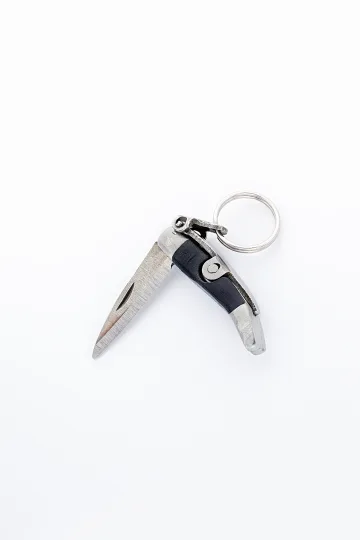


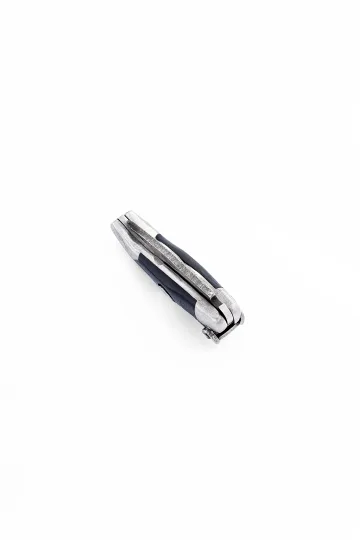

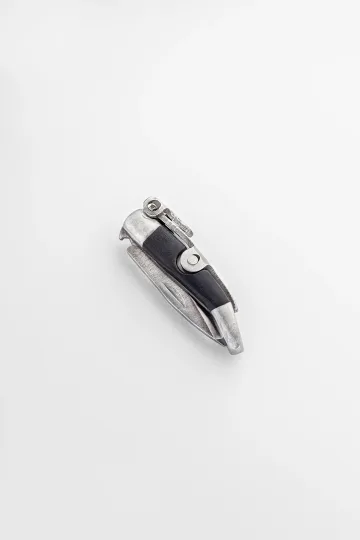







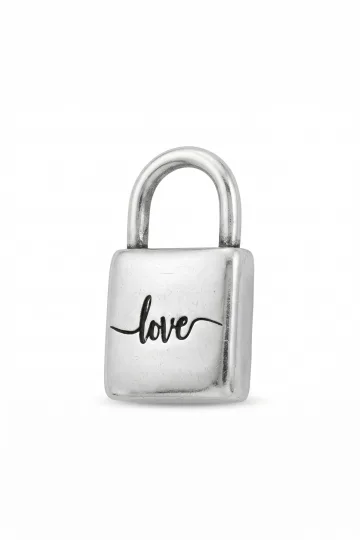
How to hand it over
The box under the tree against the box in your hand
Jewellery is a present unwrapped in front of an audience, and the scene of the handover goes into the memory along with the object. That is what separates it from a book or a jumper: those are opened in passing, a jewellery box is opened in a silence.
A box found under the tree among the rest dissolves into the pile. It gets opened in turn, between two other parcels, and the moment is gone. A box handed over separately is remembered whole, together with whatever was said.
In households with a large number of presents this has produced a practice of its own: the jewellery box does not go into the common heap but is handed over last, once everything else has been opened. The piece does not become more valuable, and it carries noticeably more weight.
What to write on the card
A card that accompanies jewellery differs from an ordinary one in that it has to explain the choice rather than offer good wishes. The wishes will be heard aloud and need no card, while the reason this particular object went to this particular person will never be known unless it is written down.
One line works harder than a paragraph. It is enough to name the reason: why a star, why that stone, where the idea came from. That turns an attractive object into an object with a history, and a history is what makes jewellery get kept for decades.
Engraving does the same thing irreversibly, so it has a rule of its own: a date and initials are safer than a phrase. A phrase can age along with the relationship or simply go out of tone, while a date never ages.
Wear the symbol, don't just read about it. These are in stock:
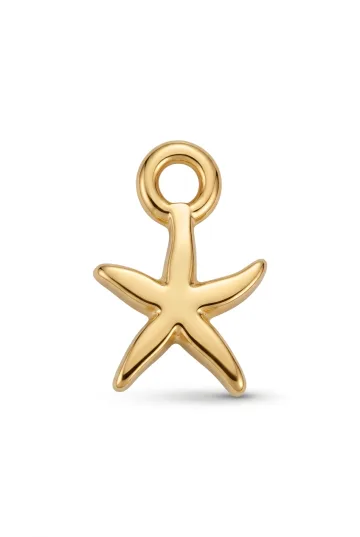
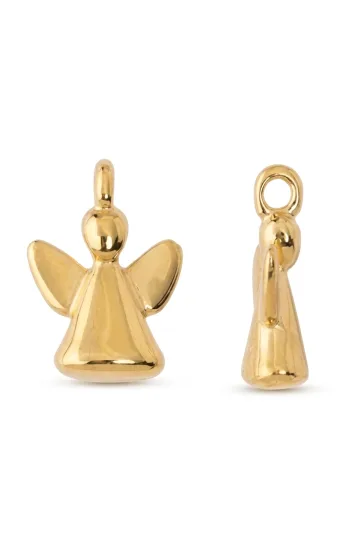


Facts that surprise
The glass bauble became a global product because of an American buyer. Blowing glass balls in Thuringian Lauscha started as a local trade for local trees. What made it an export was Frank Woolworth, who began buying them in quantity for his shops around 1880. The tree ornament went from cottage craft to worldwide commodity in about twenty years.
Riga and Tallinn are still arguing over the first tree. Riga put a memorial stone on its square in 2010 carrying the date 1510, and Tallinn insists on 1441. Both dates refer to the same merchants' Brotherhood of Blackheads, only to different houses of it.
The first Advent wreath had no greenery on it. Wichern in 1839 took a cartwheel and fixed to it as many candles as there were days left from the first Sunday of Advent to Christmas Eve, so that the children could see the waiting shrink and practise counting at the same time. The familiar description with large white candles for Sundays and small red ones for weekdays came later and is poorly supported by the sources. Fir was wound round the wheel only towards 1860, by which time the design had spread through orphanages and schools.
The Christmas market is older than Christmas shopping. Vienna's right to trade in December goes back to a privilege granted by Duke Albert I in 1296, and Munich's Nikolaimarkt is first mentioned in 1310. Neither was a Christmas market in the modern sense: both were general winter markets with no tie to the feast at all. The first one attached to the season is Dresden, granted a one day meat market on the Monday before Christmas in 1434, and it still carries the name of what was sold there, the Striezelmarkt, after the Striezel, ancestor of the stollen.
An ink blot moved the oldest Christmas market fifty years. The earliest evidence for the Nuremberg Christkindlesmarkt was read for decades off a wooden casket about twenty centimetres long, now in the German National Museum, with a dedication on its underside and a date that looked like 1628. The third digit sits under a smear of ink, and the city archive settled the reading by the people rather than by the writing: both women named in the dedication were born later, Regina Susanna Harsdörffer in 1663 and Susanna Eleonora Elbs no earlier than 1651, since her parents married that year. Museum and archive now read the date as 1678.
The red Father Christmas is older than the advertising that gets the credit. The figure was fixed by the draughtsman Thomas Nast from the 1860s, a stout bearded old man in a fur trimmed suit, and the colour was settled by the coloured Christmas cards printed by Louis Prang in the 1870s. Twentieth century advertising carried a finished picture around the world rather than inventing it.
The Nuremberg Christmas angel came out of a goldbeaters' workshop. The Rauschgoldengel is a figure built from brass leaf beaten to the thinnest sheet the trade could produce, a side line of the craft that supplied gold leaf to gilders, and it was sold on the Christmas market rather than made for a church. A festive figure turned out by the people who beat gold for a living is as close as the season comes to a jeweller's object that is not jewellery.
A Sardinian bead is supposed to crack. Local belief holds that su cocu takes the blow: if the evil eye was strong, the stone splits and the wearer is untouched. A cracked bead is not repaired, it is replaced.
The military have been tracking Father Christmas since 1955. It began with a child's telephone call that went to the wrong number and reached the duty officer of an American air defence command centre, who played along. The prettier version, about a misprint in a shop advertisement and a flood of calls, has been told by the service itself since the sixties and is poorly supported. The result, on the other hand, is verifiable every year: the sleigh route is still published, now with a map online.
In Catalonia the presents are beaten out of a log with sticks. The Tió de Nadal is a log with a face painted on it and a red cap, fed with sweets from 8 December and covered with a blanket. On Christmas Eve the children hit it with sticks and sing at it, demanding presents, then look under the blanket and find them.
Iceland gives books on Christmas Eve and then everybody goes off to read. The tradition is called the book flood and started in 1944 for an unromantic reason: wartime imports were restricted on nearly all goods while paper was not rationed, so a book became the one available present. Publishers still release the bulk of their new titles for December.
Portuguese gold is legally its own kind of gold. The Portuguese standard is 19.2 carat, which works out at 800 parts per thousand, and it is a legal national toque in its own right rather than a local approximation of anybody else's. Hallmarking is done by the Contrastaria at the Imprensa Nacional-Casa da Moeda, and gold from 800 upwards is struck with a stag's head. That is why a filigree heart made in the Minho and a piece made two borders away can both be sold as gold and still not be the same metal, which is worth knowing before comparing two December presents by eye.
Wear the symbol, don't just read about it. These are in stock:
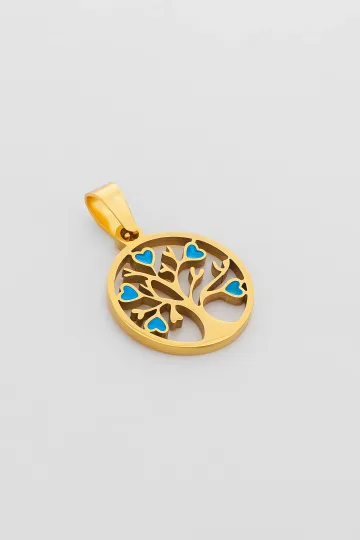
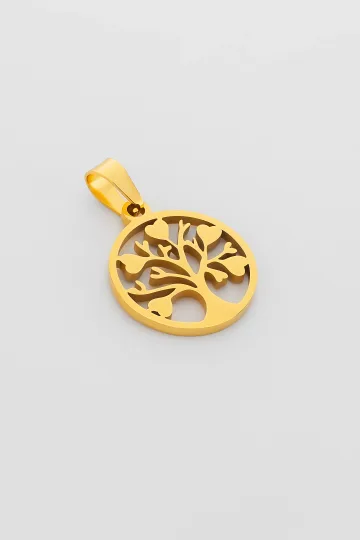


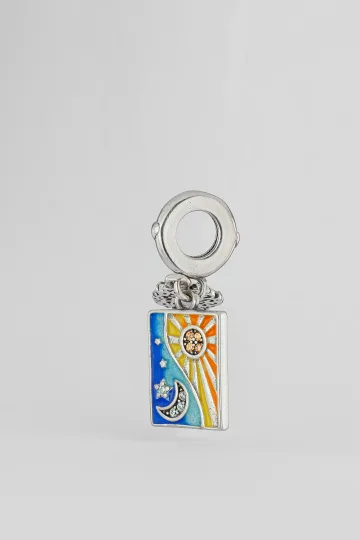
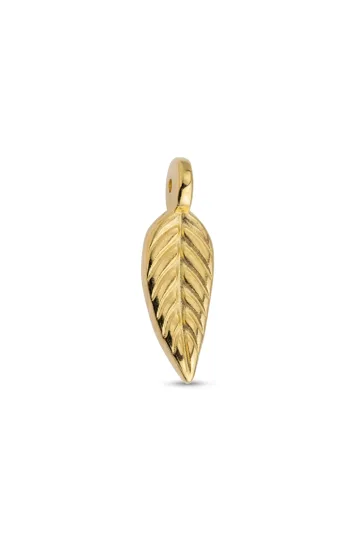
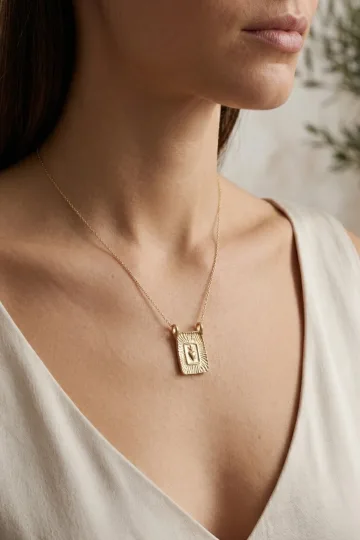
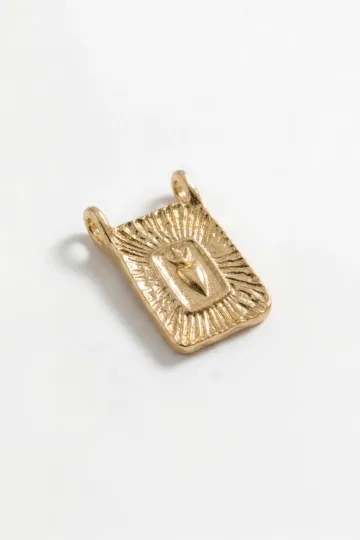
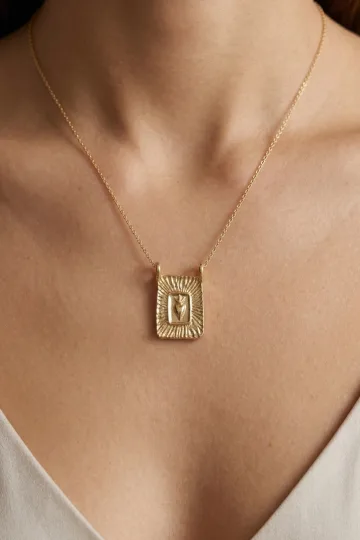
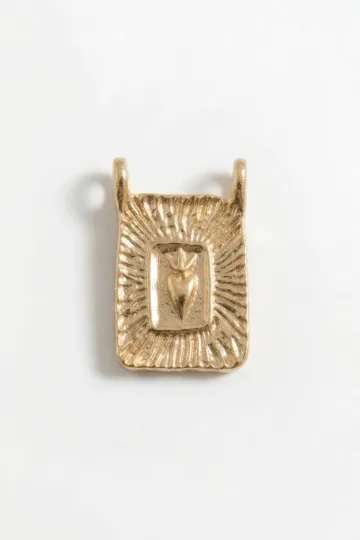
Frequently asked questions
What do I give on a small budget without it looking like a small budget? Ignore the stone and check three places instead, because those are where quality shows at the modest end. The clasp should be grippable between finger and thumb and should close with a definite click. The join between the pendant and the chain should show no visible gap. The back of the piece should be finished the same way as the front. Anything passing those three checks looks dearer than the level it was bought at.
Can I give a woman a ring if no proposal is planned? Who hands it over decides the reading, and the section on types sets that out. What it does not cover is the way out when the ring is already bought: move the handover off the main date, to Boxing Day or to the first days of January, and out of the room where everybody is sitting. A ring that arrives without a witnessed pause stops working as an announcement. There is also a regional exception: in a Spanish or Italian household a ring goes to a goddaughter or a daughter on 6 January without raising an eyebrow, because the giver's role there is godparent rather than suitor.
Do men get given jewellery at Christmas? Yes, and the check worth making before anything else is whether he already wears something every day. A man with a watch, a wedding band or a worn signet has an established habit, and one more piece gets absorbed into it without a decision. A man who wears nothing is being asked to start, and the first wearing would happen in front of an audience on the day, which is the worst possible conditions for it. For him the workable route is a piece with a job to do rather than a piece to be looked at, because a thing that fastens or holds something gets put on without any deliberation about it.
What do you give a man for Christmas if he says he wants nothing?
Buy the better version of something he already uses daily rather than a new category. A signet, a tie bar, cufflinks or a plain bracelet replace an object already in rotation, so nothing has to be adopted. A man who refuses presents is usually refusing the obligation to start using something, not the object itself.
What do you give parents for Christmas?
One shared piece lands better than two small separate ones. Matching plain bands or two pieces in the same metal read as a family present rather than as two purchases made in the same ten minutes. This is also the one case where a piece chosen to be passed on works, and there the plainest design is the strongest.
What do you give friends for Christmas without overdoing it?
Use the reference you already share and keep the scale modest. A friend is easier than family because one shared symbol replaces a whole guess at taste. The mistake is scale rather than choice: a present visibly more expensive than everyone else's at a group exchange embarrasses the recipient instead of pleasing them.
What do I give somebody who does not keep Christmas? Move from the calendar to the meaning. The sun, the tree of life, the open palm, plain geometry: none of those is attached to a date, and the piece does not put the recipient in the position of having been congratulated on somebody else's festival.
How do I wrap jewellery so that it is not guessed in advance? The giveaway is not the box but its weight and its silence. A jewellery box is light and does not rattle, and under a tree that is obvious at the first touch. The fix is simple: put the box inside a larger box with something solid in it. The Dutch have raised this to a genre of its own, where the home made decoy is valued above whatever is inside it.
What if the piece does not fit and saying so would be awkward? That has to be solved before the handover rather than after it. With anything that has a size there are two routes: the measurement is taken in advance from something the person already wears, or you give something that has no size at all. If it has already gone wrong, say so before you fix it. Somebody who has been told the piece can be changed will wear it in the meantime, while somebody left to work it out alone puts it away on the day and never raises the subject again.
Can I hand on a family piece instead of buying? You can, and such a present has something a bought one cannot have by definition, which is its own history. Two conditions apply: the piece has to be cleaned beforehand and its clasp checked, and it needs a text, spoken or on a card, or it is simply an old piece of jewellery.
Earrings or a pendant: which is the safer present? Look at what the person takes off at night. Somebody who never removes their earrings wears them constantly and will take another pair. Somebody who puts everything in a box in the evening wears jewellery by occasion, and a pendant suits them more precisely: no piercing required and nothing to coordinate with what is already on.
Is Boxing Day a reasonable day to give jewellery, or is it second best? It is a deliberate choice rather than a fallback, and the section on Boxing Day above sets out what it trades away. Two things belong here instead. The box has spent a day sitting under the tree being handled, so it wants an outer container that gives nothing away for longer than usual. And the delay wants a sentence to go with it when the box finally appears, because a present that turns up a day late without a word reads as an afterthought, while the same present offered as a held back one reads as a plan.
Put the present together
Pendants, earrings and charms carrying winter and protective symbols.
Wear the symbol, don't just read about it. These are in stock:
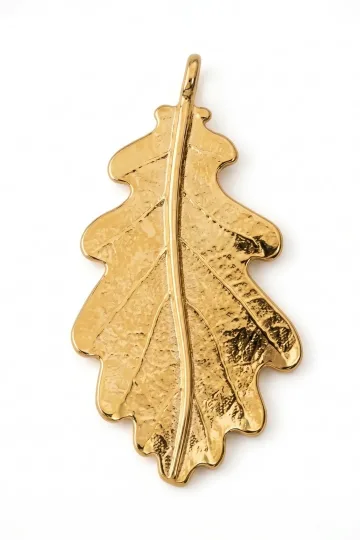
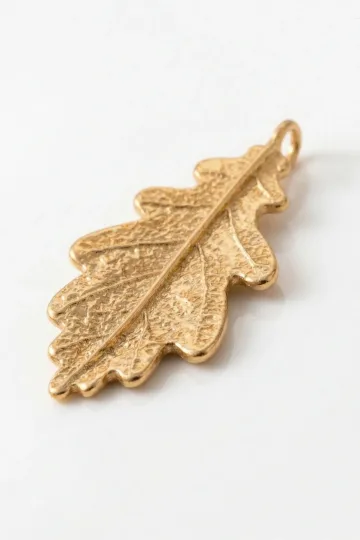
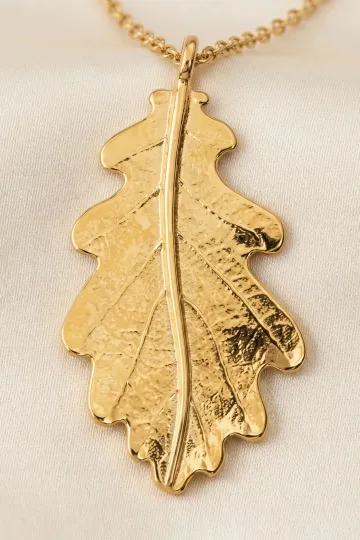
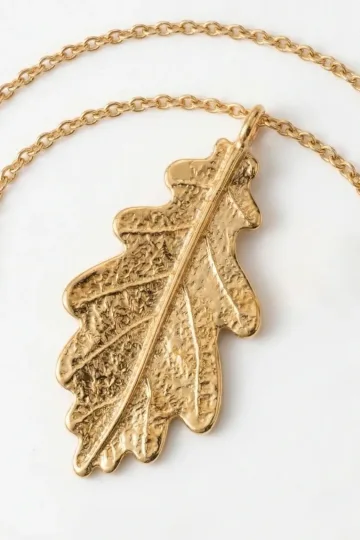
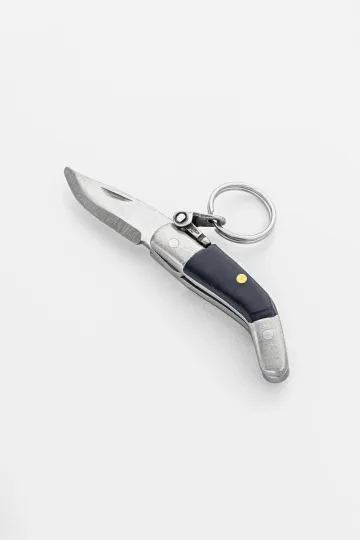

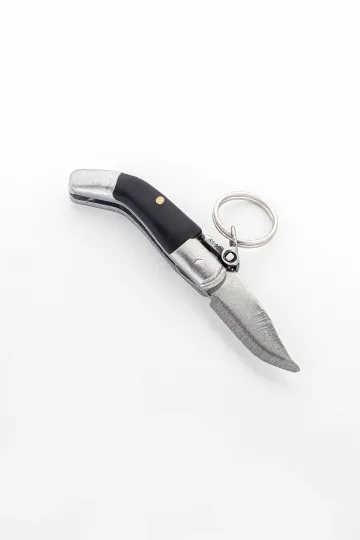
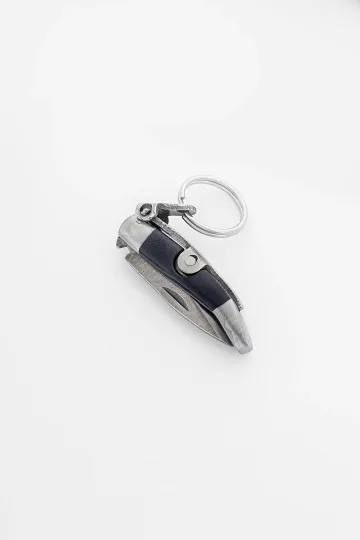



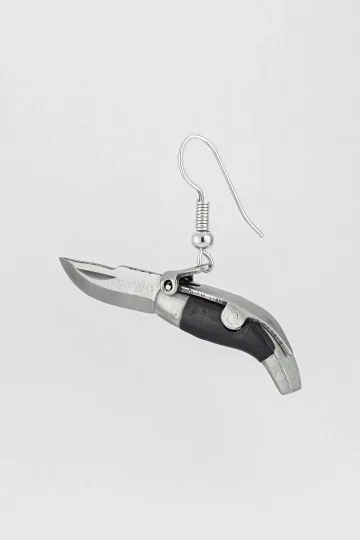


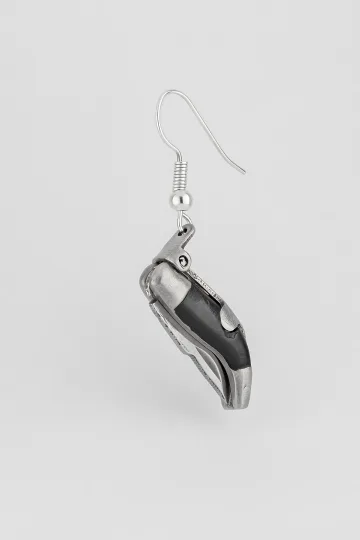

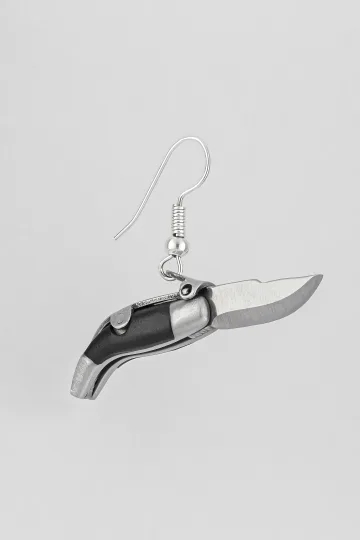

Conclusion
The December present has two extremes and both are still alive: the sugar coal in a January window that is eaten in an evening, and the Whitby jet on a chain that is worn for decades. Jewellery holds its place at the top of the list not because of what it costs but because of the property the coal in the stocking had: it says something specific about the person who chose it, and it says it again every time it is put on.
The rest is settled in advance and without hurry. The type of object follows what you know about the person, the symbol follows the occasion and how welcome a religious frame is, and the order date follows the December post rather than your own calendar. The misses on that list come from the last week that everything was left to, rather than from any shortage of taste.
The wider treatment of presents across every occasion of the year, not December alone, is collected separately in the jewellery gift guide by occasion.
About Zevira
Zevira builds its jewellery around symbols and their histories: protective, seasonal, and the ones carried on a journey. We explain where a sign came from before offering a piece that carries it, because a present with a meaning behind it outlives a present with a pretty picture on it.