Secret Santa and gifts for coworkers: which jewellery works at the office
Put every name in a hat and the odds are close to two in three that somebody pulls out their own. A French mathematician, Pierre Rémond de Montmort, worked that problem out three centuries ago, and the figure barely changes whether the team has eight people or eighty. Office gifting is full of traps like this.
This guide covers three situations that look alike and are not: a present from you to one coworker, a present to a coworker from the whole team, and a present drawn in Secret Santa, where the giver may barely know the person on the slip. Each has its own budget logic, its own margin for error and its own list of safe pieces. The wider picture of presents across the year sits in the jewellery gift guide by occasion, and December deadlines and presents for family are in Christmas gift ideas in jewellery. Here it is only work: colleagues, the draw, the office collection and the etiquette that keeps all of it civil.
The quick answer: jewellery for a coworker
A coworker gets a piece that requires knowing nothing about their body: not a ring size, not whether their ears are pierced, not the chain length they like. That means a necklace sold with its chain, a bracelet on cord or chain, clip-on earrings, and for a colleague you know, a lapel pin. The meaning stays neutral: nature, the sun, the sky, travel. A miniature from the knife-making craft goes only to a colleague you know. The price sits exactly inside what was agreed, never above it and not visibly below. When the whole team is giving and nobody really knows the person's taste, or the colleague works remotely or is leaving, a gift card is the more honest choice. If you are giving on your own and know nothing about their taste, a necklace with the chain included or a bracelet does the job, and in a draw with a small limit, a bracelet or clip-ons. The reasons follow below.
Three rules for any office gift
The first rule is about meaning. A present to a colleague should hint at nothing: not feelings, not faith, not looks, not habits. A heart, a padlock with an inscription, half of a matching pair, a cross, an evil eye charm: each of these will be read as a message, even if you meant nothing at all. Botany, the sun, a star or a map of the world say one thing only, "I thought of you", and stop there.
Wear the symbol, don't just read about it. These are in stock:









The second rule is about cost. At work a present must not put the recipient in your debt. A piece that is clearly dearer than what the office usually spends makes the recipient uncomfortable and irritates everyone who kept to the limit. That is why the upper limit matters more than the lower one.
The third rule is about the body. You do not ask a coworker for their ring size or check whether their ears are pierced. Anything that needs that kind of knowledge drops out on its own: rings, studs chosen blind, a bracelet sized to a wrist you have never measured. What remains are pieces that suit anyone who wears jewellery at all.
What you can learn about a colleague without asking
Three observations narrow the choice, and none of them needs a question. First, earrings. If you see earrings on your colleague every day, earrings are fair game; if you do not, or are not sure, you are left with clip-ons, a bracelet or a necklace. Second, the tone of metal. Look at the watch, the metal glasses frame, the belt buckle, the clasp on the bag: if one tone dominates, silver or gold, a present in the same tone will sit comfortably next to what they already own.
The third observation is how the person treats superstition. If your colleague takes omens seriously, miniature knives and swords are better left for someone else, even though the old belief about sharp gifts transfers poorly to a piece of jewellery. If you have no idea, choose a piece without a blade: in a draw you may be giving to a near stranger, and it is kinder not to make them think about the superstition at all.
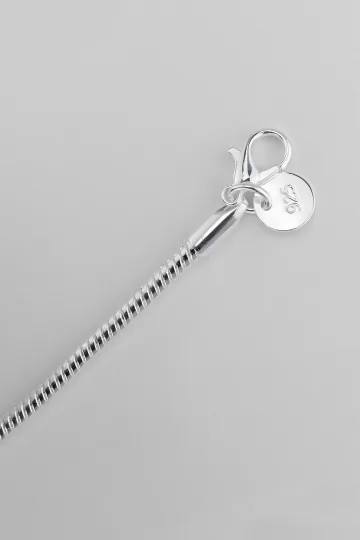
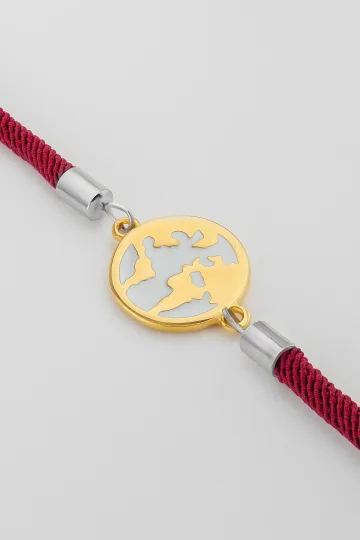
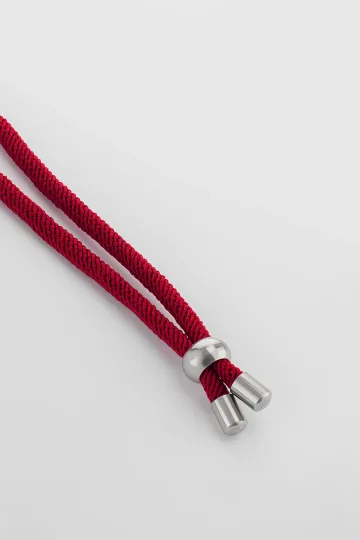
If none of the three answers is available, three pieces remain that need almost no knowledge of the person: a pendant on a chain of neutral length, provided the chain comes with it, clip-on earrings and a bracelet. The pendant asks the least, if the budget reaches it. Clip-ons still leave the question of whether the person wears earrings at all, and a bracelet still has a length. The bracelets meant here are a braided cord with an enamel medallion or a silver-tone chain. Check the length and clasp on the product page, but even a miss is soft: a bracelet is easy to regift or clip onto a bag.
Secret Santa, a gift from the team or a gift from you
"A present for a coworker" covers three different situations, and advice that works for one often fails in the next. The difference lies in who is giving, how well the giver knows the recipient and who sets the budget.
A gift from you to one coworker
This is the riskiest of the three, because there is no group to hide behind. A present from one person to another at work is seen by everyone, and anything more personal than usual raises questions: why her, why that, why from you. A personal present to a colleague therefore needs a clear occasion: the birthday of someone you have worked alongside for years, thanks for help on a hard project, a farewell before they move to another company.
The working test is simple: the present should be something you could hand over in front of the whole floor. If the piece would feel awkward to take out of its box with the desk neighbours watching, it is too personal for a colleague. A navaja pin for someone who came back from Spain talking about the knife makers there, and who laughs at superstitions, passes the test. A heart pendant fails it, whatever the intentions.
The second risk is that a present to one person becomes the measure for the rest. If you give to one colleague on her birthday and not to another, it will be noticed. The way out is to keep one standard: either give to everyone you work closely with, or join the present from the team.
A leaving or birthday gift from the whole team
Here everything flips: the budget is larger, the responsibility is shared and the piece can be more serious. The occasions tend to be bigger than a draw, too: a milestone birthday, a wedding, a new baby, parental leave, a move to another job, retirement. For the last of these there is a separate guide to retirement jewellery, which deals with the team present as well.
A shared present is decided by what the recipient will wear rather than by what would please every contributor. In practice one person who knows the colleague's taste best makes the choice and the rest trust them. If nobody on the team fits that description, a gift card is the wiser form: the recipient chooses, and every name goes on the card.
How to pass the envelope round, who signs the card and what to say at the handover is covered in the guide to a jewellery gift for your boss: the mechanics of a collection are the same whoever receives it.
The Secret Santa draw
The draw changes everything. You give to the person whose name you pulled rather than someone you chose, and that may be somebody from the next department you only nod to in the lift. The limit is fixed in advance and the same for everyone. The recipient does not know who the present is from, at least until the party is over.
That gives the draw its main requirement: the present has to work for a stranger. You do not know whether the person wears earrings, gold or silver, or likes jewellery at all. A well run exchange therefore starts with a wish list: each participant writes a couple of lines about what they like and what they would rather not get. If your office has none, suggest it to the organiser. A single line such as "silver, no pierced ears" removes half the risk.
With no wish list and nobody to ask, the choice has to forgive what you do not know: a bracelet or clip-ons, and if the limit reaches the middle of the range, a necklace sold with its chain. A pin with a blade is a gamble here, because of the superstition discussed further down. For a present to someone whose taste is a complete blank there is a separate guide to a jewellery gift when you are unsure of her taste.
A colleague gets a bracelet or a necklace that comes with its chain, never a bare pendant. A pendant without a chain is homework, not a present.
How to wear jewellery you were given at work
A present from the office exchange is usually worn to work the first time, so the giver can see it in use. Here are the questions that come up at exactly that moment.
Where does a pin go if there is no jacket? On a bag strap, a coat lapel or the lanyard of your pass. I advise against pinning it to fine knitwear: the pin pulls the loops, and within a week the jumper has a mark. If you want it on your clothes, I choose a dense fabric: a denim jacket, a tweed blazer, corduroy.
Earrings and a headset on long calls: do they get in the way? The cup of a headphone presses on whatever sits on the lobe, whether clip-on, stud or small hoop. So on a day of long calls I recommend wearing the present at the neck or the wrist rather than the ears: a necklace over a roll neck, a bracelet under the cuff. On such days I choose earrings whose part on the lobe is flattest and whose shape falls below it, like the monstera leaf on its small stud.
A cord bracelet with a formal suit? Not in a negotiation. Cord and enamel under a shirt cuff belong to Friday and to an office without a dress code. With a suit I recommend a silver-tone chain bracelet: it hides under the cuff and shows only when the hand moves.
You were given gold tone, and your everyday metal is silver. What now? Keep them in separate zones. A gold-tone necklace at the neck and silver earrings get along when the face sits between them. One wrist is harder: there I put together a look in one metal and move the second bracelet to the other wrist.
A necklace over a roll neck or under a shirt collar? Over a roll neck, if the pendant is larger than a fingernail: on smooth knit it becomes the main detail. Under a shirt collar with one button open I choose a shorter length, so the pendant sits at the collarbone rather than hiding behind the placket.

Turn on your camera, pick earrings, a pendant or a ring, and see the piece on yourself in real time.
Switch items in one tap.
Everything runs in your browser: no photo or video is ever uploaded.
How work became a place for presents
Secret Santa is a present between equals. In the older records the present at work travels one way, down from whoever paid to whoever served, and the rules of the modern office exchange make more sense once you see what they replaced.
Christmas boxes for apprentices in Pepys's London
On 19 December 1663 Samuel Pepys noted in his diary that he had paid his shoemaker and put something into the boys' box for Christmas, meaning the collection box kept by the apprentices of the workshop. The Christmas box for apprentices and servants was a custom in which the person higher up did the giving, and the diarist records it among his errands as a matter of course, next to settling a bill. The Christmas box is one of the explanations offered for the name of Boxing Day, though where that name really comes from remains an open question, discussed in Christmas gift ideas in jewellery.
Look at who is missing from Pepys's entry. The shoemaker is paid and the boys' box receives something from a customer, and that is the only direction a present takes in the entry. A present passed between the apprentices themselves does not appear, and that is the gap the office draw would fill much later, with a slip of paper deciding who gives to whom.
A brooch from the emperor: an office gift in gold
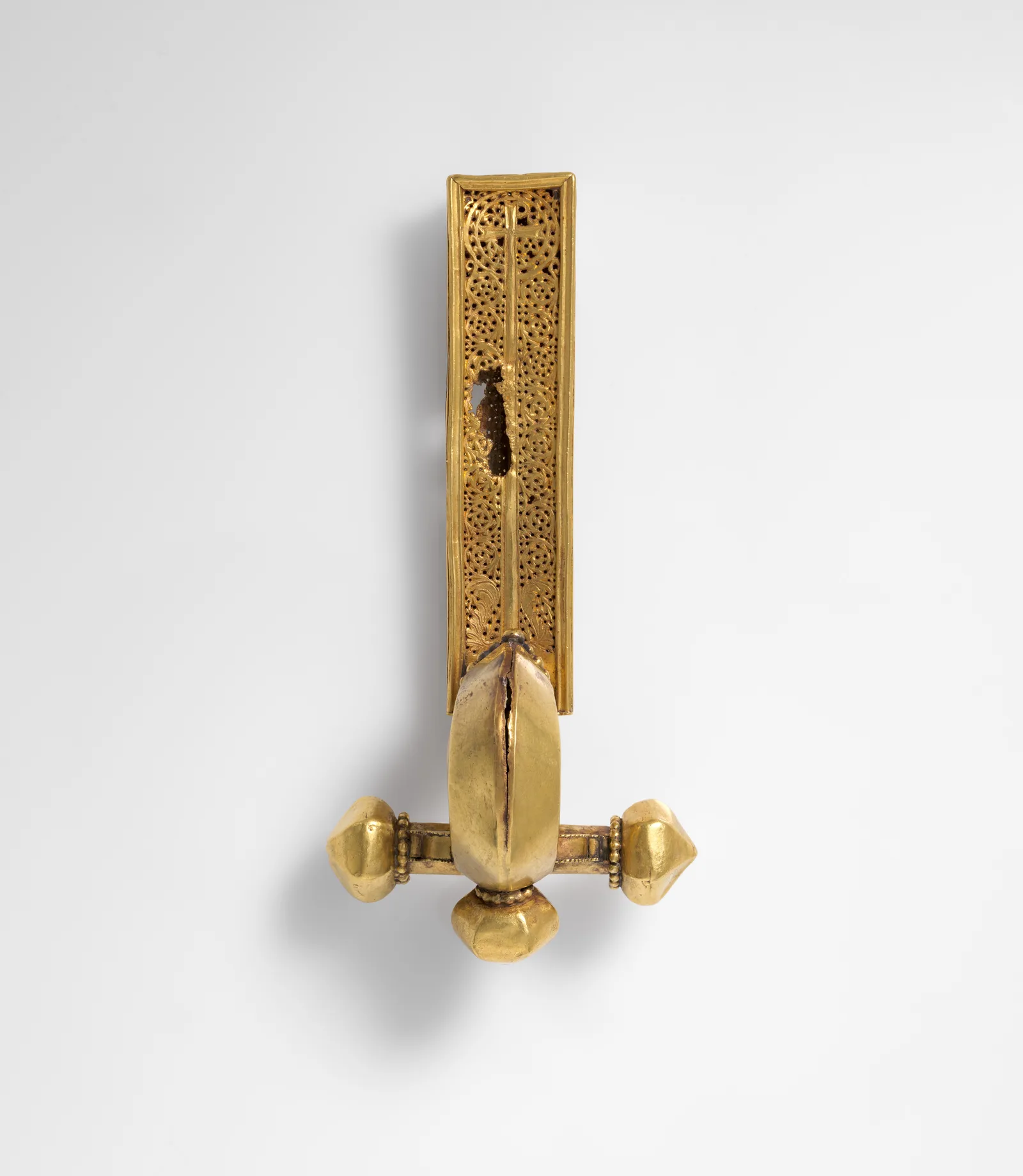
The vertical present is far older than Pepys. In the late Roman Empire officials and soldiers in the emperor's service fastened their cloaks at the shoulder with a particular brooch, a fibula with three knobs on its crossbar, which is called a crossbow brooch after its shape. Such brooches were made in imperial workshops and presented to high ranking members of the imperial circle, and the metal and the size marked the wearer's rank.
It was a present from the employer and a badge of office in the same object, and anyone who met the wearer could read his standing from his shoulder.
That is the opposite of everything Secret Santa is built to do. The Roman brooch fixed a hierarchy in metal and made it visible. The office draw hides who gave what precisely so that nobody's position can be read from the present.
Fezziwig's ball and Bob Cratchit's day off
Dickens, in "A Christmas Carol" of 1843, shows both faces of the employer's Christmas. Old Fezziwig stops work on Christmas Eve, clears the warehouse and throws a ball for his apprentices, among them the young Scrooge. The grown Scrooge, by contrast, grudgingly lets his clerk Bob Cratchit have Christmas Day off.
Both scenes are about a master and those who work for him. Neither contains colleagues exchanging presents: the clerks and apprentices celebrate, but the giving comes from above. Read today, the two scenes mark out the ground the office exchange later had to cover, a party given by the boss on one side and, on the other, a present between equals that nobody in the story thought to arrange.
Customer reviews
Zevira is a real jewellery shop. Genuine payments, deliveries and customer thank-yous.
🥰🥰🥰 gracias

Ok, ¡gracias! 🙂

Secret Santa rules that keep the exchange fair
The office draw looks like a game with no rules beyond "buy something". In practice every detail, from the hat to the anonymity to the fixed limit, solves a specific problem, and knowing the problem makes it easier to run.
Why somebody always draws their own name
The probability in the first line of this guide is no joke. In 1708 Pierre Rémond de Montmort published in Paris his "Essay d'analyse sur les jeux de hazard" and analysed a card game called treize, "thirteen": the player turns cards one by one while counting aloud, and the question is whether the number on a card ever matches the count. He published the general solution in the second edition of 1713, almost at the same time as Nicolaus Bernoulli. It is the same problem as a hat full of names: a card matching its count is a person drawing themselves.
The answer is unexpected. The probability that nobody draws their own name quickly settles near 1/e, about 0.368, and then hardly moves. With three people at least one match happens 67% of the time, with four 62.5%, and from six people onward it sits steadily at about 63%. A team of eight and a company of eighty face the same chance of a redraw.
The practical conclusion for the organiser: do not hope it will not happen. There are two honest fixes. The first is that when someone draws themselves, everyone returns their slips and the whole group draws again, because swapping two slips reveals who has whom. The second is sturdier: the organiser shuffles the list of participants, and each person gives to the next name down, with the last giving to the first. A chain built that way cannot let anyone draw themselves, and a plain spreadsheet will do it.
Why anonymity cancels the debt
In 1925 the French anthropologist Marcel Mauss published "The Gift" and described three obligations that hold gift exchange together in the societies he studied: to give, to receive and to give back. In that logic a present is never free. It creates a debt, and the recipient feels it even when the giver expects nothing.
In 1971 the psychologist Dennis Regan showed how strong that debt is. A participant sat next to a planted "partner" who, unasked, brought him a bottle of cola during a break and later asked him to buy raffle tickets. Those who had received the cola bought almost twice as many tickets as those who had received nothing. And the favour worked even when the partner behaved unpleasantly: liking stopped mattering, and the debt remained.
Secret Santa sidesteps the trap by design. You give to one person and receive from another, and nobody knows whom they owe. The debt goes to the circle as a whole rather than to one colleague, so it weighs on nobody. That is also why the equal limit matters so much: an expensive present breaks the design, because it creates a personal debt exactly where there should be none.
Wish lists, sign-up and opting out
The draw works only when everyone in it wants to be there. Participation should be voluntary, and the organiser collects names from those who opt in rather than enrolling the whole floor. Anyone who would rather not take part says so before the draw, politely and without explanations about money, and then stays out of the gift talk so the rest are not left wondering.
The wish list is the second piece of machinery, and it matters more for jewellery than for anything else. A line on metal tone, pierced ears and "no charms, please" turns a blind purchase into an informed one, and it spares the recipient a piece they will never wear. If the company pays for the presents rather than the staff, how that is treated is a question for HR or payroll rather than for the organiser's guesswork.
Upload a photo of your pet, someone you love, or an object. We'll build a 3D model and hand-cast it in pewter.




What the exchange is called around the world
In the United States and Britain the game is Secret Santa, and the name hides how many others it has. There is no documented origin for the custom, and every country has its own word, sometimes borrowed from the neighbours.
Mikołajki: the Polish draw on Saint Nicholas's day
In Poland the draw is often tied to 6 December, the feast of Saint Nicholas. Mikołajki are held in school classes and at work: a losowanie, a draw, takes place in advance, and each person prepares a small present for the name they pulled, often within an agreed sum.
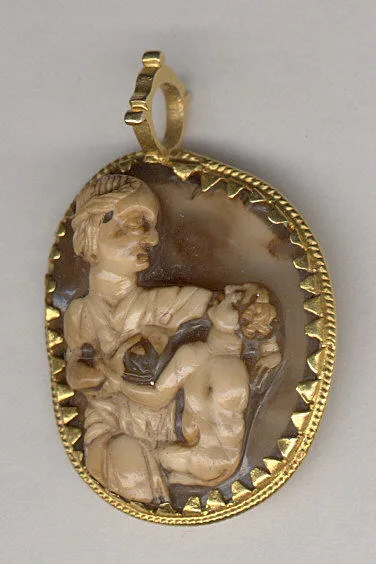
The date is no accident. Nicholas of Myra is the secret giver of European legend, and his feast is the natural day for a game in which nobody signs their present. The legend of the three bags of gold dropped through a window at night is told in Christmas gift ideas in jewellery. One thing is worth adding here: a medieval cameo carved with a scene from his life is now in the Metropolitan Museum of Art.
The scene on that cameo is an odd one to put on jewellery. According to his life, the infant Nicholas took the breast only once a day on Wednesdays and Fridays, and in the Middle Ages the story served as an example of restraint. For an office present the lesson is gentler than the saint's: the good secret giver is the one who holds back.
Kris Kindle, Kris Kringle and Pollyanna
Even in English, Secret Santa is not the only name. In Australia and Canada the same game is called Kris Kringle, and in Ireland Kris Kindle. Both come from the German Christkindl, the Christ Child who brings presents to children in southern Germany and Austria, by way of the Pennsylvania German Christ-kinkle. A German bringer of gifts became the name of an office game.
An unexpected name survives in Pennsylvania and around Philadelphia, including southern New Jersey: there the gift draw is called a Pollyanna. The Dictionary of American Regional English records the usage, taken from Eleanor Porter's 1913 novel "Pollyanna", about a girl who finds something to be glad about in everything. Pollyanna clubs in churches are mentioned from 1916, and the "Pollyanna gift exchange" appears in local newspapers from roughly the late 1940s. Why the game took the heroine's name has never been established.
Wichteln and Julklapp in Germany
In Germany the draw is called Wichteln. The DWDS dictionary defines it as drawing lots within a group to decide who gives whom a usually small Christmas present. The word comes from Wichtel, the little house sprite of German folk tales.
In the north-east and north-west of Germany a second word is used for the same exchange, Julklapp, borrowed from Swedish at some point in the eighteenth century. The Swedish story behind it, with a knock on the door and a parcel thrown into the room, belongs to December as a whole and is told in the Christmas guide linked above. In a German office in the north you may hear both words and they mean one game.
Engerl und Bengerl: an Austrian angel in Advent
The Austrian version stretches the exchange over weeks. The Engerl, "little angel", is the secret giver; the Bengerl is the one being looked after, the recipient. Names are drawn in Advent, at school, at work or in a club, and for days or weeks the little angel leaves small attentions for their charge: a note, a sweet, a trifle on the desk. The recipient does not learn for a long time who is behind them.
For jewellery it is a useful model. A small piece delivered secretly in the middle of such an exchange feels like a discovery rather than a compulsory part of a party. A bracelet left on a keyboard with a note is remembered far better than the same bracelet in a pile of boxes under the office tree.
Amigo invisible, amigo secreto and amigo oculto
In Spain the game is amigo invisible, the invisible friend. In Spanish speaking Latin America it is usually amigo secreto, the secret friend. In Brazil the name depends on the city: amigo secreto in São Paulo, amigo oculto, the hidden friend, in Rio de Janeiro and Belo Horizonte.
None of these names mentions Santa or Christmas at all; the figure in them is a friend rather than a festive character. Italy and France went the other way and kept the Christmas giver in the name: Italians say Babbo Natale segreto, the French Père Noël secret, and in offices in both countries the English Secret Santa is common too.
Pikkujoulu: the Finnish party before Christmas
In Finland the office exchange usually sits inside pikkujoulu, "little Christmas": the parties that companies, organisations, clubs and groups of friends hold in November and December. The custom has its roots in nineteenth century Advent celebrations, and in the 1920s and 1930s students turned them into lively parties. After the war pikkujoulu spread across the whole country, and today nearly every workplace holds its own.
For a present drawn by lot, that has a practical consequence. The party takes place weeks before the holiday itself, and a colleague is celebrated among colleagues, separately from family Christmas. The office Christmas party in Britain and the holiday party in the States follow the same logic, which is why the present from the draw does not need to compete with presents from home. It only needs to be a pleasant sign rather than the main thing of the season.
Oseibo and giri choco: Japan's presents of obligation
Japan developed a highly formal culture of the working present. In early December, roughly until the twentieth, people give oseibo: presents to bosses, clients, mentors and anyone they owe for the past year. In summer the same thing happens again under the name ochugen. It is not a sign of personal affection but upkeep of a relationship.
A separate Japanese form is giri choco, "obligation chocolate". On Valentine's Day women give it to male colleagues and bosses, and nobody takes it for a declaration, because giri means precisely duty, obligation. The office present, in other words, serves the relationship rather than anyone's taste, and a piece of jewellery for a colleague passes the Japanese test if it could be given in front of everyone and nobody would see more in it than courtesy.





Secret Santa or White Elephant: which game suits jewellery
American offices often run a second game alongside or instead of Secret Santa: White Elephant, in which wrapped presents go into a common pile and can be stolen from one player by another. Its name carries a legend worth untangling, and the choice between the two games decides whether jewellery belongs in the pile at all.
The white elephant legend that does not hold up
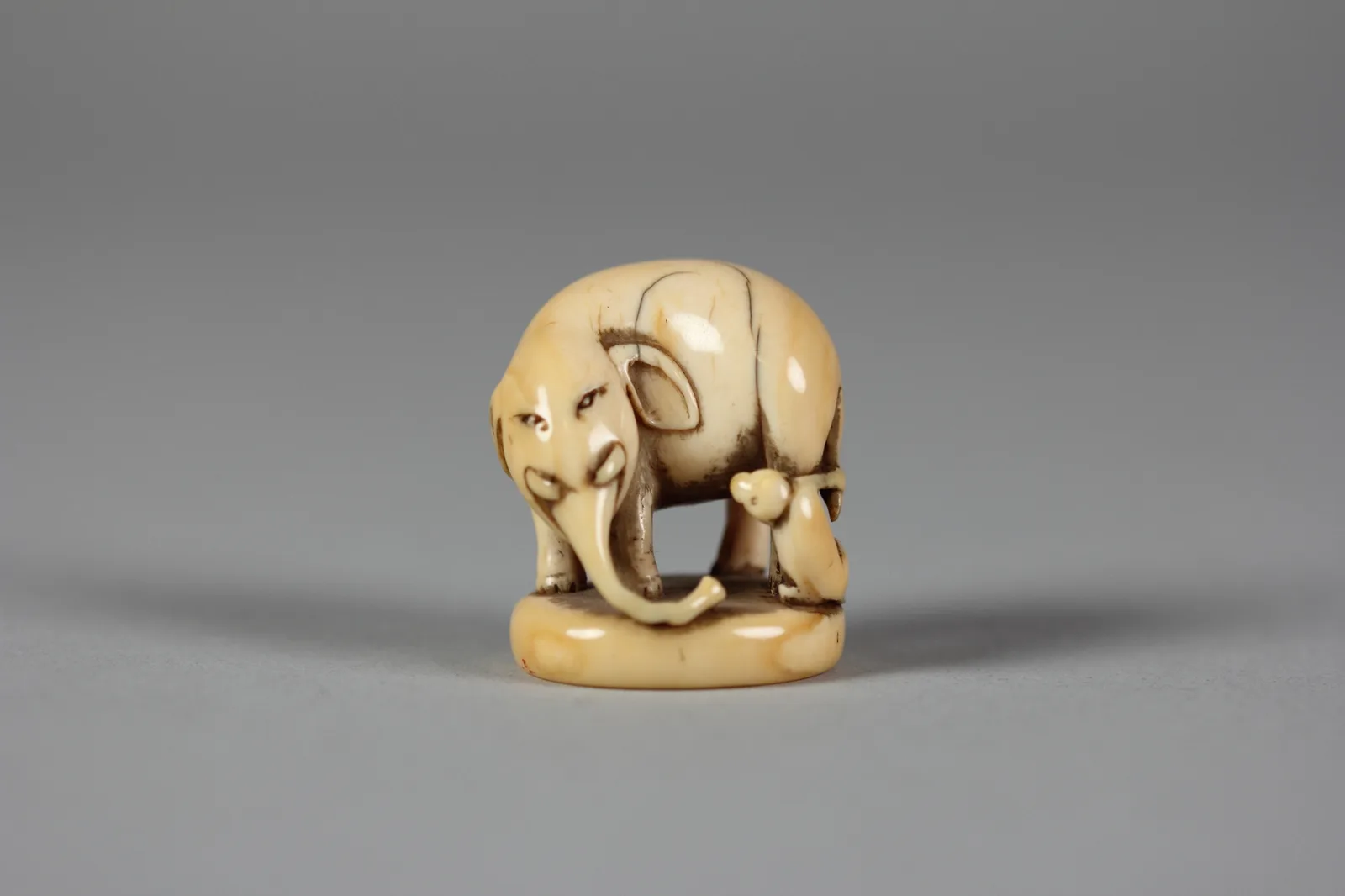
The name White Elephant comes from the expression for an expensive, useless possession that can be neither used nor thrown away. English has had it in that sense since 1721. The popular explanation says that the kings of Siam gave white elephants to courtiers who displeased them, so that the cost of keeping the animal would ruin them.
It is a legend with no historical evidence behind it. A white elephant in Siam was a sacred animal of the royal court and a sign of power rather than a punishment. When kings did part with such elephants, it was in dealings with other rulers, not as revenge on courtiers who had fallen out of favour.
The legend is a good story about a present that burdens the recipient, and that is the one thing an office present must never do. A jewellery present that forces the recipient to buy a chain, find a size or explain a symbol is a small white elephant of its own.
How White Elephant works and why jewellery struggles in it
In a White Elephant exchange every participant brings one wrapped present to a common pile. People take turns: each either unwraps a new present or steals one already opened from someone else. The fun lies in the trading and in going home with the strangest object of the evening, which is why the presents tend to be novelties that anybody could end up with.
For jewellery the stealing game is a poor fit. A piece that is passed from hand to hand and tried on in front of everyone loses its intimacy, and it cannot be chosen for a particular person because nobody knows who will end up with it. If your office plays White Elephant, keep jewellery for Secret Santa and put something into the pile that anyone at all could take home.
Yankee swap and Dirty Santa: one game, several names
The same game goes by other names: Yankee swap, Dirty Santa, and a long list of joke variants. The first of these has a long history outside the party game. Walt Whitman, in the preface to the first edition of "Leaves of Grass" in 1855, listed "the Yankee swap" among the things he considered quintessentially American, between the labour saving machinery of the factories and the New York firemen. Nothing in his list suggests a party game; the phrase later found a new home in one where swapping is the whole point.
"Dirty" in Dirty Santa refers to the stealing, which is exactly the part that makes jewellery awkward. Whatever the local name, the rule for a jewellery present is the same: it belongs in a game where the giver chooses for one person, not in a game where the room decides who keeps it.
CAPAORA mini knife pendant
The 18th-century Spanish navaja in miniature: 40 mm of stainless steel, a real folding mechanism and a Palanquilla lock that clicks. An affordable gift to remember.
Authentic · Ships from Spain · 14-day returns
Secret Santa budget: how much to spend and what fits
The limit in Secret Santa is a rule of the game rather than a suggestion. It is broken less often than the other rules, and when it is broken it shows the most.
Who sets the limit and why you never go over
The organiser sets the limit, or the group votes on it, and it is the same for every participant. It is usually pegged to what anyone on the team can spend without effort, the newest junior included. That matters: a draw in which some people spend more than they are comfortable with stops being a celebration.
The urge to go over comes from good intentions, and the result is poor. The recipient of a present clearly dearer than the others feels exactly the debt Mauss described, only now it is personal: they cannot return it, because they do not know whom to thank, or they do know and realise they could never match it. And those who kept to the limit look mean next to your box.
Coming in under the limit is also a mistake, but it can be fixed: a modest piece can always be lifted by a handwritten card or good wrapping. An expensive piece cannot be made cheaper.
A small limit: is jewellery possible at all
The honest answer depends on the level agreed. If the limit is the price of a box of chocolates or a mug with a slogan, metal jewellery usually does not fit without big compromises on material. A piece bought only to squeeze under the limit ends up a worse present than a good tin of tea.
If the limit is the price of lunch in a decent café, jewellery becomes realistic. At Zevira that is the entry range of the catalogue: earrings and clip-ons in gold-plated steel, bracelets on braided cord with enamel medallions, silver-tone chain bracelets, pins from the Forja Española collection. For a draw that level is ideal: the piece looks like a considered present and still does not stand out from the rest. The catch is that all the pins in that range carry a blade, a navaja or a sword, so for a random recipient the entry range really means clip-ons or a bracelet, and earrings only when the wish list says the ears are pierced.
At this level the material decides whether the piece outlives the season, and every product page lists it in the specifications: base metal, plating, inlay. Gold-plated stainless steel, plain steel, enamel and braided cord are what the entry range of the catalogue is made of, and it is worth reading that line before the colour of the photograph.
A higher limit: room for something more
Some teams run the draw with a limit closer to a dinner out, usually small teams who have worked together for a long time. That opens the middle of the range: necklaces with an enamel pendant on a chain, and the knife pendants of the Forja Española collection, miniature navajas and machetes in steel. For a random recipient only the necklaces from that group are suitable. A knife pendant is sold as a pendant without a chain and carries a blade, so it is a present for a colleague you know, who wears a chain of their own and is relaxed about superstitions.
Even in a generous draw, sterling silver 925 and pieces in precious metal are better kept for the team present. A serious piece drawn by lot may land with somebody you barely know, and a serious present is always about knowing the recipient. The logic of choosing something with real weight to it is set out in the guide to the gift for someone who has everything.
Jewellery that works as a gift for a coworker
Below are the pieces that pass all three rules of an office present, with what to check before buying each one.
A lapel pin for a jacket, bag or lanyard
A pin is by nature a workmanlike kind of jewellery, and it has a long career in service. A cloak brooch in Rome, a badge on a lapel in the twentieth century, an ID on a lanyard today: all of them are worn over clothing and none touches the skin. That is why a pin is never too personal.
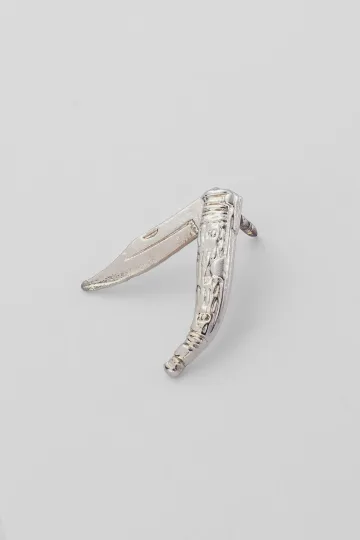
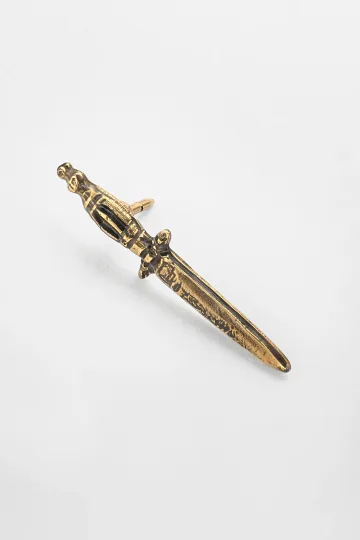
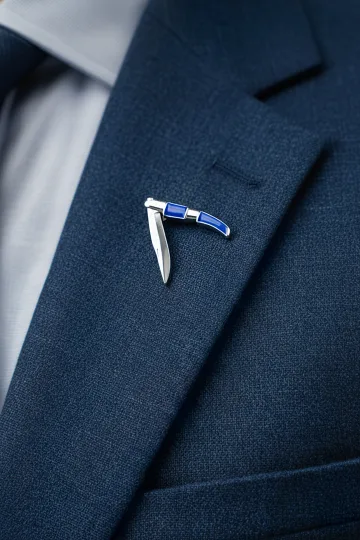
The Forja Española collection has three pins. The first is a miniature navaja whose handle reproduces the grain of olive wood, the traditional handle material of Albacete navajas. The second is a navaja in blue and silver enamel, which stands out better on dark cloth. The third is a sword with a detailed crossguard and pommel in antiqued silver. All three go on a jacket lapel, a bag strap, a backpack or a cap.
The pin's great advantage is that it suits a man or a woman equally, and even someone who wears no jewellery at all, since it can live on a bag or a lanyard. The caveat is the shape: all three pins are miniature weapons, and the blade brings with it the old belief about giving knives. On a lapel a small knife reads as a sign of craft rather than a weapon, and the belief transfers poorly to jewellery. In a draw, though, you do not know how superstitious the recipient is, so a pin suits a colleague you know who cares about craft or history, while a random recipient is better off with something that has no blade.
Earrings, only when you know
Earrings go to a colleague on one condition: you know for certain that the ears are pierced and that earrings are worn. You do not need to ask for that; seeing the person every day is enough.
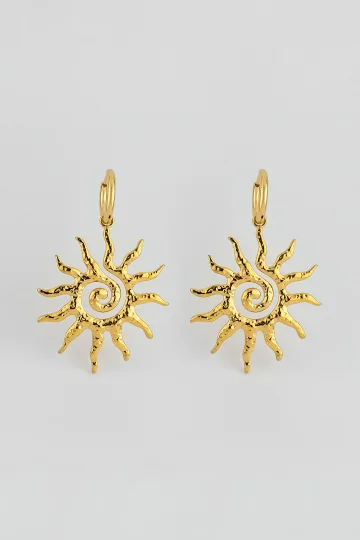
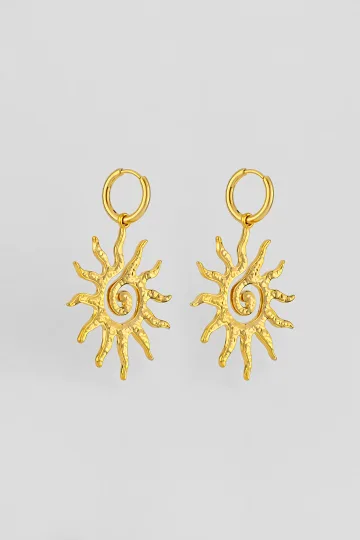
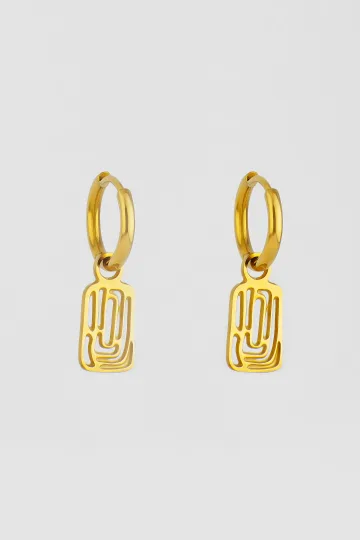
From the catalogue, earrings in gold-plated stainless steel with clear motifs suit such a present: a solar spiral, a labyrinth, a monstera leaf. They read as jewellery with character rather than as a valuable, so they keep to the office standard. They are also earrings with a visible shape, so they are for someone who wears more than tiny studs: look at what your colleague has on now and stay at that scale.
Clip-on earrings when you are not sure
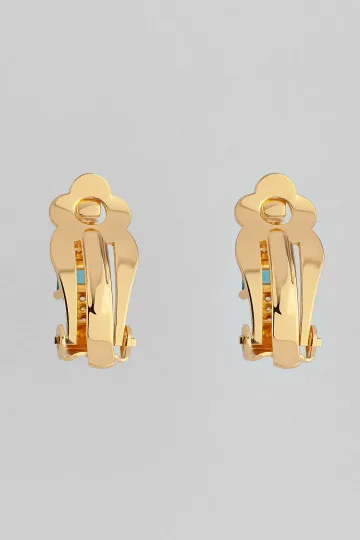
If there is any doubt about pierced ears, clip-ons solve it. The Gema de invierno clip-on earrings, a blue stone framed with cubic zirconia, hold to the lobe with a clip and need no piercing. They look like ordinary earrings, and someone with pierced ears can wear them just as easily.
The stone is not a precious one; it is a coloured setting in gold-plated steel and reads as colour rather than value, which is right for an office present. For a draw where all you know about the recipient is that she works in the next department, clip-ons are fairer than studs picked blind. If the wish list mentions pierced ears, you are back in the previous section and the choice widens.
A bracelet on cord or chain
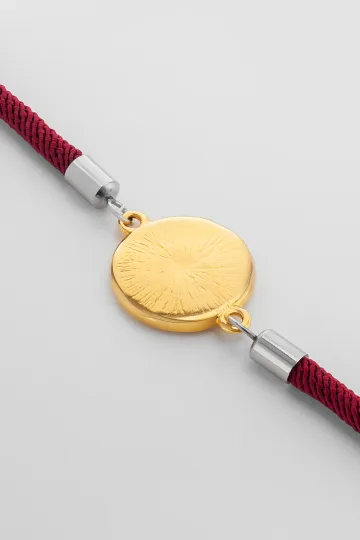
A bracelet on braided cord with an enamel medallion is a present with character that is hard to get wrong. The catalogue has several, and one fits a colleague best: the World Map bracelet, whose description speaks of travel, freedom and openness to the world and promises no protection. Its neighbours on cord carry heavier symbols: the Breath of Gaia is described as a talisman of growth and protection, and the whale tail of Sea Echo stands for freedom and protection, and a protective meaning at work needs the same knowledge of the person as any charm. Cord reads as casual, so it suits an office without a strict dress code and anyone who loves to travel.
For a formal office a silver-tone chain bracelet works better, for instance the Astral Chain in a snake weave. It can be worn alone or carry a charm. Its product text mentions that chain bracelets were once worn as protective ornaments, but that is a note on the history of the genre rather than a promise made by this bracelet, and nobody could read a hint into a smooth chain. Before buying any bracelet, check its length and clasp on the product page: you do not know the wrist size, and you need to see how forgiving the piece is.
A necklace that comes with its chain
A common mistake in a jewellery present for a colleague is a pendant without a chain. For someone close that is fine, since you know which chain they wear. For a colleague it is homework: they have to find a chain of the right length and metal, and the present may never leave its box.
So on the product page look at how the piece is named, what the specifications say and what the photographs show. The Guardian Star and All-Seeing Eye necklaces come with a chain whose length adjusts; the exact figures are on the product page. The separate pendants list no chain, and they are just that, pendants. Where nothing is said about a chain, the photographs help: the Mystical Dance necklace is shown on them with a chain, clasp and extender. For a colleague, choose a piece that arrives complete.
There is one caveat. The necklaces whose chain is spelled out in the specifications are described in the catalogue as amulets: a guardian star, a nazar eye. Those are symbols with a protective meaning, and they come up again below. For a colleague whose view of charms you do not know, a sky motif with no protective role is the calmer choice, which is the sun and moon of the Mystical Dance.
Secret Santa ideas for a male coworker
For a male colleague the choice is narrower and more reliable. First comes the pin: on a suit jacket, a laptop bag, a coat. Second, a bracelet on cord, if the office has no strict dress code, or a silver-tone chain under a shirt cuff if it does. Third, for someone who already wears a pendant: the Forja Española knife pendants, miniature navajas and machetes in steel. That is a piece for someone interested in knife making who knows how a navaja differs from an ordinary folding knife.
A knife pendant is worth giving only if you know the man wears something around his neck at all. If you do not, a pin carries the same interest in craft without the question of a chain. The pin has a blade too, so both are presents for a colleague whose calm attitude to superstition you know. More on choosing for men and matching their style is in the guide to jewellery gifts for men.
Leave your email, we'll send your discount code. No spam, unsubscribe anytime.
The code arrives by email, valid on your first order.
What not to give a coworker
The list of things to avoid is shorter than it seems, but each item needs a reason, because they are broken with the best of intentions.
Rings and anything that needs a size
A ring is not given to a colleague, by draw or in person, for two reasons. The first is practical: you do not know the size, and guessing it is close to impossible. The second is about meaning: a ring is a heavily loaded kind of jewellery. It is given at an engagement, a wedding, an anniversary, and a colleague who receives one will inevitably wonder what you meant.
There is one exception, and it proves the rule: a present from the whole team for retirement. There a signet ring engraved with the name of the organisation and the dates reads as a sign of service rather than a hint, and the size can be found out through family. That scenario is covered in the guide to retirement jewellery.
Hearts, padlocks and matching pieces
A heart, a padlock with an inscription, halves of a matching pendant, initials: all of that is the language of romance. At work it creates ambiguity even where the intentions are entirely simple. The recipient ends up thinking about what you meant rather than about the present.
The rule holds between colleagues of the same sex and in long friendships alike. If you really are friends with a colleague outside work, a heart can be a birthday present away from the office. In an office exchange, no.
Religious symbols and protective charms
Two groups need separating here. The first is symbols of faith: a cross, a saint's medal, the Saint Benedict medal. They speak of a denomination, and at work they can be given only to someone who already wears them. The second is protective charms: the hamsa, the nazar eye, the cornicello horn. Their meaning is kind, a wish for luck and protection, and a charm handed over as a wish for luck is usually taken calmly even by sceptics. That advice, though, applies to a present for someone you know, handed over in person with a word about what it means.
In a draw there will be no such word. The present is anonymous, and there is nobody to explain that the nazar is a wish for good luck rather than a comment on someone's envy. So for a random recipient charms stay on the shelf, and for a colleague you know they are fine if you know the symbol means something to them. When in doubt, choose botany, sky motifs or travel: they have no denomination and no second reading. How amulets and talismans are read in different traditions is set out in the guide to protection amulets and talismans.
The in-joke
Jewellery with a sense of humour, paper clips, scissors, office motifs, can make an excellent present for a colleague, but only if the joke is shared. A joke about someone's habit of running late or their love of coffee, understood by the two of you, reads in a group exchange as mockery, and the recipient will laugh through gritted teeth.
The rule for a funny present is that it is funny to everyone who sees it and hurts nobody. Office motifs in jewellery and their history are covered in the guide to office jewellery and the art of dry humour.
Knives, swords and the superstition about sharp gifts
A knife as a present has a bad name: by the old belief a blade "cuts" the friendship. As the guide to superstitions explains, the belief is hardly applied to jewellery shaped like a knife, since a pendant or pin of that kind reads as a charm and a sign of craft rather than a weapon. At work, though, you do not know which of your colleagues takes such things seriously. A navaja pin, a sword pin or a knife pendant is right when you know the recipient and their interest in craft; in a draw, where the recipient is random, a piece without a blade is the calmer choice.
If you do give a sharp shape, there is an old way out: the recipient hands the giver a coin, and the piece counts as bought rather than given. In Secret Santa, where the giver is unknown, the trick cannot work, which is one more reason to keep the blade for a colleague you know. The origin of the belief and the ways round it are covered in what not to give as a gift.
Gift cards for coworkers: when a card beats a piece
A gift card is often seen as a cop-out, and in a personal present to someone close it sometimes is. Between colleagues of equal standing the picture is different: there a card is often more accurate than an object. The one exception is the boss. A card from the team to a manager is easy to read as a pay-off, so the team gives a real piece instead, for reasons set out in the guide to a jewellery gift for your boss.
When a gift card is the better choice
In 1993 the economist Joel Waldfogel surveyed Yale students about their holiday presents and estimated that between a tenth and a third of the value of the presents was lost: recipients valued them below what had been paid. Friends and partners chose most accurately, grandparents noticeably worse. A colleague usually sits closer to the second group: you know their working habits, not their jewellery box.
That gives four situations where a card beats an object. First, a present from the whole team when nobody knows the recipient's taste. Second, a colleague who works remotely and whom you have only seen on video calls. Third, a farewell, when someone leaves for parental leave or a new job and will be choosing for a life you know nothing about. Fourth, a colleague whose taste is known and particular, so that anything "roughly in their style" will fall short of what they would pick themselves.
How the Zevira gift certificate works
The Zevira gift certificate is electronic, so there is no delivery to wait for. The recipient's name, the name of the giver or the team, and a message are printed on the certificate itself; the fields are filled in on the product page before payment. The finished PDF arrives in the buyer's inbox straight after payment, so the certificate can be given the same day, even if the party is that evening.
It can be spent on anything in the online catalogue. It is valid for 24 months from issue, and if the purchase comes to less than its value, the balance stays on the code to be used later. For a team present that is convenient: the colleague does not have to decide at once and loses nothing by choosing a more modest piece.
The certificate comes in a single value, and that settles when it fits. It is sized for a substantial present, not for a draw with a small limit.
Why a certificate does not suit a small draw
The value of the certificate is well above the usual Secret Santa limit. If your draw is set at the price of a café lunch, a certificate would break the main rule of the game: it would be worth more than every other present, and the recipient would be left in exactly the position of a debtor. In a draw, a certificate only fits when the limit is comparable with its value.
For an ordinary draw the answer is a piece from the entry range: a bracelet or clip-ons, and earrings if the wish list mentions pierced ears. The certificate stays where it works best: a present from the team, paid for by everyone's contributions, and a present to a colleague with whom you share more than a draw.
Giving a gift card so it does not feel like an afterthought
An electronic certificate is easy to turn into something you can hold. Print the PDF on heavy paper, put it in an envelope and write the name by hand. At the party that envelope is handed over like a box and does not get lost among the other presents.
For a remote colleague the PDF can be sent during a team video call, when everyone is present, with a few words from the team. That gives the present a moment of its own instead of arriving silently in an inbox.
There is also a detail givers forget. The consumer researchers Mary Steffel, Elanor Williams and Robyn LeBoeuf found that givers underestimate how long a recipient holds on to a gift card: in one of their studies 18% of recipients had not yet spent the card they were given, while givers expected that of only 3%. And the narrower the range of things a card can buy, the longer it sits unspent. So tell your colleague the certificate lasts two years and any balance stays on the code for that whole period, and a couple of months later ask in passing whether they have chosen anything. That is not pushiness; it is the rest of the present.
Handing it over: wrapping, the reveal and remote colleagues
Giving a present at work differs from giving at home: there is an audience, there are rules of play, and often there is no chance to explain the present in person.
Wrapping and the gift tag in Secret Santa
In Secret Santa the tag carries the recipient's name, not yours. The wrapping should be neutral and give no clue to the giver: if the whole team knows you love brown paper with botanical prints, use something else. Put the jewellery in its own box or pouch inside, so it does not vanish into the tissue paper.
With jewellery it is worth adding a small card about the piece: what it is made of and how to care for it. The recipient cannot ask you what metal the pin is or whether the cord bracelet can get wet, because they do not know who you are. Two lines on a card answer the question and show that the piece was chosen with thought.
Do you reveal yourself in Secret Santa?
That is settled by the rules of the game rather than by each player. In some offices the secret is kept for good, in others everyone owns up at the end of the party, and in others the giver stays invisible for weeks, as in the Austrian game of little angels. What matters is that there is one rule for everyone, agreed in advance.
If there is no rule, the default is to stay hidden. The secret spares both sides: if the present misses, the recipient does not have to perform delight in front of you. If it lands, they may tell the whole office about it, and you get to hear that as a bystander.
When the recipient works remotely
A remote participant in the draw is a separate task. The present has to go by post or courier, which needs an address, and asking the colleague directly gives you away. It is better if the organiser collects addresses, with everyone's consent, and passes them to the givers.
Delivery takes time, so order for a remote colleague earlier than for the people in the office. If the time has run out, an electronic certificate solves the problem, but only if the draw limit is comparable with its value. Otherwise it is fairer to tell the organiser and send the present late, with a note explaining why.
When the present disappoints or cost less than yours
If you received a present you do not like, the etiquette is simple: say thank you and do not discuss it. You do not know who gave it, and any remark may reach them. A piece you will not wear can be regifted outside work, where nobody will recognise it.
If your present was clearly dearer than the one you received, that is on you rather than on the giver: you went over the limit and they kept to it. If yours was cheaper, someone else went over. In either case the best thing to do is not to compare anything out loud.
Send a friend a discount code, they save on their first order.
Jewellery, a gift card or something edible: a comparison
Jewellery is not the only way to mark a colleague's occasion, and an honest comparison shows when it really is the best choice.
Jewellery or chocolate and coffee
Chocolates, good tea and coffee beans are a safe present at work. They cannot be the wrong size, they carry no meaning and they are easy to share with the team. Safety has a price, though: such a present is eaten within a week and forgotten within a month.
Jewellery is remembered longer. A pin on a bag or a bracelet on a wrist brings the present back to mind every time it is put on. So jewellery wins where the present should last: a colleague you have worked with for years, a farewell, a milestone. Sweets win where the present should be light: a draw across a big department in which you do not know the recipient at all.
If the choice is truly hard, combine them: a bar of good chocolate and a cord bracelet in the same box. The piece stays, and the sweet part makes the handover festive.
The same present for everyone or different ones
A team leader, or simply a generous colleague, sometimes wants to give something to everyone they work with. The main decision is identical pieces or different ones.
Identical presents remove comparison: nobody wonders why she got earrings and I got a pin. But they are impersonal, and it shows. Different presents show attention to each person but risk someone deciding theirs is the lesser one.
The middle way works best: pieces from one line, one level and one price, but different motifs. For instance, bracelets at the same price: the world map on cord for the one who travels, the silver-tone snake chain for those who dress more formally. If every colleague is relaxed about superstition and fond of history, the pins of one collection do the same thing: a navaja, a sword, a navaja in enamel. Each gets their own, and nobody senses a difference in regard.
A draw or a team collection
Sometimes a team decides for itself how to celebrate: run a draw or pool money for a present for each person. For the December exchange in a large group the draw is more convenient: everyone prepares one present instead of one for each colleague, and the amounts are equal.
For one colleague's personal occasion, a birthday, a farewell, a milestone, the draw does not work: one person receives and everyone gives. That calls for a shared present, and this is exactly where a certificate shows its strength: the team's contributions pay for it, and the certificate carries the team's name or the names of those giving it.
Facts that surprise about office gift giving
Grandparents miss the mark by a wide margin. In Waldfogel's survey, recipients valued presents from grandparents at roughly 63% of what had been paid. And grandparents gave more than two fifths of their presents as cash.
Recipients find an "anything" card more thoughtful than givers imagine. In the same research on gift cards, Steffel, Williams and LeBoeuf asked which card to choose: one for the recipient's favourite shop or a general one. Givers chose the store card 65% of the time; recipients would have preferred it in only 26% of cases. And 45% of recipients, against just 18% of givers, called the general card the more thoughtful present. The giver thinks a specific shop shows knowledge of taste; the recipient values the freedom more.
The Germans have a draw for unwanted things. Schrottwichteln, "junk Wichteln", is an exchange in which people give a deliberately disliked, tasteless or useless but working object from home. Often there is a die involved, and the presents move from one player to another as it is rolled.
Kings went to war over white elephants. In 1563 the Burmese king Bayinnaung demanded two white elephants from the king of Siam, was refused and used the refusal as a pretext for invasion. The conflict is known as the war over the white elephants: the animal that legend says was handed out to unwanted courtiers was in fact reason enough to march an army.
Gift cards resell below face value. In 2007 the economist Jennifer Offenberg compared the face values of gift cards with the prices they fetched when resold in online auctions and found a discount of about 15%.
The word for the Christmas box is four centuries old. "Christmas box" already appears in Cotgrave's French and English dictionary of 1611, and the Oxford English Dictionary first finds "Boxing Day" in 1743, in the Old Bailey proceedings. Its definition makes the working present part of the holiday itself: the day on which tradespeople and workers received presents or tips from customers and employers.
Buying it as a gift? Each one arrives ready to give.
 A branded Zevira box and a little card come with every order.










Frequently asked questions
How much should you spend on Secret Santa at work? An amount any participant can spend without effort, the most junior member of staff included. The organiser or a group vote sets it in advance, and it is the same for everyone. At the price of a box of chocolates, metal jewellery usually does not fit. At the price of a café lunch, the entry range fits: earrings and clip-ons, bracelets, and for a colleague you know, a pin. Necklaces that come with their chain sit a step higher and suit a draw with a bigger limit.
Is jewellery an appropriate gift for a coworker? Yes, if the piece needs no knowledge of the person's body and carries no personal meaning. A bracelet, clip-ons or a necklace sold with its chain are fine in any office, and a pin with a miniature blade for a colleague whose view of superstition you know. Rings, hearts and matching pieces never fit a colleague (the one exception is a signet ring from the whole team at retirement); religious symbols only for someone who already wears them.
Is a gift card a good present for a colleague? It fits a present from the whole team, a remote colleague, a farewell and someone with particular taste. It does not fit a draw with a small limit: the value of the certificate is higher, and it breaks the rule of equal presents.
What do you get a male coworker for Secret Santa? A silver-tone chain bracelet under the cuff, or a cord bracelet if the office has no strict dress code. A navaja or sword pin for the lapel and a Forja Española knife pendant suit a man who cares about craft and shrugs off the superstition about sharp gifts, though not in a draw, where the recipient might be superstitious.
What happens if you draw your own name in Secret Santa? Tell the organiser, and everyone returns their slips and draws again. Swapping with a neighbour does not work: you would each learn whom the other is buying for. The more reliable fix is to draw by chain from the start, or through an online name generator that rules the match out.
Do you have to reveal yourself in Secret Santa? That is decided by the rules of the game, one rule for all. If nothing was agreed, it is better to stay hidden: the secret spares the recipient from acting delighted if the present missed.
Do you have to take part in office Secret Santa? No, taking part should be voluntary. If you would rather not, say so before the draw, calmly and without talking about money. Then stay out of the conversations about presents, so nobody is left feeling awkward.
What is the difference between Secret Santa and White Elephant? In Secret Santa each person draws one name and chooses a present for that person, in secret. In White Elephant everyone brings a wrapped present to a pile, and players take turns opening a new one or stealing an opened one. Jewellery belongs in the first game, not the second.
A present for a colleague that lands
Pins, cord bracelets, necklaces that come with their chain and a gift certificate for the whole catalogue.
Wear the symbol, don't just read about it. These are in stock:





Conclusion
An office present rests on three rules: a neutral meaning, a price inside what was agreed, and a piece that needs no knowledge of the person's body. Everything else, from choosing between a pin and a bracelet to deciding whether to reveal yourself, follows from them. Secret Santa adds its own: an equal limit, anonymity and a fair draw, which mathematicians have known how to calculate since 1713.
Jewellery beats sweets where the present should last, and a certificate beats jewellery where the whole team is giving and nobody knows the colleague's taste, where the colleague works remotely or is leaving, which is to say where there is nobody to choose the piece. If someone on the team does know the recipient's taste, the shared present can be a piece too. In a draw with a small limit, a bracelet and clip-ons take its place. For a present handed over one to one to someone whose taste you cannot read, see the jewellery gift when you are unsure of her taste, and for a colleague who seems to own everything already, the gift for someone who has everything.
About Zevira
Zevira builds its jewellery around shapes and symbols with a history: miniatures of the Spanish knife-making craft, botanical and celestial motifs, sterling silver 925. For a present where the recipient's taste is unknown, there is an electronic named gift certificate for the whole catalogue, so the choice stays with the person being celebrated.