Jewellery gifts under $50: how to choose an affordable piece that looks expensive
Givers are sure that a dearer present earns more thanks. Recipients are not. Francis Flynn and Gabrielle Adams tested that belief in three studies published in 2009, and the link between price and gratitude turned up only on the giver's side. On a small budget the sum is rarely what fails. The choice is.
The receipt stays with the buyer. The piece goes to the recipient, who can only guess what it cost but sees at once how it was made: how the metal catches the light, whether the clasp closes cleanly, whether the two earrings of a pair really match, whether the skin under a bracelet stays its own colour. None of that depends on money. It depends on knowing where to look, and this guide takes it in order: the pieces that give the most, the materials, the test in the hand, the people a modest present suits and the way it is handed over.
Is a cheap jewellery gift tacky? What gift research says
The question behind every search for an affordable present is the same: will they notice I did not spend much, and will it sting? Research on gift giving has a fairly clear answer, and it is kinder to the giver than the giver expects. Two findings in particular change how a small budget should be spent, and both are worth knowing before you open a single shop page.
Why givers think dearer means better
Flynn and Adams published their work in the Journal of Experimental Social Psychology, and they traced the gap to the way givers read their own spending. To the person paying, the figure on the receipt feels like a measure of care, as if the sum reported how much thought went into the choice. Givers in their studies expected a pricier present to be appreciated more. Recipients showed no such link: what they received did not feel more welcome because it had cost more.
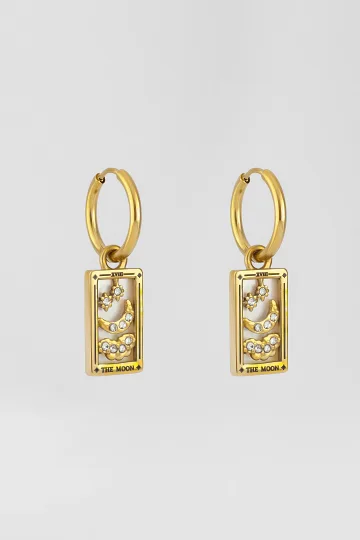
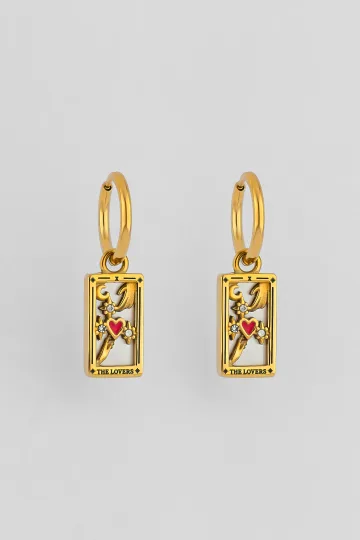
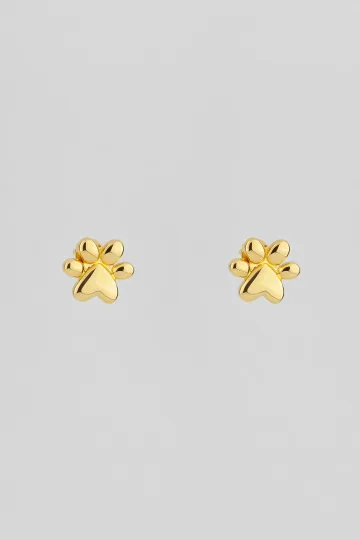
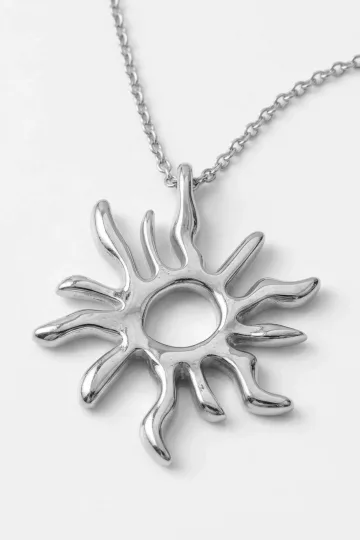
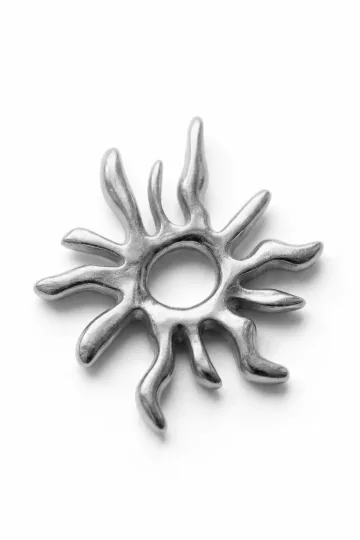
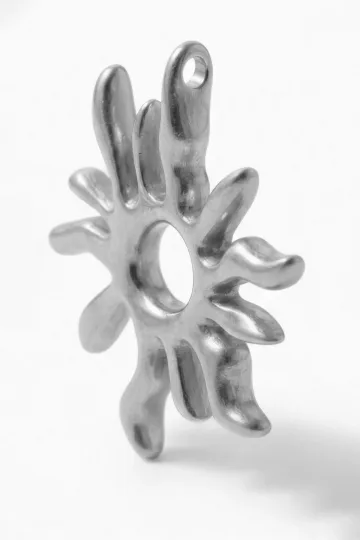
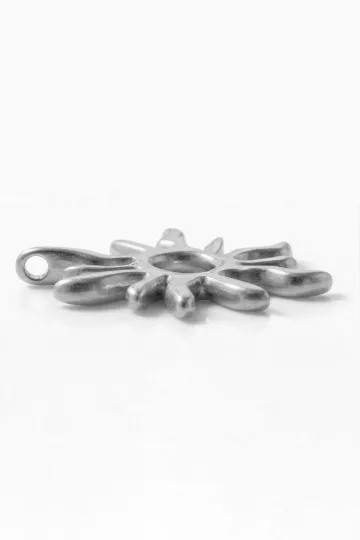
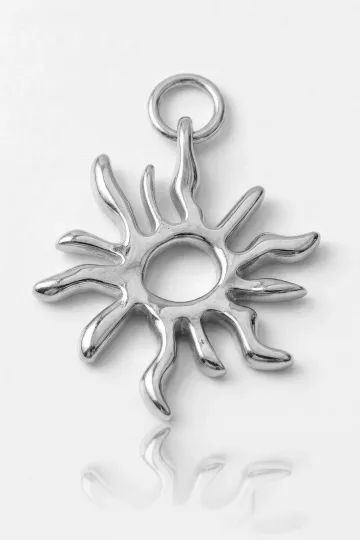
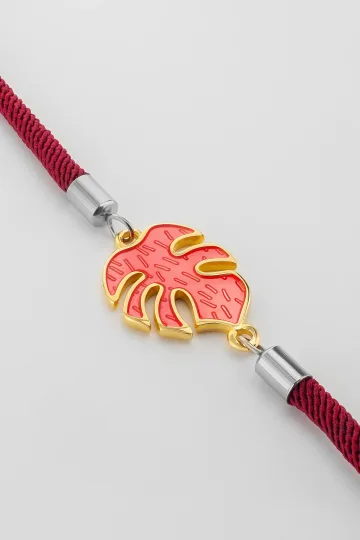
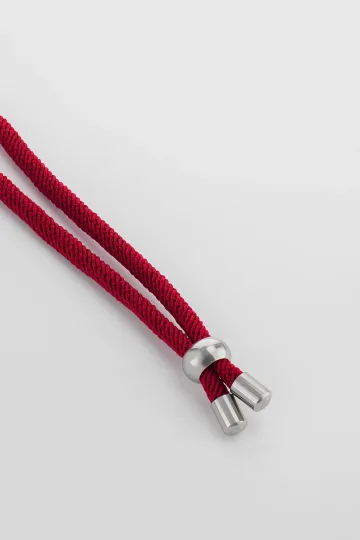
Wear the symbol, don't just read about it. These are in stock:


That mismatch matters to anyone shopping under a firm limit. It means the worry about looking stingy lives mostly in the giver's head. The recipient is judging something else: whether the piece suits them, whether it feels considered, whether it will be worn. All three can be met at a modest price, and all three can be missed at a lavish one. The work of a small budget is to put the money where the recipient will actually look.
Opening the box versus months of wear
Seven years after Flynn and Adams, Jeff Galak, Julian Givi and Elanor Williams described a second blind spot. While choosing, the giver pictures the moment of opening: the face over the box, the small gasp, the photograph. The recipient thinks about what comes after, once the occasion is forgotten and the object either joins daily life or does not.
For jewellery this is close to an instruction. A pair of plain studs that goes in every Monday beats a dramatic necklace that waits in a drawer for an occasion that never comes, even if the necklace looked better on the day it was unwrapped. The research turns the shopping question round: not "will this impress?" but "will this be worn?". Measuring wearability instead of price is the habit that makes a small budget work, and the rest of this guide follows from it.
How much is "modest": the budget in everyday terms
The title names a ceiling because that is what people search for; the body gives no prices, on purpose. Prices differ between the United States and Britain, between cities and between seasons, and any number printed here would age quickly. It is easier to measure in ordinary things. A modest jewellery gift costs about what two people spend on a cinema trip with snacks, or on a takeaway dinner on a Friday night, or on a new hardback and a bunch of flowers to go with it.
That band holds sterling silver in small pieces, gold-plated stainless steel, gold-plated brass, enamel, cubic zirconia, mother-of-pearl and the natural stones that are mined in quantity. Solid gold does not fit, so gold colour here comes from plating, and there is no point pretending otherwise.
The trap of this band is that quality inside it varies more than price does. Two pendants side by side with the same tag can age in completely different ways: one keeps its face, the other wears through on the edge. The difference sits in the plating, the base and the clasp, and it can be seen once you know where to look.
What the recipient sees first
Jewellery is judged from two distances. The first is conversation distance: from there you see the outline, the colour of the metal and the way the piece sits on the person. The second is hand distance, when the recipient holds the gift after opening the box. From there you see the clasp, the edges, the finish of the enamel and how evenly the plating lies.
A modest present has to pass both. From afar it is saved by a simple shape and the right metal tone for the skin and the wardrobe. Up close it is saved by careful work: smooth edges without burrs, neat joins, a clasp that closes with a click rather than a shove. An expensive piece with a poor clasp fails the close test exactly as a cheap one does.
So the money in this band should go on the details that are seen up close, not on size. A small piece made carefully beats a large one made carelessly. The signs that give cheapness away at a glance, such as too much sparkle or a crooked setting, are laid out in our guide to Christmas jewellery gifts; this article stays with what lasts after the wrapping paper is gone.
Which jewellery gives the most for a small budget
Every type of jewellery carries its own cost of getting it wrong. On a small budget the winners are pieces that need no size, pieces visible at conversation distance and pieces that do not rub against things all day long. Here is how each type scores on those three counts.
Stud earrings
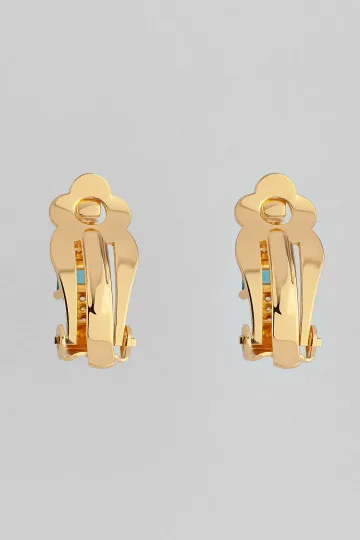
Studs have a quiet advantage in this band: their plating hardly rubs. The front of a stud sits in the air and touches nothing, so even a thin gold layer lasts longer on a stud than on a ring or a bracelet. The only part that works hard is the post, and its metal matters more than the metal of the whole earring.
Hence the rule for choosing: pay for the post, not for the size of the front. A small stud on a steel or titanium post with a firm back will serve longer than a large one on a post of unknown alloy. Gold-plated steel and sterling silver both work well for studs in this budget, and enamel on a stud also lasts well, because nothing knocks it.
Studs also sit by the face, which means they are seen in every conversation and every photograph. That makes them one of the few pieces in this band that is noticed far more often than its size suggests. How to pick earrings when the recipient's taste is a mystery is covered in the article on choosing a jewellery gift when you are unsure of their taste.
A pendant on a chain
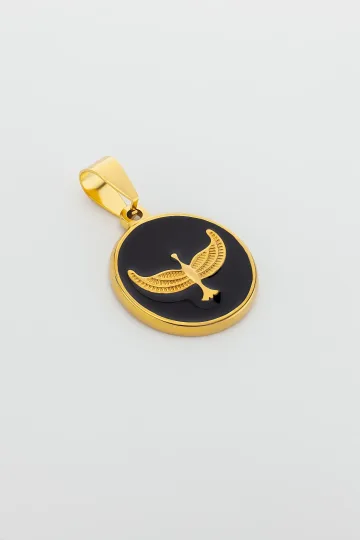
A pendant suits a small budget because the pendant itself barely rubs, so here you can afford brass with detailed relief that would be a poor idea on a ring or bracelet. The shape can also carry meaning: a symbol, a letter, a motif from nature. Meaning adds value that is not in the metal.
The risk lives in the chain. If one comes with the pendant, check it separately, because on inexpensive pieces the chain is often weaker than the pendant and gives way first. Some pendants are sold on their own, without any chain. Give one of those only to someone you know already owns a chain that suits it.
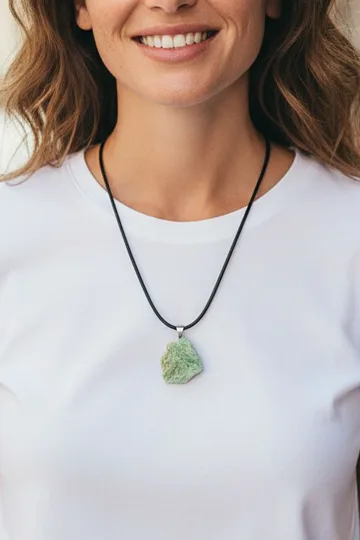
A medium chain length is the safest guess: the pendant lies near the collarbones, works with both round and V necklines and still shows at an open shirt collar.
A bracelet on cord or chain
A bracelet in a small budget needs a strict choice of material, because it rubs all day: against the desk, the keyboard, the strap of a bag. Its reward is that the recipient sees it constantly, when writing, typing or holding a cup. A good bracelet is remembered often, and a poor one is noticed just as often.
Its weak point is size. A braided cord with a sliding knot solves that, and so does a chain with an extender. A rigid bangle with no adjustment is a gamble unless you know the wrist. As for metal, stainless steel, or a cord carrying a small metal charm, copes with daily rubbing better than brass under thin plating.
A ring: the riskiest choice in a small budget
A ring needs a size on any budget, but at the modest end it has two more problems. It rubs harder than anything else, so thin plating on a ring wears first, starting on the underside of the band, where it meets the neighbouring fingers and everything the hand picks up. And a plated ring takes resizing badly: the jeweller's work damages the layer, so a ring that does not fit is harder to put right than a solid one.
If a ring is clearly the right present, material lowers the risk: steel holds plating better than brass, and solid sterling silver has nothing to wear off at all. How to work out a ring size is explained in the ring size guide.
If the size cannot be found, move the idea into a pendant. The same symbol on a chain removes both the size question and the friction problem, and keeps whatever the ring was meant to say.
A brooch or a lapel pin
The brooch is underrated in this budget for a material reason: it barely touches skin and hardly rubs. Nickel does not matter to it, sweat does not reach it, and plating wears, if anywhere, on the pin. That lets a brooch or a lapel pin be the most detailed and colourful piece in the band, with enamel and relief, without fear for the finish.
It suits people who dress with details: jackets, heavy coats, scarves, a canvas bag that could take a pin on the strap. For someone who lives in sportswear it will end up in a drawer.
Check the fastening before buying: the pin should enter the catch firmly, and a rotating safety catch should lock. A brooch that opens on the move is lost without a trace.
A charm for a bracelet they already wear
If the person already wears a charm bracelet or a chain they hang things on, a single charm or bead is a gift that goes straight into use. It is small, inexpensive and it says you noticed what they already wear.
There is one condition: compatibility. A bead's hole has to fit the bracelet, and a charm's fitting has to fit the links. When in doubt, choose a charm on an opening jump ring, which hangs almost anywhere.
Material is simple here: match the metal of the bracelet that already exists. A gold-tone charm on a silver bracelet looks borrowed, while a matching tone makes the present part of something the person chose themselves.
Upload a photo of your pet, someone you love, or an object. We'll build a 3D model and hand-cast it in pewter.




A plated ring on the finger next to a solid gold wedding band? It loses before the starters arrive. Put the plate at the throat, leave the hand to the gold, and nobody at the table ever compares them.
How to wear affordable jewellery so it looks expensive: the stylist's view
An inexpensive piece is more often let down by what it is worn with than by its material. A short conversation with the Zevira stylist about building a look around a modest present without letting it look cheaper than it is.
What gives an inexpensive piece away first?
Its neighbours. The eye compares plating with solid gold instantly, and the plating loses. So I advise against mixing very different levels in one look: if there is a fine gold ring on the hand, I recommend moving the plated piece to the neck, into a pendant, rather than putting a plated ring on the next finger. Placed in different zones, they do not compete.
Which clothes help a modest piece?
Dense and matt ones. Knitwear, wool, cotton with a firm texture, linen. Against that background metal looks composed. Shiny satin and synthetics with a sheen do the opposite: they compete with the jewellery and show off its plating. When I put together a look around an inexpensive pendant, I choose a fine-knit roll neck or a simple neckline in a heavy fabric.
How do you wear several inexpensive pieces without it turning into clutter?
Keep them to one decision. For every day, a few fine chains in one metal read as a planned set; for an evening out I recommend leaving one piece. Three different pieces in three shades of gold read as everything that was in the jewellery box. I recommend one metal tone across the whole look: it is the cheapest rule there is, and it adds the most polish.
How do you stop a pendant looking like an afterthought?
Hang it at the right length. A pendant swinging at button level looks forgotten. One that lies exactly in the neckline or on the collarbones looks chosen. I advise picking the chain length for the neckline the person wears most often, not for the one they will wear once.
And what keeps a piece looking new?
When it comes off. I advise putting jewellery on last, after cream and perfume, and taking it off first, before the shower and the gym. Plating is worn away by soap, sweat and friction, and each time it comes off before the shower it lives longer. For silver this saves polishing: cream and perfume applied over the metal add to the tarnish.

Turn on your camera, pick earrings, a pendant or a ring, and see the piece on yourself in real time.
Switch items in one tap.
Everything runs in your browser: no photo or video is ever uploaded.
Sterling silver, vermeil or gold-plated steel: the materials that fit
Material decides three things at once: how the gift looks on the first day, how it looks after long wear, and whether it causes a reaction on the skin. American and British shoppers also meet label words that carry legal weight in their own country, so those are explained where they apply.
Sterling silver and the 925 stamp
The stamp 925 means 925 parts of silver in every thousand, with the rest usually copper for hardness. In the United States the Federal Trade Commission treats the words "silver", "sterling" and "sterling silver" as promises of at least that standard, and it advises looking for the name or registered trademark of the company standing behind the mark next to the stamp. Silver is the one precious metal in this band that can be bought solid, with no plating over another base. It can be cleaned, polished and repaired, and it cannot peel, because there is nothing to peel.
Its price is tarnish. Sulphur in the air, in rubber and in some creams forms sulphide on the surface, and the piece drifts towards grey. That is neither a defect nor a sign of fakery; it is the chemistry of the metal, and a polishing cloth removes it. The marks and the alloy are explained in detail in the guide to silver 925 and what it means.
Silver suits a recipient who already wears white metal and does not mind a cloth now and then. In this budget that means small earrings, slim pendants and plain rings without stones.
Hallmarks in Britain and the small-piece exemption
British buyers sometimes look for a hallmark on a pair of silver studs, find none and assume the worst. The Hallmarking Act 1973 explains the gap: silver articles weighing less than 7.78 grams are exempt from hallmarking. A small pair of studs or a slim pendant can be sterling silver and still carry no assay office mark.
Above that weight the rule changes. A heavier piece sold in Britain as silver has to carry a recognised hallmark, and the mark itself tells you the standard, with 925 for sterling. So the absence of a hallmark on a tiny piece says nothing, while on a chunky bracelet described as silver it is a reason to walk away.
For a gift this is useful in both directions. It stops you rejecting a perfectly good small piece for lack of a mark, and it gives you a firm test for the larger ones.
Gold-plated stainless steel
Steel suits inexpensive jewellery for a simple reason: it is strong, does not tarnish and holds plating well. Under gold it behaves more calmly than brass, because even where the plating thins, the base will not turn green or mark the skin.
Jewellery uses stainless grades such as 316L. There is nickel in that alloy, but a passive film of chromium oxide on the surface holds its release back, and good-quality pieces meet the European and British limit for nickel release. Why "contains nickel" and "causes an allergy" are two different statements is covered in the article on jewellery allergy and nickel-free metals.
Steel has one drawback: it is hard, and fine openwork is more difficult to make in steel than in brass. So steel pieces lean towards smooth pendants, hoops, simple earrings and chains. For a gift that is close to a virtue: an even layer of gold shows best on a smooth surface, and there is nowhere for careless finishing to hide.
Gold-plated brass
Brass is an alloy of copper and zinc, and it is already close to gold in colour before any plating. Its softness allows complex casting: figurative pendants, shells, relief, chasing. That is why detailed, sculpted pieces in this band are often brass.
The weak spot of brass is that it reacts with skin and air once the plating is gone. Exposed brass darkens, and copper in it can leave a greenish mark on the skin. So on brass the evenness of the plating matters more than on steel: the layer is both the colour and the barrier.
In practice brass is good for pendants and earrings that hardly rub and weaker for rings and bracelets that rub all day. The three base metals are set side by side in the comparison of brass, steel and silver.
Vermeil: gold over silver
Vermeil is silver under a thick coat of gold. The word is old and French, but the precise definition comes from American trade rules: the Federal Trade Commission requires a sterling silver base and gold of at least 10 karat in a layer no thinner than 2.5 microns. Anything thinner may not be described as vermeil in the United States, so on an American listing the word itself carries the rule.
As a gift vermeil is a sensible compromise. Outside it has the colour of gold, inside it is a precious metal, and if the gold wears on the high points, silver shows underneath, not brass. A jeweller can replate it and give it a second life. The material is covered fully in the article on vermeil and gilded silver.
In this budget vermeil appears in small formats: fine earrings, little pendants, narrow rings.
Gold filled: the American term in between
American listings use a third gold word that British shoppers meet less often: gold filled. Under the same Federal Trade Commission guides, a gold-filled piece carries a layer of gold of at least 10 karat that is mechanically bonded to a base metal, and the gold must make up at least one twentieth of the weight of the metal in the item.
That last condition is what sets it apart. Plating is described by the thickness of a skin; gold filled is described by a share of the item's weight. The two words answer different questions, so a gold-filled label and a gold-plated label cannot be compared micron for micron.
Gold filled also differs from vermeil in what lies underneath. Vermeil must sit on sterling silver, while the guides allow gold filled on any base metal, so the description of the base still matters. For a gift the practical reading is simple: on an American listing, "gold filled", "vermeil" and "gold plated" are three different promises, and each has its own definition in the same guides, so read the exact word rather than the colour.
What "gold plated" promises on an American label
Plating is measured in microns, thousandths of a millimetre. For electroplated pieces the American guides have two steps. "Gold plated" or "gold electroplate" on such a piece means a layer of at least 10 karat gold from 0.175 micron up; "heavy gold electroplate" starts at 2.5 microns. The gap between the two is more than tenfold, and on a piece that rubs against skin and clothing it shows with wear.
A listing that says only "gold plated" and gives no figure still leaves two clues to the layer: any guarantee given on the plating, and the way the piece looks on its edges and raised points, where the layer thins first.
For a gift there is another way to use this knowledge: choose the type of piece to suit the plating. A pendant hanging on a chain barely rubs and keeps its gold far longer than the same layer on a ring. So thin plating is forgiven on earrings and pendants and not forgiven on rings and bracelets. Plating and solid gold are compared on lifespan and care in the honest guide to gold plated and solid gold.
Rhodium and PVD: what hides behind the word "coating"
Rhodium is a platinum-group metal used to plate silver and white gold so they look whiter and stop tarnishing. It is common on affordable silver and works well while intact: a cool white shine and no polishing. When it wears through, the silver underneath tarnishes in patches, and the piece looks worse than uncoated silver would.
PVD, physical vapour deposition, applies a coating in a vacuum chamber by depositing a metal or a compound from vapour. The layer comes out hard and grips steel well, which is why PVD is common on steel pieces in gold, black or rose tones. How it differs from classic electroplating in wear and care is explained in PVD coating versus gold plating.
The lesson for the giver is that "coating" on its own says nothing. The description that names the base and the way the layer was applied is the one to trust.
Customer reviews
Zevira is a real jewellery shop. Genuine payments, deliveries and customer thank-yous.
🥰🥰🥰 gracias

Ok, ¡gracias! 🙂

Colour without precious stones: cubic zirconia, enamel and mother-of-pearl
A small budget does not mean a colourless present. Colour in this band comes not from precious stones but from other materials, and each behaves in its own way.
Cubic zirconia, zircon and zirconium
Cubic zirconia, often shortened to CZ, is crystalline zirconium dioxide grown in a laboratory. In the play of light it comes close to diamond, so in a modest budget it stands in for the clear stone. The one rule with it is proportion: no bigger than the piece can carry. A small stone in a neat setting reads as honest sparkle. A large one on a slim base sticks out, catches on clothing, and its fine prongs work loose with time.
Do not confuse it with its namesakes. Zircon is a natural mineral. Zirconium is a metal. Cubic zirconia is an oxide of that metal made in a lab. Three similar words, three different substances, so which one appears on a label matters.
For a gift, cubic zirconia works best in small doses: a single stone in a stud, a line of tiny stones on a hoop, a point of light on a pendant. Pavé that covers a whole surface is the place where an affordable piece starts to look like an imitation of something dearer.
Enamel: hot and cold
Enamel gives colour where a stone in this budget would be too small or too cloudy. Hot enamel is glass fused onto metal at high temperature, a technique known since antiquity. Cold enamel is coloured resin that sets without firing. Both appear at the modest end, and a good description says which one you are looking at.
The quality of enamel shows at hand distance. Good enamel lies flat, without bubbles or dips, does not spill over the metal outline and leaves no empty corners. Poor enamel gives itself away with patches of a different shade and a rippled surface that breaks the light.
Enamel's strength as a gift is that it lets you hit the person's favourite colour. If you know they wear blue or green, a pendant with enamel in that colour looks more considered than the same piece without it. Treat it gently: no ultrasonic cleaning and no abrasives.
Mother-of-pearl and inexpensive natural stones
Mother-of-pearl, or nacre, is the inner layer of a mollusc shell, the same material that forms pearls. It gives a soft shifting lustre and turns up in thin plates on inexpensive pendants and earrings. Its strength is that nothing has to imitate it: real mother-of-pearl fits a modest budget as it is.
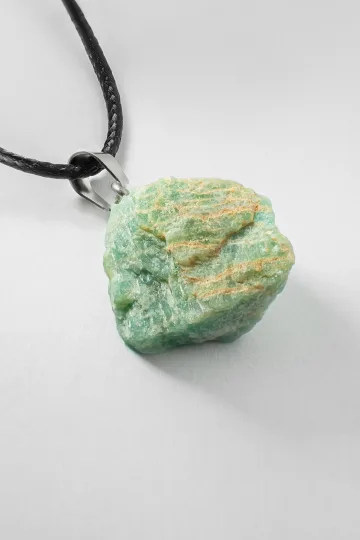
Among natural stones, the ones mined in quantity reach this band: agate, amazonite, hematite, rock crystal, lower grades of moonstone. People choose them for colour and for being a natural material with a name. That counts in a gift: "this is amazonite" sounds different from "this is a green insert". A rough piece of amazonite on plain steel, as on the Soul of Abundance necklace, shows the stone as it was found.
One caution with natural stones: they are often dyed. A colour that is too even and too bright on an inexpensive stone usually points to dye. That is no crime, but a fair description mentions it, and a stone sold without any mention of treatment deserves a closer look.





How to check a piece in your hand before you buy
This section is for anyone buying in person, or holding a delivered parcel and deciding whether to keep it. Five checks take place at the counter or on the kitchen table, need no tools and weed out the pieces that will disappoint.
Weight and the feel in the hand
Weight tells you about construction. Steel and brass are heavier than they look, and a good pendant settles pleasantly into the palm. A suspiciously light piece may be hollow or made of a light alloy, and hollow parts dent under a casual squeeze.
It helps to compare two similar pieces in the hand: a difference in weight at the same size shows at once where there is more metal. Earrings do not need to boast about weight, lightness suits them, but even for them a flimsy feel points to a thin base.
Weight on its own guarantees nothing: a heavy piece can be made of a poor alloy. It is the first filter, after which you look at everything else.
The clasp and the jump rings
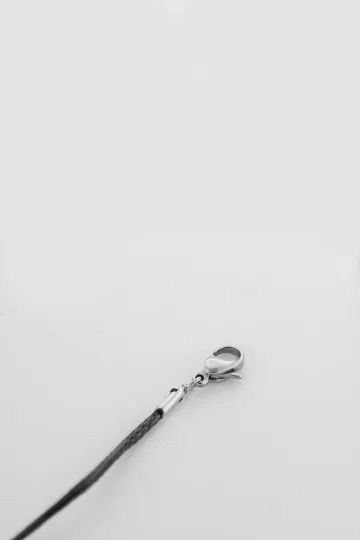
The clasp is the hardest-working part of an inexpensive piece: it opens and closes every day. A lobster clasp should open easily and shut with a clear click. A spring ring should snap back by itself. If you have to pinch a clasp to make it close, sooner or later it will start opening on its own.
The second weak point is the small jump rings that join clasp to chain and pendant to chain. Look at the join: on a good piece the ring is soldered or closed so tightly that no gap shows. If you can see light through the ring, a link will one day slip through it and the pendant will be gone.
The test is simple: hold the chain by the clasp and pull the pendant gently downwards. Nothing should open or stretch.
Earring posts and the nickel rules in Europe and Britain
The part of an earring that passes through the lobe is the only place where metal sits inside the skin. The European Union restricts how much nickel jewellery may release, and for posts in pierced ears the limit is stricter than for rings and bracelets that rest on the skin. The restriction began with a directive of 1994 and later moved into the REACH regulation. Great Britain kept the same limits when it set up its own version, UK REACH, in 2021.
For the giver this means two things. First, with earrings the metal of the post or hook matters more than the metal of the whole earring. Titanium and niobium behave most calmly at that point, and for sensitive skin a post in one of them can sit even on an earring of another metal, since the decorative part never enters the piercing. Second, if the person has already reacted to earrings, a pendant on a cord or a brooch is a better gift than a guess.
A listing that states compliance with the European or British nickel limit is a good sign. Where the post metal is not named at all and the recipient has sensitive ears, move the idea to a pendant or a brooch.
Where plating wears through first
Plating wears where the piece rubs: on raised edges, on rims, on the inside of a ring, on the chain links next to the clasp. Look at exactly those places in good light. If a different colour already shows there, the piece on display has had a short life or the plating was thin from the start.
The second sign is even colour. Good plating has the same tone all over, including the recesses. If the colour is darker or lighter in the hollows, the layer went on unevenly, and the unevenness will show with wear.
The third is the bail of a pendant. Where a pendant hangs on a ring or a chain, metal rubs on metal with every movement, and the plating on the bail wears before the plating on the front. If the bail is already lighter or darker than the rest, the rest will follow.
Both earrings of the pair
Earrings are sold as a pair, and the pair should be compared. Lay both side by side: are the size, the angle of the drop, the position of the stone and the shade of the metal the same? Mass casting can produce differences that pass unnoticed on the ear but jump out in the box.
Look at the fastenings separately. Backs on studs should hold firmly yet come off without a struggle. Lever backs should close the same way on both earrings. If one fastening is stiff and the other loose, the pair was matched from different batches, or a fault slipped past inspection.
This check is quick and prevents the most hurtful outcome of all: a present that looks good until somebody looks at it properly.
CAPAORA mini knife pendant
The 18th-century Spanish navaja in miniature: 40 mm of stainless steel, a real folding mechanism and a Palanquilla lock that clicks. An affordable gift to remember.
Authentic · Ships from Spain · 14-day returns
How cheap learned to look respectable: a short history
The question behind this article is older than the jeweller's shop. Romans asked it, so did the clockmakers of Georgian London, the jewellers of Paris and a Prussian treasury short of gold, and each time the answer changed the language of jewellery.
The Roman bride's iron ring
Pliny the Elder writes in his Natural History that in his own day a ring was sent to a bride as a pledge of betrothal, and that it was made of iron, without a stone. He explains the custom by the old Roman order of things: the right to a gold ring belonged at first to senators and envoys, and at home people wore iron.
So the iron betrothal ring was not poverty. It was the norm, and its plainness made it a sign: it announced an agreement, not the size of the groom's purse. The value of the gift lay in what it meant.
That logic is worth remembering today. A plain metal band without a stone was read for centuries as a serious sign, not as thrift, and there is nothing to be ashamed of in it as a present.
Pinchbeck: the clockmaker's gold
Around 1720 the London clockmaker Christopher Pinchbeck devised an alloy of copper and zinc that resembled high-carat gold in colour and shine and cost a fraction of it. It went into watch cases, buckles, buttons and chains. The recipe was kept secret, and after Pinchbeck's death in 1732 his sons carried on the trade.
The trouble came from others. Jewellers began passing pinchbeck off as gold, and in English the word "pinchbeck" came to mean a cheap counterfeit of anything, a sham.
The story draws the line clearly. An inexpensive material sold under its own name can be fashionable and respected. The same material sold as gold becomes a deceit, and a deceit, given time, becomes a word in the dictionary.
Paste and strass: the glass worn at court
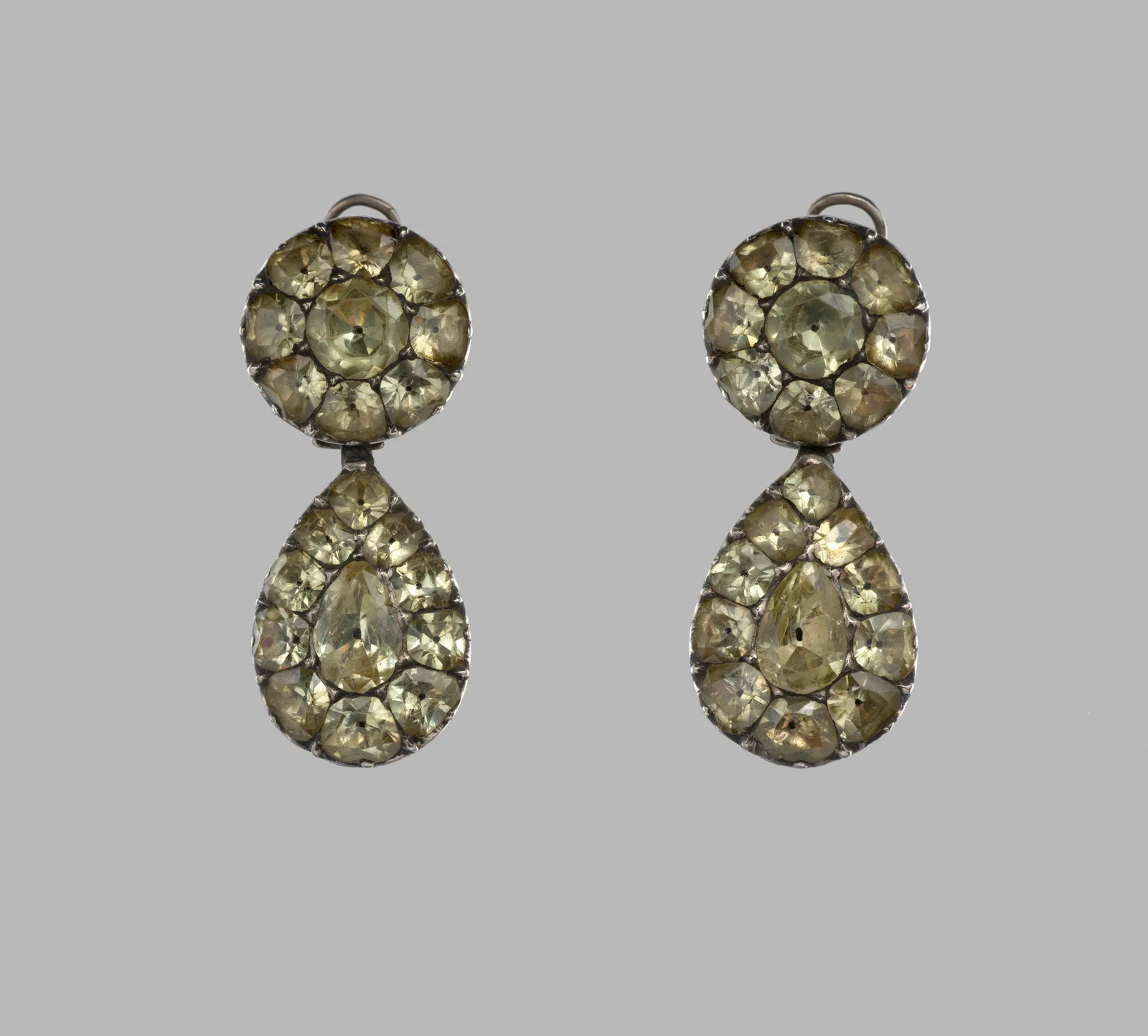
In the 1730s the Paris jeweller Georg Friedrich Strass, born in Wolfisheim near Strasbourg in Alsace, perfected paste: a glass with a high lead content that could be cut and polished almost like a stone. Foil was laid beneath the facets to throw back the light, and the stone flashed. Strass coloured his paste with metal salts to imitate coloured gems. In 1734 he was made jeweller to the king.
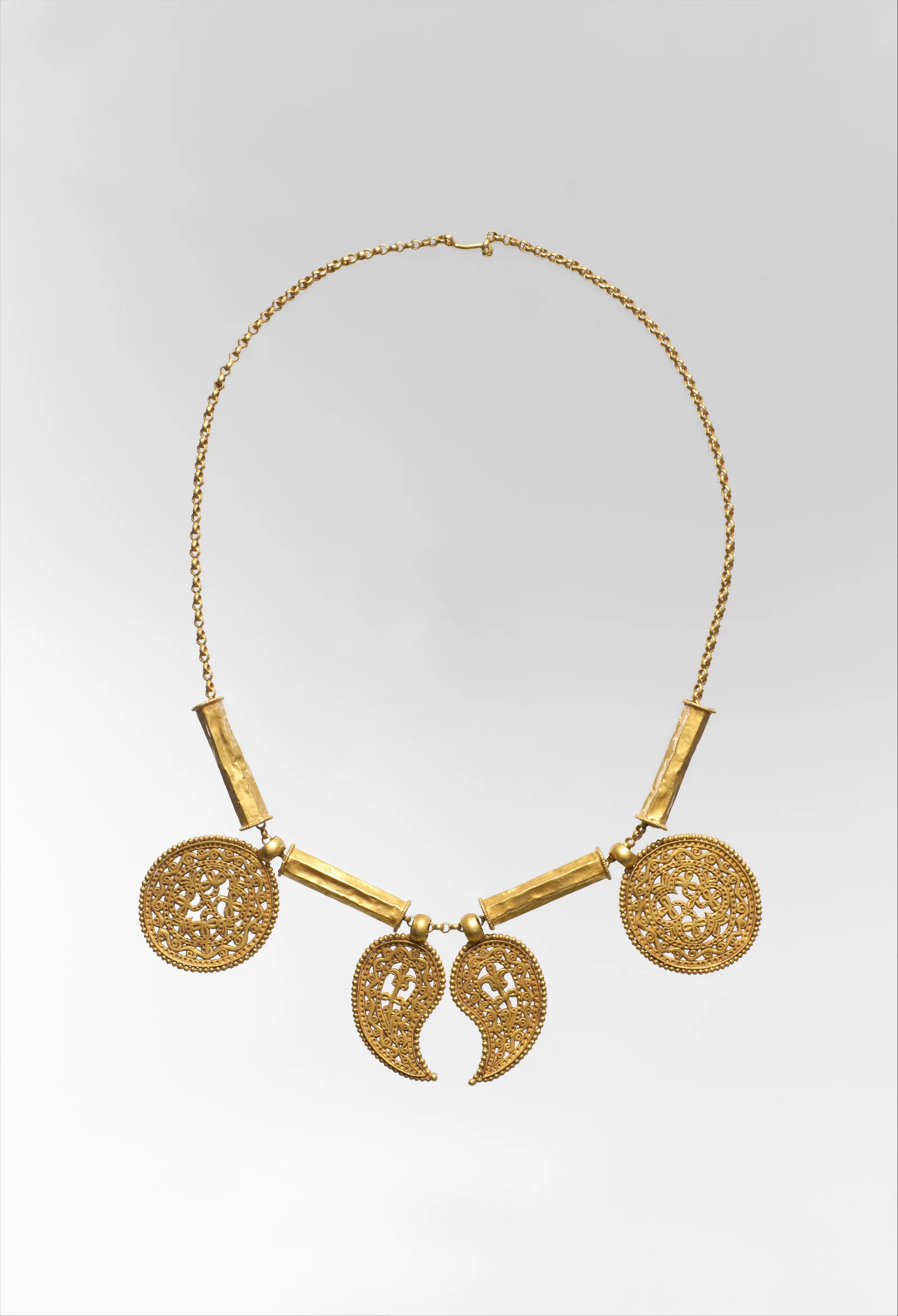
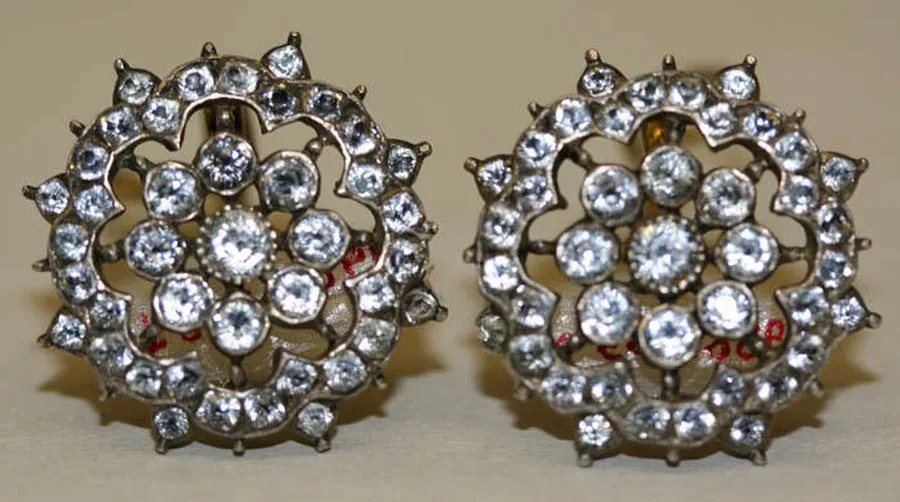
Eighteenth-century paste was not jewellery for the poor. It was worn at court, and good paste was valued for itself; old pieces set with it are collected today in their own right, apart from diamond jewellery. The earrings in the picture are of that kind: a silver setting holding faceted glass where diamonds would otherwise sit.
The jeweller's surname became a word: Merriam-Webster gives "strass" simply as paste, the brilliant lead glass used for imitation stones. The lesson for a modest budget is the same one paste teaches: an imitation stone is perfectly respectable in small measure and as long as it does not pretend to be a diamond. A few faceted points of light on a pendant look deliberate; a surface buried in them looks like an attempt at something else.
Cut steel from Woodstock and Birmingham
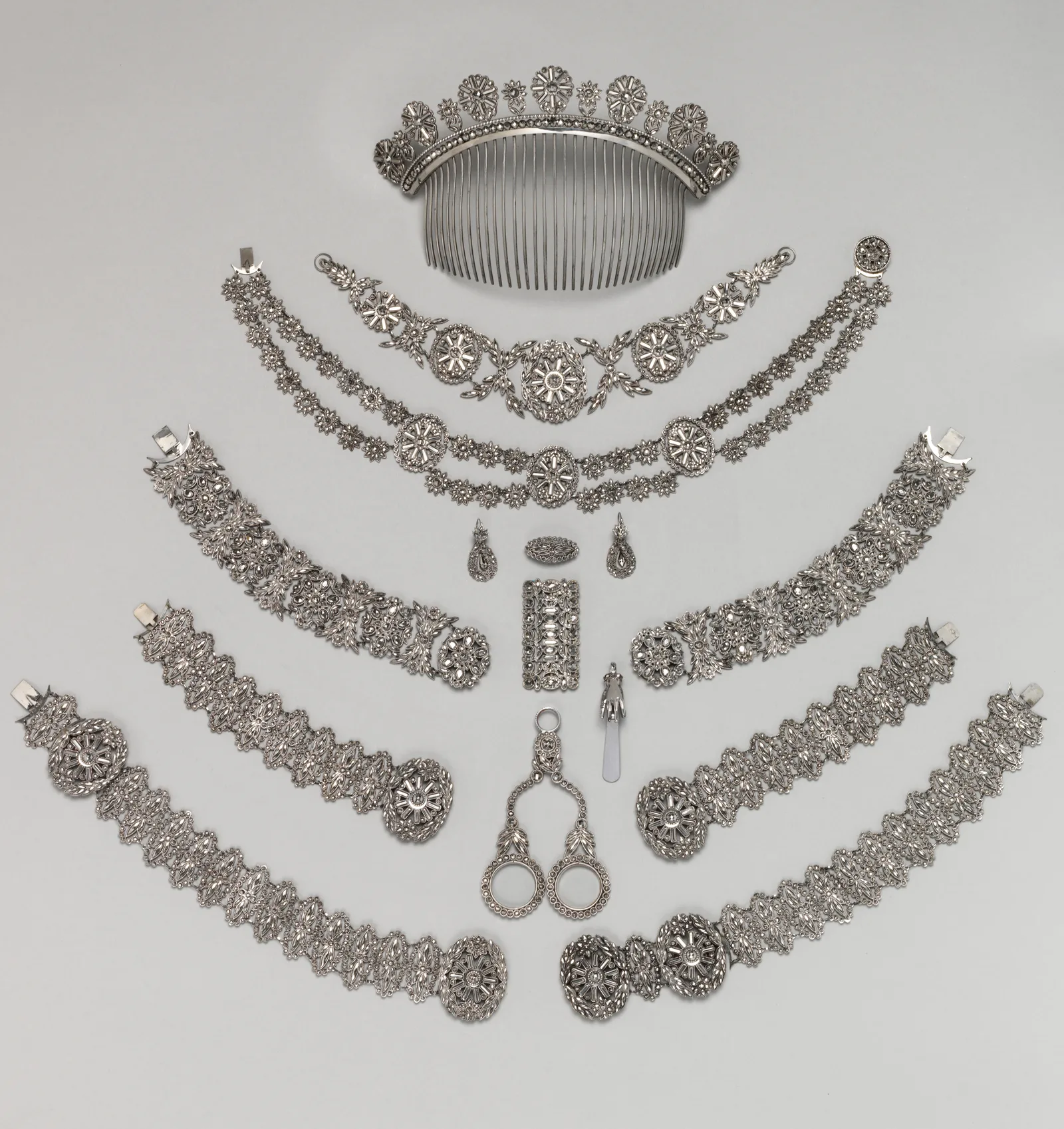
In the Oxfordshire town of Woodstock, steel jewellery was made from about 1720. Tiny steel studs were faceted like stones and set closely on a base: buckles, watch chains, brooches. By candlelight such steel glittered almost like a scatter of diamonds. By 1761 the Woodstock makers were producing buckles and watch chains, and in 1778 steel "stars for the nobility", meaning badges of orders, are mentioned. The metal of scissors had reached court dress.
In the second half of the century such pieces became common in Birmingham, and Matthew Boulton was one of their notable makers. The technique changed along the way: in Woodstock the studs were held by screws, while in Birmingham they were riveted from the back. Boulton supplied cut-steel mounts to Josiah Wedgwood, and Wedgwood's famous jasperware cameos were often set in cut steel.
The lesson of cut steel is that a cheap material becomes worthy when a great deal of careful work goes into it. The cost of a piece lay in the maker's hours, not in the metal, and it showed. The same holds for a modest gift today: the eye forgives an ordinary material long before it forgives sloppy finishing.
"Gold I gave for iron": Berlin cast iron
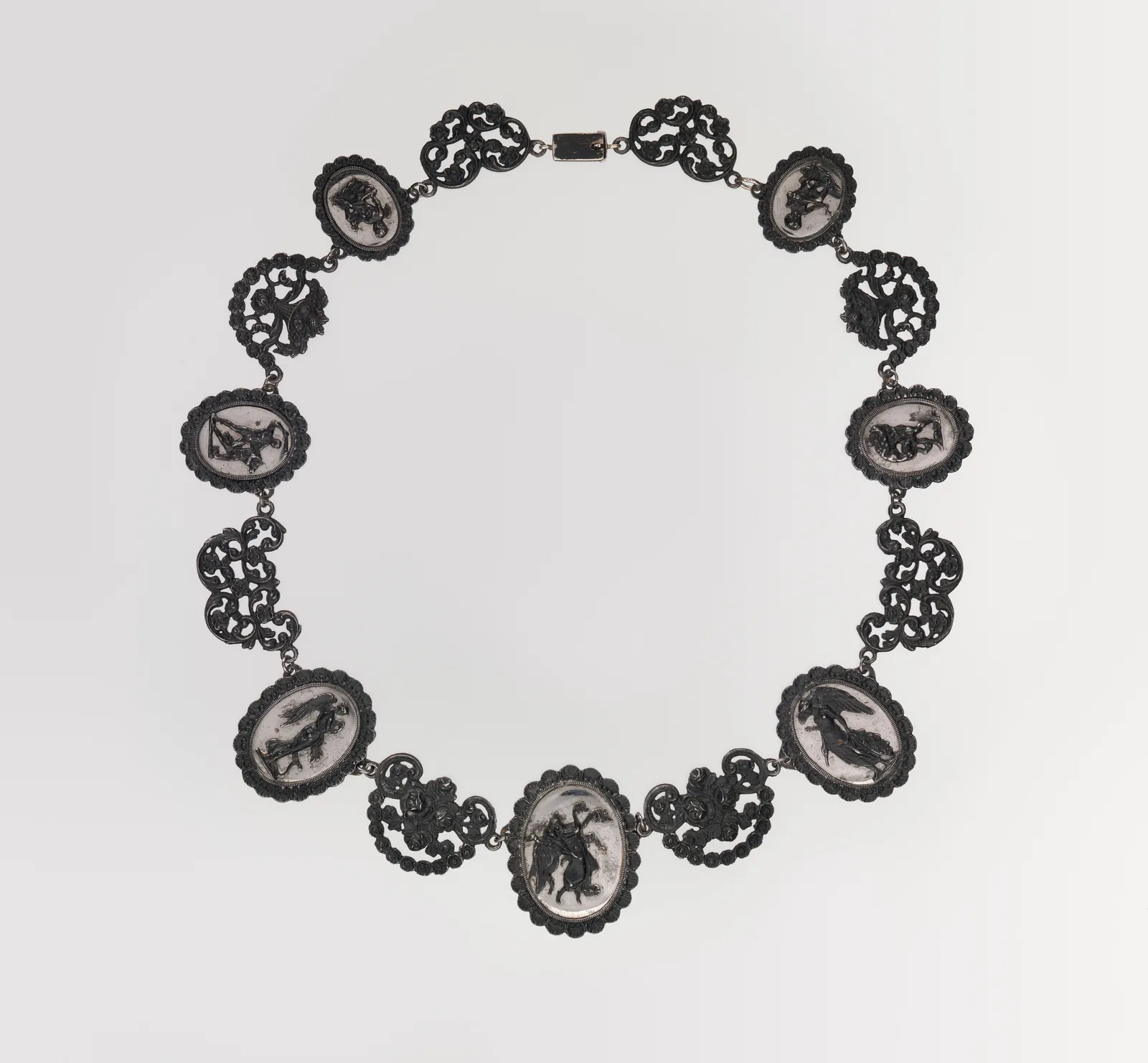
In 1813 Prussia needed money for its campaign against Napoleon. Citizens were asked to hand in their gold jewellery, and in exchange they received pieces of iron: rings, brooches, pendants. Many bore the inscription "Gold gab ich für Eisen", "Gold I gave for iron". The appeal is associated with Princess Marianne of Prussia.
Before that, iron jewellery had been worn in mourning. After 1813 an iron ring became a sign that its wearer had given something up. Berlin foundries cast fine lace-like work in sand and finished it with black lacquer, and the best of these pieces now stand in museum cases.
It is the clearest example in the history of jewellery of a gift whose worth came from what it stood for rather than from what it was made of. The metal was ordinary; what the ring said about its owner was not.
Elkington and electroplating
In 1840 the Birmingham manufacturer George Richards Elkington patented a way of depositing gold and silver by electric current in a solution of potassium cyanide. The solution itself had been found by a Birmingham surgeon, John Wright, and Elkington bought the rights.
Before that, gilding was done with fire, through a mercury amalgam, and the work was dangerous for the gilder. Electroplating made the layer even and thin and the work safer than mercury gilding, although a cyanide bath demanded its own care. Gilded pieces came within reach of people who would never buy solid gold.
Modern plating on steel and brass descends directly from that process. And the question asked of it today is the one asked in the nineteenth century: how thick a layer went onto the piece, and how long will it last?
Who a modest jewellery gift suits, and when
A small budget is not equally good for every occasion. Sometimes it is ideal, even the right call; sometimes it needs a precise hit on the person. Below is only what changes the choice in this band; the full run of occasions is collected in the jewellery gift guide by occasion.
A colleague
A modest present suits a coworker better than a lavish one: it creates less of an obligation and does not look like an attempt to win something. The anthropologist Marcel Mauss described in "The Gift" in 1925 how a gift calls for a gift in return. The practical conclusion for the office follows: a present that is too expensive puts a colleague under pressure to answer in kind.
Neutral pieces work best: a smooth pendant, simple studs, a brooch or a pin. Symbols with strong meaning, religious or romantic, are better left out of a work present. Office exchanges such as Secret Santa have their own rules, limits and etiquette, and those are covered in the guide to Secret Santa and gifts for coworkers.
When the whole team contributes, the sum grows and can leave the modest band. Even then a simple shape is safer: several people choose the piece, and the compromise is usually whatever starts no argument.
A teacher
In the United States the National PTA marks Teacher Appreciation Week in the first full week of May, a natural moment for a thank-you present. A small piece of jewellery fits the occasion well, as long as it stays neutral: a brooch, a simple pendant, a pin with the symbol of the subject the person teaches.
Teachers in public schools can be bound by rules on gifts. Massachusetts is a clear example: its state ethics law sets a ceiling on gifts a public school teacher may accept from a family, and that ceiling sits right at the edge of the budget in this article's title. The same law treats a present given anonymously in the name of the whole class more generously. Other states, districts and schools have their own policies, so the teacher's school is the place to check before buying.
If the class is clubbing together, one shared present beats several separate ones. And if the rules are unclear, ask the school office how gifts are handled there. It is an ordinary question, and schools are used to it.
A friend
With a friend a small budget barely limits you: you know her taste, her metal, her habits. Here the modest present wins by being exactly right. A charm for her bracelet, earrings in the enamel colour she always chooses, a pendant with a symbol only the two of you understand.
A matching gift works well: two identical or complementary pendants, one for you, one for her. For a small budget this is convenient: each of you keeps something that recalls the other, and nobody wonders whose present cost more.
More ideas for this case are gathered in the article on a jewellery gift for a friend.
Early in a relationship
Early on, a modest present works better than an expensive one for the same reason as with a colleague: an expensive object creates pressure. A piece of jewellery is already a meaningful gift, and a large sum on top makes the gesture heavier than it needs to be.
The safe choice here is earrings or a pendant, not a ring. A ring early in a relationship reads as a hint, whatever it cost. Choose the metal she already wears; you have seen it on dates and in photographs.
To make the present personal, a small detail works: a symbol of the place you met, her initial, a sign of something she loves. Such a pendant costs little, yet it could not have been given to anyone else. The case is covered in depth in the guide on choosing jewellery as a gift for her.
Mum or grandmother
For an older generation a small budget works worst when it buys something trendy. People who have worn jewellery for decades see quality up close better than anyone: the clasp, the plating, the setting. So here it is better to take a smaller piece in a better material: silver instead of plated brass, a simple shape instead of a complicated one.
Comfort matters more for this group than for others. A clasp she can fasten herself, lever-back earrings instead of tiny butterfly backs, a chain long enough to go over the head without fiddling with a catch.
If the budget is very tight, a brooch comes to the rescue again: easy to put on, visible on clothing and needing no fitting. More on choosing for her is in the guide to a jewellery gift for Mum.
A teenager
A small budget suits a teenager better than almost anyone. Taste at that age changes fast, things get lost, and hitting what friends are wearing matters more than price. An expensive piece is a burden for a teenager: it is frightening to lose.
Pieces that can be worn several at once work well: thin chains, small studs, cord bracelets. Plain stainless steel is more practical than brass: a teenager will not take a piece off for sport or the shower, and bare steel copes with water and sweat. Gold-plated steel is a different matter, since its layer wears under soap and sweat, so for a teenager who never takes anything off, smooth silver-tone steel is the better pick.
One caution: if the ears were pierced recently, the piercer decides what goes into a fresh piercing, and until it has healed it is wiser to keep what they fitted and save the earrings for later. Which metals behave most calmly with sensitive skin is explained in the article on jewellery allergy and nickel-free metals.
Leave your email, we'll send your discount code. No spam, unsubscribe anytime.
The code arrives by email, valid on your first order.
Presentation that adds value
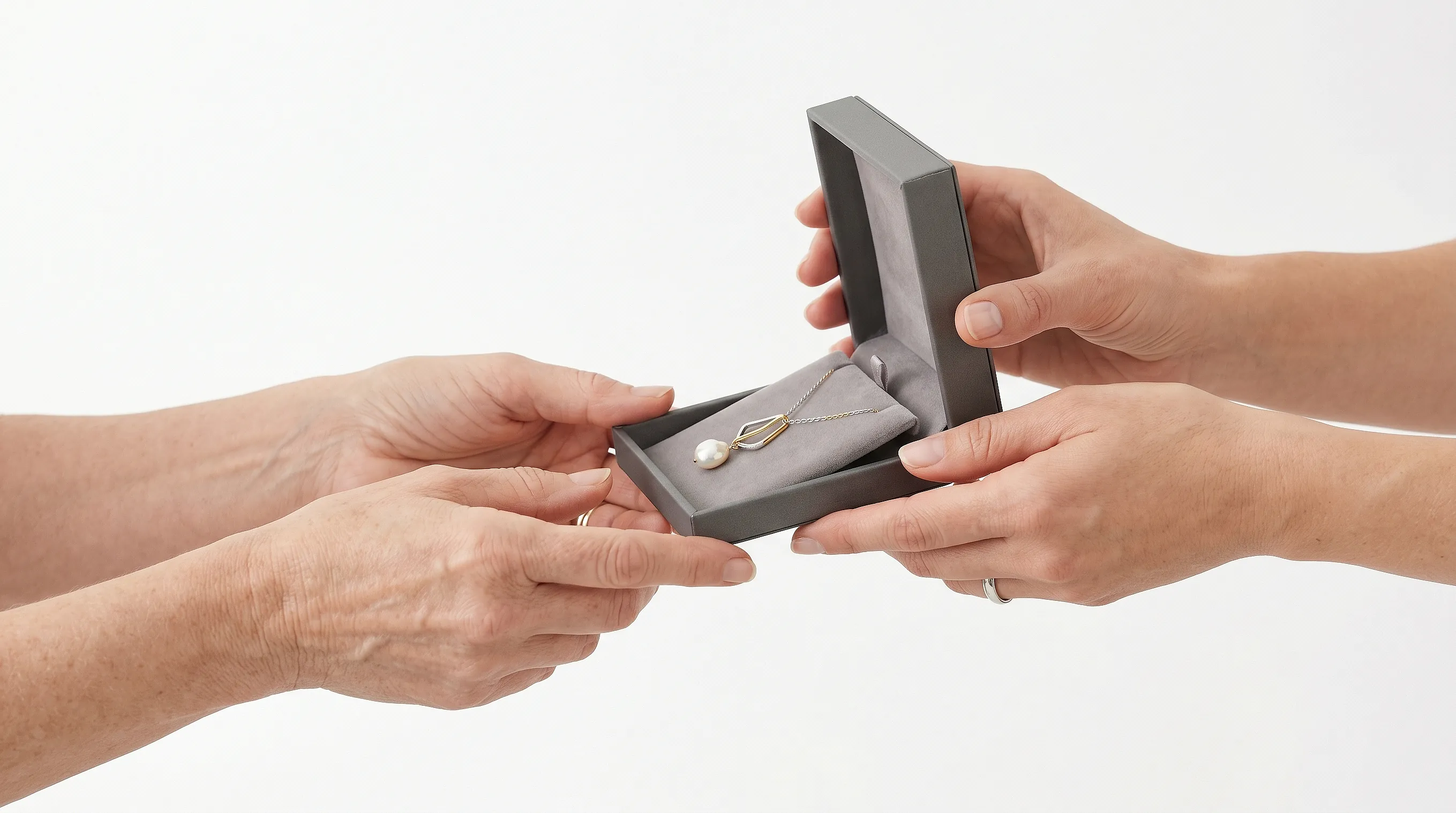
A present starts before it is opened. On a small budget presentation weighs more than on a large one, because it supplies what the sum could not: the sense that someone thought about the person.
The box and the surprising effect of neat wrapping
In 2019 Jessica Rixom and her colleagues tested how the neatness of wrapping affects how a gift is received. The result was unexpected. When the giver was a friend, a sloppily wrapped present was liked more than a neatly wrapped one: perfect wrapping raised expectations, and the contents fell short of them. When the giver was an acquaintance, the opposite held: neat wrapping read as a sign that the relationship mattered.
Two conclusions follow for a modest budget. For a colleague, a teacher or someone you have only just met, wrapping should be neat: it says the gesture is serious. For a close friend you can wrap more simply, and it will not spoil the effect.
One more thing: a box with a price sticker is worse than any other. Check the box before handing it over and remove everything extra, the receipt first of all. If the shop offers a gift receipt without the price, that is the one to tuck in.
A handwritten note and engraving
What adds most to a modest gift is meaning, and the cheapest way to add meaning is words. A handwritten note in the box, two or three sentences about why this particular piece was chosen, turns an inexpensive pendant into a personal present. The recipient will remember the words longer than the wrapping.
Engraving does the same in metal: initials, a date, a short word on the back of a pendant. It is often inexpensive and can be ordered separately at a workshop. But engraving has a downside: an engraved piece cannot be returned or exchanged. So engrave only when you are sure of the choice.
If you are unsure, leave the engraving to the recipient: give the piece and offer to choose the inscription together. That turns the present into an event that lasts longer than one evening.
Cost per wear
A handy way to judge a present is to divide its price by the days it will be worn. A mid-range piece worn every day for years costs less per wearing than a cheap one worn twice. The calculation works in both directions: it justifies a slightly dearer piece that will certainly be worn, and it argues against a dramatic one with nowhere to go.
For a small budget the rule is to choose everyday pieces. Studs, a pendant and a cord bracelet will be worn far more often than an evening brooch or large earrings for a night out. The same logic is useful when shopping for gifts in the sales, which is covered in our guide to what to buy on Black Friday. You can run the numbers right here.
Comparison: what wins on a modest budget
Three comparisons come up again and again in this band, and each has a clear answer once the recipient's habits are known.
Sterling silver or gold plated
Silver is a solid precious metal that tarnishes but does not peel. Plating is the colour of gold over another base: it does not tarnish, but it wears with time. The choice comes down to two questions: which metal tone does the person wear, and will they look after the piece?
If they wear white metal and do not mind a wipe now and then, silver is the better gift: it lasts longer and looks honest. If they wear yellow metal, plated steel is more practical than trying to convert them to silver. Vermeil, gold over silver, combines the strengths of both but reaches this budget only in small forms.
The main point is not to argue with the recipient's taste. People choose their usual metal over years, and a present in another tone forces them to adapt their other pieces to it, which a modest gift has no margin for.
Stainless steel or sterling silver
Search results for affordable gifts keep setting these two against each other, and the honest answer depends on who will wear the piece. Steel does not tarnish, shrugs off water and sweat when it is unplated and needs no care at all. Silver is a precious metal, can be polished back to new and repaired, but it darkens and asks for a cloth.
So steel suits the person who never takes anything off, who swims, trains and forgets jewellery is there. Silver suits the person who enjoys looking after things and wants the piece to be precious in the literal sense. Neither is the cheaper-looking choice; both look poor when the finishing is poor.
Costume jewellery or fine jewellery
The line between costume jewellery and fine jewellery runs not through beauty but through material: fine jewellery is made of precious metal, everything else is costume. By that definition gold-plated steel is costume jewellery, and a small sterling silver ring is fine jewellery.
For a present a different line matters more: between pieces that will last and pieces that will not. Well-made costume jewellery in steel with a solid layer and a good clasp will serve for years. Cheap silver under thin rhodium with a weak clasp disappoints quickly. The word "fine" guarantees nothing on its own; the myth that a higher price means higher quality is taken apart in the article on why expensive does not always mean quality.
Mistakes that make a gift look cheaper than it was
First: thin plating on a piece that rubs. A brass bracelet or ring under thin gold is the first thing in this band to wear through, and a present that looked fine on the day starts to show its base. For pieces on the hands, steel is the sensible choice.
Second: an unchecked chain. People spend ages choosing a pendant and never look at the chain that comes with it, although in inexpensive sets the chain is what breaks. Test the links and the clasp before buying.
Third: a post of unknown metal. Earrings that make the ears itch are never worn twice, however pretty they are.
Fourth: a ring without a size. A ring that does not fit cannot be worn, and an inexpensive plated ring takes resizing badly.
Fifth: a price tag or receipt left in the box. It moves the conversation from the object to the sum, which is the last thing a modest budget needs.
Sixth: a piece that is too fashionable. Whatever everyone wears this season soon looks dated, and the present ages with the trend. A simple shape not tied to a season ages more slowly.
A gift worth giving
Gold-plated stainless steel, enamel, cubic zirconia, mother-of-pearl and raw amazonite: earrings, pendants and cord bracelets for a modest gift budget.
Facts that surprise
- Rhodium takes its name from the Greek for "rose", although the metal is a cold white. William Hyde Wollaston discovered it in 1803 and named it after the pink colour of one of its chloride compounds.
- Stainless steel was found while solving a gunmaker's problem, not a jeweller's. In 1913 the Sheffield metallurgist Harry Brearley was looking for a steel that would resist the erosion of gun barrels by the heat of firing, and resistance to rust appeared along the way. He called his find "rustless"; the familiar "stainless" was suggested by Ernest Stuart of a local cutlery firm.
- Hematite in jewellery is black and silvery, yet its name comes from the Greek word for blood. Drag it across unglazed porcelain and the streak it leaves is red.
- Amazonite is named after the Amazon, but it remains unclear whether the green stones once linked with that river were amazonite at all.
- The earliest undisputed enamels known to archaeology are Mycenaean rings from Cyprus, made in the thirteenth century BC.
- The French word vermeil first of all means "bright scarlet" and goes back to the Latin for "little worm": a red dye was obtained from the kermes insect. Gilded silver took the same name for its warm reddish tint.
- In French, bijouterie means jewellery in general, along with the trade and the shop, with no split between precious and non-precious. The division into fine and costume jewellery that English shoppers take for granted is not built into the French word at all.
Send a friend a discount code, they save on their first order.
Frequently asked questions
Is it tacky to give cheap jewellery as a gift?
No, and in some cases it is the better choice: for a coworker, a teacher, a new acquaintance or a teenager. Research on gift giving shows that recipients' gratitude is not tied to price, although givers are convinced it is. What looks tacky is not a modest price but a careless choice: the wrong metal, a weak clasp, a price tag left in the box.
Is sterling silver or gold plated better for a gift?
Look at the metal the person wears now. Silver is solid and cannot peel, but it tarnishes and needs some care. Gold-plated steel does not tarnish or need polishing, but its layer wears on raised points over time. If the person wears both, decide by use: plated steel for everyday practicality, silver as a keepsake.
Does gold-plated stainless steel turn your skin green?
The steel base does not: green marks come from copper salts, and stainless steel under the gold is not brass. A greenish trace is far more likely from plated brass once its layer has worn. Plated steel still needs care to keep its colour: take it off before the shower, the pool and the gym.
How can you tell if cheap jewellery is good quality?
Check five things in the hand: weight, the clasp and jump rings, the metal of the earring posts, the colour on the edges and the bail, and whether both earrings of a pair match. A piece that passes those tests will outlast a dearer one that fails them.
What jewellery can you give if you don't know their size?
Stud earrings, a pendant on a chain, a cord bracelet with an adjustable knot, a brooch. None of them needs a size. A ring without a known size is best avoided on a small budget: it is hard to guess, and an inexpensive plated ring also takes resizing badly.
Is jewellery an appropriate gift for a teacher?
Yes, if it is neutral: a brooch, a simple pendant, a pin with the symbol of the subject. In the United States public school staff can be bound by state or district gift rules, and in Massachusetts the state ethics law sets a ceiling on gifts from families, so check the school's policy first. A single present from the whole class is usually the easier route.
Will cheap jewellery cause an allergy?
The risk depends on the material, not the price. Titanium and niobium behave most calmly; 316L steel suits many people with a nickel sensitivity, but not all. Brass and copper under thin plating can cause a reaction once the layer wears. If the person has reacted to earrings, choose a pendant or a brooch, which do not pass through the skin.
How do you make an inexpensive gift look expensive?
Remove the receipt and price, put the piece in a clean box and add a handwritten note. For someone you do not know well, wrapping should be neat, as a sign of respect. For a close friend it can be simpler: a 2019 study found that flawless wrapping raises expectations that a modest gift may not meet.
Conclusion: the gift that gets worn
A small budget does not make a present worse. It makes a mistake more expensive: in this band there is no margin to forgive the wrong metal, a weak clasp or a piece in the wrong size. A well-chosen piece in this budget looks as considered as one at any other price.
Three questions decide nearly everything: which metal the person already wears, whether the piece will be worn every week, and whether it will survive inspection at hand distance. When all three answers are good, the sum on the receipt stops mattering, and what remains is the reason for giving: a piece that goes on in the morning and reminds the wearer who it came from.
About Zevira
The Zevira catalogue includes gold-plated stainless steel, gold-plated brass, enamel, cubic zirconia, mother-of-pearl, raw amazonite on plain steel and a separate line in sterling silver. Much of the range fits a modest gift budget.
Among our pieces are earrings, pendants, cord bracelets, charms and lapel pins built around symbols with a history behind them. Albacete, where Zevira is based, has lived by metalwork for centuries, and that heritage of the region is on our minds when we decide what goes into the catalogue.
Buying it as a gift? Each one arrives ready to give.
 A branded Zevira box and a little card come with every order.